
Several news sources featured in the Daily Digest may limit the number of articles you can access without a subscription. However, gift articles and open-access links are provided when available. For more open access California water news articles, explore the main page at MavensNotebook.com.
On the calendar today …
- PUBLIC HEARING: Delta Conveyance Project water right hearing beginning at 9am. The State Water Resources Control Board Administrative Hearings Office is holding a Public Hearing on the pending Petitions for Change of Water Right Permits for the Delta Conveyance Project. Interested members of the public who would like to watch this hearing without participating may do so through the Administrative Hearings Office YouTube channel at: bit.ly/aho-youtube. Click here for the meeting notice.
- WORKSHOP: Delta Mercury Control Program from 9am to 11am. Central Valley Regional Water Quality Control Board staff will be holding a workshop on the Delta Mercury Control Program Reconsideration of the Sacramento-San Joaquin Delta Estuary Total Maximum Daily Load and program of implementation, collectively known as Delta Mercury Control Program Reconsideration. This hybrid Staff Workshop will be held to provide an update on Delta Mercury Control Program Reconsideration process. Via Zoom Webinar: Link to Meeting Registration
- WEBINAR: From Burden to Breakthrough: Launching California’s Water Data Reporting Initiative from 10am to 11am. California’s water community is coming together around a shared vision: a streamlined, modern data reporting system that reduces duplication, improves efficiency, and provides high-quality, accessible data to support better decisions at every level. Momentum is growing across local agencies, consultants, and state partners to create a “one-stop” reporting framework that strengthens both local and statewide water management. Join us for the official launch of the Initiative to Streamline Water Data Reporting in California (ISWDR CA). This webinar will introduce the Initiative’s vision to connect existing efforts, eliminate redundant reporting, and build a coordinated data framework where information collected once can serve many purposes. Discover our plan to transform years of collaboration and analysis into action at a pivotal moment for California water management. Click here to register.
- PUBLIC MEETING: Drought Resilience Interagency & Partners (DRIP) Collaborative Drought Indicators and Metrics Workshop #3 from 1pm to 3pm. Join the Department of Water Resources for the Drought Resilience Interagency & Partners (DRIP) Collaborative Drought Indicators and Metrics Workshop #3. Remote participation will be conducted via a Zoom platform. Register here: https://ca-water-gov.zoom.us/meeting/register/-TZZFkzTQ6adN8aK739EnQ
- EVENT: COEQWAL launch from 1pm to 5pm. COEQUAL is a new resource empowering all Californians to envision a more equitable solution to California’s diverse water needs. It includes accessible, online tools to help understand how California can support critical water needs in a changing climate. Attendees will hear welcome remarks from Delta Lead Scientist Dr. Lisamarie Windham-Myers, an impressive panel of leaders working in the environmental landscape, and others reflecting on the partnerships that made this project possible. A livestream will be offered via Zoom.
In California water news today …
Hurricanes crowd the Pacific: What Hawaii and California can expect
 “An already strong El Niño is fueling a busy tropical season for the eastern and central Pacific. A new hurricane threat is emerging for Hawaii, while rounds of tropical moisture are forecast to take aim at the southwestern United States, including California. So far this year, there have been 15 tropical depressions and storms in the eastern and central Pacific, including five hurricanes. AccuWeather meteorologists are expecting up to 22 named storms with nine to 13 hurricanes for the eastern portion of the basin alone. Two major hurricanes and a strengthening tropical storm were spinning as of Wednesday afternoon. Lowell is now a Category 5 hurricane, while Karina is a Category 4 hurricane on the Saffir-Simpson scale. Marie continues to strengthen and is on the verge of becoming a hurricane. … ” Read more from AccuWeather.
SEE ALSO:
- A hurricane won’t hit California this weekend, but waves will be large and dangerous, from the San Francisco Chronicle
- Early-season trough will bring cooler weather and beneficial early-season rain to wildfire-stricken PacNW, and may also bring soon-to-be Hurricane Marie’s remnants toward SoCal over Labor Day, from Daniel Swain at Weather West
‘Supersized’ El Nino to persist into 2027, UN says
“The El Nino weather phenomenon is set to intensify and will almost certainly last until February next year, the World Meteorological Organization (WMO) said in an update Thursday. The UN weather agency warned El Nino would develop into a “very strong” event in the coming months, heightening the risks of extreme heat, drought and flooding while threatening livelihoods and economies. “El Nino is being supersized before our eyes,” UN Secretary General Antonio Guterres said in a statement. “The science leaves no room for doubt: the planet is in uncharted waters, and those waters are heating up.” WMO head Celeste Saulo told a press conference in Geneva that, on the current trajectory, the El Nino, “may be stronger than anything since our monitoring began, so literally off the charts we have used for the past four decades.” … ” Read more from DW.
Delta Caucus secures $158.2 million for Delta levees
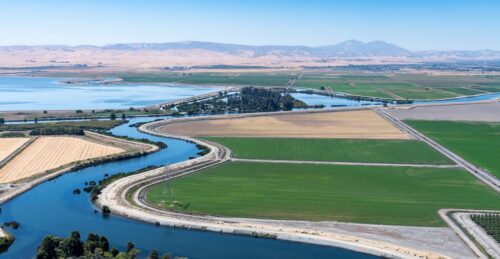
“The California Legislature Wednesday approved $90.2 million to protect the Delta and fortify its aging levees, along with up to $68 million to safeguard the State Water Project’s California Aqueduct and canals. The funding for the levees — which are being undermined by the over-drafting of groundwater — was secured by the California Legislative Delta Caucus. “Today’s vote was truly historic. California’s water wars may finally be over,” said State Sen. Jerry McNerney, who serves as co-chair of the caucus. “Today we joined together, North and South, environmental groups and State Water Contractors, to support vital projects that will protect California’s water and the Delta, while also benefitting the entire state.” “But we’re not done. This historic investment is just a downpayment. In the years to come, we need to continue to protect California’s primary supply of freshwater.” … ” Read more from the Manteca Bulletin.
SEE ALSO: State budget to include $158 million for Delta, SWP levees, canals, from the Daily Republic
From spike-toothed salmon to modern salmonids: paleontology’s lessons for climate change
“The spike-toothed salmon (Oncorhynchus rastrosus) was a roughly 7-foot-long species that lived along the Pacific Coast and Japan five million years ago. This history of this species, particularly its evolution and extinction, reveals that it is difficult to predict the results of climate change. Data from spike-toothed salmon fossils, reviewed with information from biological studies of modern fish, share clues about how we can protect and restore habitats for extant species. Ensuring there are viable habitats for modern-day species like Chinook salmon could give us more time and populations to understand how and why fish are changing. The spike-toothed salmon went extinct toward the end of the Early Pliocene, a period that lasted between 5.33 and 2.58 million years ago. It could not survive during a period of global cooling, said Dr. Edward Davis, Professor in the University of Oregon’s Department of Earth Sciences. Davis is also the Condon Fossil Collection Director at the University of Oregon’s Museum of Natural and Cultural History. … ” Read more from the California Sportfishing Protection Alliance.
Tribes could co-manage ancestral forests under bill heading to Newsom’s desk
“California lawmakers have voted to shift a state forest system away from commercial logging and pave the way for tribal co-management, delivering a win to a movement rooted in the historic timber wars. Managed by the California Department of Forestry and Fire Protection, or Cal Fire, the state’s 14 demonstration forests are required to produce and sell timber to show — or “demonstrate” — sustainable practices, while considering factors like recreation and wildlife. Assembly Bill 2494 eliminates what’s often cast as a logging mandate, instead prioritizing values such as carbon storage, wildfire resilience and biodiversity conservation. There still could be logging, but it would need to support those principles. … ” Read more from the LA Times.
Bay Area lawmakers push data center transparency, send bills to Newsom
“California lawmakers passed seven bills aimed at increasing oversight of data centers in the final days of the legislative session and sent the measures to Gov. Gavin Newsom for consideration. Among the bills are proposals from Bay Area Assemblymembers Diane Papan and Rebecca Bauer-Kahan that would require greater disclosure of water and energy use by data center operators. “You cannot manage what you cannot measure,” Papan said. Papan’s legislation focuses on water use before and after a data center begins operating. One bill would require developers to disclose projected water use. … ” Read more from ABC Bay Area.
Trump administration ratchets up its fight to get more oil flowing from California
“The Trump administration is ratcheting up its fight to get more crude flowing through California and reverse the state’s efforts to move away from fossil fuels. Its latest salvo is a federal review of California’s coastal management program, which is run largely by a state commission that has had a powerful role for decades in shaping development along the coast. Environmental advocates fear federal officials could use the review to strip the California Coastal Commission of its ability to have a say in projects involving federal agencies that affect the state’s rugged coastal bluffs, pristine beaches and world-class surfing spots. The administration, citing a need for energy security and job creation, has already announced plans for new offshore oil leases in California as well as Florida, where the federal government has not allowed drilling since 1995 because of concerns about oil spills in the Gulf of Mexico. … ” Read more from the Associated Press.
In commentary today …
Which state government agency has jurisdiction and the political will to enforce instream flows?
Angelina Cook writes, “California is world-renowned as an environmental leader. Yet agencies are reluctant to enforce laws that ensure people and fish have clean water. Those who advocate for salmon recovery and track agency performance on reversing damage to aquatic ecosystems can attest: the enactment of environmental regulations does not guarantee that those laws will get enforced. Enforcement requires adequate manpower and financial resources. Sometimes it requires collaboration with the right partners. The Scott and Shasta rivers have been oversubscribed for more than half a century. State courts ruled on the water rights for these rivers over 50 years ago. The U.S. Environmental Protection Agency added these rivers to its Clean Water Act list of impaired waterways over 20 years ago. Yet more than two decades of having restricted Total Maximum Daily Loads (TMDLs) have not sufficiently protected water supplies for non-irrigation beneficial uses. … ” Read more from the California Sportfishing Protection Alliance.
The Fix Our Forest Act: Benefit or bypass?
“Aerin Monroe writes, “The Fix Our Forests Act, although it has not yet been enacted into law, aims to address wildfires and make forest management more efficient. However, because it avoids critical environmental laws that safeguard ecosystems and limit scientific input and public involvement, the Act may have serious repercussions for the environment and endangered species. These concerns make the bill’s effects on forest health especially important to examine. In a 2025 letter to The Honorable John Boozman Chairman, Senate Committee on Agriculture, Nutrition, and Forestry United States Senate, advocates from across the nation rallied against the bill, united in support of protecting the environment. “On behalf of our millions of members and supporters, our organizations write to express our strong opposition to S. 1462, the “Fix Our Forests Act” (FOFA), as introduced by Senators Curtis, Hickenlooper, Padilla, and Sheehy, and urge you to vote no at the October 21st, 2025 Committee Markup.” They noted that at the local level, the consequences could be especially dire: neighborhoods near forested areas could face greater wildfire threats, local wildlife could lose their habitats, and nearby recreational areas and drinking water sources could be put at increased risk. At best, this bill would do little to reduce wildfire threats, and at worst, it could increase wildfire risk. … ” Read more from the Northcoast Environmental Center.
In regional water news and commentary today …
NORTH COAST
Siskiyou County Gold Rush Ranch sold for $16.9 Million to save salmon
“A cattle ranch that has operated in Siskiyou County since 1856 is about to become public land. The Wildlands Conservancy is paying $16.9 million for the 14,000-acre AP Ranch near Gazelle, California, a property nearly the size of Manhattan that has stayed in the Newton family since 1961 and is now headed toward a very different future: a free public preserve built around saving the Scott River’s threatened coho salmon. The deal, first reported by the Sacramento Bee, will fold AP Ranch into the Wildlands Conservancy’s existing Beaver Valley Headwaters Preserve, expanding that protected footprint to more than 20,000 acres. The ranch sits at elevations ranging from 3,600 to 5,400 feet, bordered by peaks that rise above 8,000 feet, and includes seven homes and six large barns left over from its working-ranch days, according to the Bee’s reporting. It has carried a capacity of roughly 500 mother cows as a year-round cow-calf operation, and the East Fork of the Scott River runs through the property for eight miles. … ” Read more from Hoodline.
‘Let them go someplace else’: Eureka council enacts 45‑day ban on data centers
“The Eureka City Council on Tuesday unanimously approved a 45‑day moratorium on new data centers within city limits, launching a fast‑tracked review of how or if such facilities should be allowed in the future. The move follows a growing statewide concern over the water, power and public‑safety demands associated with large‑scale computing operations. City Manager Miles Slattery told councilmembers the pause gives staff time to return with options for regulating data centers, including limits based on water consumption, electrical load or facility size. Most parcels suitable for such projects fall within the coastal zone, meaning long‑term rules would require updates to both inland and coastal zoning codes. City Attorney Robert Black said the moratorium is allowed under state law and can be extended with a public hearing and a four‑fifths vote for up to two years. … ” Read more from the Eureka Times-Standard.
Mendocino County supes ban data centers—for the moment, at least
“Mendocino County supervisors voted 5-0 Tuesday to adopt an urgency ordinance barring any new data center in the unincorporated county, the land outside city limits. It took effect immediately and runs 45 days, to Oct. 16, unless the board extends it. The board packet names no applicant. The ordinance says only that the county “anticipates receiving” inquiries and applications. Deputy County Counsel Matthew Kiedrowski said the county code doesn’t define or regulate data centers, so one could be approved through a routine building permit. The reasoning behind the moratorium, he said, is “to prevent the applications coming in for construction of buildings that could be used as data centers and could be processed under a building permit.” … ” Read more from the Mendocino Voice.
SIERRA NEVADA
Addressing Tahoe’s golden mussel threat at the federal level
“Since their introduction to the Sacramento-San Joaquin Delta in California in October 2024, golden mussels continue to be a major concern for Lake Tahoe and other regional bodies of water. To date, the Tahoe watercraft inspectors have intercepted 10 vessels contaminated with golden mussels. They’ve also intercepted 10 vessels with quagga or zebra mussels. With a broader tolerance for different habitats compared to quagga and zebra mussels, golden mussels pose a greater threat to Lake Tahoe, according to the Lake Tahoe Invasive Species Program. The source says the species can also form dense colonies on hard surfaces, encrusting boats, piers, rocks, and pipes, and can impact water quality and native species. Senators and other lawmakers and leaders addressed the threat multiple times at the 30th Tahoe Summit, which recently took place at Sand Harbor State Park. … ” Read more from the Tahoe Daily Tribune.
Notes from the field: Silver Fork American River
Eric Woodruff writes, “Last month, I was back in the Silver Fork American River watershed, roughly 6 miles east of reaches covered in my previous article. The outing inspired me to write a sequel. But before I give you the skinny on the trip’s fly-fishing adventures, there is a bit of business to discuss. On August 25, 2026, the El Dorado Irrigation District (EID), owner of the El Dorado Hydroelectric Project (Federal Energy Regulatory Commission (FERC) Project no. 184), hosted a tour giving resource agencies and others a firsthand look at two stream bank stabilization projects. One is in the Caples Lake spillway channel. The other consists of two stabilization sites in and alongside Oyster Creek, whose primary water source is leakage from Silver Lake. Oyster Creek contributes most of the summer flow in the Silver Fork American River. … ” Read more from the California Sportfishing Protection Alliance.
Commentary: More than just a water plant, Sierra Pines will build resilience for Tuolumne County
Jeff Hollis, president of the Tuolumne Utilities District Board of Directors, writes, “If you’ve driven through the Sierra Pines area recently, you’ve probably noticed something taking shape in the landscape. Earthmoving equipment is at work. A reservoir is emerging. Construction is underway on the Sierra Pines Water Treatment Project, one of the most significant investments in Tuolumne County’s water future. This project is part of Tuolumne Utilities District’s long-term strategy to modernize aging infrastructure, improve reliability, and make better use of public resources. It prepares our community for the decades ahead. … ” Read more from the Union-Democrat.
BAY AREA
An unexpected threat to aquatic life in San Francisco Bay? Our pets.
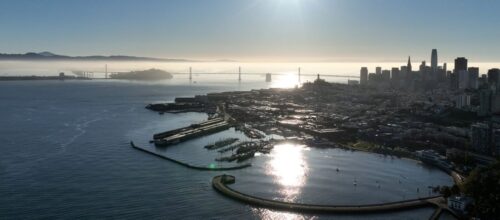 “Walk into any pet store and you’re likely to see shelves of topical products aimed at killing and repelling fleas and ticks on dogs and cats from brands such as Frontline, Advantage, and Seresto. Almost all of them contain the pesticides fipronil or imidacloprid. They are, as you might expect, toxic to invertebrates. But they don’t stay on your furry companions. When you wash your dog or its bedding, or pet your cat and wash your hands, the chemicals go down the drain, where they head to a wastewater treatment plant—a facility that was not designed to remove pesticides. Studies show that fipronil and imidacloprid are ubiquitous in Bay Area wastewater effluent at levels that the EPA has deemed may be harmful to aquatic life. That means they end up in the Bay, where, scientists say, they may pose risks to invertebrates such as shrimp, amphipods, and isopods—bottom-dwelling creatures that provide important food for fish, birds, and marine mammals. … ” Read more from Bay Nature.
Novato adjusts rules to meet FEMA flood program standards
“Novato has updated its municipal code to meet a Federal Emergency Management Agency program standard that lowers the cost of flood insurance. The council voted unanimously on Aug. 25 to pass an ordinance requiring a 1-foot freeboard standard on residential buildings, including manufactured homes, that are being constructed or going through substantial improvements. The standard requires homes to be built or raised 1 foot above the water level that could occur in a 100-year flood, or the kind so severe it has only a 1% chance of happening in any given year. The city participates in the National Flood Insurance Program’s Community Rating System, a voluntary program that encourages floodplain management through insurance incentives. The program places communities into classifications between one and 10 based on their flood preparedness, regulations, public outreach and responses, and provides various levels of insurance discounts based on their ratings. A class of one is the best score. Novato has a ranking of six. … ” Read more from the Marin Independent Journal.
CENTRAL COAST
Even Cal Am gets on board with asking for relief on the cease-and-desist.
“The iceberg that is the cease-and-desist order on the Monterey Peninsula’s water supply may finally be melting. A bit of background: Private utility California American Water delivers water to thousands of local taps. For decades, the company obtained most of that water by sticking a straw into the Carmel River – something that officials at the State Water Resources Control Board determined in 1995 was a violation of Cal Am’s legal limit to pump from the river. Years of stop-and-start efforts began to get water some other way. By 2009, the state deemed Cal Am to still be in violation, and it issued a new cease-and-desist order, this one with teeth. New water meters are prohibited, a significant obstacle to building housing. … ” Read more from Monterey Now.
Should SLO County turn salt water into drinking water? And if so, where?
“As weather patterns shift and the length of droughts increase due to climate change, the county is pursuing projects to improve the resilience of its water supply. Turning salt water into drinking water could be one of those options. The county’s current water portfolio includes groundwater, reservoirs, recycled water and state water, all of which rely on rain. Desalination, however, produces drinking water regardless of the weather, according to San Luis Obispo County Public Works Deputy Director Courtney Howard. The San Luis Obispo County Board of Supervisors received a presentation on Tuesday about the county’s $1.2 million feasibility study that evaluated where a desalination facility could be located, how much it would cost and what communities could use the water. … ” Read more from the San Luis Obispo Tribune.
SAN JOAQUIN VALLEY
Stockton residents push back on data centers. The city already relies on one
“Stockton residents urged city leaders Tuesday to think twice before courting more data centers as part of the city’s new economic development strategy. But data centers are not new to Stockton: One has been operating at the port for more than five years, processing everything from artificial intelligence workloads to the city’s own backup public safety infrastructure. After nearly two hours of discussion and public comment, the City Council voted 7-0 to remove data centers from its three-year economic development plan while the city conducts community listening sessions. The council approved the remainder of the plan. The reversal followed questions about how data centers made it into a citywide economic strategy before officials had publicly identified what type of facility Stockton wanted, where one might go or what it could deliver in tax revenue and permanent jobs. The plan also contained no estimates for electricity or water demand. … ” Read more from Stocktonia.
Modesto releases statement on data centers. What the municipal code says
“The city of Modesto said in a statement Thursday that data centers are not an allowed land use under the municipal code, so no active proposals are under review. The statement came a week after Councilman Chris Ricci disclosed on Facebook that a prominent data center developer was lobbying council members about a possible project. NorthPoint Development, based in Kansas City, inquired about building a data center at the former FMC plant site on Graphics Drive, near Kansas Avenue and Highway 99. … ” Read more from the Modesto Bee.
SOUTHERN CALIFORNIA
‘Super El Niño’ strengthens, triggering preparations for possible flooding in LA County
“Los Angeles County officials are urging residents to begin preparing now for what forecasters say could be an unusually strong El Niño season, with county leaders warning of the potential for significant weather impacts during the upcoming rainy season. “This year they’re calling it a ‘Super El Niño,'” said Mark Pestrella, director of Los Angeles County Public Works. The National Oceanic and Atmospheric Administration’s Climate Prediction Center has said there is a greater than 90% chance of very strong weather events this winter. That forecast prompted county leaders to discuss preparedness efforts during a Board of Supervisors meeting months before the rainy season typically begins. “There are predictions that this El Niño will be extraordinary in terms of its impact,” Los Angeles County Supervisor Lindsey Horvath said. County officials said public works and emergency services departments are preparing for the possibility of major storms. … ” Read more from KABC.
A storm battering still-charred LA hillsides has survivors worried about a different disaster
“People in Los Angeles typically hear the word hurricane and just assume it’s far away. This time, there’s a chance that a tropical storm hits Southern California over Labor Day Weekend. Heavy rain and winds battering charred hillsides could produce mudslides and complicate the ongoing rebuild of areas destroyed by wildfires. “It just seems to be one thing after another,” Mark Smith, who lost his home in the Palisades Fire, told Straight Arrow. Tropical Storm Marie, currently churning in the Pacific Ocean, is expected to strengthen into a hurricane by Thursday. At this point, it’s doubtful the powerful storm will make direct landfall into Southern California. But even if it doesn’t make direct landfall, it could impact the area. … ” Read more from Straight Arrow News.
A hurricane is not headed for Southern California. But it will send dangerous surf our way
“Despite speculation earlier this week, a hurricane is not going to hit Southern California this weekend. Tropical Storm Marie is churning in the Pacific Ocean several hundred miles off the coast of Mexico. It’s expected to reach hurricane strength by Thursday morning. The storm is moving northwest, which is typical for most storms in the eastern Pacific. Forecasters say the chance is extremely minimal that it will veer north. “The current forecast track is for Marie to continue to move off to the west and northwest, further and further away,” said National Weather Service meteorologist Rich Thompson. … ” Read more from the LAist.
People who live near the Santa Susana Field Lab report higher rates of these illnesses
“Residents living closest to the Santa Susana Field Laboratory reported higher rates of autoimmune and endocrine or metabolic disorders than people living farther away, according to a USC study whose findings were announced today, though researchers cautioned the findings do not establish that contamination at the former nuclear and rocket-testing site caused the illnesses. USC researchers surveyed 475 residents living within 15 miles of the Santa Susana Field Laboratory, a roughly 2,850-acre former nuclear research and rocket engine testing facility in southeastern Ventura County near the Los Angeles County line and the western edge of the San Fernando Valley. The site was also the location of a partial nuclear reactor meltdown in 1959, described in the study as the worst in U.S. history. The facility has been eligible for Superfund designation since 2007 but has not been placed on the National Priorities List, leaving cleanup under state and local oversight. … ” Read more from the LA Daily News.
IMPERIAL/COACHELLA VALLEYS
Imperial Valley’s dreams of a lithium boom hit another roadblock
“Stalled plans to turn a remote corner of California into a critical minerals and clean energy mecca have been dealt another setback. A state appeals court ruled this week that Imperial County’s approval of the Hell’s Kitchen lithium and geothermal energy project failed to show it has enough water supply from the dwindling Colorado River to sustain its operation, or to address the potential air quality impacts of diverting more water from the polluted Salton Sea, which has been shrinking for years. If the decision stands, it would clash with California and federal policies to amp up critical minerals production, potentially sparking intervention by state policymakers to try and obtain an adequate water supply, one expert said. … ” Read more from the Desert Sun.
SAN DIEGO
Stinky river crisis: San Diego County approves $1 billion to treat Tijuana River sewage
“After decades of pollution and years of beach closures caused by raw sewage in the Tijuana River, San Diego County Supervisors approved a local plan to divert the river and treat it directly. On Tuesday, the board voted to design a new treatment plant to capture and clean contaminated water before it enters San Diego communities, using potential local tax revenue to back nearly a billion dollars worth of bonds to build it. “We need to capture all of this waste, all this pollution, and we need to treat it before it gets into our rivers, before it gets near our schools, before it gets to our beaches,” Board Chair Terra Lawson-Remer said. … ” Read more from the LA Times.
Along the Colorado River …
‘Like driving off a cliff at 2 mph’: A water expert’s take on what’s coming for the Colorado River
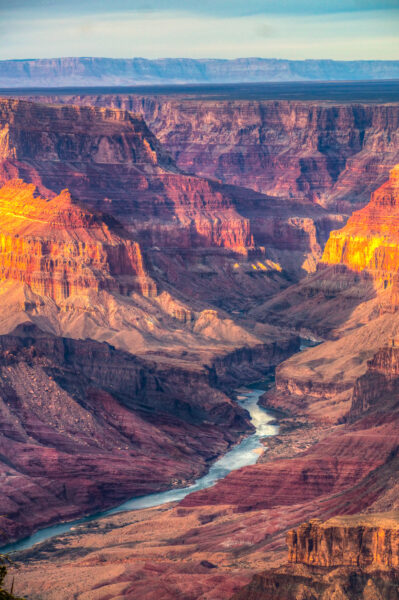
“The Colorado River is on the brink of collapse because of climate change and overuse of water. Reservoirs supplying water to tens of millions of people in the southwest reached record lows this summer. The nation is racing to refill them with conservation measures so they can still generate hydropower and reliably deliver water to users downstream. Fish are struggling. Rafters are having trouble navigating low water. Despite all this, the seven states sharing the water supply remain at a yearslong impasse over how to conserve the river. “The Colorado River is in as bad a shape as it’s ever been,” said Doug Kenney, chairman of the Colorado River Research Group at CU Boulder’s Getches-Wilkinson Center. The Interior Department announced Aug. 21 it will significantly cut back the amount of water that will flow to the lower basin states of California, Nevada and Arizona for at least the next two years. “To the people who really study this river, everything that’s happening this year has been expected for decades,” Kenney said. “This is a classic, slow-moving crisis. I’ve equated it to driving a car off a cliff at 2 miles an hour. You can look out the windshield and see that cliff coming. And we’re now right at the edge.” Kenney spoke to CU Boulder Today about the latest efforts to conserve the river and what he thinks is coming next. … ” Read more from the University of Colorado at Boulder.
Less Colorado River water will come to Phoenix. Here’s why you might not notice
“Arizona will be getting less water from the Colorado River starting next year, under new rules implemented by the federal government. But for most of us living in metro Phoenix, those cuts may be difficult to see on a day-to-day basis. That’s because cities have been preparing for this for years, and coming up with backup plans — and backup water sources. KJZZ’s Alex Hager has reported on this and joined The Show to talk more about what some of those plans look like. … ” Listen to radio show or read transcript from KJZZ.
Arizona town taps dormant wells, limits building, and still fears Colorado River losses
“Cave Creek, Arizona, is employing measures many drought-hit places hope to avoid, from reactivating unused wells to slowing development and striking new water deals. But local officials say the town could still be exposed if additional Colorado River cuts arrive. Because nearly all its water comes from the shrinking Colorado River, Cave Creek near Phoenix is planning for more severe shortages. One reason for Mayor Robert Morris’s concern, he told The Independent, is that the federal strategy for the river basin would do nothing for Cave Creek. He said that means the town could still be at risk despite the aggressive measures it has already taken. … ” Read more from The Cool Down.
Water use in Arizona depends on more than the desert heat
“In Arizona, water is something everyone thinks about. It’s in the background when a homeowner decides whether to keep a grass lawn or replace it with desert landscaping. It comes up when a city asks residents to conserve. And it becomes especially important during another long, hot summer when temperatures climb and water use goes up. But how much water an Arizona household uses can depend greatly on where it lives. A family in a newer, compact neighborhood may use far less water than a household on a large lot with a swimming pool and a green lawn. And the difference between communities can be striking. Water officials measure those differences using gallons per capita per day, or GPCD — essentially, how much residential water the average person uses each day. Data from the Arizona Department of Water Resources shows across Arizona, the average residential use is about 146 gallons per person per day. As much as 70% of that water can be used outside the house, primarily for landscaping and pools. That helps explain why some Arizona communities use considerably more water than others. … ” Read more from the Daily Independent.
Protected by senior rights, Yuma farmers shielded from looming Colorado River water cuts
“As Arizona braces for historic water reductions from the Colorado River, farmers in one of the nation’s most critical agricultural hubs are watching the looming cuts with a rare sense of security. Under recently finalized federal guidelines, Arizona is set to reduce its Colorado River water allocation by 760,000 acre-feet annually over the next two years. While the steep reductions are causing anxiety for cities, businesses and farms across the state, Yuma County growers remain largely insulated from the immediate crisis. Yuma County is a powerhouse of American agriculture, producing roughly 90% of the leafy greens consumed in the United States during the winter months. The multi-billion-dollar industry provides thousands of jobs and drives the local economy, but its high-yield crops demand a massive, steady supply of water, which all comes from the Colorado River. … ” Read more from Arizona Family.
Here’s how water cuts will put Arizona planning to the test
“On Aug. 21, the Bureau of Reclamation announced its Colorado River post-2026 operations plans, outlining water cuts for the Lower Basin states of Arizona, California and Nevada. Under the 10-year plan that will be reviewed and renegotiated every two years, Arizona will see a decrease of 760,000 acre-feet in 2027 and 2028, California will see a decrease of about 440,000, and Nevada will see a cut of 50,000. This total of 1.25 million acre-feet (MAF) will be in addition to a voluntary cut of an extra 700,000 acre-feet from these three states. The Upper Basin states of Colorado, New Mexico, Utah and Wyoming will not take any cuts at this time. This announcement, called the Record of Decision (ROD), is less aggressive than the previous Environmental Impact Statement from the Bureau of Reclamation, which stipulated cuts of up to 3 MAF for the Lower Basin states. The ROD aligns more closely to an agreement between the three Lower Basin states established in May. “As Colorado River availability decreases, we can backfill those supplies with groundwater, banked water and other sources,” said Kathryn Sorensen of the ASU Kyl Center for Water Policy. … ” Read more from Arizona Big Media.
The Grand Canyon is used to floods. Here’s why this one was different
“Last weekend, monsoon rains sent a flash flood rushing through the Grand Canyon. The massive surge of roiling brown water carried trees, rocks and debris into the Colorado River, leaving at least two people dead and damaging bridges and plumbing. The flood was a sudden, dramatic event for one of the nation’s most-visited national parks. But in many ways, it wasn’t entirely unprecedented. “It is unusual, but it is usual to have unusual events somewhere in Grand Canyon National Park almost every year,” said Laura Crossey, a professor in earth and planetary sciences at the University of New Mexico. “There’s dozens and dozens and dozens of side canyons. Depending on where the storm cells hit, different canyons flash at different times and in different years.” … ” Read more from KJZZ.
Denver Water eliminating water references in marketing campaign
“Denver Water is trying to get people to cut their water use through a new marketing campaign. Billboards have been placed across the city with references to water crossed out. At Quebec North of I70, the “water” in “water pressure” is crossed out, instead just reading “pressure”. Drivers on Speer Blvd will see a digital board that reads “Water boy”. If you head down Santa Fe, a billboard will read “Car wash”. It’s part of Denver Water’s “Water is Missing” campaign that launched back in June. In a message to 9NEWS, Denver Water says the budget for the campaign was $686,000 for outdoor and digital advertising components. They said they worked with Sukle Advertising & Design, an independent Denver agency. Denver Water has worked with them before, including a campaign titled “Use Only What You Need”. … ” Read more from Channel 9.
In national water news today …
A surge of marine heat waves threatens to scramble ocean life
“The common octopus is a warm water species that usually lives in the temperate waters of the Mediterranean. But last year, octopus larvae hitchhiked across the English Channel attached to plankton, resulting in an octopus bloom off England’s coast. This year, the bloom is the largest it’s been in 75 years. Normally, octopus larvae that drift into cold waters die. But this year’s bloom, experts say, is the result of an unusually intense marine heat wave off of Devon and Cornwall, which raised water temperatures up to 9 degrees F above normal. The change in species has been a boon for local fishers selling octopus into the lucrative European export market. (Octopus landings along the U.K.’s southwest coast were roughly 7,700 percent higher than usual in 2025.) And while the invasion has slashed the catch of scallops, lobster, and crab, it has boosted numbers of seals, conger eels, and dolphins, which eat octopus. The warming, in combination with abundant prey, has also drawn bluefin tuna and sharks to British waters for the first time in decades. “It has completely shaken up the food chain,” said Bryce Stewart, a senior research fellow at the UK’s Marine Biological Association, which has been studying the phenomenon. … ” Read more from Yale e360.
EPA proposal could leave the public in the dark on data center plans
“A plan by the Environmental Protection Agency could make it harder for the public to learn about and comment on proposed AI data centers that have sparked backlash in communities across the United States and transformed the midterm election landscape. The EPA proposal would eliminate a federal requirement that states notify the public and seek comment before issuing air pollution permits for data centers and other industrial facilities. States could still offer opportunities for public comment, but the EPA would no longer mandate them as a condition for states to grant permits. Critics say the move could thwart local residents from learning about proposed data centers or making their voices heard before projects are approved and construction begins. The move comes during a widespread backlash as tech giants build hundreds of massive server warehouses to fuel artificial intelligence and cloud computing. … ” Read more from the Associated Press.

