
Several news sources featured in the Daily Digest may limit the number of articles you can access without a subscription. However, gift articles and open-access links are provided when available. For more open access California water news articles, explore the main page at MavensNotebook.com.
On the calendar today …
- WEBINAR: Pleistocene Channels in the Central Valley of California: Potential Contaminant Pathways, and Exploitation for Groundwater and Minerals (Gold, Aggregates) from 11:30 to 12:30pm. Beneath the major rivers of California’s Central Valley lie ancient, gravel-filled channels carved over hundreds of thousands of years by glacial cycles and shifting climate conditions. This webinar explores these buried channels along the American and Mokelumne rivers, tracing how they formed and how some appear to be shifted by faults that may still be active today—an important consideration for the design of tunnels and other water-conveyance projects. Beyond their geologic story, these channels play several practical roles: they act as aquifers supplying water for homes and farms, they were once heavily mined for gold, and their terraces continue to supply sand and gravel for construction. Yet the same channels can also create hidden pathways for contaminants to spread underground, where movement is difficult to predict because of complex connections through local fractures and faults. Click here to register.
- LUNCH-MAR: San Joaquin Valley Water Resilience Outcomes from 12:30pm to 1:30pm. The SJV Water Resilience Summit, held May 20-21, 2026 at Fresno State, was a collaborative working forum focused on translating water policy reports into practical, actionable results for the region. Laura Ramos will present the many great outcomes generated from this event. To join a Lunch-MAR Session, click here.
- PUBLIC HEARING: Delta Conveyance Project water right hearing beginning at 1pm. The State Water Resources Control Board Administrative Hearings Office is holding a Public Hearing on the pending Petitions for Change of Water Right Permits for the Delta Conveyance Project. Interested members of the public who would like to watch this hearing without participating may do so through the Administrative Hearings Office YouTube channel at: bit.ly/aho-youtube. Click here for the meeting notice.
- OFFICE HOURS: State Water Board staff on UWUO outdoor variances and temporary provisions (livestock, animal dust control, residential agriculture, wildlife ponds and lakes, qualifying landscapes, climate ready trees provision) from 2pm to 3pm. State Water Resources Control Board staff are holding office hours for urban water suppliers subject to the Making Conservation a California Way of Life regulation and requesting variances and temporary provisions for the reporting year 2025-26. The office hours will be held over Zoom, on September 2. There will be a brief presentation on the submission and review process, and then question and answer time. The office hours will not be recorded. Register for here: https://waterboards.zoom.us/webinar/register/WN_Ew9dW9obSXyS4LquJcqymg
In California water news today …
People started building artificial beaver dams in California. Now something “mind blowing” is happening
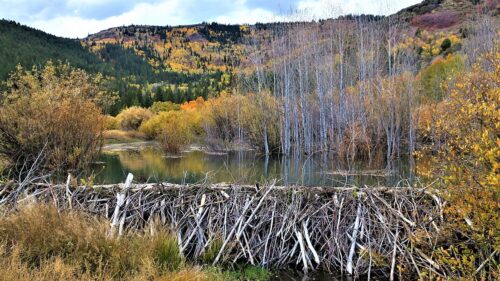
“It’s well known that beaver dams transform landscapes. In their absence, artificial versions were built in northern California to recreate lost wetlands – boosting the survival of threatened coho salmon. The findings are published in Frontiers in Ecology and Evolution. Fish biologist Michael Pollock of NOAA’s Northwest Fisheries Science Center called the results “mind blowing”. The Scott River valley in northern California was once home to so many beavers it was known as Beaver Valley. Their dams created an enormous riverine wetland, providing habitat for juvenile coho salmon and a host of other wildlife. Then European fur trappers arrived in the 1830s. Thousands of beavers were trapped and killed, and much of the habitat created by their dams and wetlands was lost – taking with it the cold, slow-moving habitat favoured by coho salmon. With the beavers all but gone, in 2015 the nonprofit Scott River Watershed Council built two artificial dams on a tributary called Sugar Creek. Wooden posts were hammered into the streambed, interwoven with willow and conifer branches, then the gaps were plugged with gravel, straw and mud. … ” Read more from BBC Wildlife.
Ryan Jacobsen: California ag’s future depends on water
“California agriculture faces enormous challenges, but Fresno County Farm Bureau CEO Ryan Jacobsen remains bullish on the future. In a wide-ranging conversation with “The Ag Meter” Nick Papagni, Jacobsen discussed California water, regulation, labor, technology, wildlife management, rising production costs, healthy eating, FFA and the future of the family farm. The conversation also offered a personal look at a fourth-generation farmer whose life has been deeply connected to agriculture and Farm Bureau. … While farming technology has become more precise and efficient, Jacobsen said the biggest change during his Farm Bureau career has been California’s regulatory and legislative environment. He pointed to the importance of gubernatorial appointments to agencies including the California Air Resources Board, State Water Resources Control Board, Department of Pesticide Regulation and California Department of Food and Agriculture. … ” Read more from AgNet West.
Karla Nemeth now leading Association of California Water Agencies
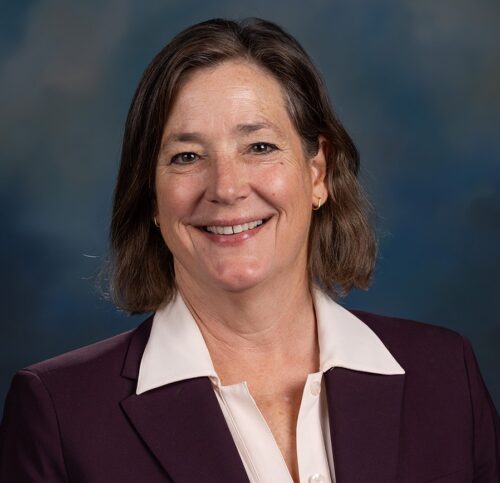 “Former California Department of Water Resources (DWR) Director Karla Nemeth today started her new role as Executive Director of the Association of California Water Agencies (ACWA), bringing more than two decades of water policy experience to the largest statewide coalition of public water agencies in the nation. As the top staff member, Nemeth oversees a team of more than 40 people based in Sacramento and Washington, D.C., and leads the association’s day-to-day operations on behalf of approximately 470 member agencies responsible for 90 percent of the water delivered to cities, farms and businesses across California. Nemeth’s immediate priorities include advancing ACWA’s strategic plan and its Vision for Our Water Future initiative, a member-driven effort to elevate water as a top policy priority for California’s next governor and state leaders. The initiative focuses on building a resilient and reliable water system, protecting affordability, investing in infrastructure and modernizing water management and permitting. … ” Read more from the Association of California Water Agencies.
El Niño-driven wave to raise California sea levels by a foot — in weeks
“Sea levels along the California coast are expected to rise by a foot as soon as late September, as El Niño-warmed tropical water pushes a slow-moving wave up the coast of North America. The swell isn’t something seen crashing at a beach but a planetary-scale process known as a Kelvin wave that is triggered by changes in wind at the equator. “It’s not a wave you can surf,” said Dillon Amaya, an assistant professor of marine science at North Carolina State University. “You’re not gonna be able to see it from your boat, but our instruments will see it as it passes by, like tide gages.” The coastally-trapped Kelvin wave, as it’s called, originated along the equator and hit the South America coast before turning north at about 6 mph. It raised water levels about nine to 14 inches (relative to 1993-2025 averages) along the coast of Central America in late August. That surge will hit Cabo in late September and eventually reach San Francisco the first or second week of October. … ” Read more from the San Francisco Chronicle.
Fixing problematic culverts
“Our landscape is crossed by millions of miles of streams and millions of miles of roads — for example, 370,000 miles on national forest lands alone. Everywhere a road and stream intersect, there’s something to help vehicles get from one side to the other. In a few cases it can be a ford, but it’s usually a bridge or, even more frequently, a culvert that allows the road to cross the stream. In many cases, culverts don’t do their job very well, and Trout Unlimited and our partners are among the organizations working hard to address the problem. Many culverts are too small to handle heavy flows from extreme rain events that are becoming more frequent and more severe as our climate changes. The resulting flooding can lead to damage to roads and other infrastructure. … ” Read more from Trout Unlimited.
California decides on Marine Protected Areas this fall
“Between a Space Force base and a dune preserve on California’s Central Coast lies a stretch of vibrant water teeming with ocean life. Humpback and gray whales pass through on their migrations. Seabirds and sea lions crowd the face of Lion Rock. Sea otters play in the rocky shallows, and in the lee of the Point Sal headland, currents hold larval fish and invertebrates in place long enough for them to develop before they disperse, replenishing waters up and down the coast. Point Sal is one of California’s healthiest remaining coastal landscapes. It is also within the ancestral homeland of the Chumash people and adjoins waters that hold deep cultural significance. This October, California’s Fish and Game Commission (FGC) will decide whether this area will be protected from now and into the future. … ” Read more from the NRDC.
Suisun City sells Main Street properties to California Forever
“The team behind a proposed billionaire-backed city in Solano County called California Forever has closed on vacant properties on a strip of Main Street in downtown Suisun City, city officials announced Tuesday. The sale by the city of properties to CF Suisun 1 and CF Suisun 2, companies formed by Jan Sramek, CEO of California Forever, includes buildings at 701-713 Main St. and two parking lots. The lots will be leased to the city for $1 each year so residents can continue parking while development plans are completed, according to a statement from the city. “Closing on these parcels marks a clear first step in fulfilling the commitment to the city we first outlined in our June 2, 2025, offer,” said a California Forever spokesperson in an email on Tuesday, adding that the company looks forward to bringing “wonderful new development” to Suisun City. … ” Read more from the SF Gate.
SEE ALSO: Downtown Suisun City deal moves forward as California Forever buys 3 properties, from Channel 10
LEGISLATIVE SESSION
Tribal water rights bill heads to Newsom’s desk
 “A bill that tribal leaders say would finally move California from “apology to action” on Indigenous water rights is now in Gov. Gavin Newsom’s hands, following a unanimous Senate vote and weeks of direct tribal advocacy in the Capitol. Assembly Bill 2218, authored by Assemblymember Ash Kalra, would require state agencies to formally consult with tribes when making decisions about water policy, permitting and investigations. The bill would be a shift tribal governments have sought for decades as they continue to confront the legacy of dispossession and exclusion from water‑management systems. “I am proud to author AB 2218, a measure that will support California’s efforts to respectfully and effectively address the historic water inequities that continue to affect tribal communities,” Assemblymember Ash Kalra said in a news release. “Despite being the original stewards of this land, tribes have been systemically dispossessed of the water resources they have depended on for millennia. I hope Gov. Newsom will recognize this bill as an essential component in the state’s ongoing work to address this injustice.” … ” Read more from the Eureka Times-Standard.
One less barrier for farmers who want to cover fields with solar panels
“A bill that exemplifies the lack of water for farming in California just passed the state Legislature. It makes it easier for farmers to convert their fields to solar panels. Decades ago, state lawmakers were concerned about too many farms being turned into new subdivisions. So in 1965, the state started giving tax breaks to growers who agreed to keep their land in farming. But now farmers who want to switch to solar are finding the strict rules are like expensive locks on their property, with high fees to get out of the agreements. The bill adopted Monday night targets areas where growers are now limited in how much groundwater they can pump and are being forced to leave some of their land dry and unplanted. … ” Read more from the LA Times.
California lawmakers approve bill streamlining invasive golden mussel response
“A California bill that would make it easier to respond to the threat of the invasive golden mussel has made its way to Gov. Gavin Newsom’s desk. Lawmakers passed Assembly Bill 2032, and it will ultimately be up to the governor whether to sign it into law. The measure, authored by Assembly Member Rhodesia Ransom, would ease the permitting process, allowing agencies that operate a water supply to respond more quickly to the spread of golden mussels. Golden mussels pose a risk to both the environment and man-made structures. The rapidly reproducing species can attach to any surface, clogging water pipes and pumps. They can also affect the food fish eat, disrupting local ecosystems. … ” Read more from KCRA.
Newsom signs bill easing Pajaro levee construction
“Gov. Gavin Newsom has signed legislation intended to speed up work on the Pajaro River flood protection project by giving the agency overseeing the work more options for awarding construction contracts. Senate Bill 1055, authored by state Sen. John Laird, expands the contracting methods available to the Pajaro Regional Flood Management Agency from three to seven. Newsom signed the bill Tuesday. The legislation will allow PRFMA to use methods including Job Order Contracting, Design-Build, Best Value and Construction Manager/General Contractor contracting. Supporters say the additional options could reduce costs and shorten construction timelines as work continues to upgrade the Pajaro River levee system. … ” Read more from the Pajaronian.
In standoff with Newsom, California Democrats claw back $450 million for climate projects
“California lawmakers stared down Gov. Gavin Newsom and emerged with hundreds of millions of dollars in climate money for projects he didn’t necessarily want to fund. As a result, the state will funnel $450 million to transit, clean air and drinking water from its main climate fund under a deal Newsom struck with Democratic lawmakers. The measure cleared the state Senate 29-4 and the Assembly 60-11 on Tuesday. The agreement, Assembly Bill/Senate Bill 113, comes after months of pressure from Senate Democrats and environmental advocates who warned that those projects could lose funding under changes Newsom’s administration made to California’s carbon market earlier this year. State leaders last fall reauthorized California’s 13-year-old carbon market, which charges companies to pollute and deposits the revenue into California’s Greenhouse Gas Reduction Fund for projects combating climate change. That deal also created a three-tiered system to determine which projects get funding. … ” Read more from Cal Matters.
Sweeping climate and energy legislation goes to Newsom’s desk
“After a tumultuous year, California lawmakers sent several important energy and environment bills to the governor’s desk in the final hours of the legislative session. Bills advanced by the Senate and Assembly aim to rework California’s climate spending, close an environmental review loophole and rein in electricity rates, among other efforts. All await signatures from Gov. Gavin Newsom this month. One major item is Senate Bill 193, a last-minute effort to settle how California spends its Greenhouse Gas Reduction Fund under the state’s recently renewed cap-and-invest program. The fund is a primary source of money for climate projects in California, but a new three-tier payout system left some crucial programs last in line to receive money. The bill passed Monday would instead guarantee about $921 million for those programs, including $230 million for transit projects, $70 million for forest health, $70 million for clean drinking water and $50 million for sustainable agriculture, along with other programs geared toward air quality, affordable housing and more. … ” Read more from the LA Times.
Good Fire Act clears California legislature, awaits Governor’s signature
“Assemblymember Chris Rogers’ (D-Santa Rosa) AB 1699, the Good Fire Act, has cleared the state Legislature and now awaits the Governor’s signature. This comprehensive legislation is designed to significantly expand California’s capacity to conduct prescribed burns and cultural burning practices. The bill addresses critical operational, liability, and certification barriers that have limited the state’s ability to use beneficial fire as a tool to reduce catastrophic wildfire risk and restore ecological health. “For generations, California Tribes have stewarded the landscape with fire. This community wide effort created a safer and healthier ecosystem for all,” said Assemblymember Chris Rogers. “Regrettably, one of the first laws ever passed by the Legislature outlawed this practice. We restricted cultural burning practices and ignored that wisdom. AB 1699 is about continuing to right that historic wrong.” … ” Read more from the Redheaded Blackbelt.
In commentary today …
California needs a clear path for safeguarding its outstanding waters
“California has spent billions of dollars restoring rivers, lakes, and streams after they have been damaged by pollution, development, altered landscapes, and other pressures. This restoration is essential work, but there is another, often overlooked, part of protecting clean water: making sure our outstanding waters don’t become degraded in the first place. California already has a powerful tool for doing just that. It simply hasn’t made much use of it. Under the Clean Water Act’s antidegradation framework, states can designate exceptional waters as Outstanding National Resource Waters, or ONRWs. ONRW designation can be the highest level of water quality protection available under the Clean Water Act, establishing a legal standard that prohibits any permanent degradation of a water body’s existing quality. The objective is straightforward: when a river, stream, or lake possesses exceptional water quality or ecological or recreational significance, we should maintain that quality rather than allowing it to slowly decline with allowable pollution. … ” Read more from the South Yuba River Citizens League.
While Colorado and the West burn, Washington rearranges org charts
Scott Fitzwilliams, who resigned from the U.S. Forest Service in February 2025 after 34 years with the agency, writes, “As millions of acres burn across Colorado and the American West, thousands of families flee their homes, entire communities are blanketed in smoke and firefighters continue to risk — and in too many cases lose — their lives, one would expect the federal government to be singularly focused on confronting one of the greatest natural resource crises of our time. Instead, the Trump administration is reorganizing federal agencies, eliminating experienced public servants and insisting it has wildfire under control. It doesn’t. The devastating wildfire season unfolding across the West is not an isolated event or simply another bad fire year. It is the predictable consequence of a warming climate that is producing record-breaking heat, prolonged drought and increasingly volatile fire behavior. … ” Read more from the Colorado Sun.
Data centers are blowing the PR game. Here’s how to fix that.
Taylor Budowich, founder and president of Innovation Council, writes, “When many teachers in Richland Parish, Louisiana, opened this year’s annual bonus checks, they found them 400 percent larger than last year — reaching up to $50,000, nearly a full year’s pay in one of the poorest corners of one of America’s poorest states. The bulk of the money came from the tax revenue of a single source: the five-gigawatt data center that Meta is building in Richland Parish. The company’s first sales-tax payment, more than $22 million, exceeded the parish’s entire annual tax collection the year prior. For the first time in his 30-year career, the schools superintendent says, every teacher the district interviewed was fully certified. Most Americans haven’t heard that story. What they have heard instead is that data centers will guzzle their water and spike their power bills — and our politics now reflect that. New York imposed a one-year moratorium on new data center construction, and Democrats in Congress introduced a national moratorium bill. Republican Texas Gov. Greg Abbott — up for reelection — is bragging that he’s paused projects across his state. … AI supporters are losing the argument not because the facts aren’t on their side, but because they keep reaching for the wrong facts — gigawatts, capital expenditure, the race with China — in making their case. … ” Read the full commentary at the Washington Post.
In regional water news and commentary today …
NORTH COAST
Klamath River spit fishery closes after quota met
“The spit fishery at the mouth of the Klamath River will close to angling at 11:59 p.m. Wednesday, after anglers reached the area’s adult fall‑run Chinook salmon quota, according to the California Department of Fish and Wildlife. The closure applies only to the spit area, defined as the zone within 100 yards of the channel through the sand spit at the river mouth, downstream of the Highway 101 bridge near Klamath. Recreational fishing in that section will remain closed for the rest of the 2026 season. Fishing below the Highway 101 bridge but outside the spit, as well as above the bridge, remains open until those areas meet their own quotas. As of last Friday, roughly 26% of the quota for the stretch from the mouth to Weitchpec had been met, according to local guide Kenny Priest of Fishing the North Coast. … ” Read more from the Eureka Times-Standard.
Mid Klamath Watershed Council wraps summer prescribed burn season with 145 acres treated
“The Mid Klamath Watershed Council (MKWC) and partners completed 25 prescribed burns over 17 burn days this summer, bringing fire back to the landscape through a collaborative program called All Hands All Lands, focused on forest health, wildfire resilience, land management and community safety. The summer burn season wrapped up Thursday with a successful prescribed burn at the Orleans MKWC office, where crews from the Karuk Department of Natural Resources (KDNR), Salmon River Restoration Council (SRRC), volunteer fire departments and other partners worked together to safely apply fire under carefully monitored conditions. The 25 burns represent 145 acres treated throughout the Mid Klamath region including the towns of Happy Camp, Somes Bar, Orleans, Forks of Salmon, even extending out to Yreka and all the way down to Mendocino County with crews and partners coordinating throughout the summer to identify opportunities to safely conduct prescribed fire. … ” Read more from the Redheaded Blackbelt.
State advisory issued for Lake Pillsbury due to harmful algal bloom
“Lake County Health Services is notifying residents and visitors of a “danger” advisory recommended by the California State Water Resources Control Board for Lake Pillsbury following state testing that identified elevated levels of cyanobacteria and associated toxins consistent with a harmful algal bloom. Based on the state’s findings and guidance, people and pets are advised to stay out of the water at Lake Pillsbury until further notice. As part of a pre-Labor Day assessment, State Water Resources Control Board staff collected a water sample at Lake Pillsbury Resort on Aug. 24. According to results provided to Lake County Health Services, the sample contained high concentrations of cyanobacteria. … ” Read more from the Lake County News.
SIERRA NEVADA
Yuba Water awards $13.9M contract for penstock hillside stabilization
“Yuba Water Agency has awarded a $13.9 million contract to Hat Creek Construction & Materials, Inc. for hillslope and soil stabilization around the agency’s penstock pipe and New Colgate Powerhouse in the Yuba County foothills. The work is part of Yuba Water’s ongoing recovery efforts following the rupture of its penstock earlier this year, which sent water flowing down the hillside, causing significant erosion to the hillside around the penstock. A penstock is a large diameter pipe that moves water from New Bullards Bar Dam to New Colgate Powerhouse to generate power. The contract includes placing slope and soil stabilization materials, adding a rock buttress on the east side of the penstock to prevent further damage to the hillside and building detention basins to manage runoff from rain. … ” Read more from YubaNet.
River Otters: Larger than thought, feistier than expected, and definitely in Lake Tahoe
“When you think of a badger or a wolverine, you probably picture a fierce, powerful predator and you’d be right. These tough mammals are part of the family Mustelidae, the weasels, and can occasionally be found in Tahoe alongside several other members of the weasel family. The longest of them all, with some adults reaching four feet in length, is the River Otter, which has certainly been making headlines lately. The Tahoe region is home, at least occasionally, to seven species of mustelids, including not only the aforementioned North American River Otter, American Badger, and Wolverine but also their cousins, the Long-tailed Weasel, American Short-tailed Weasel, American Mink, and Pacific Marten. Some of these animals can look quite similar, while others appear very different from one another, but they all share characteristics typical of the family: elongated bodies, relatively short legs, small rounded ears, short skulls, and dense fur. Depending on the species, mustelids can be terrestrial, arboreal, or aquatic, with river otters and mink particularly well adapted to life in and around water. … ” Read more from the Tahoe Daily Tribune.
Tuolumne River Partners launch next habitat restoration project
“As part of a continued commitment to restoring and enhancing habitat for native fish, Tuolumne River Partners Modesto Irrigation District (MID), Turlock Irrigation District (TID) and the San Francisco Public Utilities Commission (SFPUC), in partnership with the U.S. Fish and Wildlife Service (USFWS), have begun construction on the Powerhouse Riffles Restoration Project, a mainstem Tuolumne River restoration effort designed to improve spawning and rearing habitat for salmon and other native aquatic species. The approximately $4.7 million, self-funded project will restore spawning habitat impacted during high river flow events in 1997, 2011 and 2017 by reconstructing riffles and gravel bars and enhancing in-channel habitat complexity and diversity. Riffles are shallow, fast-moving sections of a river where the water flows over a cobble or gravel bed, creating a choppy surface. Riffles are key habitats for salmon: the churning water traps air and raises oxygen levels in the river, rocks and gravel attract aquatic insects, and juvenile fish gather in riffles to eat the abundant insects and lay their eggs in the clean gravel. … ” Read more from the Modesto Irrigation District.
SACRAMENTO VALLEY
Butte County seeks Oroville Dam compensation, recreation benefits after FERC D.C. meetings
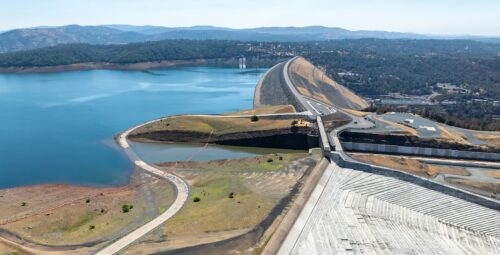
On this date, the water storage was 2,243,714 acre-feet (AF), 66 percent of the total capacity. Photo taken September 5, 2024. Sara Nevis / DWR
“Butte County officials are pressing federal regulators for greater compensation and improved recreational benefits tied to Oroville Dam, following a trip to Washington, D.C., earlier this month to meet with the Federal Energy Regulatory Commission. The county said the meetings with FERC were productive and provided guidance on how Butte County and its residents can participate in the federal relicensing process for the Oroville Dam project. For Butte County Supervisor and Board Chair Bill Connelly, the trip was part of a long-running effort to push for what he considers a fairer deal for the community. “This is my 15th trip to DC over 21 years to talk to FERC,” Connelly said. … ” Read more from KRCR.
The century-old Sacramento Weir is expanding. When will the flood gates be ready?
“More than a century and a half ago, in Sacramento’s nascent years as a city, torrential winter rains exposed one of its major vulnerabilities. Through December 1861 and January 1862, storm after storm passed over the region, swelling its rivers and breaching newly constructed levees. Water inundated the state capital, reaching the second floor of some buildings in town. The destruction wrought by the Great Flood laid bare the risks of Sacramento’s location at the confluence of two mighty and unpredictable rivers. “The Sacramento region has one of the highest flood risks of any metropolitan region in the country,” said Lt. Col. Kara Greene of the U.S. Army Corps of Engineers. “We follow right behind New Orleans.” … ” Read more from PBS Abridged.
NAPA/SONOMA
Commission reconsidering proposed water district geared to give Alexander Valley stakeholders greater say in future water use
“As major changes hang over the shape of the region’s water supply, a group of agricultural landowners in northern Sonoma County is advancing the latest attempt to create a new water district for the area and secure a seat at the table in ongoing talks tied to that future. The proposed district would give Alexander Valley stakeholders their own local agency to pursue water projects, weigh in on regional decisions and prepare for a future in which the Russian River could see less water — both from changes in climate and from any drawdown in supplemental flows from the Eel River. The fate of the proposed water district could be decided as soon as October, when the Sonoma Local Agency Formation Commission, or LAFCO, is expected to again take up the proposal. The panel oversees jurisdictional boundaries for existing and new local government entities. … ” Read more from the Santa Rosa Press Democrat.
BAY AREA
El Niño could bring a wet, wild winter. How can you — and your home — be ready?
“Higher seas. Back-to-back storms. Mudslides. Flooded homes and highways. The mere mention of El Niño — and the headlines you’re seeing — can be anxiety-provoking. But how real should your worry be? And what can you do to protect your home, business, or property in advance? First, the outlook: Federal forecasters report there’s a 90% chance of a “very strong” El Niño this fall and winter, and a nearly 70% chance that the strength of El Niño could exceed the strength of any similar event seen since 1950. Bay Area cities and counties prone to flooding from the sky and the bay, like San Francisco and Marin, are already taking the El Niño threat seriously and preparing for the worst: deluges that could combine with high tides and temporarily elevated sea levels to potentially swamp whole neighborhoods and roadways, including Highway 101. … ” Read more from KQED.
Marin Municipal Water District reports progress on conservation
“Wireless water meters, lawn replacements and better education around conservation have combined to help the Marin Municipal Water District reduce water use and waste below pre-drought levels, the agency reported. The actions are all part of the district’s “water efficiency master plan,” which was approved in 2024 amid a push to build resiliency coming out of a two-year drought. Since 2020, which marked the beginning of the dry period, the district has had a cumulative savings of 648 acre-feet of water, officials said. An acre-foot is about 326,000 gallons. The cumulative reduction only accounts for actions that produce continual savings beyond a single year, said Carrie Pollard, water efficiency manager. The statistic shows there is growing participation in water efficiency programs, she said. … ” Read more from the Marin Independent Journal.
Marin sewage cost dispute persists at agencies
“A dispute between the Ross Valley Sanitary District and the Central Marin Sanitation Agency over rate hikes and governance issues is not going away. The district collects wastewater from 44,500 homes and businesses for treatment by the Central Marin agency. The customers are in Fairfax, Larkspur, Greenbrae, Ross, Kentfield, San Anselmo and Sleepy Hollow. Sanitary districts serving about 56,000 customers in San Rafael, Corte Madera and San Quentin also send wastewater to the Central Marin Sanitation Agency. Frictions keep surfacing on the Central Marin agency board, where Ross Valley holds two of five seats — including board president — and has been outvoted on rate-setting issues. … ” Read more from the Marin Independent Journal.
California to buy defunct horse track and turn it into the Bay Area’s newest public park
“California lawmakers will spend up to $125 million in state funds to help buy and turn Golden Gate Fields, the 161-acre former horse racing track along the East Bay shoreline, into a public park — a priority of Gov. Gavin Newsom’s. The funding will come from Proposition 4, the voter-approved $10 billion bond for climate projects such as drinking water, wildfire prevention and land conservation, despite concerns from environmental advocates and lawmakers that diverting the money would drain limited resources from those other priorities. Golden Gate Fields, owned by Canadian company The Stronach Group, closed in 2024 after a 83-year run as interest in horse racing dwindled. In March, Trust for Public Land, a national nonprofit advocating for park access, announced its intention to raise $175 million to buy the land, transfer the deed to the East Bay Regional Park District and transform it into a publicly accessible waterfront park. … ” Read more from Cal Matters.
Big Tech’s data center boom is igniting a political revolt in the Bay Area
“The 438,500-square-foot Amazon data center was already under construction, rising up against Gilroy’s bucolic farmland when the outrage began. City staff had approved the project the previous summer under a decades-old development rule that did not require a hearing before the City Council. Amazon had purchased the land in 2020 and undergone a yearslong environmental review, and the city had posted information about the project online. Still, many residents said they only found out about it earlier this year, as work began on the first of two massive warehouses — each nearly the size of four football fields. The resulting uproar mirrors a debate spreading across the Bay Area as cities scramble to respond to an industry expanding faster than many of their rules can keep up. At least six Bay Area cities have imposed moratoria, promised public hearings or begun rewriting their development codes amid concerns about electricity and water use, noise, transparency and what communities receive in return. … ” Read more from the Mercury News.
CENTRAL COAST
Restoration underway on Salinas’ Gabilan Creek
“A restoration effort is underway along a portion of Gabilan Creek in Salinas, a waterway which connects the city and its surrounding areas to the waters of Monterey Bay. Monterey Waterkeeper, a local nonprofit organization, is at the helm of the effort and is working alongside local students and the city of Salinas to bring the creek back to a more pristine state. Gabilan Creek faces pollution from agricultural and urban runoff, trash from surrounding neighborhoods and homeless encampments and invasive plant species that choke out native riparian species–all of which have downstream effects on the health of the bay. Operating on a grant from the California Coastal Commission, the restoration efforts are still in their early stages and are actively working to get funding through the city of Salinas’ Community Sponsorship program, said Natalie Herendeen, executive director of Monterey Waterkeeper. … ” Read more from the Monterey Herald.
Facing the future of water: SLO County farmers confront new challenges
“Early mornings at The Luffa Farm in Nipomo usually begin under layers of Central Coast fog as rows of luffa plants stretch across the property. Like many specialty crop farms in San Luis Obispo, the farm depends heavily on water to sustain production. But as California continues to enforce stricter groundwater regulations under the Sustainable Groundwater Management Act, many local farmers are rethinking how they operate. The Sustainable Groundwater Management Act was passed in 2014 after years of groundwater overuse throughout California. The law requires local groundwater basins to become more sustainable over time, especially in areas considered critically overdrafted. While the goal is to protect California’s long-term water supply, the changes have also created new challenges for farmers statewide. In San Luis Obispo County, those impacts are becoming more noticeable as growers adjust irrigation practices, deal with rising costs, and look for ways to reduce water use while keeping farms productive. … ” Read more from the Cuestonian.
SOUTHERN CALIFORNIA
If El Niño slams LA County, how can its 10 million residents be ready?
“Heavy rains, damaging floods, debris flows from burn scar areas, beach erosion, high surf, even growth of fire-prone dry grasses by spring are results of a wet winter triggered by a warming ocean phenomenon known as El Niño. Meteorologists put the likelihood of an El Niño at 90% or more this winter, meaning the warmer jet stream is likely to direct above-average rainfall into Southern California, as a lineup of storms drop rain that play havoc with local infrastructure and everyday life. At the invite of the Los Angeles County Board of Supervisors on Tuesday, Sept. 1, close to a dozen Los Angeles County department heads laid out their plans for preparing for an El Nino-powered, possibly record-setting, wet 2026-2027 winter. Areas denuded by wildfires are focal points for warnings and possible evacuation orders, said county officials. This includes Altadena and the Pacific Palisades-Malibu areas, both devastated by the January 2025 fires and more prone to mudflows. … ” Read more from the LA Daily News.
Why LA County emergency managers are prepping for the worst ahead of this year’s El Niño
“Emergency management officials Tuesday told L.A. County supervisors they’re preparing for the worst ahead of this winter’s potentially historic El Niño weather system. The climate pattern usually brings significant rain and ocean swells to Southern California, elevating the risk of flooding and mudslides. Forecasters say El Niño has already formed in the tropical Pacific Ocean and that there is already a 90% chance of a strong El Niño in our region this year. The county’s Office of Emergency Management said it plans to hold a practice El Niño response exercise on Sept. 13. It will include county departments and community disaster management coordinators. “ Most importantly, the exercise will allow us to identify gaps and response actions that we can continue to work on throughout the storm season,” said Kevin McGowan, director of L.A. County’s OEM. … ” Read more from the LAist.
With rumors of a hurricane in California, here’s what to expect
“Forecasters are closely tracking the potential for Tropical Storm Marie to impact California’s weather over Labor Day weekend. Unusually warm waters in the eastern Pacific Ocean, where a potentially historic El Niño event is taking shape, are contributing to high levels of tropical cyclone activity this year. Although models are showing a wide range of paths for Marie, the chances it would make landfall in Southern California remain extremely low. “No, a hurricane is almost certainly not going to make landfall in Southern California,” Daniel Swain, a climate scientist for University of California Agriculture and Natural Resources, said during an online briefing Monday. “[But] yes, it is increasingly plausible that a tropical system of some magnitude will have at least indirect effects in Southern California for several days later this week.” … ” Read more from SF Gate.
IMPERIAL/COACHELLA VALLEYS
Judge preparing to halt massive Imperial County data center, order environmental review
“For months, a bitter debate has raged over whether a giant proposed data center complex in Imperial County could move forward without facing an environmental review under the California Environmental Quality Act, or CEQA. The project’s developer, Sebastian Rucci, argued it did not need to undergo a CEQA review. That’s a lengthy analysis showing the possible impacts the project would have on the region’s energy grid, air quality and water supply. Rucci said he had planned the 950,000-square foot computing warehouse to meet local zoning requirements in hopes of getting it built swiftly. County officials accepted his argument, approving a lot merger tied to the project. … ” Read more from KPBS.
SEE ALSO: Judge tentatively blocks CEQA shortcut for Imperial Valley data center, says full environmental study required, from the Desert Review
Along the Colorado River …
The Colorado River Basin at night
“This night sky image (from the NASA Earth Observatory) shows artificial lighting – a rough proxy for population – in the Colorado River Basin and adjacent areas. A close look reveals how few people actually live in the Upper Colorado River Basin. Grand Junction, Colorado, and Farmington, New Mexico, are apparent, and Rock Springs, Wyoming, is faintly visible, but the real takeaway from this image is how uninhabited the Upper Basin really is. In fact, more people live in Mexico’s portion of the Colorado River Basin than live in the Upper Basin, despite being less than 1/20th the size. … ” Read more from the Pacific Institute.
Falling Lake Mead threatens Hoover Dam’s power output
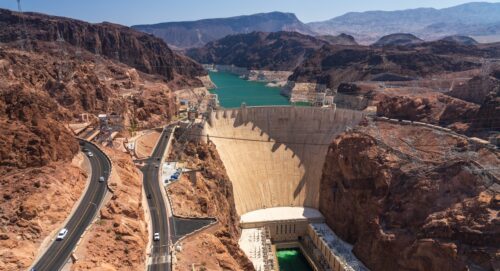 “The Southwest’s prolonged drought is not only creating a water problem. It is also creating a power problem. As Lake Mead falls, Hoover Dam has less water pressure available to generate hydroelectricity. Now, a new federal assessment warns the dam could face a significant drop in generating capacity if the reservoir crosses a critical threshold. Rising more than 700 feet above the Colorado River, construction on the Hoover Dam began in 1931 and was completed in 1936. It formed Lake Mead, the largest reservoir in the U.S.. Water from the reservoir falls through large pipes inside the dam, spinning turbines that generate electricity for customers across Arizona, Nevada and California. … ” Read more from Channel 15.
Arizona water director: Colorado River plan ‘very positive’ outcome
“Arizona will see its Colorado River water allocation reduced by 760,000 acre-feet annually over the next two years, under new operating guidelines the federal government finalizedand announced recently. The U.S. Department of the Interior announced that the rules call for reduced water deliveries to Lower Basin states for the next two years. Arizona’s reduction is under the states’ proposed sharing agreement. California would reduce deliveries by 440,000 acre-feet. Nevada would reduce its share by 50,000 acre-feet. The guidelines also call for the Lower Basin states to voluntarily conserve an additional 700,000 acre-feet over two years. … ” Read more from KAWC.
Arizona prepares for deeper Colorado River water cuts
“With Arizona now guaranteed to face Colorado River cuts over the next two years, the region’s water experts are turning to both short-term reserves and long-term alternatives as they prepare for an increasingly dry future. Following the Bureau of Reclamation’s Record of Decision on Colorado River negotiations, Arizona Department of Water Resources Director Tom Buschatzke toured the state to discuss its implications for cities, industries and the state as a whole. Buschatzke told the Arizona Corporation Commission on Aug. 26 that the state is looking beyond the operating guidelines approved by the federal government for 2027 and 2028. Arizona can absorb the initial 31% reduction in its Colorado River supply, largely because it has spent decades banking water underground, experts say. But that reserve is finite, and state and local water officials are already looking for additional supplies — from water recycling and new groundwater infrastructure to desalination — as they prepare for potentially deeper cuts to the river in the years ahead. … ” Read more from the Arizona Capitol Times.
Attorney General Kris Mayes calls for halt to new Arizona data centers
“Attorney General Kris Mayes wants Arizona to stop approving new data centers, staking out a more aggressive position than fellow Democrat Gov. Katie Hobbs over how the state should respond to growing concerns about water and energy demand. A spokesperson for the Attorney General’s office said Mayes’ call was prompted by proposed cuts to the state’s Colorado River allotments — despite the power to implement a moratorium lying elsewhere. … ” Read more from the Arizona Republic.
At the Grand Canyon, flooding and wildfire underscore compounding extreme weather risks
“An intense downpour at Grand Canyon National Park transformed hiking trails and shallow creeks into deadly rapids over the weekend, killing at least two people. Following scattered showers Saturday morning, around an inch of rain pummeled parts of the storied Arizona park in just a half hour later that day. Flash floods carried water, mud and debris through the rocky peaks and winding, narrow paths that scores of recreationalists traverse each year. Ahead of the storm’s apex, hikers scrambled to reach higher ground, some forced to find refuge in a cactus patch. Overall, around 80 people were evacuated over the weekend from the area near Bright Angel Creek at the bottom of the Grand Canyon. Authorities are still searching for at least one missing person. Though the damage in the area is still being assessed, the National Park Service said this violent flooding had “significant impacts” on infrastructure, destroying nearly all footbridges in the Bright Angel Creek area and roughly 40 percent of the Transcanyon Waterline, a crucial water supply line for the park. … ” Read more from Inside Climate News.
Zebra mussel DNA detected in portions of the Colorado River near Moab
“Fragments of zebra mussel DNA were recently detected in the Colorado River in Utah for the first time, and the Utah Division of Wildlife Resources and partner agencies are reminding boaters and other watercraft users to remain vigilant in preventing the spread of aquatic invasive species, according to a statement from the DWR. Zebra mussels are an emerging threat in the Upper Colorado River basin, with an established infestation documented near Loma, Colorado in 2025, reads the statement. The detection of environmental DNA in the water only indicates the presence of an animal somewhere upstream — it does not confirm that live mussels are present. “Once established, zebra mussels can clog pipes and infrastructure, create recreation hazards on rocks and beaches, and alter ecosystems,” Utah Department of Natural Resources Law Enforcement Aquatic Invasive Species Statewide Operations Lt. Bruce Johnson said. “It is critical for anyone who uses boats, paddleboards, kayaks and any other watercraft to adhere to all the laws and to clean, drain and dry their watercraft in order to prevent these aquatic invasive species from spreading further into Utah.” … ” Read more from the Moab Times.

