
Several news sources featured in the Daily Digest may limit the number of articles you can access without a subscription. However, gift articles and open-access links are provided when available. For more open access California water news articles, explore the main page at MavensNotebook.com.
On the calendar today …
- MEETING: State Water Resources Control Board beginning at 9am. Agenda items include uncontested items and board member reports. Click here for the agenda.
- WORKSHOP: 2026 Draft Sustainable Groundwater Management Grant Program Guidelines from 11am to 12pm. The Department of Water Resources (DWR) is pleased to announce the release of the 2026 Draft Sustainable Groundwater Management Grant Program Guidelines. The guideline’s focus is to administer a 2025 legislative directive of $3.5 million for small Sustainable Groundwater Agencies and $6.5 million for Technical Assistance. The workshop will provide an overview of the program, review key components of the 2026 Draft Guidelines, and to accept public comments. Register here: https://stantec.zoom.us/meeting/register/9NsBBiixR8653uQGD_WpoQ
- WEBINAR: Beyond Removal: Destroying PFAS in Reverse Osmosis Concentrate from 12pm to 1pm. The Orange County Water District (OCWD) has taken a leading role in addressing PFAS through an extensive program focused on monitoring, treatment, research, and collaboration with local water agencies. OCWD also operates the Groundwater Replenishment System (GWRS), the world’s largest advanced water purification system for indirect potable reuse, which uses reverse osmosis (RO) as one of three primary treatment processes. RO removes PFAS and other dissolved compounds from water, concentrating them in a separate residual stream known as reverse osmosis concentrate (ROC). This webinar will examine OCWD’s research into adsorption technology followed by electro-oxidation (EO) to separate PFAS from ROC and destroy the PFAS compounds once removed. The speakers will provide insights into performance, feasibility, and challenges of this integrated approach and its potential in supporting OCWD’s broader PFAS management and water purification programs. Click here to register for the webinar.
- OFFICE HOURS: State Water Board staff on UWUO indoor variances and temporary provisions from 2pm to 3pm. State Water Resources Control Board staff are holding office hours for urban water suppliers subject to the Making Conservation a California Way of Life regulation and requesting variances and temporary provisions for the reporting year 2025-26. The office hours will be held over Zoom, on September 1. There will be a brief presentation on the submission and review process, and then question and answer time. The office hours will not be recorded. Register for here: https://waterboards.zoom.us/webinar/register/WN_Ew9dW9obSXyS4LquJcqymg
In California water news today …
Study: Reservoir management system could save California $150 Million every year
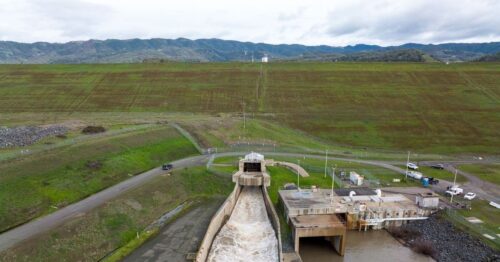 “A new study from the Center for Western Weather and Water Extremes (CW3E) at Scripps Institution of Oceanography at UC San Diego finds that improved weather and water forecasts could help California gain more value from existing reservoirs and help meet a new water supply target. The study, led by Scripps economist Tom Corringham and staff researcher Denali Pinto, estimates that a reservoir operation system co-led by Scripps, state, federal and local water authorities could save the state between $100 million and $200 million per year in the form of added water available to meet agricultural, urban and household needs. Corringham said that ripple effects ranging from recreation enhancements to recreation, power generation, enriched fishery stocks, and improved flood risk management make that a conservative estimate. “California’s water challenge will require many different solutions,” said Corringham. “Our research shows that smarter operation of existing reservoirs could make a meaningful contribution.” … ” Read more from Scripps Institution of Oceanography.
Super El Niño is looming. Here’s what new data means for snow season across the West
“As El Niño continues to strengthen, data is increasingly points to a clear pattern this upcoming snow season: a wet winter for California, and a warm winter for the Pacific Northwest. We took the data behind our upcoming winter season and applied it to snow using three independent climate models. The results give us a rough picture of a winter that features above-average snowfall for the Sierra and Northern California — especially in January. With models projecting an inch or three or extra snowfall for the first month of 2027, a below-average snow year is looking increasingly unlikely. The variables that inform these projections are already informing other winter outlooks as everyone from governments to ski resorts moves to prepare for the winter on its way. … ” Read more from the Sacramento Bee.
SEE ALSO: Strengthening El Niño could shake up fall weather across the US. Here’s what to expect, from Fox Weather
Butte County pushes for Oroville Dam accountability
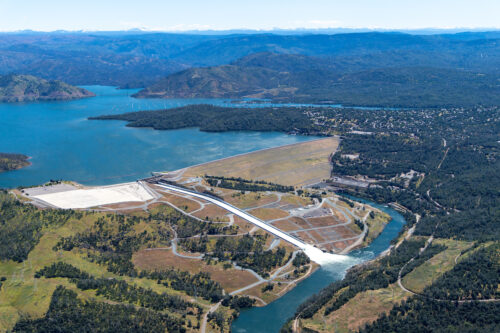
“Butte County representatives met with leadership and staff from the Federal Energy Regulatory Commission (FERC) in Washington, D.C., earlier this month to discuss accountability surrounding the Oroville Dam license. County officials said the meetings were productive and provided guidance on how the county and residents can participate in the federal relicensing process. The county argues Butte County has carried significant financial and public-safety burdens since Oroville Dam was completed in 1968, while many of the project’s benefits have gone to communities farther south. … ” Read more from Action News Now.
SEE ALSO: Butte County Presses for Oroville Dam Accountability in Washington, D.C., press release from Butte County
California’s winding road from water plans to solutions
“According to the California Department of Water Resources, the first investigation of California’s water supplies began in 1873 when President Ulysses S. Grant commissioned a federal study from Colonel Barton Stone Alexander of the Army Corps of Engineers. Published in 1874, the “Report of the Commissioners on the Irrigation of the San Joaquin, Tulare, and Sacramento Valleys of the State of California,” established the first documented blueprint for irrigation in the Central Valley. Alexander envisioned a system of canals to complete an exchange of water from the Sacramento to the San Joaquin Valley, according to the U.S. Bureau of Reclamation. In the eighth of 24 conclusionary statements, the report stated that both the state and federal governments should support irrigation in the Central Valley. “That it is the duty of government, both State and national, to encourage irrigation, and the first step in that direction ought to be to make a complete instrumental reconnaissance of the country to be irrigated, embracing the sources from whence the irrigating-canals ought to commence, gauging the flow of the rivers and streams, and defining the boundaries of the natural districts of irrigation into which the country is divided,” the report stated. The historic report outlined a common theme relevant to modern water management — water is more abundant in some parts of the state, scarce in others, and moving it requires infrastructure. … ” Read more from Valley Ag Voice.
Evaluating the economics of ‘SGMA-ready’ crops
“According to the Public Policy Institute of California, 10% to 20% — or 500,000-acres to 900,000-acres — of farmland is likely to come out of active production in the San Joaquin Valley primarily due to the impacts of the Sustainable Groundwater Management Act of 2014. PPIC, which has studied agriculture in the San Joaquin Valley for over eight years, recently released a report on the potential of “SGMA-ready” crops for farmers in areas where significant cuts to water use are required. According to the report, “SGMA-Ready Crops as a Low-Water Alternative to Fallowing,” these crops may help reduce widespread and uncoordinated fallowing. Bradley Franklin, a research fellow at the PPIC Water Policy Center and author of the report’s companion policy piece, explained that a SGMA-ready crop requires minimal water use. Specifically, Franklin discussed the viability of small grain winter crops such as wheat, barley, rye, and triticale for both forage and grain, as an alternative to fallowing. “Growing wheat and small grain crops is nothing new to the Valley, but this is a different way of thinking about it and using different management practices,” Franklin said. … ” Read more from Valley Ag Voice.
What is regenerative agriculture and what does it mean for California farmers?
“You may have heard or read some of our recent coverage on regenerative agriculture over the past few weeks and wondered why we’re covering it. Many regenerative practices are rooted in Indigenous knowledge and have increasingly been touted as a potential tool for addressing some of California agriculture’s climate and environmental challenges. It’s also relevant because the state adopted a formal definition of regenerative agriculture last year, which could help inform future programs, investments and funding. But the definition was deliberately broad and outcome-oriented rather than a checklist with specific practices that meet the state’s definition of the term. As part of CapRadio’s Climate Solutions reporting, we wanted to learn more about what exactly counts as regenerative agriculture, and what kinds of practices could qualify for that potential funding under the state definition. We put on our not-so-farm-ready sneakers and visited growers and research sites across the region to answer those questions, speaking with farmers, researchers and state officials about how regenerative agriculture is being defined and practiced. Our stories looked at several applications to better understand both the potential benefits and the challenges of the approach. Below are the stories and why we covered them the way we did. … ” Read more from Capital Public Radio.
Is covering California’s aqueducts and canals with solar panels economical?
“Earlier this week, a respected YouTube channel covering the future of technology and energy released a video exploring the viability of solar panels covering California’s canals and aqueducts. The videos are hosted by Ricky Roy, a California-based mechanical engineer whose channel is called “Two Bit Da Vinci.” Reviewing his findings is an opportunity to offer some updates and perspective on the potential of photovoltaic energy in California. Roy claims solar and battery storage capacity has exploded in recent years. He’s right. It’s grown so fast that even its proponents have seen their expectations surpassed. Worldwide photovoltaic capacity has increased by more than ten times in the last ten years, and the last decade has seen worldwide battery storage capacity increase by more than 150 times. One of the leaders in this gallop into the electric age is California. … ” Read more from Valley Ag Voice.
Watershed restoration increasingly seen as important tool for wildland firefighters
“It may sound simple, but water doesn’t burn. That’s the opening line of a recent federal report on the promise of process-based restoration — or PBR — for wildland firefighters, who are increasingly turning to the practice to aid their suppression and prescribed fire efforts. There are a number of PBR techniques used to restore rivers and streams, but their common effects are raising water tables and increasing soil moisture. Those changes come with a number of ecological benefits, like improving habitats for fish and elk. But they can also aid firefighters when trying to suppress blazes, as well as making ecosystems more resilient to wildfires when they come and better able to recover in their wake. “We have fire practitioners now who are integrating this, not just folks in fisheries and hydrology and watersheds,” said Jen Croft, co-author of the report and national applied fire ecologist at the U.S. Forest Service. “We’re seeing that big shift in mentality, that it’s a normalized reality for fire suppression as much as it is for ecosystem function.” … ” Read more from Wyoming Public Media.
LEGISLATIVE SESSION
California lawmakers rush to pass bills on final day of session
 “Sometimes, the sound and fury of the California Legislature softens long enough for a bill to pass unanimously. Assembly Bill 1709, which drew bipartisan support on Monday, prohibits certain social media platforms from using addictive features to users under 16. It also creates an e-Safety Advisory Commission that will advise the state attorney general on online safety issues. “We’ve never done anything like this,” said Assemblymember Josh Lowenthal, a Long Beach Democrat and bill author, on the final day of this year’s legislative session. … The Legislature has held marathon sessions over the past two weeks in anticipation of Monday. Last-minute legislation is expected to push lawmakers into overtime on Tuesday, though the final push to get bills across the finish line occurred before the clock struck Sept 1. … ” Read more from the Courthouse News Service.
Newsom signs Bennett’s water adjudication bill protecting farmers
“Assemblymember Bennett’s AB 2125 has been signed by Gov. Gavin Newsom. The bill requires the plaintiff in a water rights adjudication case to provide to the court proof that the notification of the case was not only mailed to all overlying landowners, but also that the plaintiff received delivery receipts signed by each landowner or their authorized representative in order to constitute effective service of process. “AB 2125 protects small farmers and individual water rights holders by ensuring they are properly notified of adjudications that impact their rights,” said Assemblymember Steve Bennett. “In Ventura County, the Las Posas adjudication affected thousands of residents, many of whom never received notice.” … ” Read more from edhat.
State Senate Republicans urge Newsom to veto water rate bill
“California Senate Republicans are urging Governor Gavin Newsom to veto legislation concerning how water districts calculate tiered water rates, saying the measure could affect the application of Proposition 218. Assembly Bill 2180, authored by Assemblymember Shirley Weber, D-San Diego, was the subject of a letter from Senate Republicans asking Newsom to reject the bill. The legislation comes as the California Supreme Court considers a case involving tiered water rates charged by water agencies. The case, Dreher v. City of Los Angeles Department of Water and Power, concerns whether water districts are complying with legal requirements governing tiered water rates. Senator Steven Choi, R-Irvine, said Proposition 218, approved by California voters in 1996, was intended to provide protections for property owners and ratepayers from certain government-imposed fees and charges. “AB 2180 was rushed through in the final days of the legislative session to interfere with an ongoing lawsuit and undermine a voter-approved law,” Choi said. … ” Read more from My Mother Lode.
Newsom vetoed a data center water bill last year. Will he sign it this time?
“As fights about data centers erupt nationwide, California lawmakers have approved a pair of bills to make data center developers disclose how much water they really use. The bills are a new test of whether California will set limits on an industry that’s becoming a flashpoint over water, electricity and the environmental consequences of artificial intelligence. Lawmakers on Monday cleared Assembly Bill 2469 by Assemblymember Diane Papan, a Democrat from San Mateo. The bill bars local governments from approving new or expanded data centers unless the developer discloses its water plans and covers the full cost of any new water pipes, treatment or storage for the facility. This bill will now join Papan’s Assembly Bill 2619 on Gov. Gavin Newsom’s desk. California senators last week, in a decisive 30 to 9 vote, approved the measure requiring data center operators to report their estimated or actual water sources and use — under penalty of perjury — when seeking and renewing a business license or permit. It’s almost identical to a bill Papan authored last year, which Newsom vetoed amid pressure from the tech industry. … ” Read more from Cal Matters.
California lawmakers take their big swing on data centers
“California lawmakers are rushing to rein in data centers, passing seven bills in the final week of the state’s legislative session to put stricter rules on an industry whose rapid buildout has sparked backlash across the country. The measures, the last of which were passed just hours after President Donald Trump called Monday for communities to embrace data center development or risk becoming “backwards and poor,” represent California’s most significant response yet to growing public criticism of the facilities. The measures would require data centers to report energy and water use to government agencies, undergo environmental impact reviews ahead of construction and pay special electricity rates designed to prevent them from passing costs onto other electricity customers. … ” Read more from Politico.
SEE ALSO:
- California bills aim to keep data centers from raising utility costs for everyone else, from The Cool Down
- Legislature approves McNerney to ensure data centers pay their fair share of energy costs, from the Manteca Bulletin
Assemblyman Gonzalez announces Lithium Valley bill clears legislature, heads to Governor’s desk
“Assemblyman Jeff Gonzalez (R-Indio) announced in a press release, Aug.31, that his bill, AB 2163, has passed both the California State Assembly and State Senate with bipartisan support and is now headed to the Governor’s desk for his signature. AB 2163 would establish a statewide framework to designate Strategic Energy and Critical Mineral Development Zones to support clean energy development, the release said. The bill also requires state agencies to prioritize investment within these designated zones, ensuring regions like Lithium Valley are highlighted and supported as California invests further in renewable energy. … ” Read more from the Desert Review.
Wildfires, data centers and carbon markets, oh my!
“Gov. Gavin Newsom scrambled to push through a major policy priority in the closing days of California’s legislative session — overhauling the rules for who pays when utility equipment sparks a catastrophic wildfire. Instead, Democratic lawmakers gutted his proposal. In a rare rebuke, they said he overreached. After an all-night marathon of negotiations with Newsom’s office, instead of delivering sweeping changes, lawmakers introduced SB 492 over the weekend, a bill that took a much narrower and less controversial approach than the governor proposed. Noah, Camille, Marisa and Jeremy B. White have the full rundown of the days leading up to the deal. And for subscribers, here’s the nitty gritty of what did, and didn’t, make it in. For their part, investor-owned utilities and their allies were left scrambling to manage the fallout on Monday. … ” Read more from Politico.
California lawmakers set to vote on scaled-back wildfire liability deal after Newsom proposal stalls
“California lawmakers are set to vote during a special session Tuesday on a scaled-back wildfire liability package after Gov. Gavin Newsom’s push to shield utilities from some of the costs associated with fires sparked by their equipment failed to gain enough support. The latest proposal, Senate Bill 492, focuses largely on speeding up payments to wildfire survivors and limiting some practices surrounding wildfire claims, while leaving in place insurers’ ability to pursue utilities for losses tied to fires. The measure is expected to come before lawmakers for a final vote Tuesday morning, after the Legislature’s scheduled end-of-session deadline Monday. Because SB 492 includes an urgency clause, lawmakers can vote on it after the regular session concludes. … ” Read more from CBS Sacramento.
In regional water news and commentary today …
SIERRA NEVADA
Nevada County Fire Safe Council shuts down as state pulls funding from wildfire projects
“A Nevada County nonprofit tasked with helping communities prepare for wildfires has shut down amid an embezzlement case involving its former executive director and the loss of state funding for several wildfire mitigation projects. The Nevada County Fire Safe Council had been planning two major projects aimed at reducing wildfire risk, including a proposed 1,600-acre fuel break in Deer Creek Canyon and a home-hardening program for hundreds of homeowners. Now, those projects are on hold. Pete Williams, chairman of the Nevada County Fire Safe Council, confirmed the nonprofit has closed its doors. “We have closed our doors,” Williams said. … ” Read more from the Sacramento Bee.
Water authority reaches $156,000 settlement after Lake Tahoe builder skipped stormwater checks
“A water authority in the Lake Tahoe area announced it reached a $156,000 settlement with developers that allegedly violated stormwater regulations. As the Sierra Sun reported, the deal, which still awaits final approval by the water authority’s board or executive director, comes amid an uptick in enforcement aimed at restoring Lake Tahoe’s famously pristine waters. According to Lahontan Regional Water Quality Control Board staff, a 2025 inspection found Alpine View Estates LLC had not performed required runoff-related site inspections or submitted mandated monitoring reports, leading to the proposed settlement. If finalized, the payment would be deposited into California’s Cleanup and Abatement Account. The fund is used statewide for emergency responses to toxic spills and other pollution events. … ” Read more from The Cool Down.
SACRAMENTO VALLEY
Crews tear through fire fuels near Paradise Lake
“Towering among the dense woodland near Paradise Lake on Friday, an excavator tore through thick, dried flora that had built up along the forest floor. The machine pieced together massive piles of brush, downed trees and other fire fuels to be burned later during the fall and winter months. Meanwhile, chainsaw crews cut wide lines to box in any fires that may start in the area, making them easier for firefighters to deal with. These crews contracted with the Butte Fire Safe Council to clear out fire fuels near the lake and open up the space to limit fire spread, an ongoing goal of local fire prevention agencies. Taylor Nilsson, executive director of the Butte Fire Safe Council, said the goals of this project and others like it are to provide forest clearance, especially around standing trees, adding that having an overload of fire fuels can make the forest unhealthy. By Friday, crews had wrapped up about 130 acres. … ” Read more from the Chico Enterprise-Record.
Sacramento River bike trail hits new hurdle as state approves private fences
“Plans for a long-awaited bike and pedestrian trail along the Sacramento River are facing another hurdle after state flood officials approved two new private fences along a section of the riverfront. The proposed trail would run through Sacramento’s Pocket and Greenhaven neighborhoods, south of downtown and west of Interstate 5. Trail advocates have been working for more than five decades to create a continuous paved path along the Sacramento and American rivers. They say the completed route could eventually allow people to travel more than 40 miles between Freeport and Folsom Lake. But a roughly four-mile gap in the Pocket neighborhood remains privately owned by residents whose properties extend down to the waterline. … ” Read more from CBS Sacramento.
SAN JOAQUIN VALLEY
McClintock hears wish list from Valley water suppliers. One links two reservoirs
“Local water managers urged more storage above and below ground at a forum hosted by Rep. Tom McClintock in Turlock. They thanked the Elk Grove-based Republican for working with the Trump administration to ease some rules. But they said other changes are needed in the short and long term to ensure enough water for farms and cities. The event was Thursday, Aug. 27, at the headquarters of the Turlock Irrigation District. Some of its 149,000 acres are in McClintock’s vast 5th District. The invitation-only forum drew about 100 people from federal agencies, local water suppliers and city and county governments. … ” Read more from the Modesto Bee.
SOUTHERN CALIFORNIA
Is a hurricane coming to Southern California this weekend? Experts say it’s unlikely
A tropical disturbance near the southern tip of Baja California has meteorologists’ attention — as it has the potential to bring some rainfall and elevated surf to Southern California this upcoming weekend, authorities said. However, the National Weather Service says any valid prediction of what could come must wait until a tropical storm forms and starts moving. “It’s very much in the air at this point, other than the elevated surf,” said Lauren Villafane, a meteorologist with the National Weather Service. “That’s the only thing we can say with any kind of certainty.” Meteorologists say if the storm stays closer to the coast, it could bring a 20% chance of rain over the weekend, along with some swells along the coast. If it drifts west, like Hurricane Karina over this past weekend, it wouldn’t have much more of an impact than sustained high humidity and elevated surf. … ” Read more from the LA Daily News.
SEE ALSO: Could a hurricane send floods to Southern California for Labor Day weekend?, from the LA Times
IMPERIAL/COACHELLA VALLEYS
California politicians promised white gold in ‘Lithium Valley’. But are those dream fading?
“Three years after Gov. Gavin Newsom proclaimed Imperial County’s “Lithium Valley” to be a game-changer for California’s economy and alternative energy transition, little has changed. The southern end of the Salton Sea contains rich sources of lithium, a mineral used for electric car batteries, cellphones and other electronics. A few years ago California politicians raved about prospects for extracting the critical mineral from desert aquifers. But lithium resources remain untapped, as plans to mine them falter amid legal challenges and funding problems. The Hell’s Kitchen project by Controlled Thermal Resources has been delayed by lawsuits arguing that the company neglected to address its environmental impacts. Last month an appeals court sent the environmental review back to Imperial County to correct deficiencies regarding water and air quality effects. The appellate decision validates residents’ questions about the project, Luis Olmedo, executive director for one of the plaintiffs, Comite Civico del Valle, said in a statement to CalMatters. “Do we have enough water to support these projects over the long term?” he wrote. “What happens to our communities if Colorado River supplies are reduced? And what happens to our air as less water reaches the Salton Sea? The Court of Appeal made clear that those questions deserve credible and well supported answers.” … ” Read more from Cal Matters.
SAN DIEGO
Can a billion dollar plan stop Tijuana River sewage pollution at the border?
“After decades of pollution and years of beach closures caused by raw sewage in the Tijuana River, San Diego County Supervisors are pursuing a local plan to divert the river and treat it directly. They’re calling for the county to design a new treatment plant to capture and clean contaminated water before it enters San Diego communities, using potential local tax revenue to back nearly a billion dollars worth of bonds to build it. “We need to capture all of this waste, all this pollution, and we need to treat it before it gets into our rivers, before it gets near our schools, before it gets to our beaches,” Board Chair Terra Lawson-Remer said. The supervisors called for spending $1.8 million to design a system to divert and treat the river water. They also proposed $4 million to immediately fix a sewage hot spot on Saturn Boulevard, where river pollution becomes aerosolized. The board will vote on the plan Tuesday. … ” Read more from Cal Matters.
SEE ALSO:
- Two supes think County should own Tijuana River pollution crisis, from the Voice of San Diego
- County supervisors push to construct new plant to treat Tijuana River sewage, from the San Diego Union-Tribune
Along the Colorado River …
The Colorado River is drying up and the West is running out of easy choices
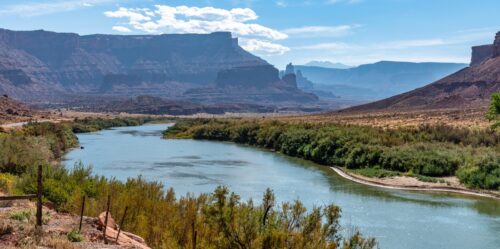 “The Colorado River and its reservoirs, which supply water for about 40 million people and 30 tribes across seven states and two countries, is drying up. Lake Mead on the Arizona-Nevada border, which has the largest storage capacity of any reservoir in the United States, hit its lowest recorded levels on 7 August. Water levels in Lake Powell, located on the Utah-Arizona border, reached their own record low about a week later. Though overallocation is one reason the river is shrinking, reduced snowpack and increased evaporation caused by climate change are also contributing factors. “The Colorado River crisis is one of the clearest examples of climate change in the U.S.,” Douglas Kenney, the director of the Western Water Policy Program and a hydroscientist at the University of Colorado Boulder, said in an email to Eos. “The basin has warmed dramatically, especially over the last 30 years, changing virtually every aspect of the water cycle in ways that result in lower streamflows. Flows so far in the 21st century are 20 percent lower than the 20th century. In an already arid region with very few water sources, that is a huge issue.” … ” Read more from ZME Science.
Arizona’s top water official explains the reality of Colorado River cuts
“Arizona will see its allotment of Colorado River water cut over the next two years, under rules released by the federal government earlier this month. The feds had to come up with those rules because the seven Colorado River Basin states couldn’t come up with an agreement among themselves on what to do with the overallocated river. Shortly after the rules came out, Nevada announced it’s suing the federal government, calling its plan “fundamentally flawed.” Arizona lawmakers have put money into a fund to pay for potential litigation related to the Colorado River, but the state has not yet decided whether it’s going to file suit. It’s in that context that Tom Buschatzke, director of the Arizona Department of Water Resources, came by the studios late last week. We started our conversation by taking a read of the room of sorts. I asked if it’s fair to say that folks here generally are feeling that the new rules aren’t great, but that they could have been a lot worse. … ” Read more from KJZZ.
Arizona AG Mayes calls for statewide pause on new data center construction
“Arizona’s top prosecutor says it’s time to stop building new data centers — at least for now. Attorney General Kris Mayes announced Monday that she’s asking state lawmakers and Gov. Katie Hobbs to pass a law pausing approval of new data centers, especially large-scale “hyperscale” AI projects. Her reasoning: electricity bills are climbing, and the federal government just slashed Arizona’s Colorado River water allocation by nearly 30%. “The only sane thing to do is to pause the approval of new data centers,” she said in a written statement. “Data centers are power- and water-intensive, and Arizona is challenged on both fronts right now.” … ” Read more from Arizona Family.
Google announces $600,000 investment in Arizona water replenishment project
“Water is top of mind in Arizona — and now a major tech company is doing Something Good by investing in a new water replenishment project in the state. Google announced a $600,000 project to remove and replace undersized culverts along a key waterway to the Salt River. This is in partnership with Trout Unlimited and the U.S. Fish and Wildlife Service. The investment builds on Google’s ongoing commitment to Arizona. The tech giant has already supported more than a dozen water replenishment and watershed health projects. … ” Read more from Arizona Family.
Nevada sues over Colorado River plans, aiming to protect Las Vegas
“Nevada officials have long presented themselves as a voice for compromise and conservation in debates over the Colorado River. The Las Vegas area, home to two-thirds of the state’s population and most of its economy, has become a model of urban water conservation. As the river has declined from overuse and a decades-long drought exacerbated by climate change, southern Nevada water planners built extensive water reuse facilities and implemented tight restrictions on new turf and fountains, dropping the region’s per capita water use by 58% in roughly 20 years. Meanwhile, in interstate negotiations over the management of the Colorado River, state representatives have positioned themselves as bridge-builders, sometimes referring to themselves as the “middle basin” between the river’s divided upper and lower basin states. … ” Read more from High Country News.
Colorado River drought lawsuits may dampen Wyoming dam plans
“As drought and over-allocation of Colorado River water shock the West, two lawsuits raise serious questions about irrigation in Wyoming and state plans to build a new dam and reservoir in Carbon County. As soon as the federal government announced that it would cut Colorado River supplies to California, Nevada and Arizona, Nevada went to court claiming that the headwater states of Wyoming, Colorado, New Mexico and Utah could more easily handle the reductions. At the same time, Colorado conservationists argued in court that Denver’s plans to pour Colorado River water into an enlarged reservoir for the city’s use amounts to building an $819 million bathtub that might never be filled. Together, the lawsuits raise legal arguments regarding Wyoming’s reliance on irrigation water from the Green and Little Snake rivers, whether ranchers would still have access to traditional diversions and whether a proposed dam and reservoir above the Little Snake River valley is feasible and worthwhile. … ” Read more from the WyoFile.
In national water news today …
EPA releases grant funding to combat water system cyber threats

“On Aug. 31, the U.S. Environmental Protection Agency (EPA) announced $11.75 million in grant funding for 10 midsize and large drinking water systems to boost resiliency against cybersecurity threats and extreme weather events. This funding will support 10 projects and will come from the Midsize and Large Drinking Water System Infrastructure Resilience and Sustainability grant program. “Cyberattacks, wildfires, flooding, and other hazards represent a significant risk to water system operations, and EPA provides vital support to help increase resiliency to such threats,” said EPA Assistant Administrator for Water Jess Kramer. “With over $11 million in grant funding, EPA is helping ten drinking water systems strengthen their resilience to these risks while advancing best practices within the water sector. … ” Read more from Water Finance & Management.
AI billionaire-backed group launches pro-data center ad blitz
“An advocacy group backed by artificial intelligence industry billionaires is launching a multimillion-dollar ad campaign in election battleground states to try to counter a mounting public backlash against a data center construction wave crucial to the industry’s growth plans. The ad campaign will initially focus on Kansas, Ohio and Wisconsin, where public concerns about data centers have consumed statewide elections, according to a statement Monday from Build American AI, an advocacy group backed by pro-AI super political action committee Leading the Future. Voters have soured on AI data center construction amid rising public concerns about their impact on the cost of electricity, power outages and water usage. The struggle has become a defining issue in midterm congressional elections. … ” Read more from Bloomberg.
Trump says voters who oppose data centers will ‘kill the Golden Goose’
“President Donald Trump attacked voters who oppose data centers Monday morning, warning that they will have only themselves to blame if they “kill the Golden Goose.” Trump escalated his defense of data centers as polls show Americans from both political parties are increasingly opposed to the server farms central to the artificial intelligence boom. Some Republicans running for office this year have broken with Trump and grown increasingly critical of data centers in response to the groundswell of public opposition. “The only reason that communities throughout the U.S.A. should not want Data Centers is if they want to end up being backwards and poor,” Trump wrote on Truth Social. “If they want to be successful and rich, with far lower taxes and jobs all over the place, let Data Reign.” … ” Read more from the Washington Post.
SEE ALSO: ‘An imperfect solution’ gains traction in data center fight, from Politico

