
Several news sources featured in the Daily Digest may limit the number of articles you can access without a subscription. However, gift articles and open-access links are provided when available. For more open access California water news articles, explore the main page at MavensNotebook.com.
On the calendar today …
- PUBLIC HEARING: Delta Conveyance Project water right hearing beginning at 9am. The State Water Resources Control Board Administrative Hearings Office is holding a Public Hearing on the pending Petitions for Change of Water Right Permits for the Delta Conveyance Project. Interested members of the public who would like to watch this hearing without participating may do so through the Administrative Hearings Office YouTube channel at: bit.ly/aho-youtube. Click here for the meeting notice.
In California water news today …
Tidal restoration round-up: Insights from two studies in Suisun Marsh and the Delta
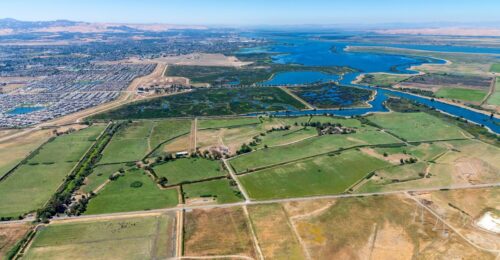
“On an unseasonably warm day in February of 2022, after being acquainted for approximately eight hours, we found ourselves canoeing across Big Break near Antioch, California. As we paddled against the wind we were busily dodging bass boats and floating logs. We watched a Peregrine Falcon dive at the water in front of us and fly off holding an American Coot who never saw the assault coming. With our canoe full of nets, water quality equipment, and zooplankton supplies, we were taking the long way around from one tidal slough mouth to another. Although it functioned as intense workplace bonding – and the beginning of a long friendship – we were out there to catch thousands of nearshore fish at the brand-new tidal restoration at Dutch Slough. … ” Read more from the California Water Blog.
California just dropped $44 million on salmon streams, tribal lands and Tahoe meadows
“Northern California’s rivers, meadows and salmon streams just landed a serious payday. Governor Gavin Newsom’s office announced $44 million in state funding for 15 conservation projects across 11 counties, and some of the biggest checks are headed straight for the North State. The money flows through the Wildlife Conservation Board, with $32 million coming from the climate bond voters approved in 2024. The awards support tribal stewardship, salmon recovery and desert protection as California pushes toward conserving 30 percent of its lands and coastal waters by 2030. The single largest grant, $11.5 million, funds The Wildlands Conservancy’s purchase of the 14,177 acre AP Ranch near Callahan in Siskiyou County, protecting Scott River salmon runs and setting up future public access. Another $2.4 million goes to CalTrout for stream and floodplain restoration near Grenada, part of a 26 mile habitat effort on Shasta River tributaries that will add spawning gravel, plant native vegetation and build beaver dam analogs. … ” Read more from Active NorCal.
California citrus faces trade, labor and water challenges
“California citrus growers are navigating a complicated landscape of water shortages, labor concerns, trade uncertainty, invasive pests, pesticide regulations, rising costs and increasing competition from imported fruit. In the latest interview with “The Ag Meter,” Nick Papagni sat down with Jacob Villagomez, director of governmental affairs for California Citrus Mutual, to discuss the issues affecting California citrus growers and the industry’s future. Villagomez grew up in Sanger, where his parents are citrus growers. After attending Fresno State and participating in the Maddy Institute’s governmental affairs program, he entered public-sector work before joining California Citrus Mutual. Nearly five years into his role, he views growers as his constituency and works to make sure their concerns are heard in Sacramento and Washington. … ” Read more from AgNet West.
Marine heat wave impacting California coastal water temperatures
“Many people know El Niño is currently bringing warmer-than-normal sea surface temperatures to the equatorial Pacific, but there is also a completely different marine heat wave that’s been impacting California for well over a year. There’s been a blob of warmer-than-normal water sitting off the Central and Southern California coast since May 2025, along with a new marine heat wave that developed far offshore in May of this year, but it’s not directly impacting the coast yet. Water temperatures in Southern California, from San Diego to Santa Barbara, have been in the mid-70s, which is anywhere from 5-10° above normal. Central California’s marine heat wave is a little less noticeable, but it is still there, with water temperatures a few degrees above average. Monterey has been in the low 60s compared to the upper 50s; San Francisco has been in the upper-50s vs. mid to upper 50s. As the heat wave spreads north up the West Coast, these water temperatures will remain 5-10° above average. … ” Read more from CBS San Francisco.
California’s beaches are being eaten away. El Niño could redraw the coast as we know it
“California’s modern coastline is under assault like never before, and El Niño is poised to make things worse. Hotter ocean waters are pushing tide lines higher. Powerful Pacific hurricanes are lashing the shoreline with series of strong waves, leaving teetering infrastructure and blotted-out beaches in their wake. And the forecast for a powerful El Niño this winter is expected to put more pressure on beaches. From Carlsbad to Malibu to Santa Cruz, erosion is already remaking the maps of popular beaches in dramatic ways. Erosion has gotten so bad along Point Dume Beach in Malibu, for example, that the ocean threatened to collapse a key road essential to access the parking lot. Churning ocean forces from a distant hurricane just “ate away, I want to say, 50 or 60 feet of sand, and then it got all the way to the roadway,” said Warren Ontiveros, deputy director of the L.A. County Department of Beaches and Harbors, which manages the beach. … ” Read more from the LA Times.
LEGISLATURE
A year after their promise, lawmakers again reform environmental planning. Now Newsom will weigh in
“Lawmakers this week made good on a year-old promise, passing a bill to narrow a controversial exemption from California’s environmental review law. The proposal passed both houses of the Legislature and now goes to the governor’s desk. Senate Bill 954 follows through on a pledge state legislative leaders made last year, when Gov. Gavin Newsom threatened to withhold approval of a $300 billion spending plan unless lawmakers passed sweeping changes to the California Environmental Quality Act. Lawmakers complied by passing Senate Bill 131, which exempted “advanced manufacturing facilities” from environmental review. But more than 30 lawmakers objected to how broad that exemption could be, because it could increase pollution in already vulnerable communities. They pledged to narrow it this year. … ” Read more from Cal Matters.
California lawmakers approve bill to give Native Americans more say on state land
“A bill to would give Native American tribes more say over the use of state land — in what opponents say is too much — was approved by the California Legislature Sunday. The measure was authored by Assemblymember James Ramos, D-Highland, a member of the Serrano/Cahuilla tribe, to ensure that people could not be blocked from access to sacred sites. It would largely prohibit government agencies from “substantially burdening” the ability of Native Americans to exercise religious ceremonies on state land, except for public safety and security reasons. “In a just world, there would be no need for this bill. Yet the State of California and the federal government have historically attempted to force assimilation on Native Americans,” Assemblymember James Ramos, D-Highland said in a statement. “It’s a long litany of grievous wrongs that aimed at exterminating the state’s First People and erasing their language, their culture and their spiritual traditions and traditions.” … ” Read more from the Sacramento Bee.
In commentary today …
Absurdity of the Colorado River crisis
Daniel M. Frey writes, “Forty million people depend on the Colorado River. Some of its largest cities are facing real shortages. Yet nearly half of the water put to human use in the basin goes to growing feed crops such as alfalfa, hay and silage for cattle, with a meaningful share exported overseas. This is not a hydrology problem. It is a political one. Growing alfalfa and hay to feed livestock consumes roughly 46% of all the water put to human use in the basin—more than every city and industry combined, and more than any other single use of the river. In the Imperial Valley, a material portion of alfalfa is exported. Foreign agribusinesses, including Saudi Arabia’s Fondomonte and the UAE’s Al Dahra, have leased Southwestern land to grow water-intensive feed and ship it home to countries that have banned the same crop domestically to protect their own water. Arizona’s governor already canceled state land leases with one of these companies over exactly this issue. We are draining a river that 40 million Americans depend on to grow low-value cattle feed. This is not even a true market outcome. … ” Read more from Big Pivots.
For a thirsty American West, it’s either cows or humans
Columnist Mark Gongloff writes, “Sustaining communities of millions of thirsty people in a desert is challenging enough. Adding millions more cows, or at least growing the water-intensive food those cows eat, ramps up the difficulty level exponentially. America’s arid Southwest is learning it can’t comfortably have both. The toxic combination of a 25-year drought and chronic overuse has caused the Colorado River to lose 20% of its flow, major reservoirs Lake Mead and Lake Powell to fall to record-low levels and a Lake Mead’s worth of groundwater to evacuate. The seven states that share the Colorado’s water with several Native American tribes and Mexico have haggled unsuccessfully for years over divvying up this dwindling resource, so the federal government recently offered its own suggestions. … But the bulk of the Colorado River isn’t piped to houses. It’s claimed, in the form of food, by those cows. … ” Continue reading at Bloomberg.
In regional water news and commentary today …
NORTH COAST
How a Klamath Basin bird crisis brings old water rivals together
“When Teresa Wicks surveyed the wetlands at the Lower Klamath National Wildlife Refuge in Siskiyou County, California, early this summer, they were alive with birds. She saw black-necked stilts, avocets, and thousands of white-faced ibises. A single colony of eared grebes had about 1,500 nests. Birds and ducklings seemed to be everywhere. “l don’t think I’ve ever seen that many ducklings in one spot as I did at Lower Klamath [that day],” said Wicks, Eastern Oregon biologist and program manager at the Bird Alliance of Oregon. The abundance made what happened next especially painful. As drought tightened its grip on the Klamath basin, wetlands at Lower Klamath and the neighboring Tule Lake National Wildlife Refuge began drying rapidly. Many grebe nests were abandoned. Then avian botulism began killing waterbirds and hatchlings. “Some of the birds that were sick and dying were ducklings and one- or two-day-old grebelings,” Wicks said. “That was particularly heart-wrenching.” … ” Read more from Jefferson Public Radio.
Dam removal launches white water rafting revival near California border
“As my raft plowed into a frothy hole on the Wild Horse rapid in the Upper Klamath River’s Kikaceki Canyon, it swung sideways, shuddered and then charged on through a series of churning, boat-eating holes near the California border. The excitement turned to thrill when raft guide Alyssa Winkelmann — of Momentum River Expeditions — plowed into a reversal slightly off center. This flung me into the drink and left me swimming in the rushing river. “Maybe I’d hit it more straight on next time,” chuckled Winkelmann, who grew up in the town of Shasta and has been a raft guide for more than a decade. On this newly restored section of the Klamath, she’s learning about the river like everyone else. or over a century, a wild ride through the Class IV cascade was impossible. That’s because this nearly 3-mile section of the Upper Klamath was dewatered, literally dried up, by a penstock diversion for the Copco No. 2 dam and its powerhouse built in the 1920s. However, in 2024, four aging hydroelectric dams (including Copco No. 2) on the California-Oregon border were demolished in the largest dam removal project in the U.S. Since then, water has started tumbling over rocks and boulders again, opening the canyon for white water rafting and more. … ” Read more from SF Gate.
Supervisors to consider quagga mussel program fee increases
“The Board of Supervisors this week will consider a proposal to increase fees for the Quagga Mussel Prevention Program, citing lack of grant funding. … The fee increases are intended to help make the program self-supporting, as previously directed by the board, according to the staff memo prepared by Water Resources Department Director Pawan Upadhyay and Invasive Species Program Coordinator Thomas Fardig. Historically the program has been largely funded by state and federal grants, which fluctuates over time. In years that those funding were reduced or unavailable, the program operated at a deficit and tapped into county funds, the staff memo said. … ” Read more from the Lake County News.
SIERRA NEVADA
The Truckee River Watershed Council is repairing stretches of Donner Creek
“The Truckee River Watershed Council (TRWC) is breaking ground on three restoration projects in and along Donner Creek that will repair 3,200 feet of the creek, restore 1.3 acres of habitat and better protect the community from major storm events. Since the mid-1800s, Donner Creek has been modified to accommodate various land uses – from cattle grazing to highway construction to building development – that have eroded streambanks, degraded wildlife habitat and diminished downstream water quality. “Restoring Donner Creek is an important part of our regional effort to improve both fish and wildlife habitat, as well as overall water quality,” said Rachel Robin, project director at TRWC. “By integrating restoration with repairs to infrastructure, we are addressing sediment at its roadside source, improving our community’s resilience to major stormwater events and improving the synergy between our built environment and the natural systems at play in our watershed.” … ” Read more from the Placer Sentinel.
SACRAMENTO VALLEY
Oroville Dam spillway revegetation covers 70 acres
“Construction work is ongoing at Oroville Dam to reestablish native vegetation next to the main and emergency spillways. The State Department of Water Resources shared an aerial photo showing progress on the project. Work started in June 2026 to cover some 70 acres with seed and replant 6 acres of woody vegetation. Construction equipment and grading work will continue in areas around both spillways and along the Diversion Pool. The project is designed to improve the appearance of areas near trails and roadways while enhancing the view for visitors and motorists traveling along Oroville Dam Boulevard East. … ” Read more from Action News Now.
NAPA/SONOMA
St. Helena announces residents can file property damage claims caused by discolored water
“Residents in St. Helena can file property damage claims linked to the discolored water following the July 18 fire hydrant incident until Sept. 10. The discoloration is believed to have been caused by sediment dislodged by a high volume of water flowing through the pipes after a tour bus collided with a fire hydrant on Main Street July 18. Though city workers flushed most of the discolored water out of the system a few days after the initial incident, many residents reported stained laundry and damage to water filters. In the following weeks, residents saw several more bouts of discolored water. The city announced Aug. 7 that more discoloration may be seen from sediment dislodged from a seasonal increase in water demand. … ” Read more from the Santa Rosa Press Democrat.
BAY AREA
Bay Area nonprofit urges residents to prepare for El Niño, potentially dangerous weather this winter
“With the rainy season approaching and forecasts calling for a strong El Niño weather pattern this winter, a North Bay nonprofit is encouraging residents to prepare now for possible flooding and severe storms. Shannon Parkhurst of Novato already has her emergency go bag packed and ready. “In our go bag, we have toiletries, we have a poncho in case things get flooded,” Parkhurst said. Parkhurst remembers past flooding in her neighborhood and says preparation is essential. “This area where we’re standing was underwater, so I know I need to prepare,” she said. “I just want to let everybody know El Niño is here.” … ” Read more from KGO.
California lawmakers propose $125 million for Golden Gate Fields waterfront park
“California lawmakers have proposed setting aside $125 million in state funds to help transform the former Golden Gate Fields racetrack into a regional waterfront park near Berkeley. The funding would come from Proposition 4, a climate bond California voters approved in 2024. “This is a once-in-a-generation opportunity to reclaim 161 acres of East Bay waterfront for the public, and we are seizing it,” state Sen. Jesse Arreguín, D-Berkeley, said in a statement. The former racetrack stretches along a prominent section of the East Bay shoreline, and the sprawling park could connect Albany Beach and McLaughlin Eastshore State Park, while expanding access for pedestrians and bicyclists, according to Arreguín’s office. … ” Read more from the San Francisco Chronicle.
CENTRAL COAST
A Pajaro River research project aims to benefit the local habitat in the long run.
“Erik Chalhoub here, following the latest progress of the Pajaro River levee project closely. Since the 2023 flood that devastated the town of Pajaro, we’ve spoken with affected residents, covered the threats from the federal government thwarted by local officials and witnessed the ongoing recovery of this small agricultural community. So in looking for new ways to advance the story of Pajaro’s rise from the flood, we found inspiration from an unlikely place: in a lab at CSU Monterey Bay. Earlier this year, Weekly Editor Sara Rubin toured the lab of Liz Alter, an associate professor of biology at CSUMB. Here, students were in the midst of various projects, including studying water samples from the Pajaro River. I looked into the study, and the more I learned, the more I realized there was more to this story that wouldn’t fit in a traditional news article. It evolved into this week’s cover story in the Weekly. … ” Read more from Monterey Now.
Study says Grover Beach likely needs more water, even without growth
“A new study found Grover Beach may need another source of water, even if the city experienced zero growth over the next several decades. The Grover Beach City Council hired the group Confluence Engineering Solutions to conduct the water supply study earlier this year. The document is still in the draft stage, but it found that Grover Beach’s current water supply is vulnerable to drought and sea water intrusion. “Even if demand does not increase, there’s still the potential for deficits with these potential future constraints on the city’s water supply portfolio,” Confluence’s founder Dan Heiml told the City Council at Monday’s meeting. Demand will almost certainly increase, so the study looks at ways to bring in an extra 241 acre-feet of water a year. … ” Read more from KCBX.
SAN JOAQUIN VALLEY
O’Neill Forebay named among nation’s top waters for giant striped bass
“O’Neill Forebay’s place in fishing history is receiving national attention after WorldAtlas named the Merced County reservoir among the waters where striped bass grow the largest. The article, published Aug. 28, placed O’Neill Forebay first on its list of seven lakes and reservoirs known for exceptionally large landlocked striped bass. The local waters earned that distinction because of a record-setting catch made more than three decades ago. On May 7, 1992, Hank Ferguson of Soquel caught a 67-pound, 8-ounce striped bass at O’Neill Forebay, setting a world record for landlocked striped bass. … ” Read more from the Los Banos Enterprise.
SOUTHERN CALIFORNIA
Forecast Informed Reservoir Operations assists in record capture of more than 18 billion gallons of water at Prado Dam
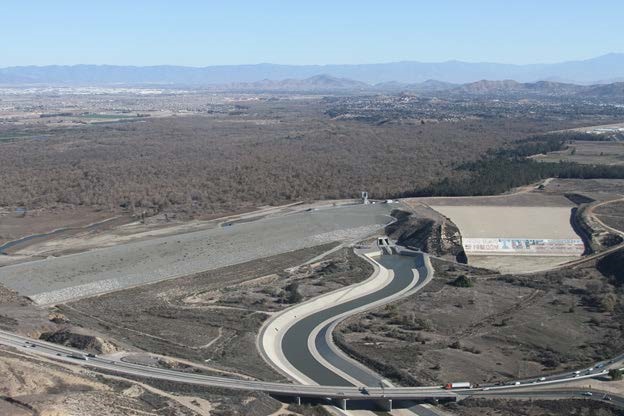 “The Orange County Water District (OCWD) and U.S. Army Corps of Engineers (USACE) captured a historic 18.1 billion gallons of water at Prado Dam between July 2025 and June 2026, marking the highest stormwater capture total since the 1940s. The amount is enough to supply more than 110,000 households for one year and is valued at more than $55 million. The record reflects the benefits of Forecast Informed Reservoir Operations (FIRO), which uses advanced weather forecasting to better track atmospheric rivers and allows more water to be stored behind Prado Dam while maintaining flood protection. Close coordination between USACE and OCWD on the timing of releases helped create room for additional incoming storms and maximize every opportunity to capture stormwater for groundwater recharge. “This all-time high for stormwater capture is a major win for Orange County’s water supply and demonstrates what can be achieved through innovation and strong partnerships,” said OCWD President Denis R. Bilodeau, P.E. “FIRO is helping us store more local stormwater using the infrastructure already in place, without having to build new facilities, to strengthen water reliability for the communities we serve.” … ” Read more from the Orange County Water District.
Forest Service officials promised to fix a California waterfall hike. It’s been 13 years.
“The 13-year closure of a once-popular Inland Empire waterfall hike has been extended yet again. In July, San Bernardino National Forest renewed its closure order for Cucamonga Canyon until July 2028. The closure order was first implemented in 2013 and has been extended several times since. Before the most recent postponement, the closure order was set to lift in May 2026. The length of the closure order is seemingly unprecedented among Southern California national forests. In its pre-closure heyday, the canyon near Rancho Cucamonga’s northern edge each weekend saw hundreds of visitors, who relied on unofficial use trails, informal ropes and even tied-together blankets to get into the canyon and reach Sapphire Falls. The route involved multiple water crossings, and some paths crossed through private property. The canyon walls were covered in brightly colored graffiti, and trash often plagued the trail. … ” Read more from SF Gate.
Bear family rescued from large water tank in La Verne during heat wave
“A family of black bears are safe after being rescued from a large water tank in La Verne amid a dangerous heat wave in Los Angeles, according to L.A. County officials. A large bear and her three cubs fell into the concrete cistern in Marshall Canyon Regional Park near the Claremont Hills Wilderness Park’s 5-Mile Loop Trail, where they were rescued late Saturday night, the L.A. County Fire Department said. The bears were discovered around 8 a.m. Saturday by three Glendora residents who were out running on the trail. “We heard this howling, whimpering noise and couldn’t figure out where it was coming from,” one of the runners, Jamie Kirk, told The Times. They traced the sound back to the cistern and climbed up about seven feet to its small opening. “And as soon as we look in the hole, there’s the mama bear staring at us,” he said. “It was full of water, so she had to basically stand up and lean on the wall to stay out of the water.” … ” Read more from the LA Times.
SAN DIEGO
San Diego researchers are about to lose a way to track climate change and ocean health
“The sound of whining drills fills the air around Tyler Wirth’s workbench. Five foot tall robots line the table behind him. It may look like a typical day at Scripps Institution of Oceanography’s Instrument Development Group lab. But there’s a somber undertone. Wirth is repairing what could be some of the last robots of this kind. “It’s sad,” said Wirth, who is an engineer and scientist at Scripps Institution of Oceanography. “I spent a career, my Ph.D., working on this project.” He works on autonomous robots called Biogeochemical-ARGO floats. They take measurements of the world’s oceans and transmit that information to Scripps researchers using satellites. For more than a decade, the devices have been a part of a global effort to monitor the ocean’s health. They collect data more than a mile below the ocean surface that helps scientists better understand problems such as ocean acidification, extreme weather events and ecosystem decline. … ” Read more from KPBS.
Stop The Stink Rally focuses on the sewage problem
“Several organizations joined forces on August 17 for a rally held first in Coronado and then in Imperial Beach to protest sewage pollution and spread information. In Coronado, the event was held at City Hall, and the group later traveled to Imperial Beach, where they met at the end of Palm Avenue with the backdrop of an empty beach on a hot summer day. Representatives from local organizations that spoke at the rally were Citizens for Coastal Conservancy (C4CC), San Diego United Communities, Protect Pt. Loma and Republican National Hispanic Assembly. Upcoming election candidates for State Senate 18, Bishop Art Hodges, Republican Congressional nominee for the 52nd District, Jeff Belle, and Assembly 79 candidate Andrew Lawson also spoke. The message for the event was “Open the beaches. Stop the stink. Protect our families. Fix the source.” … ” Read more from the Coronado Eagle & Times.
Along the Colorado River …
Metropolitan reviews new Colorado River guidelines and forecast implications
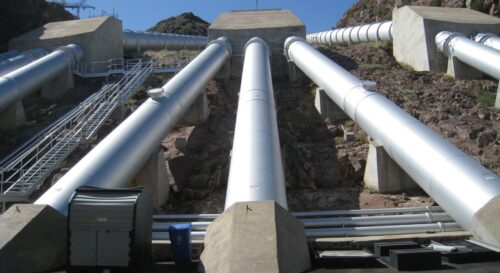
“The Colorado River’s next operating era is beginning under unusually difficult conditions. On August 21, the Department of the Interior issued the final agency actions for the post-2026 Record of Decision and the operating guidelines for 2027 and 2028. Rather than establishing a fixed operating regime for the next decade, the Record of Decision creates a framework for shorter-term decisions. The two-year guidelines set the rules that will govern operations at Lake Powell and Lake Mead. They arrive as the basin faces some of the most severe conditions in the modern operating record: 26 years of drought, combined storage in Powell and Mead at its lowest level since Powell’s initial filling, and a winter that produced record-low snowpack. At the August meeting of Metropolitan’s Imported Water Subcommittee, Colorado River Policy Manager Shanti Rosset briefed committee members on the new federal documents and their implications for Metropolitan’s water supplies. “This is not a planning exercise for distant risk,” Ms. Rosset said. “The new rules are beginning with both reservoirs already under substantial stress.” … ” Read more from Maven’s Notebook.
Fitch: Water systems vary in ability to handle Colorado River cuts
“In response to prolonged drought conditions across the western United States, the federal government on Aug. 21 announced mandatory water cuts to the Colorado River for the Lower Basin states of California, Nevada and Arizona. The mandatory cuts require the Lower Basin states to implement reductions of 1.25 million acre-feet in each year of the next two years. If the Lower Basin States implement their proposed sharing agreement, the reduction per state would be: Arizona: 760,000 acre-feet; California: 440,000 acre-feet; and Nevada: 50,000 acre-feet. The cuts were announced by the U.S. Bureau of Reclamation, which issued the Record of Decision, establishing a 10-year framework for water management across the Colorado River basin, which entails updating operating guidelines every two years through 2036. … ” Read more from Water Finance & Management.
Editorial: Colorado River plan would leave Nevada up a paddle without a creek
The Las Vegas Review-Journal editorial board writes, “A lawsuit won’t refill the Colorado River, but it could keep Nevada from being left high and dry. The Trump administration recently released its plan to deal with the shrinking Colorado River. The two-year plan requires the Lower Basin states, Nevada, Arizona and California, to give up 1.25 million acre-feet a year. The federal government wants the Upper Basin states — Colorado, Utah, New Mexico and Wyoming — to give up 200,000 acre-feet voluntarily. The federal government could impose even steeper reductions over the next decade. Nevada’s 300,000 acre-feet allocation could drop to under 90,000 acre-feet. In 2024, Southern Nevada used around 212,500 acre-feet. Under the Colorado River Compact, the Lower Basin states were supposed to receive 7.5 million acre-feet annually. California received 4.4 million acre-feet and Arizona took in 2.8 million acre-feet. That left Nevada with only 300,000 acre-feet. On Monday, Nevada sued the federal government over the plan. A lawsuit isn’t optimal because lawyers can’t put more water in the river. But sometimes it’s a necessary move. … ” Read more from the Las Vegas Review-Journal.
Water cuts are coming for Arizona. Is your salad on the chopping block?
“The Colorado River fills America’s salad bowl. It’s a vital source of water to Yuma County, Arizona, which grows 90% of the leafy greens the country consumes in the winter — but it’s nearing a crisis point. With the river’s water levels at record lows, Arizona is poised to take the biggest cuts: about 30% of its Colorado River supply in 2027 and 2028. Those are the terms stipulated by the Bureau of Reclamation, which imposed a mandatory two-year plan after the seven states that use Colorado River water failed to reach an agreement. If the megadrought persists and water levels continue to fall, a 10-year management plan the bureau has proposed would allow even harsher cuts that could threaten the country’s winter greens. “If you cut us off at the knees, or if you restrict the water, it has a national impact,” said Jonathan Lines, a member of the Yuma County Board of Supervisors. “It’s a national security issue and a food security issue.” … ” Read more from NBC News.
Arizona’s taps won’t run dry, but water bills will go up under federal plan for Colorado River
“Under the searing desert sun, Max Wilson watched water flow through a canal in north Phoenix. This unassuming strip of blue next to a busy road is the city’s lifeline to the Colorado River. Soon, there will be less water in it. Wilson, who is the water resources management advisor for the City of Phoenix, has to make sure cuts to this canal’s supply don’t cause taps to go dry for more than 1.7 million people who depend on his system. He is confident water will keep flowing out of kitchen sinks, showers and sprinklers across the nation’s fifth-largest city. “Arizonans have been solving water problems for our entire history, and we didn’t forget how to do that overnight,” Wilson said. “We’re going to do it again now.” … ” Read more from NPR.
A USU sprinkler experiment could help farms save labor and water
“Farmers and ranchers from all over the Uintah Basin gathered at the Bar Lazy TL Ranch to hear the pitch from Utah State University’s Extension Service. A demonstration of the sprinklers was taking place in an alfalfa field. Soon, the farmers and ranchers were joined by other USU researchers, politicians and reporters who walked around the edge of the field to see the sprinklers in action. “Wheel line systems have been around for several decades, but not much improvement has been made since that time,” said Burdette Barker, an irrigation specialist with USU’s Extension Service, who is part of the team working on the project. … ” Read more from the Utah News Dispatch.
Despite growing super El Niño, Colorado’s winter forecast remains uncertain
“This year’s El Niño might be one of the strongest on record, but its impacts on Colorado’s weather — and upcoming snow season — are still to be determined, climate and weather experts say. The El Niño, a climate pattern that begins in the Pacific Ocean, can drive dry periods in some regions while others are hit by storms. And this year, it is already strong and likely to keep growing, according to forecasts. But because of Colorado’s inland location, and other factors that influence its weather cycle, climatologists aren’t yet ready to promise relief from this summer’s punishing drought. “One thing that I see that makes me a little nervous is that people get really excited that it’s going to be this big snow year for Colorado,” said Peter Goble, Colorado’s assistant state climatologist. “I’m not saying it won’t be … but we definitely don’t have enough information to say that just based on the fact that El Niño is in place.” … ” Read more from the Colorado Sun.
In national water news today …
EPA releases new guidance for water systems on lead exposure
“The U.S. Environmental Protection Agency (EPA) has released two new guidance documents to help drinking water systems that are working to keep their communities safe from lead. The two documents, Access Tips and Service Line Inventory Tips, provide practical information to help water systems and states implement the Lead and Copper Rule Improvements (LCRI). In April 2026, EPA sought the public’s input on these two Tips documents and EPA said it considered the comments received in the development of these final resources. The guidance includes information, definitions and useful examples to help water systems comply with lead pipe replacement requirements of the Lead and Copper Rule. Reducing exposure to lead, a powerful neurotoxin that is especially dangerous to children, advances a key EPA priority, the agency said. … ” Read more from Water & Finance Management.
Summer a ‘near lock’ to become warmest and most humid across U.S.
“This summer has broken so many temperature records that each new one can feel almost routine. But the biggest record of all may be about to fall. Five out the 10 warmest summers on record in the contiguous United States have occurred in the past decade, pushed along by the tailwind of climate change. And summer 2026 is on track to not only join that list but to surpass the country’s average temperature record set during the notoriously hot Dust Bowl summer of 1936 — during a deadly, multiyear period of drought, dust storms and extreme heat that unfolded in the 1930s. This year, average temperatures from June 1 to Aug. 29 have been around 2.05 degrees Fahrenheit above average across the contiguous states, nudging 2026 just beyond what was experienced in 1936 — and the highest, considering records dating back to 1895. … ” Read more from the Washington Post.

