
A wrap-up of posts published on Maven’s Notebook this week …
Note to readers: Sign up for weekly email service and you will receive notification of this post on Friday mornings. Readers on daily email service can add weekly email service by updating their subscription preferences. Click here to sign up!
In California water news this week …
New report focuses on groundwater sustainability without leaving small farms behind
 “The 2014 Sustainable Groundwater Management Act (SGMA) marked a significant step toward addressing decades of unsustainable groundwater pumping in California. SGMA identifies six “undesirable results” to avoid: chronic lowering of groundwater levels, reduced groundwater storage, seawater intrusion, degraded water quality, land subsidence, and depletion of interconnected surface water. The report, Managing Groundwater with Small Farms in Mind, argues that the widespread loss of small farms should be understood as an emerging “seventh undesirable result” — one that arises not only from overdraft itself, but also from how groundwater management is designed and implemented. “In this report, we flag the widespread loss of small farms to be understood as an emerging seventh undesirable result,” Ngodoo Atume, SGMA Technical Assistance for Small Farms Coordinator at the University of California Agriculture and Natural Resources and one of the report’s authors, said at a recent webinar highlighting the report’s findings. “This will arise not just from overdraft, but from how groundwater management is designed and implemented, so this is a key takeaway for state and local agencies. Avoiding the emerging ‘seventh undesirable result’ requires acknowledging this reality: that a large number of farmers are likely low-impact water users.” … ” Continue reading at Maven’s Notebook.
Kings County judge allows state to move ahead with groundwater fees for most farmers in the region
“Invoices for state groundwater pumping fees could be headed to the mailboxes of most Kings County farmers in the near future after a judge’s ruling last week. Fees of $20 per acre foot pumped had been in limbo pending the outcome of a second preliminary injunction request made by the Kings County Farm Bureau as part of its ongoing lawsuit alleging the Water Resources Control Board exceeded its authority when it placed the Tulare Lake subbasin on probation in 2024. This latest ruling allows the Water Board to begin charging fees to most farmers in the subbasin, which covers most of Kings County. That doesn’t include those pumping less than 20 acre feet a year, who were excluded from probationary measures by the Water Board last March. … ” Read more from SJV Water.
Data centers use more water than California cities, study says
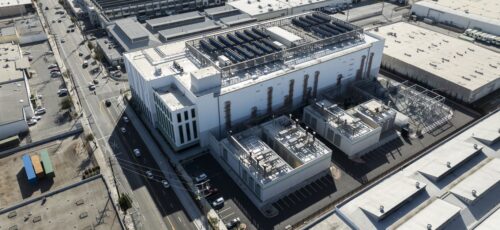
“Electric power generation for data centers is a threat to water supplies even in states outside the arid Southwest, according to a report published Tuesday by the think tank Ceres. Data centers in the seven states with the highest concentrations of them use about 3.4 trillion gallons of freshwater for electric power generation every year, but few electric power producers have connected increasing power demand to water supply risks, says the report, “The Water Behind the Watts.”. That volume of water adds up to 10.4 million acre-feet—greater than the 8 million-acre-foot average annual urban water demand in California that the state’s Legislative Analyst’s Office reported in 2021. It’s the equivalent to 12-times the annual water use of Los Angeles, Phoenix, and Washington, DC, combined, the think tank that advocates for clean energy and sustainable development found. … ” Read more from Bloomberg Law.
How much of a problem is AI’s water use?
““Protect our water,” “Water for people not AI,” “Don’t mess with our water,” declare protest signs from Texas to New Mexico to Arizona. Angered by water use, energy consumption and pollution, locals are increasingly protesting the rapid expansion of data centers in the United States as tech companies work to rapidly expand capacity for AI. Many data centers rely at least partly on water to absorb heat from air or surfaces, and then cause cooling as it evaporates, just like sweating keeps our bodies cool. The processors inside data centers can reach internal temperatures of up to 176 degrees Fahrenheit, for the same reasons that an overtaxed laptop heats up. But while there’s little doubt that data centers are consuming significant amounts of energy, water consumption is more complicated. Claims circulating online bring scant clarity, ranging from articles claiming that chatbots can consume 500 ml of water per query to some online commentators declaring AI’s water issue to be nonexistent. And the consumption data from large tech companies themselves are often incomplete and inconsistent. … ” Read more from Knowable.
Water Foundation white paper: Water and data centers
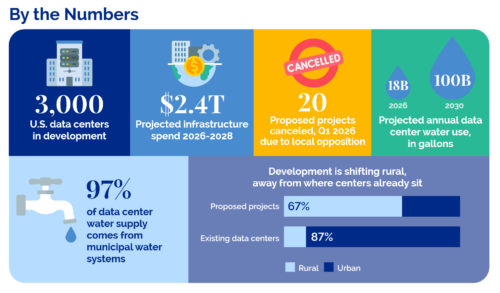 “Data centers are a major topic in 2026, with near-daily news coverage. They are being built in the United States at an unprecedented pace and scale, with nearly 3,000 projects in development and an estimated $700 billion in investment this year alone. But concerns about their impacts have fueled significant resistance, prompting some proposed projects to be canceled and cities and counties across the country to adopt construction moratoriums. Water use is often among the chief concerns. A new white paper from the Water Foundation says those concerns are justified. Its white paper explains the water-related impacts of data centers and outlines how communities and funders can work together to protect watersheds, strengthen water infrastructure, and safeguard public health. It also recommends ways to improve data center water efficiency and reduce water use. … ” Read more at Maven’s Notebook.
SEE ALSO:
- CRS REPORT: Data Centers and Water: Frequently Asked Questions, from the Congressional Research Service
Can California farmers break free from plastic?
 “Farmers have relied on plastic since the 1960s, when the mass production of affordable agricultural tools derived from petrochemicals made them widely accessible. Plastic mulch quickly became a cornerstone of crop production, helping farmers boost yields of everything from corn to tomatoes by stabilizing soil temperature and controlling diseases and weeds with fewer pesticides. Now scientists and policymakers are struggling to preserve the benefits of farmers’ dependence on plastic—dubbed “plasticulture”—while mitigating a growing litany of environmental costs. “How do you balance the use of this technology that has completely revolutionized agriculture with the environmental concerns that arise from that?” asked Jazmine Mejia-Muñoz, a water quality program manager at the nonprofit California Marine Sanctuary Foundation, at a recent briefing on plasticulture hosted by California State University’s Council on Ocean Affairs, Science & Technology. The marine sanctuary foundation works with agricultural stakeholders to prevent plastic materials from draining into the bay and ocean. The goal is to protect waterways while retaining plastics’ agricultural benefits, Mejia-Muñoz said. … ” Read more from Inside Climate News.
Earth’s oceans just broke a heat record. The implications will be massive
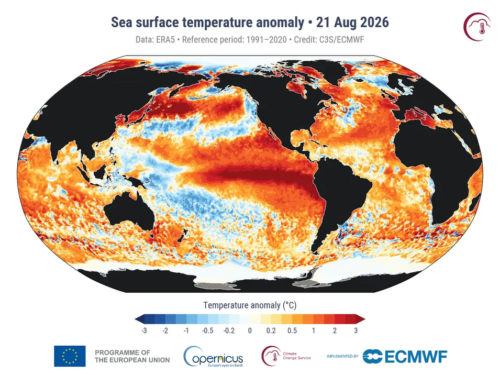 “Earth’s oceans were warmer than any day in recorded history Friday due to a combination of long-term human-caused global warming and short-term effects of El Niño. The average sea surface temperature of 21.1 degrees Celsius, or 70 degrees Fahrenheit, breaks the old record of 21.09 degrees Celsius set many times in early 2024 during the most recent El Niño. “There is quite a big certainty that sea surface temperatures globally are now higher than even the last warm period before the last ice age,” Leon Simons, a climate systems analyst and executive director of the Club of Rome Netherlands, said during a webinar Sunday. Measurements are based on data from satellites, buoys and ships between 60 degrees south and 60 degrees north latitude and analyzed by the Copernicus Climate Change Service. Daily measurements date back to 1979, though July sea surface temperatures were the warmest month globally since at least 1854. … ” Read more from the San Francisco Chronicle. | Read via Yahoo News.
El Niño events much stronger in past several decades
“El Niños have come and gone for ages, but recent findings suggest extreme weather events caused by their effects are 40% stronger in the last few decades than in the 19th century. In a study published Thursday in the journal Science, researchers at the University of Michigan examined ancient and modern corals from the Galápagos Islands to determine the intensity of El Niño events in the last 40 years as compared to those from the pre-industrial era about 1,000 years ago. Before 1850, El Niño events were not as strong in terms of fluctuating temperatures and winds, with the scientists concluding that human-driven climate impacts such as an increase in greenhouse gases leads to stronger El Niño events. “We don’t see a time in the past where El Niños have been as strong as today, and we show that the strength of El Niño changes in parallel with the warming of global temperature,” Julia Cole, a lead author of the study, professor and chair of the U-M Department of Earth and Environmental Sciences said in a statement. “Our findings tell us that the big El Niño events of the last 40 years are not normal in the context of the last 1,000 years.” … ” Read more from the Courthouse News Service.
El Niño could bring added flood pressure to Sacramento-San Joaquin Delta
A potentially strong El Niño could bring a very wet winter to California, putting added pressure on the Sacramento-San Joaquin River Delta
San Joaquin Valley watershed studies: Ecosystem infrastructure
“The California Department of Water Resources’ San Joaquin Valley Flood-MAR Watershed Studies modeled the potential impacts of MAR-90/20 and the more comprehensive I-FIRM recharge scenario on five San Joaquin Basin watersheds (Calaveras, Stanislaus, Merced, Tuolumne, and Upper San Joaquin). The I-FIRM strategy models habitat improvements through reservoir reoperations and additional natural infrastructure that includes river restoration, flow-through basins, and shorebird habitat. This blog walks through each of these components and outcomes as they relate to ecosystem impacts in the Watershed Studies (the Study). As a preview summary, the effects of the I-FIRM strategy on ecosystems were mixed. Positive benefits include more acreage devoted to shorebird habitat and flow-through basins, and some improvements in salmonid instream spawning and rearing habitat. However, off-channel salmonid habitat in most of the rivers was reduced due to recharge diversions. … ” Read more from Sustainable Conservation.
A secret to survival for California’s most endangered salmon
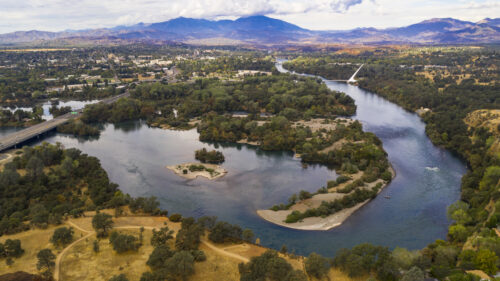
“A secret to the survival of juvenile salmon as they form in their eggs is revealed by a new study from NOAA Fisheries and the University of California, Davis. Sacramento River winter-run Chinook salmon are California’s most endangered salmon, with a single surviving population and an average of a few thousand returning fish in recent decades. Shasta Dam blocks their original habitat in cold mountain rivers draining Mount Shasta, leaving them to spawn in the low-lying Sacramento River heated by the summer sun. The study, published this week in Science Advances, found that cool river temperatures in the first 15 days after their eggs were fertilized was crucial for their survival. In warm years with less water, cold water barely covered this critical thermal window, sharply limiting survival in what may become an increasing reality for salmon as the climate warms. … ” Read more from UC Davis.
Final monitoring special study report advances scientific understanding of Delta hydrodynamics and water quality
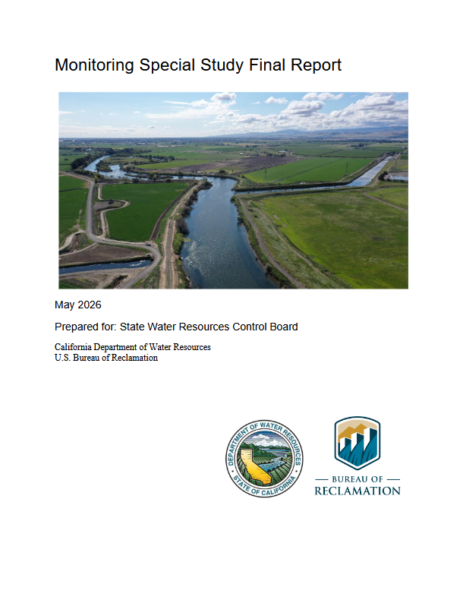 “The Bureau of Reclamation and the California Department of Water Resources have released the Final Monitoring Special Study Report, marking an important milestone in advancing the scientific understanding of hydrodynamic and water quality conditions in the Sacramento–San Joaquin Delta. Because the Delta supplies water to millions of Californians and supports vital agricultural, environmental, and economic uses, improving the scientific foundation behind management decisions is crucial. The report provides state-of-the-art scientific analyses that improve understanding of the complex physical processes influencing flow and salinity in the Delta. By reducing scientific uncertainty and strengthening the technical foundation for future evaluations, the study supports more informed water management decisions, contributes to greater regulatory certainty, and helps advance reliable water supplies while protecting environmental resources. “The Monitoring Special Study Report reflects years of scientific analysis and technical collaboration to improve our understanding of the complex processes that influence the Delta,” said Reclamation’s Central Valley Operations Manager Levi Johnson. “Better science leads to better understanding and decisions. These enhanced monitoring and modeling tools provide a stronger foundation for evaluating water management strategies, supporting informed regulatory decisions, and helping improve long-term water supply reliability for the many stakeholders who rely on the Delta.” … ” Read more from the Bureau of Reclamation.
Appeals filed for the Delta Conveyance Project revised Certification of Consistency with the Delta Plan on remanded items
“The following parties have appealed the California Department of Water Resources’ Delta Conveyance Project Revised Certification of Consistency with the Delta Plan on Remanded Items (C20262), which was submitted to the Delta Stewardship Council on July 24, 2026: C20262-A1 – Sacramento Area Sewer District, C20262-A2 – Twin Cities Group (Frank Loretz, Duane Martin, Kevin Young, David Schultz), and C20262-A3 – County of San Joaquin, County of Solano, County of Yolo, Central Delta Water Agency, and Local Agencies of the North Delta. … ” Read more from the Delta Stewardship Council.
Is it safe to swim today?
“On a summer Sunday, Lake Natoma in Sacramento County is anything but quiet. Paddleboarders dot the water beneath the bridges. Kayaks crowd the launch at Black Miners Bar, a California State Parks day-use area. Swimmers cool off along the rocky shoreline while families settle in for a day beside the water. Two mornings later, the scene is different. Before much of the day’s recreation begins, Central Valley Regional Water Quality Control Board Engineering Geologist Alisha Wenzel and Environmental Scientist Matthew Krause are already at the water’s edge with sample bottles, field equipment, a clipboard and a cooler. They are there to collect information that helps address a question people ask them surprisingly often: Is it safe to swim today? The answer is rarely as simple as yes or no. … ” Read more from the State Water Board’s Ebb and Flow.
New State Water Board measurement and reporting rules: What water rights holders need to know by October 2026
“California water rights holders should be preparing now for substantial changes to the State Water Resources Control Board’s (State Board) water diversion measurement and reporting framework. Earlier this year, the State Board adopted a rulemaking package that significantly amends prior water diversion measurement and reporting regulations in place since 2016. The revised regulations clarify who must measure water diversions, what must be measured, how data must be submitted, and how the State Board will administer compliance through its new electronic water rights reporting platform, CalWATRS. Persistent drought conditions in California over the past decade underscored the original need to collect accurate data on the volume of surface water diverted by water right holders statewide. The State Board’s revised regulations build on that effort to improve clarity and standardize how measurement data must be submitted. … ” Read more from Allen Matkins.
In commentary this week …
Water Board needs a deputy director to ensure long-term safe, reliable and affordable drinking water
Alan Roberson, Executive Director of the Association of State Drinking Water Administrators, writes, “The 50th anniversary of the federal Safe Drinking Water Act in 2024 was a significant milestone. The drinking water community celebrated the substantial public health achievements resulting from this important policy framework but also reflected on what it has learned and how best to implement the Act over the next 50 years in a manner that advances its main policy objectives. Many argue that the future success of the Act necessarily depends on federal policymakers addressing the greatest threat to its legacy—aging water system infrastructure—which threaten states’ abilities to comply with an ever-increasing number of complex regulatory requirements. Arguably, improving national compliance with existing drinking water standards by ensuring the long-term health of drinking water systems is equally, if not more, important than promulgating new standards. California policymakers have a similar opportunity to reflect on the future of the state’s own Safe Drinking Water Act, which celebrated its 50th anniversary this year. Like other states, California also finds itself plagued by aging and deteriorating drinking water infrastructure; a crisis exacerbated by federal funding shortfalls and the persistent threat of state budget deficits. … ” Continue reading this commentary.
Yes on a data center in my backyard. Why? It’s an ideal municipal neighbor
Matt Rexroad writes, “My neighborhood Facebook group was recently up in arms about the prospect of a data center coming to Woodland. The comments were full of the usual outrage: traffic, noise, water usage and aesthetics. Never mind the fact that Woodland sits in Pacific Gas & Electric territory, meaning the crippling power costs make it one of the last places on earth a hyper-scaler would actually build a data center. What struck me was not the economics, but the attitude. California built the modern digital world. We take immense pride in being the global engine of technological innovation. Silicon Valley is the birthplace of the artificial intelligence boom currently reshaping human civilization. Yet, across our state, local governments and angry neighborhood groups are racing to oppose and pass moratoriums on the very physical infrastructure making that future possible. It is civic hypocrisy. Almost everyone wants to use AI. People expect instant responses from Grok, seamless cloud storage, and flawless high-definition streaming. But when it comes to housing the servers required to power those algorithms, California’s standard knee-jerk reaction takes over: not in my backyard. … ” Read more from the Sacramento Bee.
Uniting against data centers : The issue that transcends politics
Why data centers are a top issue in the 2026 midterms
“Ohio Democratic Senate candidate Sherrod Brown is running an ad calling the incumbent Sen. Jon Husted (R-Ohio) the “face of data centers.” As the state’s former lieutenant governor, Husted supported tax breaks for data centers and called them a tremendous economic opportunity for Ohioans. He encouraged towns to build them and advance Ohio as a business-friendly area. The focus on data centers, in one of this year’s most competitive Senate races, demonstrates dramatic shifts in public opinion and the high stakes going into the midterm elections. The public has gone from a cautiously optimistic view of data centers to outright opposition, and this rising negativity poses challenges for technology firms, the digital economy, and policy discussions concerning the future of data center moratoriums and business investments. It is thus a political transformation that warrants close scrutiny by candidates, tech leaders, and election observers. … ” Read more from the Brookings Institute.
SGMA is reshaping the San Joaquin Valley
Jules Martella writes, “It will change what we grow, where we farm, who can remain in agriculture, and what happens to land that has been productive for generations. Its effects will move through farmworker families, agricultural businesses, schools, local governments, and rural communities. Groundwater sustainability is necessary. The consequences of achieving it will be enormous. We have spent years talking about how to balance the aquifer. We now need an equally serious conversation about what will happen to the Valley above it. … ” Read more from Jules Martella.
Dan Walters: California’s political battle over key environmental law brews on two fronts
“Business as usual in California politics always includes at least one squabble over the California Environmental Quality Act, a law signed 56 years ago by then-Gov. Ronald Reagan. As the Legislature grinds toward the end of its biennial session next week and a Nov. 3 election approaches, we have two such political duels over CEQA, one in legislation and the other in a ballot measure. The underlying issue in both, as always, is how a law, whose original aim was minimizing adverse environmental impacts by public and private projects, will be applied. And, as usual, they pit environmental protection advocates against business interests. In recent years, the perpetual CEQA debate has centered on its use — or misuse — as local governments were pressed by the state to increase housing development, particularly apartments for low- and medium-income families. … ” Read more from Cal Matters.
California should fight Trump’s plan to end protections for U.S. national forests
“In 1905, two years after Republican President Teddy Roosevelt camped in Yosemite with Sierra Club co-founder John Muir, he made a speech at the Grand Canyon and warned Americans not to “treat any part of our country as something to be skinned for two or three years for the use of the present generation, whether it is the forest, the water, the scenery.” Instead, Roosevelt urged, “Handle it so that your children’s children will get the benefit of it.” Those words seem especially relevant now, following the news that the Trump administration is proposing to roll back what’s known as “roadless rule” protections against logging, road-building and other industry in nearly 45 million acres of pristine U.S. national forest land across the country. We might want to rename it the Road Building Rule since, according to the new proposal, the Forest Service anticipates that permanent roads could be constructed across 18.2 million acres and temporary roads across 11.3 million acres of wild forest currently protected from development. … ” Continue reading from the San Francisco Chronicle.
In regional water news this week …
20,000 salmon return to the Klamath—but challenging conditions for recovery remain
“In August 2024, excavation crews breached the last of four dams on the Klamath River in far northern California, marking the first time in over a century 100 years that salmon could swim above the dam sites. Now, new research published on Thursday shows that in the two years since dam removal, over 20,000 chinook salmon have migrated up the Klamath River, many past the former dam sites and into traditional spawning grounds. “The biological response has been much faster than I, and most of us, expected,” said Damon Goodman, lead author of the study and Mount Shasta-Klamath regional director for Cal Trout. “We expected salmon to eventually recolonize habitat above the former dams, but within two years we’ve seen thousands of Chinook salmon moving into the upper basin and spawning across an enormous portion of their historic range.” … ” Read more from Inside Climate News.
Local water agencies agree to extensive wastewater system improvements after Russian River spill
“The Russian River County Sanitation District and Sonoma Water will take immediate steps to improve the Guerneville wastewater system in connection with the spill of 5 million gallons of wastewater into the Russian River in January, under an enforcement settlement with the North Coast Regional Water Quality Control Board. The spill began on Jan. 6 during severe storms and continued for three days after floodwaters entered the sewer collection system through unsecured maintenance access points and overwhelmed the Guerneville wastewater treatment facility. The resulting overflows from an aeration basin and emergency storage pond resulted in the release of an estimated 4.94 million gallons of untreated and partially treated wastewater into the river. Sonoma County public health officials issued water-contact advisories for the river and several coastal beaches. The advisories remained in effect through Jan. 12. The river is a source of drinking water, recreation and critical habitat for fish and wildlife. … ” Read more from the State Water Board.
Yolo County extends temporary ban on digging new wells as water worries persist
“Yolo County has extended its temporary ban on digging new agricultural water wells. The Yolo County Board of Supervisors on Tuesday voted to keep the restriction on new wells in certain parts of the county in place for up to a year. The decision came on the day that the temporary moratorium was set to expire. It was first passed last August after local farmers raised concerns about over-pumping the groundwater aquifer beneath the county. “There is certainly mounting evidence that our groundwater management needs better data to manage it sustainably,” said local farmer and public commenter Drew Rivers. … ” Read more from PBS Abridged.
Pop-up wetlands for birds expand into Suisun Marsh
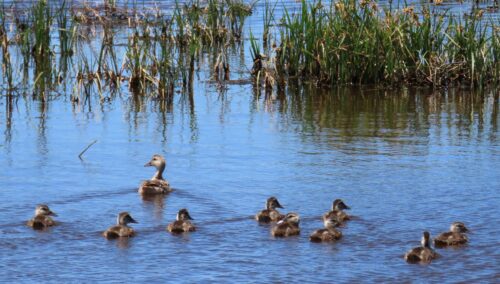
“It’s a hot, mid-summer day but a welcome breeze keeps a team of bird conservationists cool as they walk along an earthen levee in Suisun Marsh, a flat expanse between San Francisco Bay and the Delta. Mount Diablo rises to the south and the Vaca Mountains ring the horizon to the north. The deep blue waters of Grizzly Bay are on one side of the levee, and wetlands managed by the privately-owned Island Duck Club are on the other. The team is here to track the effectiveness of a program called BirdReturns, which helps birds in California’s vast Central Valley. The valley is a key stopover for waterbirds and shorebirds migrating along the Pacific Flyway, which extends from Alaska to South America. “They’re pretty incredible journeys,” says Ashley Seufzer, Working Lands Program Manager at Audubon California, which is a BirdReturns partner. “It’s a feat of strength, especially for small birds.” … ” Read more from Robin Meadows at Maven’s Notebook.
USGS: In San Francisco Bay, even an exceptionally wet year can’t supply enough sediment to keep pace with rising seas, new study finds
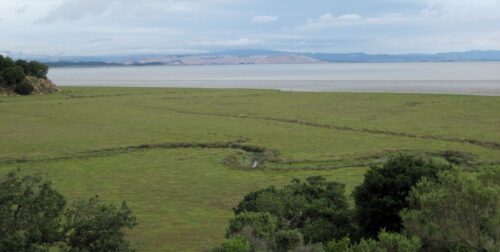
“Extreme rainfall can send huge amounts of sediment rushing off hillsides and into streams. But a new USGS study finds that even an exceptionally wet year may deliver only a small fraction of that sediment to San Francisco Bay—far short of what is needed to help coastal wetlands and shorelines keep pace with rising sea levels. That finding highlights a paradox for coastal managers: climate change may produce more intense rainfall and more landslides, but the additional sediment generated by those events is still not enough, and does not necessarily reach the coast quickly enough, to bring much benefit to vulnerable Bay shorelines and wetlands. “This research leveraged an intensive mapping effort by Corbett and Collins (with the USGS Landslide Hazards Program) in the 2017 extreme wet winter, when they identified more than 8,900 landslides in eastern Bay Area coastal watersheds,” said USGS Research Geologist Amy East, lead author of the study. … ” Read more from the USGS.
A ‘super’ El Niño is here. What does it mean for the Bay Area?
“El Niño is here, already bringing a storm surge of superlatives: Super. Strongest ever. Gob-smacking. Godzilla. The potential images are dire: storms, big rains, floods, warm winter, stranded seabirds. Yet Godzilla (Gojira, for purists) has been invoked before. Eleven years ago, that’s exactly what people were predicting for the 2015–2016 El Niño. And that year, the Bay Area actually experienced a drier winter than average. So maybe this will be no big deal? Sorry, no. It is a big deal, according to climate scientists. “This is really going to profoundly affect California for the next six to 12 months,” says Daniel Swain, a climate scientist who writes the Weather West blog and has been on a tireless climate-communications spree warning people about El Niño. Swain’s doing it because he’s worried. “There’s a lot of misleading stuff out there floating around right now,” he says. This could be the strongest El Niño ever — and even so, there’s still lots of uncertainty about what will happen in the San Francisco Bay Area. In this explainer, we’ll give you a refresher on what El Niño is and unpack some of the possible local impacts. … ” Read more from Berkeleyside.
Water regulator allows weaker clean water monitoring of Graniterock despite admittedly poor track record
“Although the Watsonville-based mining company Graniterock faces a lawsuit alleging years of repeated, serious water pollution violations, the Central Coast Regional Water Quality Control Board last Thursday gave the company a new federal Clean Water Act discharge permit that allows for less frequent and less stringent water quality monitoring. At the board meeting in San Luis Obispo, water board staffers also announced they plan to stop implementing a longstanding policy of requiring increased monitoring after certain types of permit violations, admitting they never enforced the requirement anyway, and have decided it has become a relic. “The idea that the water board and their staff would loosen monitoring requirements for a company with so many violations in its track record is dismaying to say the least.” said Environment California State Director Laura Deehan. “The Clean Water Act is there for a reason: to protect our waterways and the fish, frogs, dogs and people that use them from pollution, but it only works if the law is enforced properly.” … ” Read more from Environment California.
A ‘baffling’ 30-year wait to destroy California’s Matilija Dam
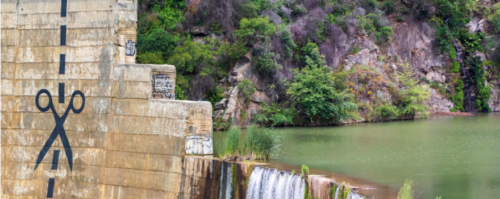
“To drivers passing by on Highway 33 and even those who pull off along the side of the road to cool off in the waters of Matilija Creek, the hulking concrete structure tucked behind a rocky hillside is all but invisible. But for nearly 80 years, Matilija Dam has wielded a quiet power over the city of Ventura and the Ojai Valley north of Los Angeles County, reshaping the landscape of both the creek and beaches over a dozen miles away. It’s also sat useless for decades — and it finally might come down in the next one, if Ventura County can scrounge up around $300 million. … “The dam no longer serves its original purpose and has been considered non-functional for decades due to structural concerns and extreme sediment build-up,” states the county’s website focused on the Matilija Dam Ecosystem Restoration Project. … ” Read more from SF Gate.
San Fernando Valley earthquake resistant water pipe “will bend instead of break” officials say
“The installation of nearly 5 miles of new earthquake-resistant water pipeline was celebrated today in Sylmar, making it the longest of its kind in the United States. The Los Angeles Department of Water and Power’s pipeline project aims to replace aging infrastructure in the East San Fernando Valley, with over 67 miles installed since 2012. Recognizing the importance of updating infrastructure comes at a time when Los Angeles has seen its fair share of water main bursts, including a massive July 16 break in West Hollywood that caused severe damage. “The harder something is, the more likely it is to shatter like glass … the more ductile and flexible, the less likely it is to catastrophically fail. It’ll bend instead of break,” David Hanson, LADWP interim general manager, said. … ” Read more from CBS LA.
SEE ALSO: Mayor Bass and Councilmember Monica Rodriguez join LADWP leadership to celebrate major seismic water infrastructure milestone in the San Fernando Valley, press release from LA DWP
Two new groundwater treatment facilities commissioned in North Hollywood
“Just days after federal officials announced drastic water cuts from the drought-stricken Colorado River for California, Nevada and Arizona, Los Angeles Mayor Karen Bass and LA City Councilmember Adrin Nazarian joined other officials and community leaders to mark the completion of two groundwater treatment plants in North Hollywood. The new facilities – North Hollywood Central (NHC) and North Hollywood West (NHW) – will treat up to 43 million gallons of water daily from the San Fernando Groundwater Basin to help supply safe drinking water for LA and San Fernando Valley residents. A third water treatment plant – the Tujunga Well Field Facility in Sun Valley – is currently slated for completion in 2027. … ” Read more from the San Fernando Sun.
4.1-million-gallon reservoir returns to full service after damage from Eaton fire
“A key piece of water infrastructure in fire-stricken Altadena is back online, as the 4.1-million-gallon Allen Reservoir has returned to full service following repairs tied to damage from the Eaton Fire. That restoration means additional storage capacity is once again available for customers in Altadena and Pasadena, helping support reliable water pressure and emergency fire flow when the system is under stress. Built in the 1930s, the Allen Reservoir is a partially buried, concrete-lined storage facility that has now returned to full operation after fire-related repairs, Pasadena officials announced Aug. 17, according to MyNewsLA. To keep water service going during the project, Pasadena Water and Power left half of the reservoir in operation while crews added new structural components, rebuilt sections of the interior catwalk and handrail, and replaced aging drain valves. … ” Read more from The Cool Down.
‘Super’ El Niño and San Diego – what scientists know now and what else they hope to learn
“As San Diego city workers prepare for a potentially historic “super” El Niño, some scientists say it’s still too early to tell if San Diego and Southern California are in for historic rainfall and flooding. Scientists at UC San Diego’s Scripps Institution of Oceanography have been studying the formation of this El Niño. Researchers published a new, multi-part FAQ guide explaining what El Niño is, why this year’s event could be unusually strong and how scientists are tracking it. For San Diegans, El Niño can mean more rain, bigger surf, coastal flooding and warmer ocean temperatures. But scientists say it’s still too early to know exactly what this year’s event will mean, particularly when predicting rainfall and flooding. Historically, El Niño has increased the odds of wetter weather across Southern California, but the strength of an El Niño and actual rainfall in San Diego are not always intertwined. … ” Read more from the Times of San Diego.
San Diego Water Authority to generate $15M from Burbank water deal
“The San Diego County Water Authority is expected to generate $15 million in revenue during the first five years of a long-term agreement announced Thursday that will allow Burbank, in Los Angeles County, to purchase water from the agency. Under the agreement, Burbank will be able to purchase up to 5,000 acre- feet of water annually through 2047, according to the Water Authority. The agencies will use existing infrastructure to share the water, with no new pipelines required. Water Authority officials said revenue from the agreement will help offset costs associated with investments made over the past three decades to improve San Diego County’s water supply reliability. … ” Read more from NBC 7.
The Colorado River basin is running out of water. Not everyone is happy with the government’s suggested solution.
 The Colorado River and its reservoirs, which supply water for about 40 million people and 30 tribes across seven states and two countries, is drying up. Lake Mead on the Arizona-Nevada border, which has the largest storage capacity of any reservoir in the United States, hit its lowest recorded levels on 7 August. Water levels in Lake Powell, located on the Utah-Arizona border, reached their own record low about a week later. Though overallocation is one reason the river is shrinking, reduced snowpack and increased evaporation caused by climate change are also contributing factors.“The Colorado River crisis is one of the clearest examples of climate change in the U.S.,” Douglas Kenney, the director of the Western Water Policy Program and a hydroscientist at the University of Colorado Boulder, said in an email to Eos. “The basin has warmed dramatically, especially over the last 30 years, changing virtually every aspect of the water cycle in ways that result in lower streamflows. Flows so far in the 21st century are 20 percent lower than the 20th century. In an already arid region with very few water sources, that is a huge issue.” … ” Read more from EOS.

