

Several news sources featured in the Daily Digest may limit the number of articles you can access without a subscription. However, gift articles and open-access links are provided when available. For more open access California water news articles, explore the main page at MavensNotebook.com.
On the calendar today …
- MEETING: Central Valley Flood Protection Board beginning at 9am. Agenda items include an update on the Yolo Bypass Comprehensive Study; presentation of the Flood System Improvement Branch’s Implementation Plan; and an update on the Designated Floodway Modernization Program. Click here for the agenda.
In California water news today …
Can California farmers break free from plastic?
 “Farmers have relied on plastic since the 1960s, when the mass production of affordable agricultural tools derived from petrochemicals made them widely accessible. Plastic mulch quickly became a cornerstone of crop production, helping farmers boost yields of everything from corn to tomatoes by stabilizing soil temperature and controlling diseases and weeds with fewer pesticides. Now scientists and policymakers are struggling to preserve the benefits of farmers’ dependence on plastic—dubbed “plasticulture”—while mitigating a growing litany of environmental costs. “How do you balance the use of this technology that has completely revolutionized agriculture with the environmental concerns that arise from that?” asked Jazmine Mejia-Muñoz, a water quality program manager at the nonprofit California Marine Sanctuary Foundation, at a recent briefing on plasticulture hosted by California State University’s Council on Ocean Affairs, Science & Technology. The marine sanctuary foundation works with agricultural stakeholders to prevent plastic materials from draining into the bay and ocean. The goal is to protect waterways while retaining plastics’ agricultural benefits, Mejia-Muñoz said. … ” Read more from Inside Climate News.
El Niño events much stronger in past several decades
“El Niños have come and gone for ages, but recent findings suggest extreme weather events caused by their effects are 40% stronger in the last few decades than in the 19th century. In a study published Thursday in the journal Science, researchers at the University of Michigan examined ancient and modern corals from the Galápagos Islands to determine the intensity of El Niño events in the last 40 years as compared to those from the pre-industrial era about 1,000 years ago. Before 1850, El Niño events were not as strong in terms of fluctuating temperatures and winds, with the scientists concluding that human-driven climate impacts such as an increase in greenhouse gases leads to stronger El Niño events. “We don’t see a time in the past where El Niños have been as strong as today, and we show that the strength of El Niño changes in parallel with the warming of global temperature,” Julia Cole, a lead author of the study, professor and chair of the U-M Department of Earth and Environmental Sciences said in a statement. “Our findings tell us that the big El Niño events of the last 40 years are not normal in the context of the last 1,000 years.” … ” Read more from the Courthouse News Service.
SEE ALSO:
- El Niño climate patterns supercharged by burning of fossil fuels, study finds, from The Guardian
- Galápagos corals show El Niño events are more extreme now than in past 1,000 years – here’s how my team made the discovery, from The Conversation
- This ‘super’ El Niño is ready to break all-time records, video from the LA Times
El Niño could bring added flood pressure to Sacramento-San Joaquin Delta
A potentially strong El Niño could bring a very wet winter to California, putting added pressure on the Sacramento-San Joaquin River Delta
San Joaquin Valley watershed studies: Ecosystem infrastructure
“The California Department of Water Resources’ San Joaquin Valley Flood-MAR Watershed Studies modeled the potential impacts of MAR-90/20 and the more comprehensive I-FIRM recharge scenario on five San Joaquin Basin watersheds (Calaveras, Stanislaus, Merced, Tuolumne, and Upper San Joaquin). The I-FIRM strategy models habitat improvements through reservoir reoperations and additional natural infrastructure that includes river restoration, flow-through basins, and shorebird habitat. This blog walks through each of these components and outcomes as they relate to ecosystem impacts in the Watershed Studies (the Study). As a preview summary, the effects of the I-FIRM strategy on ecosystems were mixed. Positive benefits include more acreage devoted to shorebird habitat and flow-through basins, and some improvements in salmonid instream spawning and rearing habitat. However, off-channel salmonid habitat in most of the rivers was reduced due to recharge diversions. … ” Read more from Sustainable Conservation.
Is it safe to swim today?
“On a summer Sunday, Lake Natoma in Sacramento County is anything but quiet. Paddleboarders dot the water beneath the bridges. Kayaks crowd the launch at Black Miners Bar, a California State Parks day-use area. Swimmers cool off along the rocky shoreline while families settle in for a day beside the water. Two mornings later, the scene is different. Before much of the day’s recreation begins, Central Valley Regional Water Quality Control Board Engineering Geologist Alisha Wenzel and Environmental Scientist Matthew Krause are already at the water’s edge with sample bottles, field equipment, a clipboard and a cooler. They are there to collect information that helps address a question people ask them surprisingly often: Is it safe to swim today? The answer is rarely as simple as yes or no. … ” Read more from the State Water Board’s Ebb and Flow.
In the American West, wildfire comes for the suburbs
“Somersett, a short drive from downtown Reno, Nevada, is a peaceful place where homes with sweeping, high-desert views line cul-de-sacs and roads meander through shrubland, trailheads, and golf courses. But in the summer, months of low humidity and hot weather prime the landscape to burn. On the morning of August 22, it did. In just a few days, strong winds carried the flames of the Hawk Fire more than 23 miles, placing some 90,000 people on evacuation notice as dense smoke and orange skies blanketed the city. By Wednesday, dozens of houses had been destroyed. Two weeks earlier, the Bug fire burned 150 square miles just north of the same area. It’s the latest in an era of worsening wildfires in the United States, where more than 7.9 million acres have burned this year. A similar story is playing out in Canada, where First Nations and residents of Ontario have borne the brunt of more than 5,100 fires across the country. Scientists say climate change has made these fires, along with others in Europe, significantly more likely to happen. This year’s blazes in the Western U.S. were exacerbated by record-low winter snowfall, depriving the landscape of the moisture that typically seeps from snowpack throughout the summer, and by extreme and long-lasting heat waves that baked the landscape. And the fires have highlighted another, deadly piece of the puzzle: suburban sprawl. … ” Read more from Grist.
POLICY AND REGULATION
California coastal review tests state autonomy for conservation
“The Trump administration’s probe into California’s coastal management opens the door for courts to scrutinize how far states can go in applying their environmental standards to federal developments on coastlines. The National Oceanic and Atmospheric Administration initiated first steps to withdraw federal certification of the state’s coastal management program, a move that could prevent California from weighing in on federal projects set to be developed on its coastline. The state exercised this authority when the California Coastal Commission voted against a request by the US military to increase SpaceX launches from the Vandenberg Space Force Base. More recently, the commission unanimously objected to an offshore fracking development off the coast of Ventura County. … ” Read more from Bloomberg Law.
California Legislature passes data center water bill. Will Newsom veto again?
“After Gov. Gavin Newsom vetoed her data center water disclosure bill last year, Assemblymember Diane Papan, D-San Mateo, returned this year with a two-bill package. One of the bills, AB 2619, was passed by the Legislature Thursday morning, sending to Newsom a measure that would require data centers to report their water consumption annually. The other bill, AB 2469, which would require information about projected water demand before new data centers are approved, is still moving through the Legislature. “When it comes to water, when it comes to California’s future, we cannot manage what we do not measure,” Papan said before the Assembly voted to approve the Senate’s changes to AB 2619. … ” Read more from the Sacramento Bee. | Read via Yahoo News.
The data center backlash is here — and Big Tech is spending big to combat it
 “Companies backing data center construction are flooding Sacramento with cash, hoping to stop or defang seven bills that would regulate the facilities as they head toward approval in the California Legislature this week. The pro-data-center spenders include Big Tech companies like Amazon and AI titan Anthropic. But they are led, dollar-wise, by old school utility giant Pacific Gas & Electric, which earlier this year clocked its second biggest lobbying quarter since 1999. The financial push comes a year after four bills that attempted to regulate data centers died or were diluted after lobbying from the industry. But as artificial intelligence fuels an unprecedented facility buildout, public backlash is transforming data center construction into a major issue for candidates in upcoming elections. A May Gallup poll found seven in 10 Americans oppose data center construction in their communities, while a Public Policy Institute of California poll in July found similar opposition statewide. Rising public anxiety over utility costs, water use, and grid strain has driven California lawmakers to propose strict new data center rules — igniting a high-stakes lobbying push by the industry. … ” Read more from Cal Matters.
Will lawmakers water down data center rules?
“As public backlash against artificial intelligence data centers grows, tech companies are spending big bucks to influence and dissuade state lawmakers from reining in the facilities, report CalMatters’ Katherine Ortiz and Khari Johnson. The Legislature is currently considering bills that would shift electric infrastructure costs toward data center operators and away from residential customers. Other proposals would mandate disclosures or estimates of water use, and require all data center projects to undergo environmental review. Tech companies oppose the bills, arguing they would stifle innovation and competition, and have spent millions of dollars lobbying the state government. Amazon spent more than $1.7 million lobbying in California last year, while AI company Anthropic has spent $90,000. The Data Center Coalition, which counts Google, Microsoft and OpenAI among its members, spent roughly $60,000 to oppose nearly every bill that would regulate data centers. … ” Read more from Cal Matters.
Data centers not included under CEQA reform proposal, officials assert
“The Data Center Coalition claims Proposition 45, a ballot measure that would create new rules for certain building projects under the California Environmental Quality Act, does not apply to data centers. The measure identifies a number of projects eligible for proposed reforms, including water systems, clean energy, health facilities and transportation. Opposition to the proposition has heightened in recent weeks due to uncertainty over its application to data centers, which are not specifically mentioned in its language. … ” Read more from the Sacramento Bee.
California legislature passes bill to track use of ‘forever chemicals’ by farms
“The California legislature passed a bill Wednesday that would require the state to track the use of pesticides that contain perfluoroalkyl and polyfluoroalkyl substances, known as PFAS chemicals, which can be harmful to humans. The bill, by Assemblymember Nick Schultz (D-Burbank), heads to Gov. Gavin Newsom, who can sign it into law or veto it. Schultz’s original bill would have phased out pesticides with PFAs and put California in line with Maine and Minnesota, which passed laws restricting their use. The state’s powerful agricultural industry objected to the proposed ban. Nearly half of the country’s vegetables and more than three-quarters of its fruits and nuts come from California, according to the state. … ” Read more from the LA Times.
The limits of Newsom’s abundance
“Gov. Gavin Newsom is finding a limit to his efforts to waive some environmental rules in order to build big. On Tuesday night, the Solano County Board of Supervisors voted not to endorse legislation that the governor’s team had helped negotiate to facilitate developer California Forever’s shipbuilding operations in the county, vastly dimming the legislation’s chances of advancing this year. … the legislation Solano County voted against earlier this week would have cleared the way for Sramek and California Forever to use about 1,300 acres in Collinsville for shipbuilding, should they attract a company to locate there. It also would have allowed California Forever to skirt a local orderly growth initiative that has been in place for decades and would have permitted the developer to use a 2008 environmental impact report for a future project on the site. Without the legislation, voters would need to approve some of the zoning and geographic changes to the site. … ” Read more from Politico.
SEE ALSO: Last-Minute California Forever Shipyard Bill Gets Kicked to 2027, from Bay Nature
In commentary today …
Uniting against data centers : The issue that transcends politics
In regional water news and commentary today …
NORTH COAST
20,000 salmon return to the Klamath—but challenging conditions for recovery remain
“In August 2024, excavation crews breached the last of four dams on the Klamath River in far northern California, marking the first time in over a century 100 years that salmon could swim above the dam sites. Now, new research published on Thursday shows that in the two years since dam removal, over 20,000 chinook salmon have migrated up the Klamath River, many past the former dam sites and into traditional spawning grounds. “The biological response has been much faster than I, and most of us, expected,” said Damon Goodman, lead author of the study and Mount Shasta-Klamath regional director for Cal Trout. “We expected salmon to eventually recolonize habitat above the former dams, but within two years we’ve seen thousands of Chinook salmon moving into the upper basin and spawning across an enormous portion of their historic range.” … ” Read more from Inside Climate News.
SEE ALSO: Scientists Just Documented One of the Fastest River Comebacks Ever Recorded on the Klamath, from Active NorCal
Safety warning issued after toxic algal mats found in North Coast rivers
“A regional water quality control board has issued a health advisory for several North Coast rivers where toxic algal mats that can make people and animals sick have been found. The North Coast Regional Water Quality Control Board — a state agency responsible for protecting water quality in the region — cautions people to keep themselves and their animals away from toxic algal mats in North Coast rivers, including the Klamath, Trinity, Salmon, Scott, Mad, Eel, South Fork Eel, Van Duzen, Navarro, Russian and East Fork Russian rivers. The agency urges people to pay special attention to keeping children and pets away from contact with algae or suspect river water because toxic algae poses the greatest health risk to them. … ” Read moire from Local News Matters.
Klamath River flows boosted for Yurok Tribe ceremony
“The Bureau of Reclamation announced that they will temporarily increase flows in the Klamath River on Friday, August 28 to support the Yurok Tribe’s annual Boat Dance Ceremony on Sunday. According to the Bureau of Reclamation, the coordinated flow release is designed to help provide suitable river conditions for the ceremony, an important cultural tradition of the Yurok Tribe. The Yurok people have always maintained a deep connection to the Klamath River. “Water management in the Klamath Basin requires balancing many important needs,” said Reclamation’s Acting Regional Director Adam Nickels. “Supporting the Yurok Tribe’s Boat Dance Ceremony demonstrates Reclamation’s commitment to working collaboratively with tribal partners and recognizing the cultural importance of the river while continuing to meet our broader water management responsibilities.” … ” Read more from Action News Now.
SEE ALSO: Reclamation to Increase Klamath River Flows in Support of Yurok Tribe’s Annual Boat Dance Ceremony, from the Bureau of Reclamation
‘Be extra cautious’: Feds announces increased flows on Trinity River
“The Bureau of Reclamation has announced plans to release water from the Lewiston Dam to address salmon health concerns; they’re urging safety precautions on the Trinity River, where several drownings have already occurred this year. Beginning Friday, Aug. 28, a news release issued by the bureau noted, “flows below Lewiston Dam will increase from approximately 450 cubic feet per second to as much as 1,200 cfs.” The bureau says that the decision was made in conjunction with the Yurok and Hoopa Valley tribes, California Department of Fish and Wildlife, U.S. Fish and Wildlife Service and other partners “to reduce the risk of disease for salmon migrating from the ocean to the Klamath and Trinity rivers.” Increased flows are expected to last through Sept. 21. … ” Read more from the Eureka Times-Standard.
Lewiston Dam boosts water flow to protect migrating salmon
“The Bureau of Reclamation will increase water releases below Lewiston Dam beginning Aug. 28 at 10 a.m. to help reduce the risk of disease among salmon migrating through the Klamath and Trinity rivers. Flows below the dam will increase from approximately 450 cubic feet per second to as much as 1,200 cfs from Aug. 28 through Sept. 21. Reclamation said the planned release will not affect water supplies for agriculture or communities, or other environmental obligations. The bureau is working with the Yurok and Hoopa Valley tribes, California Department of Fish and Wildlife, U.S. Fish and Wildlife Service and other partners to address fish health concerns. … ” Read more from Action News Now,
SEE ALSO: Reclamation to Release Water Below Lewiston Dam to Address Fish Health Concerns in the Klamath Basin, from the Bureau of Reclamation
Huge, historic Northern California cattle ranch to become preserve with trails
“One of the oldest cattle ranches in Northern California, recently on the market for $16.9 million with the promise of delivering a stunning “piece of the American West,” is set to be purchased and permanently protected by the nonprofit Wildlands Conservancy. The conservation group was awarded an $11.5 million grant from the state Thursday, providing the financing it needs to move forward with acquisition of the AP Ranch in the Klamath Mountains of western Siskiyou County. The organization is buying the 14,177-acre property, about half the size of San Francisco with eight miles of shorefront along the East Fork Scott River, to help ensure conservation of the ecologically important watershed as well as to open it up for hiking, camping and other outdoor activities. The conservancy already owns the adjacent 6,000-acre Beaver Valley Headwaters Preserve. … ” Read more from the San Francisco Chronicle.
Construction underway on Elk River Estuary restoration project, kickstarting a big wetlands fix
“Wetlands that drain into the Elk River are being reworked this summer, the first phase of an extensive restoration effort in the estuary. A 40-acre area along Swain Slough, just south of Eureka and east of U.S. 101, is this year’s target in a broader effort to restore 857 acres of tidal marshes. Construction on the Elk River Estuary Restoration Project began July 16. This summer, dikes are being removed and tidal channel networks are being restored. “For the most part, we are attempting to just reoccupy the former alignment of tidal channel networks in the Elk estuary,” said Katy Gurin, project manager for conservation nonprofit CalTrout. This, she said, will make a big difference for the creatures that live in the tidal area. … ” Read more from the Lost Coast Outpost.
SIERRA NEVADA
Lessons from Caldor: The ‘Christmas Valley Miracle’ and forest management
“Five years ago, the Caldor Fire consumed more than 200,000 acres across the Sierra foothills and Echo Summit, largely destroying the town of Grizzly Flats in El Dorado County. It was the second wildfire to crest the Sierra Nevada that year, a feat previously thought to be unprecedented. But as the Caldor Fire burned through, two communities — Christmas Valley and Meyers, near South Lake Tahoe — were spared from devastation due to significant fuel-reduction treatments. The event became known as the “Christmas Valley Miracle,” and was studied to learn how different treatment methods worked best in preventing disaster, and how they influenced future forest management. Hugh Safford is a vegetation and fire ecologist with UC Davis, whose home in Meyers was threatened by the Caldor Fire. … ” Read more from Capitol Public Radio.
The day the water stayed at Cottonwood Creek
“By late afternoon, volunteers were standing knee-deep in water. That sentence wouldn’t mean much on most creeks. On this stretch of Cottonwood Creek, it meant everything, because that morning the water in the same spot barely covered a boot: a thin, fast sheet racing through an eroded channel, wearing it deeper as it went. The crew had spent hours in the streambed, hauling logs and layering boughs into structures a beaver would recognize. Within hours of finishing the structures, water began pooling behind them and spreading back across the channel. Cottonwood Creek runs through the Stanislaus National Forest, and it’s been through a lot. The trouble started with roads. … ” Read more from the Yosemite Rivers Alliance.
SACRAMENTO VALLEY
A vision for a vibrant future in the Sacramento Valley
“The Northern California Water Association (NCWA) and leaders throughout the region have coalesced around A Vision for a Vibrant Future in the Sacramento Valley, outlining a shared approach for managing water to support healthy rivers, landscapes and communities for generations to come. The vision recognizes that the Sacramento Valley is one interconnected landscape. From our forests and headwaters to rivers and creeks, farms and ranches, floodplains, communities and groundwater aquifers, water connects the region from ridgetop to river mouth. Managing these resources together is essential to a future where communities are safe from flooding, people have reliable and affordable drinking water, farms and working landscapes remain productive, and fish and wildlife thrive. … ” Read more from the Northern California Water Association.
Placer County Water Agency, cities of Sacramento and Roseville partner on new delivery system
“The Placer County Water Agency (PCWA) Board of Directors last week approved a Joint Powers Agreement with the cities of Sacramento and Roseville, establishing the RiverArc Joint Powers Authority (JPA) and formalizing a regional water supply partnership that has been years in the making. RiverArc is a long-term regional water supply project that would use an existing intake structure on the Sacramento River to draw water for processing at a new regional treatment plant and delivery through new and existing pipelines. By creating another pathway for water to reach the region, the project would diversify water supplies, improve reliability and reduce reliance on the smaller American River, which currently serves as a major water source for the Sacramento region. RiverArc improves water supply while also helping the fishery of the lower American River by leaving more water in Folsom Reservoir. … ” Read more from Gold Country Media.
Can farming help restore an ecosystem? One Sacramento-area farm is trying
“On a 55-acre stretch of land along the American River in Rancho Cordova, sheep graze where invasive weeds and piles of trash once covered the ground. The animals are one of the newest additions to Soil Born Farms, but they are part of a much larger experiment that co-founder and co-director Shawn Harrison has been building for nearly two decades: What if farming could help restore an ecosystem, rather than simply take from it? While agricultural production relies heavily on the land, disturbing natural habitats and depleting resources like topsoil and water, regenerative practices can be used to restore and even enhance natural systems and soil health. Soil Born uses regenerative agriculture practices including minimal tillage, cover crops and compost as part of a larger effort to grow food while rebuilding habitat along the American River. … ” Read more from Capital Public Radio.
NAPA/SONOMA
Extensive improvements coming to Guerneville wastewater system
“After 5 million gallons of wastewater were discharged into the Russian River during stormy weather in January, Sonoma County water agencies are being required by a regional water board to improve their management of a sewage network that treats wastewater from Guerneville and surrounding unincorporated communities. The improvements are being required under an enforcement settlement that the Russian River County Sanitation District and Sonoma Water — the agencies that own and operate the Guerneville wastewater system — signed August 24 with the North Coast Regional Water Quality Control Board, a regional government agency within California’s State Water Resources Control Board. The settlement resolves the water agencies’ unauthorized wastewater spill on Jan. 6. … ” Read more from NorCal Public Media.
BAY AREA
Salvage crews move squid boat stuck on Point Reyes beach, but demolition likely awaits
“Salvage workers who had been struggling to pull a grounded fishing vessel out of the surf zone at Point Reyes National Seashore finally met with some success late Wednesday. Five days after the 58-foot Lake Bay ran aground on a sand bar on remote North Beach in Marin County, crews took advantage of an incoming tide – and the pulling power of a second bulldozer – to drag the stranded craft further up onto the sand. “It’s still kind of in the high tide area” said Lt. Cmdr. Carey Lewis, the incident commander in charge of the Coast Guard’s response to the emergency. Once the boat is far enough onto the beach, “They’ll start the process of removing the squid,” said Lewis, pinpointing the primary reason the boat has been so hard to budge: It has 40 tons of squid in its hold. … ” Read more from the San Jose Mercury News.
Marin explores easement for Mill Valley wetlands, path projects
“Marin County might purchase a private property easement to realign a section of the multiuse path through Bothin Marsh in Mill Valley. “At the core of this action are design changes that could make a potential future project more feasible and less expensive,” Tara McIntire, a county parks official, told the Board of Supervisors on Tuesday. For at least a decade now, federal, state and county park officials have been developing a plan to address coastal erosion and rising sea levels at the Mill Valley-Sausalito Multiuse Pathway and the Bothin Marsh Open Space Preserve. The preserve includes more than 70 acres of tidal marsh habitats. It supports rare, threatened and endangered species, and it serves as a key stop for birds migrating from arctic Alaska to Patagonia in South America. … ” Read more from the Marin Independent Journal.
Rezoning of San Jose IBM site raises environmental concerns
“Residents are voicing concern about the rezoning of the former 35-acre IBM Almaden Research Center nestled in the rolling hills of South San Jose. They fear it will attract more data centers to the region. The San Jose City Council sees it differently and voted 9-2 to approve the industrial park rezoning on Aug. 18. Councilmembers Rosemary Kamei and Pamela Campos voted against it and called for the vote to be postponed to allow for more community input. The majority of councilmembers declined to delay the decision, despite residents and environmental groups urging for a pause until future development plans are known. The community argued uniform standards for data center projects in the city are needed first. Councilmember George Casey, whose District 10 encompasses the former IBM site, said he wants the land to be productive economically and sees no reason to wait. … ” Read more from the San Jose Spotlight.
CENTRAL COAST
Select sea otters are snacking on seabirds in Elkhorn Slough
“It’s a sleepy, sunny July day in the meandering wetlands of Elkhorn Slough, outside of Moss Landing in Monterey Bay, and a gaggle of eco-tourists is about to get a classic introduction to the iconic California sea otter (Enhydra lutris nereis). Captain Joey Rodrigues of Monterey Bay Eco Tours maneuvers El Cat, a 37-foot electric catamaran, to get us all a good view of these charismatic megafauna incarnate. They are, of course, furry and photogenic, with adorable mannerisms and an inspiring story of rebounding from near-extinction during the 18th and 19th century fur trade. Famously, they act as keystone species in kelp forests and wetlands, by consuming marine invertebrates like urchins and crabs. But not every sea otter has gotten that memo. “Hey, what’s that on its belly?” someone asks. It’s not the world’s largest clam. “Oh wow—she’s got a bird!” As the sea otter’s powerful clam-crushing jaws take another bite of a common loon, its fuzzy facade of cuteness is plucked away, feather by feather. “Yep, that’s her spot,” says Rodrigues. We have just become the latest witnesses to an innovative sea otter some locals are calling “The Birderer.” … ” Read more from Bay Nature.
Water regulator allows weaker clean water monitoring of Graniterock despite admittedly poor track record
“Although the Watsonville-based mining company Graniterock faces a lawsuit alleging years of repeated, serious water pollution violations, the Central Coast Regional Water Quality Control Board last Thursday gave the company a new federal Clean Water Act discharge permit that allows for less frequent and less stringent water quality monitoring. At the board meeting in San Luis Obispo, water board staffers also announced they plan to stop implementing a longstanding policy of requiring increased monitoring after certain types of permit violations, admitting they never enforced the requirement anyway, and have decided it has become a relic. “The idea that the water board and their staff would loosen monitoring requirements for a company with so many violations in its track record is dismaying to say the least.” said Environment California State Director Laura Deehan. “The Clean Water Act is there for a reason: to protect our waterways and the fish, frogs, dogs and people that use them from pollution, but it only works if the law is enforced properly.” … ” Read more from Environment California.
Paso Robles to host Coffee with the City on local water supply
“The City of Paso Robles will host its next Coffee with the City community meeting Friday, Aug. 28, focusing on the city’s water supply, use and future demand. The informal meeting will begin at 7:30 a.m. in the Patina Room at California Coast Beer Company, 1346 Railroad St. in downtown Paso Robles. Christopher Alakel, utilities director for the City of Paso Robles, will provide an overview of the city’s water supply, including where water comes from, how much the community uses and whether supplies are sufficient to meet current and future needs. … ” Read more from the Paso Robles Press.
A ‘baffling’ 30-year wait to destroy California’s Matilija Dam
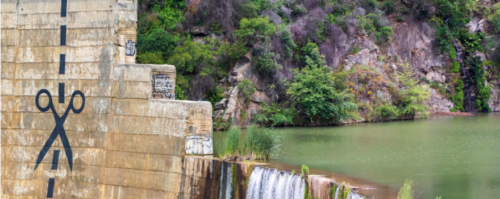
“To drivers passing by on Highway 33 and even those who pull off along the side of the road to cool off in the waters of Matilija Creek, the hulking concrete structure tucked behind a rocky hillside is all but invisible. But for nearly 80 years, Matilija Dam has wielded a quiet power over the city of Ventura and the Ojai Valley north of Los Angeles County, reshaping the landscape of both the creek and beaches over a dozen miles away. It’s also sat useless for decades — and it finally might come down in the next one, if Ventura County can scrounge up around $300 million. … “The dam no longer serves its original purpose and has been considered non-functional for decades due to structural concerns and extreme sediment build-up,” states the county’s website focused on the Matilija Dam Ecosystem Restoration Project. … ” Read more from SF Gate.
SAN JOAQUIN VALLEY
Visitors urged to avoid contaminated waters at Madera County lake
“Visitors are being warned to stay out of parts of a popular Lake north of Madera due to a harmful algae bloom. County officials say the shoreline near the east and west boat ramps of Eastman Lake is littered with the toxic algae. According to the CDC, even touching the water can lead to rash and eye, nose, and throat irritation. In more severe cases, people and pets can experience vomiting, diarrhea, weakness, and even liver damage. The county adds that the algae poses a particular risk to children and dogs. … ,” Read more from Your Central Valley.
Finding common ground for habitat preservation and farming earns Kaweah water manager prestigious award
“Longtime Tulare County water manager Mark Larsen will be recognized with a prestigious conservation award Oct. 1 during the annual “Evening Under the Oaks” event sponsored by Sequoia Riverlands Trust. Larsen, who has spent 24 years working in the Kaweah watershed, will receive the Alan George Conservation Award for his commitment to groundwater sustainability and land preservation at the event, which takes place at Kaweah Oaks Preserve east of Visalia. The award recognizes individuals whose leadership advances the protection of natural lands, working farms and the region’s vital resources. Larsen, a native of Fresno, currently serves as general manager of Greater Kaweah Groundwater Sustainability Agency. He said his initial reaction to the news was one of disbelief. … ” Read more from SJV Water.
SOUTHERN CALIFORNIA
Antelope Valley: Water district displays wares to customers
“The Palmdale Water District showed its latest projects to customers and residents at its annual Customer Appreciation Day on July 22. The district also had information for people on how to save on their water bill and ways they could conserve water. The water district has consistently held the Customer Appreciation Day the last few years since starting it approximately 10 years ago. “The purpose is really to thank our customers, to show appreciation for trusting us and really getting them to know what we do here,” said Judy Shay, public affairs director for the district. “We have today is different booths that represent all of our different departments, so they can come and learn about the Pure Water AV, the filtration facility, which is opening up about 68 months. … ” Read more from the Antelope Valley Press.
San Fernando Valley earthquake resistant water pipe “will bend instead of break” officials say
“The installation of nearly 5 miles of new earthquake-resistant water pipeline was celebrated today in Sylmar, making it the longest of its kind in the United States. The Los Angeles Department of Water and Power’s pipeline project aims to replace aging infrastructure in the East San Fernando Valley, with over 67 miles installed since 2012. Recognizing the importance of updating infrastructure comes at a time when Los Angeles has seen its fair share of water main bursts, including a massive July 16 break in West Hollywood that caused severe damage. “The harder something is, the more likely it is to shatter like glass … the more ductile and flexible, the less likely it is to catastrophically fail. It’ll bend instead of break,” David Hanson, LADWP interim general manager, said. … ” Read more from CBS LA.
SEE ALSO: Mayor Bass and Councilmember Monica Rodriguez join LADWP leadership to celebrate major seismic water infrastructure milestone in the San Fernando Valley, press release from LA DWP
Is Long Beach ready for a floating nuclear power plant? Here’s what to know
“Worried about all the demand from artificial intelligence making power too expensive? The Port of Long Beach has an answer: little, floating nuclear power plants. America’s second largest port and its partner are trying to tap into the energy that powers nuclear submarines and build power plants on barges. The idea is to develop the technology for movable plants that can be floated off the coast and used to power the port and eventually cities. Last month, the port announced a partnership with startup Bluecore Energy to develop emissions free energy that could one day help power the port’s operations. While it is still a long way from deployment or regulatory approval, and Long Beach residents will need reassurance about any safety concerns, the startup has already raised $10 million and begun development in a warehouse inside the port. … ” Read more from the LA Times.
IMPERIAL/COACHELLA VALLEYS
Imperial County to hold community workshop on proposed CEQA regulation updates
“The County of Imperial will hold a community workshop on Thursday, September 3, 2026, from 6:00 p.m. to 8:00 p.m. to provide additional information about the California Environmental Quality Act (CEQA), the County’s CEQA process, and proposed updates to its local CEQA regulations. The Imperial County Planning Commission considered the proposed updates on May 13, 2026, and recommended approval to the Board of Supervisors. The proposed regulations were presented to the Board on July 7, 2026, at that time the Board directed staff to continue the item and return with an additional presentation further detailing the proposed changes with presentation slides that the Board and community could review. When the item returned on August 25, 2026, the Board received public comments and requests for further information before continuing its consideration. The Board provided direction for the County to hold a community workshop. … ” Read more from the Imperial Valley Press.
Imperial County requests $750k to address New River
“The Imperial County Board of Supervisors authorized the submission of a $750,000 grant application to the State Water Resources Control Board on Tuesday, August 25, for the Proposition 4 United States-Mexico Border Funding Program. Prop 4, also known as the Safe Drinking Water, Wildfire Prevention, Drought Preparedness, and Clean Air Bond Act, passed in 2024 to provide $50 million for projects to address water quality problems in the California-Mexico cross-border rivers and coastal waters, including the New River. Prop 4 provides funding for projects focused on research and planning, with a separate grant application type for construction and implementation projects. The county’s grant application would not be in competition with efforts or grants coming out of the City of Calexico’s operations. … ” Read more from the Imperial Valley Press.
SAN DIEGO
Escondido approves moratorium on data centers
“The Escondido City Council unanimously approved an urgency ordinance Wednesday imposing a 45-day moratorium on data centers. The council and city officials said the moratorium was a public health and safety issue and allows city staff to develop regulations for land use, zoning, and reducing potential impacts on public safety and city services from data centers and other high-intensity computing uses. Garrett Smith, senior planner with the Development Services Department, said the city currently has no applications or inquiries from data center developers. He said the council’s action would provide staff time to develop the appropriate regulations, conduct legal and regulatory research, and conduct outreach to stakeholders and the community. … ” Read more from the North County Pipeline.
‘Super’ El Niño and San Diego – what scientists know now and what else they hope to learn
“As San Diego city workers prepare for a potentially historic “super” El Niño, some scientists say it’s still too early to tell if San Diego and Southern California are in for historic rainfall and flooding. Scientists at UC San Diego’s Scripps Institution of Oceanography have been studying the formation of this El Niño. Researchers published a new, multi-part FAQ guide explaining what El Niño is, why this year’s event could be unusually strong and how scientists are tracking it. For San Diegans, El Niño can mean more rain, bigger surf, coastal flooding and warmer ocean temperatures. But scientists say it’s still too early to know exactly what this year’s event will mean, particularly when predicting rainfall and flooding. Historically, El Niño has increased the odds of wetter weather across Southern California, but the strength of an El Niño and actual rainfall in San Diego are not always intertwined. … ” Read more from the Times of San Diego.
San Diego Water Authority to generate $15M from Burbank water deal
“The San Diego County Water Authority is expected to generate $15 million in revenue during the first five years of a long-term agreement announced Thursday that will allow Burbank, in Los Angeles County, to purchase water from the agency. Under the agreement, Burbank will be able to purchase up to 5,000 acre- feet of water annually through 2047, according to the Water Authority. The agencies will use existing infrastructure to share the water, with no new pipelines required. Water Authority officials said revenue from the agreement will help offset costs associated with investments made over the past three decades to improve San Diego County’s water supply reliability. … ” Read more from NBC 7.
SEE ALSO: Burbank, San Diego County Sign Long-Term Water Supply Deal, from My News LA
Chula Vista hires federal lobbyist, dropping Imperial Beach sewage crisis partnership for now
“The Chula Vista City Council voted unanimously this week to hire a Washington, D.C., lobbying firm for federal advocacy, but stripped out a companion partnership with the city of Imperial Beach targeting the Tijuana River Valley sewage crisis after a council member raised concerns about duplicating other agencies’ efforts. The council approved a scope of work with Thorn Run Partners LLC for Chula Vista-specific federal lobbying under an initial 10-month agreement worth $89,167. The contract allows four one-year extensions for a total not-to-exceed amount of $539,140, according to a staff report presented to the council. But the council removed a second component of the item — a joint scope of work with Imperial Beach focused on the Tijuana River Valley cross-border pollution crisis — along with a related memorandum of understanding between the two cities, after Councilmember Jose Preciado moved to amend the proposal. … ” Read more from the San Diego Union-Tribune.
Along the Colorado River …
What the new rules for a shrinking Colorado River mean for tribal nations
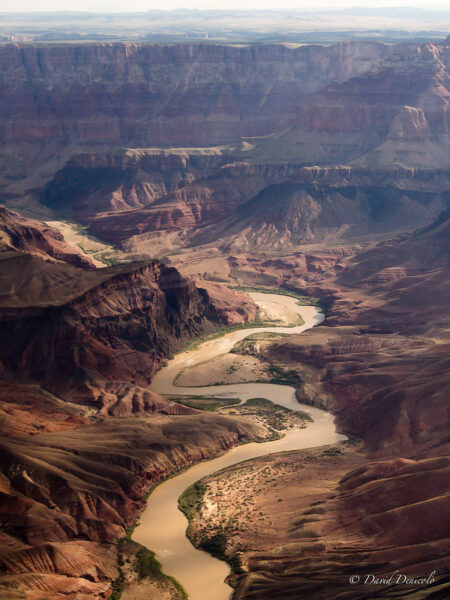 “Between the red rock canyon walls of the Colorado River, Aniston Hanks, 20, stood in the water while her best friend, Shauna Belone, 21, sat along the river’s shore. The two Diné citizens spent part of their summer learning about water, land, plants and conservation across the Colorado Plateau through The Nature Conservancy’s NATURE Program (Native American Tribes Upholding Restoration and Education). For Hanks, standing knee-deep in the Colorado River brought thoughts of the Little Colorado River near her home in Cameron, Arizona, a source of reverence for her family. “We think of it as a relative,” Hanks said of water, including the tributaries of the Colorado River. “We’re born for water.” … ” Read more from High Country News.
Record of Decision and Operating Guidelines underscore need for 3-state deal
“CAP and the Arizona Department of Water Resources have been working with other water users in Arizona, California and Nevada, as well as the United States, on a two-year agreement to provide stability to CAP users and the entire Colorado River. The Record of Decision and two-year Operating Guidelines for the Colorado River released today by the federal government adopt the historic level of conservation proposed by the Lower Basin states that will help stabilize the River for all users through 2028. However, the Record of Decision extends through 2036 and proposes a post-2028 framework for future River operations that violates the Law of the River and authorizes the imposition of disproportionate, unlawful, and intolerable cuts on Arizona and CAP users. The ROD requires no water conservation or cuts from the Upper Basin states – Colorado, New Mexico, Wyoming, and Utah – and fails to encourage much needed consensus among the seven Basin states. … ” Read more from CAP’s Know Your Water News.
Nevada’s Colorado River suit previews future water-scarcity wars
“A recent lawsuit challenging federally mandated cuts to Colorado River water use previews legal battles likely to intensify as river basins providing water for millions begin to dry up amid climate change and increasing water demand in the West. The lawsuit, filed Aug. 24, is Nevada’s response to the Trump administration’s 10-year plan, announced last week, to divvy up the drought-stricken Colorado River Basin’s dwindling water among seven states and the 40 million people who rely on it. The fight over the Colorado River is a symptom of an existential problem facing the West and its major rivers: The laws and compacts that determine how much water the region’s cities and farmers can take from the rivers assumed that there was far more water in them than there actually was—especially now amid devastating drought. … ” Read more from Bloomberg Law.
Nevada lawsuit threatens Navajo water settlement push
‘Final’ federal decision on Colorado River hardly the last word
Greg Walcher writes, “I heard about two lawyers that argued for over an hour. Finally, one said, “That’s my final word on the subject.” To which the other replied, “Oh, good. Now we can begin.” In politics, contentious agreements are a bit like that, too. There is really no such thing as a “final” agreement, only the agreement that’s in effect until the next meeting. The Bureau of Reclamation just released its “Final Environmental Impact Statement for the Post-2026 Operational Guidelines and Strategies for Lake Powell and Lake Mead.” It represents the government’s “final decision” on how it will manage the Colorado River over the next ten years. … But “Final EIS” is a federal process term, it is by no means the last word. … ” Read more from Complete Colorado.
NASA: Low water levels in Lake Powell and Lake Mead in August 2026
“The two largest reservoirs in the United States approached record low levels in the summer of 2026. Short- and long-term droughts, plus below-average winter snowfalls, diminished water supplies across the Colorado River watershed, which feeds into Lake Powell and Lake Mead. The river system supplies water to approximately 40 million people and 5 million acres of farmland in Wyoming, Colorado, Utah, New Mexico, Arizona, Nevada, and California. … ” Read more and check out the pictures at NASA’s Earth Observatory.
University of Utah researchers find possible water source in Mount Timpanogos rock glacier
“New research methods are revealing how much water can be found buried in Utah’s mountains, leading to an updated understanding of our water supply and knowledge of future hazards. There is enough water in the Timpanogos Rock Glacier to fill 600 Olympic swimming pools, according to new research by University of Utah geologists. How could this be? Geophysicist Michael Thorne says Timpanogos hikers likely wouldn’t have known they stood on top of a glacier, because it’s covered in rocks, gravel and debris. “We suspect that there’s ice under many of them,” Thorne said. “And as you’re looking from the surface, you can see these features, you can measure how large they are on the surface. But what we can’t do is tell how much ice, how thick the ice is underneath them.” … ” Read more from KSL.
In national water news today …
Open AI and other tech giants call for greater defense against A.I. attacks
“A wave of cyberattacks driven by artificial intelligence is coming, and companies have a narrow window to defend themselves. That was the message of an open letter published on Thursday by OpenAI and more than 100 major technology companies and others. The letter said that A.I. labs should provide their best A.I. models to organizations like hospitals and infrastructure providers so they can prepare and that governments should help coordinate and fund cyberdefense. The letter’s signatories included Google, Microsoft and OpenAI’s archrival, Anthropic, as well as cybersecurity and financial firms such as CrowdStrike, a company known for investigating cyberattacks against the Democratic National Committee in 2015 and 2016, and credit card providers like Visa and Mastercard. “The companies and public services our communities depend on — from hospitals to water treatment plants to the infrastructure that powers the internet — are at risk,” the letter said. “A.I. enabled cyber attacks will become far more widespread and sophisticated as models around the world become increasingly capable.” … ” Read more from the New York Times.
To win the AI race, the US needs pumped storage hydropower, report says
“If the United States wants to “win the global race to dominate artificial intelligence and advanced manufacturing,” the solution should include new sources of pumped storage hydropower, according to the National Hydropower Association. More than 60 gigawatts of proposed new pumped storage capacity is working its way through the regulatory pipeline, explained the NHA report Winning the AI Race: Tapping into Pumped Storage Hydropower, with 70 pumped storage projects awaiting licensing by the U.S. Federal Energy Regulatory Commission. To “unlock this proven technology” and bring new pumped storage capacity online will require policies “that remove red tape” and “speed up construction,” the report explained. Because if the U.S. cannot provide sufficient electricity “reliably, at the right locations, and quickly enough,” AI companies could turn to other countries that can, the report warned. … ” Read more from Civil Engineering Source.

