
Report offers 50 recommendations to keep loss of small farms from becoming SGMA’s “seventh undesirable result.”
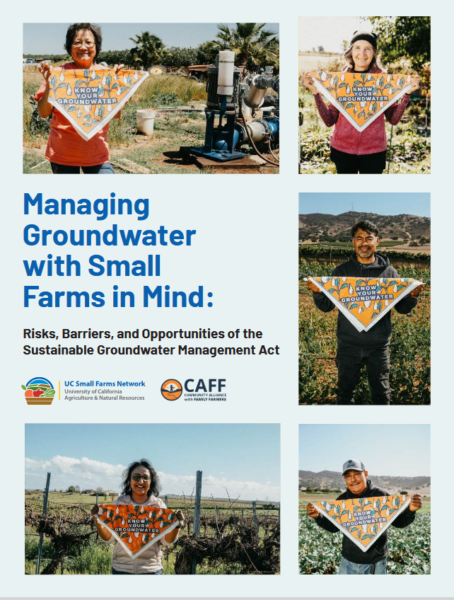
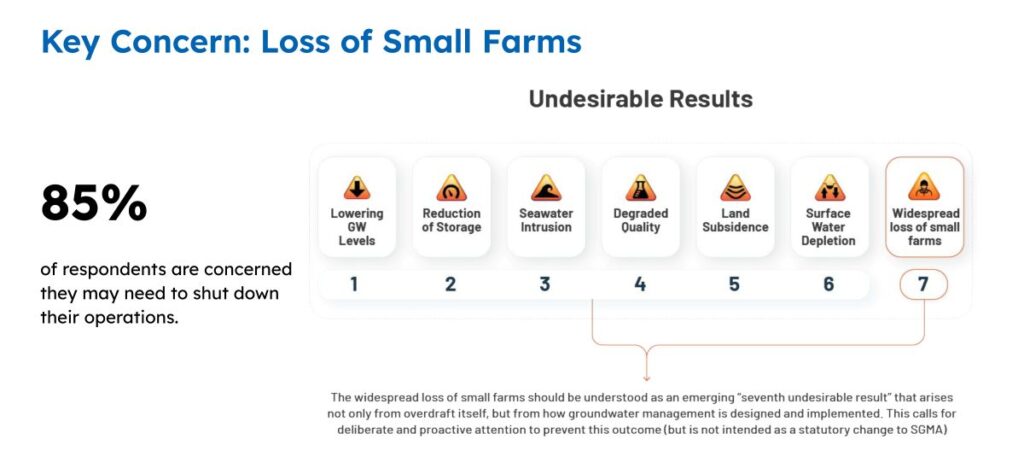
The 2014 Sustainable Groundwater Management Act (SGMA) marked a significant step toward addressing decades of unsustainable groundwater pumping in California. SGMA identifies six “undesirable results” to avoid: chronic lowering of groundwater levels, reduced groundwater storage, seawater intrusion, degraded water quality, land subsidence, and depletion of interconnected surface water. The report, Managing Groundwater with Small Farms in Mind, argues that the widespread loss of small farms should be understood as an emerging “seventh undesirable result” — one that arises not only from overdraft itself, but also from how groundwater management is designed and implemented.
“In this report, we flag the widespread loss of small farms to be understood as an emerging seventh undesirable result,” Ngodoo Atume, SGMA Technical Assistance for Small Farms Coordinator at the University of California Agriculture and Natural Resources and one of the report’s authors, said at a recent webinar highlighting the report’s findings. “This will arise not just from overdraft, but from how groundwater management is designed and implemented, so this is a key takeaway for state and local agencies. Avoiding the emerging ‘seventh undesirable result’ requires acknowledging this reality: that a large number of farmers are likely low-impact water users.”
Although SGMA-related pumping limits and groundwater management actions affect farms of all sizes, the impacts are often felt disproportionately by farmers with fewer resources and limited capacity to adapt. Small and mid-sized farms often operate with limited financial reserves while facing overlapping pressures, including volatile commodity markets, rising labor and input costs, increasingly complex regulatory requirements, loss of regional processing and distribution infrastructure, and climate-related impacts such as intensifying drought cycles and increasing heat stress. Among these challenges, one of the most significant is the growing constraint on groundwater availability.
Who Counts as a Small Farmer?
Small farms make up a larger share of California agriculture than is often assumed. According to the 2022 USDA Census of Agriculture, farms under 500 acres represent 88% of all farm businesses in the state. A recent statewide survey of small-scale farmers found that 70% of respondents farm fewer than 50 acres (n=63), a trend also reflected in a CAFF survey in which more than 80% of parcels were under 50 acres. In the critically overdrafted Tule and Tulare Lake subbasins, a substantial share of pumpers — more than 40% — accounts for only a marginal fraction, about 1%, of total groundwater use, according to recent data shared by the State Water Resources Control Board.
California does not have a single statewide definition for small-scale farmers. Definitions typically vary by program or agency. The USDA defines small farms based on income, but in the context of SGMA, the report authors say small farms are more appropriately described by their groundwater use.
For the research, a subset of growers was identified as small farmers with lower groundwater use. Within that group, the authors identified another subset they termed “small farm de minimis pumpers,” referring to farmers with very minimal groundwater use. These farmers often cultivate small acreages, grow crops with low water requirements, and practice conservation on their farms. The report found that they pump significantly smaller amounts of groundwater relative to neighboring farms in their subbasins.
Many of these farmers sell at farmers markets or farm stands, supporting local food access and contributing to food sovereignty and food security.
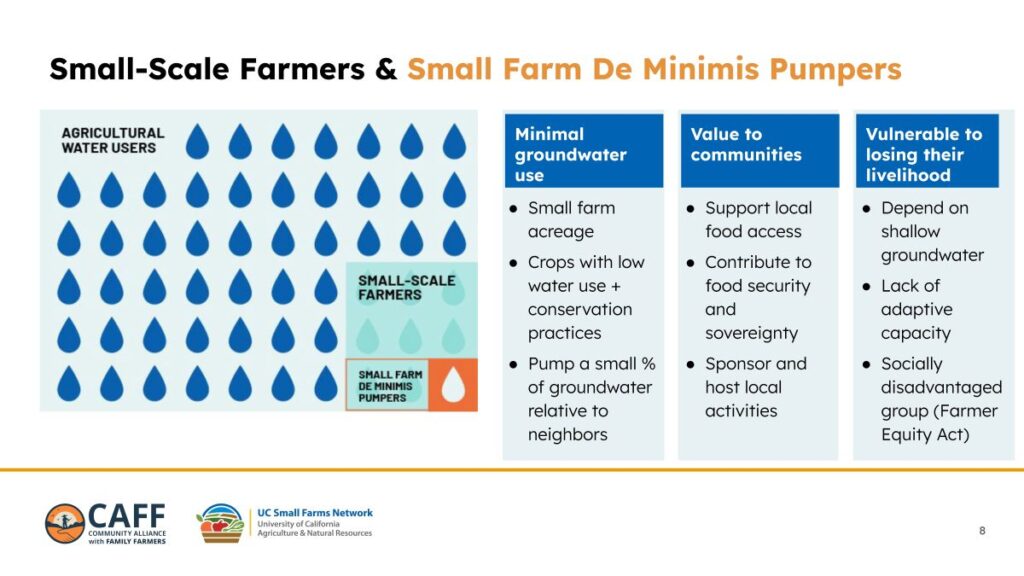
“These growers are vulnerable to losing their livelihood,” said Ms. Atume. “We found that they depend on shallow irrigation wells and often lack adaptive capacity. We’re flagging this category of farmers because they have negligible groundwater use in comparison to others. Through our work, we found that their impact on overall groundwater overdraft is very limited. These are not the farmers that are responsible for the overdraft we’re seeing.”
A path for protecting small farms while managing groundwater
The report says preventing the loss of small farms under SGMA will require coordinated action by state agencies, groundwater sustainability agencies and farmers. The report outlines the following steps to sustain small farms while advancing groundwater sustainability:
- Identify small-scale farmers locally. The report recommends that groundwater sustainability agencies develop transparent, locally grounded processes to identify small farms that contribute minimally to overdraft but face disproportionate risk under SGMA. It also proposes recognizing a narrower category of “small farm de minimis pumpers” whose groundwater use is negligible at the basin scale, but whose loss could have significant social, cultural, and economic consequences.
- Coordinate and act to keep small farms in business. State agencies, GSAs and farmers each have a role in reducing disproportionate impacts on small producers. The report calls for dedicated state funding for small-farm resilience under SGMA, along with technical assistance, small-farm liaisons, more inclusive governance and fee structures that reflect differences in groundwater use.
- Implement actions that support small-scale farmers in groundwater management decisions. The report’s 50 recommendations address GSA operations, management actions and groundwater-use regulation. They include reforms related to outreach, governance, monitoring accuracy, fee design, water markets, recharge programs, fallowing alternatives, allocation models and adjudication processes.
- Support equitable transition pathways. The report recommends directing SGMA-related land repurposing toward large, water-intensive acreage to reduce groundwater demand while preserving opportunities for small-scale farmers. It also calls for technical assistance, funding, workforce development and a coordinated Equitable Transition Initiative to support farmers and farmworkers through the shift to lower-water-use agricultural systems.
Report recommendations
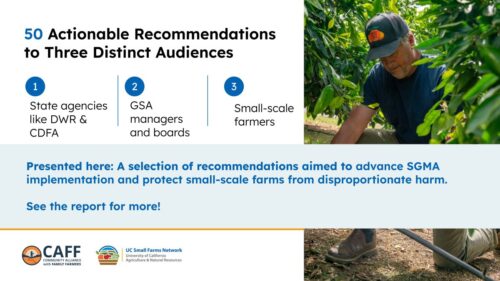 The report’s 50 recommendations translate its central finding into a practical roadmap for state agencies, groundwater sustainability agencies and small farmers. Together, they focus on reducing inequitable burdens on small producers while still advancing SGMA’s core goal of bringing groundwater basins into long-term balance. At the webinar, Ms. Atume and Ms. Van Dyke summarized some of the report’s recommendations.
MONITORING GROUNDWATER USE
SGMA requires agencies to monitor and estimate groundwater use. Across California, many groundwater sustainability agencies rely on satellite-based estimates, while others use meters or are considering them.
The report cautions that satellite-based measurements can be less accurate for small, diversified farms, where multiple crops may be grown on limited acreage and where niche crops may not be well represented in the models. If evapotranspiration estimates overstate water use, small farmers could face inaccurate groundwater charges or regulatory burdens.
“One of the recommendations is supporting small farmers on the ground in understanding how their groundwater use is monitored,” said Ms. Atume. “It’s a question that we get frequently when we’re meeting with farmers, and for the regions that have meters or are considering meters, clarifying the reporting protocols for small farmers goes a long way.”
For agencies using satellite-based estimates, the report recommends GSAs allow meter-based appeals and that the state consider providing free or subsidized flow meters for small farms.
GROUNDWATER FEES
SGMA allows groundwater sustainability agencies to collect fees to fund administration, monitoring, planning and studies. The report cautions that flat or equal fees can create unequal burdens, particularly for small farmers who often pump relatively little groundwater and contribute minimally to overdraft. For some small farms, these costs can affect whether they remain in production.
For agencies considering groundwater fees, the report recommends structures that reflect differences in water use rather than relying on flat charges. Options include tiered fees based on groundwater use, exemptions for small farm de minimis pumpers, and investing in small farm technical assistance.
GROUNDWATER MARKETS
Groundwater markets are sometimes proposed as a demand-management tool. In theory, they allow farmers with lower water needs to sell pumping allocations to others who need additional supply, directing water toward higher-value or more efficient uses.
 “While they sound straightforward, our research has shown that in practice, managing the accounting of where water is going, who is doing that trading, how much one has to trade, and the resulting impacts of those trades is a huge administrative challenge that can be quite difficult for an individual GSA to manage,” said Catherine Van Dyke, co-author and Director of Water Policy with the Community Alliance with Family Farmers. “Any groundwater market really requires the prerequisite of comprehensive accounting of allocations, so while it’s possible to track how these allocations are later traded, this can be really expensive and difficult to implement, and challenging to really mandate, particularly because there are no set prerequisites for what guardrails a groundwater market must have, which can create a significant oversight challenge.”
The report raises equity concerns about groundwater markets, including whether large landowners could consolidate pumping across parcels in ways that make water use harder to track. It also notes that small farmers may face barriers to participation, including language access, technical requirements and limited administrative capacity.
“Particularly, we’re concerned about farmers who lease land who could find that their landlord finds it more lucrative to sell that water on the market rather than to continue selling it or continue the use for the person who is leasing that land,” said Ms. Van Dyke.
The report recommends that GSAs consider alternatives before using groundwater markets for demand management. If a market is adopted, the authors recommend a “do no harm” approach that evaluates market design for potential impacts on drinking water users, groundwater-dependent ecosystems and small farms.
The recommendations also call for small-scale farmers, small water systems and drinking water users to be included in market design. The report emphasizes the need for oversight and monitoring, including the ability to halt trading if harm occurs.
GROUNDWATER RECHARGE
 Groundwater recharge is a common tool for groundwater management, but the report cautions that small-scale farmers may face barriers to participation. Limited access to surface water, outdated infrastructure and high permitting costs can make it difficult for small farms to benefit from recharge and conjunctive-use projects.
The report also raises concerns about pumping credits tied to recharge projects. One-to-one credits may not account for water lost as it percolates through the aquifer, potentially weakening overdraft-reduction goals. The authors also caution that an overemphasis on recharge could draw attention and resources away from demand-management strategies.
While the authors acknowledge recharge as an important part of basin sustainability, they recommend avoiding one-to-one pumping credits for single-user recharge projects, prioritizing financial incentives that reduce water costs, and pursuing recharge with demand-management measures.
ONGOING SUPPORT FOR SMALL FARMERS
Although SGMA relies on local groundwater governance, the report says equitable implementation will require coordination among GSAs, farmers and state and federal agencies. Those agencies include the Department of Water Resources, the State Water Resources Control Board, the Department of Conservation, the Governor’s Office of Business and Economic Development, the California Department of Food and Agriculture, and USDA/NRCS.
The report calls for clear state guidance and targeted funding to help GSAs account for the needs of small-scale farmers without shifting additional costs onto those farmers through local fees.
“GSAs have a lot on their plates that they are already managing, and that’s why we are calling for clear guidance and targeted funding to support this, since we know that there’s a lot that they’re already managing,” said Ms. Van Dyke.
The recommendations also urge agencies to fund small-farm liaisons, build local partnerships, expand technical assistance and create stronger pathways for small-scale farmer representation in groundwater governance.
EQUITABLE TRANSITION
The report recommends creating an Equitable Transition Initiative to coordinate the work of state agencies, including the California Department of Food and Agriculture, the Department of Conservation, the State Water Resources Control Board and the Department of Water Resources, as SGMA reshapes water use and agricultural production across California.
“SGMA really requires a real change in how water is used and how agriculture looks,” said Ms. Van Dyke. “So there needs to be a cohesive role across the state for how we’re thinking about that transition and how it’s done equitably and in ways that don’t harm the communities who are really bearing the brunt of that.”
The report also recommends establishing a de minimis agricultural category, similar to the domestic well exemption, to reduce reporting requirements for very small farms with minimal groundwater use. “This is not to say that small farms in general aren’t using water, but that there really is a subset who are using an extremely small amount of water who could strongly benefit from different reporting requirements,” said Ms. Van Dyke.
The report points to small farms as one possible part of land-repurposing strategies, particularly where less water-intensive production can preserve agricultural livelihoods. “We see an opportunity with small farms in less water-intensive production to be part of that solution,” said Ms. Van Dyke. “That means that farmers need support if they’re thinking about that transition. That looks like support for market access, for equipment, for labor, for training — for all the things that go into making that successful. So that’s the idea of an equitable transition initiative and how can there be broad support for making sure that we don’t just default, let land be fallowed, let nothing happen, and instead push for continuing thriving agricultural livelihoods across the state.”
Connect to resources for small farmers
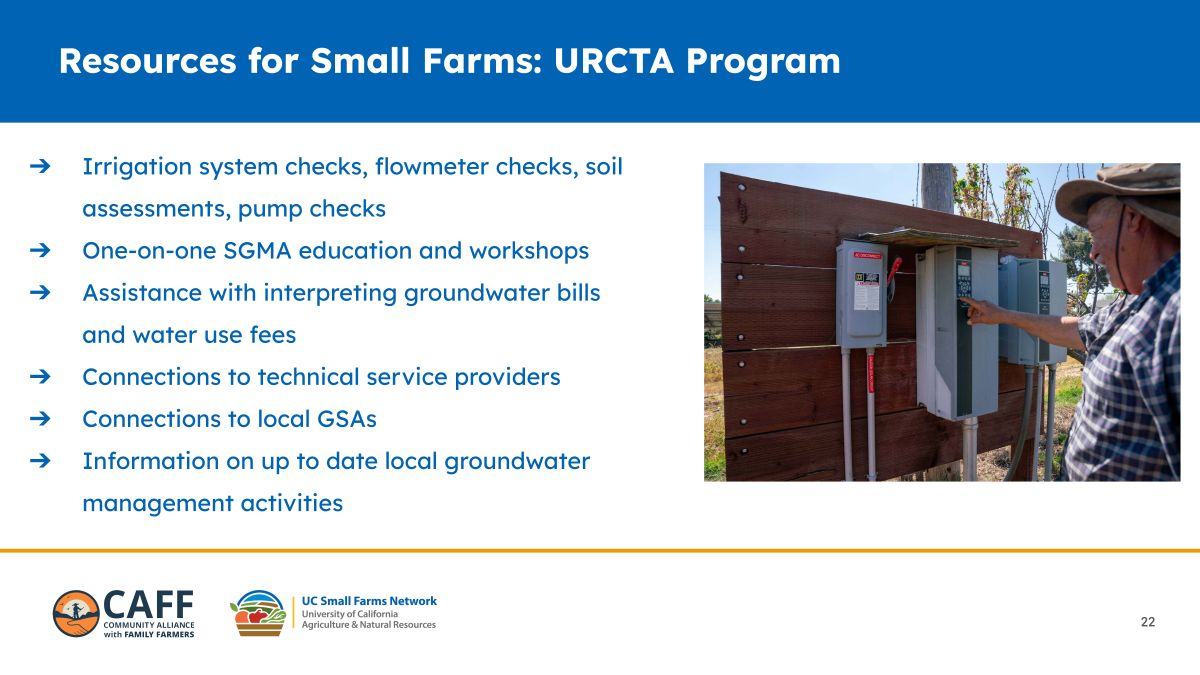 Small farmers seeking groundwater-related support can access the Department of Water Resources’ Underrepresented Communities, California Tribes and Small Farmers Groundwater Technical Assistance Program. The program offers irrigation system checks, flow meters, soil assessments, SGMA education and workshops.
“We have staff who are standing by and can help you understand and get connected to that GSA so that you have a really clear understanding of what’s happening and what’s slated to happen in the future,” said Ms. Van Dyke. “That includes assistance with interpreting groundwater bills and water use fees, connections to technical service providers, connections again to those local GSAs, and continued information on up-to-date local groundwater management activities.”
- Access the report and additional resources here.
- Report takeaways for GSAs.
- Report takeaways for state agencies.
- Report takeaways for communities.
- DWR: Underrepresented Communities, California Tribes, and Small Farmers Groundwater Technical Assistance Program
- UCANR Small Farms Network | email: sgma@ucanr.edu
- CA Alliance of Family Farms | email: sgma@caff.org

