
Several news sources featured in the Daily Digest may limit the number of articles you can access without a subscription. However, gift articles and open-access links are provided when available. For more open access California water news articles, explore the main page at MavensNotebook.com.
On the calendar today …
- PUBLIC MEETING: California Water Plan 2028 – Advisory Committee Meeting 2 from 8:30 – 12:30pm. The California Department of Water Resources (DWR) invites you to join us for the 2nd Advisory Committee meeting for the California Water Plan 2028. The meeting will be held in-person in Los Angeles at the Los Angeles County Public Works over two half days on August 25 and 26, 2026. All Committee meetings are open to the public. A YouTube livestream option will also be available for viewing purposes. Click here for the agenda. View the meeting on YouTube.
- WEBINAR: El Niño, Explained with Dr. Daniel Swain from 1pm to 2pm. Join Sustainable Conservation for a conversation with climate scientist Daniel Swain, PhD about this year’s developing El Niño event. Scientists are forecasting that this year’s El Niño could be among the strongest on record. What exactly is El Niño, why is this year’s climate event drawing so much attention, and what could a particularly strong El Niño year mean for California weather, water, and agriculture? We’ll kick off Sustainable Conservation’s Fall 2026 Voices from the Field webinar series on August 26 with climate scientist Daniel Swain, PhD. He’ll explain the science and climate context behind this year’s El Niño, and we’ll explore broader climate variability, long-term warming patterns, and what this all could mean for California as communities prepare for future climate extremes. Click here to register.
In California water news today …
New report focuses on groundwater sustainability without leaving small farms behind
 “The 2014 Sustainable Groundwater Management Act (SGMA) marked a significant step toward addressing decades of unsustainable groundwater pumping in California. SGMA identifies six “undesirable results” to avoid: chronic lowering of groundwater levels, reduced groundwater storage, seawater intrusion, degraded water quality, land subsidence, and depletion of interconnected surface water. The report, Managing Groundwater with Small Farms in Mind, argues that the widespread loss of small farms should be understood as an emerging “seventh undesirable result” — one that arises not only from overdraft itself, but also from how groundwater management is designed and implemented. “In this report, we flag the widespread loss of small farms to be understood as an emerging seventh undesirable result,” Ngodoo Atume, SGMA Technical Assistance for Small Farms Coordinator at the University of California Agriculture and Natural Resources and one of the report’s authors, said at a recent webinar highlighting the report’s findings. “This will arise not just from overdraft, but from how groundwater management is designed and implemented, so this is a key takeaway for state and local agencies. Avoiding the emerging ‘seventh undesirable result’ requires acknowledging this reality: that a large number of farmers are likely low-impact water users.” … ” Continue reading at Maven’s Notebook.
Appeals filed for the Delta Conveyance Project revised Certification of Consistency with the Delta Plan on remanded items
“The following parties have appealed the California Department of Water Resources’ Delta Conveyance Project Revised Certification of Consistency with the Delta Plan on Remanded Items (C20262), which was submitted to the Delta Stewardship Council on July 24, 2026: C20262-A1 – Sacramento Area Sewer District, C20262-A2 – Twin Cities Group (Frank Loretz, Duane Martin, Kevin Young, David Schultz), and C20262-A3 – County of San Joaquin, County of Solano, County of Yolo, Central Delta Water Agency, and Local Agencies of the North Delta. … ” Read more from the Delta Stewardship Council.
Final 2026 Delta Science Plan: Strengthening Science in the Sacramento-San Joaquin Delta
“The Delta Science Program is proud to share that, following years of development and extensive engagement with the region’s science community, the 2026 Delta Science Plan: Strengthening Science in the Sacramento-San Joaquin Delta is now available online. The Delta is one of California’s most valuable and complex ecosystems, and there is a shared sense of urgency to protect and manage its resources. A coordinated scientific approach is essential to help us understand the region’s complicated dynamics, anticipate future threats, and guide decisions. Following the versions released in 2013 and 2019, the 2026 Delta Science Plan serves as the updated “how-to” guide for a more collaborative and forward-looking approach to science in the region. It comprises 24 Actions and 8 Resources, structured around four grand challenges facing the region: anticipating new conditions, rapid environmental change, decentralized flows of information, and siloed decision-making. Click here for more on the 2026 Delta Science Plan.
Heat, drought continue fueling wildfire risk from Texas to California and Washington
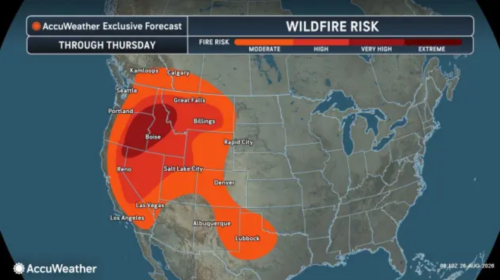 “Months of summer heat, sunshine and limited rainfall have dried vegetation and depleted soil moisture across much of the western and south-central United States, increasing the risk of wildfires. Damaging fires this summer in Utah; Oregon; Spokane, Washington; near Reno, Nevada; and west of Fort Worth, Texas, show how quickly flames can spread through tinder-dry vegetation, whether sparked by arson, an accident or lightning. … Widespread highs in the mid-90s to low 100s are forecast this week, with temperatures in some deserts of Utah, Nevada, Arizona and California reaching the 110s. As temperatures climb during the day, humidity levels will plummet and winds may increase. These conditions can allow fires sparked by power equipment, discarded cigarettes or open flames to spread rapidly. … ” Read more from AccuWeather.
What will fall weather be like in California? ‘El Niño is strengthening’
“Summer has been scorching across California, with temperatures climbing as high as 110 degrees in some parts of the state. However, relief may be on the way. With fall just around the corner, Californians can look forward to shorter days, pumpkin spice drinks, changing leaves and, potentially, cooler temperatures. The Old Farmer’s Almanac — known for its long-range weather forecasts — is predicting a “cool, wet” fall for much of California. Meanwhile, the National Weather Service’s Climate Prediction Center is forecasting above-normal precipitation across parts of the state from September through November. “El Niño is strengthening, with a greater than 90% chance of a very strong event during the Northern Hemisphere fall and winter 2026-27,” the Climate Prediction Center said in an Aug. 13 news release. What will fall weather be like in California? … ” Read more from the Sacramento Bee.
Drought status update for California-Nevada
“Currently, 88% of Nevada is in drought (D1-D3) according to the U.S. Drought Monitor, with 6% in Extreme Drought (D3). Meanwhile, only 7% of California is in drought (D1-D2) with an additional 58% Abnormally Dry (D0). Drought in the Colorado River Basin has persisted as isolated monsoon rains provided only minor relief for the basin’s water supply challenges. Both Lake Mead and Lake Powell are at critically low levels. Currently El Niño conditions are present. The NOAA forecast indicates a very strong El Niño will be present September–January (greater than 90% chance). El Niño conditions are likely to remain through the winter and into spring, though the strength of the El Niño may be reduced. Since 1950, two of the three strongest El Niño events (1982/1983, 1997/1998), according to the Relative Oceanic Nino Index (RONI), resulted in extreme wet conditions throughout California and Nevada. Precipitation was near normal during the third event (2015/2016). … ” Continue reading this drought update from NIDIS.
Bowles Farming Company: Adapting to keep California agriculture moving
“Farming in California has never been simple, but for Cannon Michael of Bowles Farming Company, adapting to changing conditions has become a fundamental part of keeping a sixth-generation operation moving forward. In the latest AgNet News Hour, Michael discusses everything from extreme heat and limited water supplies to labor, regulation and the future of farming on California’s West Side. Bowles Farming Company manages roughly 11,000 acres near Los Banos and across the western San Joaquin Valley. The operation is remarkably diverse, producing carrots, sweet corn, garlic, onions, watermelons, cantaloupes, honeydew, tomatoes, almonds, pistachios and other crops throughout the year. That diversity has become one way the farm continues adapting. Michael said Bowles expanded significantly into additional crops beginning around 2016, helping transform the operation into essentially a year-round business. But water remains one of the biggest challenges. … ” Read more from Ag Net West.
Hydroclimate whiplash damages California’s tallest redwoods after years of drought
“Tall trees are generally associated with high-biomass forests. This is particularly true for forests dominated by Sequoia sempervirens (hereafter redwood), the world’s tallest tree species. Extreme decay resistance, the ability to survive high-severity fires, shade tolerance and prolific trunk reiteration (resprouting) make the species unique, allowing tall redwood forests to accumulate more biomass and store more aboveground carbon than any other vegetation type. California’s Redwood National and State Parks (RNSP) protect nearly half the global population of living trees more than 100 meters (328 feet) tall across 16,402 hectares (40,500 acres) of high-biomass primary (old-growth) forests, plus 38,379 hectares (94,800 acres) of much shorter, low-biomass secondary forests regenerating from 20th-century logging. Understanding tall-tree and forest-biomass dynamics is essential for long-term conservation, especially since reserves like RNSP are increasingly threatened by extreme weather. … ” Read more from PhysOrg.
Wringing the West dry: How fossil fuel companies drive water scarcity in the Western United States
“Water scarcity has long been a defining feature of the western United States. Its dry climate and the high water demand from the region’s multibillion-dollar agricultural industry have created an unsustainable water system. Climate change is compounding this crisis by simultaneously reducing supply and increasing demand. The consequences span escalating legal battles over water rights, threats to agricultural economies, reduced hydroelectric power generation, ecosystem collapse, and multiple public health issues, including poor air quality and loss of access to drinking water. These dramatic changes raise questions of responsibility and accountability related to climate change and its harms, an idea being explored by scientists, attorneys, and policymakers. … ” Read more from the Union of Concerned Scientists.
POLICY AND REGULATION
The countdown is on: Energy and environment battles to watch before Sacramento closes out its session
 “With only days left in the legislative session, California lawmakers are racing through dozens of high-stakes bills that will shape energy and environmental priorities at the state and federal levels. There are fights over funding for climate projects, utility protections from wildfire liability and controversial shortcuts on environmental reviews, all against the backdrop of Trump-era rollbacks. The legislative session ends Monday. Some experts said they hope lawmakers in Sacramento will use the remaining days to push back against fossil fuel interests and deregulation favored by corporations. Polling shows voters are “connecting the dots between cost increases, corporate greed and weather disasters,” said Shannon Olivieri Hovis, chief strategy officer at the nonprofit California Environmental Voters. … ” Read more from the LA Times.
Controversial California bill would give tribes much more sway over ancestral state lands
“The first and only California tribal member to serve in the state Legislature is pushing a bill that would give Indigenous people considerably more say over their vast ancestral lands. But as the measure gets closer to passage, a surge of opposition has emerged, warning it may be a step too far — and potentially undercut critical state projects. The legislation, called the California Indian Freedom Act of 2026, seeks to ensure that tribes can visit their historically sacred sites and freely worship. To that end, it would require government agencies to get tribal consent before pursuing activities that might disrupt Indigenous practices on land that is now owned by the state. It also would allow tribes to sue for violations of the law. A broad coalition of businesses, water agencies and local governments, led by the California Chamber of Commerce, says that while the bill’s intentions are good, they’re lining up against the proposal because of its methods. They say the measure would essentially give Native American communities unprecedented veto power over such projects on state land as constructing buildings, improving roads, doing fire prevention work and developing new parks. … ” Read more from the San Francisco Chronicle.
California lawmakers race to overhaul wildfire liability rules before deadline
“California lawmakers and Gov. Gavin Newsom are racing to reach a deal on changes to the state’s wildfire liability system, with just days remaining before the legislative session ends. The proposed reforms could affect how wildfire victims are compensated and how much utilities such as PG&E are responsible for paying after fires linked to their equipment. Will Abrams remembers the final moments before his home was destroyed in the 2017 Tubbs Fire. “Kids under your arms running out of the house on fire,” Abrams said. Nearly a decade later, Abrams is concerned the proposed changes could hurt wildfire survivors like him. … ” Read more from CBS Sacramento.
SEE ALSO:
- Gavin Newsom’s last-minute wildfire plan hits friction in Capitol, from Cal Matters
- CA Senate issues its own utility wildfire proposal, sets up late negotiations, from the Sacramento Bee
- California shouldn’t limit wildfire liability for public utilities like PG&E, commentary at the San Francisco Chronicle
Surprise Solano County vote kills California Forever’s shipyard bill for this year
“Solano County supervisors voted Tuesday to oppose a plan that would have allowed the billionaire-backed California Forever to use an 18-year-old environmental report in its effort to create a new shipbuilding facility in the county, throwing a wrench in the group’s plans. The surprise 3-2 vote effectively kills the initiative for this year, dealing a blow to Gov. Gavin Newsom, whose office led discussions on it throughout the summer. “There is work that still has to be done on this legislation,” said Supervisor Mitch Mashburn, who voted against the proposal. “We shouldn’t be doing it because we’re rushed. We do have time.” Mashburn said the legislation put too much responsibility on the county to ensure the environment is protected if project leaders went ahead with a shipbuilding facility, and that some labor and tribal groups felt left out of the process. Supervisors Cassandra James and Wanda Williams agreed to revisit the proposal next year. … ” Read more from Cal Matters.
SEE ALSO: Decision day for California Forever shipbuilding, from Politico
In commentary today …
Yes on a data center in my backyard. Why? It’s an ideal municipal neighbor
Matt Rexroad writes, “My neighborhood Facebook group was recently up in arms about the prospect of a data center coming to Woodland. The comments were full of the usual outrage: traffic, noise, water usage and aesthetics. Never mind the fact that Woodland sits in Pacific Gas & Electric territory, meaning the crippling power costs make it one of the last places on earth a hyper-scaler would actually build a data center. What struck me was not the economics, but the attitude. California built the modern digital world. We take immense pride in being the global engine of technological innovation. Silicon Valley is the birthplace of the artificial intelligence boom currently reshaping human civilization. Yet, across our state, local governments and angry neighborhood groups are racing to oppose and pass moratoriums on the very physical infrastructure making that future possible. It is civic hypocrisy. Almost everyone wants to use AI. People expect instant responses from Grok, seamless cloud storage, and flawless high-definition streaming. But when it comes to housing the servers required to power those algorithms, California’s standard knee-jerk reaction takes over: not in my backyard. … ” Read more from the Sacramento Bee.
Dan Walters: California’s political battle over key environmental law brews on two fronts
“Business as usual in California politics always includes at least one squabble over the California Environmental Quality Act, a law signed 56 years ago by then-Gov. Ronald Reagan. As the Legislature grinds toward the end of its biennial session next week and a Nov. 3 election approaches, we have two such political duels over CEQA, one in legislation and the other in a ballot measure. The underlying issue in both, as always, is how a law, whose original aim was minimizing adverse environmental impacts by public and private projects, will be applied. And, as usual, they pit environmental protection advocates against business interests. In recent years, the perpetual CEQA debate has centered on its use — or misuse — as local governments were pressed by the state to increase housing development, particularly apartments for low- and medium-income families. … ” Read more from Cal Matters.
Why data centers are a top issue in the 2026 midterms
“Ohio Democratic Senate candidate Sherrod Brown is running an ad calling the incumbent Sen. Jon Husted (R-Ohio) the “face of data centers.” As the state’s former lieutenant governor, Husted supported tax breaks for data centers and called them a tremendous economic opportunity for Ohioans. He encouraged towns to build them and advance Ohio as a business-friendly area. The focus on data centers, in one of this year’s most competitive Senate races, demonstrates dramatic shifts in public opinion and the high stakes going into the midterm elections. The public has gone from a cautiously optimistic view of data centers to outright opposition, and this rising negativity poses challenges for technology firms, the digital economy, and policy discussions concerning the future of data center moratoriums and business investments. It is thus a political transformation that warrants close scrutiny by candidates, tech leaders, and election observers. … ” Read more from the Brookings Institute.
In regional water news and commentary today …
NORTH COAST/MODOC PLATEAU
How Klamath irrigators shut down one of the deadliest threats to Pacific Flyway birds
“A disease outbreak that threatened to become one of the largest bird die-offs in North America has been stopped in the Klamath Basin, and the save came from an unexpected direction: the region’s farmers. KDRV reports that avian botulism swept through the basin’s wildlife refuges this summer, threatening up to 140,000 ducks. The outbreak ultimately killed around 13,000 birds before irrigators used the basin’s flow-through system to circulate water through stagnant wetlands and shut the disease down. Klamath Water Users Association president Scott Seus put the problem simply: stagnant water kills ducks. … ” Read more from Active NorCal.
Lassen County’s insurer rejects resident’s contamination claim
“Lassen County resident George Jacobsen — with a year-round groundwater-fed spring, aa seep used as the primary drinking water source, a stream and a pond — has a beef with Lassen County. Jacobsen alleges in October 2024 WM Beaty and Associates, through Western Helicopter Service, applied Velpar DF, a herbicide, and Esplanade F, another herbicide, to a site directly above his property on steep, post-fire terrain, with no Pesticide Use Report or Best Management Practices installed before, during or after the application. Sometime before June 3, 2025, Jacobsen alleges the county issued blanket pesticide use permits to WM Beaty covering thousands of acres without a single pre=application site evaluation, runoff test or label compliance, and without requiring any Best Management Practices on Category 6 terrain directly above a residential drinking water source. … ” Read more from the Lassen County Times.
SACRAMENTO VALLEY
Yolo County extends temporary ban on digging new wells as water worries persist
“Yolo County has extended its temporary ban on digging new agricultural water wells. The Yolo County Board of Supervisors on Tuesday voted to keep the restriction on new wells in certain parts of the county in place for up to a year. The decision came on the day that the temporary moratorium was set to expire. It was first passed last August after local farmers raised concerns about over-pumping the groundwater aquifer beneath the county. “There is certainly mounting evidence that our groundwater management needs better data to manage it sustainably,” said local farmer and public commenter Drew Rivers. … ” Read more from PBS Abridged.
NAPA/SONOMA
Local water agencies agree to extensive wastewater system improvements after Russian River spill
“The Russian River County Sanitation District and Sonoma Water will take immediate steps to improve the Guerneville wastewater system in connection with the spill of 5 million gallons of wastewater into the Russian River in January, under an enforcement settlement with the North Coast Regional Water Quality Control Board. The spill began on Jan. 6 during severe storms and continued for three days after floodwaters entered the sewer collection system through unsecured maintenance access points and overwhelmed the Guerneville wastewater treatment facility. The resulting overflows from an aeration basin and emergency storage pond resulted in the release of an estimated 4.94 million gallons of untreated and partially treated wastewater into the river. Sonoma County public health officials issued water-contact advisories for the river and several coastal beaches. The advisories remained in effect through Jan. 12. The river is a source of drinking water, recreation and critical habitat for fish and wildlife. … ” Read more from the State Water Board.
BAY AREA
Drakes Estero in Marin County could become the next sea otter hot spot
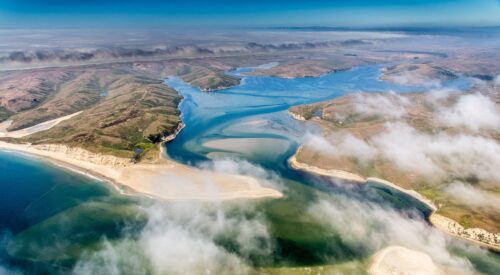
“European green crabs aren’t big. At max, the spiny invertebrates only measure about 4 inches across the carapace, or shell, which contrary to their name can be yellow, dark brown or sandy-hued. Despite their small size, these invasive crustaceans can wreak immense havoc on local ecosystems. Since they were first spotted in San Francisco Bay in the late 1980s, the insatiable crabs have decimated clam populations, destroyed habitats for juvenile fish and choked out native crab species. Efforts to eradicate them have been largely unsuccessful and even triggered a large population boom in 2014, when the crabs increased “30-fold after about 90 percent had been removed” from Seadrift Lagoon in Stinson Beach. There has been one unlikely hero in this uphill battle against the crabs: the southern sea otter. … ” Read more from SF Gate.
Larkspur pursues alternative to Piper Park marsh project
“Larkspur is pursuing an alternative to its tidal marsh restoration project at the former Piper Park dog park in order to meet remaining environmental requirements from the Bon Air Bridge replacement project. Larkspur completed construction on the bridge in 2022. The project was primarily federally funded and was subject to both state and federal environmental review. As part of the review and permitting process, the city was required to mitigate environmental harm that arose from the bridge construction. “It’s difficult to do that with a bridge because you’re dealing with a new concrete structure over the creek and there’s not a lot of opportunity there to offset some of the impacts,” Public Works Director Julian Skinner said at the City Council meeting on Aug. 19. … ” Read more from the Marin Independent Journal.
Some Oaklanders opposed to proposed data center
“Several Oaklanders say that Behring Companies can position its proposed data center as an outlier to the larger-scale facilities that’ve come under fire for high energy and water usage, but their feelings won’t change for the most part. That’s largely because of distrust in the developer’s intentions and environmental impacts that centers have had on communities in other states. “Keep data centers out of Oakland,” said Bryan Ortega, 30, who has been an Oakland resident for years. “I don’t like data centers. I don’t agree with them.” Behring is in the early stages of what it calls an innovation hub on 20th Street that includes about 20,000 square feet dedicated to a data center. The project is a single piece in a four-building project that would provide housing, office space and parking. Its addition could help bring jobs to the struggling downtown area, according to the developer and Oakland City Councilmember Carroll Fife. Ortega doesn’t buy it. “The intention is not good,” Ortega said. “I don’t think they’re opening data centers for any good reasons; it’s all capital gain.” … ” Read more from KQED.
CENTRAL COAST
Ventura crowd protests fairgrounds proposal, worries about data centers
“A packed room of frustrated community members urged Ventura County Fairgrounds leaders to reject a proposal they fear will bring an artificial intelligence data-processing center to the beachside Ventura site. More than 100 people filled a conference room at the fairgrounds Aug. 25 to express their concerns about a proposal to build a self-contained computing unit the size of a shipping container, a parking garage and a landing pad for helicopters at the fairgrounds. Leaders of the Orange County company Global Stack USA are pitching the proposal to some 70 fairgrounds across California as a way of creating a statewide emergency response network. … ” Read more from the Ventura County Star.
SAN JOAQUIN VALLEY
Central Valley farmers are growing agave to save water
“When James Hunt planted 14 acres of agave on his secluded Merced farm last year, he thought he’d harvest it for liquor. But then he did more research on the large spiky succulent, and that dream snowballed. “You could have spirits, agave syrup, agave inulin, biofuel, sustainable aviation fuel,” says Hunt. He knew these ideas needed an industry in the US, so he started preaching the gospel of agave he says, to anyone who would listen. … ” Read more from KQED.
Oakdale council advances updated water conservation rules
“Residents will face updated outdoor watering rules and expanded restrictions on water waste after the Oakdale City Council voted to move forward with a modernization of the city’s decades-old water conservation ordinance. The council voted 4-1 on Aug. 17 to introduce and waive the first reading of amendments to Chapter 35, Article VI of the Oakdale Municipal Code. Councilmember Jarod Pitassi cast the dissenting vote. The Water Conservation Program was originally established through Ordinance 982 in 1991, when drought conditions, excessive water use and limited supplies prompted the city to adopt restrictions, public education efforts and enforcement measures. City staff said the update is needed to bring the ordinance into compliance with subsequent state water-efficiency requirements and the State Water Resources Control Board’s “Conservation as a Way of Life” regulations. … ” Read more from The Oakdale Leader.
SOUTHERN CALIFORNIA
4.1-million-gallon reservoir returns to full service after damage from Eaton fire
“A key piece of water infrastructure in fire-stricken Altadena is back online, as the 4.1-million-gallon Allen Reservoir has returned to full service following repairs tied to damage from the Eaton Fire. That restoration means additional storage capacity is once again available for customers in Altadena and Pasadena, helping support reliable water pressure and emergency fire flow when the system is under stress. Built in the 1930s, the Allen Reservoir is a partially buried, concrete-lined storage facility that has now returned to full operation after fire-related repairs, Pasadena officials announced Aug. 17, according to MyNewsLA. To keep water service going during the project, Pasadena Water and Power left half of the reservoir in operation while crews added new structural components, rebuilt sections of the interior catwalk and handrail, and replaced aging drain valves. … ” Read more from The Cool Down.
Cleanup begins at long-empty Superfund site in South Gate
“Cleanup is just beginning for a contaminated industrial site in South Gate, according to U.S. Environmental Protection Agency officials who are leading the effort. The small southeast L.A. city was built on industry — in the early 20th century it boomed with auto, chemical and other manufacturers. That legacy also left it with three Superfund sites, areas designated by the federal government as highly contaminated with hazardous waste. The three sites are all clustered on a large lot framed by Southern and Rayo avenues. A residential neighborhood is nearby. … ” Read more from the LAist.
State-funded project bolsters San Bernardino water supply
“The California State Water Resources Control Board joined the West Valley Water District, cities of Rialto and Fontana, state and local elected officials and school districts today to celebrate the completion of an upgraded plant that will expand the district’s capacity to treat drinking water for over 108,000 residents. Minimizing the financial burden on local customers, the State Water Board provided the district with a $46.6 million loan to expand and upgrade the Oliver P. Roemer Water Filtration Facility, a drinking water plant that serves several cities and communities in San Bernardino County. The $62.5 million renovation – the largest capital project in the district’s history – will increase treatment capacity by 50 percent and strengthen the reliability of the county’s drinking water supplies. Projects like this expanded treatment facility support Gov. Gavin Newsom’s build more, faster agenda to deliver infrastructure upgrades across the state. The district’s low-interest loan was provided through the Drinking Water State Revolving Fund, a national program that combines federal and state dollars to finance infrastructure improvements for drinking water. … ” Read more from the State Water Board.
Town of Apple Valley’s water war with Liberty Utilities continues
“The California Supreme Court on Monday issued its opinion in the Town of Apple Valley’s decade-long water acquisition case against Liberty Utilities seeking to take local control of the city’s water supply. The court held that a trial court must exercise its independent judgment and determine whether the utility company has proven, “by a preponderance of the evidence,” that the statutory requirements for the acquisition have not been met, town officials stated. The court rejected the more deferential standard previously adopted by the Court of Appeal, the town said. … ” Read more from the Victorville Daily Press.
$403M pipeline pushes Mojave Groundwater Bank into construction
“Cadiz Inc. recently advanced its Mojave Groundwater Bank project into the construction phase, establishing a definitive $403.3-million capital budget for its Northern Pipeline water conveyance facilities. In July, Cadiz affiliate Fenner Gap Mutual Water Co. executed the principal construction contracts using a construction management-at-risk delivery model. The 220-mile Northern Pipeline converts an idle natural gas steel pipeline into a high-pressure water conveyance system. … ” Read more from Engineering News-Record.
SAN DIEGO
Commentary: Carlsbad, Oceanside should work together on beach issues
Robert Ashton and Charles Bowen with of Save Oceanside Sand write, “Carlsbad’s questions about Oceanside’s Re:Beach Pilot Project are understandable. Any project proposing to nourish and retain sand along our coastline deserves careful science, monitoring, transparency and scrutiny. But questions about a project like Re:Beach also present an opportunity: Carlsbad can help develop the process intended to answer them. During the Aug. 6 meeting of Carlsbad’s Environmental Sustainability Commission, commissioners heard an update on Re:Beach and raised questions about potential impacts on Carlsbad’s beaches. Importantly, commission staff also acknowledged that, despite invitations from Oceanside, Carlsbad has not yet participated in development of the project’s adaptive management plan. That should change. … ” Read more from the San Diego Union-Tribune.
3 more areas of Imperial Beach close due to toxic sewage crisis
“Three more areas of the Imperial Beach coastline were closed late last week due to an ongoing sewage crisis so bad it can be seen from space. On Thursday, the San Diego County Department of Environmental Health and Quality announced it was closing the municipal beach at the southern end of Seacoast Drive and at Carnation Avenue. Then on Saturday, it closed the area near Cortez Avenue. These areas are in addition to Border Field State Park and the Tijuana Slough National Wildlife Refuge, which have been closed since October. … ” Read more from SF Gate.
Tijuana River sewage crisis continues to impact San Diego families
“For Billy Waller, the beach in Imperial Beach was a place where he grew up surfing, swimming and exploring. Now, he brings his 10-year-old son to the same beach, but keeps him out of the water. Waller remembers surfing in the area as a teenager, even when the water became polluted. “It’s been polluted pretty much the whole time,” Waller said. “Never this bad.” The Tijuana River carries sewage and other contaminants across the U.S.- Mexico border and into the Pacific Ocean. Failures and infrastructure problems have worsened the decades-old crisis on both sides of the border. … ” Read more from Spectrum 1.
Along the Colorado River …
Homegrown group pitches plan to save Colorado River and Lake Powell- Could it work?
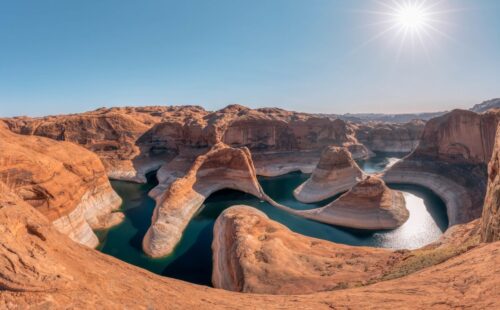
” … One group is proposing its own plan to save the river. The BlueRibbon Coalition is a group of outdoor enthusiasts and business interests that advocate for outdoor causes. The coalition has put forward the Colorado River Abundance Act. It’s a legislative proposal the group claims could reduce demand for Colorado River water while maintaining adequate supplies of water to the basin states. The plan would commit $40 billion to build desalination plants and related infrastructure on the Pacific coast. The water would be used in the lower basin to reduce demand on the Colorado River. Thus, proponents say, reservoirs like Lake Powell would stay full and the Colorado River would not be in such dire straits. “It would create seven million new acre feet of water,” said Simone Griffin, the policy director for the BlueRibbon Coalition. “California and the lower basin states could then use that water, and the upper basin states could keep their water. We won’t have to send all of our water to the lower basin states.” … ” Read more from ABC 4.
Upper Basin on verge of first-ever Colorado River Compact breach, CAP president warns
“The Upper Basin is on the verge of violating the Colorado River Compact for the first time in the agreement’s 104-year history, failing to send enough water downstream to the Lower Basin, Central Arizona Project President Terry Goddard told KTAR News 92.3 FM on Monday. The Central Arizona Project, or CAP, delivers Colorado River water to nearly 6 million customers throughout Arizona. Goddard said the new framework from the U.S. Bureau of Reclamation that will guide operations through 2036 could make it worse. “We have a violation of the compact either today or within the next month,” Goddard said. The compact requires the Upper Basin to deliver 75 million acre-feet to the Lower Basin over any rolling 10-year period, averaging 7.5 million acre-feet a year. Goddard said the Upper Basin is falling short of that obligation for the first time in the compact’s history, releasing only 6 million acre-feet this year and running right at the 10-year threshold. … ” Read more from KTAR.
The Colorado River got so low, rafting companies canceled this popular trip for the first time
“Most river rafting operators dabble in soothsaying. Every day, sometimes every hour, they closely study river flows and try to predict what kind of adventure Mother Nature has in store for them and their guests. This season, it was easy. Seeing how little snowpack the mountains held this spring after Utah experienced its warmest winter on record, river guides collectively expected the worst. And they were right. For the first time in their decades-long histories, at least two rafting companies earlier this month had to cancel trips through Utah’s Westwater Canyon due to the Colorado River’s low flows. One of them, Holiday River Expeditions, also had to halt its trips down the Yampa River in early June — nearly a month ahead of the norm — because of low river flows. One longtime river guide said he knows of some outfitters in Colorado who gave up on rafting before the summer even started. “If there ever was a year that you’re like, ‘Oh, is this the bottom?’ Or ‘Where is the bottom?’” said Jason Taylor, operations manager for Western River Expeditions and a Moab city council member. “It is this year.” … ” Read more from the Salt Lake Tribune.
What climate science tells us about the causes of the Colorado River crisis
“Elected officials from across Colorado’s political spectrum continued a 68-year-old tradition last week when they took to the stage at the annual summer conference of the Colorado Water Congress in Steamboat Springs. First convened by Gov. Steve McNichols in 1958, the Water Congress brings together experts, policymakers, agricultural producers and other interest groups to negotiate and strategize in a state where water has always been a scarce and carefully managed resource. That’s never been more true than it is today, at a time of extreme drought and escalating political conflict over the future of the Colorado River. The river’s cumulative flow at Cameo, just upstream of Palisade and Grand Junction, is at a record low this year, and Colorado and six other states that depend on its water are likely headed for an extended, high-stakes court battle over how to apportion the cuts forced on them by more than two decades of persistently dry conditions. … Notably absent, however, from the event’s three days of speeches on water policy — from politicians on both sides of the aisle — was the predominant reason why the situation on the Colorado River is bad and getting worse: human-caused climate change. … ” Read more from the Colorado Newsline.
Podcast: The new Colorado River plan is out, and it’s already under fire
“The Colorado River is a vital source of water for seven different states and many tribal nations, but drought conditions have long put that water in jeopardy. The states have been negotiating for years on how to share it— and, more specifically, how to cut back on it— but when they failed to come to an agreement earlier this year, the federal government stepped in. And on Friday, the Department of the Interior issued a plan, cutting water to California, Nevada, and Arizona by 20% with the possibility of more to come. No cuts were mandated to the four states that make up the what’s called the “upper basin,” which includes Wyoming, Colorado, Utah, and New Mexico. In addition, the plan will have to be tweaked again in two years. “I don’t think you can go beyond two years at this point,” said Pat Mulroy, the former general manager of the Southern Nevada Water Authority and a consultant on water issues. “There are too many uncertainties.” But on Monday, the state of Nevada filed a lawsuit against the government, where they described the cuts as an unfair unburden upon the states. “Marketplace” host Amy Scott spoke to Mulroy on Monday before news broke of the lawsuit; they discussed the plan, other water conservation and reclamation efforts, and why it’s been so hard to come to an agreement.” Listen to the podcast at Marketplace.
Reclamation tests new tools for a drier west
“The Bureau of Reclamation is investing nearly $2 million into research ranging from Lake Powell evaporation to artificial intelligence, invasive species and the health of springs in the Grand Canyon. The agency announced on August 24, 2026, that it is awarding $1.95 million to 17 new internal research projects for fiscal year 2026. Another $1.9 million is expected through matching funds from cost-sharing partners. Several of the projects deal directly with problems facing the Colorado River Basin, where drought and increasing pressure on water supplies continue to complicate management. Others look farther into the future, testing technology that could change how quickly water managers analyze rivers, reservoirs and watersheds. … ” Read more from Western Water.
Nevada launches legal war over Trump’s Colorado River plan
“The state of Nevada on Monday filed the first court challenge against the Trump administration’s plan for managing the drought-stricken Colorado River. Gov. Joe Lombardo announced the litigation filed in federal district court in Nevada, which challenges the plan finalized by the Interior Department last week under the National Environmental Policy Act and Administrative Procedure Act. Lombardo — the only Republican governor in the Lower Basin, which also includes Arizona and California — argued that Interior’s plan unfairly saddles those downstream states with sharp water supply cuts. “Under the proposed plan issued by the Department of the Interior, southern Nevada could lose more than 70 percent of its already meager Colorado River allocation while the Upper Basin states of Colorado, Utah, New Mexico, and Wyoming are not required to contribute a drop,” Lombardo, who is facing a tight reelection fight this fall, said in a statement. … ” Read more from E&E News.
Nevada sues federal government over Lower Basin water cuts: ‘A matter of survival’
“Last week the Trump administration announced major cuts to the water Arizona, California and Nevada can take from the drought-stricken Colorado River; this week Nevada sued, calling the plan “fundamentally flawed.” It marks what could be the first of many complex and lengthy legal wrangles over the crucial waterway — and is yet another sign of how fraught water sharing is becoming on a hotter, drier planet. On Friday, the Department of Interior released its operating guidelines, requiring water cuts of roughly 20% across the three so-called lower basin states over the next two years. Even deeper cuts could follow if the situation on the Colorado River doesn’t improve. … ” Read more from Nevada Public Radio.
SEE ALSO: Nevada sues the Trump administration over ‘catastrophic’ water cuts as the Colorado River spirals into crisis, from CNN
New testing has Utah worried about zebra mussel spread in the Colorado River
“In an unfortunate first, state wildlife managers say fragments of invasive zebra mussel DNA have been found in a stretch of the Colorado River near Moab. The discovery is concerning because the tiny striped mussels pose an outsized threat to rivers and lakes, clogging pipes, covering beaches with razor-sharp shells and damaging ecosystems. The Division of Wildlife Resources wants Utahns and visitors to take extra care not to spread them this year while rafting, boating, paddleboarding or kayaking. “There is no time like right now to get serious about this threat,” said Trina Hedrick, the division’s sportfish coordinator, in a prepared statement. … ” Read more from the Utah News Dispatch.
Summer samplings uncover no new zebra mussels in Colorado River system, but the battle wages on
“After 2025 saw a flurry of zebra mussel detections in the Colorado River system, Colorado Parks and Wildlife’s weekly sampling this summer has led to zero new discoveries of the invasive species. This does not mean, however, that zebra mussels — notorious for their prolific reproduction and destruction of ecosystems and infrastructure — are gone from the basin or that the battle to curb their spread is over. When zebra mussels establish a presence in a body of water, they multiply quickly. A single zebra mussel can produce up to 30,000 veligers — their microscopic, free-floating larvae — in one spawning event and up to one million in a year. As they root and attach to hard surfaces — like docks, rocks and pipes — and their density increases, they can cause significant damage and clogging to water infrastructure. … ” Read more from Summit Daily.
In national water news today …
EPA to make $10.8 million grant available for recruitment, training for water sector workforce
“The U.S. Environmental Protection Agency (EPA) has announced the availability of $10.8 million in grant funding to support training for the water sector workforce. The agency said enhancing recruitment and training for workers in the water sector is more important than ever in light of anticipated retirements, aging water infrastructure, evolving technologies used in the sector and emerging risks like cyberattacks. Nationally, drinking water, wastewater and stormwater systems are facing a shortage of qualified workers due to expected retirements. This comes at a time when water systems are working to modernize while also managing aging water infrastructure. The urgent need for technical and scientific skillsets also exists in light of new challenges like strengthening resilience to cyberattacks. … ” Read more from Water Finance & Management.
Trump calls it ‘a mistake’ for communities to reject data centers
“President Donald Trump said communities rejecting data centers are “making a mistake” in an interview that aired Aug. 23. Data centers have become a political flashpoint in local elections across the country, and Trump has defended them while touting their benefits. Proponents praise their economic benefits and role in technological innovation, while critics warn of environmental impact. While speaking with his former lawyer and fixer Michael Cohen, Trump touted his achievements as president before touching on the AI race with China. “I’m letting them build their own power plants,” Trump said in the interview taped Aug. 20. “Frankly, communities that don’t take a data center, they’re making a mistake because there’s plenty of communities that want them. Because it means jobs, and it means tremendous tax revenue coming into the towns and cities that take them. So you know, it’s like the smart ones are saying, ‘I want them so badly.'” … ” Read more from USA Today.

