
From the Union of Concerned Scientists:
A new peer-reviewed study published today in Nature’s Communications Earth and Environment journal by the Union of Concerned Scientists (UCS) and University of California, Merced (UC Merced) quantifies how the world’s largest climate polluters are responsible for nearly 50% of the climate change-driven impacts on the California water crisis due to their heat-trapping emissions since 1950. This study is the first of its kind to evaluate how worsening drought conditions attributable to the “Carbon Majors,” the world’s 122 largest fossil fuel producers and cement manufacturers, are harming U.S. communities, ecosystems and agriculture.
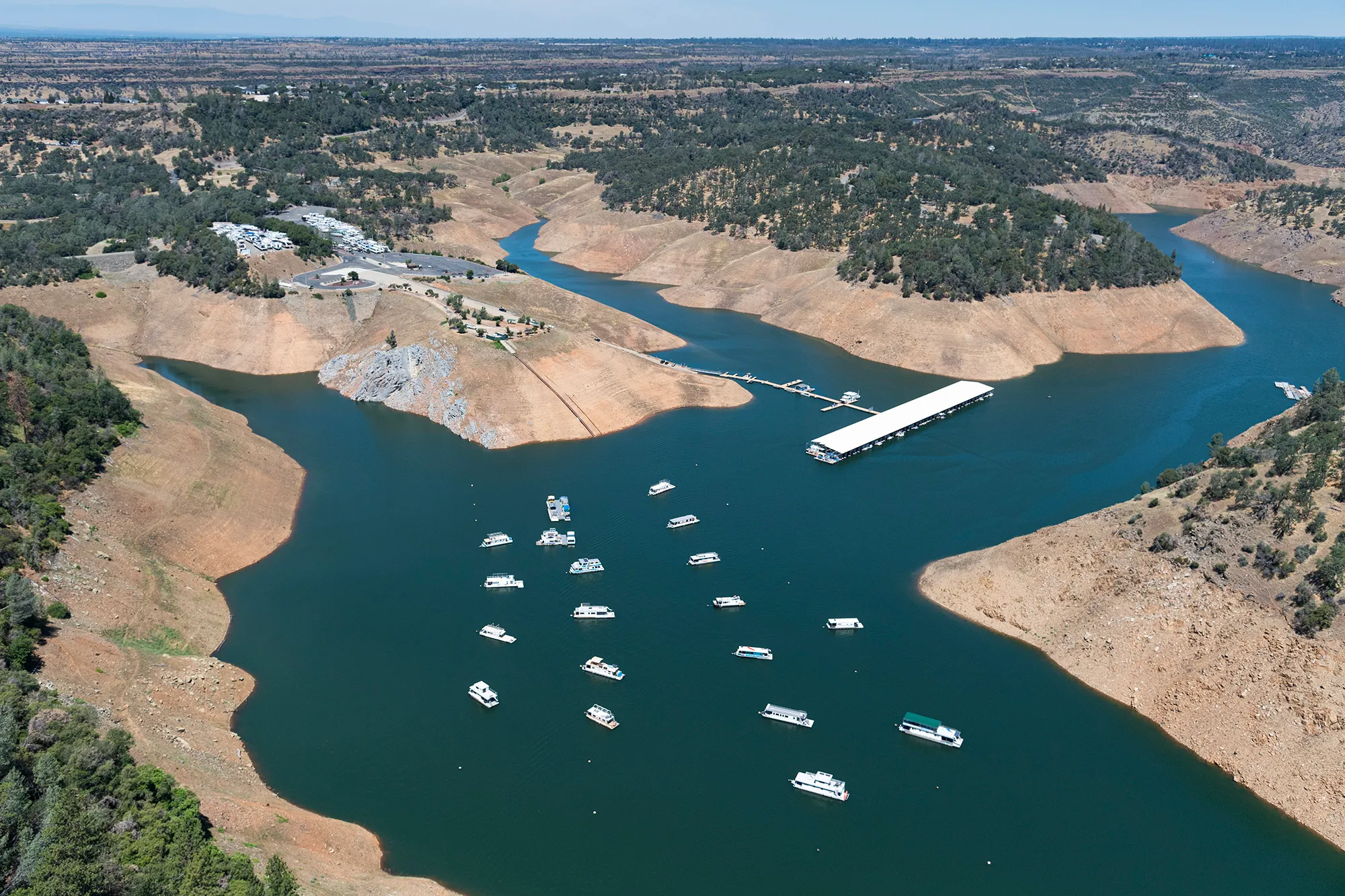
Between 2014-2024, climate change impacts in California due to the Carbon Majors made Californians, and especially farming communities in the Central Valley, more vulnerable to drought. 47% of the reduction in streamflow due to climate change is attributable to the Carbon Majors, which in absolute terms for the California basin is roughly a 13% reduction of baseline streamflow, while 10% of total observed groundwater loss is attributable to these emissions. Ultimately, this reduction in water availability exacerbates a widening seasonal gap between when water is available and when it’s needed most.
“Emissions traced to the Carbon Majors are intensifying an already dire water crisis across the western United States,” said Dr. Angel Fernández-Bou, co-author and bilingual senior climate scientist at UCS. “Taxpayers, states, municipalities and communities are paying for the harms and costs associated with these climate impacts, and our study’s findings provide further scientific evidence on how the fossil fuel industry is responsible for those harms.”
Results show that California’s San Joaquin River and Sacramento River basins experience particularly severe disruptions to their water cycles, with drastically reduced snowpack and increased irrigation demand threatening water availability when farmers in one of the country’s most productive agricultural regions need it most.
The timing of water flows is also changing substantially due to these emissions, creating a growing divergence between supply and demand. The study found that on average, the midpoint of annual streamflow now occurs more than 5 days earlier in California. This creates challenges especially for agricultural communities that depend on reliable water access to accurately time planting and harvesting.
“People living in California are already experiencing firsthand what fossil-fueled climate change means, with more extreme drought and forest fire conditions impacting people’s health, wallets, and quality of life,” said Dr. Emily Williams, lead author and postdoctoral scientist at University of California Merced.
The worsening of the California water crisis did not have to be this way. But when fossil fuel companies like BP, Chevron, ExxonMobil and Shell understood as early as 1959 how their products would devastate the climate at people’s expense, they chose to launch a decades-long coordinated campaign to deceive the public, deny the science, and delay climate action. California has sought to hold these companies accountable for the harms caused by their disinformation, and now the fossil fuel industry is lobbying Congress for a blanket immunity bill introduced by Sen. Ted Cruz and Rep. Harriet Hageman earlier this year.
Make Polluters Pay bills have been filed in the California legislature to support communities recovering from climate change–related disasters by holding fossil fuel companies financially responsible for their outsized contributions to the climate crisis.
“Pathways to justice that hold polluters accountable, including legislation and lawsuits, must be protected,” said Dr. Carly Phillips, study co-author and senior scientist at UCS. “Fossil fuel companies have consistently prioritized profits over people and the planet, and communities deserve the opportunity to recoup the costs of climate change. While the fossil-fueled water crisis continues to unfold in western states, policymakers must ensure a rapid and equitable transition away from fossil fuels to and invest in climate resilience.”
The Union of Concerned Scientists puts rigorous, independent science to work to solve our planet’s most pressing problems. Joining with people across the country, we combine technical analysis and effective advocacy to create innovative, practical solutions for a healthy, safe and sustainable future. For more information, go to www.ucs.org.

