
Several news sources featured in the Daily Digest may limit the number of articles you can access without a subscription. However, gift articles and open-access links are provided when available. For more open access California water news articles, explore the main page at MavensNotebook.com.
On the calendar today …
- PUBLIC MEETING: Drought Resilience Interagency & Partners (DRIP) Collaborative Roles and Responsibilities for Domestic Wells & SSWS Workshop #3 from 1pm to 3pm. Join the Department of Water Resources for the Drought Resilience Interagency & Partners (DRIP) Collaborative Roles and Responsibilities for Domestic Wells and State Small Water Systems Workshop #3. Members of the public are able to attend the meeting remotely via Zoom. Remote participation will be conducted via a Zoom platform. Register here: https://ca-water-gov.zoom.us/meeting/register/X3vAKNIqRH-gMi37OTLj7w
In California water news today …
Earth’s oceans just broke a heat record. The implications will be massive
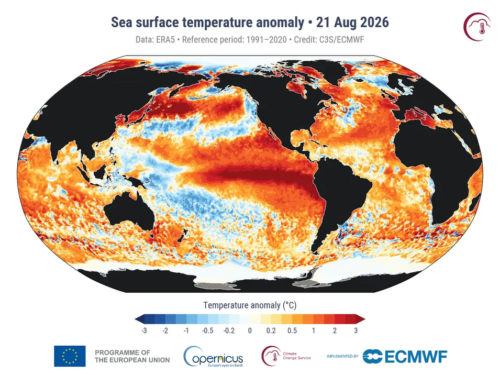 “Earth’s oceans were warmer than any day in recorded history Friday due to a combination of long-term human-caused global warming and short-term effects of El Niño. The average sea surface temperature of 21.1 degrees Celsius, or 70 degrees Fahrenheit, breaks the old record of 21.09 degrees Celsius set many times in early 2024 during the most recent El Niño. “There is quite a big certainty that sea surface temperatures globally are now higher than even the last warm period before the last ice age,” Leon Simons, a climate systems analyst and executive director of the Club of Rome Netherlands, said during a webinar Sunday. Measurements are based on data from satellites, buoys and ships between 60 degrees south and 60 degrees north latitude and analyzed by the Copernicus Climate Change Service. Daily measurements date back to 1979, though July sea surface temperatures were the warmest month globally since at least 1854. … ” Read more from the San Francisco Chronicle. | Read via Yahoo News.
El Niño forecasts have been right so far. Here’s what fall and winter could bring.
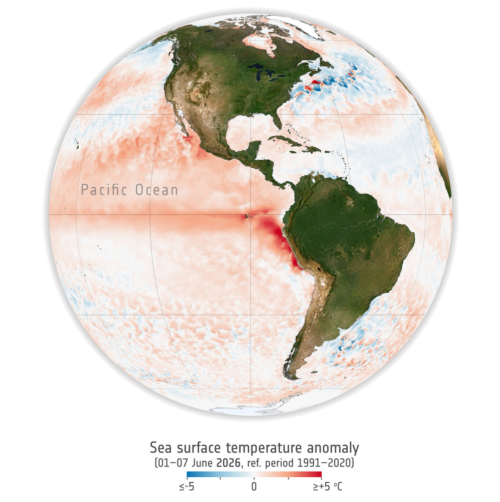 “Forecasters warned in May that a developing El Niño could become unusually strong. Three months later, that call is holding up. NOAA’s Climate Prediction Center now says El Niño is strengthening, with a greater than 90% chance of becoming a very strong event during the Northern Hemisphere’s fall and winter. The agency also places the odds of a historic October-to-December event at 69%, putting this El Niño within reach of the strongest on record. “The forecast seems to be playing out,” National Weather Service meteorologist Jared Maples told Straight Arrow. “If anything, the intensity is not a surprise necessarily. We kind of knew the chances there, but just how fast it’s come on and how strong it’s come on is kind of an eye-opener.” The forecast has strengthened steadily since summer. In July, meteorologists were already watching the possibility of a “super” or “mega” El Niño as unusually warm waters spread across the central and eastern equatorial Pacific. By early August, NOAA put the odds of El Niño lasting into early spring 2027 at 97% and the odds of a very strong fall event at 81%. Its Aug. 13 update pushed that confidence above 90% for fall and winter. … ” Read more from Straight Arrow News.
As 3 dangers converge, California’s coast faces rare winter of big waves, erosion, flooding
“A rare convergence of a powerful El Niño, super king tides and sea level rise spurred by climate change could menace California with record coastal flooding this winter. Already, officials are observing higher tides than typical. Swells are eroding beaches, damaging parking lots and bathrooms, and even resurfacing long-buried coastal infrastructure. And that’s before El Niño even kicks into high gear. Jonathan Warrick, a research geologist with the U.S. Geological Survey, said that the climate pattern — commonly viewed as a rainmaker in Southern California — also turbocharges the sea. “There’s a phenomena during El Niños where the waters offshore California get warmer, and they actually rise up, up to a foot, sometimes more, higher than average,” he said. … ” Read more from the LA Times.
A secret to survival for California’s most endangered salmon
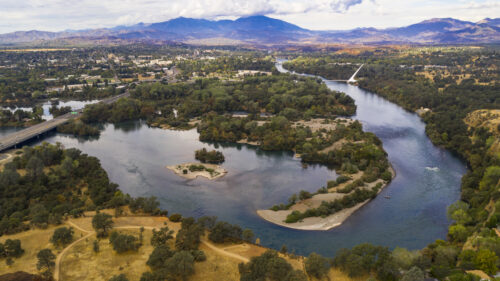
“A secret to the survival of juvenile salmon as they form in their eggs is revealed by a new study from NOAA Fisheries and the University of California, Davis. Sacramento River winter-run Chinook salmon are California’s most endangered salmon, with a single surviving population and an average of a few thousand returning fish in recent decades. Shasta Dam blocks their original habitat in cold mountain rivers draining Mount Shasta, leaving them to spawn in the low-lying Sacramento River heated by the summer sun. The study, published this week in Science Advances, found that cool river temperatures in the first 15 days after their eggs were fertilized was crucial for their survival. In warm years with less water, cold water barely covered this critical thermal window, sharply limiting survival in what may become an increasing reality for salmon as the climate warms. … ” Read more from UC Davis.
The 15-day window that may decide salmon survival
“Traditional field research combined with new technology has revealed a secret to the survival of juvenile salmon as they form in their eggs, especially in low-water years when many do not survive, new research from NOAA Fisheries and the University of California, Davis shows. Sacramento River winter-run Chinook salmon are California’s most endangered salmon, with a single surviving population and an average of a few thousand returning fish in recent decades. Shasta Dam blocks their original habitat in cold mountain rivers draining Mount Shasta, leaving them to spawn in the low-lying Sacramento River heated by the summer sun. The research, published this week in Science Advances, found that cool river temperatures in the first 15 days after their eggs were fertilized was crucial for their survival. In warm years with less water, cold water barely covered this critical thermal window, sharply limiting survival in what may become an increasing reality for salmon as the climate warms. “Salmon may spawn throughout the summer season, but our results suggest that only a small fraction of those spawning events ultimately produced the juveniles that survived,” said Kohma Arai, who authored the research as a postdoctoral scholar at UC Davis with other scientists from the university, NOAA Fisheries, UC Santa Cruz, UCLA, and the Norwegian Institute for Nature Research. … ” Read more from NOAA Fisheries.
SEE ALSO: California’s rarest salmon face a narrow window for survival, from the Courthouse News Service
Flipping floodplains: Restoring resilience miniseries
“California’s Central Valley was once a vast mosaic of seasonal wetlands, meandering rivers, riparian forests, native grasslands, and rolling hills blanketed in wildflowers. Together, these interconnected ecosystems supported an extraordinary diversity of fish, wildlife, and plants. During one of his journeys from San Francisco to Yosemite, naturalist John Muir described the San Joaquin Valley as the “floweriest piece of world,” where the land, “watered by the San Joaquin and Sacramento rivers, formed one flower-bed, nearly four hundred miles in length by thirty in width.” The fertile soils and abundant water that supported these diverse ecosystems also made the valley ideal for agriculture. As farms and communities expanded, rivers were confined within levees and dikes to reduce flooding. Over time, winding rivers were transformed into straighter, deeper channels that were easier to manage. While these changes benefited agriculture and flood control, they disconnected rivers from their natural floodplains and dramatically reduced the diverse habitats that once supported numerous fish and wildlife species. … ” Read more from FishBio.
The high-stakes legal battle over one of California’s largest proposed data centers — and what it means
“A closely watched legal battle has erupted over what could become one of California’s largest data centers — and whether a county can pursue emergency measures to halt development. The fight is centered in Imperial County, where Huntington Beach-based developer Sebastian Rucci has been pursuing a plan to build a data center half the size of Levi’s Stadium by square footage. Rucci said the county was initially receptive to his project and had moved his application along — but then sentiment started to shift. After community outcry, the county passed a moratorium on new data centers — preventing Rucci’s application, and all others, from being approved. The moratorium, passed as an urgency measure (meaning the county felt immediate action was needed), allows Imperial County to ban the approval of data center applications for 45 days. It can be extended up to two years. … ” Read more from the San Francisco Chronicle.
Water Foundation white paper: Water and data centers
 “Data centers are a major topic in 2026, with near-daily news coverage. They are being built in the United States at an unprecedented pace and scale, with nearly 3,000 projects in development and an estimated $700 billion in investment this year alone. But concerns about their impacts have fueled significant resistance, prompting some proposed projects to be canceled and cities and counties across the country to adopt construction moratoriums. Water use is often among the chief concerns. A new white paper from the Water Foundation says those concerns are justified. Its white paper explains the water-related impacts of data centers and outlines how communities and funders can work together to protect watersheds, strengthen water infrastructure, and safeguard public health. It also recommends ways to improve data center water efficiency and reduce water use. … ” Read more at Maven’s Notebook.
Solano County supervisors face business and labor backlash for loss of $3 billion shipyard contract
“After Solano County was beaten out by Brownsville, Texas, last week in a duel to be the home of Saronic’s $3.2 billion Port Alpha, business and labor leaders visited the Board of Supervisors to express their displeasure with the county’s inability to attract jobs. California Forever Employee Matthew Bidou and Travis Unified School District President said the county’s job forecast looks poor, despite great work by local unions. He said he is tired of hearing that recent graduates must travel hours away or settle for minimum wage. “Nothing can happen if they go through a program and there is nowhere to go,” he said. Bidou said the reality is young people cannot build a life in the community that raised them. “All I read is about people leaving, institutions leaving, things of this nature,” he said. “Our kids deserve better.” … ” Read more from the Santa Rosa Press Democrat.
Underwater gliders join ocean survey, revealing diverse marine life driving marine ecosystem
“Research ships from the marine research alliance California Cooperative Oceanic Fisheries Investigations , or CalCOFI, have surveyed ocean conditions off the West Coast for more than 75 years. Last spring, the ship surveying waters off Southern California had company. Two autonomous underwater gliders, operated by NOAA Fisheries’ Southwest Fisheries Science Center, shadowed the NOAA ship Bell M. Shimada as it transited survey stations. The gliders lingered at certain stations. One gathered observations over about 10 days compared to the ship’s visit of about 2 hours. Another glider sampled a different station for 3 days. That made a world of difference, researchers said. The gliders will likely help fulfill CalCOFI’s mission of informing stock assessments vital to fisheries management. … ” Read more from NOAA Fisheries.
The Trump administration upended how the West fights wildfires. California is bracing too
“Four firefighters, two helicopter pilots and a contractor bulldozing a fireline have died in Colorado, Utah and Oregon this year. Fast-moving fires have burned millions of acres and destroyed hundreds of homes and buildings in the West. California, which is having an unusually quiet fire summer, has deployed engines and crews to fight fires raging in Colorado and the Pacific Northwest — but even this well-resourced state continues to feel vulnerable. The U.S. has been at Preparedness Level 5 since July 18, a status that means the federal government is committing the highest possible level of crews, aircraft and firefighting resources to wildfires across the country. And yet requests for help or equipment are going unanswered. This dangerous fire season hit as the Trump administration has reshaped how America fights wildfire — consolidating crews from across Interior Department agencies into a new U.S. Wildland Fire Service. The new agency and the U.S. Forest Service are pursuing “full suppression” of every new blaze. … ” Read more from Cal Matters.
What is the 10 a.m. rule? Controversial firefighting strategy could be back
“Wildfires once ran on deadlines. After a series of catastrophic blazes in the early 20th century, the U.S. Forest Service sought to show it was able to control and protect forests under its care. In 1933, the agency mandated the “10 a.m. rule,” declaring that any wildland fire should be extinguished by 10 a.m. the day after it was reported. Snuffing all fires quickly, the agency reasoned, would prevent disasters like the Big Burn of 1910. That incident scorched more than 3 million acres along the Montana-Idaho border during a 36-hour rampage, killing at least 85 people and destroying five towns. Unlike earthquakes or tornadoes, wildfires have weaknesses. We can suppress flames with water or retardant chemicals. Wildland fire crews remove fuels with hand tools and bulldozers. Sometimes they use tactical burnouts — literally fighting fire with fire. These tools can obscure crucial facts about wildfire and reinforce strategies that can backfire. … ” Read more from Cal Matters.
Bigger, hotter fires are slowly erasing America’s great forests
“On a gentle slope on the western side of the Sierra Nevada Mountains, where a towering green canopy of ponderosa pines had stood for centuries, wildfires have transformed roughly 1,700 acres into brown, bare shrubland. That forest is gone for good, scientists say. Spiky shrubs and poison oak have replaced the majestic trees. All that is left of the pines are burned logs and dead branches. It’s part of a wider transformation that’s taking place across the Western United States, from Oregon to New Mexico, as bigger and hotter wildfires sweep through forests that have not evolved to survive such high-intensity blazes and a warmer climate. Recent studies estimate that as much as 40 percent of Western conifer forests will turn into shrubland by 2100 as a result. “This is a permanent shift from one ecosystem type to a fundamentally different one,” said Winslow Hansen, a forest ecologist at the Cary Institute of Ecosystem Studies, an independent research center in Millbrook, N.Y. … ” Read more from the New York Times.
Did the earliest human civilization have river basin management and reservoir operations? – Liangzhu Civilization of 3,100-2,300 BC
“Every civilization had to organize the management of water across diverse populations and generations. Their histories offer perspective and relevance for water management today and in the future. Achieving human health, wealth, social justice ideals, and ecological sustainability all depend on managing water for drinking, food production, sanitation, flood protection, and sometimes for navigation and defense. Perhaps the earliest human civilization to manage water intensively over a region was the Liangzhu civilization from 5,100 – 4,300 years before present (3,100 – 2,300 BC), north of Hangzhou, China, in the southern part of the larger Yangtze Delta region. Different from other early water projects in ancient Egypt, Mesopotamia, and the Indus Valley, the Liangzhu system goes beyond river diversions and has a group of water storage dams at its core, with flood control, transportation, and defense purposes as well as water supply to provide more comprehensive basin management. … ” Read more from the California Water Blog.
In commentary today …
Water Board needs a deputy director to ensure long-term safe, reliable and affordable drinking water
Alan Roberson, Executive Director of the Association of State Drinking Water Administrators, writes, “The 50th anniversary of the federal Safe Drinking Water Act in 2024 was a significant milestone. The drinking water community celebrated the substantial public health achievements resulting from this important policy framework but also reflected on what it has learned and how best to implement the Act over the next 50 years in a manner that advances its main policy objectives. Many argue that the future success of the Act necessarily depends on federal policymakers addressing the greatest threat to its legacy—aging water system infrastructure—which threaten states’ abilities to comply with an ever-increasing number of complex regulatory requirements. Arguably, improving national compliance with existing drinking water standards by ensuring the long-term health of drinking water systems is equally, if not more, important than promulgating new standards. California policymakers have a similar opportunity to reflect on the future of the state’s own Safe Drinking Water Act, which celebrated its 50th anniversary this year. Like other states, California also finds itself plagued by aging and deteriorating drinking water infrastructure; a crisis exacerbated by federal funding shortfalls and the persistent threat of state budget deficits. … ” Continue reading this commentary.
California should fight Trump’s plan to end protections for U.S. national forests
“In 1905, two years after Republican President Teddy Roosevelt camped in Yosemite with Sierra Club co-founder John Muir, he made a speech at the Grand Canyon and warned Americans not to “treat any part of our country as something to be skinned for two or three years for the use of the present generation, whether it is the forest, the water, the scenery.” Instead, Roosevelt urged, “Handle it so that your children’s children will get the benefit of it.” Those words seem especially relevant now, following the news that the Trump administration is proposing to roll back what’s known as “roadless rule” protections against logging, road-building and other industry in nearly 45 million acres of pristine U.S. national forest land across the country. We might want to rename it the Road Building Rule since, according to the new proposal, the Forest Service anticipates that permanent roads could be constructed across 18.2 million acres and temporary roads across 11.3 million acres of wild forest currently protected from development. … ” Continue reading from the San Francisco Chronicle.
In regional water news and commentary today …
NORTH COAST
Trinity River surveys find fewer Salmon, Steelhead
“Snorkel surveys conducted this summer along Trinity River tributaries found fewer adult steelhead and Chinook salmon compared with last year. The annual surveys were completed between July 14 and Aug. 6 and have been coordinated since 1978. This year, low water levels and warm temperatures led crews to complete the surveys earlier than usual. For surveys coordinated by the Shasta-Trinity National Forest, more than 41 divers from 10 partner agencies surveyed 62.6 miles of river. … ” Read more from Action News Now.
Potter Valley Project scoping meetings in Eureka give Humboldt County voice in post-dam future
“The Federal Energy Regulatory Commission — or FERC — announced it will host two scoping meetings in Eureka in September to discuss plans for decommissioning the Potter Valley Project. The project, a more-than-a-century-old constellation of PG&E-operated hydroelectric dams and water-diversion infrastructure near the source of the Eel River in Lake County, has had its license surrendered by PG&E, and the utility and federal regulators are working to re-envision the future of Eel and Russian River watersheds that have, since the 1920s, been shaped by the presence of the Scott and Cape Horn dams. Environmental groups are urging the public to attend and voice their support for the planned decommissioning and dam removal and to help shape the plan’s environmental review process via NEPA. … ” Read more from the Eureka Times-Standard.
SEE ALSO: New Opportunity to Support Eel River Dam Removal at Eureka Meetings, from the Redheaded Blackbelt
SACRAMENTO VALLEY
Pistachios are having a moment. Yolo County keeps growing and processing more of the nut
“A few years ago, the plot of land at the corner of Road 95 and Road 13 in Zamora was a quiet, open field. Now it bustles with activity. Trucks pull up filled with recently harvested purplish-green pistachios, unloading them through grates in the ground into a holding area. From there, they’re carried by conveyor belts through a process that hulls, sorts and dries them. When the nuts come out the other side, they’ve been transformed into a product that is having a moment. Snacking pistachios, Dubai chocolate, coffee drinks, ice cream, pistachio butter, brittle. There’s even an entire cookbook co-written by a James Beard Award-winning author populated only with recipes that use the nut. “Demand is the highest it’s ever been,” said Joe Coelho, spokesperson for industry trade group American Pistachio Growers. … ” Read more from PBS Abridged.
BAY AREA
No injuries, pollution after vessel runs aground at Point Reyes, Coast Guard says
“No injuries, fuel leaks, pollution or wildlife impacts were reported after a 58-foot fishing vessel ran aground in the environmentally sensitive Point Reyes National Seashore, the U.S. Coast Guard said Saturday. About 1,400 gallons of diesel fuel and 150 gallons of hydraulic oil were offloaded from the Lake Bay, which became stranded Friday morning, the Coast Guard and National Park Service said on social media. Operations continued to remove squid and remaining waste, the Coast Guard said. North Beach was temporarily closed to the public to allow responders to operate, the Coast Guard said. … ” Read more from Local News Matters.
Marin agencies prepare for El Niño flooding threat
“Marin County disaster planners are getting ready to batten down the hatches. “The Climate Prediction Center updated their forecast, and there’s now a greater than 90% chance that there’s going to be a significant El Niño this coming year,” Nick Brubaker, chief resilience officer with the county’s Office of Emergency Management, told supervisors on Tuesday. El Niño is a climate pattern that occurs when the surface water in the central and eastern Pacific Ocean becomes much warmer than usual, shifting atmospheric heat to the east. This increases the chances that Marin will experience high precipitation, atmospheric rivers, elevated flood risks and landslides. Brubaker said the biggest threat facing the county is the prospect for compounding effects. … ” Read more from the Marin Independent Journal.
CENTRAL COAST
Super El Niño could bring increased storms and flooding to California’s Central Coast
“A “super” El Niño is expected to impact California’s Central Coast this winter, raising concerns about heavy rain, flooding and damaging waves. Gary Griggs, a coastal geologist, oceanographer, and distinguished professor at UC Santa Cruz, explained, “Just like the weather changes from winter to summer, the weather also changes over many years. Several years. And we get what we now know as an El Niño every several years for reasons we don’t completely understand.” Griggs added, “The weather changes. We get much more rainfall usually, which means flooding and landslides. The ocean is warmer and we tend to get bigger waves, bigger storms, often coming from the southwest instead of the northwest. And that’s hit a lot of the shoreline in Santa Cruz County.” … ” Read more from KSBY.
SAN JOAQUIN VALLEY
Manteca: Floating solar panels, storage batteries may stabilize power costs at sewer treatment plant
“Manteca may pursue floating solar photovoltaic panels and a battery storage system at the municipal wastewater treatment plant. The City Council has scheduled a public hearing on Tuesday, Sept. 15, to decide whether to move forward with the project. Willdan Energy Solutions has conducted a no-cost technical feasibility study that is setting the stage for the public hearing. Wildan is proposing a 1.7 mega-watt floating solar photovoltaic and battery system with an estimated $3.2 million in rebates. The cost of the project would be funded from future cost savings from electricity generated. … ” Read more from the Manteca Bulletin.
EASTERN SIERRA
Indian Wells Valley Groundwater Authority submits comments to CEC outlining basin concerns on proposed Inyokern data center
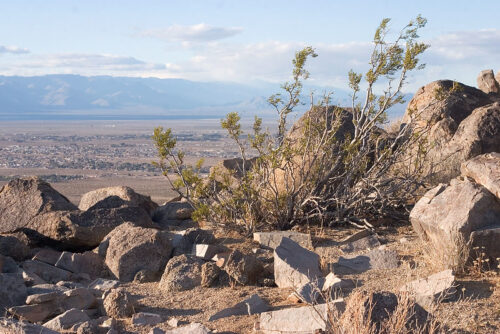 “The Indian Wells Valley Groundwater Authority (IWVGA) submitted a comment letter to the California Energy Commission (CEC) in July during the review period regarding the proposed RB Inyokern Data Center, outlining the concerns and its responsibilities for managing groundwater sustainability in the Indian Wells Valley basin. The letter was a result of a unanimous vote by IWVGA’s board to submit comments to the CEC on the proposed data center. … In the letter, IWVGA raised several concerns for the CEC to weigh in its review of the data center: if the project’s groundwater demand exceeds the Inyokern Community Services District’s sustainable yield allocation, the project’s proponent would be expected to contribute to imported water supplies and related infrastructure; any project groundwater wells within the basin would be subject to IWVGA’s Basin Replenishment and Extraction Fees; and the CEC should weigh IWVGA’s concern about introducing significant new groundwater demand into a closed, critically overdrafted basin currently undergoing adjudication proceedings. “Our board acted unanimously on this because protecting the basin is core to what SGMA charges us to do,” said Scott Hayman, chair of the Indian Wells Valley Groundwater Authority. “We wanted the CEC to have a clear picture of the basin’s overdraft status and the obligations any new groundwater user would need to meet. This letter is now part of the public record, and it is important for our community to see this action take place.” … ” Read more at Maven’s Notebook.
SOUTHERN CALIFORNIA
‘Very hot or extremely hot’: Southern California faces hottest week of the year
“The National Weather Service is warning Angelenos about extreme highs later this week of 100 to 110 degrees in “all areas” five to 10 miles inland from the coast. Temperatures are expected to hit triple digits by Tuesday or Wednesday and remain elevated through Saturday, the weather service in Oxnard said Sunday evening in an update on the region’s days-long heat wave. “The northerly shift in the flow means that the hottest conditions will not be in the desert, but in the coastal valleys,” forecasters warned. The weather service is warning of a high risk of heat-related illness and urging residents in the region to prepare for “a long duration heat event, during which several daily records will likely be broken.” Even beach towns are forecast to see highs in the 90s. The Oxnard-L.A. weather service office added that it was “very likely that almost the entire forecast area” would be under heat advisories or extreme heat warnings by Wednesday. … ” Read more from the LA Times.
Coastal erosion at the Wedge in Newport Beach exposes pipes, wires after summer swells
“Large swells this summer have contributed to significant coastal erosion at The Wedge in Newport Beach, exposing decades-old infrastructure and prompting concerns from surfers, residents and city officials about the condition of the beach. Earlier this summer, powerful south swells brought waves as high as 20 feet to the iconic surf spot. Since then, erosion has washed away portions of the beach and created a steep and unstable cliff near the jetty. Among the effects of the erosion are pipes and wires now protruding from the sand. Photographer Brent Weldon said the changes are unlike anything he has seen before. “There’s all these fresh new pipes sticking out and all these wires sticking out so it musts be the worst it’s ever been,” Weldon said. … ” Read more from Channel 7.
SAN DIEGO
Sweetwater Authority opens water treatment plant to public for behind-the-scenes tour
“On another hot August day, residents gathered at the Robert A. Perdue Water Treatment Plant in Spring Valley for a family-friendly event focused on one of the region’s most essential resources: water. Hosted by Sweetwater Authority, the open house offered the public a rare opportunity to tour the facility, learn about the water treatment process, and get a closer look at the Sweetwater Reservoir and Dam, which help provide drinking water to thousands of South Bay residents. “Today we are opening up our house to the public,” a Sweetwater Authority Director, Hector Martinez said. While many people understand the importance of drinking plenty of water, fewer know exactly how that water makes its way from a reservoir to their taps. Sweetwater Authority hopes events like this help bridge that gap. … ” Read more from Channel 7.
Along the Colorado River …
Arizona seeks California water amid Colorado River cuts
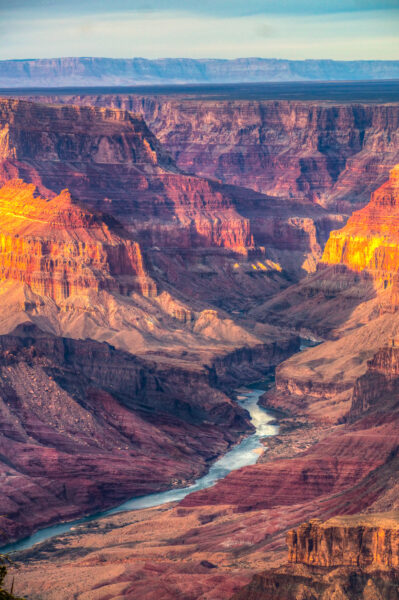
“Arizona is pursuing two projects to bring up to 200,000 acre-feet of new water into the state by tapping supplies in Mexico and California, which faces its own severe water shortages. Whether either project can overcome California’s technical, regulatory and political hurdles is far from certain. One environmentalist called one proposal “somewhat delusional,” while the head of a powerful California water agency described the other plan as “creative and doable.” The efforts come as the state’s groundwater supplies remain overstretched and its Colorado River allocation has been substantially cut. On Friday, the federal government finalized rules that require additional cuts to Arizona’s allocation, although they weren’t as severe as feared. The first of the two projects, both backed by a subsidiary of Canadian water and infrastructure company EPCOR and its partners, would attempt to capture up to 100,000 acre-feet of water annually from the Sacramento and San Joaquin rivers during flood years. … ” Read more from the Arizona Capital Times.
Arizona’s bid for California water could run into political headwinds
“Water-hungry Arizona is eyeing two projects that would boost its allocations by targeting underused supplies in California, which is itself scrambling for new water sources. But whether Arizona can get that water from a state that has its own serious shortages is a big question, and one project funded by an Arizona state agency last week was called “somewhat delusional” by an environmentalist. The leader of one powerful California water agency didn’t go that far, but acknowledged that the approved project targeting “high flows” on two California rivers would be very challenging to pull off — and not just from a technological perspective. He said that doesn’t even consider the political fallout that would occur if it became known California was giving some of its water to Arizona. The second project he called “creative and doable.” … ” Read more from the Arizona Daily Star.
‘Devastating’ cuts: Nevada is first state to file suit over Colorado River plan
“In a major escalation of tensions between the seven states that share the Colorado River, Nevada officials have filed a federal lawsuit challenging the Trump administration’s order for cuts in water use. The complaint, filed early Monday morning in the U.S. District Court of Nevada, asserts that the federal government’s operating plan unlawfully authorizes the federal government to reduce the state’s allocation of the river by up to 71 percent annually, or a 213,556 acre-feet reduction. Such a cut would slash the state’s share of water far past its actual use, which came in at 198,000 acre-feet last year. Lawyers for the Colorado River Commission of Nevada, the Southern Nevada Water Authority and the state as a whole requested an injunction to halt implementation. “This shortfall will cause devastating environmental, socioeconomic, and health and human safety impacts to southern Nevada and its citizens,” attorneys wrote. “Federal Defendants failed to consider such impacts in any meaningful way.” … ” Read more from the Las Vegas Review-Journal.
SEE ALSO: Nevada sues federal government over Colorado River water cuts, from Fox 5
Arizona: America’s desert metropolis is on the short list to lose water
“From a secure, windowless room in northern Phoenix, technicians control the Colorado River water that sustains America’s largest desert metropolis. The vast canal system the team oversees has for four decades conveyed an increasingly scarce commodity across 330 miles of rugged terrain to slake blossoming subdivisions, sprawling farmland and, in recent years, a powerhouse semiconductor industry. It supercharged Arizona’s economy and transformed Phoenix into one of the nation’s fastest-growing cities. But this lifeline, known as the Central Arizona Project, came with a catch. In exchange for billions of federal dollars to build it, the state agreed to lower-priority water rights, putting the aqueduct among the first in line for cuts in a time of deep drought. Now that time has come. “It was the price we had to pay,” said Kathryn Sorensen, a former water director for the city of Phoenix. “The chickens have come home to roost.” … ” Read more from the New York Times.
A new Colorado River plan is heading for Arizona lawmakers. Do they have the power to change it?
“There’s a new plan for sharing water from the Colorado River, and it means big cutbacks for cities in the Phoenix and Tucson areas. Now that the federal government has put the plan in ink, it will soon affect the amount of water that flows to cities and farms across the West. It comes after yearslong negotiations between the seven states that use the Colorado River’s water. Arizona sent a delegate to those talks who helped shape the plan. But, thanks to an old quirk of Arizona law, there may be one more step before the plan becomes a reality. Arizona is the only basin state where the Legislature has a chance to sign off on Colorado River plans. There’s one obscure, vague sentence of Arizona law from 1980 that could have an impact on present day water negotiations. It could bring state lawmakers together this summer to consider — and maybe vote on — the next chapter of the Colorado River. However, the details of that process are murky. What exactly are lawmakers being asked to do, and how much power do they actually have? KJZZ set out to find answers. … ” Read more from KJZZ.
‘Excessive’ water users in Las Vegas are getting big fines. Now there’s a lawsuit.
“Anthony Marnell III, chairman and CEO of Marnell Companies and a fixture of the Las Vegas gaming industry — he developed the M Resort himself — had a leak in his pool. He spent substantial funds to fix it, and the following year, his water use at his 1.31-acre Southern Highlands estate had dropped by nearly half. His water bill didn’t follow. Marnell paid more in 2023’s billing period than he had in 2022 with the leak still active — $1,500 versus $1,400 — because of a new $750 excessive use charge (EUC) penalty on his account. Marnell isn’t the only Vegas-area resident hit with the fee, and now he’s the lead plaintiff in a class-action lawsuit filed last month challenging the legality of the charge, arguing it’s structured more like an unauthorized tax than a cost-based fee. … ” Read more from the Nevada Independent.
Modernizing Colorado’s canals to save water lost in transit
“About 86% of Colorado’s water is used for agriculture, but only about 30-60% of that water actually reaches crops. With historic drought, record-low snowpack, and the Colorado River nearing “system crash,” this proposal focuses on a critical and largely untapped source for Colorado’s water future: the water lost in transit. This may be Colorado’s most readily available tool for strengthening drought resilience and meeting Colorado River Compact obligations without further reducing agricultural production. Many conservation programs try to reduce the amount of water used in agriculture by targeting consumptive use, i.e. the water actually consumed by crops, through changing irrigation practices, adjusting crop choices, or taking land out of production (“fallowing”). These efforts matter, but they place the burden of conservation squarely on farmers and face significant pushback. … ” Read more from the Federation of American Scientists.
In national water news today …
Court upholds hazardous substances designation for PFOA, PFOS under CERCLA
“On Aug. 18, the U.S. Court of Appeals for the D.C. Circuit upheld the U.S. Environmental Protection Agency’s (EPA) designation of perfluorooctanoic acid (PFOA) and perfluorooctanesulfonic acid (PFOS) as hazardous substances under the Comprehensive Environmental Response, Compensation, and Liability Act (CERCLA), also known as Superfund. EPA first designated PFOA and PFOS as hazardous substances under CERCLA in April 2024. Under the rule, entities are required to immediately report releases of PFOA and PFOS that meet or exceed the reportable quantity of one pound within a 24-hour period to the National Response Center, State, Tribal, and local emergency responders. … ” Read more from Water Finance & Management.
As the West dries up, more companies are promising they can make it rain
“One answer to Utah’s brutal drought could be a large metal structure that looks like a football goal post at the foot of the La Sal Mountains near Moab. The device sends pulses of electrical charges into the clouds, ions that the company that built it says brought 15 percent more snow to the mountains last winter. In a hot, dry Southwest, it’s a bold claim. But a growing desperation for water is making it a persuasive one, too. State agencies, water utilities, ranchers and ski resorts across the parched Western United States are increasingly spending millions each year on new ways to create more rain and snow. They’re betting on a growing body of research showing the interventions could squeeze at least a little bit more water from storm clouds. … ” Read more from the New York Times.
Farmers struggle to get basic services from depleted agriculture dept.
“Mary and Zachariah Ben, farmers in New Mexico, believed they were on the verge of buying the property of their dreams last fall: 47 acres, with enough cropland to grow heirloom corn and a processing facility to expand their organic baby food business. But the low-interest loan they secured from the Agriculture Department to make the purchase in Aztec, N.M., was on hold for months, first during the government shutdown that lasted until mid-November and then as federal workers left the agency in droves. Only half a dozen loan specialists who could help process their claims remained in the entire state, the couple learned, leaving them in limbo indefinitely and the seller impatient to know whether the agreement would ever go through. … ” Read more from the New York Times.

