
Several news sources featured in the Daily Digest may limit the number of articles you can access without a subscription. However, gift articles and open-access links are provided when available. For more open access California water news articles, explore the main page at MavensNotebook.com.
On the calendar today …
- WEBINAR: Uninvited Guests: Protecting California from Invasive Species from 12pm to 1pm. From golden mussels clogging waterways to invasive weeds fueling wildfires and pests threatening agriculture, invasive species pose a growing threat across California. Their impacts reach far beyond the environment, affecting water supplies, infrastructure, recreation, agriculture, and native wildlife. Join us to learn why this threat is growing and how California is responding through early detection, prevention, and coordinated management to protect our state in coming years. Click here to register.
- WEBINAR: Water at the crossroads: Policy shifts, local impacts, and community resilience from 12pm to 1pm. Public policy changes at the state and regional levels are reshaping the future of water management across California, with significant implications for affordability, reliability, and long-term planning. As communities navigate a changing regulatory landscape, understanding these shifts is critical to addressing both immediate and long-term water challenges. The webinar will examine how changes in water policy and supply affect local reliability, service delivery, ratepayers, economic development, and community resilience. Participants will explore how decisions in one region can create ripple effects across the state and what these shifts mean for cities, counties, schools, water districts, and the residents they serve. Click here to register.
In California water news today …
State Water Board releases final draft plan to protect California’s Bay-Delta, water and wildlife
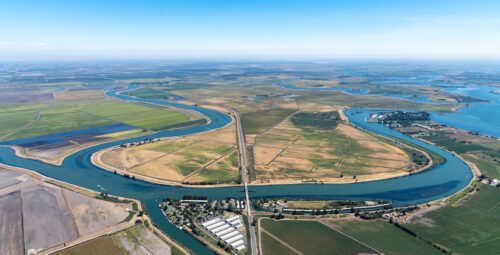
“California took a major step today to protect one of the state’s most important and threatened ecosystems as the State Water Resources Control Board released its final draft plan to modernize water quality protections for the Sacramento River and San Francisco Bay-Delta. The State Water Board will consider adopting the updated Water Quality Control Plan for the San Francisco Bay/Sacramento-San Joaquin Delta Watershed (Bay-Delta Plan) at a public hearing Oct. 28-29. The Bay-Delta is the heart of California’s water system. It supports some of the state’s most iconic and threatened fish and wildlife, sustains tribes and other local communities, and provides water for nearly 30 million Californians and 4 million acres of farmland. These benefits are essential to the economy and environment. But the Delta and its tributaries have long been under threat. Native fish populations have suffered, habitat has been lost, and the watershed faces increasing pressure from climate change and competing demands for water. … ” Read more from the State Water Board.
Amid controversy, California officials release long-awaited Delta water plan
“California regulators have released a plan to change how the state governs the pumping of water from the Sacramento-San Joaquin River Delta, a proposal that would give water agencies more leeway in how they comply with the rules. The Delta is the central hub of California’s water system, providing water for nearly 30 million people and 4 million acres of farmland. As the state has relied heavily on its water, the Delta’s ecosystem has suffered, and native fish populations have declined. “We believe we need a new approach,” said Eric Oppenheimer, executive director of the State Water Resources Control Board. “We need a plan that balances ecosystem needs and human water demands.” The draft Bay-Delta plan, which the board released Wednesday, takes “an innovative approach that pairs voluntary actions with a strong regulatory backstop” to protect the Sacramento River and the Delta, as well as San Francisco Bay, Oppenheimer said. … ” Read more from the LA Times. | Read via Yahoo News.
Joint statement: Healthy Rivers and Landscapes Program could be the best path forward for California if key concerns are addressed
 “California’s water future depends on our ability to move beyond decades of conflict and instead pursue collaborative, science-based solutions that balance environmental stewardship, and reliable and affordable water supplies needed to sustain local communities and agricultural productivity. The State Water Board is on the verge of a collaborative and science-based Bay-Delta solution, but it needs to resolve any remaining issues for public water agencies throughout California to continue our unified support and prepare to implement the Healthy Rivers and Landscapes Program (HRL Program). In 2022, a diverse interest group, including public water agencies (PWAs) throughout California, executed the Memorandum of Understanding Advancing a Term Sheet for the Voluntary Agreements to Update and Implement the Bay-Delta Water Quality Control Plan, and Other Related Actions. The HRL Program, as outlined in the 2022 MOU framework, represents Water Working for California—the best path forward for the Bay-Delta by acknowledging that balancing water supply reliability and lasting ecosystem improvements require both strategic flow management and meaningful habitat restoration. … ” Continue reading this joint statement.
Delta coalition slams State Water Board for failing to take tribal and environmental concerns seriously in updated Bay-Delta Plan
“[Yesterday], the California State Water Resources Control Board (State Water Board) released the updated San Francisco Bay-Delta Water Quality Control Plan (“Bay-Delta Plan”), a critical policy guiding water quality, river flows, and ecosystem protections for the state’s largest and most fragile estuary. The updated plan was met with immediate backlash from the Delta Tribal Environmental Coalition (DTEC)—consisting of the Shingle Springs Band of Miwok Indians, Winnemem Wintu Tribe, Little Manila Rising, and Restore the Delta—for failing to make meaningful changes to address longstanding Tribal, environmental justice, and ecological concerns. Among the coalition’s central concerns is the plan’s reliance on Voluntary Agreements (VAs), privately negotiated deals allowing powerful water districts to offer limited flow commitments and funding in exchange for exemptions from stronger, enforceable regulatory requirements. Tribal groups, environmental justice organizations and conservation groups say the VA approach is not scientifically sound and lacks adequate, enforceable protections needed to safeguard threatened fish species and address harmful algal blooms (HABs). The updated plan also fails to establish a comprehensive HAB standard and provides only limited provisions for HAB monitoring. DTEC is calling on the State Water Board to prioritize strong, science-based, and enforceable protections for Delta water quality and ecosystems. … ” Read more from Restore the Delta.
Metropolitan issues statement on State Water Board release of Water Quality Control Plan
Metropolitan Water District General Manager Shivaji Deshmukh issues the following statement on the State Water Board’s release today of a new draft update of the Bay-Delta Water Quality Control Plan: “Metropolitan recognizes that the reliability of Southern California’s water supply depends in part on the health of the Bay-Delta watershed and its rivers. One of our most important water supplies is conveyed through the Delta, and for years Metropolitan has been engaged in scientific research to help inform water operations through the region and to support native species. That research, combined with the lived experience of water managers over the past decade, has made clear that the long-term viability of those species depends on more than just water flows and pumping restrictions. Improved habitat, water quality, and functional flows, coupled with a strong science program and dedicated funding for these strategies, will increase the viability of our native species. The Healthy Rivers and Landscapes Program recognizes this and offers a more holistic approach to managing the watershed, benefiting both the Bay-Delta and urban and rural communities. That is why Metropolitan has been an engaged partner in developing the HRL program, including when it entered into the 2022 Memorandum of Understanding with numerous state and local agencies. “We look forward to reviewing how the State Water Board has incorporated the HRL program into the latest draft of the Water Quality Control Plan and are hopeful a more comprehensive approach will translate into improved reliability and a better environment.”
SEE ALSO: California’s San Francisco Bay-Delta water protections set for modernization, from Action News Now
Oroville Dam license looms over water debate
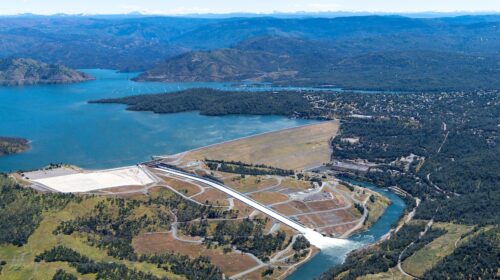
“Hundreds of comments and an overflow crowd brought concerns about potential data centers to the Butte County Water Commission, but commissioners and speakers were warned that a decades-old issue involving Oroville Dam could carry far greater consequences for the county’s water and economy. The commission received 592 electronic comments on data centers before its Aug. 5 meeting. County officials stressed that Butte County has received no application for a data center in its unincorporated area and has not been approached about one. By contrast, the unresolved federal relicensing of Oroville Dam involves an existing project that supplies water and power statewide while imposing costs county officials estimate at about $20 million annually. Jim Graden, the domestic well representative on the Vina Groundwater Sustainability Agency board, pointed to the California Water Plan and warned that future demands on Northern California’s surface and groundwater could dwarf those being discussed in connection with data centers. … ” Read more from the Gridley Herald.
The 2026 El Niño could become the strongest in a lifetime
“A strengthening El Niño is already reshaping weather around the globe, suppressing Atlantic hurricane activity and influencing storm tracks with the potential for the climate pattern to become one of the strongest on record. El Niño occurs when ocean temperatures near the equator in the eastern and central Pacific rise above the historical average for an extended period. Changes in the ocean and atmosphere can shift storm tracks around the globe, affecting tropical activity, temperatures and precipitation patterns. AccuWeather hurricane experts have very high confidence that Super El Niño conditions will develop during the second half of the Atlantic hurricane season. It is becoming increasingly likely that the 2026-27 El Niño could become the strongest since at least 1950. … ” Read more from AccuWeather.
Another storm brews in the Pacific as El Niño juices up hurricane season
“As Hawaii reckons with Hurricane Lala’s damage, yet another storm is brewing southeast of the Islands. This year’s developing El Niño is likely playing a role in the back-to-back storms, according to experts. It’s rare for hurricanes to make landfall in Hawaii. Lala made the closest pass of any hurricane in modern history on the Big Island, according to Daniel Swain, a climate scientist for the University of California’s Agriculture and Natural Resources group. “The conditions really have to line up just right, and some of those conditions are random: You have to have a storm in the right place at the right time with the right trajectory,” Swain said during a recent online briefing. “But you also need ocean temperatures that are warmer than their historical baseline, and in Hawaii, that tends to happen during El Niño years.” … ” Read more from SF Gate.
SEE ALSO: ‘It’s just going to get busier’: El Niño brings sharks to Calif.’s coast, from SF Gate
How climate change is drying up the Western US.
Emily Williams writes, “When I was a kid, I didn’t think much about where our water came from. I’d turn the tap on and fill up to my heart’s content. Later, I learned that the water which flowed so reliably through my tap was thanks to one of the most intricately engineered water systems in the US, capturing snowmelt in our mountainous regions and rerouting rivers into concrete canals and aqueducts. Water in the Bay Area? That’s from snowmelt in the Sierra Nevada. In LA? That water made its way from the snowmelt of the Rockies into the Colorado River, to then be pumped nearly 250 miles in the Colorado River Aqueduct to reach the thirsty Southern California fields and the sprawling city of Los Angeles. Water defines so much of our lives: what we plant, where we build, how we spend our leisure time. Here in the Western US, water is precious, as its supply has always been limited. Because of this, huge amounts of time, money, and labor have been poured into increasing water availability, resulting in aqueducts and canals that bring water from mountainous regions to otherwise dry regions for agriculture or cities, and massive dams that store water for the hot and dry months. … ” Read more from the Union of Concerned Scientists.
Low-water winter forage faces high-cost SGMA reality
“San Joaquin Valley growers are exploring low-water winter forage crops to keep land productive under tightening Sustainable Groundwater Management Act (SGMA) restrictions. Panelists at a recent Public Policy Institute of California (PPIC) event highlighted wheat, rye, and triticale as crops that rely primarily on winter precipitation. While these options help reduce groundwater demand, experts warned that crop shifts alone cannot fix the severe economic challenges in regions with limited surface water and accelerated land subsidence. The PPIC estimates that between 500,000 and 900,000 acres fallowed could occur by 2040 as the valley adjusts to new environmental and regulatory pressures. Geoffrey Vanden Heuvel of the Milk Producers Council noted that while dairies provide a natural market for these forages, quality remains a concern. … ” Read more from Agro News.
Nonprofit program aims to bring more rice to Delta
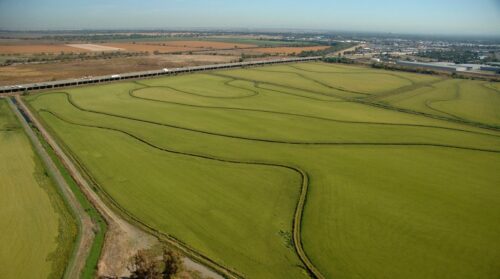
“Corn has long been a staple crop in the Sacramento-San Joaquin Delta. But in recent years, reports have shown a change in the region’s agricultural makeup as more delta farmers turn to rice—a move supported by state dollars. Jerred Dixon, manager of the Nature Conservancy’s 9,200-acre Staten Island Preserve in San Joaquin County, is a fifth-generation farmer whose family grew corn when he was growing up in the area. Now, he oversees the Staten Island farm’s rice crop, which spans 4,500 acres, and encourages other delta farmers to consider rice as well—for its financial potential and environmental benefits. “It’s economically viable, and it’s also helping protect what is still here,” he said. When the Nature Conservancy first purchased the land in 2001, the environmental nonprofit envisioned a place that could financially sustain itself through agriculture while protecting the region’s native wildlife. Rice is key to that goal because rice farmers such as Dixon flood their fields during the growing season, creating habitat for species that rely on wetlands that once covered the region. … ” Read more from Ag Alert.
Ninth Circuit confirms Reclamation could convert water service contracts to repayment contracts without environmental review
“On August 17, 2026, the Ninth Circuit Court of Appeals affirmed the District Court ruling that the United States Bureau of Reclamation (Reclamation) did not need to undertake National Environmental Policy Act (NEPA) review or Endangered Species Act (ESA) consultation before it converted Central Valley Project (CVP) water service contracts to repayment contracts pursuant to the Water Infrastructure Improvements for the Nation (WIIN) Act. Center for Biological Diversity et al. v. United States Bureau of Reclamation, No. 25-5137 (9th Cir. Aug. 17, 2026). Passed in 2016, the WIIN Act (Pub.L. No. 114-322, 130 Stat. 1628) authorized water contractors to convert their CVP water service contracts to repayment contracts upon request and thereby change the payment structure of their contracts. Under the Reclamation Act of 1939, repayment contracts provide for the contractor to receive water in exchange for repaying the water project’s construction costs. Once those installment payments are made, the contractor only pays the costs to operate and maintain the CVP going forward and does not pay for water deliveries. Under a water service contract, the contractor receives water in exchange for an annual payment, and unlike repayment contracts, water service contracts expire at the end of their term. … ” Continue reading at Somach Simmons & Dunn.
Researchers link wildfires in California’s coastal watersheds to the water quality at the beach
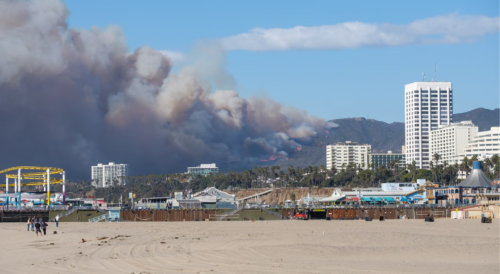
“As the summer heat bakes the West Coast, the thoughts of many who have lived here for any amount of time will turn naturally to the idea of wildfire. As of writing, California has already experienced almost 5,000 wildfires in 2026 alone, many of them near the coast, or affecting watersheds that lead to the sea. With all the ash, charred material and other debris making it into the waterways and out to the ocean after storms, what are the effects on water quality at the beaches and in the nearshore? That question has been on the minds of UC Santa Barbara physics professor Jean Carlson and UCLA and Caltech postdoctoral researcher Carl Swindle, authors of a paper that appears in the Public Library of Science (PLOS) Water . While we can intuit that there must be some adverse effect of large amounts of nutrients and debris from burned houses, buildings, infrastructure and landscape being pumped into the ocean, they said, for all the decades of wildfires and subsequent rainy seasons, the systematic impacts on California’s coastal watersheds have not been thoroughly studied. … ” Read more from The Current.
SEE ALSO: After California coastal wildfires, human and animal fecal bacteria contaminate coastal waters, from Bioengineer
Data centers are booming, and so is the controversy
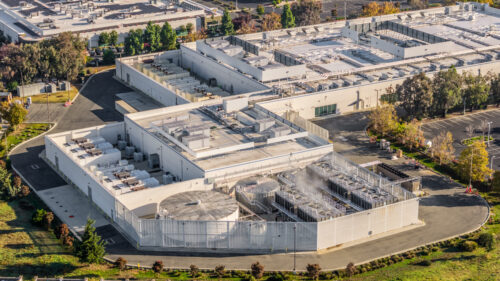
“With the general election approaching, data centers are emerging as a flashpoint in communities nationwide. Critics pushing back say the centers strain water and electricity resources and disrupt neighborhoods. Data centers, the physical infrastructure behind the internet, house the servers and networking equipment that powers artificial intelligence and other digital services. While they are rapidly expanding across the country, so is the opposition. A Gallup survey released in May found 70% of Americans oppose building data centers in their communities, including 48% who said they strongly oppose them. Environmentalists and anti-AI activists argue data centers consume large amounts of water and energy, generate noise and electronic waste and create relatively few long-term jobs. Some states and local governments are responding with new rules and oversight efforts. Industry advocates, however, say data centers are essential infrastructure for the AI era, supporting technological innovation, creating high-paying jobs and generating tax revenue for local communities. … ” Read more from USA Today.
There’s a better way to cool data centers that cuts their huge thirst for water
“Water is an amazing substance. The human body is made up of more than 50% water. Approximately 70% of the earth’s surface is covered by water. We drink it, bathe in it, cook with it, clean with it. It is also used to cool data centres, which is an increasing draw on what is a scarce resource in many parts of the world. The boom in artificial intelligence (AI) has been fuelling the construction of new data centres worldwide. This is driven by the massive computing workloads required to train and run generative AI models. AI data centres are specialised facilities with the infrastructure needed to support the increased computational demands. A recent UN report warned that water used by AI data centres is expected to equal the everyday water needs of 1.3 billion people by 2030. Currently, air conditioning systems carry cool air to the server rooms housing the electronic equipment. Water is then used to carry away waste heat from the air to the environment. But are there other potential ways to cool these facilities, ways that may not consume as much water? … ” Read more from The Conversation.
SEE ALSO:
- Data Centers Are Spreading. So Are Moratoriums, from Governing
- AI’s water problems run deep, from Fast Company
ACWA-sponsored Proposition 218 rate-setting bill advances to governor’s desk
“ACWA-sponsored AB 2180 (Ward, D-San Diego) passed the Legislature today and is now on the desk of Gov. Gavin Newsom. The bill would clarify how water agencies comply with Proposition 218 when setting water rates. This clarification would provide predictability for agencies, support California’s water-use conservation goals and help minimize unnecessary legal disputes over water rates. ACWA staff will continue to advocate on behalf of members and encourage the governor to sign the bill. More information and background on the bill is available in an ACWA fact sheet.
CA Legislative update: The suspense is over
“A bill that would have opened the door to bringing the grizzly bear back to California is dead. So is a bill promoting groundwater recharge. But the sprawling fight over wildfire liability, utilities and insurance lives to see another day, as does a grouping of refinery safety proposals. Welcome to Suspense Day, the twice-a-year Capitol culling when lawmakers decide, in rapid-fire fashion, which costly bills advance and which quietly disappear. We’ve put together a list of what energy, environment and transportation bills you can take off your end-of-session bingo card after Thursday’s cut and which ones lawmakers are keeping in play, for now. … ” Read more from Politico.
Padilla, Schiff, Ruiz push back against Trump administration efforts to abandon New River and Imperial County wastewater infrastructure projects
“Today, U.S. Senators Alex Padilla and Adam Schiff (both D-Calif.), along with U.S. Representative Raul Ruiz (D-Calif.-25) pushed back against a new proposal to deauthorize environmental infrastructure projects for the New River and Imperial County. In a letter to Assistant Secretary of the Army for Civil Works Adam Telle, the lawmakers warned that these rollbacks could have serious consequences for surrounding California communities and the environment. The lawmakers criticized the Army Corps of Engineers’ new proposal, emphasizing that these projects do not meet the Corps’ criteria for deauthorization and highlighting the significant public health issues that the projects’ funding could address. “There remains an urgent public purpose for the New River and Imperial County authorizations, given that an estimated 60 million gallons of water flow through the New River into the United States at Calexico each day, and recent border monitoring has documented pollutants and water quality indicators including fecal coliform, ammonia, biochemical oxygen demand, arsenic, and selenium,” wrote the lawmakers. “The urgency of this problem has also generated significant local non-federal support and consideration of additional federal support for actions to remedy the public health impacts.” … ” Read more from Senator Alex Padilla.
SEE ALSO: Ruiz joins Padilla, Schiff in opposing New River project deauthorization, from the Desert Review
In regional water news and commentary today …
NORTH COAST
Organizations look to deliver water to Klamath Basin Wildlife Refuges
“Collaborators look to deliver water to the Klamath Basin National Wildlife Refuges as waterfowl are in need, with intent to make a significant difference when agriculture, Tribes, conservation organizations and government agencies collaborate. “This is the kind of adaptive, collaborative water management we have been advocating for,” said Scott Seus, KWUA Board President, who farms near Tulelake, California. “When conditions change and an opportunity emerges to put water to work for the broader Basin, we need to be able to act. That is what is happening now.” The Bureau of Reclamation administer federal water supply for the Klamath Project, ensuring laws and requirements are met and providing water when allowed. With such apparent critical conditions and water needs, Klamath Water Users Association (KWUA) recognized the opportunity and took action. “This effort shows what is possible when difficult conversations occur and partners remain engaged in finding solutions,” Mr. Seus said. … ” Read more from KDRV.
SEE ALSO: A Klamath Basin Community United for Wildlife, from Ducks Unlimited
Water board’s Smith River runoff order ‘failed on … very important fronts’
“Earlier this month, the California North Coast Regional Water Quality Control Board adopted discharge requirements for commercial lily bulb growers in the Smith River Plain. The water board’s order is a first for a waterway where environmentalists have been struggling for decades to secure restrictions on pesticide use — which they say has degraded what should be one of the state’s most pristine and ecologically significant riparian areas. That struggle has pitted people like Greg King, the founder, executive director and president of the Siskiyou Land Conservancy, against some of the area’s most powerful agribusiness interests, particularly three companies located along the Smith River plain that are responsible for roughly 90% of the nation’s Easter lily bulb production. King says that “it’s almost a miracle” that regulators were able to pass discharge requirements — given many years of intransigence on the part of regulators and farmers (residents first documented toxic contamination of downstream wells in the early 1980s). Nonetheless, King and his colleagues are not without misgivings about the order. … ” Read more from the Eureka Times Standard.
Redwood timber company continued moving logs after court ordered halt, environmental group says
“Two days after a state appeals court temporarily halted most timber operations in the Dutch Charlie Creek watershed—an important coho salmon tributary to the South Fork Eel River—Redwood Timber Company continued yarding and hauling logs there Wednesday, according to an environmental group. According to Friends of Dutch Charlie Creek, Redwood Timber Company maintains that the continued yarding and hauling are permitted as fire-protection measures. RHBB has not independently confirmed that explanation. The environmental group disputes it, arguing that the work remains prohibited under the court order. The First District Court of Appeal issued the stay Monday, August 17, barring Redwood Timber Company and those working on its behalf from engaging in timber operations under the “Hot Tuna” and “Lincoln Logs” timber harvest plans. The court, however, carved out a limited exception allowing “protective actions” consistent with the plans and California’s Forest Practice Rules “to protect water quality and other resources.” … ” Read more from the Redheaded Blackbelt.
New models say a rebuilt Eel River water link could keep Russian River supplied
“One of the concerns about taking out the two dams of the Potter Valley Project — Scott and Cape Horn — is the loss of water downstream for agriculture, recreation and drinking water. This month Mendocino County officials shared preliminary studies of what would replace the dams: the New Eel-Russian Facility. The news is promising: the Eel River project on the drawing board could keep about as much water flowing to the Russian River each year as today’s system does, with more of it arriving in the wet winter months. The facility would replace the Potter Valley Project, a century-old set of dams and a tunnel that sends Eel River water over the hills into the Russian River watershed. PG&E is giving up that project and plans to tear down Scott Dam and Cape Horn Dam. The new facility would pump water from the Eel during the rainy season into the same tunnel that’s used now. … ” Read more from the Mendocino Voice.
Construction begins on Elk River estuary restoration project in Humboldt Bay
“Construction is officially underway on the Elk River Estuary Restoration Project in Humboldt County, a major step in a decades-long effort to restore one of Humboldt Bay’s most important watersheds. Led by California Trout in partnership with Tribal Nations, local landowners, public agencies, scientists and community partners, the project is designed to restore estuary habitat, improve conditions for native fish and help the Elk River adapt to rising sea levels and a changing climate. The first phase of construction will restore about 40 acres at Swain Slough as part of a broader 857-acre restoration project aimed at restoring natural tidal processes, expanding habitat and reconnecting the river with the surrounding landscape. … ” Read more from KRCR.
SIERRA NEVADA
Bipartisan call for action at Tahoe Summit amid concerns over federal cuts
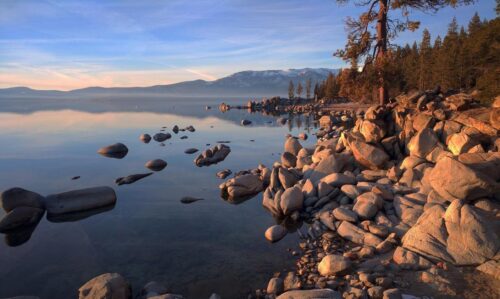 “Lawmakers from California and Nevada came together at the 30th annual Tahoe Summit with a shared goal: continuing efforts to protect Lake Tahoe for future generations. The summit highlighted three decades of investments and resources dedicated to the area, while lawmakers emphasized that continued progress depends on future investments. Preserving Lake Tahoe’s clear water and deep blue hue is something lawmakers from both states said they can agree on regardless of party. “Protecting Lake Tahoe means protecting entire ecosystem from its iconic waters to the native species that call it home,” Nevada Gov. Joe Lombardo (R) said. Washoe Tribe of Nevada and California Chairman Serrell Smokey also pointed to progress involving the lake’s water tables and wetlands, as well as the possibility of implementing Lahontan cutthroat trout. But even with successes over the past three decades, future investments are not guaranteed. … ” Read more from Channel 10.
SEE ALSO:
- With climate risks looming, Lake Tahoe summit marks 30 years of progress, from the Sacramento Bee
- Lake Tahoe Summit panelist warns of growing gap in tourism mitigation funding, from Channel 8
- History of Lake Tahoe, from KTNV
This soggy patch of grass is quietly keeping Lake Tahoe blue
“The Upper Truckee Marsh, tucked between the Tahoe Keys and Regan Beach in South Lake Tahoe, is the largest remaining wetland in the Tahoe Basin, and it functions as the lake’s kidneys. The Upper Truckee River, the biggest of the 63 streams feeding Tahoe, drains roughly a third of the basin’s land and carries more fine sediment toward the lake than any other tributary. When that water spreads slowly through the marsh, sediment settles out and nutrients get absorbed before they can cloud the water or feed algae. … ” Read more from Active NorCal.
Lake Tahoe’s crayfish boom is a warning sign for lakes across the US
“In some of America’s most familiar lakes, invasive crayfish now number in the millions, and their impact reaches far beyond the water’s edge. Lake Tahoe offers one of the clearest examples. As Fox Weather reported, the lake’s invasive signal crayfish population is estimated to have climbed from roughly 56 million in the 1960s to about 240 million to 280 million today. Tahoe is not alone. Fox Weather, citing WorldAtlas, said invasive crayfish have also appeared in places including Lake of the Woods, Crater Lake, Lake Mead, and Lake Michigan. … ” Read more from Yahoo News.
A rare plant only found near Lake Tahoe looks to a snowy winter for recovery
“Barely larger than a quarter, a rare plant only found in the Lake Tahoe area has been on the decline. But it may find reprieve in the coming months. Although the warm winter leading into this dry summer poses a risk for the species, the anticipation of a heavier snowfall, driven by a strong El Niño weather pattern expected this winter, could help revitalize the population of Tahoe draba, which is threatened by both climate change and human activity. The alpine plant, formally known as Draba asterophora, is part of the mustard family. Marked by yellow flower petals that pop up after winter’s end, the plant is endemic to the Tahoe area, meaning it cannot be found anywhere else. It often grows in areas where other plants struggle to take hold —usually on sandy, rocky slopes. … ” Read more from PBS Abridged.
Restoring aspen to California: How SYRCL, UC Berkeley, and community scientists are building the future of Sierra Nevada aspen restoration
“The more we know about aspen in California, the better we can restore degraded or lost aspen stands. Though quaking aspen comprise less than one percent of Sierra Nevada forests, they deliver outsized ecological benefits: enhancing fire resilience at the landscape scale, improving water quality, increasing water retention, and providing high-quality habitat for migratory birds, aquatic species, and terrestrial wildlife. Despite that ecological significance, aspen stands on the western slope of the Sierra Nevada have been in decline for decades, driven by fire suppression, climate change, intensive grazing, and altered hydrology. The restoration of aspen stands has a cascade effect benefiting species such as birds through an increase in their habitat, and beavers as a food source. To this end, this spring SYRCL staff worked with UC Berkeley and the Institute of Bird Populations on a novel research project: Aspen Seed Collection in California. … ” Continue reading from the South Yuba River Citizens League.
Trump’s new national forest rule change would impact Yuba, American river watersheds
“From the air, the stretches of U.S. National Forest that hug the higher reaches of the American and Rubicon rivers in the Sierra do not look entirely pristine. They are cut through with old roads and have been thinned in places by wildfires and logging. Timber slash piles dot at least one ridge, waiting for removal or burning. But these areas have enjoyed considerable environmental protections since 2001, due to what’s called the U.S. Forest Service’s “roadless rule.” The rule has prevented the construction of new roads in over 45 million acres of public land around the country, as well as timber extraction and oil, gas and coal development. U.S. Secretary of Agriculture Brooke Rollins on Tuesday announced a long-expected repeal of that rule, setting off waves of protest — and likely future litigation — from environmental groups. … ” Read more from the Sacramento Bee.
Biomass-fueled data center project planned in Amador County
“A potential data center, the Buena Vista AI Factory, is under development in Amador County on a long-defunct biomass site next to Harrah’s Northern California. The state has identified biomass-related industries among core economic development sectors across the Sierra foothills region. So, the project potentially checks some boxes for funding and other state support. However, data centers in general are creating growing concerns about environmental impacts as well as questions about permitting and other processes. Other than the above-mentioned project in Ione, so far there have not been any proposed data center projects that have appeared before planning commissions in Tuolumne or other nearby counties. … ” Read more from My Mother Lode.
SACRAMENTO VALLEY
Butte County water agencies review groundwater monitoring data
“Groundwater Sustainability Agencies across California are conducting five-year evaluations of their required Groundwater Sustainability Plans. These evaluations must be submitted to the California Department of Water Resources by January. The local agencies’ evaluations include analyzing groundwater monitoring data. There are currently nearly 160 monitoring wells across Butte County. Some of the wells collect data tracking daily water levels, and others collect water level data just four times per year. Christina Buck with the Butte County Department of Water and Conservation told Action News Now having that data helps agencies better understand how much groundwater is being used. … ” Read more from Action News Now.
NAPA/SONOMA
A California wine region’s long-simmering battle against the government is bubbling over
“A reformist movement is brewing in Napa Valley, notorious for being California’s most regulated wine region. Napa winery permits, which are expensive and often slow to obtain, dictate exactly how individual wineries can operate, including how many employees they can have; how much wine they can produce; how many visitors they can see each week; what types of experiences they can (and cannot) offer; and whether they can host weddings (most can’t). These laws, established in 1990 under Napa County’s Winery Definition Ordinance, were designed to protect the region’s agricultural environment, in part by curbing commercial development. Since 1990, Napa Valley has grown dramatically, far exceeding what the local government likely believed was possible back then. The winery count in what’s now one of the world’s most acclaimed wine destinations has more than doubled, to roughly 500, and owners are frequently at odds with the region’s 36-year-old laws, arguing that they’re preventing them from remaining competitive. … ” Read more from the San Francisco Chronicle.
Sites Reservoir could secure American Canyon’s water future
“American Canyon is considering a $134 million investment into a reservoir 100 miles away as city officials look to secure the community’s water supply for the next century and beyond. The city, which has no reservoir of its own and historically has lacked long-term water storage, is one of 30 public agencies participating in the $7.8 billion Sites Reservoir project planned near Maxwell, in western Colusa County about 70 miles northwest of Sacramento. During the American Canyon City Council’s Aug. 18 meeting, City Manager Jason Holley introduced participation in the Sites Reservoir project as a critical solution for long-term water storage while addressing climate-based uncertainty. “One of the really challenging things about this project and the path that we’re on is thinking about the future,” he said. “I’m talking about 100 years from now, 200 years from now.” … ” Read more from the Napa Register.
BAY AREA
Extreme weather will put new Marin County initiatives to test
“Last winter, a combination of king tides and storm surge caused widespread flooding in Marin County. This year could be worse with the addition of El Niño conditions. At Tuesday’s meeting of the Marin County Board of Supervisors, emergency management and public works staff presented their preparedness plan. The streamlined approach is part of the county’s new administrative model, led by the county executive’s office rather than each of its 22 departments reporting directly to the board. The plans include updating prediction and warning systems, conducting multi-agency exercises, identifying high-risk areas before major storms, and pre-staging flood-fighting equipment and supplies, such as mobile pumps and sandbag stations. “It’s been referred to as the Super El Niño,” said Nick Brubaker, chief resilience officer with the Marin County Fire Department Office of Emergency Management. “El Niño is not a weather event. It’s a climatic pattern that causes warmer ocean waters to come to our coastline.” … ” Read more from Local News Matters.
Highly anticipated trail through scenic, restricted Bay Area wilderness about to open
“San Francisco will open a new recreational trail through its watershed lands in San Mateo County on Monday, offering the public a rare opportunity to visit the highly restricted wilderness where millions get their water. The six-mile Skyline Watershed Ridge Trail, in the coastal hills off Skyline Boulevard, traverses a variety of terrains, from grasslands to Douglas fir forest to redwood groves, each home to creeks and drainages that contribute to the city’s water supply. Hikers, cyclists and equestrians are welcome. “These different landscapes filter the water as it runs toward our reservoirs,” said Tim Ramirez, manager of the Natural Resources and Lands Management Division for the San Francisco Public Utilities Commission, during a recent private tour of the new trail. “A place like this allows us to minimize our treatment costs and retain our (high) water quality.” … ” Read more from the San Francisco Chronicle.
CENTRAL COAST
Salinas Valley groundwater agency advances a plan to stop seawater intrusion.
“Fourteen years move fast when it comes to reaching sustainability in Monterey County’s critically overdrafted aquifers; the 2040 deadline has pushed three project portfolios into the spotlight. Despite concerns about the feasibility, scale and structure of the proposals, the Salinas Valley Basin Groundwater Sustainability Agency’s board of directors voted 9-2 on Aug. 13 to move forward with one. The selected suite of projects, known as Portfolio 3A, includes the creation of a small Brackish Groundwater Restoration Project (BGRP) with partial delivery to Salinas and partial injection; Salinas River recharge in Castroville and the Eastside subbasins; optimization of the Castroville Seawater Intrusion Project; and 10-percent demand management, or cutbacks in pumping. The portfolio has an estimated capital cost of more than $1 billion, with annual operating expenses of $74 million. … ” Read more from Monterey Now.
Los Osos: Proposed California water rates raise fresh worries for residents already squeezed by costs
“Los Osos residents who already feel squeezed by high water costs may face another strain on their monthly budgets. A proposed rate plan tied to future infrastructure work is fueling fresh concern in a community where many residents say basic water service is already expensive enough. For its Los Osos customers, Golden State Water Company has asked for a rate structure covering 2028 to 2030, according to KSBY. The utility said the plan would support pipeline replacement work, a replacement groundwater well, and a study on whether the system could eventually connect to the State Water Project’s Coastal Branch. … ” Read more from The Cool Down.
SAN JOAQUIN VALLEY
Critical Stockton levee work races toward completion as ‘super’ El Niño brews
“It’s a race against time. With climate scientists warning of a “super” El Niño this year that will dramatically increase the risk of Delta flooding, work to reconstruct one levee protecting some of Stockton’s toniest neighborhoods is hastily proceeding. The goal is to finish the work by the end of October — right around the start of storm season. “It’s looking good,” said Darren Suen, executive director of the San Joaquin Area Flood Control Agency, who has been following the progress carefully. The project focuses on a one-mile stretch of Tenmile Slough. … ” Read more from Stocktonia.
Colorado River woes could eventually become a Manteca issue
“The dwindling water supply from the Colorado River could eventually have a ripple effect on Manteca. It’s because Southern California between the seven states with a straw in the Colorado River Basin gets the largest share of water at 4.4 million acre feet annually. With the water levels at the two biggest reservoirs on the Colorado — Lake Mead and Lake Powell — at historic lows and dropping closer to the level where power generation will cease, SoCal water agencies will be looking elsewhere for replacement water. More water recycling/aquifer recharging and desalination plants require significant lead time. Tapping into more local groundwater on a large scale is being taken off the table by state regulations. There are only two sources outside of even tighter conservation mandates or outright rationing to secure more water in a short time frame. Both — the State Water Project and the federal California Water Project (CVP)— are in Central and Northern California. … ” Read more from the Manteca Bulletin.
Commentary: Data centers and water use: Why Patterson residents are asking questions
“As artificial intelligence grows, communities are asking a basic question: how much water does a data center use, and what would that mean for a city like Patterson? A single Google Gemini text question has been reported to use only about 0.26 milliliters of water, or roughly five drops. By itself, that sounds tiny. But the concern is not one question — it is the scale of billions of searches, AI prompts, stored files, streaming services, and business operations that run through large data centers every day. Patterson’s own water system shows why residents are paying attention. According to the City of Patterson’s 2024 Water Quality Report, the city delivered approximately 1.5 billion gallons of water in 2024 through its potable and non-potable systems. That water served about 7,370 service connections. Patterson relies solely on groundwater, using seven potable wells, with two on standby, and three non-potable wells used only for irrigation. The city also operates three storage tanks within its water system. … ” Read more from the Patterson Irrigator.
As state water law threatens Valley farms, farmers say they are ‘preaching the gospel of agave’
“When James Hunt planted 14 acres of agave on his secluded Merced farm last year, he thought he’d harvest it for liquor. After all, for centuries, Mexico has capitalized on distilling agave into tequila and mezcal. The vision was picturesque – rows of large, spiky succulents rooted in a field with the snowy peaks of the Sierra Nevada mountain range in the distance. “That was my original idea: to build a craft distillery out here and have that as the backdrop,” Hunt, 45, said. But then he did more research on the plant – which requires little water and a lot of heat – and that dream snowballed into something bigger. “You could have spirits, agave syrup, agave inulin, biofuel, and sustainable aviation fuel,” he said. … ” Read more from KVPR.
SOUTHERN CALIFORNIA
Mojave groundwater project faces two new federal lawsuits
“A long-running fight over groundwater beneath California’s Mojave Desert is back in federal court, and this time the dispute could have implications beyond California. Two separate lawsuits filed July 28, 2026, challenge the U.S. Bureau of Land Management’s renewed approval of a right-of-way needed to move water through the Northern Pipeline, a former oil and natural gas pipeline that is part of the Cadiz water project. One lawsuit was filed by the Fort Mojave Indian Tribe, Chemehuevi Indian Tribe, Native American Land Conservancy and National Parks Conservation Association. The other was filed by the Center for Biological Diversity and Sierra Club. Both cases challenge the federal government’s environmental review of the pipeline approval. The allegations in the complaints have not yet been decided by the court. … ” Read more from Western Water.
SAN DIEGO
Coastal Commission approves massive Mission Bay restoration
“It could be the biggest transformation of Mission Bay since it was created in the late 1940’s. After more than a decade of planning and designing, the California Coastal Commission has given the thumbs up for an aggressive restoration project they call De Anza Natural. “I’ve worked very hard on this for the past five years and that area of Mission Bay is looking at major change,” says San Diego City Council member Joe LaCava. A major change that will send parts of Mission Bay back in time. Some of the existing ‘land’ around the bay will disappear, only to be replaced by marshland, like it was in the beginning. “That area in the northeast corner is the last remaining place where we can do this. We will need to move some of Campland to make way for more marshland. But this is a very long process,” says LaCava. … ” Read more from Fox 5.
Along the Colorado River …
Colorado River operations enter era of near-continuous negotiation
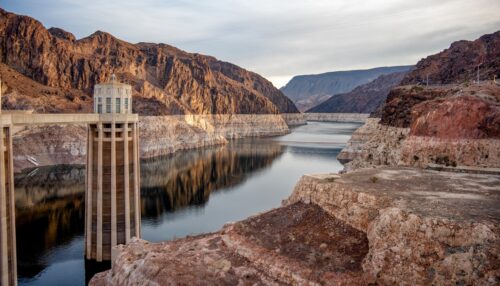
Conditions on the Colorado River continue to deteriorate. Last month, Lake Mead dropped to its lowest level since it was first filled, and last week Lake Powell reached a record low of its own. Both reservoirs are still falling. Against this backdrop, the Bureau of Reclamation recently released the final environmental impact statement for Colorado River operations from 2027 through 2036. At Metropolitan’s August One Water and Adaptation Committee meeting, Shanti Rosset, Colorado River Policy Manager, briefed committee members on the final EIS for post-2026 operations, outlining what it decides, what it means for Metropolitan’s water supply, and what questions remain unresolved. On July 31, the Bureau of Reclamation released the final environmental impact statement for post-2026 operations. The FEIS identifies the 10-year framework as the preferred alternative and organizes it into three nested layers … ” Continue reading at Maven’s Notebook.
Colorado River water conservation efforts get only halfway to a solution
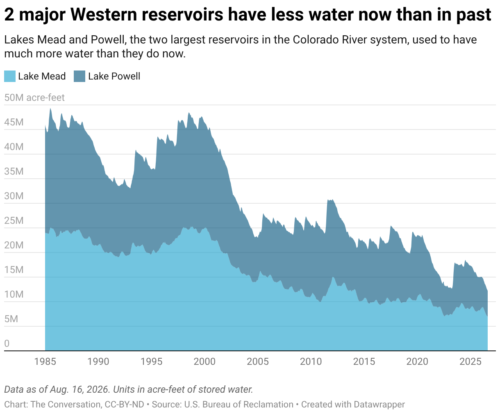 “In August 2026 the nation’s two largest reservoirs, Lake Mead and Lake Powell, both on the Colorado River, hit their lowest levels since they first began to be filled in 1936 and 1963, respectively. The federal government and the seven Colorado River basin states – Arizona, California, Colorado, Nevada, New Mexico, Utah and Wyoming – have been unable to reach an agreement about who should reduce water usage by how much to avoid catastrophic declines in lake levels. And the existing plans and commitments, including a federal outline announced in late July 2026, don’t get close to achieving what’s needed to keep the river flowing. Here’s a look at the key issues making an agreement so hard to reach. To stabilize the Colorado River system, seven states and Mexico need to reduce annual consumption of Colorado River water by at least 3 million acre-feet (980 million gallons), and probably more like 4 million acre-feet (1.3 trillion gallons), each year. The Lower Basin states – Arizona, California and Nevada – have been using less water, even as their populations have grown. They have proposed to further reduce water use in 2027 and 2028, and Mexico has, too. Those decreases, coming only from the Lower Basin states, would be the biggest-ever reductions of Colorado River water use, but they would amount to only about 3.7 million acre-feet over two years, about half what is likely needed. Unless more water is conserved, the reservoirs that have stored surplus water over the decades could shrink to the point that only the water that naturally flows into the river each year would be released downstream. That’s a condition called “run of river,” which could result in drastic cuts to the Lower Basin’s water supply. … ” Read more from The Conversation.
The Colorado River’s largest reservoirs plummet to all-time lows as plans for basin remain precarious
“The two largest reservoirs in the Colorado River basin — Lake Powell and Lake Mead — hit new historic lows this past week as critical drought conditions persist across the West and future operations of the two storage pools remain somewhat uncertain. Lake Mead was the first to plummet below its previous record, falling to 1,040 feet, or around 27% full, on Friday, Aug. 14. Lake Powell fell to an elevation of 3,519.91 feet on Saturday, hovering around 22% full and only 30 feet above the minimum power pool level, at which point the Glen Canyon Dam would halt hydroelectric power production. While these levels surpass previous records set in 2022 for Mead and 2023 for Powell, a University of Colorado Boulder research brief reported that the last time the combined storage of these two reservoirs was this low was 1957, during construction of the Glen Canyon Dam and before Lake Powell was filled. … ” Read more from Aspen Times.
SEE ALSO: Human remains again found at Lake Mead as water levels drop amid drought, from The Guardian
California water projects could boost Arizona’s Colorado River supply
“Arizona is taking the next step in its quest to import water to make up for declines in its Colorado River supply. The Water Infrastructure Finance Authority of Arizona approved more than $7 million for studies to advance two proposed water developments in California that could bring new water into Arizona. The prospective plans would trade investments in Southern California groundwater storage and water recycling for a sliver of the water that California takes out of Lake Mead. Arizona is bracing for cuts of at least 760,000 acre-feet a year from its 2.8 million-acre-foot Colorado River allocation. That level of reduction reflects the widely reported likelihood that the U.S. Department of the Interior will soon formally accept an offer from Arizona, California and Nevada to collectively reduce their use by 1.25 million acre-feet a year for the next two years. … ” Read more from Arizona Central.
SEE ALSO: Arizona agency advances California, Mexico partnership projects to increase water supply, from KJZZ
Could a Super El Niño help the Colorado River?
“The phrase “Super El Niño” is circulating again, and this time there is a scientific reason behind it. El Niño is already present in the tropical Pacific Ocean, and forecasts point to an exceptionally strong event during the fall and winter of 2026-27. The National Oceanic and Atmospheric Administration, known as NOAA, reported in August 2026 that the chance of a very strong El Niño during October through December had risen to about 95 percent, up from 81 percent in its July assessment. NOAA measures that category using the Relative Oceanic Niño Index, or RONI, which tracks unusual warming in the tropical Pacific relative to the wider tropics. A very strong event would rank among the largest El Niños in records dating to 1950. … Could a Super El Niño finally deliver a large water year to the Colorado River Basin? Possibly. But the answer is more complicated than the idea that El Niño simply means rain. … ” Read more from Western Water.
Arizona hires outside lawyers as Colorado River cuts raise stakes for the Southwest
“A dispute over Arizona’s Colorado River supply is entering a more confrontational stage, with officials increasingly treating litigation as a real possibility in a battle that could influence water access across the Southwest. Because negotiations remain stalled, state and municipal leaders in Arizona are preparing for a court clash that could further delay urgently needed cooperation over one of the region’s most important shared resources. As ABC15 reported, Arizona has hired Sullivan & Cromwell and Phoenix has turned to Culp & Kelly LLP and O’Melveny & Myers LLP, signaling that both the state and the city are preparing for possible Colorado River litigation and seeking outside advice on river issues. Those legal preparations come after years of talks among the seven Colorado River Basin states failed to produce a post-2026 agreement on how to divide the river’s shrinking supply. … ” Read more from The Cool Down.
Drought and inflation: How are Arizona farms faring?
“Across the Southwest and West Coast, tens of millions of people are dealing with unprecedented drought and water restrictions – and perhaps no one is feeling the brunt of that more than farmers. Agriculture in Arizona has an estimated economic value of about $31 billion, according to the Arizona Farm Bureau, but the job of farming is getting tougher and tougher with external obstacles like the ongoing drought and inflation ever-present. Earlier this summer, ABC15’s Nick Ciletti followed up with Nancy Caywood, a third-generation farmer in Casa Grande whose grandfather opened Caywood Farms back in 1930. … ” Read more from ABC 15.
After recent water utility hacks, how secure is Arizona?
“A swath of cyberattacks on U.S. water infrastructure in recent weeks raises the question: Could something like that happen here in Arizona? In late July, wastewater utilities in at least seven states reported coordinated breaches targeting programmable logic controllers — the brains of the computers — that are connected to pumps, valves and pressure systems. A cybersecurity expert at Arizona State University explained why this critical resource is a strategic target for foreign adversaries. “They are definitely one of the most attractive resources we have. They are used in agriculture, they are used in our daily lives, they are used in data centers,” Muslum Ozgur Ozmen, an assistant professor at the School of Computing and Augmented Intelligence at ASU, told KTAR News 92.3 FM. … ” Read more from KTAR.
Nevada warns feds: Don’t make Las Vegas pay for Colorado River crisis
“Nevada’s water managers are pleading their case to the Trump administration before it hands down a final Colorado River operating agreement that may see states fighting in the U.S. Supreme Court over their right to use the dwindling river. In a letter dated Aug. 12 and released to the Las Vegas Review-Journal on Tuesday, state officials call out what they see as a flawed legal framework that could unfairly assign shortages to the Silver State, California and Arizona — its neighbors in the Lower Colorado River Basin. Clark County draws about 90 percent of its water from the Colorado River, though Nevada has the smallest share of any seven states that rely on it. “Nevada has been the single most proactive state on the River in terms of planning for lower River flows and implementing common-sense water conservation to reduce use,” officials wrote. “Cuts of this magnitude would affect quality of life and potentially harm the health, human safety, and welfare of this community.” … ” Read more from the Las Vegas Review-Journal.
Can Colorado justify a bigger reservoir on a drier river? An appeals court will decide
“A court battle over Colorado water could help determine how the American West responds to a shrinking river system, according to Inside Climate News. The dispute centers on Denver Water’s bid to expand Gross Reservoir to nearly three times its current capacity. Critics contend the proposal reflects an older mindset in a region already pushing its water supplies to the limit. The case, before the 10th U.S. Circuit Court of Appeals, challenges the U.S. Army Corps of Engineers’ approval of the reservoir expansion. Environmental groups argue that the federal review did not seriously examine climate change, the Colorado River’s overallocation, or whether enough water will exist to use the added storage, as Inside Climate News reported. … ” Read more from The Cool Down.
Wyoming hopes $100M will be enough for Colorado River compromise
“Litigation, State Engineer Brandon Gebhart testified before the Select Water Committee, would be bad for all seven Colorado River Basin states. While talk of potential litigation has swirled and some states have fervently vowed to protect their own rights and interests, Gebhart emphasized that best-case scenario remains a workable compromise – without the involvement of the courts or Congress. Wyoming has a new tool that it’s hoping to use as part of that path toward compromise. Now, it’s hoping that $100 million in federal funds can help bolster that tool. … ” Read more from Wyoming News.
In national water news today …
Wildland firefighting bill gains steam as smoke reaches Congress
“Wildfire smoke drifting into Washington, D.C., from the Western U.S. and Canada this summer made it hard to ignore the national threat stronger wildfires pose to lawmakers’ constituents across the country. As a result, a bipartisan coalition led by Western lawmakers has a better shot this year at enacting legislation targeting wildfires at their source — reducing conditions that fuel them and preventing sparks from turning into catastrophic fires. Advocates of the Senate Agriculture Committee-approved bill, who are looking to the annual must-pass defense authorization bill as a vehicle when Congress returns, received a major boost from the White House last week. The Office of Management and Budget said in an Aug. 10 statement of administration policy that President Donald Trump’s advisers would recommend he sign the bipartisan Senate bill, couching it as a deregulatory measure that would help authorities “actively manage our forests” to reduce fire risks. … ” Read more from Roll Call.

