
Several news sources featured in the Daily Digest may limit the number of articles you can access without a subscription. However, gift articles and open-access links are provided when available. For more open access California water news articles, explore the main page at MavensNotebook.com.
On the calendar today …
- MEETING: State Water Resources Control Board beginning at 9am. Agenda items include Consideration of a proposed Resolution adopting emergency regulations for the Lead and Copper Rule Improvements; and a Public Hearing on the Draft Small Municipal Separate Storm Sewer System National Pollutant Discharge Elimination System Stormwater Permit. Click here for the full agenda.
- MEETING: California Water Commission beginning at 9:30am. Agenda items include State Water Project Briefing: Financial and Operations Update; Vision for the Valley: An Overview and local Perspectives; Water Storage Investment Program: Quarterly Update on Projects, Pulse Flow Water Types and Conveyance; and Willow Springs Water Bank Conjunctive Use Project Progress Update. Click here for the agenda and remote access instructions.
In California water news today …
Top climate scientists warn of tallest-ever seas in California
“Top climate scientists in California are already warning of exceptionally high seas and coastal flooding this winter. Looking ahead, they see a confluence of three forces raising the ocean along California’s shores: this year’s extra potent El Niño, climate change and peak high tides. “We’re expecting likely the highest sea levels ever recorded on the California coast associated with this event,” Mark Merrifield, director of the UC San Diego Scripps Institution of Oceanography’s Center for Climate Change Impacts and Adaptation, said during a recent virtual town hall about El Niño. … ” Read more from SF Gate.
SEE ALSO: El Niño Breaking 176-Year Record: The Impact on Florida, Texas, California, from Newsweek
Podcast: El Niño is back. And worse than ever.
“The global chaos agent known as El Niño is back, and this year it’s already on track to be, by far, the strongest and most severe on record, wreaking havoc on weather across the world. Today, Chico Harlan, the global climate reporter for The New York Times, goes over El Niño’s history, its inner workings and its increasingly destructive fallout.” Listen below or at the New York Times.
Commentary: Why California’s next El Niño won’t end the state’s water challenges
Valerie Pryor, the general manager of Zone 7 Water Agency, writes, “Every time a major El Niño is forecast, Californians ask the same question: Will this finally end the drought? After years of water restrictions and headlines about shrinking reservoirs, a winter full of storms sounds like good news for California. A wet winter can ease immediate water shortages, but it’s often followed by years of dry conditions. Climate change is making weather whiplash even more dramatic, bringing fewer but more intense storms separated by longer stretches of dry weather. The real question isn’t how much water weather systems like El Niño will bring to California; it’s how much water we can capture before the next drought inevitably arrives. That’s why California’s response matters. Last year, the state acted boldly by enacting Senate Bill 72, a law that establishes a statewide target of nine million acre-feet of additional water supply by 2040. Now, California must deliver on that goal, and doing so will take sustained leadership, accountability, funding and collaboration across every level of government and with stakeholders to prepare for weather and climate changes. … ” Read more from the San Jose Mercury News.
California water contracts gain certainty after ruling
“A federal water contract can now last indefinitely while the amount of water delivered under it still changes dramatically from one year to the next. That distinction sits at the center of a Ninth Circuit ruling issued Monday, Center for Biological Diversity v. U.S. Bureau of Reclamation, No. 25-5137, involving the Central Valley Project, the federal network of reservoirs, dams, canals and power plants supplying farms, communities and businesses across California. The court upheld the federal government’s conversion of 67 water-service contracts into repayment contracts without individual environmental reviews under the National Environmental Policy Act or consultation under the Endangered Species Act. Those contracts cover almost 3 million acre-feet of water annually, subject to availability, and another 16 contracts have been proposed for conversion. The decision gives contractors considerably more certainty about the durability of their contractual rights. It does not give them certainty about their water, and for agricultural operations, food processors, manufacturers, municipal systems and companies assessing California water exposure, that is the more important distinction. … ” Read more from Environment & Energy Leader.
SEE ALSO: The Water Number in Due Diligence May Be the Wrong One, from Environment & Energy Leader
Column: AI data center opponents get water use argument all wrong
Columnist Dace Potas writes, “Data centers, the gigantic buildings that house the computing power behind the artificial intelligence boom, are wildly unpopular. A recent Gallup poll found that 7 in 10 Americans oppose one being built in their area. Most of those objections don’t hold up. In town after town, data centers have delivered real benefits to the communities willing to host them. Local officials should be welcoming these projects, not passing laws to keep them out. Quincy, Washington, is now home to more than two dozen data centers, which pay more than half the city’s property taxes. That windfall has bought Quincy a new high school, sports complex, hospital, library, police station, fire department and even a water park. A population of 8,500 people got all of that, plus 900 new jobs. Its poverty rate has fallen from nearly 30% in 2012 to 6.2% in 2024. … ” Read more from the USA Today.
Cyclospora fallout hits California farmers
“California lettuce was not implicated in a sprawling cyclospora outbreak that sickened thousands of people and made frequent headlines this summer. But farmers in the state are shouldering much of the economic pain as wary consumers ditch lettuce and other fresh produce. “It’s been really bad,” said Ryan Kelly, vice president and general manager of Salinas-based Boutonnet Farms in Monterey County. On July 17, the U.S. Food and Drug Administration identified shredded iceberg lettuce from a Taylor Farms facility in Mexico as a possible source of the outbreak. The product was pulled from stores and restaurants after the company initiated a recall. But for many consumers, doubts about the safety of fresh produce persisted. Last month, lettuce prices declined 16.4%, the largest month-over-month drop on record, according to the U.S. Bureau of Labor Statistics. Meanwhile, market research firm NielsenIQ reported that from July 18 to Aug. 8, sales of iceberg lettuce fell 25.4% and prepacked salads dipped 34.2%. … ” Read more from Ag Alert.
Popular grocery staple could take hit as California faces major supply vulnerability
“America’s broccoli supply may have a geography problem. More than 90% of fresh broccoli grown in the United States comes from California — leaving the popular vegetable’s supply chain particularly vulnerable to drought, according to new research. Cornell University researchers looked into how drought conditions in California could affect broccoli shipments and whether increasing production on the East Coast could help protect the nation’s supply. “California remains central to the nation’s fresh fruit and vegetable supply, including broccoli,” Cornell researcher Bingyan Dai told Fox News Digital. “At the same time, drought events in California have become more frequent in recent years, affecting fresh broccoli production and reliable access for American consumers.” … ” Read more from Fox News.
Inside California Forever’s high-pressure push to fast-track a shipyard
 “Last September, at their final meeting before the legislative session ended, Solano County supervisors were pressed to endorse state legislation — right away. Gov. Gavin Newsom’s office had blessed a legislative proposal to fast-track a new shipyard along the Northern California county’s waterfront, and supervisors needed to decide if they would support it. But the board had just received the draft language hours before, so, after a 15-minute break to read the documents and an hour of public commentary, Supervisor Wanda Williams asked whether she could suggest changes. “I don’t think we got time. We got 10 minutes,” said then-Board Chair Mitch Mashburn, gesturing toward the clock. The shipyard was a pitch by California Forever, the tech billionaire-backed brainchild of a Czech-born entrepreneur named Jan Sramek. Since it began quietly purchasing Solano County land in 2018, the company has spent $1 billion acquiring nearly 70,000 acres — more than 10% of the county. … ” Read more from Cal Matters.
Riverine Stewardship Program: A multi-benefit project’s collaborative success on the Merced River
One of the many DWR funded projects that cares for human and fish communities alike is the Merced River Irrigation Improvements and Fish Habitat Restoration Project. This project has modernized water delivery for agriculture and created a better environment for salmon. DWR’s Riverine Stewardship Program Prop. 13 and Facilitating Improvements to Systemwide Habitat (FISH) Program funded over $18 million for this project. DWR staff worked with the Merced Irrigation District, Cramer Fish Sciences, and private landowners to get this project completed. It’s a win for people, the Merced River, and fish for generations to come.
Forest fires follow roads. The Trump administration wants to build more
“The Trump administration announced Tuesday it is rolling back a rule prohibiting logging and road construction in undeveloped parts of national forests, including more than 4 million acres of federally managed forest lands in California. The change could open some of California’s most remote backcountry to new roads and development — even as U.S. Forest Service research shows that roads are a major source of wildfire ignitions in the state’s national forests. … U.S. Secretary of Agriculture Brooke Rollins, who first announced the plan last year, said today that federal officials filed a proposal and environmental impact statement to rescind the rule in order to reduce barriers to managing fuels on public lands. “For too long, outdated restrictions have kept tens of millions of forested acres off-limits to the very treatments that improve forest health and reduce wildfire risk to our communities,” Rollins said in a statement. But in California, the U.S. Forest Service’s own research points to a complication: Roads and the people who travel on them are known conduits for fire. … ” Read more from Cal Matters.
SEE ALSO: Trump administration advances plan to rescind ‘Roadless Rule’ protecting national forests, from the LA Times
Firefighting resources are ‘critically low’ in record fire year
“Wildfires across the West have left a national group unable to fill all local requests for firefighting help and have plunged resources to a “critically low” level, according to memos by a federal group that coordinates national fire response. The National Multi-Agency Coordinating Center said in an Aug. 14 memo that it cannot “provide all requested resources for every fire” and on Aug. 11 said there is “no immediate relief anticipated.” The center helps agencies cooperate on wildfire response and dispatches people, equipment and firefighting aircraft to state and local fire firefighting crews that need help. The memo indicates that longer, more intense wildfire seasons are testing the country’s response system, which relies on federal and state authorities sharing fire personnel and equipment. It also comes a year after President Donald Trump shrank the federal firefighting workforce, a move opposed by fire experts. … ” Read more from E&E News.
In regional water news and commentary today …
NORTH COAST
Everything anglers need to know about the Klamath River’s fall salmon fishing season
“Another milestone in the Klamath River’s comeback arrived Saturday. Fall salmon regulations took effect August 15, kicking off the basin’s first full fall Chinook season since the closures began in 2023. The California Fish and Game Commission set a basin wide quota of 3,248 fall-run adult kings for the Klamath and Trinity rivers. The Klamath season runs through December 31, while the Trinity opens September 1 and closes the same day. The quota splits by river section. The Lower Klamath, from the Highway 96 bridge at Weitchpec down to the mouth, gets 1,624 adults, while the stretch above Weitchpec to the Oregon border gets 552. The Trinity carries 1,072 adults, divided evenly between its upper and lower sections. … ” Read more from Active NorCal.
Arcata earns over half a million dollars to study restoration and climate change adaptation project for Jolly Giant Creek
“Stretching from its headwaters in the forest above town down to its mouth in Butcher Slough, Arcata’s Jolly Giant Creek is only four miles long — pretty short, so far as waterways go, but its importance outshines its length. About half of it is in the city proper, and it functions as a drain, funneling runoff down to Humboldt Bay during the rainy months. Most of that lower half is underground, snaking through Arcata concealed in culverts, and when those rainy months come and the marsh floods, so does the creek. If it coincides with a king tide — a mighty tidal surge that usually occurs a few times a year — then woe be to the Arcatans near the marsh, whose homes sometimes flood. Climate change has the power to make the problem worse. Are there ways to prevent or blunt future floods? Probably, and Arcata’s now about $600,000 closer to getting there. … ” Read more from the Lost Coast Outpost.
Commentary: A seismic threat to the Potter Valley Project’s Scott Dam
Bob Schneider, cofounder of CalWild and Tuleyome, and Chad Roberts, a conservation ecologist, writes, “A geological feature of continental significance (the Bartlett Springs Fault, or BSF) runs through Lake Pillsbury approximately 5,000 feet east of Scott Dam, part of PG&E’s Potter Valley Project. The BSF is the easternmost fault in the San Andreas Fault Zone (SAFZ), a major transform-fault boundary between the North American and Pacific tectonic plates. In northwestern California, the SAFZ is a 60-mile-wide region of fault activity on two major faults that are elements of the SAFZ in addition to the SAF itself. One is the Maacama Fault, located roughly along the course of the Russian River in Mendocino County. The other is the Bartlett Springs Fault, which is currently understood by the U.S. Geological Survey to extend (as a set of interconnected faults having different names) northwest from the vicinity of the Carquinez Strait in Solano County to the Mad River Fault Zone in coastal Humboldt County. … ” Read more from the Mendocino Voice.
SIERRA NEVADA
Raft of resilience initiatives keeps Tahoe blue
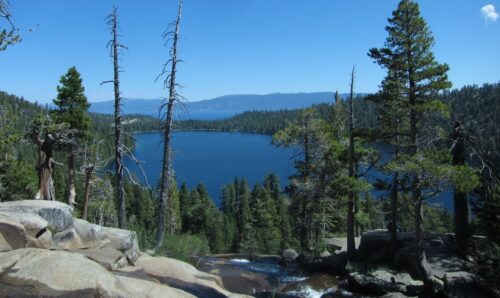
“It’s not a national park or a major city, but Lake Tahoe can feel like both: a place of breathtaking natural beauty but also crushing crowds. More than a million Northern Californians visit annually, including thousands of Bay Area families who have had cabins on the lake for generations. Many may be aware of ongoing pressures on the lake’s health from tourism, development, fire, and invasive species — pressures now amplified by climate change. Most visitors, however, are probably unaware of just how much critical conservation and restoration work is underway to protect this unique body of water and the watersheds and forests that surround it. … ” Read more from Knee Deep Times.
A Lake Tahoe trail will reopen after decades of neglect
“Trail crews are pushing through the home stretch on a trail that will provide hikers and mountain bikers with new recreational opportunities on the west shore of Lake Tahoe. The Tahoe Area Mountain Biking Association has been restoring the Meeks Ridge Trail for three years, bringing a route back to life that went into disrepair over the past several decades. Now, thanks to a private philanthropic donation, the trail is on track to open in 2027. The trail, which starts at Meeks Bay, will climb roughly 1,400 feet over 4.5 miles, provide views of the Tahoe Basin and Desolation Wilderness, and pass through old-growth forests. It will link with existing trails to access Lost Lake and General Creek, forming a 12-mile loop. … ” Read more from Inertia.
Tahoe-area ski resorts announce projected opening days for “Super El Niño” snow season
“Lake Tahoe area ski resorts have announced their plans to take advantage of a season fueled by an anticipated Super El Niño snowfall, announcing opening dates in late November and early December. Mt. Rose – Ski Tahoe with its high base elevation has the earliest projected opening date, November 20, as do Heavenly Ski Resort and Northstar California Resort. Last week, Palisades Tahoe announced it would open on November 20, a day before Thanksgiving, while Boreal Mountain Resort said it would open the day after Thanksgiving. … “It may only be August, but we’re laser focused on preparing our resorts to deliver the best and most differentiated guest experience in skiing and riding,” said Bill Rock, Vail Resorts Mountain Division president, in a prepared statement. “While no one can predict exactly what Mother Nature will deliver, the possibility of blockbuster snowfall has us feeling optimistic about the winter ahead. And while we’d love to see Super El Niño live up to the hype, we’re also taking an aggressive approach to snowmaking to ensure this ski season is one to remember.” … ” Read more from CBS Sacramento.
SEE ALSO: Heavenly, Northstar, Kirkwood announce opening dates, from the Tahoe Daily Tribune
Yuba Water and University of California research partnership brings next-generation levee monitoring
“A pilot research project between Yuba Water Agency and the University of California is exploring new ways to monitor the health of Yuba County’s levees and identify potential problems before they become larger maintenance issues. Using a $360,000 grant from Yuba Water awarded in 2024, researchers with the Center for Information Technology Research in the Interest of Society and the Banatao Institute (CITRIS) spent the past two years deploying new technologies and sensors across 18 monitoring sites along the Feather and Bear rivers and Dry Creek in southern Yuba County. The sites are located within reclamation districts 784 and 2103, which help reduce the risk of flooding for the communities of Linda, Olivehurst, Plumas Lake and Wheatland, as well as the surrounding commercial and agricultural areas. CITRIS leverages the research expertise of several different University of California campuses, including UC Berkeley, UC Davis, UC Merced and UC Santa Cruz. … ” Read more from Yuba Water.
SEE ALSO: Yuba Water Agency tests drone technology to spot levee problems early, from Channel 10
SACRAMENTO VALLEY
Fruit, nuts set for slightly early harvest
“Many of the orchard crops in Butte County are looking at an early harvest this year in thanks to the heat ramping up sooner than normal during the spring months. Those driving through the orchards may have noticed an increase in activity over the past week. Colleen Cecil, executive director of the Butte County Farm Bureau, said this is primarily affecting nuts as well as fruit such as peaches and prunes, causing the harvest to start roughly two weeks earlier than average. On the other hand, rice could get a later start. “Early spring heat in March pushed the crops to grow and ripen faster,” Cecil said. “Rice, on the other hand, saw late spring rain, and it disrupted planting which impacted how much rice actually was planted. Estimates suggest rice planting is probably close to 80% of normal, as a result of rain during the planting season.” … ” Read more from the Chico Enterprise-Record.
Lake Oroville boat ramp closes as water levels drop.
“State Parks closed the upper ramp of the Loafer Creek boat launch at Lake Oroville as water levels continue to drop, but the stage two ramp is now open for summer recreation. The changes are perfectly normal for this time of year, according to the Department of Water Resources. Lake Oroville peaked at 99% capacity back in May, holding more than 3.3 million acre-feet of water. Since then, the lake has been steadily dropping through the spring and summer, a typical trend as water is released and used throughout the season. The reservoir is now holding 64% of its total capacity. As the State Water Project’s largest water supply reservoir, water levels can change significantly throughout the year as DWR makes water deliveries to contractors and to support Feather River and Sacramento/San Joaquin Delta habitat. … ” Read more from Action News Now.
BAY AREA
Commentary: State Legislature must close loopholes to protect Bay Area’s air and water
Shannon Olivieri, chief strategy officer at California Environmental Voters, and Jennifer Clary, California director of Clean Water Action, write, “More than 20,000 West Oakland residents were once again forced to wonder what was in the air they were breathing when Radius Recycling caught fire in March, and not for the first time. The facility has a documented history of fires and environmental violations, yet lawmakers have made it easier to fast-track dangerous facilities. If that same plant were proposed in any California community located in an industrial zone today, it could be exempt from thorough review. The same goes for dozens of other potentially risky, heavy industrial projects: strip mining, fertilizer production, lithium battery cell manufacturing, carbon black production, peptide pharmaceutical manufacturing and many others. All because of a toxics pollution loophole that the Legislature jammed through in a budget “trailer” bill last year. … ” Read more from the San Jose Mercury News.
Bay Area’s Highway 37 could be underwater by 2050. California could spend $100 million on a fix
“State transportation officials on Thursday will weigh whether to invest $100 million in one of the Bay Area’s most ambitious transportation projects: the effort to raise a 21-mile highway before it sinks into the sea. The overhaul of Highway 37 — a key route for commuters headed from Interstate 80 in Vallejo to the Highway 101 junction in Novato — would repair bridges, restore tidal habitat and replace a flood-prone stretch of road with an elevated causeway. And it could have immediate practical benefits. For the first phase, Caltrans aims to widen a 10-mile segment between Mare Island and Sears Point, where the road currently constricts to one lane in each direction. It slices along the San Pablo Bay shoreline, where ducks and starlings flit through mucky grass while motorists have the sense their tires are right at water level. … ” Read more from the San Francisco Chronicle.
CENTRAL COAST
Project portfolio selected to combat seawater intrusion
“After years of planning and deliberation, water authorities in the Salinas Valley voted to move forward with a more than $1 billion portfolio of projects to address seawater intrusion last week. The main component of the plan involves pumping salt water out from where it has seeped into coastal aquifers, running it through a reverse osmosis plant and then reinjecting it to push the salt water back coastwards. With a 9-2 approval vote by the Board of Directors for the Salinas Valley Basin Groundwater Sustainability Agency meeting on Aug. 13, the region took a decisive step toward its state mandated requirement to bring Salinas Valley groundwater into sustainability by 2040. Piret Harmon, general manager of the Sustainability Agency emphasized the importance of honing a solution, but said there is still room for adjusting specifics ahead of January 2027, when the state needs a finalized plan. “We will continue refining the projects,” said Harmon. “But we also need to stay focused and keep moving forward, because we have only 14 years left.” … ” Read more from the Monterey Herald.
Lift the ban, let’s use the water
Melodie Chrislock, managing director of Public Water Now, writes, “After decades of water scarcity, it’s hard for some to believe we now have plenty of water. But the numbers don’t lie. California American Water Co. has reported surplus water to the California Department of Water Resources for the past four years. And the surplus has been growing: 12% in 2022, 20% in 2023, 34% in 2024, and 42% in 2025. This abundance of water is due to our new supply from Pure Water Monterey and its expansion. Going forward, we will have about 2,000 acre-feet each year beyond our current demand. In addition, we now have a full year’s supply of over 9,000 acre-feet stored in the Seaside Basin. With all this new water, can we finally build new housing and businesses? Not yet. Before we can use our surplus water, the State’s 2009 Cease-and-Desist Order, or CDO, banning new water connections must be modified so new water meters can be set. … ” Read more from the Monterey Herald.
SAN JOAQUIN VALLEY
Patterson extends data center moratorium through July 2027
“The Patterson City Council unanimously voted Tuesday night to extend a temporary moratorium on new data center projects, giving the city nearly another year to develop rules governing the facilities and their potential impacts on the community. The ordinance extends the moratorium through July 2027. City leaders initially approved a 45-day moratorium last month to give officials more time to study how large data centers could affect water, power, noise and air quality in Patterson. Data centers are currently allowed under the city’s existing rules in industrial areas. … ” Read more from CBS News.
Tulare County stalls data center developments with moratorium. It could be extended
“The Tulare County Board of Supervisors adopted Tuesday morning an interim ordinance to establish a 45-day moratorium on data center development in any unincorporated part of the county, with the possibility of extension up to a year. The county’s proposal aims to evaluate the impact of data centers on public health, safety and infrastructure before permanent regulations are established. Concerns raised include water consumption, electrical demand, noise pollution and potential negative impacts on agriculture and air quality. The board also considered opposing data center developments in other jurisdictions within the county during the moratorium period. The motion passed 4-1, with Supervisor Dennis Townsend dissenting. … ” Read more from the Fresno Bee.
SOUTHERN CALIFORNIA
With a strong El Niño expected in SoCal, should you consider flood insurance?
“El Niño is officially with us, and it’s looking like it’s likely going to be a doozy. The natural global climate pattern temporarily warms the eastern tropical Pacific, causing extreme weather patterns across the globe. A strong El Niño has historically, though not always, been associated with very wet winters here in Southern California. “ We are now explicitly expecting the strongest El Niño event ever observed,” said UCLA climate scientist Daniel Swain. “ There will be a strong tilt in the odds towards wet, perhaps even very wet conditions in Southern California.” Maybe you remember the very wet El Niños of years past — 1982 and 1997. Both were historic events that led to billions of dollars in damage and dozens of deaths. … ” Read more from the LAist.
IMPERIAL/COACHELLA VALLEYS
Colorado River water crisis puts Coachella Valley in focus
“The Colorado River water supply is getting tighter, and that could eventually mean tougher choices for the Coachella Valley. Lake Powell has fallen to a record low level, roughly 30 feet above the point where hydropower generation becomes threatened. At the same time, the seven states that rely on the Colorado River still have not reached an agreement on how to divide a shrinking water supply. California is expected to reduce its Colorado River use by about 12% through 2028 under the current short-term approach. Here in the Coachella Valley, the Coachella Valley Water District is proposing temporary reductions in its Colorado River water use during 2027 and 2028. The federal government would compensate the district for those conservation efforts, with the potential payout reaching more than $22 million. … ” Read more from NBC Palm Springs.
Leaders converge in Calexico to push for permanent New River fix
“Federal, state, and local leaders gathered in Calexico to inspect the ongoing environmental and public health crisis plaguing the New River, signaling a renewed, coordinated push for a permanent solution to decades of transboundary pollution. The heads of the U.S. Environmental Protection Agency (EPA) Region 9 and the U.S. Section of the International Boundary and Water Commission (USIBWC) toured recent infrastructure improvements before hosting a public roundtable meeting at the City of Calexico Fernando “Nene” Torres Council Chambers to hear directly from impacted stakeholders. For decades, toxic waste has flowed north across the U.S.-Mexico border through the New River. The pollution causes significant ecological and health damage to Calexico residents and local communities stretching all the way to the Salton Sea. Now, the City of Calexico’s “New River Project” functions as a temporary defense system by screening heavy trash out of the water as it crosses the international border. … ” Read more from Channel 11.
SEE ALSO: Officials tackle New River pollution, cleanup efforts in Calexico, from Channel 3
SAN DIEGO
Loma Alta Slough Wetlands Enhancement Project underway
“The City of Oceanside has begun an effort to restore the Loma Alta Slough, a coastal wetland at the mouth of Loma Alta Creek in South Oceanside. Construction started in June 2026 and is expected to continue through April 2027. The $6 million project is funded through several state and federal grant awards from the U.S. Fish and Wildlife Service, the State Coastal Conservancy, the National Fish and Wildlife Foundation, and the Ocean Protection Council. … ” Read more from the City of Oceanside.
The Tijuana River Valley pollution crisis is trapped in politics
Samantha Ilango, a senior health research and policy associate, writes, “Untreated sewage, industrial waste and debris from Mexico into the Tijuana River and southern San Diego has exposed thousands of San Diego residents to contaminated air and water. This pollution crisis, first detected 50 years ago, is the result of inadequate wastewater infrastructure and toxic contamination buildup which has worsened dramatically in recent years. However, it has yet to be treated like the public health and environmental emergency it is. Since 2020, physicians have noticed an increase in documented respiratory symptoms among residents living nearby, which have since evolved into chronic health conditions including headaches, asthma, nausea and mental health difficulties. … While the binational nature of the crisis creates a complex challenge, it does not justify the prolonged inaction. … ” Continue reading at the San Diego Union-Tribune.
Along the Colorado River …
Colorado River reservoirs hit record lows as a divided basin gets its plan for the next decade
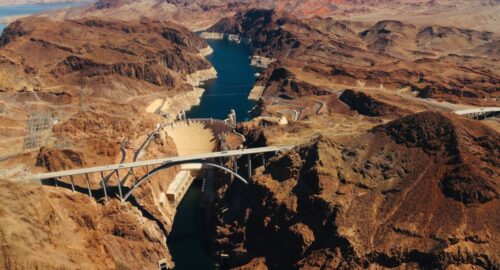 “Twice within ten days this August, the record books for the Colorado River had to be rewritten. Lake Mead, the largest reservoir in the United States, sank to its lowest level ever recorded on 7 August, at 1,040.50 feet. Then, on 16 August, Lake Powell followed it down, dropping to 3,519.91 feet and edging past its own previous record, set only in 2023. Together, these two reservoirs hold back the water supply for roughly 40 million people across the American Southwest and northern Mexico, generate hydropower for millions of homes, and anchor an agricultural economy worth billions of dollars. Both are now sliding toward the elevations that put reliable water delivery, not just hydropower, at risk. The twin records fell shortly after the Bureau of Reclamation, the federal agency that runs the river’s dams, published the Final Environmental Impact Statement (EIS) that is meant to govern how both reservoirs are operated once the current rules expire at the end of this year, a plan already being tested by the very crisis it was written to manage. … ” Continue reading at Smart Water Magazine.
SEE ALSO:
- Lakes Mead, Powell drop to record lows within a week, from Water Finance & Management
- California’s water and power supply threatened as Lake Powell hits record low, from the California Post
As Western rivers run low, water managers find ways to keep them flowing
“After a poor snow year, rivers in the West are running low, while hot weather is pushing water temperatures up. That’s bad news for fish and river recreators. Anglers have encountered fishing restrictions and closures this summer on long stretches of rivers in Montana, Wyoming and Colorado. The Upper Arkansas River in central Colorado, home to a major whitewater rafting industry and a robust wild brown trout fishery, has seen historically low flows and rising water temperatures. Wildlife officials and water managers there wanted to prevent conditions from getting worse. When river levels drop, water can warm more quickly and hold less oxygen, increasing stress on fish. … ” Read more from KUNC.
Climate change is reshaping Western forests — and the water and fire risks they face
“As the climate warms, some mountain trees are moving higher up, while others are spreading downhill. Scientists say something inside the trees may explain why. And that split could reshape watersheds and wildfire risk. For years, scientists have expected mountain trees to move upslope in search of cooler conditions. But a new global study found nearly one-third of tree species are moving downhill instead. That matters because where trees grow can affect how forests burn and how much water they soak up before it flows downstream to rural communities, cities and farms. So why are some trees moving in one direction while others head the other way? The answer may lie in how trees move water. … ” Read more from KUNR.
Where Las Vegas would get water if Lake Mead failed
“Southern Nevada relies on Lake Mead for nearly 90 percent of its water supply, a large reservoir created by Hoover Dam on the Colorado River. Since 2000, a persistent drought has lowered the lake by about 160 feet, reducing it to roughly one-third of its full capacity. This situation prompts an important question: if Lake Mead were to “fail,” where would the over two-million residents of Las Vegas get their water? The answer is straightforward and carefully planned. For more than twenty years, Las Vegas has invested over a billion dollars in infrastructure to ensure water access in such a crisis. Essentially, the city would continue to draw water from Lake Mead, using specially designed systems. Here’s how it operates, and what conditions would lead to that scenario. … ” Read more from World Atlas.
Where will farmers turn if hydropower goes away?
“Hydropower has no direct substitute. It doesn’t emit the greenhouse gases of coal or natural gas. It’s available any time, unlike solar and wind, to meet spikes in demand. And it’s cheap. But the outlook for hydropower — a source that fills up to half of some Arizona irrigation and electrical districts’ power needs — is growing increasingly grim. Lake Powell could be too low to generate any electricity in more than half the years through 2060. And Lake Mead’s capacity could fall to a third of what it is now by spring. It’s forecast to remain there most of the time through 2039. … ” Read more from the Arizona Farm Bureau.
Commentary: Drain Lake Powell
Ryan Cooper, senior editor at The American Prospect, writes, “The Colorado River Basin has a problem: It is severely short of water, particularly in its major reservoirs. Both Lake Mead and Lake Powell, the largest and second-largest reservoirs in the country, respectively, reached record lows this week. Powell in particular is at a level of 3,520 feet—just 30 feet above the intakes for its electrical generators. What is to be done? As I wrote in a previous Prospect print issue, Western water policy is a ludicrous tangle of anachronistic legal precedents and outrageous federal subsidies. Water must be repriced; as my colleague Gabrielle Gurley points out, cattle feed farmers paying $30 an acre-foot (or about 0.009 cents per gallon) while cities pay between $500 and $2,000 per acre-foot is preposterous. That’s half the reason why the shortage has become so bad. Give something extremely valuable away for almost free, and people will waste it. … ” Read more from American Prospect.
Water rises to the top of Arizona voters’ concerns, with call for long-term action
“Long-term water supplies have risen to the top of Arizona voters’ immediate concerns, and new statewide research shows the issue reaches beyond questions of water supply alone. Voters connect Arizona’s water future directly to the state’s ability to grow, sustain its economy, protect quality of life, and prosper over the long term. The findings are part of Center for the Future of Arizona’s (CFA) 2026 Arizona Voters’ Agenda research, which identifies the priorities likely Arizona voters share across political affiliations and generations and provides insight into their experiences, concerns, and perspectives. … ” Read more from Arizona Big Media.
Land and water are barriers to Southern Nevada development, new coalition says
“A new coalition of Southern Nevada developers and builders kicked off Tuesday with a lunch featuring panels on two of the biggest issues facing the region: land and water. With the federal government owning or controlling about 80% of Nevada lands — the highest percentage of any state — finding land to develop is a challenge, participants said. Brian Gordon, principal of the Applied Analysis research firm, told the luncheon crowd that studies have come up with varying numbers for how much land is left to develop in the valley. … ” Read more from Channel 13.
Utah worries feds could dip into Flaming Gorge again as Lake Powell hits record low
“The news of Lake Powell hitting a record low is triggering some alarm bells on Utah’s Capitol Hill. On Saturday, Lake Powell recorded its lowest elevation — 3,519.91 ft. That is currently about 30 feet above the minimum power pool level. Any lower and Glen Canyon Dam ceases to generate power for millions of people across the West. “We are really in a critical situation on these reservoirs,” said Amy Haas, the executive director of the Colorado River Authority of Utah, the state agency that advocates for the Utah’s interests in the river. During a hearing on Tuesday before the Utah State Legislature’s Interim Natural Resources Appropriations Subcommittee, Haas outlined where things are. … ” Read more from Fox 13.
In national water news today …
As seas rise, scientists race to save coastal marshes from drowning
“Against a lush carpet of marsh grasses, the five-and-a-half acre island of muddy sediment, shallow pools and tufts of straggly vegetation stood out like a sore thumb. It wasn’t enough to catch the eye of young visitors to The Wetlands Institute, who were far more interested in the diamondback terrapin enclosure that was the centerpiece of “Totally Turtle Tuesday.” To the scientists studying it, however, this patch—known as the Scotch Bonnet Island enhancement project—is far more interesting. It’s an ongoing experiment in saving critically important marsh ecosystems from drowning in a relentlessly rising tide. The restoration effort kicked off after The Wetlands Institute discovered that the marsh is disappearing at an alarming rate. Since the 1950s, more than 30 percent of the coastal wetland in the area has disappeared, becoming either mud flats or open water, and modeling projected that by 2050 just 34 out of 86 acres would remain. … ” Read more from Inside Climate News.
Trump administration moves to allow logging in pristine national forests
“The Trump administration on Tuesday advanced a plan to open nearly 45 million acres of wilderness in national forests to road construction and logging, removing protections that had been in place for a quarter century. The proposal by the U.S. Forest Service would repeal the 2001 “roadless rule,” enacted during the Clinton administration to preserve the wild nature of forest land. It comes as President Trump pressures the agency to increase logging and to thin forests to reduce wildfire risk. The repeal would hand a major victory to Republican-led states and industry groups that have argued for years that the prohibitions have hindered economic development. More than a dozen lawsuits have unsuccessfully sought to strike down the rule. … ” Read more from the New York Times.
What one of the world’s driest cities teaches us about water
“Namibia’s capital, Windhoek, faces a challenge that many fast-growing cities may soon confront: How do you secure more water when there is almost none to spare? In one of the driest regions of Sub-Saharan Africa, every drop counts. That necessity led Windhoek to become the first city in the world, back in the 1960s, to turn treated wastewater directly into drinking water, a system that today supplies more than a third of the city’s water needs. The city built in an arid climate is combining pioneering water recycling, underground water storage and community-led conservation to cope with chronic water scarcity. What lessons can other water-stressed cities learn from a place where wasting water simply isn’t an option? … ” Read more from DW.

