
Several news sources featured in the Daily Digest may limit the number of articles you can access without a subscription. However, gift articles and open-access links are provided when available. For more open access California water news articles, explore the main page at MavensNotebook.com.
On the calendar today …
- WEBINAR: A Guide to Key Findings of the Arizona Tri-University Recharge and Water Reliability (ATUR) Project Report from 12pm to 1:15pm. The Arizona Tri-University Recharge and Water Reliability (ATUR) Project provides a comprehensive statewide assessment of opportunities to enhance groundwater recharge and strengthen Arizona’s long-term water resilience. This WRRC Water Webinar will provide a guided overview of the ATUR Final Report and its accompanying online tools and resources. Participants will learn how the report is organized, where to find key information, and how to navigate the project’s interactive basin profiles, maps, and supporting datasets. Presenters will also highlight major findings and introduce the project’s suite of products, including the statewide report, basin profiles, and geospatial resources. Designed for water professionals, researchers, planners, decision-makers, and others interested in Arizona’s water future, this webinar will serve as an introduction to the ATUR project and its publicly available resources. Time will be reserved for questions and discussion with members of the project team. Click here to register.
In California water news today …
‘Genuinely remarkable’: California experts explain new El Niño outlook
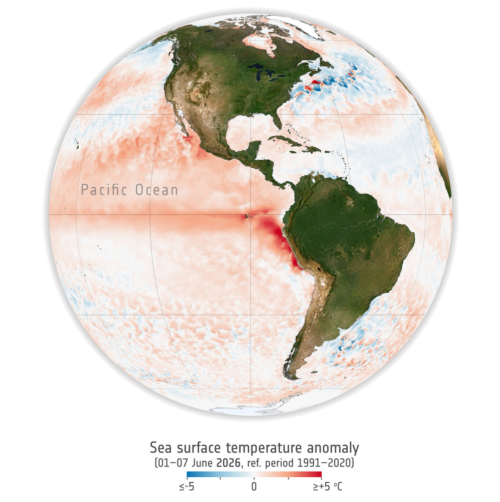
“All eyes are on the unusual power of this year’s El Niño. A monthly outlook the Climate Prediction Center published on Thursday gives a 69% chance that El Niño will become “historic” this fall, exceeding the strength of all previous events on record since 1950. Since January, forecasts have become increasingly confident in the intensity of this El Niño, a climate pattern that will primarily drive winter weather in California and across the globe. “This is a genuinely remarkable event,” Daniel Swain, a climate scientist for the University of California’s Agriculture and Natural Resources group, said during an online briefing Monday. “… The numbers I’m seeing — the numbers that other climate and weather folks are seeing — are frankly pretty extraordinary. If they come to pass, they will blow all historical events out of the water in terms of El Niño intensity.” … ” Read more from SF Gate.
We’ll soon get a glimpse of future temperatures, thanks to this record El Niño
“This year’s record-smashing El Niño will do more than just shift and enhance patterns of heat, extreme rainfall and drought around the world. It will also give the planet a preview of the late 2030s. That’s because this El Niño will act like a climate time machine, temporarily pushing global temperatures to levels that might not otherwise be reached for another decade or so. According to an analysis by climate scientist Zeke Hausfather that was shared with The Washington Post, there’s around a 95 percent chance that 2027 will become Earth’s hottest year on record — soaring past the last record in 2024 — because the combination of El Niño and climate change could spike global temperatures to around 1.76 degrees Celsius (3.17 degrees Fahrenheit) above preindustrial averages. … ” Read more from the Washington Post.
SEE ALSO:
-
- El Niño is strengthening fast. NOAA says a record event is now likely, from the SF Chronicle
- This year’s El Niño is huge and already changing the world, from the New York Times
Potter Valley: Local officials report “stunning” results from water diversion models
“Mendocino County water officials are reporting promising results from models predicting the amount of water that the proposed New Eel-Russian Diversion Facility would make available if and when the dams serving Potter Valley Project are removed. “Sonoma County Water Agency conducted some very in-depth modeling on how much water would have come through the project if the NERF, the pump that would pump water from the Eel River into the Russian River, were in the place,” Mari Rodin, the city of Ukiah’s representative on the Mendocino County Inland Water and Power Commission, told her fellow Ukiah City Council members at the board’s most recent meeting last month. “And the news was really stunning, in terms of the amount of water we would get, even in drought years,” Rodin continued, pointing out that “the key, though, is that we need to store the water. So we’re continuing to look at storing water in Potter Valley, but also, most importantly, raising Coyote Valley Dam,” which would allow more water to be stored in Lake Mendocino. … ” Read more from the Ukiah Daily Journal.
San Joaquin Valley Watershed Studies Blog Series: Recharging for communities and ecosystems
“What determines the best locations to conduct groundwater recharge? Physical site characteristics, such as the coarseness of the soil, are often the highest-priority criteria to maximize the amount of water that can be sent to a site. There are, however, additional considerations that can effectively target recharge sites with particular outcomes in mind. One example in which targeted recharge can be beneficial is with disadvantaged communities. There are DACs throughout California where residents rely on shallow domestic wells for their drinking water, and many of those wells have gone dry due to declining groundwater levels. A considerable amount of work still needs to be done to fulfill the mandates of California’s Human Right to Water law, which was passed in 2012 and states that everyone has the right to safe, clean, affordable, and accessible water. Many communities have residents who have already lost or are at risk of losing their access to drinking water. These communities cannot afford to see an unmitigated, climate change-fueled future come into effect. … ” Read more from Sustainable Conservation.
Scientists define a new category of heat wave: ‘Snow eaters’
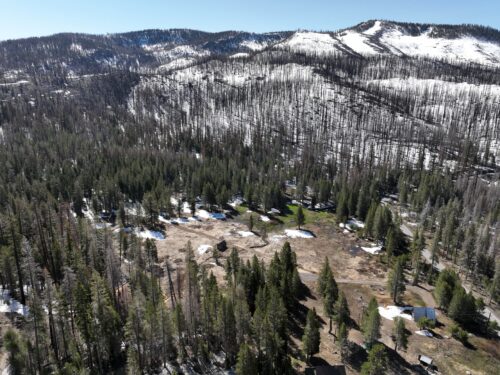
“Matthew LaPlante doesn’t have to go to a lab to see his research in action. On some mornings, he can just look out his own window in the mountains high above Salt Lake City. After a warm night when the temperature stays above freezing, he’ll wake up and see that the snow level has dropped by inches, revealing more of the aspens he taps for syrup. “It feels like a monster came and just in the middle of the night, took a bite out of a snowpack,” said LaPlante, a journalist and climate scientist at Utah State University. So it’s fitting that scientists have started calling these kinds of heat waves, marked by unusually high temperatures in the spring and early summer, “snow eaters.” … ” Read more from Grist.
Joe Del Bosque on farming the west side: Water, labor and resilience
“The latest AgNet News Hour takes listeners to California’s West Side for an in-depth conversation with Joe Del Bosque of Del Bosque Farms, as “The Ag Meter” Nick Papagni and Sir Josh McGill explore the realities facing farmers trying to keep nearly 2,000 acres productive. Del Bosque’s story is one of perseverance. His family came to the San Joaquin Valley from the Imperial Valley in the 1930s and 1940s to work seasonal melon harvests. His father eventually accepted a permanent position growing and harvesting melons, and Joe grew up learning the business and developing the work ethic that would eventually lead him to start his own farm in 1985. Today, Del Bosque Farms produces organic cantaloupes, honeydews, watermelons and specialty melons, along with organic processing tomatoes and almonds. But farming those crops has become increasingly difficult. Early warm weather pushed the melon harvest into June, but later production caught up, creating a supply buildup that pressured prices. Extreme heat has also created challenges, including sunburn damage to some melon varieties. … ” Read more from AgNet West.
Feds give minor bump to Valley water supplies
“Central Valley farmers will see slightly more water headed their way than previously expected. The Bureau of Reclamation announced Tuesday that it is increasing the water allocation for south-of-Delta Central Valley Project contractors by 3%. By the numbers: The 3% increase will see the contracted total move from 25% to 28%. Driving the news: Reclamation said the increase underscores the commitment of the Trump administration to improve the water supply, per Executive Order 14181. That executive order specifically called on the federal government to increase water deliveries in California. … ” Read more from the San Joaquin Valley Sun.
Marsh restoration boosts bird diversity, but some treatments may not work for certain shorebirds
“Long-term tidal marsh restoration in central California wetlands is bringing back important breeding habitat for birds. Wetlands along the Sacramento and San Joaquin rivers have been strictly controlled for more than a century by a series of levees that drained wetlands. But while some more recent changes seem to encourage the presence and diversity of marsh-breeding songbirds and waterbirds, blanket changes discouraged the presence of a few open-water and mudflat species. “In the delta landscapes, if the goal is trying to recover this larger suite of species, including shorebirds, maintaining open areas of water and tidal mudflats is an important restoration consideration,” said Jason Riggio, an ecologist at the Museum of Wildlife and Fish Biology at the University of California, Davis. … ” Read more from The Wildlife Society.
CDFW releases new beaver restoration status report, shares new beaver restoration assessment tool
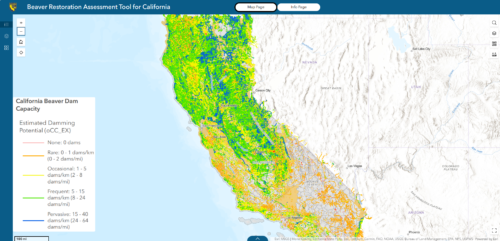 “The California Department of Fish and Wildlife (CDFW) announces the release of two new resources: the 2025 Status Report on Beaver Restoration Projects in California and the California Beaver Restoration Assessment Tool (BRAT) Viewer. The 2025 Status Report on Beaver Restoration Projects in California builds upon the 2024 Status Report, providing updates on the beaver restoration project proposals received, project implementation, translocated beavers, and progress toward overall ecosystem benefits and restoration objectives. This week, CDFW also released on its webpage the new Beaver Restoration Assessment Tool (BRAT) for California. The BRAT is a model that estimates beaver damming potential based on digitized landscape characteristics, and this version of the model, which was a collaboration among researchers at University of Minnesota, The Nature Conservancy, CDFW, and Utah State University, is specifically-calibrated for California’s conditions. … ” Read more from the Department of Fish and Wildlife
Forecasting data centers’ demand
 “How do you decide where to put a data center that will consume as much power as a small city? Data centers have existed to support early computers and the internet for decades. Every data center in the U.S. draws power from a regional electrical grid and water from a local watershed—costs that are usually calculated after they’re built, if at all. But in the last five years, the boom of artificial intelligence has driven up the energy demand. Hyperscale data centers, designed to handle AI and cloud computing, consume three to five times more power per square foot than traditional data centers, with large facilities drawing as much power as nearly 100,000 homes and millions of gallons of water daily. But as technology companies scour the country for their next site, cities have often been resistant to data center expansion for two reasons: strain on the local power grid and negative health effects of pollution on nearby residents. Now, a Harvard biostatistician and an electrical engineer have combined their expertise to build a framework for helping policymakers decide where data centers should go. … ” Read more from Harvard Magazine.
California offshore fracking could resume after decade-long halt, with push from Trump
“A Southern California oil company is trying to launch the state’s first new offshore fracking project in over a decade, potentially paving the way for more of the controversial extraction work along the coast and setting the stage for a dust-up between California and the Trump administration. The federal government recently fast-tracked an environmental review for DCOR LLC to boost oil production using high-pressure fluid injections in federally managed waters near Ventura, northwest of Los Angeles. Under the proposal, fracking would take place at up to 16 existing oil wells on Platform Gilda, 9 miles offshore in the Santa Barbara Channel. DCOR has described the project as being in the nation’s interest by reducing dependence on foreign oil and efficiently tapping new fossil fuel reserves. … ” Read more from the San Francisco Chronicle.
CalHR says it didn’t meet with state scientist on unfunded raises before July
“The California Department of Human Resources on Wednesday confirmed it did not meet and confer with state scientists before their raises went unfunded last month — a condition of a side letter agreement made last year between the state and the scientists’ union. Paul Starkey, deputy director of labor relations for CalHR, revealed the shortcoming before the state Senate Subcommittee on Corrections, Public Safety, Judiciary, Labor and Transportation during an informational hearing to determine how the raises went unfunded. In the California Association Professional Scientists, UAW Local 1115’s contract, state scientists were scheduled to receive special salary adjustments on July 1 ranging from 3% to 5%. However, even though the contract was ratified by the Legislature and Governor’s Office, the raises were not included in the budget. … ” Read more from the Sacramento Bee.
In commentary today …
Assessing the effectiveness of California’s Delta Reform Act
Paul S. Weiland writes, “Recently, three state agencies – the Delta Stewardship Council, the Sacramento-San Joaquin Delta Conservancy, and the Delta Protection Commission – released a report on their achievements in realizing the goals of the Delta Reform Act of 2009. … More than 15 years after its enactment the Delta Reform Act presents at best a mixed record. While the Act undoubtedly expanded planning and oversight mechanisms and established an additional formal governance structure for Delta-related decision-making overlaid on numerous already existing regulatory programs, there is substantial reason to question whether it has achieved any of its central objectives. The evidence suggests that those objectives — creating a more coherent management framework, improving ecosystem conditions, and enhancing long-term water supply reliability — have yet to be realized. … ” Read more from the California Water Resources Policy and Management.
Is covering California’s aqueducts and canals with solar panels economical?
Edward Ring, the Director of Water and Energy Policy at the California Policy Center, writes, “Earlier this week, a respected YouTube channel covering the future of technology and energy released a video exploring the viability of solar panels covering California’s canals and aqueducts. The videos are hosted by Ricky Roy, a California-based mechanical engineer whose channel is called “Two Bit Da Vinci.” Reviewing his findings is an opportunity to offer some updates and perspective on the potential of photovoltaic energy in California. Roy claims solar and battery storage capacity has exploded in recent years. He’s right. It’s grown so fast that even its proponents have seen their expectations surpassed. Worldwide photovoltaic capacity has increased by more than ten times in the last ten years, and the last decade has seen worldwide battery storage capacity increase by more than 150 times. One of the leaders in this gallop into the electric age is California. The California ISO (Independent System Operator) website is a good place to get a visual impression of just how much growth we’re seeing in solar and battery capacity. On August 9, 2026, utility solar output exceeded 20 gigawatts from 9:30 a.m. till 3:30 p.m., six full hours, and later that same day, batteries discharged over 10 gigawatts into the grid from 6:45 p.m. until 8:30 p.m. It’s summer. Lot’s of sun. Of course! But consider the trend. … ” Continue reading from Edward Ring at Maven’s Notebook.
In regional water news and commentary today …
NORTH COAST
‘Nothing better than … Klamath salmon’: Featured fish back on the menu at Yurok Tribe festival
“For the first time in four years, salmon will return to the fire at the Yurok Tribe’s Salmon Festival on Saturday, restoring a centerpiece of the event that many community members say defines the day as much as the parade, the vendors or the tournaments. The festival, now in its 62nd year, has always been built around the river, its health, its history and its role in sustaining families along the Klamath. This summer, with a limited harvest and signs of recovery on the river, the tribe can bring salmon back to the menu. Festival co‑organizer Maya Mace said the return carries cultural weight after years of closures and the 2024 removal of four Klamath River dams, which reopened more than 400 miles of habitat upstream. “We are especially excited about this year’s event because the return of salmon and the Klamath River’s continued recovery give us much to celebrate,” she said in a news release. “We invite everyone to join us in celebrating the mighty Klamath River salmon.” … ” Read more from the Eureka Times-Standard.
Study: invasive barred owls are winning the battle for California’s old-growth forests; removing them gives spotted owls a fighting chance
“Newly published research offers some of the clearest evidence yet of why the invasive barred owl has become one of the greatest threats to the northern spotted owl, and delivers encouraging evidence that managing barred owl populations can restore old-growth habitat for spotted owl recovery. The study, led by scientists at the Integral Ecology Research Center (IERC) and published in the journal Biological Conservation, used GPS trackers on 56 barred owls across 4,070 square kilometers of forest in northwestern California. It is the first study to use GPS telemetry to determine, bird by bird, exactly which forest features invasive barred owls select, and how much old-growth habitat each one occupies. The results are striking. Barred owls, native to eastern North America but now widespread across the West, consistently chose the tallest, oldest, and most structurally complex stands of forest: the same towering, dense-canopy, big-tree habitat that spotted owls need to nest and roost. On average, 64% of a barred owl’s home range overlapped with mapped spotted owl habitat, and 38% was the very highest quality nesting and roosting forest on the landscape. … ” Read more from the Lost Coast Outpost.
SIERRA NEVADA
Tahoe’s winter forecast is looking snowy
“A strong El Niño could bring above-average snowfall to the Tahoe region this winter, according to OpenSnow’s 2026-27 winter forecast. Meteorologist Alan Smith said the developing “super El Niño” played a significant role in shaping Open Snow’s winter forecast, which draws on historical strong El Niño winters, oceanic and atmospheric conditions and seasonal climate models. For California and Nevada, OpenSnow is forecasting above-normal snowfall, with January through March favored as the strongest part of the season. Northern areas of California, including the Tahoe region, are also expected to see above-normal temperatures. … ” Read more from the Tahoe Daily Tribune.
Tahoe Conservancy awards $2.2 million for South Lake Tahoe wildfire safety projects
“The California Tahoe Conservancy has awarded a $2.2 million grant to the City of South Lake Tahoe to reduce wildfire risk for south shore communities and schools. The City will use the funds to facilitate fuel hazard reduction treatments on 213 acres of local public land, including 137.5 acres of City-owned public land, 41 acres of Lake Tahoe Unified School District (LTUSD) land, and 35.3 acres of El Dorado County-owned public land. The City and County land includes properties around the courthouse and law enforcement facilities at Al Tahoe Boulevard and Johnson Boulevard, at Bijou Community Park, and County open space lots. LTUSD properties to be treated include South Tahoe Middle School, Bijou Community School, Tahoe Valley Elementary School, Sierra House Elementary School, and Meyers Elementary School. … ” Read more from the Tahoe Daily Tribune.
SACRAMENTO VALLEY
NCWA: A call to stewardship of headwaters & forest communities
“[NorCal agencies] have joined together to advance healthy and resilient watersheds–from ridgetop to river mouth–as an essential strategy for adapting water infrastructure, reviving rural communities, and restoring and protecting the ecosystems upon which all Californians depend. We strongly support the direction and priorities in the 2026–2031 California Wildfire and Landscape Resilience Action Plan (Action Plan) and we are committed to work with the Task Force to advance and integrate efforts in the upper watersheds with downstream projects to revive floodplains and manage working lands for multiple benefits. California’s forests, watersheds, rangelands, farms and communities are one interconnected system. Healthy headwaters are integral to public safety, water security, rural economies and the environmental health and wellbeing of the entire state. … ” Read more from the Northern California Water Association.
Arden Water Project wraps after 10 years, ending California’s last flat-rate zone
“Sacramento County has finished the largest construction project in the history of its water agency, wrapping up a $160 million overhaul of the Arden area’s water system after 10 years of work. The Arden Service Area Pipe and Meter Installation Project installed roughly 38 miles of new water distribution pipelines and more than 3,000 new water meters, closing out flat-rate billing in what county officials say was the last unmetered pocket of unincorporated Sacramento County left in the state. According to Sacramento County, the Arden neighborhood represented the final section of California still operating without water meters, a distinction that had persisted long after most communities converted decades earlier. … ” Read more from Hoodline.
NAPA/SONOMA
Now is the time to float on a river among California’s majestic redwoods
“The Russian River was running low and slowly. A few miles outside Guerneville at Steelhead Beach, several men stepped into the water, laden with flotation devices. A duck, a flamingo, a unicorn … “Don’t you know?” asked Anna Deurloo, standing by me on the shore. “It’s Lazy Bear Week! That’s why the river is full of bears: big hairy men with beards. And Speedos.” … When the weather is warm, the Russian River draws dawdlers of all kinds, including LGBTQ+ vacationers, longtime locals and Bay Area families. On summer weekends, thousands show up in Guerneville with kayaks, canoes, inner tubes — just about anything that will float, preferably with a cooler attached. Then they spend hours gliding downstream past scenery that might as well be a Northern California highlight reel: vineyards, redwood forests and eventually a beach scene full of driftwood and sea stacks. … ” Read more from the LA Times.
Napa Valley subbasin water users get fees reduced by county supervisors
“Property owners in the Napa Valley Subbasin got a temporary reprieve on impending fees for pumping groundwater after a vote by Napa County leaders on Tuesday to reduce them. The Napa County Board of Supervisors, acting as the Napa County Groundwater Sustainability Agency, voted unanimously at its regular meeting to substantially reduce the fees, which range by property type and use. The fees are part of a statewide campaign to address water basins that are being overdrawn, causing the depletion of future water supplies and sunken earth. State lawmakers implemented a framework for monitoring and reporting groundwater levels and use with a series of legislation in 2014 known as the Sustainable Groundwater Management Act. … ” Read more from NorCal Public Media.
BAY AREA
Mill Valley wetland and path projects gain momentum
“After a decade of study and public comments, plans are taking shape to restore Bothin Marsh and move the popular path linking Mill Valley and Sausalito. The Marin County parks department is delving into design details to build a new elevated path along the western edge of the marsh. “This not a trail project and it’s not just a restoration project; it’s both,” Tara McIntire, the project manager, told the county Parks and Open Space Commission on July 16. “On the trail side, we’re adding trailheads, we’re adding overlooks and we’re just improving conditions,” she said. “And then on the marsh resilience side, we have tidal channel improvements, and thin lift — which is basically adding sediment, marsh restoration and then coarse beach features and the other resilient measures.” … ” Read more from the Marin Independent Journal.
‘Breathtaking’: New Bay Area coastal park with beach to open next week
“A scenic stretch of the San Mateo County coast, with a mile of sandy beach and a colorful past, is scheduled to open as the Bay Area’s newest park on Monday. The Don Horsley County Park at Tunitas Creek Beach will allow visitors to enjoy a rare newly acquired swath of oceanfront land for the public, which has been outfitted with short trails, picnic areas, overlooks, restrooms and, of course, beach access. The remote 58-acre property, about eight miles south of Half Moon Bay on Highway 1, was acquired by San Mateo County after the Palo Alto nonprofit Peninsula Open Space Trust secured its protection nearly a decade ago, purchasing it from renowned musician Chris Isaak. The coastal acreage is marked by tall sandstone cliffs and sprawling wind-swept bluffs. … ” Read more from the San Francisco Chronicle.
CENTRAL COAST
Solvang marks $1 million federal grant for wastewater plant; award builds on recent support
“City officials and U.S. Rep. Salud Carbajal last Wednesday celebrated a $1 million federal grant for upgrades at Solvang’s wastewater treatment plant, the latest federal contribution to a multi-year modernization effort. The $1 million Community Project Funding award, secured by Carbajal through the House appropriations process, will help replace aging infrastructure, improve operational reliability and strengthen emergency preparedness at the plant that serves Solvang and the Santa Ynez Community Services District. It comes on top of other recent federal support for the same project, including roughly $2 million previously reported, bringing the combined federal contribution higher as the city advances a larger upgrade estimated at $18 million to $25 million. … ” Read more from the Santa Maria Times.
SAN JOAQUIN VALLEY
Modesto residents demand city leaders stop data centers from coming to city
“Hundreds of Modesto residents packed City Hall demanding that leaders stop data centers from coming to the city. The issue wasn’t even on the agenda Tuesday night, but comes after word got out that data center developers had been lobbying city leaders. This is all raising new questions because just weeks ago, city leaders said they were still learning about the issue and had not taken a side. Now, they say there is no side, as it’s against city code. “We are telling you we do not want this; we do not want data centers in our town,” a resident said in Tuesday’s meeting. … ” Read more from CBS Sacramento.
SOUTHERN CALIFORNIA
Streaming Service: A model of the Los Angeles River scales down the waterway and scales up solutions for a reimagined riverbank.
“A few blocks from the bends in the Los Angeles River that snake past Taylor Yard, a former railyard being reimagined as a riparian park, Alexander Robinson, ASLA, prepares to unleash a 100-year flood across the urban river’s empty channels. Robinson, an associate professor and landscape architect at the University of Southern California (USC), derives this power not from divine intervention but from mimicry. He’s controlling a detailed, 1:120-scale, 60-foot-long hydraulic model of the river, set on plywood and construction jacks. Located in the Frogtown neighborhood that borders the river, it’s a project of the Los Angeles River Integrated Infrastructure Design Lab, led by Robinson, other USC faculty, and a cadre of collaborators. The expertly measured and sculpted simulation, complete with flora and mock power towers, can be altered to test new designs for the riverfront. The value of Robinson’s model, which has been in operation for two years, lies in its fidelity and functionality; despite our AI-obsessed era, mathematical models simply can’t fully simulate the water flow of a physical riverbed. … ” Read more from Landscape Architecture.
Tribes sue Interior department over controversial groundwater pumping project
“A plan to pump billions of gallons of groundwater from under the Mojave National National Monument is back in court – this time led by two tribes. The plan was blocked by a federal court in 2022 but last month the Bureau of Land Management approved a new right-of-way grant for Cadiz Inc. to begin converting a natural gas pipeline to transport the water from an aquifer system located within the monument. Now the Fort Mojave and Chemehuevi Indian Tribes have taken the plan back to the court. “This is the Mojave Desert, and we are the Mojave people, the caretakers of this land, water and wildlife since time immemorial. Our Tribe has a solemn, sacred relationship with these resources that Cadiz, Inc., … is targeting for exploitation and profit,” said Fort Mojave Chairman Timothy Williams in a statement. “Their plan to pump and sell 25 times more groundwater each year than the aquifer can replenish would desecrate our traditional territories and any community sold this water would be left with an unreliable, unsustainable supply. The federal government’s permitting of Cadiz is not only negligent, but dangerous to the American Desert Southwest.” … ” Read more from Indian Country Today.
IMPERIAL/COACHELLA VALLEYS
Appeals court finds major CEQA failures in County approval of Hell’s Kitchen lithium project
“A California appeals court has found major deficiencies in Imperial County’s environmental review of Controlled Thermal Resources’ Hell’s Kitchen lithium and geothermal project, ruling that the County failed to adequately support the project’s long-term water supply, address potential Colorado River shortages and analyze impacts to Salton Sea air quality. The Fourth District Court of Appeal, Division One, issued its decision Aug. 11 in Comité Cívico del Valle et al. v. County of Imperial et al., Case No. D085747, partially reversing the Imperial County Superior Court and sending the case back for corrective action under the California Environmental Quality Act. The court directed the Superior Court to vacate its previous denial of the environmental groups’ petition for writ of mandate and enter a new order granting the petition in part. The ruling does not cancel Hell’s Kitchen, nor did the environmental groups prevail on every issue. Instead, the appellate court found portions of the County’s environmental review legally inadequate while affirming the County on other challenges. … ” Read more from the Desert Review.
SEE ALSO: Appeals court orders revamped environmental review for Imperial Valley’s Hell’s Kitchen lithium project, from the Imperial Valley Press Online
SAN DIEGO
Coastkeeper and CERF settle litigation with USIBWC and Veolia to address Tijuana Border sewage crisis
“On August 5, 2026, San Diego Coastkeeper and Coastal Environmental Rights Foundation (CERF) settled their lawsuit with the U.S. International Boundary Water Commission (USIBWC), and its contractor, Veolia Water West Operating Services, Inc. (Veolia) related to years of rampant Clean Water Act violations at the South Bay International Wastewater Treatment Plant (SBIWTP). Coastkeeper and CERF initiated the citizen enforcement matter in late 2023 following years of deferred maintenance and neglect at the SBIWTP. … Since the filing of Coastkeeper’s complaint, USIBWC has received nearly $800 million in federal allocations, allowing for a complete overhaul of the SBIWTP. USIBWC has also expanded the plant’s treatment capacity by 40%, reducing the volume of untreated water flows into the U.S. by 10 million gallons per day (MGD). Furthermore, USIBWC has complied with the facility’s ocean discharge effluent limits for over 18 consecutive months. This represents a remarkable turnaround from its long history of violating the Clean Water Act and contributing directly to the Tijuana Border Sewage Crisis. … ” Read more from the San Diego Coastkeeper.
Along the Colorado River …
Colorado River negotiations continue as states await fed decision

“Nevada’s top Colorado River negotiator said lower-basin states are still pressing for adjustments and attempting to forge consensus-based alternatives before federally mandated water cuts are finalized. Last month, the Bureau of Reclamation released its long-awaited 10-year plan to manage worsening water shortages along the Colorado River, including deep cuts to Nevada’s allocation of the drought-stricken river. Arizona and Nevada criticized the framework for placing a disproportionate burden on the lower basin while sparing upper-basin states — Colorado, Utah, Wyoming, and New Mexico — from mandatory water cuts. John Entsminger, Southern Nevada Water Authority General Manager and Nevada’s lead negotiator on the Colorado River, provided limited details on the status of negotiations Wednesday during Nevada Democratic U.S. Rep. Susie Lee’s fourth annual Southern Nevada Water Summit. … ” Read more from the Nevada Current.
‘We’ve been preparing’: Colorado River talks aim for deal to avoid litigation
“Nevada’s top water leader fielded media questions about possible litigation and the plan of action for future Colorado River water usage, adding that cooperation is preferred. John Entsminger, general manager for the Southern Nevada Water Authority (SNWA), presented a keynote address Wednesday morning at the 4th Annual Nevada Water Summit about Colorado River Basin water usage negotiations. “I’m very comfortable with what Nevada has done,” Entsminger said. “If the federal government and the other states fail, we have a plan for how we’re going to take care of the people in Nevada.” … ” Read more from KLAS.
Colorado River water talks loom over annual summit on conservation progress
“With high-stakes Colorado River negotiations looming, local and federal leaders gathered in Las Vegas for an annual water summit focused on the region’s conservation progress and what comes next. A major concern is the push to reach a new water-use agreement between the Upper and Lower Basin states along the Colorado River. John Entsminger, general manager of the Las Vegas Valley Water District and the Southern Nevada Water Authority, said the talks are not going well. “The Colorado River is 90% of the water supply for 76% of the population of Nevada,” Entsminger said. “We’re not just going to lose if negotiations fail. We will protect the people of Nevada.” … ” Read more from Channel 3.
Editorial: No lawyer can convince the river not to run dry; the Southwest is out of water and time
The Las Vegas Sun editorial board writes, “Water levels in Lake Mead have fallen lower than at any time since the reservoir filled nearly nine decades ago. The nation’s largest manmade reservoir, the water behind Hoover Dam and a foundation of life in the desert Southwest, has sunk to a record-low elevation of roughly 1,040 feet above sea level. The famous bathtub ring surrounding the lake is no longer merely a striking illustration of temporary drought. It is a warning gauge for a water system approaching failure. The next threshold is frighteningly close. If Lake Mead falls another 5 feet, Hoover Dam’s hydropower generating capacity could plunge by 70%, according to the Bureau of Reclamation. Federal projections indicate the reservoir could reach that elevation as soon as next year. … ” Read more from the Las Vegas Sun.
Hoover Dam is set to lose 40% of its maximum power this year
“The US Bureau of Reclamation is resorting to moving water between reservoirs so that Glen Canyon Dam can continue to generate electricity. Darren Orf reported in Popular Mechanics on August 10, 2026, that a long drought has pulled Lake Powell and Lake Mead so low that Hoover Dam’s output this year will fall by 40 percent from its full-capacity output. In April 2026, the bureau announced a water transfer from Flaming Gorge Reservoir in Utah and held back water that Lake Powell usually sends to Lake Mead. Its goal is to keep the water level of Lake Powell above 3,490 feet, the elevation engineers call the minimum power pool. If it goes below that, water won’t flow into the large pipes that carry water to the turbines, and the dam won’t be able to make power. In June 2026, Lake Powell was at 3,528 feet. … ” Read more from Boing Boing.
Arizona warns feds of ‘catastrophic’ harm from Colorado River plan
“Arizona continues pressing its case against potentially “catastrophic” cuts in its water supply, asserting that the federal government’s developing plan for the Colorado River ignores critical legal requirements to deliver water to the Southwest. As the U.S. Department of the Interior this week puts the finishing touches on rules that will determine the next two years of supply for Arizona, California and Nevada, Arizona Water Resources Director Tom Buschatzke wrote to warn officials that they’re not following the law and could set off a court battle if they doesn’t change course. In a 10-year framework, the agency says it may reduce deliveries to the three states by up to 3 million acre-feet a year if conditions are poor enough to require it. Buschatzke wrote to Interior on Aug. 10 to say that such a massive cut ignores the 1922 Colorado River Compact, and that “Arizona reserves the right to seek the resolution of its Compact rights in an appropriate judicial forum.” … ” Read more from Arizona Central.
Arizona’s tribal, rural communities will bear the brunt as Colorado River plan fails to stabilize
“The federal framework for the Colorado River doesn’t provide enough certainty for lower basin states, according to Sarah Porter, director of the Arizona State University Kyl Center for Water Policy. She told a SciLine webinar on Thursday that the final environmental impact statement, or FEIS, is focused on protecting water infrastructure and the ability to produce hydropower. However, she said it doesn’t resolve conflict between the upper and lower basins. “It doesn’t achieve the things the basin really needs at this point,” Porter said. “It doesn’t place the basin on a path to stabilizing the system at all. It really sort of tells how we’ll manage things when they get really bad, as they are right now.” … ” Read more from KTAR.
Nevada water leaders say litigation is last resort despite big Colorado River cuts
“Nevada water leaders still aren’t pleased about the federal government’s framework of cuts to water from the Colorado River, but they say that suing other states to maximize their water rights remains an absolute last resort. “Our first, second and third choice is negotiation and cooperation,” John Entsminger, general manager of the Southern Nevada Water Authority and Nevada’s lead negotiator on river rights, said during an annual water conservation summit hosted by Rep. Susie Lee (D-NV) in Las Vegas on Wednesday. But he emphasized that Nevada has a right to fight. “At the end of the day, we have to protect our legal interests,” Entsminger said. “We’re not just going to lose if negotiations fail. We will protect the people of Nevada.” … ” Read more from the Nevada Independent.
Nevada water chief says Southern Nevada is most prepared city on Colorado River for federal cuts
“Southern Nevada’s top Colorado River negotiator says the region is better prepared than any other city on the river to withstand new federal water cuts, even as he warns the basin is entering one of its toughest chapters yet. Southern Nevada Water Authority executive John Entsminger sat down with FOX5 during a Colorado River summit hosted by Rep. Susie Lee at the Springs Preserve — his first in-depth conversation since the federal government released its post-2026 Final Environmental Impact Statement on July 31. The 1,600-page FEIS lays out a new operating blueprint for the Colorado River beginning in 2027 and calls for 1.5 million acre-feet of reductions across Nevada, Arizona and California — enough water to supply roughly three million average homes for a year. Entsminger said the Colorado River has long been regarded as a model of cooperation among competing water users, but the next few years will test that reputation. … ” Read more from Channel 5.
‘Pain and suffering’: What the feds’ Lake Powell proposal means for Utah and other Colorado River states
“After years of analysis and stalled negotiations, the federal government last month finally laid out its proposal for managing the Colorado River’s biggest reservoirs for the next decade. The Bureau of Reclamation still needs to release its final decision and an operating plan for the next two years. But its final environmental impact statement provides a framework for how it intends to manage parts of the Colorado River system under its control. The new plan would mean changes in how much water is stored and released from Lake Powell, voluntary water conservation in Utah and other Upper Basin states, and potentially steep water cuts in the Lower Basin — Arizona, California and Nevada. Current guidelines for managing the reservoirs expire at the end of this year and Reclamation needs a new plan in place by Oct. 1. Reclamation said its preference was to implement a seven-state consensus deal, but so far states have yet to agree. … ” Read more from the Salt Lake Tribune.
