
Several news sources featured in the Daily Digest may limit the number of articles you can access without a subscription. However, gift articles and open-access links are provided when available. For more open access California water news articles, explore the main page at MavensNotebook.com.
On the calendar today …
- WEBINAR: Lessons Learned over 25 Years of Subsidence Management from 12pm to 1pm. Chino Basin Watermaster, the agency responsible for sustainable groundwater management through a Court adjudication, has recognized that land subsidence should be minimized to the extent possible. Since 2000, the Watermaster has: conducted investigations to characterize the extent, rate, and mechanisms of subsidence and fissuring; developed and implemented subsidence monitoring programs; constructed, calibrated and used computer-simulation models of aquifer-system compaction; and using the information developed from these efforts, developed an adaptive management program to minimize the potential for future subsidence and fissuring across the entire Chino Basin. This presentation will describe important lessons learned through the past 25 years of subsidence management in the Chino Basin, including preferred strategies for monitoring, testing, analyzing, modeling, and adaptively managing land subsidence in alluvial groundwater basins. Click here to register.
In California water news today …
Reclamation nudges CVP allocations up for south-of-Delta contractors; Westlands responds
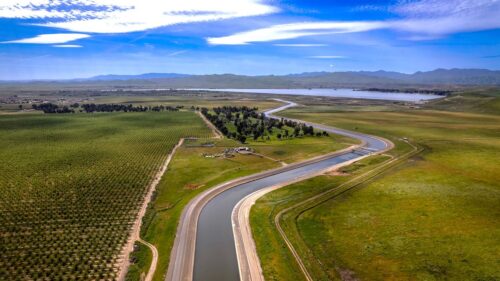 “The Bureau of Reclamation is increasing Central Valley Project 2026 water supply allocations for south-of-Delta contractors reflecting improved water supply conditions and operational flexibility. “Increasing water allocations means more reliable water for California’s farmers, families and communities, supporting food production, local economies and greater affordability,” said Assistant Secretary for Water and Science Andrea Travnicek. “Under President Trump’s leadership, we are making the most of available water supplies and improving delivery certainty so the Central Valley Project can better serve the people and communities that depend on it.” This action underscores the ongoing commitment of the Trump administration to improve water supply reliability, enhance system resilience, and reduce regulatory delays, consistent with the directives outlined in Executive Order 14181. Efforts under this Executive Order are supporting food production, strengthening economic stability, and fostering community resilience throughout California. … ” Read more from the Bureau of Reclamation.
SEE ALSO: Central Valley water supply jumps to 28% for irrigation contractors, from Action News Now
Companies say California denied them due process in Ninth Circuit water rights case
“Three California companies argued Tuesday before a Ninth Circuit panel that the state wrongly curtailed their water rights and denied them a due process hearing and compensation. Los Molinos Mutual Water Company, Stanford Vina Ranch Irrigation Company and Peyton Pacific Properties appealed a lower court’s decision, arguing the State Water Resources Control Board characterized an adjudicatory action as legislative, bypassing their constitutional rights. “They made findings of fact that the diversions had to cease and were unreasonable,” said the companies’ attorney Jackson Minasian, adding: “They’re going to keep doing this.” The three-judge panel made no decision Tuesday. The appeal focuses on water rights held in Mill and Deer creeks in Tehama County. Those rights allow the companies to divert water for some 11,000 acres of land with orchards, pasture and other uses. … ” Read more from the Courthouse News Service.
How Super El Niño could impact western drought—experts make predictions
“A rapidly strengthening El Niño is raising hopes that drought-stricken parts of the Western United States could see relief in the months ahead, as forecasters increasingly warn the climate pattern may rank among the strongest on record. While its full effects remain uncertain, experts say a potentially historic or super El Niño could reshape weather patterns across the Pacific and North America as the year progresses. For now, many of the West’s summer weather patterns are unlikely to be dramatically altered by El Niño alone. Experts note that the phenomenon’s most consistent and widespread impacts typically emerge during the late fall and winter months, when it can influence storm tracks, rainfall and snowpack across parts of the Western U.S. However, the climate pattern’s influence could extend well beyond this winter, with experts saying El Niño may affect everything from drought conditions and Colorado River supplies to mountain snowpack across the Intermountain West and even the intensity of next year’s wildfire season, bringing a mix of potential benefits and risks depending on the region. … ” Read more from Newsweek.
What are nature-based solutions and why are they needed now?
“Even if you have never been to L.A., you probably have seen the L.A. River. It is that wide concrete trench that Hollywood loves to film: drag races, chase scenes, countless commercials shot on the bare slab… But it’s strange. This river doesn’t look like a river. After catastrophic floods about one century ago, the river started to be lined with concrete for most of its 51 miles. The river became a single-purpose concrete channel to flush stormwater from the mountains to the sea as fast as possible. But in three stretches, the river couldn’t be lined with concrete. And in those stretches, something happened that no one had planned. Cottonwoods and willows came back. Herons, egrets, and the Santa Ana sucker (an endangered fish species) came back. And people came back too to enjoy the river that had become their neighborhood park, to ride their bikes or to use their kayaks. Same river, two realities. Gray concrete infrastructure does one job at a very steep price. … Luckily for our L.A. friends, the L.A. River is undergoing a restoration that will bring back many of the multiple benefits of the river such as habitat, cleaner air, and green areas in the city while improving water quality, reducing erosion, and of course, maintaining (or even improving) the much-needed flood risk control.This restoration project in the L.A. River is an example of a nature-based solution. … ” Read more from the Union of Concerned Scientists.
‘California’s coast is not for sale.’ State battles Trump plan to limit coastal oversight
“In a striking demonstration of support, hundreds of fired-up Californians rallied in Santa Monica to speak out against the Trump administration’s attempt to wrest local control over the state’s treasured coastline. The Golden State’s top environmental leaders, along with prominent elected officials, environmentalists, business coalitions, community activists, Indigenous groups and everyday citizens, packed a public hearing Monday before the National Oceanic and Atmospheric Administration’s Office of Coastal Management, which has been tasked with conducting an unprecedented investigation that could ultimately strip California of its power to say no to federal projects. Experts see the investigation — framed as a performance review of the state’s coastal management practices — as a thinly veiled attempt by Trump officials to open California’s coast to more offshore oil drilling, more rocket launches and possibly even floating nuclear reactors. If the federal government succeeds, many worry it could set the stage for similar actions in other coastal states. … ” Read more from the LA Times. | Read via AOL News.
In regional water news and commentary today …
NORTH COAST
State water board passes restrictions on Smith River lily growers
“Last week, the California North Coast Regional Water Quality Control Board adopted an order establishing discharge requirements for commercial lily bulb growers in the Smith River Plain. The order marks a culmination of more than 30 years of struggle to prevent large agricultural interests along the Smith River Plain from polluting the waterway and surrounding area, environmental groups say. It also represents an important path forward for the restoration of a crucial and eminently curable portion of the state’s anadromous fish habitat, they say, while also allowing a way for Del Norte County’s three major lily bulb growers, which combined produce roughly 90% of the nation’s Easter lily bulbs, to continue to operate. “Water board … staff did commit to being very involved and helpful for these three growers, and that’s one of the reasons I say I think the Smith River lily bulb issue is probably one of the most solvable water quality issues on the West Coast — because it is just three people, and it is just certain fields that are the issues,” Regina Chichizola from Communities United for Water Protection told the Times-Standard on Tuesday morning. … ” Read more from the Eureka Times-Standard.
Protections for old growth redwoods restored in Redway
“Humboldt County supervisors on Tuesday moved to tighten enforcement of the Lower Redway Q‑zone and begin drafting a countywide ordinance to protect old‑growth redwoods, following the removal of several large trees earlier this year that residents say should never have been cut. The Q‑zone, created in the late 1970s, restricts removal of trees larger than 12 inches in diameter in Lower Redway, a subdivision built by Pacific Lumber and known for its remaining old‑growth redwoods. The ordinance was designed to preserve the neighborhood’s forest canopy and prevent a loss of legacy trees. As Humboldt County works to repair trust after old‑growth redwoods were cut in Lower Redway despite long‑standing protections, supervisors are now moving to modernize the Q‑zone ordinance and explore a broader set of rules for the rest of the county. … ” Read more from the Eureka Times-Standard.
SIERRA NEVADA
$250K boost finishes Tahoe’s West Shore Mountain Bike Trail
“If you’ve ever tried to drive a Pulaski into the hard granite, you’re familiar with the challenge of building singletrack in the Lake Tahoe area: creating genuine singletrack there demands strenuous effort, complex logistics, and a great deal of bureaucratic patience. However, on Tahoe’s West Shore, favorable conditions and significant private funding have come together to revive a long-lost classic trail. The Tahoe Area Mountain Biking Association (TAMBA) recently received a major $250,000 donation from local riders and philanthropists Kyle and Jessica Aster. This generous contribution completely funds the 2026 construction of the historic Meeks Ridge Trail, providing TAMBA with the resources needed to complete the last two miles of its most ambitious backcountry project to date. … ” Read more from Bike Magazine.
Placer County Water Agency awards $170.5 million contract to build Ophir water treatment plant
“Placer County Water Agency (PCWA) has awarded a $170.5 million construction contract to locally based W.M. Lyles Co. to build the Ophir Water Treatment Plant (WTP) in Auburn, California, moving one of the agency’s largest water infrastructure investments from planning into construction. The PCWA Board of Directors approved the contract on August 6, following a competitive procurement process that drew five bids from prequalified contractors. W.M. Lyles submitted the lowest responsive and responsible bid. Construction is expected to begin in October 2026, with the facility operational by 2030. The award follows PCWA’s selection of Carollo Engineers in June to handle construction management and SCADA programming for the same project. … ” Read more from Smart Water Magazine.
SACRAMENTO VALLEY
Butte supervisors hear a master plan for draining Palermo
“Decades of flooding woes in Palermo may have an end in sight after the Butte County Board of Supervisors heard and accepted the Master Drainage Plan during Tuesday’s meeting. As Supervisor Bill Connelly noted during the presentation, flooding issues have plagued the community of Palermo frequently, especially during years with above average rainfall. “Palermo was laid out to be housing for farm workers when there was quite a bit of agriculture in the area up into the 1920s,” Connelly said. “There were several multi-millionaire types who had bought citrus and melons and everything you can think of out there. They were shipping by rail all over. But it didn’t have a drainage system ever laid out and so every supervisor prior to me has inherited these flooding problems.” … ” Read more from the Chico Enterprise-Record.
Learning from the river: How science guides habitat enhancement on the Lower American River
“The Lower American River is constantly changing. Each year brings different flows, temperatures, and conditions that influence how Chinook salmon and steelhead use the river. As climate change creates more extreme swings between wet and dry years, developing a deeper understanding of the river has become increasingly important for protecting the ecosystem, supporting regional water supply reliability, and adapting to future conditions. For more than 20 years, the Water Forum and its partners have invested in science, monitoring, and habitat enhancement to understand how the river functions and how salmon and steelhead respond to changing conditions. Today, scientists map spawning areas, count redds, monitor juvenile fish, analyze genetics, study fish ear bones (otoliths), and more, all to track how habitat evolves over time and better understand the needs of the fish. … ” Read more from the Water Forum.
The small NorCal creek that pulled off one of California’s greatest salmon comebacks
“The same creek that made national news a few weeks ago when a prescribed burn escaped and turned into an 869-acre wildfire has a very different story to tell. Putah Creek is one of the best salmon recovery stories in California. In the small waterway that runs through Yolo and Solano counties near the town of Winters, Chinook salmon reached a record 2,150 king salmon returned to spawn in the creek in 2025, the largest documented run in its history. As recently as 2012, there were none. The recovery started with a legal settlement in 2000 that restored minimum water flows to the creek after decades of diversions had left it essentially dry in many stretches. Once the water came back, native fish followed quickly. Sacramento suckers and tule perch regained dominance by 2012. Then in 2013, eight Chinook salmon showed up to spawn, the first in decades. By 2016, around 1,500 made the run. In 2025, the number climbed to 2,150. … ” Read more from Active NorCal.
BAY AREA
Environmental groups sue California over delayed white sturgeon review
“Four environmental and fishing organizations sued the California Department of Fish and Wildlife earlier this week, alleging the agency failed to meet a deadline for a report that would help determine whether the white sturgeon fish in San Francisco Bay should be added to a state list of threatened or endangered species. San Francisco Baykeeper, California Sportfishing Protection Alliance, Restore the Delta, and Friends of the River filed the petition in Alameda County Superior Court on Monday. These nonprofits are united around the preservation of California’s rivers and streams, with emphasis on keeping the waters of the San Francisco Bay-Delta fishable, swimmable and drinkable. The groups are not asking a judge to order that the fish be listed as endangered. They want the court to order the department to complete and release the report. … ” Read more from SF Gate.
Lafayette Reservoir tower lowered as part of earthquake retrofit work
“After years of planning and objections from Lafayette residents at public meetings, the East Bay Municipal Utility District (EBMUD) has begun the retrofitting of the tower in the Lafayette Reservoir. The iconic 100-year-old tower, has served as the symbol of the city, which was incorporated in 1968. The roof and the operations house have been removed, and the tower, which serves as a spillway for overflow water, will be 40 feet shorter when the project is completed and the operations house and roof are replaced. Residents had suggested some alternative designs to effect the earthquake retrofit, but none were found acceptable by EBMUD. Utilizing cranes and a barge, EBMUD and its contractors have removed the tower roof and operating house before starting to saw-cut about a dozen concrete rings, each approximately 3 feet tall, off the height. This phase of the work will last about 10 weeks. Construction of a new metal operating house and improvements to the underwater conduit will follow in the fall. … ” Read more from LaMorinda Weekly.
CENTRAL COAST
Tribes, fishermen clash over idea for 2 new marine protected areas off Central Coast
“Two Native American tribes applied to the state in 2023 to each establish a new marine protected area on the Central Coast — one off the coast of Morro Bay and the other off Point Sal in Guadalupe. The protections would prohibit commercial fishing in those areas, and the California Fish and Game Commission could soon decide whether to move forward with the proposals. The tribes wish to protect the environment and manage the land in partnership with the state, while local commercial fishermen urged the state to deny the petitions so they can continue to make a living. The California Fish and Game Commission will consider the petitions at a meeting on Wednesday. … ” Read more from the Sacramento Bee.
SAN JOAQUIN VALLEY
A river finds its way home: Celebrating 15 years of work at Great Valley Grasslands State Park
“On June 11, dozens gathered in the early morning light at Great Valley Grasslands State Park outside of Merced to celebrate a milestone 15 years in the making — the reconnection of the San Joaquin River with more than 220 acres of historic floodplain habitat. The energy was palpable as scientists, tribal leaders, state officials, nonprofit partners, and community members came together to witness something that had taken the better part of two decades to achieve. The Grasslands Floodplain Restoration Project, completed in February 2026, is one of the most significant floodplain restoration efforts in California’s San Joaquin Valley. The project will improve habitat for threatened and endangered fish and wildlife species, support groundwater recharge, and restore one of the last and largest undisturbed expanses of wetlands and native grasslands in the region. … ” Read more from American Rivers.
SOUTHERN CALIFORNIA
REPORT: Beyond Watershed Planning: Engaging Communities to Improve Outcomes of the Safe Clean Water Program
 “LA Waterkeeper’s new Safe Clean Water Program (SCWP) Watershed Planning Report highlights how LA County can maximize the benefits of its stormwater investments through more proactive, watershed-wide planning. Based on five community workshops across four LA County watersheds, the report identifies seven key findings and four recommendations to help the SCWP deliver stronger outcomes for communities, water quality, flood resilience, and local ecosystems.” Click here to read the report.
Could Super El Niño bring venomous sea snakes and hammerheads to California?
“As the Pacific Ocean continues to simmer, Southern California’s waters could get considerably stranger before this season’s Super El Niño runs its course. Oceanographers are anticipating a major reshuffling of marine life as exceptionally warm Pacific waters push northward, potentially bringing tropical and subtropical species into California waters where they are rarely seen. Among the more bizarre possibilities is the yellow-bellied sea snake, a highly venomous species that normally inhabits tropical waters throughout the Pacific and Indian oceans. “Some of these kinds of interesting oddities that are never a part of California will become part of this temporarily tropical El Niño-heated California,” said Douglas McCauley, director of the Benioff Ocean Initiative at UC Santa Barbara, in an interview with USA Today. … ” Read more from Surfer Magazine.
Long Beach faces highest tide of the month after flooding
“Long Beach’s biggest tide of the month is expected to peak near seven feet Tuesday evening, a day after high water already climbed the steps and pushed onto Bay Shore Avenue. FOX 11’s Andres Gutierrez reported live from the block as neighbors described watching the water rise for the second night in a row. The city’s marine bureau says it isn’t changing its plan, and a Cal State Long Beach professor says the flooding offers a preview of what rising seas could bring. One more high tide is expected Wednesday before the water backs off. … ” Read more from Fox 11.
IMPERIAL/COACHELLA VALLEYS
California appeals court orders environmental review of Imperial County geothermal, lithium project
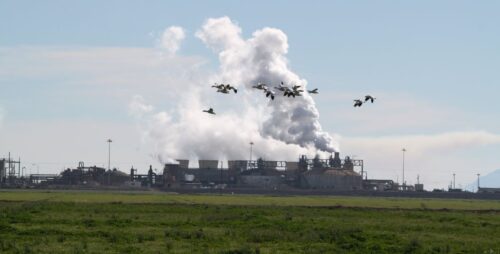
“A proposed geothermal plant and lithium mine in California’s Imperial County will have to go back to the drawing board for further environmental analysis and review after California Courts of Appeals panel found the county did not sufficiently address environmental concerns. The Comité Civico del Valle, a nonprofit environmental justice group based in Imperial County, filed a lawsuit against the county over its permitting process for the project, dubbed Hell’s Kitchen. Situated near the Salton Sea, the project would generate electricity from one of the largest geothermal fields in the world while simultaneously extracting lithium. Comité Civico del Valle, joined by Earthworks, another environmental nonprofit, argued the Imperial County Board of Supervisors’ approval process of the original environmental impact report violated the California Environmental Quality Act, or CEQA. The nonprofits took issue with the project’s potential impacts on water availability and air quality in the arid, agricultural region. They also claim the county failed to properly consult with local Native American tribes. … ” Read more from the Courthouse News Service
SEE ALSO: Court rules Imperial County unlawfully approved Salton Sea geothermal and lithium plant, from iNewsSource.
Regional and federal leaders convene to address persistent New River challenges
“Local, state, and federal officials gathered in Calexico on Monday for the New River Roundtable, signaling a renewed, multi-agency push to address infrastructure needs, binational water quality issues, and long-term restoration efforts along the troubled border waterway. Imperial Irrigation District (IID) Director Lewis Pacheco and district staff joined community partners and government leaders to evaluate current river conditions and chart a path toward sustained funding and interagency cooperation. The New River, which flows north from Mexicali, Mexico, across the U.S.–Mexico border into the Imperial Valley, has long faced environmental and public health concerns stemming from industrial runoff, untreated wastewater, and trash accumulation. According to IID officials, Monday’s roundtable focused on pressing maintenance demands, binational water quality management, and identifying state and federal investment opportunities to support ecological restoration for Imperial County residents. … ” Read more from the Imperial Valley Press Online.
SAN DIEGO
Environmental groups settle lawsuit against federal government, contractor over Tijuana River pollution
“San Diego Coastkeeper and the Coastal Environmental Rights Foundation have settled a yearslong Clean Water Act lawsuit against the U.S. International Boundary and Water Commission and its contractor, Veolia Water West Operating Services, over alleged pollution violations at the South Bay International Wastewater Treatment Plant. The settlement, reached Aug. 5, resolves litigation the two environmental groups filed in April 2024 alleging the agency and its contractor discharged fecal bacteria, heavy metals and toxic chemicals — including some banned in the U.S., such as DDT and PCBs — into the Tijuana River, its estuary and the Pacific Ocean. The original complaint alleged more than 500 self-documented violations for inadequately treating sewage before ocean discharge, dozens of canyon collector spill events sending millions of gallons of raw sewage into the estuary, inaccurate self-monitoring reports, and a five-year failure to implement a river valley monitoring program. … ” Read more from the San Diego Union-Tribune.
Along the Colorado River …
Water levels in America’s largest reservoirs are getting scary low
“A literal watershed moment in the Colorado River crisis came Friday when Lake Mead, the largest reservoir in the United States, fell to its lowest level on record. Its water level dropped even farther over the weekend, and experts say it could continue to fall through the rest of the year. On Monday, the U.S. Bureau of Reclamation recorded a water level of just 1,040.09 feet (317.27 meters) above sea level at Lake Mead. That’s nearly 4 inches (10 centimeters) below the level observed Friday that broke the record low set on July 28, 2022, according to the agency. “It’s extremely significant and extremely concerning,” J.B. Hamby, chairman of the Colorado River Board of California and a board member of the Imperial Irrigation District, the largest user of the river’s water, told the Associated Press. “You have three-quarters of the population of the Colorado River Basin, some 30 million people, who are directly impacted by risks to Lake Mead.” … ” Read more from Gizmodo.
Warming climate is drying out streams that feed the Colorado River
“Western rivers like the San Juan and the Colorado are mostly fed by burbling mountain streams, which are themselves fed by groundwater and snowmelt. But a study published on June 5 says those tiny streams are in trouble. The study in the journal Earth’s Future says the base amount of water in streams and rivers that doesn’t come from rain, also known as “base flow,” has been steadily declining since 1950, though that trend varies depending on the specific time period. “So things like the Colorado, of course, things that are affecting its headwaters are going to have a cascading effect,” says lead author Caelum Mroczek, a research affiliate at Northern Arizona University’s School of Earth and Sustainability. “It’s going to have a compounding effect as you go downstream, and so seeing how these things change has a massive impact on regional water supply.” … ” Read more from KJZZ.
Halted dam releases threaten Colorado river ecosystems
“In 2024, the U.S. Bureau of Reclamation (USBR) opened outlets at the base of the Colorado River’s mighty Glen Canyon Dam, unleashing gushers of water in an experiment meant to cool waters downstream. The strategy, called a “cool mix” release, aimed to thwart breeding of invasive smallmouth bass and protect native species. “It was very effective,” says Kevin Bestgen, a fish biologist at Colorado State University. So much so that the release was repeated in 2025. But with the Colorado’s reservoirs at historically low levels, there may be little political will to release water to protect ecosystems. On 6 August, USBR, which operates dams on the river, canceled this year’s cool mix release. In April, the agency had also nixed one of the periodic “controlled floods,” a much larger cascade intended to redistribute sediment and build sandbars that provide habitat for fish. “It’s deeply unfortunate,” says Matt Rice, southwest regional director of American Rivers, an environmental organization. The developments are the latest sign of trouble on the river system, which supplies water for 40 million people across seven states. This year saw record low snowpack levels in the Rocky Mountains, which means less water flowing downstream into the two largest reservoirs in North America: Lake Powell behind the Glen Canyon Dam and, farther down, Lake Mead behind the Hoover Dam. …” Read more from Science.
The Trump admin has a new proposal for the Colorado River. It still may not be enough.
“After years of analysis and stalled negotiations, the federal government last month finally laid out its proposal for managing the Colorado River’s biggest reservoirs for the next decade. The Bureau of Reclamation still needs to release its final decision and an operating plan for the next two years. But its final environmental impact statement provides a framework for how it intends to manage parts of the Colorado River system under its control. The new plan would mean changes in how much water is stored and released from Lake Powell, voluntary water conservation in Utah and other Upper Basin states, and potentially steep water cuts in the Lower Basin — Arizona, California and Nevada. … The Colorado River Basin has been mired in drought for more than two decades, and research shows that area will likely only get warmer and drier. The question that really matters is how the new plan operates in a dry world, said Jack Schmidt, senior research scientist at Utah State University’s Center for Colorado River Studies. The document gives Reclamation flexibility to respond to an uncertain, but likely drier, river basin. It doesn’t solve all issues, though. … ” Read more from the Salt Lake Tribune.
“You can’t make water”: Farmers and ranch workers weigh in on federal government’s Colorado River plan
“With cantaloupe planters rolling in the fields around him, Yuma County, Ariz., farmer John Boelts isn’t thinking about these seeds; he has the future on his mind. Boelts thinks a recent release from the Department of the Interior means parts of the state could experience cuts to their water supply in 2027. The typically two-crop growing season could see changes. “We have rights to water to be able to do that and have been doing that for many decades in this community, long before I was even born,” says Boelts, who’s also president of the Arizona Farm Bureau. “We’re worried that this year, in certain areas of our county that have more junior rights, we might see some dramatic reductions in water availability, and that’s just here in this county where we have very secure and good, old water rights. Across Arizona, we have even bigger concerns about what these reductions in delivery will mean.” … ” Read more from AgWeb.
Arizona’s tribal, rural communities will bear the brunt as Colorado River plan fails to stabilize
“The federal framework for the Colorado River doesn’t provide enough certainty for lower basin states, according to Sarah Porter, director of the Arizona State University Kyl Center for Water Policy. She told a SciLine webinar on Thursday that the final environmental impact statement, or FEIS, is focused on protecting water infrastructure and the ability to produce hydropower. However, she said it doesn’t resolve conflict between the upper and lower basins. She expects legal challenges from the lower basin about the administrative process the U.S. Bureau of Reclamation used to establish cuts. Porter also expects what’s known as a compact call to compel the upper basin to meet its obligations of sending water downriver as spelled out in the 1922 Colorado River Compact. … ” Read more from KTAR.
Gallego opposes deeper Colorado River cuts for Arizona, calls for federal water investment
“U.S. Sen. Ruben Gallego is pushing back against proposed Colorado River reductions he says would disproportionately burden Arizona and other Lower Basin states, while calling for a major federal investment in water infrastructure to help the Southwest adapt to declining supplies. While visiting Graham County Tuesday, Gallego, D-Ariz., said Arizona, California and Nevada should not shoulder deeper reductions than states in the Upper Basin and argued the consequences of water cuts extend far beyond the Southwest. “I think there’s a better way for us to proportionally share on the cuts,” Gallego said. … ” Read more from the East Arizona Courier.
Lake Mead hits record low as Nevada water agencies face lawsuits over conservation
“Lake Mead hit its lowest level ever recorded as the Las Vegas Valley Water District and the Southern Nevada Water Authority face lawsuits alleging they used strong-arm tactics in the name of conservation. Attorney Sam Castor is leading two lawsuits: one against the Southern Nevada Water Authority over mandates to tear out turf under the “useless grass ban,” and another against the Las Vegas Valley Water District over collecting “upwards of 100-million dollars in excessive use charges” intended to discourage customers from using too much water. “Well, this whole thing’s a public relations game,” Castor said. … ” Read more from Channel 3.
In national water news today …
Why hackers targeting America’s water systems have the upper hand
“At the end of July, Minnesota detected hackers that had targeted around 36 municipal water systems in the state. Since then, at least 11 other states, including Michigan, Georgia, New Jersey, and South Dakota have discovered similar breeches, which the US government reportedly blames on the Iranian government. News of these intrusions—especially from a cyber-capable adversary with whom the United States is at war—rightfully produces concern about the security of American critical infrastructure systems. But the cybersecurity of these systems has long been a nightmare, plaguing the many dedicated practitioners and policymakers who created the important, albeit limited, progress seen to date. Protecting US critical infrastructure from cyberattacks requires confronting a fundamental mismatch between the threat and the government’s ability to respond. The systems at risk are sprawling, diverse, and include both private- and government-owned facilities that make up the nation’s critical infrastructure, while many of their operators lack the expertise or resources to defend themselves against sophisticated state adversaries—made worse by a failure to create strong cybersecurity regulations. … ” Read more from the Bulletin of Atomic Scientists.
Protecting water systems from cyberattacks: 5 steps cities can take now
“For many, last week’s cyberattacks on water systems throughout the U.S. was a wake-up call. Many municipal water systems are sitting ducks for hackers. But experts say there’s plenty that operators can do to protect city water. “The systems are unprotected because they are misconfigured,” Annie Fixler, director of the Center on Cyber and Technology Innovation Foundation for Defense of Democracies, told Smart Cities Dive. “They are configured for ease of access without security in mind.” When water systems were digitized in the 1990s and 2000s, manual operators were replaced with programmable logic controllers, internet-facing computers that monitor input signals from sensors to control output devices like motors and valves, Fixler explained. But the systems were configured to make it easy for operators “without thinking that some malicious actor might want to use that same access to sabotage systems,” she said. … ” Read more from Smart Cities Dive.

