

Several news sources featured in the Daily Digest may limit the number of articles you can access without a subscription. However, gift articles and open-access links are provided when available. For more open access California water news articles, explore the main page at MavensNotebook.com.
In California water news today …
El Niño could bring highest sea levels ever recorded to the California coast
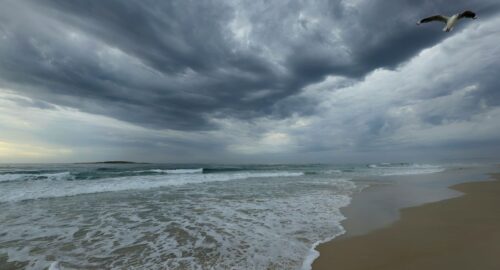 “A strengthening El Niño could bring the highest sea levels ever recorded to the California coast this year, raising the risk of widespread and damaging flooding. It’s the latest effect forecast for what’s expected to be an historically strong event, one forecasters warn could also lash Southern California with powerful rain and broil both land and sea with punishing heat waves. “We’re expecting likely the highest sea levels ever recorded on the California coast associated with this event,” said Mark Merrifield, director of the UC San Diego Scripps Institution of Oceanography’s Center for Climate Change Impacts and Adaptation. During a recent online town hall, Merrifield presented a NASA satellite image showing sea levels already more than half a foot higher in the eastern Pacific Ocean compared to the reference state, and said by this fall and winter, “we should be seeing sea levels far above the average seasonal cycle.” … ” Read more from the LA Times. | Read via Yahoo News.
Summer warmth may linger US as El Niño intensifies
“Autumn is a time for pumpkin-flavored drinks, shorter days and the return of chilly weather, although it may take longer than usual for summer warmth to fade, in part due to the building El Niño. … “A very strong El Niño will be a dominant signal through the fall,” AccuWeather Long-Range Expert Paul Pastelok said. El Niño occurs when ocean temperatures near the equator of the eastern Pacific rise above the historical average for an extended period. The ocean and the atmosphere work together over time and can intensify and steer storm tracks around the globe, including tropical activity across the Atlantic basin. Forecasters say it could evolve into one of the strongest on record, but there will be other factors at play. One is a separate area of the northern Pacific Ocean that is much warmer than historical averages, which could alter the track of storms, especially over the West Coast. Other factors include the warm waters in the Gulf and widespread drought conditions in the U.S. How these factors interact with El Niño will ultimately dictate the weather throughout autumn. … ” Read more from AccuWeather.
As a record El Niño ramps up, track how it’s reshaping the weather
“A much-anticipated El Niño that developed this summer is on track to become the strongest ever recorded, with cascading effects on global climate peaking late this year and into next. Water temperatures in the central equatorial Pacific Ocean, where El Niño is measured, have been at record levels for more than two months straight. El Niño’s effects have already been felt around the planet. The higher frequency of heat domes worldwide, the nonstop temperature records in Peru and deadly storms in Chile can all be linked to this pattern. As can the destructive typhoons in the western Pacific Ocean and the relative calm of the Atlantic hurricane season so far. And this event is poised to grow more intense. … ” Read more from the Washington Post.
A possible ‘super’ El Niño could pose the latest threat to North Bay fishing fleets
“North Coast commercial fishermen have spent the past several years weathering one crisis after another: a three-year salmon shutdown, repeated delays to the Dungeness crab season and millions of dollars in lost revenue. Now, a strengthening El Niño could prove to be the industry’s latest challenge. Scientists say the climate pattern, including warming waters in the eastern Pacific, has the potential to shift where marine species are found and contribute to harmful algal blooms that could disrupt California fisheries. While forecasters say it is too early to know exactly how Northern California will be affected, local fishers say they have already observed unusual conditions on the water. “Fishermen are scientists,” said commercial fisherman Dick Ogg. “We are always monitoring current, water temperature, color and where we see changes. We look for change and variation as fishermen and we go fish on the edges of this change.” … ” Read more from the Santa Rosa Press Democrat.
California’s “lost salmon” may be returning
“Amidst the decline of California’s salmonid populations is an unexpected uptick of pink salmon. In recent years, biologists monitoring California waterways have been reporting sightings of pink salmon. We became curious about these observations; were they simply a result of more intensive monitoring and information sharing, or did they reflect a real increase in pink salmon occurrence in California? After doing some extensive digging into the mystery, we recently published our findings in Transactions of the American Fisheries Society (Adolfo et al. 2026). Due to their sporadic and sparse nature in California, no formal monitoring practices exist for pink salmon across the Golden State. However, scattered pink salmon observations in California have occurred throughout history. … ” Read more from the California Water Blog.
A federal judge just sided with Shasta Dam over the salmon again
“The legal fight over how much cold water stays behind Shasta Dam this fall just got harder for the fish. A federal judge declined Monday to impose restrictions on Bureau of Reclamation operations at Shasta Dam and Reservoir, ruling that the Center for Biological Diversity and its co-plaintiffs have not cleared the bar needed for a preliminary injunction. Courthouse News reported that U.S. District Judge Jennifer Thurston said the groups must make a heightened showing before she will step in. The suit turns on whether Reclamation’s operation of the Central Valley Project and California’s State Water Project complies with a 2024 biological opinion issued under the Endangered Species Act. The groups want reduced releases from Shasta and a new operating plan. The bureau projected the reservoir would hold more than 3.7 million acre-feet at the end of April but only 2.2 million by the end of September, a drawdown the plaintiffs argue breaks the opinion’s terms. … ” Read more from Active NorCal.
Part of California suddenly sank — and it’s irreversible
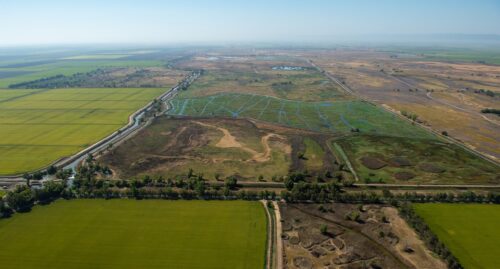
“The Sacramento Valley, which helps drive California’s nation-leading agricultural economy, has seen so much groundwater pumping that the valley floor has recently sunk by as much as a foot and a half in a year, new research shows. The sinking, known as land subsidence, has long quietly plagued the sprawling farm region. But a study published last month in the Proceedings of the National Academy of Sciences identifies an abrupt and potentially catastrophic spike during the 2020-22 drought. Calling it a “serious threat” to water supplies and infrastructure, the study’s authors say subsidence in parts of the Sacramento Valley, namely in Colusa, Yolo and Glenn counties, reached levels that are irreversible — and on par with the widely damaging sinking that’s occurring in the San Joaquin Valley, to the south. … ” Read more from the San Francisco Chronicle.
Santa Cruz County tests steam as alternative to chemical fumigants in berry fields
“Santa Cruz County will test whether steam can replace chemical soil fumigants in berry fields, a move aimed at reducing pesticide use near schools and other community locations while exploring a more sustainable way to control pests. The $175,000 pilot project, funded by the California Department of Pesticide Regulation, will begin this summer in the Pajaro Valley, where several berry growers will use high-temperature steam to treat soil before planting instead of conventional pre-plant fumigation. The research will continue into 2027, county officials said in a statement Thursday. The pilot, led by the Santa Cruz County agricultural commissioner, grew out of discussions with community groups seeking alternatives to fumigants near sensitive locations, including schools. … ” Read more from Local News Matters.
California Forever hopes for last minute help from state lawmakers, Gov. Newsom
“The developers of a new, proposed town called California Forever have been struggling to get it started and are now hoping to get some last-minute help from state lawmakers and the governor to move it forward. California Forever is a plot of land that was purchased by a group of Silicon Valley tech billionaires and investors to create a new town. It sits near the halfway point between San Francisco and Sacramento in Solano County. With just weeks left in California’s legislative session, California Forever wants lawmakers to carve the project out of some of the state’s environmental requirements to speed up timelines if lawsuits are filed against the project. Developers also want the ability for a neutral, third party to be able to step in if cities and counties can’t agree how to divide up the tax money. All of this would be under the condition that a business such as manufacturer or shipyard decides to locate to the area. As of Sunday night, there was no formal legislation filed for lawmakers to consider any of this. … ” Read more from KCRA.
Governor Newsom: Local government should allay data center ‘anxieties’
“Gov. Gavin Newsom offered on Friday some of his most detailed remarks on data centers, which have become a target of bipartisan, nationwide ire because of their heavy demand for electricity and water for internal cooling systems, which has driven up local utility rates. The outgoing governor, who is expected to run for president in 2028, vetoed legislation last year that would have required data centers to disclose how much water they use. At the time, he said he was “reluctant to impose rigid reporting requirements” on the centers’ operating companies. Local opposition to data centers has emerged as the most visible symbol of the growing public backlash to artificial intelligence and the powerful companies profiting off of the emerging technology, some of which have demanded that local governments sign nondisclosure agreements during land use negotiations. In recent months, Newsom, a longtime Big Tech ally, said he anticipates that AI backlash will dominate future elections. … ” Read more from the Sacramento Bee.
An oil field became California’s first carbon vault. Who’s responsible if something goes wrong?
“Nearly four years ago, California lawmakers ordered state regulators to prepare for an industry that promised a new way to fight climate change: permanently burying carbon dioxide underground. The law called for rules governing how companies would monitor stored carbon and respond if something failed. It set a January 2025 deadline to address how companies would prove they could pay for cleanup and other costs, and to establish a single application coordinating permits across agencies.More than 19 months after that deadline, California has not adopted its carbon storage rules. In May, California’s largest oil producer, California Resources Corp., began burying carbon at Elk Hills, a vast, century-old oil field in rural Kern County. With its injections, the project became an important test run: the U.S. Environmental Protection Agency, which approved the injections, could point to no other project like it in the United States. Without its own rules in place, California can’t hold companies like CRC to a tougher standard than the federal government, or make sure for itself that the carbon — a gas that suffocates people in high concentrations and drives climate change — stays in the ground. … ” Read more from Cal Matters.
Hearings this week could decide the future of offshore oil in California
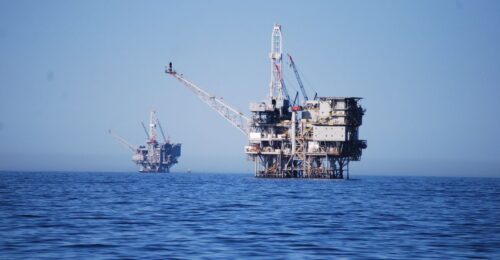
“By the end of this week, California could be on a path to losing its legal right to regulate oil drilling in the Pacific Outer Continental Shelf — the federal waters off the state’s coast — and see the first expansion of offshore drilling in decades, starting as soon as next year. Or, conversely, events in coming days could fortify the state’s environment-first stance on ocean management, particularly if they lead to court decisions that reflect what some advocates argue is political overreach by the Trump administration. Those wildly divergent outcomes are what experts on both sides of the offshore oil debate say could come out of two separate hearings, on Monday, Aug. 10, in Santa Monica, and on Thursday, Aug. 13, in Santa Cruz. … ” Read more from the OC Register.
California is battling the Trump administration over coastal protection. The stakes are huge
“Two decades ago, a plan to build a six-lane toll road along the Southern California coast was threatening to flatten the waves at a hugely popular surf break known as Trestles. The California Coastal Commission, the state agency charged with protecting the shoreline, famously stepped in to challenge the proposal, flexing its authority under a little-known law that allows the state to review federal or federally regulated projects affecting the coast. That move, in 2008, saved Trestles, which is now primed to host the 2028 Olympic surfing competition. The ability of the Coastal Commission to intervene in such projects, however, has come under review by the Trump administration. Federal officials accuse the agency of abusing its powers under the federal Coastal Zone Management Act by opposing activities that benefit the nation, such as offshore oil drilling. State officials say the federal review could ultimately dilute state authority, giving Washington carte blanche on coastal development. … ” Read more from the San Francisco Chronicle.
SEE ALSO: Marin leaders push against Trump offshore drilling plan, from the Marin Independent Journal
In commentary today …
Editorial: Alfalfa export ban would limit severity of state’s water crunch
The San Diego Union-Tribune editorial board writes, “On the California water front, the news always seems to be bad. On July 31, the U.S. Bureau of Reclamation announced the state would receive 12% less water from the Colorado River over the next two years. Given that the river supplies about one-third of the water used in Southern California, this looks like a huge headache. The severity of the problem was underlined Thursday when the water level at Lake Mead — the massive reservoir created by the construction of the Hoover Dam across the river in the 1930s — reached an all-time low. But a straightforward policy change could sharply limit the severity of a water crisis — one that would negatively affect a relative handful of Californians. It’s banning the use of state water supplies to grow alfalfa and other types of hay that are exported for use as animal feed. While a majority of these crops stay here to feed the state’s massive domestic livestock industry, about 30% are exported, in particular to Asian nations. … ” Continue reading at the San Diego Union-Tribune.
In regional water news and commentary today …
NORTH COAST
North Coast Water Board adopts permit for commercial lily bulb growers
“The North Coast Regional Water Quality Control Board adopted a permit for commercial lily bulb growers in the Smith River Plain. The order requires growers to prevent agricultural pollutants, including pesticides and nutrients, from reaching the Smith River Plain watershed. It calls for erosion controls, vegetated buffers along waterways, and improved pesticide and nutrient management. “The Smith River is California’s largest undammed river system, which supports important aquatic species and tribal uses. These requirements reflect years of collaboration to protect water quality in a manner tailored to a unique agricultural industry,” said Valerie Quinto, executive officer of the North Coast Water Board. … ” Read more from the Redheaded Blackbelt.
Lawsuit over logging plans in South Fork Eel Watershed heads to Ukiah court
“The waters of Dutch Charlie Creek flow in northern Mendocino County, west of Laytonville into the South Fork of the Eel River. The peaceful area is now the subject of contention. Friends of Dutch Charlie Creek has filed a lawsuit challenging CAL FIRE’s approval of two timber harvest plans in the Dutch Charlie Creek watershed, alleging that logging authorized under the plans could damage habitat used by state-listed endangered coho salmon. The organization is asking the court to halt operations under the “Hot Tuna” and “Lincoln Logs” timber harvest plans while the case is considered. According to Friends of Dutch Charlie Creek, surveys cited by the organization show that Dutch Charlie Creek has the highest coho redd—or salmon nest—density among tributaries to the South Fork Eel River. The organization also says much of the watershed has been logged only once and contains hundreds of remnant old-growth trees. Documents cited by the group identify the creek as an important or high-priority habitat for coho recovery. California Dept of Fish and Wildlife (CDFW) and the National Marine Fisheries Service both have identified Dutch Charlie Creek as top priority coho habitat. … ” Continue reading at the Redheaded Black Belt.
SIERRA NEVADA
TERC’s new research vessel is getting fitted for a future on Tahoe
“The Tahoe Environmental Research Center’s new vessel is currently getting retrofitted for a future of research on Lake Tahoe. “We are excited to launch our new research vessel soon,” said TERC director Stephanie Hampton. “This boat opens up new research opportunities, capabilities for operating on multi-day trips, operating nearshore, reaching locations across the lake faster and safer, and [is] better equipped to enable cutting-edge research and education.” TERC announced last week that after meeting its fundraising goal, the new research boat is fully funded thanks to its Give Day campaign, generous supporters, and other fundraising efforts throughout the year. … ” Read more from the Tahoe Daily Tribune.
SACRAMENTO VALLEY
In California, Butte County residents pack chambers over AI data center water fears
“In Butte County, California, crowds of residents packed the Board of Supervisors chambers in Oroville to voice their concerns about the potential development of large-scale data centers in the area. According to KRCR TV, during a Butte County Water Commission meeting that featured a general presentation on AI data centers, more than 50 residents asked to speak. Many of those commenters urged county officials to adopt strict rules and require environmental review for any large-scale data center developments asking to build in the area. Despite the crowds of concerned residents, Presenter Paula Daneluk told the commission that the county is not currently weighing a formal proposal for any data center projects. … ” Read more from The Cool Down via Yahoo News.
Supervisors to talk Palermo drainage plan
“Years of studying the flood issues in Palermo will be presented to the Butte County Board during its upcoming Tuesday meeting in the form of the Palermo Master Drainage Plan. The board entered an agreement with West Yost and Associates at the start of 2024, tasking the outside organization with compiling data and ultimately formulating a plan to help mitigate flooding in the Palermo area, an issue that has been ongoing for decades. Over the years, residents of Palermo have put forth concerns about damaged properties and health risks related to sewage mixing with well water. According to the related agenda report, this isn’t the first time the county has considered measures for flood prevention for the community. … ” Read more from the Chico Enterprise-Record.
NAPA/SONOMA
Sonoma development hopes to break California’s new urbanist drought
“In the 30-plus years since the adoption of the Charter of the New Urbanism, California has been a hotbed of New Urbanist thought. New Urbanist development, on the other hand, has been scarce–aside from frequently cited TOD projects such as Oakland’s Fruitvale Village and Pasadena’s Del Mar Station. In spite of the growing popularity of form-based code and other New Urbanist-ish regulations, California has no Seaside (Florida) or Culdesac (Arizona). That may be changing, at least in Sonoma County. The community of Esmeralda has been working its way through the planning process in Cloverdale, a city of around 8,600 residents just barely within the commute shed of the Bay Area. It is envisioned as a holistic community full of walkable streets, dense mixed-use structures, and an abiding sense of community that is both a world unto itself and also well integrated into Cloverdale’s existing urban fabric. … ” Continue reading at the California Planning & Development Report.
BAY AREA
Skipstone winter makes for fractured wine grape harvest
“Let’s face it: We barely had a winter. January was warm and dry, and after a few storms in February, summerlike heat arrived in March, driving some grape varieties to early flowering. Then, winter returned for a brief April interlude, to be followed by an intermittently toasty and foggy May. June was all gloom on the coast and warmth inland. Then came July, and the heat returned. Nobody should be surprised at the premature arrival of grape harvest 2026, especially in the warmer inland areas. On July 21, local viticulture consultant Ken Swegles grower Richard Hanke (formerly of Left Bend) and winemaker Sam Smith brought in chardonnay for sparkling from Redwood Grade Vineyard, located on the flanks of Mount Madonna overlooking the Monterey Bay. It was the earliest they’d ever begun a harvest. … ” Read more from the San Jose Mercury News.
Small farms in Silicon Valley fight to keep the area’s agricultural legacy alive
“Mary and Kari Cosentino didn’t have a typical San Jose childhood. While other children were taking out the trash or washing the dishes, they were knee-deep in mud moving irrigation pipes along the sections of their small family orchard or getting their hands covered in the sugary guts of fruit as they packed peaches. “You’re sticky and it’s awful,” recalls Mary, laughing at the memories. “At the time, you don’t appreciate it, but in hindsight, it’s awesome. The farm was our playground.” Now, Mary and Kari run the farm where they grew up, J&P Cosentino Family Farm, becoming the third generation to work the earth in Santa Clara Valley. Together, they operate the last orchard in San Jose, tending to a tiny island of green surrounded by single family homes and hemmed in by Highway 85. … ” Read more from the San Jose Mercury News.
CENTRAL COAST
Desalination projects take decades — and millions — to build. Will SLO County get one?
“As weather patterns change and the length of droughts increase due to climate change, the county is interested in pursuing desalination — a drinking water source that doesn’t rely on rainfall. The county’s current water portfolio includes groundwater, reservoirs, recycled water and state water, all of which rely on rain. Desalination, however, produces drinking water regardless of the weather, according to the county’s consultant, Carollo Engineers project manager Lydia Holmes. The San Luis Obispo County Water Resources Advisory Committee received a presentation on Wednesday about a draft of the county’s $1.2 million feasibility study that evaluated where a desalination facility could be located, how much it would cost and what communities could use the water. … ” Read more from the San Luis Obispo Tribune.
Paso Robles: Small local farms can receive rebates for fallowing fields
“The Paso Robles Area Groundwater Subbasin Small Farm Assistance Program is offering a one-time rebate to small farms that voluntarily fallow all or part of their fields through Dec. 31, 2039. The program will pay $55 per acre-foot of estimated groundwater savings. Funding is limited. Farms with 20 or fewer irrigated acres may qualify. Eligible fields must have been commercially irrigated within the previous year. The program estimates that a farm fallowing 15 acres of wine grapes for approximately 13 years could receive a total rebate of $13,400. The calculation uses an estimated annual groundwater savings of 1.25 acre-feet per acre. … ” Read more from the Paso Robles Daily News.
SAN JOAQUIN VALLEY
The Stanislaus River: The flow must go on
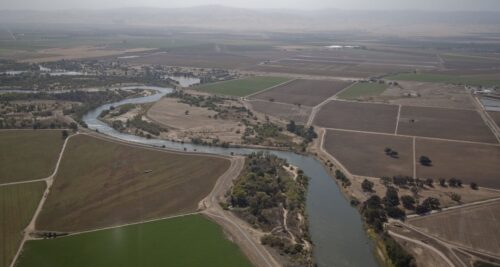
“The Stanislaus River begins as a trickle of snowmelt from peaks towering over 10,000 feet tall in the Sierra Nevada mountains of California. Its three main forks cascade through remote forest and rugged foothills before they converge and snake across the flat Central Valley, where the Stanislaus meets the San Joaquin River. The river is named after Estanislao, a Yokut leader who led a rebellion against Mexican-controlled California on its banks in 1828. The Miwok and Yokut Tribes fished the Stanislaus using nets, harpoons, and plants that stun fish. During the gold rush, elaborate ditch and flume systems were built to wash gold from the riverbed. These were later repurposed and now supply drinking water to residents of Tuolumne County. As early as 1884, scientists cautioned that dams on the headwaters of the Stanislaus River were a serious problem for salmon. The construction of Goodwin Dam near Knights Ferry in 1913 permanently blocked salmon migration to over half of their historical spawning habitat. In the 1970s, the New Melones Dam spurred California’s river preservation movement by flooding the deepest limestone canyon on the West Coast along with archaeological sites, endemic species, and a world-class rafting reach. Today, the river’s flows are over-allocated and hotly contested between farmers, municipalities, and environmentalists—a balancing act with no easy remedy. … ” Read more from FishBio.
SOUTHERN CALIFORNIA
SoCal heat wave: Triple-digit temperatures, fire weather and coastal flooding in store
“More intense heat was in store for wide swaths of Southern California on Sunday, with temperatures expected to reach the 90s along areas away from the coast in Los Angeles County, and the low 100s in the Inland Empire. Temperatures were expected to be even more extreme Sunday in the deserts and the San Joaquin Valley, where they could reach up to 109 in the Victorville area, 110 in the Antelope Valley and 112 in the Coachella Valley. Farther north, the San Joaquin Valley could see temperatures up to 110, and Yosemite Valley could see maximum temperatures as high as 98. A heat advisory was in place for much of Southern California away from the immediate coast, the National Weather Service said, indicating the risk of heat illnesses. The deserts and the San Joaquin Valley were under an extreme heat warning. … ” Read more from the LA Times. | Read via AOL News.
Metrolink suspends some service as SoCal coast prepares for high tides
“The threat of coastal flooding this week on the Southern California coast led to a suspension of service for part of Metrolink’s Orange County Line and preparations to protect shorelines residences. Metrolink suspended Orange County Line service south of the Laguna Niguel/Mission Viejo Station, starting Monday. The temporary service changes will be in effect Monday through Friday, when high tides are expected to pound the coastline in Orange County and other locations. … ” Read more from NBC 4.
The eight-mile gap in the L.A. River bike path downtown has a billion-dollar problem
“Someday, you might be able to ride a bike from the western San Fernando Valley to Long Beach along the Los Angeles River. But not yet. The longest unfinished stretch is the eight miles from Elysian Park through downtown to Maywood. For decades, advocates of the path have tried to complete those eight miles along the concretized river. Yet a decade later, the unrideable gap remains. The ambitious project remains mired in planning and bureaucratic complications, with groundbreaking still two years off and the cost nearly tripling to more than $1 billion — almost $24,000 per foot — documents reviewed by The Times show. … ” Read more from the LA Times. | Read via Yahoo News.
SEE ALSO: Photos: Kayaking in the Los Angeles River, from the Atlantic
Baxter the beaver is becoming dam famous in this Riverside County community
“Well, dam — there’s a beaver in Riverside County. A beaver named Baxter has captured the hearts of locals near Murrieta Creek in Wildomar. Just a few weeks ago, Will Mattox, 43, posted a video of a beaver in nearby Murrieta Creek to the GoWildomar Facebook page, which he started in April 2025 to raise awareness about local events and businesses. “Baxter the Beaver!” he posted. “Did you know Wildomar has its very own beaver damming things up in our local creek?” … Since then, Baxter’s public profile has “taken off,” Mattox said. Soon, Baxter had his own Facebook page. Mattox, who owns the company Seriously Stickers with his wife, drew up Baxter stickers and started selling them at local events. … ” Read more from the LA Daily News.
IMPERIAL/COACHELLA VALLEYS
‘Lithium Valley’ sounded like the next California gold rush. Why hasn’t it panned out?
“Corban Dillon found the dream job he trained for — only it’s two hours away from his home in El Centro, in the middle of the desert. He has to leave his daughter with his mother five days a week. That wasn’t his plan. Dillon was a part of the inaugural class of Imperial Valley College students training for jobs in what was projected to be a booming lithium industry drawing on vast reserves of the critical mineral deep below the Salton Sea. But the dream of “Lithium Valley” transforming this corner of California has yet to materialize. “If it’s not for Lithium Valley, I probably will never go back to the valley, which is sad because they’ll lose somebody like myself that could be an asset to any team in so many ways,” Dillon said. … ” Read more from iNewsSource.
SAN DIEGO
Column: San Diego appears to dodge Colorado River reductions, for now
Columnist Michael Smolens writes, “San Diego gets a large portion of its water from the Colorado River, and that supply appears to be safe under the sweeping 10-year plan recently released by the federal government to address the river’s drastically decreasing flows. At least for now. The plan calls for the federal government to reassess the cuts every two years. Meanwhile, important details related to the document are expected in a matter of days, which would start shaping how the immediate reductions affecting California, Arizona and Nevada may play out. The near-term cuts were essentially what those Colorado River Lower Basin states proposed a few months ago and were adopted by the federal government. Much worse reductions could have been imposed, and still may be in the future. … ” Read more from the San Diego Union-Tribune.
What should become of the Lake Hodges Dam? As San Diego studies its options, local leaders worry about lake
“A growing coalition of civic groups is lobbying San Diego to accelerate efforts to rebuild Lake Hodges Dam and to raise the dam’s existing water level — but city officials are limited by state regulations and cost concerns. The lobbying effort comes as city officials finalize two complex studies: one analyzing whether a new dam should be built, another analyzing how to handle the existing 108-year-old dam until there’s a long-term answer. The civic groups say a new dam is crucial to keeping downstream communities like Rancho Santa Fe safe from flooding, securing a reliable local water supply, supporting existing wildlife and limiting risks to homes in the wildfire-prone area. The groups, which include the Rancho Bernardo Community Council and the Friends of Lake Hodges, also want the water level raised from 280 feet to 295 feet during the roughly 10 years it will take to build a new dam. … ” Read more from the San Diego Union-Tribune.
Commentary: Fixing sewage mess requires workers, not just money and steel
Mark Sanchez, superintendent and president of Southwestern College, writes, “The next chapter in restoring the Tijuana River is not just about infrastructure: It is about the people who will protect it. California and the federal government have now committed more than $700 million to improve San Diego’s water treatment infrastructure, including significant funding for Tijuana River restoration. In addition, Mexico has allocated over $120 million to help treat raw sewage. For the thousands of families who have watched beaches close, worried about the air they breathe and seen one of Southern California’s most important estuaries suffer from years of pollution, that investment represents more than dollars, it represents hope. It is a step toward giving South Bay families what they have been denied for far too long: a healthy estuary, open beaches and the confidence that their children can safely enjoy the coastline again. … ” Read more from the San Diego Union-Tribune.
Along the Colorado River …
Lake Mead plummets to historic low water level as Colorado River struggles
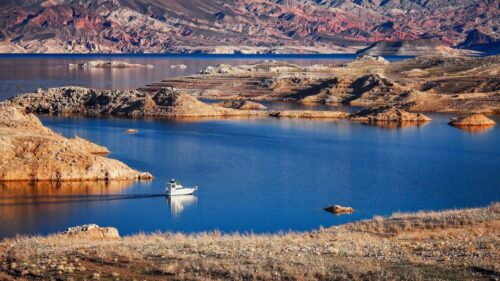 “Lake Mead, the largest reservoir in the United States, has plummeted to its lowest water level since it was filled some 90 years ago, the latest sign of a deepening water crisis in the American west. Water levels at the reservoir, which straddles the Arizona-Nevada border outside Las Vegas, hit 1,040.4ft (317.1 meters) above sea level on Friday, according to federal data. That’s just below the record set on 28 July 2022, according to the US Bureau of Reclamation. The reservoir is a critical storage system on Colorado River, a massive waterway that supplies roughly 40 million people across seven US states, tribal nations and Mexico, and irrigates millions of acres of farmland. But the Colorado River basin is facing enormous pressure due to a combination of overuse, prolonged drought and extreme heat, and a lack of snowmelt to replenish the river. Lake Powell, the second major reservoir on the Colorado River, is also at historic low levels. … ” Read more from The Guardian.
SEE ALSO:
- Lake Mead, the Nation’s Largest Reservoir, Is Smaller Than Ever, from the New York Times
- Lake Mead Hits Record Low: How Much Worse Will It Get?, from Newsweek
Queen Creek not fretting over Colorado River cuts
“While other Valley municipalities are anxious to over impending cuts in their Colorado River water allocations, Queen Creek officials are reacting much differently. “We aren’t on pins-and-needles waiting for the feds to decide,” Mayor Julia Wheatley said when asked about the U.S. Bureau of Reclamation’s July 31 recommendation of significant cuts in Colorado River water allocations to Arizona, Nevada and California. Only about 10% of Queen Creek’s water will be coming from the Colorado River – thanks to the Town’s $465 million-plus purchases in late 2025 and early 2026 of 1.7 million total acre-feet from the Harquahala Basin, which is projected to supply about 68% of Queen Creek’s water for 110 years. … ” Read more from the East Valley Tribune.
Utah cloud seeding operation claims it created 2.8 billion gallons of extra water — experts have doubts
“Water managers across the Colorado River Basin are facing mounting pressure to find new water supplies as drought and rising temperatures strain rivers, reservoirs, and farms. That urgency is helping drive interest in a Utah cloud-seeding project from Rain Enhancement Technologies that claims it created 2.8 billion gallons of extra water, even as scientists say the technology has not yet clearly proved it can deliver. The Grand County Water Conservancy District and Florida-based Rain Enhancement Technologies launched a ground-based, cloud-seeding station near the La Sal Mountains in southeastern Utah. According to The Colorado Sun, the company said the site has now created 8,750 acre-feet of extra snow, enough water for as many as 35,000 households over a year. … ” Read more from The Cool Down.
In national water news today …
Water systems are ripe for cyberattacks, experts warn after suspected Iranian hacks
“In late 2022, Microsoft detected the hack of a water system in Guam that U.S. intelligence agencies in the following months determined was orchestrated by China. The idea wasn’t new. The spy agencies had long watched as Iran targeted Israeli water systems. “That another nation state was doing it to us — that was unsettling,” recalled one former U.S. official, who, like several others interviewed for this story, spoke on the condition of anonymity because of the matter’s sensitivity. Senior U.S. officials were concerned that such intrusions could affect military bases on Guam, but also civilian water supplies, many of which were poorly protected against hacks. The Biden administration, alarmed by the spring 2021 ransomware attack on Colonial Pipeline, had already moved to regulate pipelines and then railroads. Now they wanted to move on water. … ” Read more from the Washington Post.
EPA hosts roundtable on water workforce
“The U.S. Environmental Protection Agency (EPA) convened a roundtable on Aug. 4 focused on the water workforce and how to better recruit and retain individuals into meaningful careers in water. The roundtable also concentrated on identifying opportunities where EPA can work to reduce barriers and improve interstate coordination. EPA’s Office of Water leadership was joined by water systems, water associations, states and other partners to engage in proactive discussions about how to address a potential widespread shortage of qualified workers due to anticipated retirements. “Every time we turn on the tap, flush the toilet, or water the garden, we are depending on the dedicated professionals managing public water systems,” said EPA Assistant Administrator for Water Jess Kramer. ”It is imperative that the water sector be set up for success, which is why the Trump EPA is focused on working with our partners to bolster career recruitment and retention. … ” Read more from Water Finance & Management.
State of the climate: A dimming, overheated planet, with degraded oceans
“As global warming continued to reshape Earth’s climate, the planet’s oceans reached record high temperatures for the third year in a row in 2025. Some northern forests and tundra released more carbon dioxide than they absorbed. And the Greenland Ice Sheet lost about 129 gigatons of ice, enough to form a cube of ice about three miles wide on each side. Those were among the findings in the 2025 State of the Climate report, released Monday by the American Meteorological Society and led by scientists at the National Oceanic and Atmospheric Administration. The report identified continued burning of fossil fuels as the primary source of record-high greenhouse gas levels, which are raising global temperatures and intensifying extreme weather. In Europe, for example, average temperatures have risen about 3.6 degrees Fahrenheit since the 1960s, while extreme high temperatures have shot up by as much as 18 degrees Fahrenheit. … ” Read more from Inside Climate News.

