
A wrap-up of posts published on Maven’s Notebook this week …
Note to readers: Sign up for weekly email service and you will receive notification of this post on Friday mornings. Readers on daily email service can add weekly email service by updating their subscription preferences. Click here to sign up!
In California water news this week …
‘Snow-eater’ heat waves adding to water woes plaguing the West
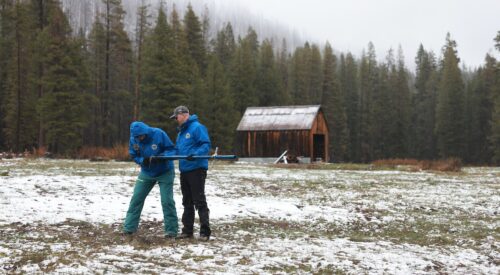
“With climate change, wildfires and heat waves, an abundant snowpack becomes a more precious resource every year. Increased temperatures earlier in the year followed by other weather-related phenomena are causing much of the western United States to experience what scientists are calling “snow-eater” heat waves. A new study, published Wednesday in the journal Science Advances, analyzes the weather events using a method developed to identify the heat waves. Snow-eater heat waves are pretty much like they sound — abrupt snowmelt triggered by rain-on-snow and followed by several days of unseasonably high temperatures. But some of the “snow-eater” heat wave characteristics and impacts haven’t been broadly studied before the paper, the scientists said. Analyzing air temperature data from 1850 to 2015 and incorporating a snowmelt model, the scientists were able to estimate heat waves and their melt potential. “Melt season snow-eater heat waves typically last three to five days, with three to five events per decade, doubling snowmelt rates,” said the scientists, including Lawrence Berkeley National Laboratory researcher and lead author Alan Rhoades, in the study. … ” Read more from the Courthouse News Service.
Super El Niño explained: What a record El Niño could mean for U.S. weather
“El Niño is back, and it might be bigger than ever before. The National Oceanic and Atmospheric Administration declared in June that the threshold for an El Niño had been met in the eastern Pacific Ocean, and that it was likely to strengthen significantly through the end of the year. Since then, the numbers that drive El Niño have been on full throttle. The strongest El Niño on record is not out of the question, potentially even by a wide margin. This oceanic pattern, which typically alters global weather, has in the past been associated with intense California flooding, fewer hurricanes in the southeast, dramatically warmer winters for the northern U.S., and intense drought in other parts of the world. And it may be a preview of a new climate that is unfolding before our eyes. Even moderate El Niños temporarily warm global temperatures; a strong El Niño alongside the backdrop of climate change will likely push global heat records to new heights. … ” Read more from the Sacramento Bee.
SEE ALSO:
- Super El Niño Could Bring Heavy Rainfall and Record High Tides This Winter, Plus Summer Lightning in Fire-Prone Regions Across the North Coast, Climate Scientists Warn, from the Lost Coast Outpost
- Climatologist says incoming El Niño winter could be wettest on record in California, from CBS News.
Studies look at “less bad” options for farmers facing groundwater cutbacks
“Growing more drought-tolerant crops could be an option for San Joaquin Valley farmers facing severe groundwater cutbacks, according to two joint studies by the Public Policy Institute of California (PPIC). The studies looked at growing winter crops or forage using less water as an economic alternative to straight out fallowing ground. “This is not a solution or means of (groundwater) demand reductions, but a way to make that fallowing less bad,” Caitlin Peterson, PPIC Associate Director and one of the authors of the studies, told SJV Water. “How can we still achieve that reduction in pumping but not reduce productivity?” The studies looked at types of crops that could be grown with much less water and the economic viability of those crops. … ” Read more from SJV Water.
San Joaquin Valley Watershed Studies: Modeling the future of groundwater recharge
“Following the methodology developed for the Merced Watershed Reconnaissance Study, the California Department of Water Resources (DWR) has expanded its efforts to model the potential benefits of groundwater recharge in the San Joaquin Basin. The resulting San Joaquin Basin Flood-MAR Watershed Studies—spanning the Calaveras, Stanislaus, Tuolumne, Merced, and Upper San Joaquin watersheds—mark a major step forward in regional water planning. These studies evaluate how managed aquifer recharge using floodwaters (Flood-MAR) can mitigate the interconnected threats of groundwater depletion, flood risks, climate change, and habitat loss. The studies evaluated and compared two distinct management strategies for capturing high-flow storm waters: MAR 90/20 and I-FIRM. … ” Continue reading at Sustainable Conservation.
Recent court case limits and shapes judicial review under SGMA
“A July 30, 2026 decision from the Court of Appeal for the Third Appellate District in California in AquAlliance, et al. v. Vina Groundwater Sustainability Agency, et al. will shape what challenges will be brought under the Sustainable Groundwater Management Act (SGMA) and what those challenges will look like going forward. Importantly, the decision may limit the scope of judicial review of groundwater sustainability plans (GSPs) and encourage deference to the Department of Water Resources (DWR). … A group of plaintiffs – AquAlliance, California Water Impact Network, and California Sportfishing Protection Alliance – brought a lawsuit styled as a reverse validation action in Butte County Superior Court challenging a GSP approved and submitted to DWR by Vina Groundwater Sustainability Agency and Rock Creek Reclamation District as being non-compliant with SGMA. …” Read more from JD Supra.
Section 53759 means what it says – Court of Appeal once again enforces validation requirements for Proposition 218 water-rate challenges
“The First District Court of Appeal issued its published opinion on July 24, 2026 in Toy v. City and County of San Francisco, holding that Government Code section 53759 requires challenges to covered water and sewer rates to proceed under California’s Validation Statutes, and that compliance with those procedures is mandatory and jurisdictional. Accordingly, the Court affirmed the dismissal of the plaintiffs’ Proposition 218 challenge to San Francisco’s 2023 water rates for failure to comply with the reverse‑validation procedures. Toy is the second Court of Appeal decision in 2026 applying section 53759 to Proposition 218 water-rate challenges, following the First District Court of Appeal’s decision in Hiller v. Marin Municipal Water District. … ” Read more from Best Best & Krieger.
California water board prioritizes winery compliance as numerous facilities still face waste discharge requirements
“Five-hundred and eighty wineries are currently permitted by California State Regional Water Board waste discharge requirements (WDRs), individual WDRs or waivers, yet there’s still ~1,500 wineries expected to be required to comply with this order, according to a recent presentation by GSI Environmental. The good news is that the Board, so far, is not taking a heavy-handed approach to penalties and enforcement at the outset. Instead, its current primary focus is helping winery operators without permits come into compliance, according to the July 29 webinar and presentation from GSI. Technically, wineries without WDRs needed to obtain coverage by Jan. 20, 2024—three years following the order’s adoption—with a <5-year compliance schedule, according to Mehran Ebrahimi, senior associate engineer, GSI Environmental Inc. … ” Read more from Wine Business.
Judge says environmental groups fell short in bid to pause California water projects
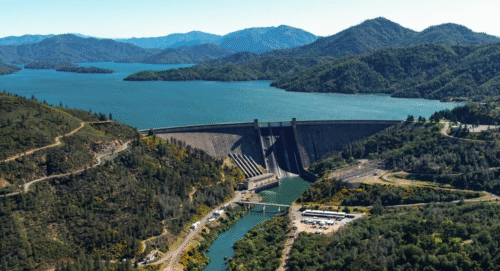 “A federal judge on Monday opted to impose no restrictions on operations for a massive California water conveyance system, determining environmental groups failed to meet their burden. U.S. District Judge Jennifer Thurston wrote that the Center for Biological Diversity and other plaintiffs must make a heightened showing before she will issue a preliminary injunction over the U.S. Bureau of Reclamation’s operation of Shasta Dam and Reservoir this summer and fall. The ruling comes after Thurston’s decision in early July to deny a temporary restraining order on water operations, while still leaving open the possibility of a preliminary injunction. The groups argued the bureau’s operation of the Central Valley Project, including Shasta Dam, and California’s State Water Project failed to comply with a 2024 biological opinion issued under the Endangered Species Act. They asked the Joe Biden appointee to reduce water releases from Shasta and require the government to adopt a new operating plan. … ” Read more from the Courthouse News Service.
How much does wildfire reduce forest water use and increase runoff?
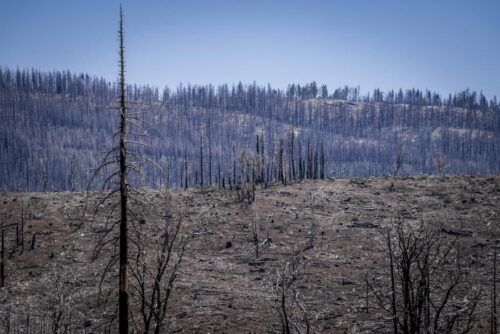 “Wildfire is reshaping the forests of California’s Sierra Nevada and affecting the water those forests supply to downstream users. A paper published in Hydrology and Earth System Science reports that the effect of wildfire on potential runoff from the state’s main water-supply watersheds has increased in the period 1985-2023, most markedly since 2019. To measure how much water forests use, researchers from UC Merced, UC Berkeley and UC Irvine used data on evapotranspiration, the measure of water evaporating from soil and released by plants. The data drew from satellite imagery, ground measurements and climate records. Annual potential runoff was calculated by subtracting these evapotranspiration values from annual precipitation. They verified their findings with full-natural-flow values for the study area, which includes the main watersheds serving California’s State Water Project and Central Valley Project. Full-natural flow is calculated as the runoff that would occur at a stream-gauging station in the absence of upstream diversions and changes in reservoir storage. … ” Read more from UC Merced.
Advancing water equity in California requires continued commitment
“Water equity in California is grounded in the principle that all people have the right to safe, clean, affordable, and accessible water for human consumption, cooking and sanitary purposes regardless of income, race, geography, or other factors. The human right to water extends to all Californians, including disadvantaged individuals and groups and communities in rural and urban areas. In fact, California was the first state in the nation to legislatively recognize a “human right to water” when in 2012 it passed Assembly Bill (AB) 685. This was followed in 2016 by a State Board Resolution pledging that it would work to “preserve, enhance, and restore the quality of California’s water resources and drinking water for the protection of the environment, public health, and all beneficial uses.” To understand the significance of California’s water equity policy, imagine turning on your tap and NO water comes out – or worse, it is brown and stinks – but you still have to pay your monthly water bill even if your water is undrinkable, unusable, and unsafe. … ” Continue reading from the League of Women Voters.
Can habitat restoration help salmon recover? Prairie Creek offers clues
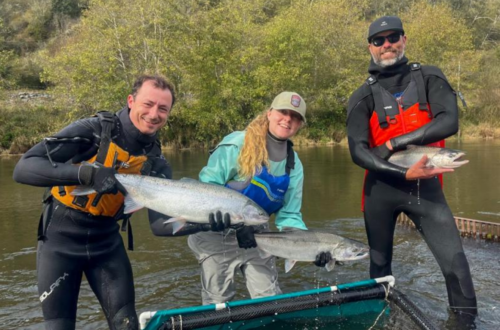
“When any habitat restoration project finishes, a critical question remains: Will the project help threatened fish and other species recover? Answering that question requires rigorous long-term monitoring. At the Prairie Creek salmon habitat restoration project in Northern California, researchers from NOAA Fisheries’ Office of Habitat Conservation, Cal Poly Humboldt, and other partners have conducted monitoring before, during, and after construction to determine whether the project would improve the survival prospects of threatened Southern Oregon/Northern California Coast coho salmon. The project transformed a former lumber mill site into wetlands, side channels, and off-channel ponds where juvenile salmon can rest, feed, and grow before migrating to the Pacific Ocean. Juvenile salmon that grow big and strong in freshwater have a better chance of surviving their time in the ocean and returning as adults to spawn. Early findings suggest that juvenile coho salmon using the restored habitat are growing faster and experiencing higher ocean survival than prior generations from the same watershed. Preexisting monitoring data going back to 2011 gave the team an unusually long baseline against which to measure change. Their findings are also changing what scientists understand about how juvenile salmon use coastal watersheds. … ” Read more from NOAA Fisheries.
Dredging: A cornerstone of maritime commerce and national defense
“There are several major dredging opportunities emerging across the United States that extend well beyond traditional maintenance dredging, channel deepenings, or harbor expansions. Increasingly, the American dredging industry is becoming a strategic tool for addressing some of the nation’s most pressing challenges, including water security, agricultural sustainability, coastal resilience, maritime industrial revitalization, and national defense. Among the most significant opportunities are efforts to restore freshwater conveyance capacity in California’s Sacramento–San Joaquin Delta and San Joaquin Valley, support the infrastructure necessary for a revitalized shipbuilding and ship repair industrial base, and expand large-scale coastal restoration and beach nourishment programs. For decades, the channels of the Sacramento–San Joaquin Delta have been gradually silting in due to sediment accumulation, reducing the capacity of one of America’s most important waterway systems. Often described as the beating heart of California’s water infrastructure, the Delta serves as a critical artery for the movement of freshwater that supports millions of residents, farms, and businesses throughout the state and across the western United States. … ” Read more from Marine Link.
A gnarly situation: High-elevation discovery raises new questions about which California trees will survive climate change
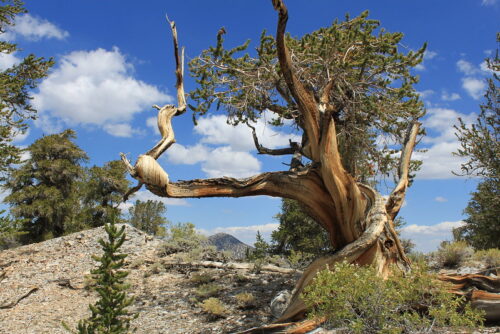 “Hugh Safford was hiking at 12,657 feet in California’s Sequoia National Park two years ago when he spotted something strange. It was a young Jeffrey pine, a tree that usually occurs farther downhill. Safford was hiking at treeline, the forest threshold where trees still grow, but fewer and farther between. Only the toughest species can survive the strong winds, heavy snowpack, and freezing temperatures found there. Safford is a forest and fire ecologist with the University of California Davis Environmental Science and Policy department. He knows subalpine forests are on the leading edges of climate change — and that this Jeffrey pine (Pinus jeffreyi) didn’t belong. So how had it gotten there? Were there others? And if so, what did that mean? The answers could portend unexpected competition at California’s treeline — and a rising threat from wildfire. … ” Read more from The Revelator.
In commentary this week …
Clean water shouldn’t depend on where you live
Ellen Wu, a UC San Diego graduate from San Jose and a member of San Diego Physicians for Clean Air, and Christine James, M.D., M.Sc., an allergist-immunologist with UC San Diego Health and a member of the Public Health Advisory Council for Climate Action Campaign and Climate Health Now, write, “Turn on the tap in San Jose, and the water is something you don’t think twice about. That’s not the case in parts of the Central Valley, where drinking water is too dangerous to drink. This contrast shouldn’t exist: California declared a Human Right to Water in 2012. Yet hundreds of thousands of Californians lack access to safe drinking water. This disparity reflects decades of failure by the State Water Resources Control Board to stop agricultural nitrogen pollution from fertilizer overuse at the source. Nitrogen is a key ingredient in fertilizer, but too much of it ends up in groundwater and drinking water sources as nitrate, a contaminant linked to serious health risks. For infants, nitrate exposure can cause blue baby syndrome, a potentially fatal condition. … ” Continue reading at Capitol Weekly.
Debunking the allegedly prohibitive cost of desalination
Edward Ring, Director of Water and Energy Policy at the California Policy Center, writes, “Earlier this summer a guest op-ed appeared in the Orange County Register, “Learning the right lesson from San Diego’s desal water surplus.” But the “lesson” presented was only partly accurate. What the authors, both affiliated with the Property and Environment Research Center (PERC), got right was the need to change regulations that restrict the ability for farmers to sell their water allocations to cities. This is consistent with PERC’s mission, which is to promote “free market environmentalism,” property rights, and market based solutions to environmental challenges. But when it comes to the economics of desalination, these critics of the technology were way off. It does not cost too much to make economic sense. The high costs are the result of policy choices. The “lesson” we should be taking from desalination projects and proposals so far in California is that current policies have grossly inflated the cost of desalinated seawater here for two reasons: the construction cost is inflated thanks to California’s regulatory and legal environment, and the operating cost is inflated because California has the highest electricity rates in the nation. … ” Continue reading from Edward Ring.
Growers deserve groundwater rules they can understand, afford and that are fair
Michelle Paul, Executive Director of the California Farm Water Coalition, writes, “This recent Los Angeles Times article highlights real challenges that California’s farmers now face under the state’s Sustainable Groundwater Management Act, or SGMA (“California’s push to limit groundwater pumping could leave small farmers in the dust,” July 31). Growers deserve groundwater rules they can understand, afford and that are fair. SGMA is a statewide framework, but it depends on local implementation. Issues such as fee structures, allocations and outreach are local implementation decisions. The framing in the article oversimplifies the problem farmers face and distracts from real solutions. … ” Continue reading this letter to the editor of the LA Times.
Pulling the rug out from under: “Updating” Water Rights Decision 1641
Chris Shutes writes, “A July 11, 2026 article in Valley Ag Voice reports that Adam Nickels, acting Regional Director for the California-Great Basin region of the Bureau of Reclamation, is on record as proposing to improve “water supply reliability” by “updating” Water Rights Decision 1641. The article quotes Mr. Nickels as follows: “We actually know today that D-1641 and the regulations that are locked into D-1641 that touch on our water rights and limit us from pumping; we know those aren’t working,” Nickels said. “We know those aren’t helping fish, but it is built into regulation.” Countless public interest organizations have criticized D-1641 as inadequately protective of fish ever since its adoption, true enough. But the lines of criticism have generally been that D-1641 requires too little water for fish protection from Mr. Nickels’s Central Valley Project (CVP) and its state counterpart, the State Water Project (SWP). … ” Read more from the California Sportfishing Protection Alliance.
Data centers are inevitable. California must regulate them.
“Recently, while working on a writing project, my computer froze. My immediate response was panic. Then I realized that I had moved most of my apps to the cloud. Almost everything was available to me on any of my devices. I’m not alone. Cloud computing is the default for most users, business and personal. The cloud is actually a collection of data centers. These are the humongous facilities using huge amounts of land, electricity and water, that contain data storage units that host all the commercial and public cloud-based digital content. These are not new, but the need to host all of the artificial intelligence content has created an urgent surge in new, large data center construction. … ” Read more from the San Diego Union-Tribune.
California can’t afford to weaken ocean protections in a warming world
Fiorenza Micheli, a marine ecologist and conservation biologist at the Hopkins Marine Station at Stanford University, and Nur Arafeh Dalmau, a marine ecologist and climate adaptation researcher at Hopkins Marine Station at Stanford University and the co-chair of the IUCN Seaweed Specialist Group, write, “At a time when California needs stronger ocean protections, the status quo is a step back. The California Department of Fish and Wildlife recently considered a set of proposals to strengthen or expand Marine Protected Areas (MPAs)—and recommended denying nearly all of them. This comes as California has committed to protecting at least 30 percent of its lands and coastal waters by 2030. Our research shows that well-designed, strongly protected MPAs are among the most effective tools the state has to help kelp forests survive a rapidly warming ocean. … ” Continue reading from Capitol Weekly.
In regional water news this week …
‘It’s Unacceptable’: North Coast Water Board forwards Little River case to attorney general’s office for review
“A 16-year effort to hold a McKinleyville-area property owner accountable for polluting Little River hit a major turning point today after the North Coast Regional Water Quality Control Board unanimously voted to refer the case to the state Attorney General’s Office for review. Now the case will play out in the courts. Since December 2010, state agencies and environmental advocacy groups have sounded the alarm over allegations of unpermitted solid waste disposal and unauthorized grading at the 226-acre property, which is just upstream from Moonstone Beach. Water board staff assert that “poorly managed livestock grazing” and abandoned cow and horse carcasses have contaminated Little River with bacteria, specifically E. coli and fecal coliform, putting beachgoers and threatened salmonid species at risk. … ” Read more from the Lost Coast Outpost.
Cannabis farming is changing streams in California, experts warn
“Groundwater pumped to irrigate cannabis crops in California’s Emerald Triangle can cause some streams that normally run year-round to dry up entirely during summer, say researchers from Simon Fraser University, the University of California, Berkeley and the United States Department of Agriculture. A new study reveals how groundwater pumping in the region’s rugged mountain headwaters may reduce streamflow that supports salmon habitat and feeds larger river systems downstream. “People often think of groundwater or aquifers as a separate resource from streams. But in many landscapes, they’re connected parts of the same system,” says Jesse Hahm, assistant professor of geography and co-author of the study. … ” Read more from PhysOrg.
No new groundwater fees for Tehama County — yet
“On Wednesday, there was a sense of déjà vu as the Tehama County Board of Supervisors chambers filled once again for a tense, heated discussion about groundwater fees. A previous meeting, held on July 20, drew even more attendees, resulting in standing-room-only, but the Wednesday special meeting still brought a large gathering of community members, many of whom stayed for the entire almost four-hour proceedings. The August meeting did not result in new fees, but continued a similar decision from the July meeting where the board decided to table the fees. On Wednesday, two committees were formed to work on identified issues and return at an unspecified later date to continue the process to set the fees, when more comfortable with the details. … ” Read more from the Red Bluff Daily News.
Proposed Nevada Irrigation District deferred rate increase results in $8.6 million in lost revenue – hydro to subsidize water rates
“During a special meeting tomorrow NID directors are slated to vote on a reduced rate increase for treated and raw water customers. Staff recommends a nine percent increase, which is three and a half percent below the Prop. 218 maximum annual increase. The hydro division will subsidize the 2027 rates with a $1,277,966 transfer. Over the 2027-2031 period, the district will have to backfill a $8,640,055 loss in revenue. After multiple public workshops, and a Prop. 218 vote that failed to garner enough protest votes, directors decided to to forego any rate increases for 2026. Under Prop. 218, a majority plus one (12,537) protest votes would have been needed to stop any increase. NID received 3,105 protest votes. … ” Read more from YubaNet.
Cornerstone Lake Tahoe clarity program shields iconic lake from record amount of runoff
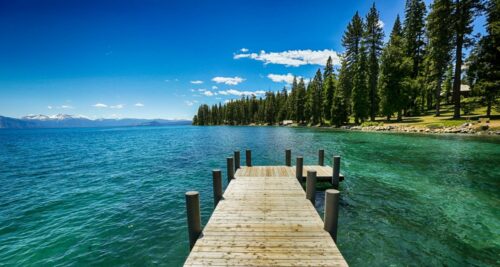 “Protecting Lake Tahoe’s iconic water quality, a joint California-Nevada effort, prevented a record quantity of fine-grained sediment and other pollutants from reaching the lake’s dazzling blue waters in 2025, according to an annual performance report released today. By restoring wetlands and streams, limiting dust from roads and construction sites, and improving stormwater systems and other anti-pollution actions, partners in the Lake Tahoe Total Maximum Daily Load Program (TMDL program) kept an estimated 736,600 pounds of sediment known to harm clarity and water quality out of the lake. The performance report by the Lahontan Regional Water Quality Control Board, which is part of the California Environmental Protection Agency, and the Nevada Division of Environmental Protection found that an estimated 5,875 pounds of nitrogen and nearly 2,120 pounds of phosphorus were prevented from reaching the lake in 2025, all annual record highs since the program began tracking these statistics in 2016. “Lake Tahoe is an ecological treasure we are committed to protecting now and for future generations,” said Yana Garcia, California Secretary for Environmental Protection. “As we continue to enjoy this special place, we applaud our statewide and interstate partnerships. Without countless regional partners, and our colleagues in Nevada, the lake’s extraordinary water quality this summer and in recent years would not be possible.”… ” Read more from the Lahontan Regional Water Quality Control Board.
Court rules Sonoma County must study water wells impact on fish, Russian River
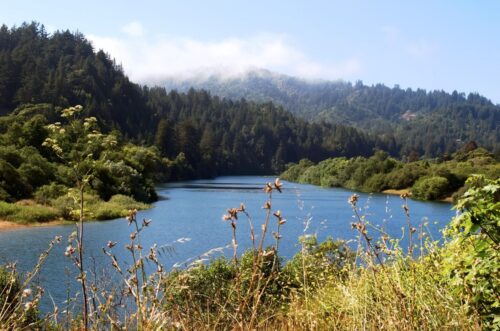 “In a challenge by environmental groups to the pumping of groundwater from rivers to fill wells for farmers, homes and businesses in Sonoma County, a state appeals court says counties must consider the impact of their water wells on fish and the environment. Tuesday’s ruling by the 1st District Court of Appeal in San Francisco said Sonoma County had not properly considered the effects of new rules it issued in 2023 for increased pumping from the Russian River and other waterways, but might be able to meet legal standards with an environmental review. On the central legal issue in the case, however, the court rejected the county’s argument that such reviews of water wells are required only for the state, and not for local governments. “Sonoma’s regulation of well permits ‘carries with it an ‘affirmative duty to take the public trust into account,’” Justice Tara Desautels wrote in the 3-0 ruling, quoting language from another appellate decision. … ” Read more from the San Francisco Chronicle.
Study: Napa wine compliance costs near 18% of production
“Regulatory compliance costs add nearly $24 to every case of wine produced and sold by a small Napa County winery, accounting for about 17.5% of production costs, according to a new study examining the cumulative impact of federal, state and local regulations on the wine industry. The report, released in July by Cal Poly, San Luis Obispo, is the second installment of a broader study commissioned by the Napa County Farm Bureau. Part 1, released earlier this year, found regulatory compliance costs accounted for about 8% of production costs for a small Napa County vineyard and nearly 12.5% for a large vineyard. The new report, authored by Cal Poly agribusiness professors Lynn Hamilton and Michael McCullough, shifts the focus from vineyards to wineries, documenting regulatory costs for an 8,500-case Napa County winery across production and direct-to-consumer sales. “This study is the first of its kind to document regulatory costs of a Napa County winery as well as any type of alcoholic beverage production,” the authors wrote. … ” Read more from Ag Alert.
Los Angeles Regional Water Board adopts new CII stormwater permit

“On July 23, 2026, the Los Angeles Regional Water Quality Control Board adopted a new Commercial, Industrial, and Institutional (“CII”) Stormwater Permit that could create significant new compliance obligations for certain commercial, industrial, and institutional properties in portions of Los Angeles County. In general, the permit applies to facilities within the Dominguez Channel and Los Cerritos watersheds that have five or more acres of impervious surface or, in some circumstances, five or more acres of total site area, including certain facilities that currently rely on No Exposure Certifications, Notices of Non-Applicability, or other forms of stormwater permit coverage. The permit also contains broad provisions regarding campus-style developments, allowing contiguous parcels and certain parcels separated by public rights-of-way to be aggregated for coverage purposes, and applies to the commercial, industrial, or institutional portions of mixed-use developments. … ” Read more from Stoel Rives.
SEE ALSO: LA Regional Water Board to Require Cleanup of Commercial Runoff, from My News LA
How clean should the ocean be? It’s an $11 billion question
“An escalating battle over Southern California water, and the pollution that can or can’t be allowed to flow into it, involves three counties, two very different cultures and one thorny question: How much should we collectively pay to keep the ocean as clean as possible? “I don’t know,” said Anthony Valdez, a 29-year-old who works for an auto parts distributor in Fontana, roughly 60 miles from the Santa Ana River Jetty. “A lot? I mean, I think it’s pretty important to have a clean ocean,” Valdez added. “Wait. Why are you asking me this?” Because he’s potentially on the hook for a potentially big bill. As public officials and scientists and business types from Orange, Riverside and San Bernardino counties argue over water pollution rules that will be used in the region for the next five to 20 years, one economic impact report has looked at the costs of updating public properties and establishing monitoring systems and the like, and reached a possible answer to the “how much” question: Something north of $11 billion. … ” Read more from the OC Register.
Fierce floods or wild waves? How San Diego is preparing for a winter of extreme weather under El Niño
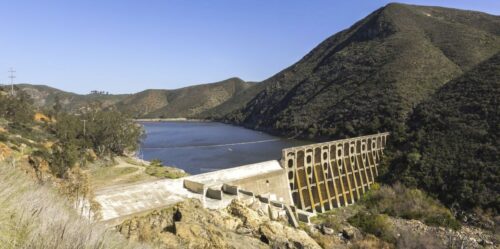
“When the super El Niño arrives this winter, San Diego could be in for raging floods that gush through canyons and hillsides. Or it could face sparse rainfall and heightened fire risk. It could also see monster waves carve away beaches and pummel piers. El Niño, the weather phenomena that produces warmer sea surface waters and weakened trade winds, has typically also brought wet winters to Southern California. “Large El Niños tend to tilt the odds toward more winter north Pacific storms and also larger ones, because of the energy imparted to the atmosphere from the ocean,” said Dan Cayan, a researcher at Scripps Institution of Oceanography. But the connection between ocean conditions and rainfall has weakened this century. That forces scientists to adjust forecasts, and public officials to plan for a wider range of scenarios. Adding to that uncertainty are San Diego’s aging stormwater systems and century-old dams. … ” Read more from Cal Matters.
Band-Aid, not a cure: federal Colorado River plan leaves states guessing every two years
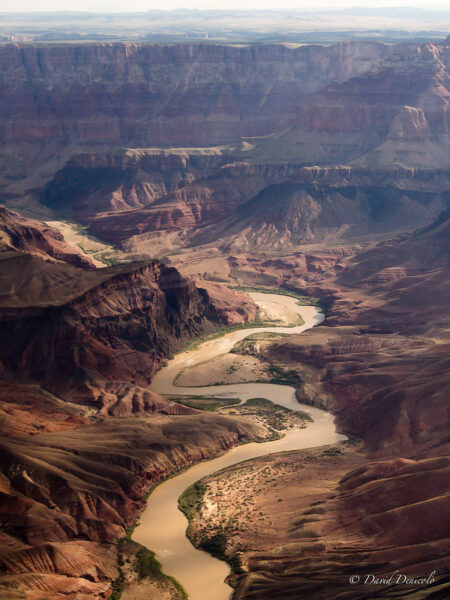 “Dire water conditions, missed deadlines and uncertainty on the Colorado River are complicating critical water decisions in California. No single state, water agency or federal official has shown the power, or the will, to break the deadlock among Colorado River basin states over how to share the dwindling supplies. … The U.S. Bureau of Reclamation, the federal steward for the river under the Department of the Interior, last week released a 10-year framework that establishes rough parameters for managing the river, but imposes no specific long-term plan. The federal provisions include cuts of up to 40% to the shared supply of California, Arizona and Nevada in the lower basin. They also allow releases from Lake Powell, which collects flows from the upper basin, to dip low enough they risk violating a legally required threshold for water deliveries to downstream states. These dramatic cuts are an upper limit for future operations: The federal government plans to roll out more detailed management plans every two years if the states continue their impasse. … ” Read more from Cal Matters.
Felicia Marcus on the Colorado River: “A new bridge with another expiration date”
“In this conversation, Felicia Marcus, the William C. Landreth Visiting Fellow at Stanford’s Water in the West program and former chair of the California State Water Resources Control Board, assesses the plan federal officials have just accepted to cut Colorado River use through 2028 which she calls a large band-aid rather than the tourniquet the basin needs. … Q: It was reported on July 23, that the federal government accepted a plan for California, Arizona and Nevada to cut Colorado River use through 2028, with California taking roughly a 12 percent reduction. You called it bigger than a band-aid, but smaller than the tourniquet we really need. What’s the actual tourniquet? A: That’s the much harder question. We’ve been living beyond our means on the Colorado for more than 25 years, watching the largest reservoir in the country draw down year after year. We arrested it – the agreements among the seven states were pretty good and probably postponed this day by about six years. But over the last few years, as we’ve approached this sword of Damocles, we haven’t been able to make much progress. … ” Read more from The Planning Report.
Lake Mead hits lowest water level on record as Colorado River crisis deepens
“Lake Mead, the largest reservoir in the United States, has fallen to a record low — yet another sign that the Colorado River system is spiraling further into crisis. Water levels on Thursday in Lake Mead dropped to 1,040.5 feet, below the previous record low of 1,040.58 feet set in July 2022, according to data published by the US Bureau of Reclamation Friday. The lake is now lower than it’s ever been since it was created nine decades ago. “Breaking the record is further evidence of the uncharted territory that the (Colorado River) Basin now finds itself,” said Jack Schmidt, director of the Center for Colorado River Studies at Utah State University. Lake Mead, which stretches along the Utah-Arizona border, was formed in the mid-1930s when the Hoover Dam was constructed on the Colorado River. The lake supplies water to more than 20 million people. It’s one of the most important reservoirs on this vital waterway, along with Lake Powell, which experts also fear could reach record low levels in the next few weeks. … ” Read more from CNN.

