
Several news sources featured in the Daily Digest may limit the number of articles you can access without a subscription. However, gift articles and open-access links are provided when available. For more open access California water news articles, explore the main page at MavensNotebook.com.
In California water news today …
‘Snow-eater’ heat waves adding to water woes plaguing the West
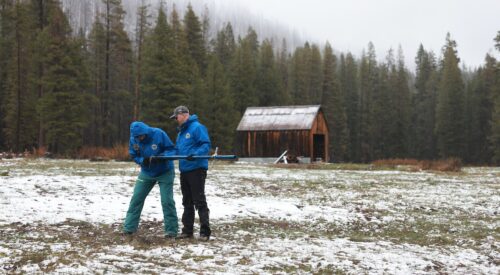
“With climate change, wildfires and heat waves, an abundant snowpack becomes a more precious resource every year. Increased temperatures earlier in the year followed by other weather-related phenomena are causing much of the western United States to experience what scientists are calling “snow-eater” heat waves. A new study, published Wednesday in the journal Science Advances, analyzes the weather events using a method developed to identify the heat waves. Snow-eater heat waves are pretty much like they sound — abrupt snowmelt triggered by rain-on-snow and followed by several days of unseasonably high temperatures. But some of the “snow-eater” heat wave characteristics and impacts haven’t been broadly studied before the paper, the scientists said. Analyzing air temperature data from 1850 to 2015 and incorporating a snowmelt model, the scientists were able to estimate heat waves and their melt potential. “Melt season snow-eater heat waves typically last three to five days, with three to five events per decade, doubling snowmelt rates,” said the scientists, including Lawrence Berkeley National Laboratory researcher and lead author Alan Rhoades, in the study. … ” Read more from the Courthouse News Service.
Super El Niño explained: What a record El Niño could mean for U.S. weather
“El Niño is back, and it might be bigger than ever before. The National Oceanic and Atmospheric Administration declared in June that the threshold for an El Niño had been met in the eastern Pacific Ocean, and that it was likely to strengthen significantly through the end of the year. Since then, the numbers that drive El Niño have been on full throttle. The strongest El Niño on record is not out of the question, potentially even by a wide margin. This oceanic pattern, which typically alters global weather, has in the past been associated with intense California flooding, fewer hurricanes in the southeast, dramatically warmer winters for the northern U.S., and intense drought in other parts of the world. And it may be a preview of a new climate that is unfolding before our eyes. Even moderate El Niños temporarily warm global temperatures; a strong El Niño alongside the backdrop of climate change will likely push global heat records to new heights. … ” Read more from the Sacramento Bee.
SEE ALSO:
- Super El Niño Could Bring Heavy Rainfall and Record High Tides This Winter, Plus Summer Lightning in Fire-Prone Regions Across the North Coast, Climate Scientists Warn, from the Lost Coast Outpost
- Climatologist says incoming El Niño winter could be wettest on record in California, from CBS News.
- El Nino cycle signals cresting current along coast, from the Lake Record-Bee
- In a Hurricane-Season Twist, the West Coast May Be the One to Watch, from the New York Times
Recent court case limits and shapes judicial review under SGMA
“A July 30, 2026 decision from the Court of Appeal for the Third Appellate District in California in AquAlliance, et al. v. Vina Groundwater Sustainability Agency, et al. will shape what challenges will be brought under the Sustainable Groundwater Management Act (SGMA) and what those challenges will look like going forward. Importantly, the decision may limit the scope of judicial review of groundwater sustainability plans (GSPs) and encourage deference to the Department of Water Resources (DWR). … A group of plaintiffs – AquAlliance, California Water Impact Network, and California Sportfishing Protection Alliance – brought a lawsuit styled as a reverse validation action in Butte County Superior Court challenging a GSP approved and submitted to DWR by Vina Groundwater Sustainability Agency and Rock Creek Reclamation District as being non-compliant with SGMA. …” Read more from JD Supra.
Section 53759 means what it says – Court of Appeal once again enforces validation requirements for Proposition 218 water-rate challenges
“The First District Court of Appeal issued its published opinion on July 24, 2026 in Toy v. City and County of San Francisco, holding that Government Code section 53759 requires challenges to covered water and sewer rates to proceed under California’s Validation Statutes, and that compliance with those procedures is mandatory and jurisdictional. Accordingly, the Court affirmed the dismissal of the plaintiffs’ Proposition 218 challenge to San Francisco’s 2023 water rates for failure to comply with the reverse‑validation procedures. Toy is the second Court of Appeal decision in 2026 applying section 53759 to Proposition 218 water-rate challenges, following the First District Court of Appeal’s decision in Hiller v. Marin Municipal Water District. … ” Read more from Best Best & Krieger.
Judge rejects further attempt to restrict Shasta Dam operations
“On Monday, August 3, the U.S. District Court for the Eastern District of California denied a request for a preliminary injunction that would have unnecessarily restricted planned operations at Shasta Dam by the U.S. Bureau of Reclamation. This marks the second time this Court has rejected these opponents’ attempts to force the Bureau to modify Shasta Dam operations and undermine affordable water for residents and California agriculture. Last month, the Court denied a request for a temporary restraining order, finding that the Bureau’s operational plans represented a reasonable interpretation of the 2024 Endangered Species Act biological opinion. Statement from Jennifer Pierre, General Manager of the State Water Contractors: “The Court’s decision is a victory for the rule of law and reinforces a rational approach to California’s critical water management decisions. The State Water Contractors applaud this decision and will keep supporting measures that maximize water availability for communities and farms while protecting environmental resources. While opponents continue to fail with their meritless attacks, this decision is a reminder that the law is on the side of science-based water management.” (Source).
Land Repurposing Workshop connects the dots across a changing landscape
“This spring, researchers, policymakers, water managers and community leaders gathered at UC Merced and attempted to answer the question, “Is land management adapting to water scarcity fast enough?” This question has become urgent as reduced groundwater access threatens farm operations and increases the acreage of idled farmland in the San Joaquin Valley. The event, the 2026 State of the Science of Land Repurposing workshop, explored how repurposing farmland can be used as a tool to conserve groundwater while supporting people and ecosystems in the face of a changing agricultural landscape. Co-hosted by Environmental Defense Fund and UC Merced VISTA, the gathering was the second State of the Science of Land Repurposing workshop since California created its Multibenefit Land Repurposing Program (MLRP) to support communities implementing the state’s historic Sustainable Groundwater Management Act. … ” Read more from the Environmental Defense Fund.
Can habitat restoration help salmon recover? Prairie Creek offers clues
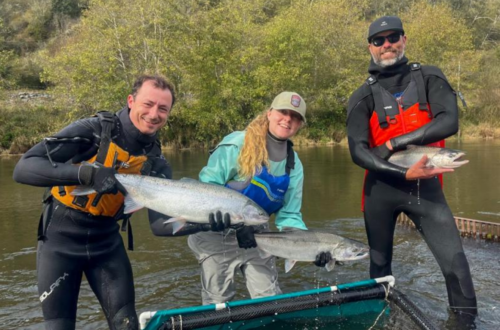
“When any habitat restoration project finishes, a critical question remains: Will the project help threatened fish and other species recover? Answering that question requires rigorous long-term monitoring. At the Prairie Creek salmon habitat restoration project in Northern California, researchers from NOAA Fisheries’ Office of Habitat Conservation, Cal Poly Humboldt, and other partners have conducted monitoring before, during, and after construction to determine whether the project would improve the survival prospects of threatened Southern Oregon/Northern California Coast coho salmon. The project transformed a former lumber mill site into wetlands, side channels, and off-channel ponds where juvenile salmon can rest, feed, and grow before migrating to the Pacific Ocean. Juvenile salmon that grow big and strong in freshwater have a better chance of surviving their time in the ocean and returning as adults to spawn. Early findings suggest that juvenile coho salmon using the restored habitat are growing faster and experiencing higher ocean survival than prior generations from the same watershed. Preexisting monitoring data going back to 2011 gave the team an unusually long baseline against which to measure change. Their findings are also changing what scientists understand about how juvenile salmon use coastal watersheds. … ” Read more from NOAA Fisheries.
California begins a new era of water planning
“The California Water Plan is the state’s long-range strategic roadmap for managing water resources. Updated every five years, it helps guide decisions by state, regional, and local water managers. Development is now underway for California Water Plan (CWP) 2028, the first under a new planning approach established by Senate Bill 72 (Chapter 210, Statutes of 2025). Initial public engagement efforts and early technical work are laying the foundation for a more actionable CWP that will help guide water decisions for years to come. During the first meetings of the CWP Advisory Committee, Tribal Advisory Committee, State Agency Team, and Technical Working Group, participants shared their insights and concerns. DWR will use this information to develop the most significant modernization of the CWP in decades. Early feedback is helping refine technical priorities, shape future engagement, and focus the conversations that will guide implementation of Senate Bill (SB) 72. … ” Read more from the Department of Water Resources.
Data centers and water: What the Congressional Research Service found
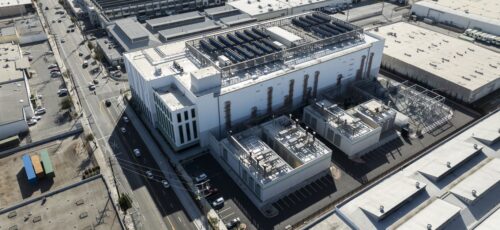
“The rapid growth of artificial intelligence has brought an old piece of infrastructure into a much brighter spotlight: the data center. Behind online searches, artificial intelligence programs, cloud storage and countless other digital services are buildings packed with computers. Those computers produce heat. Keeping them cool can require water, sometimes a great deal of it. A July 31, 2026, report from the Congressional Research Service examines what is known, and what remains unknown, about data centers and water. The report was prepared for members and committees of Congress as questions grow about the effect of expanding data center development on local water supplies. The national numbers require some perspective. Direct water use by data centers is estimated at about 2% of total U.S. water consumption. But the Congressional Research Service notes that national percentages do not necessarily describe what happens in an individual community. A single large facility can represent a substantial new local demand. … ” Read more from Western Water.
Scientists are building a ‘Noah’s ark’ of California’s tide pools. It will live here in LA
“On an overcast morning in July, marine biologist Greg Rouse knelt next to a large tide pool near La Jolla’s Bird Rock. “This place is incredibly diverse in habitats,” Rouse said, scooping a sample of seawater into a plastic bag. A few miles down the beach, in his seaside lab at the Scripps Institute of Oceanography, Rouse separated the sampled water into a petri dish. At first glance it was just water and some floating ocean debris. But when Rouse slid the petri dish under a microscope, hundreds of nearly-microscopic animals burst into life on a high-resolution monitor: shrimps and snails, pillbug-like isopods, worms of all sorts of different shapes, and at least one bright-orange sea slug. Sampling tide pools like this is fairly routine for Rouse, but lately, it has been part of something bigger. Rouse is leading the first phase of an effort to document California’s intertidal ecosystems. … ” Read more from the LAist.
Invasive species are taking over California ecosystems. Goats are fighting back.
“Rebecca Ozeran walks through a field of dry grass at an area known as Jensen River Ranch, just outside Fresno’s Woodward Park. The grass crunches under each step, and stretches out in acres of golden color. At first glance, this grass looks rooted to the landscape. But Ozeran says it doesn’t belong here. “Although they are the dominant species here, it’s because they’ve taken over from native species,” she says of this grass, and other plants that fill this area. In the distance, Ozeran spots a plant known as the Yellow Starthistle. Those are known for their bright yellow flowers. Ozeran says the plant is also a good pollinator, and honeybees like them. But the honeybees, like the starthistle plant, are also not a native species. The starthistle, in fact, is dangerous to horses. “It actually gives them a neurological disorder that makes them seek it out more and more until they can no longer chew and swallow, and it can be fatal,” Ozeran says. … ” Read more from KVPR.
Opponents of California Forever send letter to governor
“The coalition of opponents to California Forever’s East Solano development plans has sent a letter to Gov. Gavin Newsom and legislative leaders against any state action that would bypass local project approval. Solano Together said representatives of 55 organizations signed the letter. “… (There) has been intense lobbying of your offices by California Forever and their billionaire tech backers in an effort to secure preferential treatment for certain aspects of their project. This has apparently centered on advocacy for budget trailer bill language to create new California Environmental Quality Act streamlining measures for the project’s shipbuilding component, and modifications to the Local Agency Formation Commission annexation process,” the letter states. … ” Read more from the Daily Republic.
SEE ALSO: Solano Together’s letter to Governor Newsom
Feds meddling with protections for California coast
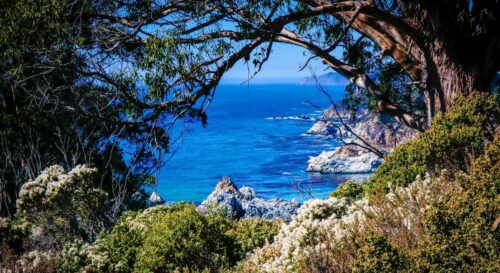
“In the latest salvo in a relentless campaign to strip California’s authority over its natural resources and environment, the National Oceanic and Atmospheric Administration is conducting an unusual performance review of the state’s Coastal Management Program, which regulates development along the coast. Coastal advocates see the move as an effort to advance new offshore oil drilling and build spaceport infrastructure, desalination plants, pipelines, and undersea cables, and are urging the public to weigh in. The federal Coastal Zone Management Act, passed in 1972, allows states to review and manage activities of the federal government affecting their coastal areas to ensure these activities comply with their own state regulations. The law is one of California’s best tools for ensuring that coastal development projects meet state environmental protection, coastal access, and safety standards. … ” Read more from Knee Deep Times.
Trump is attacking California’s ability to protect its coastline. The consequences are ‘chilling’
“For months, the Trump administration has sought to open the California coast to a radically industrialized future: large-scale desalination plants, floating nuclear reactors, more rocket launches and expanded offshore oil drilling along the state’s most iconic beaches. Holding the line against all this is a little-known but longstanding federal law, the Coastal Zone Management Act, which grants coastal states like California the right to review and object to any project in federal waters that clashes with state policy. Now, citing California’s “environmental extremism,” Trump officials are attempting to decertify the state’s power under this law. Framed as a performance review of the state’s coastal management practices, this challenge begins in earnest Monday during a public hearing in Santa Monica, where hundreds of emboldened regulators, elected officials, environmentalists, Indigenous leaders, community activists and everyday Californians are expected to speak out. … ” Read more from the LA Times. | Read via Yahoo News.
Trump promotes commercial fishing in protected Pacific Marine National Monuments
“President Donald Trump is seeking to reverse significant ocean protections by allowing commercial fishing in three Pacific marine national monuments President George W. Bush established in the early 2000s. The Bush administration specifically created these protected areas to safeguard some of the region’s most pristine coral reefs, seabird colonies and other marine life from extractive activities, including commercial fishing, within their bounds. In June, Trump signed a proclamation ordering the removal of commercial fishing prohibitions within the Islands Unit of the Mariana Trench Marine National Monument in the Northern Mariana Islands, the Papahānaumokuākea Marine National Monument in Hawaii and the Rose Atoll Marine National Monument in American Samoa. “I find that certain monument-based prohibitions on commercial fishing are not necessary at this time for the proper care and management of the monuments or the objects of historic or scientific interest,” Trump said in his proclamation. … ” Read more from Inside Climate News.
In commentary today …
Clean water shouldn’t depend on where you live
Ellen Wu, a UC San Diego graduate from San Jose and a member of San Diego Physicians for Clean Air, and Christine James, M.D., M.Sc., an allergist-immunologist with UC San Diego Health and a member of the Public Health Advisory Council for Climate Action Campaign and Climate Health Now, write, “Turn on the tap in San Jose, and the water is something you don’t think twice about. That’s not the case in parts of the Central Valley, where drinking water is too dangerous to drink. This contrast shouldn’t exist: California declared a Human Right to Water in 2012. Yet hundreds of thousands of Californians lack access to safe drinking water. This disparity reflects decades of failure by the State Water Resources Control Board to stop agricultural nitrogen pollution from fertilizer overuse at the source. Nitrogen is a key ingredient in fertilizer, but too much of it ends up in groundwater and drinking water sources as nitrate, a contaminant linked to serious health risks. For infants, nitrate exposure can cause blue baby syndrome, a potentially fatal condition. … ” Continue reading at Capitol Weekly.
In regional water news and commentary today …
NORTH COAST
‘It’s Unacceptable’: North Coast Water Board forwards Little River case to attorney general’s office for review
“A 16-year effort to hold a McKinleyville-area property owner accountable for polluting Little River hit a major turning point today after the North Coast Regional Water Quality Control Board unanimously voted to refer the case to the state Attorney General’s Office for review. Now the case will play out in the courts. Since December 2010, state agencies and environmental advocacy groups have sounded the alarm over allegations of unpermitted solid waste disposal and unauthorized grading at the 226-acre property, which is just upstream from Moonstone Beach. Water board staff assert that “poorly managed livestock grazing” and abandoned cow and horse carcasses have contaminated Little River with bacteria, specifically E. coli and fecal coliform, putting beachgoers and threatened salmonid species at risk. … ” Read more from the Lost Coast Outpost.
Rep. Jared Huffman tours major Eel River estuary restoration project near Ferndale
“A major restoration effort on the Eel River estuary near Ferndale drew attention today as Rep. Jared Huffman hosted a press tour of the Russ Creek and Centerville Slough Restoration Project, a large-scale environmental and climate-resilience undertaking spanning more than 1,400 acres west of Ferndale. “This is one of the largest coastal restoration projects in California right now,” Huffman said. “And it’s an amazing collaboration between local landowners, the County Resource Conservation District, federal agencies, state partners, the Wildland Conservancy behind me; this is their headquarters. All of them have come together to do a really ambitious and important project that’s going to restore environmental habitat, wetland habitat, fishery values; all kinds of birds and critters will benefit from this.” … ” Read more from KRCR.
SIERRA NEVADA
Nevada Irrigation District Board adopts reduced water rate increase for 2027
“The Nevada Irrigation District (NID) Board of Directors today approved a 9 percent increase in treated and irrigation water rates only for Fiscal Year 2027. The adopted rates are lower than the maximum rates authorized through the District’s Proposition 218 rate process. The action follows two public workshops held in July, where the Board reviewed financial information, received public input, and evaluated options for reducing the 2027 rate adjustment while maintaining the long-term reliability of the District’s water system. The adopted rates reflect the Board’s commitment to balancing affordability for customers with continued investment in the infrastructure, facilities, and watersheds that support reliable water service. … ” Read more from YubaNet.
Sierra Streams Institute opens registration for Fall Stream Ecology course
“Sierra Streams Institute (SSI), in partnership with the California Naturalist program, is now accepting registrations for its Advanced Ecology Training course this fall, a hands-on introduction to the science of streams designed for community members, students, and anyone curious about the waterways that shape Nevada County. The course is organized into two sections, each pairing an evening lecture with a Saturday field day. Section 1, focused on the physical and chemical science of streams, begins with a lecture on Wednesday, October 21, from 6 to 8 p.m., followed by a field day on Saturday, October 24, from 9 a.m. to 1 p.m. Section 2, which covers the biology of streams, includes a lecture on Tuesday, October 28, from 6 to 8 p.m., and a field day on Saturday, October 31, from 9 a.m. to 1 p.m. No previous education experience is required! … ” Read more from Yuba Net.
Mechanical fuels reduction underway on Lower Kingsbury Grade at Tahoe
“Mechanical and hand treatments to remove hazardous fuels in powerline corridors are underway on Lower Kingsbury Grade on the Lake Tahoe Basin Management Unit. Project work is taking place Monday through Friday, with no work occurring on weekends. Work is expected to continue through the end of November 2026, as conditions, staffing, and weather allow. For public safety, access to some areas may be temporarily disrupted when work is taking place. The public should be aware of thinning activity and keep a safe distance from equipment. Hazards may be present even when operations have ceased for the day. … ” Read more from South Tahoe Now.
Living with fire: Tahoe Basin fire ecology
“During an especially active year for wildfires, learning about fire’s role within ecosystems can help us understand why these forests burn the way they do. The major components of local ecologies in the context of fire – the plants, wildlife, watershed, and climate – can tell us more about the role fires play in shaping our forests. While the Lake Tahoe Basin has its own unique wildfire challenges, ecology can provide insights into land management strategies, restoration potential, climate, and more. For some ecological context, the Lake Tahoe Basin lies within the northeast section of the greater Sierra Nevada Bioregion, sharing its mountain range with many forests, lakes, valleys, and communities. A single bioregion can contain multiple Ecoregions, which are defined by shared natural phenomena such as ecosystems, geology, or range of plants and animals. Together, Lake Tahoe’s geology, hydrology, local climate, soil, plants, and animals all coexist in these spaces and interact with each other in fascinating ways that influence how fires behave. … ” Read more from South Tahoe Now.
Drawing the line; The complicated history behind Lake Tahoe’s state border
“In the peak of summer, boats create wakes across the invisible line dividing Lake Tahoe between California and Nevada. No buoy marks the transition, and, while on the water, lakegoers may be unaware of the state line cutting the lake in two, or its complicated history. On shore, the invisible line determines where casinos are located, how people are taxed, and a host of other regulations. It’s also based on a series of errors and approximations spanning decades. The story begins in 1849 in Monterey, the former Mexican capital of what was called Upper California, which was acquired by the United States as a result of the Mexican-American War. With the discovery of gold on the American River, the Gold Rush was underway, and a group of delegates came together to discuss state boundaries for the large swath of land, which included present day Nevada, Utah and Arizona. “They had a lot of concerns about the size of the state,” explains David Antonucci, a civil engineer and author of five Tahoe-based books, including “Yours, Mine, Ours,” a historical look at the people and environment of Lake Tahoe. “It would’ve been too big to administer. You had geographical barriers like the Sierra and the desert, and people wouldn’t be able to travel back and forth for government affairs.” … ” Read more from the Tahoe Daily Tribune.
SACRAMENTO VALLEY
No new groundwater fees for Tehama County — yet
“On Wednesday, there was a sense of déjà vu as the Tehama County Board of Supervisors chambers filled once again for a tense, heated discussion about groundwater fees. A previous meeting, held on July 20, drew even more attendees, resulting in standing-room-only, but the Wednesday special meeting still brought a large gathering of community members, many of whom stayed for the entire almost four-hour proceedings. The August meeting did not result in new fees, but continued a similar decision from the July meeting where the board decided to table the fees. On Wednesday, two committees were formed to work on identified issues and return at an unspecified later date to continue the process to set the fees, when more comfortable with the details. … ” Read more from the Red Bluff Daily News.
Red Bluff Council to discuss rate increases, water supply plan
“When the Red Bluff City Council meets Tuesday night, it will once again address water and sewer rate increases. As determined at their last meeting, the council and staff are considering a phased-in approach to water rate increases and a cash-funded, low-capital-improvement option for sewer rate increases. The council will set a date for a public hearing for fee increases, with notices prepared and mailed to residents in advance. Also on the Tuesday agenda, the council will hold a public hearing and consider approving a resolution to file an Urban Water Management Plan with the state Department of Water Resources. … ” Read more from the Red Bluff Daily News.
NAPA/SONOMA
Appeals court orders Sonoma County to study well pumping’s harm to fish
“California’s First District Court of Appeal ruled yesterday that Sonoma County did not violate the Public Trust Doctrine when it loosened water-well permitting limits in 2023, but the same panel found the county skipped the environmental review state law requires before adopting those rules. The dual verdict means county officials must now study how expanded groundwater pumping affects fish in the Russian River and its tributaries before the new well limits can stand unchallenged. The decision, first reported by the San Francisco Chronicle, upheld the legislative process Sonoma County used to write its 2023 well ordinance. Associate Justice Tara Desautels wrote that the county gathered information, engaged the public, balanced conflicting policy concerns and fashioned a compromise, rejecting objections raised by plaintiffs California Coastkeeper Alliance and Russian Riverkeeper. … ” Read more from Hoodline.
BAY AREA
Experts warn of high Bay Area flood risk during super El Niño
“Thousands of viewers tuned in to a virtual town hall this week with climate experts providing insight into the possible impacts of a super El Nino event in the Bay Area and across the state. “We may be seeing an event that we haven’t really seen before in living memory in California,” said climate scientist Daniel Swain. “The impacts of that are something that’s really the focus of tonight’s conversation.” The town hall was hosted by state Sen. Mike McGuire, D-Healdsburg, and saw nearly 6,000 viewers online Tuesday. “This super El Nino has a real potential for larger and more destructive winter storms, significant flooding events, and ocean-based heat waves, which we’re already starting to see off the Pacific,” McGuire said. “At the end of the day, we can’t control the weather, but what we can control is how prepared we are before the weather hits.” … ” Read more from ABC Bay Area.
Data center is being eyed on part of long-time San Jose tech campus
“A data center could rise on part of a long-time San Jose tech campus, according to a proposal that offers fresh evidence that the boom in these advanced computing hubs is still in its early stages as the artificial intelligence era unfolds. The digital complex would be built along Charlotte Drive between Lexington Avenue and Raleigh Road on a section of the Western Digital tech campus in South San Jose. A growing number of property owners and real estate developers have begun to float proposals for data centers in North San Jose, the Alviso district, and in South San Jose as they seek to slake the tech industry’s thirst for the cutting-edge hubs. The new proposal involving the Western Digital campus is being floated by Menlo Equities, an experienced real estate firm that would develop the data center. … ” Read more from the San Jose Mercury News.
CENTRAL COAST
4,500 oak trees planted at Lake Cachuma, marking end to 20-year program
“More than 4,500 oak trees have been planted along Lake Cachuma, marking the end of a 20-plus-year restoration program. The Cachuma Operation and Maintenance Board started the program to replace native oak trees lost to rising water levels. After the board raised the Bradbury Dam radial gates by 4 feet in 2004 to provide additional water for downstream fisheries, the taller gates let the reservoir hold water at a higher elevation. That flooded some native oak woodlands along the lake, and the Oak Tree Restoration Program was launched to replace the impacted trees. The initial target was about 4,000 living oak trees. Since the start of the program, 5,740 trees have been planted and 110 existing trees preserved. … ” Read more from Noozhawk.
SAN JOAQUIN VALLEY
San Joaquin County supervisors extend emergency proclamation to combat golden mussels
“The San Joaquin County Board of Supervisors voted on Tuesday to extend the local emergency proclamation to stop the spread of invasive golden mussels and protect the Delta. “Battling the golden mussel infestation requires long-term commitment, resources, and cooperation across agencies and organizations,” Supervisor Paul Canepa said. “We won’t stop working to protect the Delta and our communities.” Golden mussels are an invasive, non-native species that can rapidly accumulate on and clog critical water infrastructure, threatening the systems that support the county’s agriculture, industry and communities. “This is not the time to take our foot off the gas,” Supervisor Mario Gardea said. “We’re working closely with our regional partners to secure funding, coordinate our response, and protect our waterways.” … ” Read more from the Lodi News-Sentinel.
Cal Water completes two Visalia water infrastructure upgrades, begins another in Goshen
“California Water Service (Cal Water) has completed two water infrastructure upgrades in Visalia and started a new one in Goshen to enhance water system reliability and fire protection. When completed, a total of 6,800 feet of main will be installed in Cal Water’s Visalia District to help strengthen the water system for residential customers and businesses in the area. In Goshen, part of the Visalia District, crews are installing 4,500 feet of new 12-inch and eight-inch water main and six new fire hydrants. In north Visalia, crews recently completed the installation of 2,300 feet of eight and six-inch water main between West Prospect Avenue and West Harold Avenue, on North Turner Street, North Conyer Street, North Stevenson Street, and North Willis Street. … ” Read more from Valley Voice.
SOUTHERN CALIFORNIA
DTSC asks for public comments on Chiquita project
“While the legal system continues to delay relief to Chiquita Canyon Landfill’s neighbors, who may have to deal with an environmental crisis there for decades, federal regulators are once again asking for public comment on something intended to lessen the smell. The Department of Toxic Substances Control is looking to take action to “reduce gas and odor emissions from the landfill,” according to a recent mailer that circulated in the community, saying the department is seeking public comment until Aug. 19. “The Department of Toxic Substances Control (DTSC) is hereby requesting public comments about placing a cover over the waste at the Chiquita Canyon Landfill located at 29201 Henry Mayo Drive,” according to the notice. “This proposal is outlined in the draft Removal Action Workplan (RAW).” … ” Read more from The Signal.
Water main break shuts down Hollywood Hills road; dozens of residents impacted
“A water main break in the Hollywood Hills Thursday sent water rushing down Wonderland Avenue, prompting a response from emergency crews working to contain a heavy flow of water. The break occurred shortly after 1 p.m. in the area of Laurel Pass and Wonderland avenues. The water main break sent water rushing through nearby streets, leaving craters several feet wide in the roadway and muddy slopes along sidewalks. According to the Los Angeles Department of Water and Power, about 100 customers were affected. The water was turned off Thursday afternoon, which stopped the flooding. LADWP told neighbors to expect water service to be restored between 2 a.m. and 3 a.m. Friday. … ” Read more from KABC.
Spot rare birds at the Ballona Wetlands
“If someone mentions birdwatching, you might think you have to travel to some far-off place to spot a rare bird. Lucky for us, the Ballona Wetlands on the west side of Los Angeles is a refuge for many rare bird species. Some birds make their homes at the nature preserve year-round; others are just passing through. Each month, dozens of people head out to see if they can spot some of our common and not so common avian friends. The Nature Nexus Institute, in partnership with the Los Angeles Audubon Society, opens the Ballona Wetlands for public tours twice each month. … ” Read more from Spectrum 1.
Huntington Beach homeowners continue fight over sewer easement as pool demolition moves forward
“The Orange County Sanitation District continued work this week on a controversial sewer easement project, demolishing another backyard pool as a legal battle with homeowners along Rhone Lane moves toward trial. O.C. San says it needs better access to a critical underground sewer pipeline that carries 10 million gallons of wastewater each day and plans to remove portions of some backyards, including patios and pools, within a 30-foot-wide easement area. While some homeowners have signed agreements allowing the work to proceed, others are challenging the project in court. One Huntington Beach homeowner whose neighbor’s pool was demolished Thursday said the work serves as a reminder of what could happen to his own property if homeowners lose their case. “Every day is full of surprises,” said Frank Clarke. … ” Read more from KABC.
IMPERIAL/COACHELLA VALLEYS
The Salton Sea formed in 1905, but what happened years earlier at that desert site?
“In southeastern Riverside County lies the massive Salton Sea, extending well into Imperial County. Many know the massive inland sea was formed in 1905 when an irrigation scheme caused the Colorado River to break out of its normal course and start filling the low-lying inland depression. But this wasn’t the first time such an incident had occurred, and it wasn’t the first instance of the term “Salton Sea” being used to describe it — that occurred some 15 years earlier in summer 1891. Sometime probably in May 1891, the Colorado River’s course changed such that it began to fill the Salton Sink as it was known at the time. Newspapers began to make mention of this, and reported on explorers and even reporters making plans to investigate the area. On June 28, 1891, the Los Angeles Herald printed one of the first in-depth articles about the new lake, and it was not favorable. … ” Read more from the OC Register.
SAN DIEGO
San Diego neighborhoods flooded in 2024. Can the city handle a super El Niño storm?
“Greg Montoya wrote San Diego city officials for two decades, pleading with them to maintain the portion of the Chollas Creek watershed that runs parallel to his neighborhood. Meant to carry water from throughout eastern San Diego to the ocean, the channel instead had grown thick with vegetation, trash and sediment. A year and a half ago, on Jan. 22, 2024, Montoya’s warnings proved prescient. San Diego County was inundated by a torrential storm that overwhelmed drainage systems in a matter of hours — submerging streets, flooding homes and displacing more than 1,000 people. In Southcrest, where Montoya lives, stormwater jumped the channel’s banks and rushed downhill. Many homes were filled with several feet of water. Some are still unoccupied today, their residents living in trailers, waiting for relief. … ” Read more from iNewsSource.
Imperial Beach Pier sees rare day without water contamination warnings
“The water near the Imperial Beach Pier is safe for swimming, according to the county, offering a rare break from years of sewage-related closures. As of Thursday, there are no beach closures or water quality advisories related to the ongoing South Bay sewage crisis near the Imperial Beach Pier. While the water has tested clean enough for recreation, many beachgoers remained cautious. The yellow warning signs advising people to stay out of the water — a familiar sight at Imperial Beach for much of the past five years — were gone. Instead, red flags warning of rip currents lined the beach. Even with the improved water quality, only a handful of people entered the ocean. One swimmer ventured about waist-deep into the water while many others stayed near the shoreline. … ” Read more from NBC 7.
Along the Colorado River …
Lake Mead hits lowest water level on record as Colorado River crisis deepens
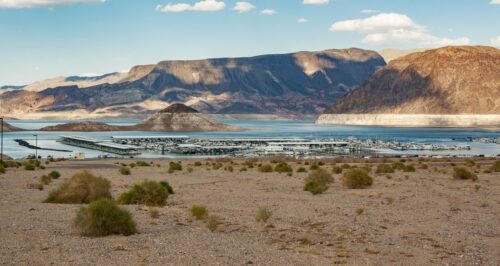 “Lake Mead, the largest reservoir in the United States, has fallen to a record low — yet another sign that the Colorado River system is spiraling further into crisis. Water levels on Thursday in Lake Mead dropped to 1,040.5 feet, below the previous record low of 1,040.58 feet set in July 2022, according to data published by the US Bureau of Reclamation Friday. The lake is now lower than it’s ever been since it was created nine decades ago. “Breaking the record is further evidence of the uncharted territory that the (Colorado River) Basin now finds itself,” said Jack Schmidt, director of the Center for Colorado River Studies at Utah State University. Lake Mead, which stretches along the Utah-Arizona border, was formed in the mid-1930s when the Hoover Dam was constructed on the Colorado River. The lake supplies water to more than 20 million people. It’s one of the most important reservoirs on this vital waterway, along with Lake Powell, which experts also fear could reach record low levels in the next few weeks. … ” Read more from CNN.
SEE ALSO:
- Lake Mead sets a new record low. It’s only the beginning, from the Las Vegas Review-Journal
- Lake Mead, the nation’s biggest reservoir, hits lowest level on record, from the Washington Post
AZ pushes for smaller Colorado River cuts as feds finalize water plan
“Arizona continues pressing its case for manageable Colorado River water supply cuts over the next two years even as it protests that a new federal framework for protecting the river unfairly targets the state for unacceptable losses in the longer term. U.S. Rep. Greg Stanton, D-Arizona, called the U.S. Bureau of Reclamation’s new 10-year river framework — one that allows for taking a large majority of the state’s river allocation if drought conditions worsen over the coming decade — “a total failure of leadership.” State officials remain hopeful that the agency will accept their offer of giving up a more modest 27% for at least the first two years plus voluntary conservation measures, but negotiations are ongoing. … The new federal framework includes that possibility, but also allows for up to 3 million in Lower Basin cuts when conditions require it. In any case, Arizona would be hit hardest because its Central Arizona Project has a relatively low legal priority, a condition that accompanied its congressional approval in 1968 when the river routinely flowed substantially more water. … ” Read more from Arizona Central.
Legislators warned that states must talk or face lawsuits over Colorado River
“As demands increase for a dwindling supply of Colorado River water, the seven states that depend upon the river must keep talking to avoid lawsuits or federal intervention, Wyoming State Engineer Brandon Gebhart told lawmakers Thursday. As it stands, there are rumblings that legal battles between states are imminent, Rep. Ken Chestek, D-Laramie, said during a meeting of the Legislature’s Select Water Committee in Cheyenne. Gebhart appeared before the committee to give an update on Colorado River water. His remarks were informational and the committee took no action. “I’ve heard talk about possible litigation between the Lower Basin states and the Upper Basin states, based on the recent federal EIS,” Chestek said while asking Gebhart his thoughts about the possibility. … ” Read more from Cowboy State Daily.
Phoenix lawyers up for Colorado River water fight
“The City of Phoenix has retained lawyers as it considers how to fight proposed Colorado River cuts that Mayor Kate Gallego says could disproportionately impact Arizona. “The City of Phoenix, like the State of Arizona, has retained lawyers who might be able to help us fight for your water,” Gallego told ABC15. A city spokesperson confirmed that the law firm Phoenix retained for Colorado River water issues is Culp & Kelly, LLP. The Phoenix City Council met in executive session Thursday to receive legal advice and discuss the city’s options following the release of the federal government’s final environmental impact statement for post-2026 Colorado River operations. … ” Read more from Channel 15.
Editorial: Nevada draws short stick in federal water plan
The Las Vegas Review Journal writes, “Arizona and Nevada will feel the brunt of the pain under a federal plan to reduce stress on the Colorado River. It’s an unjust solution, particularly for the Silver State. Last week, the Interior Department released a 10-year blueprint to address water shortages on the Colorado. The river has been over-allocated for a century, and long-term drought has severely worsened the problem in recent decades. The seven basin states — Utah, Wyoming, Colorado and New Mexico in the upper basin and California, Arizona and Nevada in the lower basin — have been unable to reach a consensus, leading the feds to step in. The government’s strategy imposes no mandatory water cuts on the Upper Basin states, while accepting a deal that the Lower Basin states previously made to reduce usage by 3.2 million acre-feet by 2028. But the plan calls for a reassessment of the situation every two years, leading to fears that Nevada, Arizona and California will face even steeper reductions by the end of the decade. … ” Read more from the Las Vegas Review-Journal.
Officials will not release cool water from a Colorado River reservoir to protect threatened fish
“Federal officials said Thursday they will not release cool water this year from one of the Colorado River’s major reservoirs, which would have protected a threatened native fish downstream but put more strain on already struggling hydropower production. In an email obtained by The Associated Press, the Bureau of Reclamation told various groups that water from Glen Canyon Dam in northern Arizona would not be released “due to significant hydropower generation concerns under already strained system conditions.” As the Colorado River and its once massive reservoirs shrink from overuse and climate change, officials were faced with a decision that pits conservation of the humpback chub — a threatened fish native to the river — against ratepayer costs for electricity. … ” Read more from the Associated Press.
SEE ALSO: Feds nix Grand Canyon fish protection flows below Lake Powell, from Arizona Central
Amid a Colorado River feud, water leaders ask if Arizona should keep paying for faraway snow
“The Colorado River is critical for Arizona. Its water comes out of kitchen faucets amid the suburban sprawl of the Phoenix area and is used to grow crops under the desert sun. But it starts hundreds of miles away, as snow in the Rocky Mountains. For years, a major Arizona water agency has been part of efforts to boost that snow through cloud seeding. Now, leaders of that agency are considering pulling funding from the program amid high tensions between states that share the Colorado River. Cloud seeding is a technology that can help add snow in critical high-mountain watersheds by releasing particles into the air that cannot create snow, but can essentially tell it where to fall. The Central Arizona Project runs a 336-mile-long canal system that carries water from the Colorado River across the desert and into the Phoenix and Tucson areas. Since 2007, it has been part of a collaborative effort to run cloud seeding equipment in the Rocky Mountains. … ” Read more from KJZZ.
Water policy realities: A conversation with former Navajo Nation President Jonathan Nez
Bob Hembree writes, “The last time Jonathan Nez and I spoke in person, masks were still mandatory, municipal halls were operating under strict social distancing protocols, and the former Navajo Nation President was navigating the height of a global pandemic. Years later, as we reconnected over a phone interview, the immediate emergency facing Northern Arizona had fundamentally shifted back to the state’s most enduring, existential challenge: water. From the shores of Lake Powell in Page to the copper-rich valleys of the Arizona Silver Belt, communities across Arizona’s 2nd Congressional District are bracing for a transformative regulatory shift. The U.S. Bureau of Reclamation has released its framework for post-2026 Colorado River operations, signaling mandatory supply cuts of 16 to 20 percent through 2028 for Arizona as federal authorities step in to avert critical reservoir depletion. With nearly 36 percent of the state’s total water supply tied directly to the Colorado River—and over half of that volume sustaining agricultural irrigation and livestock—the pending reductions threaten to trigger a cascading strain on municipal water providers, rural domestic wells, and regional economies. … ” Read more from the Silver Belt.
Water is Arizona’s lifeline and Scottsdale has been the leader in best practices
“Water has always shaped Arizona’s story. It determines where communities grow, where businesses invest and how future generations will live and prosper in the Sonoran Desert. It is not just another public policy issue. Water is Arizona’s lifeline. This reality is why I invest significant time in service on the Board of the Arizona Municipal Water Users Association (AMWUA), in the Protect Arizona’s Lifeline Coalition, and focusing on important education and discussion regarding Scottsdale’s water future. Together, we are working to ensure Arizona’s voice is heard as the federal government announces the new framework for the Colorado River — the most important water source for millions of people across the Southwest. For Scottsdale, the stakes are especially high. … ” Read more from the Arizona Independent News Network.
Hualapai Valley lawsuit tests Arizona’s authority to protect vulnerable groundwater basins
“A lawsuit brought by two out-of-state investment firms could make it harder for Arizona to protect vulnerable groundwater basins, threatening one of the state’s few tools for safeguarding rural water supplies. The companies, tied to real estate developers in Utah and Nevada, sued after the Arizona Department of Water Resources designated northern Mohave County’s Hualapai groundwater basin an Irrigation Non-Expansion Area in 2022. Under the designation, no new farmland can be irrigated, though existing farms can keep pumping. The investors argue ADWR should have used the state’s standard rulemaking process in creating the INA. A Maricopa County Superior Court judge agreed with the investors in January, rejecting ADWR’s position that state law allows it to use a separate procedure. The agency has appealed. If the ruling stands, creating future INAs could take far longer. That could give landowners more time to expand irrigation before restrictions take effect, ultimately leading to more groundwater pumping in some of the state’s most at-risk basins. … ” Read more from Gila Valley Central.
Blue Mesa, the largest reservoir in Colorado, is a quarter full. What are officials doing about it?
“Blue Mesa Reservoir, the largest in Colorado and an emergency savings bank for Lake Powell, has been on a crash course with critically low water levels this summer, the kind that halt power production and keep dam managers up at night. Officials have stepped in to cut dam releases and restrict water use, but they’re still facing grim possibilities if more rain doesn’t start falling soon. The expansive federal reservoir stretches for nearly 30 miles between the city of Gunnison and Black Canyon of the Gunnison National Park. But it’s not just a scenic lake — it’s part of the plumbing of the West. Water experts say Blue Mesa serves as a proxy for Colorado’s water conditions and conditions in Lake Powell, an immense reservoir on the Utah-Arizona border. This year, it’s a clear demonstration of the record dry conditions straining water and renewable power supplies across the West. “It’s kind of indicative of the entire state, when our largest reservoir is at less than 25%,” said Steve Pope, manager of the Uncompahgre Valley Water Users Association, which uses water from Blue Mesa for irrigating crops. … ” Read more from the Colorado Sun.
Colorado: Dry fire weather continues, but experts say moisture-laden monsoons may arrive later this month
“Coloradans can expect some rain this week before high temperatures return over the weekend. After that, experts have high hopes for monsoons to swing into Colorado from the southwest this month — though when exactly that will happen is still up for debate. Large fires have ignited across the state, killing three firefighters, destroying homes, causing evacuations, and prompting air quality concerns around Colorado. National Weather Service meteorologists were tracking storms this week that dropped moisture on the Western Slope before raising the chance of rain for the Front Range and Eastern Plains. It’s not quite the start of the monsoon season, they said, but the moisture and humidity are offering a short reprieve from the hot, dry and windy conditions that contribute to rapid fire growth. … ” Read more from Water Education Colorado.
In national water news today …
America’s water systems are getting hacked amid security gaps: “No one guarding these systems”
“A wave of cyberattacks targeting U.S. public water systems is heightening concerns about security gaps at utilities, with government officials warning that hackers are exploiting a particularly vulnerable industrial computer, according to security experts. U.S. water systems in at least a dozen states have been targeted by the attacks, which officials suspect may be linked to Iran-backed hackers. Officials say the attacks have not affected drinking water, and utilities have quickly regained control of their systems. But cybersecurity experts said the incidents expose longstanding weaknesses in thousands of public water systems, many of which rely on poorly secured, internet-connected industrial computers. … ” Read more from CBS News.
SEE ALSO: Why US water systems are vulnerable to foreign cyberattacks, from CNN

