
Several news sources featured in the Daily Digest may limit the number of articles you can access without a subscription. However, gift articles and open-access links are provided when available. For more open access California water news articles, explore the main page at MavensNotebook.com.
On the calendar today …
- WEBINAR: Getting to Efficiency: Data Fundamentals for UWUO Reporting from 10am to 11am. The second session of Getting to Efficiency, the California State Water Resources Control Board’s technical assistance webinar series for Making Conservation a California Way of Life will focus on data: what you need, where to find it, and how to make sure it’s ready for UWUO reporting. We’ll cover common data quality issues, file types and units, and take a look at how other reporting programs like water loss and SAFER are sourcing their data. You’ll leave knowing which datasets are critical to your compliance, where to find them, and what resources are available to help. Click here to register.
- MEETING: Irrigated Lands Regulatory Program (ILRP) Stakeholder Meeting from 10am to 12pm. The focused discussion topic is ILRP alignment with CV-SALTS Surveillance and Monitoring Program. Click here for the full agenda and registration link.
- WEBINAR: San Francisco Bay-Delta Estuary 2025 Lidar Collaboration from 12pm to 1pm. The San Francisco Estuary Wetlands Regional Monitoring Program (WRMP), the California Department of Water Resources, and the Delta Stewardship Council collaborated to collect lidar data across the entire San Francisco Bay-Delta Estuary at sub-ten-centimeter vertical accuracy. Join us to learn how this lidar project provides high-resolution, region-wide elevation data offering an unprecedented view of the landscape, landforms, and habitat conditions. Fine-scale features captured across the estuary make this a shared foundation for researchers, engineers, and land managers working to mitigate flood risk, improve habitat restoration, monitor subsidence, and more. Click here to register.
- WEBINAR: Your Coast, Your Economy, Your Voice – Defending California’s Coast from Federal Threats from 12pm to 1pm. California’s coast faces unprecedented federal threats that could weaken long standing protections, expand offshore oil drilling, and limit how Californians receive information and shape critical decisions impacting our coast. Join Secretary Crowfoot and community and business leaders for a timely update on what’s at stake, how California and other coastal states safeguard communities and ecosystems, and how residents can make their voices heard at this pivotal moment. Click here to register
- LUNCH-MAR: Groundwater Demand Management in California: An Overview of Case Studies, Implementation, Economics & Policy from 12:30pm to 1:30pm. Presenters: Groundwater Demand Management Network – Executive Team Members: Isaya Kisekka – Director, UC Davis Agricultural Water Center, Jeff Davids – Supervising Engineer, Davids Engineering Sneak Peek: California’s Groundwater Sustainability Agencies are pioneering diverse approaches to GDM, from pumping allocations and recharge credits to tiered fee structures and market-based incentives. This session examines real-world case studies across the state, comparing measurement methods, funding mechanisms, and the key elements that define successful GDM communities, while exploring both lessons learned and strategic wins in basin-scale implementation. To join the Lunch-MAR Session, click here.
In California water news today …
Studies look at “less bad” options for farmers facing groundwater cutbacks
“Growing more drought-tolerant crops could be an option for San Joaquin Valley farmers facing severe groundwater cutbacks, according to two joint studies by the Public Policy Institute of California (PPIC). The studies looked at growing winter crops or forage using less water as an economic alternative to straight out fallowing ground. “This is not a solution or means of (groundwater) demand reductions, but a way to make that fallowing less bad,” Caitlin Peterson, PPIC Associate Director and one of the authors of the studies, told SJV Water. “How can we still achieve that reduction in pumping but not reduce productivity?” The studies looked at types of crops that could be grown with much less water and the economic viability of those crops. … ” Read more from SJV Water.
How much does wildfire reduce forest water use and increase runoff?
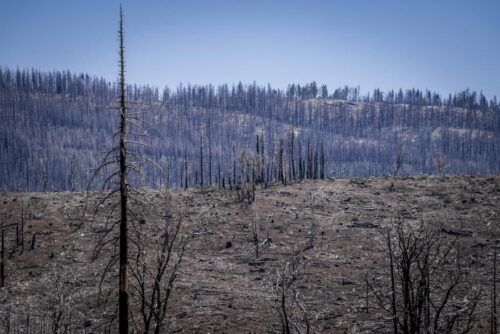 “Wildfire is reshaping the forests of California’s Sierra Nevada and affecting the water those forests supply to downstream users. A paper published in Hydrology and Earth System Science reports that the effect of wildfire on potential runoff from the state’s main water-supply watersheds has increased in the period 1985-2023, most markedly since 2019. To measure how much water forests use, researchers from UC Merced, UC Berkeley and UC Irvine used data on evapotranspiration, the measure of water evaporating from soil and released by plants. The data drew from satellite imagery, ground measurements and climate records. Annual potential runoff was calculated by subtracting these evapotranspiration values from annual precipitation. They verified their findings with full-natural-flow values for the study area, which includes the main watersheds serving California’s State Water Project and Central Valley Project. Full-natural flow is calculated as the runoff that would occur at a stream-gauging station in the absence of upstream diversions and changes in reservoir storage. … ” Read more from UC Merced.
Testimony: Water availability and impacts on California’s agriculture
“PPIC Water Policy Center associate director Caitlin Peterson testified before a joint informational hearing with the Senate and Assembly Agriculture Committees, “The State of Agricultural Production in California.” Here are her prepared remarks. Agriculture is California’s biggest water user: it uses 40 percent of all water in the state, or 80 percent of all water available for use by homes and businesses. While the value of farm output has steadily increased in recent decades, the amount of water and land used by agriculture has remained steady. This reflects not only the growth in importance of high-value specialty crops in California’s crop portfolio, but also advances in farm water use efficiency and increasing productivity across crop types. … ” Read more from the PPIC.
Upholding Tribal Beneficial Uses in water management
“On July 22, 2026, the State Water Resources Control Board (State Water Board) held a workshop about Draft Guidance on designating Tribal Beneficial Uses (TBUs). The phrase “designating TBUs” means the State will officially identify and recognize specific tribal uses. The State will also call out specific water bodies in which those uses are explicitly recognized and develop implementation plans to protect such uses in those water bodies. The meeting was an important step for the state, as well as for Tribes recognized by the U.S. government and Tribes recognized by the State of California. The effort to develop TBUs has been decades in the making. The workshop is part of a process now underway. A written request from a Tribe to propose specific uses for specific waterbodies will initiate a TBU designation process. … ” Read more from the California Sportfishing Protection Alliance.
A gnarly situation: High-elevation discovery raises new questions about which California trees will survive climate change
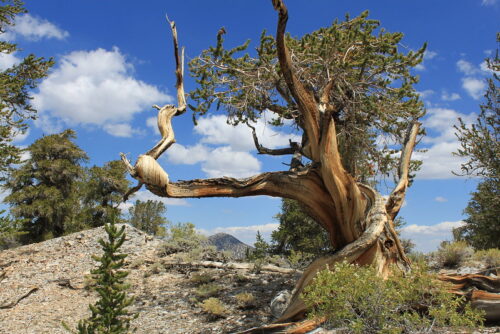 “Hugh Safford was hiking at 12,657 feet in California’s Sequoia National Park two years ago when he spotted something strange. It was a young Jeffrey pine, a tree that usually occurs farther downhill. Safford was hiking at treeline, the forest threshold where trees still grow, but fewer and farther between. Only the toughest species can survive the strong winds, heavy snowpack, and freezing temperatures found there. Safford is a forest and fire ecologist with the University of California Davis Environmental Science and Policy department. He knows subalpine forests are on the leading edges of climate change — and that this Jeffrey pine (Pinus jeffreyi) didn’t belong. So how had it gotten there? Were there others? And if so, what did that mean? The answers could portend unexpected competition at California’s treeline — and a rising threat from wildfire. … ” Read more from The Revelator.
California Forever: Solano Shipyard and Solano Foundry will not work without homes
 “In recent weeks, there have been discussions about possible legislation that would help bring major shipbuilders and manufacturers to Solano County. Some elected officials have voiced support for a faster permitting pathway for the Solano Shipyard and the Lambie Industrial Park, but not for the Suisun Expansion. This is a mistake. Narrow legislation that excludes the Suisun Expansion will not bring major employers to the county. For context, the Suisun Expansion includes the Solano Foundry, an evolution of the existing Lambie Industrial Park, located further away from Travis AFB to protect its air space, as well as new neighborhoods, homes, shops, schools, and parks. Here’s why the Suisun Expansion is essential … ” Read more from California Forever.
Vacaville Reporter: California Forever holds jobs hostage for housing streamlining
“California Forever cannot afford to follow through on its promises to bring jobs with its Solano Shipyard and Solano Foundry proposals if the residential elements of its unpopular Suisun Expansion Specific Plan are not streamlined and permitted, according to a blog post released by the company Tuesday afternoon. “Some elected officials have voiced support for a faster permitting pathway for the Solano Shipyard and the existing Lambie Industrial Park, but not for the Suisun Expansion,” the blog post reads. “The Suisun Expansion includes the Solano Foundry, an evolution of Lambie Industrial Park, located further away from Travis AFB to protect its airspace, as well as new neighborhoods, homes, shops, schools, and parks. This is a mistake. Narrow legislation that excludes the Suisun Expansion will not bring major employers to the county.” Approval of a “shipyard and foundry only” plan would not be a compromise, the company said, but “a guarantee that these employment centers are approved on paper but never get built.” … ” Read more from the Vacaville Reporter.
In commentary today …
Growers deserve groundwater rules they can understand, afford and that are fair
Michelle Paul, Executive Director of the California Farm Water Coalition, writes, “This recent Los Angeles Times article highlights real challenges that California’s farmers now face under the state’s Sustainable Groundwater Management Act, or SGMA (“California’s push to limit groundwater pumping could leave small farmers in the dust,” July 31). Growers deserve groundwater rules they can understand, afford and that are fair. SGMA is a statewide framework, but it depends on local implementation. Issues such as fee structures, allocations and outreach are local implementation decisions. The framing in the article oversimplifies the problem farmers face and distracts from real solutions. … ” Continue reading this letter to the editor of the LA Times.
Pulling the rug out from under: “Updating” Water Rights Decision 1641
Chris Shutes writes, “A July 11, 2026 article in Valley Ag Voice reports that Adam Nickels, acting Regional Director for the California-Great Basin region of the Bureau of Reclamation, is on record as proposing to improve “water supply reliability” by “updating” Water Rights Decision 1641. The article quotes Mr. Nickels as follows: “We actually know today that D-1641 and the regulations that are locked into D-1641 that touch on our water rights and limit us from pumping; we know those aren’t working,” Nickels said. “We know those aren’t helping fish, but it is built into regulation.” Countless public interest organizations have criticized D-1641 as inadequately protective of fish ever since its adoption, true enough. But the lines of criticism have generally been that D-1641 requires too little water for fish protection from Mr. Nickels’s Central Valley Project (CVP) and its state counterpart, the State Water Project (SWP). … ” Read more from the California Sportfishing Protection Alliance.
In regional water news and commentary today …
NORTH COAST
Water board to weigh enforcement as Little River pollution persists at Moonstone Beach
“State regulators will consider escalating enforcement this week against a landowner accused of years of illegal dumping, grading and unmanaged cattle grazing along Little River, where fecal bacteria levels have remained high for more than a decade. The North Coast Regional Water Quality Control Board will meet on Thursday in Crescent City to decide whether to refer the case to the California Attorney General’s Office, a rare step that could lead to judicial civil enforcement after years of violation notices and warnings. “We’ve known that there are elevated fecal bacteria levels in Little River for many, many years,” said Jen Kalt, executive director of Humboldt Waterkeeper. “It’s been documented for 15 years with various agencies giving notice of violation, and yet the landowner continues to act like they can do whatever they want, even though the river belongs to all of us.” … ” Read more from the Eureka Times-Standard.
Cannabis farming is changing streams in California, experts warn
“Groundwater pumped to irrigate cannabis crops in California’s Emerald Triangle can cause some streams that normally run year-round to dry up entirely during summer, say researchers from Simon Fraser University, the University of California, Berkeley and the United States Department of Agriculture. A new study reveals how groundwater pumping in the region’s rugged mountain headwaters may reduce streamflow that supports salmon habitat and feeds larger river systems downstream. “People often think of groundwater or aquifers as a separate resource from streams. But in many landscapes, they’re connected parts of the same system,” says Jesse Hahm, assistant professor of geography and co-author of the study. … ” Read more from PhysOrg.
SEE ALSO: Cannabis cultivation is draining California streams, scientists warn, from Bioengineer
SIERRA NEVADA
Restoration action continues late August at the Salmon & Packer Creek Aspen Restoration Project
“The second year of implementation of the Salmon & Packer Creek Aspen Restoration Project will begin late August 2026. Located in Sierra County on Tahoe National Forest lands, this project extends from the junction of Packer Lake Road and Gold Lakes Highway up to Packsaddle Campground. This project will use large machinery and hand crews to selectively thin and remove competing conifers to support healthy aspen regeneration, decrease fuel loading, increase forest resilience, and increase the overall health of the riparian ecosystem in Salmon and Packer Creeks. Last year, 14 acres were treated by thinning and removing conifers. In this second year of implementation, the following actions are planned … ” Read more from the South Yuba River Citizens League.
Cornerstone Lake Tahoe clarity program shields iconic lake from record amount of runoff
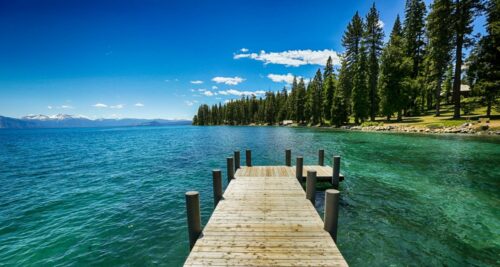 “Protecting Lake Tahoe’s iconic water quality, a joint California-Nevada effort, prevented a record quantity of fine-grained sediment and other pollutants from reaching the lake’s dazzling blue waters in 2025, according to an annual performance report released today. By restoring wetlands and streams, limiting dust from roads and construction sites, and improving stormwater systems and other anti-pollution actions, partners in the Lake Tahoe Total Maximum Daily Load Program (TMDL program) kept an estimated 736,600 pounds of sediment known to harm clarity and water quality out of the lake. The performance report by the Lahontan Regional Water Quality Control Board, which is part of the California Environmental Protection Agency, and the Nevada Division of Environmental Protection found that an estimated 5,875 pounds of nitrogen and nearly 2,120 pounds of phosphorus were prevented from reaching the lake in 2025, all annual record highs since the program began tracking these statistics in 2016. “Lake Tahoe is an ecological treasure we are committed to protecting now and for future generations,” said Yana Garcia, California Secretary for Environmental Protection. “As we continue to enjoy this special place, we applaud our statewide and interstate partnerships. Without countless regional partners, and our colleagues in Nevada, the lake’s extraordinary water quality this summer and in recent years would not be possible.”… ” Read more from the Lahontan Regional Water Quality Control Board.
SEE ALSO: Record pollution reductions help protect Lake Tahoe clarity, from Channel 2 News
Major philanthropic gift supports completion of Lake Tahoe’s Historic Meeks Ridge Trail
“The Tahoe Area Mountain Biking Association (TAMBA) announced a transformational $250,000 gift from local philanthropists Kyle and Jessica Aster that will fully fund the 2026 work season on the Meeks Ridge Trail, one of the organization’s most ambitious trail projects to date. The generous donation will enable TAMBA to push toward its ultimate goal of completing the final two miles of trail, reconnecting Meeks Bay to Lost Lake on Tahoe’s West Shore for the first time in decades and bringing a once-lost historic route back to life. … ” Read more from the Tahoe Daily Tribune.
SEE ALSO: $250k gift funds construction of Lake Tahoe’s historic Meeks Ridge Trail; Launches new era for trail network, from South Tahoe Now
Sheriff investigating who is behind tree poisoning at Tahoe beach
“The Washoe County Sheriff’s Office is investigating a series of intentional tree poisonings at Burnt Cedar Beach in Incline Village after multiple trees were found with a substance of strong odor around their base. The first (recent) incident was discovered on July 24, and a second on Sunday, Aug. 2. The sheriff’s office says these latest occurrences are very similar to incidents reported at Burnt Cedar Beach in prior years. Since 2022, investigators have documented multiple cases in which a substance has been poured around the bases of trees or placed into holes drilled near their roots. Soil samples were collected from the area and had a strong odor consistent with previous tree-poisoning incidents at the property. … ” Read more from the Tahoe Daily Tribune.
SEE ALSO: Lake Tahoe tree poisoning investigation grows after more trees targeted, sheriff says, from CBS News
SACRAMENTO VALLEY
Gallagher introduces water reliability bill
“Rep. James Gallagher has introduced legislation in Congress that would expand federal support for water storage projects, habitat restoration and infrastructure improvements throughout the Sacramento River Basin. The measure, called the Doug LaMalfa Sacramento River Basin Water Security and Reliability Act, was introduced July 31 in the U.S. House of Representatives. If approved, it would extend federal authorities for water storage projects, authorize funding for ecosystem restoration and create a committee to coordinate water management efforts among federal agencies. Among the bill’s provisions is continued federal support for water storage projects, including the proposed Sites Reservoir. The legislation also would allow federal participation in operations and maintenance costs for qualifying projects that provide public benefits. Gallagher said the proposal is intended to improve long-term water reliability while supporting environmental restoration. … ” Read more from the Gridley Herald.
California’s Sacramento Valley sank during drought pumping, and the damage may be permanent
“Scientists say the Sacramento Valley sank more rapidly than expected during California’s 2020 to 2022 drought and that some of the harm underground cannot be undone. As a result, one of the region’s most important backup water supplies may have less room to hold water when dry conditions return. According to a new study, pumping surged so much during California’s 2020 to 2022 drought that parts of the Sacramento Valley dropped by nearly a foot per year. The research also concluded that the aquifer permanently lost some of its storage capacity, according to The Sacramento Bee. Study co-author Kristel Chanard said the lost capacity is about equal to San Francisco’s annual water use. … ” Read more from The Cool Down.
Butte County water commission to discuss AI data centers
“The Butte County Water Commission will discuss what the process would be if there was a proposal to build an AI data center in Butte County at its meeting Wednesday afternoon. The agenda item has sparked controversy on social media over the last couple of days, with some urging public participation to express opposition. The county responded with a statement clarifying that it has not received an application or development proposal for a center. The county said the commission requested a general discussion to better understand the process for what would happen if a proposal was submitted. … ” Read more from Action News Now.
Hamilton City: Celebrating restoration built to protect a flood-prone town
“Chris Carrizales was born and raised in Hamilton City, a Northern California town of about 2,200 along the Sacramento River, the state’s largest waterway. The town also sits within a historic floodplain, and an aging levee built in 1906, weakened by flooding, erosion, and time, became unreliable in keeping Hamilton City safe. Seasonal rains turned into flooding, which has forced evacuations six times since the 1980s (1983, 1986, twice in 1995, 1997, and 1998). “This community is resilient, cooperative, and we work together to make sure we’re all safe,” Carrizales said. “But there’s always the nagging feeling that this will be the one that does something Hamilton City won’t be able to bounce back from.” … ” Read moire from River Partners.
NAPA/SONOMA
Study: Napa wine compliance costs near 18% of production
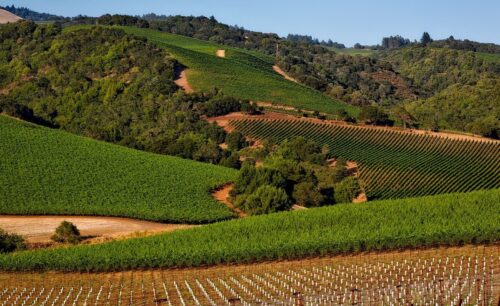 “Regulatory compliance costs add nearly $24 to every case of wine produced and sold by a small Napa County winery, accounting for about 17.5% of production costs, according to a new study examining the cumulative impact of federal, state and local regulations on the wine industry. The report, released in July by Cal Poly, San Luis Obispo, is the second installment of a broader study commissioned by the Napa County Farm Bureau. Part 1, released earlier this year, found regulatory compliance costs accounted for about 8% of production costs for a small Napa County vineyard and nearly 12.5% for a large vineyard. The new report, authored by Cal Poly agribusiness professors Lynn Hamilton and Michael McCullough, shifts the focus from vineyards to wineries, documenting regulatory costs for an 8,500-case Napa County winery across production and direct-to-consumer sales. “This study is the first of its kind to document regulatory costs of a Napa County winery as well as any type of alcoholic beverage production,” the authors wrote. … ” Read more from Ag Alert.
BAY AREA
Navy contractor doesn’t have to pay Hunters Point residents in toxic cleanup suit, judge rules
“Despite years of allegations that fraudulent radiation cleanup work left hundreds of Hunters Point Shipyard residents with devalued properties, Tetra Tech EC will pay the homeowners nothing after a judge ruled that the former Navy contractor is shielded by a federal law. U.S. District Judge James Donato ruled in Tetra Tech EC’s favor on Tuesday, finding that the homeowners’ claims fall under the Price-Anderson Act — a federal law that governs who can be sued over accidents or contamination involving radioactive materials. Donato granted a summary judgment motion, effectively ending the case. … ” Read more from the San Francisco Chronicle.
Valley Water awards nearly $2B construction contract for Anderson Dam retrofit
“Valley Water’s Board of Directors last week announced it has awarded a $1.88 billion to rebuild Anderson Dam east of Morgan Hill. The contract for the Anderson Dam Seismic Retrofit Project, to begin in early 2027, was awarded to Flatiron Dragados Sukut ADSRP Joint Venture and will take seven years to complete. At a total cost of about $2.8 billion, the Anderson Dam Seismic Retrofit Project is one of the largest and most complex infrastructure projects in Valley Water’s history. The Sukut firm is a Southern California company that is rebuilding the Isabella Lake dam project in Kern County. The Flatiron Dragados firm is a Spanish company that is a major contractor on the California High Speed Rail Project. … ” Read more from the Gilroy Dispatch.
CENTRAL COAST
Tahra Goraya, Economy Matters: What happens to our fields happens to us all
“Drive through the Salinas Valley in almost any season and you’ll see it: mile after mile of lettuce, strawberries and broccoli, tended by crews working before sunrise to keep the nation’s produce aisles stocked. It’s easy to take for granted. It shouldn’t be. Agriculture isn’t just part of the Monterey Bay region’s identity — it’s the backbone of its economy, generating well over $11 billion a year and supporting tens of thousands of local jobs, either directly on farms or through the packing houses, trucking companies, and equipment dealers that depend on them. Roughly one in every five jobs in Monterey County traces back to agriculture in some way. That scale is also what makes the region vulnerable. Two forces in particular — public health scares and shifting trade policy — can shake this economy in ways that ripple far. … ” Continue reading at the Monterey Herald.
SAN JOAQUIN VALLEY
Hanford-area groundwater agency moves forward with “necessary evil” fee elections
“One Kings County groundwater agency is gearing up to ask its growers to pay land assessment and pumping fees in order to fund agency policies that it hopes will help the region avoid state intervention. Mid-Kings Groundwater Sustainability Agency (GSA) approved two new potential fees during its July 28 meeting. One must be approved through a Proposition 218 election and would charge landowners $26.84 per acre of land. The board also approved a $19.24–per-acre-foot-feet fee under Proposition 26. “I don’t like to do protests or rallies or vote myself an increase in taxes, but I find that this is a necessary part of evil here that we have to do this to stay in business,” Board member Doug Verboon said. … ” Read more from SJV Water.
SOUTHERN CALIFORNIA
Malibu urges faster action to protect PCH from erosion
“Malibu officials Tuesday urged Caltrans and other state agencies to accelerate permanent efforts to stabilize Pacific Coast Highway in areas threatened by coastal erosion following the Palisades Fire. City officials said they have been working with Caltrans and other agencies to assess worsening erosion along the highway in the burn area, warning that winter storms and expected El Niño conditions could further undermine the roadway if permanent protections are not in place. “The City of Malibu and Caltrans have been working side-by-side to evaluate conditions and coordinate the next steps to protect public safety,” City Manager Joe Irvin said in a statement. “While we appreciate that Caltrans has committed to important interim measures, the erosion continues to accelerate. Malibu is requesting immediate, coordinated action on a permanent stabilization strategy with a clear timeline before winter storms arrive.” … ” Read more from the LA Daily News.
Along the Colorado River …
Band-Aid, not a cure: federal Colorado River plan leaves states guessing every two years
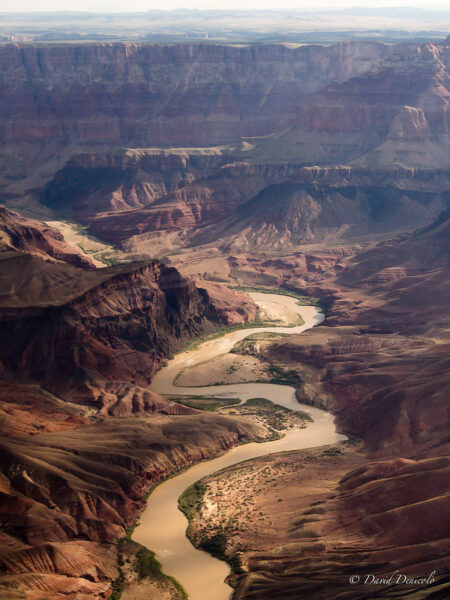 “Dire water conditions, missed deadlines and uncertainty on the Colorado River are complicating critical water decisions in California. No single state, water agency or federal official has shown the power, or the will, to break the deadlock among Colorado River basin states over how to share the dwindling supplies. … The U.S. Bureau of Reclamation, the federal steward for the river under the Department of the Interior, last week released a 10-year framework that establishes rough parameters for managing the river, but imposes no specific long-term plan. The federal provisions include cuts of up to 40% to the shared supply of California, Arizona and Nevada in the lower basin. They also allow releases from Lake Powell, which collects flows from the upper basin, to dip low enough they risk violating a legally required threshold for water deliveries to downstream states. These dramatic cuts are an upper limit for future operations: The federal government plans to roll out more detailed management plans every two years if the states continue their impasse. … ” Read more from Cal Matters.
Felicia Marcus on the Colorado River: “A new bridge with another expiration date”
“In this conversation, Felicia Marcus, the William C. Landreth Visiting Fellow at Stanford’s Water in the West program and former chair of the California State Water Resources Control Board, assesses the plan federal officials have just accepted to cut Colorado River use through 2028 which she calls a large band-aid rather than the tourniquet the basin needs. … Q: It was reported on July 23, that the federal government accepted a plan for California, Arizona and Nevada to cut Colorado River use through 2028, with California taking roughly a 12 percent reduction. You called it bigger than a band-aid, but smaller than the tourniquet we really need. What’s the actual tourniquet? A: That’s the much harder question. We’ve been living beyond our means on the Colorado for more than 25 years, watching the largest reservoir in the country draw down year after year. We arrested it – the agreements among the seven states were pretty good and probably postponed this day by about six years. But over the last few years, as we’ve approached this sword of Damocles, we haven’t been able to make much progress. … ” Read more from The Planning Report.
Colorado River Indian Tribes pushes back on federal water plan
“Leaders of the Colorado River Indian Tribes (CRIT) are criticizing the federal government’s approach to new water-sharing plans for the Colorado River. The tribe, which has a reservation in far western Arizona, holds some of the oldest, largest and most legally untouchable water rights in the state. CRIT holds the rights to nearly a quarter of Arizona’s share from the Colorado River. Amelia Flores, CRIT’s chairwoman, said the tribe “appreciates the continued engagement” with the Bureau of Reclamation and is “encouraged” by some of the new plan’s substance, but called out the federal agency for a rushed process and asked for more consultation in the future. … ” Read more from KJZZ.
SEE ALSO: New Colorado River plan causes concern and uncertainty for some tribal nations in Arizona, from KNAU
Colorado River cuts could force a new era of water conservation in the Southwest
“New federal plans for the Colorado River could force deeper water cuts across the Southwest, pushing cities to expand conservation efforts, recycle wastewater and invest in costly new supplies. As Lake Powell sinks toward critical levels, the Colorado River crisis is reaching into everyday life across the Southwest, where cities are limiting outdoor watering, recycling wastewater and investing in desalination to keep taps running. The pressure intensified Friday when the U.S. Bureau of Reclamation released a final environmental review outlining its preferred framework for managing Lake Powell and Lake Mead after the current operating rules expire. Arizona, California and Nevada could face combined reductions of up to 3 million acre-feet of Colorado River water annually through 2036, with the actual cuts determined every two years as conditions change, The Associated Press reported. … ” Read more from AccuWeather.
SEE ALSO:
- Feds release Colorado River framework for next 10 years, from Ag Alert
- The Colorado River water crisis is about to get worse, video from Arizona Central
- Lake Mead reveals mountaintops hidden for decades as lake recedes, from SF Gate
- The Data Center-Driven Drought is Coming for the West, from the Center for Economic and Policy Research
- Feds’ plan for Colorado River tries to keep Powell and Mead infrastructure afloat without consensus from states, from Aspen Public Radio
As the Grand Canyon’s river is drying up a $50 million industry is going with it
“Low flows down the Colorado River through the Grand Canyon have created problems with the ecology of the river and commercial boating. Flows have dropped significantly over the last year due to the worst snow drought on record this past winter and fewer releases from Glen Canyon Dam to help prop up Lake Powell. “The Grand Canyon is one of the most iconic national parks in the country. It’s a destination for more than 7 million people a year. It’s a major economic driver for the state of Arizona,” Sinjin Eberle, senior director of regional communications at American Rivers, told KTAR News 92.3 FM. … ” Read more from KTAR.
Why Lake Havasu, Colorado River’s party lake, isn’t allowed to run out of water
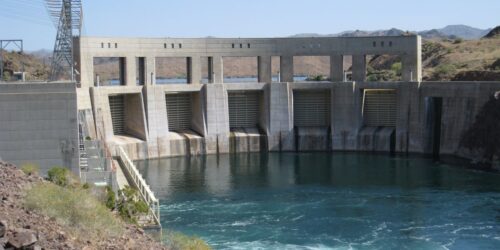 “At this point, it’s old news to say that the Colorado River is in crisis. As of the end of July, Lake Mead’s water level sat around 1,041 feet, 188 feet below the full pool level of 1,229 feet — and nearing the all-time low level of 1,040.50 feet, set in July 2022. Combined, the water storage levels of Lake Mead and Lake Powell recently dropped to the lowest point that they’ve ever been, with the two reservoirs holding about 12.67 million acre-feet of water combined as of mid-July. That’s the lowest recorded amount since 1957, when the dam that filled Lake Powell was still under construction. But on nearby Lake Havasu, the water’s not just fine; it’s perfect for an endless summertime party. … ” Read more from SF Gate.
A 12-year study on the Colorado River Delta and lessons learned
“In June, a group of four scientists released their report on a 12-year study of environmental flow impacts on the Colorado River Delta. The State of the Colorado River Delta: Effects of Environmental Water Deliveries, 2014–2025 summarizes years of monitoring observations and measurements recorded by scientists on a 40-member team to document the hydrological, biological, and social effects of the environmental water deliveries mandated by the U.S.-Mexico Water Treaty of 1944, a pact that controls how the U.S. and Mexico share water from the Colorado River, Tijuana River, and the Rio Grande. The report highlights birds and other wildlife attracted to the 1,381 acres of restored riparian vegetation, downstream rises in groundwater levels, 39 river-miles of flowing river, and community benefits, including employment, recreation, and engagement. It warns, however, that these successes are not self-sustaining. The report concludes with recommendations, based on the lessons learned during this 12-year period, for how to support the restoration sites and river channel in the future.
Surprise says water future remains secure despite Colorado River uncertainty
“As Arizona communities prepare for the possibility of future Colorado River water reductions, Surprise officials say the city’s water portfolio remains strong enough to support both current residents and future growth. The city finds itself in a unique position: one of the Valley’s fastest-growing communities while also navigating ongoing uncertainty surrounding the Colorado River and negotiations over its long-term management. Despite those challenges, Surprise Water Department Director Michael Boule said the city has significant capacity available. “Currently, we’re only using 50 percent of that water portfolio,” Boule said. “The other 50 percent is set aside for growth or potential reductions.” … ” Read more from Channel 15.
A cloud-seeding company claims it added 2 billion gallons of water in Utah. Experts have their doubts.
“Kevin Clyde’s mind is always in the clouds. As a water district board member in southeastern Utah, he’s constantly checking a patch of sky near the La Sal Mountains. He swears he’s seen more wisps of white near a new cloud seeding station in the area — one that, he hopes, has prompted more rain and snow in his region. “It may be just wishful thinking, but it looks to me like it’s working,” said Clyde, who serves on the board of the Grand County Water Conservancy District based in Moab. Proving that, however, is another issue entirely. The Utah district has reservoirs that shrink in record-dry years like 2026 and limited underground aquifers. Water managers, like Clyde, are trying to ensure the supply lasts for decades into the future. That is, in part, why the district agreed to launch one of two new ground-based cloud seeding stations. … ” Read more from the Colorado Sun.
In national water news today …
How hackers attack municipal water systems – and why the utilities are so vulnerable
 “Hackers tried to break into at least 30 municipal water systems in Minnesota on July 26-27, 2026. Since then, Michigan and five other states have reported similar cyberattacks. The attackers did not try to infiltrate the computers that utility offices use. Instead, they tried to seize control of small computers in equipment like pumps and valves that deliver drinking water to millions of people. The utilities countered the attacks by shutting down the control computers and sending personnel out into the field to operate equipment manually. Utility officials have said that water remained safe to drink. As a scholar who researches cyber conflict, I find that the methods used in these incidents are typical of international cyberattacks. Initial suspicion has fallen on hackers allegedly aligned with Iran, but the U.S. government has yet to attribute the attack to anyone. How can someone from far away seize control of a water system and possibly shut off the flow or taint the water? … ” Read more from The Conversation.
SEE ALSO: What to Know About the U.S. Water Systems Cyberattacks, from Time Magazine
Rising seas are swallowing the vast majority of US coastal wetlands
“Along the three coasts of the contiguous United States, a silent race unfolds. Fueled by climate change, sea levels rise faster than at any time in recent geologic history. Meanwhile, coastal wetlands cling to a slim lead, lifted on newly accumulated sediments or moving inland as encroaching tides nip at their heels. Now, the first national-level study of this competition reveals that coastal wetlands — among the country’s most valuable ecosystems, protecting infrastructure and providing homes for wildlife — are losing ground: 84% are gradually inundating, with many on track to transform into open water. Wetlands along the Gulf Coast are generally faring the worst while certain stretches of the Atlantic Coast appear more resilient. Some wetlands may be able to migrate inland or build up sediment fast enough to keep pace with sea level rise, perhaps with the right help from land managers. … ” Read more from AGU.
Low water levels in the Danube revealing Nazi shipwrecks
“Europe’s second-longest river, the Danube, has reached levels so low that sunken German battleships from World War II have emerged from the dried-out riverbed. Near Prahovo, a Serbian port where the Danube separates the country from Romania, a rusty hull and broken mast has become visible where the Nazis once purposely sunk their own ship to avoid capture by the Russians. The Serbian government has long sought help from the European Union to remove what are believed to be hundreds of ships, some still laden with weapons, from the river floor. But pinpointing their exact locations without accidentally disturbing the explosives still onboard has been an issue. … ” Read more from DW.

