
Several news sources featured in the Daily Digest may limit the number of articles you can access without a subscription. However, gift articles and open-access links are provided when available. For more open access California water news articles, explore the main page at MavensNotebook.com.
On the calendar today …
- MEETING: State Board of Food and Agriculture from 10am to 2:15pm. Agenda items include a presentation on the CDFA and CalEPA Regulatory Alignment Study, a presentation on the farm to school program, and a discussion on specialty crop block grant program priorities. Click here for the agenda.
- WEBINAR: Managing Groundwater with Small Farms in Mind from 12pm to 1pm. Join UC Small Farms Network and Community Alliance with Family Farmers for a webinar discussion on their newly published report “Managing Groundwater with Small Farms in Mind”. The report is based on three years of statewide research, surveys, focus group discussions, and document review with small-scale farmers. This webinar discussion will highlight the risks, barriers, and opportunities for small farms in long-term groundwater management. Click here to register.
In California water news today …
Judge says environmental groups fell short in bid to pause California water projects
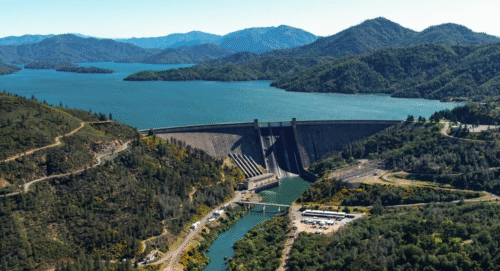 “A federal judge on Monday opted to impose no restrictions on operations for a massive California water conveyance system, determining environmental groups failed to meet their burden. U.S. District Judge Jennifer Thurston wrote that the Center for Biological Diversity and other plaintiffs must make a heightened showing before she will issue a preliminary injunction over the U.S. Bureau of Reclamation’s operation of Shasta Dam and Reservoir this summer and fall. The ruling comes after Thurston’s decision in early July to deny a temporary restraining order on water operations, while still leaving open the possibility of a preliminary injunction. The groups argued the bureau’s operation of the Central Valley Project, including Shasta Dam, and California’s State Water Project failed to comply with a 2024 biological opinion issued under the Endangered Species Act. They asked the Joe Biden appointee to reduce water releases from Shasta and require the government to adopt a new operating plan. … ” Read more from the Courthouse News Service.
Climate change made the West’s snow drought far more likely—but it’s still not the new normal
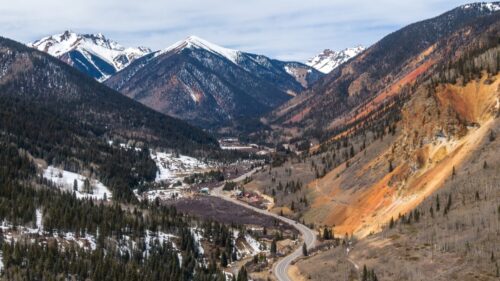
“The American West’s historic snow drought in 2026 depressed skiers, heightened wildfire risks and constrained already scarce water supplies. Was this extreme event just a stroke of bad luck in a region where snowfall naturally varies from year to year? Or did the record-low snowpack bear the fingerprints of climate change? A new study in the Proceedings of the National Academy of Sciences concludes that global warming more than quadrupled the odds of the West’s snow drought when compared to the preindustrial climate, before human greenhouse gas emissions began heating the planet. In the Upper Colorado River Basin, where snowmelt supplies most of the water in a river that serves tens of millions of people and irrigates millions of acres of farmland, climate change’s estimated influence was even greater. Researchers concluded the snow drought was about 14 times more likely, although that estimate is more uncertain because the event was so exceptionally rare, even in today’s warmer world. … ” Continue reading from the Water Desk.
Atmospheric rivers: How they work, why California floods, and the AR1-AR5 scale
“An atmospheric river is a long, narrow corridor of concentrated water vapor that moves through the atmosphere like a river runs through a landscape. The strongest ones can transport more water vapor in a day than the Mississippi River carries on the ground. They are the reason a “Pineapple Express” forecast in California means saturated soil, full reservoirs, mudslides, and headlines for two weeks. Below is what an atmospheric river actually is, the AR1-AR5 scale meteorologists now use to rate them, and why the West Coast lives and dies by them. An atmospheric river is a corridor of moisture in the lower atmosphere, typically 250 to 375 miles wide and 1,000 to 2,000 miles long, fed by evaporation from warm tropical or subtropical oceans. The water moves as vapor (not yet rain) until the corridor reaches land or a mountain range, where it is forced upward, cooled, and condensed into heavy precipitation. … ” Read more from the Farmer’s Almanac.
Good news, bad news for wildfire weather situation in western US
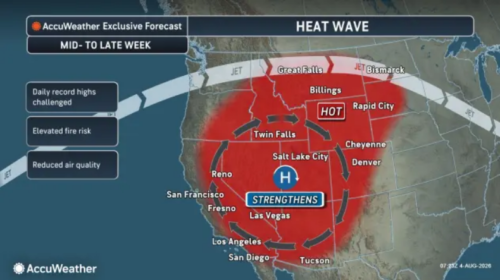 “Weather conditions will be conducive to the spread of existing wildfires and the ignition of new blazes across much of the western United States into next week, with some of the highest fire potential days in the Northwest. Widespread drought conditions will persist as a large area of high pressure generally holds its position this week before expanding to the Plains next week. “That same high pressure area will lead to increasingly hot conditions with strong late-night and morning temperature inversions, which will trap wildfire smoke close to the ground, leading to widespread poor air quality and greatly reduced visibility,” AccuWeather Senior Meteorologist Brett Anderson said. Widespread highs in the 90s to low 100s F are forecast over multiple states from California, Arizona and New Mexico to eastern Washington, Idaho and Montana. “Another piece of bad news is that we do not foresee significant rain for the next seven to 10 days in the Northwest,” Anderson added. … ” Read more from AccuWeather.
Unprecedented heat causes an $800M problem for Calif. pistachio farmers
“California pistachio growers are facing a multimillion-dollar reduction in revenue due to unprecedented heat this spring in the San Joaquin Valley. The crop damage is also expected to affect customers, who will now see higher prices, according to Wonderful Pistachios & Almonds, the world’s largest pistachio grower. Michael Hohmann, chief financial officer and executive vice president of the Los Angeles-headquartered company, said in a Monday news release that the company is working to keep the cost increase as small as possible. “This is a measured adjustment to maintain stability across the category while supporting growers behind it,” Hohmann said. “The price that consumers are going to see will not be as significant as what the farmers will have lost.” … ” Read more from SF Gate.
Protecting outmigrating juvenile spring-run chinook
Pete Nelson, PhD., writes, “First… it’s been a while! I wrote two previous posts (Science for Salmon Part 1 and Part 2) about developing our annual forecast for the number of juvenile Spring-run Chinook salmon (“spring-run”) entering the Delta. Since then, the team developing this Juvenile Production Estimate (JPE) has been focused mainly on the modeling that uses various fish counts and environmental conditions to predict the number and timing of outmigrating spring-run. The modeling component is crucial because this is how we finally arrive at a forecast, but it’s a challenge to explain because it requires a lot of advanced mathematics. Sometimes, scientists will point to a model into which the data are dumped and treat it as a bit of a “black box” from which emerges, sans further explanation, the answer (Figure 1). Our question—how many juvenile spring-run enter the Delta each year?—is a tough one, and we want to make the process used to determine our answer less opaque. So, this article is going to be a balancing act between that “black box” approach and an attempt to explain the beauty behind the math. … ” Read more from the Interagency Ecological Program.
Controversial swan hunt appears to work: California’s mute swan population drops
“California’s once exponentially growing population of invasive mute swans has fallen by half, less than a year after a new law took effect allowing hunters and landowners to kill them. Over the objections of animal welfare groups, Gov. Gavin Newsom last year signed legislation allowing property owners and those with hunting licenses to shoot the nonnative, destructive swans. The mute swan population had ballooned to about 15,000, most around the Suisun Marsh on the outskirts of the Bay Area. The law, which took effect Jan. 1, appears to be working as intended. … ” Read more from Cal Matters.
Who gets to enjoy California’s coast?
“The California coastline winds more than 800 miles along the Pacific Ocean between Mexico and Oregon, with over 1,500 public access points leading to rugged cliffs and sandy beaches ideal for fishing, surfing, swimming and simply enjoying the ocean. But how—or even whether—Californians can access this natural resource often comes down to factors like race, gender, geography and socioeconomic status, according to a new study. “Persistent barriers keep some of California’s most vulnerable and marginalized communities from the coast,” said lead author Timothy Frawley, a project scientist in the Fisheries Collaborative Program at the University of California, Santa Cruz. While California law protects the public’s right to access the coast, a team led by UC Santa Cruz researchers found major obstacles to equal access and enjoyment of the state’s coastline. Historically marginalized and lower-income people face physical, financial and other roadblocks that not only make it challenging to access the ocean, but also limit the benefits they get from it, according to the study. … ” Read more from Inside Climate News.
In commentary today …
California can’t afford to weaken ocean protections in a warming world
Fiorenza Micheli, a marine ecologist and conservation biologist at the Hopkins Marine Station at Stanford University, and Nur Arafeh Dalmau, a marine ecologist and climate adaptation researcher at Hopkins Marine Station at Stanford University and the co-chair of the IUCN Seaweed Specialist Group, write, “At a time when California needs stronger ocean protections, the status quo is a step back. The California Department of Fish and Wildlife recently considered a set of proposals to strengthen or expand Marine Protected Areas (MPAs)—and recommended denying nearly all of them. This comes as California has committed to protecting at least 30 percent of its lands and coastal waters by 2030. Our research shows that well-designed, strongly protected MPAs are among the most effective tools the state has to help kelp forests survive a rapidly warming ocean. … ” Continue reading from Capitol Weekly.
In regional water news and commentary today …
NORTH COAST
‘O Rew comes home: A community story
“This summer marks the culmination of a decades-long effort to reconnect people and wildlife with place, and with one other. The gates at the new ‘O Rew Redwoods Gateway officially opened to the public on August 1st, welcoming the community into an ecosystem restoration project grounded in a deep understanding of the land’s history—both its beauty and its injustices. The 125-acre site along Prairie Creek in Humboldt County has held many identities: the ancestral home of the Yurok Tribe, a working mill site, and later a construction zone. Now, as the property opens its doors to the public, ‘O Rew represents both renewal and return—restoring connection with its original stewards, the Yurok Tribe. The next chapter holds the promise of growth and revitalization, an invitation to the greater public to understand and learn from traditional stewardship of the land. It offers a model for what community-centered conservation can look like when people come together across cultures, recognizing that to understand the land, we must first learn to understand one another. … ” Read more from Cal Trout.
Eel River Native Plant Network working toward restoration of the watershed
“This June, 40-some people participated in the Eel River Native Plant Network’s first in-person meeting at the River Lodge Conference and Event Center in Fortuna. According to a press release on the occasion, “the Native Plant Network seeks to connect Tribal Nations, stewards, gatherers and growers to sustain and increase diverse native plant material production that supports Eel River ecosystem restoration, cultural uses and food sovereignty.” Network members include representatives of Tribal Nations, commercial nurseries, nonprofits and private property owners, as well as regional, state and federal agencies. According to the network’s press release, more than 50 different entities have engaged with the group. … ” Read more from the Eureka Times-Standard.
SIERRA NEVADA
Nevada, California leaders reaffirm partnership to protect the Lake Tahoe Basin
“On Monday, August 3, Nevada Department of Conservation and Natural Resources Director Vinson Guthreau met with California Natural Resources Secretary Wade Crowfoot to reaffirm the longstanding partnership between the two states and advance shared priorities for the Lake Tahoe Basin. Because the Lake Tahoe Basin straddles the Nevada-California border, protecting one of the nation’s most iconic alpine landscapes requires close coordination between the two states. During the meeting, the leaders focused on strengthening wildfire resilience, preserving Lake Tahoe’s famed clarity, advancing forest and watershed health, and expanding outdoor recreation opportunities throughout the basin. “Our two states share some of the West’s most important natural landscapes and resources,” said Nevada Department of Conservation and Natural Resources Director Vinson Guthreau. “Our partnership has a long history, and I appreciate Secretary Crowfoot’s leadership and his commitment to the Lake Tahoe Basin. Together, we have accomplished a great deal, and I am confident that continued cooperation between our agencies will benefit the basin, along with its residents and visitors, for years to come.” … ” Read more from the Tahoe Daily Tribune.
California restores Sierra Meadows to protect water supply
“A restoration project underway in California’s High Sierra is aiming to strengthen the state’s water supply by bringing a damaged mountain meadow system back to life. Crews are restoring nearly three miles of the West Walker River and surrounding floodplains at Pickel Meadow, located north of Yosemite. The project focuses on restoring the natural flow of water through the meadow, allowing it to better absorb snowmelt and gradually release water into rivers and streams. Sarah Hecocks, associate director of the headwaters conservation program for American Rivers, said crews are removing a berm that was built by Caltrans about two decades ago following a nearby landslide. “We’re restoring the natural hydrology that allowed Sierra meadows to thrive for thousands of years,” Hecocks said. “So the meadow can sustain itself with very little long-term intervention.” … ” Read more from NBC Palm Springs.
SACRAMENTO VALLEY
Butte County Water Commission to discuss permits, zoning if data center is proposed
“The realities of artificial intelligence and its demand on water and power resources is not out of the question for Butte County. The Butte County Water Commission is seeking to get ahead of the curve by reviewing the county’s permitting and review processes in such a scenario that a company might propose to build an AI data center here. Butte County Department of Water and Resource Conservation Director Kamie Loeser said Monday that Butte County has not yet received an application or development proposal for an AI data center, and even if one were proposed, current zoning ordinances don’t permit data centers being built in unincorporated areas in the county. … ” Continue reading from the Chico Enterprise-Record.
How Roseville’s proposed development fee changes could affect new construction
“People building new homes and businesses in Roseville could soon pay higher fees to connect to the city’s water, sewer and trash systems if the City Council approves a proposal to update several development fees. The City Council is scheduled to consider the ordinance on its first reading Wednesday. If approved at a later meeting, the updated fees would take effect as early as Oct. 19. City officials said the proposed changes are based on updated studies of the cost of providing utility services as Roseville continues to grow. … One of the largest changes involves water connection fees, which developers pay when obtaining a building permit. … ” Read more from the Sacramento Bee.
Water Forum awarded more than $10.6 million for Lower American River habitat enhancement
“The Water Forum has been awarded more than $10.6 million in competitive federal funding to enhance habitat for salmon and steelhead in the lower American River while expanding the scientific research and monitoring that help inform future river management decisions. “The lower American River is one of our region’s greatest natural resources,” Executive Director of the Water Forum, Ashlee Casey said. “This funding allows us to continue enhancing habitat for salmon and steelhead while using science to better understand what these fish need to survive and thrive. That knowledge helps us make better decisions that benefit the river, the fish that depend on it and the communities that rely on the river.” … ” Read more from the Carmichael Times.
BAY AREA
City of San José invites residents to help regulate data center development
“As data center development accelerates without a comprehensive federal or state framework regulating potential effects on local communities, San José is moving to establish clear local standards and is inviting residents to help shape them. The city is scheduling community roundtables and listening sessions beginning in late August and continuing through September to give residents an opportunity to share their priorities and inform the city’s proposed framework. “As Washington refuses to establish a uniform national standard, and Sacramento in turn has ceded the responsibility to localities, San José is stepping up to lead the charge — and asking residents to help define the path forward,” said Mayor Matt Mahan in a statement. “We could bury our heads in the sand, say ‘no’ and push the jobs and industries of the future to states with fewer environmental safeguards, or we can do what California does best: lead the nation forward with a blueprint for responsible development.” … ” Read more from the San Jose Inside.
SEE ALSO: San Jose seeks public input on data center regulations, from the San Jose Mercury News
SAN JOAQUIN VALLEY
Kern River trial date moved back eight months
“The trial to determine whether the City of Bakersfield must re-evaluate how it operates the Kern River was bumped another eight months to October 4, 2027, at a court hearing on Monday. The case was set to be heard in February next year, but the parties agreed to move it back as the state Supreme Court gears up to hear arguments on a crucial piece of the case possibly as early as next month. Though the issues are different in the underlying lawsuit and the portion of the suit being heard by the state Supreme Court, a ruling from the justices could influence the rest of the case. … ” Read more from SJV Water.
SOUTHERN CALIFORNIA
High tides damage, close popular Malibu beach indefinitely
“A popular stretch of Malibu beachfront is closed indefinitely due to erosion caused by recent high tides as strong southerly swells continue to pound the California coast. A portion of Westward Beach Road, which provides access to popular Point Dume State Beach, along with the beach’s parking lot, is closed “until further notice due to severe erosion caused by recent high tides and surf,” according to the Los Angeles County Department of Beaches and Harbors. Los Angeles County was under a surf advisory over the weekend due to a large south swell generated by Hurricane Genevieve. “There is currently no estimated reopening date,” the department wrote on its website. Workers are currently assessing the damage and the department “will provide updates as information becomes available.” … ” Read more from SF Gate.
IMPERIAL/COACHELLA VALLEYS
After months of public outcry, Imperial Valley cities are hitting the brakes on data centers
“The decision wasn’t a unanimous one. Union organizers urged the City Council to consider the jobs that might be lost. At least one councilmember raised fears that the city could face expensive lawsuits from developers. Nonetheless, the tiny northern Imperial Valley town of Calipatria decided last month to take its first step toward a permanent ban on data centers. “At the end of the day, we will have to have this conversation,” said Calipatria Mayor Michael Luellen during the City Council meeting last Tuesday. “I believe a ban is the only way forward.” For close to a year now, Imperial Valley residents have raised concerns about the possible environmental and public health effects of the giant computing warehouses. Those worries first emerged last November after the city of Imperial began sounding the alarm about a massive data center complex proposed next to a residential neighborhood. … ” Read more from KPBS.
California water officials target Salton Sea Restoration Ponds for new regulatory protections
“State water regulators are taking steps to define and safeguard the legal uses of newly constructed habitats surrounding the shrinking Salton Sea, inviting the public to weigh in on how these man-made ecosystems should be protected and managed. Scaled-up effort to restore wildlife habitat and control toxic dust around California’s largest lake has triggered a legal process to officially designate “beneficial uses” for the surrounding engineered wetland ponds. The Colorado River Basin Regional Water Quality Control Board announced Monday that it will host a California Environmental Quality Act (CEQA) public scoping meeting on Aug. 18 to gather community input before amending its regional water quality control plan. … ” Read more from the Imperial Valley Press.
Along the Colorado River …
Bipartisan opposition grows against feds’ Colorado River plan
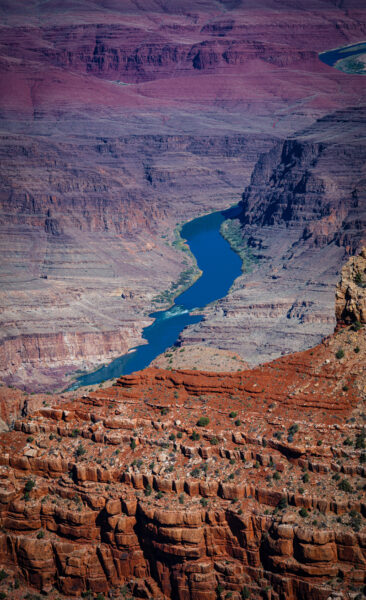 “Democratic and Republican leaders across the Lower Basin have opposed the U.S. Department of Interior’s water reduction plan for the Colorado River, while Upper Basin states have widely backed the move. The department’s and Bureau of Reclamation’s Final Environmental Impact Statement from Friday has received little fanfare in Nevada and Arizona, where the proposal could make for significant water cuts. The federal Colorado River proposal came after negotiations between the seven U.S. states that rely on the river – Colorado, Wyoming, Utah, New Mexico, Arizona, Nevada and California – missed two deadlines in November 2025 and February 2026. Arizona, Nevada and California are in the Lower Basin. The rest are in the Upper Basin. … ” Read more from The Center Square.
Speaker Montenegro: Arizona must defend its water future after federal Colorado River plan
“Arizona House Speaker Steve Montenegro today released the following statement in response to the federal government’s Final Environmental Impact Statement (FEIS) for post-2026 Colorado River operations. “The federal plan includes a range of possible reductions to the Lower Basin, including Arizona, but does not include the specific reductions that Arizona and other Lower Basin states will take in the next two years. Those specific cuts, which will be announced next week with the Record of Decision, are expected to be approximately 20 percent of the Lower Basin’s total 7.5 million-acre-foot allocation. However, it is unclear at this time how those reductions will be distributed among the Lower Basin states. A 20 percent reduction or less to Arizona’s Colorado River supply would be the best-case scenario, while reductions higher than that could be severe. This is a major water policy decision with broad implications for Arizona communities, water providers, agriculture, industry, and long-term economic growth. Its effects will vary across the state because every community and water provider relies on different water supplies and infrastructure. … ” Read more from US Politics Today.
SEE ALSO:
- ‘Total failure of leadership’: Arizona politicians criticize ‘unfair’ water cuts proposed in federal plan, from Channel 12
- Colorado River tribes say feds left them out of final shortage talks, from Arizona Central
Colorado River water cuts threaten Southwest farm operations
“The U.S. Bureau of Reclamation released a controversial 10-year water management plan for the Colorado River after seven Western states failed to reach agreement on sharing the drought-stricken resource. The proposal targets lower basin states — Arizona, California and Nevada — with mandatory cuts of up to 3 million acre-feet annually during dry years. That represents a 40% reduction from current levels. Meanwhile, upper basin states face only voluntary reduction targets of 200,000 acre-feet per year. Agriculture, which consumes 70% of Colorado River water and produces 15% of total U.S. food output, faces the deepest impacts. Within Arizona’s Central Arizona Project, tribal and municipal users hold priority, leaving non-tribal agriculture to absorb the largest cuts first. … ” Read more from Farm Progress.
SEE ALSO: Arizona farmers warn Colorado River water cuts could raise prices on food, everyday goods, from Fox 10
Arizona cities will likely get less Colorado River water. Here’s why they won’t go dry
“The federal government is expected to announce big cutbacks for users of the Colorado River soon, and Phoenix-area cities will likely get hit especially hard. Even if major reductions come for their supplies, taps won’t be going dry anytime soon. Colorado River shortages are no surprise. Climate change and drought have been steadily cutting into water supplies for about 26 years. Various plans to rein in demand have emerged throughout that time, and new cutbacks have been in the works for more than a year. The amount of water that each Valley city gets from the Colorado River varies significantly from city to city, but the majority receive at least some. Some cities are more prepared than others to weather today’s drier conditions, but most have at least some plan to deal with new Colorado River reductions. “Residents should feel confident that all cities have been preparing for a future with less Colorado River water,” said Max Wilson, water resources management advisor for the city of Phoenix. … ” Continue reading from KJZZ.
SEE ALSO:
- Arizona Colorado River cuts would hit Valley cities unevenly, data shows, from Channel 15
- How Arizona towns and cities will get water with Colorado River cuts pending, from Arizona Family
- How Metro Phoenix cities plan to cope with less Colorado River water, from Arizona Central
- Tucson says it’s ready for Federal water supply cuts, from Channel 9
Colorado River plan spares Wyoming from major cuts
“Wyoming and other Upper Colorado River Basin states would be spared mandatory cuts, while the Lower Basin states — Arizona, Nevada and California — face significant water use reductions under a new federal proposal for future management of the beleaguered western water system. The U.S. Department of the Interior issued Friday its final environmental impact statement, guiding how water will be divided during a shortage. The rare federal intervention came after stakeholder states and tribes failed, so far, to agree on a plan of their own. The current drought contingency plan, which is intended to prevent Lake Powell and Lake Mead from shrinking below “minimum power pool” — the point where water releases won’t flow through electric-generating turbines — expires at the end of this year. … ” Read more from the WyoFile.
Get paid to use less water? New plan aims to help save Colorado River
“A new plan to help alleviate the Colorado River water crisis aims to use millions of dollars to pay some in Colorado, Utah, Wyoming and New Mexico to voluntarily use less water from the river, according to Colorado officials. The plan is the latest of a number of efforts to compensate people for using less water as the West faces an escalating water crisis. Although the details of the project – including how the money would be divided between states and how exactly water use would be reduced – are currently undetermined. Amy Ostdiek, chief at the Colorado River Water Conservation Board, said they’re hoping to encourage participation across all sectors and regions of the state. The program could save a year’s worth of water from hundreds of thousands of households, but many more cuts are necessary. … ” Read more from USA Today.
How Aurora Water uses surveillance tech to crack down on lawn-watering violations
“Aurora Water doesn’t much care which two days in a week you water your lawn, amid this historic drought. But if your irrigation system starts up on a third day in the same week, the water world equivalent of a Flock camera is watching. The “smart” meters on every Aurora property automatically sense a spike in water use, and alert Aurora Water to confirm the violation and send out a warning or fine. With updates at 15-minute intervals, the meters also detect irrigation watering during hot daytime hours when that’s against the rules. The water surveillance, which Aurora Water officials acknowledge many of their customers might not realize exists, is one key to Colorado’s third-largest city so far achieving its water-saving goals in a year with record-low snowpack and abysmal streamflows into mountain reservoirs. Aurora says its 400,000 residents are using 27% less lawn water than in 2025, and managed a 9% cut from combined indoor and outdoor use. … ” Read more from the Colorado Sun.
Peaches pay the bills for Western Colorado farmers, but drought makes their future uncertain
“On a warm morning in Palisade, Colorado, Bruce Talbott walks through his orchards, picking and discarding peaches he knows won’t sell. With just one look, he can tell how many days until a peach should be picked, whether its pit is split, and whether it will look good at the grocery store. … But this has been an extraordinarily challenging year for Talbott and his fellow Palisade fruit growers. There was virtually no snowpack in the headwaters of the Colorado River, the valley’s key irrigation water supply, which fills ditches and canals that run to its orchards. When March broke records for high temperatures, what little snow there was melted off fast. Because of the fast melt, Talbott started picking peaches about a month earlier than usual. Now, he’s worried he may not have enough water to finish out the harvest in early September. … ” Read more or listen at Marketplace.
In national water news today …
US water facilities targeted by ‘malicious cyber actors’ – who’s to blame?
“Late last week, federal authorities issued a stern warning saying “malicious cyber actors” were targeting water and wastewater facilities in at least seven states across the US. Minnesota appeared to be the hardest hit with 30 of its water systems hit by cyber-attacks, leading to disruptions in the state’s water supply. The problems ranged from low-pressure water flow in people’s homes to some utilities announcing boil-water notices. But there have been no reports of drinking water contamination. “These threat actors are targeting water entities of all sizes,” the US Cybersecurity and Infrastructure Security Agency (CISA) said in a statement last Thursday. The agency highlighted the fact that critical infrastructure systems can be especially vulnerable to cyber-attacks in the digital age. Much of the problem stemmed from water facilities’ connection to the internet, which made it possible for hackers to infiltrate, change passwords and lock out operators. To mitigate continued disturbances, the agency advised utilities to take their systems offline and switch to manual mode. … ” Read more from The Guardian.
SEE ALSO: Analysis: More than half of water systems lack adequate digital security, from the National News Desk
EPA stalls long-planned nitrate cancer review as pollution crisis grows
“The US Environmental Protection Agency (EPA) has backed off its re-assessment of cancer-causing nitrates despite decades of research suggesting the contaminant is more harmful than previously thought and that nitrate pollution is at crisis levels in US drinking water. The agency would not confirm the assessment was cancelled, but the work has been stagnant for more than two years and the department responsible for it was eliminated. And scientists and health advocates say regardless of whether it has been cancelled or is locked in a lengthy delay — Americans are paying the price with their health. The EPA set a threshold for nitrates in drinking water more than 30 years ago at a level designed to avoid harming babies after research showed that ingesting nitrates could trigger dangerously low oxygen in babies’ blood, what’s known as “blue baby syndrome.” The EPA announced it would re-assess nitrates — and nitrites — in 2017 to look at other potential health impacts, including cancer, but the work was suspended in 2019 by the first Trump administration. … ” Read more from The New Lede.
Extreme heat offers sneak peak of grid’s data center challenges
“A sizzling summer is breaking power consumption records across the country, offering a potential preview of the challenges facing America’s artificial intelligence boom in the era of climate change. Three grids — serving the mid-Atlantic, the Great Plains and Texas — have seen power demand surge to historical highs during extreme heat. Prices soared last month in the PJM Interconnection, while last week, the Southwest Power Pool had to implement emergency measures across parts of the Great Plains. Their struggles stood in stark contrast to the Electric Reliability Council of Texas, which managed to ride out a mid-July heat wave that shattered its demand record without a jump in prices or any emergency actions. The big difference: ERCOT has lots of solar and batteries; PJM and SPP do not. … ” Continue reading from E&E News.
SEE ALSO: Data Centers Lack Federal Regulation, CRS Report Says, from Legis 1

