
Several news sources featured in the Daily Digest may limit the number of articles you can access without a subscription. However, gift articles and open-access links are provided when available. For more open access California water news articles, explore the main page at MavensNotebook.com.
In California water news today …
In an already broiling summer, El Niño is about to turn up the heat
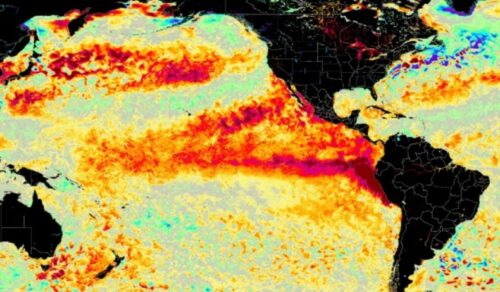 “El Niño is expected to intensify in the weeks ahead, fueling more severe heat across the globe, according to the U.N. World Meteorological Organization. The forecast comes as blistering heat shatters temperature records from Europe to Asia. During El Niño, warm waters pool in the eastern Pacific, driving hotter weather around the world, amplifying the impact of warming. El Niño drove record heat in 2023 and 2024, the hottest years ever recorded. This year, forecasters say a strong El Niño will take shape between August and October. “El Niño is not just on our doorstep — it is inside the house and turning up the heat,” said U.N. Secretary-General António Guterres. “And this is only a warm-up act. El Niño is strengthening — adding fuel to a planet already on fire with scorching heat domes, apocalyptic wildfires, and record hot seas.” … ” Read more from Yale e360.
Coastal California has seen less fog and more humidity due to El Niño
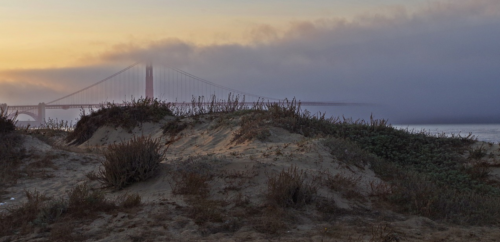 “Fogust? Where are you? Normally, in the Bay Area, the month of August is referred to as Fogust because of how thick the marine layer usually is this time of year, especially along the coast. But this year, have you noticed a lot more sunshine? This week we’ll zoom into the reason why summer this year hasn’t been as foggy as normal. It all revolves around El Niño and warmer water temperatures. Not only are sea surface temperatures above average at the equatorial Pacific, which is a sign of El Niño, but the warm water also extends especially next to southern California and goes all the way up the West Coast. … ” Read more from CBS News.
Dredging: A cornerstone of maritime commerce and national defense
“There are several major dredging opportunities emerging across the United States that extend well beyond traditional maintenance dredging, channel deepenings, or harbor expansions. Increasingly, the American dredging industry is becoming a strategic tool for addressing some of the nation’s most pressing challenges, including water security, agricultural sustainability, coastal resilience, maritime industrial revitalization, and national defense. Among the most significant opportunities are efforts to restore freshwater conveyance capacity in California’s Sacramento–San Joaquin Delta and San Joaquin Valley, support the infrastructure necessary for a revitalized shipbuilding and ship repair industrial base, and expand large-scale coastal restoration and beach nourishment programs. For decades, the channels of the Sacramento–San Joaquin Delta have been gradually silting in due to sediment accumulation, reducing the capacity of one of America’s most important waterway systems. Often described as the beating heart of California’s water infrastructure, the Delta serves as a critical artery for the movement of freshwater that supports millions of residents, farms, and businesses throughout the state and across the western United States. … ” Read more from Marine Link.
Fishing closures are becoming routine as record heat warms rivers in the US West
“Trout need cool water to survive, but record heat this summer has driven water temperatures to lethal levels for fish. Wildlife officials are banning fishing during certain hours on rivers and streams across the U.S. West, following an exceptionally dry winter and amid widespread drought. Lower water levels mean rivers can heat more rapidly. The restrictions aim to reduce stress on species including highly-prized trout. Anglers travel from around the world to find the fish in Yellowstone National Park or Western Montana’s Blackfoot River, featured in the movie “A River Runs Through It.” More record temperatures are forecast this weekend as a heat wave in the Southwest expands north into the Rocky Mountains and east across the High Plains. … ” Read more from the Associated Press.
Sacramento Valley land sank during drought pumping, study says. Why it matters
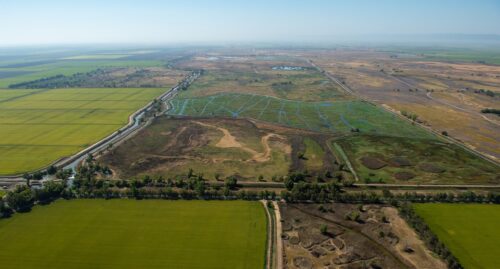
“A new study shows heavy groundwater pumping during California’s 2020 to 2022 drought caused the ground in the Sacramento Valley to sink faster than expected, reducing the aquifer’s ability to hold water. Published last week in the Proceedings of the National Academy of Sciences, the study found the damage to the aquifer is irreversible. One of the study’s authors, Kristel Chanard, estimated the lost groundwater storage capacity is roughly equivalent to San Francisco’s annual water consumption. “There is still water, but it’s a big loss,” she said. The resulting lost groundwater storage capacity is significant, Chanard said, because groundwater provides a buffer during dry periods. Groundwater provides nearly 30% of the region’s water supply, and more during dry years, according to the NCWA. … ” Read more from the Sacramento Bee.
SEE ALSO: Study finds California farmland is sinking shockingly fast, from SF Gate
Pistachio industry balances market momentum with water realities
“On July 24, the American Pistachio Growers hosted local growers and industry partners at the 2026 Pistachio Industry Insights Day at the Visalia Convention Center. The event included updates on the current state of the pistachio industry as well as the water policies and management conditions that are shaping the future of California agriculture. … During the second half of APG’s event, Coelho moderated a panel discussion on California’s water policy priorities and the impacts on the agricultural industry. Panelists included Vice Chair of the State Water Resources Control Board Dorene D’Adamo, fourth-generation farmer and former U.S. Representative John Duarte, and Chair of the Water Blueprint for the San Joaquin Valley Eddie Ocampo. … ” Read more from Valley Ag Voice.
What the endangered species act rollback means for Northern California’s salmon, owls and shrimp
“For half a century, destroying an endangered species’ habitat legally counted as harming the species itself. As of this summer, it doesn’t. The U.S. Department of the Interior has issued a new interpretation of what constitutes harm under the Endangered Species Act, removing habitat destruction from the definition. It marks the most sweeping rollback of the 1973 law yet, and the change is set to take effect in September while lawsuits from environmental groups play out. The Interior Department argued the old standard burdened families and businesses, but the stakes run high in Northern California, where habitat loss, not direct killing, threatens nearly every listed species. Winter-run Chinook salmon, endangered since 1994, depend on cold water releases below Shasta Dam. Coastal coho, northern spotted owls and the vernal pool fairy shrimp all survive on the strength of habitat protections rather than hunting bans. … ” Read more from Active NorCal.
SEE ALSO: Federal Resource Agencies Rescind Longstanding Regulatory Definition of “Harm” Under the Endangered Species Act, from Somach Simmons & Dunn
California scientists build robot to look for great white sharks near beaches
“From a distance, it looks like a kayak or a surfboard. But it’s not a person enjoying an afternoon at the beach — it’s a new high-tech device to look for great white sharks. Researchers at Cal State Long Beach have begun testing what they are calling a “semi-autonomous shark surveillance bot.” The unmanned craft, a prototype that is about 10 feet long and 3 feet wide, hit the water last month in Southern California. The craft can patrol near beaches for up to a week at a time, using acoustic receivers to listen for white sharks in the wild that have been fitted by scientists with tracking tags. It also has cameras, and will soon include a drone for aerial surveillance that can send live 360-degree images back to lifeguards and biologists on the shore. “The idea is that you program it to mow the lawn — just go back and forth — in the ocean,” said Chris Lowe, a professor of marine biology and director of the Shark Lab at CSU Long Beach. “Lifeguards can drive it, or we can drive it from the lab.” … ” Read more from the San Jose Mercury News.
Keep an eye on these 5 deals as California lawmakers close out the legislative session

“Lawmakers have returned to Sacramento ready to hammer out — and potentially spike — several legislative deals before they adjourn for the year on Aug. 31 and hit the campaign trail. Think of this year’s end-of-session as a bonus episode to last year’s saga over climate and energy policy. Much of the unresolved business has roots in the deal that renewed the state’s carbon market. But new topics have entered the plot too, and Senate President Pro Tem Monique Limón will bring a different dynamic to negotiations among the “Big Three.” As usual, much of the negotiating will take place at the leadership level behind closed doors. Here are five deals we’re watching this month. … ” Read more from Cal Matters.
In commentary today …
California voters have approved billions of dollars in bonds. Why don’t we track results?
Cathy Cockrum Dean, president and founder of Elevate California, writes, “Californians have consistently invested in new government programs. Over the past quarter century, voters have approved tens of billions of dollars in state bonds to build schools, improve water systems, address climate risks, expand housing opportunities and strengthen public infrastructure. Those investments shape daily life across our state. Yet years after the votes are counted and projects are underway, it can be surprisingly difficult to answer a simple question: Did we get the results we were promised? California has long tracked how bond dollars are spent, to guard against waste and fraud. We have yet to consistently measure whether those investments achieved the outcomes voters expected. That distinction matters. Since 2000, the state has issued $196 billion in general obligation bonds and now has $81.8 billion bonds outstanding. This fiscal year alone the state will spend nearly $8.6 billion servicing bond debt. … ” Read more from Cal Matters.
In regional water news and commentary today …
SIERRA NEVADA
Tour explores State Water Project restoration efforts
“The Sierra Nevada Conservancy reports that earlier this month it joined the California Department of Water Resources and Blue Forest in presenting an Upper Feather River Tour for State Water Project contractors. The tour highlighted the importance of protecting and enhancing forest health and mountain meadows within the Feather River headwaters and showcased important work the State Water Project is doing to improve water quality, water supply, flow timing, public safety and ecosystem health, said SNC. The health of California’s water supply is tied to the health of the headwaters, and the State Water Project depends on the short- and long-term resilience of the upper Feather River in the Sierra Nevada, said SNC. The State Water Project supplies water to 27 million Californians and 750,000 acres of farmland. … ” Read more from the Plumas Sun.
BAY AREA
Novato joins Marin County on sea-level plan
“Novato is collaborating with the county on an adaptation plan for the rising sea. The City Council voted Tuesday to join a county grant application to fund the development of a multijurisdictional plan. The grant, administered by the California Ocean Protection Council under Senate Bill 1, would be limited to the plan’s creation. Additional funding would likely be sought after the plan is approved to implement strategies. The county will lead the effort on the application and the planning. San Rafael, Larkspur, Belvedere and Corte Madera are proposed to join as well. Tiburon, Mill Valley and Sausalito have their own grants from the council for adaptation plans. … ” Read more from the Marin Independent Journal.
CalWater seeks study on Los Altos hard water
“In June, Cal Water released its latest annual water quality report for customers in its Los Altos Suburban District which revealed that the water provided in the testing met every primary and secondary federal and state water quality standard, but it is looking further into what it can do about the hard water in the area. Cal Water spokeswoman Laura Florez-McCusker said that it has asked the California Public Utilities Commission for permission to complete a study “to see what we can do about hard water.” “Feedback in our Los Altos Suburban District shows that customers care very much about water hardness,” Florez-McCusker said. If approved by the CPUC, Florez-McCusker said the study could cost more than $300,000. “We’re in the process of determining whether there are other avenues to fund the study outside of CPUC approval,” she said. “We hope to know more next year.” … ” Read more from the Los Altos Town Crier.
CENTRAL COAST
Owner of historic ranch near Santa Paula faces lawsuit, bankruptcy
“One of Ventura County’s biggest agricultural landowners is bankrupt and facing a civil prosecution accusing the family of illegally altering streams, building unpermitted dams and ponds and otherwise harming the natural environment in a canyon west of Santa Paula. The Guzman family owns Hampton Canyon Ranch, an 1,800-acre cattle property on Wheeler Canyon Road, in the hills between Ventura and Santa Paula. In May, the Ventura County District Attorney’s Office filed suit against the Guzmans and their company, Santa Paula Hay & Grain and Ranches, alleging violations of the California Fish and Game code at Hampton Canyon Ranch and other properties nearby. The lawsuit accuses the Guzmans of changing and obstructing the course of streams on their properties, building dams and a reservoir, grading and altering stream channels, removing vegetation and placing fill and other materials in and around the waterways, all without the proper permits. … ” Read more from the Ventura County Star.
SAN JOAQUIN VALLEY
Local assessment rolls reflect farmland trends
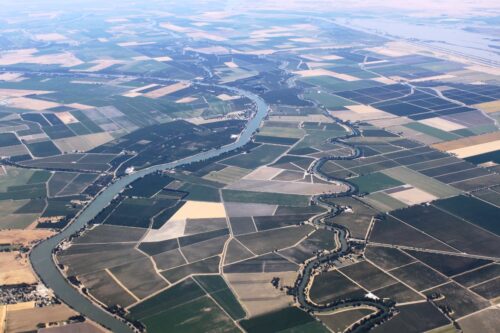 “County Assessors are required to complete annual local assessment rolls by July 1, according to California Revenue and Taxation Code Section 616. These assessment rolls reflect the taxable value of all properties as of January 1, 2026, and establish the baseline to calculate annual property taxes. Property tax revenue funds various services within local counties, such as law enforcement, fire protection, public health, education, and infrastructure. The 2026-27 assessment rolls from agricultural counties in the Central Valley also offer a snapshot of assessed agricultural property values, reflecting new or continuing trends in land ownership and investment across the region. … ” Read more from Valley Ag Voice.
Commentary: Kern County is sinking
Brik McDill, Ph.D., writes, “Bakersfield Mayor Karen Goh recently excitedly celebrated that more water-consuming industries, manufacturers, and housing developers with their developments are coming to Bakersfield — including greater Kern County. And again, aquifer depletion and land subsidence, the silent accusatory witnesses of reckless groundwater overdrafting, were ignored. The ground beneath Kern County is dropping — not in a dramatic earthquake or a Hollywood disaster movie, but inch by inch, year after year. It is one of the most consequential environmental and economic threats facing California’s agricultural heartland, yet it rarely commands the public attention it deserves. Land subsidence is not a theory but a measurable fact. State monitoring shows that portions of Kern County continue to sink because groundwater is being pumped faster than nature can replenish it. In some locations, the land has dropped by feet over the past decade. … ” Read more from the Bakersfield Californian.
SOUTHERN CALIFORNIA
Point Dume Beach in Malibu closed indefinitely due to erosion
“A key access road into Point Dume Beach in Malibu, along with the entrance and parking areas, have been closed indefinitely due to severe erosion, city officials announced. The erosion caused by high tides and surf Saturday was in addition to earlier damage reported last week around several beachfront properties that were destroyed in the January 2025 Palisades Fire , Malibu officials said. “The Los Angeles County [Department] of Beaches & Harbors reports that, due to additional erosion caused by [Saturday] night’s high tides and surf, Westward Beach Road, beyond the pay gate, and the Point Dume Beach parking lot, are closed until further notice,” the announcement stated. “There is currently no estimated reopening date. “Additionally, Restrooms 1, 2, and 3 remain closed after erosion damaged the water line serving the facilities. Temporary chemical toilets and hand-washing stations have been deployed for visitors nearby.” … ” Read more from the LA Daily News.
How clean should the ocean be? It’s an $11 billion question
“An escalating battle over Southern California water, and the pollution that can or can’t be allowed to flow into it, involves three counties, two very different cultures and one thorny question: How much should we collectively pay to keep the ocean as clean as possible? “I don’t know,” said Anthony Valdez, a 29-year-old who works for an auto parts distributor in Fontana, roughly 60 miles from the Santa Ana River Jetty. “A lot? I mean, I think it’s pretty important to have a clean ocean,” Valdez added. “Wait. Why are you asking me this?” Because he’s potentially on the hook for a potentially big bill. As public officials and scientists and business types from Orange, Riverside and San Bernardino counties argue over water pollution rules that will be used in the region for the next five to 20 years, one economic impact report has looked at the costs of updating public properties and establishing monitoring systems and the like, and reached a possible answer to the “how much” question: Something north of $11 billion. … ” Read more from the OC Register.
Another broken pipe unleashes flooding, this time in Beverly Grove
“A burst pipe in Beverly Grove sent water flowing down the street on Sunday morning, threatening parked vehicles and forcing some water services in the area to be shut off. Crews from the Department of Los Angeles Water and Power responded to a broken pipe around 6 a.m. near the intersection of San Vicente Boulevard and Lindenhurst Avenue. Flooding was first reported at 4:48 a.m. Repairs are expected to be completed around 2:30 p.m., an LADWP representative said. San Vicente Boulevard remains closed between Lindenhurst and Orlando avenues. … ” Read more from the LA Times.
SAN DIEGO
Mexican government aims to complete Tijuana River cleanup by 2027
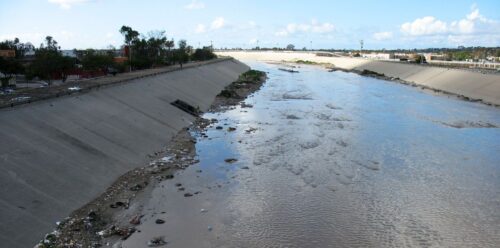
“Mexican officials announced on Thursday that the contamination of the Tijuana River could be fully resolved by 2027, pending the completion of infrastructure projects outlined in binational agreements with the United States. During the president’s morning press conference, Environment Secretary Alicia Bárcena provided an update on the country’s progress under Minute 333 of the International Boundary and Water Commission (IBWC), an agreement signed last year to tackle cross-border pollution affecting both San Diego and Tijuana. According to Bárcena, Mexico has already fulfilled its commitments under the agreement, with 17 of the approximately 38 planned projects either finalized or significantly advanced, as part of the federal government’s strategy to improve water quality and reduce pollution. … ” Read more from San Diego Red.
Column: Tijuana River solution meets uncertainty, again
Columnist Michael Smolens writes, “The fight to clean up border pollution has come a long way since the early 1960s, when people essentially passed the hat in Tijuana bars and restaurants to raise money for what was then seen as a remedy. In recent years, some $650 million in U.S. federal money and $46 million from the state of California has been secured, along with commitments from Mexico, to substantially reduce the sewage and other toxic waste that flow from the Tijuana River into San Diego and the ocean off Imperial Beach. Should all this reach its endgame, it would be a notable milestone for an effort that has seen many downs and ups over the better part of a century. Yet still more will be needed to create a permanent, ongoing operation to finally resolve the matter. … ” Read more from the San Diego Union-Tribune.
Along the Colorado River …
Podcast: Much of the western US is facing a drought. What’s the best way to deal with it?
“Across the western US, many states are dealing with extreme heat and drought-like conditions. In times like these, water — and access to it — becomes a contentious issue. A new plan put forth by the federal government aims to allocate water from the Colorado River between states and Native American tribes. What’s in the plan – and will it work?” Listen at NPR.
Interior releases Colorado River management framework
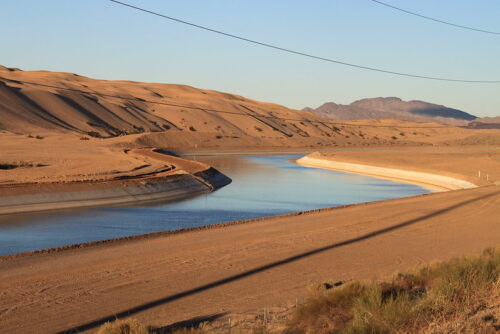
“In a long-awaited regulatory milestone for the Western water crisis, the Department of the Interior’s Bureau of Reclamation released its Final Environmental Impact Statement (FEIS) on Friday, outlining a strategic 10-year decision framework to govern operations at Lake Powell and Lake Mead through 2036. The action marks a major shift toward adaptive management along the Colorado River, a vital lifeline supplying municipal water, agriculture, and hydroelectric power to more than 40 million people across seven Southwestern states, 30 Native American tribes, and two Mexican states. Instead of locking in fixed, decade-long operating rules, the federal preferred alternative establishes key operational thresholds—termed “sideboards”—while relying on flexible operating plans issued in two-year increments to respond to unpredictable hydrologic conditions. … ” Continue reading at the Imperial Valley Press.
U.S.’s new plan will slash AZ’s water supplies if river stays low
“The federal government has laid out a path by which it could drastically cut deliveries to the Central Arizona Project that brings drinking water to Tucson and Phoenix. But in its final environmental impact statement on the Colorado River, released Friday, the U.S. Bureau of Reclamation makes it clear that such drastic cuts will happen only if water supply conditions in the river stay bad or continue to deteriorate next year as they have this year. That means the worst-case cuts most likely wouldn’t happen starting this October, when Reclamation is supposed to introduce revised rules for operating the river and its reservoirs. Most likely, “they will wait and see what the winter snowpack brings,” said David Wegner, a retired bureau official living in Tucson. But in the long run, the final environmental report raises the possibility of cutting water deliveries to the Lower Basin states of Arizona, California and Nevada by 3 million acre-feet a year. At the same time, it proposes no mandatory cuts to the Upper Basin states of Colorado, New Mexico, Utah and Wyoming. … ” Read more from the Arizona Daily Star.
Central Arizona Project president says feds ‘bought the lies’ on Colorado River plan
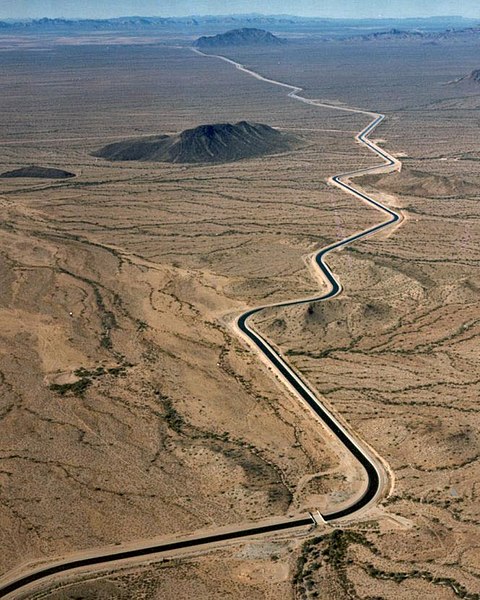 “The president of the Central Arizona Project accused the Department of the Interior on Friday of siding with Upper Basin states and accepting false claims about water obligations in the newly released Colorado River management plan. The Central Arizona Project is the state’s largest supplier of renewable water, delivering Colorado River water to Maricopa, Pinal and Pima counties through a 336-mile canal system. “The Department of Interior basically bought their lies,” Terry Goddard told KTAR News 92.3 FM’s Outspoken with Bruce & Gaydos, referring to Wyoming, Colorado, Utah and New Mexico, which have refused to agree to any water reductions even in the most extreme shortage conditions. … ” Read more from KTAR.
Joanna Allhands: Colorado River plan raises tough question for Arizona
Joanna Allhands writes, “The rules to manage a shrinking Colorado River past 2026 are clearer now. Finally. The federal Bureau of Reclamation has released its long-awaited Final Environmental Impact Statement (FEIS) on the river without full buy-in from the seven river basin states. No one likes the plan. But it generally stuck to the topline details that federal officials released earlier in the summer: This is a 10-year deal, broken into 2-year chunks unless the basin states miraculously agree to something longer, containing a wide range of probable outcomes that — depending on the user — could be partially horrible or totally catastrophic. This offers some certainty for how we move forward. Yet little about the supporting details feels certain. … ” Continue reading at the Arizona Farm Bureau.
Federal plan spares New Mexico from mandatory Colorado River water cuts
“New Mexico will avoid mandatory water cuts from the dwindling Colorado River under a proposal released Friday by the U.S. Bureau of Reclamation. The plan exempts the four Upper Basin states — New Mexico, Colorado, Utah and Wyoming — from mandatory reductions for now. “The Department has a responsibility to ensure the Colorado River system remains reliable and resilient for the millions of Americans, communities and industries that depend on it,” Interior Secretary Doug Burgum said in a news release. … ” Read more from KUNM.
Everything you need to know about the new federal report on the Colorado River’s future
“Colorado water officials knew that they and the three other Upper Basin states would likely be asked to conserve Colorado River water under a new plan spanning the next decade. Now they know the target amount: up to 200,000 acre-feet, or 65 billion gallons of savings among the four states. Water watchers gained new insights into the river’s future thanks to a federal report released Friday. The report, a final environmental impact statement, describes how the federal government plans to manage the river basin’s key reservoirs, including lakes Mead and Powell, for the next 10 years. It outlines severe water cuts for downstream states — Arizona, California and Nevada — plus a range of reservoir releases and new storage pools for conserved water. States will have to negotiate specific plans for cuts, conservation and more every two years. … ” Read more from the Colorado Sun.
In national water news today …
EPA Inspector General: Potentially $1 billion-plus in water earmark funds not awarded
“A report released on July 21 by the U.S. Environmental Protection Agency (EPA) Office of Inspector General (OIG) concluded that roughly 44 percent of water earmark funds for fiscal years 2022 and 2023, totaling more than $1 billion, had not been awarded as of September 2025. OIG said it conducted the audit to determine whether the EPA was awarding fiscal years 2022 and 2023 water infrastructure earmark grants expeditiously and in accordance with federal and EPA requirements. According to the OIG report, EPA had awarded 67 percent of FY 2022 earmark appropriations and 51 percent of FY 2023 appropriations, leaving more than $1 billion of the $2.3 billion total appropriated amount, or 510 of the 1,198 projects, unawarded. OIG said a significant amount of earmark funds remain unawarded while congressional earmark funding continues to increase. … ” Read more from Water Finance & Management.
Congress faces $13 billion fight over Tribal water rights settlements
“The Trump administration signaled openness to tribal water rights settlements through a more limited funding mechanism, even as House Republicans push back on the cost. Scott Cameron, principal deputy assistant secretary for water and science at the Interior Department, testified July 29 before the Senate Committee on Indian Affairs that one proposed bill could provide greater flexibility without requiring additional federal spending, a notable position as the administration seeks broader reductions in federal spending. The hearing highlighted a central policy tension. Cameron described S. 3573 as providing flexibility without additional federal appropriations, while the broader package of tribal water rights legislation faces resistance from House Republicans who argue Indian water rights settlements are too costly and oppose additional spending. … ” Read more from Legis1.
Cyber defense agency says hackers targeting US water systems
“The U.S. government’s civilian cyber defense agency this week warned of a significant increase in hackers targeting technology used to maintain and control water and wastewater systems, and said operators of such systems should remove them from the internet as soon as possible. The warning Thursday came two days after Minnesota’s state IT agency said more than 30 community water systems in the state were targeted in a “coordinated cyberattack.” The FBI said in a statement late Thursday that water and wastewater utility companies in at least seven states reported incidents to the bureau, and some of that activity “degraded water operations.” … ” Read more from WBKB.
Floating solar is booming–but what does it do to lakes?
“Somewhere along the German border, heavy mining machinery works in a gravel pit. The surrounding landscape bears the scars of previous excavations, and in the hazy distance, the slack surface of a quarry pond shimmers. But look closer, and it’s not just water glittering in the midday sun. The pond is covered in floating solar panels. Floating Photovoltaic (FPV) systems are a growing renewable technology. They are used in over 60 countries–mostly in Asia–and in 2021, they reached a capacity of 3 GW. With the use of 1% of global surface waters, the technical FPV potential is estimated at 400 GW. Globally, installed solar capacity surpassed 2 TW in 2024, and while FPV systems still have some catching up to do to compete with their traditional terrestrial siblings, they have some benefits. Approximately 1 hectare of land is needed for 1 MW of solar electricity capacity, making meaningful installations in high-density urban areas or islands almost impossible. Installation of floating systems not only conserves precious land resources but also has several operational advantages, including reducing evaporation. … ” Read more from the Environmental Monitor.
Rising sea levels spell disaster for US coastal wetlands
“It’s not news to ecologists that climate change will impact the Earth’s oceanic regions just as catastrophically as it does the atmosphere, but accurately quantifying what that looks like is a taller ask. A new study published in the American Geophysical Union science journal Earth’s Future has produced an answer regarding the future of American coastal wetland biomes, and its figures might be frightening for environmentalists, land use planners and Gulf Coast residents. Eighty-four percent of coastal wetlands in the U.S. are gradually being overtaken by rising seas, scientists found. The 14-member team behind the study, headed by Duke University wetland ecologist Justine Neville, believes many of those wetland areas will become entirely submerged if mitigating action isn’t taken. … ” Read more from the Courthouse News Service.

