
Several news sources featured in the Daily Digest may limit the number of articles you can access without a subscription. However, gift articles and open-access links are provided when available. For more open access California water news articles, explore the main page at MavensNotebook.com.
In California water news this weekend …
Trump administration spares Southwest from harshest water cuts in new Colorado River plan
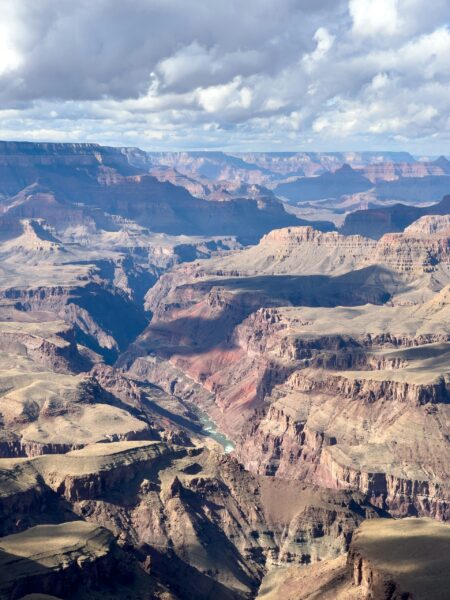 “The Trump administration has released its long-awaited 10-year plan for dealing with worsening water shortages along the Colorado River. Instead of ordering the most drastic water cutbacks it could have imposed, the administration chose to take more of a wait-and-see approach. The plan allows for deep water cuts if they’re deemed necessary, requiring California, Arizona and Nevada to cut up to 3 million acre-feet per year — up to 40% of the combined allotments. But as The Times reported last week, state and local officials say for the first two years, the Trump administration is accepting an offer the three states made to reduce what they take from the river by about half that amount — 3.2 million acre-feet between now and the end of 2028. So the Southwest has, for now, avoided the harshest possible water cuts. … ” Read more from the LA Times. | Read via Yahoo News.
The Trump administration’s ‘draconian’ water cuts could gut Arizona’s Colorado River supply
“A new federal plan released Friday could mean cuts of up to 77% to Arizona’s share of Colorado River water, in the midst of a 25-year megadrought, something that state leaders say would cause catastrophic harm to the state’s economy. “Such reductions would devastate Arizona’s water users and its economy,” the Arizona Department of Water Resources said in a statement denouncing the plan. … “For many months it has been clear that the direction of Colorado River negotiations has been an exercise in lowering expectations, particularly for a long-term, seven-state agreement on operating this vital river system,” ADWR said in the statement. … ” Read more from the Arizona Mirror.
Nevada faces ‘unrealistic reductions’ in ‘fundamentally flawed’ Colorado River plan, officials say
“The federal government has released its long-awaited 10-year plan to manage worsening water shortages along the Colorado River, including deep cuts to Nevada’s allocation of the drought-stricken river. … Nevada would face the lowest mandatory reductions on an acre-feet basis under the preferred alternative, with a maximum curtailment of 210,000acre-feet annually during especially dry years under the guidelines. Nevada also has the smallest allocation of Colorado River water among the three lower basin states. Nevada Gov. Joe Lombardo said the federal plan “seeks to impose unrealistic reductions on Nevada and our water users,” and “could have devastating economic and environmental impacts on Nevada.” … ” Read more from the Nevada Current.
Utah won’t face mandatory cuts in feds’ new Colorado River proposal, but Lower Basin states could
“After Utah and six other states along the Colorado River failed to reach a deal on how to share its dwindling water supply, the federal government on Friday released its own 10-year outline. Under the proposal from the U.S. Bureau of Reclamation, the Lower Basin states of Arizona, California and Nevada would share in cuts of up to 3 million acre-feet per year. The framework doesn’t mandate cuts for Colorado, New Mexico, Utah and Wyoming. Instead, it identifies a conservation goal for the Upper Basin — 200,000 acre-feet per year — about as much as Utah’s Deer Creek and East Canyon reservoirs together can hold. The plan would also allow for smaller annual releases from Lake Powell of down to 5 million acre-feet, compared to the current 6 million acre-feet, with new operating guidelines every two years. Utah’s chief Colorado River negotiator, Gene Shawcroft, praised the proposal on Friday, telling reporters it recognizes the reality of the water available, not just the demand. But he emphasized it provides a broad framework, with the details to follow in coming days. … ” Read more from the Utah News Dispatch.
Feds to impose new cuts on lower Colorado River states amid climate-fueled megadrought
“The federal government on Friday formalized a set of guidelines for managing water use in the Colorado River Basin over the next decade, if Colorado and six other Western states can’t come to an agreement on how to deal with declining flows caused in large part by climate change. … Under the U.S. Bureau of Reclamation’s “preferred alternative” for the management of the river’s reservoir system, outlined in a extensive environmental impact statement, the burden of the most severe cuts would continue to fall on the Lower Basin states of Arizona, California and Nevada, which could face mandatory cuts of up to 3 million acre-feet of water. The Upper Basin states of Colorado, New Mexico, Utah and Wyoming would face only voluntary conservation targets totaling 200,000 acre-feet. … ” Read more from the Colorado Newsline.

EXPLORE MORE COVERAGE:
- Interior advances Colorado River plan with ‘draconian’ cuts for Arizona, from E&E News
- Colorado River plan sets stage for future California water cuts, from the USA Today via Desert Sun
- From ‘encouraged’ to ‘draconian,’ reactions flow in on new fed plan for future of Colorado River, from Nevada Public Radio
- Gov. Katie Hobbs pushes back on ‘unacceptable’ terms in federal Colorado River proposal, from KTAR
- Arizona facing deep Colorado River cuts under ‘unacceptable’ federal plan, from the Arizona Capitol Times
- Nevada braces for Colorado River showdown with feds as it faces steepest cuts in history, from the Las Vegas Review-Journal
- Trump administration allows smaller water releases from Lake Powell under new Colorado River plan, from the Salt Lake Tribune
- Colorado River plan spares upper basin states from mandatory cuts, for now, from CBS Colorado
- Feds Release New 10-Year Plan For Colorado River Water, Gordon ‘Encouraged’, from the WyoFile
STATEMENTS:
- Statement from JB Hamby, Colorado River Board of California
- Interior’s Final Colorado River EIS Sets 10-Year Framework; Focus Turns to 2027–2028 Operating Plan, from the Imperial Irrigation District
- Metropolitan issues statement on release of Final EIS for Colorado River operations
- Central Arizona Project statement regarding Final Environmental Impact Statement for the Post-2026 Operational Guidelines and Strategies for Lake Powell and Lake Mead
- Arizona Governor Katie Hobbs Releases Statement on Colorado River Final Environmental Impact Statement for Future Colorado River Operations
- Statement from the Arizona Department of Water Resources
- Governor Joe Lombardo Releases Statement on Colorado River Final Environmental Impact Statement
- Upper Basin States Release Joint Statement on Federal Environmental Impact Statement Regarding Future Colorado River Operations
In other California water news …
California water board prioritizes winery compliance as numerous facilities still face waste discharge requirements
“Five-hundred and eighty wineries are currently permitted by California State Regional Water Board waste discharge requirements (WDRs), individual WDRs or waivers, yet there’s still ~1,500 wineries expected to be required to comply with this order, according to a recent presentation by GSI Environmental. The good news is that the Board, so far, is not taking a heavy-handed approach to penalties and enforcement at the outset. Instead, its current primary focus is helping winery operators without permits come into compliance, according to the July 29 webinar and presentation from GSI. Technically, wineries without WDRs needed to obtain coverage by Jan. 20, 2024—three years following the order’s adoption—with a <5-year compliance schedule, according to Mehran Ebrahimi, senior associate engineer, GSI Environmental Inc. … ” Read more from Wine Business.
The salmon saga continues over Sacramento River temperatures
“On July 1, the U.S. Bureau of Reclamation sent a response letter to the California State Water Resources Control Board concerning the Sacramento River Temperature Management Plan – otherwise known as Order 90-5. The letter was a response to the SWRCB’s objection to Reclamation’s 2026 Final Sacramento River Temperature Management Plan. For context, Order 90-5, which was adopted by the State Water Board in 1990, established operational requirements for the Reclamation’s management of the Shasta Dam, Keswick Dam, the Spring Creek Power Plant, and the Trinity River Division as it relates to temperature control in the Upper Sacramento River. The primary objective is to maintain temperatures to protect fish species including winter-run and fall-run Chinook salmon. … ” Read more from Valley Ag Voice.
Parts of California are ‘abnormally dry.’ Which areas face drought conditions?
“Roughly two-thirds of California is now considered “abnormally dry” as much of the state braces for another round of triple-digit temperatures, according to the latest U.S. Drought Monitor update. The return of dry conditions marks a sharp shift from earlier this year. In January, the U.S. Drought Monitor showed that 0% of California was experiencing drought conditions for the first time in 25 years. Months of hot, dry summer weather have since erased that milestone. “This U.S. Drought Monitor (USDM) week saw very hot and dry conditions across areas of the Western U.S. and the Plains states where average temperatures soared well above normal levels—significantly elevating evaporate demand,” the U.S. Drought Monitor said in its national drought summary released Thursday, July 30. … ” Read more from the Sacramento Bee.
Water rights for Tribes: Assembly Bill 2218
“California Assembly Bill 2218, introduced by Assemblymember Ash Kalra, has passed the Assembly and is now being considered in the State Senate. The bill seeks to address long-standing inequalities in water access for Native American tribes. It requires state agencies, such as the State Water Resources Control Board, to consult with tribes and use Indigenous ecosystem knowledge. This knowledge comes from generations of Native peoples’ understanding of local lands, waterways, and resources. Supporters, including the Karuk Tribe and the Shingle Springs Band of Miwok Indians, believe the bill offers important legal protections. The bill is seen as a means of beginning to address harm caused by past government actions, such as termination, removal, and assimilation. These federal and state policies took away tribal recognition, forced Native communities off their lands, and pressured them to adopt non-Native customs. Because of this, tribes lost their sovereignty and access to land and water. … ” Read more from the Northcoast Environmental Center.
Woodside Fire’s rare behavior stunned wildfire expert
“The Woodside Fire along the Sonoma coast spread in a highly unusual manner: Besides burning from tree to tree and shrub to shrub, it jumped from coastal headland to coastal headland, carried by embers blown over the ocean. While ember cast is not an uncommon way to drive a wildfire, especially when winds are strong, the fanning of hot, burning particles over cold Pacific waters is possible only with a rare alignment of conditions, which took shape north of the community of Jenner this week, says climate scientist Daniel Swain. “I did a double take,” Swain told the Chronicle, after looking at maps that showed the Woodside Fire hopping across two ocean coves, each about a quarter-mile wide, near Salt Point State Park on Thursday. “If there are lots of embers being generated with the heavy duff and conifer forest (on one side of the cove) and having similarly receptive fuels on the other side of the cove, this is not the most significant spotting event we’ve seen, but it’s just the particulars of this situation that are so unusual.” … ” Read more from the San Francisco Chronicle.
In people news this weekend …
Promotions, passings, profiles – submit people news items to maven@mavensnotebook.com.
An exclusive interview with outgoing DWR Director Karla Nemeth
 “California Department of Water Resources (DWR) director Karla Nemeth left the department last month after nearly nine years of service. Before she takes over as the director of the Association of California Water Agencies (ACWA), we sat down with her to talk about how DWR changed during her tenure, what (still) keeps her up at night, and what advice she’d offer California’s next governor. Why has managing water at DWR become so complicated?DWR was established in 1956, after a devastating flood in northern California. World War II veterans were drafted to engineer a huge system that would deal with flooding and move a lot of water vast distances for water supply. So a very linear era with narrow objectives birthed both the State Water Project and the department. We live in a very different world today. With extreme weather and older infrastructure, both day-to-day and season-to-season management are much harder, and the cumulative damage to groundwater basins and river systems over the last 100 years is catching up with us. The stakes are just off-the-charts. … ” Read more from the PPIC.
Podcasts …
RIPPLE EFFECT: Colorado River minimum elevation drawdown
We talk all about the recently published report titled: “Why Communicating Minimum Drawdown Elevations from Lake Powell and Lake Mead can Mitigate Risks of Volatile Colorado River Flow”. Joining us are the three co-authors and star guests from Utah State University: David Rosenberg, professor in the Department of Civil and Environmental Engineering, Brittany Fager, PHD student and Student Researcher, and Anabelle Myers, Student Researcher. With historically low reservoir levels and inflows, this report seeks to prevent the catastrophic consequences of too low water levels, and seeks to determine at exactly what point those consequences happen. Armed with this knowledge, we can make smarter water decisions.
VIC BEDOIAN: Federal water rules imperil chinook salmon
The US Bureau of Reclamation finalized its 2026 water management plan for Shasta Reservoir in late spring, with a promise to deliver more than two million acre-feet of Sacramento River water to Central Valley farms. That’s about 717 billion gallons tapped from the state’s largest river. Environmental groups, like San Francisco Baykeeper say the plan violates federal and state laws that protect endangered species like Chinook Salmon, and they are taking legal action to keep fish populations from further decline. Vic Bedoian reports from Fresno.
LIVING ON EARTH: Saving the Klamath, salmon, and Yurok culture
The Yurok tribe has inhabited the lower stretches of the Klamath River in Northern California since time immemorial, and their culture is deeply intertwined with the river’s salmon. So, when toxic conditions caused by the dams on the river resulted in a massive fish kill, the Yurok people sprang into action. Yurok attorney Amy Bowers Cordalis joins Host Jenni Doering to talk about the historic removal of Klamath dams and her 2026 book, The Water Remembers: My Indigenous Family’s Fight to Save a River and a Way of Life.
VIC BEDOIAN: Three California lakes in trouble
Environmental problems face three large California lakes, and state agencies along with local organizations are trying to find solutions. A panel of local experts came together to discuss current conditions at Clear Lake, Lake Tahoe and the Salton Sea. They reviewed major issues at hand and the work being done to heal decades of damage. Vic Bedoian reports from Fresno.
(RE)TURNING TO THE RIVER: Illegal cannabis grow sites
Discover how California State Parks’ Cannabis Watershed Protection Program is working to keep park watersheds safe and accessible.
WATER IS A MANY SPLENDOR’ED THING: The United States Coast Guard
 On an average day, you could witness 64 search and rescues, the saving of twelve lives, the recovery of hundreds of pounds of cocaine off the streets, the investigation of thirteen marine accidents and response to ten pollution incidents. The United States Coast Guard is a unique arm of the government that promotes maritime safety, security and environmental stewardship. Water is a Many Splendor ’ed Thing brings you another water relationship that has a personally significant impact to your life. Produced by Stephen Baker, Bringing People Together to Solve Water Problems, water@operationunite.co 530-205-6388
WATERLOOP: Avoiding the constant infrastructure triage
Water utilities may never escape the need to triage infrastructure, but better data, design, and monitoring can reduce the constant churn of reactive responses. In this episode, Jeff Bridge, Charis Klimas, and Brett Braganz of Oldcastle Infrastructure examine how utilities can move upstream of failure by choosing materials for the actual application, designing around workforce constraints, and verifying underground problems before committing crews and capital.
In regional water news this weekend …
NORTH COAST
The future of juvenile salmon
“Earlier this month, after numerous young Chinook salmon carcasses were found along the Upper Klamath River near the Oregon-California border, scientists quickly transported several specimens to an Oregon expert instead of mailing them as usual. Dead fish typically sink or are eaten by scavengers, so the high number of visible carcasses raised concern. Approximately one in five Chinook juveniles tested in this area were infected with lethal levels of the parasite, Ceratonova shasta (Prevalence of Infection in Klamath River Juvenile Chinook Salmon, 2024). Chinook salmon health is vital for the river ecosystem, supporting wildlife and nutrient cycles, and for local communities that depend on salmon for cultural, economic, and subsistence purposes. Before dissection, scientists identified Ceratonova shasta, a lethal waterborne parasite about the size of a blood cell, as the cause of death. … ” Read more from the Northcoast Environmental Center.
Construction begins on landmark Elk River Estuary restoration project, creating a more resilient future for fish, farms, and communities
“Construction is officially underway on the Elk River Estuary Restoration Project, marking a major milestone in a decades-long effort to restore one of Humboldt Bay’s most important watersheds. Led by California Trout (CalTrout) in partnership with Tribal Nations, local landowners, public agencies, scientists, and community partners, the project will restore critical estuary habitat, improve conditions for native fish, and help the Elk River adapt to rising sea levels and a changing climate. “Construction beginning at Elk River represents years of science, collaboration, and commitment coming together on the ground,” said Katy Gurin, North Coast Senior Project Manager at CalTrout. “This project is about restoring the natural processes that make estuaries thrive — bringing back tidal connections, creating habitat for native fish, and helping this landscape adapt to the future. It’s also about working alongside the people who know and care for this place to create a restoration vision that can last for generations. … ” Read more from Cal Trout.
SACRAMENTO VALLEY
Rep. Gallagher introduces bill aimed at boosting Northern California water reliability
“Congressman James Gallagher introduced new federal legislation Friday that aims to improve water reliability across Northern California while investing in river restoration and long-term ecosystem health. The Doug LaMalfa Sacramento River Basin Water Security and Reliability Act would support water storage projects, strengthen water infrastructure and provide funding for habitat restoration throughout the Sacramento River Basin. According to Gallagher’s office, the Sacramento River Basin supplies water to millions of Californians and supports one of the nation’s most productive agricultural regions. The legislation is designed to improve water reliability while balancing environmental stewardship and fish habitat restoration. … ” Read more from Action News Now.
Residents pack California county’s meetings to push back on proposed groundwater fee as supervisors delay vote
“Homeowners and farmers crowded into a Tehama County, California, hearing room to challenge groundwater fee proposals they described as unfair, confusing, and badly communicated. After nearly seven hours of testimony and criticism, county supervisors chose to delay action, as the Corning Observer reported. Held across two meetings, the hearings drew so many people that the board chamber filled up and attendees spilled into a side room and hallway. The crowd came to weigh in on two proposed fee systems linked to state-required groundwater management. … ” Read more from The Cool Down.
From the classroom to the water system: Preparing Roseville’s next generation of water professionals
“Following approval from the Roseville City Council and Roseville Joint Union High School District Board of Trustees, the City and Roseville Adult School are launching a pilot program that prepares students for careers in water distribution. Through classroom learning, hands-on experience and industry-recognized coursework, students can work toward California certification and entry-level careers while helping meet the growing need for skilled water professionals. … ” Read more from the City of Roseville.
Folsom to begin replacing 3,000 aging water meters
“The City of Folsom this week was scheduled to begin replacing 3,000 aging residential water meters throughout the community. The project will improve the reliability and accuracy of the city’s water system and is expected to continue through January 2027. Water meter replacements will be completed by Phoenix Water Solutions, a contractor working on behalf of the City of Folsom. …, ” Read more from Gold Country Media.
Under a Sacramento bridge, California’s largest urban bat colony takes flight every night
“Every summer, as the sun sets over the Yolo Causeway just outside Sacramento, a quarter of a million bats stream out from beneath the bridge. Drivers crossing Interstate 80 rarely know they’re there — the bats’ wingbeats and chirps drowned out by the rush of trucks and cars crossing the bridge. But from June through August, visitors can watch thousands of bats spiral out from under the causeway into the dusk sky in a phenomenon locals call a “bat-nado” — on guided tours run by the Yolo Basin Foundation. The bats living under the causeway are part of one of the largest urban colonies of Mexican free-tailed bats in the country. Right now, the camp is almost entirely mothers and their pups, said Corky Quirk, the Yolo Basin Foundation’s program coordinator. Females give birth in early summer and stay with their young for about two months, until the pups are strong enough to fly on their own. … ” Read more from KQED.
BAY AREA
Tiburon initiates shoreline adaptation plan
“Tiburon has started developing a shoreline plan to prepare for the rising sea. Two state laws passed in recent years — Senate Bill 1 and Senate Bill 272 — focus on getting coastal areas ready for higher water. As a result, municipalities covered by the San Francisco Bay Conservation and Development Commission are required to create shoreline adaptation plans by January 2034. “Regardless of what the law says, there’s a certain amount of sea-level rise that we are going to see regardless of the actions we take, so we need to be prepared,” said Rylan Gervase, a spokesperson for the commission. … ” Read more from the Marin Independent Journal.
SAN JOAQUIN VALLEY
Modesto contacted by data center developer. MID says it aims to protect ratepayers
“Rumor and speculation are circulating about data centers and whether some will be built in Modesto, Patterson or other cities in Stanislaus County. A post Wednesday on Modesto Councilman Chris Ricci’s Facebook page seemed to test the waters. It said a development company is lobbying council members about a data center. The company was identified as NorthPoint Development, a data center developer with an office in Sacramento. A proposed location for a data center was not disclosed. “If you have opinions about data centers, now is the time to let your council know,” Ricci’s post said. Within five hours, the page received 319 comments. Ricci did not return a call and text from The Modesto Bee, and a Northpoint Development media contact did not respond. … ” Read more from the Modesto Bee.
Kern subbasin puts updated groundwater plan to the test
“In the famous story, “Three Little Pigs,” each pig proved they could build a structure whether it was made from straw, or sticks, or bricks. Once the structures were in place, it became an afterthought for the pigs with straw and stick houses, as no storm had swept away their work. But the smartest pig with his house made of bricks understood that the strength of his house could only be understood when the wolf arrived. California’s water management landscape now finds itself at a crossroads, but it faces more than one wolf. Instead, hundreds of locally built plans must withstand economic pressure, competing water demands, and the scrutiny of a law that still has over a decade before its final deadline. … On June 30, the Water Association of Kern County hosted a public workshop to review the Kern Subbasin’s 394-page annual report. The Kern Subbasin is the largest subbasin in California, according to the annual report, covering 1.78-million acres, with 35 water agencies and 20 GSAs. … ” Read more from Valley Ag Voice.
SOUTHERN CALIFORNIA
Los Angeles Regional Water Board adopts new CII stormwater permit

“On July 23, 2026, the Los Angeles Regional Water Quality Control Board adopted a new Commercial, Industrial, and Institutional (“CII”) Stormwater Permit that could create significant new compliance obligations for certain commercial, industrial, and institutional properties in portions of Los Angeles County. In general, the permit applies to facilities within the Dominguez Channel and Los Cerritos watersheds that have five or more acres of impervious surface or, in some circumstances, five or more acres of total site area, including certain facilities that currently rely on No Exposure Certifications, Notices of Non-Applicability, or other forms of stormwater permit coverage. The permit also contains broad provisions regarding campus-style developments, allowing contiguous parcels and certain parcels separated by public rights-of-way to be aggregated for coverage purposes, and applies to the commercial, industrial, or institutional portions of mixed-use developments. … ” Read more from Stoel Rives.
SEE ALSO: LA Regional Water Board to Require Cleanup of Commercial Runoff, from My News LA
Law firm says it has lost touch with hundreds of clients suing over L.A. County landfill
“Downtown LA Law Group, a law firm facing multiple state and local investigations, says it plans to bow out of a high-stakes environmental case against the county’s second-largest landfill within the next two months. Andrew Morrow, an attorney spearheading the litigation for the firm, said in court Thursday that the group has passed off about 500 of its 1,200 landfill clients to another personal injury firm. Roughly 500 more clients, he said, could not be reached and will likely be dismissed from the case. “We have sort of exhausted our ability to communicate with most of these people,” Morrow told District Judge Maame Ewusi-Mensah Frimpong. … ” Read moire from the LA Times.
Suspended plan to uproot vegetation in San Juan and Trabuco creeks draws scrutiny from residents, state regulators
“A month after pausing herbicide spraying to manage flood control in the San Juan and Trabuco creeks that run through South Orange County to the coast, OC Public Works has had to halt its plans to manually remove non-native vegetation. The agency announced on July 15 that it would be conducting a 10-day maintenance project to uproot non-native, invasive plant species of small trees, shrubs and brush, “cutting vegetation down to ground.” A biological monitor would be present to ensure that sensitive biological resources were not harmed during the project’s duration, officials had assured. But just five days later, the project was postponed amid pushback from local activists and state regulators worried about adverse impact on creeks’ ecosystem and endangered species like the Southern California steelhead. … ” Read more from the OC Register.
SEE ALSO: Herbicide use in Orange County waterways draws scrutiny from environmental group, officials, from KABC
Editorial: Despite hysterics, federal water OK helps thirsty SoCal
The Southern California News Group editorial board writes, “Californians who want a stark example of the slow-growth mentality that has held back our state’s progress and has led to water scarcity should focus on a largely unknown battle that has taken place for years in the heart of the rural Mojave Desert. That debate has started again as the Trump administration has given a water company the greenlight to use existing oil-and-gas pipelines to send water across federal land to serve communities in San Bernardino County. Ultimately, the company could sell enough water to supply 400,000 people a year throughout Southern California. The latest OK is a major step forward, although environmentalists have filed their usual lawsuits. … ” Read more from the OC Register.
SAN DIEGO
Fierce floods or wild waves? How San Diego is preparing for a winter of extreme weather under El Niño
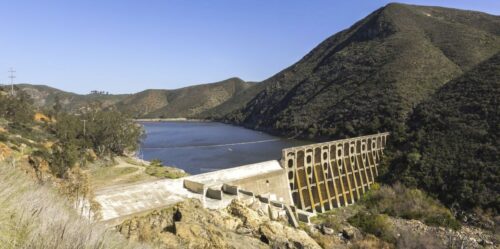
“When the super El Niño arrives this winter, San Diego could be in for raging floods that gush through canyons and hillsides. Or it could face sparse rainfall and heightened fire risk. It could also see monster waves carve away beaches and pummel piers. El Niño, the weather phenomena that produces warmer sea surface waters and weakened trade winds, has typically also brought wet winters to Southern California. “Large El Niños tend to tilt the odds toward more winter north Pacific storms and also larger ones, because of the energy imparted to the atmosphere from the ocean,” said Dan Cayan, a researcher at Scripps Institution of Oceanography. But the connection between ocean conditions and rainfall has weakened this century. That forces scientists to adjust forecasts, and public officials to plan for a wider range of scenarios. Adding to that uncertainty are San Diego’s aging stormwater systems and century-old dams. … ” Read more from Cal Matters.
In national water news this weekend …
U.S. spy agencies suspect Iran launched cyberattack on Minnesota water facilities
“U.S. intelligence agencies have assessed that Iran was likely behind a coordinated cyberattack on more than 30 municipal water systems in Minnesota this week, according to several U.S. officials. The FBI is investigating the attack, which comes as a five-month-old military conflict between the United States and Iran threatens to escalate. Though intelligence agencies have not definitively concluded that Tehran is responsible, the hack follows urgent warnings by federal cybersecurity officials that Iran for months has been targeting internet-exposed devices that control operations at water, wastewater and energy facilities in the U.S. and, in some cases, causing disruptions. … ” Read more from the Washington Post.
SEE ALSO: Scope of Hacks on U.S. Water Supply Widens as Evidence Points to Iran, from the New York Times
EPA exempts data center power plants from pollution limits seeking to prevent acid rain
“The Trump administration announced Monday that it is exempting power plants that only serve data centers and do not connect to the broader grid from pollution limits that seek to prevent acid rain. The administration announced new guidance on Monday clarifying that these “islanded” power plants do not have to be part of the Clean Air Act’s Acid Rain Program (ARP). This program requires power plants to reduce emissions of acid rain precursors sulfur dioxide and nitrogen oxides. Acid rain can cause environmental damage, including to aquatic wildlife, such as fish. In addition, exposure to sulfur dioxide and nitrogen oxides can worsen respiratory issues in humans. The Environmental Protection Agency (EPA) said it was taking the action to try to help data centers flourish while also mitigating their impacts on consumer electric bills by incentivizing data centers to bring their own power plants instead of relying on the electricity that’s already on the grid. … ” Read more from The Hill.
A fleet idled by conflict is now spinning an ‘ecological roulette’ across the world’s ports
“When the Strait of Hormuz closed five months ago, more than 1,500 commercial ships were stranded in the Persian Gulf and the Gulf of Oman—the largest unplanned concentration of idled vessels in the modern history of shipping. The human aspect of the Iran war layup drew the world’s attention: thousands of stuck seafarers and billions of dollars in disrupted trade. Beneath the waterline, a quieter problem was accumulating. A ship in motion is a hostile place for marine life. A ship sitting still is an invitation. Over months at anchor in warm water, hulls, sea chests and rudders become dense gardens of barnacles, mussels, algae and tube worms, a process marine biologists call biofouling. The salty Persian Gulf, where summer surface temperatures approach 38 degrees Celsius (about 100 degrees Fahrenheit), is an especially aggressive incubator. When those ships finally sail, they will carry their gardens with them. New research from 25 marine scientists, published this week in the journal Biological Invasions, warns that the mass layover could seed a “super-spreader event” of invasive species as the fleet disperses to ports around the world. … ” Read more from Inside Climate News.

