
A wrap-up of posts published on Maven’s Notebook this week …
Note to readers: Sign up for weekly email service and you will receive notification of this post on Friday mornings. Readers on daily email service can add weekly email service by updating their subscription preferences. Click here to sign up!
In California water news this week …
Reclamation publishes final environmental impact statement for future Colorado River operations
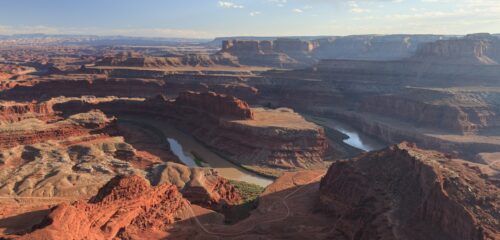 “The Bureau of Reclamation has released the Final Environmental Impact Statement, which designates a preferred course of action for future management of Lake Powell and Lake Mead. The preferred alternative establishes an adaptive decision framework to be used to develop operating guidelines designed to ensure reliable operations in the Colorado River Basin while maintaining the flexibility to respond to changing conditions over a 10-year period through 2036. The framework also preserves the opportunity for the Basin to continue working towards consensus agreements, and if successful, be incorporated into future operations. The framework will be used to develop operating guidelines for operations at Lake Powell and Lake Mead that can be adjusted for shorter and longer term periods. “The Department has a responsibility to ensure the Colorado River system remains reliable and resilient for the millions of Americans, communities and industries that depend on it,” said Secretary of the Interior Doug Burgum. “This framework provides the flexibility to respond to changing hydrologic conditions while preserving the opportunity for the Basin States to continue working toward durable, consensus-based solutions.” … ” Read more from the Department of the Interior.
A new Colorado River plan requires water cuts for three states. Deeper cuts are still possible
“Arizona, California and Nevada will be required to curb their use of the water from the Colorado River by about 20 percent over the next two years — and could ultimately face even larger cuts — according to three officials familiar with negotiations over a long-awaited federal plan to rescue the depleted river. The plan, part of which the Bureau of Reclamation is expected to describe in an Environmental Impact Statement on Friday, comes at a time of escalating crisis for the Colorado, a crucial water source for seven states, 30 Native tribes and a swath of northwestern Mexico. But experts say it will not be sufficient to resolve a political standoff among the river’s many users or prevent the beleaguered waterway from teetering toward collapse. The cuts proposed for the next two years resemble what the three states offered in a proposal this spring, and represent the first phase of a broader 10-year framework for operating the river’s dams and reservoirs, according to the officials, who spoke on the condition of anonymity to discuss ongoing negotiations. … ” Read more from the Washington Post.
Statement from JB Hamby, Colorado River Board of California, on the Post-2026 Final Environmental Impact Statement
“Today, the U.S. Department of the Interior released the Final Environmental Impact Statement establishing a federal framework for Colorado River operations after 2026. This is an important milestone, but it is not the finish line. The framework establishes sideboards on operations for the next ten years. It does not conclude the Basin States’ negotiations, predetermine specific operating decisions, including Lake Powell releases or shortages, or serve as the operating plan itself. Operating plans with specific parameters will be developed in two-year increments, allowing decisions to respond to changing hydrology within the sideboards of the framework released today. The immediate next step is the federal release of the operating plan for 2027 and 2028. On May 1, the Lower Basin states proposed a specific path forward, and California, Arizona, and Nevada remain actively engaged in carrying that work into this next phase. The Lower Basin’s proposal included 3.2 million acre-feet of conservation through 2028, including 1.25 million acre-feet of binding reductions in both 2027 and 2028 and at least 700,000 acre-feet of additional conservation. … ” Continue reading this statement.
SEE ALSO:
- So wait, what’s happening with the Colorado River? Here’s the breakdown, from the Colorado Sun
- Statement from the Arizona Department of Water Resources
- U.S. Raises Threat of Steep Water Cuts in Lower Colorado River Basin, from the New York Times
- Feds announces framework for Colorado River water usage, from KLAS
California’s push to limit groundwater pumping could leave small farmers in the dust
 “While California’s landmark groundwater conservation law was designed to rein in massive agricultural overpumping, [Rosie] Lee and other small-scale growers say its implementation is doing the opposite — penalizing small farms while favoring industrial agribusinesses. According to a new report, rigid fee structures and complex regulations threaten to harm California’s smallest growers, driving land consolidation in favor of deep-pocketed corporate orchards. The report by the University of California Small Farms Network and the nonprofit group Community Alliance with Family Farmers warns that without immediate action by state and local agencies, many family farms could be forced out of business. “Small-scale farmers across California are navigating an increasingly difficult environment,” researchers say in the report. “They are among the state’s most vulnerable groundwater users and have fewer pathways to adapt and less capacity to absorb new costs.” … ” Read more from the LA Times.
NEW REPORT: Groundwater challenges for California’s small-scale farmers expose regulation risks
“Small farms across the state may not be able to comply with groundwater regulations and stay in business, according to a new report analyzing the impact of California’s Sustainable Groundwater Management Act (SGMA) on small-scale farms. In the first-ever assessment of small farmer consideration in California groundwater regulations, researchers at the University of California Small Farms Network and the Community Alliance with Family Farmers document the challenges facing small-scale farms with groundwater regulations. The report “Managing Groundwater with Small Farms in Mind: Risks, Barriers and Opportunities in the Sustainable Groundwater Management Act,” warns that farmers need an approach that helps them understand and adapt to the new regulations – while safeguarding their ability to grow food for California consumers. “Our state’s small-scale farmers face disproportionate risks and barriers with SGMA implementation,” said Catherine Van Dyke, director of water policy at Community Alliance with Family Farmers, a nonprofit that aims to build sustainable food and farming systems. “The future of groundwater management in California will be measured not only by hydrologic indicators but also by whether California’s agricultural communities remain viable and resilient long-term.” … ” Continue reading this press release.
California scientists find early warning sign of irreversible groundwater damage
“Some farming towns in California’s Central Valley have sunk by more than 11 feet in recent years because of groundwater pumping, the extraction of water from underground aquifers using wells and electric pumps for drinking, farming and industry. While some land subsidence is temporary, excessive pumping can cause aquifers to permanently collapse, reducing storage capacity and damaging homes, roads, bridges and canals. New research from UCLA and Caltech has outlined a way to detect when temporary land subsidence becomes permanent and irreversible. The research, published this week in Proceedings of the National Academy of Sciences, uses satellite imagery to identify the “abrupt transition to irreversible damage.” Researchers hope this will give decision makers new tools to keep an eye on water resources. … ” Read more from KQED.
California drought may have pushed parts of the Sacramento Valley aquifer toward permanent collapse
“Around a quarter of the U.S. food supply is grown in California’s Central Valley. Most of its crops, like rice, fruit trees and nut trees, are water-intensive and require extensive groundwater pumping during droughts. Over time, heavy water extraction has contributed to changes in the aquifer systems under the San Joaquin and Sacramento valleys. Although some of these changes can be reversed, a new study, published in the Proceedings of the National Academy of Sciences, indicates that large parts of the Sacramento Valley may have undergone irreversible ground compaction during recent droughts, leading to a permanent loss of groundwater storage. … ” Read more from PhysOrg.
Court invalidates countywide groundwater charge as unconstitutional tax
“The Third District Court of Appeal held that a groundwater well registration charge imposed on all parcels in Tehama County was an unconstitutional tax. Garst v. Tehama County Flood Control and Water Conservation District, 2026 WL 1862122 (June 29, 2026). The charge could not qualify as a regulatory charge under Proposition 26 because it was imposed on landowners regardless of whether they engaged in groundwater extraction or otherwise created a regulatory burden on the district. The Tehama County Flood Control and Water Conservation District serves as a groundwater sustainability agency under the Sustainable Groundwater Management Act. In 2022, the district adopted a well registration program and imposed an annual charge of $0.29 per acre on every legal parcel in the county for three years to fund the program’s administrative costs. The charge applied regardless of whether a parcel contained a groundwater well and was collected through the property tax rolls. … ” Read more from Ashurst Perkins Coie.
SEE ALSO: Appeals court sides with state on groundwater plan review, from Western Water
Kern water districts officially pledge just 1/3 of state ask for Delta tunnel costs
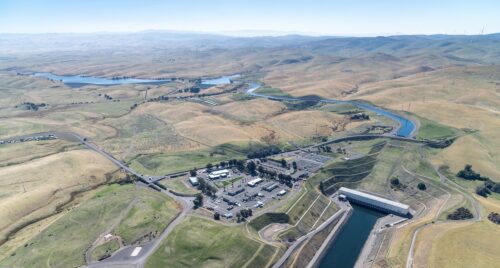
“The official tally shows Kern County water districts are only willing to chip in $11.7 million of $33 million requested by the state toward the planning phase of the so-called delta tunnel, according to figures presented at the July 23 Kern County Water Agency meeting. The agency, which administers the State Water Contract on behalf of 13 local water districts, called “member units,” voted Thursday to approve a funding agreement with the Department of Water Resources that included the reduced amount for planning and pre-construction costs of the 36-foot diameter Delta Conveyance Project. That leaves DWR with a 20% funding gap in the $300 million it needs for this phase, according to agency General Manager Eric Averett. The state has told SJV Water previously that if Kern’s contribution came in lower than expected it would “… adjust the workload and prioritization accordingly.” … ” Read more from SJV Water.
Federal agency rejects Southern California water district’s bid to intervene in PG&E’s bid to remove 2 Eel River dams
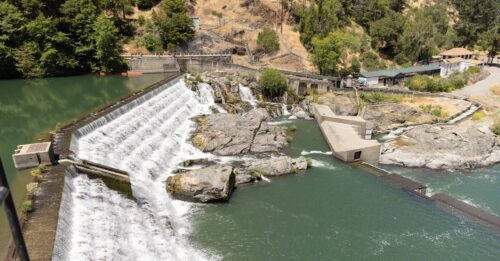
“The Federal Energy Regulatory Commission, the agency with ultimate authority over the fate of two Lake and Mendocino county dams that have become embroiled in escalating controversy, dealt a blow Monday to one of the newer — and more distant — players to enter the fray, denying a bid by a Southern California water agency to intervene in the process. “Movants for late intervention are required to ‘show good cause why the time limitation should be waived,’” FERC Secretary Debbie-Anne A. Reese wrote to Riverside County-based Elsinore Valley Municipal Water District. “Here, the District failed to demonstrate that good cause exists … because it did not provide any explanation for the untimeliness of its motion.” The Lost Coast Outpost first reported the decision, the latest turn in a growing saga that has drawn in the Trump administration as chief antagonist of utility giant Pacific Gas & Electric Co.’ plans to decommission and remove its two Eel River dams, which it contends are outdated and inefficient. … ” Read more from the Santa Rosa Press Democrat.
How Trump’s Endangered Species Act rollback is roiling Northern California
“Since President Donald Trump took office for a second term, his administration has rolled back numerous environmental protections. The latest target is the Endangered Species Act, one of the nation’s bedrock conservation laws. Earlier this month, the U.S. Department of the Interior issued a new interpretation of what would constitute harming an endangered species that sharply loosens the act’s protections related to the degradation of protected wildlife’s habitat. Though Republicans have long sought changes to how the act is interpreted, the rule change marks the most ambitious rollback to the landmark environmental law by the Trump administration yet. The move has drawn a wide range of responses in Northern California. “California will continue to defend this critical federal law and protect our rare animals, plants, and the environment,” a spokesperson for Attorney General Rob Bonta said in a statement to The Bee this week. “We’re exploring all of our legal options.” … ” Read more from the Sacramento Bee.
This year’s El Niño could spell disaster for West Coast fishermen
 “The last El Niño was linked to severe droughts in Southern Africa, wildfires in Indonesia and global coral bleaching. Now, ocean advocates are warning that American fishermen could face significant financial losses as fish stocks struggle to survive in warmer waters. With the National Oceanic and Atmospheric Administration (NOAA) predicting an 81 percent chance of another “very strong” El Niño this year, environmental groups are warning it could spell disaster for U.S. fisheries. Following the 2015-2016 Super El Niño—which occurred alongside a major North Pacific marine heatwave called “the Blob”—over $140 million in government relief was paid to impacted fishers, processors and dealers. Now, some economists are calling on Congress to pre-emptively appropriate emergency funding before this year’s El Niño impacts U.S. waters this fall. “El Niño’s fuse has been lit and we don’t have much time to prepare,” said Anthony Rogers, senior fellow of fisheries economics and climate at Ocean Conservancy, in a press release. The environmental nonprofit is warning the impact on key fish stocks and livelihoods along the West Coast will be worse this year than it was a decade ago. “It’s rare that we have a heads up that we’ll get hit by a natural disaster like this, so we should be preparing. Fishermen are going to be hit hard,” said Rogers in an email to Inside Climate News. … ” Read more from Inside Climate News.
SEE ALSO: Record-breaking El Niño could gut California’s crab and salmon fleets, from the LA Times | Read via Yahoo News.
Cleaning water with co-benefits: Case studies with beavers and porous pavement
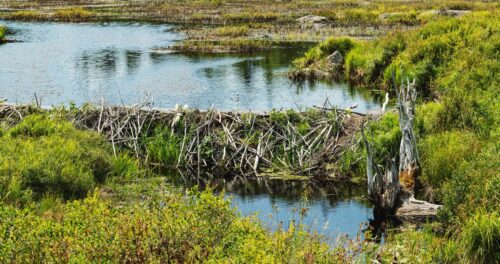
“At the State Water Contractors science conference in June 2026, Dr. Katie Holzer, watershed scientist for the City of Gresham, Oregon, opened her presentation on how beavers improve water quality by explaining that her interest in the animals began early. As a child, she said, her father often took her into nature and shared the wonders of the natural world, with beavers among their favorite topics. A zookeeper by profession, he also studied Native American tribes and the journals of European settlers as they moved across the West—histories that helped shape Dr. Holzer’s understanding of the role beavers once played in western landscapes. “One thing that’s found from looking at those histories is that the West was managed by two species,” said Dr. Holzer. “The land was managed by humans with fire and the movement of the herds that they hunted, and the water was managed by beavers with their dams and channels. So, there wasn’t this pristine wilderness; it was actually a very managed landscape for 1000s of years by the people and the beavers, and they’re both really important to the functioning of those native systems.” … ” Continue reading at Maven’s Notebook.
Research article: Porous pavement shows promise for reducing roadway runoff pollution
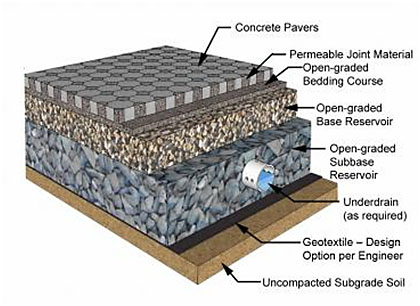 “Roadway runoff often carries pollutants such as copper, zinc, tire-derived chemicals, and hydrocarbons. At concentrations commonly found in stormwater, these contaminants can be toxic to aquatic species, especially salmon. Treating roadway runoff is therefore essential to protecting downstream waterways. Common stormwater treatment practices, including vegetated green infrastructure, can reduce pollutant discharges to aquatic ecosystems, limit flooding and erosion, and help restore natural hydrologic processes. These systems typically direct runoff from streets or buildings through an inlet into a planted soil area, where vegetation and soil media help remove contaminants. Studies have shown that vegetated green stormwater infrastructure can be effective at reducing a wide range of stormwater pollutants. However, in highly urbanized and industrial areas, space for vegetated green infrastructure is often limited or unavailable. These same areas frequently have high pollutant loads and would benefit from alternative treatment approaches. Results from a recent study, Reduction of Runoff Pollutants from Major Arterial Roads Using Porous Pavement, found that porous pavement may provide an effective way to treat stormwater in constrained urban settings without requiring additional land. … ” Continue reading at Maven’s Notebook.
New report: 15 years of progress: Rising to the challenge of the Delta Reform Act
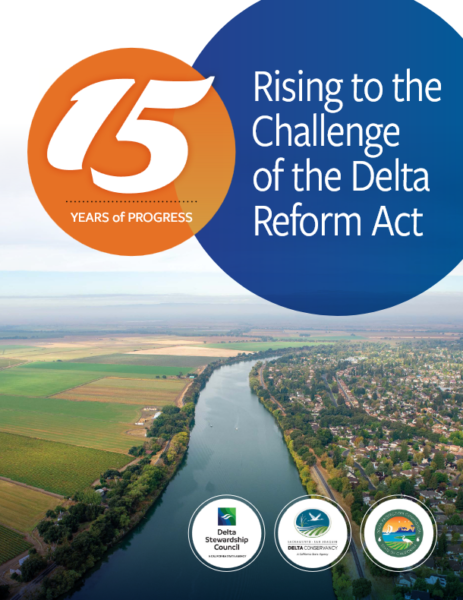 “Fifteen years after the California Legislature passed the Delta Reform Act to strengthen governance for the Sacramento-San Joaquin Delta, the three dedicated Delta state agencies are reflecting on the progress made and the work remaining to protect water supply reliability, ecosystem health, and the Delta as an evolving place. The Delta Stewardship Council, Delta Protection Commission, and Sacramento-San Joaquin Delta Conservancy are proud to announce the co-release of 15 Years of Progress: Rising to the Challenge of the Delta Reform Act. The report captures key accomplishments and efforts to advance the Legislature’s vision for a more resilient Delta. Achievements span the adoption of the first-ever Delta Plan, investment of millions of dollars in science and ecosystem restoration, designation of California’s first National Heritage Area, and much more. … ” Continue reading this press release.
Control, not eradication: Managing invasive plants in the Delta
“Invasive aquatic vegetation has become one of the Sacramento-San Joaquin Delta’s most persistent challenges, affecting ecosystems, navigation, water operations, and public safety. The Delta’s mild climate, altered waterways, high nutrient levels, and complex network of sloughs and rivers create ideal conditions for non-native aquatic plants to spread rapidly and become difficult to control. The extent of the problem varies widely from year to year, driven by seasonal temperatures, drought conditions, and river flows. Historical estimates for water hyacinth alone have ranged from fewer than 500 acres to more than 2,500 acres, while submerged weeds such as Brazilian waterweed can cover even larger areas. During recent drought periods, including 2013–2015 and 2021–2023, remote sensing data showed sharp increases in submerged aquatic vegetation as warm, slow-moving water created especially favorable growing conditions. As these invasive plants expand, they can transform the Delta’s marsh habitats by slowing water velocities, increasing water clarity, providing cover for invasive fish, and reducing the open, turbid-water habitat needed by native pelagic species such as Delta smelt. … ” Read more from Maven’s Notebook.
State Water Board releases dashboard tracking water-use data
The California State Water Resources Control Board has created a new transparency tool for tracking efficient water use. The Urban Water Use Objective Dashboard compiles data from urban retail water suppliers across the state. Information tracked includes which water suppliers have submitted reports and how their reported water use compares with conservation objectives and State-mandated reduction targets. Individual supplier report cards can also be viewed, highlighting missing data and any variances or temporary provisions a supplier has been granted. This dashboard directly addresses the Making Conservation a California Way of Life regulation, which establishes conservation goals for water suppliers and aims to create long-term efficiency practices. Suppliers who have questions or who need help reporting data are encouraged to contact the State Water Board at waterconservation@waterboards.ca.gov.
DWR’s three-pronged strategy to protect the State Water Project from golden mussels
 “Golden mussels pose a serious and fast-growing threat to California’s water infrastructure. As the operator of the State Water Project (SWP), DWR is deploying a comprehensive strategy to mitigate the impact of golden mussel infestation and prevent further colonization. DWR is attacking the problem through several immediate response measures, concentrated investments to strengthen infrastructure, and long-term research and partnerships to improve the state’s ability to manage golden mussels. … ” Read more from DWR News.
Are California salads safe to eat? A local look at the cyclospora outbreak
 “A major outbreak of gastrointestinal illness has been hitting multiple states over the past month. The culprit is a parasite called cyclospora, which is often tied to fresh produce. The FDA said nearly 2,000 cases have been reported across nine states, with exposure linked to shredded iceberg lettuce sourced from Central Mexico. California health officials say they are seeing some cases, but the number is within normal ranges. Earlier this month the state also said those illnesses are not part of the national outbreak. But over the past couple weeks, the illnesses have created confusion about what’s safe to eat. Dr. Dean Blumberg is the Chief of Pediatric Infectious Diseases at UC Davis Health, and spoke about cyclospora with Insight Host Vicki Gonzalez. … ” Read more from Capital Public Radio.
SEE ALSO:
- Cyclospora, salmonella outbreaks beg the question: How safe is the nation’s food safety system?, from Straight Arrow News
- 4 things to know about cyclospora and climate change, from Grist
In commentary this week …
Editorial: FERC makes right decision denying Southern California water agency bid
The Santa Rosa Press Democrat editorial board writes, “The federal government might not get a lot of things right these days, but one agency — the Federal Energy Regulatory Commission — made the right decision this week in denying a Southern California water agency’s Hail Mary bid to actively participate in Pacific Gas & Electric’s efforts to remove Scott and Cape Horn dams along the Eel River. For nearly eight months, the Elsinore Valley Municipal Water District, a Riverside county water agency, has flirted with the idea of taking over the Potter Valley Project — the hydroelectric power plant and dual dam system in Lake and Mendocino counties, currently owned by PG&E. They filed a motion to intervene with FERC seven months after the deadline. The motion would have allowed the agency to participate in proceedings, have the right to request FERC to re-try orders and go to the U.S. Circuit Court of Appeals, should they disagree with any of FERC’s decisions. FERC didn’t think Elsinore Valley should get that privilege, and we agree. … ” Read more from the Santa Rosa Press Democrat.
The valley water built
Geoffrey Vanden Heuvel, Director of Regulatory and Economic Affairs at Milk Producers Council and Vice Chair of the Water Blueprint for the San Joaquin Valley board, writes, “To most Californians, the San Joaquin Valley is farmland and freeway: the flat stretch of Interstate 5 or Highway 99 between the Bay Area and Los Angeles, crossed on the way to somewhere else. But the farmland and the food it produces are only what the Valley is famous for. It is not the whole of what the Valley is. Those drivers are passing one of the youngest and fastest-growing regions in California, home to more than four million residents, a population larger than half the states in the union, with an under-35 majority that is the workforce California is counting on for the next fifty years. And that workforce is being educated here, at scale, by institutions the drive-through story never mentions. California’s first chartered university has called Stockton home for a century. Fresno State currently ranks fourth in the nation for moving students up the economic ladder, and it shares the Valley with Stanislaus State and CSU Bakersfield in a university system that leads the country in social mobility. A UC campus in Merced, opened in 2005, reached the top tier of American research universities in under twenty years. A network of community colleges is strung along the entire length of Highway 99, putting higher education within a short drive of nearly every Valley family. … ” Read more from the Water Blueprint for the San Joaquin Valley.
California’s data center backlash is loud—and deeply misplaced
Opinion writer Tom Philp writes, “More than 100 recent protests across California and the U.S. over data centers represent the same fierce opposition that horse enthusiasts once mounted against Model T cars. The times eventually change. And so, in the end, do we. Today, talk of a new data center brings home how artificial intelligence is wrongly changing our future. The physical embodiments of this rapid evolution are the buildings with the humming servers that are increasingly tapping precious supplies of electricity and water. We are worried about the wrong thing. California in particular is much more likely to successfully manage the resource demands of artificial intelligence than the technology itself. Trying to stop the demand for any given new data center is as meaningful as trying to thwart a meteor with a squirt gun. … ” Read more from the Sacramento Bee.
Editorial: Data centers show the downside to federal land ownership
The Las Vegas Review-Journal editorial board writes, “If Nevada controlled more of the land within its own boundaries, state and local officials would have more input over how that land was used. The Bureau of Land Management recently announced that it had approved the Townsite Data Center project near Boulder City. The news came as a surprise to Boulder City residents. Many had been fighting efforts to allow a data center on city-owned land. … There are real debates to be had on this issue. Boulder City residents expressed concerns about pollution and other unknowns. Data centers demand an enormous amount of power. Nevada ratepayers must be protected from increased costs. Perhaps data centers could actually help defray some of the costs from Nevada’s foolhardy 50 percent by 2030 renewable portfolio standard. The Southern Nevada Water Authority’s prohibition on evaporative cooling does help alleviate concerns about excessive water use. On the other hand, Boulder City would have received $2.3 million in taxes and lease payments from a data center built on city land. That money could have funded new services for residents or lowered taxes. … ” Read more from Ripple.
Data center moratoriums are not a substitute for oversight
“Data center construction is exploding amid the artificial intelligence (AI) boom—and so is the community backlash against these projects. Protests across the country and community concerns have prompted legislators to consider moratoriums on data center construction. At least 15 states have weighed pauses on data center development, and at least 100 localities have already approved their own. While these efforts might be successful in affording communities the time they need to craft community benefit agreements or consider whether they want local data centers, they are not a complete solution to the problem at hand. Data centers require meaningful accountability and oversight in both the short and long term. These measures may temporarily quiet communities’ resistance, but they will not slow the national momentum behind projects that are being built or are already underway. For moratoriums to work, there must also be time spent gathering data, enhancing transparency, and creating greater collaboration among legislators, industry, and community residents. If these factors, at a minimum, are not achieved, community upheavals are likely to persist. … ” Read more from the Brookings Institute.
California Forever is the housing reform our state desperately needs
Brian Hanlon is CEO of California YIMBY, writes, “California is short millions of homes, and every year hundreds of thousands of Californians give up and leave. Each departure represents a vote of no confidence in California government. Young families, who disproportionately leave California, look at this state and see homes they will never afford with the jobs they can get, and they conclude that the California Dream now lives somewhere else. Darrell Steinberg, the former California Senate majority leader and Sacramento mayor, is among those championing the California Forever project in Solano County. Despite some naysayers, Steinberg is on the right side of history by promoting this project. … ” Read more from the Sacramento Bee.
In regional water news this week …
Gold built the Lava Cap Mine, but arsenic won’t be its only legacy
“From the top of the hill, the Lava Cap Mine looks like an idyllic place to live. Old wooden buildings from the mining era rest among the pines. A quiet valley opens up below. Birdsong competes with the beep and rumble of a distant excavator working down by the creek. On a hot July morning, the loudest thing on the property is the wind. The mine shaft beneath the old buildings drops 1,600 feet into Banner Mountain, and nearly all of it is flooded. A column of water fills 1,500 vertical feet of shafts and tunnels, and when it rises to the mine’s last open portal, it spills into the daylight and heads downhill, carrying dissolved arsenic at roughly 44 times the federal drinking water limit. It’s done so every day since World War II. This summer, the Environmental Protection Agency broke ground on a $67 million cleanup meant to manage it. … ” Read more from Capital Public Radio.
SEE ALSO: Army Corps, EPA team up for $67M cleanup of toxic Nevada City mine, from Action News Now
Anderson Dam: Water district awards construction contract in $3.2 billion project to rebuild largest dam in Santa Clara County
“In a major milestone after years of delays and cost increases, the Santa Clara Valley Water District has approved a construction contract to tear down and rebuild Anderson Dam, the largest dam in Santa Clara County, and bring the aging 240-foot-tall structure up to modern earthquake standards. The San Jose-based government agency awarded the $1.88 billion contract on Friday to Flatiron-Dragados-Sukut, a joint venture of major engineering firms Flatiron-Dragados and Sukut Construction based in Concord. Work on the massive project, one of the largest public works projects in the Bay Area in recent years, is scheduled to begin Jan. 1 and finish by 2033. “I’m really happy that we’re here,” said Tony Estremera, chairman of the water district, which provides water and flood protection to 2 million residents of Santa Clara County. “We’re probably the only district that’s building a reservoir in the state right now. This is a rebuild, but it is a complete rebuild. We’re pretty proud that we’re at this point.” … ” Read more from the San Jose Mercury News.
Moss Landing power plant report: No unacceptable risk to human health in soil, sediment, surface water
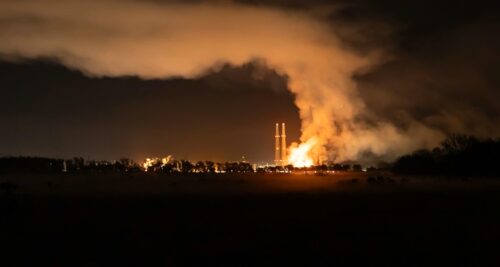
“Monterey County’s Environmental Health released a new report after testing the soil, sediment and surface water surrounding the Moss Landing Vistra power plant, where one of the buildings caught on fire back in January 2025. The overarching summary of the report relayed that there was no immediate threat to human life or the environment. Environmental Health officials announced the full report would be available on the readymontereycounty.org website. Environmental Health brought the appropriate groups together; Terraphase, the consultant group on Vistra’s behalf who conducted sampling, and other state partners including following guidelines set by the California Environmental Protection Agency Department of Toxic Substances Control. … ” Read more from the Monterey Herald.
With deadline near, who bears the cost of Monterey County seawater intrusion still unclear
“From some parts of Highway 101, the Salinas Valley can look like one long, uniform stretch of agricultural fields. But the groundwater basins that lie beneath the surface tell a different story, one of interconnectivity, fragmentation and different interests depending what end of the valley you’re on. Groundwater is the source for roughly 96% of all water used in the Salinas Valley. For more than a century, it has been the foundation for Monterey County’s agricultural industry. But as generation after generation has sipped from thousands of straws up and down the valley, groundwater levels have dropped and the salty waters of Monterey Bay have seeped in to fill its place. The saltwater has moved steadily inland, compromising agricultural wells and nearly reaching Salinas city limits. In 2015, California’s Sustainable Groundwater Management Act mandated officials across the Salinas Valley to get a handle on seawater intrusion and now a critical deadline approaches. … ” Read more from the Monterey Herald.
L.A.’s dangerous game of triage as aging water system hits breaking point
“The Los Angeles water system is so old — and money for replacements is exceedingly scarce — that officials are left playing a dangerous game of triage. They know huge swaths of the system are in desperate need of replacement. But with limited time and money, the Los Angeles Department of Water and Power has no choice but to focus on the lines it believes are most likely to blow. Sometimes, it can get there before a massive leak. But as West Hollywood discovered this month, sometimes the pipes rupture well before help can arrive. The Westside has experienced the highest number of leaks across the city’s water distribution system over the past 10 years, according to the utility. Experts say the age of pipes, the corrosive soil they’re buried in and pressure changes in pipes that send water to hillside neighborhoods all contribute to breaks across the aging system. … ” Read more from the LA Times. | Read via Yahoo News.
Cleanup effort slogs on, weeks after East LA oil spill
“The Los Angeles County Board of Supervisors on Tuesday approved a motion directing departments to continue community engagement and provide updates on cleanup, testing and available resources related to the East L.A. oil spill that occurred in May. The motion also directed the county’s oil spill recovery webpage to remain available as a centralized source of information throughout the remediation process. “Today’s motion reflects my continued commitment to ensuring residents have access to answers, transparency, and the support they need, while making clear that their concerns will not be forgotten,” said Supervisor Hilda Solis, who represents cities and unincorporated areas in East L.A. During Tuesday’s Board of Supervisors meeting, Solis convened county departments to provide an update on the status of environmental testing, cleanup efforts, public health impacts, community outreach and steps being taken to hold the parties responsible for the oil spill accountable. … ” Read more from the LA Daily News.
Long Beach seeks accountability for Boyle Heights warehouse fire runoff that got into waterways
“Long Beach leaders are seeking accountability for the fire runoff that got into the local waterways from the Lineage Warehouse fire in Boyle Heights last month, which may have impacted the city’s water quality. The City Council recently requested city staff to return within 30 days with a draft of a letter supporting Los Angeles city’ request that the regional water quality control agency issue a cleanup and abatement order related to the firefighting runoff from the fire. If the Los Angeles Regional Water Quality Control Board does issue that order, city officials said, they want that agency to include Long Beach in the abatement. Any remediation plan, environmental monitoring program or related regulatory action should evaluate the entire downstream system, including the Los Angeles River Estuary, the Dominguez Gap Wetlands and Long Beach’s coastal waters. … ” Read more from the Long Beach Press Telegram.
State regulators crack down on polluted runoff from L.A. shopping centers, warehouses
“In a requirement that is the first of its kind in the country, some 600 commercial and industrial properties in the Los Angeles area will have to clean up the water that runs off their parking lots or pay to have it cleaned up. The Los Angeles Regional Water Quality Control Board voted to require shopping centers, warehouses, private hospitals and office complexes whose properties drain into the Dominguez and Los Cerritos channels to get stormwater permits. The change is intended to hold commercial, industrial and institutional property owners accountable for the pollution their sites send flowing into drains, said David Nahai, chair of the L.A. water board. It “addresses the effects of concrete, asphalt and other impervious surfaces that cover the urban landscape in these two watersheds, to protect water quality in the creeks, rivers and beaches downstream,” he said. … ” Read more from the LA Times.
LA’s bold new park plan: Tear up the streets and cap the freeways
“It’s been called the worst intersection in California — or at least in Los Angeles. The so-called “San Vicente Asterisk” is less like a traditional intersection, where one street crosses another (often at a clean 90-degree angle), and more like a nightmare scenario cooked up by the most evil of DMV driving instructors. … Michael Wacht wants to tear it all down. The architect and Mid-City resident is part of a new nonprofit organization proposing to peel back some of the asphalt and traffic lanes along San Vicente Boulevard and instead transform the traffic-choked street into a tree-filled public park. The San Vicente Park Foundation proposes reducing the boulevard to just one lane of traffic on either side, with a 90-foot-wide, approximately 3.2-mile-long linear park in the median. The proposed parkway would stretch from Venice Boulevard in the Mid-City neighborhood to Beverly Boulevard in nearby Beverly Center, and could include a variety of amenities depending on community input, such as athletic areas, passive green space and alternative transportation routes. … ” Read more from SF Gate.
Environmentalists, tribes sue feds over renewed approval of Mojave Desert pipeline
“Two environmental advocacy organizations and two Native American tribes on Tuesday filed separate lawsuits to vacate the U.S. Bureau of Land Management’s approval of the use of a decommissioned oil and gap pipeline across protected federal public land in the Mojave Desert for a controversial water project. The Center for Biological Diversity and the Sierra Club said in their complaint filed in Los Angeles that the bureau’s decision will have a devastating impact on the fragile desert environment. Cadiz Inc. acquired the pipeline from El Paso Natural Gas in 2011 and intends the use it for its Mojave Groundwater Bank, a project to pump water from an underground aquifer in the Mojave Desert to the company’s customers west of the desert along the California coast. The nonprofits claim that the use of the oil and gas pipeline for water will make it possible for the company to extract far more groundwater from the desert aquifer than is replenished naturally and will cause an overdraft in the affected groundwater basin in and around Mojave Trails National Monument. … ” Continue reading from the Courthouse News Service.

