
Several news sources featured in the Daily Digest may limit the number of articles you can access without a subscription. However, gift articles and open-access links are provided when available. For more open access California water news articles, explore the main page at MavensNotebook.com.
In California water news today …
Reclamation publishes final environmental impact statement for future Colorado River operations
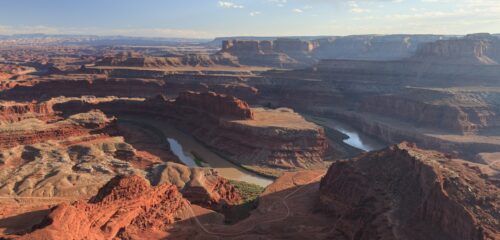 “The Bureau of Reclamation has released the Final Environmental Impact Statement, which designates a preferred course of action for future management of Lake Powell and Lake Mead. The preferred alternative establishes an adaptive decision framework to be used to develop operating guidelines designed to ensure reliable operations in the Colorado River Basin while maintaining the flexibility to respond to changing conditions over a 10-year period through 2036. The framework also preserves the opportunity for the Basin to continue working towards consensus agreements, and if successful, be incorporated into future operations. The framework will be used to develop operating guidelines for operations at Lake Powell and Lake Mead that can be adjusted for shorter and longer term periods. “The Department has a responsibility to ensure the Colorado River system remains reliable and resilient for the millions of Americans, communities and industries that depend on it,” said Secretary of the Interior Doug Burgum. “This framework provides the flexibility to respond to changing hydrologic conditions while preserving the opportunity for the Basin States to continue working toward durable, consensus-based solutions.” … ” Read more from the Department of the Interior.
A new Colorado River plan requires water cuts for three states. Deeper cuts are still possible
“Arizona, California and Nevada will be required to curb their use of the water from the Colorado River by about 20 percent over the next two years — and could ultimately face even larger cuts — according to three officials familiar with negotiations over a long-awaited federal plan to rescue the depleted river. The plan, part of which the Bureau of Reclamation is expected to describe in an Environmental Impact Statement on Friday, comes at a time of escalating crisis for the Colorado, a crucial water source for seven states, 30 Native tribes and a swath of northwestern Mexico. But experts say it will not be sufficient to resolve a political standoff among the river’s many users or prevent the beleaguered waterway from teetering toward collapse. The cuts proposed for the next two years resemble what the three states offered in a proposal this spring, and represent the first phase of a broader 10-year framework for operating the river’s dams and reservoirs, according to the officials, who spoke on the condition of anonymity to discuss ongoing negotiations. … ” Read more from the Washington Post.
Statement from JB Hamby, Colorado River Board of California, on the Post-2026 Final Environmental Impact Statement
“Today, the U.S. Department of the Interior released the Final Environmental Impact Statement establishing a federal framework for Colorado River operations after 2026. This is an important milestone, but it is not the finish line. The framework establishes sideboards on operations for the next ten years. It does not conclude the Basin States’ negotiations, predetermine specific operating decisions, including Lake Powell releases or shortages, or serve as the operating plan itself. Operating plans with specific parameters will be developed in two-year increments, allowing decisions to respond to changing hydrology within the sideboards of the framework released today. The immediate next step is the federal release of the operating plan for 2027 and 2028. On May 1, the Lower Basin states proposed a specific path forward, and California, Arizona, and Nevada remain actively engaged in carrying that work into this next phase. The Lower Basin’s proposal included 3.2 million acre-feet of conservation through 2028, including 1.25 million acre-feet of binding reductions in both 2027 and 2028 and at least 700,000 acre-feet of additional conservation. … ” Continue reading this statement.
SEE ALSO:
- So wait, what’s happening with the Colorado River? Here’s the breakdown, from the Colorado Sun
- Statement from the Arizona Department of Water Resources
- U.S. Raises Threat of Steep Water Cuts in Lower Colorado River Basin, from the New York Times
- Feds announces framework for Colorado River water usage, from KLAS
California’s push to limit groundwater pumping could leave small farmers in the dust
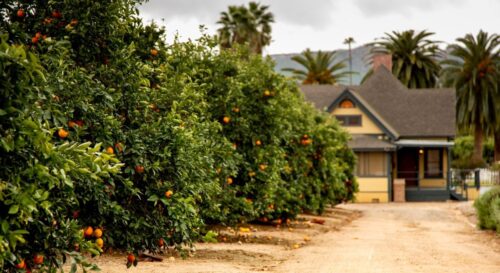 “While California’s landmark groundwater conservation law was designed to rein in massive agricultural overpumping, [Rosie] Lee and other small-scale growers say its implementation is doing the opposite — penalizing small farms while favoring industrial agribusinesses. According to a new report, rigid fee structures and complex regulations threaten to harm California’s smallest growers, driving land consolidation in favor of deep-pocketed corporate orchards. The report by the University of California Small Farms Network and the nonprofit group Community Alliance with Family Farmers warns that without immediate action by state and local agencies, many family farms could be forced out of business. “Small-scale farmers across California are navigating an increasingly difficult environment,” researchers say in the report. “They are among the state’s most vulnerable groundwater users and have fewer pathways to adapt and less capacity to absorb new costs.” … ” Read more from the LA Times.
Court invalidates countywide groundwater charge as unconstitutional tax
“The Third District Court of Appeal held that a groundwater well registration charge imposed on all parcels in Tehama County was an unconstitutional tax. Garst v. Tehama County Flood Control and Water Conservation District, 2026 WL 1862122 (June 29, 2026). The charge could not qualify as a regulatory charge under Proposition 26 because it was imposed on landowners regardless of whether they engaged in groundwater extraction or otherwise created a regulatory burden on the district. The Tehama County Flood Control and Water Conservation District serves as a groundwater sustainability agency under the Sustainable Groundwater Management Act. In 2022, the district adopted a well registration program and imposed an annual charge of $0.29 per acre on every legal parcel in the county for three years to fund the program’s administrative costs. The charge applied regardless of whether a parcel contained a groundwater well and was collected through the property tax rolls. … ” Read more from Ashurst Perkins Coie.
SEE ALSO: Appeals court sides with state on groundwater plan review, from Western Water
How Trump’s Endangered Species Act rollback is roiling Northern California
“Since President Donald Trump took office for a second term, his administration has rolled back numerous environmental protections. The latest target is the Endangered Species Act, one of the nation’s bedrock conservation laws. Earlier this month, the U.S. Department of the Interior issued a new interpretation of what would constitute harming an endangered species that sharply loosens the act’s protections related to the degradation of protected wildlife’s habitat. Though Republicans have long sought changes to how the act is interpreted, the rule change marks the most ambitious rollback to the landmark environmental law by the Trump administration yet. The move has drawn a wide range of responses in Northern California. “California will continue to defend this critical federal law and protect our rare animals, plants, and the environment,” a spokesperson for Attorney General Rob Bonta said in a statement to The Bee this week. “We’re exploring all of our legal options.” … ” Read more from the Sacramento Bee.
Tropical Storm Genevieve, Super Typhoon Dolphin spin in Pacific
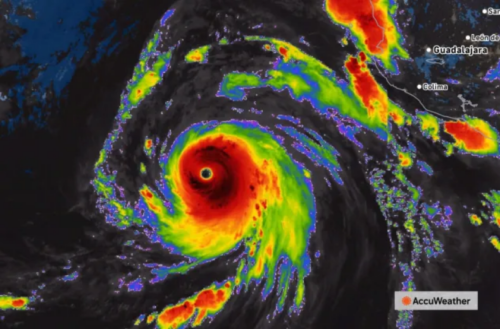 “The eastern and central Pacific have become very active, with Hurricane Genevieve becoming the season’s first Category 5 while churning off the coast of Mexico. Meanwhile, Dolphin, north of the Marshall Islands, near Wake Island, has reached Super Typhoon status. A busy Pacific hurricane season was expected due to the development and strengthening of El Niño. This warm plume of water creates ideal conditions for tropical storms and hurricanes to form and strengthen in the Pacific. A tropical depression formed on the morning of July 24, well off the coast of Mexico, and became Tropical Storm Genevieve several hours later. A day later, on Saturday, Genevieve became a hurricane. Twenty-four hours later, on Sunday, Genevieve intensified rapidly and became a powerful Category 4 hurricane with maximum sustained winds of 155 mph. During the overnight hours on Sunday, Genevieve’s maximum winds reached 160 mph — a Category 5 hurricane. … ” Read more from AccuWeather.
Reclamation is not meeting the 2026 Shasta Temperature Management Plan
“The US Bureau of Reclamation is well on its way to failing to adhere to its 2026 Sacramento River Temperature Management Plan (TMP). The cold-water pool supply in Shasta Reservoir has fallen as low on this date in 2026 as it was in critical drought years 2015 and 2022 (Figure 1). Survival of winter-run Chinook salmon in the Sacramento River from brood years 2015 and 2022 was less than 5 percent because the cold-water-pool supply in Shasta Lake was exhausted before the end of summer. Reclamation is again creating similar conditions that threaten this year’s production onf winter-run and fall-run Chinook salmon in the upper Sacramento River below Shasta Reservoir. … ” Read more from the California Fisheries blog.
A tiny invasive mussel is becoming a big problem for California’s water system — here’s why
“The California Department of Water Resources (DWR) announced a new strategy Wednesday to slow the spread of invasive golden mussels. The tiny freshwater mollusks clog pipes and coat pipelines, threatening the infrastructure that millions of Californians rely on for clean water delivery. Golden mussels first established a foothold in the Sacramento-San Joaquin Delta in 2024, prompting a three-pronged strategy from the DWR to curb the infestation. The approach involves detecting mussels before they become established, protecting critical infrastructure, and preventing them from colonizing new waterways. … ” Read more from edhat.
First-of-its-kind research examines the factors accelerating — and stalling — solar progress in California
“New research from The Nature Conservancy in California (TNC) and ECOnorthwest shows that where California builds utility‑scale solar determines how fast projects move through permitting. Solar projects sited on lands already shaped by human activity face fewer hurdles than projects on undisturbed natural lands. Additionally, projects on Williamson Act lands1 face longer review timelines than projects on comparable, non-contracted lands. These insights point to a powerful opportunity: Aligning the state’s goals for clean energy, land use, groundwater sustainability and conservation can reduce permitting barriers and accelerate deployment of the new, affordable clean energy the state needs to achieve its goals. … ” Read more from Clean Technica.
Sen. Padilla’s water, public lands bills advance to full Senate vote
“Today, the Senate Committee on Energy and Natural Resources advanced two bills led by U.S. Sen. Alex Padilla (D-Calif.) to strengthen California’s long-term water supply and support conservation efforts across the state. Padilla’s Making Our Communities Resilient through Enhancing Water for Agriculture, Technology, the Environment, and Residences (MORE WATER) Act and Monterey Bay National Heritage Study Act advanced out of committee by voice vote and now head to the full Senate for a vote. “California is on the front lines of drought, extreme weather, and the growing impacts of climate change,” said Sen. Padilla. “Today’s committee vote brings us one step closer to expanding water recycling projects, strengthening our water infrastructure, and protecting some of California’s most treasured public lands and its iconic Chinook salmon populations. I look forward to continuing our work to help communities become more resilient while preserving California’s natural resources for future generations.” … ” Read more from edhat.
Wildfire prevention has always been a challenge in the West. Hotter, drier weather is making it worse.
“Officials from the Trump administration and members of Congress last week walked along the burn scar from Utah’s devastating Cottonwood Fire and saw the damage from the rain and flood that followed the flames. The wildfire is among the country’s largest, charring more than 97,000 acres. It started on June 22, and is only 95 percent contained as of late Thursday, according to Utah Fire Info. After surveying the destruction, lawmakers laid blame on a lack of forestry management. If the forest had been thinned, with “a lot fewer trees per acre, and maybe even some controlled burns to take the underbrush out, there’s just not the fuel there when these fires start to make them catastrophic fires,” Representative Bruce Westerman, a Republican from Arkansas, told Salt Lake City’s FOX 13 News. But these traditional fire prevention methods may no longer work, one researcher cautions, with a changing climate that makes hot, dry weather increasingly the norm. … ” Read more from Grist.
How scientists with cancelled ‘woke’ grants kept going
“It was 2:30 p.m. on Wednesday, March 26, 2025, when the email from the National Institutes of Health arrived. The email notified Leticia Marquez-Magana and Charlotte Tate, biology and psychology professors at San Francisco State University, that their five-year, $2.8 million research grant had been terminated. The project, nicknamed “From Hoods 2 Woods,” had brought Black and Brown students between 18 and 25 on three trips out to redwood groves in the South Bay, where they’d marveled at banana slugs, waded in creeks, and examined edible fungi. Before and after the series of outings, researchers took hair and saliva samples to study how the walks in the woods changed stress hormone levels and cell repair. When the email arrived, the team was a week out from a culminating event where the participants would hear about the first results. The email, which said the research supported “unlawful discrimination,” surprised no one. … ” Read more from Bay Nature.
In regional water news and commentary today …
NORTH COAST
California to close, modify north coast ocean salmon seasons after catch estimates update
“Recreational ocean salmon fishing seasons are being closed or modified for parts of California’s north coast after updated catch estimates showed anglers have met or are on track to meet harvest guidelines. The National Marine Fisheries Service took in-season action Tuesday, July 28, 2026, affecting the Klamath Management Zone and the Fort Bragg Management Area. The Klamath Management Zone, which includes ocean waters between the California-Oregon border and 4010 N. latitude, is now closed. California Department of Fish and Wildlife preliminary estimates indicate 3,968 Chinook salmon were taken by 4,830 anglers aboard both charter vessels and private skiffs, meeting the area’s recreational harvest guideline of 3,900 Chinook salmon. … ” Read more from KRCR.
Blue Lake water tank lawsuit seeks $1.375 million from city
“On Tuesday, Blue Lake City Council approved an arrangement with Bender Rosenthal to “provide property appraisal and acquisition services” for a plot of land on which a 400,000-gallon city-owned water tank and associated infrastructure sit on property held in Erin McClure’s family trust. The arrangement is the first step in a process that would compel the sale of a portion of McClure’s family property to the city, along with creating easements in perpetuity for city access. McClure’s attorney, Allison Jackson with Harland Law Firm, filed suit last Friday seeking relief — including compensation for damages totaling $1.375 million, according to court documents reviewed by the Times-Standard. That lawsuit also stipulates that the city of Blue Lake remove its 400,000-gallon tank from McClure’s property. … ” Read more from the Eureka Times-Standard.
1.7M Americans have a chance to catch invasive fish and win cash in this ‘minnow madness derby’
“Californians with a fishing license — of which there are about 1.7 million — have an opportunity to bring home the bacon this summer. Or, at least, bring home some invasive pikeminnow. The 2026 Eel River Pikeminnow Fishing Derby began on July 1 and is running until August 31, an annual competition that encourages locals to fish the Sacramento pikeminnow species, an invasive fish that preys on native wildlife. While Sacramento pikeminnow are native to California, they were introduced to the Eel River in the 1970s. As a piscivorous species, they eat other fish, and have been found to consume native salmonids and lamprey in the Eel River, making a negative impact on the ecosystem and local fish populations. So, researchers and officials came up with a fun way to get local anglers to help. … ” Read more from Good Good Good.
SIERRA NEVADA
Truckee Donner Public Utility District launches water conservation campaign in response to new California mandate
“Truckee Donner Public Utility District (TDPUD) is launching a community-wide water conservation campaign to help residents and businesses understand and prepare for the state’s “Making Conservation a California Way of Life” regulation, which takes effect Jan. 1, 2027. The campaign kicks off with a free public garden party, educational materials, a garden photo contest and new rebates designed to make conservation accessible and actionable for Truckee households. “This regulation comes from the state, but how we respond to it is very much a local effort,” said Brian Wright, TDPUD general manager. “Our water supply remains strong; what’s changed is that California now requires most water agencies to meet specific conservation targets. We’re here to help our community understand what that means and how we can work together to comply.” … ” Read more from the Sierra Sun.
SACRAMENTO VALLEY
New basins strengthen reliability at Barton Road Water Treatment Plant
“A major upgrade is underway at Roseville’s Barton Road Water Treatment Plant. Crews are replacing two reclamation basins that have been in service since the plant opened in the 1970s. The basins collect water used to wash treatment filters. Instead of going to waste, the water can be returned to the treatment process, saving millions of gallons over time. “The vertical reinforced concrete walls give the new basins a different appearance from the originals, but their purpose remains the same,” said project manager Inderpreet Chaggar. “The new design will improve reliability and help us prepare for Roseville’s future needs.” A 2020 assessment found that the original basins needed major repairs. Replacing them offered better long-term value and increased storage capacity. The reinforced-concrete basins will also match two newer basins already in use at the plant. … ” Read more from the City of Roseville.
NAPA/SONOMA
Restoring fish passage through partnership on Sulphur Creek
“The Sulphur Creek watershed winds quietly through Napa Valley, past vineyards and rural roads, carrying water—and historically abundant fish populations—through a landscape defined by its bucolic, wine-country feel. But for years, something wasn’t working — an imbalance that cascaded through various aspects of everyday life. Beneath a century-old historic bridge in St. Helena, a fish ladder that was meant to help steelhead and Chinook salmon move upstream had slowly become a barrier instead. Shifting flows and debris often clogged the structure, blocking migration and creating a recurring problem for nearby landowners. Clearing the blockage required dangerous manual cleaning by landowners and when the ladder backed up, flooding occurred on the adjacent County road. By 2012, concerned landowners and community members recognized both the ecological and community impacts, and decided to take action. But like most enduring restoration projects, the highest impact solution would not be a quick fix. … ” Read more from Cal Trout.
BAY AREA
Editorial: Mixed results for Marin in beach report is cause for concern
The Marin Independent Journal editorial board writes, “Heal the Bay’s annual report card on the water quality of Marin’s beaches usually draws high marks. This year, several freshwater beaches brought down the local “GPA.” The environmental nonprofit whose volunteers take and test water samples of beaches up and down the coast usually gives A grades to 97% of Marin’s beaches. Marin’s grades were high compared to other coastal communities, but its average dropped to 78%. Still, no Marin sites appeared on Heal the Bay’s “Beach Bummer” list, which ranks the beaches with the worst water quality in the state. Also notable, Chicken Ranch Beach in Inverness, a county beach along Tomales Bay, is not on that “worst” list this year, possibly the result of environmental work done to correct drainage and water-quality issues. … ” Read more from the Marin Independent Journal.
Vallejo wastewater district responds to civil grand jury report
“The Vallejo Flood and Wastewater District did not anticipate the kind of odor problem that resulted from a construction project at its treatment plant. The issue became a topic of investigation by the 2025-26 Solano County civil grand jury, which issued four findings and corresponding recommendations. … ” Read more from the Daily Republic.
Pipeline project will prompt trail closures at Palo Alto nature preserve
“Visitors to the Arastradero Nature Preserve in Palo Alto may soon find their hikes disrupted by trail closures and heavy machinery as city crews embark on a two-year effort to stabilize a creek and relocate utility lines. The city has been planning this project since March 2023, when a hiker noticed the exposed gas line near Arastradero Creek and notified the city. Later that year, city crews deposited cobblestones and other fill into the channel as a temporary measure to protect the exposed pipeline and prevent further erosion of the creek. Now, the city is gearing up for more permanent improvements. The project that the city is preparing for entails lowering the gas line to protect it from future exposure in case of creek erosion. In addition to the gas line, the area includes an 18-inch potable water pipeline and an 8-inch sewer pipeline — infrastructure that serves the Palo Alto Hills neighborhood in the foothills. Both lines would be relocated away from the creek area. … ” Read more from the San Jose Spotlight.
CENTRAL COAST
Scotts Valley Water District to consider monthly rate increase
“Residents in the Scotts Valley Water District may see a change to their monthly water bill starting next year. The Scotts Valley Water District announced Wednesday its proposal to increase rates to help fund ongoing projects in the district and replace aging infrastructure. The proposal is a part of California’s Proposition 218 process, a measure requiring local governments to put changes to taxes or property-related assessments, fees or charges in front of voters for consideration. Though the exact rate increase will vary from customer to customer based on size, user category and amount of water used, the median household’s monthly bill is expected to increase $7.61, according to the district’s website. However, the website also says the district’s board of directors has historically implemented lower rates than what was initially adopted. … ” Read more from the Santa Cruz Sentinel.
SOUTHERN CALIFORNIA
SCV Water outlines 2026 Consumer Confidence Report
“The Santa Clarita Valley Water Agency hosted a webinar, “Water Matters,” to give community members the opportunity to hear information on the 2026 Consumer Confidence Report and ask questions on Wednesday evening. The presentation discussed water quality monitoring, water analysis, tackling groundwater contamination from PFAS (per- and polyfluoroalkyl substances, commonly known as forever chemicals), and more. Jenny Anderson, senior water quality specialist for SCV Water, said that where SCV’s water comes from is important for the community. “Also required (in the Consumer Confidence Report) is where our water comes from. So, this goes over our groundwater … (and) our import water, which is the Castaic Lake, recycled water, and any stored water, or banked water that we may have in the Bakersfield area,” Anderson said. … ” Read more from the Santa Clarita Signal.
Long Beach seeks accountability for Boyle Heights warehouse fire runoff that got into waterways
“Long Beach leaders are seeking accountability for the fire runoff that got into the local waterways from the Lineage Warehouse fire in Boyle Heights last month, which may have impacted the city’s water quality. The City Council recently requested city staff to return within 30 days with a draft of a letter supporting Los Angeles city’ request that the regional water quality control agency issue a cleanup and abatement order related to the firefighting runoff from the fire. If the Los Angeles Regional Water Quality Control Board does issue that order, city officials said, they want that agency to include Long Beach in the abatement. Any remediation plan, environmental monitoring program or related regulatory action should evaluate the entire downstream system, including the Los Angeles River Estuary, the Dominguez Gap Wetlands and Long Beach’s coastal waters. … ” Read more from the Long Beach Press Telegram.
LA’s bold new park plan: Tear up the streets and cap the freeways
“It’s been called the worst intersection in California — or at least in Los Angeles. The so-called “San Vicente Asterisk” is less like a traditional intersection, where one street crosses another (often at a clean 90-degree angle), and more like a nightmare scenario cooked up by the most evil of DMV driving instructors. … Michael Wacht wants to tear it all down. The architect and Mid-City resident is part of a new nonprofit organization proposing to peel back some of the asphalt and traffic lanes along San Vicente Boulevard and instead transform the traffic-choked street into a tree-filled public park. The San Vicente Park Foundation proposes reducing the boulevard to just one lane of traffic on either side, with a 90-foot-wide, approximately 3.2-mile-long linear park in the median. The proposed parkway would stretch from Venice Boulevard in the Mid-City neighborhood to Beverly Boulevard in nearby Beverly Center, and could include a variety of amenities depending on community input, such as athletic areas, passive green space and alternative transportation routes. … ” Read more from SF Gate.
Revived Cadiz pipeline across California’s Mojave sparks lawsuits from tribes, environmental groups
“New lawsuits are targeting a proposed water project in California’s Mojave Desert, where tribes and environmental groups say it could deplete a fragile aquifer. The cases were filed after the Trump administration reinstated a right-of-way across federal public lands that had been reconsidered during the Biden administration. Opponents of the project have opened two court fights over the U.S. Bureau of Land Management’s decision to re-authorize a corridor across protected Mojave Desert land, according to the legal news site Courthouse News Service. One suit was filed in Los Angeles by the Center for Biological Diversity and the Sierra Club. … ” Read more from The Cool Down.
Along the Colorado River …
New pipeline will let Arizona recover banked Colorado River water
“Arizona is unlocking an old stash of Colorado River water that its cities socked away before climate change and overuse drained the river of its former excess and cut into the state’s supply. Salt River Project has cranked open a new, 3.6-mile Gilbert Road Pipeline that will help move groundwater from wells into the Arizona Canal and to Phoenix-area water utilities. That includes Colorado River water that the cities poured into the desert at the Granite Reef Underground Storage Project on the northern edge of Mesa starting in the mid-1990s, when the river could deliver more than Arizona needed. Between Colorado River water and reclaimed wastewater, Phoenix, Mesa, Scottsdale, Tempe, Gilbert, Chandler and Tempe have stored more than 1 million acre-feet of water in the aquifer there in one of the state’s largest groundwater banks. That’s nearly a third of what the state once took from the river annually, in the years before megadrought imposed a steadily worsening austerity. Those cities now have a way to move their stored water. The 36-inch-wide pipe can deliver it to the canal that flows to city water treatment plants and then to customers. … ” Read more from KJZZ.
Retired justice warns courts could worsen Colorado River fight
“Retired Arizona Supreme Court Justice Andrew Gould says he is worried that any plan to solve the crisis facing the shortage of water in the Colorado River will end up bogged down in courts. “As a lawyer, I can tell you I think the courts are not the way to solve the problem,” said Gould. Gould is a longtime attorney and former justice who also works on water cases. He says the challenge in finding a solution to the Colorado River crisis is that it is legally complex and there are so many parties that rely on the river’s water. Arizona and six other states have been negotiating a new agreement over how much water each state, city, farming community and Indian tribe should be entitled to, with the new reality of a drier climate and less water flowing down the Colorado. … ” Read more from Arizona Family.
Colorado River businesses find ways to adjust as water levels drop and federal decision nears
“A federal water decision could soon determine the fate of Page’s tourism economy, and locals aren’t waiting around to find out. Only two of Lake Powell’s 12 boat ramps are currently open, forcing visitors to hike to the water’s edge. Visitor traffic is down roughly 30%, and businesses on and off the water are feeling it. Judy Franz, executive director of the Page Chamber of Commerce, said the drop in visitors has been noticeable. “Everybody says it’s down Judy,” Franz said. “There’s no doubt about that. They’re honest about it, but they say it’s about 30 percent down.” … ” Read more from Arizona Family.
Two funds, one mission: How the Central Arizona Project prepares for daily operations and unexpected events
“Unplanned events like catastrophes, unexpected major equipment failures, or sudden business interruptions – they can hardly be predicted. But there can be preparation. And that’s a reason Central Arizona Project (CAP) has two dedicated funding sources: working capital and strategic reserves. In short, working capital is for short-term, normal operating purposes. Strategic reserves are for unplanned events — not a specific purpose. Yet it’s a bit more complex than this. But let’s keep it simple. Working capital is for normal operating purposes. – Cash receipts can be variable due to items like property taxes and capital charges. Cash spending can be variable for power expenses and federal debt repayment. Since the two do not sync up, they leave gaps when cash is needed to make payments that are due. Working capital is used to smooth out these timing differences in revenues and spending within each year. … ” Read more from Know Your Water News.
Class-action lawsuit aims to recover millions in Las Vegas water-use penalties
“A class-action lawsuit filed last week seeks to challenge a controversial water-use fee that the Las Vegas Valley Water District has said is an attempt to rein in the valley’s top water-wasters. Attorneys argue that the district’s excessive use fees generated at least $96 million in agency revenue that should be returned to ratepayers. Tens of thousands of Las Vegas residents could join the lawsuit and potentially recover the penalty they paid for using too much water per the policy, according to a legal complaint. “LVVWD took it upon itself to penalize Residents via the newly created EUC fines and has been aggressively using these fines to enrich itself while hurting all Las Vegans,” attorneys wrote in the complaint. … ” Read more from the Las Vegas Review-Journal.

