
Several news sources featured in the Daily Digest may limit the number of articles you can access without a subscription. However, gift articles and open-access links are provided when available. For more open access California water news articles, explore the main page at MavensNotebook.com.
On the calendar today …
- PUBLIC WORKSHOP: Draft Small MS4 Stormwater Permit (In person) from 1pm to 4pm. Staff of the State Water Resources Control Board will hold a public workshop to answer questions on the proposed draft National Pollutant Discharge Elimination System (NPDES) General permit for Stormwater Discharges from Small Municipal Separate Storm Sewer Systems (Draft Small MS4 Permit). After staff completes its presentation on the major revisions to the Draft Small MS4 Permit, in-person workshop attendees will be given the opportunity to ask questions (5 minutes per attendee). Click here for the notice.
In California water news today …
Are California salads safe to eat? A local look at the cyclospora outbreak
 “A major outbreak of gastrointestinal illness has been hitting multiple states over the past month. The culprit is a parasite called cyclospora, which is often tied to fresh produce. The FDA said nearly 2,000 cases have been reported across nine states, with exposure linked to shredded iceberg lettuce sourced from Central Mexico. California health officials say they are seeing some cases, but the number is within normal ranges. Earlier this month the state also said those illnesses are not part of the national outbreak. But over the past couple weeks, the illnesses have created confusion about what’s safe to eat. Dr. Dean Blumberg is the Chief of Pediatric Infectious Diseases at UC Davis Health, and spoke about cyclospora with Insight Host Vicki Gonzalez. … ” Read more from Capital Public Radio.
SEE ALSO:
- Cyclospora, salmonella outbreaks beg the question: How safe is the nation’s food safety system?, from Straight Arrow News
- 4 things to know about cyclospora and climate change, from Grist
What’s in your drinking water? Activists want tests for microplastics
 “When you’re drinking a glass of water, you might not think about the potential for microplastics floating around inside the cup. Earlier this month, the Environmental Protection Agency proposed new standards for monitoring our drinking water, a move that lays the groundwork for future safety regulation. But microplastics aren’t included on the list — and many advocacy groups are concerned. More than 250 health professionals added their names to a May letter to the EPA that called microplastics “a public health crisis that can no longer be ignored.” “It is estimated that the average person consumes 4,000 or more microplastic particles annually from drinking water alone,” the letter continued. … ” Read more from the LAist.
Cleaning water with co-benefits: Case studies with beavers and porous pavement
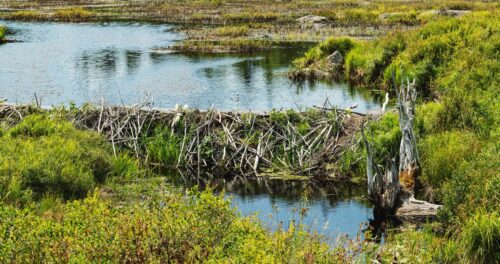
“At the State Water Contractors science conference in June 2026, Dr. Katie Holzer, watershed scientist for the City of Gresham, Oregon, opened her presentation on how beavers improve water quality by explaining that her interest in the animals began early. As a child, she said, her father often took her into nature and shared the wonders of the natural world, with beavers among their favorite topics. A zookeeper by profession, he also studied Native American tribes and the journals of European settlers as they moved across the West—histories that helped shape Dr. Holzer’s understanding of the role beavers once played in western landscapes. “One thing that’s found from looking at those histories is that the West was managed by two species,” said Dr. Holzer. “The land was managed by humans with fire and the movement of the herds that they hunted, and the water was managed by beavers with their dams and channels. So, there wasn’t this pristine wilderness; it was actually a very managed landscape for 1000s of years by the people and the beavers, and they’re both really important to the functioning of those native systems.” … ” Continue reading at Maven’s Notebook.
Research article: Porous pavement shows promise for reducing roadway runoff pollution
 “Roadway runoff often carries pollutants such as copper, zinc, tire-derived chemicals, and hydrocarbons. At concentrations commonly found in stormwater, these contaminants can be toxic to aquatic species, especially salmon. Treating roadway runoff is therefore essential to protecting downstream waterways. Common stormwater treatment practices, including vegetated green infrastructure, can reduce pollutant discharges to aquatic ecosystems, limit flooding and erosion, and help restore natural hydrologic processes. These systems typically direct runoff from streets or buildings through an inlet into a planted soil area, where vegetation and soil media help remove contaminants. Studies have shown that vegetated green stormwater infrastructure can be effective at reducing a wide range of stormwater pollutants. However, in highly urbanized and industrial areas, space for vegetated green infrastructure is often limited or unavailable. These same areas frequently have high pollutant loads and would benefit from alternative treatment approaches. Results from a recent study, Reduction of Runoff Pollutants from Major Arterial Roads Using Porous Pavement, found that porous pavement may provide an effective way to treat stormwater in constrained urban settings without requiring additional land. … ” Continue reading at Maven’s Notebook.
New report: 15 years of progress: Rising to the challenge of the Delta Reform Act
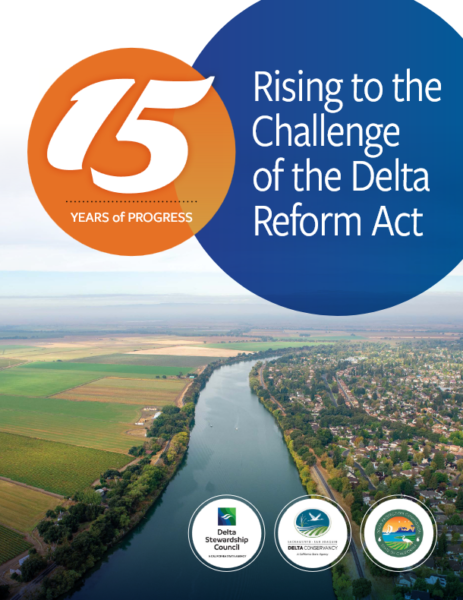 “Fifteen years after the California Legislature passed the Delta Reform Act to strengthen governance for the Sacramento-San Joaquin Delta, the three dedicated Delta state agencies are reflecting on the progress made and the work remaining to protect water supply reliability, ecosystem health, and the Delta as an evolving place. The Delta Stewardship Council, Delta Protection Commission, and Sacramento-San Joaquin Delta Conservancy are proud to announce the co-release of 15 Years of Progress: Rising to the Challenge of the Delta Reform Act. The report captures key accomplishments and efforts to advance the Legislature’s vision for a more resilient Delta. Achievements span the adoption of the first-ever Delta Plan, investment of millions of dollars in science and ecosystem restoration, designation of California’s first National Heritage Area, and much more. … ” Continue reading this press release.
State Water Board releases dashboard tracking water-use data
The California State Water Resources Control Board has created a new transparency tool for tracking efficient water use. The Urban Water Use Objective Dashboard compiles data from urban retail water suppliers across the state. Information tracked includes which water suppliers have submitted reports and how their reported water use compares with conservation objectives and State-mandated reduction targets. Individual supplier report cards can also be viewed, highlighting missing data and any variances or temporary provisions a supplier has been granted. This dashboard directly addresses the Making Conservation a California Way of Life regulation, which establishes conservation goals for water suppliers and aims to create long-term efficiency practices. Suppliers who have questions or who need help reporting data are encouraged to contact the State Water Board at waterconservation@waterboards.ca.gov.
DWR’s three-pronged strategy to protect the State Water Project from golden mussels
 “Golden mussels pose a serious and fast-growing threat to California’s water infrastructure. As the operator of the State Water Project (SWP), DWR is deploying a comprehensive strategy to mitigate the impact of golden mussel infestation and prevent further colonization. DWR is attacking the problem through several immediate response measures, concentrated investments to strengthen infrastructure, and long-term research and partnerships to improve the state’s ability to manage golden mussels. … ” Read more from DWR News.
Two public negotiation sessions planned in August between Bureau of Reclamation, Sites Reservoir Project
“The Bureau of Reclamation is continuing public negotiations with the Sites Project Authority for an Excess Capacity Contract related to the proposed Sites Reservoir Project. Officials say the Sites project would create a new 1.5-million-acre-foot off-stream reservoir about 10 miles to the west of Maxwell, California in Colusa County for water storage, conveyance and service. The Excess Capacity Contract outlines the terms and conditions each party must follow regarding the conveyance of water through federal facilities. According to the Bureau of Reclamation, the contract will help support the reservoir project. … ” Read more from Action News Now.
The dams that launched a MAGA crusade
“Farmers and ranchers in a rural Mendocino County valley have long opposed the planned removal of two local dams because it would reduce their summer irrigation supply. Over the past year, the pear and grape growers, cattle ranchers and their allies successfully turned their local fight into a national conservative cause, folded into President Donald Trump’s broader war with California over dams, fish and who gets to control the state’s water. In the process, they’ve amassed an outsized army: cabinet secretaries, MAGA influencers, and, improbably, a Southern California water district more than 500 miles away. They’ve even received invitations to a Rose Garden dinner and meetings across Washington, according to interviews. Their campaign has not, however, saved the dams. … ” Read more from Politico.
Inside a California data center as communities raise concerns about energy costs amid the AI boom
“Behind a secure door in an unassuming office building in Irvine, rows of servers quietly power hospital systems, financial institutions and emergency communications. While the activity inside one of DataBank’s Southern California facilities is largely invisible to the public, data centers like it are drawing increasing scrutiny from lawmakers and nearby communities concerned about their environmental and financial impacts. California is home to roughly 300 data centers, part of the digital infrastructure that supports online banking, video conferencing, cloud computing and artificial intelligence. As demand for computing power grows, so has opposition to the facilities, prompting some communities across the country to impose restrictions or temporary moratoriums on new development. … ” Read more from CBS News.
Sales are so low, California wineries are burning their vineyards
“In California, a place famous around the world for its viticulture, winemakers produced less wine last year than at any point in the last quarter century. It’s often cheaper to let grapes rot on the vine than to harvest them because so many unsold bottles clog the shelves of storerooms and wine shops. So on a sunny morning in Soledad, Calif., in a valley made famous by the author John Steinbeck, Jason Smith acquiesced to simple economics. A worker unceremoniously drove a tractor and ripped out Mr. Smith’s pinot noir grapes from the ground. Another set fire to the wooden posts that for years had propped up the vines. And Mr. Smith leaned against his white Suburban, under the shade of a coastal oak, watching one of his pinot vineyards go up in smoke. … ” Read more from the New York Times.
Proposed ban of forever chemicals for California farms nixed by state lawmakers
“California lawmakers rejected legislation that would have banned pesticides with so-called “forever” chemicals from use on California’s farms, a restriction strongly opposed by the state’s billion-dollar agriculture community. Assembly Bill 1603 by Assemblymember Nick Schultz (D-Burbank) would have phased out the use of pesticides that contain perfluoroalkyl and polyfluoroalkyl substances, known as PFAS chemicals, a family of compounds that can be lasting and harmful to humans. Representatives for agricultural groups argued at committee hearings last month that banning the chemicals was an overreach that would result in higher numbers of imports of food from other states and stifle innovation in developing new pesticides. … ” Read more from the LA Times.
California fire season has been quiet. A heat wave could change that fast
“The fast-moving Dove Fire near a Yosemite gateway town jolted California out of a relatively quiet fire summer, forcing road closures and the evacuations of hundreds of homes. Former U.S. Forest Service firefighter John Buckley wasn’t surprised to see the fire taking off last Sunday. Driving through the area in the Central Sierra foothills earlier that day, he remembers telling his wife those fuels looked ready to burn. “We drive back, and they’re burning over at the city of Sonora,” said Buckley, now the executive director of the Central Sierra Environmental Resource Center. “The fuels are now quite primed for burning, and they’re only going to get drier.” Firefighters have gained the upper hand against the 226-acre blaze, which Cal Fire suspects was set by a reckless 30-year-old man. But high temperatures are looming — and new research puts numbers to the intuitive follow-on: with heat, comes fire. … ” Read more from Cal Matters.
SEE ALSO: California has dodged a bad wildfire season so far. That could change soon, from the San Francisco Chronicle
In commentary today …
Editorial: FERC makes right decision denying Southern California water agency bid
The Santa Rosa Press Democrat editorial board writes, “The federal government might not get a lot of things right these days, but one agency — the Federal Energy Regulatory Commission — made the right decision this week in denying a Southern California water agency’s Hail Mary bid to actively participate in Pacific Gas & Electric’s efforts to remove Scott and Cape Horn dams along the Eel River. For nearly eight months, the Elsinore Valley Municipal Water District, a Riverside county water agency, has flirted with the idea of taking over the Potter Valley Project — the hydroelectric power plant and dual dam system in Lake and Mendocino counties, currently owned by PG&E. They filed a motion to intervene with FERC seven months after the deadline. The motion would have allowed the agency to participate in proceedings, have the right to request FERC to re-try orders and go to the U.S. Circuit Court of Appeals, should they disagree with any of FERC’s decisions. FERC didn’t think Elsinore Valley should get that privilege, and we agree. … ” Read more from the Santa Rosa Press Democrat.
California Forever is the housing reform our state desperately needs
Brian Hanlon is CEO of California YIMBY, writes, “California is short millions of homes, and every year hundreds of thousands of Californians give up and leave. Each departure represents a vote of no confidence in California government. Young families, who disproportionately leave California, look at this state and see homes they will never afford with the jobs they can get, and they conclude that the California Dream now lives somewhere else. Darrell Steinberg, the former California Senate majority leader and Sacramento mayor, is among those championing the California Forever project in Solano County. Despite some naysayers, Steinberg is on the right side of history by promoting this project. … ” Read more from the Sacramento Bee.
In regional water news and commentary today …
NORTH COAST
North Coast recreational Chinook salmon closure announced
“California Department of Fish and Wildlife announced this Tuesday that recreational salmon fishing off the North Coast is officially closed. Fishing from the 40º10′ latitude line to the Oregon border will remain closed for the remainder of 2026. “Attention recreational anglers — the National Marine Fisheries Service has taken action today, July 28, 2026, to close or modify ocean salmon fishing seasons for portions of California’s North Coast,” a CDFW Marine Management News update posted by CDFW senior environmental scientist, supervisor, Kandice Morgenstern on Tuesday reads. “The Klamath Management Zone, which includes ocean waters between the California-Oregon border and 40º10′ N. latitude, is now closed. The Fort Bragg Management Area, between 40º10′ N. latitude and Point Arena, will open August 1 and continue through August 9. The remainder of the August dates previously scheduled for the Fort Bragg Management Area are now closed. … ” Read more from the Eureka Times-Standard.
Yurok Tribe and Karuk Tribe kick off major restoration project
“The Yurok Tribe and Karuk Tribe, through their respective fisheries and natural resource departments and partners, are implementing a large-scale restoration project spanning 1.25 river miles and covering up to 45 acres in the mid-Klamath River to address the impacts of historic mining operations and sedimentation from the McKinney Fire footprint. Just downriver from the recently removed dams, the McConnell Bar project site is about 7 miles northwest of Yreka and 3.7 miles downstream of the Klamath’s confluence with the Shasta River. Humbug Creek runs into the McConnell Bar site, and the popular Tree of Heaven campground is nearby. Conducted in collaboration with local landowner, philanthropist, and hospitality entrepreneur Lance Evans, the Karuk Tribe, Mid-Klamath Watershed Council, The Watershed Research and Training Center, and the Klamath Indigenous Land Trust, the project aims to correct the detrimental alterations of widespread gold mining, which have resulted in a scarcity of salmon and steelhead habitat. … ” Read more from the Redheaded Blackbelt.
Critical salmon habitat and 125 acres of land handed over to indigenous CA tribe after Gold Rush era loss
“A massive part of the coastal Redwood land in Northern California is now back in the hands of a Native American Tribe, protecting a critical salmon habitat and giving the public an unprecedented experience. Save the Redwoods League nonprofit group announced on Tuesday 125 acres near the Redwood National and State Parks (RNSP) — in the heart of the Yurok Tribe’s ancestral territory — was conveyed back to the tribe on June 30. Officials called it a “transformational agreement that prioritizes tribal land-management practices, creates a new public space and permanently protects critical salmon habitat.” The new tribally owned and operated recreational area on Prairie Creek is called the O Rew Redwoods Gateway. It is located off the US Highway 101 at the base of Bald Hills Road in Orick. … ” Read more from the California Post.
SIERRA NEVADA
Gold built the Lava Cap Mine, but arsenic won’t be its only legacy
“From the top of the hill, the Lava Cap Mine looks like an idyllic place to live. Old wooden buildings from the mining era rest among the pines. A quiet valley opens up below. Birdsong competes with the beep and rumble of a distant excavator working down by the creek. On a hot July morning, the loudest thing on the property is the wind. The mine shaft beneath the old buildings drops 1,600 feet into Banner Mountain, and nearly all of it is flooded. A column of water fills 1,500 vertical feet of shafts and tunnels, and when it rises to the mine’s last open portal, it spills into the daylight and heads downhill, carrying dissolved arsenic at roughly 44 times the federal drinking water limit. It’s done so every day since World War II. This summer, the Environmental Protection Agency broke ground on a $67 million cleanup meant to manage it. … ” Read more from Capital Public Radio.
SEE ALSO: Army Corps, EPA team up for $67M cleanup of toxic Nevada City mine, from Action News Now
Truckee River Watershed Council on track to complete Coldstream Canyon Lower Floodplain Restoration Project this fall
“The Truckee River Watershed Council (TRWC) has broken ground on the Coldstream Canyon Lower Floodplain Restoration project along the lower reach of Cold Creek. The project will reestablish important habitat for vegetation and wildlife, restore critical ecosystem functions, prevent erosion, increase climate resiliency, and improve water quality flowing downstream to the Truckee River. The project will create 3.2 acres of floodplain area and 1.9 acres of additional riparian habitat. The effort will remove erosive, nonnative filler soils and upland species such as lodgepole pine to create room for riparian (waterway-adjacent) species that stabilize banks, prevent erosion, and mitigate the impacts of flooding. “It’s exciting to see two decades of our work in Coldstream nearing completion and the return of healthy wetlands, natural drainage patterns, and overall resiliency in the area,” said Tiffanee Hutton, TRWC project director. “This project will help repair overall ecosystem health while continuing to address the adverse impacts of historic mining, clearcutting and development in this important headwaters area.” … ” Read more from the Sierra Booster.
SACRAMENTO VALLEY
Gallagher secures $155 million for Sacramento River Basin infrastructure
“Congressman James Gallagher (CA-01) helped secure $155 million for water and wastewater infrastructure projects throughout the Sacramento River Basin through the Water Resources Development Act (WRDA), providing significant new federal support for projects that improve water quality, modernize critical infrastructure, and strengthen long-term water reliability across Northern California. The investment was included in the Water Resources Development Act as approved by the House Transportation and Infrastructure Committee. The funding expands the U.S. Army Corps of Engineers’ authority to partner on environmental infrastructure projects throughout the Sacramento River and Bay-Delta region, helping communities address aging infrastructure while improving regional water resilience. … ” Read more from the Appeal Democrat.
Gallagher secures WRDA provision to accelerate Black Butte Dam safety review
“Congressman James Gallagher (CA-01) helped secure a key provision in the Water Resources Development Act (WRDA) directing the U.S. Army Corps of Engineers to expedite its ongoing Safety of Dams study at Black Butte Dam, an important step toward improving water reliability and advancing future reservoir improvements across the Sacramento Valley. The provision was included in the Water Resources Development Act as approved by the House Transportation and Infrastructure Committee. Accelerating the Army Corps’ review will help move forward long-delayed work at Black Butte Reservoir, where floodgate improvements and other activities have remained on hold while the safety study is completed. … ” Read more from the Appeal Democrat.
Glenn and Colusa County small farmers can get help with irrigation supplies
“The Glenn County Resource Conservation District (RCD), in partnership with the Community Alliance with Family Farmers (CAFF), is offering free irrigation efficiency supplies and technical assistance to eligible small-scale farmers in Glenn and Colusa counties. The program is designed to help producers who farm 200 acres or less improve irrigation efficiency, water conservation, and strengthen the long-term sustainability of farming operations. Eligible small-scale farmers in Glenn and Colusa counties may receive up to $2,000 in irrigation efficiency supplies, based on project needs and program eligibility. … ” Read more from the Appeal Democrat.
‘Heat dome’ set to bring hottest temperatures of the summer so far to Sacramento
“If you’ve been enjoying a relatively cooler summer so far, things are about to heat up. The National Weather Service (NWS) is forecasting temperatures up to around 110 degrees in Northern California due to a ‘heat dome’ along with elevated fire risks. According to Jacob Spender, lead meteorologist at the NWS in Sacramento, a heat dome is a weather phenomenon when atmospheric conditions trap heat without shifting or breaking down, prolonging already high temperatures. “As we kind of progress through the rest of the week, a ridge of high pressure is going to continuously build across the area, which is going to help increase our temperatures and dry out conditions,” Spender said. … ” Read more from Capital Public Radio.
Swim advisories lifted as presence of E. coli at Lake Natoma drops to safe levels
“Officials will lift swimming advisories at Lake Natoma following test results showing the presence of E. coli has dropped to safe levels for two consecutive weeks after being elevated for five weeks at Black Miners Bar Swim Area. The lake was under a water quality advisory warning because of high E. coli levels from June 16 to July 14. The Central Valley Regional Water Board collects water samples at Lake Natoma on Tuesdays, and posts results online Wednesdays. “The results are in and they are low across the board,” said Blair Robertson, California State Water Resources Control Board spokesperson. … ” Read more from PBS Abridged.
Yolo County declares a golden mussel emergency
“The mussels have reached West Sacramento’s pump stations. Ninety miles north, boat inspections at Lake Oroville ended months ago. The Yolo County Board of Supervisors approved a local emergency declaration Tuesday over golden mussels, the invasive freshwater bivalve first detected in North America at the Port of Stockton in October 2024. State wildlife officials confirmed the mussels in Yolo waterways connected to the Delta on June 25, and the population has since worked its way into the Port of West Sacramento. The declaration is largely about coordination and money. … ” Read more from Active NorCal.
NAPA/SONOMA
Valley of the Moon Water District launches ASR operations at two locations in Sonoma Valley
“The Valley of the Moon Water District has begun Aquifer and Storage Recovery operations at its two sites on Park Avenue and Verano Avenue in El Verano. The regional water district’s wells that allow fresh water to be stored underground for future use were the first municipal ASR wells to be approved in Region 2 — the San Francisco Bay region — by the state Water Resource Control Board. “The benefits of this is it improves local water supply reliability. It reduces groundwater stress during dry periods, supports groundwater sustainability and GSA (Sonoma Valley Groundwater Sustainability Agency) objectives,” said Matt Fullner, general manager at the water district. “It also adds drought and emergency resilience which is something the district is always looking for.” … ” Read more from the Sonoma Index-Tribune.
Continued slide in Napa County winegrape crop, livestock gains highlight county’s latest crop report
“Napa County’s world-famous winegrape harvest continued to decline in both value and tonnage last year, according to the county’s newly released 2025 Agricultural Crop Report. The value of the red winegrape crop was down about $64 million, or about 6%, driving a roughly equivalent drop in the county’s overall farm output, which slid to $969 million, from $1.03 billion in 2024. The drop-off was smaller than the 14% reduction in overall value the county saw from 2023 to 2024. Tonnage for the 2025 winegrape harvest fell 1.6%, with a 6.6% drop in producing acres. … ” Read more from the Santa Rosa Press Democrat.
BAY AREA
Earthquake risk sparks $3.2B rebuild of major Silicon Valley dam
“After years of planning, Santa Clara County’s largest dam is finally set to be torn down and rebuilt after water officials approved a $3.2 billion project to bring the aging 240-foot-tall structure up to modern earthquake standards. The Anderson Dam Seismic Retrofit Project is slated to begin construction at the Morgan Hill site in early 2027, Santa Clara Valley Water, the agency in charge of the project, said in a Tuesday news release. The water district also said that the project “will improve water supply reliability, support groundwater recharge, reduce flood risk, and restore recreation at Anderson Reservoir and along the Coyote Creek corridor.” … ” Read more from SF Gate.
SEE ALSO: Nearly $2B Reconstruction of Anderson Dam to Begin in 2027, from San Jose Inside
CENTRAL COAST
Moss Landing power plant report: No unacceptable risk to human health in soil, sediment, surface water
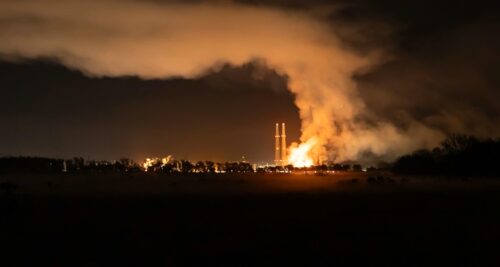
“Monterey County’s Environmental Health released a new report after testing the soil, sediment and surface water surrounding the Moss Landing Vistra power plant, where one of the buildings caught on fire back in January 2025. The overarching summary of the report relayed that there was no immediate threat to human life or the environment. Environmental Health officials announced the full report would be available on the readymontereycounty.org website. Environmental Health brought the appropriate groups together; Terraphase, the consultant group on Vistra’s behalf who conducted sampling, and other state partners including following guidelines set by the California Environmental Protection Agency Department of Toxic Substances Control. … ” Read more from the Monterey Herald.
SAN JOAQUIN VALLEY
Community helps shape plans to restore portions of Stockton’s Mormon Slough
“Community members are helping shape plans to transform portions of Stockton’s Mormon Slough, an area that has struggled for years with homelessness, crime and trash. Restore the Delta, the nonprofit leading the Mormon Slough Restoration Project, held a public visioning meeting Saturday to gather community input as it finalizes concept designs for two sections of the slough. Under bridges near downtown, south and east Stockton, the waters of the San Joaquin Delta once flowed through the 6.3-mile Mormon Slough. Nearly a century later, the slough is dry, with piles of trash, homeless encampments and frequent fires. “Some parts of it are unsafe. Not very appealing to look at,” Stockton resident Latoya Fox said. “At the state that it’s at right now, you wouldn’t go there to do anything.” … ” Read more from Channel 10.
Turlock City Council approves changes to surface water treatment facility budget
“The Turlock City Council on Tuesday unanimously adopted amendments to the 2026-27 budget to accommodate staffing levels for the Stanislaus Regional Water Authority. According to city finance director Isaac Moreno, two SRWA positions will be reclassified (Staff Services Assistant to Staff Services Assistant or Technician, and Water Operator I to Water Operator Sr.), while a third (Instrumentation Technician II) will be created. These changes were approved June 18 by a 3-0 vote of the SRWA board. Benefits of the Staff Service change provide flexibility to recruit and retain personnel possessing the level of expertise necessary to meet organizational needs while maintaining an appropriate career development pathway, according to the city. … ” Read more from the Turlock Journal.
SOUTHERN CALIFORNIA
Regional monitoring network being leveraged to extend value of stormwater BMPs
“Public agencies across southern California have spent hundreds of millions of dollars on structural stormwater control measures – and are planning to spend hundreds of millions more to manage runoff water quality and quantity. To ensure stormwater BMPs (best management practices) are performing to their full potential, public agencies need field data reflecting how BMPs actually perform under environmental and operating conditions found in southern California. The SMC has begun working to fill this key data gap through its Regional BMP Monitoring Network. Using the program’s first three years of wet-weather field monitoring, researchers have been generating foundational insights on BMP performance, both to help improve existing BMPs that aren’t performing to their full potential, and to help improve design and construction guidance for future BMPs being planned. … ” Read more from the SoCal Stormwater Monitoring Coalition.
Disneyland closed every restroom after four Anaheim groundwater wells failed simultaneously
“On the evening of July 28, 2026, four of the 14 groundwater wells that supply the city of Anaheim failed simultaneously, triggering a citywide water pressure collapse that shut every restroom at Disneyland Resort for approximately two hours during peak summer hours. Thousands of parkgoers — families, tourists, guests with dinner reservations — found themselves in a city that had simply run out of water pressure, through no fault of the most sophisticated entertainment operation on earth. Anaheim draws approximately 75% of its water supply from a network of 14 groundwater wells; the remaining 25% is imported from the Colorado River through the Metropolitan Water District of Southern California. Four of those wells experienced what city officials described as “technical issues” around 6 p.m. PT on Tuesday — the equivalent of losing more than a quarter of the city’s primary water source in minutes, during the season of peak demand, with a sold-out baseball stadium and a packed theme park drawing water simultaneously. … ” Read more from Tech Talk.
IMPERIAL/COACHELLA VALLEYS
The surprising way that Chromium-6 got into in the Coachella Valley’s groundwater
“The half-million residents of Southern California’s Coachella Valley have a lot to worry about. Toxic dust storms sweeping up from the Salton Sea. Concerns about the Coachella Canal after the U.S. Geological Survey reported that sections of the canal cross over the San Andreas Fault that’s 150 years overdue for an major earthquake that the USGS says could cause surface displacement of up to eight meters. Residents also worry about the future viability of the Colorado River – which provides 430,000 acre feet of water that’s used to irrigate 76,000 acres of farmland, 120 golf courses, and to replenish the aquifer in an effort to prevent the serious subsidence issues which first appeared in 1948. And it’s this replenishing that’s causing new problems for the aquifer. … ” Read more from Coyote Gulch.
Imperial County judge hears arguments over a data center lawsuit filed by the City of Imperial and the Sierra Club
“The City of Imperial, along with the Sierra Club sued the County of Imperial, over a proposed hyper-scale AI data center. They argued the county issued a Notice of Exemption for a grading permit before the planning commission could complete their report, and that the county illegaly approved the project in pieces to avoid a comprehensive environmental review. The attorneys for the city said that the county never studied the proposed use for the land. … ” Read more from KEYT.
SAN DIEGO
Podcast: What new rules for Colorado River would mean for San Diego
“California and six other states that rely on the Colorado River have been unable to agree on how to divide its water for years. Now, the federal government is stepping in to decide. As early as this week, the federal government may adopt new rules for sharing water on the drought-stricken river. The Lower Basin states, which include California, are expected to face major cutbacks. KJZZ reporter Alex Hager has been following the anticipated federal plan. He joined Midday Edition on Wednesday to discuss the impacts the new rules could have on cities like San Diego, which has long depended on the Colorado River, but now has excess water to sell. Guest: Alex Hager, senior field correspondent at KJZZ.” Listen at KPBS.
Along the Colorado River …
New survey finds water security is a top priority across the Colorado River Basin
“A new Morning Consult poll commissioned by the Walton Family Foundation finds that voters across the Colorado River Basin are deeply concerned about the impacts of drought and strongly support action to protect the region’s water future. Nearly 9 in 10 voters are concerned about risks including wildfires, threats to clean drinking water and declining water levels in the Colorado River. Most also say addressing these challenges is an important personal priority and believe federal and state leaders should make water security a priority this year. The poll also highlights broad, bipartisan support for practical solutions that can strengthen the Colorado River’s long-term resilience. More than 9 in 10 voters support measures such as restoring wetlands, improving agricultural water efficiency, increasing municipal water conservation and managing forests to reduce wildfire risk. … ” Read more from the Walton Family Foundation.
Low Lake Mead levels unearth a similar group of discoveries, except for the dead bodies
“As Nevada and the other six states along the Colorado River basin await the federal government’s announcement — due sometime this week — on how the river water will be distributed among the states, water levels are dropping. Levels at Lake Mead, in particular, are dramatically low. In fact, when this article was submitted for publication, the water levels there were approximately 8 inches away from a historic low level last seen in 2022 and back in the 1930s when the largest manmade reservoir in the nation was filled. While the Southern Nevada Water Authority insists it has enough water presently and for the next 50 years, consistent reduction in water levels becomes a perennial news item. “We look at our existing supplies, the limitations that they may experience, and we run models to see what do those future scenarios look like,” Colby Pellegrino, SNWA’s deputy general manager of resources, told the 8 News Now Investigators in mid-July. “And pretty reliably, this community will have water.” … ” Read more from KLAS.
Nevada’s expected to lose a quarter of its Colorado River water. What happens next?
“Nevada is expected to give up more than a quarter of its allocated Colorado River water — 84,000 acre-feet — over the next two years under a federal operating framework plan that cuts distributions to three states and is expected to be officially released this week. Nevada holds by far the smallest share of the Colorado River of any of the three Lower Basin states — just 300,000 acre-feet, compared with Arizona’s 2.8 million and California’s 4.4 million. And it uses less than it is allocated — only about 212,000 acre-feet of its allocation in 2024, according to the Southern Nevada Water Authority (SNWA), recycling the vast majority of its water and sending it back to Lake Mead for credit. That restraint hasn’t been enough to escape the reckoning. Nearly a quarter century of drought, worsened by hotter and drier conditions tied to climate change, has pushed combined stored water in Lake Mead and Lake Powell, the two reservoirs central to the Colorado River system, to its lowest point since 1957. … ” Read more from the Nevada Independent.
Lake Powell could lose the ability to generate power by early 2027
“Water levels near historic lows at Lake Powell have caused concerns about the reservoir’s ability to generate power. The reservoir on the Arizona-Utah border sits at an elevation of about 3,522 feet, roughly 3 feet above the record low set in April 2023. And conditions are deteriorating quickly. A new federal forecast released projects that Lake Powell will receive just 2% of its average inflow this month. For the full water year, inflow is expected to reach only 36% of the 30-year average. … ” Read more from KTAR.
Arizonans worry about water and want politicians to do something about it, new poll says
“An overwhelming majority of voters in Arizona and the rest of the Colorado River basin say they’re concerned about diminishing water supplies and want their governments to do something about it. That’s according to a new poll of about 2,500 people across the seven states that use the river’s water. Eighty four percent of Arizona respondents said addressing diminishing Colorado River water supplies was “important” or a “top priority.” Between 85% and 90% of Arizonans surveyed said they were concerned about different problems caused by those diminishing supplies — such as threats to drinking water, increased risk of wildfire, threats to hydropower, increasing insurance costs and threats to national food supply. About 90% of Arizona respondents said it was important for state and federal officials to prioritize water security around the region. … ” Read more from KJZZ.
Kearny mayor says town’s water supply should last through this year, but 2027 is questionable
“The mayor of Kearny, a town located between Phoenix and Tucson, believes its water supply will make it through the rest of this year after implementing strict water restrictions and receiving some help from others. Curtis Stacy explained to KTAR News 92.3 FM’s Outspoken with Bruce & Gaydos Tuesday that the situation started when, due to a lack of snowpack, the town received a 77-acre-foot apportionment instead of its typical 280 acre feet. “We implemented stage five restrictions. The people in the town did an amazing job,” Stacy said. “They stretched that 77 acre feet. We currently have 44 acre feet left over.” … ” Read more from KTAR.
New Mexico is hoping to pass protections for parts of the Gila River. What it means for Arizona
“The Gila River is one of the last free-flowing rivers in the Southwest. It winds from the Gila National Forest in southwestern New Mexico — all the way across the state of Arizona, through deep canyons and cottonwood forests to eventually join the Colorado River at Yuma. But today, like many rivers, it’s under threat from drought, climate change — and proposed dams that would irrigate the river’s water for farming or hydropower. And now, a delegation from New Mexico is hoping to pass protections for the waterway — the strongest protections any river can get, in fact. But those protections are only being proposed for parts of the Gila within New Mexico. So, what would they mean for the many miles of it that wind through Arizona? … ” Read more from KJZZ.
Doubled water bills bring politics to a boil in the Pinto Bean Capital of the World
“The Pinto Bean Capital of the World is at a boiling point. And it’s not related to the Ferris fire that has torched nearly 65,000 acres nearby. The normally quiet town of Dove Creek has gotten so politically charged that the town hall has had to lock its doors. For more than two months, the once-upon-a-time gas station that serves as town hall has been closed. A sign on the door states it is “due to threats and inappropriate behavior towards the Town staff and Town Board.” The anger is centered on water — specifically water bills. They are being doubled, and that increase has incensed the town’s residents. When Dove Creek’s 700 or so residents were informed in early May of the new rates — $132 per month for basic residential water and sewer service — they showed up at town board meetings in moods ranging from irate to livid. There was yelling and shouting and blame cast on the board and town officials. It hasn’t died down. “I think people are working through their anger. They are yelling at their own,” observed Kendra Cook, the editor and publisher of the Four Corners monthly newspaper and online news source, The Pinto Bean. … ” Read more from the Colorado Sun.
In national water news today …
Bipartisan anger grows at Pentagon’s delayed ‘forever chemicals’ cleanups
“In December, Representative Jack Bergman of Michigan, a staunch ally of President Trump and MAGA defender, took to the House floor to praise America’s military might, lauding its “will to face down potential aggressors.” Then his speech took an unexpected turn, to pollution. “We have much more to do,” he said. High on his list: cleaning up PFAS, the harmful “forever chemicals” that pollute hundreds of military sites nationwide. The Pentagon must prioritize “delivering environmental stewardship to communities impacted by PFAS,” Mr. Bergman said. In a fiercely divided Washington, there is bipartisan anger at the stalled progress in cleaning up toxic chemicals at military bases. The delays have emerged as a rare issue uniting Democrats and Republicans in their criticism of the Pentagon. … ” Read more from the New York Times.
Trump administration is repurposing federal land for AI data centers
“The Trump administration is repurposing large chunks of federal land to host enormous data centers and the power plants needed to run them as officials seek to accelerate the development of artificial intelligence and overcome growing local opposition to the facilities. The Energy Department announced on Wednesday that it would redevelop parts of a retired Cold War-era uranium enrichment facility in Paducah, Ky., to host a large new A.I. data center campus. The site is owned by the federal government and has been undergoing environmental cleanup for years. The $100 billion project would include construction of 2 gigawatts of natural gas power connected to the local grid and 2.6 gigawatts of battery storage capacity. The Energy Department said the project would be privately funded through a partnership with NextEra Energy, one of the nation’s largest power companies; the investment firm Brookfield; and several local utilities. (One gigawatt of gas can power roughly 750,000 homes.) … ” Read more from the New York Times.
Farmers need a farm bill that rewards conservation
“The farm bill shapes nearly every aspect of the U.S. food and agriculture system, from how food is grown to how it reaches consumers. As Congress negotiates the 2026 farm bill, farmers are navigating low commodity prices, high fertilizer and fuel costs, and more variable and severe weather, factors that threaten their ability to turn a profit and stay in business. The farm bill provides producers with critical tools to manage risk, adopt new practices, boost productivity, and build more resilient and sustainable operations. This moment is an opportunity to ensure that producers not only have the resources they need to survive near-term shocks and threats to productivity, but thrive for generations to come. … ” Read more from EDF’s Growing Returns.

