

Several news sources featured in the Daily Digest may limit the number of articles you can access without a subscription. However, gift articles and open-access links are provided when available. For more open access California water news articles, explore the main page at MavensNotebook.com.
On the calendar today …
- PUBLIC WORKSHOP: Draft Small MS4 Stormwater Permit (Virtual) from 9am to 12pm. Staff of the State Water Resources Control Board will hold a public workshop to answer questions on the proposed draft National Pollutant Discharge Elimination System (NPDES) General permit for Stormwater Discharges from Small Municipal Separate Storm Sewer Systems (Draft Small MS4 Permit). Virtual attendees may submit questions during the workshop to DWQ-SmallMS4@waterboards.ca.gov. Additional participation instructions will be provided at the start of the workshop. After staff completes its presentation on the major revisions to the Draft Small MS4 Permit, staff will respond to questions that are submitted via email. Click here for the notice.
In California water news today …
This year’s El Niño could spell disaster for West Coast fishermen
 “The last El Niño was linked to severe droughts in Southern Africa, wildfires in Indonesia and global coral bleaching. Now, ocean advocates are warning that American fishermen could face significant financial losses as fish stocks struggle to survive in warmer waters. With the National Oceanic and Atmospheric Administration (NOAA) predicting an 81 percent chance of another “very strong” El Niño this year, environmental groups are warning it could spell disaster for U.S. fisheries. Following the 2015-2016 Super El Niño—which occurred alongside a major North Pacific marine heatwave called “the Blob”—over $140 million in government relief was paid to impacted fishers, processors and dealers. Now, some economists are calling on Congress to pre-emptively appropriate emergency funding before this year’s El Niño impacts U.S. waters this fall. “El Niño’s fuse has been lit and we don’t have much time to prepare,” said Anthony Rogers, senior fellow of fisheries economics and climate at Ocean Conservancy, in a press release. The environmental nonprofit is warning the impact on key fish stocks and livelihoods along the West Coast will be worse this year than it was a decade ago. “It’s rare that we have a heads up that we’ll get hit by a natural disaster like this, so we should be preparing. Fishermen are going to be hit hard,” said Rogers in an email to Inside Climate News. … ” Read more from Inside Climate News.
SEE ALSO: Record-breaking El Niño could gut California’s crab and salmon fleets, from the LA Times | Read via Yahoo News.
NEW REPORT: Groundwater challenges for California’s small-scale farmers expose regulation risks
 “Small farms across the state may not be able to comply with groundwater regulations and stay in business, according to a new report analyzing the impact of California’s Sustainable Groundwater Management Act (SGMA) on small-scale farms. In the first-ever assessment of small farmer consideration in California groundwater regulations, researchers at the University of California Small Farms Network and the Community Alliance with Family Farmers document the challenges facing small-scale farms with groundwater regulations. The report “Managing Groundwater with Small Farms in Mind: Risks, Barriers and Opportunities in the Sustainable Groundwater Management Act,” warns that farmers need an approach that helps them understand and adapt to the new regulations – while safeguarding their ability to grow food for California consumers. “Our state’s small-scale farmers face disproportionate risks and barriers with SGMA implementation,” said Catherine Van Dyke, director of water policy at Community Alliance with Family Farmers, a nonprofit that aims to build sustainable food and farming systems. “The future of groundwater management in California will be measured not only by hydrologic indicators but also by whether California’s agricultural communities remain viable and resilient long-term.” … ” Continue reading this press release.
Common ground video game lets players manage cropland transition in California’s Central Valley
“Welcome to Townsville, a community located in California’s Central Valley. You have been tasked with working with a few of your fellow residents to implement cropland transition projects around Townsville. There are opportunities to protect the town’s drinking water, develop renewable energy, restore the environment, and encourage your neighbors to adopt more sustainable farming practices to benefit Townsville. Along the way, you must collaborate with your fellow residents to decide which projects to pursue and negotiate with the neighboring landowners to implement a vision for the future of Townsville while facing additional hurdles from extreme weather brought on by Climate Change. You also have to consider the side effects of the current land uses that often seem invisible but have real and ongoing consequences for your community.This is the world of ‘Common Ground,’ a video game developed by a team of students at Harvey Mudd College in partnership with UCS, to explore just land transition, climate change, and the decisions involved in transitioning cropland in California’s Central Valley. … ” Read more from the Union of Concerned Scientists.
Improving water affordability for low-income residents
“Water utility assistance programs in California struggle to reach and assist many customers affected by rising rates, particularly renters and those who don’t pay water bills directly to utilities. “Water affordability challenges are a large and increasing issue for folks, especially low-income populations. And that’s being exacerbated by aging infrastructure, climate change, and changing funding structures to programs,” said Khalid Osman, a Stanford assistant professor of civil and environmental engineering and leader of the Osman Lab. He and Sarah Fletcher, assistant professor of civil and environmental engineering and a Center Fellow at the Woods Institute for the Environment, are collaborating with the City of Santa Cruz Water Department on a research project supported in part by Stanford’s Office of Community Engagement. … ” Read more from the Stanford Report.
Japanese company bets on water-from-air tech to help water-starved areas in California
“The climate-driven water crisis is becoming a housing crisis as builders increasingly struggle to secure sufficient water supplies for new residential developments. Now Japanese water infrastructure company Kubota Corp. aims to provide developers of suburban subdivisions with an unlimited source of water through a technology that extracts H2O from the air. In a deal announced Tuesday, Kubota is buying atmospheric water harvesters made by Delaware-based AirJoule LLC to be initially deployed in California and Texas. Both states require developers to demonstrate that they have secured long-term access to water supplies to receive approval to build. In water-stressed areas, clusters of AirJoule harvesters could be integrated into Kubota’s water recycling systems to serve as decentralized neighborhood water plants for new subdivisions. … ” Read more from the LA Times.
Clifton Court Forebay: A safe haven for California’s native pond turtles

“Veronica Wunderlich loves turtles. As DWR’s resident herpetologist, she is captivated by their unique charm and charisma. “They look like they’re always smiling,” she said. “They are an attractive animal. I have yet to meet a person that says, ‘Eww, I hate turtles.” Recently, Wunderlich and her team visited the wetlands near Clifton Court Forebay to survey Northwestern Pond Turtles, a species native to California that is under consideration for listing as threatened under the Endangered Species Act. The team’s survey work helps track how they’re doing in the wild. Loss of habitat and the effects of climate change are putting these turtles at risk. They need access to both aquatic and upland habitat for nesting and shade. Rising temperatures can have devastating consequences for their population, considering they’re the only remaining freshwater turtle species native to California. … ” Read more from DWR.
Data center boom sparks lobbying surge
“The number of companies, associations and advocacy groups lobbying around data center issues more than doubled this spring compared to the same time last year as Congress and the Trump administration sought to address the industry’s rapid growth. More than 200 entities lobbied between April and June on proposals to prevent data center electric demand from spiking utility rates, a nationwide moratorium on new facilities and the Federal Energy Regulatory Commission’s actions around how to connect the massive electricity users to the grid, a review of new federal lobbying disclosures by POLITICO showed. It’s a sharp increase from the same quarter in 2025, when fewer than 100 companies and groups reported lobbying on data center matters. “At this point, almost all my clients are lobbying on this,” said Elizabeth Whitney, who represents electric cooperatives and municipal power utilities as managing principal at the firm Meguire Whitney. … ” Read more from Politico.
Building Western ridge will bring double-peaked Southwest U.S. heatwave into August, with elevated humidity persisting in SoCal due to very warm ocean
“In recent weeks, the Pacific Ocean along the immediate Pacific Coast has continued to warm. Earlier this year, I mentioned that this was not yet due to El Niño because…well, El Niño had not developed yet (and was, instead, related to other patterns of Pacific variability). But now, El Niño has developed–and is already well into “strong” territory by almost any metric even though it won’t be officially declared as such until it sustains this intensity for several months. And accordingly, El Niño is now and for the rest of the calendar year going to be an increasingly significant driver of elevated near-shore sea surface temperatures (SST) along the California coast. This is especially true in SoCal, but will also become increasingly prominent along the central and northern CA coast by later summer into autumn. In fact, at present, near-shore ocean temperatures in some portions of the SoCal bight are near or at record-warm levels–and may rise yet further in the weeks to come. … ” Read more from Weather West.
Stronger atmospheric rivers in California? One study says it’s possible
“A massive ocean current in the Atlantic could influence storms thousands of miles away, potentially making California’s future atmospheric rivers wetter and increasing flood risks, according to new research. Scientists at the University of California, Riverside, found that a weakening Atlantic Meridional Overturning Circulation — known as the AMOC — could reshape global wind patterns in ways that increase atmospheric river activity along the West Coast. Researchers have found signs that the AMOC has slowed in recent decades, and climate models suggest the decline could continue as greenhouse gas emissions warm the planet. But scientists have been working to understand how a changing Atlantic current could affect weather far beyond the ocean basin. … ” Read more from the Desert Sun.
Morphodynamics of dune-based coastal flood mitigation under sea level rise
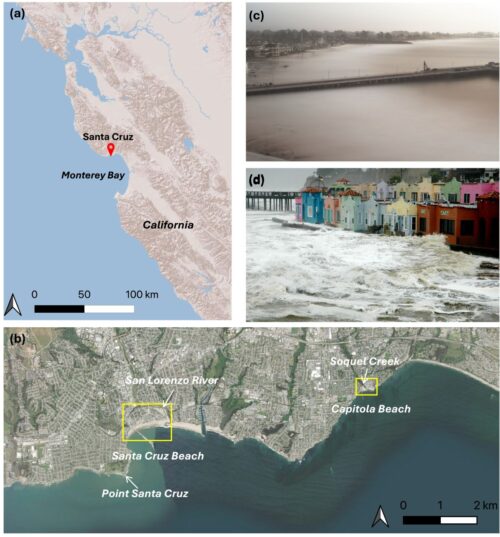
“Natural and engineered sand dunes serve as barriers to protect against storms. Engineered sand dunes, called “Nature-based Solutions”, are increasingly being used for coastal protection, yet their effectiveness remains understudied. New research finds that dunes’ flood protection benefits depend not only on the size of the storm, but also on how the dunes themselves change during the event. Using a modeling framework incorporating both hydrodynamic and morphodynamic feedbacks, scientists evaluated how dunes at two beaches in Santa Cruz County respond to rising sea levels and increasingly powerful storms. The study found that storm-driven erosion can dramatically reduce the flood protection dunes provide, highlighting the importance of accounting for changing coastal landscapes when planning for climate resilience. … ” Continue reading from the USGS.
California Forever: Solano County Supervisors face labor backlash for Saronic miss
“After Solano County was beaten out by Brownsville, Texas, last week in a duel to be the home of Saronic’s $3.2 billion Port Alpha, business and labor leaders visited the Board of Supervisors to express their displeasure with the county’s inability to attract jobs. California Forever Employee Matthew Bidou and Travis Unified School District President said the county’s job forecast looks poor, despite great work by local unions. He said he is tired of hearing that recent graduates must travel hours away or settle for minimum wage. “Nothing can happen if they go through a program and there is nowhere to go,” he said. Bidou said the reality is young people cannot build a life in the community that raised them. “All I read is about people leaving, institutions leaving, things of this nature,” he said. “Our kids deserve better.” … ” Read more from the Vacaville Reporter.
SEE ALSO: Newsom hasn’t endorsed California Forever. His administration just came close, from the SF Chronicle
In commentary today …
Editorial: Data centers show the downside to federal land ownership
The Las Vegas Review-Journal editorial board writes, “If Nevada controlled more of the land within its own boundaries, state and local officials would have more input over how that land was used. The Bureau of Land Management recently announced that it had approved the Townsite Data Center project near Boulder City. The news came as a surprise to Boulder City residents. Many had been fighting efforts to allow a data center on city-owned land. … There are real debates to be had on this issue. Boulder City residents expressed concerns about pollution and other unknowns. Data centers demand an enormous amount of power. Nevada ratepayers must be protected from increased costs. Perhaps data centers could actually help defray some of the costs from Nevada’s foolhardy 50 percent by 2030 renewable portfolio standard. The Southern Nevada Water Authority’s prohibition on evaporative cooling does help alleviate concerns about excessive water use. On the other hand, Boulder City would have received $2.3 million in taxes and lease payments from a data center built on city land. That money could have funded new services for residents or lowered taxes. … ” Read more from Ripple.
Data center moratoriums are not a substitute for oversight
“Data center construction is exploding amid the artificial intelligence (AI) boom—and so is the community backlash against these projects. Protests across the country and community concerns have prompted legislators to consider moratoriums on data center construction. At least 15 states have weighed pauses on data center development, and at least 100 localities have already approved their own. While these efforts might be successful in affording communities the time they need to craft community benefit agreements or consider whether they want local data centers, they are not a complete solution to the problem at hand. Data centers require meaningful accountability and oversight in both the short and long term. These measures may temporarily quiet communities’ resistance, but they will not slow the national momentum behind projects that are being built or are already underway. For moratoriums to work, there must also be time spent gathering data, enhancing transparency, and creating greater collaboration among legislators, industry, and community residents. If these factors, at a minimum, are not achieved, community upheavals are likely to persist. … ” Read more from the Brookings Institute.
In regional water news and commentary today …
NORTH COAST
‘A beautiful place’: Restored Yurok nature preserve near Orick opens to public Saturday
“This Saturday, the ‘O Rew Redwoods Gateway — a 125-acre Yurok Tribe owned and managed nature preserve — will open to the public. The ‘O Rew Redwoods Gateway is located on Yurok ancestral lands that had, in recent history, been used as the site of a closed-since-2009 lumber mill and pasture land, north of Orick and to the south of Redwood National and State Parks. The preserve has been the product of over a decade of collaborative restoration work between the Yurok Tribe, Save the Redwoods League, California Trout and nearly two dozen other partners, including public agencies, local groups and restoration professionals. “This project represents a truly just approach to the restoration of culturally important landscapes and tribal communities,” Yurok Tribe Chairman Joseph L. James said in a joint press release issued by Save the Redwoods League and the tribe on Tuesday. “I hope it sets a national standard for collaboration between environmental protection groups and tribal nations.” … ” Read more from the Eureka Times-Standard.
Inseason recreational ocean salmon closures announced for California’s North Coast
“Attention recreational anglers – the National Marine Fisheries Service has taken action today, July 28, 2026, to close or modify ocean salmon fishing seasons for portions of California’s north coast. The Klamath Management Zone, which includes ocean waters between the California/Oregon border and 40º10′ N. latitude, is now closed. The Fort Bragg Management Area, between 40º10′ N. latitude and Point Arena, will open August 1 and continue through August 9. The remainder of the August dates previously scheduled for the Fort Bragg Management Area are now closed. In the Klamath Management Zone, the California Department of Fish and Wildlife’s preliminary estimates indicate that 3,968 Chinook salmon were taken by 4,830 anglers aboard both charter vessels and private skiffs, achieving the area’s recreational harvest guideline of 3,900 Chinook salmon. … ” Read more from Western Outdoors.
Federal agency rejects Southern California water district’s bid to intervene in PG&E’s bid to remove 2 Eel River dams
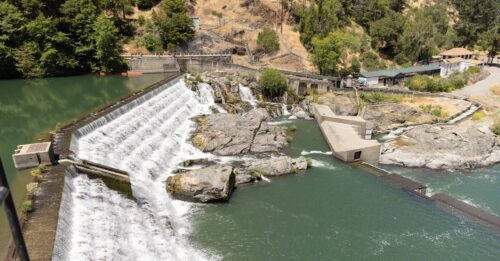
“The Federal Energy Regulatory Commission, the agency with ultimate authority over the fate of two Lake and Mendocino county dams that have become embroiled in escalating controversy, dealt a blow Monday to one of the newer — and more distant — players to enter the fray, denying a bid by a Southern California water agency to intervene in the process. “Movants for late intervention are required to ‘show good cause why the time limitation should be waived,’” FERC Secretary Debbie-Anne A. Reese wrote to Riverside County-based Elsinore Valley Municipal Water District. “Here, the District failed to demonstrate that good cause exists … because it did not provide any explanation for the untimeliness of its motion.” The Lost Coast Outpost first reported the decision, the latest turn in a growing saga that has drawn in the Trump administration as chief antagonist of utility giant Pacific Gas & Electric Co.’ plans to decommission and remove its two Eel River dams, which it contends are outdated and inefficient. … ” Read more from the Santa Rosa Press Democrat.
Acclaimed California vineyard joins industry trend of tearing out acres of vines
“The renowned Beckstoffer Vineyards is dramatically scaling back its wine grape operations in Lake and Mendocino counties, with plans to pull out more than half of its vines. At its peak, Beckstoffer was farming around 4,000 acres of wine grapes in the two counties and Napa. Now, the vineyard plans to farm 140 acres in Lake County, 800 in Mendocino County and maintain its 1,000 acres in Napa. The reduction in acreage led to dozens of employee layoffs. “I’ve been doing this for 28 years, … and people are saying this is just never seen before — how drastic and fast things turned (for the wine industry),” said Brandon Axell, Beckstoffer’s executive vice president of farming. “…It’s incredibly hard for me.” … ” Read more from the Sacramento Bee.
SACRAMENTO VALLEY
California drought may have pushed parts of the Sacramento Valley aquifer toward permanent collapse
“Around a quarter of the U.S. food supply is grown in California’s Central Valley. Most of its crops, like rice, fruit trees and nut trees, are water-intensive and require extensive groundwater pumping during droughts. Over time, heavy water extraction has contributed to changes in the aquifer systems under the San Joaquin and Sacramento valleys. Although some of these changes can be reversed, a new study, published in the Proceedings of the National Academy of Sciences, indicates that large parts of the Sacramento Valley may have undergone irreversible ground compaction during recent droughts, leading to a permanent loss of groundwater storage. … ” Read more from PhysOrg.
SEE ALSO: Researchers find permanent damage to Sacramento Valley groundwater storage, from PBS Abridged
Yolo County declares golden mussels emergency but no change in Butte County
“Golden mussels have been declared an emergency in Yolo County, but boat inspections for the invasive mollusks are no longer required at Lake Oroville in Butte County. Action News Now Reporter Christine Stoddard went to the lake to ask boaters what they think about the change. On April 29, the California Department of Water Resources announced that boat inspections are no longer part of DWR’s mussel prevention program at Lake Oroville. Earlier this month, Yolo County Board of Supervisors declared a state of emergency when the invasive species was found at the Port of West Sacramento. The emergency applies to waterways connected to the Sacramento-San Joaquin Delta. That doesn’t include Lake Oroville, which is formed by the Oroville Dam and impounds the Feather River. … ” Read more from Action News Now.
Water Forum awarded more than $10.6 million for Lower American River habitat enhancement
“The Water Forum has been awarded more than $10.6 million in competitive federal funding to enhance habitat for salmon and steelhead in the lower American River while expanding the scientific research and monitoring that help inform future river management decisions. “The lower American River is one of our region’s greatest natural resources,” said Ashlee Casey, executive director of the Water Forum. “This funding allows us to continue enhancing habitat for salmon and steelhead while using science to better understand what these fish need to survive and thrive. That knowledge helps us make better decisions that benefit the river, the fish that depend on it, and the communities that rely on the river.” The largest award—$10 million—will support the long-term maintenance, monitoring, and enhancement of habitat enhancement sites that the Water Forum has implemented along the lower American River over the past two decades. … ” Read more from the Water Forum.
BAY AREA
Suisun Valley sewer study to be extended; existing land uses protected
“Solano County supervisors are expanding the study area for potential sewer service needs into Suisun Valley, but with explicit language not to alter the land uses and vision of the valley’s strategic plan. In doing so, it also gave the go-ahead for the 60-home Woodcreek residential project, which is outside the Suisun Valley Strategic Plan area, to move forward with trying to get Fairfield-Suisun Sewer District service. Solano County supervisors are expanding the study area for potential sewer service needs into Suisun Valley, but with explicit language not to alter the land uses and vision of the valley’s strategic plan. In doing so, it also gave the go-ahead for the 60-home Woodcreek residential project, which is outside the Suisun Valley Strategic Plan area, to move forward with trying to get Fairfield-Suisun Sewer District service. … ” Read more from the Daily Republic.
Removal of more toxic waste at former Hunters Point shipyard begins this week
“Cleanup crews will begin removing radioactive material this week from a building at the Hunters Point Naval Shipyard in San Francisco after it was discovered in a storage locker in April. Members from the Hunters Point and Bayview community came together Monday for a Hunters Point Shipyard Citizens Advisory Committee Environmental & Reuse Subcommittee meeting to discuss the upcoming removal of the radioactive material and provide general updates on the current state of the Hunters Point Superfund site. The Hunters Point Shipyard Advisory Committee was founded in 1993 by the city to increase community participation in oversight of the Hunters Point shipyard development. In 1989, the site was designated a federal Superfund site, an area contaminated with hazardous materials that requires long-term cleanup. … ” Read more from Local News Matters.
Anderson Dam: Water district awards construction contract in $3.2 billion project to rebuild largest dam in Santa Clara County
“In a major milestone after years of delays and cost increases, the Santa Clara Valley Water District has approved a construction contract to tear down and rebuild Anderson Dam, the largest dam in Santa Clara County, and bring the aging 240-foot-tall structure up to modern earthquake standards. The San Jose-based government agency awarded the $1.88 billion contract on Friday to Flatiron-Dragados-Sukut, a joint venture of major engineering firms Flatiron-Dragados and Sukut Construction based in Concord. Work on the massive project, one of the largest public works projects in the Bay Area in recent years, is scheduled to begin Jan. 1 and finish by 2033. “I’m really happy that we’re here,” said Tony Estremera, chairman of the water district, which provides water and flood protection to 2 million residents of Santa Clara County. “We’re probably the only district that’s building a reservoir in the state right now. This is a rebuild, but it is a complete rebuild. We’re pretty proud that we’re at this point.” … ” Read more from the San Jose Mercury News.
10-year deadline for cleaner wastewater extended by Water Board for certain projects
“Two years ago, the Bay Area’s 40 publicly owned wastewater treatment agencies got some hard news. They had 10 years to upgrade their facilities to reduce pollutants entering the bay by 40%, at an estimated cost of $11 billion. At a Thursday meeting of the San Francisco Bay Regional Water Quality Control Board, a pathway was initiated for certain projects to get a deadline extension, if they qualify and are moving as quickly as possible. The 2034 deadline was established when the water board tightened the rules for issuing the permit required to discharge treated effluent into Bay Area waters. The move was in response to massive fish kills in 2022 and 2023 caused by consecutive algae blooms. … ” Read more from SF Gate.
CENTRAL COAST
New legislation to mitigate flood risk on ag lands
“Representative Jimmy Panetta authored and introduced new legislation Monday aiming to help farmers become more resilient in the face of destructive floods. The Farmers Lifeline Options for Overcoming Disasters Act expands opportunities for proactive mitigation measures like creating floodplain buffer zones in high risk areas. The act is co-led by Iowa Representative Randy Feenstra, and senators Lisa Blunt Rochester of Delaware and Jim Justice of West Virginia are leading companion legislation in the Senate. After droughts, floods are the second most destructive natural disaster for agriculture production worldwide, impacting roughly 27% of agricultural land according to the Food and Agriculture Organization. … ” Read more from the Monterey Herald.
Montecito residents worried about creek flooding ahead of El Niño storms
“San Ysidro Creek in Montecito is bone dry right now, but the possibility of super El Niño storms has neighbors worried about possible flooding during the rainy season this fall and winter. Residents living near the creek on La Vuelta Road, off of Jameson Lane, are hoping local agencies can do some preventive work to address flooding concerns before upcoming storms. “We’re trying to put our best foot forward with the county,” resident Mitchell Chupack said. “They’re making efforts to come up with ideas to help us. I’m hopeful that we’re going to get something done.” … ” Read more from Noozhawk.
SAN JOAQUIN VALLEY
Bakersfield-area county sewer rate increase fails after supervisors vote it down
“A proposal to raise sewer rates for several hundred Kern County residents tied into the Bakersfield sewer system failed to pass Tuesday. Supervisors Philip Peters and Leticia Perez voted against the rate increase while a lawsuit between the county and the city of Bakersfield plays out. Residents of County Service Area 71 are not inside Bakersfield city limits, but the county does not have its own wastewater treatment plant for those residents and ties into the city of Bakersfield’s sewer system. Residents pay the county an annual wastewater fee, and the county then pays the city for the service. With the city increasing its rates, the county will now have to pay more to supply the service to residents. … ” Read more from Channel 23.
SOUTHERN CALIFORNIA
Cleanup effort slogs on, weeks after East LA oil spill
“The Los Angeles County Board of Supervisors on Tuesday approved a motion directing departments to continue community engagement and provide updates on cleanup, testing and available resources related to the East L.A. oil spill that occurred in May. The motion also directed the county’s oil spill recovery webpage to remain available as a centralized source of information throughout the remediation process. “Today’s motion reflects my continued commitment to ensuring residents have access to answers, transparency, and the support they need, while making clear that their concerns will not be forgotten,” said Supervisor Hilda Solis, who represents cities and unincorporated areas in East L.A. During Tuesday’s Board of Supervisors meeting, Solis convened county departments to provide an update on the status of environmental testing, cleanup efforts, public health impacts, community outreach and steps being taken to hold the parties responsible for the oil spill accountable. … ” Read more from the LA Daily News.
State regulators crack down on polluted runoff from L.A. shopping centers, warehouses
“In a requirement that is the first of its kind in the country, some 600 commercial and industrial properties in the Los Angeles area will have to clean up the water that runs off their parking lots or pay to have it cleaned up. The Los Angeles Regional Water Quality Control Board voted to require shopping centers, warehouses, private hospitals and office complexes whose properties drain into the Dominguez and Los Cerritos channels to get stormwater permits. The change is intended to hold commercial, industrial and institutional property owners accountable for the pollution their sites send flowing into drains, said David Nahai, chair of the L.A. water board. It “addresses the effects of concrete, asphalt and other impervious surfaces that cover the urban landscape in these two watersheds, to protect water quality in the creeks, rivers and beaches downstream,” he said. … ” Read more from the LA Times.
Steve Lopez: In L.A.’s underground, the public servants are 80, 90 and 100. It’s tough getting old
“Sometimes the joints get rusty. Sometimes rising pressure stresses arteries. Sometimes there’s a bit of leakage. It’s tough getting old. But that’s the reality for much of the underground network of pipes that delivers more than 400 million gallons of water daily to customers of the Los Angeles Department of Water and Power. We don’t give it much thought until there’s a major water line break, as there was early on the morning of July 16 under Sunset Boulevard in West Hollywood. A 36-inch artery blew like a ruptured aorta, creating a sinkhole and sending 17 million gallons of water rushing through the streets. We learned from DWP in the early post-mortem that the pipe in question had been on duty for more than a century — 110 years, to be exact.As someone who writes now and again about aging, I’ve been giving this some thought. We think of Los Angeles as a relatively young city, but out of sight and under our feet there lies a massive community of unsung senior citizens whose work is essential to our survival. … ” Read more from the LA Times.
Stantec selected by LA Bureau of Sanitation to advance water reuse in Southern California
“The Los Angeles Bureau of Sanitation (LASAN) has selected Stantec to provide engineering and project delivery services for Pure Water Los Angeles, an initiative intended to develop a recycled-water-based drinking water supply for the region. The program aims to purify recycled water to create a new source of drinking water, as part of the City of Los Angeles’ plan to source 70 percent of its water supply locally. Currently, about 50 percent of the city’s water comes from local sources, including groundwater, recycled water, and the Los Angeles Aqueduct, with the remainder imported from other agencies. Program backers say expanding water reuse would reduce reliance on imported water. … ” Read more from Smart Water Magazine.
Colorado River water cuts could impact Pasadena
“The Colorado River is expected to get new rules soon, which could mean less water for Southern California and potentially Pasadena. New rules will require Arizona, California and Nevada to cut water use by a fifth over the next two years. This limits total regional withdrawals to 3.2 million acre-feet through 2028, with steeper reductions slated for the 2029–2036 period to combat severe mega-drought. The Colorado River provides water to nearly 40 million people across seven states: California, Arizona, Nevada, Colorado, Utah, New Mexico and Wyoming. It also provides electricity to nearly 8 million people. But the river continues to face a crisis. Years of overallocation, climate change, low snowpack and heavy water use have reduced water levels in Lake Mead and Lake Powell, the river’s two largest reservoirs. … ” Read more from Pasadena Now.
Anaheim water pressure issues impact busy areas like Disneyland Resort, Angel Stadium
“The city of Anaheim experienced water pressure issues on Tuesday, impacting busy areas like Disneyland Resort and Angel Stadium. Mike Lyster with the city of Anaheim said the drop in water pressure began around 6 p.m. He said it impacted City Hall in the central part of the city, five miles east near Angel Stadium and areas near the theme parks and convention center. City officials said no one was ever completely without water to their knowledge, and at the peak of the issue, some places saw low pressure, with water trickling out of faucets. The incident impacted the busy Disneyland Resort. One parkgoer documented his experience in a video shared to the Citizen App. “The restaurants are down, bathroom lines are long. I think the word is getting out there is a water main issue,” the witness said. … ” Read more from ABC 7.
SEE ALSO: Holding It In at the Happiest Place on Earth Disneyland water outage shuts every bathroom – guests left high and dry, from the Santa Monica Observer
Environmentalists, tribes sue feds over renewed approval of Mojave Desert pipeline
“Two environmental advocacy organizations and two Native American tribes on Tuesday filed separate lawsuits to vacate the U.S. Bureau of Land Management’s approval of the use of a decommissioned oil and gap pipeline across protected federal public land in the Mojave Desert for a controversial water project. The Center for Biological Diversity and the Sierra Club said in their complaint filed in Los Angeles that the bureau’s decision will have a devastating impact on the fragile desert environment. Cadiz Inc. acquired the pipeline from El Paso Natural Gas in 2011 and intends the use it for its Mojave Groundwater Bank, a project to pump water from an underground aquifer in the Mojave Desert to the company’s customers west of the desert along the California coast. The nonprofits claim that the use of the oil and gas pipeline for water will make it possible for the company to extract far more groundwater from the desert aquifer than is replenished naturally and will cause an overdraft in the affected groundwater basin in and around Mojave Trails National Monument. … ” Continue reading from the Courthouse News Service.
IMPERIAL/COACHELLA VALLEYS
Desert data center developer challenges Imperial County moratorium in court
“The developer with plans for California’s biggest data center argued Tuesday that Imperial County unlawfully froze data center projects without identifying an immediate threat to public health or safety. Imperial Valley Computer Manufacturing filed a lawsuit in June after the Imperial County Board of Supervisors approved a freeze on data centers in the county. Sebastian Rucci, the attorney behind the Imperial Valley Data Center, argued the county’s moratorium must only be used for specific emergencies, which he says his nearly 1 million-square-foot project does not pose. The project has become a flashpoint in Imperial County, where water-intensive industrial projects like data centers are seen by some as incompatible with the region’s limited water resources and agricultural economy. Rucci, however, claims the data center will provide new jobs and millions in tax revenue in the economically stagnant region. The Imperial County Board of Supervisors initially approved Imperial Valley Computer Manufacturing’s lot merger for the project, located near a neighborhood in an industrial area just south of the city of Imperial. But the plan was walked back in June when the county approved the 45-day moratorium on data centers, which was then extended to 10 months and 15 days — or until June 2027 — so that the county could evaluate its land use rules. … ” Read more from the Courthouse News Service.
SAN DIEGO
San Diego awarded nearly $12 million for stormwater project in flood-prone Oak Park
“A federal award of nearly $12 million will allow the city of San Diego to begin a stormwater project along Streamview Drive in the Oak Park neighborhood, city leaders announced Monday. The $11.98 million comes from the HUD Community Development Block Grant – Disaster Recovery program and impacts an area hit by flooding during the January 2024 storms. The Streamview Drive Green Infrastructure Project is intended to “improve water quality, reduce flood risk and bring modern infrastructure upgrades to the Chollas Creek watershed,” according to a city statement. “Securing nearly $12 million in federal funding means we can make critical infrastructure improvements that will improve the quality of life for residents in Oak Park,” Mayor Todd Gloria said. “This investment will improve water quality, reduce flood risk, and modernize aging infrastructure in the Chollas Creek watershed. It’s another example of how we’re bringing resources home to build a cleaner, safer, and more resilient San Diego.” … ” Read more from KPBS.
Monitoring finds chronically high levels of bacteria and nutrient pollution in San Diego’s most urbanized watershed
“San Diego Coastkeeper published its 2025 Chollas Creek Water Quality Monitoring Report. The findings show a watershed under pressure: nitrogen, phosphorus, and E. coli frequently exceeded water quality objectives, while copper, lead, and zinc were generally detected at low levels. Coastkeeper collected samples bimonthly at four sites across this heavily urbanized watershed, and the data is shared with the public through an interactive data map at www.sdcoastkeeper.org/chollas-creek-map. … “Coastkeeper’s report highlights the need to creatively seek new public investment in stormwater infrastructure and identify illicit pollution sources that degrade the Creek,” said Phillip Musegaas, Executive Director of Coastkeeper. “We are engaged with our partners in Chollas communities who share our vision of a clean, healthy Chollas Creek that becomes an asset and a blessing, not a burden to the people and wildlife living near it.” … ” Read more from the San Diego Coastkeeper.
Along the Colorado River …
Stalled sovereignty: How the West’s smallest Tribe is held hostage by the Colorado River war
 “When San Juan Southern Paiute Tribe Vice President Johnny Lehi Jr. submitted his formal testimony to the Senate Committee on Indian Affairs on March 11, 2026, he brought forward a deferred 26-year-old inter-tribal promise. Lehi highlighted a stark institutional reality: the San Juan Southern Paiute Tribe remains the only federally recognized tribe in Arizona completely stripped of an exclusive reservation. This absolute lack of a land base drives a severe, ongoing infrastructure crisis across the tribe’s ancestral communities. Without a sovereign reservation, the tribal government lacks the legal authority to maintain local roads, plan community growth, or build municipal utility systems. Lehi reported that several generations of tribal families live in cramped two-bedroom trailers, isolated from the regional electrical grid and running water. To meet their needs, hundreds of tribal members have to manually carry their daily water supplies. … ” Read more from the Lake Powell Chronicle.
Is Las Vegas running out of water? See the city’s conservation efforts
“It’s been a hot, dry year for the southwestern United States, and water levels on the Colorado River are low, raising questions for Southwestern urban dwellers about whether cities like Las Vegas will run out of water in the near future. The concern is understandable. Lake Powell was 23.4% full on July 19. It was last full in 1983. If its level falls more, that could create an environmental catastrophe by stopping the river from flowing through the Grand Canyon, a situation known as “dead pool,” which could cause energy and agricultural problems for some parts of the Southwestern U.S. This decrease in water supply comes at a time when the federal government expects Nevada to reduce its use of Colorado River water by 28% as part of a two-year agreement while Nevada and the six other states needing water from the Colorado River attempt to reach a long-term water agreement. … ” Read more from USA Today.
Class-action lawsuit challenges Las Vegas Valley Water District excessive use charge
“A new class action lawsuit is being filed challenging the Las Vegas Valley Water District’s “excessive use charge,” with plaintiffs arguing the fee goes beyond encouraging conservation and instead amounts to a punitive penalty for customers who exceed certain usage levels. The lawsuit targets a charge the plaintiffs say affects about 10 percent of the district’s roughly 370,000 customers. They argue the fee is excessive and functions as a “money grab” under the guise of conservation. Carol Reynolds, a Clark County resident who lives on a half-acre lot served by the Las Vegas Valley Water District, said her most recent bill totaled $658.05, including $261 in excessive use charges. … ” Read more from Channel 3.
A Colorado River deal is expected this week. How will it impact Utah?
“Three of the seven states who rely on the Colorado River for water are expected to announce a key deal this week to reduce usage, according to a Los Angeles Times report. For Utah, the reported deal could take negotiating pressure off the state and others in the upper Colorado River basin — Wyoming, New Mexico and Colorado — for now, some water experts here say. The reported deal only involves lower basin states California, Nevada and Arizona. The major Colorado River-users, the Los Angeles Times reported, have come to an agreement with federal officials to cut the amount of water they collect from now through the end of 2028. … “[A] long term sticking point has been the Upper Basin’s refusal to take any mandatory cuts,” said Jack Schmidt, a Colorado River expert, in an email to The Salt Lake Tribune, “and I am skeptical if any sacrifice will be asked of the Upper Basin states.” Schmidt, who serves as the director of Utah State University’s Center for Colorado River Studies, added that “[w]hat is expected of the Upper Basin is a commitment ‘to try.’” … ” Read more from the Salt Lake Tribune.
Dammed if you do, dammed if you don’t
“For more than sixty years, cold and clear water has flowed through Glen Canyon Dam, providing ideal habitat for trout fisheries downstream. Now temperatures at the surface level of the reservoir are reaching between 70 and 80 degrees, allowing warmer water to pass through the dam’s plumbing, raising the temperature of the Colorado River as it tumbles on to Lee’s Ferry and the Grand Canyon, creating the perfect environment for invasive small mouth bass to thrive, potentially threatening prized trout fisheries. However, warm water conditions are perfect for recovering endemic fish species to thrive, confronting managers with a clumsy ecological paradox: attempting to recover endangered species like the humpback chub while maintaining a lucrative sport fishery at Lee’s Ferry. … ” Read more from the Lake Powell Chronicles.
Scientists expand Colorado River evaporation monitoring as water shortages persist
“As federal officials negotiate new rules for sharing the Colorado River’s shrinking water supply, scientists are expanding efforts to better measure one of the basin’s biggest sources of water loss: evaporation. The Desert Research Institute (DRI) in Reno, Nevada, is installing floating weather stations directly on major Upper Colorado River reservoirs to collect more accurate measurements of the conditions that drive evaporation. Researchers say improving evaporation estimates could give water managers better information as they make difficult decisions about the future of the Colorado River, where years of drought, warming temperatures and heavy demand have strained water supplies. … ” Read more Nevada Public Radio.
Colorado residents are ratting out neighbors over water use during drought
“In Denver these days, it’s the Brown Lawns versus the Green. As Colorado dries up in a historic drought, scofflaws violating water restrictions have sparked tension throughout the state’s largest metropolitan area, turning residential streets into checkerboards of virtue and vice. The emerald green lawns of cheaters now abut the crispy brown grass of the rule-followers — defiance that’s visible for all to see. With record hot temperatures following a winter of little snow, the city’s utility had asked that residents cut usage levels by 20 percent this summer, and mandated that customers only water their lawns twice a week. Denverites have so far failed to meet the moment — with only about a 5 percent reduction by mid-July. And there’s little relief in the forecast, with the furnace-like heat dome that descended on the central United States expected to last through the week. … ” Read more from the Washington Post.
In national water news today …
F.D.A. official says food supply is safe as cyclosporiasis cases climb
“Even as the number of cyclospora cases in the United States hit record levels, top health regulators insisted that consumers could still trust what they were eating. “The U.S. food supply is safe,” Donald Prater, the acting deputy commissioner for food at the U.S. Food and Drug Administration, told attendees Monday at the annual meeting of the International Association for Food Protection. “However, there’s a couple of challenges,” he said, referring to the cyclosporiasis outbreaks that have sickened more than 11,000 people across the country. “It will take a little time. But we do believe we’re taking action and we’re protecting public health.” … ” Read more from the New York Times.
Food safety experts fear next outbreak could be deadlier as Trump cuts weaken oversight
“The next foodborne illness outbreak could be much worse. That’s the concern of food safety leaders across the U.S. who are raising alarms over federal cuts they say have made it harder to detect and stop the spread of foodborne illnesses, such as the recent outbreaks of cyclospora, which has sickened thousands in dozens of states. And they’re especially worried the next pathogen will be much more deadly. Food safety in the U.S. is monitored by a piecemeal system of state and federal agencies. That network is in charge of detecting, investigating and stopping outbreaks of foodborne illnesses. Key to the system is the Centers for Disease Control and Prevention’s FoodNet program, created after four children died from E. coli in hamburgers in the early 1990s. States participating in the program, officially called the Foodborne Diseases Active Surveillance Network, contact labs to get case data that can signal when a problem is emerging. But in President Donald Trump’s second term, his administration has slashed billions of dollars in public health funding and fired thousands of workers at federal health agencies. It has also curtailed FoodNet, stopping the program’s mandatory tracking of cyclospora and five other pathogens that together kill hundreds of people in the U.S. each year. … ” Read more from the San Francisco Chronicle.
US environmental groups urge EPA to reject new Pfas to cool datacenters
“A coalition of 17 environmental groups is demanding the Environmental Protection Agency reject a new Pfas that chemical giant Chemours is attempting to fast-track for approval for use in cooling datacenters, and would almost certainly pollute regions around the facilities. In formal comments submitted to the agency, the groups accuse Chemours of using bad science to downplay the chemical’s toxicity and climate risks. Approving Chemours’ application as it is would violate the law, the Earthjustice legal non-profit, a lead author of the comments, wrote. … The new chemical, Opteon 2P50, is probably more toxic and more of a risk to the climate than Chemours claims in its application, public advocates warn. … ” Read more from the Guardian.

