
Several news sources featured in the Daily Digest may limit the number of articles you can access without a subscription. However, gift articles and open-access links are provided when available. For more open access California water news articles, explore the main page at MavensNotebook.com.
On the calendar today …
- MEETING: Delta Stewardship Council beginning at 9:30am. Agenda items include a presentation from the San Joaquin Council of Governments on their 2026 Regional Transportation Plan/Sustainable Communities Strategy and its relationship to the Delta Plan; a presentation from the Delta Lead Scientist on how the Council is supporting efforts to improve their monitoring, forecasting, and management, and an update on the Delta ISB’s current activities, including an update on the findings of their decision-making under deep uncertainty review. Click here for the full agenda.
- WEBINAR: Multibenefit Land Repurposing Program from 12pm to 2pm. The Multibenefit Land Repurposing Program (MLRP) is a California state initiative that supports the voluntary transition of irrigated agricultural land to alternative uses that reduce reliance on overdrafted groundwater while delivering lasting benefits for farmers, communities, and ecosystems. Funded by the California Department of Conservation, the program provides financial incentives to landowners and supports regional, collaborative efforts that can improve water supply reliability, restore habitat, strengthen climate resilience, and create community spaces. In this virtual workshop, hear from WSN members who are on the front lines working with landowners to implement the program. They will share what they have learned and what their hopes are for the future of the program. Come prepared to roll up your sleeves in breakout groups as we unravel a selection of challenges and opportunities MLRP presents. Register today
In California water news today …
California wants to build biggest reservoir in 50 years. There may not be enough water to fill it
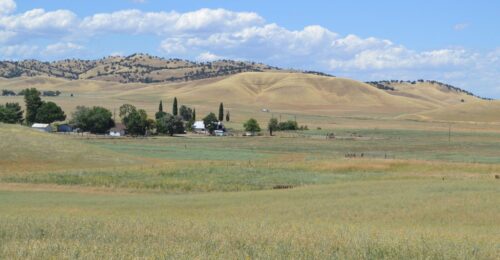
“The plan to build California’s largest new reservoir in 50 years has hit a major snag, threatening to undermine the $6 billion water-supply project and prompting outcry from supporters, including Gov. Gavin Newsom, who has called the enterprise vital for the state. Sites Reservoir, proposed in rural Glenn and Colusa counties, secured a key state approval earlier this year: a draft water right that allows the facility to draw water from the Sacramento River. Project officials, however, have determined that the draws authorized by the state could be too little to justify the reservoir’s expense, as regulators seek to limit water diversions to protect fish and other water users. Sites Project Authority Executive Director Jerry Brown, who is overseeing the endeavor, estimates that constraints imposed by the water right, which include numerous conditions for when river flows can be extracted, could reduce the amount of water that the reservoir yields by as much as 50%. … ” Read more from the San Francisco Chronicle.
Cyclosporiasis outbreak: How a parasite spawned chaos for FDA, Taylor Farms
“The U.S. Food and Drug Administration had apologized, Taylor Farms said in a post on X. An agency lab test linking its produce to the country’s worst cyclosporiasis outbreak in decades was a false positive. Not only that, but the government still hadn’t produced a laboratory result connecting the company’s lettuce to the outbreak. The statement, issued Sunday, was a remarkable bid to give the impression that regulators — who had said significant evidence linked Taylor Farms iceberg lettuce to the public health crisis — had made key scientific errors. By Tuesday, the X post was deleted. That was after a rebuke by the FDA, which denied ever apologizing to the company. The agency defended its work and explained that the incorrect lab result would only have expanded an existing recall — it didn’t clear Taylor Farms. The FDA also sought to clarify other statements from Taylor Farms that experts have said are misleading. … ” Continue reading at the Monterey Herald.
Researchers study potential of agave crop
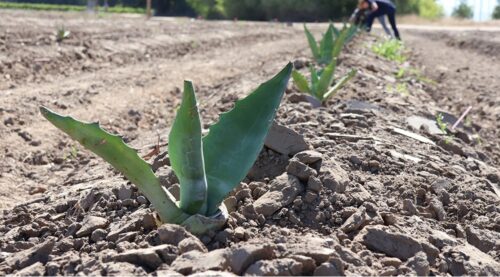
“On a hot morning in June, dozens of agave plants took root in the soil of Madera County. The plant has long been grown in parts of Mexico to make tequila and mezcal. But in California, it’s only more recently gotten attention from Central Valley farmers seeking options as they face water shortages and the prospect of fallowing land. Researchers say agave could be a useful option for farmers with limited water supplies. The drought-resilient crop has demonstrated commercially viable yields with less than a tenth of the water usage needed for many tree crops. To help farmers, experts are ramping up research on cultivating agave in California and exploring various potential markets for the crop. For starters, experts said making agave a California crop requires understanding what practices traditionally used to grow the plant may need to be altered for the state’s environment. Madera Community College worked with researchers to develop and begin offering an agave growers course last fall. In June, volunteers at the college planted 20 agave varieties in a test plot, which will feed into research efforts to better understand the succulent. … ” Read more from Ag Alert.
Potter Valley water fight gains federal attention as community seeks to preserve key infrastructure
“The future of Northern California’s Potter Valley Project remains uncertain, but the issue is drawing increased attention in Washington, D.C. During a recent episode of the AgNet News Hour, journalist and Potter Valley advocate Keely Covello discussed the latest developments surrounding the proposed removal of Scott Dam and Cape Horn Dam, along with new federal interest in preserving the region’s water infrastructure. Covello explained that the Potter Valley Project has supplied water for homes, farms and ranches throughout the Russian River watershed for decades by storing winter runoff from the Eel River for use during the dry summer months. She said the project also provides an important source of water for wildfire suppression in one of California’s most fire-prone regions. According to Covello, the latest development is that a Southern California water district has expressed interest in purchasing the dams from PG&E rather than seeing them removed. … ” Read more from AgNet West.
SEE ALSO: Keely Covello Talks Potter Valley, Water, and California’s Future with The Ag Meter, from AgNet West
How climate change could redraw California’s wine map
“The U.S. is the largest wine-producing country outside Europe, and 80% of that output comes from California. For an industry in which even subtle shifts in temperature or humidity can transform a harvest’s value, increasing extremes and unpredictability pose an existential threat. Extreme heat can kill a vine just as it can a human. As temperatures rise, so does the speed at which vines pull water from the soil. Once a plant starts losing water faster than it can rehydrate, it mounts a perilous last-ditch effort to save itself. The stomates — the parts of the leaf that control gas and water exchange — close up in an attempt to reduce water loss. Photosynthesis slows to a crawl. That can kick off further complications that, without emergency intervention, can be fatal. “It’s just like a cascade of things that start happening,” said McIntyre, who also runs the vineyard management company Monterey Pacific. “I really do compare it to a human with heat stroke.” … ” Read more from the LA Times.
As AI expands, California communities debate new data center projects
 “As California races to build the infrastructure needed to power artificial intelligence, communities across the state are increasingly weighing whether they want data centers in their own backyards. The rapid expansion of AI has fueled demand for new data centers, prompting local governments to consider proposals from developers while lawmakers debate how the facilities should be regulated. Some cities are embracing the projects. Others are putting the decision directly in the hands of voters. Last month, voters in Monterey Park overwhelmingly approved a ballot measure prohibiting the development of new data centers within city limits. More than 86% voted in favor of the ban. … ” Read more from CBS Sacramento.
SEE ALSO:
- Data Center Forecasts Keep Climbing and So Does Public Opposition. Something Has to Give, from Inside Climate News
- If you don’t hate data centers yet, boy do I have news for you, from columnist Drew Magary at SF Gate
What it takes to become a beaver coexistence professional
“After decades mapping municipal streetlights, Rick Staychock could see that artificial intelligence would soon come for his job. At 56, he decided to pivot. Now, Staychock has turned towards a field that is firmly low-fi and unlikely to be flooded any time soon: beaver coexistence. The state of California has a historically tense relationship with the furry rodent, whose dam-building pursuits can block irrigation channels, flood backyards, fell trees, and overall just become a general nuisance. For decades, state agencies labeled beavers a non-native species, and the California Department of Fish and Wildlife issued hundreds of permits every year for landowners to kill the animals, few questions asked. “California used to be a joke at the beaver conferences because it represented one of the more backward approaches to beaver management in the world,” says Andrew Manning, a beaver coexistence professional, who runs an ecological restoration business in the Sacramento area called Leave it to Beavers. … ” Read more from Bay Nature.
Making every drop count with water-efficient landscaping
“As UC Master Gardener volunteer Lynne Coffman often explains during her presentations on water-efficient landscape design, “Water-efficient landscaping is more than replacing a lawn with gravel.” Instead, it involves designing gardens that work with your environment by selecting climate-appropriate plants, using efficient irrigation systems and creating outdoor spaces that everyone can enjoy. Water has always shaped California landscapes. Today, prolonged droughts, a changing climate and growing demands on our water supply make every drop more valuable than ever. Fortunately, beautiful gardens and water conservation can go hand in hand, especially when residents have the knowledge and support to make informed landscaping choices. Since 2011, the UC Master Gardener Program of Riverside County’s Water Efficient Landscaping (WEL) Committee has partnered with Western Municipal Water District (Western Water) to help residents develop water-wise gardening skills. Through research-based education, the committee empowers home gardeners to create landscapes that thrive in California’s climate while using water more efficiently. … ” Read more from UCANR.
Snowfall decides the fate of Sierra Nevada ponds
“Most people who hike the high country walk right past them. Small pools of water sitting in granite bowls, some no bigger than a backyard hot tub, others wide enough to skip a rock across. They rarely get names on a map. They almost never get studied. A team of scientists spent four summers changing that. Their findings were published in the July 2026 issue of the journal Ecosphere, and the headline is simple enough for anyone who has ever watched a snowpack report in February. What falls on the mountains in winter decides almost everything about what lives in those little ponds by August. Christine C. Bonadonna, Mary Jade Farruggia, Steven Sadro and Celia C. Symons surveyed 30 ponds scattered across the Sierra Nevada, on both the eastern and western sides of the range. They worked between June and September from 2020 through 2023, based out of the Sierra Nevada Aquatic Research Laboratory in California. … ” Read more from Western Water.
Global warming unmakes winter in the West
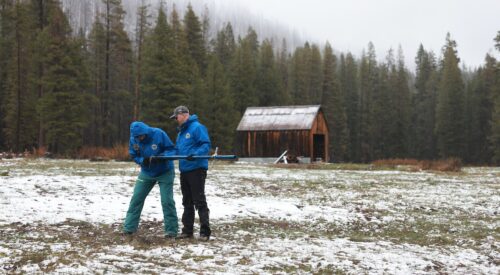
“For millions of people across the American West who rely on water from winter storms to sustain farms, towns and industries, last winter became an agonizing vigil for snow that seldom came. What little snow did fall melted much too quickly, leading to the worst snow drought on record for nearly the entire mountain backbone of the region, from northern Montana to the Sierra Nevada and the Cascades, through Wyoming, Nevada, Colorado and Utah, and into New Mexico and Arizona. It disrupted daily life and caused economic hardships, dried up streams, left reservoirs depleted and primed forests and grasslands to burn in wildfires. And if the planet continues warming at the current pace, a snow drought as severe and widespread as last winter’s could occur every third year by 2050, and nine out of 10 years by the end of the century, said a team of researchers from Montana, Wyoming and Colorado who analyzed how human-caused warming of the climate system influenced the drought. Their extreme event attribution study, published this week in the Proceedings of the National Academy of Sciences, found that global warming has already made such a drought about four times more likely today than in a climate without industrial fossil fuel emissions. … ” Read more from Inside Climate News.
Prescribed burns saved thousands of giant sequoias
“When two major wildfires burned through the Sierra Nevada in 2020 and 2021, they took thousands of giant sequoia trees with them. Without prescribed burns, thousands more would have died, according to a new study from the University of California, Davis. The study, published in the journal Nature Communications, found that giant sequoias treated with prescribed fire in the previous decade were nearly four times more likely to survive 2020’s Castle Fire and 2021’s KNP Complex Fire than untreated trees within the same groves. “Prescribed burns are effective at reducing giant sequoia mortality, even for today’s extreme wildfires,” said lead author Dan Dixon, who was a UC Davis postdoctoral researcher in Professor Yufang Jin’s lab when the study was conducted. “If the goal is protecting giant sequoias, prescribed fire is an essential tool available to managers.” … ” Read more from UC Davis.
Cal Fire tests strategies to make redwood forests more resilient to climate change
“After several years of planning, public outreach and environmental review, Cal Fire has begun the next phase of the Coastal Adaptive Management Experiment, commonly referred to as AMEX, at Mendocino County’s Jackson Demonstration State Forest. The long-term research study will evaluate several forest management strategies designed to improve the resilience of California’s coastal redwood forests to climate impacts. AMEX is part of a larger network of replicated experiments across the Sierra Nevada and coastal redwood forests, comparing treatments that mimic historic fire regimes, promote species diversity and reduce carbon loss. The research, funded through a California Forest Health Grant matched by the Demonstration State Forest Program, is designed to generate and track long-term changes in forest composition, structure and function. The treatments represent a suite of plausible management approaches that land managers may use to address both ongoing and emerging stresses on forest ecosystems. … ” Read more from Local News Matters.
In commentary today …
Advancing groundwater recharge in the Sacramento River basin: A strong technical foundation
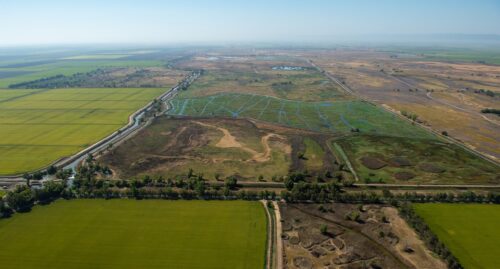
David Guy and Jim Peifer write, “Groundwater recharge is one of the most important and affordable tools available to help California prepare for dry years, improve water supply reliability and support healthy rivers, landscapes and communities. During winter storms, millions of acre-feet of water flow through the Sacramento Valley, creating opportunities to store more water underground and strengthen California’s long-term water resilience. As Jim Mayer and Michael Saunders recently wrote in Mavens Notebook (Recharge the Valley: Why California’s Future Depends on Groundwater), groundwater recharge is an essential part of California’s long-term water strategy. To help scale up groundwater recharge, Assembly Member Aguiar-Curry is leading AB 2026, which has been shaped by the SacRecharge Working Group and builds on years of technical analysis among Sacramento Valley water managers, the California Department of Water Resources (DWR), engineers, hydrologists, and other technical experts demonstrating how groundwater recharge can be expanded while protecting downstream water rights, the operations of the State Water Project (SWP) and Central Valley Project (CVP), the environment, and Tribal interests. AB 2026 will not expand water use by farms or cities. Rather it is a climate adaptation strategy designed to protect our communities and reduce shortages and conflict that will inflict economic and environmental harm. … ” Continue reading this guest commentary at Maven’s Notebook.
Dredging the Delta can prevent a catastrophe
Edward Ring, Director of Water and Energy Policy at the California Policy Center, writes, “It’s January 2027, and for the last few months, a super El Nino has already delivered torrential rains to the Pacific Coast of North America. California’s reservoirs have been releasing record quantities of water to preserve space for the next round of precipitation but their remaining capacity to absorb runoff is dangerously low. From the peaks of the Sierra, through the foothills, and across the wide expanse of the Central Valley, the land is saturated. It’s another warm winter, and there isn’t much snow on the summits. The stage is set for a cataclysm, and sure enough, it happens. Rising up from the warm ocean comes yet another Amazon sized river of moisture, pushed eastward and gathering strength with every mile. When the endless banks of swollen clouds hit the California coast they start to unload. Pushed by winds fast enough to guarantee a relentless resupply of rain but not fast enough to prevent the clouds from lingering against the ramparts of the Sierra, it rains, and pours, and then it rains and pours even more. Within days every reservoir is full and every spillway is pouring water into the Sacramento-San Joaquin river system. Levees are breached along multiple tributaries, the bypasses are filled, and still the water rises. … ” Continue reading from Edward Ring at Maven’s Notebook.
Commentary: The billionaires backing California Forever want Newsom’s help. Will he?
Tom Philp, opinion columnist for the Sacramento Bee, writes, “The billionaires behind the idea to build a city roughly the size of Oakland about 40 miles southwest of Sacramento are seeking the help of Gov. Gavin Newsom to advance the Solano County project known as California Forever. The mystery inside the Capitol is what the governor will actually do. This is not an easy political choice. Far behind in his 2018 goal to build 3.5 million new housing units throughout the state, Newsom could support this project because California Forever envisions some 400,000 new residents and new manufacturing jobs. It would be awkward for Newsom, with his not-so-hidden aspirations for the White House, to be doing huge favors for Silicon Valley billionaires backing this project and asking for very special treatment in Sacramento. “There will be no streamlining for housing unless there’s a guarantee of new jobs,” said Darrell Steinberg, the former Sacramento mayor who is among the stable of political heavyweights hired by California Forever. … ” Read more from the Sacramento Bee.
Editorial: California never
The Washington Examiner editorial board writes, “California Forever’s vision for a safe, affordable, and sustainable Bay Area community is laudable. Founded by Czech-born Jan Sramek and backed by Silicon Valley billionaires, the company bought vast tracts of Solano County farmland to build a new city under a single master plan, bypassing the region’s usual maze of restrictive zoning, rezoning fights, and neighborhood vetoes. But as the project’s recent loss of a $3.2 billion shipbuilding contract shows, developing such a pro-growth city in California is impossible as long as the state refuses to repeal its obstructive environmental permitting laws. California Forever had been courting Saronic Technologies, a defense startup that manufactures autonomous vessels, to build its proposed Port Alpha shipyard in Solano County. Located in Collinsville with direct access to San Francisco Bay and the Pacific Ocean, the shipyard would have created more than 10,000 jobs in the Bay Area county, which has the region’s highest unemployment rate. … ” Read more from the Washington Examiner.
In regional water news and commentary today …
SIERRA NEVADA
Inland salmon are back; let’s ‘Brock’ and roll
“For the first time in four years, there’s an inland Chinook salmon fishing season, and longtime area guide Kevin Brock is “super excited … it’s going to be good. Real good.” Diminished ocean numbers of the prized native game fish, caused by a combination of factors – including some very lean water years – prompted the full closure of Chinook salmon off the coast and in California’s inland rivers from 2023 to 2025 to all anglers, sport and commercial alike. But strong water years in 2024 and 2025 and stepped-up enhancement efforts by state fisheries have helped the resilient species mount a comeback: Some estimates for returning fish to the watershed (which includes not only the Sacramento but the lower American, Feather, Yuba, Mokelumne and more) are as high as 392,000. And while those numbers may not match the glory days of Chinook salmon returns in the Sacramento Valley, Brock, who’s been a guide for 33 years, says they’re close. “We haven’t seen something like this since probably … ’02, ’03,” Brock said. “… 300,000-plus fish in the river? I’m very excited. As you can tell. I can talk for an hour about it!” … ” Read more from Gold Country Media.
Goats help Nevada Irrigation District reduce fire risk one bite at a time
“Keeping vegetation under control is an important part of protecting NID’s reservoirs, canals, and other facilities. Each summer, the District brings in some hungry helpers to tackle the job: herds of goats and sheep. The four-legged crews graze around reservoirs, tank sites, and other District properties, munching through blackberry thickets, poison oak, brush, and other vegetation that can fuel wildfires. Their work helps reduce fire risk, minimize the use of herbicides, and frees up NID maintenance crews to focus on other important projects during the busy summer season. This year’s “rent-a-goat” crews worked at Cunningham Reservoir in south Nevada County, Sugarloaf Reservoir and the Snow Mountain site near Nevada City, Rex Reservoir near Rough and Ready, Union Reservoir near Smartsville, and the Timber Ridge tank site near Lake of the Pines. … ” Read more from YubaNet.
Tuolumne Utilities District hoping to receive supplemental supply from New Melones
“The Bureau of Reclamation (BOR) wants public feedback on a draft long-term water service contract with the Tuolumne Utilities District (TUD). TUD provides water service across Tuolumne County to agricultural, residential, commercial, and industrial customers. The proposed contract provides for the storage and transport of up to 6,000 acre-feet (1.95 billion gallons) of Central Valley Project water annually from New Melones. According to BOR officials, it will supply TUD from current New Melones Unit contract supplies in the Eastside Division. They added, “The district, as an in-basin contractor, has priority to this water.” The water will be delivered based on hydrologic conditions and Central Valley Project operations, either through releases from New Melones Reservoir or by reducing interim deliveries to Stockton East Water District or Central San Joaquin Water Conservation District, consistent with contract provisions. … ” Read more from My Mother Lode.
SACRAMENTO VALLEY
DWR to start gravel project for Feather River salmon
“A gravel project in the Feather River, overseen by the California Department of Water Resources, is expected to be in full swing next week as a means of preserving the local salmon habitat. According to an update by DWR, crews will pour roughly 7,900 cubic yards of spawning gravel into the river between Bedrock Park and the Table Mountain Bridge, allowing for improved conditions for the salmon to lay their eggs. “Migratory fish species such as Chinook salmon and steelhead trout rely on Feather River spawning habitats along the low-flow channel, where most spawning activity occurs,” the update from DWR said. “Because gravel doesn’t naturally flow downstream of Oroville Dam, gravel supplementation is necessary to provide sufficient spawning habitat to support existing salmonid populations.” … ” Read more from the Chico Enterprise-Record.
What comes next for Water Forum 2050: The American River Climate Adaptation Program
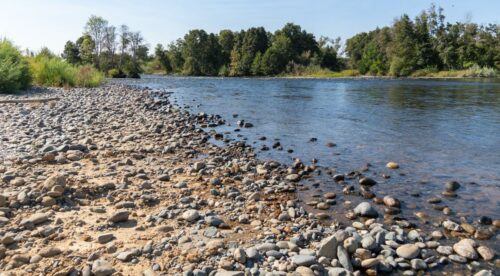 “With the Water Forum 2050 Agreement now in place, the focus turns to how the region will work together to meet the challenges ahead. The American River Climate Adaptation Program, or ARCAP, is a key component of Water Forum 2050. ARCAP offers a refined approach to managing water in the Sacramento region—one that voluntarily links agencies, infrastructure, and policies into a truly regional system, helping improve water availability when and where it is needed while supporting the health of the lower American River. Through the technical work needed to develop ARCAP, we will strive to identify, store, and manage regionally developed water for use during critically dry periods to reduce river temperatures, support fish populations, and help communities avoid water shortages. Even modest shifts in how water is managed, such as increasing the use of stored groundwater in dry years, can meaningfully improve river conditions for fish. … ” Read more from the Water Forum.
Cosumnes River stretch permanently protected
“A critical stretch of the Cosumnes River – the only undammed river on the western slope of the Sierra Nevada – is now permanently protected and slated for ecological restoration. Sacramento Valley Conservancy and Westervelt Ecological Services are celebrating the acquisition of the 204-acre Johnson Cosumnes Mitigation Bank, which fills an important gap in river frontage within the more than 51,000-acre Cosumnes River Preserve near Galt and south of Elk Grove. The preserve contains some of the finest remaining floodplain and riparian habitat in California’s Central Valley. Westervelt will own and manage the property, restoring former agricultural land into a thriving floodplain ecosystem. Planned restoration activities include lowering or removing select sections of agricultural berms to reconnect the river with its historic floodplain, creating pilot channels that support natural flow patterns, and establishing native vegetation across wetlands and riparian habitats. … ” Read more from the Elk Grove Citizen.
NAPA/SONOMA
Fungus-killing robots make their debut in North Coast vineyards
“Fungal diseases like powdery mildew are a huge challenge for wineries in California and around the world. Left unchecked, they can take a major toll on fruit quality and drastically reduce yields. Normally, growers manage these diseases by spraying vines with sulfur, copper or synthetic fungicides. But at some local wineries, they’re taking a more high-tech approach. Meet Thorvald, an autonomous, electric vineyard robot. … ” Read more from NorCal Public Media.
Discolored tap water in St. Helena appears to be clearing up, officials say
“St. Helena officials reported problems with the city’s tap water appear to be clearing up after it was discolored by loosened sediment that had accumulated in the water distribution pipes. The sediment, including iron and manganese, was dislodged Saturday, July 18, after a private tour bus collided with a fire hydrant, causing a surge of water through the system. Officials received more than 80 reports of water-quality issues by 5 p.m. Monday, July 20, the city said. To address the complications, more than 400,000 gallons of water were pushed through the system to flush out the discolored water, officials said. Public works staff then contacted customers to verify water conditions and visited affected locations to flush out any remaining discolored water — officials said fewer than six customers were still experiencing water discoloration by Tuesday morning. … ” Read more from the Santa Rosa Press Democrat.
BAY AREA
New study shows rain gardens filter chemicals out of stormwater
“A new study found that Bay Area rain gardens are highly effective at filtering harmful contaminants out of stormwater before it reaches the Bay. The study, published earlier this month by the San Francisco Estuary Institute, examined rain
samples from four San Francisco rain gardens across 15 rain events between 2022 and 2024. Twenty-one different contaminants — primarily pesticides, preservatives, pharmaceuticals, microplastics, and vehicle-derived chemicals from materials like tires — were measured in stormwater runoff as it both entered and exited the rain gardens. In many cases, the gardens successfully removed more than 90% of the chemicals. “We didn’t have a number expectation going into the study,” says principal investigator Melissa Foley. “So to see, for some of those contaminants, a 90% reduction between stormwater coming in and stormwater coming out, that was really exciting for the team.” … ” Read more from Knee Deep Times.
Zone 7 board appoints new leadership, welcomes three recently elected directors
“The Zone 7 Water Agency Board of Directors underwent its annual reorganization during its July meeting where it collectively named Director Laurene Green as its next board president. “It is an honor to serve as President of the Zone 7 Board of Directors,” Green stated in a July 16 press release. Green, a longtime Pleasanton resident, has been with the board ever since she first got elected to her seat in 2020. According to the agency, Green brings “valuable technical expertise in groundwater, water resources, and environmental engineering that support the board’s work in guiding long-term investments in water quality, water supply reliability, groundwater sustainability, and flood protection”. … ” Read more from Pleasanton Weekly.
CENTRAL COAST
Seaside supports lifting water moratorium
“Seaside City Council passed a resolution Thursday encouraging the State Water Resources Control Board to lift a moratorium on new water service connections in areas serviced by the California American Water that has been in effect since 2009. The moratorium has effectively prevented new construction on much of the Monterey Peninsula since it was put in place. For Seaside, the decision of the State Water Board may mean newfound independence for the city. “Since 1995, this is the closest we have ever come to this modifying this order,” said Mayor Ian Oglesby in a city council meeting. … ” Read more from the Monterey Herald.
Saltwater creeps in as Salinas Valley stares down a billion-dollar water fix
“Decades of heavy groundwater pumping have pushed the Salinas Valley aquifer to what Monterey County officials say looks a lot like a tipping point, with farms, city systems and thousands of private wells all on the line. Local water agencies are sprinting this summer to decide on projects that run from many hundreds of millions to roughly a billion dollars, aiming to halt seawater creeping inland and pull the underground basin back into balance. According to CBS Bay Area, the immediate problem is seawater intrusion into coastal subbasins, combined with steady groundwater declines that could leave some wells too compromised to use. A separate analysis from the U.S. Geological Survey flags “undesirable effects,” including falling groundwater levels, loss of stored water and the inland advance of salty water beneath Castroville and Salinas, which helps explain the urgency coming from local boards. … ” Read more from Hoodline.
Federal bill includes funding for Los Olivos wastewater, other local projects
“A bipartisan federal bill filled with millions of dollars for water and wastewater projects in Santa Barbara County, including the Los Olivos septic-to-sewage initiative, has passed a key committee in the House of Representatives. Rep. Salud Carbajal, D-Santa Barbara, announced that the House Transportation and Infrastructure Committee advanced the Water Resources Development Act of 2026. The bill will be considered by the full House and Senate for final passage. Carbajal said he’s proud to have the federal funding allotment in the bill to strengthen water infrastructure throughout the Central Coast. “As the bill moves toward final consideration, I will continue working to ensure this essential investment is delivered to our communities,” said Carbajal, a senior member of the House Transportation and Infrastructure Committee. … ” Read more from Noozhawk.
SAN JOAQUIN VALLEY
Riverbank family says road project left them without running water for seven months
“A Riverbank family says they’ve spent the last seven months without running water after flooding they believe was caused by a nearby road project destroyed their well, leaving them with a home they say is no longer livable. Melissa and Robert Sandoval, whose family has lived on the property near Roselle Avenue and Claribel Road for generations, say they have been caught in a bureaucratic stalemate between the City of Riverbank and Stanislaus County while searching for help. “It comes to the point: Am I going to take a shower? Am I going to eat? Or am I going to wash clothes this month?” Melissa Sandoval said. The Sandovals say their problems began in 2018 during construction of the North County Corridor project, when county crews widened the nearby intersection. … ” Read more from CBS Sacramento.
Water deliveries flow to Biola’s groundwater recharge project for the first time, a major milestone for the small community west of Fresno
“For the first time, surface water from Fresno Irrigation District’s (FID) Herndon Canal is flowing into the Biola Community Services District’s (CSD) 6-acre groundwater recharge basin. This milestone marks the completion of the Biola Groundwater Recharge Project, which enables Biola, a groundwater-dependent disadvantaged community in northwest Fresno County, to be fully groundwater sustainable. Biola CSD may be the first to reach this groundwater sustainable milestone in a critically overdrafted groundwater basin as defined by the California Department of Water Resources (DWR). Completed in 2024, the project includes a new turnout connecting FID’s Herndon Canal to the basin providing approximately 30 acre-feet of storage capacity. Together, the improvements allow Biola CSD to capture available surface water, replenish the local aquifer, and offset groundwater pumping under the Sustainable Groundwater Management Act (SGMA). “This project represents years of planning and collaboration,” said Carmen Zamora, General Manager of Biola CSD. “For a small community like Biola, having the ability to recharge groundwater with surface water is a tremendous investment in our water resilient future.” … ” Read more from the North Kings Groundwater Sustainability Agency.
Earlimart residents go with little water pressure for days
“Water woes in a small Tulare County town, as the rural community of Earlimart has been without consistent water pressure since last Thursday. But on Wednesday there was a sense of relief for some Earlimart residents, as water pressure appears to be improving. Emma Erives has lived in the small town for five years. And has been feeling the impact firsthand, “To wash dishes, to shower, to use the restroom has just become unbelievable. It’s stressful and not fair to the residents here.” Although it appears water pressure has recently been improving, some residents say they are still concerned about possible future water issues. … ” Read more from Channel 30.
City to shut off Kern River at the end of the month
“The City of Bakersfield will be shutting off water to the Kern River through town as of July 31, according to a press release issued Wednesday. The city has kept the river flowing to the Park at Riverwalk since April using its river rights above what has been needed for drinking water and other contractural deliveries. River advocates noticed a significant drop in flows at Yokuts Park on Monday, but the river was back up again by Wednesday. The fluctuations were caused by delivery changes to other river interests, according to Daniel Maldonado, Assistant Director of the Bakersfield Water Department. The city had been making deliveries to other parties, which bolstered the city’s flows. Those deliveries ended, so flows dropped. Then Wednesday, the city was moving water for another party, bringing the river back up again. … ” Read more from SJV Water.
SEE ALSO: Bakersfield reducing water releases into Kern River after extra supply runs out, from Channel 23
Riprap? No thanks. Kernville residents seek more attractive option for park’s riverfront
“Three years ago, the Sierra foothill town of Kernville was practically swept away by record-breaking floods. They’ve put the town back together again in most respects, except one — reinforcement of the banks of popular Riverside Park. Disagreement lingers over the best way to go about that. The question is aesthetics or safety; access to the river or mitigation. Back in 2023, devastating flooding through this mountain town 50 winding miles east Bakersfield overflowed the banks of the Kern River, the region’s economic lifeblood. Damage was significant. The raging water swept away the boulders that had been positioned to stabilize the banks — large, jagged rocks known as riprap, most often used on levees and freeway embankments to minimize erosion. Kern County applied for and was granted $700,000 in federal FEMA dollars to repair the bank of the town’s popular Riverside Park, where kayakers and inner tubers play — and, with any luck, also eat in the restaurants, dance in the saloons and overnight in the motels. … ” Read more from KGET.
EASTERN SIERRA
Reimagining Lower Mammoth Creek: A vision for restoration and community
“Tucked between the town of Mammoth Lakes and the upper Owens River basin in the Eastern Sierra Nevada, Lower Mammoth Creek flows through one of the world’s most stunning landscapes. People travel far and wide to visit, and the landscape is an engine that helps power California’s thriving outdoor recreation economy. However, beneath the beauty there’s a stretch of creek that has been carrying the weight of a century of man-made change and degradation. Channel straightening, historic grazing, road and trail encroachment, and unmanaged recreation have left it incised three to four feet in places, cut off from the meadows and groundwater it once nourished and leaving it increasingly vulnerable to wildfire. It is no longer functioning as a thriving piece of the global biodiversity powerhouse that is the Eastern Sierra. The good news is that research has demonstrated that this ecosystem is highly redeemable, and CalTrout and partners are committed to making that happen. … ” Read more from CalTrout.
SOUTHERN CALIFORNIA
LADWP hopes to reopen Sunset Boulevard in West Hollywood by end of week after water main break
“Los Angeles officials are aiming to reopen Sunset Boulevard by the end of the week after last week’s water main break released some 17 million gallons of water onto the streets of West Hollywood. The Los Angeles Department of Water and Power said it needs to finish repaving the street as soon as the concrete slurry that was poured into the sinkhole is cured. Then, crews will have to complete water-quality checks before reopening to traffic. LADWP workers also used chlorine Wednesday to “treat the pipe and ensure it is free of any bacteria,” according to the LADWP. Officials said that since the 36-inch water main ruptured last Thursday, repair crews “have performed complex work including pumping, repairing the 36-inch riveted steel pipe, welding the pipe, repressurizing and ensuring there are no leaks, flushing, disinfecting and water quality testing.” … ” Read more from Channel 4.
SEE ALSO: LADWP workers get closer to reopening Sunset Boulevard where water main created huge sinkhole, from the LA Daily News
San Bernardino Valley Municipal Water District board reduces property tax rate for State Water Project
“The San Bernardino Valley Municipal Water District Board of Directors unanimously voted to lower the Agency’s annual property tax rate by nearly 64%, landing at $0.04 per $100 of assessed value. The regional water agency and State Water Contractor bring supplemental water supplies from Northern California into its 353 square mile service area, providing water to 15 retail agencies who serve homes and businesses. In most years, approximately 75% of water is sourced from existing local surface and groundwater supplies, while 25% is imported from Northern California through the state’s water conveyance network to meet local water needs, a system known as the State Water Project (SWP). Each year, the Board sets the annual property tax rate after a thorough review of current State Water Project costs, debt, and long-range infrastructure needs. President T. Milford Harrison stated, “For more than 70 years, we have been careful stewards of taxpayer dollars and our region’s water future. This vote continues that legacy of making decisions that ensure reliable water for residents today and for future generations.” … ” Read more from the San Bernardino Valley Municipal Water District.
SAN DIEGO
San Diego’s tiered water rate system going down the drain. For those who conserve, you’ll be paying more.
“Most people who spend some time in San Diego understand that it’s a coastal desert city. “Desert” being the main word here. Because of this understanding, many adjust their behavior into conserving a desert’s most priceless commodity: water. People take out their green grass and plant cacti and succulents; they don’t wash their car as much; they use less water in their normal day-to-day living and chores. And up to now, those residents who use less water were rewarded by a city of San Diego water rate system in which customers who use less water paid a lower rate, and those who use more water paid more. Now, all of that is going to change. A recent court ruling against the city of San Diego and its tiered pricing system has prompted a proposed rate change that would eliminate the city’s tiered pricing system. … ” Read more from the OB Rag.
Federal efforts to combat Tijuana River crisis in limbo after Trump blocks USMCA renewal
“Tijuana River cleanup efforts led by the federal government are suddenly in limbo after the Trump administration announced it will not re-sign the United States-Mexico-Canada Agreement. The president’s decision now triggers an annual review of the trade deal, and San Diego leaders are now arguing that any renegotiated agreement should include stronger, enforceable requirements for Mexico and the federal government to address decades of sewage and toxic pollution flowing through the Tijuana River into California. “No more loopholes, no vague commitments, no more deferring responsibility while communities suffer,” said County Supervisor Paloma Aguirre, whose district includes the Tijuana River Valley, during a press conference last week in Otay Mesa on the renewed push for a USMCA agreement. … ” Read more from the Times of San Diego.
Along the Colorado River …
New Colorado River rules are coming next week, and states still can’t agree how to share water
 “Federal water officials say new rules for the Colorado River will be announced next week. Doug Burgum, secretary of the Interior, convened governors from the seven states that share its water for a virtual meeting, perhaps attempting to break the deadlock in negotiations about how to divide the shrinking river. Talks over the future of the river have been stuck at an impasse for months. Record-breaking drought, supercharged by climate change, has shrunk the river’s supply, and the states that use it cannot agree on how to rein in demand. Without a seven-state consensus about how to share the pain of water cutbacks, the federal government is expected to release its own plan. Earlier drafts of that plan showed big cutbacks to the amount of water sent to cities in the Phoenix area. … ” Read more from KJZZ.
Historically low water level in two crucial US reservoirs threatens water and power for millions
“The combined water level in two of the United States’ biggest reservoirs, Lake Powell and Lake Mead, has fallen to a historic low, in what experts are calling a significant moment in the Colorado River crisis — threatening a water system that supplies tens of millions. On July 12, Lake Powell was at 3,524 feet and Lake Mead was just under 1,043 feet, breaking a record set in March 2023, according to an analysis published by five Colorado River experts last week. Together, the two reservoirs haven’t been this low since 1957, during the construction of the Glen Canyon Dam, before Lake Powell even existed. It’s “a milestone in the history of water storage in the Colorado River Basin,” said Jack Schmidt, director of the Center for Colorado River Studies at Utah State University and an author on the analysis. The record reveals “the seriousness of the uniquely small amount of water that is presently stored in the basin’s reservoirs,” he added. … ” Read more from CNN.
Could Congress help save Lake Mead? That may require emergency cash
“As Lake Mead begins its nosedive toward historic lows, a bipartisan group of 12 Western representatives in Congress is calling for emergency funding to help fund solutions. One of the officials who sent a letter to House leadership on Wednesday is Rep. Dina Titus, D-Nev., who said in a phone interview that the measure is in direct response to a record-low water year. “This is an emergency,” Titus said. “And it’s not unprecedented. Some money came out of the Inflation Reduction Act to do this, and we certainly feel like water security is a part of national security.” In 2022, the Inflation Reduction Act provided $4 billion in federal funding to help solve the Colorado River crisis — a number that Titus says is a fair estimate for what lawmakers would like to see dedicated to it again. … ” Read more from the Las Vegas Review-Journal.
How we hold on to water in the Colorado River basin
“The Colorado River Basin is facing one of the driest summers on record. Snow that came too little, too late—or not at all—has left water supplies unprepared for the dry season. Throughout the West, communities are grappling with water shortages, wildfire risk and the growing impacts of a hotter, drier climate. In a summer like this, the work doesn’t change—but the urgency does. Many of the solutions are already in motion, shaped by years of collaboration across the basin. Across the Western U.S., TNC staff and partners are stepping up efforts to protect our forests, conserve water and help balance water needs for the communities, businesses and wildlife that need it most. “I think what gives me hope is that we already have the technical solutions,” says Nancy Smith, conservation director for TNC’s Colorado River program. “Now it’s really about doing what people already know how to do well, which is sit down, listen to each other, figure out how these technical solutions can be applied in specific ways and specific places that work for individual communities.” … ” Read more from The Nature Conservancy.
After debate, Arizona Water Bank will make cities whole during Colorado River cutbacks
“The Arizona Water Banking Authority told city utilities around the Valley that it will use its stored water to make them whole in the event of cutbacks to their supplies from the Colorado River. The policy, which will be in effect for a year, comes after cities publicly asked the Water Bank for clarity on how much water they could expect to get during times of shortage. The cities and the Water Bank had been going back and forth about how much water should be distributed. Now, with Colorado River cuts imminent, there’s an answer. Since the late-1990s, taxpayers have been funding a program to store excess Colorado River water underground, with the idea that it could be used as a backup in times of shortage. Now, that shortage is here. The Colorado River does not have enough water to fully meet demand across the seven states that use it. … ” Read more from KJZZ.
ASU researchers contribute to Arizona’s quest to sustain aquifer
“According to a report recently released by Arizona’s three state universities, most of the precipitation that falls in the state is evaporated back into the atmosphere, underscoring an urgent need to find more efficient ways to capture and retain water. “Based on the study, we realized that evapotranspiration amounts to 95% of precipitation, so basically the large majority of our precipitation goes back into the atmosphere,” said Giuseppe Mascaro, Arizona State University’s lead researcher for the project. “So now, capturing somehow a small portion of the water that does not evaporate becomes critical — even a tiny little percent relative to what we have available is a lot,” he said. The report stems from the Arizona Tri-University Recharge and Water Reliability Project, a collaborative effort composed of 40 faculty members, postdoctoral scholars, and graduate and undergraduate students across the state. It was created and funded by the Arizona Board of Regents, at the request of the Arizona Department of Water Resources, in 2023. … ” Read more from Arizona State University.
Arizona tribal agriculture generates over $750 million in total economic output, new analysis finds
“Tribal agriculture contributed $753.3 million in total economic output and directly supported more than 2,300 jobs statewide in 2022, according to a first-of-its-kind analysis examining the economic footprint of Arizona’s 22 federally recognized tribes using data from the most recent agricultural census. The report, “Tribal Agriculture in Arizona: An Economic Contribution Analysis” was conducted by Cooperative Extension economic analysts in the University of Arizona College of Agriculture, Life, and Environmental Sciences and was supported by the Indian Land Tenure Foundation and the Native American Agriculture Fund. Arizona’s Indigenous communities have practiced agriculture for thousands of years, developing farming systems grounded in traditional ecological knowledge, water management and biodiversity. These practices remain central to tribal economies, cultural identity and food sovereignty today, yet the overall economic contribution of tribal agriculture across the state has received little study. … ” Read more from the University of Arizona.
City of Scottsdale spending $8.25 million on water from Harquahala Valley
“Uncertainty remains over how much Colorado River water Arizona will be getting next year as negotiations between Western states continue. Arizona will likely be getting less, but how much less is unclear. This means cities across the state are getting creative in how they will get additional water sources, and that includes the City of Scottsdale. The city gets about 70% of its water from the Colorado River, which is a higher percentage than other Valley cities. For example, in Phoenix it’s about 40%. This month, the Scottsdale City Council approved a plan to spend $8.25 million on water from the Harquahala Valley. It’s west of Phoenix and south of Tonopah. The purchase includes millions of gallons in the form of long-term storage credits, which essentially is like a water savings account. Arizona’s Family spoke to Sarah Porter, the director of the Kyl Center for Water Policy at ASU, about the concerns she has. … ” Read more from Arizona Family.
Beavers in Las Vegas? A secret garden in Sin City spotlights river restoration success
“On the eastern edge of the Las Vegas Valley sit hundreds of acres of watery wetlands. A secret garden of sorts, the Clark County Wetlands Park seems like stepping into another world. The air slightly cools as it drifts through tall meadow grasses and gurgling streams. Decades-old Cottonwood and Mesquite trees dot the landscape, offering shade. The Park’s 210-acre Nature Preserve houses miles of pathways for hiking, biking, and birdwatching. On any given day you might come across one or more of the over 300 species of birds and 70 species of mammals that live here, including coyotes, bobcats, and yes, even beavers. Suffice it to say, this is not your average Las Vegas tourist attraction. … ” Read more from the Nevada Current.
Utah: Rain offers relief, but little help for reservoirs during drought
“Utah’s recent storms are bringing much-needed rain to drought-stricken areas, but water experts say the precipitation is doing little to replenish the state’s reservoirs. While the rain has provided temporary relief and reduced the need for outdoor watering, much of the water is absorbed before it can reach streams and reservoirs, according to the Utah Division of Water Resources. “It reduces demand, but it doesn’t increase supply,” said Laura Haskell, drought coordinator for the division. After extended dry conditions, thirsty soils and vegetation soak up much of the rainfall before it can contribute to water storage. “They have a lot of debris in them,” Haskell said of recent rainstorms. “They get soaked up by the ground, by the vegetation and sort of disappear.” … ” Read more from KSL.
Aurora considers penalties for Niagara Bottling over drought water use
“City officials are contemplating consequences for its largest water consumer, Niagara Bottling, which has not yet reduced its consumption despite drought restrictions imposed citywide requiring a 20% reduction in use. While the bottling plant has not yet violated the drought restrictions, the facility is on track to use more water than its annual allocation unless consumption slows down, according to Shonnie Cline, director of internal and external affairs for Aurora Water. Aurora Water officials met with the city council in a closed meeting on Monday to discuss next steps. Cline said the city is working with Niagara to address the issue, but she couldn’t provide many details because the conversation took place in a council executive session, which is closed to the public. Cline said time is of the essence to address the water use. … ” Read more from the Aurora Sentinel.
The Supreme Court shrunk clean water protections in the West. Colorado and New Mexico are restoring them
“In dry, western Colorado, near the town of Glade Park, a high-elevation meadow is surrounded by aspens and firs. The grass is surprisingly bright green. That’s a clue, said Abby Burk: there’s water here. But at first, it’s not apparent. “There are some wetland plants that are here that let us know – it’s kind of like being a sleuth,” said Burk, who works for Audubon Rockies, which advocates for birds and their habitats. We comb through the brush, into a clearing and spot it. A tiny stream glitters in the sunlight. The trickle is barely audible over the buzz of a fly and birds chirping. It might dry up after more summer heat. Burk, who lives not too far from this wetland, knows this place is more than meets the eye. “This is a pretty wet spot, and wildlife know that, as well,” she said. “They come here for their groceries if you will.” … ” Read more from KUNC.
In national water news today …
Environmental groups sue feds over blanket permit to fast-track pipelines
“A coalition of environmental advocates sued the U.S. Army Corps of Engineers on Wednesday for issuing a nationwide permit that fast-tracks the approval of oil and gas pipelines, arguing the decision endangers rivers, streams and wetlands across the country. Led by the Center for Biological Diversity, the coalition filed the suit in District of Columbia federal court challenging the Jan. 8 approval of “Nationwide Permit 12,” which the Corps estimates would be used to approve up to 3,700 projects a year, or 18,500 pipeline projects over its five-year duration. According to the coalition, the permit authorizes a streamlined process for oil and gas pipelines without the comprehensive environmental review usually required under the Clean Water Act. The process removes requirements for public notice and often requires no further involvement from the Corps. … ” Read more from the Courthouse News Service.

