
Several news sources featured in the Daily Digest may limit the number of articles you can access without a subscription. However, gift articles and open-access links are provided when available. For more open access California water news articles, explore the main page at MavensNotebook.com.
On the calendar today …
- WORKSHOP: Draft Guidance on Designating Tribal Beneficial Uses beginning at 9am. Staff of the State Water Resources Control Board (State Water Board) will hold a State Water Board workshop and accept oral comments on July 22, 2026, regarding the Draft Guidance on Designating Tribal Beneficial Uses. The Draft Guidance on Designating Tribal Beneficial Uses is intended to support consistent and meaningful implementation of Tribal Beneficial Uses (TBUs) across the state. The workshop will also include presentations from California Native American Tribes and Regional Water Boards highlighting progress made to date in designating Tribal Beneficial Uses. Click here for the notice. Click here for the agenda.
- MEETING: Delta Conservancy Board Meeting from 9am to 1pm. Agenda items include Ecosystem Restoration and Climate Adaptation Program Update, Community Enhancement Program Update, Delta Carbon Program Update, Consideration to Authorize Phase II Funding and of Amendment to Scope of Nature Based Solutions: Wetland Restoration Program Agreement for Wetland Mosaic Landscape on Webb Tract Project; Consideration of grant guidelines and solicitations; and Delta Conservancy 2026 Implementation Plan Status Update. Click here for the agenda.
- WEBINAR: The Drought Data Dashboard Virtual Demo from 1oam to 11am. Join us for a demonstration of the Drought Data Dashboard, or D³. D³ is an interactive mapping tool that allows users to view, analyze, and customize the display of key drought indices and climate variables across the contiguous U.S. The dashboard features gridded drought metrics as well as measures of precipitation, temperature, vapor pressure deficit, snowpack, streamflow, and vegetation health. Global Historical Climatology Network (GHCN) station data and U.S. Geological Survey streamgage data are also available. All datasets are calculated daily and may be aggregated by watershed, state, tribal land area, and county boundaries. Users can select from a variety of timescales for each data layer, set the climatological reference period, and even create custom blends of multiple drought indices. The dashboard’s export features allow users to download map images and raster data for their selected data layers. Created by the Montana Climate Office, D³ is an expansion of the Upper Missouri River Basin Drought Indicators Dashboard. The Dashboard is a collaboration across academic, state, and federal drought monitoring programs. Click here to register.
- WEBINAR: Conserving California’s Iconic Waters: The Future of Lake Tahoe, the Salton Sea, and Clear Lake from 12pm to 1pm. California is home to globally unique water bodies that are beloved, biodiverse, and under threat. Join us for a virtual visit to three of these lakes: Tahoe, Salton Sea, and Clear Lake. We’ll check in on their environmental health, outline work under way to protect and restore them, and discuss challenges and opportunities to help these lakes thrive into the future. Join Secretary Crowfoot for what promises to be an informative and uplifting discussion. Click here to register.
- SoCAL WATER DIALOG: Southern California Water Dialogue – Can Sharing Water Solve Western Shortage and Funding Challenges? from 12pm to 1:30pm. The Water Dialogue will delve into two recent multi-party water-sharing agreements and discuss what they mean for water suppliers and customers in the region and across the West. The first project is an exchange agreement between SDCWA, Eastern MWD and Western MWD to transfer and bank surplus water supplies within the Metropolitan service area. The second agreement brings together six water suppliers (Metropolitan, SDCWA, Southern Nevada WA, Arizona DWR, CAP and the Salt River Project) that have signed a memorandum of understanding with the Bureau of Reclamation for interstate water exchanges that will allow cost and water-sharing for existing and new supplies. Click here to register.
- HYBRID: Closing the Gap Between Analytics and Action from 1pm to 3pm. Water agencies are collecting more data than ever, but collection isn’t the hard part — trust is. Whether the goal is billing accuracy, conservation program evaluation, leak detection, or state reporting, data analysis only matters if the people using it believe the numbers. Join the California Data Collaborative in-person at Eastern Municipal Water District or online for an event featuring speakers on data for water operations. This webinar brings together practitioners from across the water sector to share how they’re building confidence in their data and putting it to work. Sessions are drawn from real agency experience, highlighting what’s working, what broke along the way, and what it actually took to get from raw meter reads to informed decisions. Click here to register.
In California water news today …
Will the “super” El Niño fill Tulare Lake? A Fresno engineer thinks it’s almost certain
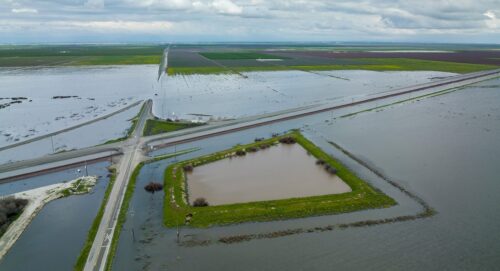
Josh Baar / DWR
“El Niño is coming. Of that, scientists seem sure as ocean temperatures continue to heat up. Warmer ocean water fills the atmosphere with moisture, which can ride the jet stream into California as massive storms. Or not. Weather is such a tricky beast. Regardless of whether this pattern becomes a “monster,” “Godzilla,” “Jurassic,” or just plain vanilla “super” El Niño, Fresno Engineer John Ennis has found an historic quirk that he believes can result in a very specific outcome in the San Joaquin Valley. There is a nearly 100% correlation between a Relative Oceanic Niño Index of level 2 and flooding on the old Tulare Lake bed, according to a paper Ennis wrote. … ” Read more from SJV Water.
SEE ALSO: As North America grapples with destructive wildfires, ‘super’ El Niño may offer hope, from the LA Times
San Joaquin Valley Watershed Studies: A roadmap for a changing climate
“The San Joaquin Valley Flood-MAR Watershed Studies, recently released by the Department of Water Resources (DWR), evaluated potential climate change impacts by 2050 on the five main tributary watersheds to the San Joaquin River (the Calaveras, Stanislaus, Tuolumne, Merced, and Upper San Joaquin,) and how specific water management strategies like Flood-Managed Aquifer Recharge (Flood-MAR) may mitigate these impacts. The Watershed Studies are a novel approach to modeling climate change impacts at the watershed scale, from precipitation trends in the upper watershed to groundwater behavior beneath the Valley floor. While climate change presents a unique web of challenges to the San Joaquin Valley’s groundwater supplies, flood risk, and ecosystem health, the watershed studies show how coordinated interventions can offer a sustainable way forward. … ” Read more from Sustainable Conservation.
Metropolitan to begin wetland restoration in the Sacramento-San Joaquin Delta
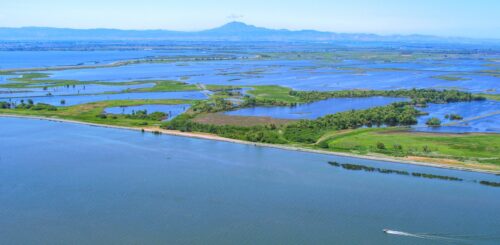
“To address ongoing risks to water supply operations and reinforce its commitment to sustainable land management, Metropolitan’s Board of Directors approved last week construction and restoration of approximately 2,800 acres of wetlands and upland habitat on district-owned land in the Delta. The wetland restoration is part of a larger project to transform Webb Tract, a Metropolitan-owned island in the Delta, from conventional agriculture to a multi-beneficial landscape designed to reverse subsidence and reduce flood risk, capture planet-warming carbon dioxide, and enhance the local ecosystem for migratory birds and local species. “While members of our board carefully weighed further investments in the Webb Tract project during our deliberations, there is strong consensus that stabilizing the ecosystem in the Delta is paramount to also stabilizing our deliveries of water from Northern California,” said Metropolitan Board Chair Adán Ortega, Jr. “The Delta is not the source of our water supplies, but it is the source of our common challenges. The investment in Webb Tract reflects our hope to see longer-term benefits.” … ” Read more from the Metropolitan Water District.
Eyes in the wild: A River Partners wildlife journal – summer edition
“Over the past year, River Partners has provided a glimpse of the wildlife species that our science and operations staff have seen in the field as they restore California’s once-flourishing riverways. Summer in California is increasingly hotter and drier, with more intense heat waves. Using the wildlife featured in “Eyes in the Wild” over the last year, we’ll journey through the state to see how these species manage, use, and survive the heat of California’s summer and explore how River Partners helps them thrive in restored habitats. Beginning in the water, we have what was once the landscape’s most vital architects, beavers, like this one seen cruising along in the San Joaquin River within the 7,500-acre San Joaquin River National Wildlife Refuge, where River Partners restored around 2,500 acres of native habitat. After nearly being wiped out during the 19th-century fur rush, these industrious “ecosystem engineers” are finally rebounding. When River Partners and other like-minded conservation organizations restore the beaver’s habitat along rivers and other waterways, we’re not just saving a species; we’re helping to repair the water table. … ” Read more from River Partners.
Feds determine that San Francisco Bay’s white sturgeon is an endangered species—but refuse to protect them
 “After a twenty-month delay, and in response to a court order, the U.S. Fish and Wildlife Service (Service) has determined that San Francisco Bay’s White Sturgeon warrant protection as a listed species under the federal Endangered Species Act. The agency based its decision on extensive evidence of the precipitous decline of White Sturgeon populations in the San Francisco Bay estuary, as initially documented by San Francisco Baykeeper, the California Sportfishing Protection Alliance, and Restore the Delta. In its determination, the Service cites altered freshwater flows, harmful algae blooms, and habitat degradation as factors in this decline. However, in spite of its finding that the species meets all the criteria for listing as an endangered species, the Service has declined to add White Sturgeon to the official endangered species list. As justification, the agency reports only that the listing is precluded by unspecified “higher priority listing actions.” … ” Read more from the San Francisco Baykeeper.
San Joaquin salmon restoration bill advances
“A bipartisan bill that would provide an additional $500 million for the San Joaquin River Restoration Program moved one step closer to becoming law after advancing out of the Senate Committee on Energy and Natural Resources on July 16. The legislation, introduced by Sen. Alex Padilla, D-Calif., and co-sponsored by Sen. John Hoeven, R-N.D., would raise the federal funding cap for the San Joaquin River Restoration Settlement Act while also increasing authorized funding for improvements to the Friant Division canal system. According to Padilla’s office, the bill is intended to support the long-term restoration of Chinook salmon to the San Joaquin River while helping reduce or avoid water supply impacts for agricultural users served by the Friant Division of California’s Central Valley Project. … ” Read more from the National Fisherman.
Redesigning farmland through community collaboration in California
“California is experiencing major changes in how farmland is used as recent policies seek to protect groundwater resources. These changes are reshaping both the landscape and the lives of rural residents, especially in communities like Fairmead in Madera County, which is surrounded by water-intensive almond orchards. In Community Science’s special collection on Transdisciplinary Collaboration for Sustainable Agriculture, Katrak-Adefowora et al. [2026] describe a project that engaged Fairmead residents and farmers in redesigning a small almond farm into a landscape that reflects multiple community priorities. The new landscape includes a basin that captures stormwater to reduce flooding and help replenish groundwater, native plants that improve habitat, and a walking path for community recreational use. Community members and farmers were engaged through workshops, outreach, and educational activities, with the project team remaining flexible and responsive to local input. … ” Read more from EOS.
Why healthy soils matter more than ever
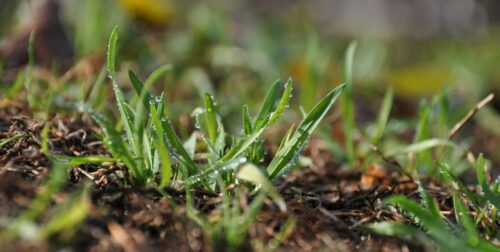 “Protecting soil health is essential to achieving the United Nations Sustainable Development Goals (SDGs) since it has direct impacts on food and water security, ecosystem health, and socio-economic activities. However, human-induced drivers and pressures heighten the susceptibility of soils to degradation. A new article in Reviews of Geophysics explores the drivers, impacts, and efforts to combat soil degradation. Here, we asked the authors to give an overview of soil degradation, practices being implemented to combat it, and what questions remain. What is soil degradation and why is it important to study? Soil degradation refers to the deterioration of soil quality resulting from unsustainable human activities most commonly associated with agricultural, pastoral, industrial, and urban land use. It involves a dynamic reduction in the physical, chemical, and biological properties of soil that diminishes its structural integrity, functional capacity, and overall resilience over time. … ” Continue reading from EOS.
Do’s and don’ts for interweaving Traditional Knowledge and Western science
“Malissa Tayaba, Vice Chair of the Shingle Springs Band of Miwok Indians, comes from ancestral villages on the Sacramento, American and Feather rivers. “I’m really trying to get across to people who the Tribe is, where we’re from, and why land and Mother Earth are so important to us,” she said. “How we use waterways is our lifeway―it’s not an option, it’s something we need,” she said. Tribal connections with waterways go both ways. ““We believe Mother Earth is alive, we believe that water is alive―we can actually feel what they need.” Tayaba spoke at the June 30 kickoff of the three-part Interweaving Traditional Knowledge Roundtable Series, which brings together Tribal Elders and leaders, agencies, and scientists to explore working together to steward lands and waterways. California has required state agencies to consult with Tribes on managing sites that are sacred or vital to their cultural traditions and heritage since 2011. … ” Read more from Robin Meadows at Maven’s Notebook.
H2O-From-Air Technology to supply water-stressed suburbs
“The climate-driven water crisis is becoming a housing crisis as builders increasingly face challenges in securing sufficient water supplies for new residential developments. Now Japanese water infrastructure company Kubota Corp. aims to provide developers of suburban subdivisions with an unlimited source of water through a technology that extracts H2O from the air. In a deal announced Tuesday, Kubota is buying atmospheric water harvesters made by Delaware-based AirJoule LLC to be initially deployed in California and Texas. Both states require developers demonstrate to that they have secured long-term access to water supplies to receive approval to build. In water-stressed areas, clusters of AirJoule harvesters could be integrated into Kubota’s water recycling systems to serve as decentralized neighborhood water plants for new subdivisions. “Water is becoming one of the most critical infrastructure challenges of the decade with many communities struggling to secure reliable water supplies because of drought or depleted aquifers,” said Diego Ayala, president of Kubota Water and Environment USA. … ” Continue reading at Bloomberg.
Your next budget problem may not be electricity—but your water bill
“Brace yourself for higher water bills—and soon. Within a decade, millions of Americans could face monthly water bills so high that they’ll become unaffordable. Water rates have already been rising three times faster than inflation. However, hotter and drier conditions could exacerbate current strains on aging infrastructure, leaving more than one-third of U.S. households grappling with unaffordable bills, according to a study led by Stanford University researchers that was published earlier this month. “If you’re already struggling to pay your water bill, and now it’s going to be double what it was before because of climate change, you’re going to really have a problem making ends meet,” Sarah Fletcher, the study’s senior author and an assistant professor of civil and environmental engineering at Stanford, said in a video about the results, which were published in Nature Sustainability. … ” Read more from Inc.
What gets measured, gets managed. So why aren’t we measuring California’s data centers?
 “This year, SYRCL’s legislative priorities have a new addition: data centers. We’re working on this with our partners at the California Coastkeeper Alliance (CCKA) — a statewide network of waterkeeper and river conservation groups working to protect California’s waterways. Through our legislative program, SYRCL advocates each state legislative session for policies that safeguard our rivers and water supplies — and this year, bringing transparency to data center water use is one of our top legislative priorities. Every time we use an AI tool or save something to the “cloud”, we’re plugged into a physical network of data centers that can guzzle massive amounts of water to stay cool. These facilities power our digital lives. Their toll on our rivers and groundwater has stayed hidden. Until now. … ” Read more from the South Yuba River Citizens League.
SEE ALSO: A growing political reckoning is coming for data centers, POLITICO Poll shows, from Politico
Solano County residents shrug off California Forever loss of $3 billion contract
“When California Forever lost a $3 billion contract for its planned shipyard last week, elected officials, unions and labor groups saw it as a huge loss. Solano County residents have a different perspective. Saronic, which builds AI-enabled autonomous surface vessels (“sea drones”), announced last week that its planned $3.2 billion, 10,000-employee Port Alpha project will be built in Texas. California Forever had hoped to win the project for its proposed Solano County shipyard. California Forever’s aspirations to create a Solano County city of up to 400,000 residents were so unpopular with residents in 2024 that the billionaires behind it pulled a related ballot measure. Undiscouraged and with more money and entitlement than God, the mostly tech billionaires pivoted to promising to build a shipyard in Collinsville. … ” Read more from The Reporter.
Californians support strong environmental policy…to a point
“Californians are adjusting their priorities around the environment in ways that reflect changing environmental and economic conditions in the state. Survey analyst Lauren Mora outlined this recalibration in last week’s briefing for PPIC’s Californians and the Environment survey, which explores topics ranging from the cost of environmental laws to support for gubernatorial candidates. California residents chose wildfires (19%) as the most pressing environmental issue facing the state, followed by climate change (16%). Mora noted that wildfires that have devastated the state have replaced an earlier focus on water supply during drought years. Likely voters value the stance the next governor takes on environmental issues, with 85% asserting that a candidate’s position on the environment is important to their vote. Looking toward the November race for governor, Mora said that about 6 in 10 likely voters would choose Xavier Becerra, the Democratic candidate, over Steve Hilton, the Republican candidate. Partisans squarely support their party’s candidate (93% Democrats; 90% Republicans) while independents (60%) lean toward Becerra. … ” Read more from the PPIC.
In commentary today …
Why are California cities still paying for corporate pollution?
Sean Bothwell, executive director of California Coastkeeper Alliance, writes, “California’s cities spend hundreds of millions of taxpayer dollars each year to manage their clean water obligations, yet violations persist with no clear end in sight. Stormwater pollution is ubiquitous, and commercial, industrial, and institutional properties are a significant and unaddressed part of the problem, contributing between 35–60% of stormwater pollutants. Despite their substantial contribution, these corporate properties have never been required to address the pollution they generate. Meanwhile, cities and counties remain responsible for meeting water quality standards through municipal stormwater permits, despite having no control over a significant source of pollution entering municipal storm drains. … ” Read more from Capitol Weekly.
In regional water news and commentary today …
NORTH COAST
Yurok-led Klamath River restoration to temporarily limit rafting near McConnell Bar
“Recreational activities are temporarily restricted along a 1.25-mile stretch of the Klamath River because of an upcoming river restoration project, according to the Klamath National Forest. The restoration project, led by the Yurok Tribe and its partners, covers the area from the confluence of Humbug Creek downstream to the Klamath River’s confluence with Brushy Creek. The work is intended to repair damage caused by historic mining practices and the 2022 McKinney Fire. Heavy rainfall after the fire triggered flooding and debris flows that carried large amounts of sediment into the Klamath River, reducing water quality, degrading fish habitat and limiting river access. … ” Read more from KRCR.
SACRAMENTO VALLEY
Tehama County Supervisor steps back in approving groundwater fees
“After a marathon of almost seven hours – split between two separate meetings that morphed into each other – Tehama County Supervisors voted to take a step back in approving the proposed fee structure for residential and agricultural groundwater fees. The supervisor’s chamber was packed with standing room only, along with in the side room and the adjoining hallway. Most of the meeting was dominated by angry, frustrated farmers and locals who spoke against what they felt was an unfair overreach against their rights as property owners, particularly regarding water from their wells. They were also incensed about a perceived lack of transparency about the process. Many in the audience said they only knew about the opportunity to protest the fee hikes because of what they saw on Facebook, or the efforts of the Tehama County Farm Bureau. … ” Read more from the Appeal Democrat.
California begins $2.37 million salmon spawning habitat restoration on Feather River in Oroville
“California is beginning construction of a habitat restoration project along the Feather River to improve spawning conditions for Chinook salmon. The California Department of Water Resources (DWR) announced the construction of a salmonid habitat improvement project between the Table Mountain Bridge and Bedrock Park in Oroville in Northern California’s Butte County. Crews will be mobilizing heavy equipment and supplies in the week of July 20, with in-water work expected to begin in the week of July 27. The $2.37 million project is largely funded by a General Fund Local Assistance Grant for Habitat Restoration from the Facilitating Improvement of Systemwide Habitat Program that is supported by Assembly Bill 179 (2022), according to the DWR. … ” Read more from edhat.
The Sacramento region has a climate change resilience plan—now comes the hard part
“California’s water challenges are becoming more interconnected, more unpredictable, and harder to solve through traditional approaches. This year provided another reminder. After winter storms delivered significant precipitation across parts of the state, record-hot March temperatures rapidly erased much of the Sierra snowpack weeks ahead of schedule. Reservoirs filled early, runoff arrived sooner than expected, and water managers were again forced to navigate the growing tension between flood protection, water supply reliability, ecosystem health, and increasingly volatile weather patterns. But the larger lesson is not simply that climate change is accelerating. It is that climate impacts no longer fit neatly within agency boundaries, individual river systems, or single-focus solutions. That reality drove development of a new Resilience Plan for the American, Bear, and Cosumnes watersheds—one of California’s first efforts to approach climate adaptation across interconnected watershed systems at the scale they actually function. … ” Read more from the Regional Water Authority.
Sacramento residents urge flood board to reject proposed Pocket levee fence
“The Central Valley Flood Protection Board will consider whether to approve a new cross-levee fence at its Thursday meeting, a proposal some residents say threatens Sacramento’s vision for a mixed-use trail. The project is on the left bank of the Sacramento River in the northwest corner of the Pocket neighborhood. Requested by Leo Dy-Ragos and Julie Pham, it is one in a series of cross-levee fences that have stirred controversy in Sacramento. Some residents argue the levee belongs to riverside property owners, while others say levee encroachments conflict with plans for the Sacramento River Parkway. The proposed 17-mile, multiuse trail would run south along the Sacramento River from its confluence with the American River to the community of Freeport. The parkway was first envisioned in a 1975 master plan. … ” Read more from the Sacramento Bee.
What to know about the elevated levels of E. coli at Lake Natoma
“Lake Natoma visitors looking for relief from the heat may want to reconsider swimming in the water after recent samples continue to show high levels of E. coli at the Black Miners Bar Swim Area and Nimbus Flat North Beach. For the past five weeks, E. coli levels at parts of Lake Natoma have exceeded the threshold that the Environmental Protection Agency considers safe in recreational waters. The latest samples show that Black Miners Bar Swim Area is more than five times the limit, while Nimbus Flat North Beach is more than three times the limit. The Central Valley Water Board collects water samples at Lake Natoma on Tuesdays from mid-May to October. Results are posted online on Wednesdays. … ” Read more from PBS Abridged.
Yolo County declares local emergency over threat of invasive golden mussels
“Yolo County’s Board of Supervisors declared a local emergency Tuesday in response to the threat of invasive golden mussels spreading through the county’s waterways, officials announced. Yolo County authorities confirmed June 25 that the invasive freshwater mollusk, native to Asia, had been found in county waterways connected to the Sacramento-San Joaquin Delta, according to the California Department of Fish and Wildlife. The bivalve species was first detected in the Delta on Oct. 17, 2024, and has rapidly proliferated since, prompting emergency declarations last month in Sacramento, Kern and San Joaquin counties. … ” Read more from the Sacramento Bee.
NAPA/SONOMA
St. Helena residents still dealing with brown tap water after bus hits fire hydrant
“St. Helena is trying to clear up its water with dozens of taps coming out brown for days. “This one was pink! This one is really bad,” said Ryan Crow-Enos. Ryan Crow-Enos is showing us his young daughter’s clothing, stained by the brown water that was coming out of his St. Helena pipes on Sunday. The video doesn’t do it justice since what was solid white is now tinted, almost a brownish red. “We did a load of laundry yesterday morning and it stained all of her clothes. It’s like brown, really nasty, really nasty. These are just beyond repair though, which is a real loss because she’s growing out of clothes real fast,” says Crow-Enos. … ” Continue reading from ABC 7.
BAY AREA
Hayward approved a massive data center. Then it rewrote the rules
“In May 2025, the Hayward Planning Commission, without a City Council vote, approved a “hyperscale” data center by STACK Infrastructure — a 310,000-square-foot facility with an electrical capacity equivalent to providing power to approximately 76,000 homes simultaneously. Concerns about oversight for such large projects soon followed. Between the rapid deployment of data center infrastructure and community pushback, Bay Area cities are rushing to establish new guidelines to regulate the resource-intensive facilities while balancing the importance of raising revenue for strained city budgets and concerns about the resource demands of the powerful tech infrastructure. Several of the region’s cities have sought to slow or outright stop their development. “While I understand the economic arguments often made for these facilities, the environmental costs, particularly in California’s current climate reality, are too significant to ignore,” Hayward resident Stephanie VanGilder wrote to the California Energy Commission in June. “In a region already facing chronic drought, shrinking snowpack, and increasingly unpredictable water availability, allocating scarce water resources to a private data center is irresponsible.” … ” Read more from the Mercury News.
Wild pigs are tearing up this Bay Area neighborhood
“Forget coyotes. Aggressive, insatiable and weighing up to 200 pounds, wild pigs are some of the most dangerous animals residing in the Bay Area. Last year, the giant beasts stalked and charged at a couple of hikers on local trails. This week, they were spotted wrecking havoc at a San Jose office park. Guy J. Clark, who works in a nearby office, captured several videos of a sounder — a family group — tearing up lawns not far from San Jose’s upscale Silver Creek Country Club neighborhood. “All of them were rooting vigorously in the sod between the parking lot and the building next door,” Clark said in a message to SFGATE. Later, the pigs had relocated, according to Clark, moving to a sidewalk area and sod flanking Hellyer Avenue. … ” Read more from SF Gate.
CENTRAL COAST
Not dead yet: Good news for threatened Salmon
“It would be just about impossible to describe all that goes into Monterey Bay Salmon and Trout Project (MBSTP)—from rearing to rescuing to releasings—but maybe that’s appropriate…because keeping the once mighty local coho salmon and steelhead trout alive can feel near impossible too. But MBSTP has done just that, for a full half century, which will be honored with a 50th anniversary celebration fundraiser 5–8pm Saturday, Aug. 1, at the Crosetti Hall on the Santa Cruz County Fairgrounds (2601 E. Lake Ave., Watsonville). The long version of what they do reads like science fiction blended with an adventure novel, and a lot of grunt work, but it’s all fact. I saw it in person this spring up at Swanton Pacific Ranch in the burned-scarred redwoods near Davenport, where the tasks include incubating new generation of eggs and tending larger smolt in tented tanks with artificial water currents and fresh-frozen krill diets. The shorter version: Without MBSTP and its California Department of Fish & Wildlife and NOAA Fisheries partners, coho salmon in this region—once a major part of the Amah Mutsun’s culture and diet for thousands of years—would be long gone. … ” Read more from Good Times Santa Cruz.
Marina breaks ground on large park project
“At a spot where now there is only a large indentation in the earth off of Imjin Parkway with sand, ice plants and a few sparse trees, Marina broke ground on the most recent of their park projects last week, marking the start of construction of City Park at Sea Haven. But City Park will not be its permanent name. In the next few months there will be a community-led renaming process to come up with a name according to the city. “Breaking ground on this park is a major milestone for the Sea Haven neighborhood and our entire city,” said Marina Mayor Bruce Delgado. “We’ve designed a welcoming, walkable space for our families to gather, play and enjoy the outdoors together. This is a vital public resource built for and by our community.” … ” Read more from the Monterey Herald.
SOUTHERN CALIFORNIA
Water main break floods backyards along Coldwater Canyon in Sherman Oaks
“Cleanup and repairs are underway in Sherman Oaks after a water main break on Coldwater Canyon early Tuesday. Video showed water rushing down the streets in a residential area. One resident reported that their backyard started to flood as well. Crews said it took them about 30 minutes to shut off the valve in the area. Puddles were starting to dry up and layers of mud were still seen on the road early Tuesday. … ” Read more from NBC LA.
Sunset Boulevard water main repair nearly complete, LADWP says
“Los Angeles Department of Water and Power crews were nearly done Tuesday backfilling a massive excavation hole on Sunset Boulevard following the rupture last week of a 36-inch water main that unleashed a deluge in West Hollywood. Barring any unexpected issues or delays, the LADWP expects to reopen Sunset Boulevard and return the trunk line to service later this week, the utility said. The slurry will be filled to roughly 2 feet below the surface and will cure for 12 hours. After required work in the shallow portion of the trench is finished, the slurry will cure for an additional 24 hours to ensure full stabilization before the street can be repaved and reopened. “Crews have placed 300 cubic yards or 30 truckloads of concrete slurry into the trench following thorough pressure testing and verification that all identified leaks were fully resolved,” the LADWP announced Tuesday afternoon. “Water quality tests will also be required to put the pipe back into service. … ” Read more from the LA Daily News.
LA County approves soil remediation for Altadena houses that survived the fires
“Altadena residents with homes that survived the Eaton Fire will soon have a chance at getting their soil cleaned up. The L.A. County Board of Supervisors voted unanimously Tuesday to approve a new remediation program focused on lead contamination. Didn’t this already happen? The federal government previously remediated properties where homes burned, although that thoroughness has been scrutinized. Helen Chavez Garcia, a spokesperson for Supervisor Kathryn Barger, said the county’s new program will be for properties that are still-standing, to help residents facing insurance obstacles. … ” Read more from the LAist.
Flies, rats and other vermin are swarming Boyle Heights. Who’s handling pest control?
“Flies, rodents and other pests have been a persistent problem in Boyle Heights and nearby communities as millions of tons of food rot in a nearby burned-out warehouse. It’s gotten bad enough that L.A. Mayor Karen Bass is asking for action from the L.A. County Department of Public Health. In a letter sent Tuesday to county Public Health Director Barbara Ferrer, Bass said she’s “concerned with County DPH’s pace in addressing this disaster” and the risks it posed to health and quality of life. “Possibly the worst manifestation of these risks is the severe infestation of flies in Boyle Heights and neighboring communities,” Bass wrote. … ” Read more from the LAist.
SEE ALSO: The fire is out at Lineage, but the smell and millions of pounds of food remain, from the LAist
IMPERIAL/COACHELLA VALLEYS
Lawsuit tests water strategy behind California’s Lithium Valley
“Imperial Valley Computer Manufacturing (IVCM) is suing the Imperial Irrigation District (IID) after the utility denied the company’s request for about 260 million gallons of Colorado River water per year, or roughly 750,000 gallons per day, to cool a planned 330 MW AI data center in Imperial County. The case tests whether water historically used for agriculture can be redirected to industrial projects envisioned in the county’s emerging Lithium Valley plan. The developer says it has leased 160 acres of farmland that historically consumed about the same amount of water and plans to retire that land from production, arguing the conserved water should instead supply the proposed 950,000-square-foot campus. IID rejected the request on May 1, setting up a legal fight that extends well beyond a single project to the broader question of whether agricultural water can be lawfully, physically, and environmentally redirected to industry under existing service rules and regional water-rights frameworks. … ” Read more from Data Center Knowledge.
Blythe secures $4.6m grant to improve water quality
“The city of Blythe received a $4.6 million grant from the California State Water Resources Control Board to improve water quality after elevated levels of manganese were found in a well. “This funding reflects our commitment to protecting public health and maintaining reliable water service for our residents,” Interim City Manager Mallory Crecelius said in a statement. According to the city’s consumer confidence report, the city routinely tests the drinking water quality as mandated by state and federal regulations, with the city utilizing seven wells that supply water to residents. … ” Read more from NBC Palm Springs.
SAN DIEGO
SoCal theme park one step closer to ending fireworks shows for good
“SeaWorld San Diego’s resurgence as a summer concert venue could change within the next five years if the San Diego City Council bans fireworks shows at the theme park. The San Diego Planning Commission met on Thursday and voted unanimously to approve the park’s long-range development plan for the first time in over 20 years. The commission had just one caveat: replace all fireworks shows with drone light shows. “Fireworks shows are outdated and dangerous,” Commissioner Daniel Reeves said at the meeting. “And for a city and a partner to the city that’s so focused on environmental stewardship, there’s a disconnect for me that there’s such a commitment to a technology that is harmful when there is such a push to evolve along with the world to eliminate harms to the environment.” … ” Read more from SF Gate.
State Water Board funds extension of successful Tijuana River trash booms project
“Encouraged by the early success of the Tijuana River Trash Booms Project, a two-year pilot program that collects and removes large amounts of trash and debris from the river, the State Water Resources Control Board today allocated an additional $2 million for its continued operation and maintenance. The project was launched in 2024 with a $4.7 million general fund grant from the State Water Board and the $2 million in additional funding will come from the board’s Cleanup and Abatement Account. Without the additional funding approved today, the project would be forced to cease operations, resulting in renewed discharges of trash, plastic and debris into the river. Overseen by the Rural Community Assistance Corporation, the plastic booms are linked together to form a floating, horseshoe-shaped fence that traps items such as tires, washing machines, shoes, plastic bottles and mattresses before they flow from Mexico and into San Diego and the Pacific Ocean. During the last two storm seasons, the booms collected 2,000 tons of debris, a significant reduction of trash to the Tijuana River National Estuarine Research Reserve and the ocean. … ” Read more from the State Water Board.
Along the Colorado River …
‘A five-alarm fire’: Western reservoirs that supply California fall to record low levels
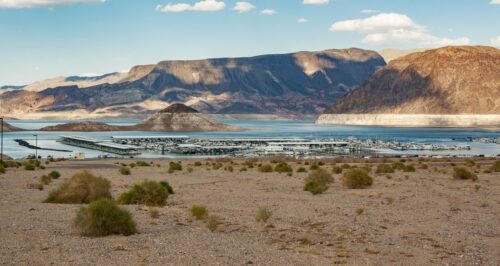 “Lake Mead and Lake Powell, the country’s two largest reservoirs, have fallen to their lowest combined levels on record, a grim marker in the deepening water crisis across seven states that depend on the Colorado River. The two reservoirs are now lower than the previous record in 2023, researchers say. “It’s a hell of a milestone,” said Jack Schmidt, director of Utah State University’s Center for Colorado River Studies. “Really a teaching moment to all of us of the severity of the crisis.” U.S. Interior Secretary Doug Burgum met with governors of the seven states virtually Tuesday and said his agency will release a plan to deal with water shortages next week. … ” Read more from the LA Times. | Read via Yahoo News.
Colorado River Basin states await federal water plan
“The seven states that make up the Colorado River Basin are waiting for the Bureau of Reclamation to release its Final Environmental Impact Statement (FEIS,) which is expected by the end of July. The statement will determine how much water will be available to the more than 40 million people the river serves. Experts expect the Bureau to severely reduce allocations. “Well, there’s no way to… there’s no way to sugarcoat that. The Colorado River is tanking. The region is hurting. Many of our communities are facing mounting water insecurity,” said Kevin Moran, Associate Vice President of Regional Affairs at the Environmental Defense Fund. … ” Read more from Channel 5.
Expected Colorado River pact seen as step in right direction
“Multi-year plans for how states will reduce Colorado River water intake could be nearing an agreement, with a federal plan expected to be released in the coming week. Years of failed multi-state negotiations dragged the federal government into the complicated contract to decide how states would prevent a total collapse of the critical Western water source that is the Colorado River. A soon-expected Bureau of Reclamation impact statement would represent meaningful progress, but not a complete solution for the dwindling river. “We’ve known for 19 years that the current guidelines are going to expire, and we’ve known about climate change and the impacts it’s having,” said John Berggren, a regional policy manager for Western Resource Advocates, an environmental organization. His work includes the Colorado River. … ” Read miore from WFMZ.
SEE ALSO:
- Critical Colorado River plan drops next week, from Western Water
- Secretary Burgum Discusses Future of the Colorado River with Governors of the Seven Basin States, from the Bureau of Reclamation
As Lake Powell shrinks, marinas are having to adapt to dwindling water levels
“Matt Barrett has seen Lake Powell drop nearly every year since 2013 or so, when he started making annual treks to the reservoir on the Utah-Arizona border. Some very snowy winters helped it rebound quickly, but this year was far from that. “We need another one of those fast,” he said recently. “A few of those fast.” The severely depleted lake has made it harder for people like him to access the water because “all the other boat ramps are dried up,” said Barrett, who planned to spend some days with his wife boating and camping around the lake. “So it’s kind of a big deal when the water is low, especially for loading and unloading.” … ” Read more from the Associated Press.
This Colorado River fish is no longer endangered, but it may need more protection
“Federal wildlife officials are loosening protections for a native fish in the Colorado River. The razorback sucker was downlisted from “endangered” to “threatened” by the U.S. Fish and Wildlife Service. The move suggests progress in protecting the fish, but environmentalists say the species still struggles to survive in much of its habitat, and stronger protections were needed. The razorback sucker, which can grow up to 3 feet long and live for 40 years, is on a relatively short list of fish that live nowhere else in the world besides the Colorado River basin. Of the roughly 25 species on that list, four are protected under the endangered species act. Those fish face multiple threats in a river system that is getting drier and has been thoroughly altered by human activity. … ” Read more from KJZZ.
Aurora asked everyone to cut back water usage. The city says its largest user has refused
“Aurora Water’s single largest water customer is refusing to reduce its usage, despite a mandatory 20% cutback ordered under the city’s drought restrictions, according to the water utility. The customer is Niagara Bottling, a California-based company that has operated a bottling plant in Aurora since 2012. The plant draws directly from the city’s tap water supply, purifies it and sells it, often under store brand labels. Costco’s Kirkland Signature water, for example, is often bottled by Niagara, which has plants across the country. Aurora Water says last year, Niagara used more than 200 million gallons of water. The company is allocated 178 million gallons. … ” Read more from Channel 9.
$100 million conservation program aims to boost Colorado’s water reserves, but key details remain unresolved
“The federal government intends to send $100 million to Colorado and three other states to pay farmers, ranchers and cities to voluntarily use less Colorado River water, state officials said. However, the program still lacks specifics on how much water it will save or how the money will be divided. The Bureau of Reclamation would split the funding among the four Upper Basin states — Colorado, New Mexico, Utah and Wyoming — under what officials are calling a “near-term contribution program.” The Colorado Water Conservation Board would run Colorado’s portion. Nothing has been signed yet, according to Amy Ostdiek, a section chief with the Colorado Water Conservation Board. “We have heard from Reclamation that they do certainly intend to grant that $100 million to the upper division states,” Ostdiek said. “So we’re kind of counting on it.” … ” Read more from Channel 9.
Colorado drought increasingly linked to long-term climate change
“This year’s devastating snow drought in the Upper Colorado River Basin was made 14 times more likely by years of global climate change, according to a new study by Colorado School of Mines researchers, who are increasingly linking short-term weather disasters to decades of warming. Low snow years have always been possible in the West, the researchers said, but climate change is making it more frequent and more devastating. By the 2050s, their modeling shows, snowpack drought like the states west of the Continental Divide experienced this past winter will be happening more than three of every 10 years, and nearly nine of every 10 years by the 2090s. Warmer temperatures in the West have also intensified the impacts of the worst drought winters such as 2025-26, according to the research published in the “Proceedings of the National Academy of Sciences.” The current snowpack drought, coming amid climate change, robbed 25% more moisture from snowpack than a similar-scale drought occurring before the Industrial Age advent of heavy fossil fuel use and global warming. That’s an entire Lake Mead’s worth of water, the largest reservoir in the United States. … ” Read more from the Colorado Sun.
In national water news today …
The real danger of drugs in the wastewater isn’t what you’d think
“Drug use in America follows trends, something Straight Arrow has previously reported on. Now, a report from the Office of National Drug Control Policy shows how wastewater can detect some of those trends. The report, called Wastewater Analytics: A Powerful Window into Shifting Drug Use Trends, studied wastewater samples from more than 100 counties, accounting for about 18% of the country. The ONDCP described the study as the largest wastewater drug-monitoring effort ever conducted in the U.S. Researchers found that wastewater samples from January to April showed a decline in fentanyl, cocaine and methamphetamine, both nationally and regionally. They also said there were variations at the state and local levels. Washington state, for example, had the highest concentrations of fentanyl, while Texas had the highest cocaine levels. Colorado and Nevada recorded the highest levels of methamphetamine. … ” Read more from Straight Arrow News.
The feds no longer protect endangered species habitat. States say they can’t pick up the slack.
“The Trump administration is removing protections from the key places where endangered species live, saying states can keep the areas safe. But experts say states aren’t equipped for the task. Earlier this month, the Trump administration finalized a major change to the Endangered Species Act, rolling back protections for the forests, wetlands, deserts and other critical habitats that many plants and animals rely on. The new rule will open many landscapes to development, logging, mining and oil and gas drilling. Wildlife officials — in both conservative and liberal states — had expressed strong concerns about the proposal, saying it would threaten their plans to safeguard endangered species. But federal officials framed the decision as a move to give “freedom” to state leaders to manage wildlife without burdensome federal regulations. … ” Read more from Colorado Newsline. 
