
By John Hart
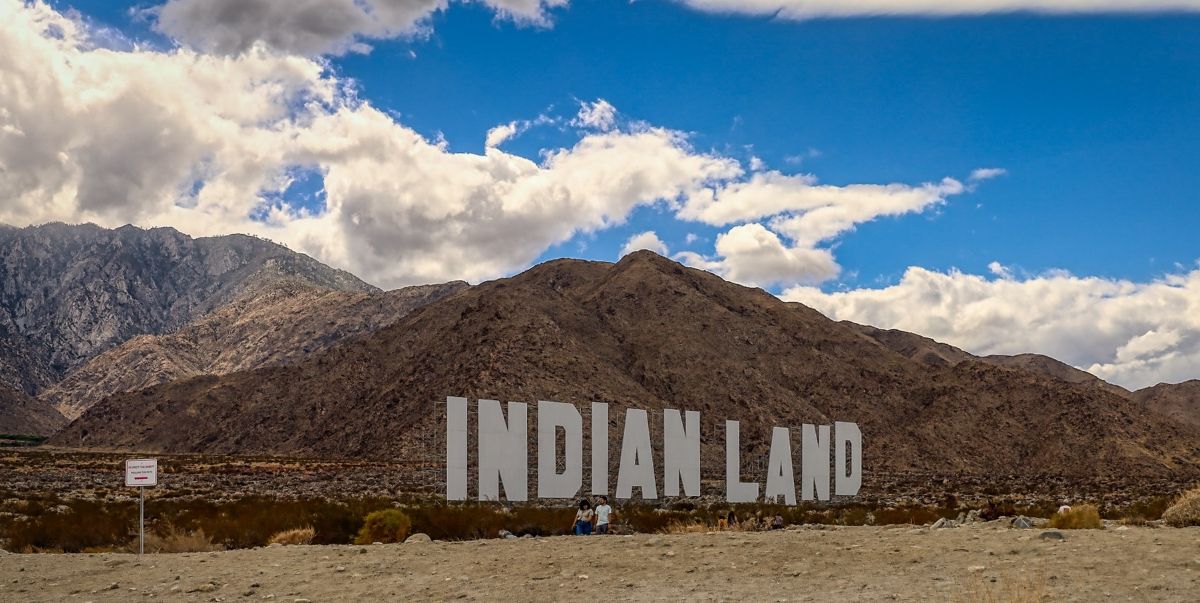
In the never-ending California water quarrels, the state’s Native American tribes seem to be having a moment. After centuries of neglect (or much worse), the Indians—to use the term they themselves fall back on—are starring in unfolding dramas at the State Water Resources Control Board, before the Delta Stewardship Council, and on sundry other stages. Just about every big water meeting starts with an acknowledgement of aboriginal territories; very often a dull day is enlivened by an indigenous chant or song. Government scientists bow before the altar of traditional ecological knowledge. Some tribal representatives scold the officials they face: by rights, they say, water users and planners should be asking the blessing of tribal authorities, not the other way around.
How much does this brave show influence facts on the ground (or in the water)? Are tribal testimonies changing the direction of plans and policies set by what remain, like it or not, the powers that be?
The answer is complex. Though lacking clout on the major questions, Indian groups have found a few tools for asserting their interests in waters and in water policy.
Water Rights for Indians
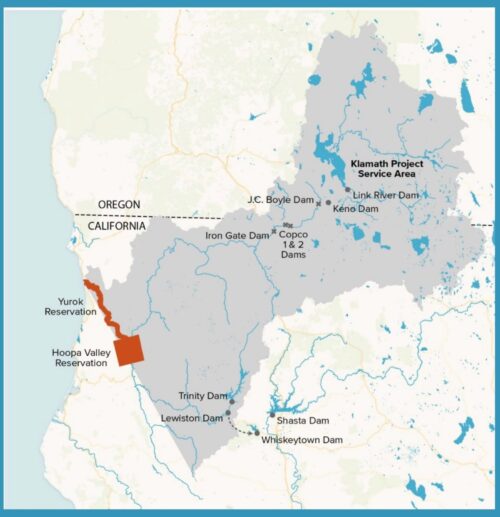
“First in time, first in right.” The principle would seem to favor the peoples who lived by and used California’s streams, lakes, and marshes before the first Europeans arrived and the first paper claims were filed. In fact, “aboriginal rights” are very hard to assert. But some tribal groups have held onto, or clawed back, certain lands and the water rights attached to them. A new report by the Public Policy Institute of California illuminates where and how.
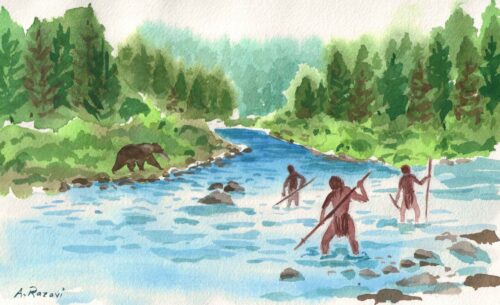
These water rights, technically held in trust for the tribes by the federal government, vary in their reach. By far the strongest cards are held by the Yurok and Hoopa Valley Indians (Hupas), who occupy long-standing reservations on the lower Klamath and Trinity Rivers. Because these groups, almost alone among California tribes, were never forced out of their old core territories, they are held to possess water rights from “time immemorial.” Moreover, they are entitled to the maintenance of fish and generally good conditions in the rivers traversing their lands. (The courts have chosen the Coho salmon as the indicator species for “good conditions.”) This doctrine gave the tribes a powerful voice as they lobbied for removal of hydroelectric dams 200 miles upstream on the Klamath. A major water-supply reservoir on the Trinity remains, but negotiations have led to release of somewhat larger flows to the lower river.
Fourteen other tribes or “bands,” mostly in Southern California, have had water rights affirmed by legal decisions or binding agreements. How much water they can access is often based on the acreage of irrigable land on their reservations. The specified water allowances may be used directly, or swapped for other benefits. Simply by agreeing to leave some water untapped, tribes along the lower Colorado River have become important players in the management of that depleted stream. The Quechan tribe on the Colorado sells much of its water entitlement to the Metropolitan Water District of Southern California.
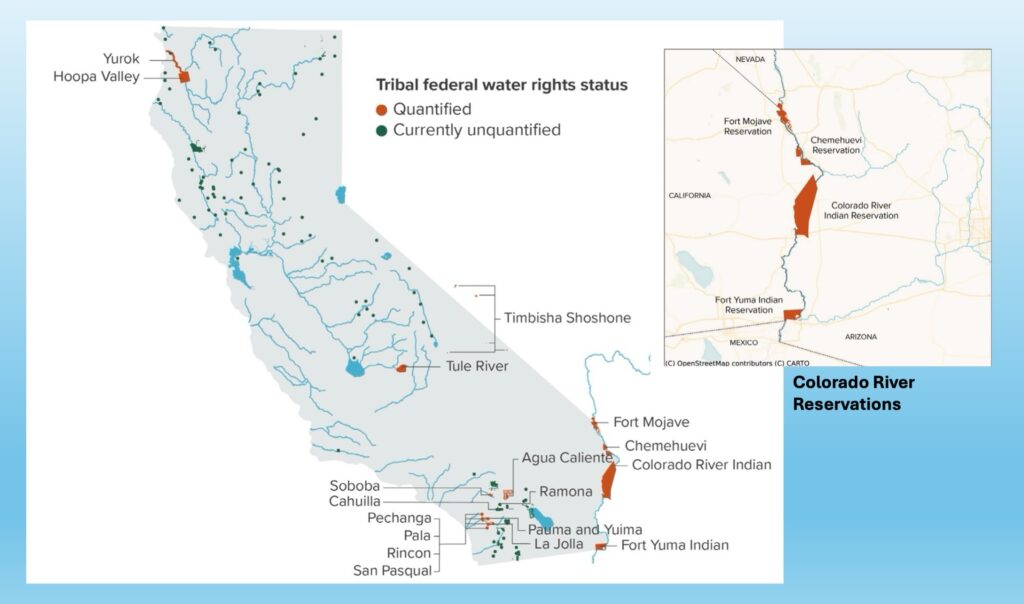
In the all-important Central Valley drainage, just one tribe has a quantified water right–almost. The Tule River band holds a large reservation east of Porterville, straddling the stream’s South Fork. In 2007, an agreement among rights claimants allocated flows, but this still needs the blessing of Congress, along with funding for a small tribal dam and distribution system.
In addition to these relatively well-situated groups, a great many Indian bands are considered to have “unquantified” federal water rights, often tied to the mini-reservations called “rancherias.” Created in the early twentieth century, these rarely have large streams or much in the way of irrigable land. The late dates of their establishment also work against water claims.
Then there are state-managed water rights, with more complex rules. At least 30 groups have asserted or could assert rights based on property they own. At the very bottom of the influence ladder are the numerous tribal groups that have no land at all.
The link of water rights to real estate points a key way forward. The “land back” movement, supported by governments and foundations, has moved over 100,000 acres into tribal control in the last few decades. These acquisitions bring with them riparian rights, groundwater rights, and any appropriative rights the prior title-holders may have had. If the transferred areas are added to federally recognized reservations, they could boost the tribes’ federal water rights as well.
Brian Gray, principal author of the Public Policy Institute study, sums it up: “On the federal trust side, on the state side as well, everything follows from land.”
The expanding tribal territories are also long-sought places to apply, or re-learn, ancient relationships with nature. The newly land-rich groups are mostly using their water in the manner most in line with their traditions: they are leaving it in streams and in aquifers. They are getting it, and letting it go.
Tribal Beneficial Uses
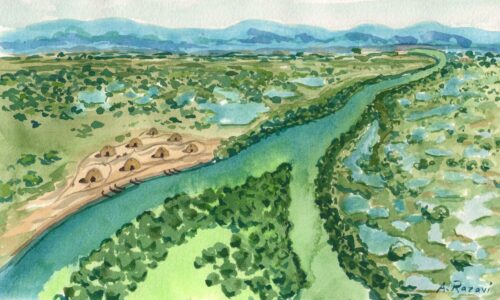
Water rights, as a rule, are about quantity. For Indian groups, water quality is an even larger concern. When the Shingle Springs band of Miwok Indians bought land at their ancient Wallok village site, at the junction of the Sacramento and the Feather, they found they weren’t really home again. The tules they wanted to work with were hardly to be found; the waters were often fouled by harmful algae blooms.
Under water pollution control law, the State is obligated to protect defined “beneficial uses” of water. The original list included such obvious uses as domestic consumption, sport and commercial fishing, and recreation. Indians have long complained that these categories didn’t cover their special relationships with their home waters.
In 2003, one of the nine regional pollution control bodies, the North Coast Regional Water Quality Control Board, responded. It defined two new beneficial uses. “Native American Culture” covered such activities as salmon fishing, tule harvest, basket weaving, boat-making, and place-based ceremonies. “Subsistence Fishing” was meant to protect people of any background who harvested aquatic animals and plants not just for sport but as a regular part of their diet. In 2017, the overarching State Water Resources Control Board adopted similar though not identical definitions, splitting off Tribal Subsistence Fishing as a separate category. All the regional boards except Santa Ana River, in coastal Southern California, have by now followed suit.
Defining a beneficial use is only the first step toward protecting it. In the case of Tribal Beneficial Uses (TBUs), the second move is for tribes to request that their use be acknowledged in specific streams, lakes, or wetlands. Assuming the board agrees, it can then set limits for given pollutants, called Total Maximum Daily Loads (TMDLs); seek agreements with polluters to lessen problems; or, in stubborn cases, issue cease-and-desist orders.
In designing controls, a board is supposed to go by whatever use is judged most sensitive to pollution. This may not turn out to be a tribal one. In defining TMDLs for the Klamath River, the North Coast board relied equally on tribal uses and on fish and other ecosystem concerns.
East of the Sierra, the Lahontan regional board has proposed recognizing Tribal Subsistence use at Mono Lake (where the Kootzaduka’a band of Northern Paiutes harvest alkali fly pupae for food) and Tribal Cultural Uses at dozens of sites in the lake’s watershed. As yet, the designation isn’t final, and no orders or actions have ensued.
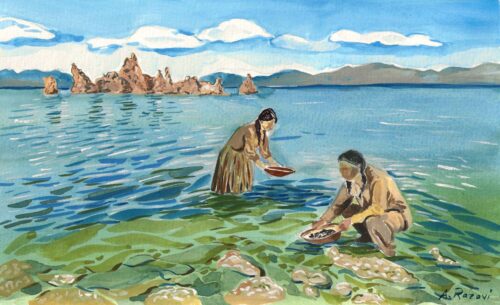
Other regional boards are far behind North Coast and Lahontan in designating waters, let alone in moving toward enforcement on a TBU basis.
Will there ever be a case in which tribal use leads to an enforcement action that wouldn’t have occurred on other grounds? One problem is that TBUs don’t translate directly into the kind of numerical objectives regulators like best—for instance, measurable levels of specific pollutants, dissolved oxygen, temperature. Tribal uses and the threats to them have to be described, not (only) tabulated. The objectives will be of the kind called “narrative,” subtler, harder to apply.
The tribes can do their own thinking in certain zones where they themselves are the acknowledged water quality authorities, independent of the state system. There are eighteen such cases. Once again, the most significant are the Yuroks and Hupas, who have their own sophisticated water bureaucracies; the Yuroks have declared the Klamath River to be a rights-holding person.
The beneficial use tool, tribal or not, has one very dull edge. The regional boards cannot use it to improve what is often the biggest single factor in water quality: diminished river flows. Given their small territories, most tribal authorities can’t either. Power over water rights and thus over flows lies almost entirely with the State Water Resources Control Board. This is the body that could open natural faucets wider, if it chose.
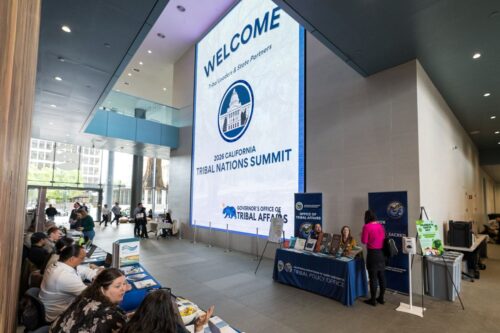
This central board is now looking at several pivotal matters. One is a far-reaching update of the Water Quality Control Plan for the San Francisco Bay/Sacramento-San Joaquin Delta Watershed (the Bay-Delta Plan). This revision is the latest attempt to define what flows must be maintained in rivers feeding the Delta. As part of its expected approval of this plan, the board proposes to designate all Central Valley waters as culturally important to Indians, chiefly on account of salmon. This action “recognizes the Tribes’ voices and participation in this process,” a 2025 document says.
But will this recognition matter to the flows that are set? If the TBU adoption preceded the vote on the Bay-Delta Plan, it might conceivably affect the outcome. But it is slated to be part of a final package deal.
The Civil Rights Act Complaint
At a key stage leading up to this Bay-Delta Plan, Indian groups (and most environmental ones as well) were not heard. Indeed they were not allowed in the room. That fact led to the opening of another front.
To back up: in 2018, after years of preparation, the state board was set to limit water agencies’ diversions from Sierra streams, requiring specified flows to remain in their natural courses. In 2019, it backed away from that hard step, agreeing instead to await the outcome of a voluntary process advocated by the Department of Water Resources. The department and the diverters would negotiate a package of measures promising to improve river conditions at less water cost (to the agencies).
Like a papal election, the new discussions proceeded behind the scenes. The agreements that eventually emerged, and which the water board is now under great pressure to ratify in the Bay-Delta Plan, have many elements; but they leave less water in streams than the top-down regulations would have done. (Those rules survive as a backup if, after eight years, the voluntary solution is judged to have failed.)
In 2022, five of the excluded groups asked the federal government to intervene. Citing both the Civil Rights Act of 1964 and the Clean Water Act of 1972, , they petitioned the U.S. Environmental Protection Agency to open an investigation of the closed-door negotiations and, further, to seize the controls of California water planning. (Not unprecedented: such an intrusion was threatened, on other grounds, in 1994.)
The challengers were some familiar voices in water advocacy: the Shingle Springs Band of Miwok Indians, with its properties in the foothills and on the Sacramento; the Weminem Wintu, hailing from the McCloud River above Shasta Lake; an Indian-oriented fisheries advocate called Save California Salmon; and Little Manila Rising, representing non-Indian but similarly disadvantaged people in Stockton. These four were joined by Restore the Delta, a multi-purpose environmental group that has made a specialty of working with tribes.
The native groups and Manila Rising have many complaints. The central ones are procedural—their exclusion from the seminal early discussions—and tangible—for instance their loss of salmon and their exposure to harmful algal blooms.
That challenge started a ball rolling, slowly. As required, the EPA opened an investigation; as required, it sent the complaint to the State Water Resources Control Board for response. Reportedly an agreement of some sort was drafted.
After that, things get murky. On the EPA’s External Civil Rights Docket, the matter is still shown as “Pending: Informal Resolution Agreement Negotiation.” But, as the water board staff notes, a key support of the complaint has been knocked away. Formerly, federal regulations provided that the Civil Rights Act could be invoked without proof of explicit bias: it sufficed to show disproportionate harm to a protected group. In 2024, a federal district court in Louisiana threw out this interpretation, a ruling eagerly seized upon by the incoming Trump Administration. In 2025, the President’s Executive Order 14281 undertook to eliminate such “disparate-impact liability” thinking wherever found.
Barring a major change of climate, the civil rights path seems to have reached a dead end.
Bottom Lines
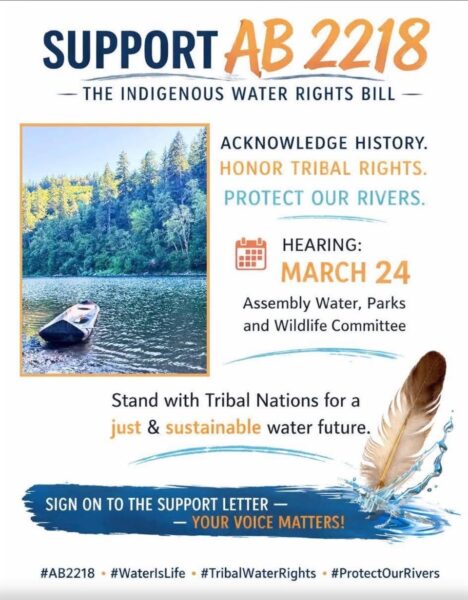
Outreach. Consultation. Transparency. Engagement. Inclusion. Whatever happens in Washington, D. C., these words are in the air in Sacramento. Laws have been passed, policies adopted. Officials gush about the value of native voices. They are impressed; they are listening; they are moved. A few provisions that sound favorable to tribes are added to long-standing projects and programs.
But the huge decisions now being made are really not amenable to marginal compromise. We will undertake a Delta tunnel to increase diversions from the Sacramento River to other parts of the state, or we will not. We will set flow standards for Sierra rivers that are somewhat responsive to what science says fish and ecosystems need, or settle for negotiated rules less disruptive of business as usual. We will build an expensive new off-stream reservoir at Sites Valley to harvest more water in high-runoff years, or shelve the idea.
In these debates, tribal representatives find themselves in coalition with the many environmental groups (and some Delta governments) that, in general, want to curb long-distance transfers of water. The Indian voices add a dimension to the argument. But it is hard to say that they add all that much practical power.
In a report prepared in 2025 for the Delta Stewardship Council on environmental justice, the staff drew an interesting, if wordy, distinction. Justice, it said, has “representational, procedural, and distributive” aspects. The first two have to do with letting disadvantaged groups into the process. Making sure they know what’s going on. Not just waiting for them to show up, but seeking them out. Learning from them. Even, perhaps, funding their participation.
The “distributive” part arrives when decisions are finally made. It means the way social costs and benefits fall out. It means cutting pies. It means allocating money (and water) to the amelioration of old and habitual wrongs.
The movement to reassign lands to tribal bodies is one example of a workable “distributive” adjustment. At this moment, in the water field, it is difficult to identify another.
Produced by Estuary News Group.

