
Several news sources featured in the Daily Digest may limit the number of articles you can access without a subscription. However, gift articles and open-access links are provided when available. For more open access California water news articles, explore the main page at MavensNotebook.com.
On the calendar today …
- MEETING: State Water Resources Control Board beginning at 9am. Agenda items include Current Hydrologic Conditions and Response, an informational Item on the 2026 Report of the Statewide Advisory Committee on Cooling Water Intake Structures, and Board Workshop presentation on the Draft Proposition 4 Stormwater Grant Program Guidelines. Click here for the agenda.
WEBINAR: Water Shortage Vulnerability Explorer Tool Overview and Tutorial from 9am to 1pm. As part of its technical assistance for SB 552 implementation, DWR has updated and continues to maintain the Water Shortage Vulnerability Scoring and Tool. This resource provides foundational statewide data and information to help counties assess drought and water shortage vulnerability for domestic wells and state small water systems. During this meeting, DWR will provide an overview of the tool’s features, underlying data, and updates to the scoring methodology and tool since the previous update in 2024, including new indicator metrics, a new physical vulnerability index score, and social vulnerability indices. DWR will also demonstrate how to navigate and apply the tool to common use cases and offer opportunities for participants to ask questions and discuss potential uses. The first half of the meeting will be dedicated toward updates for the domestic wells and state small water systems, while the second half will be for small water systems. Meeting Registration/Access Link: https://ca-water-gov.zoom.us/meeting/register/yz7SsQVPRA-3ft1xwq4tsAThis event has been postponed.- WEBINAR: How Western Utilities Are Rethinking Leak Detection Before California’s 2027 Deadline from 11am to 12pm. As water loss regulations tighten across the West, utilities need more than rotational leak surveys—they need a defensible strategy for finding the water they’re missing. Join Sacramento Suburban Water District to learn how targeted, risk-based leak detection uncovered nearly 8 million gallons in hidden leaks and created a non-revenue water program built to withstand regulatory scrutiny. Click here to register.
- GRA SoCAL: Governance-First Integrated Modeling with GSFLOW: A Precipitation-to-Streamflow Approach for Conjunctive Water Management from 6pm to 7:30pm in Irvine. In highly developed and conjunctively managed basins like the Russian River, traditional modeling approaches that examine groundwater levels or surface water in isolation are no longer sufficient to inform sustainable management. Effective water resource planning, particularly under the mandates of the Sustainable Groundwater Management Act (SGMA), requires a holistic water balance that begins with precipitation and accounts for the complex, nonlinear feedback between physical hydrology and operational rules. This talk presents an integrated modeling framework using GSFLOW and MODSIM to provide a “governance-first” approach to watershed management. Click here to register.
In California water news today …
The secret to water power for Tribes: Just add land
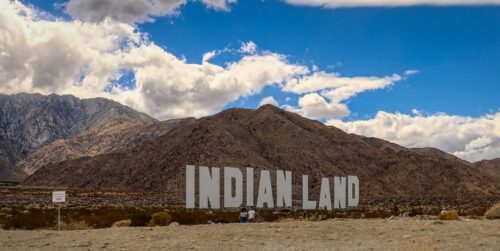
“In the never-ending California water quarrels, the state’s Native American tribes seem to be having a moment. After centuries of neglect (or much worse), the Indians—to use the term they themselves fall back on—are starring in unfolding dramas at the State Water Resources Control Board, before the Delta Stewardship Council, and on sundry other stages. Just about every big water meeting starts with an acknowledgement of aboriginal territories; very often a dull day is enlivened by an indigenous chant or song. Government scientists bow before the altar of traditional ecological knowledge. Some tribal representatives scold the officials they face: by rights, they say, water users and planners should be asking the blessing of tribal authorities, not the other way around. How much does this brave show influence facts on the ground (or in the water)? Are tribal testimonies changing the direction of plans and policies set by what remain, like it or not, the powers that be? The answer is complex. Though lacking clout on the major questions, Indian groups have found a few tools for asserting their interests in waters and in water policy. … ” Read more from John Hart at Maven’s Notebook.
As Sites Reservoir reaches its potential finish line, Colusa’s struggling small businesses see a ray of hope
“Sites Reservoir is still facing opposition from conservation groups, but in most corners of Colusa County – where mom-and-pop businesses are trying to survive long enough to hold the community’s identity intact – the project’s massive seven-year build-out is increasingly being viewed as a badly needed stimulus opportunity. At least, for those who think it will actually happen. Water contractors have talked about building a project like Sites in Colusa for decades. That means some longtime residents equate discussing a financial windfall from it today as something like daydreaming. But things change. Now, with strong support from California’s Democrat Governor Gavin Newsom and the Mid-Valley’s Republican Congressman James Gallagher, the managers at Sites Project Authority say they could be breaking ground on the reservoir as early as next summer. … ” Read more from the Appeal-Democrat.
Lake Oroville is at 80% capacity heading into peak summer
“The reservoir sits at 865 feet elevation with roughly 2.91 million acre-feet in storage, which works out to 80 percent of total capacity and 110 percent of the historical average for this time of year. That is a comfortable cushion for the State Water Project’s largest reservoir, and it means the lake’s recreation season is running at full strength. The Lime Saddle Recreation Area on the North Fork, a short drive from Paradise, offers a five-lane boat ramp with lanes extending down to the 702-foot level, plus a marina with boat rentals, gas, and supplies for a full day on the water. The fish news is just as encouraging. DWR’s Feather River monitoring station counted 8,475 spring-run Chinook salmon moving upstream between March 4 and June 30. The fall run began arriving July 1, with 239 fish counted in the first week, an early trickle of the migration that defines autumn on the Feather. … ” Read more from Active NorCal.
As commercial salmon fishing resumes in California, the industry faces a murky outlook
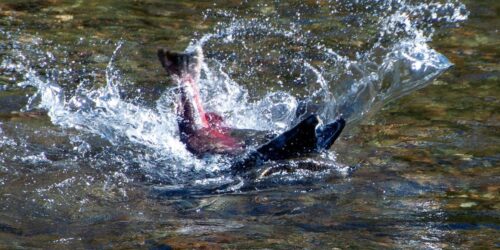
“When he stares out from the docks on the Feather River, James Stone—a 46-year-old lifelong fisherman—feels a pang of concern. Fishing for chinook salmon, also called king salmon, had been called off completely for California’s commercial fishermen since 2023 and nearly as long for recreational anglers. While the fishery is open again this year, and the federal government recently announced emergency funding for those hit hardest by the closure, the consequences of multiple canceled fishing seasons continues to have ripple effects that are hard to fully account for. “We’re losing marinas. We’re losing tackle stores. We’re losing bait shops. We’re also losing infrastructure out on the ocean at the ports for gas pumps … everything’s going away because salmon is the driver,” Stone, who is based in Yuba City and serves as the board president of the NorCal Guides and Sportsmen’s Association, told Inside Climate News. Without plentiful chinook salmon to support local fisheries, “people won’t always spend the money for other species or for other recreational activities,” Stone said. “Salmon is what drives the fishing industry.” … ” Read more from Inside Climate News.
Central Valley salmon are back on the line
“For the first time in three years, Central Valley anglers are once again watching the Sacramento River for returning Chinook salmon. Last week marked an important milestone when the summer Chinook salmon fishing season opened on the river after three years of closures. This is the second time in the last 20 years that the fishery has closed, with closures in 2008 and 2009 occurring in response to poor returns in 2007. The reopening of the Sacramento River season also comes alongside the decision to reopen California’s commercial ocean salmon fishery in 2026 for the first time in three years. These management decisions cautiously hint at signs of improvement for Chinook salmon populations in California and offer a look at what may be a win for both culture and conservation. … ” Read more from FishBio.
Catalyst discovery could aid drinking water treatment
 “For decades, water utilities have relied on giant tanks filled with ion-exchange resin beads to remove perchlorate, a harmful industrial pollutant, from drinking water. The system works by attracting negatively charged perchlorate ions to positively charged resin beads, allowing purified water to flow out of the tanks. But the process leaves behind a difficult problem: resin beads loaded with perchlorate that must be regenerated or disposed of as hazardous waste. Now, researchers at UC Riverside have developed a catalyst made from tiny ruthenium nanoparticles that effectively breaks down perchlorate at high concentrations. The breakthrough study, published in the journal “ACS Central Science,” could make it possible to destroy perchlorate after it has been captured on ion-exchange resin, potentially reducing the hazardous waste generated during drinking water treatment, allowing for the resin beads to be reused, said Jinyong Liu, UCR associate professor of chemical and environmental engineering, who oversaw the research that was led by UCR post doctoral research scientist Jinyu Gao. … ” Read more from UC Riverside.
Despite ‘false positive’ test, Taylor Farms is still focus of cyclospora investigation
“The Food and Drug Administration said on Monday that strong evidence still tied Taylor Farms to the continuing cyclospora outbreak, despite the agency’s retraction on Sunday of what it had said was a positive test of a lettuce sample for the parasite. The announcement followed days of confusion after Taylor Farms voluntarily recalled iceberg lettuce from 27 states, but did not offer more information about how people would be able to tell whether they had bought the contaminated product. As consumers sorted through the conflicting information, health officials in Michigan announced cases in that state had risen to 6,148 on Monday — a jump of more than 1,000 cases over the weekend — as other states reported further increases. The F.D.A.’s retraction of the test result only enhanced uncertainty about what’s to come in the largest recorded cyclospora outbreak in U.S. history. … ” Read more from the New York Times.
SEE ALSO: Cyclospora Spreads Through Human Feces. How Did It Get Into Our Food Supply?, from the New York Times.
Forever chemicals: CA seeks protections despite EPA rollbacks
“With uncertainty over when regulations on some of the most common of these cancer-causing pollutants, called per- and polyfluoroalkyl substances or PFAS, will take effect in California, lawmakers are floating alternative plans to remove them from the state’s tap water. What is CA doing? California requires water systems to notify the public if PFAS levels reach a certain threshold. Some systems have already begun treating or blending the water with clean sources to make it safer to drink. The long-term goal in California is for these chemicals to be regulated ‘as a class’ rather than through ‘individual’ chemicals. AB 1603 would for the first time require that pesticides be categorized as containing PFAS chemicals by the state, and their use to be reported to authorities. … ” Read more from the LAist.
CA again sues Trump administration over Central Coast oil pipeline permit
“For the second time this year, California has sued the Trump administration for approving an emergency permit that allows a Texas-based energy company to transport oil through the Central Coast. On Dec. 22, the U.S. Pipeline and Hazardous Materials Safety Administration issued Sable Corp. an emergency permit to transport oil through two California onshore pipelines that run through Santa Barbara, San Luis Obispo and Kern counties, according to a news release from the California Attorney General’s Office. These pipelines have been shut down since the 2015 Refugio Oil Spill, when a corroded segment of one of the pipes released 120,000 gallons of crude oil near Santa Barbara — about 21,000 gallons of which spilled into the ocean. The permit waived compliance with safety regulations that usually require the company to evaluate and fix pipeline corrosion. … ” Read more from the Sacramento Bee.
In commentary today …
Commentary: California is making progress on preventing severe wildfires. Federal retreat, shaky funding put it at risk
The PPIC’s Bradley Franklin and Kyle Greenspan write, “The Altadena and Palisades fires that swept through Southern California last year were just the latest in an escalating series of wildfires that have scorched the state. The damage has been far-reaching: Californians have lost homes, community, and—in some tragic cases—their lives. Wildfires are also raising insurance premiums and threatening the state’s giant sequoias and the headwater regions that provide most of California’s water supply. This year threatens to be another above-average fire season. As we’ve seen in recent years, fires can emerge quickly—even after wet winters. And if it feels like wildfires are increasing in size and scale, that’s because they are: the area of land burned in severe wildfires in the Sierra Nevada has tripled since 1990, while annual wildfire damages have more than quadrupled during that same period. … ” Read more from the PPIC.
In regional water news and commentary today …
NORTH COAST
Check before you launch: Klamath River closures now in effect
“A river restoration project will temporarily affect whitewater rafting and other recreation on a 1.25-mile stretch of the Klamath River near McConnell Bar. According to the Klamath National Forest & Butte Valley National Grassland, the project area extends from the confluence of Humbug Creek and ends downstream near the river’s confluence with Brushy Creek. The Yurok Tribe and project partners are leading the restoration, which is designed to repair damage caused by historic mining practices and the devastating McKinney Fire of 2022. Heavy rainfall following the fire triggered flooding and debris flows that carried large amounts of sediment into the Klamath River, severely impacting fish habitat, water quality and river access. … ” Read more from KRCR.
SEE ALSO: Klamath River restoration project to temporarily affect rafting, from the Redheaded Blackbelt
How much heavy industry? Humboldt Bay area plan sparks debate over port uses
“The Humboldt County Planning Commission is rolling up its sleeves on a considerable chunk of work – the Humboldt Bay Area Plan – and how to handle port terminal uses is an early focus of discussion. The extent of restricting heavy lift marine terminals – which will be necessary for wind energy but could also be used for other industrial purposes – was weighed as the commission held a June 16 workshop on the plan. During a public comment period, Jen Kalt of Humboldt Waterkeeper voiced support for the plan’s disallowance of support facilities for oil and gas drilling in a port overlay zone. The port overlay is a separate, higher-level policy project and at this point it includes facilities for offshore wind energy as well as “other permitted heavy lift port operations.” Waterkeeper is warning against the “other” operations part. … ” Read more from the Redheaded Blackbelt.
Eel River: New native plant network seeks to grow regional capacity
“This June, the Eel River Native Plant Network held its first in-person meeting in Fortuna with about 45 people in attendance. The Native Plant Network seeks to connect Tribal Nations, stewards, gatherers, and growers to sustain and increase diverse native plant material production that supports Eel River ecosystem restoration, cultural uses, and food sovereignty. Network members include representatives of Tribal Nations, commercial nurseries, NGOs, private property owners, and regional, state, and federal agencies. Nearly 50 different entities have engaged with the Network. “This Network is all about collaboration, working together to strengthen grant proposals, sharing infrastructure and knowledge, and increasing production of locally native plants,” said Christina Cortez, Native Plant Materials Project Coordinator with the Mattole Restoration Council. … ” Read more from the Friends of the Eel River.
Big trouble in Little River: After 16 years, an environment dispute between state regulators and an octogenarian farmer just upstream from Moonstone Beach could be coming to a head
“After nearly 16 years of failed enforcement efforts at a McKinleyville-area ranch, state water regulators are turning to the California Attorney General’s Office to resolve a laundry list of alleged environmental violations impacting Little River near Moonstone Beach. The 226-acre property, owned by the Vern C. McGaughey Trust, has been the subject of dozens of warning letters and violation notices from the California Coastal Commission and the North Coast Water Quality Control Board over unpermitted solid waste disposal, unauthorized grading, inadequately controlled grazing “resulting in widespread fecal waste” and bacterial pollution in Little River, as stated in numerous documents shared with the Outpost. While the state’s concerns largely focus on unpermitted activities within the channel of Little River, local environmental groups worry that bacterial runoff from the property could pose a threat to people recreating downstream on Moonstone Beach. … ” Read more from the Lost Coast Outpost.
Clear Lake is not so clear these days
“Pull up the satellite map from the San Francisco Estuary Institute, and it colors each lake by how much cyanobacteria the satellite can see — black for absent, up through blue and green and orange to a deep red at the top of the scale. Clear Lake glows red almost from one end to the other. The map reads phycocyanin, the pigment cyanobacteria produce. It can’t tell you where the water is actually toxic – only where the bloom is. And the bloom is nearly everywhere. On the north shore, you don’t need a satellite. You can smell it. If you live in Sonoma or Mendocino County, this isn’t only a Lake County problem. The same cyanobacteria drive the toxic-algae warnings that turn up most summers on the Russian River – Sonoma County posts alert signs at the swimming beaches – and the advisories Mendocino County has put out on the Navarro and the East Fork. Clear Lake is the extreme case. That’s what makes it the best place to learn what the stuff is, when it’s dangerous and what to do about it. … ” Read more from Local News Matters.
SIERRA NEVADA
Tahoe could see flash flooding this week as tropical moisture arrives
“The potential of slow-moving thunderstorms in the Sierra Nevada on Tuesday has prompted the National Weather Service to issue a flood watch in and around the Lake Tahoe area. The watch is in effect from noon to 11 p.m. Tuesday for the greater Tahoe basin, including Truckee, South Lake Tahoe, Incline Village and Tahoe City. It also extends south to Mammoth and east to Reno. “Excessive runoff may result in flooding of creeks, streams, urban areas, burn scars, and areas near steep terrain,” the weather service said. “Area rivers and streams could see rapid rises and increased sediment loads with localized heavy rain, but no river flooding is expected.” … ” Read more from the San Francisco Chronicle. | Read via Yahoo News.
South Tahoe PUD rehabilitating sewer mains in Tahoe Keys
“The South Tahoe Public Utility District (District) will begin rehabilitating approximately 8,000 linear feet of sewer mains in the Tahoe Keys neighborhood at the end of July as part of its ongoing commitment to maintaining a safe, reliable sewer system that protects public health and the environment. The $1.1 million project will extend the life of sewer mains that were originally installed in the 1960s by using a trenchless method known as Ultraviolet Cured-in-Place Pipe. Instead of digging up streets, crews will install a new liner inside the existing sewer pipe through existing manholes. The new pipe is designed to last 50 years or more. “Our goal is to keep our sewer system in a state of good repair while minimizing impacts to the community,” said Project Manager Brendan Cusick. “Using trenchless technology allows us to repair aging pipes with less disruption, lower costs, and a much shorter construction timeline.” … ” Read more from the Tahoe Daily Tribune.
SACRAMENTO VALLEY
EPA seeks community input on Iron Mountain Mine for the first time in 35 years
“For the first time in over 35 years, the Environmental Protection Agency is seeking community input to form a community involvement plan for the Iron Mountain Mine Superfund site. Located about 9 miles northwest of Redding in the Klamath Mountains, Iron Mountain Mine is a 4400-acre site that was mined for minerals, primarily by the Mountain Copper Company, from the 1860s to 1963. It’s famous for being one of the most toxic Superfund sites in the country, the polluted runoff from which was responsible for mass fish kills in the Sacramento River during the 1940s. Today, contamination at the site is controlled through an extensive treatment system overseen by the EPA, and officials say it poses no immediate threat while those systems remain in operation. … ” Read more from Shasta Scout.
Muggy weather continues with moderate heat risk
“The heat is here to stay and so are the wispy clouds. A forecast from the National Weather Service’s Sacramento office is showing moderate heat risk for the remainder of the week, though the previous concerns of thunderstorms have lessened. “Valley temperatures for the next couple of days are going to be near to slightly above normal with the warmest areas being in the northern half of the Sacramento Valley,” said National Weather Service Meteorologist Sara Purdue. “Chico and northward on Wednesday will likely see, if not triple digits, near triple digits. We’re expecting pretty wide spread moderate heat risk through the Sacramento Valley.” … ” Read more from the Chico Enterprise-Record.
Tucked in the Sacramento suburbs is a nature center with unique wildlife, gorgeous river views, and education
“The American River watershed is a real beauty. Taking into account its three major forks and lower main stem, the whole waterway flows for almost 300 miles from the Sierra Nevada mountains near Lake Tahoe all the way out to the Sacramento River. As far as the lower reach goes, the Effie Yeaw Nature Center is a popular spot for taking in the pretty views. On Tripadvisor, it’s ranked as the top thing to do in the Northern California community of Carmichael. One glowing review calls it “a hidden gem” that’s perfect for “anyone visiting Sacramento.” … ” Read more from Islands.
NAPA/SONOMA
Neighborhood Rain Catchers Project teaches lessons in watershed conservation
“During the recent 2021-22 drought, CDFW’s Bay Delta Region funded several grant projects focused on conserving streamflow in priority watersheds in Sonoma and Mendocino counties to lessen drought impacts to coho salmon and steelhead trout. One such project, Rain Catchers in Your Neighborhood, led by the North Coast nonprofit Conservation Works, brought the community together to learn about the importance of water conservation and how to catch and store rainwater. “One of the most rewarding parts of this project was seeing people make the connection between their own water use and conditions in local streams that support coho salmon and steelhead,” said Shay Richardson, the CDFW senior environmental scientist who helped identify and facilitate funding for the project. … ” Read more from the Department of Fish and Wildlife.
CENTRAL COAST
House committee advances $38.3M for Lompoc, Santa Ynez Valley water projects
“More than $38 million in proposed federal funding for water infrastructure projects in Lompoc and the Santa Ynez Valley moved closer to reality this week after the House Transportation and Infrastructure Committee advanced the Water Resources Development Act of 2026. The bipartisan legislation, announced by U.S. Rep. Salud Carbajal, includes $30 million for the Los Olivos Community Services District’s long-planned septic-to-sewer project, $6.3 million for water treatment and stormwater improvements in Lompoc and $2 million for water supply infrastructure upgrades in Solvang. The bill now heads to the full House and Senate for consideration. “Like many communities across the nation, the Central Coast has some water systems that are aging beyond their intended service life or must be upgraded to accommodate our region’s growth,” Carbajal said in a statement. “As a senior member of the House Transportation and Infrastructure Committee, I’m proud to have secured federal funding in this committee-passed bill to strengthen water infrastructure throughout the Central Coast.” … ” Read more from the Lompoc Record.
SAN JOAQUIN VALLEY
Dept. of Toxic Substances Control secures $2 million settlement for cleanup at the Modesto Groundwater Contamination Superfund site
“DTSC announced a court-approved settlement securing $2 million from the owners of the Halford’s Cleaners dry-cleaning property in Modesto to help reimburse the State of California’s past and future cleanup costs. For more than 30 years, DTSC supported efforts to ensure the cleanup of soil, groundwater, and air quality contamination at the site. “Our mission is to safeguard California’s communities from contamination,” said DTSC Director Katherine Butler. “This settlement is an important step needed to protect Modesto families and businesses. By taking action, we ensure property owners are held to account and contribute to the cost of cleanup.” From approximately 1948 to 2025, Halford’s Cleaners operated a dry-cleaning business at 941 McHenry Avenue in Modesto. Over several decades, Halford’s Cleaners allegedly discharged significant volumes of hazardous substances, primarily tetrachloroethylene, which is also known as perchloroethylene or “PCE,” into the soil. This contaminated the groundwater and nearby sewer lines. The Superfund site, now called the Modesto Groundwater Contamination, was listed on the United States Environmental Protection Agency’s (U.S. EPA) National Priorities List in March 1989 after a city water supply well was contaminated with PCE released from the site. … ” Continue reading from the Department of Toxic Substances Control.
Kings County groundwater agency increases expenses without secure funding source
“A Kings County groundwater agency nearly doubled its manager’s salary and added two part-time assistants even as it scrambles to find a secure revenue source. At its July 16 meeting, the South Fork Kings Groundwater Sustainability Agency (GSA) approved a $354,996 contract with Green Acres Consulting to continue managerial services by General Manager Johnny Gailey. The GSA approved the contract despite the fact that it has yet to nail down an ongoing, reliable source of revenue. One board member, who voted against the contract, said the contract nearly doubled the district’s administrative costs. Board member and Chair Joe Neves also said that Gailey failed to do basic administrative tasks, such as transferring money from one bank account to another and completing an audit on the GSA. “Those are the simple things that we should be doing now that aren’t happening, just has me concerned,” Neves said before the vote. … ” Read more from SJV Water.
Kern water districts weigh mussel treatment costs
“The Shafter-Wasco Irrigation District board voted at its July 8 meeting to spend more to hit invasive golden mussels hard in October, rather than saving costs by reducing treatments. General Manager Kris Lawrence had recommended pausing treatments after low-doses of a copper chemical applied by GreenLeaf Ag proved successful in June. Lawrence showed a video from a grower taken July 4 of a large mass of dead detached mussels. That treatment cost $139,200. Lawrence recommended stopping treatment over summer, then restarting it in October at an expected cost of $127,373. He said that consulting firm Dudek had explained that contributing factors such as lower calcium levels in the water and additional product placed in the system by growers would make it difficult for the veligers, mussel offspring, to survive. … ” Read more from SJV Water.
EASTERN SIERRA
State Water Board Mono Lake Public Workshop 2: California Gulls and other migratory birds
“On June 25, six science experts on Mono Lake’s California Gulls, Eared Grebes, phalaropes, shorebirds, and waterfowl presented the State Water Board with data and trends they’ve observed in bird populations since the Board’s 1994 decision to raise Mono Lake. One by one the researchers told a familiar story—raising Mono Lake to the mandated 6,392-foot level would meaningfully improve food availability, habitat, and protection from predators for the globally significant bird populations that increasingly depend on Mono Lake as other regional saline lakes collapse. But they didn’t just tell the same old story. Their studies bring new insights into the dynamics of the critical connections between Mono Lake and other saline lakes. As regional saline lakes shrink or dry up, the importance of Mono Lake for birds has increased. … ” Read more from the Mono Lake Committee.
SOUTHERN CALIFORNIA
Sunset Boulevard remains closed as ruptured trunk line repairs continue ‘into this week’
“A section of Sunset Boulevard could continue to be closed for days as crews repair a ruptured trunk line that inundated West Hollywood with about 17 million gallons of water last week. Officials on Friday said they had hoped the iconic roadway would be reopened by Monday, but repairs are taking longer. Sunset Boulevard is closed between Sherbourne Drive and San Vicente Boulevard, with limited local access on nearby streets including Cynthia Street and San Vicente Boulevard. City officials urged the public to avoid the area. It’s not clear when the street will reopen. Repairs “are anticipated to continue into this week,” Los Angeles Department of Water and Power officials said. “We understand the ongoing difficulties and disruptions this has caused for residents and businesses across West Hollywood. LADWP is fully committed to advancing pipe repairs and restoring affected streets as quickly and safely as possible,” the utility wrote in a news release on Monday. … ” Read more from the LA Times.
Golden State Water eyes Norwalk system in $5.25M deal
“For nearly 900 households and businesses in Norwalk, a city tucked into Los Angeles County, the question of who controls their tap water may soon have a new answer. Golden State Water Company, the water utility arm of San Dimas-based American States Water Company, is moving to buy the city’s water system, and regulators appear willing to listen. On July 13, 2026, Golden State Water Company and the Public Advocates Office at the California Public Utilities Commission filed a joint motion asking state regulators to approve the deal. The acquisition, which Golden State Water Company first applied for in January 2026, carries a price tag of $5.25 million. … ” Read more from Western Water.
IMPERIAL/COACHELLA VALLEYS
Agua Caliente Band lobbies telegraph advisors on water rights
“The Agua Caliente Band of Cahuilla Indians engaged Telegraph Advisors to lobby on its behalf during quarter two of 2026, spending $110,000, according to a new lobbying disclosure filing. The tribe has been pursuing federal recognition of its water rights in the Coachella Valley, where the underlying aquifer has faced significant depletion over decades. The Coachella Valley aquifer experienced a 34-foot drop in water levels between 1975 and 2015. The relevant legislation, H.R. 5935, introduced by Rep. Ken Calvert (R-CA), would ratify the tribe’s federally reserved right to up to 20,000 acre-feet per year of groundwater from the Indio Subbasin while also recognizing surface water rights in Tahquitz Creek, Andreas Creek, and Whitewater Ranch. The settlement would also establish a $500 million Agua Caliente Settlement Trust Fund in the U.S. Treasury, administered by the Department of the Interior. … ” Read more from Legis 1.
Residents press Gonzalez on lithium, New River and state spending concerns
“Assemblyman Jeff Gonzalez fielded questions Friday, July 17, during a town hall in El Centro, where residents pressed him on issues ranging from lithium development, the New River, to health care fraud, environmental regulations and California’s business climate. Over the course of the discussion, Gonzalez outlined his approach to economic development, infrastructure, government accountability and state policy, frequently emphasizing what he described as the need for solutions tailored to Imperial County while encouraging residents to stay involved in the legislative process. Cassandra Shannon asked whether Imperial Valley is prepared for lithium development. Gonzalez said the region is ready, citing workforce training and educational initiatives designed to support the emerging industry. He pointed to expanded training opportunities at Imperial Valley College and programs at San Diego State University’s Brawley campus as examples of efforts to prepare future workers. Gonzalez also praised county leaders for what he described as their continued advocacy on behalf of Imperial County, adding that lithium development could generate long-term employment opportunities beyond the initial construction phase. … ” Read more from the Desert Review.
SAN DIEGO
Stalled Oceanside luxury home project faces steep water board penalty
“The future is uncertain for a string of partially built luxury homes in Oceanside that are turning a weathered gray with age on a hillside overlooking Rancho Del Oro Drive just north of Vista Way. The developer of what’s called the Vista Pacific project is fighting a $411,475 fine levied Sept. 13, 2023, by the Regional Water Quality Control Board for failing to control stormwater runoff from the property. Officials at the Regional Water Quality Control Board declined to comment because of pending litigation. According to the board’s website, a legal case related to the Vista Pacific site was discussed in closed session as recently as June 10. … ” Read more from the San Diego Union-Tribune.
Toxic sewage gas is getting worse in SoCal as Tijuana River to blame.
“Toxic gas from sewage flowing through the Tijuana River and across the U.S.-Mexico border continues to pollute southern California despite ongoing efforts to clean things up. Recently, hydrogen sulfide levels in the South Bay exceeded the county’s safety standards and have continued to get even worse in 2026. Hourly readings of the pollutant at a monitoring station near an elementary school in Nestor, a San Diego neighborhood near the border, exceeded the threshold more than 10% of the time this year, according to data from the San Diego County Air Pollution Control District. That marks a sharp increase from fewer than 2% of readings in 2024. … ” Read more from the California Post.
Along the Colorado River …
Metropolitan focuses on stored water access as Colorado River rules take shape
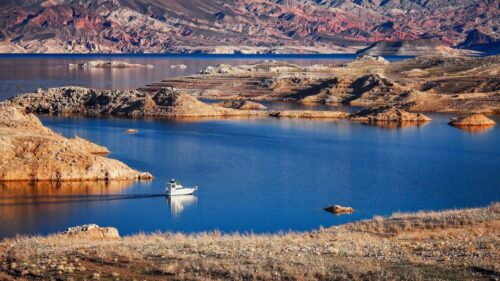 “The Colorado River is under increasing pressure after more than two decades of drought, hotter and drier conditions, and continued demands from cities, agriculture, tribes, and ecosystems across the West. Lake Mead and Lake Powell—the system’s two largest reservoirs—remain at historically low levels, leaving less stored water available to buffer dry years and increasing the stakes for how the river is managed. The seven basin states have struggled for years to find a path forward with little success. Against that backdrop, the federal government is developing new operating guidelines to replace the 2007 interim rules, which expire at the end of 2026. What gets decided in the coming weeks will shape Colorado River supplies for Metropolitan and other users across the Basin over the next decade. At the July meeting of Metropolitan’s One Water and Adaptation Committee, Shanti Rosset, Colorado River Policy Manager, updated committee members on the status of the post-2026 operating guidelines and what the emerging federal approach could mean for Southern California’s water reliability. … ” Read more from Maven’s Notebook.
What does low water at the Hoover Dam mean for power in the American West?
“The water level at Lake Mead is less than 10 feet away from rendering most of the hydroelectric turbines at the Hoover Dam inoperable. In a new projection from the U.S. Bureau of Reclamation, the water level is expected to fall below 1,035 feet next April. That figure is critical. Currently just shy of 1,042 feet, if Lake Mead falls below 1,035 feet — a level not seen since the reservoir was filled in the 1930s — it’s expected that 70% of the Hoover Dam’s current hydropower production will be cut. The Bureau of Reclamation’s 24-month study released last week forecasts a continued decline in Lake Mead’s water level. The study projects Lake Mead falling to 1,031.6 feet in April 2027 and 1,010 feet by the end of June 2028. … ” Read more from Straight Arrow News.
Lake Powell is in ‘uncharted territory’ after a new record low
“The nation’s two largest reservoirs are extraordinarily dry, and just set a new record for low water levels. Lake Powell and Lake Mead, which store water from the Colorado River for use by major cities, tribes, and a massive agriculture industry, are the lowest they’ve been in nearly 70 years. The last time their combined storage was this small was in May 1957, before Lake Powell was even built. The data comes from a new paper published by a group of Colorado River experts. The paper’s authors write that Powell and Mead are often measured separately, but should be counted together to paint a complete picture of how much water is available from a river that supplies nearly 40 million people across seven Western states. … ” Read more from Utah Public Radio.
How American monsoon will impact Lake Powell, Mead water crisis in 2026
“The North American monsoon could bring welcome rain to parts of the drought-hit Southwest this summer but forecasters and water specialists warn it is unlikely to meaningfully reverse the crisis gripping Lake Powell and Lake Mead. The two reservoirs—the largest in the United States and critical storage points for the Colorado River—remain at severely depleted levels after years of drought, climate change-driven aridification and heavy demand from cities, farms and tribal communities across the West. As of July 19, Lake Powell stood at 3,523.43 feet, holding 5.455 million acre-feet of water, or 23 percent full, while Lake Mead was at 1,041.81 feet, holding 7.103 million acre-feet, or 27 percent full, according to the Bureau of Reclamation’s latest hydrologic update. The total Colorado River system storage was 33 percent of capacity, down from 39 percent a year earlier. … ” Read more from Newsweek.
Monsoon season bringing death and destruction to national parks around southwest
“As the desert southwest shifts into monsoon season, unpredictable flash floods are wreaking havoc in and around the region’s national park sites, prompting closures and causing at least five deaths last week. Zion National Park in Utah announced a closure of all slot canyons, including the popular Narrows hike, over fears of flash flooding, while close to two dozen visitors at Black Canyon of the Gunnison National Park in Colorado were trapped by mudslides that buried a road beneath several feet of debris. Five members of a family were also killed just outside Capitol Reef National Park after getting caught in a flash flood while hiking. … ” Read more from SF Gate.
How Arizona’s beavers could be a secret weapon in fire prevention
“Laura Roche understands the imperative of curbing carbon emissions to prevent climate change from supercharging wildfires to “megafire” status. But she’s also aware that such steps won’t solve the problem right away, even if the entire world got their act together on addressing climate change this instant. “People get tired” just talking about reducing emissions, she said. Even as smoke lingers in the air from the Pocket Megafire that was burning less than 10 miles away, she knows it won’t be a helpful conversation. “But there are other things that can definitely improve the situation,” she added. Roche, a Cottonwood resident who works in Sedona, has one suggestion in mind: reintroducing beavers. … ” Read more from the Arizona Republic.
Ready to begin: Rural Arizona points the way on groundwater solutions
“As groundwater challenges intensify across rural Arizona, more communities are deciding they can’t afford to wait for perfect solutions before taking practical steps together. Communities continue to face different groundwater realities, different economies and different views about water management. But as groundwater challenges become harder to ignore, many are reaching the same conclusion: Waiting for someone else to solve the problem isn’t a strategy. A new synthesis captures those recurring priorities across Arizona, offering a statewide picture of how rural communities themselves believe groundwater resilience can be strengthened. The effort was led by Impact Water – Arizona, a pillar of the Arizona Water Innovation Initiative, housed in the Julie Ann Wrigley Global Futures Laboratory in collaboration with the Ira A. Fulton Schools of Engineering at Arizona State University. The workshops are also supported by the Babbitt Center for Land and Water Policy, a center of the Lincoln Institute of Land Policy, the Arizona Institute for Resilience at the University of Arizona and Southwest Decision Resources. … ” Read more from the Arizona State University.
In national water news today …
Data centers face a new environmental concern
“Data centers sprouting up across the U.S. are facing an emerging environmental challenge: What happens to the wastewater they generate, and what kind of contaminants are in it? Recently, a data center under construction in Cheyenne, Wyoming, was found to have contaminated the sewer system with a rare bacterium. The water utility took swift action. The Cheyenne Board of Public Utilities fined the project developer, revoked its wastewater permit and announced that it would not accept certain types of wastewater from data centers citywide. The developer of the project — which is backed by Meta — is appealing the $10,000 fine and disputes the utility’s conclusion tracing the bacterium to its project. But the incident highlights what engineers view as an emerging challenge for the data center industry that is already under scrutiny over its environmental footprint. As new projects crop up nationwide, experts say it’s not clear whether small utilities have the infrastructure and regulations to ensure the wastewater is properly managed. … ” Read more from E&E News.
Trump officials kill proposed rules for Pfas-contaminated sewage fertilizer
“The Trump administration has killed proposed regulations for sewage sludge contaminated with Pfas and spread on farmland as fertilizer, a practice that has sickened farmers, destroyed their livelihoods, killed livestock, polluted water supplies, and poisoned meat and food products sold to the public. The proposed regulations would largely have ended the use of sludge, also called biosolids, in the nation’s food system. But the Environmental Protection Agency tossed out its scientific research from less than two years ago that formed the basis of the proposed regulations. It justified the decision by declaring that sludge was not a wide threat to the public because it is mostly used on farms, and only a small percentage of cropland. However, in comments published to the federal register, the EPA also advised the US public to “research” sludge companies to protect itself from the highly toxic chemicals contaminating home fertilizer widely sold for use in home gardens. … ” Read more from The Guardian.
Trump threatens National Academies with debarment. Here’s what it is.
“The oil industry and its allies gained a major supporter in their yearslong effort to derail climate science programs at the National Academies: the president of the United States. It had the immediate effect of escalating the risk facing the institution over its work aimed at educating federal judges about the science behind climate change. In a Truth Social post on Sunday, President Donald Trump ordered his administration to open a so-called suspension and debarment investigation into the National Academies of Science, Engineering and Medicine for what he called a “fraudulent, biased, and misleading” publication on climate change. Suspension and debarment is a proceeding that agencies can use to ban universities, research institutions and other entities from federal contracts in order to protect the government’s interests. … Trump’s order is the latest development in a series of Republican attacks on the National Academies over its work on climate change. … ” Read more from E&E News.

