
Several news sources featured in the Daily Digest may limit the number of articles you can access without a subscription. However, gift articles and open-access links are provided when available. For more open access California water news articles, explore the main page at MavensNotebook.com.
On the calendar today …
- MEETING: Drought Resilience Interagency & Partners (DRIP) Collaborative from 10am to 5pm. Join the Department of Water Resources for the Drought Resilience Interagency & Partners (DRIP) Collaborative meeting. Members of the public will be able to observe the meeting and provide public comments in-person at the meeting location or remotely. Remote participation will be conducted via a Zoom platform. Register here.
- WEBINAR: Voyage into the Past: Stories from the California Current from 11am to 11:30am. The California Current System spans more than 3,000 kilometers along the U.S. West Coast and supports a marine ecosystem that is home to iconic species such as Dungeness crab, sea otters, great white sharks, and humpback whales. These living resources are part of a vibrant coastal economy that supports more than 673,000 jobs and is valued at over $70 billion annually. This talk will highlight how paleoceanographic tools allow us to look into Earth’s past to understand long-term changes in marine ecosystems, including those that support commercial fisheries. The presentation will share insights from a case study of Pacific cod in the adjacent Gulf of Alaska region, highlighting how historical records can reveal patterns of variability relevant to modern resource management along the West Coast. It will also provide results from ongoing USGS research in Monterey Bay and the Southern California Borderlands, where new sediment evidence is shedding light on the history of the California Current. These studies preserve deposits of historical harmful algal blooms and abrupt shifts in phytoplankton productivity during extreme ocean events, offering broader lessons about how this system responds to environmental change. Click here to enter the webinar.
In California water news today …
Dr. Daniel Swain: California could collide with a “very significant El Niño event”
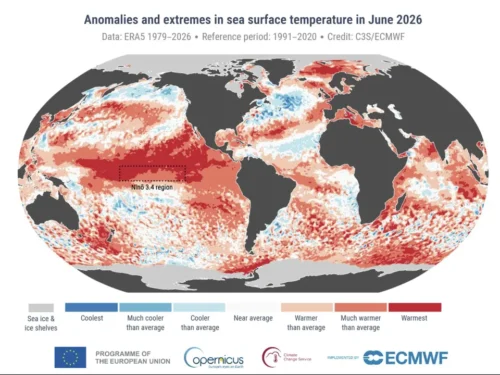 “As Californians settle into our summer of 2026, we’re hearing more about a possible El Niño event this coming winter. And not just any El Niño event—possibly one for the ages. The National Oceanic and Atmospheric Administration’s Climate Prediction Center predicts a greater than 60% chance of a “very strong” El Niño through January that would rank among the most powerful on record going back to 1950. It also has the potential to be the costliest on record, possibly surpassing $5.5 trillion in global financial loses after widespread flooding in 1997-98 due to El Niño conditions. Climate scientist Dr. Daniel Swain focuses on the dynamics and impacts of extreme events—including droughts, floods, storms, and wildfires—on a warming planet. He shares research (and sometimes warnings) on his popular blog Weather West, like this about the increasing likelihood of a significant El Niño event this winter. “Multi-model ensemble predictions have become even more aggressive and are now explicitly predicting an El Niño of very strong, and quite possibly record-breaking, magnitude by autumn or early winter,” Swain published on June 11. “In fact, the just-released multi-model ‘superensemble’ predictions for June are nothing short of remarkable, with the median forecast from every single international model ensemble depicting at least a ‘strong’ event, and the majority indicating a top-tier, very strong-to-historic event.” … ” Read more from River Partners.
SEE ALSO:
- A ‘super’ El Niño could wreak havoc on CA marine ecosystem, from KSBW
- A “Godzilla El Niño” next year could be a glimpse into the future, from Vox
How a potential hurricane 1,200 miles away could affect the California coast
“More than 1,000 miles south of Los Angeles, Tropical Storm Elida was forecast to strengthen to the first east Pacific hurricane of the season Friday. The storm was feeding off record warm tropical waters, which should help it grow into a Category 1 hurricane with maximum wind speeds of 85 mph. The stronger Elida gets, the more clouds it will push tens of thousands of feet into the atmosphere. Elida will quickly weaken over colder seas this weekend, but the storm is well positioned to have ripple effects on California’s weather as early as Sunday, with rough seas and picturesque clouds. Even more moisture could approach the state next week. If that happens, the entire California coast could experience more than cloud-brightened sunsets: The impacts could include tropical-like humidity, rare July rain and even a few thunderstorms. Here’s what to know about Elida and its potential California impacts … ‘ Read more from the San Francisco Chronicle. | Read via Yahoo News.
State poised to nix pumping along Friant-Kern Canal in Tulare County by early 2027
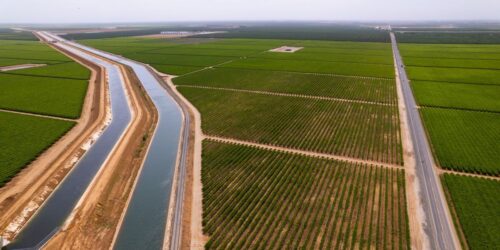
“Growers who farm within two miles of the Friant-Kern Canal in southern Tulare County should be prepared for a pumping moratorium as early as April 2027, water managers learned Thursday. The move is part of Phase I of the state Water Resources Control Board’s proposed pumping plan, which zeroes in on damage to the canal caused by overpumping. The cost of that damage already tops $797 million, according to a slide presented Thursday. The severity of the state’s plan did not surprise water managers, but the accelerated timeline did. “It speaks to the urgency,” said Eric R. Quinley, general manager of Delano-Earlimart Irrigation District Groundwater Sustainability Agency (GSA). It also clarifies the state’s laser focus on subsidence, or land sinking, which has been rampant in the Tule subbasin. … ” Read more from SJV Water.
Salmon fishing returns to Sacramento River after 3-year closure as restoration efforts continue
“For the first time in three years, fisherman are once again casting their lines into the Sacramento River in search of Chinook salmon. California officially reopened salmon fishing on the river this week after a three-year closure brought on by historically low salmon populations. The reopening marks a significant milestone for fishermen, guides and conservationists who have spent years working to restore one of the state’s most iconic fish species. The Sacramento River is best known for its Chinook salmon, one of four major salmon species found in California alongside coho, pink and chum salmon. The season runs through Dec. 31, but anglers must have a valid California sport fishing license and are limited to two Chinook salmon per day. … ” Read more from CBS Sacramento.
SEE ALSO: Salmon fishing returns to Sacramento River after 3-year hiatus. Anglers hope it lasts, from the Sacramento Bee
Longfin smelt surge in the Napa River
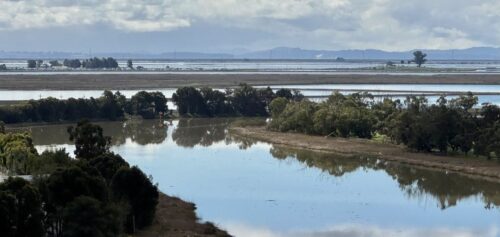
“Biologists studying the San Francisco Estuary’s endangered fishes are trying to unpack a puzzling but encouraging uptick of endangered longfin smelt in a small North Bay watershed. With the fish declining in most of the estuary, time is running out to stabilize the population. Now, scientists hope that understanding why longfin are aggregating in this small stream system could guide efforts to protect critical habitat and save the species from extinction. In the last quarter century, the longfin smelt population has collapsed, following the path of most fishes native to the estuary. Loss of wetland habitat, depleted river flows, and climate change are the probable culprits. However, in the past three years, the fish’s numbers have shown a modest bump—likely from the ecosystem benefits of three consecutive wet winters beginning in 2023. History has shown that winters of high precipitation prompt increases in longfin numbers; this pattern is accentuated when wet years occur consecutively. “You get a compounding effect from these back-to-back wet water years,” says Colin Brennan, who supervises the California Department of Fish and Wildlife’s Interagency Ecological Program. … ” Read more from Alastair Bland at Maven’s Notebook.
As snowpack shrinks, Sierra Nevada mountain ponds undergo dramatic change
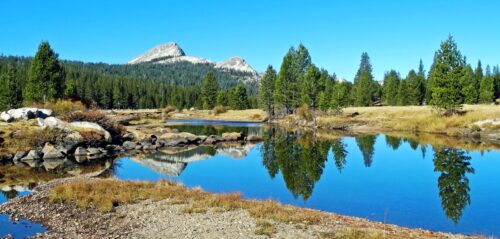
“On a summer afternoon in the Sierra Nevada, a mountain pond can look calm and still, reflecting granite peaks and alpine sky. But beneath the surface, these small, shallow waters are anything but stable. In fact, they are among the most thermally variable aquatic ecosystems on Earth, with water temperatures sometimes swinging more than 20°C (68°F) in a single day. According to new research published in the journal Ecosphere, the force driving much of that variability begins months earlier: winter snowfall. The study found that snowpack largely determines how mountain ponds function during the summer, influencing water temperature, nutrient levels and the abundance of tiny aquatic animals that support the rest of the food web. The research grew out of a collaboration between two graduate students studying high-elevation ponds: Christine Bonadonna, a former Ph.D. student at the University of California, Irvine, and Mary Jade Farruggia, a former Ph.D. student at the University of California, Davis. Though they began with separate projects, they realized their questions overlapped and combined their efforts to better understand these widespread but often overlooked ecosystems. … ” Read more from UC Irvine.
UC Davis: Winter grains could help keep farmland productive
“As California farmers continue adapting to groundwater restrictions, new UC Davis research points to a possible way to keep more farmland productive. The research contributed to a new Public Policy Institute of California report examining options under the state’s Sustainable Groundwater Management Act. The release says groundwater reductions could eventually take between 500,000 and 900,000 acres out of production, potentially affecting up to 20 percent of the San Joaquin Valley’s irrigated fields. … ” Read more from Ag Info.
DWR publishes draft revised Certification of Consistency for Delta water tunnels
“The Department of Water Resources has published its draft revised Certification of Consistency with the Delta Plan for the Delta Conveyance Project (OCP). The revisions address issues called out (or remanded) by the Delta Stewardship Council in April, related to Sac Sewer’s Harvest Water project and golden mussels. Publication started the clock on a 10-day public review and comment period. Interested parties should send all comments to DCP_Consistency@water.ca.gov by July 23, the state said in a press release. The U.S. Army Corps of Engineers, Sacramento District, finalized its Record of Decision for the proposed tunnels, completing the agency’s programmatic environmental review under the National Environmental Policy Act. … ” Read more from the Department of Water Resources.
Beyond Prop. 4: Why data standards and governance matter for water resilience
“In May 2026, the California Water Data Consortium hosted a virtual Town Hall on leveraging water data infrastructure to maximize the benefits of Proposition 4. Over 150 leaders from state agencies, local water agencies, nonprofits, research institutions, and communities registered to participate. The conversation made at least one thing overwhelmingly clear: proactive investment in water data infrastructure is critical for climate resilience success in California. Three interconnected challenges emerged as priorities: regional data coordination, aligned data governance, and workforce development. Addressing these will require sustained funding beyond the Proposition 4 bond itself – and General Obligation bonds in general. … ” Read more from the California Water Data Consortium.
DWR releases onboarding tutorial video for Groundwater Sustainability Agencies
“The Department of Water Resources (DWR) has developed GSA Onboarding Resources including an Onboarding Checklist and a Handbook Template, to support Groundwater Sustainability Agencies (GSAs) as they welcome new board members and staff into their roles under the Sustainable Groundwater Management Act (SGMA). These materials are designed to help orient new team members to GSA governance, local Groundwater Sustainability Plan (GSP) implementation, and key SGMA requirements. … ” Read more from DWR.
Saronic skips California Forever, Solano County for shipyard
“Saronic, an autonomous shipbuilding company long courted by California Forever, announced Thursday that its $3.2 billion Port Alpha project will be constructed in Brownsville, Texas, instead of Solano County. Saronic expects the project will create 10,000 permanent jobs and 10,000 construction jobs during the next decade. The project will begin with 835 acres at the already existing Port of Brownsville and could expand to more than 4,000 acres. Cameron County, Texas, recently approved a 95 percent tax abatement for the shipbuilder, but the county expects to generate more than $160 billion in regional economic impact. “This project will help position Cameron County and the entire Rio Grande Valley at the forefront of the nation’s maritime future,” said Cameron County Judge Eddie Treviño, Jr. “We’ve always known the tremendous potential our community has to offer, and we’re proud that Saronic recognizes Brownsville and Cameron County as the right place to make this historic investment. Beyond the thousands of jobs the shipyard will create, this project will generate economic opportunities that will benefit our residents, local businesses, and future generations for decades to come.” … ” Read more from the Vacaville Reporter.
SEE ALSO: ‘A Devastating Outcome’: California Forever Boosters Decry Loss of Shipbuilding Deal, from KQED
POLICY & REGULATION
Senate committee advances Padilla bill to support ecological restoration
“Today, the Senate Committee on Energy and Natural Resources held a hearing on U.S. Senator Alex Padilla’s (D-Calif.) bipartisan bill to restore a long-lost salmon run on the San Joaquin, California’s second longest river. The bill advanced out of committee by voice vote. “As droughts, floods, rising project costs, and funding delays continue to threaten watersheds across our state, Congress has a responsibility to restore salmon and improve recreational access to free-flowing rivers in areas like the San Joaquin Valley,” said Senator Padilla. “I am proud to see my bill to authorize additional funding to support ecological restoration of the San Joaquin River advance. My bill also mitigates water supply losses for Friant Division farmers, and I will continue to advocate for bolstering drought resiliency and water supply across California.” … ” Continue reading from Senator Alex Padilla.
Commentary: AB 2026 is an duplicitous response to climate change
Max Gomberg, C-WIN Senior Policy Advisor, writes, “When the legislature passed the Sustainable Groundwater Management Act (SGMA) in 2014, the harms from unregulated groundwater pumping had become dire. Rural community drinking water wells were running dry, land subsidence was damaging key infrastructure, and the capacity to recharge groundwater basins was being lost. Much of the crisis owed to demand created by water-intensive permanent crops like almonds, which were planted on massive swaths of land due to their profitability. SGMA created a new set of agencies to manage groundwater and gave them roughly a quarter century to develop and implement plans to bring overdrafted groundwater basins into balance. Loathe to impose pumping restrictions that would impact profits, most of these Groundwater Sustainability Agencies (GSAs) have focused on ways to store additional water. However, getting more water into the ground means getting more water from somewhere else without harming other water users and the environment. … ” Read more from C-WIN.
In commentary today …
The Forest Service’s fuel reduction strategy is adding fuel to the fire
“Most of the West’s perennial wildfire plague is due to human stupidity. But it’s not just the careless people who start the fires. Given the primary risk factor for massive forest fires is hotter, drier forests from the climate crisis, there is a long list of guilty parties. First, there’s all the people that voted for politicians who ignored the climate crisis or called it a hoax. Then there’s the Supremely Corrupt Court, that has enshrined contempt for environmental and climate protection beginning with an “inconvenient” awarding of the 2000 election to fossil fuel handmaidens Bush and Cheney instead of climate champion Al Gore. Now 26 years later, we have a president who is so malevolently abusive to the environment he is spending billions bribing companies to sabotage clean energy and diligently burning up the planet “like no one’s ever seen before.” Chasing America’s bumbling descent into psychotic irrationality, much of the world has also thrown in the towel on preserving an inhabitable climate. … ” Read more from the Utah News Dispatch.
In regional water news and commentary today …
NORTH COAST
Humboldt marijuana enforcement team busts illegal Alderpoint grow, destroys 3,000-plus growing plants and 2,300 pounds of weed
“On July 16, 2026, deputies with the Humboldt County Sheriff’s Office Marijuana Enforcement Team (MET) served a search warrant as a part of an investigation into illegal cannabis cultivation in the 200 block for Ware Ranch Road in the Alderpoint area. The California Department of Fish & Wildlife and the California Department of Cannabis Control assisted in the service of the warrants. … During the service of the warrant, deputies eradicated approximately 2,180 growing cannabis plants, 1,199 cannabis clone starts. Additionally, Deputies seized and destroyed over 2,300 pounds of cannabis bud. … ” Read more from the Lost Coast Outpost.
SIERRA NEVADA
How a dinner plate-like disk tracks Lake Tahoe’s quintessential blue water
“Each year for the last 50, researchers from UC Davis have boarded the Research Vessel John LeConte around midday and slowly motored out into Lake Tahoe’s vast expanse. Somewhere in the middle, they come to a stop, bobbing on the turquoise surface. The researchers look over the side, down into one of the deepest lakes in the world and drop a 10-inch white disk, not much different than a dinner plate, into the water. Then they watch it sink. When it disappears to the eye, they measure the distance and pull it back up with a rope until they can see it again and measure once more. The reading in between those measurements is called the Secchi depth. “It’s just been a really practical tool over decades or over a century for measuring water clarity,” said Stephanie Hampton, director of the Tahoe Environmental Research Center. … ” Read more from Abridged.
SEE ALSO: Tahoe Environmental Research Center shares State of The Lake report for 2026, from KTVN
SACRAMENTO VALLEY
Despite heat waves, Lake Shasta water level is where it needs to be
“In spite of a dry spring and a June heat wave, Lake Shasta waters are right where they should be, historically speaking, thanks in part to powerful wet winter storms and their runoff that filled the reservoir. The U.S. Bureau of Reclamation reported the rain-dependent reservoir, which is California’s largest, was 73% full as of midnight on Wednesday. That’s the lake’s historic average for that date over the past 30 years. Each year, 90% of the water that fills Lake Shasta comes from rain. Lake Shasta’s surface lapped a little more than 45 feet from the top on July 15, according to the California Department of Water Resources. “The water stored in the reservoir represents about 41% of the stored water in the CVP (Central Valley Project),” said the bureau of reclamation. The Sacramento, Pit and McCloud rivers and Squaw Creek feed the lake. … ” Read more from the Redding Record Searchlight.
Sacramento city employees will inspect your trash this summer
“Sacramento residents will start to see workers in neon yellow vests going through their garbage bins this week. The city’s code enforcement officers will lift the lid on bins from 4,800 randomly selected households through September to make sure that they’re complying with Senate Bill 1383. It’s a state law that requires businesses and property owners to separate their organic waste from the landfill. Residents in the city a allotted one grey trash bin, one brown organic waste bin and one blue recycling can. Jesa David, a city spokesperson, said staff will briefly lift the lid, snap a picture of its contents and either leave a “Great job” or a “Let’s sort this out” tag. … ” Read more from Capital Public Radio.
Dixon eyes large expansion
“The city of Dixon hosted a Notice of Preparation (NOP) scoping meeting Monday regarding its Environmental Impact Report for the Harvest Master Plan, Lombardo Master Plan, Southeast Annexation and general plan amendment. The proposal, if accepted by the Dixon City Council and the Solano Local Agency Formation Commission, would expand Dixon’s city limits by more than 2,000 acres. “This reissued NOP is being distributed to applicable responsible agencies, trustee agencies, interested agencies, parties, and organizations as required by CEQA,” the NOP reads. “Interested agencies and parties are requested to comment on the scope and content of the significant environmental issues, mitigation measures, and reasonable alternatives to be explored in the Draft EIR.” … ” Read more from the Santa Rosa Press Democrat.
BAY AREA
Marin county beaches miss honor roll as summer water quality grades drop
“Water quality at Marin County beaches remained strong during the 2025 monitoring season, according to the 36th annual report from Heal the Bay[External]. The annual report rates water quality at beaches along the U.S. West Coast using bacterial monitoring data collected by local agencies. The majority of Marin beaches continued to receive strong A and B grades during the summer dry weather. In fact, 78% of Marin beaches received A’s and B’s. However, these results were far below the historical average of 97%. This year’s report also showed that 91% of California beaches received A and B grades in summer dry conditions; 81% in winter dry conditions; and 61% during wet weather. This year, Northern California in general saw a lot less rain about 30% below the usual 10-year average. While the drier conditions appeared to benefit wet weather grades regionally, Marin saw the opposite trend during summer dry weather: fewer beaches earned safe-to-swim grades compared to recent years. That unusual pattern since lower rainfall is typically associated with better water quality warrants further investigation by beach managers. … ” Read more from Marin County.
The podcast studio is gently floating in the harbor
“Four years ago, 86-year-old Michael Herz and his wife Kate Josephs were living in Maine when, in the clear-eyed aftermath of a powerful psychedelic mushroom trip, they decided to upend their lives, move aboard a boat in the East Bay, and start producing a podcast on the history of the San Francisco Bay. Neither of them had any journalistic experience. “Suddenly moving across the country and living on a boat half the year sounded like a totally reasonable thing to do,” says Josephs, motioning around The Office, their boat, which gently bobs. The idea, Herz says, had been encouraged by Malcolm Margolin, founder of Heyday Books and co-founder of Bay Nature. Margolin had sent a letter to Herz, an old friend and fellow environmentalist, detailing the concept for an expansive book he wanted to write about the San Francisco Bay. “There are so many ways of seeing the Bay, so many stories to tell: stories of natural history, human history, built environments, industry, recreation transportation, diverse cultures, the arts,” Margolin wrote. “I see views of the Bay that range from satellite photos to microscopic close-ups of the 40,000 living organisms that can be found in one cubic inch of the tidal mud.” … ” Read more from Bay Nature.
CENTRAL COAST
This tiny oyster once thrived in California. Now, scientists are bringing it back
“On a cool July morning, the scent of burning sage drifted across Elkhorn Slough as a quiet circle of more than a dozen volunteers and conservationists, including Amah Mutsun Tribal Band members, introduced themselves. They passed around the smoldering bundle in an Indigenous ritual of cleansing and renewal, known as smudging. Afterward, the group set out on a 20-minute trek to Oak Marsh, passing by a great blue heron, rabbits, patches of blooming yellow lupine, following a boardwalk that extends over mudflats at low tide. There, laid out on folding tables, were recycled clamshells studded with tiny Olympia oysters. The group’s task was straightforward: measure each oyster, record its size and secure the shells to biodegradable stakes to carry to a nearby gravel bar. … ” Read more from KQED.
Report: Lettuce supplied by Taylor Farms linked to diarrhea-causing illness
“Taylor Farms, which is headquartered in Salinas, supplied lettuce to Taco Bell that has been linked to an outbreak of cyclosporiasis in five states according to reports by the Washington Post and New York Times. More than 30 states have reported infections this year, and current data from them shows the number of infections surpassing the record U.S. mark of about 4,700 set in 2019. The illness is not usually life threatening and is typically treated with antibiotics. Thursday, the Centers for Disease Control reported on its website that cyclospora infections in five states were linked to shredded iceberg lettuce served at Taco Bell locations in Indiana, Kentucky, Michigan, Ohio and West Virginia. The CDC reported 1,644 people who were infected reported eating at Taco Bell in those five states. There have been 94 hospitalizations and no deaths according to the CDC website. The Times and Post reported that two federal officials, who declined to be named, indicated the lettuce was supplied by Taylor Farms. The CDC did not name Taylor Farms or any specific supplier, only saying the lettuce came from Mexico. … ” Read more from the Monterey Herald.
SEE ALSO:
- Parasitic Outbreak Linked to Taylor Farms Lettuce Supplied to Taco Bell, from the Wall Street Journal (unlocked article)
- Salinas-based Taylor Farms linked to U.S. cyclospora outbreak, report says, from CBS Sacramento
Two local government success stories, one slow and one fast.
“A fact that should be shocking in the 21st century in the United States of America: It is not safe to drink the tap water in the South Monterey County community of San Lucas, and it hasn’t been since at least 2011. That’s when public health officials first issued a “Do Not Drink” order due to an unsafe level of nitrates in the water. “We are requiring the use of bottled water or water from an approved source for drinking or cooking,” a July 7, 2011 notice from the Health Department read. “Research is being done to find another water source.” Fifteen years later, it looks like that research – and the funding needed to accomplish it – is finally here. On Tuesday, July 7, the Monterey County Board of Supervisors voted 5-0 to accept a $4 million construction grant from the State Water Resources Control Board, reflecting funding that was earmarked by the State Legislature to serve this rural community of roughly 325 people served (theoretically) by 100 water connections. … ” Read more from Monterey County Now.
Unusual amount of oil and tar reported on beaches across South Coast
“When Caden McQueen was heading down Santa Barbara’s Milpas Street for a morning stroll on East Beach, the stench of petroleum caught his attention. “The smell was intense,” he said. As he approached the shoreline, he saw clumps of crude oil washing up onto shore from the breaking waves, some as big as tennis balls. McQueen noticed two swimmers rinsing off in the showers next to Cabrillo Pavillion, and “the water running away from the washing station was blackish brown. It was really quite appalling.” Carrie Giesy noticed a similar phenomenon yesterday at Santa Claus Beach in Carpineria, writing in to the Independent’s tip line that “a huge oil slick rolled in and completely covered the shoreline with giant globs of tar.” The City of Carpinteria issued a beach alert Thursday acknowledging that there is more than usual amount of tar and oil on the city’s beaches, attributed it to natural seeps, and said that the city “will not initiate a remediation response.” … ” Read more from the Santa Barbara Independent.
EASTERN SIERRA
Ridgecrest moves forward with intervener petition in Inyokern data center review
“During the July 15 city council meeting, the Ridgecrest City Council directed staff to move forward with filing a petition for intervener status in the California Energy Commission’s (CEC) review of the proposed Inyokern Data Center project. City officials say this move would give Ridgecrest access to technical studies and a formal role in the approval process without signaling support or opposition to the project. According to Travis Reed, Ridgecrest City Manager, this petition will put the City in a position to participate in hearings, review environmental documents, and submit comments related to potential impacts on groundwater, electrical infrastructure, housing, economic development, and public infrastructure. “This is not taking a position,” said Reed during the discussion. “This is simply getting you at the table so that way you can be party to testimony, you can see communications, and you have more information than what is readily published.” … ” Read more from the South Valley Sol.
SOUTHERN CALIFORNIA
Chiquita Canyon Landfill starts repairs, residents cry foul
“Assemblywoman Pilar Schiavo and L.A. County Supervisor Kathryn Barger have issued a joint demand calling for Chiquita Canyon Landfill to do more to protect nearby residents from the impacts of new work Chiquita is undertaking to shore up the landfill’s west end to prevent a potentially catastrophic failure. Schiavo, D-Chatsworth, and Barger, whose district includes the Santa Clarita Valley, sent a joint letter to the landfill and its parent company, Texas-based Waste Connections, and issued statements Thursday saying they understand the work is necessary — but it is only exacerbating residents’ years-long battle with the landfill’s stench and resulting health impacts. The landfill, Schiavo and Barger said, is not doing enough to shield residents from those debilitating impacts, and their letter called for a response and a plan for additional community support by Friday. … ” Read more from The Signal.
Major West Hollywood water main break opens sinkholes, closes multiple streets
“Water rushed down West Hollywood streets like raging river rapids Thursday after a 36-inch-wide water main broke on the Sunset Strip, opening sinkholes, and many roads were closed as crews shut valves and went to work assessing the damage. The Los Angeles County Fire Department said that a major water main was reported broken around 3 a.m. Thursday in the area of Palm Avenue and Harratt Street. Live television broadcasts and video showed water roaring downhill from Sunset Boulevard at Holloway Drive to Santa Monica Boulevard and into the Metro bus yard on Santa Monica Boulevard near San Vicente Boulevard. “This is a big break,” Los Angeles County Fire Department Capt. Aaron Katon told City News Service. “We have a lot of old pipes in this area. But a break this big is exceedingly rare.” … ” Read more from the LA Daily News.
Century-old ruptured water main in West Hollywood was slated for replacement under LADWP project
“The water main that ruptured Thursday in West Hollywood, flooding streets and opening a massive sinkhole, was already slated for replacement as part of a high-priority Los Angeles Department of Water and Power infrastructure project. The ruptured Sunset Trunk Line is included in LADWP’s Water System Capital Improvement Program as a high-priority replacement project, the department said in a statement Thursday. LADWP manages water for roughly two-thirds of West Hollywood residents, according to the city. The utility budgeted $280 million to replace 6.4 miles of the 36-inch-diameter trunk line, along with 6.4 miles of a smaller water line that runs parallel to it. According to LADWP, the replacement project is currently in the design phase. … ” Read more from KABC.
SEE ALSO: Sinkhole on Sunset Boulevard: broken water pipe floods LA-area hotspot, from The Guardian
Residents of one California town cause developer to withdraw local data center proposal
“A developer recently withdrew a proposal to build a massive data center in El Segundo after hearing droves of residents oppose the project. It happened after the first reading of the plan during a public hearing at the El Segundo Planning Commission’s meeting last week. The community’s opposition stopped the process before it even reached the point of a commission vote. The real estate development firm Eight Form applied to demolish the existing Hyatt Place hotel, 750 N. Nash St., and build a five-story, nearly 240,000 square-foot data center in its place. The data center would have housed computer servers supporting equipment for private clients, such as web hosting, network storage and application processing, according to the project proposal. It would have reached up to 169 feet in the sky, and be accompanied by a high-voltage electrical substation to power the center. But community concerns over excessive power use, noise, pollution and other issues led Eight Form founder Arjun Shokeen to withdraw the proposal. … ” Read more from the San Jose Mercury News.
Bureau of Land Management approves Cadiz water pipeline
“The Bureau of Land Management on Friday, July 10, approved a right-of-way allowing Cadiz Inc. to carry water out of a desert aquifer and into communities across Southern California and possibly Arizona. The 50-year grant allows the company to convert its Cadiz Northern Pipeline from natural gas to water, and then to use the 220-mile pipeline to convey water across BLM lands. The water will come from the Fenner Valley Aquifer System in the eastern Mojave Desert, near California’s borders with Arizona and Nevada. Cadiz Inc. is developing a pumping and storage system called the Mojave Groundwater Bank to extract the water and use two pipelines — one the former gas pipeline — to pump it to customers. “We’re excited to achieve this pivotal milestone,” said Susan Kennedy, chair and CEO of Cadiz. “After many years of planning and environmental review, the project is now ready to begin the construction stage.” … ” Read more from the Hi-Desert Star.
Man found dead in intake pond at Mojave Desert water plant. Who he is, how he got there is a mystery
“An unidentified man was found dead early Wednesday inside a water-pumping plant in the desert near the California-Arizona border, authorities said. Deputies from the San Bernardino County Sheriff’s Department responded to the Iron Mountain Pumping Plant at about 6:45 a.m. after receiving word that a person had been found floating in the plant’s intake area, according to authorities. In a statement to The Times, the Metropolitan Water District of Southern California confirmed that the man was not one of their employees at the plant. “Still, our hearts go out to the friends and family of the individual involved,” said Rebecca Kimitch, a spokesperson for the agency. … ” Read more from the LA Times.
IMPERIAL/COACHELLA VALLEYS
Nonprofit asks to renew challenge to Southern California lithium mine
“A community nonprofit opposed to the development of a lithium mine and geothermal power plant in California’s arid Imperial County asked a state Court of Appeal panel on Thursday to reconsider their petition aimed at halting the development of the project. Comite Civico del Valle argued to the panel the Imperial County Board of Supervisors violated the California Environmental Quality Act after it approved the project based on a flawed and inadequate analysis of the project’s environmental impacts in 2024. A judge denied their petition last year. Attorney Doug Carstens argued to the three-justice panel the project’s environmental impact report overstated the water availability in Imperial County and did not fully appreciate the impact the project would have on an agricultural region that already suffers from strained water resources. The project is expected to use 6,500 acre-feet of water — or a little more than 2 billion gallons — per year, Carstens told the panel. … ” Read more from the Courthouse News Service.
SAN DIEGO
Coronado’s Glorietta Bay closed due to reported sewage contamination
“San Diego County’s Department of Environmental Health and Quality has issued a water closure of Glorietta Bay in Coronado because of a reported sewage release. The announcement comes as closures continue at the Tijuana Slough, Imperial Beach Shoreline and Silver Strand Shoreline — all ocean shoreline from the U.S.-Mexico border to the Silver Strand State Beach Campground — due to sewage in water stemming from the Tijuana River watershed. Beachgoers were advised Thursday that the ocean water in the area contains sewage and may cause illness. Ocean waters will remain closed until sampling and field observations confirm these areas are safe for water contact, a county statement said. … ” Read more from the Times of San Diego.
‘No more vague commitments’: San Diego leaders say trade deal must have Tijuana River sewage solution
“San Diego leaders are calling for a renewed U.S.-Mexico-Canada Agreement (USMCA) to include solutions to the Tijuana River sewage crisis. Their demand comes in response to President Trump’s refusal earlier this month to renew the trade deal. At a news conference Thursday in Otay Mesa, officials said the president’s decision has created an opportunity for the U.S. to strengthen the agreement. “No more loopholes, no vague commitments, no more deferring responsibility while communities suffer,” said San Diego County Supervisor Paloma Aguirre. Her District 1 constituents, who live near the polluted Tijuana River, have experienced symptoms like headaches, nausea, chronic coughs and gastrointestinal issues, and have lost beach access for years due to sewage pipelines failing in Mexico. … ” Read more from KPBS.
No pollution fix, no deal: Officials warn renewal of international trade pact must be tied to solving crisis
“Local elected officials and environmental organizations called on negotiators of the United States-Mexico-Canada Agreement to include binding solutions to the Tijuana River sewage and pollution crisis in any extension or renewal of the trade pact during a press conference Thursday near the U.S.-Mexico border. The event, held at the John J. Montgomery Memorial Wing in San Diego, featured Assemblymember David Alvarez, San Diego County Supervisor Paloma Aguirre, and representatives from Sierra Club San Diego, WILDCOAST, Surfrider Foundation, Four Walls International and the Tijuana River Coalition. This push from officials has come as the U.S., Mexico and Canada negotiate the future of USMCA, with talks set to resume July 20. U.S. Trade Representative Jamieson Greer has acknowledged the administration intends to address the agreement’s “shortcomings” before considering any extension, according to organizers. … ” Read more from the San Diego Union-Tribune.
Along the Colorado River …
A major Colorado River reservoir is getting ‘perilously’ low
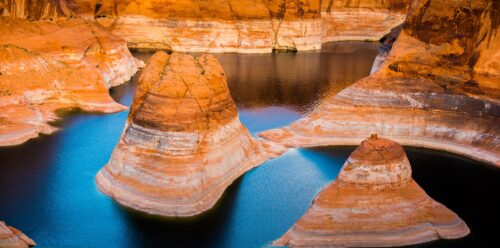
“Water levels in Lake Powell, the second-biggest reservoir on the beleaguered Colorado River, are in danger of falling so low that its dam can no longer generate hydropower, according to a federal analysis released Wednesday. The new “most probable” forecast from the Bureau of Reclamation projects that the height of water in Lake Powell, which sits on the border of Utah and Arizona, will fall to 3,491 feet by March. That’s just one foot above “minimum power pool,” the level at which water can no longer flow through the Glen Canyon Dam to produce energy. Coming amid a historic drought worsened by climate change, which has already pushed the combined storage in the river’s biggest reservoirs to an all-time low, the forecast emphasizes the urgency of deadlocked negotiations over the Colorado River’s future. … The agency’s latest study is slightly more optimistic than one from last month, which had Lake Powell falling to 3,488 feet next spring, but it remains much too close for comfort, experts said. … ” Read more from the Washington Post.
The Colorado River’s biggest reservoirs are in ‘uncharted territory’ after new record low
“The nation’s two largest reservoirs are extraordinarily dry, and just set a new record for low water levels. Lake Powell and Lake Mead, which store water from the Colorado River for use by major cities, tribes, and a massive agriculture industry, are the lowest they’ve been in nearly 70 years. The last time their combined storage was this small was in May 1957, before Lake Powell was even built. The data comes from a new paper published by a widely-respected group of Colorado River experts. The paper’s authors — a group of academics and retired water officials — write that Powell and Mead are often measured separately, but should be counted together to paint a complete picture of how much water is available from a river that supplies nearly 40 million people across seven Western states. … ” Read more from KJZZ.
SEE ALSO:
- The Colorado River’s 2 biggest reservoirs just hit a new record low, from the Salt Lake Tribune
- Lake Mead nears ‘dead pool,’ putting water, power, and farms at risk in Nevada, Arizona, and California, from The Cool Down
Super El Niño? What could that mean for the Colorado River?
“El Niño is often portrayed as a predictable event that has the same effect whenever it appears. In reality, however, the effects of El Niño are not guaranteed, and this winter’s competing oceanic and atmospheric cycles are a perfect example of that. Context matters – none of these cycles is happening in isolation and the way in which they interact can make or break expectations. So, let’s break it down by looking at the ocean, the atmosphere – and the complicating factors. El Niño is a seasonal pattern: it persists over several months. Defined by the trend in sea surface temperature anomaly (SSTA, or “how different current temperatures are from the long-term average”) in the “El Niño 3.4” region of the Tropical Eastern Pacific Ocean, it is primarily an oceanic phenomenon. … ” Read more from Know Your Water News.
Colorado still has some summer river flows fit for rafting — even in severe drought. Here’s why.
“Amid a devastating drought, Colorado’s labyrinthine water management rules have yielded a silver lining for rafters, kayakers and visitors seeking the thrill of whitewater. Even in the driest of years — like this one — powerful Western Slope water rights on the mainstem of the Colorado River draw water downstream, making boating on the state’s major water artery possible. “For mainstem floating, we should still have pretty darn good flows for the rest of the season for as long as people want to be boating,” said Sam Calahan, a water resources specialist for the Colorado River District. The taxpayer-funded agency is based in Glenwood Springs and works to protect Western Slope water. The dismal winter snowpack that resulted in a disappointing ski season has now translated to statewide drought. An unusually warm spring prompted early runoff and early peak flows in most Colorado rivers. Those flows then fell precipitously to levels too low for most sane boaters. … ” Read more from the Denver Post.
Feds downlist razorback sucker, one of Grand Canyon’s native fish
“The U.S. Fish and Wildlife Service has downlisted the razorback sucker from endangered to threatened, citing growth in fish populations that the agency says has reduced the risk to the species. The freshwater fish, which is native to the Colorado River and the Grand Canyon, was first listed in 1991 after dams on the river and other waterways in the Colorado River Basin fractured its habitat and created conditions that hampered its ability to reproduce. Non-native fish in the river also contributed to losses to the species. The sucker is the second Canyon fish downlisted from endangered to threatened. The Fish and Wildlife Service reclassified the humpback chub in October 2021. … ” Read more from Arizona Central.
Trump administration curbs razorback sucker protection despite reproduction failures, Colorado River crisis
“The U.S. Fish and Wildlife Service today announced a final rule reducing protections for the razorback sucker, one of the Colorado River’s iconic native fishes, by reclassifying it from endangered to threatened under the Endangered Species Act. The fish, which can grow up to 3 feet long and live for 40 years, declined sharply after dam construction fragmented its populations. Those populations are now further threatened by non-native fish preventing reproduction by eating larvae and juveniles, declining river flows from regional warming, and loss of river-side nursery habitats. “The razorback sucker’s outlook is no better today than when the fish was originally protected under the Endangered Species Act in 1991, so this move makes no sense,” said Taylor McKinnon, Southwest director at the Center for Biological Diversity. “It’s still in danger of extinction throughout its range, which should preclude this downlisting.” … ” Read more from the Center for Biological Diversity.
Southern California water giant strikes $65 million deal to help prop up Lake Mead
“In a bid to prop up a rapidly shrinking Lake Mead and protect the Southwest’s electricity grid, Southern California’s primary water wholesaler approved a deal Tuesday to leave up to 200,000 acre-feet of its Colorado River supply in the reservoir this year. Under the agreement, the federal government will pay the Metropolitan Water District of Southern California (MWD) $325 per acre-foot–up to $65 million total–to keep the water in the reservoir rather than delivering it to Southern California cities. The funding is backed by the federal Inflation Reduction Act’s Lower Colorado River Basin System Conservation and Efficiency Program. … ” Read more from the Imperial Valley Press.
Colorado water officials announce creation of state-run conservation program
“In the culmination of a process that has been years in the making, Colorado officials Wednesday announced the creation of a state-run water conservation program. In what officials are calling a “near-term contribution program,” the Upper Basin states (Colorado, New Mexico, Utah and Wyoming) will pay water users to voluntarily cut back in 2027 and 2028, using $100 million in promised funding from the U.S. Bureau of Reclamation. Colorado will now join Utah and Wyoming in setting up a conservation program within their respective states. The noteworthy, long-expected announcement came at the regular July meeting of the Colorado Water Conservation Board, where board members considered the criteria for the program. A draft list says the program must, among other criteria, avoid negative community impacts; encourage contributions from across the state and water-use sectors; incentivize environmental benefits; encourage tribal participation; and build local drought resiliency. The board is scheduled to finalize the program criteria at its September meeting. … ” Read more from Aspen Journalism.
Colorado water suppliers turn to computers and snitch lines to enforce drought restrictions
“Tim York sees Aurora residents watering their lawns on those extra days when they aren’t supposed to, even when their illegal watering happens at 4 a.m. York doesn’t actually see the violations with his own eyes. But the leader of Aurora’s water conservation program knows they’re doing it with the help of a new computer program. “We look at about 2.2 million data points for each individual day, so we’re looking at hourly water use data, and we built some scripts that run against that data on a weekly basis to say ‘was somebody irrigating when they’re not supposed to be?,’” York said earlier this month at his desk at Aurora’s water operations facility. With a few clicks of his mouse, York zeroed in on one of the thousands of watering violations recently committed in Aurora. A graph on one of his large LCD screens revealed a repeating pattern four days a week very early in the morning. He said it could only be a sprinkler on a timer. … ” Read more from KUNC.
Colorado’s drought isn’t impacting water access to fight wildfires, officials say
“As wildfires continue to rage in Colorado, fire crews say they have all the water they need even during a challenging water year. A poor snowpack and warm, dry days have exacerbated drought conditions and reduced reservoir storage to about 65% of the norm. Those conditions have primed landscapes to burn, but fire response teams say that access to water ranks among the least of their concerns. “There are places where what we call ephemeral streams may not be running. Certainly water flow in water sources is pretty starkly diminished this year because of the drought,” Steve Lipsher, spokesperson for crews fighting the Aspen Acres fire, said. “That said, that has not been a limitation in our ability to get water or to use water.” … ” Read more from the Colorado Sun.
In national water news today …
Feds accused of failing to protect freshwater species
“As the Trump administration moves the goalposts of what constitutes harm to animals protected by the Endangered Species Act, conservationists pushed Thursday to protect the Alvord chub and Great Basin ramshorn — two of five freshwater species at the center of a new suit against the U.S. Fish and Wildlife Service. The Center for Biological Diversity says Fish and Wildlife failed to issue timely findings on the welfare of the two aforementioned species, as well as the cinnamon juga, Donner und Blitzen pebblesnail and banded juga. “Freshwater species are disappearing faster than almost any other group of animals on Earth,” stated Tara Zuardo, a senior advocate for the center. “Yet despite overwhelming scientific evidence that they’re in crisis, the Fish and Wildlife Service has failed to meet basic deadlines mandated to prevent extinction.” The group details threats to the five species posed by cattle grazing, climate change and pollution, logging, recreation, water diversion and habitat degradation. … ” Read more from the Courthouse News Service.
PFAS and passive receivers: Efforts to pass CERCLA liability protections resurface
“The federal government’s efforts to regulate per- and polyfluoroalkyl substances (“PFAS”) continue to evolve under the Trump administration and current Congress. As part of a larger deregulatory push and the Environmental Protection Agency (“EPA”) Administrator Zeldin’s effort to implement the “biggest deregulatory action in U.S. history,” EPA issued on May 20, 2026, a notice of proposed rulemaking to rescind regulations under the Safe Drinking Water Act, 42 U.S.C. Section 300f et seq. (SDWA) for several types and mixtures of PFAS, along with all of EPA’s corresponding 2024 National Primary Drinking Water Regulations for these substances. At the same time, EPA issued another notice of proposed rulemaking to extend the Maximum Contaminant Level (“MCL”) compliance deadlines for perfluorooctanoic acid (“PFOA”) and perfluorooctane sulfonic acid (“PFOS”) from April 2029 to April 2031 under the SDWA. … ” Read more from the Brownstein Law Firm.
Data center troubles stoke industry’s fear of coming distress
 “Anxiety is growing among data-center operators that the projects could founder as local backlash builds across the US, according to a survey from AlixPartners. Project delays, labor shortages and tightening capital markets, all while community resistance to tech center developments is gathering force, are leading to the increasingly grim view of senior executives in the data center industry. In a poll of more than 400 respondents, 68% said they expected distressed situations to increase over the next 12 to 18 months, up from 66% in 2025, according to the global consulting firm. The preliminary report also blamed a lack of demand visibility as project delays are increasingly becoming the baseline expectation. Intensifying equipment logjams and competition to find skilled workers, like electricians or plumbers, have hurt the industry’s outlook, according to Andrej Danis, a partner and managing director at AlixPartners. … ” Read more from Bloomberg.
New climate report adds fuel to billion-dollar legal fight
“Environmental groups and tribes are suing the Trump administration over a new rule eliminating the majority of habitat protections for imperiled wildlife protected by the Endangered Species Act. Experts say the rule represents the most profound change to the law since it was first enacted in 1973, paving the way for more development and industrial activities that will likely harm vulnerable animals and plants. It’s the latest in a series of moves by the Trump administration to weaken the Endangered Species Act in ways that will benefit politically powerful industries like oil and gas. First proposed in April, the finalized rule will rescind the law’s longstanding regulatory interpretation of “harm,” which is defined as any significant habitat modification or degradation that kills or injures wildlife. … ” Read more from Inside Climate News.
Overlapping disasters challenge US amid Trump cuts
“Across the US this week, different disasters — from Canadian wildfire smoke darkening the skies in the Midwest and Northeast to extreme heat along the East Coast to catastrophic flooding in Texas — are disrupting daily life and putting people’s health at risk. When multiple weather catastrophes play out like this at the same time, or in quick succession, experts refer to them as compound events. As climate change makes compound events more likely, experts warned that grappling with them is further complicated by the Trump administration’s cuts to disaster work. The American disaster complex has long been struggling to cope with the increasing number of costly crises, but recent cuts to the Federal Emergency Management Agency (FEMA) have made the situation worse, according to Jeffrey Schlegelmilch, Columbia University’s faculty director of the National Center for Disaster Preparedness. “We are not as well prepared as we were a few years ago,” he said. … ” Read more from Bloomberg.
We’re getting better at knowing when climate change is to blame, National Academies report says
“Scientists have gotten much better at parsing how severe events are linked to climate change, a long-awaited report from the National Academies of Sciences, Engineering and Medicine has found. The report was developed by 14 experts (including climatologists, meteorologists, and atmospheric scientists) and updates a 2016 report on the same subject. That report found that climate change was partly responsible for worsening heat waves, cold events, droughts, and heavy precipitation events, but that improvements to attribution science—a branch of climate science that aims to determine the extent to which individual extreme weather events are caused by climate change—were needed. A decade later, the new report notes that advances in attribution science have allowed researchers to determine more effectively the link between climate change and specific weather events. … ” Read more from EOS.
New climate report adds fuel to billion-dollar legal fight
“The credibility of research linking climate pollution to specific natural disasters got a major boost Thursday. But the multibillion-dollar battle over the implications of that finding is just beginning. On one side of the fight are scientists, environmentalists and Democratic lawmakers. They argue that a new review of extreme weather attribution science by the National Academies of Sciences, Engineering and Medicine has more clearly established that fossil fuel companies are responsible for exacerbating heat waves, floods and hurricanes that have damaged the U.S. in recent years. On the other are oil, gas and coal producers and their Republican allies, who have questioned the motivations of National Academies researchers and sought to cast doubt on attribution science. They escalated that effort Thursday with a subpoena threat sent to the National Academies by the House Science, Space and Technologies Committee shortly after the institution published its attribution science review. … ” Read more from E&E News.

