
Several news sources featured in the Daily Digest may limit the number of articles you can access without a subscription. However, gift articles and open-access links are provided when available. For more open access California water news articles, explore the main page at MavensNotebook.com.
On the calendar today …
- MEETING: Delta Independent Science Board from 9am to 12:30pm. Agenda items include Scoping a Review of Harmful Algal Blooms, Scoping a Review on Nature-based Solutions, and Delta Lead Scientist Report. Click here for the full agenda.
- WEBINAR: From Data to Water Savings from 11am to 12pm. Discover how water utilities are tackling non-revenue water (NRW) amid aging infrastructure, workforce challenges, and increasing pressure to do more with less. Learn how ultrasonic smart metering can improve billing accuracy, reduce water loss, and enhance customer service without disrupting daily operations. Click here to register.
- WEBINAR: Growing Water Smart Peer Network Webinar: Colorado River Negotiations from 11am to 12pm. The ongoing Colorado River negotiations, currently set to be completed by October 2026, have the potential to carry significant impacts for Colorado River-dependent communities across the Southwestern US and Northern Mexico. Join the next Growing Water Smart Peer Network webinar on July 16th from 12-1pm MDT to learn about the dynamics of the Colorado River negotiations and potential implications for local communities. This event will feature two expert speakers: Dr. Sharon B. Megdal, Director of the Water Resources Research Center at the University of Arizona, and Karen Schlatter, Director of the Colorado Water Center at Colorado State University. Please bring your questions, experiences, and perspectives on this issue for an interactive discussion with our featured speakers and Growing Water Smart Peer Network members. This event will offer a simultaneous interpretation option in Spanish. Click here to register.
- WEBINAR: Stakeholder Engagement for Purple Pipe Systems from 11:00am to 12:00pm. Non-potable water reuse systems have a long history of supplying “the right water for the right use” through systems of purple pipes. One of the most common uses is for landscaping, including city parks, golf courses, commercial landscaping, and more. Utilities need specialized outreach efforts to engage the stakeholders who use this water. Their outreach teams must be prepared to speak about water quality, cross connection prevention, regulatory paperwork, and public perception. Join our panel of communications professionals to hear about their successes and challenges in non-potable water reuse outreach. Click here to register.
- MEETING: Delta Protection Commission from 5pm to 7pm. Agenda items include a report on Delta Stewardship Council activities, a report on Delta Protection Advisory Committee (DPAC) Activities, Consider approval of changes to the National Heritage Area Partnership Agreement Template, National Heritage Area Tourism Branding and Marketing Plan: Brand Identity, and NHA Tourism Branding and Marketing Plan: Brand Identity. The Commission will meet in closed session to discuss potential litigation regarding the Delta Stewardship Council’s upholding of DWR’s Certification of Consistency for the Delta Conveyance Project Click here for the agenda and remote access instructions.
In California water news today …
Tulare water managers brace for state action on excessive groundwater pumping
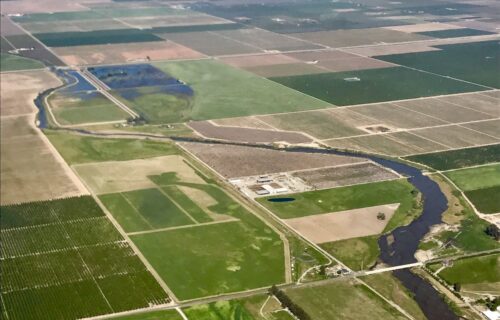
“While water managers in southern Tulare County aren’t rolling out the welcome mat for Thursday’s meeting with state regulators, they are curious about how the state may propose to ratchet down overpumping. The meeting is invitation-only between water managers, Water Resources Control Board member Nichole Morgan and high-level state staff. It is not open to the public. Even groundwater agency consultants and attorneys aren’t allowed. An agenda obtained by SJV Water shows state staff will lay out components, timelines and procedural steps for the next phase in the state’s crackdown on excessive groundwater pumping. Staff will also lay out actions the 12 Tule groundwater sustainability agencies (GSAs) could take to prevent state-mandated pumping limits, which will also come with a charge of $35 per acre foot. … ” Read more from SJV Water.
Dairies say state’s draft plan to protect valley groundwater from nitrates is too costly
“A new regulatory effort to protect Central Valley communities from nitrate pollution in their groundwater has drawn opposition by dairy farmers who say the proposal is too costly for an industry already struggling financially. The State Water Resources Control Board says dairies are diverting so much cow manure onto their own cropland that nitrate levels are rising in underground aquifers. Its proposed solution is to limit such releases, partly by having dairies send manure to other farmers that can use it responsibly. While nitrogen is an essential nutrient for crops, nitrate pollution has long been a problem in the region’s groundwater. Prolonged exposure to high levels of nitrates in groundwater has been linked to cancer, thyroid diseases and birth defects. Dairy groups say their members have already invested in various measures to address the problem. Asking them to spend on new practices envisioned by the state is infeasible, they say. … ” Read more from the Hanford Sentinel.
‘Fiscal cliff’ for drinking water fixes: Californians with bad tap water could have a longer wait
“The state program that helps bring solutions for Californians with contaminated drinking water is facing a major drop in funding. At a meeting in Sacramento last week, state officials presented estimates that grant money to help communities get clean drinking water, including by drilling new wells or connecting to nearby water systems, could fall from $941 million in the current fiscal year to about $103 million in 2027-28. Both state and federal funds are going away. Some at the meeting called it a looming “fiscal cliff.” “I know it’s going to be really depressing having dozens or hundreds of projects in the pipeline that we can’t fund,” Jennifer Clary of the group Clean Water Action told the five-member State Water Resources Control Board. She urged the board to make sure it’s prioritizing financial support for places where it’s most needed. … ” Read more from the LA Times. … ” Read more from the LA Times. | Read via Boiling Point Newsletter.
Longfin smelt surge in the Napa River
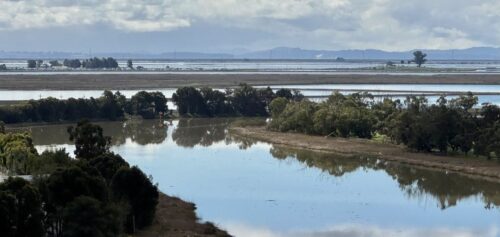
“Biologists studying the San Francisco Estuary’s endangered fishes are trying to unpack a puzzling but encouraging uptick of endangered longfin smelt in a small North Bay watershed. With the fish declining in most of the estuary, time is running out to stabilize the population. Now, scientists hope that understanding why longfin are aggregating in this small stream system could guide efforts to protect critical habitat and save the species from extinction. In the last quarter century, the longfin smelt population has collapsed, following the path of most fishes native to the estuary. Loss of wetland habitat, depleted river flows, and climate change are the probable culprits. However, in the past three years, the fish’s numbers have shown a modest bump—likely from the ecosystem benefits of three consecutive wet winters beginning in 2023. History has shown that winters of high precipitation prompt increases in longfin numbers; this pattern is accentuated when wet years occur consecutively. “You get a compounding effect from these back-to-back wet water years,” says Colin Brennan, who supervises the California Department of Fish and Wildlife’s Interagency Ecological Program. … ” Read more from Alastair Bland at Maven’s Notebook.
Untangling the complex web of water rights in the western US using SEI’s WEAP tool
“Sustainable water management is no longer just an environmental goal; it is a social and economic necessity. As governments and communities struggle to balance competing demands, tools like SEI’s Water Evaluation and Adaptation Planning (WEAP) turn complex data into dynamic models that can help planners and policymakers manage water resources more sustainably. WEAP particularly provides value in the drying western US, helping water managers navigate increasingly severe water constraints. WEAP is uniquely powerful at simulating the different components of a watershed at once, including hydrology, water allocation, supply and demand. WEAP supports a variety of water planning tasks for nearly 60 000 users worldwide, operating as both a water balance database and as a scenario generation and policy analysis tool. “Serving as a connector of information, WEAP takes the components of a watershed and forces them to interact with one another,” says Doug Chalmers, SEI scientist with over eight years of experience in building water models. “This makes WEAP particularly powerful in evaluating trade-offs between competing water uses.” … ” Read more from the Stockholm Environment Institute.
California drought changes the map for broccoli farmers
“Favorable weather and abundant irrigation have made California the king of broccoli production for decades. But East Coast growers see a potential crack in the crown: drought. California’s water struggles provide an opening for New York, Maine and other Eastern states to boost their own production of the green vegetable, which is growing in popularity across the country — even as climate change poses trouble for producers, according to researchers at Cornell University in Ithaca, New York. For years, Cornell has led a campaign to promote broccoli production in the region, including through improved plant genetics. Now, a paper by economists at the university backs the cause by laying out how supply chains could be fine-tuned to ensure locally grown broccoli is available on a large scale when the West turns dry. California and Arizona, the nation’s second-largest broccoli producer, aren’t about to be unseated, researchers said, but regions in 10 Eastern states from Maine to Florida could fill some of the gap caused by drought if the region coordinates its efforts. … ” Read more from E&E News (sorry, subscription required.)
Could we stop El Niño by brightening clouds? New study explores how
“First, it was news about using cloud seeding to halt hurricanes. Now, it’s global climate troublemaker El Niño that scientists want to stop, this time by “brightening” clouds over the Pacific Ocean. According to a new study by scientists at the University of California-San Diego, which appeared in the peer-reviewed journal Science Advances, “marine cloud brightening” over the southeast Pacific Ocean could weaken an emerging El Niño if deployed at its start and during its growth phase. El Niño, which brings a potpourri of weather calamities, is the world’s most significant climate pattern, costing the global economy trillions of dollars per year, according to a recent study. … ” Read more from the USA Today.
Atlantic Ocean slowdown could supercharge California storms
“A storm reaching California can begin with changes thousands of miles away in the Atlantic Ocean. Climate modeling suggests that as one of the planet’s major ocean circulation systems weakens, more moisture could be directed toward the West Coast while snowfall declines over Greenland. The system is known as the Atlantic Meridional Overturning Circulation, or AMOC. It moves warm tropical water northward near the ocean surface, helping keep parts of Europe relatively mild. After the water cools and becomes denser, it sinks and flows southward through the deep ocean. Researchers at the University of California, Riverside, examined how a slower AMOC could influence storms and atmospheric moisture far beyond the Atlantic. Their projections indicate that the consequences could extend across North America, South America, Antarctica, Greenland, and the Arctic. … ” Read more from SciTech Daily.
California’s data center dance
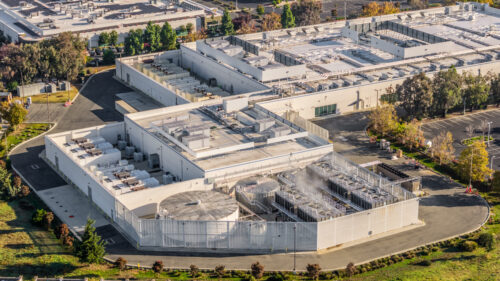
“Activists and politicians hoping to stall the spread of data centers across the country are riding a wave of momentum after New York’s Democratic governor on Tuesday imposed the nation’s first statewide moratorium on the facilities. But anyone hoping California will soon follow suit is going to be disappointed. “Obviously there’s advocacy that’s out there in the ether about it, but I haven’t heard any serious consideration [of a statewide moratorium] at the legislative level,” Assemblymember Rick Zbur said. New York Gov. Kathy Hochul cited the need to pause data center development to give the state time to develop rules that will prevent the energy-hungry server farms from raising electricity rates and depleting natural resources. But Gov. Gavin Newsom’s administration is taking a different approach and embracing a “build the plane while it’s flying” philosophy. … ” Read more from Politico.
Locals sue California county over controversial carbon project
 “In the 1920s, the hot and arid Elk Hills west of Bakersfield were embroiled in the Teapot Dome oil lease scandal that ultimately tarnished the reputation of President Warren Harding. A century later, controversy over another energy project has returned to the region. California’s first carbon capture and storage facility became operational in Kern County’s Elk Hills oil field in May, with the aim of eventually entombing millions of tons of carbon dioxide deep underground. The California Resources Corporation’s Carbon TerraVault 1 could become the first of many such facilities proposed for the state, including the Bay Area, and is intended to play a major role in California’s goal of achieving carbon neutrality by 2045. But the project is also facing a lawsuit from local and environmental groups, who are charging the county with failing to address pollution, health and safety concerns before officials allowed the project to move forward. … ” Read more from SF Gate.
California Forever loses $3.2 billion shipyard contract as defense startup picks Texas
“California Forever’s bid to recruit a major industrial tenant for a planned waterfront shipbuilding facility in Solano County has slipped away, a significant blow to the ambitious but heavily scrutinized billionaire-backed plan to build an entire new city on thousands of acres of farmland. Defense startup Saronic Technologies, which designs and builds autonomous water crafts, has chosen Texas — where the company has been considering the Port of Brownsville — over Solano County for its $3.2 billion Port Alpha automated shipyard, according to multiple sources familiar with the negotiations. The announcement strips California Forever of the prominent prospective tenant it had presented as proof that its controversial development could become a cornerstone of the nation’s shipbuilding revival. The setback comes at a pivotal moment for the larger project to create a new city, though its supporters say the search for a major commercial tenant is far from over. … ” Read more from the San Francisco Chronicle. | Read via Yahoo News.
Visit the lab where they’re fighting fire with fire, literally
“On a sweltering spring day in South Carolina, a worker they call the “Burn Boss” stands by a house, holding a torch. The radio crackles with a countdown, “3, 2, 1!” And the Burn Boss sets the house on fire. Within minutes, flames breach the walls and enter the building. They set alight a sofa, a bed, a closet full of clothes and a kitchen stocked with cooking oil and potato chips — all fuels for an accelerating blaze. Moments later, the light and heat roar outward from shattered windows, forcing onlookers to step back. This is a test. A nonprofit in South Carolina is in the unusual business of intentionally burning down houses built for this purpose in order to learn how best to protect people and their property against catastrophic wildfires. … ” Read more from the New York Times.
POLICY & REGULATION
PPIC statewide survey: Californians and the environment
“This year marks the twin anniversaries of landmark legislation that has shaped the state’s environmental policies: the California Coastal Act of 1976 and the Global Warming Solutions Act of 2006. Today, California’s longstanding commitments to protecting its coastal waters and reducing greenhouse gas emissions are sharply at odds with federal policy shifts that now call for more oil drilling off the coast and reversing course on renewable energy programs. Today, the state government is also seeking to address the public’s concerns about the affordability and equity of its environmental policies. These are the key findings of the Californians and the Environment survey on topics including the November election and approval ratings; the environment, economy, and technology; climate change and energy; and oceans, coast, and marine life that was conducted June 29–July 6, 2026 … ” Read more from the PPIC.
SEE ALSO:
- CA voters still care about the environment, but affordability concerns are rising, poll says, from the Sacramento Bee
- California ballot measure to overhaul CEQA draws 73% support in new poll, from the San Jose Mercury News
- Californians back Becerra and reject AI data centers by big margins, poll finds, from the LA Times
- Survey: Californians really don’t want more data centers, from Cal Matters
Wade Crowfoot says the time is now: Healthy Rivers and Landscapes
“California’s rivers support our communities, farms, fish and wildlife. As pressures on native fish populations continue, finding solutions that improve river health while supporting California’s people and economy has never been more important. California Natural Resources Secretary Wade Crowfoot shares why he believes the Healthy Rivers and Landscapes program offers a meaningful path forward. Healthy Rivers and Landscapes integrates functional river flows with on-the-ground habitat restoration to improve conditions for fish and wildlife throughout the Sacramento and San Joaquin Rivers and the Bay-Delta watershed. As Secretary Crowfoot explains, the approach is guided by scientific monitoring and collaborative decision-making, with plans to restore more than 45,000 acres of habitat, including floodplains and spawning and rearing habitat that are essential for native fish. … ” Read more from the Northern California Water Association.
In regional water news and commentary today …
NORTH COAST
Klamath Drainage District patrons meet district’s KPDRA land-idling goal
“In April, Klamath Drainage District (KDD) Manager, Scott White, recommended landowners in the district evaluate their 2026 farm plans and consider applying to idle as many acres as possible in the Klamath Project Drought Response Agency’s reduced irrigation demand programs. White’s goal for the district was to idle 10,000 acres. KDD patrons responded and applied to idle over 11,000 acres, nearly half of district’s land eligible for the program. “The response was tremendous,” White said. “I’m proud of the district’s landowners for stepping up to the plate and taking the action needed to help stretch water for all of the Klamath Project in a tight water year.” … ” Read more from the Klamath Drainage District.
Klamath River mapping begins as salmon return after dam removal
“The Yurok Tribe Fisheries Department and Condor Aviation will begin flying low-elevation helicopter missions Tuesday to map 257 miles of the Klamath River from Lake Ewauna to the estuary. The helicopter is equipped with high-resolution remote-sensing instruments to capture bathymetric and topographic data. The information will be used to evaluate how the river changes in response to the recent removal of four dams near the California-Oregon border. “This detailed three-dimensional map of the river corridor will provide invaluable insights into the evolution of the Klamath River ecosystem, as well as help us gain a deeper understanding of the river’s overall health,” McCovey said. “The data will also guide the development of large-scale restoration projects.” … ” Read more from KDRV.
North Coast groups are suing over a rule change that could undo the Klamath River’s comeback
“The wild salmon swimming freely up the undammed Klamath River have become Exhibit A in a looming federal lawsuit. A coalition of North Coast conservation groups intends to sue the Trump administration over its new reading of the Endangered Species Act, which holds that destroying a species’ habitat no longer counts as harm. The Western Environmental Law Center, the Environmental Protection Information Center, the Klamath-Siskiyou Wildlands Center and Cascadia Wildlands plan to file in federal court in San Francisco. An Oregon fishing guide joined as a plaintiff because his business depends on the cold, clean water that keeps salmon runs alive. The groups argue the change reverses 50 years of bipartisan agreement and contradicts the Supreme Court’s 1995 Babbitt v. Sweet Home decision, which confirmed habitat destruction falls squarely within the law’s definition of harm. Habitat loss drives more extinctions than any other single factor. … ” Read more from Active NorCal.
SIERRA NEVADA
Tahoe State of the Lake Report released
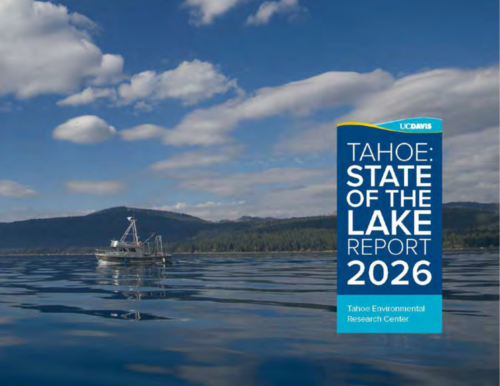 “The University of California, Davis, Tahoe Environmental Research Center (TERC) today released its “Tahoe: State of the Lake Report 2026” which presents data from 2025 in the context of the long-term record. The report provides an annual update for non-scientists on the Lake Tahoe Basin’s ecological health. It includes data related to temperature, precipitation and snowmelt, nutrients, algae, water clarity and more. … ” Read more from UC Davis.
SACRAMENTO VALLEY
Northstate water projects included in federal infrastructure bill, Gallagher says
“Congressman James Gallagher said several Northstate water and infrastructure projects were included in the Water Resources Development Act during a congressional committee meeting Tuesday, July 14. Gallagher, who represents California’s 1st Congressional District, said the bill includes funding and policy changes meant to improve water systems, flood control, wildfire planning and drought response in rural Northstate communities. The bill includes $155 million for water and wastewater upgrades across the Sacramento River Basin. Gallagher’s office said the money would help improve water quality, environmental restoration and long-term water reliability. … ” Read more from KRCR.
After wildfires destroyed 95% of this California tribe’s forests, members uncovered 1,200 ancestral sites
“Until recently, when members of the Konkow Valley Band of Maidu pulled up a map of their ancestral land in the foothills of the Sierra Nevada, only about two dozen of their historic sites appeared. Disease, violence and forced labor had separated California tribe members from their history. Without routine Indigenous fire to clear out the foothills, the landscape — much of it now managed by the U.S. Forest Service — grew dense with conifers, obscuring the signs of their enduring presence. As a result, archaeologists’ picture of the tribe’s past was spare. No more than 500 people. Going back about 3,000 years — a fraction of the time other tribes are known to have lived in the state. Then the forests burned. In less than a decade, wildfires destroyed forests across 95% of the tribe’s homelands. The Forest Service turned to the tribe for help healing the land. As members walked the wide-open moonscape, they found evidence of their vibrant history everywhere. Now just a few years later, their map shows more than 1,200 sites. … ” Read more from the LA Times.
Paradise Irrigation District to flush water along Skyway
“Paradise residents along upper Skyway will see water being flushed overnight this week as the Paradise Irrigation District moves forward with its Skyway Main replacement project. The flushing is scheduled to begin Tuesday, July 14, and continue through Tuesday, July 21, targeting different sections on various nights from 7 p.m. to 6 a.m. PID’s contractor will staff the flushing sites to monitor water flow and ensure water is dechlorinated before entering storm drains. Flushing the new main line is required by the state at this point in the replacement project to ensure the pipeline is clear and ready to deliver fresh water to the Paradise community. PID said the flushing planned this week will total almost 399,000 gallons of water, about 38 swimming pools’ worth. … ” Read more from KRCR.
Tomato trucks are a sign of Sacramento summer. Where are they heading?
“A sign of deep summer in Sacramento — aside from the searing heat — is the daily sight of trucks piled high with freshly-harvested tomatoes heading up and down the roadways, sometimes dropping a bit of their load onto the ground. You might have wondered while looking out your car window: who grows these tomatoes, where are they heading and what will they become? The open-air trailers called gondolas carrying these loads are designed to accommodate up to 50,000 pounds of processing tomatoes, roughly 300,000 tomatoes, which are loaded directly from harvesters in the field and then flushed out with water at the processing plant. … ” Read more from Abridged.
NAPA/SONOMA
Where the Redwood Highway crosses the Russian River
“Hot weather in the heart of summer is not uncommon, so like other communities that face periodic heat waves, Healdsburg has learned to adapt. Backyard swimming pools, a health club membership or dialing into regular use of the Healdsburg Swim Center at the high school can help one endure the hottest part of the day. Whether a tourist or a local (or that broad category of “visitors from nearby”), everyone knows the first stop is Healdsburg Veterans Memorial Beach, where the Redwood Highway crosses the Russian River. According to Sarah Campbell of Sonoma County Regional Parks, the most recent headcount showed about 68,000 visitors for the previous year. The ranger at the gate or electronic “iron rangers” calculate every car that enters to pay the daily parking fee. The expansive parking lot beneath the eucalyptus seems huge, but it fills up quickly on a summer’s day. … ” Read more from the Healdsburg Tribune.
Russian River’s ‘keeper’ Don McEnhill
“Named Ashokawna—“the water to the east”—by the Southern Pomo; Slavyanka, “Slavic woman,” by the Russian Colony; and “Saint Ignatius” and “Big river” by the Spanish colonists who came after, the river itself remains nameless and mighty, winding 115 miles to the sea. … We should bow to the Russian River, the artery of the north. Instead, we treat it as a gutter. In 2025 alone, Russian Riverkeeper—self-styled protector of the river—pulled roughly a half-million pounds of trash from its waters, a volume that has grown, year over year, for the past five years. To do so, the Healdsburg nonprofit organized 900 local volunteers across 75 separate cleanup events along its length. That mobilization, says Don McEnhill, deputy director of Riverkeeper, is one of the clearest signs of a slowly shifting culture. … ” Read more from the Healdsburg Tribune.
California American Water highlights successful vegetation reduction efforts protecting critical water infrastructure in Sonoma County
‘California American Water is recognizing the completion of projects near its water facilities in the Larkfield-Mark West Area of Sonoma County that have significantly reduced wildfire risk around critical community infrastructure. The projects were led and implemented by the Sonoma County Fire District, with financial contributions and coordination support from other local partners, including California American Water, local property owners, Sonoma County agencies, and other stakeholders. The work focused on reducing hazardous vegetation in areas surrounding water system facilities and nearby neighborhoods, helping improve community wildfire resilience. … ” Continue reading this press release.
Flooding at Sonoma Developmental Center latest neighbor concern
“A host of issues, including inoperable fire hydrants, broken windows in numerous vacant structures, graffitied walls, stolen copper fixtures, dead trees and heaps of dry shrubs, grass and brush and, most recently, water pooling in the basement of a building on the campus are escalating the concerns of anxious residents who live near the shuttered Sonoma Developmental Center in Eldridge. Some community members who frequently hike public trails on the property say they have noticed water in the basement of the Nelson Building, which sits along Arnold Drive, on the south side of the core campus. “You could see standing water accumulating in the driveway, parking area and also water running down the handicap wheelchair ramp that takes you up to one of the doors of the building,” said one Eldridge resident who asked not to be named. He said he was walking his dog on the campus last month when the pet tracked down the water sounds near the building. … ” Read more from the Santa Rosa Press Democrat.
BAY AREA
San Francisco Bay islands
“Have you ever looked out at San Francisco Bay and wondered, “What’s that island over there?” So have we, and it’s led to some of our favorite stories over the years. Here, we’ve compiled our favorite SF Bay island coverage, from the obscure to the iconic.” Read more from SF Gate.
CENTRAL COAST
Salinas Valley officials weigh three groundwater sustainability project portfolios.
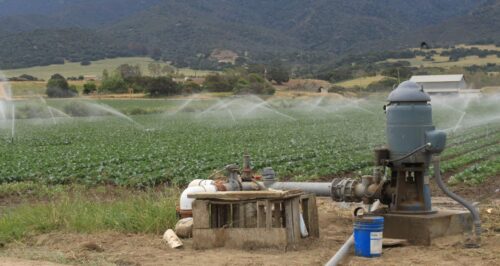 “To meet mandates of the Sustainable Groundwater Management Act, three options have emerged to achieve groundwater sustainability. In August, the board of the Salinas Valley Basin Groundwater Sustainability Agency will select one of these portfolios to recommend to the state’s Department of Water Resources for review. A hurdle is the cost. “We’ve had some real struggles,” Advisory Committee Chair Curtis Weeks told the board on July 9. “They see a number and they can’t talk about the merits of the project.” The project portfolios all incorporate some amount of demand management (reduction in pumping), optimization of the Castroville Seawater Intrusion Project, and use of a Monterey County Water Resources Agency permit to divert water from the Salinas River. … ” Read more from Monterey Now.
For groundwater sustainability in the Salinas Valley, it’s time to transition from talk to action.
“Sara Rubin here, thinking back to a pep talk that I heard Piret Harmon deliver on Dec. 18 of last year. She was addressing the Salinas Valley Basin Groundwater Sustainability Agency’s advisory committee, a group that convened for the first time on that date, with their charge: “We are a collaborator, a convenor,” she said. “You are thinking about what’s best for this agency and for the whole valley.” In the world of Salinas Valley water, that is no small task. … Harmon’s plea has been to think more regionally, and to advance technical water supply solutions that help everyone everywhere avoid reductions in pumping (known euphemistically in the water world as “demand management”). With deadlines looming, now is the time to get to some of those technical solutions. … ” Read more from Monterey County Now.
SAN JOAQUIN VALLEY
Educating Merced County residents is key to drinking water issues, experts say
“Experts in local water quality had a panel discussion Tuesday night on what Merced County residents with domestic wells should know about their water. The meeting at the Merced County Library in Atwater was hosted by The Modesto Bee and the Merced Sun-Star. More than half of the private domestic wells in unincorporated Merced County tested over the state’s safe drinking limit for at least one contaminant, the Sun-Star reported on June 29. At Tuesday’s discussion, all the experts agreed that education is key to helping residents understand the impacts of unsafe drinking water. “Education is critically important,” said Maureen Thompson, executive director of the Valley Water Collaborative, a nonprofit that provides free well testing and water replacement. … ” Read more from the Merced Sun-Star.
Pixley Irrigation District ‘hacking’ incident still under investigation
“Investigators are still trying to determine who hacked into the controls for Pixley Irrigation District’s main turnout off of Deer Creek last month. A gate got stuck in “manual” mode when it should have operated remotely in automatic mode. Pixley’s water resources superintendent Kirk Masters called the incident a “hiccup” that was discovered on June 22, the first day of the district’s summer water run. Masters reported it at Pixley’s July 9 board meeting and said the problem was rectified within two hours. Masters said in his report that he was told it was Iranian hackers, but that has not been confirmed. “We simply don’t know when it happened or who did it,” Pixley General Manager Alex Peltzer wrote in an email after the meeting. “But it was clear that someone had gotten access and jumbled the programming necessary for the gates to the Pixley main turnout off of Deer Creek to operate in automatic mode.” … ” Read more from SJV Water.
Focus of treating Kern County ag water systems for invasive golden mollusk turns to reducing severe impacts
“The golden mussel, an invasive fresh-water mollusk, poses an unprecedented threat to Kern County’s agricultural industry. First detected two years ago in the Sacramento San Joaquin Delta, this invasive species, native to China, is inundating the water systems that serve California’s agriculture industry throughout the Central Valley, including systems tied to the State Water Project. The mussel is showing up in alarming numbers in the water systems that irrigate crop land in Kern County. Now experts say eradication of the golden mussel is not feasible, but reducing the severity of its impact is the only way to fight it. The people doing that work, like John Bison, a water treatment specialist with Bennet Water Solutions-GreenLeaf Ag has been busy of late. … ” Read more from KGET.
SOUTHERN CALIFORNIA
Annual Palmdale Water District water quality report, showing all standards met, now available
“This year’s Palmdale Water District Consumer Confidence Report, which provides information on water quality from tests conducted in 2025, has been published. Customers interested in learning more about the quality of the water provided by the district can view the report at www.palmdalewater.org/ccr or by calling the Customer Care Department at 661-947-4111. The digital and printed copies are available in English and Spanish. They show PWD’s water met all federal and state guidelines. The report is a comprehensive annual report detailing where PWD’s water comes from, what it contains and how it compares to drinking water standards set by the state. Required by the California State Water Resources Control Board Division of Drinking Water, the report is due July 1 of each year. … ” Read more from the Antelope Valley Press.
Neighbors near the Lineage fire are dealing with odors and pests. The next challenge: extreme heat
“When the smoke from the Lineage warehouse fire in Boyle Heights cleared, Guido Borjas, 71, and his family began noticing the smell of rotting food and the sound of flies buzzing around. “I live five houses down from the damaged area and the flies bother us,” Borjas said. “I haven’t seen any rats but it won’t be long before they come out.” Now, nearly a month after the start of the fire, residents fear this week’s extreme heat will worsen the odors and attract more pests. The National Weather Service (NWS) issued an Extreme Heat Warning starting on Tuesday morning through Thursday evening for much of Los Angeles County, with temperatures expected to climb above 90 degrees. The agency warned of a high risk of heat-related illness, especially for children, older adults, and people without air conditioning. … ” Read more from the LAist.
As great whites and humans share the waters, shark lab runs out of funding
“In the middle of what experts expected to be a “very sharky” summer, a program that tracks great whites and helps beachgoers stay safe will soon run out of money. Since 2018, the California Beach Shark Safety program at Cal State Long Beach has tagged great whites in local waters and shared their locations with lifeguards. Researchers with the program perform community outreach and try to change the narrative on sharks. The number of juvenile great whites along the Southern California coast has been increasing, driven in part by warming waters, as they congregate along certain beaches to feed on stingrays and small fish. But attacks are rare — swimmers and surfers often have no idea there’s a shark nearby. … ” Read more from the LA Times.
Mojave pipeline approved despite warning it will ‘drain the desert’
“A decades-old plan to move 1.25 million acre-feet of groundwater out of the Mojave Desert has cleared a major federal hurdle after the Trump administration approved a 50-year permit to convert a dormant oil and natural gas pipeline into a water conduit stretching roughly 162 miles across Southern California. The proposal centers on Cadiz Inc.’s 34,000-acre property near historic Route 66 in eastern San Bernardino County, where the company seeks to export water from the ancient Fenner Basin aquifer. The project has spent decades at the center of legal and political battles, with supporters calling it a new water source for drought-prone communities, and opponents warning it could permanently alter the fragile desert ecosystem. … ” Read more from SF Gate.
SAN DIEGO
San Diego water rate proposal could raise bills for low water users
“San Diego homeowners who use less water could see their monthly water bills increase next year under a proposed rate change that would eliminate the city’s tiered pricing system. The proposal, prompted by a court ruling in a case against the city of San Diego, would replace the current system in which customers who use less water pay a lower rate, and those who use more water pay more. If approved, all customers would pay the same rate, regardless of how much water they use. Under city estimates, single-family homes with low water usage would see their monthly bills increase by about 7%, or an average of $5.62 more each month. Meanwhile, single-family homes with high water usage would see their monthly bills decrease by nearly 6%, saving an average of $19.52 per month. “It seems like if this went through, it would totally take away the incentive to conserve,” Cynthia Hillman said. … ” Read more from NBC 7.
Water-saving San Diegans’ bills won’t go up as steeply as feared. Here’s why.
“A court ruling is prompting San Diego to propose new water rates that eliminate discounts for conservation — requiring rate hikes for low-volume users and cheaper water for high-volume users. But the rate hikes for low-volume users are smaller than previously estimated, because plaintiffs in the court case agreed to a $40 million settlement — despite the courts awarding them $118 million. Another factor allowing the city to soften the proposed hikes: Costs for wholesale water are shrinking, thanks to the County Water Authority securing deals to sell excess supply to water agencies in Riverside County. The court ruling against the city is having a major impact across California by casting doubt on the rate structures of all water agencies that reward conservation — nearly every water agency in the state. … ” Read more from the San Diego Union-Tribune.
Local group continues efforts to raise Lake Hodges water
“As the water level at Lake Hodges remains low, neighbors fear what could happen if a wildfire tears through their valley again, as it did nearly two decades ago — this time with a much smaller water barrier to slow the spread. Efforts continue to urge the City of San Diego, which owns Hodges Dam, to raise the lake level from 280 to 295 feet. The lake’s maximum capacity is 315 feet. Four years ago, the city completed a risk assessment for Hodges Dam that found its risk score exceeded industry standards. The assessment also identified potential failure scenarios in the event of a major earthquake or a significant multiday rain event. … ” Read more from The Coast News.
Along the Colorado River …
North American monsoon to bring lightning, downpours and dust to western US
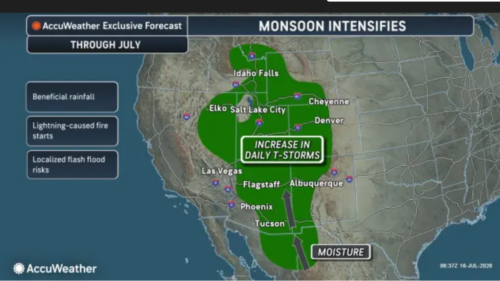 “The annual North American monsoon is underway, directing moisture into the western United States. While the rain will benefit many communities, the thunderstorms will also bring hazards ranging from wildfire-starting lightning to wind-driven dust storms to downpour-induced flash flooding. During much of the year, prevailing winds over the Intermountain West blow from the west, northwest or north. In summer, intense heating over the region shifts the flow to the south, drawing moisture northward from the tropical Pacific and the Gulf of America. That moisture increases humidity and fuels clouds and thunderstorms. For many communities, the rainfall is a lifeline, supplementing water supplied by mountain snowpack that melts each spring into streams, rivers and reservoirs. With well-below-average snowfall across much of the region last winter and limited spring runoff, this year’s North American monsoon has become especially important. A daily mosaic of thunderstorms will affect the Interior West through the rest of July, with the coverage and intensity varying from day to day. … ” Read more from AccuWeather.
Lake Mead is dry as a bone. California is coming to help.
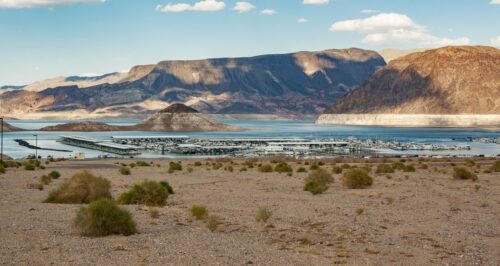 “The largest water district in California has agreed to leave billions of gallons of water in Lake Mead this year in an effort to save America’s largest reservoir — in exchange for up to $65 million in cold hard cash. The Metropolitan Water District of Southern California serves 26 different public water agencies, which in turn deliver water to about 19 million people spanning Los Angeles, Orange, Riverside, San Bernardino, San Diego and Ventura counties. The water giant holds some of the oldest and largest rights to the Colorado River, and was founded in the 1920s to build the 242-mile aqueduct that diverts water from the river and toward Southern California’s population centers. On Tuesday, the Metropolitan Water District Board of Directors agreed to leave up to 200,000 acre-feet of its allocated Colorado River water in Lake Mead this year. … ” Read more from SF Gate.
SEE ALSO: ‘It’ll buy us time’: Feds to pay millions to prop up dwindling Lake Mead, from the LA Times
Lake Mead expected to drop nearly 33 feet by June 2028, and that’s not even the worst-case scenario
“A critical year is ahead for the nation’s two largest reservoirs, with no relief after a record-low snowpack and a continuing drought. A comment posted on the Colorado River Basin’s Facebook page Wednesday morning might have said it best: “Not enough water in the Monsoons to help. There’s only 2 things that can save Mead and Powell right now: 150 percent Colorado Rockies snow pack for 5 consecutive years, or God himself.” Projections released Wednesday show Lake Mead dropping to the lowest levels seen since Hoover Dam was built in the 1930s, falling to 1,035.86 feet in November. That’s about 6½ feet lower than Lake Mead’s level today at noon — 1,042.52 feet. Lake Mead is the nation’s largest reservoir, but it’s currently at 27% capacity. … ” Read more from KLAS.
SEE ALSO: Lake Mead will keep setting record lows over the next two years, forecasters say, from the Las Vegas Review-Journal
A significant moment in the Colorado River water supply crisis
“On Sunday, July 12, the surface of Lake Powell was 3524.32 feet above sea level, and the surface of Lake Mead was at 1042.77 ft.7 These elevations equated to 5,505,869 and 7,169,640 acre feet (af), respectively, of live storage in the two reservoirs. The combined total live storage of these reservoirs was 12,675,509 af. The last time the combined total live storage in Lake Powell and Lake Mead was this small was May 23, 1957, during construction of Glen Canyon Dam when the entire amount of 12,668,000 af was stored in Lake Mead (Fig. 1). It was not until March 1963 that the river diversion tunnels at Glen Canyon Dam were closed, and Lake Powell began to fill. … ” Continue reading from the Getches-Wilkinson Center et al.
Should new rules for the Colorado River save some water for the river itself?
“Under the scorching sun of a June afternoon in northern Arizona, the Colorado River can be an oasis in the desert. Christian Fauser stood waist deep in its water, casting a fishing line into its swift-moving currents. He paused to look up at the towering red rock walls on both banks. “It’s a really, really special place,” Fauser said. The thing that makes this particular stretch of river so special, though, is the water itself. “We’re in crystal clear water with a green bottom,” Fauser said. “It’s like sitting on top of some turquoise jewel.” The Colorado River doesn’t usually look like this. In a lot of places, it’s a murky, muddy chocolate milk brown. This section is different for one giant, concrete reason. Glen Canyon Dam, which sits just upstream, is a hulking gray monolith that holds back the Colorado River to create Lake Powell, the nation’s second-largest reservoir. … ” Read more from KJZZ.
Commentary: Colorado water officials can’t demand a sacrifice they aren’t willing to make
Danny Seiden, president and CEO of the Arizona Chamber of Commerce and Industry, writes, “Colorado’s water commissioner wants Arizona to make “hard decisions” on the Colorado River. That’s a curious thing to hear from a state that still hasn’t agreed to a single binding cut. Becky Mitchell’s recent column in The Colorado Sun (“When it comes to sharing the Colorado River, Lower Basin states must step up and make hard decisions,” July 7) tells a story where the Upper Basin has quietly sacrificed for decades while Arizona, California and Nevada are only now waking up to reality. It’s a compelling narrative. It’s just missing most of the numbers — and facts — that matter. Start with snowpack. Yes, Colorado had a brutal year. So did the rest of the West. Arizona, Nevada, New Mexico, Utah, Wyoming and Colorado all set record-low April 1 snowpack readings this year. Every state at this table is living through the same basin-wide crisis in real time. Colorado isn’t further along than the rest of us on this one. … ” Read more from the Colorado Sun.
Arizona university researchers study how to increase shrinking groundwater supplies
“The Arizona Tri-University Recharge Project recently released the findings of a study on how to capture water and use it to increase groundwater recharge. Researchers from Northern Arizona University, Arizona State University and the University of Arizona used satellite-based methods to collect data on rain, snowpack, soil moisture and more to find where the most water is being lost. The project found that a massive amount of water is lost through soil and plants, a process known as evapotranspiration, or ET. … ” Read more from KTAR.
Could Arizona communities share water during shortages? Phoenix is taking the first step
“As deeper cuts to Colorado River supplies approach, Phoenix and Tucson have spent more than a year developing a new program that would let Arizona communities share water during shortages. Other cities, tribes and utilities are expected to follow. The Phoenix City Council voted unanimously July 1 to authorize the city to participate in the Secure Water Arizona Program, known as SWAP. The first-of-its-kind framework would allow Arizona water users to share supplies during shortages and develop new conservation and water-exchange agreements. … ” Read more from KTAR.
Tucson has 100-year water supply, state finds
“Arizona’s water agency has given Tucson the green light for another 10 years of expected housing development by continuing the city’s designation of having a 100-year assured water supply. In a decision handed down this week, the Arizona Department of Water Resources determined that Tucson water would have at least 166,000 acre-feet of water available for annual use over the next century. That’s far more than the 130,000 acre-feet the state projects people living in Tucson Water’s service area will use by 2034, when the newly approved state designation expires. One acre-foot is enough to serve four typical Tucson households for a year. But since the city’s assured supply partly consists of Central Arizona Project water, which could be cut back in the next few years due to dwindling Colorado River flows, an outside water expert, former ADWR chief Kathleen Ferris, warns that the state water agency may have to revisit Tucson’s designation before the 10-year period runs out. … ” Read more from the Arizona Daily Star.
Arizona’s San Pedro River facing historically dry conditions
“Recent monsoon rains helped boost flows in the San Pedro River, but the benefits are only temporary in the midst of a historically dry year. The river, which flows about 140 miles through southeastern Arizona, has been threatened by myriad factors including climate change and nearby groundwater pumping. In late June, an important registering station along the river registered zero flow. The Charleston gage, near Sierra Vista, showed the river as completely dry. Joanne Roberts, board president of the nonprofit Friends of the San Pedro River, said that it went dry due to a combination of factors — prolonged drought, climate change, mining and other human uses. She said the river had only gone dry one or two times in recorded history. … ” Read more from KJZZ.
Colorado’s glittering, lush resort towns are facing severe water shortages this summer
“Historic water shortages are drying out the scenic mountains that lie at the heart of Colorado’s tourist economy, prompting the state to issue emergency orders earlier this month allowing water to be shifted to the towns and ranches most likely to run dry. The Colorado River District, which represents 15 Western Slope counties, is running the emergency response effort and with financial support from the Colorado Water Conservation Board has anted up nearly $1 million to make sure even towns that can’t afford it, will have access to drinking water should it be needed. To make the plan work, the river district opted not to lease portions of the water it normally holds in two high country reservoirs, Ruedi in the Roaring Fork Basin and Wolford Mountain, near Kremmling, on a first-come, first-served basis, as it normally does. Instead, the water is being doled out based on community need, with people and food production getting the water first, according to Andy Mueller, manager of the river district. … ” Read more from Water Education Colorado.
In national water news today …
Data centers are booming. Indigenous leaders want help protecting their lands.
“AI is the transformative technology of our time, with the potential to reshape our world on a global scale. And yet, underpinning its potential is the need for so-called hyperscale data centers that require vast amounts of land, energy, and water. As tech companies and governments continue to develop this infrastructure at a huge scale, Indigenous peoples around the world are responding to this threat in different ways. They are raising concerns about mounting pressure on water resources and inadequate consultation, but in some cases embracing projects for their economic benefits. The rapid expansion of this massive digital infrastructure has Indigenous leaders, governments and experts calling on those developing them to comply with the principle of free, prior, and informed consent while exploring whether this infrastructure can be established in ways that advance Indigenous rights and priorities. … ” Read more from Grist.
Top science panel backs research linking extreme weather to climate change
“The nation’s top scientific advisory body issued a report on Thursday backing a growing field of science that could help governments hold oil, gas and coal companies responsible for the damage caused by extreme weather. The field, known as extreme event attribution, seeks to answer an increasingly common question: How much was the latest heat wave, downpour, drought or wildfire worsened by climate change? Scientists have long understood that global warming, driven by greenhouse gas emissions from the burning of fossil fuels, is making certain kinds of extreme weather more intense and more likely. But only in the past two decades have they developed the tools for estimating precisely how much worldwide warming is shaping particular weather events in particular places. The new report, published by the National Academies of Sciences, Engineering and Medicine, doesn’t make recommendations on how attribution science should be used in policy and the law, though it notes that attribution findings could be relevant in several types of legal cases. … ” Read more from the New York Times.

