
Several news sources featured in the Daily Digest may limit the number of articles you can access without a subscription. However, gift articles and open-access links are provided when available. For more open access California water news articles, explore the main page at MavensNotebook.com.
In California water news today …
Golden mussels are spreading fast. Water managers may have a new way to fight back

“Since invasive golden mussels arrived in California a couple of years ago, officials up and down the state have scrambled to come up with solutions to their rapid spread. For months, state and local water agencies tried things like hot water treatments and scraping of docks. But the hardy mollusks, which are native to Asia and were likely brought to the California Delta on the hull of a ship, continued to circulate. By early July, they had established populations as far south as San Diego and as far north as the Port of West Sacramento. For the most part, efforts to eradicate the newly established species fell short. … Recently, though, a water district in Kern County used a copper treatment to effectively kill golden mussels that had established themselves locally. Officials said the move, which worked on full-grown mussels and ones that had not yet attached, represents a tool for water managers in the battle against the destructive species. … ” Read more from PBS Abridged.
California’s water wars get a new invader
“Golden mussels do not vote, hire lobbyists or contribute to campaigns. But the invasive species taking over California’s system of canals and pumps holds a lot of power in Sacramento these days. It’s bringing some of the state’s warring water factions together, while giving others a new reason to fight. The thumbnail-size mollusks, native to Southeast Asia and first discovered in North America near the Port of Stockton in 2024, reproduce rapidly, cling by the thousands to hard surfaces and clog the pipes, pumps and screens that keep water moving. Worse, they are hitching rides around the state through the same sprawling water network they threaten to gum up. The latest political example is the Metropolitan Water District of Southern California, the regional juggernaut responsible for delivering water to Los Angeles, Orange County and much of the surrounding area. … ” Read more from Politico.
California agencies advance strategy for emerging contaminants and tire-derived 6PPD-quinone
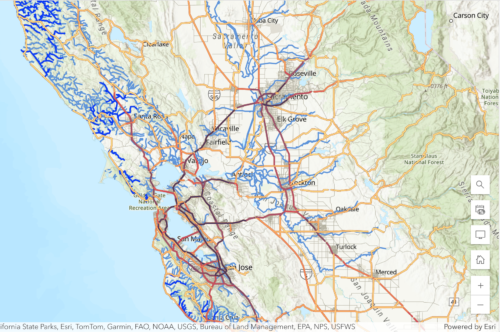 “At its June 16 meeting, the State Water Resources Control Board received an informational update on California’s work to identify and manage constituents of emerging concern, including 6PPD and 6PPD-quinone, a tire-derived contaminant linked to toxicity in sensitive aquatic species. Constituents of emerging concern, or CECs, include chemicals that are unregulated or only partly regulated in the environment, such as pharmaceuticals, flame retardants, PFAS, newer pesticides, and emerging commercial materials including nanomaterials. The State Water Board’s CEC Program is developing a statewide strategy, foundational guidance, and new monitoring tools to help identify, evaluate, and manage contaminants that may pose risks to California’s waters. The update also highlighted statewide efforts to understand 6PPD, the primary antidegradant used in tires, and 6PPD-quinone, its transformation product. State Water Board staff were joined by DTSC and Caltrans to discuss interagency work on environmental pathways, monitoring, management options, and source-control strategies for tire-wear-related contaminants. … ” Read more from Maven’s Notebook.
California almond outlook brightens as global demand stays strong
“California’s almond industry is entering the 2026 harvest season with renewed optimism, thanks to strong export demand, stable pricing, and what appears to be another high-quality crop. During a wide-ranging interview with “The Ag Meter”, host Nick Papagni spoke with Sunny Toor, President of Valley Pride Ag, who joined the program while traveling through Dubai on his way to India to strengthen relationships with international almond buyers. From crop projections and export opportunities to tariffs, politics, and the future of California agriculture, Toor provided valuable insight into the forces shaping one of the state’s most important agricultural industries. … ” Read more from Ag Net West.
Farm to School program funding now permanent, keeping local produce in schools
“The California Farm to School program now has permanent funding, after Gov. Gavin Newsom signed a measure Monday. It has provided California school children with locally grown produce and food education in classrooms. “California is leading the nation in supporting children’s health by serving nutritious, locally grown school meals and providing food education that equips students with lifelong healthy habits,” Newsom said in a statement. “Supporting California farmers, local communities, and the health of California’s children remains a top priority.” Farm to School supports “sustainable, local food procurement, minimally processed school meals programs, and hands-on education” through its Incubator Grant program, which invests in schools and food producers. The California Department of Food and Agriculture distributes the annual funds, which totaled $52.8 million across 195 schools in 2024. … ” Read more from the Sacramento Bee.
Notice of intent to submit Delta Conveyance Project revised certification of consistency with the Delta Plan on remanded items
“This notice serves to inform all interested parties that the California Department of Water Resources intends to submit to the Delta Stewardship Council the Delta Conveyance Project Revised Certification of Consistency on Remanded Items. The Council’s determination on April 23, 2026, dismissed or denied the vast majority of appeals. For two policy areas, the Council directed a limited remand to DWR. Remands are a standard part of the Delta Reform Act’s Certification of Consistency and appeals process and provide an opportunity to supplement or clarify portions of the record to address the findings in the remand. This revised certification demonstrates how, for Delta Plan Policy ER P5, DWR fully considered and avoids or mitigates the potential for DCP facilities to improve habitat conditions for the nonnative invasive golden mussel; and how, for Delta Plan Policy DP P2, DWR considered and avoided or reduced conflicts between the siting of the Delta Conveyance Project’s Twin Cities Complex and Sac Sewer’s Harvest Water when feasible. … ” Continue reading this notice from the Department of Water Resources.
Judge denies bid to halt Bureau of Reclamation’s Shasta Dam fall water releases
“A judge has denied a request from several environmental groups to halt the U.S. Bureau of Reclamation’s planned water release schedule for Shasta Dam this fall, amid an ongoing lawsuit over concerns the releases could threaten Chinook salmon. The lawsuit challenges the bureau’s planned release amounts. Environmental groups argue the schedule does not account for protections needed to manage water temperatures for vulnerable fish, including salmon. Harrison Beck with the Center for Biological Diversity said the lawsuit stems from what he described as requirements under the 2024 Endangered Species Act that the bureau take extra precautions to protect water temperature for vulnerable fish like salmon. … ” Read more from KRCR.
POLICY AND REGULATION
California voters rank water among top priorities for next governor
 “A new statewide survey shows that water reliability and affordability have become a defining issue for California voters ahead of the state’s November 2026 gubernatorial election. The poll, conducted by FM3 Research for the Association of California Water Agencies (ACWA), a group representing approximately 470 public water agencies that together deliver about 90% of the water used across the state, found that 77% of likely November 2026 voters are more inclined to support a candidate who makes water a priority, a view shared across the political spectrum. Support for a water focused candidate reaches 83% among Democrats, 77% among independents and 67% among Republicans, according to the memo. Only 3% of respondents said they would be less likely to back such a candidate. … ” Read more from Smart Water Magazine.
California lists microplastics under Safer Consumer Products Program
“On June 18, 2026, the California Department of Toxic Substances Control (DTSC) issued a final rule adding microplastics to the Candidate Chemicals List (CCL) under the Safer Consumer Products (SCP) program. The rule takes effect on October 1, 2026. As discussed in our prior alert, this listing is potentially relevant to all businesses operating in the State of California that manufacture or distribute products containing plastic. While the rule imposes no immediate requirements on businesses, it enables DTSC to begin listing microplastic-containing- and generating-priority-products (product-chemical combinations that DTSC determines cause harm) through rulemaking. The listing of a priority product then triggers new regulatory requirements, including notification and an alternatives analysis. … ” Continue reading from Beveridge Diamond via JD Supra.
California lawmakers seek more transparency on data center water use
“As artificial intelligence fuels a new wave of data center development across California, lawmakers are grappling with how to support the growing industry while protecting the state’s limited water supplies. Two bills moving through the Legislature would give state and local officials a more complete picture of data centers’ water demands. AB 2469 would require developers to disclose projected water use before local governments approve new facilities, while AB 2619 would require operators to report actual water use annually once the facilities open. Gov. Gavin Newsom vetoed similar legislation last year, saying he was reluctant to impose new reporting requirements on the fast-growing industry without first understanding their impact on businesses and consumers. Advocates of this year’s bills say the industry’s rapid expansion is precisely why lawmakers should act now to better assess its long-term water demands. … ” Read more from the Sacramento Bee.
Trump administration sued over redefinition of ‘harm’ under Endangered Species Act

“No harm, no foul? Environmentalists say that adage doesn’t apply here. A group of environmental organizations sued the Trump administration in Seattle federal court Tuesday after the U.S. Fish and Wildlife Service (FWS) and National Marine Fisheries Service (NMFS) announced the removal of the word “harm” from Endangered Species Act regulations on habitat protection. “The rescission discards a longstanding and critical regulatory protection for imperiled wildlife based upon an irrational and unsupported interpretation of the ESA that would undermine the act’s extraordinary record of success in preventing the extinction of and recovering threatened and endangered species,” the plaintiffs, which include the Center for Biological Diversity and the Conservation Law Foundation, write in their complaint. Since 1975, FWS has defined “harm” to include “significant habitat modification or degradation where it actually kills or injures wildlife by significantly impairing essential behavioral patterns, including breeding, feeding or sheltering.” … ” Read more from the Courthouse News Service.
U.S. Rep. Huffman: ‘Trump is … pushing species to the brink of extinction’
“This Tuesday morning, a coalition of conservation interests filed suit against the federal government in the United States District Court for the Northern District of California. That coalition is objecting to a rule change, enacted by the Departments of Commerce and Interior this week, that would change the way federal agencies define “harm” under the Endangered Species Act. According to the lawsuit’s plaintiffs, the Commerce and Interior Departments’ changes, which will redefine “harm” as it pertains to the ESA such that it no longer includes considerations of “significant habitat modification or degradation,” will likely induce the extinction of “many species.” Plaintiffs in the case include the Environmental Protection Information Center, Western Environmental Law Center, Klamath-Siskiyou Wildlands Center and Cascadia Wildlands. U.S. Rep. Jared Huffman (D-San Rafael), ranking member of the House’s Natural Resources Committee, released a statement Friday saying that the federal government’s rule change “will allow special interests to destroy imperiled species’ habitats.” … ” Read more from the Eureka Times-Standard.
In commentary today …
California is making progress on fire prevention. Federal retreat, shaky funding put it at risk
Bradley Franklin, research fellow at the PPIC Water Policy Center, and Kyle Greenspan, research associate with the PPIC Water Policy Center, write, “The Altadena and Palisades fires that swept through Southern California last year were just the latest in an escalating series of wildfires that have scorched the state. The damage has been far-reaching: Californians have lost homes, community and — in some tragic cases — their lives. Wildfires are also raising insurance premiums and threatening the state’s giant sequoias and the headwater regions that provide most of California’s water supply. This year threatens to be another above-average fire season. As we’ve seen in recent years, fires can emerge quickly — even after wet winters. And if it feels like wildfires are increasing in size and scale, that’s because they are: The area of land burned in severe wildfires in the Sierra Nevada has tripled since 1990, while annual wildfire damages have more than quadrupled during that same period. … ” Read more at Cal Matters.
In regional water news and commentary today …
NORTH COAST
Yurok Tribe deploys LiDAR-equipped helicopter to 3d-map the undammed Klamath River corridor
“Starting tomorrow, the Yurok Tribe Fisheries Department and Condor Aviation, along with project partners, will begin conducting low-elevation helicopter missions to map the physical characteristics of 257 miles of the Klamath River channel from Lake Ewauna to the estuary. The helicopter is equipped with high-resolution remote-sensing instruments to capture extremely accurate bathymetric and topographic data. The information will primarily be used to evaluate how the river changes in response to the recent removal of four dams near the California/Oregon border. “This detailed three-dimensional map of the river corridor will provide invaluable insights into the evolution of the Klamath River ecosystem, as well as help us gain a deeper understanding of the river’s overall health. The data will also guide the development of large-scale restoration projects,” said Yurok Fisheries Department Director Barry McCovey. … ” Read more from the Lost Coast Outpost.
Potter Valley update: North Coast residents split on dams, united against Southern California
“The Federal Energy Regulatory Commission took its public comment period on the Potter Valley Project in Ukiah over two days in June. Comments were made in private, behind a closed door. Press was barred and recording forbidden. The transcripts of those comments were released Monday, 20 days after the first session, over 43,000 words, more than 70 speakers. Southern California came first. “My name is Chance Edmondson,” one opens, “and I’m with the Elsinore Valley Municipal Water District.” Edmondson is a director on that district’s board and its vice president. He was among the first people to put a word into the federal environmental record on whether PG&E should be allowed to surrender its license for the century-old Potter Valley Project and pull out Scott and Cape Horn dams. … ” Read more from the Mendocino Voice.
SIERRA NEVADA
Contractor files civil lawsuit over investigation into Yuba County powerhouse disaster
“A civil lawsuit has been filed over the investigation of a major pipe breach at a Yuba County powerhouse earlier this year that caused significant environmental damage. Drill Tech-Obayashi Joint Venture (DTOJV) filed suit on June 24 in Yuba County Superior Court, seeking clarification from the court on the responsibility of parties involved and the impartiality of an ongoing third-party investigation. The company was awarded a $76.8 million contract by the Yuba Water Agency in January 2025 for upgrades to the penstock and Colgate Tunnel at New Colgate Powerhouse. The penstock, a 14-foot-diameter pipe carrying water to the facility from New Bullards Bar Reservoir, had been drained and taken out of service from September 2025 to February 2026 for the work. It suffered a catastrophic failure on Feb. 13, flooding the powerhouse and forcing workers to evacuate. … ” Read more from Capital Public Radio.
No Tahoe residents among stormwater task force applicants
“Of the 54 people who have applied for a position on the Douglas County Stormwater Utility Task Force, only two list a connection to Lake Tahoe and neither are residents. Douglas County commissioners are scheduled to discuss the makeup of the task force at their 10 a.m. meeting on Thursday. Commissioners voted to establish a task force at their June 18 meeting. The task force’s goal is to come up with options and recommendations for the proposed utility, then ran into significant public opposition in May. The report prepared by Assistant County Manager Wendy Lang notes the lack of representation among the applicants from Lake Tahoe residents, business owners or stakeholders. … ” Read more from the Record-Courier.
SACRAMENTO VALLEY
Pneumonia-causing bacteria detected in tap water at California state office
“Less than a month into California Gov. Gavin Newsom’s return-to-office mandate for state workers, several California state office buildings are grappling with a serious health and safety issue, with the latest being in the Central Valley. Legionella, a waterborne bacteria that can cause pneumonia, was found in a tap water line that also feeds an ice machine at the Department of Industrial Relations building in Lodi last month, according to a news release from SEIU Local 1000, the union that represents the state employees. Legionella is a type of bacteria that naturally occurs in freshwater areas, such as lakes and rivers, but it can also be found in human-made infrastructure such as shower heads, plumbing systems, hot water tanks and air conditioning units, according to the California Department of Public Health. In rare cases, the bacteria can cause Legionnaires’ disease, which is a severe lung infection or pneumonia. … ” Read more from SF Gate.
BAY AREA
Discussion halts on potential Solano County Fairgrounds data center
“Soon after the Times-Herald published a story detailing a potential data center at the Solano County Fairgrounds, the venue’s Chief Executive Officer Tom Keaney issued a news release stating the previously agendadized item will be removed and not re-calendared. Less than 24 hours ago, a highly anticipated discussion on a potential data center was projected to take place at Wednesday’s Solano County Fair Association’s Board of Directors meeting. That conversation has since been halted. On Monday evening, Keaney released a statement detailing the deletion of agenda item No. 9 from the board meeting. The closed session matter regarding Global Stack, “will be removed from the July 15, 2026 board meeting agenda and will not be re-calendared,” the release read. … ” Read more from the Vacaville Reporter.
CENTRAL COAST
Building soil health: Lessons learned from seven field trials on the California Central Coast
“Since 2016, California’s Healthy Soils Program (HSP) has allocated more than $162 million from cap-and-trade proceeds through California Climate Investments to improve soil health and sequester carbon (C). Program funding has supported both grower adoption of practices such as compost application, reduced tillage, and cover cropping, and demonstration projects evaluating these practices in California cropping systems. By minimizing soil organic carbon (SOC) loss associated with tillage and adding organic C from external inputs and plant biomass grown in situ, HSP practices increase soil C storage and help mitigate climate change (Kӧgel-Knabner et al. 2023). However, soil microorganisms also produce the potent greenhouse gas (GHG) nitrous oxide (N2O) (Butterbach-Bahl et al. 2013). For practices that affect nitrogen (N) cycling, such as fertilization, tillage, and irrigation, the balance between changes in SOC and N2O emissions needs to be considered (Verhoeven et al. 2017). … ” Continue reading from California Agriculture.
Monterey: New bill closes water enforcement gap
“Governor Gavin Newsom signed Senate Bill 1139 Tuesday, which is intended to strengthen water conservation on the Monterey Bay Peninsula and close a gap in the law related to irrigation of what is called “non-functional turf.” A different bill, Assembly Bill 1572, prohibits irrigation of non-functional turf, areas of ornamental grass like in medians and office parks not regularly used for sports or social gatherings. That bill is part of an effort to save water and encourage climate concious landscaping in California after years of water scarcity. According to the bill policy page, a 2022 report by the Pacific Institute estimated that as much as 400,000 acre-feet per year of water is used to irrigate non-functional turf at commercial, industrial and institutional facilities in California. … ” Read more from the Monterey Herald.
Monterey County crop report shows $4.8 billion in fruit and vegetable production
“The latest Monterey County crop report highlights another strong year for one of California’s leading agricultural regions, even as disease pressure, insect pests and rising production costs challenged growers. A recent report reviewed the county’s 2025 agricultural production figures, which valued fruit and vegetable production at $4.8 billion, down 3% from the previous year. Despite the slight decline in overall value, strawberries once again ranked as Monterey County’s top commodity, generating $1.069 billion. Leaf lettuce also surpassed the billion-dollar mark, reaching $1.001 billion in production value. Together, lettuce crops continued to play a major role in the county’s agricultural economy. … ” Read more from Ag Net West.
SAN JOAQUIN VALLEY
California I-5 commuter city can’t stop megadevelopment
“A massive and much-anticipated housing development tied up in litigation could potentially be back on again in a small town that borders the Central Valley and Bay Area. The question remains, however: Will there be enough water for it and the surging population nearby? Located about 17 miles southwest of Modesto and 70 miles from downtown Walnut Creek, Patterson, a town of about 27,000 in Stanislaus County, is a northern Central Valley community along the Interstate 5 corridor that has seen population gains this decade. One of several new proposed developments is a 719-home megadevelopment called Keystone Ranch. The plan to build a new suburb in the hinterlands east of the Bay Area would not only satisfy commuter needs but also the state’s housing mandates. The project is part of the city’s Zacharias/Baldwin Ranch Master Plan, which is attempting to transform large swaths of farmland into housing. The plan hit a roadblock April 2025, when the city invoked the state’s water sustainability plan, noting that the groundwater supply is coming up short and using that as the reason to stall the development. … ” Read more from SF Gate.
Board members sue over alleged ‘water scheme’ in western Fresno County water basin
“Farmers frustrated with recent actions by the Pleasant Valley Groundwater Sustainability Agency (GSA) board filed a lawsuit July 2 alleging the board president used his position to create a captive water market and are seeking an adjudication. An adjudication allows a court to determine how much water can be safely pumped from a basin and who has rights to how much of that pumped water. The lawsuit alleges that farmer Jimmy Anderson leveraged his dominant acreage position to seize control of Pleasant Valley Water District and GSA, installing a quorum on the board composed of relatives, employees, business associates and partners. And that he initiated a series of policies essentially giving himself a captive water market, according to the lawsuit. “It’s getting serious,” said plaintiff Brad Gleason. “People who don’t buy credits from the president have trees that are dying. He can pick and choose who he sells water to, which adds insult to injury.” … ” Read more from SJV Water.
Kern County extends local mussel emergency declaration
“Local water districts have spent $7.3 million, and counting, trying to eradicate the rapidly spreading invasive golden mussel, according to a report delivered during the Kern County Board of Supervisors July 14 meeting. Water districts are expecting those costs to balloon to $36 million a year, according to a report by the County Administrative Office. The board approved extending its local emergency declaration by another 60 days regarding the mussels and renewed pleas for the Governor’s office to declare a statewide emergency. “I want to implore the governor and the state Legislature to hear not just Kern County’s cries for help but the entire Central Valley and the state,” said Supervisor Jeff Flores. “We need that state declaration of emergency so we can start capturing that money now. Every day that goes by, every week that goes by, the situation just gets worse.” … ” Read more from SJV Water.
EASTERN SIERRA
Hundreds of wild horses moved into the Mono Lake area. The feds just rounded them up
“With a large, black stallion at the fore, more than 100 wild horses raced headlong through the high-desert scrub, kicking up a tawny cloud of dust on the shores of California’s Mono Lake. Above, a small helicopter buzzed with a singular purpose: drive the horses toward a pen, where the animals — an emblem of American freedom and perseverance — would be trapped and removed from the wilds of the eastern Sierra. For federal officials, the roundup was the culmination of a years-long effort to reduce the number of horses in the region, some 200 miles east of San Francisco. The free-roaming equines, officials say, have trampled meadows, collided with cars and posed a threat to the area’s geologic oddities, notably the iconic tufa towers that rise curiously from Mono Lake at the base of the snow-capped mountains. … ” Read more from the San Francisco Chronicle.
Meeting notes: Special master to be appointed in east Kern desert water trial
“The judge presiding over the adjudication action brought by the Indian Wells Valley Water District notified the parties he intends to hire a groundwater expert, or special master, to help sort through all the evidence presented during the “safe yield” phase of the trial, which just concluded. Safe yield is the amount of groundwater that can be pumped out of the ground each year without harming the basin. It is the crux of the legal action and the number that will determine which pumpers get how much water after the adjudication is completed. The water district disputes the safe yield amount determined by the Indian Wells Groundwater Authority, which set it at 7,650 acre feet per year. The water district has stated in the past that the safe yield is closer to 14,000 acre feet a year. At last week’s groundwater authority meeting, Keith Lemieux, legal counsel for the authority, updated the board on this phase of the trial. … ” Read more from SJV Water.
SOUTHERN CALIFORNIA
Extreme heat raises wildfire fears; monsoonal moisture will create sticky conditions
“With a heat wave expected to peak in Southern California on Wednesday, forecasters are warning of elevated fire risk. Temperatures are forecast to be 10 to 17 degrees above normal, prompting heat advisories for most of the Los Angeles area, outside of coastal areas, said Mike Wofford, meteorologist with the National Weather Service in Oxnard. L.A. valleys are predicted to see triple-digit heat, with Woodland Hills expected to reach 105 to 110 degrees, he said. Although above normal, temperatures will probably fall a few degrees short of breaking records, he added. The heat will combine with a surge of monsoonal moisture to create sticky conditions, with humidity levels of 50% to 55% in downtown Los Angeles, Wofford said. Still, vegetation is relatively dry as the region heads into its peak fire season, and any ignition could quickly take off, he said. … ” Read more from the LA Times. | Read via AOL News.
It’s time for the night trip to the beach — the grunion are running
“One of the most magical and underrated natural wonders of the American West is about to unfold across California beaches. In four-day periods every year from March to August, legions of small, silver fish called grunion ride the waves ashore for mating rituals, beginning on the nights of the full and new moons. But this isn’t just any fish spawning. First, the females bury themselves halfway in the sand with only their heads sticking out and lay their eggs. Then, the males wriggle up and twist and wrap around them. It’s a rare and mysterious orgy unfolding in the dead of night. And it’s all out in the open for public viewing. … ” Read more from the LA Times.
Anger grows in Boyle Heights as warehouse fire leaves stench, flies and vermin in its wake
“Nearly one month after a fire destroyed a massive cold-storage facility in Boyle Heights, the neighborhood has been overcome by the stomach-churning stench of rotting food. As facility operator Lineage works to remove more than 85 million tons of weeks-old food from its 500,000-square-feet warehouse, the rancid odors have attracted throngs of rats and swarms of flies, as a foul-smelling brownish liquid pours from the seams of the building. Now, with a heat wave descending over much of Southern California, residents worry the odor could get even worse and scores of residents have called air quality regulators to complain. At the same time, environmental groups are accusing Lineage representatives and emergency responders of downplaying the risks pose by chemicals released during the fire. … ” Read more from the LA Times.
Port of Long Beach channel deepening moves forward in Congress
“Federal legislation that would help fund a channel deepening project at the Port of Long Beach took a step forward on Tuesday, July 14, moving out of the was moved forward by a U.S. House Transportation and Infrastructure Committee. U.S. Rep. Robert Garcia, D-Long Beach, a member of the House Transportation and Infrastructure Committee, announced that the Water Resources Development Act passed out of committee. The measure, if ultimately enacted, would support the port’s channel deepening project, a $255 million investment that would be split between the federal government and the Port of Long Beach to expand the port’s main channel. The WRDA — which has long been a bipartisan endeavor — will go to the full House next, though there’s no exact timeline for when. The Senate is also working on its own version. … ” Read more from the Long Beach Press-Telegram.
High tides provide glimpse into rising sea levels. A Long Beach neighborhood is on the front lines
“The highest tides of the year typically hit in summer and winter — around each solstice. That’s tracking so far this year, but a combination of natural phenomena and human-caused climate change are adding to the extremes of these normal cycles. The Long Beach Peninsula — a narrow stretch of homes on the sand between the ocean and Alamitos Bay — is one place where all of those forces are coming together. In mid-June, a combination of strong swell and high tides led to dramatic images of water splashing over sand berms, onto the boardwalk and into streets. This week and last, tides topped 7 feet again. Without the same swell, the results were less dramatic. Higher-than-average tides are normal for this time of year, but they’re predicted to become the new normal overall by late century. … ” Read more from the LAist.
Adding soil to Seal Beach wetlands area has helped restoration, scientists say
“Scientists said wetlands can slow down storm surges, absorb pollutants and even offer protection for infrastructure as a buffer between the ocean and roads. That’s why for the past decade, some scientists have been working on a solution for a wetlands area in Seal Beach that had often been underwater. Scientists studying the Seal Beach National Wildlife Refuge for years have observed that sea level rise at this site was three times higher than in surrounding areas. “It meant that at the highest of high tides there wasn’t marsh habitat enough above the water line,” said Cal State Long Beach biology professor Christine Whitcraft. As a result, Whitcraft said the area at the Naval Weapons Station Seal Beach started seeing impacts such as water across roads and other infrastructure. It also started affecting the availability of nesting areas for a federally endangered bird, the Lightfooted Ridgway’s Rail. … ” Read more from Spectrum News.
The tiny coastal mouse dividing a wealthy Orange County beach town
“A coastal Orange County city and a conservation nonprofit are fighting over the future of a popular hiking trail along the water — and in the middle sits a tiny nocturnal mouse. The Dana Point Preserve is on a coastal bluff with a half-mile public trail overlooking the Pacific Ocean. While the preserve and hiking trail are adjacent to the city of Dana Point’s Nature Interpretive Center, the 29.4-acre preserve is managed by the Center for Natural Lands Management, a nonprofit land trust. The preserve was acquired in 2005, the outcome of a development agreement that protected some open space with public access while allowing 121 acres of residential development. For the past six years, the city of Dana Point and the Center for Natural Lands Management have battled over open hours at the preserve, taking the fight to the California Coastal Commission, Orange County Superior Court and the court of public opinion. At the heart of the longstanding disagreement is a minefield of difficult choices that land managers and entities like the Coastal Commission must navigate between preserving public access to California’s coast and protecting the endangered wildlife that call the coast home. … ” Read more from SF Gate.
Banning plans for future growth with 25-year water strategy
“Banning city staff said the city is positioned to meet the water demands of a growing community through 2050 after the city council unanimously approved two state-required planning documents during its June 23 meeting. The council voted 4-0 to adopt the city’s 2025 Urban Water Management Plan and 2025 Water Shortage Contingency Plan, long-range planning documents that evaluate the city’s water supply, future demand and drought preparedness over the next 25 years. Required under California’s Urban Water Management Planning Act, the plans must be updated every five years by urban water suppliers serving more than 3,000 customers or delivering more than 3,000 acre-feet of water annually. The plans also help determine whether cities have adequate water supplies to support future development and remain eligible for state grants and loan funding. … ” Read more from the Record-Gazette.
Mojave pipeline approved despite warning it will ‘drain the desert’
“A decades-old plan to move 1.25 million acre-feet of groundwater out of the Mojave Desert has cleared a major federal hurdle after the Trump administration approved a 50-year permit to convert a dormant oil and natural gas pipeline into a water conduit stretching roughly 162 miles across Southern California. The proposal centers on Cadiz Inc.’s 34,000-acre property near historic Route 66 in eastern San Bernardino County, where the company seeks to export water from the ancient Fenner Basin aquifer. The project has spent decades at the center of legal and political battles, with supporters calling it a new water source for drought-prone communities, and opponents warning it could permanently alter the fragile desert ecosystem. … ” Read more from SF Gate.
IMPERIAL/COACHELLA VALLEYS
Imperial County won’t build data centers for a full year, thwarting projects in the pipeline
“Imperial County will not allow data centers to be built for a full year to give an advisory board time to weigh in on rules for future development. The county Board of Supervisors unanimously approved the moratorium on Tuesday. The county will still receive and process applications for new projects but cannot issue approvals under an urgency ordinance it had enacted last month when it approved a 45-day moratorium and which will now last for 365 days. County counsel Geoffrey Holbrook said the moratorium would “prevent the issuance of permits for the duration of the moratorium, and whatever the outcome of the process is, that could change the different land-use regulations. Anything currently would be subject to those new rules should they be adopted.” …. ” Read more from iNewsSource.
SAN DIEGO
King tides hit Mission Beach, and more flooding is expected
“King tides that reached as high as 7.4 feet flooded buildings along and near Mission Beach’s Bayside Walk Monday night — a rare occurrence during summer. And more flooding is expected. King tides, which are exceptionally high, are forecast to reach another 6 to 7 feet Tuesday and Wednesday, according to the National Weather Service in San Diego. A beach hazard notice has been extended another night. Meteorologist Sebastian Westerink said this is “definitely atypical for summer,” as the most common months for king tides are in December and early January, when the Earth is closer to the sun. He said the average elevation for a king tide is about 4 to 5 feet. … ” Read more from the San Diego Union-Tribune.
Along the Colorado River …
Metropolitan partners with federal government to help water levels in historic-low Lake Mead
“With the water level at Lake Mead projected to soon reach its lowest point since it was initially filled, Metropolitan Water District is working with the federal government to help add water to the reservoir and protect hydropower generation at Hoover Dam, under an agreement approved today by Metropolitan’s Board of Directors. Under terms of the agreement, the United States Bureau of Reclamation will compensate Metropolitan for leaving up to 200,000 acre-feet of its Colorado River supplies in Lake Mead this year. The action is possible because of three decades of major investments in diverse water sources, storage and conservation. Water from the Colorado River and Northern California provide about half of the water supply for 19 million people in Southern California. “Over the last 30 years, we’ve transformed how Southern California secures its water future. By investing in diverse water supplies, incentivizing conservation, and capturing and storing water whenever it’s available, we’ve added resilience to our system,” said Metropolitan Board Chair Adán Ortega, Jr., adding that Metropolitan and its ratepayers have invested $1.7 billion in conservation, water recycling and groundwater recovery since 1990, producing over 8.8 million acre-feet of water. “Those decades of forward-thinking investments allow us to step forward and help stabilize the Colorado River when it needs us most.” … ” Read more from the Metropolitan Water District.
Pact tackles record-low water levels at Lake Mead
“In an effort to address the historic-low water level at Lake Mead, the Metropolitan Water District of Southern California on Tuesday approved an agreement with the federal government to help add water to the reservoir. On Tuesday, Metropolitan’s Board of Directors approved an agreement with the U.S. Bureau of Reclamation, which will provide the agency up to $65 million to keep up to 200,000 acre-feet of its Colorado River supplies in the lake this year. That’s about $325 per acre-foot. An acre-foot is about 326,000 gallons, enough to serve roughly three Southern California households a year, according to MWD officials. Federal funding comes from the 2022 Inflation Reduction Act’s Lower Colorado River Basin System Conservation and Efficiency Program. … ” Read more from the OC Register.
SEE ALSO: Federal government helping add water to Lake Mead, SoCal water agency says, from NBC LA
A major Colorado River decision looms. Here’s how it will affect millions.
“The federal government is poised to announce a major decision about the fate of the shrinking Colorado River — a crucial water supply for 40 million people across two countries, seven states and 30 tribes. Over the past few decades, the worst drought in at least a millennium has parched the Western landscape and caused reservoirs to dwindle. A historically warm and snowless winter reduced this year’s flow to a trickle. Water levels behind two of the nation’s largest dams are in danger of dropping so low that the dams stop functioning. At the same time, 19-year-old regulations for managing shortages in the basin are due to expire at the end of this year — and the river’s disparate users have been unable to agree on a rescue plan. … ” Read more from the Washington Post.
A grim Colorado River milestone
“On Sunday, the Colorado River passed a grim milestone. Total combined storage in Lake Mead and Lake Powell dropped to a historic low. It was my Wilburys colleague Jack Schmidt who noticed the milestone: “On Sunday, July 12, the surface of Lake Powell was 3524.32 feet above sea level, and the surface of Lake Mead was at 1042.77 ft. These elevations equated to 5,505,869 and 7,169,640 acre feet (af), respectively, of live storage in the two reservoirs. The combined total live storage of these reservoirs was 12,675,509 af. The last time the combined total live storage in Lake Powell and Lake Mead was this small was May 23, 1957, during construction of Glen Canyon Dam when the entire amount of 12,668,000 af was stored in Lake Mead.” … ” Read more from the Inkstain blog.
In U.S. West, drought pits farms against towns, industry in scramble for water
“In Arizona, dead fish lie in the dry bed of a reservoir. To the north, a small Utah town could run out of water in months. And in Colorado, a rancher has sold a fifth of her herd as stock ponds stand empty. The communities are linked by the Colorado River system, which supplies water to about 40 million people across seven Western states and Mexico and irrigates millions of acres of farmland. Decades of drought, compounded by this year’s record-low winter snowpack and the hottest March on record, have deepened shortages across the basin. The drought is pitting farmers against residents of cities and suburbs as well as industrial users including data centers, solar projects and semiconductor plants. Federal officials are considering steep cuts in water allotted from the Colorado River to Arizona, California and Nevada. … ” Read more from Successful Farming.
The rise of tribal water power in Arizona
“The green fields of the Ak-Chin Indian Community stretch across the desert floor south of Phoenix, thick with alfalfa and grain that shimmer under the desert sun. It is a portrait of agricultural abundance that looks exactly as it did a decade ago. Yet just across a narrow dirt road marking the reservation boundary, the landscape changes completely. Fields that once grew cotton are now cracked, dusty expanses of brown earth. Concrete irrigation ditches sit bone-dry, filled with drifting sand rather than rushing water. This is the Maricopa-Stanfield Irrigation and Drainage District, where non-tribal family farmers have spent the last few years watching their livelihoods evaporate. This stark boundary line is the new geographic reality of Arizona. … ” Read more from the Lake Powell Chronicles.
Advanced water purification: Creating Arizona’s next water supply
“Arizona communities have spent decades showing that we can thrive in the desert by making every drop of water count. To do so, cities have invested in conservation programs, infrastructure upgrades, groundwater storage, and water recycling, while residents have reduced water use. These efforts have helped Arizona communities grow while using water more efficiently than ever. As Colorado River supplies become increasingly uncertain, conservation alone cannot solve every challenge. While continuing to conserve, communities must also develop new, dependable local water sources to replace reduced Colorado River water supplies and avoid relying solely on groundwater pumping. One of the most promising tools available today is Advanced Water Purification (AWP). Advanced Water Purification (AWP) is a safe and reliable near-term option we have to maximize our water portfolios and add resiliency — and perhaps one of the most misunderstood. … ” Read more from the Arizona Municipal Water Users Association.
Blue Mesa Reservoir in crisis amid historic drought, causing downstream impacts
“If you’re a farmer or rancher in the Montrose area, you’ve found yourself having to make due with less water than usual. That means fewer crops than usual. You’ve also likely fallowed much of your soil, adding reconditioning work to your list of tasks in the future. If you’re an endangered fish species such as a humpback chub or a razorback sucker, you still have freedom to live and explore in the Gunnison River after being released from a recovery program, but low water levels impede on your ability to thrive. If you’re a boater at Blue Mesa Reservoir, your only real chance to get out on the water this summer has been to relocate your vessel to another, deeper marina, lest it rest on hardening dirt and face the risk of corrosion. As of July 12, Blue Mesa Reservoir near Gunnison sat only 32% full at 266,000 acre feet of storage water — about 35,000 acre feet less than the historic minimum for that date, down 35%. … ” Read more from the Grand Junction Daily Sentinel.
As Colorado River and tributaries shrink, a public power system frays
“The Wayne N. Aspinall Unit, Colorado’s only stake in a federal hydropower system that sells power across the West, is on pace to generate nearly 30% less electricity than its historical average dating to 1978, according to the Bureau of Reclamation. The shortfall is the latest sign of a decades-long decline eroding a system that accounts for about 3% of Colorado’s energy supply. The unit’s three dams on the Gunnison River — including Blue Mesa, Morrow Point and Crystal — make up Colorado’s only piece of the Colorado River Storage Project, a Depression-era network of federal dams selling power to municipalities, cooperatives, tribes and irrigation districts across the West. Blue Mesa Reservoir, the largest body of water entirely within Colorado, is expected to end the year at just 17% of its live storage capacity. As the river shrinks under the stresses of climate change, so does the unit’s output. And the electricity that the waterway does not help to generate has to come from somewhere else, usually at a higher price. … ” Read more from the Colorado Newsline.
In national water news today …
EPA launches effort to accelerate water infrastructure funding for drinking water and wastewater projects
“The U.S. Environmental Protection Agency (EPA) has launched a new initiative aimed at accelerating the delivery of federal water infrastructure funding by bringing together states, utilities and industry organizations to identify ways to streamline key financing programs. EPA Assistant Administrator for Water Jess Kramer recently convened what the agency described as its first roundtable focused on improving implementation of federal water infrastructure programs, including the Drinking Water and Clean Water State Revolving Funds (SRFs), the Water Infrastructure Finance and Innovation Act (WIFIA) loan program and the Emerging Contaminants in Small and Disadvantaged Communities grant program. The discussion centered on reducing delays that can slow drinking water, wastewater and stormwater infrastructure projects, with particular attention given to barriers facing small and rural communities seeking funding. … ” Read more from Water World.
Why the ocean cleanup hasn’t solved the plastic pollution crisis
“In 2019 a nonprofit called The Ocean Cleanup conducted a major test of technology designed to remove plastic pollution from the water. It appeared to work, and the nonprofit released photos proclaiming its success. But some scientists noticed something else among the accumulated plastic in the Ocean Cleanup’s publicity photos. “Earlier this year I warned that @TheOceanCleanup would catch and kill floating marine life,” marine ecologist Dr. Rebecca Helm wrote on the social media platform then known as Twitter. “This week they announced they’re collecting plastic, and their picture shows HUNDREDS of floating animals trapped with the plastic.” The Ocean Cleanup team appeared to be oblivious to this consequence of their test before this public criticism. It’s not surprising that any attempt to remove plastic from here would catch, and likely kill, many marine organisms, because the waters of this region aren’t a trash-filled biological desert. The area is full of neuston, marine life that lives right at the sea surface — species that may not be as charismatic as dolphins or sea turtles but are extremely ecologically important. … ” Read more from The Revelator.

