
Several news sources featured in the Daily Digest may limit the number of articles you can access without a subscription. However, gift articles and open-access links are provided when available. For more open access California water news articles, explore the main page at MavensNotebook.com.
On the calendar today …
- WEBINAR: The Ever-Present and Growing Threat of Flash Drought from 10am to 11am. Not all droughts are the same. In some cases, drought rapidly intensifies at subseasonal to seasonal scales with significant impacts to agriculture and water resources along with the increased propensity for heatwaves and wildfires. Flash drought begins with a precipitation deficit. However, both evaporative demand and soil moisture are critical flash drought variables, and identifying and monitoring the drying of the land surface is key to determine flash drought development and associated impacts. While recent advances in flash drought knowledge and monitoring have occurred, fundamental questions remain in the state of the science. What are the overall mechanistic relationships between atmospheric demand, evaporative stress, terrestrial drying, and precipitation that drive flash drought progression? Do regional characteristics of the environment impact the evolution of flash drought? What are the scales of flash drought predictability? Finally, how will flash drought frequency and intensity evolve? In this virtual seminar, Dr. Jeffrey Basara, Professor and Chair of the Department of Environmental, Earth, and Atmospheric Sciences at the University of Massachusetts Lowell, will present on “The Ever-Present and Growing Threat of Flash Drought.” Click here to register.
- PUBLIC MEETING: SB 1157 Indoor Water Use Working Group Meeting #3 from 1pm to 4pm. This group supports DWR in conducting statewide saturation end use studies and in assessing the long-term effects of telework. Attendance is open to the public. Input from non-working group members may be accepted time permitting. Water suppliers, local governments, community organizations, researchers, and other interested parties who would like to learn more and follow this important work are encouraged to attend. Register Here: https://csus.zoom.us/webinar/register/WN_3q0ROPeBTTuLSEjlVArHcQ#/registration
In California water news today …
A ‘super’ El Niño is brewing. Experts fear historic dangers from extreme weather
“Predicting the weather is always tricky, with even the most solid forecasts sometimes not living up to the hype. But over the last few months, the world’s weather experts have become more united in the belief that we were going to be hit by a new El Niño climate pattern, and the consensus of computer models suggests it will probably be a very strong one. California is no stranger to the effects of El Niño, with the pattern associated with some of the state’s most memorable destructive winter seasons. Scientists are continuing to monitor conditions in the Pacific Ocean, which offer indications on how El Niño is progressing. But here is a look at where we stand now with the forecast … ” Read more from the LA Times. | Read via AOL News.
EXPLORE MORE COVERAGE:
- This meteorologist is expecting an El Niño whiplash, from Politico
- Scientists Are Watching for a Mega El Nino That Could Reshape California’s Winter, from Active NorCal
Pacific poised for tropical surge as Atlantic shows signs of activity
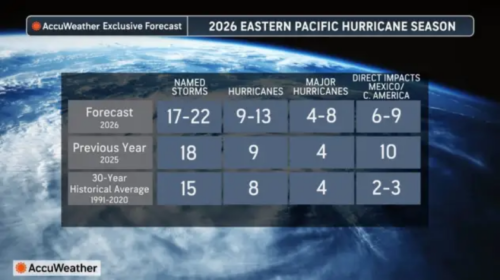 “Other than an area near the Gulf Coast, the Atlantic basin is likely to remain quiet through the end of July. Meanwhile, the eastern Pacific, energized by El Niño, could produce multiple named storms simultaneously during the coming days and weeks. … With the early onset of El Niño and the potential for it to become one of the strongest on record (a super El Niño), the number of tropical storms is expected to reach well into the double digits for 2026 in the eastern Pacific. Both tropical storms and hurricanes are forecast to be well above average. As of Sunday morning, July 12, the eastern Pacific had already produced four named tropical storms. … ” Read more from AccuWeather.
Arvin-Edison Water Storage District finds successful treatment to fight Golden Mussels
“A San Joaquin water district says it may have found a powerful tool in the fight against California’s growing golden mussel problem. The Arvin-Edison Water Storage District says a large-scale copper-based treatment successfully killed golden mussels found throughout the areas of its water system that were treated before farmers experienced disruptions to their water deliveries. Samuel Blue, resource manager with the Arvin-Edison Water Storage District, says the district was facing a problem with no clear solution when it discovered the invasive mussels. “The board looked at me. We’re not going to wait around for studies or experts. We are going to be the experts, and we are going to try and figure this out ourselves,” Blue said. … ” Read more from Fox News.
EXPLORE MORE COVERAGE:
- What to know about the golden mussels invading California’s waterways, from the Sacramento Bee
- California confirms invasive golden mussel farther north, with Lake Tahoe now at risk, from The Cool Down
Salmon fishing resumes off California coast for first time since 2022. Here’s what that means
“Commercial and recreational salmon fishing has resumed off the North Coast after a three-year statewide closure, marking a long-awaited milestone for a troubled industry that has endured historic losses in revenue and resources. Charter captains are reporting abundant catches out of Bodega Bay, and commercial boats up and down the coast are again unloading hauls of the prized West Coast staple for the first time since 2022. Still, the reopening is far from a return to normal, industry veterans say. This year’s season is heavily restricted with staggered openings and closings designed to limit the take on rebounding Chinook salmon returns. And fewer boats may be around to cash in, as some fishermen say years of lost income from curtailed and closed fisheries have driven some away from the water for good. … ” Read more from the Santa Rosa Press Democrat.
The battle over Shasta Dam water releases hits a major turning point in federal court
“The legal battle over how much water flows out of Shasta Lake this summer just tipped in favor of the federal government, and salmon advocates are not happy about it. Maven’s Notebook reported that a U.S. District Court on July 9 denied a temporary restraining order that would have forced the Bureau of Reclamation to slow its planned releases from Shasta Dam through the summer and early fall. Three environmental groups, the Center for Biological Diversity, San Francisco Baykeeper, and Friends of the River, filed the motion in late June. They argued that Reclamation’s operations plan drains too much cold water from the state’s largest reservoir, leaving winter-run Chinook salmon eggs in the Sacramento River vulnerable to lethal temperatures this fall. The groups wanted the Bureau to hold an extra 200,000 acre-feet in Shasta by the end of September. … ” Read more from Active NorCal.
Environmental groups accuse Gavin Newsom of strong-arming the judge in the Sites Reservoir fight
“A multi-billion-dollar plan to pull water from the Sacramento River is now at the center of a political firestorm. Two environmental groups are accusing Governor Gavin Newsom and several top state officials of pressuring an independent judge to rewrite her evidence-based findings on the Sites Reservoir project. Maven’s Notebook published an op-ed from Eric Buescher, managing attorney at San Francisco Baykeeper, and Chris Shutes, executive director of the California Sportfishing Protection Alliance, calling the pressure campaign an overt act of political meddling. Both organizations participated in the hearings at the heart of the dispute. … ” Read more from Active NorCal.
Water extinguishes fire, but how does fire affect water?
Brandon Ertis writes, “Wildfires in California are increasing in frequency and intensity, resulting in a greater extent of areas being directly burned or otherwise impacted in recent years. I work for a water resources consulting firm called Davids Engineering (DE), and we have an office in Chico in the beautiful Sacramento Valley. Our region has been severely impacted by some large fires in recent years. The Camp Fire in 2018 was unprecedented, burning over 18,000 structures (roughly ~85%) in the nearby foothill town of Paradise and, propelled by strong winds, roaring out of the foothills down onto Chico’s doorstep before being contained. It was the deadliest wildfire in U.S. history in over 100 years. Then the Dixie Fire in 2021 was the largest single-source fire in recorded California history. More recently, in 2024, the Park Fire started on the edge of Chico and very quickly expanded, burning over 429,000 acres to the north. We don’t work with wildfires at DE. We often work with irrigated agriculture and environmental water users in the Central Valley (not an area prone to wildfires), but even on the valley floor, the water supplies that we and our clients rely on are impacted by these wildfires. … ” Read more from the California Water Blog.
Idle geothermal wells at The Geysers could be part of California’s clean power solution
“A new generation of geothermal technology has proven itself in field testing in Northern California, where a state-funded demonstration at The Geysers suggests old and underperforming wells could become a faster, lower-impact path to more clean electricity. A California Energy Commission report published in April found that GreenFire Energy’s advanced geothermal system, tested in a well at the Socrates plant, also known as Unit 18, could help unlock more than 200 megawatts (200,000 kilowatts) of potential additional electricity production in idle geothermal wells across California, enough to power over 200,000 homes. The test used a closed-loop, pipe-in-pipe heat exchanger rather than the conventional method of pulling steam or hot water from the reservoir. The demonstration matters because California has struggled to expand geothermal power even as the state increasingly needs clean electricity that runs around the clock. Solar and wind have grown rapidly, but geothermal can generate during winter storms, at night and during multi-day periods when batteries are depleted. … ” Read more from the Santa Rosa Press Democrat.
Environmental extremism or gold standard? Feds target vaunted California coastal protections
“Months after announcing plans to open California’s coast to off-shore drilling, the Trump administration is now seeking input from industry on a federal program that works with states to responsibly manage coastal development. It’s raising concerns. In late June, the National Oceanic and Atmospheric Administration made a call for comments on the California Coastal Management Program, particularly soliciting feedback from industries focused on spaceport infrastructure, offshore oil production, pipeline maintenance, desalination projects and undersea cables. Secretary of Commerce Howard Lutnick said in a press release that the “full, formal review” would ensure that priority is given to siting facilities for national defense, energy, ports and transportation. … ” Read more from iNewsSource.
California has lost 60% of its sand dunes, making coastal communities more vulnerable to sea-level rise
“California’s sand dunes are vanishing. Their disappearance could mean more floods and damage from storms in Santa Barbara. Coastal sand dunes — mounds of sand along beaches formed by wind-blown sediment — play a crucial role in shielding coastal communities like Santa Barbara from coastal flooding. Eroded sand dunes partially led to the massive floods that pummeled Santa Barbara in February 2024, said geographer Timothy Baxter. The floods caused the county and state to declare a local emergency and forced downtown residents to evacuate. Baxter was the lead author of a UC Santa Barbara study which found that California has lost 60% of its sand dunes since its Gold Rush years — the first statewide assessment of coastal sand dune loss. … ” Read more from the Santa Barbara News-Press.
Trump slashes wildlife protections, putting endangered California animals at risk
“The Trump administration finalized a rollback of the Endangered Species Act on Friday, paving the way for drilling, mining and other human development across protected wildlife habitats. The move redefines “harm” under the Endangered Species Act, the landmark conservation law that protects threatened and endangered plants and animals. For years, “harm” meant actions that injure or kill wildlife, as well as actions that destroy protected habitats. Under the new rule, destroying those habitats is no longer illegal. The decision aligns with the Trump administration’s ongoing effort to slash regulations in the name of economic growth. Interior Secretary Doug Burgum, whose department finalized the move, said the prior definition of harm “interfered with private property rights” and “turned routine activity into a regulatory trap.” … ” Read more from the LA Times. | Read via AOL News.
SEE ALSO: ‘Many species will go extinct’: Feds’ ESA rule threatens habitat, from the Eureka Times-Standard
In commentary today …
Conservation isn’t enough for California’s weather whiplash, we need reliable water
Michelle Paul, executive director of the California Farm Water Coalition, writes, “It wasn’t that long ago that drought dominated the West. From 2014 to 2017 and again from 2021 to 2023, record after record was broken as clear skies and relentless sunshine became the norm. The governor’s office initiated statewide prohibitions on “wasteful water use,” mandating that cities, towns, and urban water suppliers reduce their potable water consumption by 25 percent. Central Valley farms received 8.7 million acre-feet less surface water than in a normal year, forcing growers to pump groundwater to keep permanent crops alive. Contrast that with the 2022–2023 water year, one of the wettest and snowiest in California’s recorded history. In a single season, it ended the state’s three driest consecutive years on record, earning the label “weather whiplash” as local governments and utilities rapidly shifted from managing extreme drought to widespread flooding within a matter of months. … ” Read more from the OC Register.
In regional water news and commentary today …
NORTH COAST
Scientists just explained how a wildfire killed thousands of fish on the Klamath River
“For five hours in 2022, a stretch of the Klamath River held no oxygen at all. Zero. Now scientists know exactly why. The USGS released a new study documenting how a monsoon storm during the McKinney Fire flushed ash, charcoal, and sediment off scorched hillsides in Siskiyou County and straight into the river. Dissolved oxygen collapsed to nothing and stayed there for more than five hours, suffocating fish along roughly 60 miles of one of the West’s most important salmon rivers. The research, conducted with the Karuk and Yurok Tribes and two universities, is the first published study to directly link a rain-on-wildfire event to lethal water quality conditions in a large river. Impairments from the 2022 event traveled more than 180 miles downstream. … ” Read more from Active NorCal.
SIERRA NEVADA
SACRAMENTO VALLEY
NAPA/SONOMA
BAY AREA
Marin Municipal Water District seals agreement for pipeline project
“The Marin Municipal Water District is entering a $2.65 million deal with the U.S. Army Corps of Engineers to advance a major drought resiliency project. The water district board voted unanimously Tuesday to approve the partnership agreement, charging the Army Corps to support the “atmospheric river capture” project. The project is a proposed pipeline that would replenish Marin reservoirs with Sonoma County rainwater during droughts. Under the agreement, the Army Corps will design a section of the pipeline that is 18,000 feet long. The agreement is a necessary step for the district to use federal funding from the 2022 Water Resources Development Act, or WRDA, slated for the project. … ” Read more from the Marin Independent Journal.
Marin County moves to steer collective sea level rise adaptation efforts
“Until now, climate adaptation efforts for cities in Marin County have been an everyone-for-themselves system. On Tuesday, the county’s new chief climate officer will present to the Board of Supervisors a plan for a countywide approach to climate resilience. Five years after a civil grand jury criticized the county for taking too long to establish a governance structure for countywide climate adaptation, the county has established a new sea level rise team under the office of the county executive. In 2024, the state passed Senate Bill 272, which requires every city to generate a plan for sea level adaptation, called a regional shoreline adaptation plan, or RSAP. … ” Read more from Local News Matters.
King tides bring high water levels to Larkspur, sparking sea level rise concerns
“High water levels from a current spate of summer king tides are raising concerns among Larkspur residents who view the unusual summer flooding as a sign of sea level rise. While the current projected tidal levels are not expected to flood homes, local residents report noticing higher water elevations than normal for this time of year. Long-term solutions to combat the ongoing tidal flooding will require permanent, highly expensive infrastructure changes, including raising homes to meet new water-level standards. Summer king tides are raising water levels along the Larkspur Boardwalk, prompting residents to note that summer flooding is exceedingly unusual and driven by more than just the moon’s gravity. … ” Read more from KTVU.
Vallejoans learn about flood and wastewater treatment plant
“With perfect temperatures in Vallejo on Saturday, those on hand at the Vallejo Flood and Wastewater District’s “Behind the Flush” event wanted to make sure they didn’t waste the opportunity to learn more about the environment. OK, well, maybe they just wanted to make sure they were wasting it correctly. Saturday’s behind-the-scenes experience offered an opportunity for community members of all ages to tour the wastewater treatment plant and discover how wastewater is cleaned, treated, and safely returned to the environment. “We’re excited to show people the work that our dedicated team of professionals does every day,” Vallejo Flood and Wastewater District Community Outreach Specialist Rachelle Canones said. … ” Read more from The Reporter.
SFPUC in midst of Sunol Valley Water Treatment Plant upgrades
“The San Francisco Public Utilities Commission’s 30th annual “Water Quality Report” released last month, saying the city’s drinking water met or exceeded all federal and state standards in 2025 after more than 95,000 tests and giving updates on key developments at the Sunol Valley Water Treatment Plant. The report also said no presence of per- or polyfluoroalkyl substances, otherwise known as PFAS or “forever chemicals,” was detected in the water tests. Introduced in the 1940s, these synthetic chemicals have been used to make various products resistant to heat, oil, stains and water, while also having been linked to severe health conditions. Additionally, the commission reported that its management of watersheds helped to produce high-quality water for 2.7 million residents and businesses in the Bay Area. … ” Read more from Pleasanton Weekly.
CENTRAL COAST
Oceanfront California rest stop runs out of water for second year in a row
“One of the only rest areas on the Central Coast is closed to travelers for the second summer in a row as Caltrans grapples with providing water to the facilities. The northbound and southbound rest stops, located within the popular Gaviota State Park in Santa Barbara County, are in a region that’s prone to flooding. So while the area has plenty of water, the agency can’t draw from the watershed, in part because of concerns that diverting water comes at the cost of a threatened species of fish, the steelhead trout. Now, Caltrans officials say they have no choice but to explore other options, such as gauging a neighboring school district to tap into its water supply. … ” Read more from SF Gate.
Proposed house near Carpinteria Salt Marsh stirs community and legal debate
“The Carpinteria Salt Marsh — a portion of the remaining coastal wetlands in Santa Barbara County — has become a legal battleground over a proposed house at 501 Sand Point Road. The house, elevated above an environmentally sensitive habitat area (ESHA) has been contested over environmental concerns. Friends of the Carpinteria Salt Marsh say construction will threaten hundreds of species that call the marsh their habitat, as well as the vital flooding control function of the marsh. “It affects everybody,” said Marc Chytilo, lawyer for the Friends of the Carpinteria Salt Marsh. “This isn’t just a situation where someone who lives next door is affected by it, it’s a matter of ecological significance.” … ” Read more from the Santa Barbara News Press.
SAN JOAQUIN VALLEY
EASTERN SIERRA
SOUTHERN CALIFORNIA
Dangerous heat wave moving in this week across Southern California
“Southern California is expected to see its hottest days of the year this week, when a blistering heat wave will send temperatures soaring above 100 degrees in some areas. Temperatures are expected to climb gradually over the next couple of days, peaking on Wednesday and Thursday before dropping back to more normal summertime levels heading into next weekend, according to the National Weather Service. A heat advisory remained in place Sunday and Monday, and an extreme heat watch has been issued for most areas of Los Angeles and Orange counties from Tuesday morning through Thursday evening. The NWS said those extreme heat watches “will almost certainly become warnings on Tuesday for most areas except possibly along the immediate coast and continuing through Thursday, though there is a 20-30% chance that warnings will extend to the coast as well.” … ” Read more from the LA Daily News.
As L.A. River morphs into impromptu stage for nature-loving musicians, gentrification fears remain
“Yo-Yo Ma closed his eyes as he drew a bow slowly across his cello, playing the first notes of the Catalan lullaby “The Song of the Birds.” But this venue wasn’t like any vaulted concert hall he had toured globally. At Maywood’s Riverfront Park, Ma was accompanied by the vroom of nearby traffic, cascade of a yucca rainstick and burbling hum of a water synth. An oblivious biker pushed past the world-renowned classical musician. The music flowed on. Ma’s pop-up show in Southeast Los Angeles was part of his ongoing efforts to highlight people’s relationship to nature through music. He is among a new wave of artists who have been hosting shows along the L.A. River, a waterway with a complex history. The river once terrorized Angelenos; its unconstrained flow was prone to flooding until most of its 51 miles were lined with concrete starting in the 1940s. While it’s been neglected, trashed and often forgotten over time, myriad governmental and nonprofit groups have been working for years to restore habitat, add park space and establish recreational elements (sometimes in conflict over the vision). And recently, creatives and activists, who dream of transforming it into a hospitable greenway, have been hosting arts events. … ” Read more from the LA Times. | Read via Yahoo News.
Chino: 123-TCP plant finally operating after nine years
“A filtration plant nine years in the making finally began operating on April 15 with little fanfare except for a small ribbon-cutting ceremony held May 22 attended by Chino Hills city councilmembers, a few Public Works commissioners and project staff. After years of obstacles and delays, the plant is now removing 123 TCP, a contaminant used as a cleaning solvent, degreaser, and agricultural pesticides in the 1970s and 1980s that polluted the soil and groundwater. The plant, located on Eucalyptus Avenue just west of the old fire station at the 71 Freeway, has the capacity to treat approximately 2,000 gallons of water per minute and produce almost 3 million gallons of clean water per day, according to city officials. … ” Read more from the Chino Champion.
‘All the easy gold is gone’: Inside Calif.’s dirty, dangerous mining rush
“Gold mining is the latest chapter in the winding career of San Jose native Sean Tucker. A fast talker with enviable confidence in whatever he chooses to put his energy into, Tucker began investing in gold in 2004, largely in the form of rare coins. The former professional cyclist had already remade himself from a dot-com ads salesperson to a treasure hunter in Colombia when the entrepreneurial chameleon decided he’d try to capitalize on some mining claims he’d invested in years ago in California. Today, Tucker owns 2,600 acres of Mojave desert mining claims he plans to excavate, mostly for gold but also for silver. And he’s sunk about $6 million, between himself and some investors, into a new venture called Persistence Mine. He estimates there are at least 500,000 ounces of undiscovered gold on the property — which would net more than $2 billion at current prices. That’s once it’s all mined, of course, a process that could take 15 years, he said. … ” Read more from SF Gate.
BLM approves pipeline conversion for Mojave Groundwater Bank Project developed with Lytton Rancheria
“The U.S. Bureau of Land Management (BLM) has approved a right-of-way (ROW) grant allowing construction to begin on the conversion of the Cadiz Northern Pipeline from a natural gas pipeline to a water conveyance system, clearing a major federal hurdle for the Mojave Groundwater Bank project being developed by Cadiz Inc. in partnership with the Lytton Rancheria. The approval authorizes the conversion and long-term operation of the 220-mile pipeline across BLM-managed lands under the Federal Land Policy and Management Act. Once the grant is fully executed by Cadiz, construction on the project can begin. … ” Read more from Native News Online.
IMPERIAL/COACHELLA VALLEYS
SAN DIEGO
Sewage pollution is keeping kids out of the water in this California beach town
“At YMCA Camp Surf in Imperial Beach last week, a group of middle schoolers spent their morning skateboarding, scaling a climbing tower and practicing archery. Then at noon, campers boarded a bus for a 40-minute drive up the coast to Mission Beach, where they jumped in the waves for the camp’s namesake activity: surfing. Founded in 1969, Camp Surf has catered to generations of South San Diego kids, introducing them to water sports and outdoor activities. With its seaside location and surf hut motif, it’s the picture of Southern California beach life. But for the past few years waterfront access has been limited by persistent sewage pollution from Tijuana, forcing the camp to find a workaround. … ” Read more from Cal Matters.
Aguirre: County should pay to treat the whole Tijuana River
“We’ve been wondering how the county would spend $80 million per year on the sewage-plagued Tijuana River under a proposed half-cent sales tax measure proposed by the San Diego County Supervisors. On Friday, Supervisor Paloma Aguirre (the issue’s main champion and former mayor of sewage-blighted Imperial Beach) put out her proposed plan. Main message? Convert a large chunk of that money into a bond (a big loan governments often take out to finance expensive projects) and have the county build a system that treats the entire Tijuana River. It’s also known as the “river diversion” project and Aguirre’s been pushing for it since she was mayor. … ” Read more from the Voice of San Diego.
Along the Colorado River …
Protections for Grand Canyon native fish in limbo amid low Colorado River flows
“Environmental advocates are looking for answers about a federal program to protect threatened fish in the Grand Canyon. The program, which was established in 2024, releases cold water from Lake Powell into a stretch of the Colorado River when it’s particularly warm. It’s part of an effort to push out invasive fish, like smallmouth bass, that can eat federally-protected native fish like the humpback chub. This year, the river is warm enough to trigger the releases, but Reclamation has made no announcements about whether they will take place. The releases, which are known as “cool mix flows” took place in 2024 and 2025, and Reclamation officials heralded it as an important way to protect native fish. However, the water that would be pushed downstream is caught in the middle of a big, complicated debate about the future of the Colorado River. … ” Read moire from KJZZ.
Arizona’s San Pedro River runs dry for the second time in 122 years
“For the second time in 122 years, a sensitive gauge measuring the San Pedro River’s streamflow near Sierra Vista went dry, a reading conservationists say is bad news for one of the Southwest’s last free-flowing rivers. On June 22, the river stopped flowing at a U.S. Geological Survey stream gauge east of the city. That site, known as the Charleston gauge, monitors the river’s water level at the surface and remained at zero for over two weeks. On July 9, a monsoon storm prompted it to begin flowing again, but Robin Silver, co-founder of the Tucson-based environmental organization the Center for Biological Diversity, isn’t relieved. “Storm and flood flows are not the equivalent of baseflows, which are the most important and sensitive measure of a river’s health,” he said. The San Pedro’s baseflow is what’s sustained between storms and fed by the underground aquifer. … ” Read more from Arizona Central.
Arizona water study points to recharge challenges on Colorado Plateau
“Arizona researchers found that only a small share of the state’s precipitation becomes natural groundwater recharge as warming increases water loss to the atmosphere. The Arizona Department of Water Resources published a June 25 summary of the Arizona Tri-University Recharge and Water Reliability Project Report. The full report was prepared at ADWR’s request and funded by the Arizona Board of Regents. Researchers from the University of Arizona, Arizona State University and Northern Arizona University studied ways to capture rain, snowmelt and urban runoff before the water is lost to evaporation, plant use or snow that turns to vapor before melting. The work looked at recharge options under current water rights, laws and policies. … ” Read more from the Navajo Times.
Diné water settlement stalls over state objections
“The Navajo Nation’s effort to secure its Colorado River water rights in northeastern Arizona has stalled in Congress after officials from Colorado, Utah, Wyoming and New Mexico asked lawmakers to change or delay the settlement bill. Representatives from Colorado, Utah, Wyoming and New Mexico submitted March testimony to the Senate Committee on Indian Affairs on S. 953, the Northeastern Arizona Indian Water Rights Settlement Act of 2025. The bill would resolve water claims held by the Navajo Nation, the Hopi and San Juan Southern Paiute tribes. None of the testimony called for rejecting the bill. Officials from each state supported negotiated tribal water settlements but raised concerns about a provision that would allow the Navajo Nation and Hopi Tribe to lease part of their settlement water while they build infrastructure to use their full allocations. … ” Read more from the Navajo Times.
How much water does Flaming Gorge lose to evaporation? We may finally find out.
“As hot temperatures sweep across Utah and water supplies continue to drop, states and the federal government are launching a new effort to better measure how much water evaporates from major reservoirs upstream of Lake Powell. The Bureau of Reclamation partnered with scientists and Upper Basin states, including Utah, Colorado, New Mexico and Wyoming, to launch a new evaporation study at Flaming Gorge, Blue Mesa and Navajo reservoirs — key water storage projects in the Upper Colorado River Basin. “We’re deploying some state-of-the-art instrumentation to monitor evaporation and weather conditions over the reservoirs,” said Chris Pearson, a research scientist at the Desert Research Institute who was busy installing equipment on floating platforms at Navajo Reservoir, which straddles the Colorado and New Mexico border, last week. … ” Read more from the Salt Lake Tribune.
A journey down one of the last wild rivers in the American west: ‘The bullseye will always be on its back’
“On an early morning in mid-May, a group of near strangers shoved camping gear and clothes into waterproof bags, slathered on sunscreen, and ambled into the bright-yellow rafts that would carry them down one of the last free-flowing rivers in the American west. Unhindered by large dams or diversions, the Yampa curves across 250 miles (400km) of alpine tundras, cottonwood forests and ancient red-rock canyons, rising from Colorado’s Rocky mountains to where it joins with the Green River in Utah, much in the way it has for millions of years. But it wasn’t just the Yampa’s unique place in history or the chance to take in its austere beauty that drew these people to its banks. About 30 in all – scientists and policymakers, tribal representatives, a rancher, a famous actress and this reporter among them – were there to see the high stakes posed by an uncertain future. … ” Read more from The Guardian.
In national water news today …
PFAS and Microplastics: Are patterns repeating?
“Over the past decade, PFAS have reshaped the drinking water regulatory landscape. The Fifth Unregulated Contaminant Monitoring Rule (UCMR 5) revealed PFAS to be widely present in drinking water across the United States, adding to public outcry amid ongoing federal and state regulation of PFAS in drinking water, while also increasing scrutiny of wastewater and biosolids as potential pathways for PFAS to reenter the environment. More recently, another emerging water contaminant is making headlines: microplastics. The contaminant is included in the Sixth Contaminant Candidate List (CCL6) to be considered for the Sixth Unregulated Contaminant Monitoring Rule (UCMR 6), alongside a broader range of PFAS chemicals. … ” Read more from Water Finance & Management.
‘The end of American science as we know it.’ White House funding plan sparks alarm
“In the early 1970s, federally supported university researchers in California discovered how to combine DNA from different sources and insert it into bacteria. At the time, they were pursuing foundational questions in molecular biology with no clear commercial payoff. Within a few years, scientists used those techniques to manufacture human insulin, launching a new generation of lifesaving diabetes drugs. Now, scientists say groundbreaking discoveries like that could become far less likely under a sweeping proposal from the White House Office of Management and Budget (OMB). Research that does not align with the priorities of President Donald Trump and his appointees, including work that lacks an immediate practical application, will not get funded, they warn. … ” Read more from Straight Arrow News.

