
A wrap-up of posts published on Maven’s Notebook this week …
Note to readers: Sign up for weekly email service and you will receive notification of this post on Friday mornings. Readers on daily email service can add weekly email service by updating their subscription preferences. Click here to sign up!
In California water news this week …
Strong El Niño now a virtual certainty, forecasters say. What it means for California
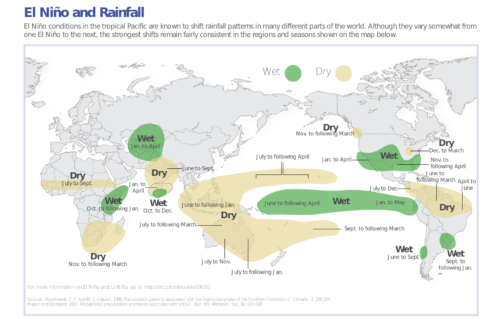
“A strong El Niño is virtually certain to develop this year, federal scientists say, and may end up being one of the strongest such events on record. The National Oceanic and Atmospheric Administration’s Climate Prediction Center said Thursday that there’s a 97% chance El Niño will be either “strong” or “very strong” over a three-month period ending this December. There’s an 81% chance it’ll be “very strong.” That could have a major impact in California, as strong El Niños significantly tilt the odds of expected weather outcomes during the winter. For the southern part of the state, that means a higher chance of above-average rainfall, risking a winter of flash floods and landslides. … ” Read more from the LA Times. | Read via AOL News.
What ‘very strong’ El Niño odds mean for California’s largest reservoirs
“A developing El Niño is forecast to become unusually powerful this winter, which could hold major implications for California’s water supply, reservoirs and flood risk. The odds of a “very strong” El Niño—defined by exceptionally warm sea-surface temperatures in the equatorial Pacific—have increased dramatically as the event develops. The National Oceanic and Atmospheric Administration’s (NOAA) latest outlook, released Thursday, shows a 75 to 81 percent chance of a very strong event between November and January, the heart of California’s wet season. … ” Read more from Newsweek.
Brewing El Niño and roasting oceans push planet into ‘uncharted territory’ for heat
“As extreme heat smothered the eastern United States over the July Fourth weekend and Europe struggled with its own deadly heat wave, experts warned that more record high temperatures could be in store for this year because of a strengthening El Niño. “We know that temperatures are warming in the long term, linked to human-caused climate change, and El Niño acts to boost those temperatures temporarily,” climate scientist Zachary Labe of the nonprofit Climate Central said in a recent briefing. Between June 2025 and April, Labe said, global average surface temperatures were about 1.8 to 2.7 degrees above pre-Industrial Revolution levels. But an average of forecast models suggests global average surface temperatures could be even higher in the winter — perhaps hitting 3.24 to 3.42 degrees above the pre-Industrial Revolution era. … ” Read more from the LA Times. | Read via AOL News.
SEE ALSO: The Pacific Ocean is running a fever. Why that’s an ominous sign, from the Washington Post
Kern water districts slash support for Delta tunnel to a third of 2025 levels
“Financial support for the planning phase of the Sacramento-San Joaquin Delta tunnel has plummeted among Kern County agricultural water districts as they continue to seek definitive answers about water supplies and how the tunnel will operate. The Department of Water Resources (DWR) had been seeking $33 million from Kern districts to be paid in two installments this year and in 2027 for the planning and pre-construction phase of the tunnel, known as the Delta Conveyance Project. But it will get considerably less than that based on participation levels that districts have approved during recent meetings. In March 2025, Kern districts had opted to participate – and fund – tunnel planning at 44.96% of the county’s total State Water Project (SWP) contract. That appears to have dropped to 15.77%, according to recent board meetings. … ” Read more from SJV Water.
U.S. Army Corps of Engineers completes Record of Decision for Delta Conveyance Project
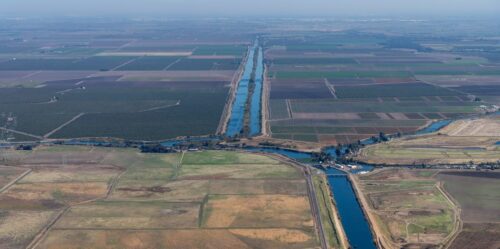
“The U.S. Army Corps of Engineers, Sacramento District, finalized its Record of Decision (ROD) for the proposed Delta Conveyance Project, completing the agency’s programmatic environmental review under the National Environmental Policy Act. The decision concludes one phase of the federal review process and allows USACE to begin evaluating future permit applications for project components within its jurisdiction. “Thanks to President Trump’s unparalleled decisiveness, we are clearing bureaucratic hurdles and ensuring the rapid delivery of vital water resources for California,” said Assistant Secretary of the Army for Civil Works Adam Telle. “This massive improvement is a direct result of our ‘Building Infrastructure, Not Paperwork’ (BINP) initiative, which streamlines the federal review process to accelerate critical infrastructure projects. This critical step enables USACE to make permitting decisions faster and more efficiently while providing the agility to address the complex problems of California water.” … ” Read more from the Army Corps of Engineers.
Reclamation’s Shasta plan poses salmon peril
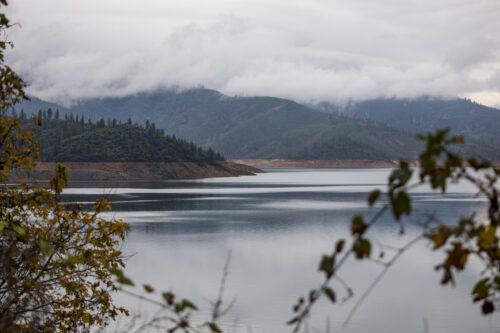
“In spite of a relatively wet winter, late rains, and high reservoir levels—conditions that generally benefit aquatic ecosystems—California’s ailing chinook salmon are facing unexpected peril in the main river system where they spawn. State officials and environmental groups have warned that an aggressive water delivery plan by federal reservoir managers has temperatures in Lake Shasta and the Sacramento River on track to kill vast numbers of salmon this fall. The bleak outlook comes as the U.S. Bureau of Reclamation rapidly spills water from Lake Shasta, the state’s largest reservoir and the infrastructural headwaters of the federal Central Valley Project. This system of canals, dams, reservoirs, and pumps supplies water for about 1 million households and 3 million acres of farmland. In its 2026 Sacramento River Temperature Management Plan, finalized May 29, the Reclamation outlined its intention to finish the irrigation season with about 2.2 million acre-feet of water in Lake Shasta. State officials and salmon advocates have challenged the plan, saying that recent hydrologic conditions have triggered a legal requirement that Shasta contain 200,000 acre-feet more water by the end of this September than the bureau’s target. They’ve also said such rapid releases as the bureau is planning violate state law and federal endangered species protections embedded in rules adopted in 2024 by the National Marine Fisheries Service (the Biological Opinion for the Long-Term Operation of the Central Valley Project). … ” Continue reading from Alastair Bland at Maven’s Notebook.
DWR: State Water Project shifts into summer operations to support California’s water supply and environment
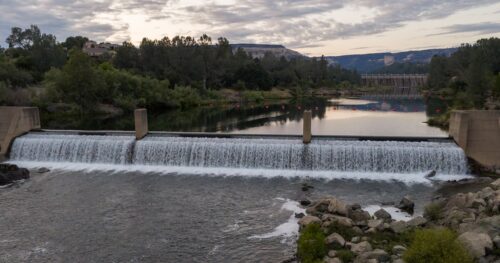
“The people who operate the State Water Project move water within a realm of regulations designed to protect water quality and endangered fish species under various conditions throughout the year. Starting July 1, those regulations make a big shift. This annual change in regulations is driven primarily by what scientists know about the life cycles and movements of native fish species that include Delta smelt, longfin smelt, steelhead, and Chinook salmon. At the onset of summer, around July 1, these threatened and endangered species generally have moved well beyond the south Delta channels that are influenced by the pumping of the State Water Project (SWP). Starting July 1, state and federal regulations allow the SWP to capture and move water supply at a faster rate than February through June, when native fish species are spawning or migrating through the Delta and could be harmed by SWP pumping. … ” Read more from the Department of Water Resources.
Golden mussels plague farms and water districts
Xavier Mascareñas / DWR
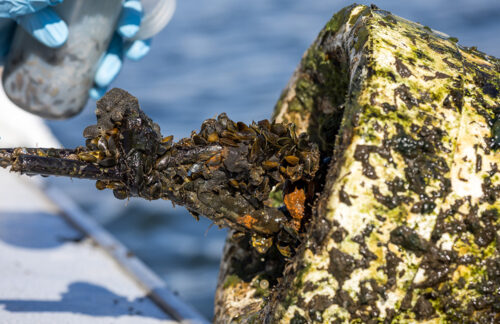
“The spread of golden mussels in California has alarmed farmers this year as the invasive species established itself in waterways across much of the state. In the Sacramento-San Joaquin Delta, the freshwater mollusks began obstructing irrigation systems that sustain billions of dollars’ worth of tree nuts, winegrapes, tomatoes and other crops. “It’s a nightmare,” said Trey Steinhart, operations director at Zuckerman Family Farms in San Joaquin County. “There’s nothing you can do to stop them.” Experts believe the mussels, which are native to Asia, were brought to California in the ballast water of a cargo ship. They were first detected in October 2024 at the Port of Stockton. Since then, they have multiplied in the delta and infiltrated the State Water Project and the Central Valley Project, both of which deliver water from the delta to about 30 million people and millions of acres of farmland. … ” Read more from Ag Alert.
‘No point of return’: Calif. won’t keep golden mussels from second-largest reservoir
“This weekend, during the Fourth of July, the frontline to protect California’s vital waterways is on land. Inspectors across the state are keeping a vigilant watch on boats towed to dozens of lakes and reservoirs, including Lake Tahoe, looking for any indication they are carrying an unwanted and damaging visitor, the golden mussel. Already this year, three counties in California — Kern, Sacramento and San Joaquin — declared a state of emergency over the arrival of the mussels. But at the state’s largest reservoir, Lake Oroville, state officials won’t be checking boats at all. The rollback of boat inspections at Lake Oroville happened in April, in the wake of the mounting threat posed by golden mussels, and it is a surprising decision by the California Department of Water Resources. DWR and the California Department of Fish and Wildlife have launched a statewide campaign to stop the harmful invaders, in part by mandating boat inspections at key waterways. … ” Read more from SF Gate.
Hotter, drier weather could double water bills in some cities, Stanford study finds
 “Hotter, drier weather threatens to double water bills by mid-century in some cities, according to a Stanford-led study. The research, published July 8 in Nature Sustainability, is the first to comprehensively model how climate change, infrastructure investment, and household water demand can combine to compound an already growing affordability crisis. “Climate change stresses water supplies, and forces utilities to build expensive new infrastructure to maintain reliability,” said study lead author Jennifer Skerker, a PhD student in civil and environmental engineering at the Stanford Doerr School of Sustainability and the Stanford School of Engineering while working on the study. “In cities already struggling with affordability due to aging infrastructure, the additional costs passed on to ratepayers to pay for additional infrastructure and reliability measures can push a substantial share of households into crisis.” … ” Read more from Stanford News.
Could dredging invasive clams boost fish food in Suisun Marsh?
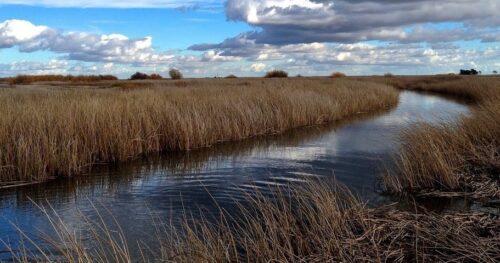
“The San Francisco Bay-Delta estuary has been a food desert for fish for two decades and the introduced overbite clam is a major culprit. The fish eat tiny creatures called zooplankton, which in turn eat tiny plant-like organisms called phytoplankton. But overbite clams eat so much phytoplankton that there’s hardly any zooplankton for fish. “It’s a huge problem,” says Madison Dunlap, a University of California, Davis ecologist. Now Dunlap and aquatic ecologist John Durand, also at UC Davis, present an out-of-the-box idea for controlling overbite clams in hopes of boosting fish food. In a June California Water Blog post, they explore dredging the clams in Suisun Marsh, which is between the Bay and the Delta. … ” Read more from Robin Meadows at Maven’s Notebook.
Can restoration save the Delta smelt?
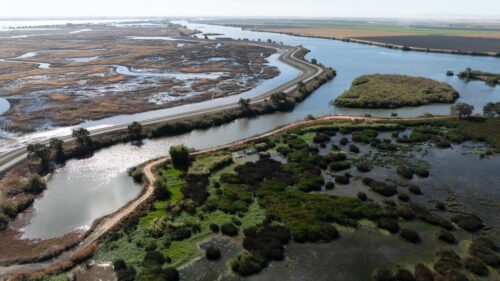
“Lookout Slough, a 3,400-acre wetland on the edge of the Sacramento-San Joaquin Delta in central California, is ringed with aquatic plants, pulsing with tides from San Francisco Bay, and home to dozens of species of fish, amphibians, reptiles and birds. Until two years ago, it was parched former farmland, cut off from the Sacramento River’s floodplain by a 26-foot-tall levee. This transformation, the Delta’s largest tidal restoration project, was prompted by the decline of the Delta smelt, a fish barely as long as an index finger. Adapted to the delta’s brackish tides over thousands of years, the smelt is considered a strong indicator of ecological health. No smelt means there’s not enough phytoplankton or zooplankton in the water to sustain the species, and therefore less food for birds and larger fish. Charlotte Biggs, program manager for the California Department of Water Resources (DWR), compared the smelt’s role in the delta’s wetlands to the blood tests that tell humans about “bigger things that may be going on in your body.” The question now is whether restoring wetlands like Lookout Slough can revive the Delta smelt. … ” Read more from High Country News.
Detecting the Delta’s inhabitants through their DNA fingerprint
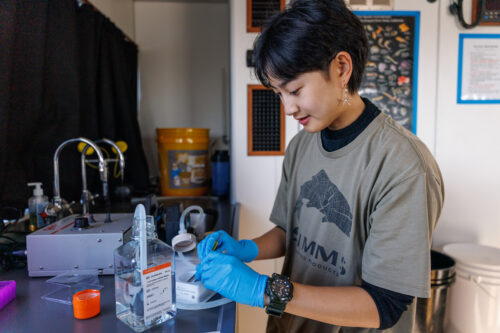
“Finding the Delta’s most elusive residents means digging deep down into the microscopic traces they leave behind. DWR scientists are doing just that by tapping into DNA, the cellular material that contains the building blocks of life and is found in all organisms. Every living organism sheds environmental DNA (eDNA) into its surroundings through skin cells, waste, mucus, or other biological material. Using a process known as metabarcoding, DWR scientists analyze tiny traces of genetic material left behind by plants and animals to generate a detailed snapshot of an ecosystem and the species that inhabit it. Researchers collect environmental DNA (eDNA) samples from air, soil, and water, then use advanced genetic techniques to identify the organisms present. Because eDNA can reveal a species’ presence without the need to physically capture, handle, or even observe it, metabarcoding provides a powerful, non-invasive tool for monitoring biodiversity and tracking ecosystem health. DWR scientists analyze those genetic traces to create an instant snapshot of the ecosystem and the species living within it. … ” Read more from DWR.
Why are berries everywhere, in every season? Driscoll’s.
“Once upon a time, there was only one way to get your hands on a ripe strawberry in winter: be a member of the French royal court. In 1712, Louis XIV dispatched a spy to Spanish-controlled Chile to smuggle out native white-berried plants. Royal gardeners bred them with European red berries, coddled them in manure hotbeds and warmed them with underground fires, all so that the king could have strawberries in March instead of waiting until June. Today, Costco shoppers in South Korea, pastry chefs in Dubai and parents of small children nearly everywhere can buy strawberries, raspberries, blueberries and blackberries any time of year — if they can afford them. (Strawberry prices fluctuate throughout the year, from about $3 per pound in San Francisco to $35 in Dubai.) And the biotech that drives modern agriculture ensures that each berry is better than anything the Sun King ever tasted. In just the last decade, berries have completed the journey from fragile, local, seasonal treat to worldwide refrigerator staple and marketing juggernaut. … ” Read more from the New York Times.
California’s first carbon capture project is up and running. Environmentalists are still trying to stop it.
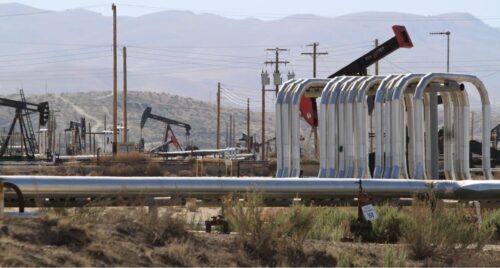
“California Resources Corporation, the state’s largest oil company, passed a long-targeted milestone in May: It had finally taken carbon dioxide that would otherwise warm the atmosphere and injected it deep underneath its own oil field. It’s the first such project to become operational in California. This week, the state finalized regulations that could support many more. The carbon CRC is sequestering at its storage site comes from its own natural gas-processing plant, which strips CO2 out of gas from wells at the nearby Elk Hills oil field. The plant will send up to 100,000 tons of CO2 each year to the so-called Carbon TerraVault I intended to lock up carbon dioxide for millennia. The project has hurdled obstacle after obstacle to reach this point: years of slow-moving permitting by the U.S. Environmental Protection Agency and Kern County; a new federal administration that has rolled back funding for climate programs and left others in limbo; and an uncertain technological and private market for carbon removal and storage. The project is still caught up in litigation—after its approval, environmental groups sued, arguing that the county’s environmental review was inadequate. Yet the TerraVault is officially up and running, representing a test case not only for California, which has nearly a dozen similar projects in the works, but also different U.S. regions and other countries. … ” Read more from Inside Climate News.
Water: The overlooked issue in California’s 2026 governor race
 “California’s water agencies are trying to force their way onto the 2026 gubernatorial campaign agenda. Water is one of California’s most consequential governing problems and one of its least attractive campaign issues: it’s technical, regionally specific and easy to get wrong. Water matters intensely in the red-leaning Central Valley, the thirsty, agricultural heart of the state, but that rarely translates into votes for Democrats; in fact, the Democratic gubernatorial contenders barely mentioned it in the June primary. With Democrat Xavier Becerra heavily favored over Republican Steve Hilton in the general election, there’s now little pressure to get into the policy weeds. But the Association of California Water Agencies still sees a window for influence. … Chelsea Haines, ACWA’s director of state regulatory relations, said the initiative, Vision for Our Water Future, is aimed at making sure candidates understand water before they start filling key posts and setting an agenda in Sacramento. .. Haines spoke to POLITICO about why candidates avoid talking about water, and what she wants to see from them moving forward. …, ” Read more from Politico.
California calls for communities to make their voices heard as federal administration threatens state’s coast
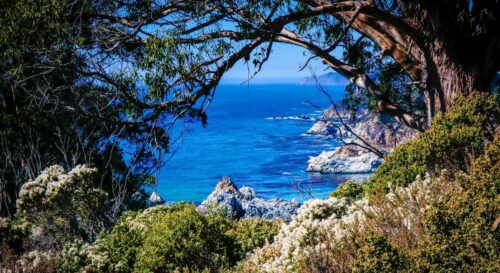
“The federal administration is continuing its efforts targeting California’s coastline. A new federal review launched late last month threatens the future of how California’s coastline is managed, and the California Natural Resources Agency is encouraging Californians to make their voices heard. The review – singling out California – comes as the federal government targets California’s coast, including proposals to expand dangerous offshore oil drilling and efforts to restart offshore oil pipeline infrastructure. Based on the results of the review, the federal government can attempt to defund and decertify the state’s coastal management program, an unprecedented action that would change whether and how the people of California have a voice in offshore drilling and other federal actions off our coast. The review was ordered by U.S. Secretary of Commerce Howard Lutnick under the false pretense of California’s “environmental extremism.” “California’s coast belongs to all Californians – full stop,” said California Secretary for Natural Resources Wade Crowfoot. “For decades, Republican and Democratic administrations alike have respected the partnership between states and the federal government that has protected our coast while supporting a thriving economy. Yet the Trump administration is singling out California and threatening unprecedented action in pursuit of dangerous new offshore oil drilling. We won’t stand by while the federal government attempts to sideline the people who rely on and care for California’s coast – now is the time to make our voices heard.” … ” Read more from the California Natural Resources Agency.
In commentary this week …
California needs public policy that respects how water actually works
“There is a stretch of Rock Creek that lies just a few hundred yards from my grandmother’s house in north Butte County. When I was young, we would walk there in the mornings to check the water when it ran high. In the summer, we would follow the levee and explore. But I never swam in that creek. The banks were too steep, I was too small and my grandmother had a lifelong fear of water. She had reason for it: She grew up close enough to the Sacramento River that roads regularly flooded and houses were annually threatened. Around 1937, when she and my grandfather were a young married couple, floodwaters swept away their home and rose to the rafters of the barn. My grandmother respected water because she understood its power. That lesson feels urgently relevant now, as California faces the growing consequences of weak planning, piecemeal development and a political habit of reacting to floods only after the damage is done. … ” Continue reading at the Sacramento Bee.
California tracks pesticides, but doesn’t track what reaches water
Katherine Levy, a writer based in Tahoe Vista, writes, “Proposition 4’s $10 billion restoration bond contains no statutory requirement linking funded treatments to compound-specific baseline monitoring. The Legislature could fix that through budget trailer bill language. It hasn’t. California voters approved Proposition 4 in November 2024, the largest climate resilience bond in state history. The proposed 2026-27 budget includes $314 million for wildfire and forest resilience, as the California Natural Resources Agency, the State Water Resources Control Board, and CalFire begin implementation. This spring, the Lake Tahoe Basin Management Unit (LTBMU) authorized glyphosate treatment across 2,400 to 3,600 acres of post-fire terrain, including tributary watersheds that drain to the lake. Lake Tahoe flows into the Truckee River, and the lake supplies drinking water to communities served by the North Tahoe Public Utility District and other local utilities. … ” Continue reading from Capitol Weekly.
In regional water news this week …
CDFW continues to cite individuals in Siskiyou County for illegal suction dredge mining
“The California Department of Fish and Wildlife (CDFW) continues to issue citations to individuals for violations related to unlawful suction dredging. Suction dredging is harmful to native fish and wildlife habitat, making it difficult for native species to thrive and creating favorable conditions for invasive species. On June 24, 2026, CDFW officers patrolled the Klamath River near Happy Camp, citing one individual for unlawfully possessing a suction dredge in closed state waters, a violation of California Fish and Game Code (FGC) section 5653(e). The dredge was seized as evidence. Officers used a helicopter and ground crew to remove the dredge and delivered it to a nearby location where it was safely loaded onto a trailer for storage. … ” Read more from the Department of Fish and Wildlife.
San Francisco rain gardens filter microplastic tire particles and dozens of chemicals from stormwater
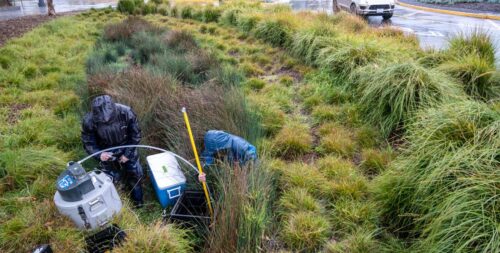 “San Francisco’s rain gardens—the unassuming patches of greenery and mulch designed to soak up rainwater alongside urban roadways—may improve the environment in more ways than realized. A new SFEI-led study shows that rain gardens substantially reduce levels of 21 contaminants in stormwater before that water ends up in San Francisco Bay. The paper published in the journal Environmental Science: Water Research & Technology investigated how rain gardens trapped pesticides, preservatives, pharmaceuticals, chemicals from vehicles and tires, and certain microplastics. The research is among the first to examine so many groups of chemicals across multiple rain gardens and storms. “With a broader dataset, you can examine and even challenge some assumptions that folks might make about the performance of these rain gardens,” says Rebecca Sutton, a study coauthor and lead scientist for emerging contaminants at SFEI. … ” Read more from the San Francisco Estuary Institute.
Patterson illegally denied 719-home development over groundwater dispute, judge rules
“A battle over housing and groundwater in Stanislaus County has dealt the City of Patterson another legal setback. A Stanislaus County judge has ruled the city illegally denied a key application for the proposed 719-home Keystone Ranch development, finding Patterson violated state housing law when it rejected the project’s tentative subdivision map. The ruling marks the latest chapter in an ongoing dispute that began last year over how to address the city’s groundwater challenges. The conflict stems from a decision by the California Department of Water Resources to reject Patterson’s groundwater sustainability plan and order the city to reduce groundwater pumping by 10%. … ” Read more from the Modesto Bee.
Friant Water Authority looking to pursue no-pump zone
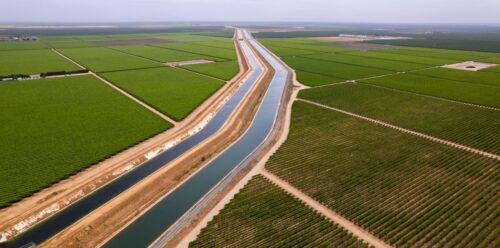
“The Friant Water Authority is looking at the option of implementing a no-pump zone for water users who are within three miles on both sides of the Friant-Kern Canal. FWA oversees the Friant-Kern Canal. FWA cheif operating officer Eric Limas told John Lindt, publisher of Sierra2theSea.net, the agency is working with water uses to implement the no-pump zone in which they would not be allowed to pump groundwater in an article published by The Sun Gazette-Journal. That area near the canal has seen the worst subsidence, the effective sinking of the ground, which has signicantly reduced the canal’s conveyance, its ability to deliver water. Limas stated an agreement still needs to be reached with the water users. “We’re not there yet,” Limas told Lindt. … ” Read more from the Porterville Recorder.
A dry river sparks a fight over water where LA, Pasadena and South Pasadena meet
“Along the Arroyo Seco, on a strip of land where three cities come together, a fight is escalating over water. Pasadena and South Pasadena are proposing to clean contaminated water from the channelized stream, but to build the necessary infrastructure, they’d have to remove nearly 140 mature trees, more than half of which are invasive and highly flammable. And a portion of the cleaner water would end up irrigating a public golf course. That fact has been a major point of contention raised by a group of residents on the Los Angeles side of the Arroyo. They have campaigned on social media and in weekly stakeouts to stop the project, which would significantly alter a small creek near the popular San Pascual Park. Leaders of the Gabrieleño Band of Mission Indians-Kizh (Quiichi) Nation have also rejected the Arroyo Seco Water Reuse Project because the area is sacred and home to burial sites, said tribal chairman Andrew Salas. The tribe has opposed the project since its inception and sent a formal opposition letter last year. … ” Read more from the LAist.
Trump administration OKs California company’s plan to pipe water out of the Mojave Desert
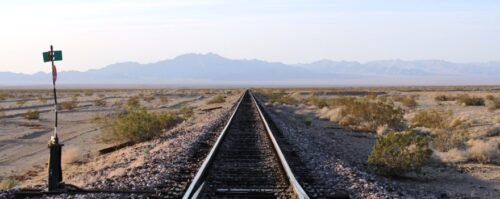 “The company Cadiz Inc. has been trying for years to pump groundwater in the Mojave Desert and ship it to thirsty cities in California. Now, the Trump administration has signed off on part of its plan: converting an oil and gas pipeline to transport water across the desert. The federal Bureau of Land Management released documents Thursday saying the company’s plan to repurpose 162 miles of the pipeline to transport water “will not significantly affect” the environment. “We’re excited to achieve this pivotal milestone. After many years of planning and environmental review, the project has now reached the construction stage,” said Susan Kennedy, chair and chief executive of Cadiz. … ” Read more from the LA Times. | Read more from Yahoo News.
What happens when the water dries up? Much of the American West is close to finding out
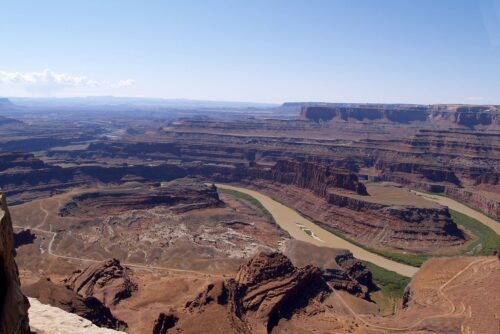 “John Wesley Powell led the first expedition through the Colorado River Basin in 1869, filling in the last blank spot on the map we now call the United States as the country celebrated its 93rd birthday. As America turns 250, the reservoir that bears his name is in danger of hitting dead pool, marking a crisis point for the river complex and the 40 million people who rely on it. While civilizations made homes along the Colorado River for thousands of years, America’s development boom along the waterway coincides with a period of extended drought. That drought has intensified within the past 25 years as the climate shifts and one of the country’s largest river basins dries. “This problem in the Colorado River,” said Brad Udall, a senior water and climate research scientist at the Colorado Water Center, “is unique globally and it represents a human-caused climate change shift in how we operate.” … ” Read more from Straight Arrow News.

