
Several news sources featured in the Daily Digest may limit the number of articles you can access without a subscription. However, gift articles and open-access links are provided when available. For more open access California water news articles, explore the main page at MavensNotebook.com.
On the calendar today …
- WORKSHOP: State Water Resources Control Board beginning at 9am. The Board will hold a workshop to receive comments on a revised draft Waste Discharge Requirements order for dairies. Click here for the full agenda.
- WEBINAR: 2026 Western Drought Media Briefings from 9:30am to 11:00am. The Western United States is experiencing compounding environmental challenges as severe drought, heat, and elevated wildland fire potential threaten diverse sectors of the economy and local communities.The briefings will provide the latest information on current drought and fire conditions and forecasts, as well as the serious impacts to diverse sectors of the economy and communities throughout the West. Perspectives from those on the ground who are responding to exceptional drought conditions will be shared. Click here to register. Here is the agenda.
In California water news today …
Heat dome to broil western US ahead of North American monsoon
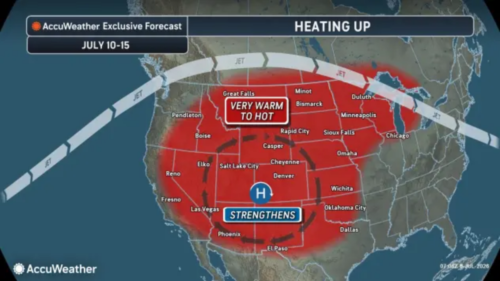 “A massive heat dome will continue to build over the western United States this week before expanding toward the north-central region this weekend. As the heat dome ages and shifts, the door will open for thunderstorms to erupt over the deserts and Great Basin–bringing drought relief for some and problems for others. Temperatures are forecast to crest across much of the interior West in the coming days, with many areas to climb 5-10 degrees Fahrenheit above the historical average. Temperatures have already surpassed season high marks set during spring heat waves in recent days and will push the new thresholds even higher. Highs are forecast to be in the mid-110s in Phoenix and Palm Springs, California, and the low 110s in Las Vegas. … ” Read more from AccuWeather.
The North American monsoon is finally arriving. California will soon feel the impacts
“The annual monsoon that brings summer thunderstorms to the Southwest is finally kicking into gear — promising relief for the parched, fire-plagued Four Corners region. The North American monsoon season officially begins June 15, according to the National Weather Service, yet much of the Southwest has yet to experience significant precipitation from the annual shift of the winds. Winds over the Desert Southwest shift to being out of the south in summertime, as heating of the land draws moisture-rich air from the subtropics toward the typically more arid regions. Parts of Arizona and New Mexico can get more than half of their annual precipitation from monsoon thunderstorms between June and September, but this year is off to a dry start in Phoenix, Albuquerque, N.M. and many other desert cities. … ” Read more from the San Francisco Chronicle.
Hotter, drier weather could double water bills in some cities, Stanford study finds
 “Hotter, drier weather threatens to double water bills by mid-century in some cities, according to a Stanford-led study. The research, published July 8 in Nature Sustainability, is the first to comprehensively model how climate change, infrastructure investment, and household water demand can combine to compound an already growing affordability crisis. “Climate change stresses water supplies, and forces utilities to build expensive new infrastructure to maintain reliability,” said study lead author Jennifer Skerker, a PhD student in civil and environmental engineering at the Stanford Doerr School of Sustainability and the Stanford School of Engineering while working on the study. “In cities already struggling with affordability due to aging infrastructure, the additional costs passed on to ratepayers to pay for additional infrastructure and reliability measures can push a substantial share of households into crisis.” … ” Read more from Stanford News.
El Niño is here, and it’s already scrambling fisheries throughout the Pacific
“We’re not even one month into “super” El Niño, the natural Pacific weather pattern characterized by warmer than average sea surface temperatures, and fisheries around the world are already getting scrambled. In Peru, government officials have effectively canceled the fishing season for anchovies, one of the country’s most important exports and a leading source of fish oil and animal feed globally. The Indian government is preparing for a season of smaller, less plentiful Indian mackerel. Meanwhile, in Southern California, recreational and commercial fishers have reported some of the most successful months of tuna fishing they’ve ever seen. The divergent situations show how El Niño can create winners and losers across the fishing industry, decimating some species while making others easier to catch. For fishers, the result is instability, with many forced to consider seasonal diversification. And consumers can expect fluctuations in the price of key fish products. “People are worried,” said Juan Carlos Sueiro, an economist and fisheries director for the nonprofit Oceana Peru. As climate change is expected to drive more frequent, stronger El Niños, “our vulnerability is increasing.” … ” Read more from Grist.
U.S. Army Corps of Engineers completes Record of Decision for Delta Conveyance Project
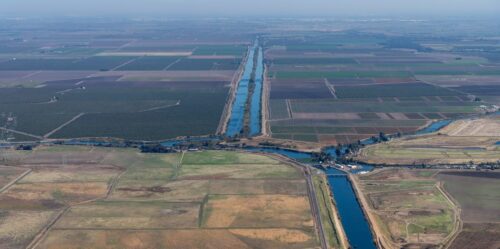
“The U.S. Army Corps of Engineers, Sacramento District, finalized its Record of Decision (ROD) for the proposed Delta Conveyance Project, completing the agency’s programmatic environmental review under the National Environmental Policy Act. The decision concludes one phase of the federal review process and allows USACE to begin evaluating future permit applications for project components within its jurisdiction. “Thanks to President Trump’s unparalleled decisiveness, we are clearing bureaucratic hurdles and ensuring the rapid delivery of vital water resources for California,” said Assistant Secretary of the Army for Civil Works Adam Telle. “This massive improvement is a direct result of our ‘Building Infrastructure, Not Paperwork’ (BINP) initiative, which streamlines the federal review process to accelerate critical infrastructure projects. This critical step enables USACE to make permitting decisions faster and more efficiently while providing the agility to address the complex problems of California water.” … ” Read more from the Army Corps of Engineers.
Newsom looks to lock in his water agenda
“Gov. Gavin Newsom is putting his stamp on the powerful agency overseeing California’s biggest water fights — and racing to get his pet projects across the finish line before his term ends. Jared Blumenfeld, Newsom’s former CalEPA secretary, took his seat for the first time Tuesday on the five-member State Water Resources Control Board days after Newsom appointed him to replace Laurel Firestone, the environmental justice advocate who stepped down last month to “pursue other opportunities” in water. Blumenfeld’s arrival gives Newsom a deeply experienced ally on the board right as the agency is preparing to make final decisions on Newsom’s water priorities. These include a long-delayed master plan for the Sacramento-San Joaquin River Bay Delta, as well as water right permits for the Sites Reservoir and the Delta Conveyance Project, the controversial 45-mile long tunnel to divert more water from Northern to Southern California. … ” Continue reading from Politico.
SEE ALSO: Belvedere environmental leader tapped for California water board, from The Ark
Golden mussels plague farms and water districts
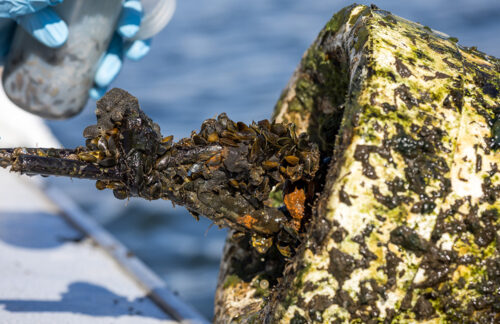
Xavier Mascareñas / DWR
“The spread of golden mussels in California has alarmed farmers this year as the invasive species established itself in waterways across much of the state. In the Sacramento-San Joaquin Delta, the freshwater mollusks began obstructing irrigation systems that sustain billions of dollars’ worth of tree nuts, winegrapes, tomatoes and other crops. “It’s a nightmare,” said Trey Steinhart, operations director at Zuckerman Family Farms in San Joaquin County. “There’s nothing you can do to stop them.” Experts believe the mussels, which are native to Asia, were brought to California in the ballast water of a cargo ship. They were first detected in October 2024 at the Port of Stockton. Since then, they have multiplied in the delta and infiltrated the State Water Project and the Central Valley Project, both of which deliver water from the delta to about 30 million people and millions of acres of farmland. … ” Read more from Ag Alert.
Golden mussels spread to West Sacramento port as Yolo County weighs emergency order
“To the casual observer, the waterway that enters the Port of West Sacramento looks no different than it ever has. But beneath the placid surface, a new front in a slow-burning environmental emergency has opened. The California Department of Fish and Wildlife announced last week that golden mussels were discovered in the Sacramento River Deep Water Ship Channel and Washington Lake in West Sacramento. In addition to clogging up infrastructure, the fast-spreading, invasive species can outcompete native species and cause harmful algal blooms. “It does impact our native fish and wildlife,” department spokesperson Krysten Kellum said. … ” Read more from PBS Abridged.
Detecting the Delta’s inhabitants through their DNA fingerprint
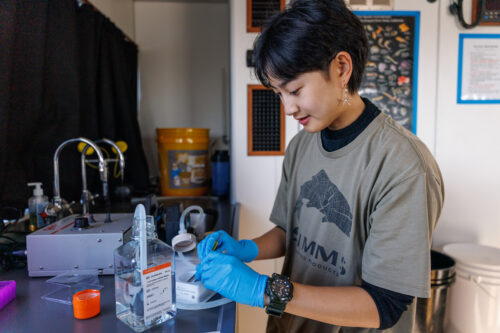
Nick Shockey / California Department of Water Resources
“Finding the Delta’s most elusive residents means digging deep down into the microscopic traces they leave behind. DWR scientists are doing just that by tapping into DNA, the cellular material that contains the building blocks of life and is found in all organisms. Every living organism sheds environmental DNA (eDNA) into its surroundings through skin cells, waste, mucus, or other biological material. Using a process known as metabarcoding, DWR scientists analyze tiny traces of genetic material left behind by plants and animals to generate a detailed snapshot of an ecosystem and the species that inhabit it. Researchers collect environmental DNA (eDNA) samples from air, soil, and water, then use advanced genetic techniques to identify the organisms present. Because eDNA can reveal a species’ presence without the need to physically capture, handle, or even observe it, metabarcoding provides a powerful, non-invasive tool for monitoring biodiversity and tracking ecosystem health. DWR scientists analyze those genetic traces to create an instant snapshot of the ecosystem and the species living within it. … ” Read more from DWR.
Delta Independent Science Board examines Nature-Based Solutions for climate, water and habitat goals
“Nature-based solutions use natural systems and working landscapes to reduce greenhouse gas emissions, store carbon and build resilience to climate impacts. California has made those approaches a key part of its climate strategy, with agricultural lands and Delta wetland restoration playing important roles because both can increase carbon sequestration while also supporting water, habitat and land-management goals. At its May meeting, the Delta Independent Science Board began a panel series on nature-based solutions as it considers whether to undertake a formal review of the topic. Under the Delta Reform Act, the board is charged with conducting periodic reviews of scientific research, monitoring and assessment programs that support adaptive management in the Delta. The first session opened with remarks from California Natural Resources Secretary Wade Crowfoot on the growing role of nature-based solutions in state climate and conservation policy, including their relevance to the Delta. Then, a panel of state agency representatives then discussed current programs, implementation challenges, funding needs, monitoring gaps and science questions that could inform the board’s next steps. … ” Read more from Maven’s Notebook.
California proposal would build at least 8 data centers in Bay Area and 70 statewide
“A California company has proposed building dozens of data centers around the state — including at least eight in the Bay Area. And some local leaders are receptive to the idea. It’s an unconventional pitch. The company, Global Stack LLC, wants to use fairgrounds across California as a site for the data centers. On top of that, it seeks to put helicopter landing pads — useful in emergencies, the company says — in the same development. A pitch deck presented to local fairs showed illustrations of helicopters parking on top of massive parking garages built next to ferris wheels; in another, hot air balloons and futuristic air-taxis float above fair-goers. … ” Read more from the San Francisco Chronicle.
Global compost impact has local roots
“Recology spokesman Robert Reed stood beside the tailgate of a pickup truck loaded with a mound of rich, dark compost during a spring presentation at a small winery just north of the Solano County line, inviting visitors to experience what he calls “the magic.” “What looks like a pile of dirt is actually millions of living organisms hard at work, turning yesterday’s scraps into tomorrow’s healthy soil,” Reed said with an unmistakable grin. “Go ahead, feel it.” One visitor reached into the pile, then quickly smiled in surprise. “Oh, it’s warm!” “It is warm because it’s alive,” Reed replied enthusiastically. “This is life. This is nature doing what it’s designed to do. Compost isn’t waste. It’s one of our most powerful tools for building healthier soil, conserving water and reducing waste.” …, ” Read more from the Daily Reporter.
Fertilizers carry a hidden cost for soil’s crucial microbes – using less as prices rise might pay off for farms in unexpected ways
 “Across North America, in places such as Illinois, Iowa and Texas, farmers are busy growing the crops the world depends on for food, fuel and fiber. But as their tractors roll across fields, a pressing concern weighs heavily on many farmers: the rising cost of synthetic fertilizers, widely considered essential for crop production. After an expensive spring, with the war in Iran restricting fertilizer and petroleum shipments and raising prices, farmers may be wondering whether they can cut back on fertilizer now and in the future to save money. The answer has a lot to do with a hidden world beneath our feet, where billions of soil-dwelling, beneficial microbes help sustain productive, resilient and healthy crops and agricultural systems. … ” Read more from The Conversation.
Why solar developers should evaluate compensatory mitigation early
“As renewable energy development accelerates across California and the western United States, developers are facing a growing challenge: how to efficiently navigate compensatory mitigation requirements while maintaining project schedules and budgets. California’s ambitious clean energy goals are driving unprecedented levels of renewable energy investment. According to industry and agency projections, California may require hundreds of thousands to millions of additional acres of renewable energy development over the coming decade to meet its clean energy targets. At the same time, water supply challenges and implementation of the Sustainable Groundwater Management Act are reshaping land-use patterns across the Central Valley and other agricultural regions. As farmland is fallowed or retired from production, many landowners and developers are viewing solar energy as an attractive alternative use. … ” Read more from ESA.
Environmental justice group sues California over carbon market overhaul
“An environmental justice group is suing California’s top air regulator over its sweeping overhaul of the state’s cap-and-invest carbon market program, claiming it illegally rushed a last-minute incentive for industrial polluters. The lawsuit from the nonprofit Communities for a Better Environment alleges that the California Air Resources Board bypassed required environmental reviews when it approved a major update to the cap-and-invest program at the end of May. CARB violated the California Environmental Quality Act when it failed to meaningfully analyze the effects of the changes, according to the lawsuit, filed July 1 in Los Angeles County Superior Court. It marks the first major lawsuit against the state’s signature program since legislators agreed last year to extend its life beyond the original 2030 expiration date to 2045. … ” Read more from the LA Times.
AB 2051 aims to lessen complexity of coastal resilience permitting in California
“Sea level rise is a dangerous reality for California’s coastal communities. California’s 2024 Sea Level Rise Guidance estimates statewide average sea levels to rise between 1.6 and 3.1 feet by 2100 under intermediate scenarios, while higher levels cannot be ruled out under more severe climate and ice-sheet loss scenarios. … Transitioning from planning to implementation can be a major challenge for coastal communities. Coastal resilience projects often require approvals from multiple local, regional, state, and federal agencies, resulting in permitting processes that can be sequential and difficult to coordinate. Applicants frequently must address multiple application requirements, technical analyses, and mitigation standards. This complex regulatory framework can increase project timelines, costs, and uncertainty, creating challenges for projects that depend on time-sensitive funding and implementation schedules. Assembly Bill 2051 (AB 2051), co-sponsored by the Bay Area Council and Bay Planning Coalition and introduced by Assemblymember Buffy Wicks (D-Bay Area), seeks to address the permitting and regulatory coordination challenges facing coastal resilience projects. … ” Read more from ESA.
In regional water news and commentary today …
NORTH COAST
Dozens speak against proposed data center during Siskiyou County supervisors meeting
“Dozens of concerned residents packed the Siskiyou County Board of Supervisors meeting Tuesday to voice opposition to a possible data center at the former Crystal Geyser bottling plant in Mount Shasta. The meeting came after the City of Mount Shasta announced that a company had contacted City Manager Todd Juhasz to inquire about building a data center at the vacant property. Juhasz said he questioned the company about its anticipated water use and job creation, but said he was not satisfied with the answers regarding water consumption. Although many residents expressed concern over the proposal, county officials, who currently have jurisdiction over the former Crystal Geyser property, emphasized that no formal project currently exists. … ” Read more from KRCR.
Trinity County seeks public input on septic system permitting challenges
“The Trinity County Board of Supervisors is inviting residents, property owners, and members of the development community to participate in a countywide survey as it evaluates whether to pursue development of a Local Agency Management Program (LAMP) for onsite wastewater treatment systems (OWTS), commonly known as septic systems. A LAMP is a locally developed program that, if approved by the Regional Water Quality Control Board, can provide additional flexibility for the permitting and management of septic systems while continuing to protect public health and water quality. As part of this evaluation, the County is seeking input from property owners, real estate professionals, brokers, developers, engineers, surveyors, septic system designers, contractors, lenders, and others with experience navigating septic system requirements in Trinity County. … ” Read more from the Redheaded Blackbelt.
Comment period on Potter Valley Hydroelectric Project open through July 24
“The Federal Energy Regulatory Commission is now taking public comment on the plan to decommission the Potter Valley Hydroelectric Project. The Potter Valley Project, which PG&E has owned since 1930, consists of the Scott Dam and the Cape Horn Dam, as well as the Potter Valley powerhouse, the 80,000-acre-foot Lake Pillsbury in Lake County, the Van Arsdale Reservoir, a fish passage structure and salmon and steelhead counting station at the Cape Horn Dam, and and 5,600 acres of land. On May 22, the agency, or FERC, issued a notice of scoping meetings and request for comments on Pacific Gas and Electric Co.’s proposed application to surrender, decommission and non-project use of project lands for the Potter Valley Hydroelectric Project, which is located on the Eel River and East Fork of the Russian River in Lake and Mendocino counties, California. … ” Read more from the Redheaded Blackbelt.
Robots and drones audition for grape growers at Hopland center
“Pickup trucks lined University Road at the Hopland Research and Extension Center on the morning of June 30, their drivers gathered in the shade at the edge of a sunny demonstration vineyard to watch a robot that kills mildew with ultraviolet light. And then there was the drone that sprays rows too steep for a tractor. The free field day, hosted by UC ANR Innovate, the innovation arm of the University of California’s agriculture division, brought eight agricultural technology companies to demonstrate their creations to growers that just might buy their tools . The show ran from 8:30 to 11:30 a.m., with lunch after, and drew growers, researchers and industry people from as far away as Fresno, Sacramento and the East Bay. … ” Read more from Local News Matters.
SIERRA NEVADA
USFS Lake Tahoe Basin Management Unit treating noxious and invasive weeds with non-glyphosate herbicides
“A defaced sign found at Kiva Beach this week led to some new discussions about the spraying of glyphosate. The sign listed the correct chemicals being used, but an unknown person with a black marker crossed those names out and wrote the word “Glyphosate.” According to the Lake Tahoe Basin Management Unit (LTBMU), chlorsulfuron and aminopyralid are being used in the area this week. Forest Botanist Emma Williams said the chlorsulfuron is being used to treat perennial pepperweed and yellow toadflax, while the aminopyralid is being used to treat Canada thistle, sweet pea, and sweet clover. Glyphosate is not being used by LTBMU in South Lake Tahoe. … ” Read more from South Tahoe Now.
NAPA/SONOMA
Climate change could redraw California wine country maps
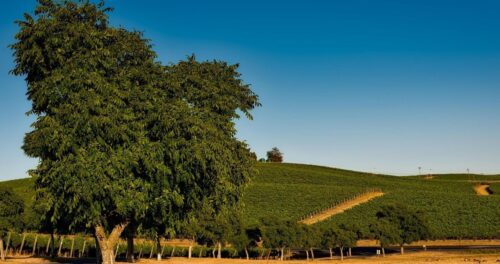 “Napa and Sonoma counties have defined American wine since the 19th century, but the delicate environment that helped make those world-famous regions could be threatened. According to researchers in a study published Tuesday in Frontiers in Climate, climate change impacts could reduce the suitability of grape cultivation and wine production in California’s historic wine country this century and redraw the Golden State’s wine map. Although researchers found California’s most famous wine regions may struggle to maintain wine production, parts of Northern California and the California coast, particularly Mendocino and Monterey counties, could become new wine powerhouses. “Our findings reveal that the outlook for Mendocino and Monterey is uniquely promising because of a dual trend,” study co-author Yusuke Hiraga of Tohoku University in Sendai, Japan, said in a statement. “They are projected to experience both increasing climatic suitability for wine-growing and a decrease in extreme fire-weather days. This combination makes these areas stand out as comparatively favorable expansion zones, distinct from many other regions with either rising suitability alongside increased wildfire weather or declining suitability.” … ” Read more from the Courthouse News Service.
Wine Country isn’t for sale, least of all for a data center
“Wine Country is not up for sale, especially not for use as a combination data center, parking garage and aircraft launch pad. Local residents made that clear at a June 25 meeting when a fledgling company pitched such a development for the Calistoga Fairgrounds. The region’s civic and political leaders should swiftly add their collective voice to that of the naysayers, lest any momentum emerge for the company’s visionary but out-of-touch proposal. The public reaction was not simply piling onto the national anti-data-center bandwagon. More than two-thirds of Americans oppose construction of AI-related data centers in their locale, but in Calistoga, the debate is more about preservation than opposition. … ” Read more from the Santa Rosa Press Democrat.
Where to see bioluminescence in Sonoma and Marin counties
“The connection between the King of Pop and the phenomenon of bioluminescence may be tenuous, but kayak guide Suki Waters links the two in nearly poetic fashion. “On the strongest nights, you can dip your hand in the water and it comes up looking like a sparkling Michael Jackson glove,” says Waters, owner of WaterTreks EcoTours in Jenner. “And then, with every stroke of your paddle, you can be throwing balls of light 20 feet behind the boat. Every ripple lights up.” … Among the organisms thriving in this coastal nursery are dinoflagellates: microscopic phytoplankton named for the two hair-like appendages called flagella that they use to get around. But dinoflagellates are much better known for how they respond when outside forces disturb or agitate them: by lighting up like a blue-white glowstick. … ” Read more from the San Jose Mercury News.
BAY AREA
This scenic portion of the San Mateo Coast could be added to the national park system
“In the 1970s and 80s, dirt bikes buzzed around its fragile landscape, creating erosion and noise. In the early 1990s, a developer planned to build 217 luxury homes there. Now, a scenic oceanfront property with public hiking trails, bobcats, foxes and sweeping views of the San Mateo coast, Farallon Islands and the Marin Headlands could become part of the national park system. Pedro Point Headlands, a 246-acre promontory in northern San Mateo County perched on steep bluffs 625 feet above the ocean between Devil’s Slide and the city of Pacifica, would be transferred to the Golden Gate National Recreation Area under an agreement being drawn up between local, state and federal officials. On June 18, the California Coastal Conservancy, a state agency that owns 94 acres at Pedro Point, agreed to donate the property to the National Park Service. City officials in Pacifica, who own the other 152 acres there, are also in discussions with national parks officials to transfer their portion. … ” Read more from the San Jose Mercury News.
CENTRAL COAST
Despite algal blooms, Monterey Bay marine mammals hanging in there
“Of all the perils faced by marine life in the Monterey Bay, domoic acid is one of the most mysterious. The toxin, produced by algal blooms, attacks animals’ brains and can cause disorientation and death in seabirds and California sea lions. In fact, Alfred Hitchcock’s film “The Birds” was inspired by an article he read in the Sentinel about seabirds that were likely exposed to the toxin on the Santa Cruz County coast. Domoic acid can even affect humans who eat exposed seafood, causing amnesic shellfish poisoning. Researchers found high concentrations of the algae that produces domoic acid, Pseudo-nitzschia, in the Monterey Bay in the spring. Despite the spike, marine mammal and bird rescue agencies haven’t seen a surge in symptoms indicating domoic acid exposure. … ” Read more from the Santa Cruz Sentinel.
SAN JOAQUIN VALLEY
Hanford-area groundwater agency extends well reporting deadline, adds workshops
“The Mid-Kings River Groundwater Sustainability Agency (GSA) has extended its well registration deadline to Aug. 17 as the agency continued to mail codes for growers to access the system online. Landowners with 5 acres or fewer, those who have not registered and those who started registering but didn’t finish will be receiving verification codes to complete registration for Mid-Kings’ well registration platform in the next week. The deadline extension will give landowners time to receive their codes and attend workshops if aid is needed. … ” Read more from SJV Water.
Kern River charm offensive hits a bar at agency meeting
“An effort to find common ground in the waters of the Kern River ran into a bar late last month at the Kern County Water Agency meeting, specifically Board President Marty Milobar. Members of Bring Back the Kern have been visiting the boards of entities with rights to the Kern River to applaud the currently flowing river through town, note the resurgence of wildlife and remind board members how the water brings families to its banks. Bring Back the Kern is asking river rights holders to “…be part of the solution to create a better river for our city and our whole community,” spokesperson Kelly Damian said to the Kern County Water Agency board during its June 25 meeting. The Kern County Water Agency owns a high-flow right, meaning it gets water when the river is running at 125% of normal. … ” Read more from SJV Water.
SOUTHERN CALIFORNIA
Progress on renovations to Costa Mesa’s beloved TeWinkle Park lakes
“Though the lakes underwent a partial renovation in 2004, they’ve suffered leaks in recent years, leading to an annual loss of about a million gallons of water, which officials have said cost Costa Mesa about $100,000 per year. The leaks also eroded the lakebed and surrounding soil. In 2022, Costa Mesa officials announced that the lakes would undergo an overhaul to improve their water quality, prevent leakage and rebuild the 3,250-foot shoreline with natural edges, among other repairs. The renovations are also expected to cultivate a healthier ecosystem for the resident turtles, fish and other aquatic wildlife that park visitors love, officials have said. In September, Costa Mesa councilmembers approved the $2.5 million renovation of the lakes, financed by $500,000 from the city’s capital improvement fund and $2 million of a $10 million state grant. … ” Read more from the OC Register.
Along the Colorado River …
More than 95% of the rain that falls in Arizona is lost to evapotranspiration
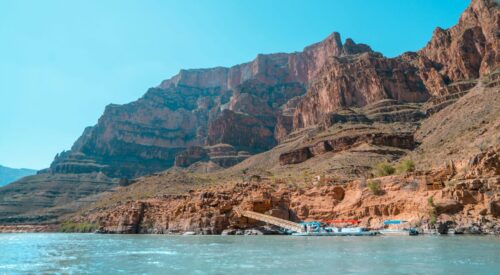 “A research project involving Arizona’s three public universities aims to get a better sense of how much water is in Arizona’s groundwater basins — and figure out how to get more water into aquifers, rather than being lost to evaporation. The Arizona Tri-University Recharge and Water Reliability Project finds, among other things, that more than 95% of the precipitation that falls around the state is lost to evapotranspiration. In the Phoenix Active Management Area groundwater basin, the amount of evapotranspiration is about equal to the amount of precipitation. Kathy Jacobs is the former director of the Center for Climate Adaptation Science and Solutions at the University of Arizona; she recently retired. She says the project’s purpose is to help the Arizona Department of Water Resources identify ways to capture water that’s currently being lost and get it underground as recharge. … ” Read more from KJZZ.
Arizona throws a buzzer-beater to lessen Colorado River cuts
Joanna Allhands writes, “No one wins if the federal government cuts 3 million acre-feet of Colorado River water from Arizona, California and Nevada. That would zero out the Central Arizona Project, which delivers water to cities and tribes in metro Phoenix and Tucson, and severely cut the water that Yuma needs to grow winter vegetables for the nation. Arizona has thrown a buzzer-beater, hoping to stave off the most catastrophic effects of a federal proposal to manage the river for the next decade. Here are five things that farmers should know about this effort … ” Read more from Arizona Farm Bureau.
AZ cities banked Colorado River water for decades. How much will they be allowed to get back?
“The Arizona Water Banking Authority and Valley cities are in disagreement about how a pool of underground Colorado River water should be shared. City representatives and Water Bank commissioners shed light on some of their differences in a meeting on Tuesday. Since the late 1990s, taxpayers have been funding a program to store excess Colorado River water underground, with the idea that it could be used as a backup in times of shortage. Now, the Colorado River is stretched thin by climate change, drought and demand. A new plan to manage its water is coming later this summer, and it will very likely include big cuts to the amount of water flowing to Central Arizona. Cities are looking for answers about how much water they can get from that underground savings account, and said that Water Bank officials are not providing enough clarity about what to expect in the event that cutbacks are enforced in the near future. … ” Read more from KJZZ.
Arizona farmers look to Mojave Desert for water
“Deep beneath California’s eastern Mojave Desert, a massive underground reservoir holds water that Arizona farmers may soon be able to call their own. On July 2, 2026, two organizations took a formal step toward making that happen. The Central Arizona Irrigation and Drainage District, which serves roughly 87,600 irrigated acres in Pinal County, and , a California-based water and natural resources company, announced the signing of a Memorandum of Understanding. The agreement outlines a plan for the district to purchase up to 10,000 acre-feet of water per year from the Mojave Groundwater Bank, a large-scale water supply and storage project in San Bernardino County, California. … ” Read more from Western Water.
Arizona permits higher arsenic levels under uranium mine despite tribal opposition
“Despite firm opposition from the Havasupai Tribe, Arizona regulators on July 6 permitted a higher level of arsenic in groundwater under a uranium mine near the tribe’s place of emergence. Before the approval, two groundwater scientists submitted comments urging the state Department of Environmental Quality (ADEQ) to require the owner of the Pinyon Plain uranium mine to give more proof that the higher levels were naturally occurring and not due to mining discharge or activities. Energy Fuels Resources, the mine owner, says its investigation was thorough and that operators aren’t at fault. It also disputed those scientists’ findings. … ” Read more from KNAU.
Scottsdale buys $8.25 million of water credits in Harquahala Valley
“Scottsdale recently approved an $8.25 million purchase of water credits from Harquahala Valley, through the Central Arizona Project. It’s part of the city’s plan to diversify its water portfolio as Arizona’s future access to the Colorado River remains uncertain. Scottsdale says the credits act as a kind of savings account, as they represent water stored underground for future use. … ” Read more from KJZZ.
The Utah Legislature forms a ‘Colorado River caucus’
“Rep. Scott Chew, R-Jensen, told FOX 13 News he formed the Colorado River Caucus on Utah’s Capitol Hill made up of lawmakers whose districts are along the river and its tributaries. He has run legislation seeking to defend Utah’s interests in the high-stakes political negotiations over the water that provides life for more than 40 million people in the West. So far, the states are at an impasse on a multi-state deal to determine who gets what. There is more demand than there is supply in the river, which could be headed toward a system-wide crash. The Trump administration has urged a states-led deal but threatened to move ahead with its plan to manage the river. The Utah State Legislature this year began socking away money into a fund for the potential for litigation while asking Congress to defund any state that launches litigation at another state over the river. … ” Read more from the Moab Independent.
Lake Powell should be drained to save Lake Mead, scientists say
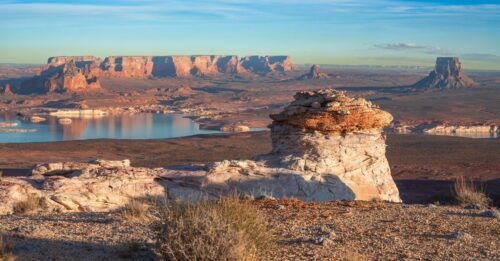
“The long-running effort to keep water levels high enough at Lake Powell has prompted a more radical proposal from one Colorado River advocate: send the reservoir’s water downstream to Lake Mead and effectively retire Lake Powell as a primary storage reservoir. Lake Powell, the second-largest reservoir in the U.S., sits along the drought-stricken Colorado River along with Lake Mead—the nation’s largest reservoir. The river supplies water to some 40 million people across the West, as well as providing irrigation for more than 5 million acres of farmland. “If we have the courage to take a step back and think about, ‘Why was Glen Canyon Dam built? Is that still working?’ The answer is no,” said Zanna Stutts, program director at the Glen Canyon Institute, as reported by KUTV. … ” Read more from Newsweek.
Lake Powell, a vital reservoir, plunges toward unprecedented low levels as water crisis deepens in US west
“Lake Powell, the US’s second-largest reservoir, threatens to plunge to unprecedentedly low levels this year after a historically bleak snowpack failed to raise its water level, scientists and water experts have said, adding renewed urgency to stalled talks over how to conserve a water source depended on by tens of millions of people in the US south-west. The 185-mile Colorado River reservoir currently stands at about 22% of its capacity, or roughly 5.6m acre-feet. Lake Powell fell below that level for a few months three years ago. But those 2023 levels were recorded in the winter, when the reservoir, which straddles the Utah-Arizona border, hits its lowest ebb. Spring runoff carried the level back up to 9.6m acre-feet by June, according to data from the US Bureau of Reclamation. Not this year. After a winter of historically low snowpack in the mountains and a heatwave that broke records across the south-west in March, water levels at Lake Powell barely rose this spring at all. … ” Read more from The Guardian.

