
Several news sources featured in the Daily Digest may limit the number of articles you can access without a subscription. However, gift articles and open-access links are provided when available. For more open access California water news articles, explore the main page at MavensNotebook.com.
On the calendar today …
- MEETING: State Water Resources Control Board beginning at 9am. Agenda items include California Wastewater Needs Assessment – Inadequate & At-Risk Systems Lists and Phase 2 Status; Consideration of a proposed Resolution to adopt the State Fiscal Year 2026-27 Clean Water State Revolving Fund Intended Use Plan with Supplemental Intended Use Plan; and a Board Workshop presentation on the draft State Fiscal Year 2026-27 Drinking Water State Revolving Fund Intended Use Plan. Click here for the full agenda.
- MEETING: CA Board of Food and Agriculture from 10am to 2:30pm. Agenda items include Second Statewide Agricultural Expert Panel Report – Irrigated Lands Regulatory Program, California Land Equity Task Force Report, Plastic Pollution Prevention and Packaging Producer Responsibility Act, Agricultural Perspective – SB 54, and Animal and Plant Pest Update. Click here for the agenda and remote access instructions.
In California water news today …
Could dredging invasive clams boost fish food in Suisun Marsh?
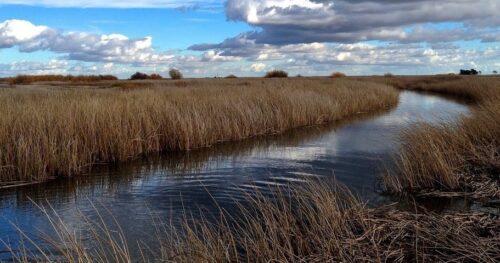
“The San Francisco Bay-Delta estuary has been a food desert for fish for two decades and the introduced overbite clam is a major culprit. The fish eat tiny creatures called zooplankton, which in turn eat tiny plant-like organisms called phytoplankton. But overbite clams eat so much phytoplankton that there’s hardly any zooplankton for fish. “It’s a huge problem,” says Madison Dunlap, a University of California, Davis ecologist. Now Dunlap and aquatic ecologist John Durand, also at UC Davis, present an out-of-the-box idea for controlling overbite clams in hopes of boosting fish food. In a June California Water Blog post, they explore dredging the clams in Suisun Marsh, which is between the Bay and the Delta. … ” Read more from Robin Meadows at Maven’s Notebook.
Can restoration save the Delta smelt?
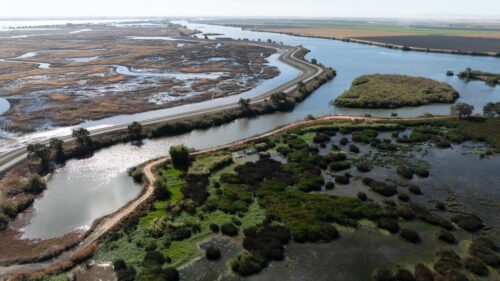
“Lookout Slough, a 3,400-acre wetland on the edge of the Sacramento-San Joaquin Delta in central California, is ringed with aquatic plants, pulsing with tides from San Francisco Bay, and home to dozens of species of fish, amphibians, reptiles and birds. Until two years ago, it was parched former farmland, cut off from the Sacramento River’s floodplain by a 26-foot-tall levee. This transformation, the Delta’s largest tidal restoration project, was prompted by the decline of the Delta smelt, a fish barely as long as an index finger. Adapted to the delta’s brackish tides over thousands of years, the smelt is considered a strong indicator of ecological health. No smelt means there’s not enough phytoplankton or zooplankton in the water to sustain the species, and therefore less food for birds and larger fish. Charlotte Biggs, program manager for the California Department of Water Resources (DWR), compared the smelt’s role in the delta’s wetlands to the blood tests that tell humans about “bigger things that may be going on in your body.” The question now is whether restoring wetlands like Lookout Slough can revive the Delta smelt. … ” Read more from High Country News.
California’s commercial fishing industry faces mounting challenges, says Morro Bay fisherwoman
“On today’s episode of the AgNet News Hour, commercial fisherman and Morro Bay resident Lori French described an industry struggling under mounting regulations, shrinking infrastructure, and declining opportunities for the next generation of fishermen. Drawing comparisons to many of the challenges facing California agriculture, French said commercial fishing has become increasingly difficult as regulations continue to expand while access to productive fishing grounds continues to shrink. French said the numbers tell the story. California issued nearly 6,000 commercial fishing licenses in 2020, but that number has dropped to just over 3,200. Commercial vessel registrations have also declined significantly, while fish landings in Morro Bay have fallen dramatically over the past decade. The result, she said, has been the loss of processors, fuel docks, marine supply businesses, and skilled workers that once supported coastal fishing communities. “It’s becoming harder every year to make a living,” French explained, noting that uncertainty has driven many young people—including fishermen’s own children—to pursue careers outside the industry despite growing up on commercial fishing boats. … ” Read more AgNet West.
Why scientists keep a eye out for toxic algae in Lake Oroville all summer long
“The Department of Water Resources has kicked off its annual summer monitoring for harmful algal blooms at Lake Oroville, along with the Thermalito Forebay and Afterbay. So far, no toxins have shown up in the recreation areas being tested. Crews have been pulling weekly water samples since May and sending them to a lab to check for toxin-producing cyanobacteria, better known as blue-green algae. The results are encouraging so, noting that samples have come back clean. She also explained that visible blooms show up in the lake’s forks almost every summer, often with a paint-like or streaky look on the surface, but that testing has never found toxins in those particular blooms. … ” Read more from Active NorCal.
Three discoveries spark awareness of fireworks’ environmental impact
“A burst of new data has ignited a better understanding of how fireworks impact the environment. Three recent studies comb through pyrotechnics’ fallout, analyzing litter, particulate matter, and airborne compounds. These papers, published in ACS journals, provide insights into what happens after the sparkles fade and explain the potential impacts on human health and the environment. … ” Read more from the American Chemical Society.
Winter grain crops help farmers get the most out of the least water
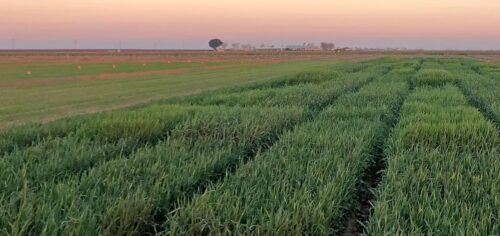
“California’s San Joaquin Valley produces an enormous share of the nation’s fruits, nuts and vegetables. But it takes an unsustainable amount of groundwater to do it. New state rules aimed at reducing groundwater use are expected to force up to 20 percent of the valley’s irrigated fields out of production – a blow to farmers and communities. Now, UC Davis research shows those lands could remain viable if farmers plant winter grain crops. When managed properly, small grains such as wheat, triticale, barley, oats and rye can grow during the cool season, using little irrigation and relying mostly on seasonal rain. The strategy would help farmers keep land productive even during dry winters, without threatening groundwater supplies. … ” Read more from UC ANR.
New guide to help winegrape growers perform recharge on vineyards
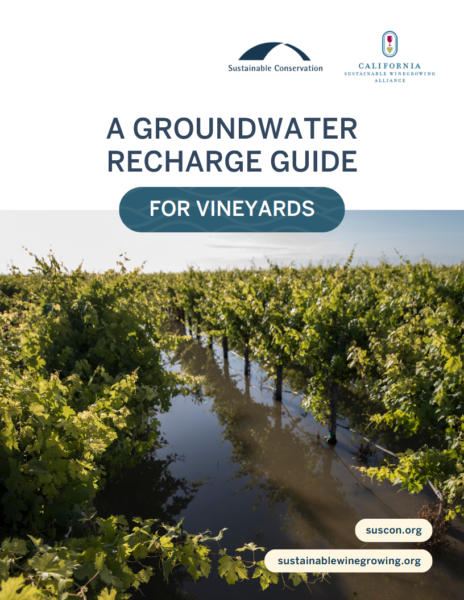 “Sustainable Conservation and the California Sustainable Winegrowing Alliance (CSWA) have released A Groundwater Recharge Guide for Vineyards to help winegrape growers evaluate, plan, and implement on-farm groundwater recharge to contribute to regional groundwater sustainability. As California’s wine regions face growing groundwater pumping regulations under the Sustainable Groundwater Management Act (SGMA), the guide equips growers with science-backed methods to plan and implement Flood-Managed Aquifer Recharge (Flood-MAR) or other MAR approaches safely and effectively on their farms. Vineyards are often strong candidates for on-farm recharge. They tend to use less nitrogen fertilizer than many other crops, reducing groundwater contamination risk, and excess surface water for recharge is typically available in winter — precisely when vines are dormant and can tolerate periodic flooding. The guide pairs Sustainable Conservation’s decade-plus expertise in on-farm recharge with CSWA’s deep knowledge of sustainable winegrowing practices, making it the first resource of its kind designed specifically for California’s winegrape industry. … ” Read more from Sustainable Conservation.
Why are berries everywhere, in every season? Driscoll’s.
“Once upon a time, there was only one way to get your hands on a ripe strawberry in winter: be a member of the French royal court. In 1712, Louis XIV dispatched a spy to Spanish-controlled Chile to smuggle out native white-berried plants. Royal gardeners bred them with European red berries, coddled them in manure hotbeds and warmed them with underground fires, all so that the king could have strawberries in March instead of waiting until June. Today, Costco shoppers in South Korea, pastry chefs in Dubai and parents of small children nearly everywhere can buy strawberries, raspberries, blueberries and blackberries any time of year — if they can afford them. (Strawberry prices fluctuate throughout the year, from about $3 per pound in San Francisco to $35 in Dubai.) And the biotech that drives modern agriculture ensures that each berry is better than anything the Sun King ever tasted. In just the last decade, berries have completed the journey from fragile, local, seasonal treat to worldwide refrigerator staple and marketing juggernaut. … ” Read more from the New York Times.
How universities in the West justify staying green during drought
“In early June, water experts gathered at the University of Colorado Boulder to talk about the future of the Colorado River. The lifeline for 40 million people in the Southwest is in dire shape. Too much demand and not enough supply has sapped its largest reservoirs. And in discussions of western water the finger-pointing on who is the best steward of the region’s scarce water can ramp up quickly. So when a panel of state-level water negotiators took the stage, one finger pointed directly at the expansive green lawns outside the university’s law school building. “There is a metric shit ton of turf grass on this campus,” said John Entsminger, Nevada’s top Colorado River negotiator, to the room of western water policy experts. Entsminger used a less than precise measure, but CU-Boulder is blanketed in rolling quads, athletic fields, and decorative grass. Entsminger runs the Southern Nevada Water Authority, an agency that has prided itself on city-scale turf removal, and has said Las Vegas’s water conservation effort is the reason behind its ability to grow in population and stay within their Colorado River allocation. … ” Read more from the Water Desk.
Fishing for DNA – how a cup of river water can reveal secrets about human health, pollution and biodiversity
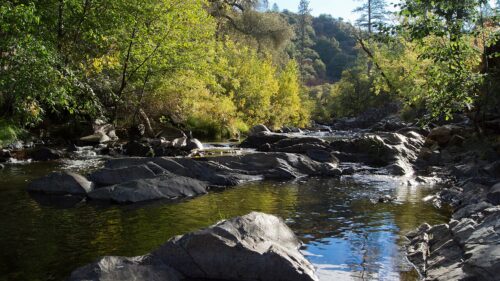
“The DNA in a single cup of water can track wildlife, monitor pollution and survey pathogens in waterways and their surroundings, all at the same time. DNA is contained in each cell of every plant, animal, fungus and microbe. It carries the genetic instructions needed for an organism’s survival, growth and function, and the DNA of each species is unique. Organisms shed DNA into their environments. This environmental DNA, or eDNA, can come from cells shed from skin, spores and pollen blowing on the wind, or even just a cough or sneeze. It can provide huge amounts of information. Researchers can use it to assess biodiversity, monitor the spread of invasive species and detect pathogens. … With eDNA, researchers can collect information about a species without ever needing to see or interact with it. Moreover, a cup of water, a few ounces of sand or even air sucked through a filter can hold enough information to determine what has been in the area, including people, wildlife and infectious pathogens. … ” Read more from The Conversation.
Completion of the Disadvantaged Community and Tribal Involvement (DACTI) Grant Program and release of summary report
“The California Department of Water Resources (DWR) is pleased to announce the successful completion and closeout of the Proposition 1 Integrated Regional Water Management (IRWM) Disadvantaged Community and Tribal Involvement (DACTI) Grant Program. Over the course of the DACTI Program (Program), DWR awarded more than $51 million across the 12 Funding Areas identified in Proposition 1. These investments helped strengthen outreach, engagement, and participation in IRWM planning, ensuring that the water management needs and priorities of historically underrepresented communities were more effectively incorporated into regional decision-making processes. … ” Read more from the Department of Water Resources.
Climate change means an earlier spring, which can be disorienting and threatening for migrating birds

“Spring migration has taken flight, but with rising temperatures and shifting seasons, birds are adjusting when and how they migrate to keep up with a rapidly warming climate. Morgan Tingley, a professor of ecology and evolutionary biology at the University of California, Los Angeles, studies the effects of climate change on birds. The Conversation has collaborated with SciLine to bring you highlights from the discussion, edited for brevity and clarity.How is climate change affecting birds? Morgan Tingley: In the spring, birds migrate north across the United States in order to get to where they will be spending their spring and summer. They try to time their migration so that they can arrive at their breeding grounds, build their nests and lay their eggs at the time of year when there’s going to be maximum food available. But climate change is causing spring to happen earlier, which can cause real problems for birds. These earlier springs can result in birds falling behind local springtime because they arrive too late on their breeding grounds. … ” Read more from The Conversation.
POLICY AND REGULATION
Author pulls special legislative deal for State Water Project
Chris Shutes writes, “A funny thing happened on the way to the Capitol. On July 1, 2026, the author pulled Assembly Bill 2215, against which I was about to testify in a state Senate committee. If enacted, AB 2215 would have given the California Department of Water Resources (DWR) a special deal. It would have given DWR’s State Water Project another 20 years to divert more water from the Delta under the water rights it obtained in 1972. The time to fully use those water rights ran out in 2009. The bill would have eliminated public process from this decision: no water rights hearing, no environmental impact report required. Fortunately, this bill that was sponsored by the State Water Contractors didn’t even come to a vote. On June 29, staff of the Senate Natural Resources and Water Committee posted a bill analysis that was fair to both sides. The bill analysis showed a clear connection between the bill and DWR’s proposed Delta Conveyance Project (DCP or simply Delta tunnel), stating: “According to some, the DCP is one of the principal projects that DWR identifies as helping it to fully develop the SWP. Although the two are legally distinct, they are operationally intertwined as the DCP is a major component of DWR’s strategy for fully developing its water rights.” … In one of the more unfortunate events related to the introduction of AB 2215, Mr. Shivaji Deshmukh, General Manager of the Metropolitan Water District of Southern California, and Ms. Valerie Pryor, General Manager of the Zone 7 Water Agency, wrote an opinion piece in support of AB 2215. … ” Read more from the California Sportfishing Protection Alliance.
On California water, Newsom looks a lot like Trump
Jon Rosenfield, Science Director for San Francisco Baykeeper, writes, “San Francisco Bay is an estuary in crisis. Seven of the Bay’s native fish species are officially endangered or threatened. Fisheries that once formed the foundation of northern California’s economy and food supply are either gone or increasingly constrained. Harmful algae blooms, some of which are toxic to humans, infest the Delta, where water from Central Valley rivers enters the open waters of the Bay estuary. These issues are connected because each is caused, in large part, by over-diversion of Central Valley rivers that flow into San Francisco Bay. In an average year, California diverts more than half of the water in these rivers; in dry years, the percentage diverted increases. Roughly 80% of diverted water goes to agribusiness; 20% goes to municipal uses and every other industry in the state. The water quality consequences for fish, wildlife, and riverside communities are devastating. … ” Read more from Beyond Chron.
Protecting California’s rivers when federal rules won’t
“California’s rivers are under growing pressure, and one of the most effective tools for protecting them remains little known: Outstanding National Resource Waters (ONRW) status. This designation offers the highest level of water quality protection under the Clean Water Act. Instead of managing how much a river can be polluted, ONRW status sets a clear standard – the water must stay as clean and healthy as it is today, with no permanent degradation allowed. The push for ONRW designations has gained new urgency in the face of federal environmental rollbacks. Recent Supreme Court decisions and changes to executive policy have stripped protections from vast numbers of streams and wetlands. However, because ONRWs are established as state water quality standards, they offer a resilient legal shield that is not subject to federal executive action or shifts in national land-management priorities. In states like New Mexico, this tool has become essential for protecting water quality following the loss of federal jurisdiction over non-navigable streams. … ” Read more from the South Yuba River Citizens League.
With coast under federal review, we can’t afford to look away
Christina Desser, of Point Reyes Station, who served on the California Coastal Commission, writes, “The federal government is once again reviewing California’s coastal program. In the past, these reviews have felt routine. This time, we cannot afford to treat it that way. In late May, the U.S. Department of Commerce announced a formal review of California’s Coastal Management Program. Beneath the bureaucratic language, I see a pointed agenda: The National Oceanic and Atmospheric Administration is asking whether California is making it easy enough to build offshore oil projects, maintain pipelines, construct spaceport infrastructure, build desalination plants and lay undersea cables. In plain terms, Washington is asking whether our coastal protections are getting in the way of drilling, launchpads and industrial buildout along and off our shores. … ” Read more from the Marin Independent Journal.
In regional water news and commentary today …
NORTH COAST
Klamath irrigators remain subject to Endangered Species Act protections
“This summer, the Ninth Circuit Court of Appeals denied the Trump Administration’s attempt to subordinate the needs of keystone species to private water contracts. The Court issued a summary judgment on June 17, 2026. Its opinion, authored by Justice Ronald M. Gould, stated that the Klamath Project operator, the U.S. Bureau of Reclamation (BOR), must enforce the Endangered Species Act (ESA) when regulating water deliveries from Upper Klamath Lake (aka Klamath Lake) in Oregon. For reference, Upper Klamath Lake is the largest freshwater body in Oregon. It is fed by a large watershed that includes the Williamson and Wood Rivers. The outfall from Upper Klamath Lake passes through the Link River and Lake Ewauna before draining into the Klamath River. The ruling resolved a seven-year legal battle that began during the first Trump administration. … ” Read more from the California Sportfishing Protection Alliance.
Yurok tribe tracks a staggering 95% kelp collapse along the Northern California coast
“Beneath the surface off the Yurok coast, an entire forest has nearly vanished. The kelp that once sheltered fish, abalone and a whole way of life has thinned to a shadow of what it used to be. The Yurok Tribe’s marine program has been documenting the collapse along the Klamath River shoreline and the open coast beyond it. Their measurements line up with what NASA has tracked from above, and the numbers are grim. Northern California’s kelp canopy has fallen by an estimated 95 percent since 2014. That loss is more than an ecological statistic for the Yurok. Kelp forests anchor the nearshore food web that tribal fishing and gathering have relied on for generations, and their disappearance ripples outward to everything from red abalone to rockfish. … ” Read more from Active NorCal.
Mysterious data center inquiry appears near Mount Shasta
“In idyllic Mount Shasta, residents are in an uproar over the prospect of a data center coming to town. Locals in the rural California town became uneasy after learning during a city council meeting two Mondays ago that Kim Fowler, Mount Shasta’s planning director, received a call from someone interested in building a data center at a former Crystal Geyser water bottling facility. The phone call came to light when City Manager Todd Juhasz casually mentioned that an unidentified caller was interested in buying the facility. When residents got wind of the prospect of a data center coming to their 3,000-person city, it led to a flurry of Facebook posts, an online petition that garnered over 15,000 signatures, and several threats made against city officials –– all within a week. … ” Read more from SF Gate.
SEE ALSO: Petition urges Mount Shasta to reject proposed data center at former Crystal Geyser plant, from KRCR
SIERRA NEVADA
What El Niño means for the Yuba River — and why SYRCL’s restoration work is built for it
“Every few years, a shift in the temperature of the Pacific Ocean sets off a chain of atmospheric events that reaches all the way to the Sierra Nevada — changing how much precipitation falls on the Yuba River watershed and in what form. That shift is El Niño, and forecasters are predicting a strong one this winter. For communities that depend on the Yuba’s water, and for the salmon, forests, and meadows that depend on water, an El Niño year raises real questions: How much water is coming? Will it fall as snow or rain? And what does it mean for a watershed already navigating the compounding pressures of climate change? El Niño is part of a natural cycle called the El Niño-Southern Oscillation, or ENSO. ENSO has two phases, the cooler phase known as La Niña, and the warmer phase known as El Niño – so named because South American fishermen in the 1600s noticed the warmer-than-normal coastal waters around Christmas time which had a negative impact on fishing. This year that warm water is showing up early, and is extra warm. … ” Read more from the South Yuba River Citizens League.
SACRAMENTO VALLEY
Organizers weigh better viewing info and RABA bus shuttles after packed Shasta Dam debut
“Thousands of people packed Shasta Dam on Friday night, July 3, for the city’s first-ever drone show, an event organizers said drew crowds on land and across Shasta Lake. Organizers estimated between 5,000 and 7,000 people attended, with more than 1,000 boats spread across the lake. Thousands more watched on social media. Matthew Doyle, general manager of Lake Shasta Caverns, said the turnout surpassed expectations. “It was an absolute stunning turnout. Not only was it packed here on the dam, but the lake I’ve never seen it like that. It was like a floating city,” Doyle said. … ” Read more from KRCR.
Tehama County Water Board voices concerns over proposed groundwater fees
“Tehama County Supervisor and Tehama County Flood Control and Water Conservation Board Director Matt Hansen has been seen as one of the most strident supporters of the proposed groundwater well fee structure. Yet he expressed some doubts at the water board meeting on June 25. Hansen said he supported the way the plan and fee structure were initially put together, but “seeing it in motion,” he now has some concerns. “The problem is we’re going to send all these people bills in the mail, they may be right, they’ll probably be wrong, and it’ll be up to them to correct the bills and go through the process of fixing it,” Hansen said. He explained he felt the responsibility was placed unfairly on the citizens to correct the bill, rather than on the county to get it right in the first place. He added that another problem was that no one seems to know with certainty what they will be charged for. … ” Read more from the Appeal Democrat.
BAY AREA
Celebrating the birds of Tomales Bay
“A handful of us sat in folding chairs. Everyone wore binoculars slung around their necks; some of us held clipboards. As volunteer research assistants working with All Hands Ecology, a Marin-based conservation organization, we were conducting their annual shorebird census. Our small group of intrepid bird lovers was perched on a promontory north of Point Reyes Station on State Route 1. We had an outstanding view of the tidal mud flats in the southern end of Tomales Bay. The preferred technique for conducting the census is to arrive at this location an hour and a half before high tide. As the tide slowly rises, shorebirds come skittering into the mud flats seeking food. And we count them. … ” Read more from the Marin Independent Journal.
Demolition begins at controversial Santa Clara County cement plant
“Demolition has started at the Permanente Cement Plant near Cupertino, a massive manufacturing site that repeatedly ran afoul of environmental regulations before it officially closed three years ago. Heidelberg Materials North America, a multinational corporation that owns the cement plant, recently announced that it secured the necessary permits and a contractor to move forward with demolition. The plan is to remove approximately 40 structures on a 123-acre site, according to a news release. The impacted area represents only a sliver of a larger 3,500-acre site that includes Permanente Quarry, also owned by Heidelberg Materials. The vast majority of the land spans the foothills of unincorporated Santa Clara County and includes portions of Palo Alto and Cupertino. “Since we formally announced the permanent closure of the cement kiln in 2022, we have prioritized listening to residents, businesses and other local stakeholders so we could gather input and feedback on how the site could provide value to the community in the long-term,” Heidelberg Materials executive David Perkins said in the release. “The commencement of demolition marks a significant step forward in this process.” … ” Read more from the San Jose Spotlight.
SAN JOAQUIN VALLEY
Notes from the Field: North Fork Stanislaus River and Highland Creek
“One of the hats I wear at CSPA involves using the Federal Energy Regulatory Commission’s (FERC) relicensing of hydroelectric projects to improve conditions for some of California’s most cherished rivers and streams. I recently took on the North Fork Stanislaus Hydroelectric Project, FERC Project no. 2409. Last week, I decided to head back into the Sierra to get reacquainted with the watershed. As a fly fisherman, I have some history with the North Fork Stanislaus River. For starters, it’s the stream where I caught my first fish on a dry fly during a novice-level outing with the Golden Gate Angling and Casting Club. It’s also been a destination for many family camping and fly-fishing trips through the years. Highland Creek, a major tributary of the North Fork Stanislaus River, quickly became a favorite dry-dropper destination in summer time. … ” Read more from the California Sportfishing Protection Alliance.
Yosemite offers many wonders. Crushing crowds are now one of them.
“At the base of Yosemite Falls, where white waters roared down a granite cliff, a couple jockeyed through dense crowds to try to take the perfect waterfall selfie. A family of five traded off resting in the single available seat on a wooden bench. A tourist tripped over a toddler, who fell and began wailing. There was one spectacle at Yosemite National Park this weekend not in the glossy brochures: the visitors themselves. The crown jewel of the nation’s park system, Yosemite is even more crowded than usual this year, after a decision by the Trump administration to do away with summer reservations here and at other popular parks. In the first half of 2026, visitors to and employees of California’s regal wilderness park reported hourslong traffic jams, waits at entrance stations and long lines just to purchase a bite to eat. … ” Read more from the New York Times.
SOUTHERN CALIFORNIA
Mini-heat wave to hit Southern California, pushing temps in some spots to over 100
“A mini heat wave will hit Southern California this week, with temperatures expected to reach above 100 in some inland areas. A high-pressure system is making its way over the southwest and expected to park over Southern California in the middle of the week — leading to hotter and drier conditions, according to the National Weather Service. “We’ve seen some warm-up today (Monday) and (that) will … plateau into Thursday,” said Robbie Munroe, a meteorologist with the NWS. In L.A. County, temperatures will reach the 70s around the beaches, in the mid-80s around downtown, and in the 90s in the San Fernando Valley leading up to the mini heat wave. … ” Read more from the LA Daily News.
Inside the nine-year battle to save the bicentennial mural on Prado Dam
“As thousands of Southern Californians drove to Fourth of July parties, they passed a patriotic display enjoying its own anniversary. The 664-foot-wide by 120-foot-tall Prado Dam Bicentennial Mural, located near the intersection of the 91 and 71 freeways near Corona, turned 50. The mural message is easily seen from the highway roughly 750 feet away: “200 Years of Freedom, 1776-1976.” “The fact it’s still here is a point of pride for many people in the Inland Empire,” said Peter Schaefer, who co-designed the mural along with the recently deceased Ron Kammeyer. “It’s our tribute to America.” The one-time fading mural was saved from destruction after a nine-year battle by local residents, civic leaders, businesses and governmental agencies, who celebrated its restoration in 2023. … ” Read more from the LA Times.
What does the future hold for eroding San Onofre State Beach?
“With its limited development, San Onofre Surf Beach is a step back into coastal California’s past — but its future is uncertain. Surfrider Foundation and State Parks recently held public workshops to talk about ideas for maintaining access to this beloved beach, a place tucked between Orange County and San Diego, as erosion chomps away at a dirt access road and beachfront parking. More than half of the parking spots have crumbled away in recent years. Surfrider Foundation received a $1 million grant in 2024 from the California State Coastal Conservancy to explore solutions for preserving San Onofre’s public access, with ideas ranging from nature-based solutions to ease erosion to parking solutions as the dirt lot continues to shrink and disappear. … ” Read more from the OC Register.
IMPERIAL/COACHELLA VALLEYS
Calexico considers a ban on data centers
“The city of Calexico has agreed to consider a ban on data centers at its next regularly scheduled July 15th meeting. The agreement came about at their July 1 meeting, when agenda item 15 was brought up for discussion; it originally proposed only an indefinite moratorium. The ban, proposed on the spot by councilmember Diana Nuricumbo and seconded by councilmember Lisa Tylenda, would prohibit data centers from being built within the city limits. Many residents attended the meeting and spoke on the matter, with many speaking out against data centers and offering their perspectives. Residents and neighbors claimed that data centers would put an undue burden on local resources and bring pollution to the area. … ” Read more from the Calexico Chronicle.
SAN DIEGO
Could La Jolla Cove sprayings have contributed to kelp die-off?
“Adding to the list of concerns that have been raised surrounding the city of San Diego’s plans to spray a bacterial agent on the bluffs over La Jolla Cove, local residents are expressing worries that a similar product may have contributed to the recent decline of kelp off La Jolla. An application filed in early June by the San Diego Parks & Recreation Department seeks a coastal development permit from the city to “abate noxious odors where accumulated bird and sea lion excrement pose a health hazard to the public.” The area covers about 2,180 square feet of the bluffs overlooking La Jolla Cove north of Coast Boulevard. The city intends to spray a non-pathogenic bacterial agent onto the bluffs to effectively “eat” the animal waste. The product, BIOCAAC (Bioactive Odor Counteractant and Cleaner), is from Coronado-based Ark Environmental Solutions. … ” Read more from the San Diego Union-Tribune.
Along the Colorado River …
Lake Powell is on life support as the West vies for what water remains
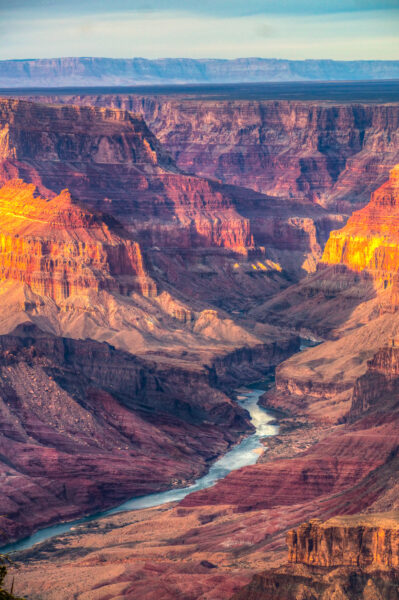
“The mood darkened among Grand Canyon boat guides when Wayne Pullan stepped before them to share the news about their upcoming rafting season. No sense pretending that big flows were on tap. There’s not enough water to fully power the West in this grimmest of drought years, and Pullan, a federal dam manager, made it clear as soon as he took the microphone at the gathering a short drive from the Lees Ferry boat launch. He could spare less of the Colorado River than what typically propels rowers and clients through their geologic wonderland. The U.S. Bureau of Reclamation must reduce flows out of Glen Canyon Dam to protect its hydropower output and equipment, said Pullan, the agency’s Upper Colorado Basin regional director, at the preseason training session organized by the nonprofit association Grand Canyon River Guides. Protecting the dam, he made clear, is top priority this year. The consequences would soon cascade from Wyoming through Utah, Arizona and beyond. The mile-deep river chasm cutting through one of the nation’s most-visited parks would have to shoulder its share of the pain. … ” Read more from the Arizona Republic.
Scientists propose draining Lake Powell to preserve water in Lake Mead
“As two major reservoirs — Lake Powell and Lake Mead — reach critically low levels, scientists are asking a new question: What if Lake Powell were drained to save Lake Mead? The decision could affect the water supply for about 40 million people across the Upper and Lower Colorado River basins. “If we have the courage to take a step back and think about, ‘Why was Glen Canyon Dam built? Is that still working?’ The answer is no,” said Zanna Stutts, program director at the Glen Canyon Institute, who studies how changing water levels affect Glen Canyon Dam. … Over the past several months, the Bureau of Reclamation has implemented emergency measures to keep the reservoir above de facto dead pool. … ” Read more from KUTV.
Official hopeful as Colorado River states race to reach water deal before deadline
“They discussed it behind closed doors at the Western Governors’ Association meeting in Utah. They’ve been trading ideas and proposals among experts. They’ve blown one big deadline, and another is fast approaching. And since the West is facing yet another hot, dry summer, time is of the essence in finding a solution to the long-running Colorado River crisis. “Well, it’s very clear that they’re on the clock and that they really need to get something together because the federal government is going to release its own plans by the end of this month, and the current agreements between the states over the Colorado River, they expire in October,” said Ben Winslow, a reporter for our sister station Fox13 in Salt Lake City. “Everyone’s on the clock. They all agreed to keep talking, but so far we just haven’t seen a lot of movement.” … ” Read more from KTNV.
Commentary: When it comes to sharing the Colorado River, Lower Basin states must step up and make hard decisions
“When the Colorado River first filled the country’s largest reservoirs decades ago, it ushered in a century of optimism in the West. We planned for abundance. Today, more than 40 million people across seven states, 30 Tribal Nations and two countries rely on this river. The creation of Lake Mead and Lake Powell promised a future for the driest parts of our country, but that promise was contingent upon wise decision-making. When both reservoirs hit record lows in 2022, it exposed a basic math problem: What flows out to the lower division states of Arizona, California and Nevada cannot exceed what flows in from the upper division states of Colorado, New Mexico, Utah and Wyoming. The crisis revealed another tough reality: The Upper Colorado River Basin no longer provides reliably abundant supplies to cushion unsustainable downstream demands. … ” Read more from the Colorado Sun.
Forget Western water war: Local managers choose partnership
“The Colorado River, from one viewpoint, is a mess. The iconic waterway, fundamental to the region’s modern existence – its desert metropolises, its high-tech industries, its agriculture, and its recreation economy – is on the verge of crashing. A two-decade drying trend, aided by carbon pollution in the atmosphere and water use that exceeds supply have nearly drained the basin’s liquid savings accounts. … The basin’s seven states, unable to find consensus on how to live with a shrinking supply, are deadlocked after four years of attempting to negotiate the river’s management rules. State and federal authorities are deciding how much less Colorado River water will be available, anticipating that the reductions will hurt. Knowing that water enables economic growth, they don’t want to be viewed as selling out their constituents. Look closer, however, and the narrative of warring factions fades a bit. At the local level, water managers are collaborating to ensure residents and businesses have adequate water supplies. They are signing multiparty deals and pursuing joint projects to share resources and keep water flowing to homes and businesses. Such dealmaking is not a remedy to all that ails the basin. But it is viewed as essential in a time of deep climate uncertainty and anxiety. … ” Read more from the Circle of Blue.
The Colorado River continues to shrink. Hear who’s most affected
“Up and down the Colorado River, relentless drought has forced farmers, cities, power generators and river rafters to prepare for the worst: A river and reservoirs that can’t meet the demands of 40 million people. Even the stop-gap solutions carry a cost. A plan to move water from Flaming Gorge in Wyoming to prop up water levels in Lake Powell, hundreds of miles downstream, threatens recreation opportunities and could dig a deeper hole if the coming winter is like the last one. The federal government is working on a plan to meet as many of the demands as it can, but has met with resistance from state officials who worry about the long-term effects. … ” Read more from the Arizona Sun. | Read via AOL News.
Arizona cities want answers about Colorado River water in underground storage
“Phoenix-area cities say they want answers about plans for a pool of water that’s stored underground as a backup during dry times on the Colorado River. City leaders say the Arizona Water Banking Authority is keeping them in the dark about how they might share that water, making it hard for cities to plan for a dryer future. The Water Bank is holding a special meeting Tuesday morning to address some of those questions. The Water Bank was created in 1996 to store excess Colorado River water underground. Many cities that take water from the Central Arizona Project — the 336-mile canal system that brings Colorado River water to the Valley — added water to that bank with the expectation that they could pull it back out if the Colorado River couldn’t provide enough water on the surface. Now, the Colorado River is dry enough to cause shortages, and cities say the Water Bank isn’t telling them how much water they can expect to get back. … ” Read more from KJZZ.
In national water news today …
Extreme heat isn’t the only climate impact shocking scientists
“Much of the US just sweltered through the July 4 holiday weekend as an intense heat dome bore down, straining power grids and prompting the cancellation of many events. Washington, DC, saw a high of 102F (39C) on Saturday, a new local record for the date. In Europe, punishing temperatures are set to return days after a deadly heat wave pushed thermometers as high as 43.8C (111F) in France. A troubling pattern has emerged in this summer’s heat: Not only has it broken records, it’s done so often by margins far above the previous all-time highs. These heat jumps are part of a larger shift of climate change seeming to accelerate. Ocean temperatures just reached a new high for the early summer. Sea levels are rising faster than before, while new records for daily rainfall are being set at a rapid clip. The pace of global warming itself has quickened in recent years. … ” Read more from Bloomberg.

