
Several news sources featured in the Daily Digest may limit the number of articles you can access without a subscription. However, gift articles and open-access links are provided when available. For more open access California water news articles, explore the main page at MavensNotebook.com.
In California water news today …
Scientists are now eyeing a possible ‘Mega El Niño’
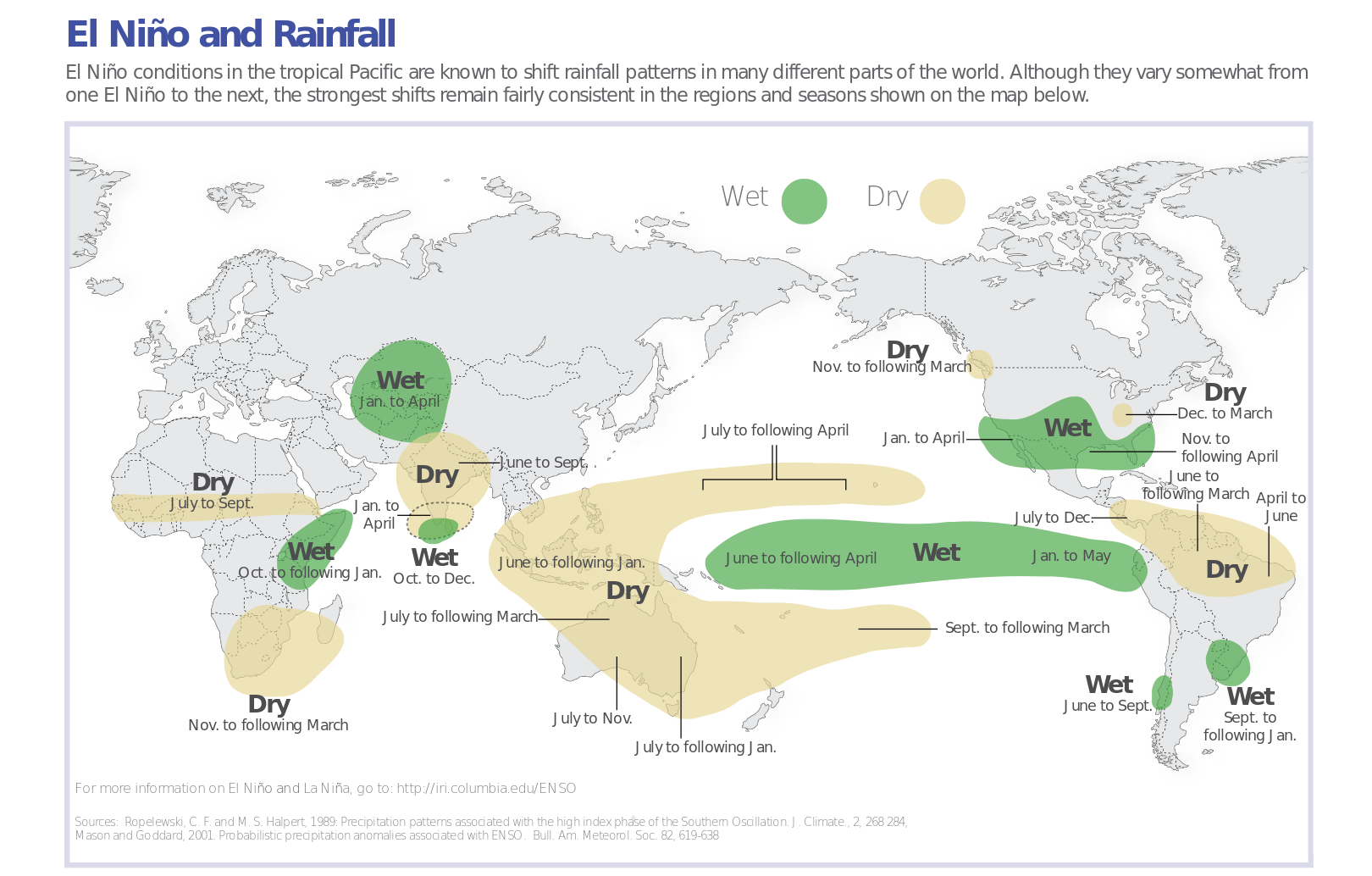
“Meteorologists are warning that a powerful El Niño climate pattern intensifying in the Pacific Ocean could evolve into a rare “Super El Niño,” increasing the likelihood of extreme and unpredictable weather across the globe. El Niño, defined by unusually warm ocean waters in the equatorial Pacific, disrupts atmospheric patterns and shifts weather worldwide. Scientists say the stronger the warming becomes, the more dramatic those shifts can be. Ultimately, this produces sharper swings between heavy rainfall and prolonged dry spells. “This one’s coming on pretty strong,” said Jared Maples, a National Weather Service meteorologist, noting forecasters are already discussing the possibility of a “Super” or even “Mega” El Niño. … ” Read more from Straight Arrow News.
Brewing El Niño and roasting oceans push planet into ‘uncharted territory’ for heat
“As extreme heat smothered the eastern United States over the July Fourth weekend and Europe struggled with its own deadly heat wave, experts warned that more record high temperatures could be in store for this year because of a strengthening El Niño. “We know that temperatures are warming in the long term, linked to human-caused climate change, and El Niño acts to boost those temperatures temporarily,” climate scientist Zachary Labe of the nonprofit Climate Central said in a recent briefing. Between June 2025 and April, Labe said, global average surface temperatures were about 1.8 to 2.7 degrees above pre-Industrial Revolution levels. But an average of forecast models suggests global average surface temperatures could be even higher in the winter — perhaps hitting 3.24 to 3.42 degrees above the pre-Industrial Revolution era. … ” Read more from the LA Times. | Read via AOL News.
SEE ALSO: The Pacific Ocean is running a fever. Why that’s an ominous sign, from the Washington Post
Wet season’s end for Water Year 2026
Dr. Jay Lund writes, “California’s Water Year runs from October 1 of the previous calendar year through September 30. California’s “wet” season is traditionally October 1 – April 1. The rest of the year (and often parts of the “wet” season) is usually dry. We can get major storms into April, but often not. So nearly all this Water Year’s precipitation has fallen already. Statewide precipitation this wet season has once again been unusually average overall (97%), with unusual uniformity across this large state, so the map below (Figure 1) is much less colorful than last year, with similar statewide precipitation. There were also fewer major wildfires and unusually low snow accumulations compared to last year! This year’s “whiplash” was within the “wet” season, as seen in Figure 2. If you have enough wet and dry periods within the wet season, the season turns out about average overall. … ” Read more from the California Water Blog.
DWR: State Water Project shifts into summer operations to support California’s water supply and environment
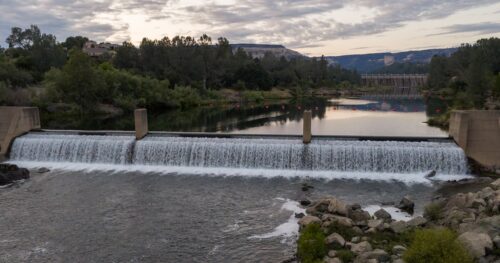
“The people who operate the State Water Project move water within a realm of regulations designed to protect water quality and endangered fish species under various conditions throughout the year. Starting July 1, those regulations make a big shift. This annual change in regulations is driven primarily by what scientists know about the life cycles and movements of native fish species that include Delta smelt, longfin smelt, steelhead, and Chinook salmon. At the onset of summer, around July 1, these threatened and endangered species generally have moved well beyond the south Delta channels that are influenced by the pumping of the State Water Project (SWP). Starting July 1, state and federal regulations allow the SWP to capture and move water supply at a faster rate than February through June, when native fish species are spawning or migrating through the Delta and could be harmed by SWP pumping. … ” Read more from the Department of Water Resources.
‘No point of return’: Calif. won’t keep golden mussels from second-largest reservoir
“This weekend, during the Fourth of July, the frontline to protect California’s vital waterways is on land. Inspectors across the state are keeping a vigilant watch on boats towed to dozens of lakes and reservoirs, including Lake Tahoe, looking for any indication they are carrying an unwanted and damaging visitor, the golden mussel. Already this year, three counties in California — Kern, Sacramento and San Joaquin — declared a state of emergency over the arrival of the mussels. But at the state’s largest reservoir, Lake Oroville, state officials won’t be checking boats at all. The rollback of boat inspections at Lake Oroville happened in April, in the wake of the mounting threat posed by golden mussels, and it is a surprising decision by the California Department of Water Resources. DWR and the California Department of Fish and Wildlife have launched a statewide campaign to stop the harmful invaders, in part by mandating boat inspections at key waterways. … ” Read more from SF Gate.
SEE ALSO:
- Invasive golden mussels turn up farther north in California, and boaters are on alert, from The Cool Down
- California to spend $6 million fighting golden mussels. Will feds help too?, from Stocktonia
- California commits $7.5M to fight golden mussels in Sacramento Delta waterways, from the Sacramento Bee (“California is investing $7.5 million to slow the spread of invasive golden mussels, including $6 million in one-time funding and $1.5 million in ongoing annual support”)
Reclamation, Fish and Wildlife Service announce awards for Central Valley Project fish habitat and directed studies
“The Bureau of Reclamation and the U.S. Fish and Wildlife Service today announced the award of $44.3 million in grants to fund anadromous fish habitat restoration projects and directed studies to collect key fish data in the Central Valley and the Sacramento-San Joaquin River Delta. The awards utilize funds appropriated in 2024 and stem from two separate funding opportunities. Strong habitat investments support regulatory certainty and more reliable water supply deliveries from the Central Valley Project. Six directed studies were selected under the Central Valley Project Fish Information Needs Notice of Funding Opportunity, a competitive process that solicited proposals for projects that gather specific biological data on Chinook salmon, steelhead, Green and White sturgeon, and Delta smelt. The fish data gathered from these projects will be used to improve tools that evaluate species recovery actions in the Central Valley and the Sacramento–San Joaquin River Delta. “This year’s funding reflects our commitment to restoring fish habitat and supporting directed studies that will be used toward science-based decisions that will improve management of the Sacramento River system,” said Reclamation’s Central Valley Project Improvement Act Program Manager, Armin Halston. … ” Read more from the Bureau of Reclamation.
Groundwater nitrates: A slow crisis below our feet
“It moves slowly, silently, and mostly out of sight. Nitrate pollution, driven largely by agricultural fertilizers, has been seeping downward through the soil and into the world’s groundwater for decades. A major new study published in Nature Communications in June 2026 puts fresh numbers on just how deep that problem runs, and the findings are sobering. The research, led by Wen Zhao and colleagues from institutions across China, Israel, the United Kingdom, and elsewhere, used a sophisticated global computer model to trace nitrate movement from farmland into shallow aquifers from 1961 through 2020. The team then projected what groundwater quality would look like under four different management scenarios stretching to 2100. The model was checked against data from 5,849 water monitoring wells scattered around the globe. The picture that emerged is not a simple one. Progress has been made in some parts of the world. But in others, the worst may be yet to come. … ” Read more from Western Water.
Dairy farms’ expansion plan worries California families who once had a ‘little piece of heaven’
 “David Rodriguez learned to swim in the canals near his childhood home in the 1960s, back when orchards of figs, peaches and almonds encircled his neighborhood. Before the area around the small community of Planada exploded with dairy farms, he trusted the water that came out of his faucets. “Me and my friends would go out there. No odors, no smells,” Rodriguez, who is 71 and previously worked for Merced City schools, told Inside Climate News from his kitchen table. “I considered this a little piece of heaven before the dairies arrived.” Families say local waterways are not a source of joy anymore, and blistering hot summer days can be hellish, as foul smells escape so steadily from local farms that people can’t open their windows to cool off. Today, the Leadership Counsel for Justice & Accountability, an advocacy group, says families in the region are in years-long conflict with dairies, and each herd represents another battle front. … ” Read more from Inside Climate News.
Licensed cannabis cultivation: A key tool for protecting watersheds
 “In 2025, researchers at the UC Berkeley Cannabis Research Center released Mapping & Assessing Unlicensed Cannabis Cultivation, one of the most comprehensive analyses to date of trends in unlicensed cannabis cultivation across California. Using satellite imagery, field verification, and county-level case studies, including Nevada County, the researchers evaluated how local policies, enforcement approaches, and licensing programs influenced the prevalence of unlicensed cultivation. One of the study’s most significant findings was that the presence of licensed cannabis farms was the strongest and most consistent predictor of reductions in unlicensed cultivation. Contrary to the common assumption that enforcement alone is the primary solution, the study found that areas with active licensed cultivation generally experienced greater declines in unlicensed cultivation than areas relying primarily on bans and eradication efforts. … ” Read more from the South Yuba River Citizens League.
California’s first carbon capture project is up and running. Environmentalists are still trying to stop it.
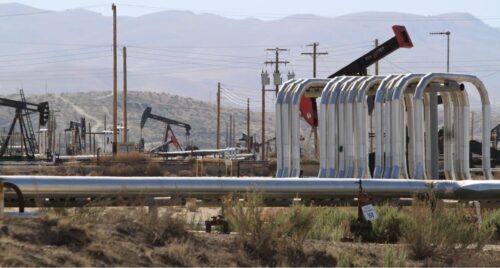
“California Resources Corporation, the state’s largest oil company, passed a long-targeted milestone in May: It had finally taken carbon dioxide that would otherwise warm the atmosphere and injected it deep underneath its own oil field. It’s the first such project to become operational in California. This week, the state finalized regulations that could support many more. The carbon CRC is sequestering at its storage site comes from its own natural gas-processing plant, which strips CO2 out of gas from wells at the nearby Elk Hills oil field. The plant will send up to 100,000 tons of CO2 each year to the so-called Carbon TerraVault I intended to lock up carbon dioxide for millennia. The project has hurdled obstacle after obstacle to reach this point: years of slow-moving permitting by the U.S. Environmental Protection Agency and Kern County; a new federal administration that has rolled back funding for climate programs and left others in limbo; and an uncertain technological and private market for carbon removal and storage. The project is still caught up in litigation—after its approval, environmental groups sued, arguing that the county’s environmental review was inadequate. Yet the TerraVault is officially up and running, representing a test case not only for California, which has nearly a dozen similar projects in the works, but also different U.S. regions and other countries. … ” Read more from Inside Climate News.
The troubling new trend that’s making California’s forest fires more dangerous
“With July Fourth weekend, California and other Western states are heading into the beginning of peak fire season — when rain is scarce and temperatures are high. But an ominous new trend is reshaping forest fire behavior. Not only have the number and size of fires grown in recent decades, but fires are burning hotter and more intensely now, and causing more lasting damage to forests. From 1985 to 2024, the number of acres that burned in California’s forests has increased by roughly tenfold, according to a new study by scientists at UCLA. But the acres burned by high-severity fires — when flames explode out of control with extreme temperatures, incinerating trees rather than simply clearing out dead vegetation — have increased thirtyfold. These destructive fires have now become the most common type of forest fire. Simply put, severe fires are killing trees instead of giving them a chance to recover. As they become the norm, they are changing California’s landscape. … ” Read more from the San Jose Mercury News.
SEE ALSO: Why This Could Be an Unpredictable Year for Fires in California, from KQED
New FireSat satellites promise faster wildfire detection over California and beyond
“A trio of satellites set to launch early Tuesday will give wildland firefighters more time to respond and scientists more information about fire-prone regions across the globe. The launch from Vandenberg Space Force Base is the first phase in a constellation called FireSat that will eventually cover the globe with 50 satellites collecting high-resolution imagery of fires and conditions on the ground every 20 minutes. Earth Fire Alliance, the nonprofit group behind FireSat, got the project off the ground with $69 million in grants from the Bezos Earth Fund, Google and the Gordon and Betty Moore Foundation. San José-based Muon Space built the satellites. Muon and the California Department of Forestry and Fire Protection are both FireSat partners. … ” Read more from the LA Times.
POLICY/REGULATION
Water: The overlooked issue in California’s 2026 governor race
 “California’s water agencies are trying to force their way onto the 2026 gubernatorial campaign agenda. Water is one of California’s most consequential governing problems and one of its least attractive campaign issues: it’s technical, regionally specific and easy to get wrong. Water matters intensely in the red-leaning Central Valley, the thirsty, agricultural heart of the state, but that rarely translates into votes for Democrats; in fact, the Democratic gubernatorial contenders barely mentioned it in the June primary. With Democrat Xavier Becerra heavily favored over Republican Steve Hilton in the general election, there’s now little pressure to get into the policy weeds. But the Association of California Water Agencies still sees a window for influence. … Chelsea Haines, ACWA’s director of state regulatory relations, said the initiative, Vision for Our Water Future, is aimed at making sure candidates understand water before they start filling key posts and setting an agenda in Sacramento. .. Haines spoke to POLITICO about why candidates avoid talking about water, and what she wants to see from them moving forward. …, ” Read more from Politico.
California Water Association to challenge CPUC’s last-minute policy change on water system consolidation
“The California Water Association (CWA), representing regulated water providers serving more than six million Californians, today expressed deep concern over the California Public Utilities Commission’s decision to adopt significant last-minute revisions to a four-year rulemaking governing water system acquisitions. CWA said the changes establish a new regulatory precedent that creates uncertainty for voluntary consolidation efforts while being adopted without meaningful opportunity for stakeholder review. The organization announced it is prepared to challenge the decision, arguing the Commission fundamentally misapplied established ratemaking principles while advancing a policy through a process that denied meaningful public participation. “We are shocked that the Commission chose to adopt a significant new policy after giving affected communities, water providers, and stakeholders less than 48 hours to review and respond right before a holiday weekend,” said Jennifer Capitolo, Executive Director of the California Water Association. “After over 4 years of policy discussions, Californians deserved a transparent process, not a last-minute rewrite on a policy with far-reaching consequences for drinking water customers. We are prepared to challenge this decision through an application for rehearing at the CPUC.” … ” Read more from the California Water Association.
California water rights bill stalls amid Delta tunnel fight
“A state lawmaker on Wednesday paused her bill extending the state Department of Water Resources’ water rights permit after it got caught up in a controversy over a proposed tunnel diverting water from Northern California to Southern California. What happened: Assemblymember Lisa Calderon withdrew her bill, AB 2215, from its scheduled hearing in the Senate Natural Resources and Water Committee, according to her chief of staff Mike Dayton. He said the committee’s proposed changes to the bill “weren’t consistent with our intentions.” Calderon’s bill would have given the Department of Water Resources until 2046 to build more infrastructure to use more of its State Water Project water rights. The State Water Project is the massive system of pumps and aqueducts that transports water around the state to 27 million people. The deadline to complete the work under a past water permit was 2009. The Department of Water Resources has petitioned the Water Resources Control Board to extend it, first in 2009 and then in 2025, but the board has not yet made a decision. … ” Read moire from E&E News (sorry, subscription required).
A bill that would have smoothed the way for the Delta tunnel just died
“Score one for the fish. A bill that salmon advocates saw as a backdoor for the Delta Tunnel just hit a wall in Sacramento. The Golden State Salmon Association celebrated that AB 2215 has been pulled from committee and will not advance in the California Legislature. The group had raised the alarm that the measure would smooth the path for the Delta Tunnel by making it easier to extend water rights without the usual review, and its defeat lands as a clear victory for the coalition that lined up against it. The core objection was about fairness. GSSA argues that the Department of Water Resources and the State Water Contractors should have to follow the same water rights process as everyone else in California, with no special carve-outs for a project this consequential. The Senate Natural Resources and Water Committee, chaired by Josh Becker, held that line. … ” Read more from Active NorCal.
Victory: California bill extending water rights for Delta tunnel pulled from legislature
“Advocates for water equity celebrated the pulling of AB 2215, a controversial bill that opponents said would have fast-tracked the $60–$100 billion Delta Tunnel, from the California Senate Committee on Natural Resources and Water yesterday. As a result, the proposed legislation is dead for now. After Tribes, conservation groups and environmental justice organizations and the Delta Counties Coalition waged a campaign to defeat the legislation, the bill’s author, Assembly Member Lisa Calderon, pulled the bill from being heard before Committee. Max Gomberg, the Senior Policy Analyst for the California Water Impact Network (C-WIN), observed that AB 2215 would’ve extended State Water Project water rights without due process. “That would have cleared the way for rapid approval and construction of the Delta Conveyance Project (DCP), an unnecessary, environmentally destructive and extremely expensive project that would’ve benefitted a handful of Central Valley corporate growers and Southern California developers while penalizing ratepayers, who would’ve borne most of the costs,” said Gomberg in a statement. … ” Read more from the Daily Kos.
Restore the Delta: Legislative roundup: progress on key water bills, one bad bill defeated, one advances
“Several critical water bills that we are tracking at Restore the Delta were heard in the Legislature this week – here are some key updates. SB 872, a bill that would dedicate $300 million annually to address two major threats to California’s water supply, aging levees in the Sacramento-San Joaquin River Delta and sinking canals in the State Water Project (SWP), passed the Assembly Water, Parks, and Wildlife Committee with unanimous approval. We’re excited by the bill’s passage out of committee. Thank you to Senator McNerney for advancing legislation that prioritizes safeguarding California’s water supplies, protecting critical infrastructure, and preparing the state’s water system for future challenges. SB 872 will next be heard in the Committee on Appropriations. … ” Read more from Restore the Delta.
California slaps microplastics on toxic watchlist, puts consumer brands on notice
“California regulators just put makers of clothes, cosmetics, tires and more on alert, quietly rolling a powerful new tool into place in the state’s fight against plastic pollution. The Department of Toxic Substances Control (DTSC) yesterday finalized a rule that adds microplastics to its Safer Consumer Products Program Candidate Chemicals List. The move does not ban any products overnight. Instead, it opens a formal process for the state to single out specific consumer items that contain or shed tiny plastic particles and potentially subject them to reporting, alternative analyses, or future restrictions. For manufacturers and shoppers, it is a clear signal that California plans to tackle plastic pollution one product category at a time, not with a single sweeping ban. … ” Read more from Hoodline.
SEE ALSO: California finalizes regulation adding microplastics to candidate chemicals list, from the Department of Toxic Substance Control
In commentary today …
California needs public policy that respects how water actually works
“There is a stretch of Rock Creek that lies just a few hundred yards from my grandmother’s house in north Butte County. When I was young, we would walk there in the mornings to check the water when it ran high. In the summer, we would follow the levee and explore. But I never swam in that creek. The banks were too steep, I was too small and my grandmother had a lifelong fear of water. She had reason for it: She grew up close enough to the Sacramento River that roads regularly flooded and houses were annually threatened. Around 1937, when she and my grandfather were a young married couple, floodwaters swept away their home and rose to the rafters of the barn. My grandmother respected water because she understood its power. That lesson feels urgently relevant now, as California faces the growing consequences of weak planning, piecemeal development and a political habit of reacting to floods only after the damage is done. … ” Continue reading at the Sacramento Bee.
In regional water news and commentary today …
NORTH COAST
North Coast kelp collapse: Yurok Tribe confronts a changing ocean
 “Northern California’s kelp forests have been in steep decline, with an estimated 95% loss of canopy since 2014. NASA and USGS Landsat analysis shows Northern California’s kelp canopies’ rapid decline was driven by a marine heatwave, El Niño conditions, and the loss of sunflower sea stars to wasting disease. With the region’s primary urchin predator gone, purple urchins surged across the seafloor and converted once‑productive kelp forests into persistent urchin barrens. The disappearance of sunflower sea stars caused the ecosystem’s resilience to plummet, leaving little capacity for kelp to recover under current ocean conditions. Along the Klamath River shoreline, the Yurok Tribe’s marine program is documenting the same pattern NASA identified offshore. Unlike the towering bull kelp farther south, benthic kelp, which grows as a thin, fuzzy layer on rocks, has also been threatened. “The benthic kelp is in threat of decline because the system’s out of balance with no top‑level predators anymore,” said McKernan. “Sea otters and sunflower sea stars kept purple urchins in check, and without them, urchins have wiped out large kelp forests.” … ” Read more from the Eureka Times-Standard.
River flow drops to half of normal, Redway Community Services District enters mandatory Stage II water conservation
“The Redway Community Services District has entered Stage II Mandatory Water Conservation after the flow of the Eel River dropped to half of its historical median for this time of year, triggering mandatory water-use restrictions for district customers. According to the district, the Eel River was flowing at 62.7 cubic feet per second Friday morning. The median flow for July 4 is 125.5 cubic feet per second, meaning the river has fallen to 50% of its typical seasonal flow. Under the district’s water shortage response plan, Stage II conservation measures automatically take effect once flows reach that threshold. “The river is at 50% of median and our new tank is not online yet,” the district explained in an email. … ” Read more from the Redheaded Blackbelt.
Eel River plant network – Revegetating and restoration
“In early 2024, Friends of the Eel River established the Eel River Native Plant Network, beginning with a virtual orientation followed by its inaugural in-person meeting in Fortuna on June 18th. The Eel River Native Plant Network (ERNPN) is a collaborative initiative focused on expanding regional capacity for native plant production. By connecting conservation districts, Tribal Nations, commercial nurseries, and state agencies, the network seeks to secure native seeds and plants necessary for large-scale ecological and cultural restoration. Officially launched in March 2026, the network fosters collaboration among local experts to enhance the resilience of Eel River native plant communities. Its primary objective is to prepare for extensive revegetation and restoration along the watershed following the removal of the Potter Valley Project dams. … ” Read more from the Northcoast Environmental Center.
Lake County: ERTH town hall debate Schindler Creek restoration
“The Schindler Creek project activities will focus on the sediment that flows one mile down stream from the top of the High Valley, under the Highway 20 Bridge and through the Clear Lake Keys, noted Donna Mackiewicz, at the monthly ERTH Meeting July 1. Mackiewicz is president of the Redbud Audubon Society and serves on the board of the Eastern Region Town Hall, a partner in the recent collaborative body, the D3 MAC Alliance. It merged three local Municipal Advisory Councils—Eastern Region (ERTH), Central Region (CeRTH), and Western Region (WRTH) Town Halls—into a single unified body. “The activities will address the fish passage barriers,” said Mackiewicz. “If you look under the HWY 20 Bridge, it’s a really high fish barrier, two-feet tall but there is no way the Hitch can jump that.” … ” Read more from the Lake Record-Bee.
SIERRA NEVADA
Suit alleges Yuba Water is steering investigation into Colgate penstock rupture
“A contractor hired to rehabilitate the penstock feeding the New Colgate Powerhouse has accused the Yuba Water Agency of causing February’s catastrophic pipeline rupture and attempting to influence the federally ordered investigation into the failure, according to a lawsuit filed last month. The complaint, filed June 24 in Yuba Superior Court by Drill Tech-Obayashi Joint Venture, seeks a court declaration that the investigation into the Feb. 13 rupture be conducted impartially. The pipe burst released about 130 million gallons of water, trapped several workers, killed hundreds of juvenile Chinook salmon and damaged the New Colgate Powerhouse. The lawsuit does not seek monetary damages. … ” Read more from the Sacramento Bee.
One of California’s favorite party rivers is overwhelmed. Now comes the $2 fix
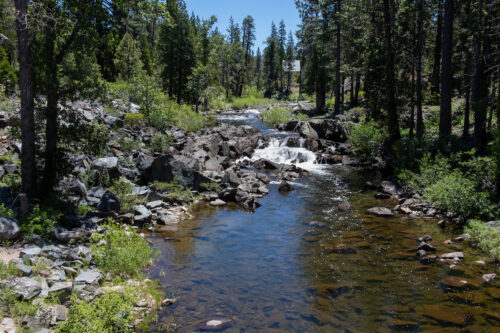
Kelly M. Grow / DWR
“A slew of problems — traffic pileups, dangerous highway walking and overcrowding — plagues one of Northern California’s favorite summertime weekend destinations. Now, authorities in Nevada County are taking action to manage and improve visitation to the South Yuba River. Flowing through white granite corridors in the Sierra foothills, the South Yuba is a premier spot for sunbathing and hanging out, floating, cliff jumping and hot-weather reverie. Hundreds of thousands of annual visitors hike into the river’s canyons, many lugging coolers and floaties, to enjoy the pageant of emerald pools, beaches and crystal-clear waters. But access is constricted, and visitor behavior is problematic. … ” Read more from the San Francisco Chronicle.
Volunteers remove more than 1,000 pounds of litter from Tahoe beaches
“Keep Tahoe Blue hosted its 13th annual Keep Tahoe Red, White & Blue cleanup Sunday at beaches around the lake. More than 400 volunteers equipped with reusable bags, clipboards to tally data, and grabbers fanned out across six beach sites around the Lake. … ” Read more from KTVN.
New ‘Stay With Purpose’ program launches during Tahoe’s biggest cleanup weekend
“Visitors checking into some South Lake Tahoe hotels can now help fund environmental work to protect Lake Tahoe with every stay. Clean Up The Lake and Station House Inn have partnered on a new Stay With Purpose Program, launched Saturday, July 5, 2026, in South Lake Tahoe, California. Under the program, Station House Inn and participating partner hotels donate $4 from every guest stay to nonprofits in the Tahoe region. Clean Up The Lake was selected as the inaugural nonprofit partner. The partnership represents an annual commitment of more than $25,000, providing ongoing financial support intended to help establish, maintain and expand environmental programs in the Tahoe Basin. … ” Read more from Channel 11.
Thousands of native cutthroat trout return to Lake Tahoe waters
“A speckled brown and pink trout darted into the crystal clear water of Tahoe from a blue five-gallon bucket—the first of thousands in the largest reintroduction of native fish to the Lake Tahoe Basin. Through partnership between the Washoe Tribe, its environmental protection department and the U.S. Fish and Wildlife Service, the Lahontan cutthroat trout is slowly returning to its natural habitat. Cale Pete, tribal member and environmental director at the Washoe Environmental Protection Department, spoke to a crowd gathered Tuesday at Lake Tahoe about the historical importance of the species and its sustenance for the Washoe people. “This historic day will be the first time for this kind of large-scale release,” he said. … ” Read more from PBS Abridged.
Golden mussels found in Sacramento are dangerously close to Lake Tahoe
“The California Department of Fish and Wildlife (CDFW) confirmed the northermost detection of the invasive golden mussel in late June. The animals were found around the Port of West Sacramento, marking their journey up the golden state—and dangerously close to Lake Tahoe. Despite the delicious sounding name, the golden mussel or Limnoperno fortunei is no treasure. The bivalves originate from China but were accidentally introduced to the Americas and were first detected in North America in 2024. Like the quagga and zebra mussels, other aquatic invasive species, the freshwater mussel can severely threaten native biodiversity, water quality and destroy water infrastructure. They form dense colonies and can encrust rocks, pipes, boats and piers. … ” Read more from the Tahoe Daily Tribune.
Commentary: Increased vigilance crucial to keep golden mussels out of Lake Tahoe
Julie W. Regan is executive director of the Tahoe Regional Planning Agency, writes, “Recent close calls with the invasive golden mussel reinforces the need for increased vigilance and inspections of boats and water gear in Lake Tahoe. Earlier this month, Lake Tahoe watercraft inspectors stopped two boats that were headed for the lake carrying golden mussels. They spotted the invasive mollusks during inspections and followed protocols, quickly flagging the boats for decontamination and further inspection. Then, just last week, trained staff at local marinas stopped six separate boaters who were trying to circumvent mandatory inspection and decontamination with inspection seals that had been tampered with. Those enforcement cases are ongoing. Lake Tahoe’s incredibly clear, deep blue water is at risk. The Jewel of the Sierra has overcome threats over many decades from unmanaged development and wildfires to aquatic invasive species. We’ve met every one of these threats head on, including building one of the most comprehensive aquatic invasive species prevention programs in the country. … ” Continue reading at the Sacramento Bee.
SACRAMENTO VALLEY
North State Drinking Water Solutions Network (NSDWSN) and SAFER program ensure more communities have reliable and safe drinking water
“Every Californian deserves access to safe, reliable drinking water. While that goal has not yet been fully achieved, the Sacramento Valley is making meaningful progress through the North State Drinking Water Solutions Network (NSDWSN) with support from the state’s Safe and Affordable Funding for Equity and Resilience (SAFER) Program. Since the SAFER program began in 2019, approximately 48 public water systems in the Sacramento Valley have come off the state’s failing list, while another 78 systems identified as at risk have returned to compliance with drinking water standards. Behind each of those numbers are communities, many of which are considered disadvantaged under state guidelines, that now have more reliable access to clean drinking water. Today, 26 public water systems serving approximately 10,100 people in the Sacramento Valley remain on the state’s list of failing systems. Through the NSDWSN and hard work in the various communities, there continues to be significant progress as communities complete projects to ensure safe drinking water. The SAFER dashboard is constantly evolving, but the long-term trend is encouraging, and the partnership between local entities and the state is working well. … ” Read more from the Northern California Water Association.
NAPA/SONOMA
California returns stretch of Mendocino Coast to Indigenous tribes: ‘This is beyond huge’
“California is returning a stretch of rugged Mendocino County coast to the Indigenous nations whose ancestors once stewarded its shores. State transportation officials recently approved the transfer of Blues Beach and the surrounding bluffs to Kai Poma, a nonprofit founded by representatives of the Sherwood Valley Band of Pomo Indians, Round Valley Indian Tribes and Coyote Valley Band of Pomo Indians. The transfer of 136 acres just south of the community of Westport will mark the first time land managed by the California Department of Transportation has been returned to Indigenous tribes. “This is beyond huge,” said J. Carlos Rivera, tribal chairman of the Sherwood Valley Band of Pomo Indians. “It’s enormous from our tribal perspective that we are basically obtaining the land that our people once lived on before colonization.” … ” Read more from the Santa Rosa Press Democrat.
Napa Valley subbasin groundwater users spared $1.26 million in fees
“Napa County’s fees this year for groundwater sustainability likely won’t hit groundwater users in the Napa Valley subbasin quite as hard as initially planned. The yearly fees — set to appear for the first time on property tax bills in August — are intended to serve as the primary funding source for the county’s state-mandated groundwater sustainability agency, which was created in 2019 and carries out groundwater monitoring and reporting work, and is tasked with implementing the county’s groundwater sustainability plan. The agency in past years has been funded by county general fund dollars and state grants. While the county committed to continue providing an annual contribution of about $500,000 when the fees were approved by the Napa County Board of Supervisors in December, that still left a gap of $2.17 million to be filled by user fees — which vary depending on whether the user is agricultural, self-supplied or a public water system. … ” Read more from the Santa Rosa Press Democrat.
As US Senate mulls 2026 Farm Bill, local farmers and food hubs look with caution and lament lost programs
“In April, the House of Representatives passed their 2026 Farm Bill. Now the US Senate is working on their iteration of the massive legislation package, the first since 2018. But while Congress debates, many small farmers are still reeling from the second Trump administration’s blitz of the federal bureaucracy in early 2025. The loss of one program in particular has been hard felt across Sonoma County, and by those who farm and work in the local agricultural economy, like Dylan Stein. Stein is no stranger to the challenges of small farming. “There’s this like feeling in the kind of farms that we work with that they’re always like sledding uphill a little bit,” Stein said, standing in a side room at FEED Co-operative’s warehouse in Petaluma. … ” Read more from NorCal Public Media.
BAY AREA
Marin sewage boards battle over treatment costs
“The Ross Valley Sanitary District is at loggerheads with the Central Marin Sanitary Agency over sewage treatment charges. RVSD — which collects wastewater from 45,000 residents in Fairfax, Larkspur, Greenbrae, Ross, Kentfield, San Anselmo, Kentfield and Sleepy Hollow — claims its ratepayers have overpaid the Central Marin agency since 2012. It raised that concern and other contractual issues last year and sought several remedies, including revising the basis for treatment charges and restitution of $1.6 million. The two agencies are in mediation. In April, the Central Marin Sanitary Agency’s five-member board, which includes representatives from local sewer districts in Corte Madera and San Rafael, voted 3-2 to revise how it calculates charges. The change meant the agency would start charging member districts based on the volume of their effluent, not a mix of volume and effluent strength. … ” Read more from the Marin Independent Journal.
Marin Municipal Water District evaluates rates amid budget uncertainties
“Marin Municipal Water District water sales are about $8 million lower than projected for the fiscal year that ended Tuesday, due to less consumption, the agency said. The exact deficit won’t be known for a few more weeks when all year-end data are accumulated and evaluated. However, the trend is expected to continue over the next year, Bret Uppendahl, the district finance director, said at a recent budget presentation. Water sales comprise about two-thirds of overall revenue. “So much of our revenue is dependent on our customer demand,” Uppendahl said. The district, which supplies water to 191,000 residents, operates on two-year budget cycles. The current budget was approved in June 2025. … ” Read more from the Marin Independent Journal.
Ross Valley board endorses limited flood projects
“Local flood-control officials have cautiously endorsed a county effort to revive two Ross Valley flood control projects. Marin County officials attended a Flood Zone 9 Advisory Board meeting seeking approval to remove and rebuild a fish ladder behind the Ross post office in a “hydrologically neutral” manner and to use a state flood-control grant to install fish-resting pools in Kentfield. The projects, which could cost several million dollars, are remnants of a larger project halted this winter after the U.S. Army Corps of Engineers found the county’s plans would not satisfy requirements protecting downstream properties from once-a-century floods. The project’s cornerstone was removing Building Bridge 2 in downtown San Anselmo. Against that backdrop, the local flood board, which advises the county on the watershed, was hesitant to fully approve the county requests at the June 25 meeting. … ” Read more from the Marin Independent Journal.
Marin commentary: Groundwater data matters as sea level rises
“Marin’s sea-level-rise planning will be stronger if groundwater, land-motion monitoring and other flood factors are integrated into existing flood-risk planning before major public investments are designed, funded or built. Marin has spent years discussing sea-level-rise risk through reports, maps and adaptation studies. One additional data layer deserves more consistent attention in public planning discussions: groundwater measurements. When most people think about sea-level rise, they picture bay water overtopping shorelines, flooding roads and inundating neighborhoods. Those risks are real, but they may not be the first impacts many communities experience. In some areas, groundwater can rise before the shoreline is overtopped; flooding may begin when groundwater emerges at the surface or enters buried infrastructure. … “ Read more from the Marin Independent Journal.
Pittsburg looks to offer clarity regarding data center
“The city of Pittsburg has launched a web page providing an overview of Pittsburg Technology Park, a planned technology district that will include a proposed data center approved 5-0 by the City Council in November 2024. This follows a press release sent out by the city on June 16 that acknowledged pushback the city has gotten from residents over the decision and promised “a workshop on development of data centers” to be held in the future. “The AVAIO Perseus Data Center is a proposed data center project within the Pittsburg Technology Park,” the webpage explains. “The project is intended to support advanced technology infrastructure, create long-term economic development opportunities, and help activate strategically planned employment-generating land in Pittsburg.” … ” Read more from the Brentwood Press.
From careers to community, Dublin San Ramon Services District serves the public
“Drinking water delivery, wastewater collection, wastewater treatment, and recycled water treatment and delivery — the Dublin San Ramon Services District (the District) does it all. The District, founded in 1953, serves over 194,000 people in the Tri-Valley. Its customers are based in Dublin, Pleasanton, south San Ramon, and the Dougherty Valley area of San Ramon. Steffen explained the District purchases water from Zone 7 Water Agency, which is based in Livermore. Zone 7, in turn, buys its water through the State Water Project, which is owned by the California Department of Water Resources. “The water for this part of the Tri-Valley comes to us from up north. It flows from the Sierra Nevada mountain range down through the south-flowing Sacramento River,” Steffen said. … ” Read more from Pleasanton Weekly.
Earthy taste, smell in Tri-Valley tap water caused by harmless seasonal compound
“Residents in the Tri-Valley area may notice an earthy or musty taste and smell in their tap water, but the water remains safe to drink, according to Zone 7 Water Agency. The temporary change is caused by geosmin, a naturally occurring organic compound that becomes more common during warm-weather algae blooms in the Sacramento-San Joaquin Delta. The compound affects the taste and odor of water but does not pose a health risk, the agency said. … ” Read more from Local News Matters.
CENTRAL COAST
Santa Cruz erosion rips away Steamer Lane cliff, and surfers say the waves have changed
“A portion of the Steamer Lane cliff in Santa Cruz has collapsed into the ocean after weeks of massive waves, leaving surfers and scientists concerned about the impact of erosion on the area. Surfers say the collapse has already changed the waves. “This wave has changed with this erosion, whether it’s for better or for worse. That’s everyone’s different opinion, but it has changed in some way. I’ve heard that it’s hollow. I’ve heard that it’s a little bit more refraction in and a little bit more bumpy,” one surfer said. UC Santa Cruz professor Gary Griggs, who has studied the coastline for years, said recent storms and larger waves are accelerating the erosion. … ” Read more from Channel 8.
Arroyo Grande’s measure for State Water Project participation moves to November ballot
“Instead of voters casting their ballots to decide whether Arroyo Grande should buy state water every time the city is parched, a measure on the November ballot could stop the back-and-forth once and for all. On June 9, the Arroyo Grande City Council unanimously adopted a resolution putting a state water ballot measure on the Nov. 3 ballot. If passed by voters, it would effectively repeal two existing measures that have been around for decades combined. The proposed measure would also authorize the city to buy state water without requiring additional voter approval. “I think it’s important for the city to have this option to protect the resiliency of the water supply,” City Councilmember Aileen Loe said. “With what we’ve experienced with the Lopez litigation, we can easily see that the water supply might be more vulnerable … in ways we wouldn’t have expected.” … ” Read more from New Times SLO.
Gaviota: Drivers urged to plan ahead as rest areas close along busy coastal corridor
“Drivers traveling along California’s scenic Highway 101 this summer will need to plan ahead after roadside rest areas in both directions of the highway closed because of a water shortage. The northbound and southbound Gaviota Roadside Rest Areas in Santa Barbara County closed July 1 and are expected to remain closed through Oct. 1, according to the California Department of Transportation (Caltrans). The closure affects both directions of Highway 101 near the Gaviota Tunnel, a heavily traveled stretch between Buellton and Goleta. The shutdown leaves travelers with roughly 35 miles without a state-operated roadside restroom, California publication Edhat reported. … ” Read more from Fox News.
Carpinteria: Salt Marsh group challenges Sand Point home approval
“Friends of the Carpinteria Salt Marsh, an environmental advocacy group, is calling on residents, scientists, conservation groups and other members of the public to attend an upcoming court hearing in its lawsuit challenging the California Coastal Commission’s approval of a proposed home near the mouth of the Carpinteria Salt Marsh. The hearing is scheduled for Wednesday, July 8 at 10 a.m. before Santa Barbara County Superior Court Judge Thomas P. Anderle at the Santa Barbara County Courthouse, 1100 Anacapa St., Santa Barbara. The case stems from the California Coastal Commission’s May 9, 2025, conditional approval of a Coastal Development Permit for Sanddew LLC’s proposed single-family residence at 501 Sand Point Road. The property sits at the end of a sand spit near the outlet of the Carpinteria Salt Marsh, also known as El Estero. … ” Read more from Coastal View.
Carpinteria: Construction underway on pipeline, treatment facility
“Construction is now underway on the pipeline and treatment facility that make up the Carpinteria Advanced Purification Project, marking the latest milestone in a partnership between the Carpinteria Valley Water District and the Carpinteria Sanitary District to bolster the community’s long-term water supply. Pipeline construction began Monday, June 29, and will initially take place along Linden Avenue and Nipomo Drive before continuing north along the project alignment. Construction also has begun on the Advanced Water Purification Facility at the existing Carpinteria Sanitary District Wastewater Treatment Facility. According to the water district, nearby residents and businesses will receive written notification before work begins in their area. … ” Read more from Coastal View.
SAN JOAQUIN VALLEY
Friant Water Authority looking to pursue no-pump zone
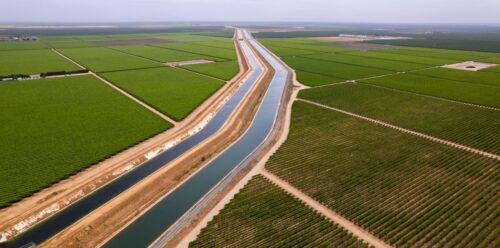
“The Friant Water Authority is looking at the option of implementing a no-pump zone for water users who are within three miles on both sides of the Friant-Kern Canal. FWA oversees the Friant-Kern Canal. FWA cheif operating officer Eric Limas told John Lindt, publisher of Sierra2theSea.net, the agency is working with water uses to implement the no-pump zone in which they would not be allowed to pump groundwater in an article published by The Sun Gazette-Journal. That area near the canal has seen the worst subsidence, the effective sinking of the ground, which has signicantly reduced the canal’s conveyance, its ability to deliver water. Limas stated an agreement still needs to be reached with the water users. “We’re not there yet,” Limas told Lindt. … ” Read more from the Porterville Recorder.
Wealthy grower John Vidovich has become a lightning rod for discontent in western Kern water district
“Growers in the Buena Vista Water Storage District have been working for the past year on a new district map to increase director seats from five to seven specifically to get around a voting block held by John Vidovich. Vidovich, a wealthy Silicon Valley developer and grower, owns vast sections of land in Buena Vista’s two northern districts. Because Buena Vista votes are apportioned based on land holdings, that means Vidovich, or his designee, can never be voted off the board. So, growers decided to change the board. A map with the seven new proposed districts was accepted and an election date set for Oct. 14 during a raucous, accusation-filled Buena Vista meeting on Monday. … ” Read more from SJV Water.
SOUTHERN CALIFORNIA
Santa Clarita still awaiting word on Cemex hearing
“In December, the courts told state regulators they can make Cemex re-notice its water rights application to use the Santa Clara River for a 56-million-ton sand-and-gravel mine in Soledad Canyon. Since then, Cemex has said nothing. The city of Santa Clarita is watching, but hasn’t seen any recent developments. And the agency in charge of the water permits, the State Regional Water Quality Control Board, has said close to nothing, previously citing a longstanding order that prohibited “ex parte,” or outside the court, communication on a topic. Cemex had until Jan. 13 to appeal the decision by California’s 2nd District Court, which a California Supreme Court official confirmed this week was never filed. … ” Read more from The Signal.
Protected habitat question could decide Woodland Hills Country Club project
“The future of a controversial 398-home development in a wildfire-prone section of Woodland Hills may hinge on whether Los Angeles planners determine the site contains habitat for protected wildlife – a finding that could force the project out of the state’s fast-track approval process and back into the city’s traditional review. Planning officials said the proposal at the Woodland Hills Country Club remains on hold after deeming the application complete but finding it inconsistent with state housing streamlining requirements and noncompliant with portions of the city’s zoning code. The May 22 status review letter from the Department of City Planning gives the applicant 60 days to respond to outstanding issues involving protected-species habitat, wetlands, affordable housing requirements, transportation review, tree and biological reports, along with several remaining zoning and land-use issues. … ” Read more from the LA Daily News.
A dry river sparks a fight over water where LA, Pasadena and South Pasadena meet
“Along the Arroyo Seco, on a strip of land where three cities come together, a fight is escalating over water. Pasadena and South Pasadena are proposing to clean contaminated water from the channelized stream, but to build the necessary infrastructure, they’d have to remove nearly 140 mature trees, more than half of which are invasive and highly flammable. And a portion of the cleaner water would end up irrigating a public golf course. That fact has been a major point of contention raised by a group of residents on the Los Angeles side of the Arroyo. They have campaigned on social media and in weekly stakeouts to stop the project, which would significantly alter a small creek near the popular San Pascual Park. Leaders of the Gabrieleño Band of Mission Indians-Kizh (Quiichi) Nation have also rejected the Arroyo Seco Water Reuse Project because the area is sacred and home to burial sites, said tribal chairman Andrew Salas. The tribe has opposed the project since its inception and sent a formal opposition letter last year. … ” Read more from the LAist.
Guerrilla kayakers saved the LA River. Today, you can ride along with them.
“Just minutes before, I was floating in a kayak along a tranquil section of the Los Angeles River, watching a series of mini-waterfalls cascading off an island of vegetation in the middle of the waterway. Then my kayak turned sideways and hit a rock. I fell straight into the much-maligned urban river, my brain panicking for a fraction of a second before I remembered I could simply stand up in the shin-deep water. In a way, this is why George Wolfe, founder of LA River Expeditions, recommended I paddle through this particular section of the Los Angeles River in Elysian Valley, where the waterway runs alongside the neighborhood of Frogtown just east of Interstate 5. It’s not like I had a ton of options — kayaking is only allowed in two short sections of the 51-mile river — but of the two choices, Wolfe recommended Elysian Valley because it’s the most “startling.” The Class 1 river rapids just outside of downtown Los Angeles provide the shock factor, and the sharpest juxtaposition between a real river ecosystem and the nation’s second-biggest city, Wolfe advised. … ” Read more from SF Gate.
After Boyle Heights warehouse fire, residents take environmental testing into their own hands
“Wearing gloves and a KN95 mask, Emmanuel Carrera Ruedas hunkered down near a storm drain, just steps away from the smoldering Lineage warehouse fire, as he filmed himself pointing to what he described as insulation and foam flowing into the drain. “The thing about this water is that it all gets dumped straight into the L.A. River,” Carrera Ruedas, of Cudahy, told his Instagram followers in a June 22 reel. In the past two weeks, Carrera Ruedas has spent evenings gathering water samples outside Lineage and from the L.A. River as he and other community scientists are partnering with experts from UCLA and Columbia University to learn what’s in the runoff. Samples will soon be sent to a lab in New York. “For far too long, the river has just been a drainage, a dumping site for companies,” said Carrera Ruedas, 27, who often encounters toads, birds and fish inhabiting its ecosystem. … ” Read more from the LAist.
Silverwood Lake officials say algal bloom at ‘Danger Advisory Level’
“Silverwood Lake State Recreation Area officials on July 3, 2026, said the entire lake is experiencing a harmful algal bloom at the “Danger Advisory level,” and no swimming is allowed until further notice. Before the July 3 update, authorities said swimming and water contact are currently prohibited at the Sawpit Beach and Willows Cove at the southwest portion of the lake, located south of Hesperia in the San Bernardino Mountains. Cleghorn Beach and the remainder of the lake are at “Caution Advisory,” with swimming allowed there, officials said. “We anticipate harmful algal conditions will persist for several weeks and will advise as conditions change,” said officials this week, before the July 4 holiday. … ” Read more from the Daily Press.
Perris takes first step toward citywide data center ban
“Perris’ City Council voted on Tuesday night to direct planning staff to draft an ordinance to ban data centers citywide. The decision comes as cities across Southern California initiate their own bans and moratoriums. Councilman David Starr Rabb asked planning staff in January to research data centers. Perris’ planning services department provided an overview during the meeting of the different types of data centers, including their size, purpose, potential land use designations, economic benefits and environmental impacts. Rafael Garcia, a planner with the Perris Planning Division, said most of Riverside County’s data centers are small-scale facilities of less than 40,000 square feet that provide data services to regional businesses. According to Garcia and city staff reports, Riverside County does not currently have any large-scale data centers. … ” Read more from KVCR.
Partnership delivers one-million-gallon reservoir to Banning Heights
“More than 50 community leaders and water professionals gathered on June 11, 2026, to celebrate the ribbon-cutting of Banning Heights Mutual Water Company’s (BHMWC) new one-million-gallon reservoir. This major addition to the community’s water system will provide reliable drinking water and strengthen wildfire response in the hills above Banning. “This reservoir represents neighbors looking out for one another and agencies stepping up to solve challenges together,” said Robert Ybarra, Board President of San Gorgonio Pass Water Agency (SGPWA). “When wildfire threatens our communities, or families turn on the tap, this resource will be there doing its job. That is what public service is all about.” … ” Continue reading from the San Gorgonio Pass Water Agency.
Environmentalists sue to block massive rail yard in California desert
“A group of environmental advocacy groups sued Barstow, California, to invalidate the city’s approval of a massive rail facility in the Mojave Desert northeast of Los Angeles. The Sierra Club and three other nonprofits filed a writ petition Wednesday in San Bernardino County Superior Court to set aside the city’s approval of the Barstow International Gateway because they say it’s based on a faulty and inadequate analysis of the project’s environmental impact. “It’s unconscionable that a city in this day and age would allow a giant industrial project that will result in so much increased diesel pollution, which is damaging to people and the environment,” Seth Alston, an attorney with the Center for Biological Diversity, said in a statement. “Barstow needs to go back to the drawing board.” … ” Read more from the Courthouse News Service.
Central Arizona Irrigation and Drainage District secures up to 10,000 acre-feet per year of new water supply from Mojave Groundwater Bank
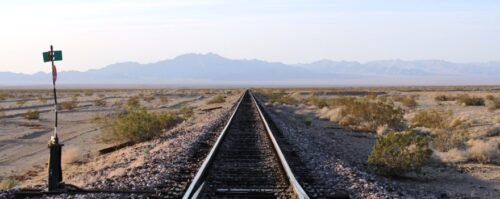 “Central Arizona Irrigation and Drainage District (“CAI and Cadiz, Inc. today announced execution of a Memorandum of Understanding (“MOU”) for the purchase and sale of up to 10,000 acre-feet per year (“AFY”) of new water supply from Cadiz’s Mojave Groundwater Bank in San Bernardino County, California. The MOU represents the first agreement for water supply from the Mojave Groundwater Bank with an Arizona water district and provides access to a new source of water supply for Arizona at a time when prolonged drought and shortages are expected to reduce deliveries of Colorado River water to farms, communities, businesses, and tribes throughout the Lower Basin. CAIDD is one of central Arizona’s largest agricultural water districts, serving approximately 87,600 irrigated acres in Pinal County. Upon completion of off-take and exchange agreements and construction of pipeline facilities, the MOU would enable delivery of up to 10,000 AFY of groundwater supplies from the Mojave Groundwater Bank to CAIDD through an interstate exchange of Colorado River water. … ” Read more from Cadiz Inc.
SEE ALSO: Arizona district secures up to 10,000 acre-feet per year from new CA water supply, from the Desert Review
IMPERIAL/COACHELLA VALLEYS
Data center developer and activists appear in court for civil lawsuit hearing
“Sebastian Rucci, the developer behind a planned data center in the City of Imperial, is suing several local activists. The parties appeared for a hearing at the courthouse in El Centro Thursday. Rucci filed a civil defamation lawsuit in April against Mt. Signal Media’s Jake Tison, Jose Luis Olmeda Velez, the executive director of Comite Civico del Valle, and also against Comite Civico del Valle, a local nonprofit. According to the complaint, Rucci and his company, Imperial Valley Computer Manufacturing, allege that statements Tison and others made were false and defamatory. He also alleges harassment. Comite Civico says this lawsuit is an attempt to silence critics of the data center, and their attorney, Beverly Grossman Palmer, says the claims don’t have any merit. … ” Read more from KYMA.
SAN DIEGO
Shell, stone, and sea: The abalone economy that once touched Point Loma’s shoreline
“Along the rocky edges of Point Loma, the ocean has always been close enough to shape daily life. Today it is defined by tide pools, marine reserves, and protected kelp forest waters. But in the late 19th and early 20th centuries, these same waters supported a quieter, largely overlooked coastal economy built around shellfish — especially abalone. The abalone trade was never centered in one visible industry in Point Loma, existing instead as part of a multilayered coastal system that included Indigenous harvesting practices, small-scale commercial fishing, and immigrant fishing communities working along the edges of San Diego Bay and nearby shorelines such as La Playa. … ” Read more from the Times of San Diego.
San Diego Coastkeeper releases 2025 San Diego Bay Water Quality Report
“San Diego Coastkeeper published its 2025 San Diego Bay Water Quality Monitoring Report, marking the first full year of data collection across the Bay. The findings paint an encouraging picture: bacteria and nutrient levels remained low, while potentially harmful metals like copper, lead and zinc were not detected at any of the sites. Coastkeeper collected samples bimonthly at four locations, ranging from the Pepper Park boat ramp to Coronado Island public beaches. Samples are analyzed at a private certified laboratory and the data is shared with the public, primarily through an interactive data map at www.sdcoastkeeper.org/san-diego-bay-map. The data was shared with the Port of San Diego and U.S. Navy planners to inform the next 10 year natural resource management plan for the Bay, which will be completed in 2027. … ” Read more from the San Diego Coastkeeper.
Along the Colorado River …
What happens when the water dries up? Much of the American West is close to finding out
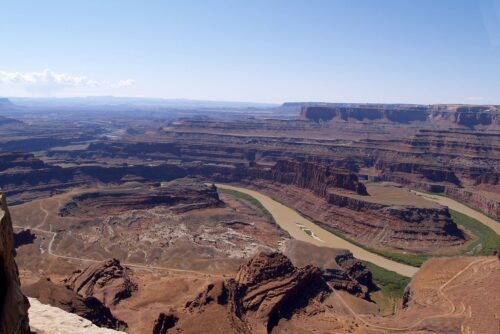 “John Wesley Powell led the first expedition through the Colorado River Basin in 1869, filling in the last blank spot on the map we now call the United States as the country celebrated its 93rd birthday. As America turns 250, the reservoir that bears his name is in danger of hitting dead pool, marking a crisis point for the river complex and the 40 million people who rely on it. While civilizations made homes along the Colorado River for thousands of years, America’s development boom along the waterway coincides with a period of extended drought. That drought has intensified within the past 25 years as the climate shifts and one of the country’s largest river basins dries. “This problem in the Colorado River,” said Brad Udall, a senior water and climate research scientist at the Colorado Water Center, “is unique globally and it represents a human-caused climate change shift in how we operate.” … ” Read more from Straight Arrow News.
Colorado River governors say they’re not at a ‘stalemate’ as clock ticks down
“Governors from several Western states confirmed they met this past week to discuss the Colorado River in hopes of hammering out an agreement. “We did meet to talk about the Colorado River and what it would take to get a deal,” Utah Governor Spencer Cox confirmed to FOX 13 News when asked directly about it. “I think we left pretty hopeful that there’s work being done now.” The governors of Wyoming, Colorado, Utah, Nevada and New Mexico — all states along the Colorado River — appeared together at a news conference on Wednesday at the start of the Western Governors Association meetings at the posh Deer Valley ski resort. Gov. Cox signaled an appetite to take a deal offered by the U.S. Bureau of Reclamation. The Colorado River Collaborative (of which FOX 13 News is a member) reported on the offer made to the states in Colorado last month. … ” Read more from Fox 13.
The “era of pools”: No, unfortunately we don’t mean swimming pools.
“If you want to understand the state of play on the Colorado River, you have to understand three very important letters. The letters are ICS, shorthand for Intentionally Created Surplus. Among water nerds, it is an infamously arcane, controversial and yet critically important program that basically allows certain (typically large) water users in the Lower Basin to bank volumes of unused water in Lake Mead. The ICS program allows them to save water for a rainy — er, dry — day while providing some operational flexibility to the overstressed reservoir and its hydroelectric turbines. The program was introduced in 2007, but it’s set to expire unless renewed in the next plan for the Colorado River. … ” Continue reading from the Arizona Agenda.
SEE ALSO: Cracks in the Upper Colorado River Basin wall, from the Inkstain blog
Commentary: The Colorado River is not the problem — the ledger is
“The federal forecast for Lake Mead got worse again last month. The newest study has the reservoir dropping to 1,015.77 feet by July 2027 and 1,011.74 feet by May 2028 — nearly 29 feet under the record low set in 2022, and lower than anything since the lake first filled in the 1930s. The projection fell about 5 feet in a single month. A group of the basin’s own experts now says the system is one dry winter from collapse. “We can’t conserve enough to save this system,” Sarah Porter of Arizona State University’s Kyl Center for Water Policy told the Review-Journal. She is right, and it is worth considering how much that sentence gives away. For 25 years, the seven Colorado River states have answered the shrinking river the same way: They gather, they invoke shared sacrifice, they produce a document thick with appendices and thin with water, and then they go home while Lake Mead keeps dropping. Tearing out lawns and recycling indoor water bought Southern Nevada real time. It did not buy enough. The next move will not come from asking the states to be more noble. It will come from changing what they are paid to do, and one piece of that is already on the table. … ” Read more from the Las Vegas Review-Journal.
As water-sharing negotiations heat up, wildlife habitats along the shrinking Colorado River are at risk
“Until the 20th century, the Colorado River moved freely through the West, from forested Rocky Mountain headwaters through canyons, deserts, and lush wetlands and then out to sea. But by 1922, as cities and farms expanded, the seven states in the river basin divvied up its flow, and a growing number of dams and irrigation projects tamed its majesty. Today more than 40 million people rely on its water. These demands are now too great for what the Colorado River can supply. Since 2000, average annual flows have declined about 20 percent, and conditions are now dire: Sparse winter snowfall plus melt from an early spring heatwave left the basin with its lowest snowpack ever recorded for April 1. “This year is stunningly bad, without any parallel in the recent historical record,” says Colorado State University climate scientist Brad Udall. As the basin warms and dries, flows could decline another 20 percent by midcentury. … ” Read more from Audubon.
Prediction markets dip their toes into shrinking Lake Mead
“Prediction market platforms like Kalshi and Polymarket allow users to bet on the likelihood of almost anything, from who will win World Cup soccer matches to how many federal agencies President Donald Trump will cut. New in June was the chance to bet on the fate of the shrinking Lake Mead, a huge reservoir straddling the border between Nevada and Arizona. Lake Mead isn’t just a popular national recreation area for boaters looking for respite from the nearby Las Vegas heat. It’s also the largest reservoir in the United States, and formed by the Hoover Dam, it supplies water to people and agriculture across seven states, tribal lands and northern Mexico. … ” Read more from SF Gate.
Rural NV counties especially vulnerable to Hoover Dam hydropower decline
“Hoover Dam is the largest hydropower producer on the Colorado River, but as reservoirs continue to drop toward dire levels, rural communities in Nevada that depend on the dam’s low-cost electricity are facing a precipice. Lake Mead is projected to drop below the critical threshold of 1,035 feet above sea level within the next 12 months, at which point the hydropower generating capacity at Hoover Dam would be cut from 1,302 megawatts to just 382 – a massive 70% decline. Once Lake Mead falls below that threshold, a dozen older turbines that were not designed to operate at low reservoir levels would be shut down, according to the Bureau of Reclamation. Only five newer turbines installed a decade ago would continue to generate power. Nevada receives a little under one-fourth of all hydropower generated at Hoover Dam, but for some rural electric providers that share is much more. … ” Read more from the Nevada Current.
SEE ALSO: Photo gallery: Lake Mead sees decreasing water capacity as it bears drought, from Arizona Central
Supercharged bubbles are threatening Lake Powell’s dam. Federal officials are battling to sustain water levels.
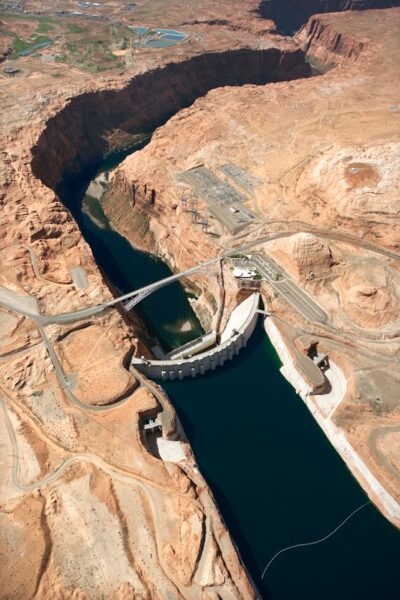 “For David Wegner to remember the time when one of the nation’s largest dams almost failed, all he has to do is look at the footlong chunk of concrete sitting on his desk. In the spring of 1983, the Colorado River rushed into Lake Powell and almost overtopped Glen Canyon Dam. Crews opened Glen Canyon to full-throttle, sending as much water as possible through its eight hydropower turbines, four small outlet pipes and two spillways — tunnels that are designed to catch floodwater and channel it around the dam wall. … But there was a tiny threat within the gushing water with the power to rip the dam apart: bubbles of water vapor imploding with bursts of heat as hot as the sun and shockwaves strong enough to shatter concrete. … Today, the same forces that threatened the dam at high water are once again a threat as the dam’s reservoir, Lake Powell, shrinks to historic lows. At low water levels, more air from the reservoir’s surface can be mixed into the water, ideal conditions for bubbles to implode with destructive force as the water travels through tubes and turbines. And this year, the reservoir’s water level is extremely low. Federal reports show that the dam might have to stop hydropower generation before the end of the year to avoid catastrophic damage caused, in part, by the small-but-mighty bubbles. … ” Read the full story from the Colorado Sun.
Leadership lessons from Lake Powell’s collapse
“Lake Powell, the massive Colorado River reservoir that generates hydroelectric power for more than 1 million homes across the Southwest, has hit its lowest summer water level on record. As of June 23, the reservoir sat at 23 percent of capacity, down 35 feet from a year ago. That’s just 37 feet above the threshold at which Glen Canyon Dam’s turbines stop generating electricity. Federal projections show the dam will go offline by spring 2027 given these conditions. That could cause a blackout. The situation will getting worse before it gets better. Data center construction supporting the AI push is driving U.S. electricity demand to record highs. Goldman Sachs projects U.S. data center power demand will more than double from 31 gigawatts in 2025 to 66 gigawatts by 2027. What started as a water allocation dispute has cascaded into an electricity supply crisis. Most of the leaders who spent decades negotiating water rights were solving a water problem while missing how crucial the hydroelectric output would be to the regional grid. … ” Read more from Inc.
SEE ALSO: Photo gallery: See how Colorado River’s shrinking supply is being felt at Lake Powell, from Arizona Central
Colorado River Indian Tribes shares and learns at summit on Indigenous water protections
“Leaders from the Colorado River Indian Tribes recently met with other Indigenous people from around the world to discuss strategies for protecting water. A Meeting of Sacred Waters convened tribal leaders in New Mexico to advance legal personhood for rivers, a strategy that can give water some of the same legal protections a person might receive in court. Amelia Flores, chairwoman of the Colorado River Indian Tribes (CRIT), said the summit allowed Indigenous leaders from the U.S., Canada and New Zealand to learn from one another. “All tribal nations are unique in their waters that they have,” she said. “We share a commonality, and that is to protect our rivers, our streams and advocate and do our due diligence as stewards of what our creator has given us, to look over and to protect for future generations.” … ” Read more from KJZZ.
Wildfires and drought grip the Colorado River Basin
“For much of the country this past week, rain was the headline — sometimes far too much of it. Heavy downpours from the southern Plains into the Ohio and Tennessee Valleys brought flash flooding, swollen rivers, and at least five flood-related deaths in Kentucky and Tennessee. The southern Midwest logged soil moisture surpluses. Corn and soybeans were thriving across the heartland. But travel west of the Rockies and the story flips entirely. While the eastern half of the nation was wringing out, the West was burning. Fueled by record-dry vegetation, low humidity, and gusty winds, wildfires spread rapidly across portions of the eastern Great Basin and the Four Corners States — the rugged intersection of Utah, Colorado, Arizona, and New Mexico that sits at the geographic heart of the Colorado River Basin. According to the U.S. Drought Monitor report released on July 2, 2026, more than a dozen active Western wildfires had each scorched more than 10,000 acres by the close of June. … ” Read more from Western Water.
Colorado River water savings plan minimizes pain for Arizona users
“Tucson Water and other cities and tribes that take Central Arizona Project water will be spared deep cuts in their supplies — at least for now — if the U.S. government approves a two-year water-saving plan for the entire Lower Colorado River Basin, officials say. Cities and tribes that take CAP water will face cuts of 14% and 10%, respectively, in 2027 and 2028 under the proposed Lower Basin plan that’s now pending before the federal government, officials said at a public meeting held Tuesday in Phoenix. Those cuts are much lower than the U.S. Bureau of Reclamation has been proposing. Arizona Department of Water Resources Director Tom Buschatzke presented the plan’s details and fielded questions from the audience about it. Cuts on that scale would mean Tucson Water customers inside and outside city limits would not have to take any actual reductions in their water use. That’s because those customers already use significantly less CAP water than the city gets every year. … ” Read more from the Arizona Daily Star.
Central Arizona Project canal engineer explains its significance from the air
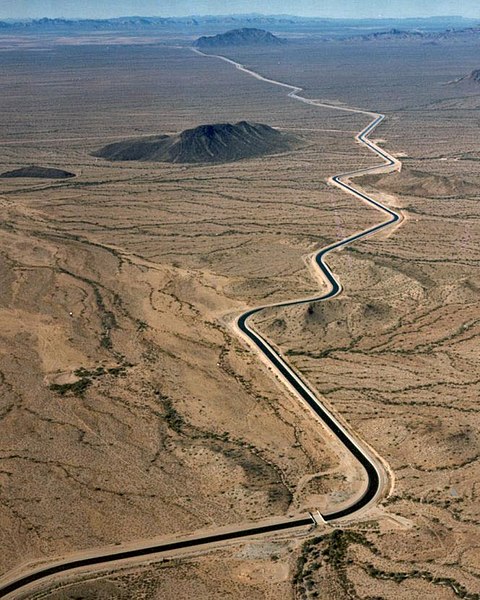 “Environmentalists love a good recycling project. But does that make recycling energy infrastructure to transport water from states enduring flooding to those weathering drought a good idea? Arizonans are ever on the hunt for a creative solution to the state’s water woes. Legions of lawyers and legislators log thousands of billable hours arguing with other states for a larger piece of the Colorado River pie. Squads of scientists spend years searching for hidden springs. Meanwhile, climate change extracts its own cut. As the countdown to a Colorado River deal ticks on a seemingly broken watch and wildfires rage across an American Southwest made more flammable by higher temperatures and parched soils, ideas trickle in, and dry up. … ” Read more from AOL News.
Phoenix approves water share program to help Arizona weather Colorado River shortages
“The Phoenix City Council is creating a new program to share water between Arizona cities. It’s an effort to help them endure water shortages, particularly looming potential cutbacks to the amount of water Arizona can use from the Colorado River. The City Council on Wednesday voted unanimously to approve the program, the details of which were first announced in April. City water officials said they want to have some initial portions of the program running by Jan. 1, 2027. The program, which will be run in partnership with Tucson, is called the Secure Water Arizona Program or SWAP. “It’s a practical program that will allow our state the flexibility to weather the uncertainties in the Colorado River Basin, and it reflects our commitment to one another,” said Phoenix Mayor Kate Gallego. … ” Read more from KJZZ.
SEE ALSO: New water-sharing program aims at protecting AZ communities from shortages, from Channel 15
In national water news today …
Water issues on the horizon in the second half of 2026
“The water regulatory landscape continues to evolve rapidly as federal agencies, courts, states, and regulated entities adjust to shifting legal and policy priorities. Over the past year, the U.S. Environmental Protection Agency (EPA), the U.S. Army Corps of Engineers (the Corps), and state regulators have advanced significant changes affecting nearly every aspect of water regulation—from the scope of federal Clean Water Act (CWA) jurisdiction, Section 401 certifications, and stormwater regulation to per- and polyfluoroalkyl substances (PFAS) drinking water regulation, citizen enforcement, and emerging challenges involving water supply, infrastructure, and water rights across the western U.S. … This article highlights several of the most important water law and policy developments to watch in 2026. … ” Read more at the National Law Review.
Without climate change, U.S. heat wave called ‘virtually impossible’
“Heat and humidity as severe, prolonged and far-reaching as this week’s would have been “virtually impossible” in the Northeast and eastern Canada before humans began warming the planet, a team of scientists said on Friday. Emissions of carbon dioxide and other greenhouse gases from the burning of oil, gas and coal have trapped more of the sun’s heat at Earth’s surface, raising temperatures worldwide for more than a century. Summer hot spells are nothing new, but because of the excess heat around the planet caused by global warming, they can produce higher temperatures today than they once did. To estimate how much climate change increased the likelihood of this week’s sweltering conditions, the scientists analyzed records of a measurement of heat stress called “wet bulb globe temperature,” a figure that accounts for humidity, wind and direct sunlight. Given that the heat wave is still unfolding, the researchers combined weather observations and forecast data. … ” Read more from the New York Times.

