
A wrap-up of posts published on Maven’s Notebook this week …
Note to readers: Sign up for weekly email service and you will receive notification of this post on Friday mornings. Readers on daily email service can add weekly email service by updating their subscription preferences. Click here to sign up!
In California water news this week …
The uneven toll of California’s groundwater law
 “For Amrik “Mickey” Singh Basra, owning 300 acres of almonds in Madera County was more success than he ever expected to achieve in the United States. Approaching retirement age, he could let his trucking business go and envision the last decades of his life sustained by his orchard. Then two years ago, as his land value plummeted and he couldn’t repay a crop loan, he had to take out a high-interest loan. There is a saying in Punjabi, he said, that roughly translates to, “You have to kill your soul before you ask favors.” He takes odd jobs to chip away at his debt, helping on friends’ farms, spraying outside a warehouse. Basra finds himself occasionally in a courtroom with other farmers to hear the latest on a lawsuit tied to the fate of their businesses. Now, at 68, with a long, gray beard, Basra’s retirement is anything but secure. The primary wrench in Basra’s sunset plans, he said, is the 2014 Sustainable Groundwater Management Act, or SGMA. … ” Read more from SJV Water.
Governor Newsom announces major progress in salmon recovery efforts
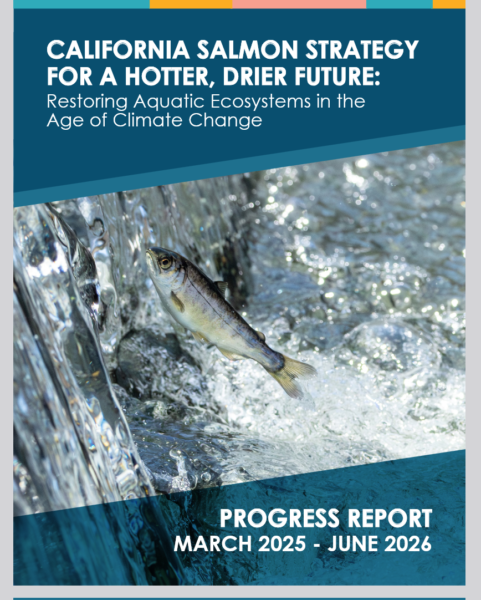 “Governor Gavin Newsom today announced the release of the California Department of Fish and Wildlife (CDFW) California Salmon Strategy for a Hotter, Drier Future: Second Progress Report — showcasing extensive progress on the 71 actions to restore salmon populations mapped out in the 2024 Salmon Strategy set by the Governor. In the last two years, the state has fully completed 49% of the actions and partially met or advanced progress on 51% of the actions towards safeguarding salmon populations and their habitats. “Restoring California’s salmon is not just an environmental goal — it is part of our commitment to the rivers, tribes, communities, and ecosystems that define this state,” said Governor Gavin Newsom. “Success is rooted in persistence, collaboration, science, and respect for tribal sovereignty. Salmon recovery is a signal of what is possible when we restore nature with urgency and purpose. This is only the beginning. … ” Continue reading this press release from Governor Newsom.
GOLDEN STATE SALMON ASSOCIATION: Bureau of Reclamation plans to violate state and federal laws protecting Sacramento River salmon
On June 10, the State Water Resources Control Board rejected the Trump Administration’s Bureau of Reclamation plan to manage Shasta Dam to protect spawning salmon on the Sacramento River this fall. The Bureau plans to drain more water from Shasta than is allowed by law to boost summer deliveries to Central Valley agriculture. The National Marine Fisheries Service has written a biological opinion for the management of Shasta Dam that has specific requirements to hold enough cold water behind Shasta Dam to keep spawning salmon alive this fall. The Bureau’s plan violates that requirement and the State Water Board’s Order 90-5, which imposes temperature requirements on the Bureau under state law. Now the Bureau has announced that they will ignore the NMFS BO and state law and implement their illegal, salmon-killing plan. If implemented, the Bureau’s plan could once again leave too little cold water in Lake Shasta to protect spawning salmon during the critical fall spawning season, threatening the next generation of Sacramento River Chinook. … ” Continue reading from the Golden State Salmon Association.
Rethinking dams: Why removing aging infrastructure can be the smart choice
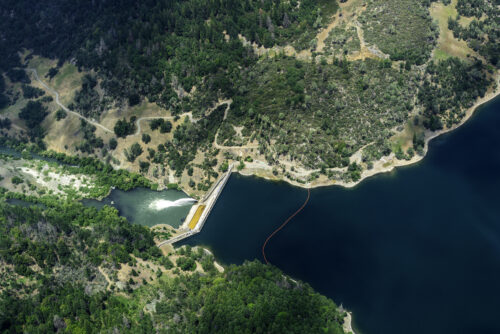
Q&A with Dan Reicher, Stanford Woods Institute for the Environment, and Felicia Marcus, fellow with Stanford’s Water in the West program: “Aging dams pose growing safety and economic challenges. As debates intensify over projects like removal of Northern California’s Potter Valley dams, two Stanford experts discuss the challenge of fixing up or taking down dams when there is too little funding – public or private – to do either. The Potter Valley Project, built over a century ago, uses two dams—Scott Dam and Cape Horn Dam—to divert water from the Eel River basin into the Russian River basin while generating hydroelectricity. Pacific Gas and Electric Co., the project’s owner, has determined the dams are no longer economically viable for power generation, and plans to remove them. However, U.S. Agriculture Secretary Brooke Rollins announced in April that a Southern California water agency had expressed interest in buying the dams to keep them operating. … ” Read more from Stanford News.
California announces $6 million to fight golden mussels threatening Delta water system
“California is investing $6 million to combat the spread of golden mussels after the species was discovered impacting water infrastructure in the Sacramento-San Joaquin Delta, including facilities serving San Joaquin County. State officials say the mussels have begun attaching to pipes, pumps, and gates, increasing maintenance costs and raising concerns about the long-term reliability of the region’s water supply. The announcement comes after Stockton declared a local emergency when mussels were found in the city’s Delta water supply intake station. Assemblymember Rhodesia Ransom said the funding will help agencies respond where the infestation is having the greatest impact. “This is for decontamination just in the Delta, which is really where we see the most impact,” said Ransom. … ” Read more from Fox 40.
CDFA board reviews new regulatory study
“On June 2, the State Board of Food and Agriculture convened, discussing a new regulatory alignment study and the economic state of the industry. The California State Board of Food and Agriculture advises the governor and the CDFA secretary, currently Karen Ross, on agricultural issues and consumer needs. The 15-member board is appointed by the governor. On June 4, the California Department of Food and Agriculture released its final Regulatory Alignment Study in partnership with the California Environmental Protection Agency and State Water Resources Control Board. CDFA contracted with Crowe LLP and their partner, Blankinship & Associates, to conduct the regulatory alignment study. Funding for the study was allocated in California’s 2021-2022 budget. According to the Legislative Analyst’s Office, $6 million in a one-time General Fund payment was directed to CDFA to assess state reporting requirements and the department’s online licensing and payment portal. … ” Read more from Valley Ag Voice.
Could a fertilizer breakthrough at Lawrence Livermore Lab spark the next Green Revolution?
“Next to seemingly endless rows of bell peppers, sweet corn and leafy greens at B & T Farms stand thousand-gallon drums of nitrogen fertilizer, the cost of which has increased 125% since 2020 amid supply shocks and wars around the world. As these costs have trickled down to consumers at grocery stores, an innovation from Lawrence Livermore National Laboratory seeks to cut California farmers’ reliance on global supply chains with a new type of agricultural alchemy that turns wastewater into nitrogen fertilizer — sometimes called “black gold” in the ag industry. “Whether it was 2022 when Russia invaded Ukraine, or if it’s this year with the war in Iran, when those imports get disrupted, the cost of fertilizer just skyrockets,” said Lawrence Livermore National Laboratory scientist Jeremy Feaster. “That can really break the economics of a farm.” … ” Read more from the San Jose Mercury News.
DATA CENTERS: Alliance for Water Efficiency releases data center primer for water service providers
 “The Alliance for Water Efficiency, in partnership with Los Alamos National Laboratory and the Metropolitan North Georgia Water Planning District, has released A Data Center Primer for Water Service Providers to help water utilities and other water practitioners engage more effectively in the planning and design of data center projects in their communities. The Primer provides both technical background and practical guidance to support early, informed involvement by local water providers. The resource was developed in response to growing concerns about data center water use, missed opportunities to improve water efficiency and water reuse, and cases in which water service providers have been excluded from key planning and design discussions. Because even highly efficient data centers can place significant demands on local water supplies, thoughtful planning and design are essential. Ensuring that water providers are involved early in the process can help communities better manage water impacts while identifying opportunities for efficiency, reuse, and long-term sustainability. … ” Read more from the Alliance for Water Efficiency.
After bold pledge, EPA shelves microplastics testing in U.S. drinking water
“For the next five years, the Environmental Protection Agency has indicated it will not require public water utilities to test for microplastics or pharmaceuticals in drinking water, according to a proposed rule published in the Federal Register. On Friday, the EPA submitted a list of chemicals it plans to test for under the Unregulated Contaminant Monitoring Rule, a mandatory testing program used to collect information about concerning chemicals in drinking water that could be harming human health. It did not include microplastics or pharmaceuticals. The omissions come after announcements by EPA Administrator Lee Zeldin earlier this year that his agency was designating microplastics and pharmaceuticals priority contaminants for testing. … Zeldin’s announcement was seen at the time as a move to placate the increasingly disgruntled Make America Healthy Again contingent of Trump supporters. Now the agency says it has no validated or standardized method to test for the plastic particles in drinking water, and wouldn’t be able to develop one before December, when testing is required to begin. … ” Read more from the LA Times. | Read via Yahoo News.

Governor appoints Thomas Gibson as Director of the Department of Water Resources
“Thomas Gibson, of West Sacramento, has been appointed Director at the California Department of Water Resources. Gibson has been Chief Deputy Director at the California Department of Water Resources since 2024, where he was Chief Counsel from 2021 to 2024. He held multiple positions at the California Natural Resources Agency from 2014 to 2020, including Deputy Secretary and Special Counsel for Water, Undersecretary, and General Counsel. … ” Read more from the Office of the Governor.
In commentary this week …
Choosing the right infrastructure projects can deliver affordable abundance
Edward Ring, Director of Water and Energy Policy at the California Policy Center, writes, “The reason to socialize a portion of the cost of major infrastructure is so the ratepayer doesn’t have to bear an unaffordable share of the construction financing payments. The broader benefit to society is to achieve greater affordability for what constitutes raw materials for prosperity; transportation, water, and energy. Whether or not they are ever completed, there are three megaprojects that California’s taxpayers are being asked to subsidize that will never deliver prosperity or affordability. They are High Speed Rail, the Delta Conveyance, and floating offshore wind. In each case, tens, if not hundreds of billions will be spent on their construction. The financing charges, stretched over decades, will far outweigh any operating benefits. Maybe there are reasons we should build these projects anyway. That is a separate and worthy discussion. But before we go any further down the half-trillion dollar (or more) path of building them, it’s worth thinking about alternative uses for all that money. Here are some ideas. … ” Read more from Edward Ring.
California threatens to fine farmers after destroying their fields
Zachary Faria, commentary writer for the Washington Examiner, writes, “California has a habit of regulating residents into the dirt and then punishing them for being in the dirt. No one is forced to take it on the chin more than the state’s farmers. A new California law permits agricultural commissioners to hand out fines of $1,000 per acre for vineyards or orchards that are considered to be a “nuisance.” As the logic goes, those abandoned fields become hosts for disease and house pests that antagonize surrounding crops or communities. Of course, the reason these fields are being abandoned is that farmers don’t have enough water to maintain them. California refuses to send water from the north (the state would rather use that water to protect insignificant dying fish species religiously) or build appropriate water storage facilities (because California is incapable of building just about anything). That had led farmers to over-rely on groundwater to keep their operations afloat. Then, California naturally began heavily regulating groundwater use as well. … ” Read more from the Washington Examiner.
Data center construction fueled by government subsidies
The California Water Impact Network writes, “While most Americans are reeling from massive inflation in the cost of essential goods such as food and gasoline, one group, aided by the intervention of Donald Trump, is benefitting from the chaos—tech bros. Trump, who will go down as the most corrupt president in US history, has gifted the technology industry a massive windfall through legislation and executive orders designed to free AI tools and the data centers that run them from regulation and oversight. Passed last year, H.R. 1–119th Congress – sold by Trump as the One Big Beautiful Bill was specifically crafted to accelerate data center construction. The OBBB provides gargantuan tax breaks that slash the upfront capital costs of data center construction, along with lavishing billions of dollars in federal funding and grants to infrastructure projects associated with AI, including data centers and semiconductor fabrication. … ” Read more from the California Water Impact Network.
Panic over data centers is wildly exaggerated — they use less water than golf courses and less energy than the USA’s fridges
Columnist Rikki Schlott writes, “Data centers have become the chic new enemy among activists. Critics claim the centers are using inordinate amounts of electricity and water to power artificial intelligence, inspiring protesters to take to the streets and Democratic lawmakers to head to Albany to stymie their development. However, some experts say the anti-data center push is more of a moral panic than an empirical one, often based on speculative and sometimes bunk projections. It seems that data centers are the boogeyman onto which larger fears about the impact of AI are being projected. “The estimates of future data-center development may be overestimated by a factor of three to five,” Jonathan Koomey, an energy researcher who has been studying data-center electricity usage for decades, told The Post. “It is not as simple as saying, ‘We don’t want data centers to use water.’ You have to think about the trade-offs.” … ” Read more from the California Post.
In regional water news this week …
Legal battle over water use in California county ends in settlement
“A long-simmering Northern California case over water use restrictions tinged with racial overtones ended Tuesday with a settlement. Siskiyou County and Sheriff Jeremiah LaRue reached an agreement with the putative class over what the latter called discriminatory traffic stops and improper search and seizure methods. The class — which includes over 1,000 people, many of whom are Asian American and live in a rural part of the county called Shasta Vista — sued in 2022. They claimed the sheriff and county used water ordinances to deprive them in an area with no public water system. County officials said they needed the ordinances to fight illegal cannabis grows. On Tuesday, Chief U.S. District Judge Troy Nunley approved the settlement agreement between the two sides. … ” Read more from the Courthouse News Service.
California’s historic dam removal notches another big win for salmon
“When four dams were torn down along the California-Oregon border two years ago, scientists were stunned by the large numbers of salmon that moved so quickly up the newly unobstructed Klamath River. This month brought another striking development. A Chinook salmon was detected going up the river in Oregon, past the former dam sites, and it was not part of the fall run of fish that’s already been racing up the Klamath in late summer and in early fall. It was a much rarer fish: a spring-run salmon, which migrates earlier in the year and has long struggled to survive on the West Coast. The Oregon Department of Fish and Wildlife’s detection of the first spring-run salmon swimming into the upper Klamath Basin in more than a century suggests that this imperiled fish run has begun to reap the benefits of dam removal. … ” Read more from the San Francisco Chronicle.
‘Poor oversight’ in St. Helena to blame for water woes, Napa County civil grand jury finds
“A Napa County civil grand jury report lays the blame on St. Helena’s leadership for the city’s long-standing water distribution system issues, including the occasional spurts of discolored or brown water. Despite years of water rate increases to fund water system improvements — rates have increased about 183% since 2011, according to the report — several projects have not been completed or funded. As a result, the grand jury reported, water discoloration, odor and taste issues persist. City staff previously attributed those problems, as they currently exist, to decades of mineral buildup in areas of the water distribution system. But the report, released June 24, calls out the city for not having a formal plan to address the water distribution system issues, and for not assessing the cost of pursuing such a plan. … ” Read more from the Santa Rosa Press Democrat.
Yuba Water increases monitoring as sediment removal clouds parts of river, lake
“Efforts to mitigate damage caused by the rupture of a 14-foot-pipe carrying water from the North Yuba River to the New Colgate Powerhouse are continuing with the removal of more 60,000-cubic yards of sediment and debris. According to the Yuba Water Agency, this work has inadvertently clouded some of Englebright Lake and the Yuba River. “We’ve been warning of the time when our sediment removal at Colgate Powerhouse might start to cause increased turbidity, or cloudiness, in the Yuba River. Today, it reached that point,” the agency acknowledged this week. “You may notice the difference in parts of the river and Englebright Lake although it may come and go over the next several weeks. The Middle and South Yuba Rivers are not affected.” … ” Read more from the Appeal Democrat.
‘We’re still here’: A Lake Tahoe meadow comes back to life under the stewardship of the Washoe Tribe
“The path meandered through a lumpy meadow, pocked with dark holes, patches of dirt, tufts of grass and tree stumps. As recently as last summer, this area was so thick with trees that you’d have trouble finding a way through the stands of lodgepole pine and white fir. A century of U.S. government fire suppression had allowed the trees to wage an invasion on the meadow. Over the decades, the trees grew more numerous and steadily marched farther out, claiming ground, soaking up water and pushing out other native plants and flowers. The meadow withered and slowly succumbed to the overgrowth. Then, last summer, the Washoe Tribe began a project to restore the meadow — an undertaking that was not only ambitious but also precedent setting. This is the culmination of a nearly 30-year agreement with the Forest Service to let the Washoe Tribe lead an environmental restoration project in Lake Tahoe and do the work to heal their ancestral land. … ” Read more from SF Gate.
Monterey County backs regional approach to combat Salinas Valley seawater intrusion
“The Monterey County Board of Supervisors reviewed responses to a Civil Grand Jury report that outlined several recommendations for addressing seawater intrusion in the Salinas Valley Basin. The board, as well as the Monterey County Water Resources Agency, approved Tuesday a draft joint response to the grand jury report called “Seawater Intrusion — A Shared Problem in Monterey County.” California’s civil grand jury system provides independent investigations into issues in counties and is composed of residents who select which areas or problems they want to explore. The jury creates its report and then requires leaders such as boards of supervisors, city councils or city or county departments to respond. The issue of seawater intrusion into groundwater supplies in Monterey County has come up as a topic among previous civil grand juries since the 1990s. Portions of the Salinas Valley Groundwater Basin, which are used as municipal and agricultural water sources, have continuously seen seawater intrusion due to overdraft. … ” Read more from Local News Matters.
Kings County groundwater agency approves budget based on hypothetical revenue
“A Kings County groundwater agency recently approved a $2.1 million budget – the minimum it will need to adhere to state regulations – based on a future assessment election that even its own manager doesn’t think will pass. The South Fork Kings Groundwater Sustainability Agency (GSA) approved the plan on June 18. It hinges on the county continuing an agreement to loan the GSA money as an advance on existing land assessment fees that are set to expire in 2028. A Proposition 218 election to set new land assessment fees, which has yet to be scheduled, is expected to fail, according to South Fork General Manager Johnny Gailey. Meanwhile, growers may be asked to voluntarily pay a pumping fee as part of an “innovative revenue stream” being considered. All of which makes the recently approved budget hypothetical at best. … ” Read more from SJV Water.
Friant Water pushes for no-pump zone in southern Tulare County
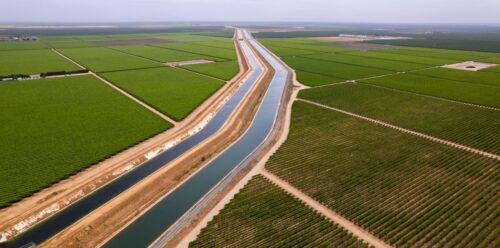
“Southern Tulare County water users may be asked to turn off their pumps if they are within 3 miles of the Friant-Kern Canal to prevent it from sinking. Newly appointed Chief Operating Officer Eric Lemas said Friant Water Authority, which operates the canal, is working with water users in the Eastern Tule River watershed to agree on a 3-mile, no-pump zone on both sides of the canal. “We need to protect the entire Tule subbasin,” Lemas said, referring to the southern Tulare County area along the Friant Kern Canal. The eastern Tule River watershed has seen the worst subsidence, sinking up to one foot per year by one estimate. This is reducing the canal’s capacity to carry surface water south into Kern County. … ” Read more from the Foothills Sun-Gazette.
State readies for next phase in Tulare County pumping crackdown
“The next phase in the state’s crackdown on over pumping in Tulare County will be revealed July 16 in Visalia. The meeting, which is not open to the public, will give water managers their first glimpse at the state’s plan for correcting severe overdraft in the Tule subbasin. It’s known as an “interim plan” and will definitely include pumping limits and a fee increase from $20 to $35 per acre foot pumped. The draft interim plan won’t be released until summer 2027 and would have to be approved by the Water Resources Control Board later that year before going into effect. But the clock is ticking and the July 16 meeting is the first step to lay out the process and timeline. Water managers got a heads up about the July 16 meeting last week. … ” Read more from SJV Water.
Harvard Management Company subsidiary sells controversial Cuyama Valley vineyard property
“A Harvard Management Company subsidiary sold its controversial central California vineyard property in May, ending more than a decade of ownership marked by backlash and legal challenges over its water use. Brodiaea Inc., a Delaware-based corporation owned entirely by HMC, bought the North Fork Ranch property in the Cuyama Valley in 2014. Brodiaea paid $10.1 million for the more than 7,500-acre property, developed an 840-acre vineyard, and drilled 16 wells on the land. In May, Brodiaea sold the property to Rancho Cuyama No. 2, a Texas limited liability company. A grant deed recorded May 22 indicated a sale price of roughly $5 million. The county assessed the property at $38 million in 2025. … Brodiaea’s presence in California drew backlash from locals and Harvard affiliates over its land and water use. … ” Read more from the Harvard Crimson.
Impact of Boyle Heights fire: Rats, rotted food, strong odors, dead birds in LA River
“While the fire is mostly out, the after-effects of the massive cold storage building blaze in Boyle Heights include this puzzle: How to transport 85 million pounds of rotting meat, while protecting residents from rats, powerful odors and environmental damage to the L.A. River. These cleanup-related issues were the topic of a look ahead at what happens next, 14 days after the fire overtook the Lineage warehouse — a massive, 500,000-square-foot cold-storage building at 1400 S. Los Palos St. on the border of the city of Los Angeles and the county area of East L.A. The fire has burned for two weeks, and released waves of particulates into the air that caused asthma attacks and other respiratory problems. … ” Read more from the LA Daily News.
Tijuana, thirsty for water amid Colorado River crisis, turns to Oceanside
“Pipes break repeatedly in Tijuana, and its main water source — the Colorado River — is drying up. The city’s water supply crisis is pushing its leaders to consider recycling sewage for drinking, especially as residents face the possibility of water rationing this summer. To learn from a city already in the water reuse business, Mexican officials toured Oceanside’s Pure Water facility on Tuesday. “What if you take this wastewater, right, and you clean it enough so you can drink it?” Rudy Guzman, who oversees the purification facility, told officials during the tour. “Crazy idea, right? But we did it.” … ” Read more from KPBS.
Lake Powell drop could mean major Colorado River cuts for California
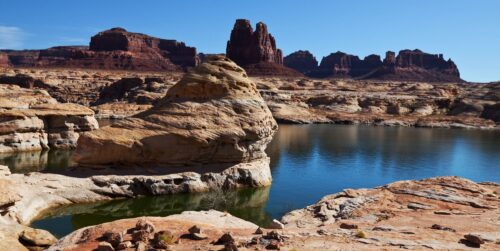
“Lake Powell — the massive Colorado River reservoir that helps supply water and power across the West — is entering peak summer at its lowest level on record, raising fresh concerns about water supplies that millions of Californians depend on. Federal projections warn that the lake could fall to the “minimum power pool” as soon as next year, a threshold at which the Glen Canyon Dam can no longer generate electricity. Although the lake’s levels have briefly fallen in years past, those low levels occurred in the spring, before melting snow refilled it. This year, that refill never happened. That’s not just a power issue. It’s a warning sign for the entire Colorado River system — and for California, the single largest user of its water. … ” Read more from the Desert Sun. | Read via AOL News.

