
The Daily Digest will return on Monday, July 6. Happy 4th of July!
Several news sources featured in the Daily Digest may limit the number of articles you can access without a subscription. However, gift articles and open-access links are provided when available. For more open access California water news articles, explore the main page at MavensNotebook.com.
On the calendar today …
- WEBINAR: Capturing Carbon: California’s Path to a Climate-Safe Future from 12pm to 1pm. Carbon pollution is warming the planet, but where can that carbon be stored? From forests and farms to deep underground rock formations, California is investing in multiple approaches to remove carbon from the atmosphere. These efforts are an important complement to the state’s primary climate priority to vastly reduce carbon pollution across our state. Join Secretary Wade Crowfoot and leading experts to learn more about how nature-based solutions and engineered carbon removal work, why they are important to California’s climate strategy, and how projects across the state are delivering benefits for communities, landscapes, and ecosystems. Click here to register.
In California water news this weekend …
Friant Water pushes for no-pump zone in southern Tulare County
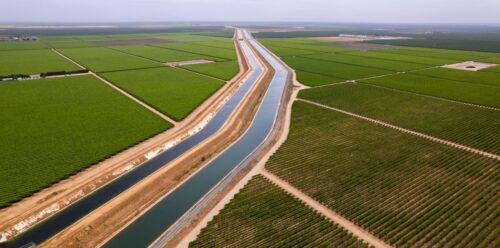
“Southern Tulare County water users may be asked to turn off their pumps if they are within 3 miles of the Friant-Kern Canal to prevent it from sinking. Newly appointed Chief Operating Officer Eric Lemas said Friant Water Authority, which operates the canal, is working with water users in the Eastern Tule River watershed to agree on a 3-mile, no-pump zone on both sides of the canal. “We need to protect the entire Tule subbasin,” Lemas said, referring to the southern Tulare County area along the Friant Kern Canal. The eastern Tule River watershed has seen the worst subsidence, sinking up to one foot per year by one estimate. This is reducing the canal’s capacity to carry surface water south into Kern County. … ” Read more from the Foothills Sun-Gazette.
State readies for next phase in Tulare County pumping crackdown
“The next phase in the state’s crackdown on over pumping in Tulare County will be revealed July 16 in Visalia. The meeting, which is not open to the public, will give water managers their first glimpse at the state’s plan for correcting severe overdraft in the Tule subbasin. It’s known as an “interim plan” and will definitely include pumping limits and a fee increase from $20 to $35 per acre foot pumped. The draft interim plan won’t be released until summer 2027 and would have to be approved by the Water Resources Control Board later that year before going into effect. But the clock is ticking and the July 16 meeting is the first step to lay out the process and timeline. Water managers got a heads up about the July 16 meeting last week. … ” Read more from SJV Water.
Governor Newsom announces major progress in salmon recovery efforts
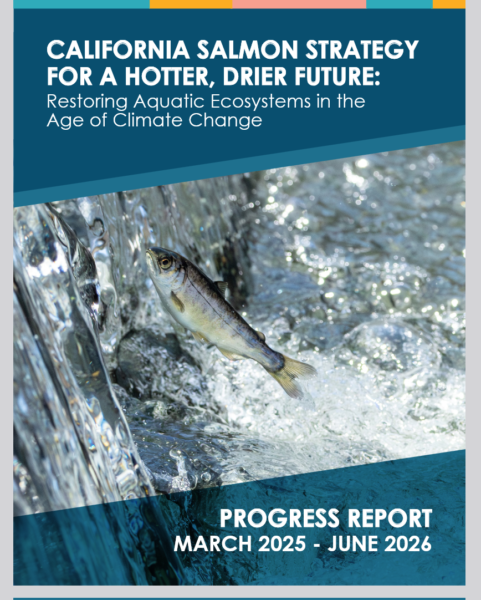 “Governor Gavin Newsom today announced the release of the California Department of Fish and Wildlife (CDFW) California Salmon Strategy for a Hotter, Drier Future: Second Progress Report — showcasing extensive progress on the 71 actions to restore salmon populations mapped out in the 2024 Salmon Strategy set by the Governor. In the last two years, the state has fully completed 49% of the actions and partially met or advanced progress on 51% of the actions towards safeguarding salmon populations and their habitats. “Restoring California’s salmon is not just an environmental goal — it is part of our commitment to the rivers, tribes, communities, and ecosystems that define this state,” said Governor Gavin Newsom. “Success is rooted in persistence, collaboration, science, and respect for tribal sovereignty. Salmon recovery is a signal of what is possible when we restore nature with urgency and purpose. This is only the beginning. … ” Continue reading this press release from Governor Newsom.
The Klamath Tribes couldn’t get federal dollars for salmon. Then the Yurok stepped in.
“The headwaters of the Klamath River are the ancestral territory of the Klamath Tribes, which include the Klamath, Modoc and Yahooskin, according to Tribal Chairman William Ray Jr. “(The water) comes right out of the ground. I know this because I see it. I’ve lived it. And I know where (the headwaters) come out of.” These waters fuse to create Klamath Lake in southern Oregon, out of which the Klamath River runs through Northern California to the Pacific Ocean. All these waters support the fish at the core of the economies, cuisine and medicine of the tribal communities throughout the watershed — including the Yurok Tribe, downstream where the river meets the Pacific. In better times, salmon made up a third of the Klamath peoples’ diets. “Creator couldn’t have created a more powerful species,” said Ray, noting salmon’s ability to traverse fresh and saltwater alike. “He created this fish for all the Indians to enjoy.” … ” Read more from High Country News.
How turning down light pollution could save migrating salmon
“The young Chinook salmon dodging predators in California’s San Joaquin River face a threat that humans built for them. The striped and largemouth bass waiting in the river channel are not native Californians. People carried them west more than a century ago, and the fish never left. Striped bass belong to the rivers and estuaries of the eastern United States, from the Gulf of St. Lawrence down to Florida. They reached California by rail. In 1879, fish commissioner Livingstone Stone released roughly 132 small striped bass into the Carquinez Strait near Martinez, hauled across the country from New Jersey’s Navesink River. A second shipment of about 300 fish followed in 1883. Both plantings came from the Atlantic seaboard, and both took hold with remarkable speed. Read more from Earth.com.
Rethinking dams: Why removing aging infrastructure can be the smart choice
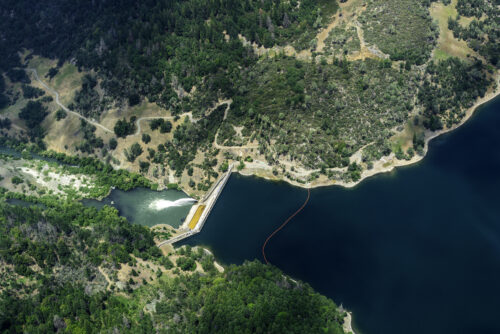
Q&A with Dan Reicher, Stanford Woods Institute for the Environment, and Felicia Marcus, fellow with Stanford’s Water in the West program: “Aging dams pose growing safety and economic challenges. As debates intensify over projects like removal of Northern California’s Potter Valley dams, two Stanford experts discuss the challenge of fixing up or taking down dams when there is too little funding – public or private – to do either. The Potter Valley Project, built over a century ago, uses two dams—Scott Dam and Cape Horn Dam—to divert water from the Eel River basin into the Russian River basin while generating hydroelectricity. Pacific Gas and Electric Co., the project’s owner, has determined the dams are no longer economically viable for power generation, and plans to remove them. However, U.S. Agriculture Secretary Brooke Rollins announced in April that a Southern California water agency had expressed interest in buying the dams to keep them operating. … ” Read more from Stanford News.
Redefining river restoration through tribal partnership
“For millennia, California’s rivers, creeks, and lakes served as the lifeblood for thriving Tribal communities in the San Joaquin Valley and Tulare Basin, located in the southern portion of the Valley. Where there was water, you’d find populations of people. Water and Tribal identity have forever been inseparable, anchoring language, ceremony, food systems, and ancestral memory. Simply put, waterways served as cultural lifelines for Tribes thriving in these regions throughout California. However, the loss of 95% of California’s floodplains and riverside habitat mirrored an equivalent loss of Tribal culture, language, and other essential resources. Rivers and other waterways that once sustained entire cultures have been dammed, fenced off, redirected, and regulated, turning vital cultural access into a painful absence. “It was a tremendous loss to our community,” said Michelle Pipkin, member of the Yowlumne Yokut. “The waterways are like our veins that flow the blood to our systems, keeping our people flowing and connected.” … ” Read more from River Partners.
Rewriting the narrative on California’s water reality
“According to the University of California’s Giannini Foundation of Agricultural Economics, “A History of California Agriculture,” there are two dominating perspectives of California agriculture. One perspective asserts that the state’s farmers are highly innovative and harness their limited resources to maintain a globally competitive agricultural system. The second view argues that California agriculture abuses the state’s natural environment and has created a large-scale capitalist system. “Neither legend has engaged in a systematic and objective analysis of the available data nor offered the comparative perspective needed to assess why California agriculture developed as it did,” the Giannini publication stated. California’s agricultural system was not the sole outcome of unique geoclimatic features nor by the work of farmers alone, the report explained. Rather, one of the most productive agricultural-industrial complexes in the world, including the bureaucracies therein and the public perception of that industry, was also shaped by policymakers. … ” Read more from Valley Ag Voice.
California agriculture faces mounting pressure: Roger Isom sounds the alarm on regulations, water, and the future of farming
“California agriculture is at a crossroads, according to Roger Isom, President and CEO of the Western Tree Nut Association (WTNA) and the California Cotton Ginners and Growers Association (CCGGA). During an in-depth conversation with “The Ag Meter” Nick Papagni, Isom discussed the growing regulatory burden facing California farmers, a multi-state lawsuit challenging the state’s plastic packaging law, water infrastructure, crop outlooks, and why he believes the upcoming gubernatorial election could significantly impact the future of agriculture. The nearly 50-minute interview covered a wide range of issues affecting growers throughout California and offered listeners a behind-the-scenes look at the challenges producers face every day. … ” Read more from AgNet West.
California announces $6 million to fight golden mussels threatening Delta water system
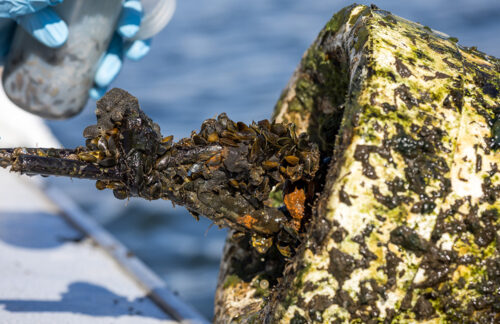
Xavier Mascareñas / DWR
“California is investing $6 million to combat the spread of golden mussels after the species was discovered impacting water infrastructure in the Sacramento-San Joaquin Delta, including facilities serving San Joaquin County. State officials say the mussels have begun attaching to pipes, pumps, and gates, increasing maintenance costs and raising concerns about the long-term reliability of the region’s water supply. The announcement comes after Stockton declared a local emergency when mussels were found in the city’s Delta water supply intake station. Assemblymember Rhodesia Ransom said the funding will help agencies respond where the infestation is having the greatest impact. “This is for decontamination just in the Delta, which is really where we see the most impact,” said Ransom. … ” Read more from Fox 40.
Invasive golden mussels run rampant in San Joaquin County, spark plea for federal assistance
“Tony Faso has been in the boating business for 23 years. In that time, he’s never been able to see the fish swimming near the shores of the San Joaquin Delta, until now. “The clarity of the water is wild,” Faso, owner of the Delta Marine Yacht Center in Stockton, explained. “It’s sad to say, but we could never even see that deep.” That clear water is a clear warning sign of the invasion happening below the surface as hundreds of thousands of golden mussels filter the water while wreaking havoc on critical infrastructure. “I don’t want to say it’s a foregone conclusion that we can’t stop it, but we have to find a way to slow it down,” Faso said. … ” Read more from Action News Now.
SEE ALSO: Kern ag leaders urge newsom to declare state of emergency over golden mussels, from Valley Ag Voice
DELTA CONVEYANCE PROJECT: 12th amended hearing notice and procedural ruling
“The State Water Resources Control Board Administrative Hearings Office (AHO) is conducting a public hearing about the Delta Conveyance Project. The purpose of the hearing is to gather evidence that the State Water Board will consider to determine whether to approve change petitions filed by the Department of Water Resources (DWR or Petitioner) to add two new points of diversion and rediversion to water right Permits 16478, 16479, 16481, and 16482 (Applications 5630, 14443, 14445A, and 17512, respectively) and, if so, terms and conditions the Board should include in the amended permits. Protestants’ rebuttal portion of the Public Hearing will continue on July 8, 2026. The surrebuttal portion of the Public Hearing will begin on August 20, 2026, and continue on August 21, 24, 31, and September 3, 2026. … ” Read more from the State Water Board.
California Forever’s bid to win manufacturing jobs divides Solano county residents
“Solano County residents and local officials have mixed feelings about a draft legislative deal with California Forever that could speed environmental approvals for proposed shipbuilding and advanced manufacturing projects on company-owned land. Some are lauding the move as a way to bring jobs to a county with the highest unemployment rate in the Bay Area. Others are concerned it could fast-track the projects without sufficient environmental review. “I’m skeptical,” Mayor Edwin Okamura said. His city, Rio Vista, neighbors California Forever’s proposed new mega-development. “I feel like…they’re finding a workaround to getting approvals on their project.” … ” Read more from KQED.
SEE ALSO: Tech investors lobby to bypass environmental review for ‘California Forever’ project, from Planetizen
OCEANS AND COAST
Commercial take of northern anchovy, pacific sardine restricted
 “State health agencies are restricting commercial intake of northern anchovy and Pacific sardine for human consumption in portions of the Monterey Bay after recent testing found elevated levels of domoic acid in the fish. The restriction applies from Pigeon Point in San Mateo County, down to Point Lobos. The California Department of Fish and Wildlife enacted the restriction following a recommendation from the Office of Environmental Health Hazard Assessment and the California Department of Public Health on June 26. Under the order, northern anchovy and Pacific sardine taken from the affected area cannot be possessed or sold for people or pets to eat. Commercial organizations and fishers can still use them for bait, and the fish can be sold as dead bait labeled not for consumption. … ” Read more from the Monterey Herald.
A marine heat wave caused seabird deaths off California. El Nino could worsen the die-off
“Within minutes of walking on a San Diego beach, marine ornithologist Tammy Russell found the feathered carcasses — one after another. Some were mixed in with washed up kelp. Others were under rocks. Each month, scientists and volunteers conduct surveys of dead seabirds and find what Russell describes as a grim assessment of the impact of a massive marine heat wave that has lingered for months off parts of the California coast. The surveys that have been carried out by various organizations for decades help build a baseline of information on beached sea life to detect threats and their impact. … ” Read more from the Associated Press.
California races to take a ‘snapshot’ of the coast before its too late
“Dozens of scientists from across California have teamed up to begin a painstaking and unprecedented cataloging of every intertidal species along the coast. The yearslong effort will not only help the state adapt to climate change; it could also document thousands of new species for the first time. Researchers started the work on June 21 in the tide pools near Scripps Institution of Oceanography in La Jolla, and in less than 10 days, they have already collected about 1,500 unique species, Greg Rouse, a marine biologist at Scripps at UC San Diego, told SFGATE. It’s careful, tedious work, with scientists picking through sand and mud and scraping along rocks to find every specimen possible, including some that are just a few millimeters long or less. … ” Read more from SF Gate.
DROUGHT AND FIRE
Large fires scorch drought-stricken western U.S.
“After an exceptionally warm and dry winter, vast swaths of the Western United States are up in flames—and conditions could get worse. Several large fires are burning in Arizona, Colorado, New Mexico, Wyoming, Nevada and Utah. In Colorado, three federal wildland firefighters died while battling a blaze over the weekend. “Significant wildland fire activity is occurring across multiple geographic areas, resulting in a substantial commitment of incident management teams,” the National Interagency Fire Center (NIFC), which coordinates federal and state fire operations across the U.S., said on Monday. The organization on Monday escalated the country’s preparedness level to the second-highest designation, which essentially means that all hands are on deck. Fueled by parched vegetation, the fires are spreading rapidly as unusually strong winds extend their reach, particularly across the southern Intermountain West region. The conditions are “extraordinarily rare for late June, and impacts will likely be severe,” NIFC warned on Monday. … ” Read more from Inside Climate News.
Where California stands on fire risk as midsummer arrives
“July begins Wednesday for the Bay Area much the way June ended: mild and mostly quiet, with coastal clouds giving way to afternoon sunshine across most inland and bayside areas. Highs will stay in the 60s and 70s for most of the region, reaching 80s inland. No major heat waves are in sight for now. But the dawn of midsummer is a good reminder that we’re transitioning deeper into fire weather season, with the risk slowly growing as grasses cure and dead fuels dry out. Northern California remains in cautiously good shape after a relatively cool June, though Southern California is already closer to peak fire-season conditions. … ” Read more from the San Francisco Chronicle.
Fourth of July fireworks shows divide California: ‘Left-wing lunacy’ or basic sanity?
“Big fireworks shows are on the decline in California amid a variety of factors including increased regulations, litigation by environmental groups and public concern about pollution and wildfires. The transition is underway at plenty of Californians’ favorite spots. In the last few years, Fourth of July shows at the Rose Bowl, Grand Park in downtown, Hansen Dam in the San Fernando Valley, Morro Bay on the Central Coast and at Lake Cunningham in San José have all moved from fireworks to drones. Next year, the Port of San Diego’s Big Bay Boom show could also become a drone show at the behest of the Coastal Commission. … Some argue the switch to drones makes perfect sense, allowing big entertainment value without the environmental and public safety trade-offs. But to traditionalists like Morris, it’s just not the same without the real explosions. … Read more from the LA Times. | Read via MSN News.
U.S. needs new drought assessment framework as droughts become more severe and unpredictable
“Droughts in the United States are becoming more intense and unpredictable, and the nation needs to develop a new drought assessment framework to better understand and address them, according to a new report from the National Academies of Sciences, Engineering, and Medicine. The report urges the National Oceanic and Atmospheric Administration, the interagency National Integrated Drought Information System, other relevant federal agencies, and partners in the drought research and policy community to develop a new framework that distinguishes between short-term operational needs, such as drought monitoring and emergency response, and long-term planning for water management, infrastructure, and climate adaptation. … ” Read more from the National Academies of Sciences, Engineering, and Medicine.
POLICY/REGULATION
Delta Counties Coalition applauds committee decision to preserve oversight and accountability in California water policy
 “The Delta Counties Coalition (DCC) issued the following statement in response to AB 2215 (Calderon) failing passage in the Senate Natural Resources Committee. The bill aimed to extend the Department of Water Resources’ water rights permits outside of the traditional review process, which typically requires justification, public input, and regulatory approval. This would have removed a major check on the Delta Tunnel project, creating a side-door path to advance the project without full regulatory accountability. “The Delta Counties Coalition thanks the Senate Natural Resources and Water Committee and legislative staff for their thorough and reasoned review of AB 2215 (Calderon) re State Water Rights Permits. This proposal raised serious concerns about granting special treatment and would have bypassed long-standing water rights protections and removed public oversight. By insisting on reasonable amendments that ultimately lead to the author pulling the bill from committee consideration, the Legislature reaffirmed the importance of a fair, transparent water rights process that applies equally to all. … ” Read more from the Delta Counties Coalition.
SEE ALSO: Victory for the Delta: Public opposition defeats AB 2215, from the California Water Impact Network
CA Water Association requests delay of CPUC vote on last-minute proposal affecting water system consolidation
The California Water Association has written a letter to legislators in Sacramento regarding an upcoming hearing at the California Public Utilities Commission: “The California Water Association (CWA), representing California’s regulated water providers serving more than six million Californians, are urging the California Public Utilities Commission (CPUC) to postpone its July 2 vote on a significant proposal added just hours before they are scheduled to act. “Decisions of this magnitude deserve a transparent process and meaningful public input. With 48 hours before the scheduled vote, the CPUC substantially revised its proposed decision by adding new provisions that could fundamentally alter the future of voluntary water system consolidation in California. These significant changes were introduced without providing affected communities, water providers, or other interested stakeholders a meaningful opportunity to review the proposal or provide public input. … ” Read more from the California Water Association.
CDFA board reviews new regulatory study
“On June 2, the State Board of Food and Agriculture convened, discussing a new regulatory alignment study and the economic state of the industry. The California State Board of Food and Agriculture advises the governor and the CDFA secretary, currently Karen Ross, on agricultural issues and consumer needs. The 15-member board is appointed by the governor. On June 4, the California Department of Food and Agriculture released its final Regulatory Alignment Study in partnership with the California Environmental Protection Agency and State Water Resources Control Board. CDFA contracted with Crowe LLP and their partner, Blankinship & Associates, to conduct the regulatory alignment study. Funding for the study was allocated in California’s 2021-2022 budget. According to the Legislative Analyst’s Office, $6 million in a one-time General Fund payment was directed to CDFA to assess state reporting requirements and the department’s online licensing and payment portal. … ” Read more from Valley Ag Voice.
State audit reveals deficiencies in regulatory agencies
“On May 15, the California State Auditor’s office published its Internal Control and Compliance Audit Report for the 2024-25 fiscal year, finding deficiencies in various state agencies. Two state agencies with identified deficiencies were the California Air Resources Board and State Water Resources Control Board. Both CARB and the SWRCB are among the regulatory agencies that agricultural businesses are most likely to interact with, according to the University of California Agriculture and Natural Resources’ “Regulatory Agencies for Ag Operations” list. The report is part of an audit conducted by the California State Auditor under Government Auditing Standards and relates to the review of the state’s internal controls and compliance in connection with the audit of its basic financial statements. “Deficiencies in the State’s internal control system could adversely affect its ability to provide accurate and timely financial information,” the audit report stated. … ” Read more from Valley Ag Voice.
New agricultural bills to watch
“Every year, the California State Legislature considers thousands of bill proposals, many of which have direct implications for Central Valley agriculture, including new regulations for employment, water use, pesticides, or other natural resource policies. It can be difficult to keep track of the bills and what they mean for a producer’s bottom line. The last day for each House to introduce bills was February 20, 2026, and a total of 1,798 bills were introduced, according to the California State Association of Counties. Since then, the California State Assembly and Senate have taken the task of advancing or halting their proposed legislation. The last day for each House to pass bills is August 31, and Governor Gavin Newsom will have until September 30 to sign or veto bills. … ” Read more from Valley Ag Voice.
Revised bill again to try to ease farmland conversions to solar
“Legislation that divided the local and state farm bureaus over how, or even whether, to promote solar power development on California farmland has undergone revision after it failed to reach the governor’s desk during the last legislative session. Assembly Bill 1156, authored by Assemblywoman Buffy Hicks, D-Oakland, would relax Williamson Act measures intended to preserve state farmland. The act gives farmers a discount on their property tax bills as long as their land is kept as farmland or open space. Supported by the solar industry, AB 1156 would effectively lower the cost of building photovoltaic arrays on ag property impacted by drought and pumping restrictions imposed by California’s Sustainable Groundwater Management Act. … ” Read more from the Porterville Recorder.
Should coastal commission get more power over rebuilding after wildfire? Some lawmakers say yes
” … More than a year after wildfires tore through Los Angeles, state lawmakers are weighing a new proposal that would give the powerful California Coastal Commission more oversight over homes destroyed by future natural disasters. New buyers would need approval from the commission to rebuild, a reversal from current state law that allows homes ruined by fires or other catastrophes to sidestep the controlling state agency. Buyers today can rebuild homes without commission review as long as they are largely the same as before the disaster and are no more than 10% larger than the original home. Gov. Gavin Newsom last year broadened these exemptions to include rebuilds that aren’t similar to their original design when he suspended the commission’s authority over rebuilding efforts in L.A. to speed up what so far has been a grueling slog for the city. … ” Read more from Cal Matters.
States sue to block CA from forcing plastics policies throughout U.S.
“Saying California is attempting to use its outsized economic heft to impose its “bespoke environmental preferences” on the entire U.S. without a vote, a coalition of 17 states have sued the Golden State to block the state’s new law banning a host of disposable plastic products. The lawsuit, led by Nebraska Attorney General Michael T. Hilgers, was filed June 22 in Sacramento federal court. Hilgers, a Republican, was joined in the action by his counterparts from the states of Florida, Texas, West Virginia, Georgia, Missouri and other Republican-dominated states. They are joined in the action by the National Association of Wholesaler-Distributors (NAW), a trade group representing the wholesale distribution industry, which the NAW describes as “the backbone of the supply chain” feeding the U.S. economy. … ” Read more from the Northern California Record.
In commentary this weekend …
Choosing the right infrastructure projects can deliver affordable abundance
Edward Ring, Director of Water and Energy Policy at the California Policy Center, writes, “The reason to socialize a portion of the cost of major infrastructure is so the ratepayer doesn’t have to bear an unaffordable share of the construction financing payments. The broader benefit to society is to achieve greater affordability for what constitutes raw materials for prosperity; transportation, water, and energy. Whether or not they are ever completed, there are three megaprojects that California’s taxpayers are being asked to subsidize that will never deliver prosperity or affordability. They are High Speed Rail, the Delta Conveyance, and floating offshore wind. In each case, tens, if not hundreds of billions will be spent on their construction. The financing charges, stretched over decades, will far outweigh any operating benefits. Maybe there are reasons we should build these projects anyway. That is a separate and worthy discussion. But before we go any further down the half-trillion dollar (or more) path of building them, it’s worth thinking about alternative uses for all that money. Here are some ideas. … ” Read more from Edward Ring.
Data center construction fueled by government subsidies
The California Water Impact Network writes, “While most Americans are reeling from massive inflation in the cost of essential goods such as food and gasoline, one group, aided by the intervention of Donald Trump, is benefitting from the chaos—tech bros. Trump, who will go down as the most corrupt president in US history, has gifted the technology industry a massive windfall through legislation and executive orders designed to free AI tools and the data centers that run them from regulation and oversight. Passed last year, H.R. 1–119th Congress – sold by Trump as the One Big Beautiful Bill was specifically crafted to accelerate data center construction. The OBBB provides gargantuan tax breaks that slash the upfront capital costs of data center construction, along with lavishing billions of dollars in federal funding and grants to infrastructure projects associated with AI, including data centers and semiconductor fabrication. … ” Read more from the California Water Impact Network.
In people news this weekend …
Promotions, passings, profiles – submit people news items to maven@mavensnotebook.com.
Sonoma Water General Manager Grant Davis announces retirement after nearly two decades of service
“Sonoma Water General Manager Grant Davis announced today that he will retire Aug. 25, 2026, after nearly 20 years with the agency, including the past 16 years as general manager. Since joining Sonoma Water in 2007, Davis led the agency through a period of innovation and infrastructure investment while strengthening water supply reliability, environmental stewardship and wastewater services across Sonoma County. Under his leadership, Sonoma Water provided naturally filtered drinking water to more than 600,000 residents in Sonoma and Marin counties, maintained nearly 100 miles of streams and detention basins for flood protection and built one of California’s leading watershed restoration programs to benefit federally listed salmon and steelhead. “Serving as Sonoma Water’s general manager has been the honor of my career,” Davis said. “I was fortunate to work alongside incredibly talented and dedicated people whose commitment to public service made every accomplishment possible. Sonoma Water is an extraordinary organization because of its people, and I am deeply grateful to the Board of Directors for their trust and support throughout my tenure.” … ” Read more from Sonoma Water.
SEE ALSO: Sonoma Water General Manager Grant Davis to retire in August after 19 years with district, from Local News Matters
Podcasts …
CAPITOL WEEKLY: California’s water future: Chelsea Haines
Chelsea Haines is the Director of State Regulatory Relations at the Association of California Water Agencies (ACWA), the largest statewide coalition of public water agencies in the country. ACWA’s 470 public agency members are responsible for 90% of the water delivered to cities, farms and businesses in California. Haines joined us to talk about ACWA’s vision for California’s future as climate change pushes our water resources to the limit.
VOICES OF THE VALLEY: The water it takes to grow your food
In this episode of Voices of the Valley, Western Growers’ Taylor Lauson sits down with Michelle Paul, Executive Director of the California Farm Water Coalition, to break down one of the most important and misunderstood topics in agriculture: water. From where California’s water comes from and how it reaches farms to the technologies helping growers use it more efficiently, Michelle explains the complex systems that keep fresh food on our tables. Together, they discuss common misconceptions about agricultural water use, the challenges of managing water in the West and why reliable water infrastructure is essential to the future of farming and our food supply. As Michelle reminds listeners throughout the episode, “Food grows where water flows.”
(RE)TURNING TO THE RIVER: Where does a river begin?
Where does a river begin, really? Listen in as we explore the source of the San Joaquin River.
(RE)TURNING TO THE RIVER: Forgotten Landscapes: Appreciating the value of the wild San Joaquin Valley
Wildness doesn’t have to be far from home. What does it mean to be wild in the San Joaquin Valley?
THE CLIMATE DISPATCH: Can cities be ecosystems?
an cities function like living systems? What would it take to get us there?
In this episode, we dig into the hidden logic behind how cities are built and why so many of them feel fundamentally disconnected from the land they occupy. We explore how the rise of fossil fuel-powered development has shaped urban environments that prioritize speed, scale, and profit over resilience and community.
WATER IS A MANY SPLENDOR’ED THING: WWII Life in the Navy
 July 4th is a reminder of the men and women that have fought for our independence and those who maintain the safety of Americans today. Private Second Class, John Baker, served in the Navy during World War II and was sent to Japanese waters of the South Pacific. Water for a Navy man is both good and shocking. Pacific Ocean storms, 150 battles, kamikaze suicide bombers, and the most spectacular views on the water. Water played an important part in lives saved and lives lost. I salute our military soldiers that lost their lives and the veterans that live today across our country. We thank you and know that your efforts have made a difference that you can be proud of today. Listen up. Water is a Many Splendor’ed Thing brings you another water relationship that has a personally significant impact to your life. Produced by Stephen Baker, Bringing People Together to Solve Water Problems, water@operationunite.co 530-205-6388
In regional water news this weekend …
NORTH COAST
Legal battle over water use in California county ends in settlement
“A long-simmering Northern California case over water use restrictions tinged with racial overtones ended Tuesday with a settlement. Siskiyou County and Sheriff Jeremiah LaRue reached an agreement with the putative class over what the latter called discriminatory traffic stops and improper search and seizure methods. The class — which includes over 1,000 people, many of whom are Asian American and live in a rural part of the county called Shasta Vista — sued in 2022. They claimed the sheriff and county used water ordinances to deprive them in an area with no public water system. County officials said they needed the ordinances to fight illegal cannabis grows. On Tuesday, Chief U.S. District Judge Troy Nunley approved the settlement agreement between the two sides. … ” Read more from the Courthouse News Service.
SEE ALSO: Settlement Reached in Mathis v. County of Siskiyou: Shasta Vista Residents Secure the Right to Reliable Water Access, from the ACLU
Mount Shasta officials condemn threats over talk of data center
“Threats against Mount Shasta officials and their families over a rumor mill surrounding a company that expressed interest in putting a data center on the former Crystal Geyser property prompted action from the city’s police chief. Chief Robert Gibson posted on the police department’s Facebook page that what people are sharing on social media is inaccurate and that City Manager Todd Juhasz and council members have no interest in pursuing a proposal. “What concerns me more, however, is that a number of individuals have responded to this rumor by making threats of violence against council members, city staff, and their families through social media, text messages, and phone calls. This is unacceptable, and I want to be direct: it is not protected speech under the First Amendment. Threats of violence are criminal acts that carry real consequences, including fines, and jail time,” stated the Monday, June 29 post. … ” Read more from the Redding Record-Searchlight.
Eel River pikeminnow fishing derby returns for third year with $5,000 in cash and prizes
“The Eel River Pikeminnow Fishing Derby is back for its third year in its current format, and the numbers keep growing. In 2024, derby participants caught more than 500 fish. Last year, that effort more than doubled and anglers brought in 1,118 pikeminnow. From July 1 through August 31, anyone with a valid California fishing license (or if under 16 years old, no license is necessary) can compete for a chance to win up to $800, with $5,000 in total cash and prizes available. There is no entry fee to participate. Data collected from each catch helps researchers and managers better understand pikeminnow populations and their effects on native fish in the Eel River watershed, making this community event a win for anglers and for conservation efforts in California. … ” Read more from the Redheaded Blackbelt.
SIERRA NEVADA
‘We’re still here’: A Lake Tahoe meadow comes back to life under the stewardship of the Washoe Tribe
“The path meandered through a lumpy meadow, pocked with dark holes, patches of dirt, tufts of grass and tree stumps. As recently as last summer, this area was so thick with trees that you’d have trouble finding a way through the stands of lodgepole pine and white fir. A century of U.S. government fire suppression had allowed the trees to wage an invasion on the meadow. Over the decades, the trees grew more numerous and steadily marched farther out, claiming ground, soaking up water and pushing out other native plants and flowers. The meadow withered and slowly succumbed to the overgrowth. Then, last summer, the Washoe Tribe began a project to restore the meadow — an undertaking that was not only ambitious but also precedent setting. This is the culmination of a nearly 30-year agreement with the Forest Service to let the Washoe Tribe lead an environmental restoration project in Lake Tahoe and do the work to heal their ancestral land. … ” Read more from SF Gate.
Thousands of native Lahontan cutthroat trout released into Lake Tahoe in historic partnership
“Thousands of Lahontan cutthroat trout were released into Lake Tahoe at Meeks Bay on Tuesday in a milestone effort to restore the lake’s only native trout species, marking the first time the Washoe Tribe’s Environmental Protection Department and the U.S. Fish and Wildlife Service have partnered on a cutthroat trout release in the Tahoe Basin. Lahontan cutthroat trout are the only trout species native to Lake Tahoe. Once abundant throughout the basin, their populations collapsed following European settlement due to overfishing, habitat loss and the introduction of non-native fish. Today, cutthroat trout are listed as a threatened species under the federal Endangered Species Act. “Before contact with European settlers, Lake Tahoe was the main home for Lahontan cutthroat trout,” said Kristina Burnette, environmental manager for the Washoe Tribe. “It is the only native trout species in Lake Tahoe, and when they were largely wiped out after contact, it had a significant impact. Recovery of Lahontan cutthroat trout is important because they were a stable food source when our people came to the basin during the summer months.” … ” Read more from the Tahoe Daily Tribune.
Expanding the ride: The future of trails in Lake Tahoe
“The Lake Tahoe Basin has long been a crown jewel of outdoor recreation in the American West—a place where deep blue water meets forested ridgelines and an expansive trail network invites epic exploration. Now, that network is poised for a meaningful expansion. After years of planning, public input, and careful environmental review, the U.S. Forest Service has approved a sweeping plan to add up to 45 miles of new trail opportunities through the Basin Wide Trails Analysis Project. In addition to new trail construction, the project opens up access in a big way: more than 100 miles of existing trails will now allow Class 1 pedal-assist e-bikes. This update, approved by the U.S. Forest Service Lake Tahoe Basin Management Unit (LTBMU), reflects years of study, public input, and coordination with local groups. For many riders, that’s a game-changer. … ” Read more from the Tahoe Daily Tribune.
How Lake Tahoe became a blueprint for protecting Patagonia’s lakes
“It’s not every day that a small mountain community in the Sierra Nevada helps shape environmental conservation efforts on the other side of the world. But that’s exactly what happened when three Chilean conservationists began searching for a model to protect their country’s rapidly changing lake region. When Fernando Coz, Angela Delorenzo and Cristóbal Valenzuela recognized the need for an organization that could preserve Chile’s lakes while balancing tourism, agriculture, economic development and the needs of local communities, they looked far beyond South America for inspiration. Their search led them to Lake Tahoe. For nearly 70 years, Keep Tahoe Blue has worked to protect and restore the Lake Tahoe Basin while navigating the challenges that come with tourism, population growth and development. To the Chilean team, Keep Tahoe Blue represented a successful example of how environmental stewardship and economic vitality could coexist. … ” Read more from the Tahoe Daily Tribune.
El Dorado Irrigation District directors approve raises, water transfer
” … Information items included a presentation by district Environmental Resource Supervisor Brian Deason, who addressed a resident’s concern over the U.S. Forest Service’s use of glyphosate, an herbicide being used in reforestation efforts. While a representative from the USFS was unable to attend the meeting, Deason told the board USFS officials have said the herbicide (brand name Round-Up), would not cause harm to the groundwater or wells in the areas where it’s used, which includes sections burned by the 2021 Caldor Fire, which destroyed more than 221,000 acres. Deason assured the board he would continue looking into the matter and possibly get a USFS representative to attend a future board meeting. … ” Read the full article at the Mountain Democrat.
SACRAMENTO VALLEY
Shasta Lake is nearly full, so why do people still think it’s empty?
“Drive up Interstate 5 past Redding and glance at Shasta Lake, and you might catch a thin ribbon of water that looks like the leftovers of a drought. That sliver, it turns out, has become a marketing problem. SFGATE reported that Shasta Lake, the largest reservoir in California, keeps battling an image it cannot quite shake. Years of drought coverage burned a picture of cracked mud and bathtub rings into the public memory, and that picture lingers even when the water is high. The reality on the lake has been very different lately. After a run of wet winters, Shasta has filled to or near its brim for several years running, with hundreds of miles of shoreline, houseboats, and quiet coves open for summer. When full, the lake holds more water than San Francisco Bay, fed by the Sacramento, McCloud, and Pit rivers behind Shasta Dam. … ” Read more from Active NorCal.
Congressman Gallagher secures $155 million for Sacramento River basin water infrastructure in House WRDA bill
“At the request of Rep. James Gallagher (CA-01), the House Transportation and Infrastructure Committee today approved an authorization of $155 million for the Sacramento River Basin through the U.S. Army Corps of Engineers’ Environmental Infrastructure program, to support water and wastewater infrastructure, environmental restoration, and surface water protection across the Sacramento River Basin. The authorization, which allows funds to be separately appropriated by Congress and expended by the Corps, covers nine counties in the heart of California’s water system: Butte, Colusa, Glenn, Sacramento, Shasta, Sutter, Tehama, Yolo and Yuba. The $155 million authorization will help accelerate investments in surface water reliability and environmental restoration that improve drought resilience, salmon recovery, and support migratory birds along the Pacific Flyway, all without increasing flood risk. The investments reflect priorities long championed by the late Rep. Doug LaMalfa, a steadfast advocate for water supply reliability in the Sacramento River Basin and throughout the State of California. … ” Read more from the Sierra Daily News.
Farmland Summit brings agriculture industry together to spotlight regenerative growing
“Chico State was the host of the 2026 Farmland Summit Wednesday, bringing together farmers, scientists, landowners, policymakers and students from around California to focus on nature-based solutions for healthier, more resilient farmland in the state. Chico State President Steve Perez said the summit highlights sustainable and regenerative agricultural practices while also bringing people from many different industries in and around agriculture to learn from each other. “You’re bringing people together, talking about what they’re doing, talking about the challenges or barriers that we’ve heard about, the lessons that are being learned,” Perez said. “People believe it when you talk to them, look them in the eye.” With Chico State being the host of the event, Perez said it helps highlight the school’s missions, which center around student success and “innovative and exciting things.” … ” Read more from the Chico Enterprise-Record.
NAPA/SONOMA
‘Poor oversight’ in St. Helena to blame for water woes, Napa County civil grand jury finds
“A Napa County civil grand jury report lays the blame on St. Helena’s leadership for the city’s long-standing water distribution system issues, including the occasional spurts of discolored or brown water. Despite years of water rate increases to fund water system improvements — rates have increased about 183% since 2011, according to the report — several projects have not been completed or funded. As a result, the grand jury reported, water discoloration, odor and taste issues persist. City staff previously attributed those problems, as they currently exist, to decades of mineral buildup in areas of the water distribution system. But the report, released June 24, calls out the city for not having a formal plan to address the water distribution system issues, and for not assessing the cost of pursuing such a plan. … ” Read more from the Santa Rosa Press Democrat.
SEE ALSO: St. Helena Water Crisis: Rates up 183%, pipes still failing, from Western Water
Calistoga won’t pursue data center at fairgrounds after resident backlash
“Calistoga isn’t moving forward with a potential plan to build a data center at its local fairgrounds after significant resident backlash. On June 25, Calistoga’s Fairgrounds Advisory Committee heard a presentation to develop part of the Calistoga Fairgrounds into a data center accompanied by a multistory parking structure and a helipad. Illustrations in the presentation envisioned a future where hot-air balloons and helicopter taxis would carry visitors over a packed parking garage and towering buildings. The data center would house computing infrastructure to support “world-class (artificial intelligence) capabilities” for California, according to the presenters. They said all revenue from the parking garage, which would add 500 to 1,500 new parking spots to the fairgrounds, would go directly to the city and that the helipad could become a resource for emergency services. … ” Read more from the San Francisco Chronicle.
BAY AREA
Marin County begins girding for El Niño floods
“Marin County will step up flood preparations in anticipation of a potentially record-breaking El Niño forecast for next winter. The Flood Zone 9 Advisory Board unanimously approved an allocation of $250,000 from the operating budget for the county’s initial preparations. The board, which met June 25, convenes quarterly and makes policy and budget recommendations to the county for managing the watershed that starts above Fairfax and descends through San Anselmo, Ross, Kentfield, Greenbrae, Corte Madera and Larkspur. “This will, of course, be evolving as we prepare for next winter,” said Robin Bartlett, public works engineering manager. “There’s lots of areas that we will look at.” … ” Read more from the Marin Independent Journal.
Major water, sewer rate rise set to take effect Wednesday, July 1 in San Francisco
“San Francisco residents will begin paying more for water and sewer service starting Wednesday, following a rate increase approved earlier this year. The San Francisco Public Utilities Commission approved a 23% increase over two years in April. The first increase, 10.5%, takes effect Wednesday. A second increase of 12.5% is scheduled to take effect in July 2027. For an average family, the combined increases will amount to more than $500 in additional costs per year. … ” Read more from KABC.
Water, garbage, sewage rates going up in Sunnyvale
“Keeping water flowing, sewage systems operating and garbage collected will cost Sunnyvale residents more in the coming year, as city officials work to keep pace with aging infrastructure and rising operating expenses. The Sunnyvale City Council unanimously voted to increase water rates by 7.5%, sewage rates by 7% and garbage and recycling rates by 3% for fiscal year 2026-27. The city estimates the changes will increase a typical single-family household’s utility bill by about $12.43 per month, or roughly $149 annually. A single-family household will pay about $5.89 more each month for water, $5.09 more for sewage and $1.45 more for garbage and recycling services. “It’s pretty impressive how Sunnyvale ranks for water… Sunnyvale is the lowest compared to seven other nearby cities,” Councilmember Linda Sell said at the meeting. “For solid waste, I believe Sunnyvale is the lowest cost compared to seven other cities.” … ” Read more from the San Jose Spotlight.
Brentwood officials want to explore an ordinance to ban data centers in the city
“As data centers continue to be a regional and national hot-button issue over their use of resources compared to the benefits they can provide to residents, Brentwood leaders are looking for ways to ban such facilities from coming to their city. In a joint request, Councilmembers Faye Maloney and Jovita Mendoza are seeking to place on a future agenda an ordinance that would prohibit the “establishment, construction, expansion, or operation of any new data center facilities” within the city’s limits, said Maloney. According to Maloney, data centers may not be the “best use” for the limited industrial land available to a city with a long history of agriculture and farming. She also was concerned about potential resource constraints and health hazards posed by data centers. “This is why I’m asking for this item. We need to hear from our residents, businesses, and our community before the council considers any final action,” said Maloney. “So far, everything I’ve seen recently from our community, including Brentwood, there is a concern. It’s best to be proactive rather than reactive in this situation.” … ” Read more from the San Jose Mercury News.
Demolition begins at controversial Permanente cement plant
“Demolition has started at the Permanente Cement Plant near Cupertino, a massive manufacturing site that repeatedly ran afoul of environmental regulations before it officially closed three years ago. Heidelberg Materials North America, a multinational corporation that owns the cement plant, announced on Tuesday that it secured the necessary permits and a contractor to move forward with demolition. The plan is to remove approximately 40 structures on a 123-acre site, according to the press release. The impacted area represents only a sliver of a larger 3,500-acre site that includes Permanente Quarry, also owned by Heidelberg Materials. The vast majority of the land spans the foothills of unincorporated Santa Clara County and includes portions of Palo Alto and Cupertino. … ” Read more from Palo Alto Online.
Commentary: Uninformed criticism of data center plan is misleading
Kelly Ramirez writes, “As a former Gilroy Planning Commissioner and current City Council Member, I will not allow Adriana Leongardt’s letter to go unanswered. It is factually wrong, and Gilroy residents deserve better. First, and foremost, her accusation of Community Development Director Sharon Goei’s breach of public trust is completely false. Ms. Goei is one of the hardest working staff members for the City of Gilroy. She works tirelessly to ensure that she and her team manage building and development projects based on the policies and regulations that the community and the city council have prescribed for her. Ms. Goei cares about transparency and created a webpage specific to the data center project, and regularly updated it with information as it became available. Ms. Goei followed—to the letter—the approval process based on current codes. … ” Read more from the Gilroy Dispatch.
CENTRAL COAST
Gaviota rest areas to close July 1 through October because of water shortage
“Travelers along U.S. Highway 101 in Santa Barbara County will need to plan ahead this summer as Gaviota roadside rest areas are scheduled to close for three months due to a lack of available water. Caltrans announced that both the northbound and southbound Gaviota Roadside Rest Areas will close beginning Wednesday, July 1, with the shutdown expected to remain in effect through Oct. 1. According to Caltrans, the temporary closure is necessary because the facilities do not have sufficient water to support full operations. The Gaviota rest areas, located along U.S. 101 between Gaviota and Buellton, serve thousands of motorists each year traveling between Santa Barbara and San Luis Obispo counties, particularly during the busy summer travel season. … ” Read more from the Lompoc Record.
SAN JOAQUIN VALLEY
Manteca is now using 40 percent less groundwater than in 2014
“Manteca is curbing its thirst for groundwater as California moves toward a state mandate to end over drafting of basins within the next 14 to 19 years. The state mandated Sustainable Groundwater Management Act’s bottom line is basically no more water can be extracted from basins that is replenished in a given period. Manteca is somewhat better situated to eventually attain that goal than some jurisdictions for three reasons: *It has been using surface water in addition to groundwater since 2005 when the South San Joaquin Irrigation District surface water treatment plant was completed. *It has the ability — working in concert with other treatment plant partners — to expand the amount of treated surface water Manteca can use in a second phase expansion. *It has shifted irrigation of a number of city parks to shallow, non-potable wells. … ” Read more from the Manteca Bulletin.
Stockton declares emergency as golden mussels threaten water supply
“The Stockton City Council proclaimed a local emergency after invasive golden mussels began clogging the city’s Delta Water Supply Project Intake Pump Station, raising concerns about the reliability of the water system serving nearly 200,000 customers in northern and western Stockton. The council voted 7-0 on June 23 to ratify a local emergency proclamation issued June 19, giving City Manager Johnny Ford expanded authority to respond to the infestation. The resolution allows the city manager to expedite emergency contracts and purchases, suspend normal contracting limits, use contingency funds to cover response costs, pursue actions necessary to protect public health and maintain water operations, and seek state and federal assistance. … ” Read more from the Stockton Record.
South San Joaquin Irrigation District pursuing $192M plan to assure water keeps flowing to farms and 215,000 people
“South San Joaquin Irrigation District — by virtually every measure — has a successful history of protecting and developing water rights secured 117 years ago. It is a constant battle to do so in California where water wars are as old as the state itself. But that isn’t the big worry today for SSJID. It’s reliability. Without making sure the diversion, storage, and distribution system is as bullet-proof as possible, it increases the chances an incident — rockslides, pipe failure, and even prolonged power outages — can cut off water. It is water that 215,000 people in Manteca, Lathrop, and Tracy expects will flow from their tap when they turn it on for household needs or from hydrants to fight fires. … ” Read more from the Manteca Bulletin.
Kings County groundwater agency approves budget based on hypothetical revenue
“A Kings County groundwater agency recently approved a $2.1 million budget – the minimum it will need to adhere to state regulations – based on a future assessment election that even its own manager doesn’t think will pass. The South Fork Kings Groundwater Sustainability Agency (GSA) approved the plan on June 18. It hinges on the county continuing an agreement to loan the GSA money as an advance on existing land assessment fees that are set to expire in 2028. A Proposition 218 election to set new land assessment fees, which has yet to be scheduled, is expected to fail, according to South Fork General Manager Johnny Gailey. Meanwhile, growers may be asked to voluntarily pay a pumping fee as part of an “innovative revenue stream” being considered. All of which makes the recently approved budget hypothetical at best. … ” Read more from SJV Water.
Public input needed on the Tule River and Deer Creek watersheds
“The public’s input is being sought on ideas for long-term resilience of two Tulare County waterways at a meeting July 7 from 1 to 3 p.m. via Zoom. The Tulare Basin Watershed Partnership is kicking off “Sequoias to the Sloughs (S2S): A Watershed Assessment and Stewardship Initiative” thanks to a $300,000 grant from the Bureau of Reclamation’s WaterSMART Cooperative Watershed Management Program. The meeting is the inaugural event of implementing the grant. The goal is to begin developing a unified vision for connecting the people, agencies, and organizations along the Tule River and Deer Creek watersheds, which begin high in the southern Sierra Nevada and wind their way to the San Joaquin Valley floor. … ” Read more from SJV Water.
SOUTHERN CALIFORNIA
Impact of Boyle Heights fire: Rats, rotted food, strong odors, dead birds in LA River
“While the fire is mostly out, the after-effects of the massive cold storage building blaze in Boyle Heights include this puzzle: How to transport 85 million pounds of rotting meat, while protecting residents from rats, powerful odors and environmental damage to the L.A. River. These cleanup-related issues were the topic of a look ahead at what happens next, 14 days after the fire overtook the Lineage warehouse — a massive, 500,000-square-foot cold-storage building at 1400 S. Los Palos St. on the border of the city of Los Angeles and the county area of East L.A. The fire has burned for two weeks, and released waves of particulates into the air that caused asthma attacks and other respiratory problems. … ” Read more from the LA Daily News.
Boil water notice issued in Koreatown after E. coli found in water
“A boil water notice was issued for a neighborhood in Los Angeles’ Koreatown Wednesday after city crews detected Escherichia coli (E. coli) bacteria in the water. The notice is expected to be in place for at least two consecutive days. … ” Read more from NBC LA.
IMPERIAL/COACHELLA VALLEYS
Families describe daily health challenges near the Salton Sea
“A study examining air quality and respiratory health in communities surrounding the Salton Sea in Southern California shows how environmental conditions, poor housing quality, and structural inequities combine to place children at greater risk for respiratory illness. The Salton Sea, California’s largest inland lake, has been shrinking as water inflows decline and temperatures rise. The exposed lakebed generates windblown dust that can worsen air quality and poses growing health concerns for nearby communities. The study, conducted with 15 Latina mothers caring for children with asthma or other respiratory conditions, paired indoor air quality monitoring with a photovoice project that allowed caregivers to document and share their experiences through photographs and personal narratives. … ” Read more from UC Riverside.
SAN DIEGO
Can the Port of San Diego balance a massive new sports complex with endangered wildlife?
“It took years of collaboration between business leaders, community members, environmental organizations and the landlord — the Port of San Diego — to craft a plan to balance conservancy and development for Chula Vista’s booming bayfront. Now some advocates worry a new project in the works could undermine that work. One observer literally pointed out what was at stake the other day. “I’ve been here for 10 minutes or so, and we’re at 13 now, 13 different kinds of birds,” said Andrew Meyer, director of conservation for the San Diego Bird Alliance. A 14th flew by. This one was endangered. “Dude, that’s a California least tern!” … ” Read more from iNewsSource.
Tijuana, thirsty for water amid Colorado River crisis, turns to Oceanside
“Pipes break repeatedly in Tijuana, and its main water source — the Colorado River — is drying up. The city’s water supply crisis is pushing its leaders to consider recycling sewage for drinking, especially as residents face the possibility of water rationing this summer. To learn from a city already in the water reuse business, Mexican officials toured Oceanside’s Pure Water facility on Tuesday. “What if you take this wastewater, right, and you clean it enough so you can drink it?” Rudy Guzman, who oversees the purification facility, told officials during the tour. “Crazy idea, right? But we did it.” … ” Read more from KPBS.
EPA releases quarterly update on implementation of 100% solution to permanently end the Tijuana River sewage crisis
“U.S. Environmental Protection Agency released today its second quarterly public update for 2026 detailing the implementation of two historic agreements signed with Mexico in 2025 to permanently end the years-long Tijuana River sewage crisis. The Trump Administration has been working at a relentless pace to bring relief to the people of San Diego, who for decades have been inundated with sewage from Mexico via the Tijuana River Channel and the coast. The decades-long crisis has closed beaches, polluted water, fouled the air, and caused hopelessness. Since his first visit in April 2025, EPA Administrator Lee Zeldin has moved at “Trump Speed” to identify, secure, and implement a 100% solution to permanently and urgently end the crisis, resulting in the signing of a Memorandum with Understanding (MOU) with Secretary of the Environment and National Resources of Mexico Alicia Bárcena Ibarra in Mexico City in July 2025. … ” Read more from the US EPA.
Construction begins on more Tijuana sewage projects after Mexico meets funding terms
“Crews broke ground this spring on new pump stations and river gates meant to curb Tijuana sewage flows, but two pipeline collapses in May were a reminder of how fragile the existing system remains, according to the latest binational progress report. A quarterly report released this week by the U.S. Environmental Protection Agency (EPA) and the U.S. Section of the International Boundary and Water Commission outlined construction progress, funding releases, and challenges as the U.S. and Mexico work to address the decades-long Tijuana sewage crisis. The EPA released a batch of previously committed infrastructure funds after Mexico met its obligations under a 2025 agreement between the two countries — freeing Mexico to begin construction on two new projects aimed at reducing sewage flows into the Tijuana River. … ” Read more from The Coronado Times.
Commentary: Trade deal renewal must include Tijuana River cleanup
Serge Dedina, Charles Rilli and Rosario Norzagaray write, “For decades, cross-border trade has fueled economic growth throughout the region. However, inadequate wastewater infrastructure, insufficient funding and a lack of accountability have contributed to one of the worst environmental and public health crises in North America. As discussions continue regarding the future extension and renewal of the United States-Mexico-Canada Agreement (USMCA), we are calling on negotiators to ensure that any extension of the trade agreement includes enforceable environmental protections with legally binding actions for the obligated parties, as well as long-term solutions to the ongoing Tijuana River pollution crisis. While we support an agreement that improves economic and environmental conditions along the border, trade and environmental protection must work hand in hand. The next phase of USMCA negotiations presents an opportunity to ensure that economic prosperity is matched by environmental responsibility. Unfortunately due to the Tijuana pollution crisis, the trade pact has not lived up to the original promise of the 1994 North American Free Trade Agreement (NAFTA). … ” Read more from the San Diego Union-Tribune.
Along the Colorado River …
Californians, pay attention: The Colorado River is drying up at its headwaters
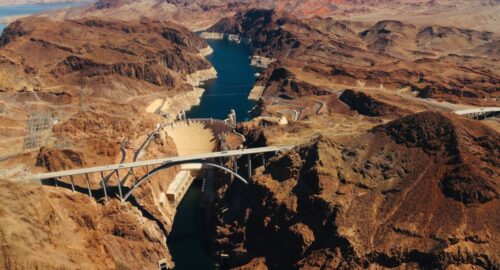 “The mighty Colorado River — that carved the Grand Canyon and was dammed by the epic Hoover Dam — is in big trouble. The long-overused river, a major water source for millions of people in California and six other states, has shrunk dramatically since 2000 due to a megadrought in the western U.S. that scientists say was probably the most severe in 1,200 years. The conditions are only being intensified by climate change. My colleagues Ian James, a water and climate change reporter, and photographer Robert Gauthier, recently traveled to the Rocky Mountains to see the river’s headwaters. What they found was that the Rocky Mountains have very little snow and the landscape is so parched that two longtime ranchers described it as “terrifying.” … ” Read more from the LA Times.
SEE ALSO: Colorado River is drying up at its source as alfalfa, golf, and growth strain the Southwest, from The Cool Down
Lake Powell water critically low; Wyoming expects more demand on Flaming Gorge
“Lake Powell, a key reservoir on the Colorado River, is shrinking toward “dead pool,” which means water won’t flow downriver anymore — and that could in turn pinch Wyoming’s municipal and industrial water supplies with more demand from Flaming Gorge Reservoir. Lake Powell, on the Utah-Arizona state line, is in dire condition, USA Today reported. By next spring, it’s expected to fall into “minimum power pool,” meaning having barely just enough water to generate hydroelectric power at Glen Canyon Dam. If it falls even farther, that could put the reservoir at “dead pool,” or unable to generate hydroelectric power, according to reports. That’s despite roughly 1 million acre-feet expected to be pulled from Flaming Gorge Reservoir on the Wyoming-Utah state line and sent downriver through Wyoming to replenish Lake Powell. … ” Read more from Cowboy State Daily.
The Colorado River math problem: With federal guidelines expiring and reservoirs near record lows, a veteran attorney explains how seven states might—or might not—divide what’s left.
“The 1922 Colorado River Compact is the foundational framework for sharing the river’s water, dividing resources between the Upper Basin (Colorado, New Mexico, Utah, and Wyoming) and the Lower Basin (Arizona, California, and Nevada). The century-old compact can’t keep pace with today’s drastic shifts in temperature and precipitation, and given that the Bureau of Reclamation’s operational guidelines for using the river will expire at the end of this year, the question of the river’s future has reached a contentious boiling point. With uncertainty looming for both the Upper and Lower Basins, the possibility of states suing one another has become increasingly likely. How will the fate of the Colorado River be decided among seven water-insecure states? Taylor Hawes, Special Policy Advisor for the Nature Conservancy’s Colorado River Program, has been steeped in the river’s issues for thirty years. A water lawyer by training, Hawes started work in the headwaters of the Colorado River before moving on to serve as an attorney at the Colorado River District. From there, she helped start the Colorado River Program at the Nature Conservancy and served as the program’s director for 18 years. From the midst of negotiations over a new allocation system for the river, Hawes spoke with RE:PUBLIC to help pull back the curtain on this issue. . … ” Read more from Re:Public.
Western governors talk Colorado River future amid widespread drought
“The Western Governors’ Association annual meeting convened Tuesday in Deer Valley as Utah grapples with a drought emergency and widespread wildfires. In attendance are the leaders of the Colorado River states, who have been deadlocked over how the river’s water should be allocated starting next year. Speaking with reporters Tuesday afternoon, Republican Utah Gov. Spencer Cox said conversations about the river’s future are happening and he’s feeling “hopeful” about progress. “The discussions are ongoing,” he said. “There seems to be an opportunity for a shorter time framework, with maybe reviews every two years, where we can actually get something done and not be in court, not be in front of a judge.” … ” Read more from KPCW.
Operationally neutral conservation pools could help alleviate stress on Lake Mead and Lake Powell
“The news on the Colorado River and its two main reservoirs, Lake Mead and Lake Powell, has been not great for a while now. But a new concept paper offers an idea for one way to start to protect the system — if the seven basin states and federal government agree to do it. John Berggren is regional policy manager for Western Resource Advocates, where he leads the group’s Colorado River policy work. … ” Listen to radio show or read transcript from KJZZ.
A look at the Colorado River Basin reservoir system storage numbers
“The Colorado River Basin stands as the lifeblood of the American Southwest, providing water to approximately 40 million people, irrigating millions of acres of farmland, and generating significant hydroelectric power across seven U.S. states and parts of Mexico [5, 19]. The management of this vital, yet overallocated and arid, watershed hinges on an extensive network of dams and reservoirs. This engineered system, governed by a collection of compacts, laws, and decrees collectively known as the “Law of the River,” was designed to capture the river’s highly variable flows, mitigate floods, and provide a reliable water supply in a region defined by its scarcity [8, 44]. The total storage capacity of the entire basin is estimated to be between 60 and 62 million acre-feet (MAF), roughly four times the river’s average annual flow, with the two largest reservoirs—Lake Powell and Lake Mead—accounting for over 80% of this total [3, 10]. … ” Read more from Western Water.
‘A little bit of water can go a long way in the Colorado River Delta,’ new report finds
“In the vast Colorado River delta, where the river once met the sea, the land is mostly dry, brown and lifeless. The area, in northern Mexico, has been shaped by upstream demand for water, where cities and farms on both sides of the international border have stretched its supplies thin. But amid all of that brown, there are a few thriving dots of green. A relatively small amount of water was allocated to grow plants in select ecosystems, and they are now teeming with life. A new study captures the extent of that work, highlighting the success of restoration projects and calling for the work — and water deliveries — to continue. “It’s really quite remarkable how a little bit of water can go a long way in the Colorado River Delta,” said Karl Flessa, an emeritus professor of geosciences at the University of Arizona who co-authored the report. … ” Read more from KJZZ.
Arizona tries to steer away from ‘extremely draconian’ Colorado River water cuts
“Arizona’s top water negotiator is working behind the scenes to avoid “extremely draconian” cuts to the state’s share of the Colorado River. It’s an eleventh-hour effort to work with the federal government, which is expected to release new rules for managing water in late July. Tom Buschatzke, director of the Arizona Department of Water Resources, briefed the public on the process of negotiations and the state’s plans to adapt to water cutbacks. The seven states that use the Colorado River have been under pressure to agree on new rules for managing its water, but have been at an impasse for more than a year. Absent that agreement, the federal government will impose its own rules for sharing water when the current ones expire later this year. … ” Read more from KJZZ.
Amid other struggles, Arizona farmers brace for more Colorado River water cuts
“Arizona farmers have been dealing with Colorado River water cuts for years and are bracing for more. The seven basin states that use Colorado River water failed to reach a deal on how to share the precious resource as the current operating agreement expires this year. The U.S. Bureau of Reclamation will determine the new terms later this year. About 70% of Arizona’s water supply goes to agriculture, but cutting water for agricultural use means less food will be produced. Pinal County farmers first had their water cut in 2022, when the Bureau of Reclamation declared the Colorado River would enter a Tier 2 shortage. The Tier 2 shortage meant a reduction of 592,000 acre-feet in Arizona, about 21% of the state’s annual Colorado River allocation. … ” Read more from KTAR.
Scottsdale City Council dives into $8M water purchase
“As usual, City Hall was the pool for damp debate. After sharp exchanges over “recycled water” at previous City Council meetings, an $8 million water credits purchase contract was volleyed June 23. Councilman Barry Graham splashed first, with “this should have stayed on the consent agenda.” Mayor Lisa Borowsky dunked Graham, insisting the public had the right to hear details of a complex plan. After a presentation, Borowsky was unsatisfied with the contract, pushing to add an “out” clause. … ” Read more from the East Valley Tribune.
Colorado mountain towns must tighten taps, but water shortages could have been much worse
“Historic water shortages are drying out the scenic mountains that anchor Colorado’s tourist economy, prompting the state to issue emergency orders earlier this month allowing water to be shifted to the towns and ranches most likely to run dry. The Colorado River District, which represents 15 Western Slope counties, is running the emergency response effort and with financial support from the Colorado Water Conservation Board has anted up nearly $1 million to make sure even towns that can’t afford it, will have access to drinking water should it be needed. To make the plan work, the river district opted not to lease portions of the water it normally holds in two high country reservoirs, Ruedi in the Roaring Fork Basin and Wolford Mountain, near Kremmling, on a first-come, first-served basis, as it normally does. Instead, the water is being doled out based on community need, with people and food production getting the water first, river district manager Andy Mueller said. … ” Read more from the Colorado Sun.
In national water news this weekend …
New research study underway to evaluate PFAS removal option
“Carollo Engineers is leading a new study from the Water Research Foundation — project 5388 — with the goal of generating data and decision making tools for water resource recovery facilities (WRRFs) assess powdered activated carbon (PAC) as a near-term treatment option for PFAS. PAC is a sorbent used to adsorb contaminants as a cost-effective solution for removing per- and polyfluoroalkyl substances (PFAS) from treated wastewater effluent. The study, Efficacy for PAC for PFAS Removal in Wastewater Effluent, will evaluate PAC’s potential as PFAS regulations continue to evolve. While many PFAS treatment evaluations have focused on drinking water and reuse applications, the more complex chemical matrix in wastewater effluent, including organic matter, solids, and competing compounds, can reduce adsorption performance and complicate implementation. … ” Read more from Water Finance & Management.
SEE ALSO: PFAS, Project Funding are Key Woes as Drinking Water Providers Convene, from Engineering News-Record
Forecasters warn of record-breaking US summer heat amid intense El Niño
“Meteorologists are anticipating a tumultuous summer that could rank as one of the US’s hottest ever. New data released on Tuesday showed the first six months of the year were the hottest ever measured for parts of eight western states. That data arrives as a potentially record-breaking heatwave is underway in the east. The National Weather Service expects temperatures over the 4 July holiday weekend to approach all time highs from Washington DC to New York with sweltering heat indexes topping 115F (46C). This week’s intense heatwave will affect more than 100 million Americans and will be intensified by the growing influence of El Niño and a massive drought affecting 45 states. A similarly intense heatwave in recent days pushed temperatures to their highest-ever level in France, Germany and Denmark, resulting in hundreds of deaths across Europe. … ” Read more from The Guardian.
Data center boom collides with record heat, testing power grid
“Data Center Alley is facing a climate test. Searing temperatures this week could push energy demand to record levels on the mid-Atlantic’s electric grid, which fuels the country’s data center boom in Virginia. To relieve some of the pressure, the Department of Energy granted permission Tuesday to the region’s grid operator, PJM Interconnection, to potentially force data centers to use backup diesel generators. The move highlights the growing challenge of meeting rising electricity demand from data centers as the grid strains to keep the region cool during a period of extreme heat. Many data centers rely on backup diesel generators, which release planet-warming emissions and lack air pollution controls designed to safeguard public health. The challenge is particularly acute in Virginia, the epicenter of the nation’s data center boom. State regulators have permitted more than 8,000 diesel generators at data centers in recent years, according to data from the state Department of Environmental Quality. … ” Read more from E&E News.
After Trump axed federal employees running climate site, thousands crowdfund its comeback
“Federal employees who were axed during waves of cuts by the Trump administration have fought back against the dismantling of a key climate science website, Climate.gov, and put up a new site, Climate.us, that can now do everything the original did. The site, with millions of users each year, was known for colorful charts that anyone could freely download and that simplified giant sets of data, such as temperature readings. Now it refers to another page and is no longer being updated. Daniel Swain, a UC Agriculture & Natural Resources climate scientist, called the resources available at Climate.gov “the most efficacious dollars spent by NOAA on public-facing science, possibly ever.” He has used graphics from the former website on his popular weather blog. “I am a terrible artist or illustrator. It would be very bad if I had to create those on my own.” Swain said. The website didn’t just make graphics that were beautiful, he said, they were accurate and reliable because of the network of researchers who fact-checked them. … ” Read more from the LA Times.
[spacer]
