
The Daily Digest will return on Thursday July 2.
Several news sources featured in the Daily Digest may limit the number of articles you can access without a subscription. However, gift articles and open-access links are provided when available. For more open access California water news articles, explore the main page at MavensNotebook.com.
On the calendar for Tuesday …
- HYBRID: Interweaving Traditional Knowledge Roundtable Series: Interweaving 101 9am to 12pm. Co-hosted by the Delta Stewardship Council, the Shingle Springs Band of Miwok Indians, and the California Indian Environmental Alliance, this three-part series will bring together Tribal Elders and leaders, agencies, and scientists to share experiences, discuss challenges, and explore practical approaches to interweaving Traditional Knowledge, management, and science. To attend virtually on Zoom, register here.
- HYBRID: Delta Climate Adaptation Team Kickoff Meeting from 1:30pm to 5:00pm. The Delta Stewardship Council is organizing a new interdisciplinary team to advance resilience in California’s Sacramento-San Joaquin Delta through collaborative and action-driven adaptation efforts. This team will support implementation of the Council’s Delta Adapts Adaptation Plan by bringing practitioners together, highlighting case studies and practical resources, and creating opportunities to coordinate funding and implementation of projects. To attend virtually on Zoom, register here. If you want to get a head start on shaping the DCAT and this kickoff meeting, please complete this survey.
On the calendar for Wednesday …
- WEBINAR: Urban Water Use Objective (UWUO) Alternative Compliance beginning at 10:30am. Urban retail water suppliers subject to the Making Conservation a California Way of Life regulation must annually calculate and meet their UWUO, which is a supplier-specific volume of water based on increasingly efficient standards. Some suppliers facing greater challenges with meeting their 2040 UWUO may be eligible for alternative pathways to compliance. This webinar will describe the alternative compliance eligibility requirements and the effort needed to enter into alternative compliance and provide preliminary guidance on how to submit the required information to the State Water Board. Click here to register.
- LUNCH-MAR: Scaling up Recharge in the Sacramento Valley from 12:30pm to 1:30pm. David Guy, Northern California Water Association. David Guy will speak about the efforts underway to scale up groundwater recharge in the Sacramento Valley to improve water supply reliability during dry years by improving water management during wet periods, while protecting downstream water rights, the environment, and tribal interests. To join a Lunch-MAR Session, click here.
In California water news today …
After bold pledge, EPA shelves microplastics testing in U.S. drinking water

“For the next five years, the Environmental Protection Agency has indicated it will not require public water utilities to test for microplastics or pharmaceuticals in drinking water, according to a proposed rule published in the Federal Register. On Friday, the EPA submitted a list of chemicals it plans to test for under the Unregulated Contaminant Monitoring Rule, a mandatory testing program used to collect information about concerning chemicals in drinking water that could be harming human health. It did not include microplastics or pharmaceuticals. The omissions come after announcements by EPA Administrator Lee Zeldin earlier this year that his agency was designating microplastics and pharmaceuticals priority contaminants for testing. … Zeldin’s announcement was seen at the time as a move to placate the increasingly disgruntled Make America Healthy Again contingent of Trump supporters. Now the agency says it has no validated or standardized method to test for the plastic particles in drinking water, and wouldn’t be able to develop one before December, when testing is required to begin. … ” Read more from the LA Times. | Read via Yahoo News.
California’s historic dam removal notches another big win for salmon
“When four dams were torn down along the California-Oregon border two years ago, scientists were stunned by the large numbers of salmon that moved so quickly up the newly unobstructed Klamath River. This month brought another striking development. A Chinook salmon was detected going up the river in Oregon, past the former dam sites, and it was not part of the fall run of fish that’s already been racing up the Klamath in late summer and in early fall. It was a much rarer fish: a spring-run salmon, which migrates earlier in the year and has long struggled to survive on the West Coast. The Oregon Department of Fish and Wildlife’s detection of the first spring-run salmon swimming into the upper Klamath Basin in more than a century suggests that this imperiled fish run has begun to reap the benefits of dam removal. … ” Read more from the San Francisco Chronicle.
Many California fishermen are nearing retirement. Can the industry save its graying fleet?
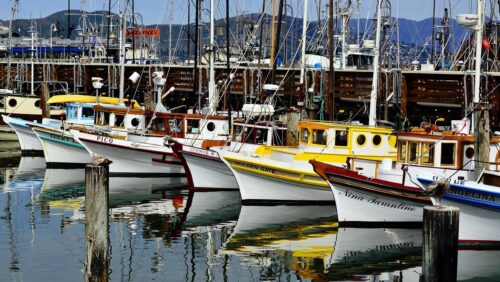 “In choppy surf off of La Jolla, fisherman Shane Volberding fought to land a yellowtail, a silver and gold fish prized in the sushi seafood trade. Gulls wheeled above the water as the fish dove and darted against him, dragging the line. One crank at a time, Volberding reeled it in, jabbed it with a gaffe and then hoisted it on deck. As he grappled with the thrashing fish, his deckhand Destiny Louise Silva hauled in another yellowtail and dunked it in a bucket, tail up. The swift, back-to-back catch was the highlight of an unusually productive day on the water that yielded seven yellowtail and other fish, not counting the ones snatched by thieving sea lions. “That’s a really good day for yellowtails,” Volberding said. “They’re usually very hard to catch.” That lucky happenstance belies the unpredictability of California’s commercial fishing sector, where the speculative nature of the catch collides with complex regulations, economic hurdles and a graying fleet. … ” Read more from Cal Matters.
A salmon by any other name: Common, Latin, and colloquial explained
“Salmon species have a remarkable range of common, scientific, and colloquial names. Of the seven Pacific salmon species, five are found in North American waters and there are many ways to refer to these fish. Each of those species comes with at least two names attached to it—a Latin name and a common name. However, most of these species go even further with multiple common or colloquial names. Often, these names have significance beyond an identifier because they can give insight into the biology, history, and culture surrounding each species. Everyone is likely most familiar with the common names of the fish in their area. For the North American Pacific salmon species, the common names that most people often know are Chinook, chum, coho, pink, and sockeye. “Chinook” is derived from the name of the Chinookan peoples—indigenous groups of the Pacific Northwest with deep cultural and economic ties to salmon. … ” Read more from FishBio.
Invasive mussels found in and around Port of West Sacramento, CA officials say
“The California Department of Fish and Wildlife confirmed Saturday that golden mussels have been found in and around the Port of West Sacramento, the northernmost detection of the invasive species to date. The California Department of Water Resources detected the golden mussel, a freshwater mollusk native to Asia, in the Sacramento-San Joaquin Delta in 2024. This marked the first sighting of the organism in North America. Following the Department of Water Resources’ initial discovery, it made observations of mussels at numerous other locations throughout the Delta. According to a 2024 news release from state fish and wildlife officials, the mussels pose “a significant immediate threat to the ecological health of the Delta and all waters of the state, water conveyance systems, infrastructure and water quality.” … ” Read more from the Sacramento Bee.
California marsh hit by invasive nutria — 20-pound swamp rats that chew, burrow, and wreck levees
“A destructive invasive species is putting pressure on California’s marshes: nutria. These semi-aquatic rodents can weigh about 20 pounds, have orange teeth and hairless tails, feed on crops and wetland vegetation, and dig into the levees that shield nearby communities. Once believed to have been eradicated in the state, the animals are now spreading again through critical wetland habitat. Landowners and wildlife officials in Northern and Central California are reporting more nutria sightings, Local News Matters reported. Their feeding habits are especially damaging: the South American animals eat about a quarter of their body weight in vegetation each day, and the destruction they leave behind exceeds the amount they consume. Adults can grow to around 20 pounds. … ” Read more from The Cool Down.

Governor appoints Thomas Gibson as Director of the Department of Water Resources
“Thomas Gibson, of West Sacramento, has been appointed Director at the California Department of Water Resources. Gibson has been Chief Deputy Director at the California Department of Water Resources since 2024, where he was Chief Counsel from 2021 to 2024. He held multiple positions at the California Natural Resources Agency from 2014 to 2020, including Deputy Secretary and Special Counsel for Water, Undersecretary, and General Counsel. … ” Read more from the Office of the Governor.
The water industry might be the best career you’ve never considered
“In an era obsessed with artificial intelligence startups and tech giants, one of the most stable, rewarding and interesting career paths is hiding in plain sight. Technology has long been at the center of the workforce universe here in Silicon Valley. It certainly was for me back in the days of the dot-com bubble. I was at San Jose State University and fully expecting to join one of the local tech outfits. But the local water utility where my father worked was hiring student interns to help plug staffing gaps during a potential merger, so I signed up for some undergrad work experience. That merger fell through and that dot-com bubble burst, but I discovered my path. After graduating, I applied to a full-time operations position with the utility and I remember being asked in that interview, “Why are you choosing water?” I just answered honestly: “Well, I can help produce another microchip for some company. Or I can help supply clean water for the community I actually live in. What’s more important than water?” That’s a question the industry is increasingly hoping the next generation will ask, too. … ” Read more from the San Jose Spotlight.
Machine learning helps wildfire forecasts
“With peak wildfire season underway in California, PG & E’s senior director of Meteorology and Wildfire Science, Scott Stenfel held a virtual Wildfire Season Outlook briefing, to provide an advanced seasonal outlook for PG&E’s service area. It comprised weather patterns, fuel conditions and other factors influencing wildfire risk in the months ahead in a virtual event podcast from the PG & E offices in Oakland on June 26. Fire fuel moisture is at its driest this time of year until the rains generally start mid-October, noted Strenfel. “And Northern California gets these Santa Ana Wind events until it rains, but with machine learning and modeling, it helps us to determine when we may require executing a Public Safety Power Shut Off (PSPS),” Strenfel explained. “To reduce the risk of our equipment starting an ignition PG & E is taking a snapshot of what this season’s outlook appears so far.” … ” Read more from the Lake Record-Bee.
In commentary today …
AB 2215 protects California’s water future
Shivaji Deshmukh, General Manager, Metropolitan Water District of Southern California and Valerie Pryor, General Manager, Zone 7 Water Agency, write, “Assembly Bill 2215 by Assemblymember Calderon does only one thing: it extends the deadline on an existing State Water Project water right. But that straightforward act preserves something far greater – water security for 27 million Californians and 750,000 acres of farmland in an era of accelerating climate extremes. For this reason, a broad coalition of family farmers, business groups, labor, local government, public safety advocates, conservationists, taxpayer groups and citizens support this common-sense legislation. Opponents have framed AB 2215 as a Trojan Horse for the Delta Conveyance Project, but that framing doesn’t hold up. A date change on an existing water right is not a shovel in the ground. It is a modest legal update that preserves the state’s options for adaptive planning without committing to any specific project. AB 2215 retains the capacity for the state to design, test, and permit potential climate adaptation solutions on the State Water Project (SWP). Defending a mere deadline extension should not be controversial. And yet, the legislation has become a contest over how water gets managed in an era of climate chaos. … ” Continue reading this commentary.
In regional water news and commentary today …
NORTH COAST
U.S. Rep. Huffman discusses Potter Valley, Last Chance Grade projects
“Rep. Jared Huffman (D-San Rafael) is enjoying an auspicious month. During the June 2 primary, the incumbent congressman secured a spot on November’s ballot with a definitive victory, garnering more than 55% of the tallied votes in a field of eight candidates for the newly redistricted CA-02 (those results are expected to be ratified on July 10). Last week, Huffman spoke with the Times-Standard about several North Coast issues, including the Potter Valley Project and Last Chance Grade. Caltran’s Last Chance Grade project celebrated a milestone last month, as well, with the completion of its Final Environmental Impact Report and Statement. That milestone, though, was marked by disappointment among some stakeholder groups that expressed concerns about the project’s proposed environmental mitigation measures. … ” Read more from the Eureka Times-Standard.
Flowing Forward: Civil Grand Jury reports years of avoided rate hikes leave Humboldt water systems at risk
“Humboldt County’s Civil Grand Jury says communities should expect water and sewer bills to keep rising, not because agencies are mismanaging funds, but because decades of deferred maintenance and shrinking federal support have left systems strained and increasingly vulnerable. The Grand Jury interviewed people with firsthand knowledge of local water and wastewater systems, visited a treatment plant and reviewed the laws that govern these agencies. They also examined staffing, budgets, rates and funding sources. Their research focused on how these systems operate and the challenges they face. In the report titled Flowing Forward, released on June 17, the Grand Jury cites recent failures as evidence of what happens when districts avoid routine rate increases. … ” Read more from the Eureka Times-Standard.
Mt. Shasta police chief condemns threats tied to data center propsal
“The Mt. Shasta Police Department is warning residents that threats of violence made against city officials over rumors of a proposed data center will be investigated and prosecuted. Police Chief Robert Gibson released a statement Monday addressing continued public reaction to speculation surrounding the former Crystal Geyser property. Gibson said misinformation circulating on social media has incorrectly suggested a data center project is moving forward in Mount Shasta. “The information that has been shared on social media is simply inaccurate,” Gibson said. … ” Read more from Action News Now.
SIERRA NEVADA
Taylor Creek Visitor Center opens underground stream chamber for the season
“The Taylor Creek Visitor Center’s Stream Profile Chamber is now open, located around three miles north of the City of South Lake Tahoe on State Route 89. The chamber is an underground viewing chamber where visitors can watch trout and other aquatic life in Taylor Creek. In addition to the viewing chamber, the visitor center is a hub offering visitor information and accessible, educational and self-guided trails that wander through forests and marshes, along the creek and around the beach. The underground chamber is accessed off a half-mile loop of the center’s Rainbow Trail. … ” Read more from the Tahoe Daily Tribune.
South Tahoe Public Utility District delivers exceptional drinking water quality, report states
“The South Tahoe Public Utility District has released its 2025 Water Quality Consumer Confidence Report, confirming that the community continues to receive safe, reliable, and high-quality drinking water that meets or exceeds all state and federal drinking water standards. Each year, water providers across the country are required by the Safe Drinking Water Act to prepare and distribute a Consumer Confidence Report to inform customers about the quality of their drinking water. The District’s 2025 report highlights the results of thousands of water quality tests conducted throughout the year and provides detailed information about the source and treatment of South Lake Tahoe’s drinking water. “Lake Tahoe is known for its exceptional water quality, and we are fortunate to have a local groundwater supply that allows us to deliver some of the best drinking water in the nation,” said Dan Arce, Laboratory Director. “Our team conducts extensive monitoring and testing year-round to ensure our customers can trust the water coming from their tap.” … ” Read more from the Tahoe Daily Tribune.
Glyphosate lawsuits may not have much weight, synthetic bans could pave the way in Tahoe
“As Lake Tahoe continues to contend with the usage of glyphosate by the U.S. Forest Service in 2028, the U.S. Supreme Court sided with the makers of Roundup in a ruling on Thursday. But organizations and agencies in the Tahoe Basin are considering how to respond to the concerns around the herbicide. The Supreme Court ruled that Bayer, which now produces Roundup after acquiring the original producer Monsanto, will not face failure-to-warn lawsuits in state courts because federal regulations find the cancer link unlikely. These regulations do not require a warning label, though the World Health Organization classified the chemical as “probably carcinogenic” in 2015. … ” Read more from the Tahoe Daily Tribune.
SEE ALSO: Lake Tahoe residents scrutinize Forest Service’s plan to spray cancer-linked glyphosate, from The Cool Down
Tuolumne Utilities District celebrates start to construction on $45.6M regional water hub
“Tuolumne Utilities District hosted a groundbreaking ceremony Friday morning off South Fork Road north of downtown Twain Harte, where TUD is beginning construction of its $45.6 million Sierra Pines Regional Water Treatment Facility. The project has been talked about for decades and is intended to become a centralized hub for the agency’s drinking-water supply system serving more than 44,000 Tuolumne County residents. It’s hoped to be completed in 2029. … ” Read more from The Union.
SACRAMENTO VALLEY
Oroville campsite to see $8M renovation
“The Oroville Wildlife Area campground, as well as its boat ramp, are prepped to see some overhauls as the Sutter Butte Flood Control Agency plans an $8 million upgrade for the facilities. According to a notice by the California Department of Water Resources, these upgrades will include expanding the site to allow for a total of 25 units along with a day-use area, additional trails and a paved parking lot with 47 spaces for trailers and 31 single-car spaces. A concrete boat launch with two lanes will be built as well as an updated gravel ramp to allow people to launch boats into the Feather River. … ” Read more from the Chico Enterprise-Record.
Flood board approves new levee fences despite Sacramento plan for mixed-use trail
“New permanent fences could soon be placed across a long-planned levee trail in Sacramento after the permit applications of two property owners were approved Friday by state board. Some local residents voiced opposition at the meeting of the California Central Valley Flood Protection Board, saying cross-levee fences conflict with the city’s vision for a mixed-use trail along the levee. Nevertheless, the board adopted the staff recommendation to approve construction on the basis that it will not hinder flood control. “The standard for us and the only standard for us is the effect on the flood performance of the levee,” said board secretary Brian Johnson after the meeting. … ” Read more from the Sacramento Bee.
BAY AREA
New tours reveal the dirty work that helps keep the Bay clean
“Aiko Chikaba first toured a wastewater treatment facility with her elementary school class in Japan. Now a resident of Burlingame, she jumped at the chance to bring her 14-year-old son to see the place where their sewage is treated. “It was fascinating, and was great learning for me — young me,” Chikaba said. “So I wanted to give him the same opportunity.” During Silicon Valley Clean Water’s (SVCW) first free public tour on Wednesday, June 17, a group of 10 residents expressed enthusiasm about seeing the wastewater treatment systems in action. After being flushed down the toilet, over 15 million gallons of water per day — enough to fill almost 23 Olympic-sized swimming pools — flow through a network of underground pipes to SVCW in Redwood Shores for treatment before being released into the San Francisco Bay. … ” Read more from The Almanac.
Pittsburg residents voice frustration over approved data center
“Hundreds packed city hall Monday night to oppose a previously approved data center, voicing concerns over environmental impacts, resource constraints, and what, if any, economic benefits such a project would provide to residents and the city. Approved in 2024, some residents said they had only recently learned about a potential data center that could be built in Pittsburg Technology Park, located along West Leland Road on the former Delta View Golf Course that closed in 2018. Amhari Perkins, a resident who created an online petition opposing the project that has garnered more than 14,200 signatures, said she found out about the data center from a social media post. “Up until that moment, I had no knowledge that this project was planned and already approved. When I learned about it, I was honestly shocked,” said Perkins. … ” Read more from the San Jose Mercury News.
Brentwood officials want to explore an ordinance to ban data centers in the city
“As data centers continue to be a regional and national hot-button issue over their use of resources compared to the benefits they can provide to residents, Brentwood leaders are looking for ways to ban such facilities from coming to their city. In a joint request, Councilmembers Faye Maloney and Jovita Mendoza are seeking to place on a future agenda an ordinance that would prohibit the “establishment, construction, expansion, or operation of any new data center facilities” within the city’s limits, said Maloney. According to Maloney, data centers may not be the “best use” for the limited industrial land available to a city with a long history of agriculture and farming. She also was concerned about potential resource constraints and health hazards posed by data centers. “This is why I’m asking for this item. We need to hear from our residents, businesses, and our community before the council considers any final action,” said Maloney. “So far, everything I’ve seen recently from our community, including Brentwood, there is a concern. It’s best to be proactive rather than reactive in this situation.” … ” Read more from the San Jose Mercury News.
CENTRAL COAST
More complex cleanup phase to begin at Moss Landing battery fire site
“As the first phase of a historic battery cleanup in Moss Landing comes to a close, the U.S. Environmental Protection Agency and Vistra Corp., a Texas-based energy company, are planning for the safe removal of the site’s most damaged batteries. On Jan. 16, 2025, lithium-ion batteries located at the Moss Landing Vistra power plant caught fire. About 55% of the site’s 100,000 batteries were damaged, as well as parts of the building the batteries were housed in. The disaster drew international attention and sparked local concerns over environmental and health impacts. In September 2025, the first phase of cleanup began at the Moss Landing site. The cleanup is being carried out and paid for by Vistra with oversight from Monterey County, the state and the EPA. The effort is the largest lithium-ion battery cleanup in the EPA’s history. … ” Read more from the San Jose Mercury News.
SAN JOAQUIN VALLEY
Kern County conservation district says Ridgecrest data center would ‘undermine’ decades of progress
“A Kern County conservation district has announced it is opposing the potential data center slated to be built in the Ridgecrest and Inyokern area, citing low water levels. The Eastern Kern County Resource Conservation District submitted a letter of opposition to the California Energy Commission saying the project would create “significant environmental impacts” and would “undermine decades of local and state efforts to achieve groundwater sustainability” in the area if built. The data center proposed in Ridgecrest has been met with sharp criticism and wide-ranging concern from residents since it was announced. Besides the amount of water the facility would use, residents have also voiced opposition for the project due to air quality risks, quality of life and aesthetics concerns, noise pollution, and property and home values decreasing. … ” Read more from KGET.
SOUTHERN CALIFORNIA
Will runoff water from Boyle Heights warehouse contaminate LA River?
UCLA researchers are now testing the runoff water from the warehouse fire for contamination. Keenan Willard reports for the NBC4 News at 6 p.m. on Monday, June 29, 2026.
With Boyle Heights warehouse cleanup underway, Bass calls for resources and accountability
“Los Angeles Mayor Karen Bass signed a pair of executive orders Monday to ramp up efforts to clean the mess left by the fire that burned for a week at a Boyle Heights warehouse. Why now: Since the warehouse fire was put out, the 85 million pounds of frozen food stored inside is now rotting, spreading foul smells throughout surrounding neighborhoods and raising concerns about an influx of pests. Residents have also been left with worries about air and water contamination after the fire and possible long-term public health effects. Bass and city officials said Monday the warehouse owner, Lineage, began moving food debris on Sunday to landfills in Ventura and Riverside counties. The company predicts it will take 5,000 truckloads to remove it all. … ” Read more from the LAist.
Los Angeles oil spill was nearly 10 times bigger than first thought, new report says
“Officials now say the May 22 East Los Angeles drilling accident released roughly 25,000 gallons of crude oil — far more than first reported — after petroleum flowed into storm drains and the Los Angeles River and led regulators to cite three companies. LA Public Works now puts the spill at nearly 10 times the 2,400 gallons announced in the immediate aftermath. Speaking to county supervisors, Public Works Director Mark Pestrella said, “The incident itself can be considered one of the largest oil spills into the Los Angeles River in recent history.” The early estimate reflected what first responders could see at the scene, according to a spokesperson for the South Coast Air Quality Management District, who said it was “based on visual observations made by first responders and reported to the California Office of Emergency Services.” … ” Read more from The Cool Down.
SAN DIEGO
This robotic system is helping understand lagoons in new ways
“Lagoons and estuaries, where freshwater meets the ocean along California’s coast, are among the state’s most ecologically rich—and most threatened—habitats. For endangered Southern California steelhead, these dynamic ecosystems can mean the difference between survival and decline, providing critical rearing habitat and transition zones as young fish prepare for life in the ocean. Understanding how lagoons function, and how they respond to restoration efforts, is essential to recovering steelhead and the countless other species that depend on them. Yet monitoring these environments has long been costly, labor-intensive, and limited in scope. Reliable data is the foundation of effective restoration; without it, practitioners are left guessing whether habitat conditions, fish populations, or ecosystem health are actually improving. To address this challenge, CalTrout’s South Coast team, alongfside engineers, coders, and scientists in San Diego, has spent the last year developing an innovative robotic unmanned surface vehicle that autonomously collects real-time water chemistry data and underwater video. … ” Read more from Cal Trout.
San Diego was the tuna capital of the world. Can the fleet recover?
“In 2020, Scripps Institution of Oceanography’s Sea Grant launched a fishing apprenticeship, aimed at shoring up the ranks of San Diego’s declining commercial fishing fleet. Instead, the program revealed just how tenuous the industry has become. Once known as the tuna capital of the world and employing more than 40,000 people, the fleet dwindled to just 130 commercial fishermen. It’s hard to get a foothold in the industry. Gear and permits are expensive. It requires specialized skills that range from pulling traps and lines, to fixing diesel motors and deciphering regulations. The Scripps fishing apprenticeship intended to bridge that gap, with classroom instruction on the technical aspects of commercial fishing, and 1,000 hours of on-the-water training. But just half a dozen people finished and stuck with fishing. Others tried and liked it, but couldn’t make a living. … ” Read more from Cal Matters.
Along the Colorado River …
Colorado’s top negotiator says lower basin states are draining Colorado River reservoirs as deadline looms
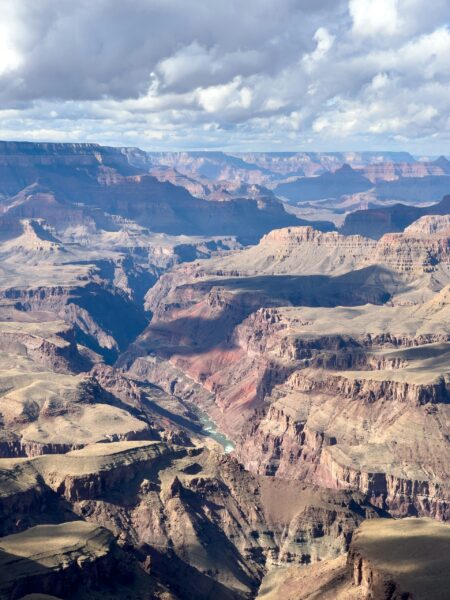 “Colorado River Commissioner Rebecca Mitchell, who negotiates on behalf of six million Coloradans, says the lower basin states of Arizona, Nevada and California are using too much water and have drained the river’s two largest reservoirs, as the seven states that rely on the river race to reach a new agreement before federal rules expire at the end of September. If no deal is reached by Oct. 1, the Trump administration will step in to administer the rules governing how the river is divided, Mitchell said. The seven states have already blown through several deadlines. The upper basin states of Colorado, New Mexico, Utah and Wyoming want the lower basin states to stop draining lakes Mead and Powell and to enact stricter water-saving measures. … ” Read more from Channel 9.
SEE ALSO: Video: Full interview: Lead negotiator for Colorado in the Upper Colorado River Commission, Becky Mitchell, from Channel 9
Western Slope lawmakers take Colorado River managers to task
“Western Slope lawmakers had harsh words for water managers at a state committee hearing last week, questioning whether Colorado has done enough to avoid a lawsuit with its downstream neighbors. Colorado Sen. Dylan Roberts, a District 8 Democrat who represents several Western Slope counties, including Eagle, Grand, Garfield, Routt and Summit, asked Colorado’s lead negotiator, Becky Mitchell, whether the people of Colorado should have confidence that negotiations among the seven states that share the Colorado River have put the state in the best possible position. The states have been at an impasse for more than two years without a deal for future management as reservoirs continue to decline to record-low levels. “My constituents just see fighting and intransigence,” Roberts said. “And it’s concerning to me, especially as a Western Slope lawmaker … that the strategy is just ‘Let’s hire more lawyers; we’re going to court no matter what.’ That doesn’t give me confidence, because I don’t think Colorado fares well when we go to court against Arizona and California and Nevada, throwing our fate to the nine justices on the U.S. Supreme Court.” … ” Read more from Aspen Journalism.
WATCH: Take a tour of Lake Mead’s decline
“ABC15’s Adam Klepp takes viewers on a drought tour of Lake Mead, showing just how dramatically the nation’s largest reservoir has changed over the last two decades. From the towering white “bathtub ring” left behind by falling water levels to abandoned boat ramps, seashells now sitting high above the shoreline and a long-submerged boat revealed by the receding lake, the tour puts the Colorado River drought into perspective. Lake Mead is now about 28% full, and water levels have dropped more than 170 feet since 2002. The reservoir supplies water to millions of people across the Southwest, including Arizona, through the Central Arizona Project, making its future central to ongoing negotiations over the Colorado River.” Read more from Channel 15.
What if the Department of the Interior focused on buying the water rights of large-scale forage producers, first?
“If the U.S. Department of the Interior (through the Bureau of Reclamation), decided that the most immediate way to stabilize water levels in Lake Mead and Lake Powell was for them to release less water, one way to achieve that would be to start buying up the water rights of farms in the Lower Basin. While this would save an amazing amount of water it would come at the expense of rural agricultural economies and domestic food production. But if the Bureau of Reclamation acted “surgically” and bought up water rights from major forage producers first, it would primarily disrupt only the livestock and dairy industries. … ” Read more from Coyote Gulch.
An AI data center suing for Colorado River water highlights a bigger question: Who should get the West’s water?
“The developer behind what would be California’s largest AI data center is suing for access to Colorado River water, the threatened source of freshwater for 40 million people and the subject of countless disputes over water use in the West. The lawsuit, filed this month by Imperial Valley Computer Manufacturing, says the company needs access to 287 million gallons of water for the 330-megawatt data center. If the proposed project in Southern California’s Imperial Valley is built, it would be the largest AI data center in the state. The lawsuit was filed after the Imperial Irrigation District, a local agency that delivers Colorado River water in the Imperial Valley, denied the company’s request for water for the project. It also comes as communities across the US push back against data centers. The Colorado River is the only source of freshwater in the Imperial Valley, which has long faced drought and water supply issues. … ” Read more from Business Insider.
As the Colorado River shrinks, the Southwest weighs cloud seeding and desalination
“As the Colorado River shrinks, area officials are exploring unusual strategies to keep supplying homes, farms, and expanding cities. Because the states remain deadlocked over water cuts, attention is turning to costly plans intended to boost the water supply rather than reduce demand. What’s happening? Lake Mead and Lake Powell have fallen to dangerously low levels after more than 20 years of drought and long-term overconsumption, underscoring a basic problem for the seven states that depend on the Colorado River: They are taking more water than the river can provide, as reported by Grist, which classified some of the discussed possible solutions as “weird.” Sometimes, though, you have to get a little bit weird — or creative, to put it another way, to solve a resource problem. … ” Read more from The Cool Down.
Giant balloons may help us decode monsoons
“Local researchers are turning our backyard into a laboratory in hopes of figuring out how extreme heat, rapid urban growth and desert dust influence the severity of monsoons. Summer storms are becoming more dangerous, and the new study aims to help forecasters better predict Phoenix weather. The project, directed by ASU and funded by the U.S. Department of Energy, will be the most comprehensive extreme weather study in Phoenix history, according to the university. “Urban desert environments like Phoenix are incredibly complex. You have extreme heat, rapid development and monsoon systems interacting in ways we don’t yet fully understand,” Vernon Morris, an associate dean at ASU’s New College of Interdisciplinary Arts and Sciences, told ASU News. … ” Continue reading from Axios.
Arizona: How will Colorado River water cuts impact Arizona? Depends on where you live
“Arizona gets 36% of its water supply from the Colorado River, but how much residents depend on that source — and how prepared their city is for potential cuts — varies significantly depending on where they live. Our investigations team looked at why just a few miles can make a big difference. Cave Creek, a community about 30 miles north of Phoenix at the north end of Maricopa County, draws about 90% of its water from the Colorado River. Mayor Robert Morris said the town is pursuing every available option to prepare for potential cuts. … ” Read more from Arizona Family.
Aspen Snowmass hopes to battle warmer winters by storing snow. Here’s how.
“Early summer looks good on Buttermilk’s ski runs. The slopes are bright green, dotted with purple lupine and threaded with hiking and biking trails. Following one of the leanest winters in recent memory — a season that forced Buttermilk to close a week and a half early — the snow has long since disappeared from the mountain. Almost. Near the base area sits a massive pile of snow wrapped in thick insulated blankets. Officials at Aspen One, which manages four Roaring Fork Valley mountains, hope most of it will still be there by the time next winter begins. Aspen Snowmass has become the first resort in Colorado to adopt Snow Secure, a Finnish snow storage system designed to preserve snow through the summer months. Resort officials say the technology could help guarantee snow coverage for terrain parks at Buttermilk and Snowmass early next season, even if autumn weather refuses to cooperate. … ” Continue reading at the Colorado Sun.
In national water news today …
Committee sets vote on data center, grid bills
“The House Energy and Commerce Committee will vote on bipartisan legislation this week to shield utility customers from the costs associated with data centers, while also advancing legislation aimed at bolstering the nation’s transmission system to meet surging demand. The Ratepayer Protection Act — which seeks to codify President Donald Trump’s ratepayer protection pledge with major technology companies — will get a full committee vote Wednesday after clearing subcommittee last week. “We must win the race for [artificial intelligence] dominance the right way,” Energy and Commerce Chair Brett Guthrie (R-Ky.) said last week. “When a data center developer comes to town, they should do so eager to grow alongside a community, not looking for handouts at the expense of taxpayers.” The legislation passed in subcommittee by voice vote, reflecting broad bipartisan support despite disagreements on Capitol Hill about how federal lawmakers should respond to data center energy concerns. … ” Read more from E&E News.

