
Several news sources featured in the Daily Digest may limit the number of articles you can access without a subscription. However, gift articles and open-access links are provided when available. For more open access California water news articles, explore the main page at MavensNotebook.com.
On the calendar today …
- Workshop #2 on Proposition 4 CIMIS Stations Network Expansion and Site Improvement Project from 11am to 12pm. The Department of Water Resources (DWR) will host a virtual public workshop to provide information about the Public Review Draft Guidelines and provide an opportunity to submit comments. Click here to register.
In California water news today …
Salmon advocates warn of a new threat on the Sacramento River
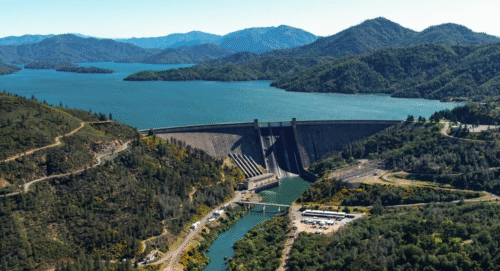 “Just as California’s salmon season clawed back to life, fishing advocates warn the federal government is about to repeat the disaster that shut it down. The Golden State Salmon Association rang the alarm that the Bureau of Reclamation intends to manage Shasta Dam this fall in a way that could once again cook the Sacramento River’s next generation of Chinook. The dispute centers on cold water. Salmon eggs need it to survive the fall spawning season, and a federal biological opinion requires the Bureau to hold enough behind Shasta Dam to keep temperatures safe. The State Water Resources Control Board rejected the Bureau’s management plan on June 10, ruling it would violate both that opinion and state temperature law. … ” Read more from Active NorCal.
State bans commercial anchovy, sardine fishing over health hazard
“State wildlife officials have restricted commercial fishing for northern anchovy and Pacific sardine in Monterey Bay after finding a toxin that can cause nausea, diarrhea and even death in humans. Fish sampled from the bay contained elevated levels of domoic acid, a potent neurotoxin produced by a naturally occurring marine algae, the California Department of Fish and Wildlife said Friday. The agency restricted the commercial take of northern anchovy and Pacific sardine for human consumption in the area south of Pigeon Point, San Mateo County, to a line due west from Point Lobos, Monterey County. Commercial take of northern anchovy and Pacific sardine for bait use is allowed, though any anchovy or sardine sold as dead bait must be clearly labeled as not for human consumption or use in pet food. … ” Read more from Local News Matters.
Could a fertilizer breakthrough at Lawrence Livermore Lab spark the next Green Revolution?
“Next to seemingly endless rows of bell peppers, sweet corn and leafy greens at B & T Farms stand thousand-gallon drums of nitrogen fertilizer, the cost of which has increased 125% since 2020 amid supply shocks and wars around the world. As these costs have trickled down to consumers at grocery stores, an innovation from Lawrence Livermore National Laboratory seeks to cut California farmers’ reliance on global supply chains with a new type of agricultural alchemy that turns wastewater into nitrogen fertilizer — sometimes called “black gold” in the ag industry. “Whether it was 2022 when Russia invaded Ukraine, or if it’s this year with the war in Iran, when those imports get disrupted, the cost of fertilizer just skyrockets,” said Lawrence Livermore National Laboratory scientist Jeremy Feaster. “That can really break the economics of a farm.” … ” Read more from the San Jose Mercury News.
New fact sheets bring cover crop guidance for California growers
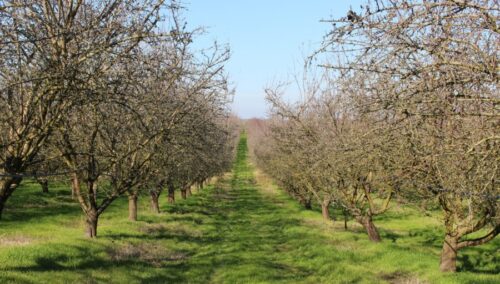
“Sustainable Conservation and partners have released three new fact sheets expanding the Cover Cropping in California’s Water Scarce Environments series with in-depth guidance for three distinct cropping contexts California growers are navigating across the Central Valley’s varied regions and weather years: Cover cropping beyond winter in perennial systems, Cover cropping for land repurposing, and Cover cropping in annual systems. Each fact sheet combines the latest research with grower experience on the ground, going well beyond general cover crop guidance to meet farmers where they are. The suite builds on the foundation of practical considerations for managing cool-season cover crops with maximal water benefits and minimal water use laid out in the May 2025 guidance document, and extends it with a depth of context, data, and practical implementation detail. … ” Read more from Sustainable Conservation.
Roger Isom calls for water investment, regulatory reform, and voter engagement
“The second half of AgNet News Hour’s conversation with Roger Isom focused on what he believes are the biggest issues facing California agriculture: water infrastructure, regulatory reform, and the state’s upcoming governor’s race. The president and CEO of the Western Tree Nut Association and California Cotton Ginners and Growers Association outlined a lengthy list of legislative and regulatory issues that agricultural organizations are monitoring while encouraging Californians to become more engaged in the political process. Isom said one of agriculture’s greatest opportunities is the renewed federal focus on California water infrastructure. He pointed to ongoing discussions surrounding projects such as raising Shasta Dam, expanding Sites Reservoir, increasing storage at San Luis Reservoir, improving water conveyance systems, and investing in groundwater recharge. He argued that California must capitalize on the current momentum to improve long-term water reliability for both agriculture and communities. … ” Read more from AgNet West.
Sustainable agriculture summits scheduled, Merced, Bay Area, others to host
“A string of events spearheaded by the California Natural Resources Agency this year to discuss nature-based climate solutions launches Wednesday, July 1 at Chico State with a “Farmland Summit.” Wednesday’s summit will focus on educating the community about regenerative agriculture and other sustainable practices and identifying barriers of entry and solutions to those barriers for farmers. Regenerative agriculture is a sustainable farming practice focused on soil health. Some of the goals of regenerative agriculture include capturing carbon in soil and improving water use efficiency. The July 1 event will take place on the university’s 800-acre regenerative agriculture farm and is expected to draw an audience of around 180 to 200 people. California Department of Food and Agriculture Secretary Karen Ross and California Natural Resources Agency Secretary Wade Crowfoot will both participate. Attendees will also include farmers, university staff, landowners, policy leaders and funders. … ” Read more from the Sacramento Bee.
Jared Blumenfeld, former chief of Laurene Powell Jobs’ Climate Fund named to Water Board
“Jared Blumenfeld of Belvedere, the former president of Laurene Powell Jobs’ $3.5 billion primary climate fund, has been appointed by Gov. Gavin Newsom to the State Water Resources Control Board. Blumenfeld was director of the San Francisco Environment Department under Mayor Willie Brown. He was later the U.S. Environmental Protection Agency’s western regional administrator and secretary for environmental protection in the Newsom administration. Blumenfeld was president of Jobs’ Waverley Street Foundation from 2022 to 2026. The fund aims to address the climate crisis by supporting community-level solutions and underserved populations. … ” Read more from SF Gate.
California Forever, aided by ex-Sacramento mayor, push lawmakers to fast track megacity
“Supporters of an initial plan to create a megacity in Solano County are pressuring Gov. Gavin Newsom and the Legislature to fast-track development via legislation, claiming failure to move quickly would cause California to lose a major shipyard employer and hundreds of thousands of jobs to Texas. A coalition of labor unions and pro-development groups supporting California Forever wrote to Newsom, Assembly Speaker Robert Rivas and Senate President pro Tem Monique Limon earlier this week. California Forever began in 2017 after San Francisco venture capitalist Michael Moritz and former Goldman Sachs trader Jan Sramek began courting other tech executives to invest in Flannery Associates, a company that began buying up thousands of acres of farmland in a Bay Area exurb to initially build a dense, walkable community. Supporters included venture capitalists like Marc Andreessen, LinkedIn founder Reed Hoffman and Laurene Powell Jobs, the Apple founder’s widow. … ” Read more from the Sacramento Bee.
Trump administration targets California coastal agency in escalation of energy production fight
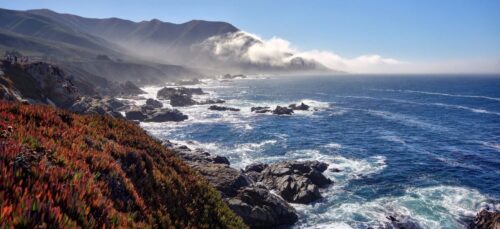
“The Trump administration plans to evaluate the performance of the California Coastal Commission, in the latest escalation of a dispute between the state’s Democratic leaders and the federal government over energy production. Per federal law, the National Oceanic and Atmospheric Administration (Noaa) is required to conduct reviews of federally approved coastal management programs, which take into consideration “the extent to which the State of California has implemented and enforced the program approved by the [commerce] Secretary”. In May, the US Department of Commerce posted a letter from its secretary, Howard Lutnick, where he called for the evaluation and accused California of “environmental terrorism”, saying the Golden state had obstructed spaceport developments. … ” Read more from The Guardian.
Western wildfires face another dangerous week of dry winds and low humidity
“A dangerous fire-weather pattern that helped fuel a deadly weekend of Western wildfires is expected to linger into the coming week, with forecasts calling for more dry air, gusty winds and critically dry fuels across Arizona, Utah, Colorado, New Mexico and parts of Wyoming. Over the weekend, three wildland firefighters were killed, and two others were injured during a fire response near the Colorado-Utah border, where large fires are burning with little or no containment. The firefighters were part of an interagency response to the Knowles and Gore fires, according to a U.S. Wildland Fire Service statement. The Knowles and Gore fires exploded in strength Saturday and merged to become the Snyder Fire, which had grown to nearly 30,000 acres as of Sunday afternoon with 0% containment. … ” Read more from the San Francisco Chronicle.
In regional water news and commentary today …
NORTH COAST
Klamath Basin braces for a potential grasshopper outbreak
“Gene Souza, manager of the Klamath Irrigation District, said in a June 19 Facebook post that grasshoppers have been seen “pouring out of the ground at the Lower Klamath National Wildlife Refuge.” The post prompted Souza to create a reporting portal to help mitigate potential economic damage to the community. A U.S. Fish and Wildlife Service spokesperson said, “Based on current field observations, we are not seeing evidence of a broad outbreak on the Klamath Basin refuges at this time. However, staff have observed localized pockets with large numbers of juvenile grasshoppers, known as nymphs.” Refuge staff will continue to monitor conditions in the field and provide updates if the situation changes, the spokesperson said. … ” Read more from the Herald & News.
Flowing forward: Funding the future of water and sewer systems
“In January of this year, the residents of Clearlake in nearby Lake County awoke to raw sewage flowing down roadways, across fields, and into drainage ditches and waterways. In March of this year, Alderpoint County Water District residents learned that they were in danger of losing all water and sewer services because of an unpaid bill of over $14,000 to PG&E. What do these two fiascos have in common? Both are chronic failures to raise water and sewer rates to meet the rising costs of providing the services. … ” Continue reading from the Redheaded Blackbelt.
SIERRA NEVADA
TRPA approves Tahoe Keys Marina redevelopment, addresses monopines
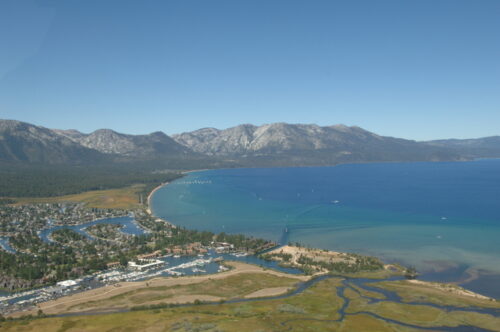 “The Tahoe Regional Planning Agency (TRPA) Governing Board has approved an environmental redevelopment project at the Tahoe Keys Marina in South Lake Tahoe. The permit approval and amendments to building height in the project area will allow the marina owners to remove blighted buildings, improve scenic quality, and upgrade water quality, aquatic invasive species prevention, and recreation infrastructure. A previous TRPA enforcement action also required the marina to replace its deteriorated floating docks, many of which were leaking polystyrene, a source of microplastic pollution, into the marina. The new, more durable docks and boat slips have a new fire suppression system, utility upgrades to accommodate electric boat charging, and improved lighting, which meets TRPA dark sky standards. They were completed earlier this year. … ” Read more from South Tahoe Now.
SACRAMENTO VALLEY
Bigger than San Francisco Bay, Shasta Lake has an image problem
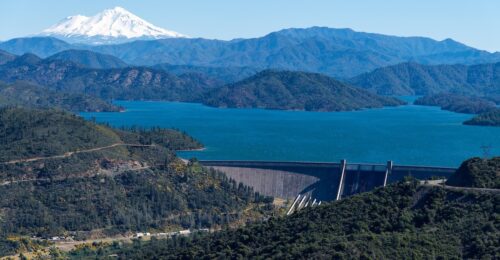
“California’s landscape is primarily flat with repetitive farmland for much of northbound Interstate 5 until the Pit River Bridge, when a steely overpass grants a fleeting but impressionable view of Shasta Lake. Narrow, tentacular arms from four converging rivers host floating homes and power boats that carve white wakes over the surface. Kayakers and paddle boarders row along the 365-mile shoreline in search of open coves, while day-tripping spelunkers venture into limestone caverns that are only accessible after a boat ride over the water. At the southern end, the Bureau of Reclamation opens a door into Shasta Dam to let visitors freely tour the cerebrum that controls California’s largest reservoir. The lake’s blue surface starkly contrasts with the shore’s martian red clay. Depending on rainfall and how to best serve the people living downstream through dam control, the amount of exposed red earth expands or contrasts. At the start of the decade, the water level sank so low that Shasta Lake seemed like it was suffering from an invasive shoreline. Summer in 2021 was so dry that kayakers paddled through a historic train tunnel that’s typically submerged underwater. It’s a different lake today. … ” Read more from SF Gate.
Report shows Paradise Irrigation District drinking water exceeds standards
“The Paradise Irrigation District provided its annual Consumer Confidence Report this week, once again touting that the district’s water is exceeding health standards from the state and federal governments. Each year the district conducts ongoing water quality testing and it was noted in a press release from the district that these tests are conducted as the water leaves the treatment plant as well as down the line. Water storage also appears to be holding strong. A total of 1.23 billion gallons of water was distributed in 2025 and according to the report, both Paradise Lake and the Magalia Reservoir had a combined raw water storage of 12,151 acre-feet based on measurements from April 2026. “At current production rates, PID has approximately 3.064 years of storage if we receive no incoming water to our reservoirs,” a note in the report said. … ” Read more from the Chico Enterprise-Record.
NAPA/SONOMA
Calistoga residents bash proposal for data center at fairgrounds
“Calistoga residents confronted plans from a developer that included a data center and a multi-story parking garage with a vertiport for helicopters in the city’s 70-acre Calistoga Fairgrounds. Nearly 100 people packed the room on Thursday for the Fairgrounds Advisory Committee’s monthly meeting, which featured a presentation by Global Stack LLC president Nicholas Kovacevich. The proposal touted “perpetual wins” for Calistogans, with AI renderings of flying cars, evacuation zones, hot air balloons and turbines lining the base of a small-scale data center. Most were vocally opposed to the plans, with some hissing at the mention of a data center. The words “grotesque,” “nightmare” and “monstrous” were repeated in public comments. … ” Read more from NorCal Public Media.
BAY AREA
$4M grant to help complete India Basin Shoreline Park in San Francisco
“A $4 million federal grant aimed at transforming former industrial areas into community spaces will help complete a 10-acre waterfront park in southeast San Francisco. Funds from the U.S. Environmental Protection Agency will go toward cleanup and conservation efforts for the India Basin Waterfront Park in the 900 block of Innes Ave. near Hunters Point, the San Francisco Recreation and Parks Department said Thursday. The money will help convert “a formerly industrial shoreline into a vibrant public space where families can gather, play, and connect with the waterfront,” Sarah Madland, Rec and Parks’ general manager, said in a press release. … ” Read more from Local News Matters.
Yosemite River Alliance: Los Altos Hills water rate increases a rising concern
“With the Purissima Hills Water District Board set to hold a public hearing next month on proposed rate increases impacting Los Altos Hills customers, a water conservation organization is clapping back with concerns about the future drought projections that inevitably lead to ballooning rates. Purissima Hills Water District’s Board of Directors last month approved a five-year capital improvement plan (CIP). As part of the plan, the district, which buys its water wholesale from the San Francisco Public Utilities Commission, announced rate increases of approximately 9% annually through 2031 for its customers within Los Altos Hills. … Yosemite River Alliance Policy Director Peter Drekmeier conceded that rates will continue to rise, but there are measures that could be taken to avoid them from going up as much as they might. This all stems from drought planning. … ” Read more from the Los Altos Town Crier.
CENTRAL COAST
Monterey County backs regional approach to combat Salinas Valley seawater intrusion
“The Monterey County Board of Supervisors reviewed responses to a Civil Grand Jury report that outlined several recommendations for addressing seawater intrusion in the Salinas Valley Basin. The board, as well as the Monterey County Water Resources Agency, approved Tuesday a draft joint response to the grand jury report called “Seawater Intrusion — A Shared Problem in Monterey County.” California’s civil grand jury system provides independent investigations into issues in counties and is composed of residents who select which areas or problems they want to explore. The jury creates its report and then requires leaders such as boards of supervisors, city councils or city or county departments to respond. The issue of seawater intrusion into groundwater supplies in Monterey County has come up as a topic among previous civil grand juries since the 1990s. Portions of the Salinas Valley Groundwater Basin, which are used as municipal and agricultural water sources, have continuously seen seawater intrusion due to overdraft. … ” Read more from Local News Matters.
High levels of hazardous domoic acid detected in fish in Monterey Bay
“High levels of domoic acid have been detected in fish in the Monterey Bay. According to the California Department of Fish and Wildlife, the acid was found in Northern Anchovy and Pacific Sardine species. This prompted Fish & Wildlife to put fishing restrictions on both. They’re also warning people not to eat the fish and only use it as bait. Domoic acid is produced by certain types of marine algal blooms. It can temporarily build up in crabs, lobsters, clams, and other fish and shellfish, making them hazardous to eat for humans, marine mammals and birds. It is a neurotoxin that can cause symptoms in humans and marine mammals such as nausea, vomiting, and diarrhea at lower doses, and seizures, coma, irreversible memory loss and death at higher doses. … ” Read more from SF Gate.
Central Coast survey reveals most property owners unprepared for California’s turf law
“A live survey of landscape and property professionals at the 5th Annual Central Coast Water Summit, hosted by K&D Landscaping, found that most property owners have not begun planning for California‘s incoming turf law, even as water cost has become the industry’s single greatest pressure. The full-day event took place on Friday, June 12, at the Cocoanut Grove in Santa Cruz, Calif., bringing more than 45 organizations together to confront the forces reshaping the region’s landscapes. The survey, conducted in real time during the Summit’s opening workshop by Hunter Industries‘ Kevin Battistoni, turned the audience into its own data set. Roughly four in five attendees said their clients are still waiting for direction or avoiding the subject of AB 1572, the state law that restricts potable irrigation of nonfunctional (decorative) turf as it phases in for public agencies, commercial properties and homeowners associations between 2027 and 2029. … ” Read more from Landscape Management.
SAN JOAQUIN VALLEY
Dead fish, shrinking lakes, and a water war send California HOA to court
“A lawsuit in California is growing out of a long-running fight inside a gated community, where dead fish and retreating lake edges have become visible signs of the dispute. At its core, the conflict raises broader questions about who runs a shared water system and who bears the costs when residents say it is no longer working as expected. According to The Merced Focus, homeowners in Greenhills Estates — a Chowchilla development of roughly 905 homes built around human-made lakes and the Pheasant Run Golf Course — are locked in a legal fight. A 2021 agreement sits at the center of the case, placing the Water Resources Council in charge of the shared wells, pumps, pipelines, and lakes. Greenhills says the deal leaves it responsible for 66.77% of system costs, while the golf course pays 25.56%. … ” Read more from The Cool Down.
EASTERN SIERRA
A foreign company’s mining proposal threatens one of California’s premier trout streams
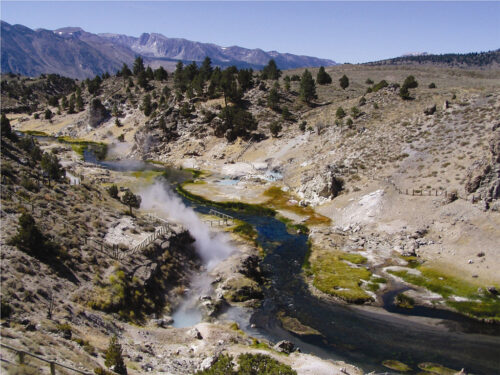 “A Canadian mining company’s search for gold could threaten California’s famed Hot Creek, the local mountain community’s economy, endangered species, and even Los Angeles’ water supply 330 miles downstream. Hot Creek is one of California’s best-known fly-fishing destinations. Home to healthy populations of wild rainbow and brown trout, it is one of only three fisheries in Mono County open year-round. The creek is also home to the endangered Tui chub and even served as a filming location for a John Wayne movie. With spectacular scenery and easy public access, it has long been a favorite for fly fishing, hiking, and wildlife viewing. “It’s a unique place, it’s magical, there’s no place really like it,” says Chris Leonard, a fly fishing guide and local high school teacher, “because it’s public land, it’s never been developed. It needs to be preserved for multiple generations.” … ” Read more from Sports Illustrated.
SOUTHERN CALIFORNIA
An explosion scare, then a warehouse fire: Californians want answers about hazardous chemicals
“Manuel Valle, 84, jumped on his bike and rode through his Boyle Heights neighborhood despite the protests from his worried children. The air was smoky, for the fifth day in a row; he pushed through fits of coughing to pass out 50 N95 masks to his neighbors. The same day, officials told residents the air was not dangerous and the smoke was clearing out. Valle didn’t agree. “This is a state emergency,” he said. “Treat it like a state emergency.” Fire had ignited at a facility, operated by the company Lineage, which stores food before it’s shipped off to restaurants and grocery stores. Lineage uses the toxic refrigerant anhydrous ammonia, which posed a health risk in the early hours of the fire. Weeks earlier and miles away, the Orange County Fire Authority issued an evacuation order affecting 50,000 Garden Grove residents when fire officials realized a tank at an aerospace manufacturing facility could either explode or leak large amounts of a toxic chemical into the air. In both cases, records show state and local regulators knew the facilities; they had inspected them, approved plans and resolved violations. How they used their authority is now a central question for neighbors in the surrounding areas seeking accountability. … ” Read more from the LAist.
IMPERIAL/COACHELLA VALLEYS
California’s Lithium Valley dreams meet reality at the only restaurant in town
“The Buckshot Deli & Diner is an oasis along the sun-blasted California highway that runs from Calexico to Coachella, the only remaining restaurant in the desert hamlet of Niland. … Recent years have proven challenging for the Buckshot. First came the pandemic, then a fire that destroyed dozens of homes and drove people out of town. Next was another blaze that burned the post office, then recent heavy flooding that damaged yet more homes. Hernandez and her husband have at times run the restaurant with just one other employee. Utilities are expensive, taxes are high, she said, and bills piled up. Amid it all, a new type of customer started frequenting the diner. Niland — population 1,116 — is the closest community to so-called Lithium Valley, where an underground reservoir of geothermal brine near the Salton Sea contains one of the world’s largest lithium deposits. Supervisors would visit the project area, where Imperial County is proposing to develop 51,000 acres of mostly undeveloped land along the Salton Sea for renewable energy, lithium extraction and associated infrastructure, Hernandez recalled, and stop by the diner afterwards for lunch. … ” Read more from Capitol & Main.
SAN DIEGO
Feds will finally help Oceanside 73 years after admitting fault for its disappearing beaches
“When the U.S. military built the Camp Pendleton Harbor complex just north of Oceanside in 1942, it didn’t set out to steal Oceanside’s beaches for decades to come. But that’s exactly what’s been happening for the past 73 years. In 1953, the federal government admitted that construction of harbor jetties at Camp Pendleton was directly contributing to the erosion of Oceanside’s beaches. The jetties block the ocean’s currents that carry sand along the coast, which causes Oceanside’s beaches south of the military base to lose out on sand that would have naturally flowed to them. Rising sea levels caused by climate change also play a part, but in Oceanside, naturally occurring erosion has been exacerbated by the military base. … ” Read more from the Voice of San Diego.
Along the Colorado River …
Southwest wildfire danger remains high through Fourth of July week
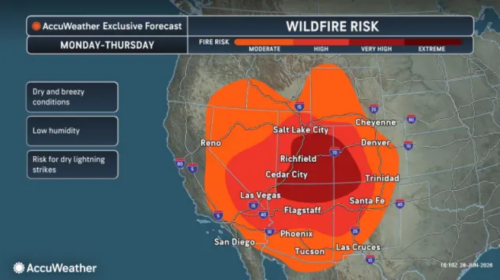 “Powerful wind gusts, extremely low humidity and the threat of dry lightning are fueling an outbreak of large wildfires across the Southwest. Through the week leading up to the Fourth of July holiday, continued dry and breezy conditions will provide little relief for firefighters battling blazes across the region while also increasing the risk for new fire starts. Multiple fires exceeding 10,000 acres have erupted over the past week with some of the most significant burning across Utah. The Cherry and Iron fires southwest of Provo, along with the Cottonwood Fire in south-central Utah, are among the largest active wildfires. Strong winds have allowed flames to spread quickly at times while carrying thick plumes of smoke hundreds of miles downstream. The weather pattern responsible for the heightened wildfire danger is expected to persist through much of the week. Moisture-starved storm systems tracking inland from the Pacific Ocean into the Rockies will continue to generate gusty winds while offering little meaningful rainfall. … ” Read more from AccuWeather.
A tributary approach to learning the Colorado River
“If watersheds are dynamic systems, changing in flow and form over time, understanding them is an exercise in moving between unique perspectives, values, and priorities. Or so we — a groundwater researcher, a water modeler, and a policy nerd — quickly learned when joining other students and professionals on rafts to paddle the Yampa River (Figure 1). This trip was organized as the fourth iteration of the Climate Adaptation Science Academy Experiential Learning Expedition (CASA ELE), a program led by Secure Water Future with the goal of bringing together an interdisciplinary group of researchers studying water in the West. After exploring the Upper Colorado River Basin with a series of site visits, we spent four days rafting one of the West’s few remaining free-flowing rivers: The Yampa. The more miles we paddled, the more we learned, and the more we realized how little we knew. Answers gave way to more questions, which led to more answers, prompting more questions. It was the most motivating headache any of us have ever had. … ” Continue reading at the California Water Blog.
Native American Tribes came together to secure their rights to Colorado River water. Four states are stalling the deal.
“A deal to bring Colorado River water to Native American communities in northern Arizona, where a third of homes lack running water, is being blocked by neighboring states, caught up in a broader battle over how to divide the dwindling river. The largest tribal water rights settlement in U.S. history — the product of decades of negotiations to secure water for the Navajo Nation, Hopi Tribe and San Juan Southern Paiute Tribe — was on the verge of being realized before Colorado, New Mexico, Utah and Wyoming stepped in to oppose it being codified by Congress. “We have significant unresolved concerns with the legislation that may affect each of our states’ rights to and interests in Colorado River water,” negotiators for Utah and Wyoming wrote in March to the Senate Committee on Indian Affairs in a previously unreported letter. New Mexico and Colorado sent similar letters. … ” Read more from ProPublica.
Betting on Lake Mead’s demise
“Gamblers now have a chance to put their money where the water isn’t. Kalshi, an online prediction market, is offering wagers on Lake Mead’s water level at the end of June. Prediction markets like Kalshi and its competitor Polymarket allow users to bet on the outcome of events – things like elections, interest rate decisions, the winning couple on Love Island, and even whether the U.S. government will confirm the existence of aliens. Kalshi offers several climate and environment wagers. Most are related to daily temperature readings or rainfall totals. Compared to the political stuff, these are small markets with few transactions. The Lake Mead market, also thinly traded, is the only water-specific bet on the platform. (Kalshi did not respond to questions about why it started the Lake Mead market.) … ” Read more from Circle of Blue.
SEE ALSO: People are betting on wildfires. Should they?, from High Country News
This major US lake just hit its lowest summer level ever. Here’s why you should be concerned
“Lake Powell, one of the American West’s largest reservoirs that helps provide water, irrigation and power for over 40 million Americans across seven states, is drying up. Bordering Utah and Arizona, the man-made lake’s summer water levels are at their lowest in recorded history, according to Utah data. That’s because of the historic, climate change-fueled spring drought which resulted in record-low snowpack to the region. Snowmelt into the 1,450-mile Colorado River typically helps to refill the 254-square-mile lake. “It’s been a long time since it’s been this bad,” Russ Schumacher, Colorado’s state climatologist and the director of the Colorado Climate Center, told CBS News in March. Experts say that the consequences could be dire, including additional cuts to water supply, summer tourism hits and, though more unlikely per USA Today, potentially even dropping to a level so low that flowing water would stop. … ” Read more from the Independent.
Hoping monsoons bring relief to Utah’s wildfire season? The storms offer their own challenges.
“Subpar snowfall has turned Utah into a minefield for wildfires — and recent weather conditions are fanning the flames. As of June 25, over 140,000 acres had already burned in 354 fires across the Beehive State, and those numbers were poised to keep growing. The blazes have forced Red Butte Garden in Salt Lake City to evacuate, sent Eureka residents fleeing from their small town south of Utah Lake, and have torn through a central Utah ski resort. By the same point last year, Utah had seen 23 more fires, but they didn’t cover as much ground, said Kelly Wickens, a prevention and communications specialist with the Utah Division of Forestry, Fire & State Lands. … ” Read more from the Salt Lake Tribune.
Fact check: Could a new Denver data center use up to 800,000 gallons of water a day?
“Yes. The developer building a new data center in north Denver said the facility could use up to 805,000 gallons of water each day to cool its computer systems if all three planned buildings are constructed. A single-family home uses roughly 200 gallons of water per day, according to Denver Water. The developer, CoreSite, already operates two data centers in downtown Denver. It has faced criticism for lack of community engagement around the new facility, which could span up to 590,000 square feet at East 49th Avenue and Race Street, in a neighborhood with a long history of dangerous pollution. Data centers in Denver Water’s service area use less than 1% of the 180 million gallons of water its customers use daily. … ” Read more from the Colorado Sun.

