
Several news sources featured in the Daily Digest may limit the number of articles you can access without a subscription. However, gift articles and open-access links are provided when available. For more open access California water news articles, explore the main page at MavensNotebook.com.
In California water news this weekend …
The uneven toll of California’s groundwater law
 “For Amrik “Mickey” Singh Basra, owning 300 acres of almonds in Madera County was more success than he ever expected to achieve in the United States. Approaching retirement age, he could let his trucking business go and envision the last decades of his life sustained by his orchard. Then two years ago, as his land value plummeted and he couldn’t repay a crop loan, he had to take out a high-interest loan. There is a saying in Punjabi, he said, that roughly translates to, “You have to kill your soul before you ask favors.” He takes odd jobs to chip away at his debt, helping on friends’ farms, spraying outside a warehouse. Basra finds himself occasionally in a courtroom with other farmers to hear the latest on a lawsuit tied to the fate of their businesses. Now, at 68, with a long, gray beard, Basra’s retirement is anything but secure. The primary wrench in Basra’s sunset plans, he said, is the 2014 Sustainable Groundwater Management Act, or SGMA. … ” Read more from SJV Water.
GOLDEN STATE SALMON ASSOCIATION: Bureau of Reclamation plans to violate state and federal laws protecting Sacramento River salmon
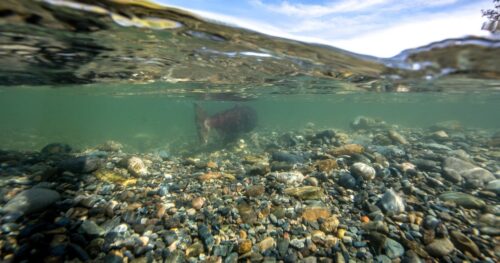
On June 10, the State Water Resources Control Board rejected the Trump Administration’s Bureau of Reclamation plan to manage Shasta Dam to protect spawning salmon on the Sacramento River this fall. The Bureau plans to drain more water from Shasta than is allowed by law to boost summer deliveries to Central Valley agriculture. The National Marine Fisheries Service has written a biological opinion for the management of Shasta Dam that has specific requirements to hold enough cold water behind Shasta Dam to keep spawning salmon alive this fall. The Bureau’s plan violates that requirement and the State Water Board’s Order 90-5, which imposes temperature requirements on the Bureau under state law. Now the Bureau has announced that they will ignore the NMFS BO and state law and implement their illegal, salmon-killing plan. If implemented, the Bureau’s plan could once again leave too little cold water in Lake Shasta to protect spawning salmon during the critical fall spawning season, threatening the next generation of Sacramento River Chinook. … ” Continue reading from the Golden State Salmon Association.
State Water Board AHO schedules supplemental hearing date and procedural ruling for Sites Reservoir
The State Water Resources Control Board has scheduled a supplemental hearing in the ongoing Sites Reservoir water-rights proceeding, and issued a procedural ruling. The ruling explains a procedural dispute over whether new technical analyses submitted by the Authority with its comments on the draft decision and draft permit should be admitted into the evidentiary record without formally reopening it. The Authority argues that the additional modeling and water-supply analysis support changes it says are in the public interest, while several environmental groups object that the materials amount to new evidence and should be struck. Click here for the notice.
Grand jury: Sea rise, climate change demands Delta reclamation districts be current on information
“Reclamation districts lack up-to-date contact and district information that the public needs in an age of climate change, a 2025-26 Solano County civil grand jury report states. It noted the issue of sea rise is particularly relevant since “Solano County has over 100 miles of tidal bays, delta waterways, and sloughs, as well as over 400 miles of levees. Reclamation districts focus on flood control, land reclamation, irrigation, and drainage.” The reports, filed June 10, states the grand jury “found widespread gaps in essential information, including missing trustee names, expired terms, absent meeting schedules and incomplete leadership data across numerous districts.” It further stated, “(an) investigation by the (grand jury) raised concerns about transparency, accountability and basic public access to information across Solano County’s Reclamation Districts – agencies that play a critical role in flood control, levee maintenance, and land management in a region increasingly vulnerable to sea level rise.” … ” Read more from the Daily Republic.
SAN FRANCISCO ESTUARY & WATERSHED SCIENCE: In Memory of James E. Cloern; Contribution of managed floodplains to salmon recovery; Salmon smolt survival at offsite release locations in the Sacramento River; and more …
 The latest issue of the open-access journal San Francisco Estuary & Watershed Science is now available, and it offers plenty for readers tracking Bay–Delta research. The issue opens with a tribute in memory of James E. Cloern, a leading figure in estuarine science, before turning to a strong lineup of research on salmon and Delta smelt. Several papers focus on Chinook salmon, examining how managed floodplains can support recovery, how smolt survival shifts at offsite Sacramento River release locations across wet and dry years, and how different runs route through the Georgiana Slough–Sacramento River junction. Other studies target Delta smelt, including how tides affect environmental DNA (eDNA) detection, new enclosure designs to support conservation of this endangered fish, and a genetic method for identifying larval smelt in preserved samples. Together, the articles connect field research to the management decisions shaping California’s estuary. Read the full issue here.
DATA CENTERS: Alliance for Water Efficiency releases data center primer for water service providers
 “The Alliance for Water Efficiency, in partnership with Los Alamos National Laboratory and the Metropolitan North Georgia Water Planning District, has released A Data Center Primer for Water Service Providers to help water utilities and other water practitioners engage more effectively in the planning and design of data center projects in their communities. The Primer provides both technical background and practical guidance to support early, informed involvement by local water providers. The resource was developed in response to growing concerns about data center water use, missed opportunities to improve water efficiency and water reuse, and cases in which water service providers have been excluded from key planning and design discussions. Because even highly efficient data centers can place significant demands on local water supplies, thoughtful planning and design are essential. Ensuring that water providers are involved early in the process can help communities better manage water impacts while identifying opportunities for efficiency, reuse, and long-term sustainability. … ” Read more from the Alliance for Water Efficiency.
The oil company pivoting to carbon storage and data centers
“California’s biggest oil producer is trying to become a carbon storage company. And maybe a data center company, too. California Resources Corporation, an energy company with its headquarters in Long Beach, is branching out as the state pushes toward a future that uses less oil. In May, CRC began injecting carbon dioxide underground in Kern County’s Elk Hills. Its goal is to store carbon dioxide emissions from its nearby natural gas power plant in a depleted oil reservoir called Carbon TerraVault One. “We’re putting the carbon right back where it came from,” said Chris Gould, CRC’s chief sustainability officer and executive vice president. The project is “first of a kind in the state in terms of storing, permanently and safely, carbon dioxide in the [earth’s] subsurface. It’s also the first [to store it] in a depleted oil and gas reservoir, which I think is pretty cool.” … ” Read more from Politico.
CDFW confirms northernmost detection of golden mussel in Port of West Sacramento
“The California Department of Fish and Wildlife (CDFW) is notifying the public and officials with the city of West Sacramento and Yolo and Sacramento counties that invasive golden mussels have been found in and around the Port of West Sacramento. This is the northernmost detection of golden mussel since the species was discovered in the Port of Stockton in the Sacramento-San Joaquin Delta in 2024. CDFW staff monitoring for golden mussel presence collected one mussel between the Jefferson Boulevard overpass and the west lock, and a second near the intersection of Boathouse Road and Stone Boulevard. The mussels were sent to CDFW’s genetics lab that confirmed on June 25 the specimens were golden mussel. Additional surveys around the docks in Washington Lake found additional mussels. … ” Read more from the Department of Fish and Wildlife.
SEE ALSO: Invasive mussels found in and around Port of West Sacramento, CA officials say, from the Sacramento Bee
California Coastal Commission defends mission as feds launch investigation
“U.S. Commerce Secretary Howard Lutnick has announced in a letter that the Trump administration is investigating the California Coastal Commission, the latest move in a series of multi-front pressures on the state agency. The letter, posted by the Department of Commerce on X, addressed to Kevin Hassett, the director of the White House National Economic Council, says that management of the coastal agency has been “woefully inadequate at best” since Joe Biden’s presidency and that both the CCC and California itself boast a “long record of obstructing technological innovation and economic development.” Lutnick cited “national economic needs” that he claims the CCC had cast aside like offshore oil production and coastal spacecraft launches. … ” Read more from the Sacramento Bee.
SEE ALSO: Trump administration takes aim at California Coastal Commission, sparking alarm, from the LA Times
New eDNA tool to help track recovery of sunflower sea star, a Pacific Coast ‘apex predator’
“A wasting disease that surged during the intense 2013-2016 Pacific marine heatwave known as the Blob decimated numerous species of sea stars and triggered the collapse of vast coastal kelp forests from the Aleutians to the Baja Peninsula. One of the species most affected was the sunflower sea star, an apex predator that feeds on kelp grazers like sea urchins. As captive breeding programs and the discovery of additional sea star refuges, (like the one found in Greater Farallones National Marine Sanctuary in August 2025) fuel hopes for the sunflower sea star, researchers at NOAA’s Pacific Marine Environmental Laboratory (PMEL) have developed a rapid environmental DNA (eDNA) detection method that dramatically improves scientists’ ability to monitor the sea star species’ health and recovery. “By analyzing tiny amounts of genetic material they shed into the water, we can now identify these large but elusively rare sea stars without ever seeing them,” said Zachary Gold, a scientist who leads PMEL’s Ocean Molecular Ecology program. “This opens the door to efficiently monitoring the recovery of this species, especially at deeper depths and sites that are difficult for divers to survey.” … ” Read more from NOAA Fisheries.
PG&E: California is only at the starting line of wildfire season
“PG&E’s head meteorologist says California is only at the starting line of wildfire season, with risk expected to climb steadily through summer and fall. During a media briefing on Friday, Scott Strenfel outlined how the utility is leaning heavily on machine‑learning models, expanded weather monitoring, and real‑time forecasting to determine when conditions may require the utility to shut off power. “We’re stepping into summer, into fall, where the wildfire risk just continues to increase,” said Strenfel. “We have to be very serious about wildfire prevention, wildfire mitigation, and what all of us can do collectively as Californians.” PG&E now operates its sixth‑generation Fire Potential Index, a machine‑learning model first launched in 2014. The system maps fire risk in 0.7‑kilometer hexagons and updates every 15 minutes, with forecasts stretching more than five days out. Strenfel said the model has become increasingly precise. … ” Read more from the Eureka Times-Standard.
In commentary this weekend …
Stop AB 2215: No special treatment for a controversial project that puts the Delta at risk
“California’s water system depends on a simple principle: everyone plays by the same rules. Assembly Bill 2215 (Calderon) would break that principle and set a troubling precedent for the future of water management in our state. If you take water from a lake, river, stream, or creek, or from underground supplies for a beneficial use, the law California Water Code (Division 2) requires that you have a water right. At its core, AB 2215 gives the Department of Water Resources (DWR) a special exemption from regulation by the State Water Resources Control Board. Instead of requiring DWR to justify extending its water rights permits through an established public process, this bill would ignore these rules and push those deadlines out to 2046—decades after they originally expired in 2009. No other water user in California gets this kind of treatment, and DWR itself hasn’t asked for this legislative fix. This bill is sponsored by the State Water Contractors. … ” Read more from the Delta Counties Coalition.
California threatens to fine farmers after destroying their fields
Zachary Faria, commentary writer for the Washington Examiner, writes, “California has a habit of regulating residents into the dirt and then punishing them for being in the dirt. No one is forced to take it on the chin more than the state’s farmers. A new California law permits agricultural commissioners to hand out fines of $1,000 per acre for vineyards or orchards that are considered to be a “nuisance.” As the logic goes, those abandoned fields become hosts for disease and house pests that antagonize surrounding crops or communities. Of course, the reason these fields are being abandoned is that farmers don’t have enough water to maintain them. California refuses to send water from the north (the state would rather use that water to protect insignificant dying fish species religiously) or build appropriate water storage facilities (because California is incapable of building just about anything). That had led farmers to over-rely on groundwater to keep their operations afloat. Then, California naturally began heavily regulating groundwater use as well. … ” Read more from the Washington Examiner.
Panic over data centers is wildly exaggerated — they use less water than golf courses and less energy than the USA’s fridges
Columnist Rikki Schlott writes, “Data centers have become the chic new enemy among activists. Critics claim the centers are using inordinate amounts of electricity and water to power artificial intelligence, inspiring protesters to take to the streets and Democratic lawmakers to head to Albany to stymie their development. However, some experts say the anti-data center push is more of a moral panic than an empirical one, often based on speculative and sometimes bunk projections. It seems that data centers are the boogeyman onto which larger fears about the impact of AI are being projected. “The estimates of future data-center development may be overestimated by a factor of three to five,” Jonathan Koomey, an energy researcher who has been studying data-center electricity usage for decades, told The Post. “It is not as simple as saying, ‘We don’t want data centers to use water.’ You have to think about the trade-offs.” … ” Read more from the California Post.
In people news this weekend …
Promotions, passings, profiles – submit people news items to maven@mavensnotebook.com.
Jared Blumenfeld, of Belvedere, has been appointed to the State Water Resources Control Board.
 Blumenfeld was President of the Waverley Street Foundation from 2022 to 2026. He was Secretary of the California Environmental Protection Agency from 2019 to 2022. Blumenfeld was the Creator and Host of Podship Earth from 2018 to 2022. He was Principal at Advising Impact from 2016 to 2019. Blumenfeld was Regional Administrator for the United States Environmental Protection Agency from 2010 to 2016. Blumenfeld was Director of the Environmental Department for the City and County of San Fransico from 2010 to 2016. He was Director of Global Habitat Protection for the International Fund for Animal Welfare from 1995 to 2001. Blumenfeld was the Director of Earth Summit Watch for the Natural Resources Defense Council from 1993 to 1995. He earned a Master of Laws from the University of California, Berkeley degree and a Bachelor of Laws degree from University of College London. This position requires Senate confirmation and the compensation is186,271. Blumenfeld is a Democrat.
Dorene D’Adamo, of Turlock, has been reappointed to the State Water Resources Control Board …
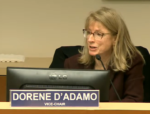 …where she has served since 2013. D’Adamo was a Senior Policy Advisor for the Office of Congressman Jim Costa in the United States Congress from 2013 to 2014. She was a Senior Policy Advisor for the Office of Congressman Dennis Cardoza in the United States Congress from 2003 to 2012. She was Legal Counsel for the Office of Congressman Gary Condit in the United States Congress from 1994 to 2003. D’Adamo was a Member on the California Air Resources Board from 1999 to 2013. She was Legislative Director for the Office Congressman Gary Condit in the United States Congress from 1990 to 1991. D’Adamo was a Visiting Instructor at California State University, Stanislaus from 1992 to 1998. She was an Associate Attorney at the Law Offices of Perry and Wildman from 1992 to 1994. D’Adamo was a Policy Consultant at D’Adamo Consulting from 1991 to 1992. She was Assistant Director of Legislation for the California Youth Authority from 1988 to 1990. D’Adamo was Legal Counsel at the California State Assembly Committee on Public Safety from 1986 to 1988. D’Adamo earned a Juris Doctor degree from the University of the Pacific, McGeorge School of Law and a Bachelor of Arts degree in Political Science and Public Service at the University of California, Davis. This position requires Senate confirmation and the compensation is 186,271. D’Adamo is a Democrat.
Courtney Henderson, of Truckee, has been appointed to the Lahontan Regional Water Quality Control Board.
Henderson has been the Founder and President of Hawks Peak Strategies since 2024. She has been a Council Member on the Town of Truckee City Council since 2020. Henderson was Head of Market Strategy at Resource Innovations from 2022 to 2023. She was Mayor of the Town of Truckee from 2021 to 2022. Henderson was Chief Strategy Office at the See Change Institute from 2021 to 2022. She was Vice Mayor of the Town of Truckee from 2020 to 2021. Henderson held multiple positions at ILLUME Advising, LLC from 2014 to 2021, including Senior Managing Consultant, Managing Consultant, and Project Manager . She was an Adjunct Faculty at Touro University California from 2014 to 2016. Henderson was the Director of Development at The Sun Also Rises Foundation from 2006 to 2007. She was the Executive Director at the GAIA Vaccine Foundation from 2004 to 2006. Henderson earned a Doctor of Public Health degree from the University of California, Berkeley, a Master of Public Health degree from Brown University, and a Bachelor of Sciences degree in Biology and Nutrition from Cornell University. This position requires Senate confirmation and the compensation is $250 per diem. Henderson is a Democrat.
Edwin Alonzo, of Victorville, has been appointed to the Lahontan Regional Water Quality Control Board.
Alonzo was a Public Works Inspector at the City of Jurupa Valley in 2025. He was an Environmental Specialist at Walt Disney Imagineers from 2024 to 2025. Alonzo was an Environmental Programs Coordinator at the Town of Apple Valley from 2023 to 2024. He was a Senior Environmental Control Technician at the City of Fontana from 2019 to 2023. Alonzo was an Environmental Technician II for Waste Management at the University of California Riverside from 2011 to 2016. He served in the Marine Corps as Nuclear, Biological, & Chemical Defense Specialist from 2003 to 2007. This position requires Senate confirmation and the compensation is $250 per diem. Alonzo is a Democrat.
Jim DeBoo, of Sacramento, has been appointed to the Central Valley Flood Protection Board.
DeBoo has been Founder of DeBoo Strategic Affairs since 2023. He was Executive Secretary in the Office of California Governor Gavin Newsom from 2020 to 2023. Deboo was Principal of DeBoo Communications from 2013 to 2020. He was Principal of DeBoo Communications from 2013 to 2020. DeBoo was Executive Secretary in the Office of California Governor Gavin Newsom from 2020 to 2023. He was Interim Chief of Staff and Director of the Speaker’s Office of Member Services for Speaker John Perez at the California State Assembly from 2010 to 2013. DeBoo was Chief Legislative Representative for Mayor Antonio Villaraigosa at the City of Los Angeles from 2008 to 2009. He earned a Bachelor of Arts in Political Science and Government from the California State University, Chico. This position requires Senate confirmation and the compensation is $59,133. DeBoo is a Democrat.
Podcasts …
WHAT MATTERS: The Colorado River reckoning
40 million people rely on the Colorado River—and it’s under more pressure than ever. In this episode of What Matters Water TV and Podcast, we bring you a powerful conversation from the Southern California Water Coalition’s May 15, 2026 Quarterly Luncheon in Temecula, where leading water experts tackle one of the West’s most urgent challenges: the future of the Colorado River. Featuring perspectives from top leaders across the region: Chuck Cullom (Upper Colorado River Commission) Vineetha Kartha (Central Arizona Project) Bart Leeflang (Central Utah Water Conservancy District) Bill Hasencamp (Metropolitan Water District) Together, they break down the high-stakes negotiations, competing demands, and critical decisions shaping the river’s future. 💧 Why it matters: This isn’t just a water issue—it affects economies, communities, and everyday life across the West.
THE CLIMATE DISPATCH: 1 Delta, 27 million people
ECONEWS REPORT: Fish-killing chemical found in Humboldt County waters
Could a chemical in our tires be killing salmon? That’s what Humboldt Waterkeeper and the Wiyot Tribe have set out to study. The chemical, 6PPD-quinone, is a breakdown product of 6PPD, which is added to tires to prevent cracking and wear. When tires grind away, little bits of the rubber become susceptible to react with ozone. These are then swept away by rain to local waterways, where even slight concentrations are known to kill coho salmon. The Wiyot Tribe and Humboldt Waterkeeper sampled 19 urban streams and parking lots that discharge stormwater runoff. Their findings were alarming: Sixty-three percent of samples (12 out of 19) exceeded the U.S. EPA aquatic screening levels. Jen Kalt and Sylvia van Royen of Humboldt Waterkeeper and Tiffany Douglas of the Wiyot Tribe join the show to discuss their study.
WATER IS A MANY SPLENDOR’ED THING: The Green Island of Ischia, Italy
 Appreciating water can be no better explained than an Australian that has been transplanted to the island of Ischia off the coast of Naples, Italy. Water has a way of influencing our live no matter where we live on the planet. Water is a Many Splendor’ed Thing brings you another water relationship that has a personally significant impact to your life. Produced by Stephen Baker, Bringing People Together to Solve Water Problems, water@operationunite.co 530-205-6388
In regional water news this weekend …
NORTH COAST
Endangered Species Act continues to govern Klamath Project operations
“The Ninth Circuit held that the Endangered Species Act applies to the Bureau of Reclamation’s operation of the Klamath River Basin Project despite recent precedent that suggested otherwise. Yurok Tribe v. U.S. Bureau of Reclamation, 2026 WL 1742020 (9th Cir., June 17, 2026). The Klamath River Basin Project is a large water management initiative along the California-Oregon border operated by the Bureau of Reclamation that provides water for irrigation and wildlife protection. The project includes a reservoir inhabited by two endangered species of suckers, and its downstream flows in the Klamath River provide habitat for threatened salmon species. … ” Read more from Perkins Coie.
SIERRA NEVADA
Column: Beyond the Idaho-Maryland Mine: Nevada County faces a larger question about its mining legacy
Michael James Taylor writes, “The long-running dispute over the Idaho-Maryland Mine appears to be entering a new and more focused phase. Within a matter of weeks, major court decisions, environmental litigation, and the Nevada County Board of Supervisors’ June 2026 adoption of updates to the County’s General Plan Safety Element — including expanded policies addressing Mining Hazards and legacy mining impacts — have changed the conversation surrounding historic mining in Nevada County. For opponents of reopening the Idaho-Maryland Mine, recent developments represent significant victories. At the same time, these decisions raise broader questions about how Nevada County manages its mining legacy, property rights, environmental responsibilities, future development, and the communities built around its Gold Rush history. … ” Read more from The Union.
SACRAMENTO VALLEY
Yuba Water increases monitoring as sediment removal clouds parts of river, lake
“Efforts to mitigate damage caused by the rupture of a 14-foot-pipe carrying water from the North Yuba River to the New Colgate Powerhouse are continuing with the removal of more 60,000-cubic yards of sediment and debris. According to the Yuba Water Agency, this work has inadvertently clouded some of Englebright Lake and the Yuba River. “We’ve been warning of the time when our sediment removal at Colgate Powerhouse might start to cause increased turbidity, or cloudiness, in the Yuba River. Today, it reached that point,” the agency acknowledged this week. “You may notice the difference in parts of the river and Englebright Lake although it may come and go over the next several weeks. The Middle and South Yuba Rivers are not affected.” … ” Read more from the Appeal Democrat.
Yuba Water Agency revenue drops 80% after Colgate Powerhouse pipe rupture
“The Yuba Water Agency says it lost 80% of its revenue after the Colgate Powerhouse penstock ruptured. Live Copter 3 was over the scene in February as water rushed out of the pipe. The agency, which gets much of its revenue from hydropower and not taxpayer money, said crews had finished four and a half months of maintenance on the penstock right before the rupture. They were filling it with water when the pipe burst. With the penstock out of service, the agency said it can only move about one-third of the water it normally would if the lake drops below the main spill gates. This impacts native fish in the Yuba River and agricultural land across California. … ” Read more from YubaNet.
NAPA/SONOMA
Cloverdale council authorized another of its council members to sit in on water discussions. Here is why that matters
“Water resiliency issues have dominated political discourse in Cloverdale, where concerns about drought, water rights and the future of the Russian River loom large, regularly shaping City Council discussions and election campaigns. Now, the city is putting another voice at the table, authorizing Councilmember Andrés Marquez to represent Cloverdale in meetings related to a new proposed entity, the Alexander Valley Water District, as regional conversations over the area’s water future move forward. During its meeting on Wednesday, June 25, the city council voted 4-0 to allow Marquez to attend meetings related to the proposed formation of the water district in his official capacity — a role city officials say is intended to help shape Cloverdale’s position ahead of key decisions expected to come later this summer. … ” Read more from the Santa Rosa Press Democrat.
Howell Mountain residents push back against proposed green burial cemetery
“Plans for Napa County’s first green burial cemetery, hailed by proponents as a natural extension of land conservation work, are meeting resistance from Howell Mountain residents who say the project could ruin the area’s water system and contribute to dangerous traffic conditions. The county is in the midst of reviewing the project, presented by advocates as an ecological alternative to a traditional cemetery since it uses only biodegradable materials in burials and not embalming chemicals. Proposed by Eternal Preserve Holdings LLC on roughly 109 acres at 1225 Howell Mountain Road, south of Angwin, the project would add eight interment areas totaling about 16 acres along with publicly available trails, a new well, and a welcome center with exterior restrooms and parking spots. … ” Read more from the Santa Rosa Press Democrat.
Commentary: The new cost that crushes struggling Napa grape growers
Richie Greenberg writes, “Another chapter in bureaucratic brilliance has arrived. Growers in Napa Valley, who’ve spent decades coaxing their premium little grapes from stubborn soil, now face yet another “sustainable” fee layered atop a mountain of regulations that already threaten to crush the very industry officials claim to cherish. The Napa County Groundwater Sustainability Fee, born from California’s 2014 mandate a decade ago, demands roughly $99 per irrigated acre annually, on top of a base charge for every planted acre. For operations like Beckstoffer Vineyards, with its sprawling holdings supplying grapes to over 100 wineries, that translates to an extra $25,000 a year. Costs keep climbing while grape prices slide. … ” Read more from the California Post.
CENTRAL COAST
Feds opens up 850,000 acres of Central Coast to oil and gas drilling, fracking
“A gateway for new fossil fuel development in Santa Barbara County opened this week. On Tuesday, the federal Bureau of Land Management (BLM) finalized a contested oil and gas leasing plan for its Bakersfield Field Office, which manages public lands from Fresno to Ventura counties. Under the approved plan, the BLM is offering up 850,000 acres across the Central Coast to future drilling and fracking. That includes a parcel next to Cate School in Carpinteria, a public park in Lompoc, and land bordering Lake Cachuma. In Tuesday’s press release, the BLM said that its efforts align with President Trump’s executive order from last February, “Unleashing American Energy,” aimed at “increasing energy … production on federal lands in an affordable and reliable manner.” … ” Read more from the Santa Barbara Independent.
Harvard Management Company subsidiary sells controversial Cuyama Valley vineyard property
“A Harvard Management Company subsidiary sold its controversial central California vineyard property in May, ending more than a decade of ownership marked by backlash and legal challenges over its water use. Brodiaea Inc., a Delaware-based corporation owned entirely by HMC, bought the North Fork Ranch property in the Cuyama Valley in 2014. Brodiaea paid $10.1 million for the more than 7,500-acre property, developed an 840-acre vineyard, and drilled 16 wells on the land. In May, Brodiaea sold the property to Rancho Cuyama No. 2, a Texas limited liability company. A grant deed recorded May 22 indicated a sale price of roughly $5 million. The county assessed the property at $38 million in 2025. … Brodiaea’s presence in California drew backlash from locals and Harvard affiliates over its land and water use. … ” Read more from the Harvard Crimson.
SAN JOAQUIN VALLEY
‘Sewer’ land powering Manteca’s next transformation
“Upwards of 220 acres bought more than 56 years ago for future wastewater treatment spray fields are now seen as key to transforming over a square mile of western Manteca. Part of that land has already been used to build the 500-room Great Wolf Indoor Water Park Resort as well as the 30-acre Big League Dreams sports complex. The city has spent more than $42 million extending Daniels Street — and the infrastructure such as water, sewer, and storm lines below — to McKinley Avenue as well as creating the McKinley Avenue/120 Bypass interchange, in a bid to develop the 150-acre family entertainment zone. Manteca is currently exploring a private sector partnership designed to secure restaurants, family-centric entertainment ventures, hotel and retail on the 150 acres. … ” Read more from the Manteca Bulletin.
SOUTHERN CALIFORNIA
The ‘impossible dream’ to restore the LA River
Earth Focus explores the history, transformation, and future of the Los Angeles River, one of Southern California’s most significant yet misunderstood waterways. The episode examines ongoing restoration efforts, the push for environmental equity, and concerns about green gentrification. Highlighting the communities that live alongside the LA River and the consequences of urban development and flood management. It also explores the cultural significance of the river, which has long served as both a vital resource and a defining feature of Los Angeles. Today, a growing movement of environmental advocates, planners, and residents is working to reimagine the Los Angeles River as a healthier, more accessible public resource.
Water from Boyle Heights warehouse fire carries foam into L.A. River, sparks testing
“All the water unleashed onto the warehouse fire in Boyle Heights — some of it 480 gallons at a time by helicopter — had to end up somewhere. That somewhere is the Los Angeles River. Los Angeles Fire Department crews ripped through 50-foot walls filled with foam insulation to get to the building’s steel skeleton and its storage racks. Charred chunks of foam have been floating from the burn site, partially blocking storm drains. Now organizers from East Yard Communities for Environmental Justice are teaming up with scientists from UCLA and Columbia University to find out more about what’s in the runoff. “The community here is really interested in knowing, ‘Are there any contaminants that are potentially making their way down to the L.A. River?’” said Yoshira “Yoshi” Ornelas Van Horne, UCLA assistant professor in environmental health sciences. “We really can’t answer that unless we actually have measures and samples analyzed.” … ” Read more from the LA Times. | Read via AOL News.
What’s killing Southern California seabirds? ‘Just one damn thing after another’
“Between disease, pesticide contamination and starvation, seabirds are fighting multiple battles along the California coastline this year. Since March, beachgoers have discovered dozens of sick or dead seabirds along the coastal stretch between Santa Barbara and San Diego. Among them have been “tremendous numbers” of dead Brandt’s cormorants, said Rebecca Duerr, the veterinarian and research director for the International Bird Rescue, which operates wildlife rescues in San Pedro and San Francisco. The bird rescue’s centers have received more than 320 starving seabirds since March. … ” Read more from the OC Register.
SAN DIEGO
Chollas Creek restoration project now underway in City Heights
“A project to bring hundreds of trees, a reclaimed wildlife habitat and a restored flowing creek to City Heights is now underway, with officials saying it could also help prevent future flooding in the area. The plan will allow a section of Chollas Creek to flow down a natural, vegetation-lined creek bed — replacing the current 50-foot-wide concrete channel and restoring 1,350 linear feet of the creek. It’s the first step in a project from Groundwork San Diego-Chollas Creek, supported by the City of San Diego, to help reduce surface runoff and improve water quality. “I think today many of us feel not only pride, but a little bit of ownership of this project, because our community voices have been heard throughout this whole development process,” said Lynn Edwards, a board member for Groundwork San Diego-Chollas Creek. … ” Read more from the San Diego Union-Tribune.
Researchers launch the state’s first large-scale genetic census of marine intertidal life, starting in San Diego
“The closest thing marine taxonomists have to the Olympics is now underway in San Diego. But instead of racing for medals, leading scientists are spending two weeks working together to catalog the extraordinary diversity of life along the California coast. This intensive biodiversity “bioblitz” marks the launch of the California Intertidal Biodiversity DNA Barcode Library Project, a multi-year statewide initiative to collect, document and genetically catalog the invertebrates and algae found in California’s intertidal zones — coastal areas where the ocean meets the land between the tides. These ecosystems are among California’s most biologically diverse and climate-vulnerable, facing increasing pressure from rising ocean temperatures and sea-level rise. … ” Read more from Scripps.
Along the Colorado River …
Lake Powell drop could mean major Colorado River cuts for California
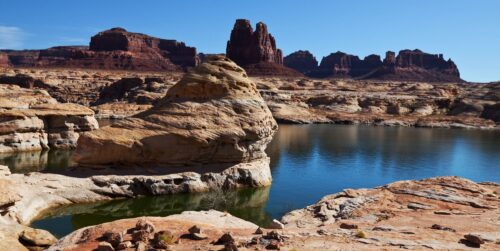
“Lake Powell — the massive Colorado River reservoir that helps supply water and power across the West — is entering peak summer at its lowest level on record, raising fresh concerns about water supplies that millions of Californians depend on. Federal projections warn that the lake could fall to the “minimum power pool” as soon as next year, a threshold at which the Glen Canyon Dam can no longer generate electricity. Although the lake’s levels have briefly fallen in years past, those low levels occurred in the spring, before melting snow refilled it. This year, that refill never happened. That’s not just a power issue. It’s a warning sign for the entire Colorado River system — and for California, the single largest user of its water. … ” Read more from the Desert Sun. | Read via AOL News.
Federally imposed temporary solution to Colorado River Compact disagreement grows more likely by the day
“Time is running out for states to come to some kind of consensus for rules under the Colorado River Compact. Twice already, in November of 2025 and February of this year, the seven states involved in re-negotiating water rights and use along with the 100-year old treaty kicked the can down the road and failed to come to an agreement on water sharing. October 1 is the deadline for formalizing operational plans for the upcoming water year. That’s the date at which the U.S. Bureau of Reclamation determines the amounts there might be in cuts to water allowed for Lower Basin states. The U.S. Department of the Interior will impose its own guidelines with interim guidelines from nearly 20 years ago expiring. But the department has been indicating it may come out with guidelines sooner. … ” Read more from CBS News.
Water woes continue as funding for statewide solutions dwindles
“Water advocates are worried about the future of supply following yet another financial withdrawal from a state authority once tasked with solving Arizona’s water shortage. Since lawmakers funded the Water Infrastructure Finance Authority of Arizona with $1 billion to develop long-term water sources in 2022 under former Republican Gov. Doug Ducey, most of that money has been clawed back to help manage the state’s budget. Lawmakers have already swept about two-thirds of the $1 billion funding in previous budgets, and this year’s budget takes another $20 million from WIFA’s water supply development to backfund new shortages in the state budget. The budget cut to WIFA follows a May letter to Gov. Katie Hobbs wherein a coalition of water users, municipalities and utility companies asked the governor to do more to protect WIFA’s funds. More than 30 groups signed onto the letter, including the Central Arizona Project, the League of Arizona Cities and Towns, the Homebuilders Association of Central Arizona and the Arizona Municipal Water Users Association. … ” Read more from the Arizona Capital Times.
In national water news this weekend …
House releases bipartisan water infrastructure bill
“The House Transportation and Infrastructure Committee proposed bipartisan legislation Friday that would authorize infrastructure and studies addressing flood risk and other water challenges, but the package is slimmer on new projects than past versions. The Water Resources Development Act of 2026 includes 10 project authorizations and 131 new studies to be conducted by the Army Corps of Engineers. Four of the projects in the bill are new, while the other six are alterations of projects previously approved by Congress. The bill would also direct the agency to prioritize various issues and studies that have been sidelined by the Trump administration, with provisions seeking to promote nature-based and nonstructural flood solutions. … ” Read more from E&E News.
[spacer]
