
A wrap-up of posts published on Maven’s Notebook this week …
Note to readers: Sign up for weekly email service and you will receive notification of this post on Friday mornings. Readers on daily email service can add weekly email service by updating their subscription preferences. Click here to sign up!
In California water news this week …
State proposes new “good guy’ application fee of up to $250,000 for groundwater oversight costs
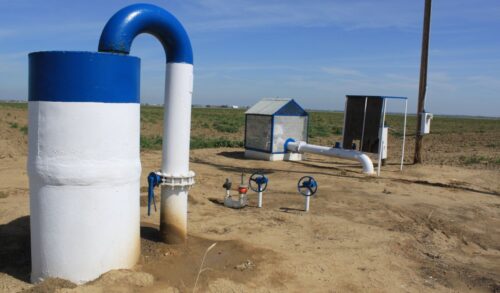 “The state is proposing to create an entirely new fee to help pay for the massive amount of work it takes to review and police groundwater plans in severely overdrafted parts of the San Joaquin Valley. Staff with the Water Resources Control Board are seeking approval of a new fee of $50,000 up to $250,000 for any groundwater agency seeking a so-called “good guy” exemption. Good guy exemptions are allowed for groundwater sustainability agencies (GSAs) found to be in compliance with the Sustainable Groundwater Management Act (SGMA) even if the rest of the subbasin isn’t. The good guy application fee, along with a proposed change to the late payment deadline, were discussed at a June 12 workshop on fees needed to help pay for SGMA oversight. Both proposals left water managers scratching their heads. … ” Read more from SJV Water.
PPIC policy brief: The financial viability and broader benefits of SGMA-ready crops
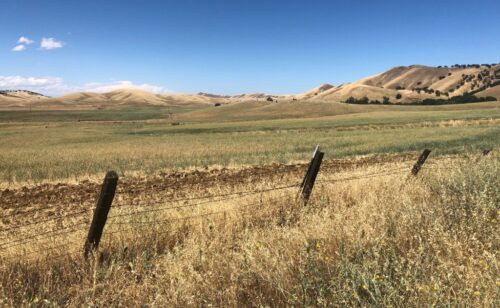
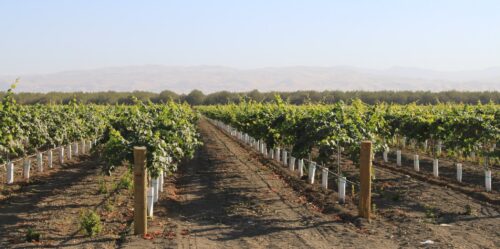 “California’s San Joaquin Valley, one of the most productive agricultural regions in the world, accounts for about 60 percent of the state’s farm economy and produces a large share of the nation’s fruits, nuts, and vegetables. The valley’s abundant sunshine and rich soils support a wide range of crops, but farming depends on irrigation water that has become increasingly unreliable. The Sustainable Groundwater Management Act (SGMA), enacted in 2014, requires overdrafted groundwater basins to reach long‑term balance by the early 2040s. Consequently, less land is likely to be irrigated across the valley, with 10 to 20 percent of farmland, or 500,000 to 900,000 acres, potentially coming out of production. But the scale, location, and consequences of land retirement for the valley’s economy and communities depend on how farmers adapt. Left unmanaged, these idle lands often generate weeds that spread to nearby planted fields and dust that poses health risks for rural communities. … ” Read more from the PPIC.
PPIC: SGMA-ready crops as a low-water alternative to fallowing
“Irrigated farmland in California’s San Joaquin Valley is expected to contract by as much as 900,000 acres—20 percent of irrigated agricultural land—as water managers implement the Sustainable Groundwater Management Act (SGMA). While many land repurposing options are costly, some lands may remain viable with crops that require substantially less water and little additional investment. Evidence from over five years of research suggests that winter grain crops, when managed according to best practices for water-limited conditions, can provide multiple benefits without compromising groundwater sustainability goals. These and similar “SGMA-ready” crops, along with other adaptation strategies, could help reduce widespread and uncoordinated fallowing. … ” Read more from the PPIC.
Is Lake Elsinore water district ‘a legitimate buyer’ for 2 Northern California dams?
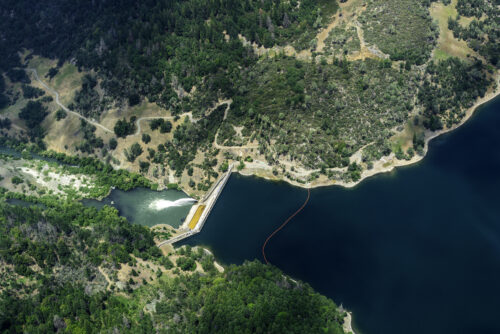
“Six hundred miles is a long way to go for water. That’s how far the Scott and Cape Horn dams are from the Elsinore Valley Municipal Water District. It’s not far enough to deter Elsinore Valley’s interest in buying the dams located in a rural stretch of Northern California. The dams’ fate is the subject of an intensifying showdown involving conservationists, Native Americans, farmers and most recently, the Trump administration. In an April 21 post on X, U.S. Secretary of Agriculture Brooke Rollins described the district as a “legitimate buyer” for the dams, which are part of the Potter Valley Project that sends water to the Russian River flowing through Mendocino and Sonoma counties. “Such a transaction would secure reliable water for 750,000 Californians and hundreds of hardworking farmers who rely on it for irrigation. Putting people and agriculture first,” Rollins added. … ” Read more from the Riverside Press-Enterprise.
Elsinore Valley Municipal Water District and Trump appointee spark controversy over possible acquisition
“Last week, Elsinore Valley Municipal Water District leadership was in Washington, D.C., for scheduled meetings with federal agencies and congressional representatives. One of those meetings led to a bizarre announcement. “Today, I convened a meeting at the White House alongside @SecretaryBurgum with @PGE4Me and the Elsinore Valley Municipal Water District to begin constructive negotiations on the future of the Potter Valley Project — and to take this fight off social media and get it resolved,” U.S. Secretary of Agriculture Brooke Rollins shared June 15 on X. “Our hope is clear: keep the Scott and Cape Horn Dams in place and working for the communities they serve.” In a EVMWD press release that same day, the water district confirmed it “is in the early stages of due diligence, learning more about the Potter Valley Project, the communities it serves, its stakeholders and the condition of its infrastructure.” … ” Continue reading from The Patch.
AI predicts natural river flows in California. Could it do more?
“California lacks information on how much water flows through the vast majority of the state’s rivers and streams—only 8% have stream gages, instruments that measure and record this water (also known as “streamflow”). This limits water managers’ ability to efficiently allocate water between competing users and priorities, including the environment. AI, particularly machine learning, is beginning to help. Because AI is skilled at analyzing large datasets and identifying complex patterns, it has shown potential to fill in important gaps for California water. These include estimates of past streamflows—both in places that weren’t monitored and/or were altered by human actions—as well as forecasting future streamflows. However, AI’s ability to accurately predict streamflow hinges on having sufficient data. In California, these models are further challenged by the state’s complex, human-managed water system. … ” Read more from the PPIC.
Sites water wars
 “Gov. Gavin Newsom is ramping up his efforts to get his pet water projects closer to the finish line before his term in office ends — and it’s rankling some environmental and fishing groups. Eric Buescher, the managing attorney at San Francisco Baykeeper, and Chris Shutes, the executive director of California Sportfishing Protection Alliance, tore in to Newsom and some of his top aides on Tuesday. The reason: letters they had sent to an independent judge appointed by the State Water Resources Control Board in the case deciding whether to grant the proposed Sites Reservoir a new water right to pull water from the Sacramento River. Sites Reservoir could store up to 1.5 million acre-feet of water, and would be California’s first new reservoir in decades. The project has the endorsement of both Newsom and Trump, and has been allotted more than $1 billion in state funds. But planned construction is already behind schedule as a debate about water rights drags on, with environmental groups saying pulling too much water from the river could harm endangered species. … ” Read more from Politico (scroll down).
California dairy industry pushes back on new water quality requirements
 “The California State Water Resources Control Board has released a final draft remand order directing the Central Valley Regional Water Quality Control Board to revise dairy water quality regulations, prompting concerns from industry groups about potential costs and operational impacts on dairy farms. The proposed changes apply only to dairies operating in the Central Valley. Public comments on the order are due by noon July 30. The order focuses on reducing nitrate impacts to groundwater and would require regulators to develop new dairy requirements in phases rather than through a single comprehensive update. … ” Read more from the Business Journal.
California farmers warn proposed nitrogen limits could force farms out of business
“California agriculture helps feed the nation, producing more than 400 commodities and leading the U.S. in nuts, grapes, citrus and berries. But many farmers across the Golden State say the pressure of farming there is reaching a breaking point. According to the Western Growers, California has lost roughly 30% of its farms over the past decade. At the same time, regulatory costs have surged from about $106 per acre 20 years ago to more than $1,600 per acre today. From water restrictions and rising labor costs to mounting environmental regulations, farmers say the challenges continue to grow. Now, a proposed nitrogen fertilizer bill could become one of the biggest battles California agriculture has faced yet. … ” Read more from Ag Web.
Chasing 14,000 “forever chemicals” to protect California’s drinking water
“A rain jacket that shed water while remaining surprisingly light and breathable. A restaurant takeout container that kept grease from soaking through. Firefighting foam that could rapidly extinguish dangerous fuel fires. For decades, innovations like these relied on a family of chemicals known as PFAS. At the time, PFAS seemed almost magical. The chemicals resisted water, grease and heat with remarkable effectiveness, helping create products that were safer, more durable and more convenient. Manufacturers found uses for them everywhere. Then scientists discovered the catch. Studies linked exposure to PFAS to harm to human health, including cancer, developmental effects on fetuses, and adverse impacts on the liver, immune system, thyroid and more. The same chemical properties that made PFAS so useful also made them extraordinarily persistent. Instead of breaking down, some PFAS compounds could remain in the environment for years — even decades — finding their way into the air, soil, groundwater and drinking water supplies. … ” Continue reading from the State Water Board’s Ebb and Flow.
California has lost more than half of its coastal sand dunes, first-ever comprehensive assessment reveals

“A study conducted by UC Santa Barbara researchers and collaborators has found that California has lost more than half of its coastal dune systems. The researchers’ assessment — the first of its kind for the California coast — estimates that 60% of dune systems that existed from 1850 have been lost, due to a combination of urban development, land-use changes and erosion. “There are major implications of this loss for the California coast, including reduced habitats for plants, insects and other invertebrates, birds and small mammals,” said the paper’s lead author, postdoctoral researcher and physical geographer Tim Baxter. “Importantly, we also lose coastal protections against storms and sea level rise.” This assessment, one of the largest and most detailed inventories of coastal sand dunes ever produced, is published in the journal Earth’s Future. … ” Read more from the UC Santa Barbara Current.
Tech billionaires hire Democratic dealmakers in renewed push to build a Bay Area city
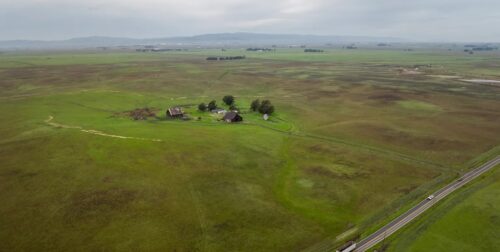
“California Forever, the tech billionaire-backed group that hopes to build a city from scratch on farmland in the outer San Francisco Bay Area, is lobbying state leaders to fast-track a massive shipbuilding deal that would kick-start its development after years of local opposition. The billionaires behind the project are seeking a deal to expedite environmental reviews of the development and, if necessary, bypass county restrictions on building by being absorbed into Suisun City boundaries. They’ve hired former Senate President Pro Tem Darrell Steinberg and former Senate Majority Leader Bob Hertzberg — Democratic architects of landmark environmental laws — to make their case, and are using the prospect of luring a major shipbuilder to California to accelerate the dealmaking. California Forever has pursued its project for nearly a decade, though the vision has shifted: At first pitched as a walkable city with cottages, bike lanes and even a water park, the plan then added a major shipbuilding operation and, last summer, a manufacturing hub. … ” Read more from Cal Matters.
California Forever pushes Newsom to ease hurdles for proposed new city
“Backers of the plan to build a new city in Solano County say they are in talks with Gov. Gavin Newsom over legislation that would ease regulatory hurdles for the company’s planned development of a dense, walkable city and a shipbuilding facility along the county’s waterfront. Newsom’s spokespeople did not respond to multiple requests for comment from the Chronicle about the talks, but the billionaire-backed California Forever project has hired two longtime Newsom allies, which appears to signal that the group is serious about seeking legislation to help circumvent local opposition and curtail CEQA opposition. In recent months, former state legislative leaders Darrell Steinberg and Bob Hertzberg have been hired to continue rebranding California Forever’s proposal to build an urban enclave in rural Solano County as a conduit for economic growth by bringing new manufacturing and shipbuilding jobs to the region. … ” Read more from the San Francisco Chronicle.
In commentary this week …
Investing in water is investing in California
“Water is more than a resource — it is the foundation upon which California’s future will be built. No one knows this more than ACWA members. Every major challenge facing our state, from housing affordability and economic growth to food security and wildfire resilience, depends on reliable water supplies and modern water infrastructure. When California invests in water, it invests in statewide solutions. That reality is at the heart of ACWA’s Vision for Our Water Future initiative. Over the past several months, ACWA members and coalition partners from across California have come together around a simple but powerful idea: a strong water future is essential to a strong California future. As we look ahead to the 2026 gubernatorial election, with Steve Hilton and Xavier Becerra advancing, we know when our next governor prioritizes a reliable water supply and infrastructure, they unlock the solutions to our state’s most pressing challenges. … ” Read more from ACWA’s Water News.
The future of California’s water supply
Michelle Paul, Executive Director of the California Farm Water Coalition, writes, Gov. Gavin Newsom’s comments at the Association of California Water Agencies (ACWA) Conference in Sacramento provided some insight into his definition of success and the direction he believes the state should go. Let’s hope that whoever the state’s next governor will be was listening and taking to heart the unparalleled importance water is to every Californian. Newsom talked a lot about the projects that should provide new water supplies; the Delta Conveyance Project, Sites Reservoir and groundwater storage, all of which are important. What remains unclear is what the final cost for these new supplies will be. He was largely silent on agriculture, leaving farmers wondering where they fall in California’s future water supply plans. Like the overbearing regulations that have created the highest-cost gasoline in the nation, even prior to the Iran war, new water supplies must be affordable for farmers to be able to grow food here at home. … ” Continue reading from Capitol Weekly.
Delta Tribal Environmental Coalition urges lawmakers to reject bill threatening water oversight and public participation
The Delta Tribal Environmental Coalition writes, “The Delta Tribal Environmental Coalition (DTEC), consisting of the Shingle Springs Band of Miwok Indians, Winnemem Wintu Tribe, Little Manila Rising, and Restore the Delta, has submitted a letter to the California Senate Natural Resources and Water Committee opposing AB 2215. Coalition members warn that the bill is an attempt to clear the path for controversial projects, including the Delta Conveyance Project, without proper regulatory and public oversight. AB 2215 would extend the Department of Water Resources’ (DWR) water rights permit for the State Water Project by more than forty years, overriding established State Water Board authority and limiting public participation in critical water rights proceedings. The coalition argues that the bill would undermine longstanding procedures governing water rights permit extensions, grant preferential treatment to DWR, and bypass established hearing processes designed to ensure permit extensions serve the public interest. The letter describes the bill as the latest effort by DWR to exempt itself from rules that apply to all other water rights holders, at the expense of the environment, Delta communities, Tribes, and the public interest. … ” Continue reading from the Delta Tribal Environmental Coalition.
C-WIN: More special treatment for the powerful at the expense of ratepayers
By Max Gomberg, Senior Policy Analyst, California Water Impact Network, writes, “When a government agency demands special treatment to expedite “critical” projects, we should be skeptical. Invariably, the claimed need benefits a politically powerful industry that wants to avoid transparency and accountability. Currently, such “special treatment” arguments are being made to advance multiple harmful projects, from ICE concentration camps to AI data centers. In California, proponents of corporate agriculture and desert development are making the same special treatment claim for the expansion of the State Water Project (SWP). Most immediately, they are pushing Assembly Bill 2215, which would give the SWP a free pass for construction of the Delta Conveyance Project (DCP), a $60-$100 billion mega-tunnel that would drive water rates through the roof and further desecrate our environment. Californians and their elected representatives should reject this blatant power grab. … ” Read more from C-WIN
Political pressure on Sites Reservoir doesn’t change the facts
The San Francisco Baykeeper and the California Sportfishing Protection Alliance write, “The evidence shows the multi-billion-dollar Sites Reservoir project cannot operate as proposed without unreasonable harm to rivers, fish, and ecosystems. So says the independent judge assigned by the State Water Board to hear and weigh the evidence. As a result, many of the state’s political elite have written to the judge to tell her she should change her conclusions, not based on the law or the evidence, but simply so that the Sites Project can divert more water. This reminds us of an old legal aphorism: “If the law is against you, argue the facts. If the facts are against you, argue the law. If both are against you, pound the table and yell.” In 2023, the Sites Project Authority applied for a new water right to divert water from the Sacramento River to the proposed Sites Reservoir. Dozens of entities challenged the application. The dispute was referred to the State Water Board’s Administrative Hearings Office (“AHO”). … ” Continue reading this press release.
Why operating a desalination plant in California is a high-stakes gamble
Attorney Keith R. Solar writes, “California’s acceptance of desalination has ebbed and flowed over the years as the state grapples with shoring up water security in the face of constant drought conditions. Recent discussions over “water swaps” have generated excitement over the possibilities. While regional water-sharing arrangements between neighboring states and California could result in new desalination facilities, the process of converting seawater into drinking water comes with a host of regulatory hurdles that make planning, permitting and operating reverse osmosis plants extremely challenging in California. … ” Read more from the Voice of San Diego.
Help communities understand the water impacts of data centers
Marie Grimm, Ph.D. and Michael Kiparsky, Ph.D. with the Wheeler Water Institute at UC Berkeley Law’s Center for Law, Energy & the Environment, write, “California’s boom in data centers places growing demands on stressed water resources. Everyone who uses the internet benefits from data centers. Yet the impacts of data centers are felt most by the communities where these facilities are built and there is no state law controlling their spread. The nightmare: a community greenlights a data center, only to later learn that it’s on the hook for providing cooling water it doesn’t have. We believe that communities should be able to understand what these facilities mean for their future, before they decide whether to allow construction. Details matter. A small data center using recycled water in a city with sufficient supply may cause no issues. … ” Continue reading at Capitol Weekly.
Data centers are stewing in their own pollution
Columnist Mark Gongloff writes, “When “data centers” and “climate change” are in the same sentence, it’s usually about how the former are fueling the latter with their thirst for energy. But the latter can also make life expensively miserable for the former. Maybe it’s not a great idea to pollute a planet if you have to share its atmosphere. About 6% of nearly 3,000 data centers planned around the world are in places that will immediately put them at high risk of damage because of extreme weather, according to a new study by the risk-analytics firm XDI Pty Ltd. “High risk,” in this case, means these data centers could essentially be uninsurable without hardening themselves against fires, floods or whatever else their local environment will throw at them. This is XDI’s follow-up to its report last year estimating that about 7% of nearly 9,000 built and planned data centers will be at high risk of climate damage by 2050. An additional 20% will be at “moderate” risk, meaning they’ll be able to get insurance, but it will be costly. … ” Read more at the San Jose Mercury News.
The “thirst” for data
The California Water Impact Network writes, “As the tech sector, their billionaire investors and the Trump regime aggressively foist AI on every niche of society, commerce and government, people are pushing back against its destructive power. One of the central battlegrounds is the proliferation of data centers: sprawling complexes jammed with servers that run AI models and tools and require massive amounts of energy and water. These centers are springing up all over the country, including, of course, California: the birthplace of modern digital technology. More than 300 data centers are planned for our state—and that may well be just the beginning. Unsurprisingly, our elected officials—many of whom benefit from tech sector campaign contributions—are well behind the curve when it comes to regulation of the AI juggernaut. As a result, AI technology is already wreaking havoc, from aiding suicidal ideation to fomenting violence and sexual abuse. … ” Continue reading from the California Water Impact Network.
A super El Niño threatens disaster. Trump is handling it recklessly
Terry Garcia, former deputy administrator of the National Oceanic and Atmospheric Administration, writes, “This month, Noaa confirmed the formation of El Niño in the tropical Pacific and issued an official advisory. Forecasters expect it to strengthen through the winter of 2026–27, with a 63% chance it will reach the “very strong” threshold, placing it among the strongest events in the modern record dating back to 1950. … In the face of this evolving threat, the Trump administration has sought to cripple our forecasting capabilities. This spring, the National Science Foundation (NSF) began “descoping” the Ocean Observatories Initiative, a network that delivers real-time ocean data from more than 900 sensors. “Descoping” is bureaucratic language for dismantling the program. The agency announced plans to pull all sensors, buoys and other equipment from four of the program’s five sites. These arrays span from the Gulf of Alaska to the Irminger Sea between Greenland and Iceland, and down to the waters off North Carolina. Built over a decade at a cost of approximately $386m, the system is among the most advanced ocean-observing networks in the world. Make no mistake. Pulling these arrays was not a budgetary exercise. Rather, the NSF’s actions are more properly viewed as an extension of the Trump administration’s broader assault on federal climate science. The objective is apparently to weaken the programs that measure climate change and then claim the problem is “uncertain”. But turning off the alarm does not put out the fire. … ” Read the full commentary at The Guardian.
In regional water news this week …
The Klamath River dams are gone. Now comes the plan to bring steelhead home.
“Two years after crews pulled the last of four dams off the Klamath River, the question has shifted from whether the fish would return to how far they can go. California Trout has answered part of that with a new recovery blueprint built around steelhead, the wild, sea-running trout that once climbed the river’s full length before concrete walls cut them off. The report lays out a long-term plan for rebuilding steelhead runs across the more than 400 miles of habitat reopened by the 2024 demolition, the largest dam removal in United States history. It draws on monitoring that has already produced surprises, including thousands of Chinook pushing past the old Iron Gate Dam site and salmon reaching Upper Klamath Lake for the first time in over a century. … ” Read more from Active NorCal.
Feds take Potter Valley dam “public” comments privately Tuesday evening
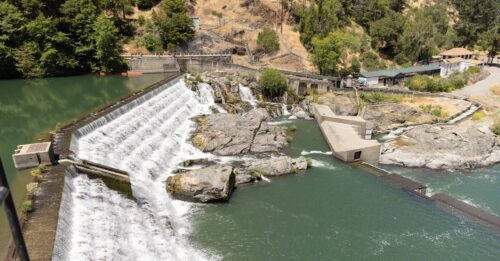
“People who came to the Ukiah Valley Conference Center on Tuesday evening wanting to weigh in on the future of the Potter Valley dams did not get to address a room. They got a ticket number. Most walked in expecting a hearing. What they found was a waiting room — rows of chairs, mostly empty, and a handful of federal staffers. No panel to face. No microphone. The public comment everyone came for was happening — but it was one person at a time, behind a closed door, where no one else could hear it and recording wasn’t allowed. The Federal Energy Regulatory Commission (FERC) is weighing Pacific Gas and Electric Co.’s application to surrender its license for the century-old Potter Valley Project and decommission it — a plan that calls for removing the project’s two Eel River dams. The one-on-one sessions included the public commenter, a court reporter and a commission staffer. Speakers waited to be called by number. Staff assured them that the transcript would go up on FERC’s website in about 10 days. … ” Continue reading from the Mendocino Voice.
Reach-out from an unnamed entity raises fears about possible data center in Mount Shasta region
“On Monday, a discussion at the Mount Shasta City Council meeting revealed that the city had received an inquiry from an entity about building an AI data center close to the city. Mount Shasta, a city about an hour north of Redding with a population of around 3,000, is known for its water. City Manager Todd Juhasz, who brought the matter up in the meeting, said that staff had received only limited details so far but the inquiry was about using the former Crystal Geyser bottling site, located near the intersection of North Mt. Shasta Boulevard and Ski Village Drive. Juhasz told Shasta Scout in an interview today that the inquiry was received by Kim Fowler, Mount Shasta’s Planning Director, last Friday. He declined to share information with the public about the name of the entity that had inquired. … ” Read more from the Shasta Scout.
It’s a critical year to pick a solution to save Monterey County’s aquifers. The questions are how, and who pays?
“If nothing is done, a portion of northern Monterey County could lose access to aquifers that underlie a significant chunk – call it 25 percent – of the county’s agricultural production, and supply drinking water to hundreds of thousands of residents, 50,000 of whom are disadvantaged. The sea wants to move inland, a fact that’s been known in the region for over 80 years as agricultural production increased. But over time, groundwater was pumped faster than could be replenished, exacerbating the inland march of salty water beneath Castroville toward Salinas. Eventually, the state said that something needed to be done about it. How to stop the ocean from spreading and further contaminating these freshwater aquifers – specifically, what’s known as the 180/400 Subbasin – has become one of the region’s defining environmental and political questions. Thanks to California’s Sustainable Groundwater Management Act, passed just over a decade ago, local water agencies need to decide on a plan to protect future water supply. In 2015, that countdown began. … ” Read more from Monterey Now.
Monterey Co.: Water resources agency, board of supervisors respond to seawater intrusion report
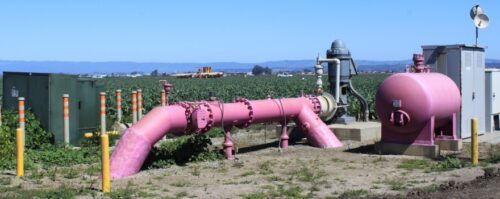 “The Monterey County Board of Supervisors on Tuesday reviewed responses to a Civil Grand Jury report that outlined several recommendations for addressing seawater intrusion in the Salinas Valley Basin. The board, as well as the Monterey County Water Resources Agency, approved a draft joint response to the grand jury report called “Seawater Intrusion — A Shared Problem in Monterey County.” California’s civil grand jury system provides independent investigations into issues in counties and is composed of residents who select which areas or problems they want to explore. The jury creates its report and then requires leaders such as boards of supervisors, city councils or city or county departments to respond. … ” Read more from SF Gate.
Environmental groups sue California State Parks over plan they say endangers protected wildlife
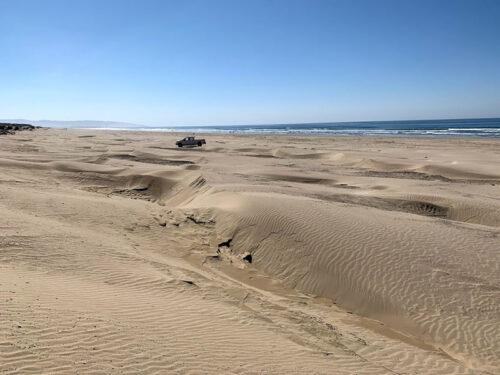 “An environmental group and Native American tribe have challenged California’s approval of the Oceano Dunes habitat conservation plan, saying it will allow for the killing of federally protected wildlife. The Center for Biological Diversity and the Northern Chumash Tribal Council argue that a habitat conservation plan and a final environmental impact report certified in May underpin State Parks’ application for an Endangered Species Act incidental take permit. Such permits authorize the harming, pursuit or killing of protected species within a project area. Such take can stem from motor vehicle use. In their lawsuit, filed Thursday, they ask a Sacramento County Superior Court judge to vacate the environmental report’s certification and block further project approvals until the state complies with the California Environmental Quality Act. … ” Read more from the Courthouse News Service.
Kings County groundwater agencies move closer toward reconciliation
“Fractures are rapidly mending in the Kings County region after groundwater agencies split apart two years ago when the state placed the region on probation. In the latest show of unity, the Mid-Kings Groundwater Sustainability Agency (GSA) voted June 9 to join a region-wide effort to write a single groundwater management plan, rather than each of the five GSAs writing its own. At the same meeting, a representative of the Kings County Water District, which abandoned the GSA in 2024, asked to reconcile. After the district left, Mid-Kings had to be re-formed with Kings County as its lead agency and Chuck Kinney, the county’s redevelopment director, as its general manager. “I think Kings County Water District, we’ve all agreed, all the board, has agreed that we would like to have some type of involvement back with the GSA because we feel like Chuck and you guys need help,” Mello said during the June 9 meeting. “Whether it’s financial, staffing, whatever.” … ” Read more from SJV Water.
‘We’re very conscious of the notion that data centers are in the public eye’: CRC proposes data center outside of Taft
“A dusty oil field in Elk Hills may soon be the home of data center led by the California Resource Corporation. “We’re very conscious of the notion that data centers are in the public eye now nationally. We know that, we understand that. That is why we’re committed to preemptively designing the data center in a way that doesn’t even bring to bear issues that the community would be concerned about,” said CRC’s Chief Sustainability Officer, Chris Gould. The CRC officially filed to create a 600,000 square foot data center facility Monday. But what do residents say about the potential new project and what steps are in place to prevent potential contamination? “I was kind of surprised that they were looking at out here in the oilfields. I started to do some research. I don’t know much about the data centers,” said Taft resident, Patti Bench. … ” Read more from KGET.
The Colorado River is vanishing — and the fixes are getting weird
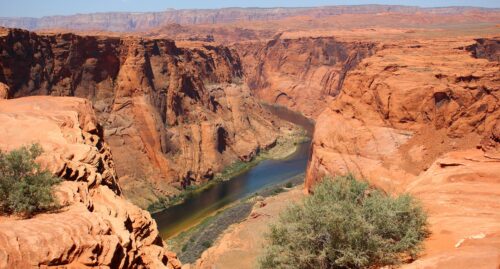
“The crisis on the Colorado River is simple: The seven Western states that border the essential waterway use more water than it contains. Chronic overuse has drained its two largest reservoirs, Lake Powell and Lake Mead, and a two-decade drought cycle has pushed them to the point of collapse. The dream solution to this crisis is an agreement among all involved to use less water. Such a deal would decide who must reduce consumption, which means asking which cities would ban irrigating lawns and washing cars and which farmers would rip up their fields. This has proven impossible. The states have been trying to work this out since the last dry spell, in 2022, but talks have ended in frustration and name-calling. The main sticking point is between the “Upper Basin” states led by Colorado and Utah (along with Wyoming and New Mexico) and the “Lower Basin” states of Arizona, California, and Nevada. Each side believes the other has a legal and a moral responsibility to cut usage during dry years. The stalemate means the Trump administration must design a schedule of restrictions ahead of a crucial deadline in September. So far, Interior Secretary Doug Burgum has balked at resolving the quarrel. … ” Read more from Grist.

