
Several news sources featured in the Daily Digest may limit the number of articles you can access without a subscription. However, gift articles and open-access links are provided when available. For more open access California water news articles, explore the main page at MavensNotebook.com.
On the calendar today …
- PUBLIC HEARING: Delta Conveyance Project water right hearing beginning at 9am. The State Water Resources Control Board Administrative Hearings Office is holding a Public Hearing on the pending Petitions for Change of Water Right Permits for the Delta Conveyance Project. Interested members of the public who would like to watch this hearing without participating may do so through the Administrative Hearings Office YouTube channel at: bit.ly/aho-youtube. Click here for the meeting notice.
- MEETING: Central Valley Flood Protection Board beginning at 9am. Agenda items include enforcement orders and permits, Central Valley Flood Protection Plan update; and the Delta Levees Maintenance Subventions Program. Click here for the full agenda and remote access instructions.
- WORKSHOP: Proposition 4 CIMIS Stations Network Expansion and Site Improvement Project from 11am to 12pm. The Department of Water Resources (DWR) will host two (2) virtual public workshops to provide information about the Public Review Draft Guidelines and provide an opportunity to submit comments. Click here to register.
In California water news today …
AI predicts natural river flows in California. Could it do more?
“California lacks information on how much water flows through the vast majority of the state’s rivers and streams—only 8% have stream gages, instruments that measure and record this water (also known as “streamflow”). This limits water managers’ ability to efficiently allocate water between competing users and priorities, including the environment. AI, particularly machine learning, is beginning to help. Because AI is skilled at analyzing large datasets and identifying complex patterns, it has shown potential to fill in important gaps for California water. These include estimates of past streamflows—both in places that weren’t monitored and/or were altered by human actions—as well as forecasting future streamflows. However, AI’s ability to accurately predict streamflow hinges on having sufficient data. In California, these models are further challenged by the state’s complex, human-managed water system. … ” Read more from the PPIC.
Regional watershed resilience pilot projects guide statewide water planning
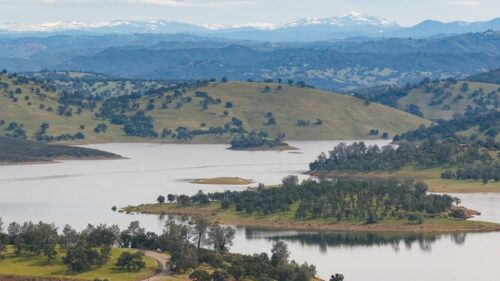
“As California faces increasing weather extremes brought on by climate change, watershed-scale planning has become an essential strategy for developing adaptable solutions and more resilient communities. Reflecting the growing need, the completion of five pilot studies through the California Department of Water Resources’ (DWR) Watershed Resilience Program now provides essential insights that will guide future investments and strengthen statewide water planning. The Watershed Resilience Program supports planning projects to help communities that are experiencing the impacts of climate change. Pilot projects implemented in five diverse regions across the state formed watershed-based networks that jointly analyzed the unique risks to each watershed, such as reduced snowpack, sea level rise, and saltwater intrusion, and developed tailored adaptation strategies as part of their Watershed Resilience Plan. … ” Read more from DWR.
Chasing 14,000 “forever chemicals” to protect California’s drinking water
“A rain jacket that shed water while remaining surprisingly light and breathable. A restaurant takeout container that kept grease from soaking through. Firefighting foam that could rapidly extinguish dangerous fuel fires. For decades, innovations like these relied on a family of chemicals known as PFAS. At the time, PFAS seemed almost magical. The chemicals resisted water, grease and heat with remarkable effectiveness, helping create products that were safer, more durable and more convenient. Manufacturers found uses for them everywhere. Then scientists discovered the catch. Studies linked exposure to PFAS to harm to human health, including cancer, developmental effects on fetuses, and adverse impacts on the liver, immune system, thyroid and more. The same chemical properties that made PFAS so useful also made them extraordinarily persistent. Instead of breaking down, some PFAS compounds could remain in the environment for years — even decades — finding their way into the air, soil, groundwater and drinking water supplies. … ” Continue reading from the State Water Board’s Ebb and Flow.
EPA touts crackdown on smuggled pesticides in L.A. visit
“The U.S. Environmental Protection Agency is ramping up its enforcement of illegal pesticides smuggled through the ports of Long Beach and Los Angeles, officials said during a visit to L.A. on Thursday. Since President Trump began his second term in January 2025, EPA has blocked more than 2.4 million pounds of illegal pesticides from entering the country, said Lee Zeldin, the agency’s administrator. Much of it comes from China, but some comes from Mexico and, on the East Coast, from Africa. “We’re very alarmed by any chemical that anyone would seek to bring into this country that our own government hasn’t had the opportunity to vet, to research to fully understand,” Zeldin said. “That’s why it’s so important that these products get stopped at the border.” … ” Read more from the LA Times.
ILRP: Expert panel work concludes with Presentation to State Water Board
 “The work of California’s Second Agricultural Expert Panel ended June 16, 2026, when panel chair Daniel Geisseler presented the panel’s findings to the State Water Resources Control Board (State Water Board). The expert panel, convened by the State Water Board to advise it on regulating nitrogen (N) discharges through the Irrigated Lands Regulatory Program, began its work in August 2025. When introducing chair Geisseler’s presentation, State Water Board staff reported that the expert panel held 21 meetings and heard over 60 presentations from experts. (For coverage of these meetings and presentations, visit the archive of Maven’s Notebook articles.) Staff also reported that 80-100 members of the public attended each meeting, demonstrating strong stakeholder interest in the expert panel’s work. Public comment was taken at every meeting and two listening sessions were devoted to public comment. … ” Continue reading from Jane Sooby at Maven’s Notebook.
PRESS RELEASE: AquAlliance, Central Delta Water Agency & California Sportfishing Protection Alliance challenge water transfers
“AquAlliance, Central Delta Water Agency, and the California Sportfishing Protection Alliance (plaintiffs) filed a lawsuit challenging the 2026/2027 North-to-South Water Transfers proposed by San Luis Delta Mendota Water Authority (SLDMWA or agency) on June 12, 2026. The litigation alleges that the agency relied upon a California Environmental Quality Act (CEQA) Addendum to the Long Term Water Transfers Environmental Impact Report as environmental review for the new, distinct Project, for which no prior EIR or negative declaration has ever been prepared. The proposed 2026/2027 water transfer program may transfer up to 250,000 acre-feet through “groundwater substitution and/or stored reservoir release actions” by the U.S. Bureau of Reclamation (Bureau) and water districts with the majority of the water coming from north of the Delta.1 The plaintiff‟s petition states: “The Addendum fails CEQA in numerous, independent, and overlapping respects: the Project‟s reliance on it is unlawful; it employs an improper review tier; its mitigation measures are deferred, unenforceable, and weaker than those of the prior environmental impact report (EIR) without justification; the environmental analysis of biological resources, land subsidence, and water quality is inadequate and unsupported; required analyses of alternatives, cumulative impacts, Indian Trust Assets and environmental justice are wholly absent; and changed circumstances and new information regarding threatened and endangered species require supplemental environmental review.” … ” Continue reading this press release.
Hundreds rally to get $12 billion research bond on ballot. Will it make it?
“Ruby Kharod researches solutions to climate change at the Lawrence Berkeley National Laboratory. Erika Anderson is a postdoctoral scholar at UC San Francisco harnessing molecular biology to better understand the development of diseases. Lara Schwarz studies the effect of wildfires and heat waves on public health at UC Berkeley. Early Wednesday morning, they made their way to Sacramento alongside about 200 students, faculty and community members to appeal to legislators to place a $12 billion research bond on the November ballot. Against the federal government’s massive funding cuts to scientific research, the proposed bond seeks to stabilize science funding in California by providing research grants and loans for medical, environmental and agricultural research. … ” Read more from the Sacramento Bee.
California Forever pushes Newsom to ease hurdles for proposed new city
“Backers of the plan to build a new city in Solano County say they are in talks with Gov. Gavin Newsom over legislation that would ease regulatory hurdles for the company’s planned development of a dense, walkable city and a shipbuilding facility along the county’s waterfront. Newsom’s spokespeople did not respond to multiple requests for comment from the Chronicle about the talks, but the billionaire-backed California Forever project has hired two longtime Newsom allies, which appears to signal that the group is serious about seeking legislation to help circumvent local opposition and curtail CEQA opposition. In recent months, former state legislative leaders Darrell Steinberg and Bob Hertzberg have been hired to continue rebranding California Forever’s proposal to build an urban enclave in rural Solano County as a conduit for economic growth by bringing new manufacturing and shipbuilding jobs to the region. … ” Read more from the San Francisco Chronicle.
SEE ALSO: California Forever presses governor, Legislature to fast track deal, from the Sacramento Bee
California Alliance for Jobs, Solano Forward support California Forever to legislators
“The California Alliance for Jobs joined the California Association of Realtors, Solano Forward, California YIMBY, and a variety of other labor and housing advocacy groups in a letter to state lawmakers this week calling for legislation to support the Suisun Expansion Plan and Solano Shipyard. The letter claims the projects would generate $215 billion in construction investment, more than 530,000 jobs, and more than $16.2 billion in combined state, local, and federal tax revenue. “We seek legislation to build on California’s long-established framework of streamlining legislation that enables major projects of statewide significance to move quickly while preserving local control and environmental safeguards,” the letter reads. “In addition, this legislation can align with the historic 40-year construction labor agreement signed by the Napa-Solano Building & Construction Trades Council and North Coast States Carpenters Union, including members of our coalition.” … ” Read more from the Vacaville Reporter.
In commentary today …
Investing in water is investing in California
“Water is more than a resource — it is the foundation upon which California’s future will be built. No one knows this more than ACWA members. Every major challenge facing our state, from housing affordability and economic growth to food security and wildfire resilience, depends on reliable water supplies and modern water infrastructure. When California invests in water, it invests in statewide solutions. That reality is at the heart of ACWA’s Vision for Our Water Future initiative. Over the past several months, ACWA members and coalition partners from across California have come together around a simple but powerful idea: a strong water future is essential to a strong California future. As we look ahead to the 2026 gubernatorial election, with Steve Hilton and Xavier Becerra advancing, we know when our next governor prioritizes a reliable water supply and infrastructure, they unlock the solutions to our state’s most pressing challenges. … ” Read more from ACWA’s Water News.
Help communities understand the water impacts of data centers
Marie Grimm, Ph.D. and Michael Kiparsky, Ph.D. with the Wheeler Water Institute at UC Berkeley Law’s Center for Law, Energy & the Environment, write, “California’s boom in data centers places growing demands on stressed water resources. Everyone who uses the internet benefits from data centers. Yet the impacts of data centers are felt most by the communities where these facilities are built and there is no state law controlling their spread. The nightmare: a community greenlights a data center, only to later learn that it’s on the hook for providing cooling water it doesn’t have. We believe that communities should be able to understand what these facilities mean for their future, before they decide whether to allow construction. Details matter. A small data center using recycled water in a city with sufficient supply may cause no issues. … ” Continue reading at Capitol Weekly.
In regional water news and commentary today …
NORTH COAST
The Klamath River dams are gone. Now comes the plan to bring steelhead home.
“Two years after crews pulled the last of four dams off the Klamath River, the question has shifted from whether the fish would return to how far they can go. California Trout has answered part of that with a new recovery blueprint built around steelhead, the wild, sea-running trout that once climbed the river’s full length before concrete walls cut them off. The report lays out a long-term plan for rebuilding steelhead runs across the more than 400 miles of habitat reopened by the 2024 demolition, the largest dam removal in United States history. It draws on monitoring that has already produced surprises, including thousands of Chinook pushing past the old Iron Gate Dam site and salmon reaching Upper Klamath Lake for the first time in over a century. … ” Read more from Active NorCal.
Feds take Potter Valley dam “public” comments privately Tuesday evening
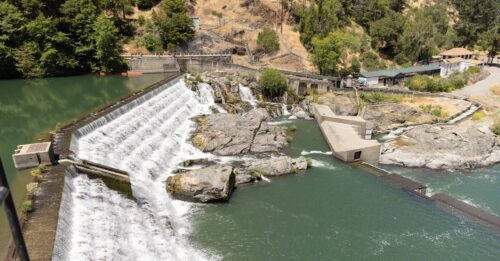
“People who came to the Ukiah Valley Conference Center on Tuesday evening wanting to weigh in on the future of the Potter Valley dams did not get to address a room. They got a ticket number. Most walked in expecting a hearing. What they found was a waiting room — rows of chairs, mostly empty, and a handful of federal staffers. No panel to face. No microphone. The public comment everyone came for was happening — but it was one person at a time, behind a closed door, where no one else could hear it and recording wasn’t allowed. The Federal Energy Regulatory Commission (FERC) is weighing Pacific Gas and Electric Co.’s application to surrender its license for the century-old Potter Valley Project and decommission it — a plan that calls for removing the project’s two Eel River dams. The one-on-one sessions included the public commenter, a court reporter and a commission staffer. Speakers waited to be called by number. Staff assured them that the transcript would go up on FERC’s website in about 10 days. … ” Continue reading from the Mendocino Voice.
Mount Shasta data center proposal creates widespread public backlash
“A proposed data center at the former Crystal Geyser bottling plant in Mount Shasta has sparked widespread concern among residents, prompting city leaders to address misinformation while emphasizing that the project is not currently under the city’s control. The discussion began after City Manager Todd Juhasz revealed during a recent city council meeting that a company had contacted him about the possibility of building a data center at the former Crystal Geyser property. Juhasz said he questioned the company about its expected water use and the number of jobs the facility would create. … ” Read more from Action News Now.
SEE ALSO: Unnamed data center developer eyeing former Crystal Geyser bottling site in Mount Shasta, California, from Data Center Dynamics
SIERRA NEVADA
Tahoe might get snow this weekend. Here’s how you should prepare
“A storm is rolling into Lake Tahoe this weekend — just in time to disrupt weekend plans for boaters and backcountry travelers, and a timely reminder of last year’s sudden June snowstorm that claimed multiple lives on the water. A lake wind advisory is in effect from Friday at 11 a.m. to Saturday at 2 a.m., but windy conditions are expected to persist around the lake throughout the day on Saturday, National Weather Service meteorologist Gigi Giralte said. That could bring southwest winds of 15 to 25 mph on the lake, with gusts up to 40 mph and waves up to three feet tall on Friday. “With those stronger winds, it is much easier for small boats and kayaks and other small crafts like that to be prone to capsizing,” Giralte said. … ” Read more from KQED.
Lake Tahoe officials turn back boaters trying to skirt checks for golden mussels
“Authorities have intercepted six watercraft that illegally attempted to launch on Lake Tahoe amid a campaign to keep golden mussels and other invasive species out of the iconic Sierra lake. The boaters stopped this summer by Tahoe Regional Planning Agency inspectors were attempting to enter the lake with tampered inspection seals. The wire seals certify a vessel had either been decontaminated and inspected for invasive species or was last launched in the Lake Tahoe basin, agency officials said in a news release. … ” Read more from the Sacramento Bee.
SEE ALSO: Trying to circumvent invasive species rules, six illegal boat launches stopped at Lake Tahoe, from South Tahoe Now
Four graduate students are asking what the mountains can still tell us
“Mountain snow and glaciers may seem distant from the cities, farms, and communities that depend on them, but these high-elevation regions store and release water for populations far downstream. When precipitation changes, snowlines rise, or glaciers retreat, the effects can move through entire watersheds. And while scientists know these mountain water systems are changing, they cannot always determine how quickly or what those changes mean for future water supplies. The shortage of observations shaped the High-Elevation Climate Science Workshop, held in early June at the University of Nevada, Reno at Lake Tahoe. Four University graduate students, Ludving Cano Fernandez, Navaraj Pokhrel, Iram Bano and Kristina Priotto, presented research on mountain environments in Bolivia, Nepal, Pakistan, Peru and the nearby Sierra Nevada. “It was the perfect venue for a workshop like this. You are in contact with nature. You are literally on a mountain.” … ” Read more from Nevada Today.
SACRAMENTO VALLEY
Shasta County is replacing fireworks with a 200-drone light show over Shasta Lake for the Fourth of July
“The county will debut a 200-drone light show over Shasta Lake this Independence Day, replacing traditional fireworks with a choreographed aerial display that eliminates the fire risk that comes with pyrotechnics in one of the most fire-prone regions in Northern California. Drone shows have been gaining popularity across the West as communities look for ways to celebrate holidays without the wildfire risk that fireworks present. The technology uses GPS-guided drones equipped with LED lights that can form shapes, patterns, flags and animations in the night sky. The shows are silent compared to fireworks, which is also better for wildlife, pets and veterans who are sensitive to loud explosions. … ” Read more from Active NorCal.
A path forward for farms and fish on the Sacramento River
Thad Bettner, Executive Director at Sacramento River Settlement Contractors, writes, “For decades, Californians have been told that water policy is a zero-sum game: if salmon win, farmers lose; if farms win, fish disappear. That narrative has dominated public debate, fueled lawsuits, hardened positions, and distracted us from a more important truth. The Sacramento River is proving that this choice is false where much is happening using one of our landowner’s mottos of: “It’s about the fix and not the fight” and embracing partnerships and not division. Healthy salmon populations and reliable water supplies are not competing goals. They are shared outcomes that depend on the same thing: a river system that functions better than it does today. … ” Read more from the Northern California Water Association.
USACE completes feasibility study for former Titan 1-A Missile Site
“The U.S. Army Corps of Engineers (USACE), Sacramento District, has completed the Feasibility Study for groundwater contamination at the Former Titan 1-A Missile Site near Lincoln, California. The study evaluates and compares potential cleanup alternatives to address contamination resulting from historical missile operations conducted at the site between 1959 and 1968. The Feasibility Study is a key step in the Comprehensive Environmental Response, Compensation, and Liability Act (CERCLA) process and helps inform future cleanup decisions. The alternatives evaluated range from no action to various groundwater treatment approaches using chemical and biological processes, as well as more aggressive excavation and treatment methods. Each alternative was assessed using CERCLA remedy selection criteria, including protectiveness, regulatory compliance, long-term effectiveness, implementability, and cost. “The completion of the Feasibility Study marks an important milestone in the environmental restoration process at the Former Titan 1-A Missile Site,” said Matt Marlatt. “This study provides a thorough evaluation of potential cleanup approaches and helps lay the foundation for future remedy selection.” … ” Read more from the US Army Corps of Engineers.
Sacramento grand jury: Country club hasn’t paid to water its grass for decades
“Three years after a civil grand jury found a public utility was not charging a country club enough for water, the utility is still doing so, a new report found. The Rancho Murieta Community Services District has now been giving discounted reclaimed water to irrigate the Rancho Murieta Country Club golf courses for 38 years, a Sacramento County grand jury report released Wednesday found. The district is a public utility that provides water and sewer services to about 6,000 residents and two golf courses, all located in a rural, gated community about 27 miles east of downtown Sacramento. The district is governed by a five-member board of directors, and each director is elected to staggered four-year terms. When Sacramento County’s civil grand jury investigated the entity as one of its four annual reports in the 2022-23 fiscal year it found serious financial mismanagement, including the golf course issue, as well as a lack of financial audits. … ” Read more from the Sacramento Bee.
Cold front to bring Sacramento a few raindrops Friday, below average weekend highs
“The cooldown has arrived! As we have been covering this week, a low-pressure trough in the upper atmosphere is set to move in with some unseasonably cool temps for much of the western U.S. If you are in Sacramento or the northern half of the Central Valley, you will soon notice — or maybe you already have — some passing clouds accompanied by a cool breeze. That is a strong cold front that will usher in cooler temps today and for the rest of the weekend. Even a few brief raindrops are possible Friday morning into the early afternoon as the front passes — particularly across Northern California from Redding south to Modesto and east to Nevada. It should be stressed that any rain early to mid-Friday will be brief and sparse, so not everyone will get caught in it. … ” Read more from the Sacramento Bee.
BAY AREA
Startup execs showcase tech solutions to ease public concern over data centers
“Two startup executives addressed grid capacity and water usage concerns held by communities about data centers during a panel discussion at the San Francisco Bay Area Planning and Urban Research Association on Wednesday, aiming to assuage public concerns around the negative impact of the centers. Panelists Chris Lander, vice president of XFRA at SPAN, an at-home data center developer, and Aaron Tartakovsky, CEO and co-founder of Epic Cleantec, a water recycling technology company, both agreed that it was important for the data center industry to take the public’s concerns seriously and believed it was possible to resolve them. According to research by the Environmental and Energy Study Institute, a nonpartisan think tank based in Washington, D.C., large data centers used for artificial intelligence can consume up to 5 million gallons of water per day, equivalent to the water use of a town of 10,000 to 50,000 people. … ” Read more from Local News Matters.
San Francisco scientists testing water samples to find invisible microplastic particles
“For researchers Diana Lin and Kayli Paterson, taking water samples from San Francisco Bay means thinking small. The goal of their specially designed pumping system is to capture and identify tiny particles of microplastic invisible to the naked eye. And many times, smaller than samples collected for earlier studies at the San Francisco Estuary Institute, which helped identify the scope of microplastic pollution in the Bay. “So, our previous work, we were looking at stuff in the millimeter size range that you could still see visually and, and you would look at them under a microscope, but you could still see them without a microscope. And now we’re going back. We’re realizing that there are even smaller microplastics. And we’re going down into we’re using even smaller sieves and looking at stuff that’s like small, like thinner than, like human hair,” Lin explains. … ” Read more from KGO.
Protesters demand transparency amid radioactive chemical controversy in the Bayview
“Bayview-Hunters Point residents and environmental advocates are calling on San Francisco to do more to address radioactive contamination at the Hunters Point Shipyard. Protesters gathered at the steps of San Francisco City Hall on Wednesday. People held large, vivid signs with messages like “Bayview-Hunters Point Can’t Breathe.” Several older women operated a large puppet of a grandmother holding the earth in one hand and a peace sign in the other, wearing a shirt that says, “Protect the Earth, Prevent Climate Chaos.” The rally was organized by the Marie Harrison Community Foundation and Greenaction for Health and Environmental Justice. Among several demands, they want the city to delay new developments in Bayview-Hunters Point until the site is decontaminated. Protestors pointed to a megaproject in the works at Candlestick Point. … ” Read more from KCLU.
CENTRAL COAST
California State Lands Commission approves lease for Monterey Peninsula Desalination Project
“The California State Lands Commission (SLC) has approved California American Water’s application to lease state lands required for part of its proposed Monterey Peninsula desalination project, marking another regulatory milestone for the long-planned water supply initiative. The approved lease covers the construction of four new subsurface slant wells and the conversion of one existing slant well that would supply seawater to the proposed desalination facility. According to the State Lands Commission, the application underwent a three-year review process that included environmental justice outreach, community engagement in Monterey County, and consultation with Tribal representatives. California American Water welcomed the decision. Sarah Leeper, president of California American Water, said the approval is an important step toward developing an additional water source for the Monterey Peninsula and reducing reliance on the Carmel River. … ” Read more from Smart Water Magazine.
Monterey Co.: Water resources agency, board of supervisors respond to seawater intrusion report
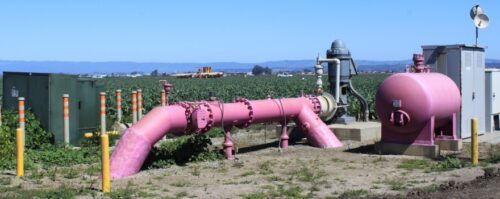 “The Monterey County Board of Supervisors on Tuesday reviewed responses to a Civil Grand Jury report that outlined several recommendations for addressing seawater intrusion in the Salinas Valley Basin. The board, as well as the Monterey County Water Resources Agency, approved a draft joint response to the grand jury report called “Seawater Intrusion — A Shared Problem in Monterey County.” California’s civil grand jury system provides independent investigations into issues in counties and is composed of residents who select which areas or problems they want to explore. The jury creates its report and then requires leaders such as boards of supervisors, city councils or city or county departments to respond. … ” Read more from SF Gate.
Paso Robles drops legal argument over water rights
Greg Grewal writes, “The quiet title litigation over groundwater rights was a poker game. After five trials and numerous stipulations, the city of Paso Robles finally folded its hand. Their last two legal arguments were pueblo and treaty rights, which they withdrew on June 17. A 2019 court order on the quantification of the Paso City pumping rights in the basin was so minimal the city pursued pueblo treaty rights as an affirmative defense. … ” Read more from Cal Coast News.
Commentary: Local leaders should act now on the need to move South County’s water treatment plant
Charles Varni writes, “South County cities are worried about future water supplies—whether it’s groundwater, surface water, or conserved water. On June 16, I attended the second community workshop of the Grover Beach water supply study, which is focused on supplemental water supply alternatives. The presentation by consultants was informative and well organized with detailed information, including projections that the city will need and additional 300 to 400 acre-feet of water in the coming decades. So imagine my surprise when the experts said, as far as water conservation goes, that “the turnip has been squeezed dry.” There was no mention of the Coastal Commission’s 2017 mandate to the South SLO County Sanitation District to begin planning for a probable relocation of its operation to a brand new facility safe from floods and sea level rise by 2047. … ” Read more from New Times SLO.
Supervisors uphold Cambria water project, reject six appeals
“The San Luis Obispo County Board of Supervisors on June 16 upheld approval of Cambria’s Water Reclamation Facility coastal development permit and rejected six appeals challenging the project, keeping intact a key regulatory decision that now opens the door to potential review by the California Coastal Commission. The vote maintains county approval for a facility that began as an emergency drought-response project in 2014 and has since been proposed for permanent operation as part of Cambria’s long-term groundwater management system. County staff and Cambria Community Services District officials said the project is necessary to protect the community’s coastal aquifer from seawater intrusion during prolonged drought. … ” Read more from New Times SLO.
Local water district to ask voters to OK $350 million bond measure
“Residents in communities from Santa Paula to the Oxnard coast may decide whether to OK a new property tax in the fall. The United Water Conservation District, which manages the Santa Felicia Dam and Lake Piru, plans to place a measure on the November ballot to help fund capital projects, including those required by regulatory agencies or the court. The district board voted unanimously to do so at a June 10 meeting, said Tara Mulally, United’s external affairs manager. If approved, the measure would allow the district to issue up to $350 million in general obligation bonds, money that would then be repaid using funds from the special property tax. In this case, officials expect the tax would remain in place for 30 years. … ” Read more from the Ventura County Star.
SAN JOAQUIN VALLEY
CV-SALTS effort tackling nitrate in Central Valley
“The stakes are always high in the Central Valley, where the epicenter of California’s agricultural economy encompasses 40% of the land mass of the state and provides 25% of the nation’s food. Where there are challenges, you’ll find ACWA member agencies working within collaborative efforts to find a solution. One of those challenges is addressing nitrate accumulations in groundwater from historical and ongoing discharges stemming from accepted agriculture, municipal and industrial activities. ACWA member agencies belong to a broad-based initiative working on this challenge through an effort better known as CV-SALTS. In 2006, the Central Valley Regional Water Quality Control Board initiated a forward-thinking and collaborative stakeholder initiative known as Central Valley Salinity Alternatives for Long-Term Sustainability – CV-SALTS – to develop a Central Valley-wide Salt and Nitrate Management Plan (SNMP). … ” Read more from ACWA’s Water News.
Golden mussels pose ‘immediate threat’ to Stockton’s water supply, official warns
“After hearing there’s an “immediate threat” to Stockton’s water supply, the City Council has made an emergency declaration over the rapid spread of golden mussels in the Sacramento-San Joaquin Delta. Screens on intake pipes from the Delta that prevent fish from entering Stockton’s water system were found to be 30% to 40% clogged with the tiny mussels that are wreaking havoc across California lakes and rivers, said Travis Small, deputy director of water resources in Stockton’s Municipal Utilities Department, or MUD. The city is spending $209,000 this week to clean the underwater screens and other gear. The golden mussel invasion represents an “immediate threat to municipal water conveyance at our Delta intake station,” Small told the council. “If we lose our Delta intake station, it’s going to be really tough to meet summer (water) demand.” … ” Read more from Stocktonia.
Data centers ‘will be a big issue’ for CA High-Speed Rail. Officials debating idea
“Some California High-Speed Rail Authority officials appear to be reading the room when it comes to data centers — though they haven’t said they outright oppose using them for the benefit of the train project. The rail authority in its latest business plan floated allowing data centers to lease the future train’s land and power source since state law requires it to run without subsidies when it’s fully operational. The agency is working with private investors who could help develop the train’s corridor and it’s looking for others who could help develop a utility-grade power generation system. Those partners will also be tasked with helping the agency commercialize those assets and could officially pitch leasing resources for data centers as part of a development deal with the rail authority. But rail authority board members on Wednesday cautioned staff about shaping a deal with private investors that overwhelmingly depends on data centers, which are controversial because of their use of massive amounts of water and energy. … ” Read more from the Fresno Bee.
Not all boulders are equal – or wanted – on the Kern River
“River enthusiasts are dismayed and alarmed by Kern County’s plan to use riprap – boulders and chunks of rock – to shore up the bank along Kernville’s Riverside Park, which was damaged during the 2023 flood. Dumping riprap on the bank of an otherwise accessible and heavily used section of the Kern River is a huge missed opportunity, according to local boaters and others. It can also be dangerous, they say. People will still scramble over the rocks to get to the water, so riprap isn’t a deterrent and can cause injury, according to Tom Moore, owner of Sierra South, a whitewater rafting company. Besides, he said, the county put riprap on that same bank in the early 2000s and it got “blown out” by the river in 2023. … ” Read more from SJV Water.
SOUTHERN CALIFORNIA
SCV Water adopts contingency plan, UWMP
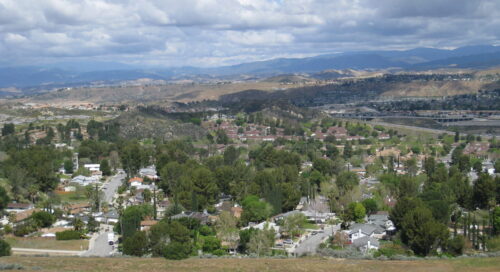 “The Santa Clarita Valley Water Agency’s board of directors has adopted two plans that address the agency’s short- and long-term water planning objectives, the agency announced in a news release. These actions help ensure that sufficient water supplies are available to meet existing and future water needs, and that steps are in place should a critical water shortage occur, the release said. “As SCV Water continues to serve the Santa Clarita Valley, long-term planning is important,” SCV Water General Manager Matt Stone said in the release. “It is our responsibility to not only meet today’s water needs, but to ensure our community remains a sustainable place to live and work decades into the future.” … ” Read more from The Signal.
LA is spending millions to rehab its river. Next up: A $31M bridge.
“A new pedestrian bridge is coming to the Los Angeles River, connecting the cities of Glendale and Los Angeles and providing a new entry point to Griffith Park. The $31 million bridge is part of a broader plan to not only increase pedestrian access to massive Griffith Park, but also revitalize the land along the river, making it more accessible for all. The Glendale-Los Angeles Garden River Bridge Project aims to connect the Glendale Narrows Riverwalk on the north side of the river in Glendale to the Los Angeles River Bike path and Griffith Park along the river’s southern bank. The project is estimated to cost north of $30 million, with $18.75 million of that funded through California’s Proposition 68 parks bond. … ” Read more from SF Gate.
Vile mystery liquid turns everything orange in luxe LA neighborhood where homes cost $3M
“In the affluent hills of Encino, residents have spent years discussing the notorious Ballina Canyon “River.” But this is no picturesque water feature. Rather, it’s a stream of orange-colored groundwater that’s been flowing down their streets for years — staining cars and homes, creating slippery conditions and sparking fears someone will eventually be seriously hurt. There’s this groundwater that’s seeping up and turning the street this horrible shade of orange,” Roy Nwaisser, president of the Encino Neighborhood Council, told The California Post. “It’s turning their homes orange. It’s turning their cars orange. And it’s also a safety hazard because it’s very slick and it’s caused quite a few accidents.” The California Post walked the nearly mile-long stretch most affected by the runoff with resident Andrea Pearlman, who helped form a committee to push for a solution to a problem that has plagued the neighborhood for five years. “We’ve been told it’s magnesium in the water,” Pearlman said. … ” Read more from the California Post.
Riverside: City adopts water management plans; no new restrictions for residents
“City officials approved updated long-range water planning documents Tuesday that map out how the city expects to meet future demand and respond to shortages — though they said residents should not expect any immediate changes to watering rules or conservation requirements. The City Council approved both the city’s 2025 Urban Water Management Plan and its updated Water Shortage Contingency Plan on the consent calendar without discussion. Together, the documents are required under California law and serve as Riverside’s blueprint for managing water supplies over the next 25 years. The updated Urban Water Management Plan projects how much water Riverside customers are expected to use through 2050 and whether the city will have enough supply to meet that demand. … ” Read more from the Raincross Gazette.
IMPERIAL/COACHELLA VALLEYS
Desert Hot Springs hits pause on data centers
“Data centers continue to be one of the hottest—and most controversial—topics in the Coachella Valley, and now Desert Hot Springs is joining the conversation in a big way. On The Roggin Report, Mayor Pro Tem Dirk Voss explained why the city is moving toward a two-year moratorium on new data centers, with a second vote scheduled in early July. While Coachella has already hit the pause button, Desert Hot Springs is taking a close look at whether these massive facilities fit into the city’s long-term vision. Voss said it all comes down to land use. Desert Hot Springs still has thousands of acres available for future growth, and city leaders are thinking about what should occupy that space over the next several decades. … ” Read more from NBC Palm Springs.
SAN DIEGO
San Diego County wholesale water rate to rise 3% in January, lowest hike in many years
“Wholesale water rates in San Diego County — a key factor in how much local residents and businesses pay for water — will see the smallest hike in years next January, thanks to recent deals selling off excess local supply. Rates will rise 3% in January, about half the 5.8% hike County Water Authority officials estimated before the water-sharing deals reached this spring with two agencies in Riverside County. The 3% increase, which the water authority board approved Thursday, is far less than previous hikes of 8.3% last January, 14% in January 2025 and 9.5% in January 2024. Water authority officials said they are predicting 3% annual increases every year through 2032, giving local water agencies the kind of predictability and consistency they’ve craved for years with wholesale rates. … ” Read more from the San Diego Union-Tribune.
Tijuana, thirsty for water amid Colorado River crisis, turns to Oceanside
“Pipes break repeatedly in Tijuana, and its main water source — the Colorado River — is drying up. The city’s water supply crisis is pushing its leaders to consider recycling sewage for drinking, especially as residents face the possibility of water rationing this summer. To learn from a city already in the water reuse business, Mexican officials toured Oceanside’s Pure Water facility on Tuesday. “What if you take this wastewater, right, and you clean it enough so you can drink it?” Rudy Guzman, who oversees the purification facility, told officials during the tour. “Crazy idea, right? But we did it.” … ” Read more from KPBS.
Along the Colorado River …
The Colorado River states are deadlocked and the river is crashing. Will a ‘grand bargain’ finally get its day?
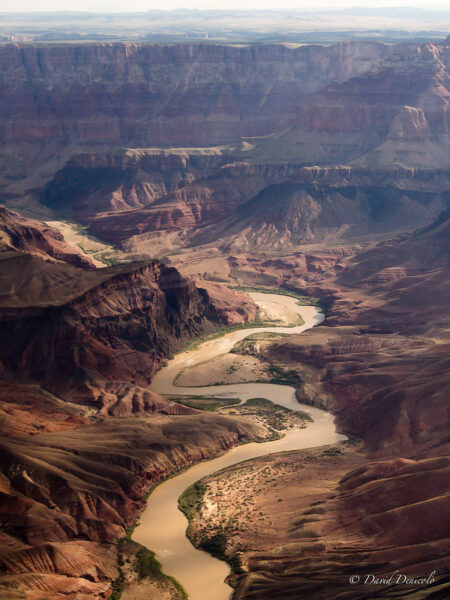 “For the past 20 years, the Colorado River has been operated under a set of guidelines negotiated between the seven states that depend on the river. Those guidelines expire this year, and after five years of grinding negotiations over a new agreement, the upstream states of Colorado, Wyoming, Utah and New Mexico remain deadlocked against the downstream states of California, Arizona and Nevada. Some 40 million people and 5.5 million acres of farmland depend on the river’s water. But after the states failed to meet two federal deadlines in three months, the river is in a moment of unprecedented crisis. A dire snowpack has left flows just 15 percent of normal, many farms without water and several cities scrambling to secure water supplies as they gird themselves for shortages. That has set up a showdown over a legal time bomb that’s been ticking away at the heart of the Colorado River Compact since the river’s guiding document was signed more than 100 years ago. … ” Read more from Western Water.
There’s a new voice joining Colorado River negotiations in their eleventh hour
“For more than two years, the same seven people have been trying and failing to agree on a new plan for sharing water from the Colorado River. Now, there’s been a shakeup. For the first time in this current chapter of negotiations about the river’s future, a new person is joining that select group. Tanya Trujillo was appointed to represent New Mexico in Colorado River negotiations, replacing Estevan Lopez. Her appointment comes during the eleventh hour of Colorado River talks. Negotiators must agree on a new plan for sharing shrinking water supplies or risk a massive legal battle. The federal government told states that it would publish its own management plan “mid-to-late summer” this year. Such a move would likely trigger lawsuits. … ” Read more from KJZZ.
As water-sharing negotiations heat up, wildlife habitats along the shrinking Colorado River are at risk
“Until the 20th century, the Colorado River moved freely through the West, from forested Rocky Mountain headwaters through canyons, deserts, and lush wetlands and then out to sea. But by 1922, as cities and farms expanded, the seven states in the river basin divvied up its flow, and a growing number of dams and irrigation projects tamed its majesty. Today more than 40 million people rely on its water. These demands are now too great for what the Colorado River can supply. Since 2000, average annual flows have declined about 20 percent, and conditions are now dire: Sparse winter snowfall plus melt from an early spring heatwave left the basin with its lowest snowpack ever recorded for April 1. … Finding a way out of chronic crisis is crucial to the future of the river’s rich, diverse ecosystems, says Jennifer Pitt, Audubon’s Colorado River Program director. These habitats support dozens of types of fish and more than 400 bird species, but their water supplies are tenuous and are often disrupted in times of scarcity. … ” Read more from Audubon.
Desalinated Pacific Ocean water won’t be cheap but Arizona is scrambling to offset Colorado River cuts
“Arizona may soon purchase desalinated Pacific Ocean water to help offset shortages in the Colorado River caused by a decades-long drought. The price tag , however, will likely be very steep unless a long-term deal is struck. A framework signed June 3 by water authorities in Arizona, California, Nevada and the federal Bureau of Reclamation opens the door for an interstate swap – the first of its kind, according to all parties involved. “It’s never been done,” said Dan Denham, general manager of the San Diego County Water Authority. Arizona would cover the costs of desalinated water that San Diego pays for but doesn’t need. In return, California would transfer some of its entitlement to the Colorado River. With the nearest Pacific beaches nearly 300 miles away, a swap is far more practical than a pipeline to the landlocked Grand Canyon State. “As a water industry in the West, we’ve contemplated it before, had one-offs of it with Mexico and the basin states, but maybe the urgency wasn’t there. Everything always seemed to just get put on the back burner as hydrology improved,” Denham said. … ” Read more from Cronkite News.
Groundwater supplies in the Colorado River basin are falling fast. Is there a solution?
“As the crisis on the Colorado River grows, new pressure to pump groundwater will further stress already-depleted aquifers across the Southwest, according to water managers and scientists studying the ongoing drought. The decline of groundwater supplies along the Colorado River basin has been accelerating for decades, according to analysis by Arizona State University’s Jay Famiglietti. Most of those losses have come in Arizona. “We have to be exceptionally careful because it took tens of thousands of years to accumulate, we’re burning through it on a century time scale,” Famiglietti said. “There is essentially no hope of high-magnitude replenishment.” … ” Read more from KGOU.
Three top Arizona universities report on findings of three-year project on “Recharge and Water Supply Reliability” in Arizona
“Keen observers may now be seeing a pattern. Earlier this month, Arizona water leaders, including ADWR Director Tom Buschatzke, joined representatives from California and Nevada to sign an agreement to explore the first-ever interstate water exchanges to occur in the Colorado River Basin. A month earlier, in early May, the three Lower Basin States of Arizona, California and Nevada proposed saving at least 3.2 million acre-feet in the river system over the next two years while providing proactive protection to the system through creation of an additional 700 thousand acre-feet of conservation. Observers may reasonably conclude from these proposals that Arizona and its Lower Basin partners are committed to marshalling, conserving and even enhancing the region’s water supplies. But hold on. As they say on the shopping networks, ‘But wait, there’s more!’ … ” Read more from Arizona Family.
SEE ALSO: UA study says eastern Arizona watersheds could play key role in state’s water future, from East Arizona Courier
Advanced water purification: Creating Arizona’s next water supply
“Arizona communities have spent decades showing that we can thrive in the desert by making every drop of water count. To do so, cities have invested in conservation programs, infrastructure upgrades, groundwater storage and water recycling, while residents have reduced water use. These efforts have helped Arizona communities grow while using water more efficiently than ever. As Colorado River supplies become increasingly uncertain, conservation alone cannot solve every challenge. While continuing to conserve, communities must also develop new, dependable local water sources to replace reduced Colorado River water supplies and avoid relying solely on groundwater pumping. One of the most promising tools available today is Advanced Water Purification (AWP). … ” Read more from KTAR.
Report finds gains in Colorado River Delta, but warns of challenges ahead
“A new University of Arizona report is offering a rare bright spot for the drought-strained Colorado River: researchers say small, controlled releases of water into the river’s delta in Mexico have restored more than 1,000 acres of habitat along a corridor that had been largely dry for decades. The report, led by University of Arizona geosciences professor emeritus Karl Flessa, found that targeted releases and restoration work since a landmark “pulse flow” in 2014 have helped revive stretches of riparian habitat planted with native cottonwoods, mesquite and willows. “Along the largely dry course of the Colorado River there are three restoration sites that are green, and they look terrific, and they look like the delta probably looked like back in the 1960’s,” Flessa said. … ” Read more from Arizona Family.
Drying stock ponds, fading pastures trigger Navajo Nation drought emergency
“The Navajo Nation Commission on Emergency Management, with the concurrence of President Buu Nygren, has officially declared a State of Emergency due to severe and ongoing drought conditions impacting communities across the nation. Approved through Resolution No. CEM 26-003, the executive declaration recognizes worsening environmental patterns that have severely strained water supplies, reduced forage production, lowered reservoir levels, and increased hardships for ranchers, farmers, and families throughout the territory. “The health of our communities, livestock, and natural resources depends on our ability to respond proactively to these challenging conditions,” Nygren said. “This declaration allows us to coordinate resources, strengthen drought mitigation efforts, and support the families who rely on agriculture and ranching for their livelihoods.” … ” Read more from the Lake Powell Chronicle.
Lake Powell hits lowest summer level ever, raising risk of ‘dead pool’
“Lake Powell ‒ the massive Colorado River reservoir that produces power for millions of homes across the West ‒ is the emptiest it has ever been entering the hottest part of the summer. And the worst is still to come. Although the lake’s levels have briefly fallen lower in years past, those low-water levels came in the spring, before melting snow refilled it. This year, that refill never happened. As a result, Lake Powell will next spring fall to “minimum power pool,” according to a newly released federal projection. If the water levels fall below that, the Glen Canyon Dam would stop generating electricity. … ” Read more from USA Today. | Read via Yahoo News.
As a Colorado aquifer runs low, dangerous heavy metals threaten rural communities’ drinking water
“Julie Zahringer hears a common refrain at her environmental laboratory in Alamosa, Colorado: A customer has been drinking well water on family land where they’ve lived for years, but recently noticed it has changed. They want to know why. “All of a sudden it looks different, tastes different, there’s odor, there’s color,” said Zahringer. Zahringer’s SDC Laboratory is one of the few testing water in the San Luis Valley, an 8,000-square-mile, high-altitude desert in south-central Colorado. She has tested thousands of wells during more than 30 years in the field. Residents of the valley, which has large Hispanic populations and a high poverty rate, have been concerned about naturally occurring heavy metals in their water for decades, she said. But in the past five years, the rate of change has accelerated. “Every year it just seems like this is the climax of it, and the next year, it gets worse,” said Zahringer. “This year, we’re looking at probably the worst as far as water quality.” … ” Read more from the Water Desk.
San Luis Valley, Colorado: A case study in trout and farm recovery
Nestled in south-central Colorado, the San Luis Valley boasts 14,000-foot peaks, Gold Medal waters, incredible biodiversity and even Great Sand Dunes National Park and Preserve. As the largest alpine valley in the world, this area has been called home by the Navajo, Ute, Apache, Kiowa, Comanche and Spanish before becoming part of the United States. Today, that means the valley distinguishes itself from other parts of Colorado through a unique blend of Indigenous, Spanish and Mexican cultural influences. The influences and practices of the Spanish and Mexican cultures extend to the governance of a portion of the water supply that is administered in the valley today. Known as acequias, this method of water management remains prevalent in parts of Colorado and New Mexico, and Colorado has taken steps to legally define the differences between the acequia system and the more common governance structure known as the doctrine of prior appropriation. This legislation will ensure that the acequia-based communities will continue to persist into the future. … ” Read more from Trout Unlimited.
In national water news today …
How congressional earmarks are draining America’s water funds
“The United States is approaching a water infrastructure funding cliff just as a key financing tool is being weakened. State Revolving Funds (SRFs) are one of the most effective infrastructure financing tools in the United States. The revolving nature of SRFs enabled $81 billion in federal capitalization grants to provide just under $230 billion for more than 68,000 safe drinking water, clean water, and stormwater management projects through 2023. Since 2021, however, Congress has earmarked a significant share of SRF appropriations and distributed those funds as grants that do not revolve. … ” Continue reading from Water Finance & Management.
Federal land and water agencies count visitors in pilot projects
“For decades, the question seemed simple: how many people visit America’s public lands and waters each year? The honest answer, it turns out, was far more complicated than anyone let on. Different federal agencies counted visitors differently. Some used traffic counters at entrance gates. Others relied on ranger estimates or campground registration records. Agencies managing lakes, reservoirs, rivers, and coastal waters had their own methods, which rarely matched what land-based agencies were doing. The result was a patchwork of data that was hard to compare and even harder to use for planning. That changed on June 25, 2026, when the U.S. Department of the Interior announced the release of the Interagency Recreation Visitation Data Report, the first unified compilation of outdoor recreation estimates across all federal land and water management agencies. The report was required by the Expanding Public Lands Outdoor Recreation Experiences Act, a federal law signed in 2025 that has been working its way through implementation ever since. … ” Read more from Western Water.
Interim Fish and Wildlife Assistant Secretary’s lack of experience concerns senators at confirmation hearings
“When President Donald Trump nominated Kevin Lilly last year to oversee management of the nation’s wildlife refuges and national parks, conservation advocacy organizations raised concerns over how his lack of public lands experience would impact the Department of the Interior’s conservation commitments. Prior to assuming the role of assistant secretary for fish, wildlife and parks on an acting basis, Lilly served as the chairman of the Texas Alcoholic Beverage Commission and founded Avalon Advisors, the largest privately owned wealth management firm in the state. At a confirmation hearing this week, Sen. Ted Cruz, R-Texas, described Lilly as someone who fostered a strong appreciation for public lands through his “deep love of the outdoors, including fishing and hunting.” Lilly told members of the Senate Committee on Environment and Public Works that experiencing the nation’s public lands deepened his desire to expand access to them. “My faith has always guided my respect for creation, grounding my belief that natural resources are gifts to be cared for with humility and gratitude,” he said in his opening statement. … ” Read more from Inside Climate News.
Why carbon capture and storage won’t fix our climate crisis.
“For more than 40 years, oil companies have been funding research at prestigious universities into climate change “solutions” that would not require the public to stop using oil and gas. Among their favored fixes is carbon capture and storage. An investigation by ProPublica and Drilled has found that boosters of CCS have ignored evidence of the technology’s limitations, or overstated its potential, and convinced the world it could be effective. They’ve promoted this idea despite the fact that for CCS to work at the scale now envisioned, the world would need to devote almost unimaginable resources. Even if that were done, it might still prove impossible to trap so much carbon dioxide inside the earth. Optimism has reigned, however, because small tests have worked and because slow global response to climate change has left few other options. … ” Read more from Pro Publica.

