
Several news sources featured in the Daily Digest may limit the number of articles you can access without a subscription. However, gift articles and open-access links are provided when available. For more open access California water news articles, explore the main page at MavensNotebook.com.
On the calendar today …
- PUBLIC HEARING: Delta Conveyance Project water right hearing beginning at 9am. The State Water Resources Control Board Administrative Hearings Office is holding a Public Hearing on the pending Petitions for Change of Water Right Permits for the Delta Conveyance Project. Interested members of the public who would like to watch this hearing without participating may do so through the Administrative Hearings Office YouTube channel at: bit.ly/aho-youtube. Click here for the meeting notice.
- SCIENCE SYMPOSIUM: Cleaner Waters and Broader Benefits: Lessons from the Convergence of Physical, Biological, and Chemical Restoration from 9am to 4:30pm. This workshop aims to advance a more integrated approach towards co-managing contaminants for broader ecosystem benefits in the Bay-Delta and watersheds. Click here for the agenda. Attend via Zoom: https://us06web.zoom.us/j/86014073089?pwd=1KHZP5o6laeEvbKbDwquyCGthaRKLj.1
- WEBINAR: State Water Board Technical Assistance Webinar Series for Water Suppliers beginning at 1pm. Topics covered will include a regulatory overview, technical requirements and data reporting, available resources, and an introduction to the technical assistance team. The session will also cover the launch of the State Water Board’s new hands-on data and reporting technical assistance pilot, led by the California Data Collaborative with support from the California Water Efficiency Partnership. This webinar series is designed for urban water suppliers and water districts, especially those serving smaller or under-resourced communities, along with compliance leads, consultants, and technical advisors supporting the Making Conservation a California Way of Life implementation. Prior to the session, attendees can also share their needs through a short survey which will directly shape the topics covered in future sessions. Zoom Registration
- FERC Scoping Sessions for Eel River Dam Removal beginning at 6:30pm at the Ukiah Valley Conference Center, Chenin Blanc Room, 200 S School St, Ukiah, CA 95482. The sessions are an opportunity for the public to weigh in on the surrender and decommissioning of the Eel River Dams.
In California water news today …
State proposes new “good guy’ application fee of up to $250,000 for groundwater oversight costs
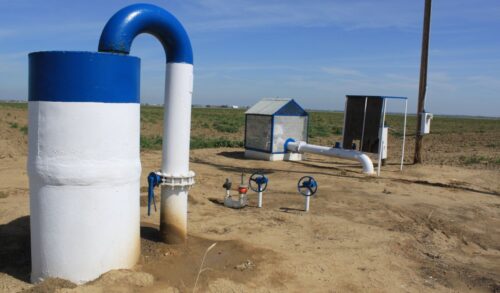 “The state is proposing to create an entirely new fee to help pay for the massive amount of work it takes to review and police groundwater plans in severely overdrafted parts of the San Joaquin Valley. Staff with the Water Resources Control Board are seeking approval of a new fee of $50,000 up to $250,000 for any groundwater agency seeking a so-called “good guy” exemption. Good guy exemptions are allowed for groundwater sustainability agencies (GSAs) found to be in compliance with the Sustainable Groundwater Management Act (SGMA) even if the rest of the subbasin isn’t. The good guy application fee, along with a proposed change to the late payment deadline, were discussed at a June 12 workshop on fees needed to help pay for SGMA oversight. Both proposals left water managers scratching their heads. … ” Read more from SJV Water.
Elsinore Valley Municipal Water District and Trump appointee spark controversy over possible acquisition
“Last week, Elsinore Valley Municipal Water District leadership was in Washington, D.C., for scheduled meetings with federal agencies and congressional representatives. One of those meetings led to a bizarre announcement. “Today, I convened a meeting at the White House alongside @SecretaryBurgum with @PGE4Me and the Elsinore Valley Municipal Water District to begin constructive negotiations on the future of the Potter Valley Project — and to take this fight off social media and get it resolved,” U.S. Secretary of Agriculture Brooke Rollins shared June 15 on X. “Our hope is clear: keep the Scott and Cape Horn Dams in place and working for the communities they serve.” In a EVMWD press release that same day, the water district confirmed it “is in the early stages of due diligence, learning more about the Potter Valley Project, the communities it serves, its stakeholders and the condition of its infrastructure.” … ” Continue reading from The Patch.
California dairy industry pushes back on new water quality requirements
 “The California State Water Resources Control Board has released a final draft remand order directing the Central Valley Regional Water Quality Control Board to revise dairy water quality regulations, prompting concerns from industry groups about potential costs and operational impacts on dairy farms. The proposed changes apply only to dairies operating in the Central Valley. Public comments on the order are due by noon July 30. The order focuses on reducing nitrate impacts to groundwater and would require regulators to develop new dairy requirements in phases rather than through a single comprehensive update. … ” Read more from the Business Journal.
Can surplus manure protect water quality and reduce farms’ fertilizer costs?
“The San Joaquin Valley (SJV) currently faces two seemingly separate agricultural challenges: Growers depend on large quantities of increasingly expensive synthetic fertilizer to support crop production, while their dairy-producing neighbors must manage tens of millions of tons of manure generated each year. Both of these challenges contribute to nitrogen surpluses that can ultimately impact groundwater quality, increase greenhouse gas (GHG) emissions, and cost growers money. But what if these challenges are actually connected? Sustainable Conservation’s latest manureshed analysis explores how surplus nutrients already produced within the SJV region could help meet local crop fertilizer demand, reduce synthetic fertilizer dependence, improve drinking water quality, build soil health, create local jobs and economic investments, and strengthen California’s agricultural resilience. … ” Read more from the CA Climate and Agriculture Network.
California cherry industry suffers one of its toughest seasons in decades
“California cherry growers are facing one of the most difficult seasons in recent memory after multiple spring rain events devastated what had initially appeared to be a promising crop. According to longtime industry veteran Michael Jameson of Morada Produce, the 2026 California cherry season may be the worst he has seen in nearly four decades in the business. Jameson, who has worked in the cherry industry for 38 years, said growers entered the season with optimism. Strong winter chill accumulation, favorable bloom conditions, and excellent fruit set had many expecting an ideal crop of approximately 8.5 to 9 million cartons. That production level is considered optimal for California’s harvesting, packing, and marketing infrastructure while also providing profitable returns to growers. However, Mother Nature had other plans. … ” Read more from AgNet West.
More and more communities speaking out in opposition of data centers
 “As the state grapples with artificial intelligence and how to regulate the industry, attempts to add data centers to support this wave of technology are being met with strong resistance. Earlier this month in Monterey Park, east of Los Angeles, residents overwhelmingly voted to permanently ban data centers in the city. HMC Statcap is an Australian Company, and it had planned to build an AI data center in Monterey Park. Two years ago, the city paved the way for that to happen. But longtime resident Yun Wang said many residents didn’t find out about the plans until a year later. “They were moving things along for the cover of night, I would say.” … ” Read more from KQED.
This million-square-foot data center would be the biggest in the state. How local leaders are challenging it.
“In April, developers of the massive Imperial Data Center cleared a major hurdle after Imperial County Supervisors approved a plan to combine several tracts of land for the nearly one-million-square-foot facility in rural Southern California. It would be the largest data center in the state; the parent company, Imperial Valley Computer Manufacturing, LLC describes it as a hyperscale facility, “designed exclusively for advanced artificial intelligence and machine learning operations.” Last week, that progress came to a halt when the county board walked back its decision, declaring a 45-day moratorium on data centers and forming a public commission to advise the county on zoning policy for the facilities. Their reversal came after months of backlash, and a more than hour-long public hearing in which residents voiced sharp criticism of the sweeping project and its swift approval. The developer, Sebastian Rucci, said he’s filing a lawsuit to seek a temporary restraining order against the moratorium today, arguing that the county failed to show a true emergency, explain what harms and impacts it will cause, and what specific concerns residents have raised. … ” Read more from Cal Matters.
SEE ALSO:
- Data centers face backlash across California as residents demand more transparency around their impacts, from KVCR
- The other anti-data center movement: California’s sky-high electricity prices, from the LA Times
- Wedding high speed rail & data centers: Destroying the San Joaquin Valley to save it, from the Manteca Bulletin
- Most Americans don’t want data centers nearby. The AI boom is pushing them into oil fields, from The Cool Down
- 40 mayors worldwide endorse a pact to shape data center development, from the Associated Press
Cease and delist: How species get off the endangered species list
“The conservation statuses of fish species flash through our news feeds more often than desired—Threatened, Vulnerable, Endangered, or the dreaded Extinct. It may feel like an uphill battle with more and more species ending up on endangered species lists in the face of environmental degradation, habitat loss, nonnative species invasions, and many other factors. But just because a species is placed on a list, that does not mean that it is there to stay. Delisting a species, however, is much easier said than done, and it does not always happen with the species’ best interests in mind. When a species is classified as Endangered, it means that species is likely to go extinct. Endangered species lists can exist at both the state and the federal level. Between these lists, a species can have multiple statuses and receive varying levels of protection. … ” Continue reading from FishBio.
California has lost more than half of its coastal sand dunes, first-ever comprehensive assessment reveals
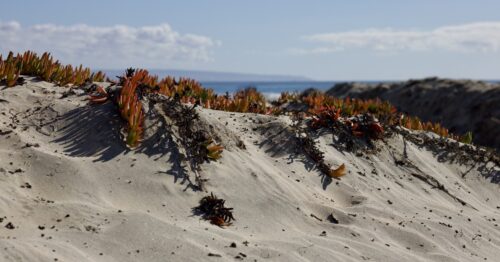
“A study conducted by UC Santa Barbara researchers and collaborators has found that California has lost more than half of its coastal dune systems. The researchers’ assessment — the first of its kind for the California coast — estimates that 60% of dune systems that existed from 1850 have been lost, due to a combination of urban development, land-use changes and erosion. “There are major implications of this loss for the California coast, including reduced habitats for plants, insects and other invertebrates, birds and small mammals,” said the paper’s lead author, postdoctoral researcher and physical geographer Tim Baxter. “Importantly, we also lose coastal protections against storms and sea level rise.” This assessment, one of the largest and most detailed inventories of coastal sand dunes ever produced, is published in the journal Earth’s Future. … ” Read more from the UC Santa Barbara Current.
Environmentalists sue feds to protect dwindling sunflower sea star
“An environmental nonprofit sued the National Marine Fisheries Service on Monday in a bid to push the federal agency to issue protection guidelines for the sunflower sea star, one of the largest sea star species in the world. The Center for Biological Diversity filed a complaint in the Northern District of California, where the coastal regions around the San Francisco Bay are a historic spot for the multi-armed predator. The nonprofit says the National Marine Fisheries Service needs to issue a final rule protecting the sea star as a threatened species under the Endangered Species Act, as its numbers have rapidly declined in the last 13 years. … ” Read more from the Courthouse News Service.
Trades, labor coalition ask state leaders to pony up for California Forever projects
“A coalition of trades and labor organizations have sent a letter to Gov. Gavin Newsom and the legislative leaders urging them to “introduce and pass legislation … to support the Suisun Expansion Plan and Solano Shipyard to bring home construction, shipbuilding and manufacturing jobs to Solano County.” It calls on the state to offer tax incentives to help bring the projects home to Solano County. The letter, signed by Chris Hannan, president of the State Building & Construction Trades Council of California, and Jay Bradshaw, executive secretary and treasurer of the California Conference of Carpenters, is seeking the legislation during the current session, which ends Aug. 31. “These critical projects will unlock substantial private investment and good-paying local jobs in Solano County, generating $215 billion in construction investment, over 530,000 jobs, and more than $16.2 billion annually in combined state, local, and federal tax revenue,” the letter states. … ” Read more from the Daily Republic.
Battle over single-use plastics erupts as 17 states move to block California law
“Attorneys general in seventeen states are suing California over its landmark single-use plastic law, which went into effect on June 1. The lawsuit comes after a coalition of environmental groups sued the state over the same law this month, arguing the new final regulations create loopholes so large they gut the law. The states are led by Nebraska Atty. Gen. Mike Hilgers, and the plaintiffs include the National Assn. of Wholesaler-Distributors. The coalition is asking the court to block enforcement of the law immediately. “Once again, California is trying to enact a policy that negatively impacts the rest of the country,” said Hilgers in a news release. “If California goes unchecked, consumers will be forced to pay more for basic necessities.” … ” Read more from the LA Times.
In commentary today …
Delta Tribal Environmental Coalition urges lawmakers to reject bill threatening water oversight and public participation
The Delta Tribal Environmental Coalition writes, “The Delta Tribal Environmental Coalition (DTEC), consisting of the Shingle Springs Band of Miwok Indians, Winnemem Wintu Tribe, Little Manila Rising, and Restore the Delta, has submitted a letter to the California Senate Natural Resources and Water Committee opposing AB 2215. Coalition members warn that the bill is an attempt to clear the path for controversial projects, including the Delta Conveyance Project, without proper regulatory and public oversight. AB 2215 would extend the Department of Water Resources’ (DWR) water rights permit for the State Water Project by more than forty years, overriding established State Water Board authority and limiting public participation in critical water rights proceedings. The coalition argues that the bill would undermine longstanding procedures governing water rights permit extensions, grant preferential treatment to DWR, and bypass established hearing processes designed to ensure permit extensions serve the public interest. The letter describes the bill as the latest effort by DWR to exempt itself from rules that apply to all other water rights holders, at the expense of the environment, Delta communities, Tribes, and the public interest. … ” Continue reading from the Delta Tribal Environmental Coalition.
Political pressure on Sites Reservoir doesn’t change the facts
The San Francisco Baykeeper and the California Sportfishing Protection Alliance write, “The evidence shows the multi-billion-dollar Sites Reservoir project cannot operate as proposed without unreasonable harm to rivers, fish, and ecosystems. So says the independent judge assigned by the State Water Board to hear and weigh the evidence. As a result, many of the state’s political elite have written to the judge to tell her she should change her conclusions, not based on the law or the evidence, but simply so that the Sites Project can divert more water. This reminds us of an old legal aphorism: “If the law is against you, argue the facts. If the facts are against you, argue the law. If both are against you, pound the table and yell.” In 2023, the Sites Project Authority applied for a new water right to divert water from the Sacramento River to the proposed Sites Reservoir. Dozens of entities challenged the application. The dispute was referred to the State Water Board’s Administrative Hearings Office (“AHO”). … ” Continue reading this press release.
The “thirst” for data
The California Water Impact Network writes, “As the tech sector, their billionaire investors and the Trump regime aggressively foist AI on every niche of society, commerce and government, people are pushing back against its destructive power. One of the central battlegrounds is the proliferation of data centers: sprawling complexes jammed with servers that run AI models and tools and require massive amounts of energy and water. These centers are springing up all over the country, including, of course, California: the birthplace of modern digital technology. More than 300 data centers are planned for our state—and that may well be just the beginning. Unsurprisingly, our elected officials—many of whom benefit from tech sector campaign contributions—are well behind the curve when it comes to regulation of the AI juggernaut. As a result, AI technology is already wreaking havoc, from aiding suicidal ideation to fomenting violence and sexual abuse. … ” Continue reading from the California Water Impact Network.
In regional water news and commentary today …
NORTH COAST
New report maps out blueprint for Klamath River steelhead recovery: Anglers can make that a reality
“CalTrout and The Conservation Angler are joining forces to help answer one of the biggest questions in river restoration: What happens after a river is reconnected? When the last of four dams came down on the Klamath River, more than 400 miles of historic habitat reopened to salmon and steelhead for the first time in over a century. For many, dam removal represented the culmination of decades of work to restore a river. But for the fish, the real story is just beginning. How will steelhead respond to this unprecedented reconnection? How quickly will they return to newly accessible habitat? Will resident rainbow trout above the former dams resume their ancestral migrations to the Pacific? And what will recovery actually look like in one of the most complex watersheds on the West Coast? These are the questions at the heart of a new report, Steelhead Recovery After Large-Scale Dam Removal: A Biology-Driven Monitoring Framework for the Klamath River, co-authored by scientists and fisheries experts from California Trout, The Conservation Angler, Tribal partners, state agencies, and universities across the region. … ” Read more from CalTrout.
Klamath River monitoring buoy shares public data on waves, wind and water temperature
“The Yurok Marine Department and the UC Davis Bodega Marine Laboratory announced they recently deployed a real-time ocean monitoring buoy near the mouth of the Klamath River. Installed in about 60 feet of water, the Klamath River Spotter buoy collects and transmits data on water temperature, wave conditions, wind speed and direction, and barometric pressure. The information is publicly available through the SOFAR Ocean platform. The Yurok tribe says the buoy will help researchers better understand the Klamath River plume — a nutrient-rich mixing zone where freshwater from the river meets the Pacific Ocean. The area supports a wide range of marine life, including salmon, whales, seals, sea lions and seabirds. … ” Read more from KRCR.
What in Klamath River waters is making juvenile salmon sick?
“New salmon populations living in the Klamath River face sickness and low water levels due to diminished snowpack less than two years after the Klamath Dam removal, the Karuk Tribe said in a June report on the river’s health. Scientists monitoring the Klamath’s waters found rising levels of a fish parasite called Ceratonova shasta, according to the report. Most juvenile salmon, which are especially susceptible to disease caused by the parasite, migrated out to sea in early spring 2026 — before the disease spread to high levels, said Toz Soto, the tribe’s senior biologist. Soto said it’s possible most of the sick and dying fish came from the same hatchery. While the dam’s removal “remains a historic and necessary step toward salmon recovery,” surveys of the river show it’s “still in the early stages of healing,” the tribe said in the report. … ” Read more from the Redding Record-Searchlight.
SIERRA NEVADA
Pine pollen brings yellow tint to Tahoe
“It’s that time of year again when bright yellow-green clouds float through the air, turning the shallow waters of Lake Tahoe chartreuse instead of its characteristic blue. It sticks to streets, to clothes, car windows and pet fur, causing sneezes and watery eyes for many. Pollen counts from last year don’t tip into the highs as many times as this year’s do, so it may result in more allergy symptoms for those who have them. Pollen season starts when plants begin to release their spores to fertilize other plants of their species. In the case of pine trees, their strategy is to rely on the wind to carry the load to other trees—meaning they have to produce a lot of it to be successful. … ” Read more from the Record Courier.
Protecting Tahoe’s clean, clear waters
“Lake Tahoe watercraft inspectors stopped two boats this month that were headed for the lake carrying highly invasive golden mussels. The interceptions are both a reminder of the threats Tahoe faces and a testament to the resolve of the people working to protect it. Tahoe Regional Planning Agency (TRPA) and Tahoe Resource Conservation District watercraft inspectors spotted the invasive mollusks and quickly flagged the boats for decontamination and further inspection. There have now been three golden mussel detections at Lake Tahoe since they were discovered for the first time in North America just a few hours away. … ” Read more from the Tahoe Daily Tribune.
Yuba County’s first state park will be within Feather River’s rare riparian forest
“California State Parks is expanding and for the first time ever, Yuba County will have its own state park along the Feather River. … State Parks Forward is a recent initiative to bring three new state parks to the central and Sacramento Valley by 2030. Specifically targeting underserved areas, the parks will be at the San Joaquin River Parkway, Dust Bowl Camp, and Feather River Park in Yuba County. “They’re going to have the resources to actually build that and maintain it. Something that the county honestly struggles with a little bit right now,” said Gary Bradford, Yuba County supervisor for District 4. Bradford says the new park will be an economic driver for the area. … ” Read more from CBS News.
Carollo Engineers lands $210M California water contract
“Following a $200 million contract win in April for a water facility in Nevada, Carollo Engineers has nabbed another water job, this time in California. The firm will manage construction on phase 1 of the new Ophir Water Treatment Plant in Placer County, California, Carollo announced June 16. Once complete, the new plant will alleviate demand on the Placer County Water Agency’s current facilities, which approach peak operational capacity during the summer. The plant will be located on a 22‑acre site along Ophir Road in Auburn, California, a town about 33 miles north of Sacramento. The first phase will cost $210 million, per the builder. The plant will initially add 10 million gallons per day of treated water capacity, which is enough to serve 10,000 families. … ” Read more from Construction Dive.
SACRAMENTO VALLEY
Lower water levels expected at Thermalito Afterbay through end of June
“Boaters may notice lower water levels at the Thermalito Afterbay through the end of June as the California Department of Water Resources (DWR) works to support an endangered bird species. The Western Snowy Plover is a threatened shorebird that is Native to Northern California. The species has been endangered since 1993, according to the U.S. Fish and Wildlife Service. … ” Read more from KRCR.
No golden mussel detections in Sutter County’s stretch of the Sacramento River yet, but officials advise boaters to take specific precautions
“Although there have not yet been detections of the golden mussel in the waterways of Sutter, Colusa and Yuba counties, the California Department of Fish and Wildlife is asking that everyone be on guard. That’s partly because these freshwater mollusks were sighted in Sacramento County in 2024 and 2025 – directly in the Sacramento River and parts of the Delta – and last week elected supervisors in those jurisdictions declared a local state of emergency. The invasive species from China can disrupt native aquatic ecosystems and get into plumbing or essential water passageways, according to the CDFW. “Golden mussels disrupt the food web for our native fish and can attach to soft and hard surfaces, clogging water pipes and boat engines,” CDFW information officer Krysten Kellum said. “This has impacts for river and lake ecosystems and the fish and wildlife that live there and for drinking water and irrigation infrastructure.” … ” Read more from the Appeal Democrat.
Sacramento region releases Climate Resilience Plan for the American, Bear, and Cosumnes watersheds
“The Regional Water Authority and regional partners have completed the American, Bear, and Cosumnes Watersheds Resilience Plan, a new climate resilience strategy that evaluates how climate change is expected to affect water supplies, flood risk, ecosystems, infrastructure, and communities across one of California’s most important watershed systems. Funded by the California Department of Water Resources through the State’s Watershed Resilience Pilot Program, the Sacramento region was selected as one of five pilot regions statewide to help develop watershed-scale climate resilience planning approaches that could inform future implementation efforts across California. The plan examines the interconnected American, Bear, and Cosumnes river watersheds, which support more than 2 million people, provide approximately 8 percent of California’s developed water supply, and contribute important flows to the Sacramento-San Joaquin Delta. … ” Read more from the Sacramento Regional Water Authority.
BAY AREA
A day in the life of a Bay Area bird-watcher: ‘It’s a movement’
“The sun is warm, soon to be hot, and the smell of sunscreen is in the air. It’s 9 a.m. on a Friday morning and a group of eager birders has gathered around its excited leader, Diann McCoy, who is giving out instructions about the adventure that lies ahead. Bathroom here, she says, water station over there. Shorebirds all around us. “If you see a bike,” McCoy says, “make sure you yell, ‘bike!’” Most of those gathered at the Baylands Nature Preserve — with binoculars and water bottles in tow — are there for a singular reason: to scout out the gigantic California gull colony less than 2 miles up a gravel path. “It’s become an obsession,” says Dori Faust, who drove to the Palo Alto preserve from San Jose. “I’ve been birding for 2 1/2 years. I’ve compared it to the kids playing Pokemon Go, and they get excited to find a Pokemon. Well, that’s how we feel about finding the birds.” … ” Read more from the Marin Independent Journal.
As waves pound Pacifica, surfers pitch a reef to defend the shore
“A group of Pacifica surfers is proposing the construction of an artificial reef to mitigate the erosion left by powerful waves pounding the shore. The Bay Area city’s fragile coast is battered by relentless waves for much of the year, one of the hardest-hit stretches being the iconic Beach Boulevard, just north of the city’s pier. That city landmark cracked this month after decades of natural impacts — and is now closed indefinitely. … Battalio and his ocean-loving buds have come up with a potential solution that would work with nature and calm the pummeling waves. Their proposal: build an artificial reef on the ocean floor that could slow the waves, which contribute to the estimated 2 feet of annual coastal erosion, collect sand as any natural reef would, create habitat for fish and restore the nonexistent beach. … ” Read more from KQED.
CENTRAL COAST
Marina pushes back against desalination project
“The California State Lands Commission will hold a hearing on Tuesday to consider whether to grant the California-American Water Company a lease to construct and operate slant wells in Marina as part of it’s proposed desalination project in the area. Marina City Council chambers will open Tuesday at 11:30 a.m. for Marina residents to weigh in during the public comments section of the hearing. Marina is encouraging all interested members of the public to attend and make their thoughts known. For the city of Marina, the hearing, and the decision that follows, will be one in a long battle against what the city feels is a private company intruding not just on the natural beauty where they live, but on their legal rights to the water under them. … ” Read more from the Monterey Herald.
Another public hearing, another chance for opponents to try to sink Cal Am’s desal project.
“Maybe you’ve heard this one before: California American Water, the utility serving some 100,000 customers on the Monterey Peninsula, is trying to build a desalination plant in Marina to transform brackish water into drinking water. In the decades that this concept has been taking shape, a variety of groups have organized to oppose it, arguing it’s too costly and serves Cal Am investors more than customers turning on the tap. Sara Rubin here to say (spoiler alert!) I’ve heard this one before, because variations of this confrontation have played out again and again, in local government chambers, in state government offices, in courtrooms and beyond. Tomorrow, June 23, the next chapter will play out at noon in San Francisco where the State Lands Commission is scheduled to take up a proposal for a lease by Cal Am for a portion of the four subsurface slant wells (plus a test well) that would pipe water into the desal facility. … ” Read more from Monterey County Now.
Building water leadership through community in the Salinas Valley
“Water connects people, places, and generations. It carries stories, sustains livelihoods and shapes the landscapes we call home. And yet, despite how deeply shared water is, participation in water decision-making is not always shared equally. In places like the Salinas Valley, structural barriers, from technical complexity to limited access to decision-making spaces, can make it difficult for communities most impacted by water challenges to meaningfully help shape solutions. Too often, efforts to increase participation focus on bringing people into existing systems without changing the conditions that make those systems hard to access in the first place. Meetings are held during working hours, technical language can feel inaccessible and many spaces are not designed to be culturally relevant or welcoming. Addressing this disconnect requires more than simply sharing information; it requires rethinking how we build relationships. … ” Read more from the Environmental Defense Fund.
SAN JOAQUIN VALLEY
River Partners announces results of eDNA research, collections across the San Joaquin Valley
“The San Joaquin Valley has plenty to discover, much of which is hidden in the dirt. Last year, scientists from the nonprofit River Partners fanned out across the region, collecting samples at multiple locations to learn more about the different species that live there —- using a research tool called environmental DNA (eDNA.) One of the collections took place at Dos Rios State Park near Modesto, with researchers digging across numerous tracts to fill small test tubes with soil and mud. Last month, River Partners announced it has received the data from these collections, and the results will help guide the future of restoration and conservation work in the region. Dr. Sarah Gaffney is a Senior Scientist with River Partners, and Julie Stanford is the CEO of eDNA Explorer. They spoke with Insight Host Vicki Gonzalez about the process of identifying thousands of species in one small sample. … ” Read more from Capital Public Radio.
Groundwater policies split farmers in small west Fresno County region
“Growers in a small western Fresno County region are falling out over groundwater, specifically who should be entitled to how much. And accusations have started piling up against the Pleasant Valley Groundwater Sustainability Agency (GSA) board president, Jimmy Anderson. Some farmers say Anderson has manipulated groundwater credits for his own benefit, creating a captive market to sell water and setting up smaller farmers for failure. The problem, they say, is a groundwater allocation policy that Anderson instituted after he came on the board in January. That policy gives water credits to land parcels based on historical use versus a per-acre, equal spread as is common in other GSAs. That gave large landowners, like Anderson, more credits regardless of how the land is now being used. … ” Read more from SJV Water.
Algal blooms, full reservoirs, golden mussels surface at TCCWD meeting
“The Tehachapi-Cummings County Water District provided details on a number of local operational issues at the most recent regular meeting of its board of directors, where members also heard updates on state-level water issues. … TCCWD General Manager Tom Neisler said the district’s facilities in the past month have faced a major clogging issue that has required a great deal of time and effort by district staff. The clogging issue was primarily the result of a severe algal bloom that impacted nearly the entire California Aqueduct, to which TCCWD is connected. He said the bloom plugged up the district’s heat exchangers. Neisler said the issue began the weekend of May 30 and that since then district staff have been fighting the issue nearly around the clock, though it looks like the problem may soon be resolved. He said the district has seen blooms before but this is the worst he’s ever seen. … ” Read more from the Tehachapi News.
SOUTHERN CALIFORNIA
Southern California Stormwater Monitoring Coalition working to advance science behind understanding and improving biological health of engineered stream channels
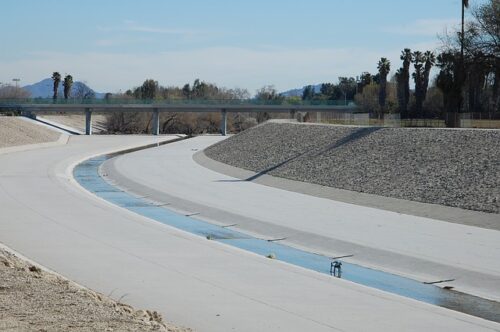 “Across urbanized Southern California, hundreds of miles of streams have been modified to contain storm flows and help protect human life and property from flooding. These streams – sometimes referred to as engineered channels – are characterized by modifications to channel shape and/or hardening of their banks and/or bottom. And they typically receive lower biological integrity scores than their more natural counterparts. Channel modifications can degrade habitats for organisms, disrupt natural hydrologic and sediment regimes, increase thermal stress, and increase susceptibility to eutrophication. Meanwhile, these challenges are commonly accompanied by ongoing removal of sediment and vegetation as part of channel routine maintenance. The challenge for stormwater managers is understanding how to balance managing the biological health of engineered channels with the need to preserve their flood control functions … ” Read more from the Southern California Stormwater Monitoring Coalition.
Los Angeles County preservation plan draws fire in Castaic
“The L.A. County Regional Planning Department’s efforts to redraw boundaries to protect open spaces and wildlife habitats drew concern from residents at Wednesday’s Castaic Area Town Council meeting. The county’s efforts prompted confusion about what would and would not be allowed on residents’ properties, ranging from fire hazard mitigation to perceived restrictions on routine landscaping, as the county revises its maps of Hillside Management Areas and Significant Ecological Areas. Residents within the new boundaries proposed for those areas received letters that prompted a lengthy discussion about what could and couldn’t be done on such lands. … ” Read more from The Signal.
LA neighborhoods to transform forever with new $31M bridge connecting two major parks
“A long-planned $31 million bridge linking Glendale and Los Angeles is moving forward — and it could permanently reshape how people experience some of the area’s beloved green spaces. The Glendale City Council voted earlier in June to approve the environmental study for the flashy Glendale-Los Angeles Garden River Bridge Project that connects two urban oases. The move effectively gives bureaucrats the thumbs-up to start spending cash and get construction going. The bridge will stretch roughly 320 feet across the Los Angeles River near the intersection of Flower Street and Fairmont Avenue, connecting the Glendale Narrows Riverwalk to the iconic Griffith Park, providing a safe new route for walkers, cyclists and outdoor enthusiasts. … ” Read more from the New York Post.
New earthquake study finds San Andreas fault is primed for a big quake
“An earthquake is overdue along Southern California’s “critically stressed” San Andreas and San Jacinto faults, according to a new study. As stress builds on a fault over centuries, it builds pressure that has to be released in an earthquake. In the study, scientists found that the San Andreas and San Jacinto faults are under more stress than at any point in the last 1,000 years, meaning that a massive earthquake could be on the way. “Because it’s been quite a long time since the Southern San Andreas or the San Jacinto have had a large earthquake, we’ve accumulated a lot of stress,” said Kate Scharer, a co-author of the study and a geologist with the U.S. Geological Survey. … ” Read more from the LAist.
SAN DIEGO
How San Diego went from water shortages to helping other states
“Just a few years ago, San Diego residents were being urged to conserve water as the West grappled with one of the worst droughts in centuries. Today, the region finds itself in a very different position: exploring ways to help neighboring states facing growing water shortages. The San Diego County Water Authority is studying a potential “virtual water transfer” program that could make more Colorado River water available to states like Arizona and Nevada. “It’s the result of decades of planning,” said Dan Denham, spokesperson for the Water Authority. “We started to do more conservation and more desalination and more water reuse. We doubled down on all of that.” … ” Read more from CBS 8.
Reflecting pool contractor tried cleaning Tijuana River too
“The president appears to be having a harder time cleaning the Lincoln Memorial Reflecting Pool than the sewage-contaminated Tijuana River, even though he used the same contractor for both. The New York Times revealed over the weekend that Greenwater Services won a $1.7 million no-bid contract to install a water purification system in the pool located on the National Mall earlier this spring. But now that work has come under scrutiny after algal blooms overtook the pool, turning it a vibrant shade of green. Meanwhile, Greenwater executives claim their treatment of the Tijuana River went extremely well. … ” Read more from the Voice of San Diego.
Along the Colorado River …
The Colorado River is vanishing — and the fixes are getting weird
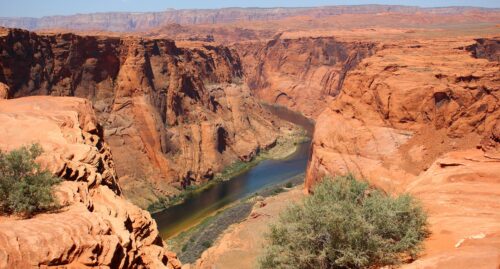
“The crisis on the Colorado River is simple: The seven Western states that border the essential waterway use more water than it contains. Chronic overuse has drained its two largest reservoirs, Lake Powell and Lake Mead, and a two-decade drought cycle has pushed them to the point of collapse. The dream solution to this crisis is an agreement among all involved to use less water. Such a deal would decide who must reduce consumption, which means asking which cities would ban irrigating lawns and washing cars and which farmers would rip up their fields. This has proven impossible. The states have been trying to work this out since the last dry spell, in 2022, but talks have ended in frustration and name-calling. The main sticking point is between the “Upper Basin” states led by Colorado and Utah (along with Wyoming and New Mexico) and the “Lower Basin” states of Arizona, California, and Nevada. Each side believes the other has a legal and a moral responsibility to cut usage during dry years. The stalemate means the Trump administration must design a schedule of restrictions ahead of a crucial deadline in September. So far, Interior Secretary Doug Burgum has balked at resolving the quarrel. … ” Read more from Grist.
Colorado River experts say agriculture must make permanent cuts to water use
“Some Colorado River experts are floating a concept to address the basin’s water woes that is both radical and mundane: permanently reducing the amount of water used by agriculture. Many cities have already reduced their water use in recent decades while adding residents, proving that population growth doesn’t have to be tied to an increase in water use. A 2024 study by Colorado River scientists found that agriculture is responsible for about 74% of water used by people in the basin, meaning urban conservation alone cannot solve the crisis. “I think we need to have permanent reductions in use on the table and agriculture will have to be part of that,” said Anne Castle, a Colorado River expert and a former federal representative to the Upper Colorado River Commission. … ” Read more from Aspen Journalism.
Lake Mead water levels could hit record lows again this summer
“The Bureau of Reclamation’s latest report projects Lake Mead’s elevation will drop to 1,040 feet in July 2026, matching the lowest level ever recorded at the reservoir, which also occurred in July 2022. The projections paint an even bleaker long-term picture, forecasting an additional 30-foot decline over the next two years, with the reservoir potentially falling to just 1,011 feet by May 2028. This comes after a record-low wintertime snowpack for the Upper Colorado. Negotiations between the states that share water from the Colorado River — which supplies 40 million people in the region — have still not reached a conclusion. A new plan is due in October of this year, although some states have already threatened litigation and federal cuts over the conflict in the meantime. … ” Read more from Channel 13.
The nation’s data center debate has reached Southern Nevada
“The fast-spreading national debate over the effects of AI data centers on the environment has reached Southern Nevada, this time taking over Henderson City Hall. At a meeting Tuesday, officials said they would explore a 180-day pause on data center permit approvals while city staff studies ways city codes could be changed to address concerns about air quality, heat generation, siting and decommissioning plans. In an interview, Henderson Mayor Michelle Romero said she proposed the moratorium personally after tech companies reached out to city officials. To Romero, a data center pause is a chance to be thoughtful about development. Last year, officials approved a conditional use permit for the Trammell Crow Co. to build a 300-acre data center campus in the eastern outskirts of the city, but no other companies have active applications, a city spokeswoman said. … ” Read more from the Las Vegas Review-Journal.
Only 3% of Arizona’s rain, snow ends up in our groundwater supply
“More than 95% of all precipitation that falls in Arizona ends up evaporating into the air from soil or plants that take up the water. Only 3% of our rainfall and snowfall ever finds its way into the state’s often parched aquifers. Those two realities form the backdrop for a new, state-financed report on groundwater recharge from researchers at the state’s three major universities. It urges public officials to step up efforts to capture precipitation and encourage it to infiltrate through sands and gravels in the ground into our groundwater supply. The $3.7 million report concludes that carrying out even a small increase in the amount of water captured and recharged could cause significant increases in water supplies, although it didn’t specify how much of an increase. … ” Read more from the Arizona Daily Star.
The Utah State Legislature forms a ‘Colorado River caucus’
“A new caucus has formed in the Utah State Legislature to monitor bills and advocate for the state’s interests on the Colorado River. Rep. Scott Chew, R-Jensen, told FOX 13 News he formed the Colorado River Caucus on Utah’s Capitol Hill made up of lawmakers whose districts are along the river and its tributaries. He has run legislation seeking to defend Utah’s interests in the high-stakes political negotiations over the water that provides life for more than 40 million people in the West. … “Let’s get something figured out,” Rep. Chew said of the negotiations. “You know, Lake Powell’s dry. Lake Mead’s hurting and we’re dumping water out of Flaming Gorge. We need to make some decisions and yeah, not everybody’s going to be happy, but we at least need to get started somewhere.” … ” Read more from Fox 13.
In national water news today …
Lawmakers, companies tread carefully on data center energy bill
“Democrats and major tech companies are offering mixed reviews — or refraining from weighing in — on a bipartisan bill gaining momentum to shield utility customers from the energy costs associated with data centers. House Energy and Commerce Republicans are pitching the “Ratepayer Protection Act” as a response to mounting public backlash over data center development while preserving the United States’ competitive edge in artificial intelligence. The legislation — which is scheduled for a subcommittee vote this week — has attracted rare bipartisan support, including from senior committee Democrat Kathy Castor of Florida, who is co-sponsoring the measure with Colorado Republican Gabe Evans. But despite an endorsement last week from Microsoft, the Data Center Coalition — a trade group that includes Microsoft as well as other tech majors like Google and Meta — was more cautious. … ” Read more from E&E News.
Outrage rescued an important ocean research program. Crucial ones remain at risk.
“Just a few weeks ago, the Trump administration said it was going to pull hundreds of scientific instruments out of ocean waters near the Pacific Northwest, North Carolina, and the Irminger Sea, south of Greenland. It was part of the administration’s plan to roll back funding from a multimillion dollar research program dedicated to studying complex ocean and planetary dynamics, including climate change. Then, last week, it put the brakes on that decision. The National Science Foundation said it would stop dismantling the sensors after a bipartisan group of senators pushed back and passed a measure blocking the agency from doing so. The federal agency also plans to put back the equipment it had already removed. The attempt to dismantle the system, known as the Ocean Observatories Initiative, or OOI, was “supreme stupidity,” said Senator Jeff Merkley, a Democrat from Oregon who sponsored the measure along with Senator Lisa Murkowski, a Republican representing Alaska, in a statement. “We’ll keep fighting to ensure scientists, fishermen, and coastal communities can continue to utilize the critical data the OOI provides.” … ” Read more from Grist.
Former NOAA employees revive climate site shut by Trump administration
“A small group of former government workers has recreated a valuable climate-science website that had been shuttered last year under the Trump administration. The new site, climate.us, is an effort by former staff members at the National Oceanic and Atmospheric Administration to present climate science previously housed at climate.gov, including data, reports, articles, and congressionally mandated national climate assessments. The new site is effectively the “first full clone” of climate.gov, said Rebecca Lindsey, managing director of climate.us. It became fully active on Tuesday morning. Last February, Ms. Lindsey was among the hundreds of NOAA workers laid off from the agency as Trump administration staffing cuts swept the federal government. Then, last June, climate.gov was effectively shuttered. The web address redirected to a different NOAA website and Ms. Lindsey said that some of the information was no longer accessible. “They hid the front door” to a trove of climate data and other resources used by researchers, teachers, and journalists, Ms. Lindsey said. “It was heartbreaking.” … ” Read more from the New York Times.

