
Several news sources featured in the Daily Digest may limit the number of articles you can access without a subscription. However, gift articles and open-access links are provided when available. For more open access California water news articles, explore the main page at MavensNotebook.com.
On the calendar today …
- WORKSHOP: Water Desalination Grant Program Proposition 4 from 1pm to 2pm. DWR’s Water Desalination Grant Program is hosting a virtual workshop that will provide a general overview of the program, discuss upcoming Proposition 4 funding opportunities, and provide an opportunity for early input on program development ahead of developing the Proposal Solicitation Package (PSP). Register for the workshop.
In California water news today …
Is Lake Elsinore water district ‘a legitimate buyer’ for 2 Northern California dams?
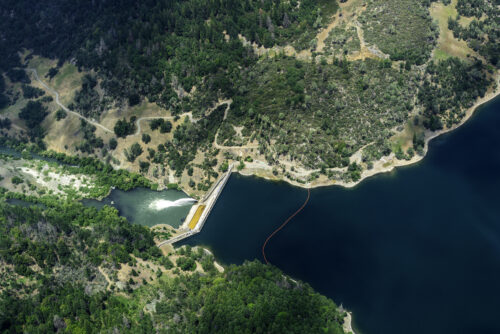
“Six hundred miles is a long way to go for water. That’s how far the Scott and Cape Horn dams are from the Elsinore Valley Municipal Water District. It’s not far enough to deter Elsinore Valley’s interest in buying the dams located in a rural stretch of Northern California. The dams’ fate is the subject of an intensifying showdown involving conservationists, Native Americans, farmers and most recently, the Trump administration. In an April 21 post on X, U.S. Secretary of Agriculture Brooke Rollins described the district as a “legitimate buyer” for the dams, which are part of the Potter Valley Project that sends water to the Russian River flowing through Mendocino and Sonoma counties. “Such a transaction would secure reliable water for 750,000 Californians and hundreds of hardworking farmers who rely on it for irrigation. Putting people and agriculture first,” Rollins added. … ” Read more from the Riverside Press-Enterprise.
California’s water crisis driving higher interest in desalination as a new source
“From a fast-melting snowpack in the Sierra to over-pumped groundwater in the Central Valley and a drought on the Colorado River, California’s water supply is facing enormous pressure. Increasingly, some believe the only real alternative is to draw water from the Pacific Ocean offshore. Former Water Manager Tim Quinn believes he and his team at OceanWell can do it safely and more affordably. We first profiled the company’s technology several years ago. It works by placing a series of collection pods on the ocean floor. The pods take advantage of the intense pressure at lower depths to force seawater through a system of salt-filtering membranes. The fresh, desalinized water is then pumped to shore, leaving the leftover salt, known as brine, to drift out to sea — which, according to the company, helps avoid a core environmental criticism of traditional onshore desalination plants. … ” Continue reading at ABC Bay Area.
California needs water and clean power. It might have a fix for both.
“In California, a sprawling 4,000-mile network of canals winds through citrus orchards and fields of tree nuts, delivering irrigation and drinking water to homes and farms across the state. The canals are critical in an increasingly arid part of the country. But what if they could help fulfill another urgent need: renewable energy? To test that idea, researchers, private enterprise and a public utility in the Central Valley are installing solar panels atop the man-made waterways. The pilot program, called Project Nexus, is testing solar canopies that researchers say could generate gigawatts of power and save billions of gallons of water by providing shade that slows evaporation. It could be transformational if scaled up, researchers say, in helping the state to meet its ambitious climate and biodiversity goals. … ” Read more from the New York Times.
California almond outlook, water storage, and agriculture’s future
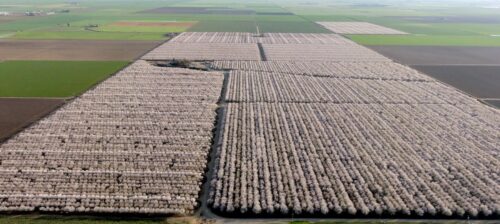 “California agriculture faces no shortage of challenges and opportunities heading into the second half of 2026. On this episode of the AgNet News Hour, hosts Nick Papagni, “The Ag Meter,” and Josh McGill sit down with longtime almond industry leader Steve Malanca of West Valley Hulling in Firebaugh to discuss everything from almond crop forecasts and pricing trends to California’s ongoing water storage debate. The conversation begins with a discussion about Canada’s newly announced food security initiative. Canadian officials are investing heavily in greenhouse production and automation in an effort to reduce reliance on imported fruits and vegetables. While the move has raised concerns among some California producers, Malanca and the hosts question whether greenhouse technology can realistically replace California’s world-leading production of almonds and other specialty crops. … ” Read more from AgNet West.
SEE ALSO: Steve Malanca: California Almond Crop May Tighten as Water Challenges Continue, from AgNet West
Resilient California fishes: Lahontan redside shiners
“The fresh waters of California support a diverse, highly endemic fish fauna. Many of the native fishes are on extinction trajectories. In this blog series, however, we discuss native fishes that are not considered to be in trouble. Instead, they are native species that have sufficient resiliency to keep populations large and sustainable, even in highly altered habitats. Information on these species should help us to understand why they have such resiliency in the face of large-scale changes to California waterways. If you have been to Lake Tahoe and seen a loose school of small fish under a pier or other cover, you were probably looking at Lahontan Redsides (aka Lahontan Redside Shiners). The Lahontan Redside minnow is an abundant relic of the Pleistocene era, when much of northern Nevada was under the waters of the giant Lake Lahontan. … ” Read more from the California Water Blog.
Sonoma discovery proves sunflower sea stars survived in California
“As an infamous marine heat wave ramped up more than a decade ago, sunflower sea stars fell sick and all but disappeared from California waters. But scientists refused to stop searching for the keystone species, Pycnopodia helianthoides, one of the world’s largest sea stars, known for hunting California’s rocky reefs with up to 24 arms. The loss of the big stars shifted California’s marine ecosystems wildly, including by allowing prey like purple sea urchins to gobble up collapsing kelp forests. Last summer, a large group of research partners — including the Kashia Band of Pomo Indians, Greater Farallones and Cordell Bank national marine sanctuaries, the Nature Conservancy and Sonoma State University — gathered on the Sonoma Couny coast near Sea Ranch, investigating a cove where a diver had stumbled upon one wild sunflower sea star. They found 18. … ” Read more from SF Gate.
Heat waves increase the West’s wildfire risk
“When heat waves hit the Western United States, the risk of wildfires quickly rises. The prolonged heat dries out vegetation, but that’s only part of the cause – heat waves also play other roles in spreading wildfires. In a new study, our team of fire and climate scientists looked at two decades of wildfire activity in the West, from 2001 to 2024, and for the first time quantified the effect of heat waves on those fires. We expected a big impact, but the numbers still surprised us: While heat waves, which we defined as three or more consecutive days with temperatures in the top tenth of hottest days, accounted for only 12% to 15% of warm-season days, we found that 42% of all the area burned by fires had occurred during or right after a heat wave. … ” Read more from High Country News.
El Niño is here and will have ‘big consequences’ for global weather
 “El Niño is a phenomenon every few years in which a tropical region of the Pacific experiences unusually warm ocean surface temperatures, affecting weather patterns across the world. A 2026 El Niño is now officially underway, according to the National Oceanic and Atmospheric Administration, or NOAA, which also said this one has a greater than 50 percent chance of turning into a “super” El Niño. Combined with the ongoing rising temperatures from the climate crisis, a “super” El Niño could spell major disruption of weather patterns and ocean circulation worldwide. Kevin Trenberth is a scientist at the University of Auckland as well as a distinguished scholar at the National Center for Atmospheric Research in Boulder, Colorado. This interview has been edited for length and clarity. … ” Read more from Inside Climate News.
Bills protecting ratepayers from data center costs and incentivizing sustainable tech infrastructure development passes senate floor
“This week, the California State Senate passed Senate Bills 886 and 887, two measures authored by Senator Steve Padilla (D-San Diego) designed to protect California ratepayers from the potential increased costs and environmental damage caused by data centers. “Done correctly, these massive infrastructure projects can support the grid and provide economic opportunity for the community. However, we have seen when these projects are unchecked, they cause skyrocketing energy costs for consumers and environmental damage,” said Senator Padilla. “Californians and the local community cannot be the collateral for wealthy companies to plunder for record-breaking profits.” … ” Continue reading from Senator Steve Padilla.
In regional water news and commentary today …
NORTH COAST
Deadly parasite is flourishing in a California river
“Wildlife experts in both California and Oregon report they’re seeing a high number of newly released Chinook salmon sickened and killed by a parasite. The salmon have been found dead at multiple traps in Oregon and California in the Klamath River. The deaths, first reported by Oregon Public Broadcasting, are believed to primarily be due to a parasite called Ceratonova shasta. The parasite, which is linked to the salmon, has reached farther north in the river than ever before following the destruction of four dams near the Oregon-California border. … ” Read more from SF Gate.
There’s a newly identified earthquake fault in Shively
Lori Dengler, an emeritus professor of geology at Cal Poly Humboldt, writes, “I took a very special field trip this week. Colleagues of mine received funding from the National Earthquake Hazards Reduction Program to study a suspicious bump in the ground near Shively in Southern Humboldt County. The team led by Jay Patton of the California Geological Survey and Mark Hemphill-Haley, a fellow professor emeritus in the Humboldt Geology Department, have just opened a trench to determine if it is a fault, how active it might be and its potential for producing a major earthquake. Trenching is a relatively new tool in our arsenal for studying earthquakes. It wasn’t until the mid-1970s that Kerry Sieh, then an undergraduate at UC Riverside, had the idea of using a backhoe to study faults. … ” Read more from the Eureka Times-Standard.
SACRAMENTO VALLEY
Rebuilding a riverfront nine
“Campus Commons sits where recreation and infrastructure overlap: a riverfront corridor prized for its open space yet defined by the American River levee system that protects Sacramento. The original course — a lightly trafficked 9-hole par-3 — occupied an enviable location near downtown, but its future was ultimately decided by water, not golf. When the U.S. Army Corps of Engineers advanced a major riverbank stabilization and flood-control effort along this reach, the property became part of the work zone. A 70-foot-wide strip of the course along the river edge was acquired, and much of what remained served as access and staging during construction. By the time the heavy equipment moved on, the old course routing had effectively been erased — creating an uncommon opportunity and a demanding mandate: rebuild golf in a floodplain, and make it work. … ” Read more from Golf Course Industry.
BAY AREA
Bay Area lawmakers seek over $32 million in emergency federal funds to fight grape pest
“Bay Area lawmakers are asking federal officials for $32.2 million in emergency funding to battle a dangerous grapevine pest introduced into the region by Costco sales to consumers. Northern California, the heart of the U.S. wine industry, is threatened by an insect known as the glassy-winged sharpshooter, which carries a fatal disease that could wreak havoc on the state’s vineyards if allowed to spread. “This pest and its associated disease pose a potentially catastrophic threat” with a potential loss of $104 million a year, according to a letter from lawmakers sent Tuesday to the U.S. Agriculture Department. … ” Read more from Northern California Public Media.
New study measures microplastics in the Bay smaller than human hair
“A pilot study by the San Francisco Estuary Institute captures plastic particles in the Bay that are 10 times smaller than measured before, the width of a human hair. These smaller microplastics may account for the vast majority of those present in the water. The study could inform broader research on plastics and human health, coastal ecosystems and the ability of the sea to trap carbon from the earth’s atmosphere. The term “microplastics” encompasses many different materials, said SFEI lead scientist Diana Lin. “They include tire-wear particles and fibers from our clothing,” said Lin. “It’s from the food that we eat, the air that we breathe. It’s in the dust from our carpets, from ripping plastic items where little particles get threaded.” … ” Read more from The Almanac.
The birds of Hoover Ranch are coming out to play
“At a 600-acre former ranch on Bethel Island, the John Muir Land Trust is creating much-needed new freshwater wetlands in the Bay Delta. Hoover Ranch is already well-known in the birding community, and biological surveys have documented more than 80 species here. As wetlands return to the property, biologists expect even more species to follow. The marquee species is the snow goose. They arrive in enormous flocks after traveling thousands of miles from the Arctic. Individual birds have wingspans of 4 to 5 feet, and winter flocks can number in the tens or even hundreds of thousands. … ” Read more from the Martinez Tribune.
Palo Alto looks to restore ‘parkland’ status to contested Baylands site
“Fifteen years after Palo Alto voters agreed to let the city built a waste-to-energy facility in the Baylands, prompting complaints from local conservationists, city officials are preparing to restore most of the site back to its original use as parkland. The debate that split the environmental community in 2011 focuses on a 10-acre site at Byxbee Park where city leaders were once considering an anaerobic digestion plant that would convert wastewater into electricity. To enable the plant’s construction, local environmentalists spearheaded Measure E, which allowed the city to “undedicate” the parkland next to the Regional Water Quality Control Plant, much to the chagrin of conservationists who argued that the Baylands is not a suitable place for an expanded sewage operation. Even though Measure E passed, the city never constructed the plant, ultimately deciding that all of the technological solutions under consideration were too expensive and complex. … ” Read more from Palo Alto Online.
CENTRAL COAST
Greenfield building moratorium takes effect after state approval
“A temporary moratorium on certain new development projects in Greenfield is now in effect following final review and approval by the California Department of Housing and Community Development, city officials announced Friday. The moratorium, originally adopted by the Greenfield City Council through Ordinance No. 575 on Aug. 26, 2025, became effective June 10. The measure temporarily suspends the issuance of new building permits for projects that would require new wastewater connections or increase flows to the city’s wastewater system. City officials said the action is necessary because of capacity constraints at Greenfield’s wastewater treatment plant. “This action is necessary to protect public health, safeguard the environment and ensure compliance with state and regional water quality requirements while the City advances critical wastewater infrastructure improvements,” said Greenfield City Manager Paul Wood. … ” Read more from the Salinas Tribune.
EASTERN SIERRA
State Water Board Mono Lake public workshop 1: Water quality, salinity, brine shrimp, and alkali flies
“Mono Lake’s brine shrimp and alkali fly populations are showing measurable and significant signs of strain due to Mono Lake’s water level being too low for too long. That was the big takeaway from the State Water Board’s Mono Lake Public Workshop 1. During the two-hour workshop on June 4, the spotlight was on the tiny, fascinating, food-producing engines of Mono Lake’s unique food web, and the salinity of the water they live in. Two longtime Mono Lake expert scientists presented—Dr. John Melack on limnology and brine shrimp, and Dr. David Herbst on alkali flies. At the request of the Board, the focus was on data and trends observed since the Board’s 1994 Decision 1631 that set the current protections for Mono Lake. While the research presented was complex, the takeaways are straightforward and familiar. The scientists shed new light on the increasingly urgent need to raise Mono Lake to the Board’s mandated level with documented, measurable, and accumulating impacts on the ecosystem of the chronically low lake level. … ” Read more from the Mono Lake Committee.
Tumbleweed mega-pulls at Mono Lake’s Black Point part of local environmentalist’s legacy
“Mono County environmentalist Janet Barth did not need TikTok, Instagram or YouTube to be an influencer. Her vision and hard work to protect local public lands are what continue to inspire her friends and fellow conservationists. Before she died earlier this year, Barth — a resident of Benton who was affectionately known as “JB” to those who cared about her — had crafted a meticulously thought-out plan to rid the lands around Mono Lake from that most invasive of weeds, Russian thistle, also known as tumbleweed. Her plan has begun to be put to practice and community members are welcome to share in Barth’s legacy of volunteering to protect local lands. … ” Read more from the Mammoth Times.
SOUTHERN CALIFORNIA
Boyle Heights warehouse blaze, hazards to last several more days, LAFD says
“Fire and other hazards at a Boyle Heights cold-storage facility continued to smolder and flare Sunday as crews attacked the blaze from the ground and air, a fight expected to last several more days. Los Angeles Fire Department Chief Jaime Moore said at a Sunday afternoon news conference that firefighters could have the fire extinguished and all hazards mitigated at the Lineage warehouse by the end of this week. After dumping water on the building with helicopters and dropping fire retardant, firefighters tore down the walls and inserted water cannons, which can distribute 1,500 to 2,000 gallons of water per minute, to extinguish the fire inside, Moore said. And with a state of emergency declared on Saturday by Los Angeles Mayor Karen Bass and Gov. Gavin Newsom, along with help from Lineage, the Fire Department is expecting additional resources to arrive on Monday morning, giving firefighters a much-needed break while bringing in other types of equipment. … ” Read more from the LA Daily News.
Construction work to expand an existing water desalination plant in Torrance kicked off this month
“When one thinks of desalination plants, they are generally connected directly to the ocean. But on June 11, groundbreaking took place for an expanded desalination effort a few miles inland in Torrance. The purpose: to take salt out of groundwater contaminated through ocean water intrusion. The $187 million project to expand an existing desalination plant is being spearheaded by the city of Torrance and the Lakewood-based Water Replenishment District of Southern California. Dallas-based Jacobs Solutions Inc. is the principal designer for the expansion project and St. Louis-based McCarthy Building Cos. is the primary builder. The Robert Goldsworthy Groundwater Desalter plant originally opened in Torrance in 2001 to remove salt from local groundwater – primarily through reverse osmosis – to make it usable for drinking and irrigation. … ” Read more from the LA Business Journal.
IMPERIAL/COACHELLA VALLEYS
Sen. Steve Padilla outlines legislation on data centers
‘California state Sen. Steve Padilla spoke on championing several bills in opposition to data centers during his town hall meeting Thursday, June 18, at the city’s community center. “If the price of constructing and operating data centers at this scale means the negative impact on communities is not addressed or mitigated; when communities like ours are exploited and taken advantage of — I’m going to be at the front of the line making sure that does not happen,” Padilla said when addressing hyperscale data centers. Padilla outlined Senate Bill 866, the California Technology Innovation and Ratepayer Protection Act, describing it as legislation that would require “data centers to pay their own way.” … ” Read more from the Desert Review.
Data center that vowed to avoid Colorado River water is now suing for 260 million gallons per year
“Questions are mounting around a proposed artificial intelligence data center in California’s Imperial Valley because its developer is now seeking Colorado River water, despite earlier saying the project would avoid drawing from the drought-stressed river. KPBS reported that Imperial Valley Computer Manufacturing has gone to court to secure 260 million gallons of water per year from the Imperial Irrigation District — about 750,000 gallons a day — for a planned artificial intelligence complex in the desert. … ” Read more from The Cool Down.
Along the Colorado River …
Colorado River system continues slide toward crash, despite emergency actions sending water to Lake Powell
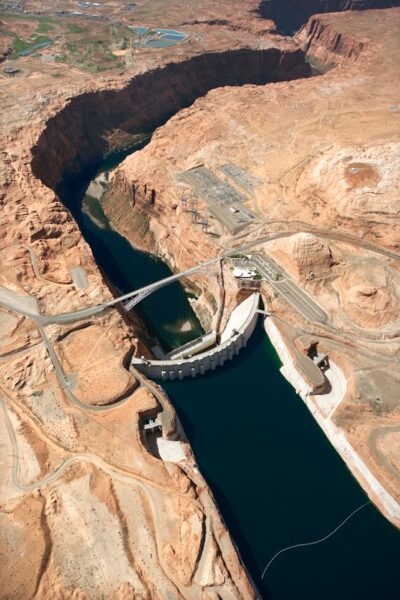 “The two major reservoirs on the Colorado River face dire outlooks that will likely spur federal officials to restrict the amount of water flowing downstream — and decrease hydropower generation — in the coming months, even after they ordered recent emergency measures. Projections released last week by the U.S. Bureau of Reclamation show that if dry conditions persist, Lake Powell’s water level could dip below a threshold called “minimum power pool” as soon as February. That’s the level below which water can no longer flow through the reservoir’s hydropower turbines. Without intervention, the projections say, the lake will remain below the critical elevation for the foreseeable future. … ” Read more from the Denver Post via the Lawton Constitution.
Aging dam tubes could make or break deliveries to Lake Mead. Do they work?
“When the Bureau of Reclamation announced it would cut releases into Lake Mead in an effort to prop up Lake Powell, the messaging was clear, and it acknowledged a problem some in the Western water world have raised for years. “If Glen Canyon Dam declines below 3,490 feet, water releases would be only through the river outlet works, which could cause operational issues, uncertainty for users, downstream impacts, instability in regional power and water supplies, and a reduction in power generation,” a news release said. To many, the functionality of Glen Canyon Dam’s river outlet works has been a slow-moving crisis. If levels at Lake Powell fall too low, water deliveries to Lake Mead could be cut off due to potential damage of those release tubes, spelling trouble for Southern Nevada and its neighbor states in the Lower Colorado River Basin. “The whole flow of the Colorado River and all of the deliveries to the Lower Basin could all hinge on these steel tubes that were never meant to convey the whole flow of the Colorado River,” said Eric Balken, executive director of the nonprofit Glen Canyon Institute. “That’s so much uncertainty that very few stakeholders are comfortable with.” … ” Read more from the Las Vegas Review Journal.
The National Park Service continues to have to move docks as Lake Powell shrinks
“The National Park Service is spending $74 million to move a dock at Lake Powell that no longer reaches the diminished reservoir’s drought-strangled water level.” Listen to radio show or read transcript from NPR.
Could El Niño solve Colorado’s water woes?
“Forecasters with the National Oceanic and Atmospheric Administration confirmed the formation of El Niño conditions in the Pacific Ocean June 11, saying there is a 63% chance that the conditions will lead to a “very strong” El Niño episode this fall. El Niño is a global weather phenomenon that occurs when temperatures in the Pacific rise by more than 0.5 degrees Celsius for several consecutive months. This rise in ocean temperatures causes weather shifts around the globe, affecting agriculture, ecosystems and economies. El Niño events typically last nine to 12 months, according to NOAA. “If the forecasts actually come true, it would put this El Niño at the fifth strongest since 1982,” said Kris Karnauskas, a professor in the Department of Atmospheric and Oceanic Sciences at University of Colorado Boulder. … ” Read more from Rocky Mountain PBS.
Feds stop paying to monitor Santa Fe drinking water source for Los Alamos contaminants
“Via Alicia Inez Guzmán at Source New Mexico, we learn that the federal government is no longer paying the cost of monitoring Rio Grande flows at the intake to Santa Fe communities’ Buckman Direct Diversion as part of a joint effort to ensure that contamination from nuclear weapons work at Los Alamos National Laboratory doesn’t get into Santa Fe’s drinking water: “the provision to pay for water sampling was “the stickiest point” of negotiating the MOU’s fifth renewal, said Justin Greene, a Santa Fe County commissioner and former Buckman board chair. The negotiations began the year before, he added, but the Energy Department’s rebuff hardened in 2025, the year the MOU expired. It was also the beginning of the second Trump presidency. With the expiration, the rolling $96,000 that once funded annual stormwater sampling by an outside contractor was officially cut off and a new MOU was signed, effective in 2026, without it.” … ” Continue reading at Inkstain.
What can humans learn from beavers when it comes to drought-proofing the landscape?
“Amid a field of “zombie willows” in the Kawuneeche Valley within Rocky Mountain National Park, researchers and water providers are taking lessons from nature’s ecosystem engineers to build drought resilience and restore wetlands. “This valley was once a really significant wetland in Colorado … it was just this really thriving beaver-willow-wetland complex, and very biologically diverse,” said Kimberly Tekavec, the senior source water protection specialist for Northern Water. “And over the last 100 years or so — and really significantly in the last few decades — this valley has been severely disrupted, and we’re essentially witnessing, and have witnessed this ecosystem collapse.” The Kawuneeche Valley exists just downstream from the Colorado River headwaters in the Never Summer Mountain Range, following the river through Rocky Mountain National Park to Shadow Mountain Reservoir near Grand Lake. As Tekavec described, the valley was once home to dense stands of tall willows, hundreds of beavers and wetlands that stretched eight miles long and half a mile wide. … ” Read more from Summit Daily.
In national water news today …
U.S. homes show three-decade decline in indoor water use
 “Decades ago, before it was much of a concern, water moved through the average U.S. home in enormous quantities. Toilets pulled 3.5 gallons per flush or more. Washing machines filled like tiny swimming pools. Water flowed and flowed. Things have tightened considerably since then. New data shows that U.S. homes are becoming ever more efficient in their water use. Between 1999, when the first residential end-use study was released, to the third edition, which was published last week, indoor water use dropped by 43 percent. The tightening of indoor water use has allowed cities to grow despite mounting concerns about water availability, especially in the western states. … ” Read more from Circle of Blue.
Moody’s: Water reliability affecting credit risk
“A recent report from Moody’s Ratings says water reliability is becoming a key determinant of economic resilience in regions that face rising demand and uneven supply. The credit implications are most pronounced when stressed water systems support high-value activity with limited tolerance for interruption. The credit ratings company said in the analysis, that infrastructure readiness, governance quality and financial flexibility can reduce vulnerability to high inherent exposure to water stress. … ” Read more from Water Finance & Management.
America’s data center backlash is bipartisan — can it stay that way?
“This month, Texas Governor Greg Abbott, a staunch supporter of President Donald Trump, unveiled a set of sweeping recommendations to rein in rampant data center development, urging Texas lawmakers to aggressively regulate the tech industry in a state that has a reputation for welcoming new development with open arms. At the same time, New York Governor Kathy Hochul, the Democratic leader of a state known for regulatory restrictions, has declined to say whether she will sign a first-of-its-kind bill passed by her state legislature imposing a one-year moratorium on large-scale data centers. Welcome to the weird world of data center politics, where the usual partisan scripts around energy and natural resources don’t apply — yet. … ” Read more from Grist.
Trump wants to unleash ‘America First’ fishing. What’s he really doing?
“When Kekuewa Kikiloi boarded a research vessel to visit the northwestern Hawaiian islands in 2002, he didn’t know what to expect. Kikiloi grew up on O‘ahu, but like a lot of Native Hawaiians, he had never had the opportunity to visit the uninhabited islands and atolls scattered to the west of the main islands. What he saw changed his life. “There’s no places left in Hawai‘i, or very few places, where the environment is so wild and intact that you have your ancestors who are embodied in the environment communicating with you every second: Birds hovering over you, monk seals swimming up to you, fish trying to bite you,” he told Grist. “It’s so raw, the experience up there.” … The trip, a monthlong research expedition with scientists and Native Hawaiians, sparked decades of advocacy within the Hawaiian community for the protection of the Papahānaumokuākea. Now Kikiloi is worried those protections are under threat. … ” Read more from Grist.
SEE ALSO: US moves to allow commercial fishing in Pacific marine protected areas, from Mongabay

