
Several news sources featured in the Daily Digest may limit the number of articles you can access without a subscription. However, gift articles and open-access links are provided when available. For more open access California water news articles, explore the main page at MavensNotebook.com.
In California water news today …
Is climate change supercharging El Niño? Scientists don’t agree.
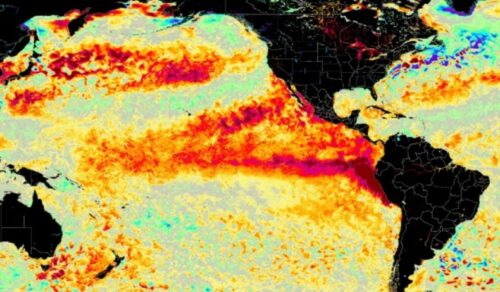 “It’s a vigorous debate taking place right now among scientists around the world, with far-reaching implications for extreme weather and costly disasters: Is climate change making El Niño more intense? El Niño, the natural phenomenon that occurs every few years and pushes up global temperatures, has just begun and is expected to continue through 2027. Scientists say this latest version is likely to be especially potent and could smash records. As greenhouse gasses heat the planet, El Niño events over the past few decades have been comparatively strong. The run of powerful El Niños since the 1980s stands out when measured against the past 600 years. That’s led some scientists to suggest that climate change is supercharging El Niño. Others say there is no clear evidence to support that theory. … ” Read more from the New York Times.
Price-tagging nature: Inside mitigation banking—the multibillion-dollar industry where restoring and preserving rare habitat and species makes big money
“The spindly legs and elegant flight of the whooping crane could go down in history as a mascot for the melding of modern ecology and economics. In 1978, the federal government’s Army Corps of Engineers granted permission for breaking ground on a dam project in Wyoming, a massive undertaking that would supply water to eight adjacent states. The State of Nebraska and various environmental organizations contended that the dam would divert precious water from the wetlands and meadows around the Platte River that were a critical stopover on the annual migratory flight of whooping cranes. Further stress on the already endangered cranes, they argued, would sentence the species to extinction. A judge agreed, and the defendants, including the Army Corps, settled. The developers would proceed with the dam project, but also establish a $7.5 million fund for the “maintenance and enhancement” of the wetland habitat. Thus was born the first high-profile environmental trade-off, according to Laura Martin, a historian and ecologist, in her book Wild by Design: Restoration in one place to compensate for ecological harm somewhere else. … ” Read more from Bay Nature.
Data centers get pulled into California’s water wars
 “Water for your thoughts: The data center build-out underway in California is running into a water backlash before the state has rules to deal with it. Local fights are flaring over proposed data centers in Kern and Imperial Counties, some of California’s most water-parched regions. The ratcheting up of tension comes as two bills from Assemblymember Diane Papan that would force earlier disclosure of data centers’ projected and actual water use are winding their way through the Legislature, with a first hearing in the Senate scheduled next Tuesday. AB 2469 would require data centers to provide more information on water supply, use and planning before cities or counties can approve new or expanded data centers. AB 2619 would require data centers to report projected and actual water use as a requirement for renewing a local business license. … ” Read more from Politico.
Water Commission increases potential funding for Sites Project
“The California Water Commission on Wednesday committed $268.9 million in conditional supplemental funding to the Sites Project to offset inflation and for additional public benefits. These funds, administered through the Commission’s Water Storage Investment Program (WSIP), were made available from Proposition 1 (2014) and Proposition 4 (2024) and are an investment in the public benefits offered by the Sites Project. … With this additional funding, the Sites Project is eligible for a total of $1.363 billion in WSIP funding. To receive funding from the Commission, the project must first meet certain voter-mandated requirements, including securing financing, obtaining permits, completing environmental review, and contracting with the State agencies that are overseeing the administration of the public benefits. … ” Read more from the California Water Commission.
SEE ALSO:
- California Water Commission boosts potential funding for Sites Reservoir project, from KMPH
- California Water Commission unanimously awards $268.9 million in funding to the Sites Reservoir Project, from Action News Now
Family Tree Farms navigates early season, market shifts, and water challenges
“Family Tree Farms is seeing one of the earliest fruit seasons in recent memory, creating unique opportunities and challenges as California growers navigate changing weather patterns, market conditions, and long-term water concerns. During a recent AgNet News Hour interview, Family Tree Farms Vice President Daniel Jackson discussed the 2025 season, global marketing efforts, and the future of California agriculture. Based in Reedley, California, Family Tree Farms is a multi-generational family farming operation with roots dating back to 1933. While best known for peaches, plums, nectarines, apricots, and other stone fruit, the company has expanded significantly over the years to include blueberries, almonds, pistachios, citrus, cherries, and specialty apple varieties. The operation now markets fruit throughout the United States and internationally. … ” Read more AgNet West.
NOAA is sending $123 million to fishery disasters across the country. California’s salmon is one of them.
“The federal government just formally acknowledged what NorCal fishing communities have been living through for three years: the salmon collapse was a disaster, and it deserves disaster funding. NOAA announced $123 million in fishery disaster relief for six fishery resource disasters across the country, including the 2024 Sacramento River fall-run Chinook salmon disaster that led to three consecutive years of commercial and recreational fishing closures in California. The funding is meant to help fishing families, charter businesses, ports, tackle shops and coastal communities that lost their livelihoods when salmon fishing was shut down. The closures cost the California fishing industry hundreds of millions of dollars in lost revenue. Guides who had built careers around salmon season went years without work. Restaurants that depended on local catch lost their supply chains. And waterfront businesses from Bodega Bay to Crescent City saw traffic dry up. … ” Read more from Active NorCal.
California asks for $32M in emergency funds to fight glassy-winged sharpshooter
“U.S. Sens. Alex Padilla and Adam Schiff, D-Calif., are urging U.S. Department of Agriculture Secretary Brooke Rollins to provide emergency funding to the state to combat the threat of the glassy-winged sharpshooter. The invasive pest was recently found on grapevines sold at Costco stores in Sacramento County and other counties throughout the state and poses a critical threat to California’s wine industry. In a June 16 letter, the U.S. senators and 12 House members, including Rep. Doris Matsui, D-Sacramento, asked the USDA for the immediate release of $32.2 million to “support efforts to contain and eradicate the pest.” The funds would come from the Commodity Credit Corporation, a funding initiative through the federal agency, and would go toward tracing, surveying and trapping response programs for the next three years. … ” Read more from the Sacramento Bee.
In commentary today …
California begins a new era of water planning
“For decades, California’s water planning efforts largely focused on managing scarcity. Senate Bill 72 marked a significant shift toward a different approach: building long-term water resilience through measurable supply targets, improved planning, and greater statewide coordination. That shift began several years ago when a group of local water agency leaders came together to discuss how California could better prepare for a future defined by climate volatility, aging infrastructure, and increasingly unreliable water supplies. Those conversations ultimately helped launch the California Water for All coalition and a broader statewide movement to modernize California’s approach to water planning. … ” Read more from the Northern California Water Association.
In regional water news and commentary today …
NORTH COAST
Low flows equal high stakes for salmon in the Klamath River
“Klamath River salmon are facing elevated infection rates of the parasite Ceratonova shasta (C. shasta) this spring, a setback tribal scientists say reflects harsh water conditions rather than any failure of the region’s historic dam removal. Monitoring by the Karuk Tribe has detected higher levels of C. shasta, a long‑standing parasite that spreads more easily when river flows are low and water temperatures rise. This year’s record‑low snowpack, early melt and a sudden heat spell created ideal conditions for the disease to proliferate among juvenile salmon. “It’s been a problem for a long time; it’s actually native to the Klamath, so it’s not a new problem,” said Craig Tucker, natural resources policy consultant for the Karuk Tribe. “It’s one of those things when the flows are low, and water temperatures are hot, the disease spreads more rapidly, and we have had years where upwards of 90% of juvenile salmon are being infected by it.” … ” Read more from the Eureka Times-Standard.
9th Circuit: ESA overrides Klamath water rights
“Klamath irrigators have failed to convince a federal appeals court that the U.S. Bureau of Reclamation is prohibited from dedicating their water supplies to in-stream flows for fish. The 9th U.S. Circuit Court of Appeals has ruled that water delivery contracts held by irrigators do not supersede Reclamation’s obligation to comply with the Endangered Species Act. The federal agency has the “discretion” to release water from Upper Klamath Lake for fish because most water delivery contracts “are premised on water availability,” which is limited by ESA, according to the 9th Circuit. “Under these contracts, unavailability of water can be a result of either physical unavailability caused by an inadequate water flow, or by legal unavailability as, for example, when a legal obligation requires use of water for other purposes,” the ruling said. … ” Read more from the Capital Press.
Enviros: Caltrans Last Chance Grade plans have ‘inadequate’ environmental mitigation
“Caltrans has released its final Environmental Impact Report and Statement for the agency’s Last Chance Grade project, a milestone for a much-needed infrastructure overhaul, but the environmental mitigation measures contained therein leave something to be desired according to stakeholder groups. The Last Chance Grade Project, which intends to reroute a 3.5-mile-long section of landslide-prone, geologically unstable highway 10 miles south of Crescent City through a newly constructed 6,000-foot tunnel, will involve the removal of up to 144 mature trees from Redwood National and State Parks. That includes 16 protected old-growth redwoods, the largest of which are just under nine feet in diameter. The project, as entailed in Caltrans’ EIR, would mitigate environmental impacts by providing for restoration work on some 670 acres of forest in the area. … ” Read more from the Eureka Times-Standard.
Tribe with senior Eel River water rights shut out of White House meeting
“Federal agriculture and interior officials convened a meeting Monday at the White House with PG&E and a Southern California water district over the future of the Eel River — and the tribe with senior water rights on that river was not in the room. The Round Valley Indian Tribes said Wednesday that Agriculture Secretary Brooke Rollins had called the meeting, which also included Interior Secretary Doug Burgum and representatives of the Elsinore Valley Municipal Water District. The subject was the Potter Valley Project, a hydroelectric complex on the Eel River that PG&E has moved to decommission. … ” Read more from the Mendocino Voice.
Redway Water District issues annual summer conservation guidance tied to Eel River Flows
“Many water providers in California base their supply estimates on reservoir levels. Under these conditions conservation is important on a year-round basis. Conservation during the rainy season will result in additional water being available during the drier parts of the year. However, Redway’s river source of supply is dynamic and seasonal. During the rainy season water supply is plentiful, even during relatively dry years. Conservation during these periods does not result in additional water supply being available in the drier parts of the year. During the drier parts of the year water withdrawals from the river system can be in direct competition with other ecological demands – consequently adequate water supply to District customers during summer months can be limited even in relatively wet years. RCSD regularly experiences late summer drought conditions even in “normal” water supply years. … ” Read more from the Redheaded Blackbelt.
SIERRA NEVADA
Hazardous fuels reduction and meadow restoration to begin in Mayála Wàťa
“Mechanical treatments to remove hazardous fuels and encroaching conifer trees from Mayála Wàťa (Meeks Meadow) are scheduled to resume for the season on Monday, June 22, 2026, on the West Shore of Lake Tahoe. The Washoe Tribe of Nevada and California and the U.S. Forest Service Lake Tahoe Basin Management Unit urge Meeks Meadow Trail visitors to avoid entering thinning areas on the north side of the meadow. Work is expected to continue through the end of October, as conditions, staffing and weather allow. The public can expect to see crews staging equipment, tree removal, chipping and hauling of woody material and heavy equipment. For public safety, access to some areas may be temporarily disrupted when work is taking place. The public should be aware of project activity and keep a safe distance from equipment. … ” Read more from the USFS.
Tahoe Conservancy to implement visitor improvements and new trails at Van Sickle Bi-State Park
“The California Tahoe Conservancy Board approved a pair of projects at Van Sickle Bi-State Park to improve visitor safety, connect the park to nearby neighborhoods and the Nevada state line with new shared-use trails, expand amenities, and improve access for all. The improvements help further a 2019 vision plan for the park, which the Conservancy co-manages with the Nevada Division of State Parks. … ” Read more from South Tahoe Now.
Written in stone: The geology of Truckee–Tahoe
“Vast, polished granite walls rise from forests and lake shores, shaped by forces far older than the rock climbers who now trace routes across them. Standing beneath formations like Snowshed Wall at Donner Summit, where climbers begin inching their way up the stone as soon as the snow melts, it’s hard not to wonder: how did this landscape come to look like this? If Truckee-Tahoe’s rocks could speak, they would tell a story stretching back millions of years. According to the Lake Tahoe Basin Management Unit, around five million years ago, movement along major fault lines caused large blocks of the Earth’s crust to rise and fall, helping form the Sierra Nevada crest. In the area where Lake Tahoe sits today, two blocks lifted on the east and west while the land between them dropped, creating a deep valley. … ” Read more from the Sierra Sun.
SACRAMENTO VALLEY
SYRCL begins construction on Upper Long Bar Habitat Restoration Project
“The South Yuba River Citizens League (SYRCL) will begin construction of the Upper Long Bar Habitat Restoration Project on Monday, June 22, 2026. The project is located on private property in Yuba County along the lower Yuba River just over 1 mile below the Highway 20 bridge on the north side of the river. The Upper Long Bar project is designed to improve edge habitat for juvenile Chinook salmon and steelhead by adding new alcoves, instream structures, and increased roughness along the riverbank. These enhancements aim to increase the carrying capacity of the system and support diverse salmonid life history strategies. The project is funded by the Wildlife Conservation Board, the Fisheries Restoration Grant Program, and Yuba Water Agency, with project partners including Cramer Fish Sciences, Verdantas Eco Engineering, Silica Resources Inc., Yuba Water Agency, and Anderson Dragline, Inc. … ” Read more from the South Yuba River Citizens League.
‘Unpleasant’ taste and smell show up in Sierra Nevada community’s tap water
“An area of the Sierra Nevada foothills is experiencing an “unpleasant” taste and odor in their drinking water, authorities said. The drinking water in Amador County has an “earthy odor” but is safe to drink, the Amador Water Agency said in a Facebook post. The unusual smell and taste is coming from the algae bloom in the Ione Reservoir, which is the source of drinking water for the city of Ione and surrounding areas. The water agency, which serves approximately 10,000 customers, said the algae bloom this year was sudden because of “hot water quickly following a mild spring.” “Water at the bottom of the raw water reservoir that supplies Ione’s water supply quickly warmed, cool water rose to the top, and the water supply essentially ‘flipped’ in the reservoir. This can often lead to the formation of elevated levels of taste and odor,” the agency said. … ” Read more from SF Gate.
NAPA/SONOMA
Sonoma County timberland owner withdraws controversial Jenner logging plan after more than a year of review
“A Sonoma County family’s logging plan for more than 1,000 acres of forest near the mouth of the Russian River has been withdrawn amid opposition from nearby community members and heavy state scrutiny. The plan, initially proposed by landowner Bruce Berry in early 2025, encountered sharp pushback from local residents and environmental groups worried about the impact timber harvesting could have on a watershed that supports imperiled salmon runs and supplies drinking water for the village of Jenner. On June 6, following numerous rounds of plan reviews with input from multiple state and regional agencies, as well as a significant pile of public comment letters, Berry withdrew his proposal for a nonindustrial timber management plan. … ” Read more from the Santa Rosa Press Democrat.
Rotarian Arundo removal project gets national attention
“It looks like a tableau from Diego Rivera, the long-sleeved workers sweating and hunched beneath great swaths of reeds—only it’s not sugar cane but Arundo donax. Known variously as giant cane, elephant grass or Colorado River weed, the giant reed grows up to 30 feet in height and is widespread though much of the temperate world including the American Southwest. Considered invasive in the United States, local Rotarians are out to control it. One can’t miss it on any visit to the Russian River around Memorial Beach. It may look like slender bamboo, but it’s fast-spreading and highly flammable. It’s also very thirsty, using “50% more water from the Russian River compared to the native riparian flora,” Norm Fujita told us. … ” Continue reading from the Healdsburg Tribune.
BAY AREA
Fairfield releases water quality report
“Fairfield residents can continue to drink from the tap with confidence, according to the city’s newly released 2025 Consumer Confidence Report, which found that local drinking water met or exceeded all state and federal health standards throughout the year. The annual report, released by Fairfield Municipal Utilities, details water quality testing results from Jan. 1 through Dec. 31, 2025, and found no violations or exceedances of drinking water regulations. Public water systems are required to publish water quality reports each year to inform customers about the safety of their drinking water. Fairfield’s report was released ahead of the June 30 deadline. Vacaville has not yet published its 2025 report but is expected to do so by the end of the month. … ” Read more from The Vacaville Reporter.
Palo Alto officials say San Francisco’s PUC is hoarding water
“Palo Alto officials say the San Francisco Public Utilities Commission is hoarding water based on unrealistic drought projections, driving up rates and killing salmon. “This is a very serious problem. Very serious,” Councilman Ed Lauing said last Monday. “If it’s not stopped, this could cause severe rate hikes in water, and that is not what this council wants.” Utsav Gupta, a member of the city’s Utilities Advisory Commission, raised the alarm about the SFPUC planning rates based on a drought that hasn’t happened in 1,100 years, according to tree-ring data. Other agencies like Valley Water and the East Bay Municipal Utility District plan for a repeat of the worst drought on record from 1987 to 1992, but the SFPUC uses an unprecedented and severe 8.5-year drought, Gupta said in a letter to council. … ” Read more from the Palo Alto Daily Post.
Massive data center projects spark backlash and protest from Pittsburg and Gilroy communities
“As artificial intelligence expands and demand for data storage grows, two Northern California communities are voicing frustration over large data centers already approved in their neighborhoods. More than 300 Pittsburg residents showed up to Monday’s City Council meeting in support of banning a data center development that the city approved in 2024. They criticized plans to build a data center on the former Delta View Golf Course site. “This is not the place for a data center,” one speaker said during the meeting. … ” Read more from ABC Bay Area.
SAN JOAQUIN VALLEY
How Central Valley farmers are using pressure bombs to save water and money
“California’s Central Valley produces a quarter of the nation’s food. With more than 250 different crops grown in the region, they require a lot of water. With 75% of all irrigated land in California located in the Central Valley, farmers face water restrictions and other high costs to gain access to this valuable resource, and more are finding ways to relieve that pressure. Paul Precissi knows a thing or two about pressure. As the owner of Precision Ag Services, he provides essential water-measuring tools to farmers — and business is booming. “Too much [pressure] is a bad thing, and it’s expensive. Not enough, you’re going to bring in a poor quality crop. So, we strike that balance,” he said. … ” Read more from CBS News.
Plans to dredge Stockton’s McLeod Lake in progress as toxic algae blooms flourish
“Reaching the source beneath the surface — that’s the plan at McLeod Lake in Stockton to try and combat harmful algae blooms from cropping up. You might not see it now, but in the next month, it could be a different story. Nearly every year, the blue waters at Weber Point in downtown Stockton turn green. But now, the Port of Stockton, California Department of Water Resources (DWR) and other partners are taking a new approach to combat this sticky and potentially toxic substance. “I feel like I’m working in the Caribbean,” said Jeff Wingfield, the Port of Stockton’s deputy director of regulatory and public affairs. “The water is so blue and green from the algae.” … ” Read more from CBS News.
Stanislaus County residents say they can’t access safe water. They met with regulators
“Stanislaus County residents heard from experts in local water quality and shared their own experiences with water contamination during a forum at the Second Baptist Church in West Modesto on June 11. The event was hosted by The Modesto Bee and the Merced Sun-Star. The event brought in regulators from the State Water Board and the county Department of Environmental Resources. Joining them were representatives from two local nonprofit organizations: Valley Improvement Projects and the Valley Water Collaborative. The Modesto Bee’s civics and democracy reporter, Kathleen Quinn, also was on the panel, sharing what she learned through her writing on groundwater in Stanislaus County. … ” Read more from the Sacramento Bee.
EASTERN SIERRA
Showdown in the desert: the small town fending off a new California gold rush
“Lone Pine, population 1,882, lies along a stretch of California highway framed by the vast Inyo mountains and a sweeping desert landscape of sagebrush and dunes. It’s the type of small town tourists drive through en route to Death Valley; where hikers get a motel room between Pacific Crest Trail treks. But amid the quiet downtown strip of bars and shops, there are signs of a battle brewing under the town’s sleepy surface. “Support local exploration and mining,”; “Responsible mining helps us all get outside,”; “Mining gets you there,” read stickers on the storefront of Mojave Precious Metals, a local gold exploration company. At an office around the corner, signs that say “No Gold Mining” and “Protect Conglomerate Mesa” are visible from the street. … ” Read more from the Guardian.
SOUTHERN CALIFORNIA
Glendale’s leafy garden bridge gets green light into Griffith Park
“A long awaited pedestrian and bike “garden bridge” across the Los Angeles River just cleared a major hurdle at Glendale City Hall, pushing the project out of basic environmental review and into the home stretch of design and permitting. The span, officially called the Garden River Bridge, is planned to link the Glendale Narrows Riverwalk directly to Griffith Park. Designers say the curving, landscaped structure would finally stitch together a missing nonmotorized crossing with shaded seating, raised planting beds and dedicated bike ramps for people looking to avoid traffic and get straight into the park. … ” Read more from Hoodline.
3 companies cited for violations following East Los Angeles oil spill
“The South Coast Air Quality Management District issued notices of violation to three companies following last month’s oil spill in East Los Angeles. About 25,000 gallons of crude oil spilled into the Los Angeles River on May 22 after construction crews damaged a 16-inch pipeline while drilling for a fiber optic line near Cesar Chavez and Eastern Avenues, according to AQMD. “Unfortunately, it’s not something we’re surprised by what happened,” LA County Fire Department spokesperson Jonathan Torres said following the oil spill. “It tends to happen, unfortunately. We’re putting in subterranean utilities, so this does happen. It’s an accident, we understand. Now it’s just a matter of remediating the spill.” … ” Read more from CBS LA.
IMPERIAL/COACHELLA VALLEYS
THE MEX FACTOR: The high cost of saving the Salton Sea
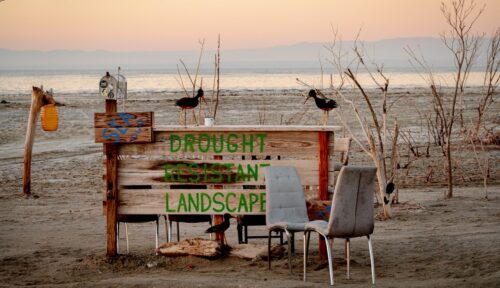 “The search is officially underway for the inaugural leader of the newly established Salton Sea Conservancy. Created under California Senate Bill 583—introduced by state Senator Steve Padilla—the state agency is looking for an experienced executive officer to take the reins of an environmental rescue mission decades in the making. It is a monumental task: building durable partnerships, managing completed restoration projects, and shaping the long-term strategy for a shrinking, dust-yielding lake that threatens both public health and ecological stability in the region. But while the mission is deeply rooted in the soil—and the air—of the Imperial Valley, the compensation package belongs to an entirely different economic stratum. … ” Read more from the Imperial Valley Press.
Coachella data center pushback should teach us a lesson
Catherine Curtis, former planning commissioner for the city of Claremont, writes, “On June 4, the Coachella City Council voted unanimously to impose a moratorium on new data center applications and terminate its agreement with Stronghold Power Systems, the developer behind a 450-acre campus. Cheers erupted outside City Hall. That same day, the Indian Wells mayor published an op-ed in this paper urging the council to stay the course with Stronghold. The council heard a different message from its own residents — and listened. The road to that vote ran through weeks of packed council chambers. “This valley is already facing extreme heat, water scarcity, and infrastructure strain,” resident Adriana Suarez told the council. “These data centers do not belong here, and you guys know it.” The anger was informed, not irrational. … ” Read more from the Desert Sun.
California county halts plan for data center that would have been the state’s largest
“Residents in Imperial County who have been fighting against more than $15 billion in proposed data centers — including one that would be the largest in California — scored a big win this week. The Imperial County Board of Supervisors issued a moratorium on all new data centers Tuesday that will last for at least 45 days as the county reevaluates the process of data center development in the area. This pauses all new and pending data center permits, though applicants can still submit new applications; those wouldn’t be approved or denied until the moratorium is over. … ” Read more from SF Gate.
Along the Colorado River …
2026 monsoon drought status update for the Southwest U.S.
 “The North American Monsoon seasonal forecasts are leaning toward above-average overall precipitation this summer. Above-average rainfall totals will improve short-term drought conditions in the Southwest U.S. Long-term drought impacts, especially the ongoing impacts from last winter’s record-low snowpack, will remain. The monsoon will likely have little influence on streamflow in the Colorado and Rio Grande Rivers. Reservoir levels across the region will likely not see substantial change from monsoon season rainfall. Sea surface temperatures in the Gulf of California, which are already above normal at 84°F (29°C), often influence the monsoon weather activity. There is no clear pattern on the influence of El Niño on summertime weather in the Southwest U.S. However, as El Niño develops, the chances for tropical storm development in the eastern Pacific increase. Decaying tropical storms can contribute to deep surges of moisture that can move into the interior Western U.S. … ” Read more from NIDIS.
Arizona Senator Gallego presses Interior Department on post-2026 Colorado River plans
“During a Senate hearing yesterday, Senator Ruben Gallego (D-AZ) questioned Department of the Interior (DOI) officials on the looming post-2026 operational guidelines for the Colorado River, emphasizing that federal decisions must protect Arizona’s advanced manufacturing sector, domestic food supply, and clean energy grid. In an exchange with Dr. Andrea Travnicek, Assistant Secretary for Water and Science at DOI, Gallego pushed the administration to fully incorporate the near-term conservation proposal submitted by the Lower Basin states—including Arizona—and demanded transparency on when the final federal alternative will be made public. “The Colorado River is a lifeline for Arizona. That water fuels the most advanced manufacturing in the western hemisphere now. We produce 90% of the country’s winter leafy greens. Hydropower from the Glenn Canyon and Hoover Dam helps keep the lights on all over the southwest. Technological advancements such as domestic food supply and energy affordability are all key priorities for the United States, including the president’s agenda,” said Senator Gallego. “The basin cannot wait for perfect consensus. And what we need to understand today is how the department will act to stabilize the system, share risk fairly, and deploy resources at the scale and speed this moment demands.” … ” Read more from Senator Gallego.
New Mexico Senator Heinrich on Colorado River negotiations: “What we cannot afford is delay. The basin needs compromise, shared sacrifice, investment, and leadership, and it needs them now.”
”During a U.S. Senate Energy and Natural Resources Committee hearing to conduct oversight of the Colorado River Basin, U.S. Senator Martin Heinrich (D-N.M.), the Committee’s Ranking Member, questioned Andrea Travnicek, Assistant Secretary of Water and Science at the Department of the Interior (DOI), and Tom Kiernan, President and Chief Executive Officer of American Rivers, on the Trump administration’s plan to address drought across the Colorado River Basin states, and solutions Congress can pass to help mitigate the West’s drought crisis. “The Colorado River is the backbone of water supply for millions of people, a cornerstone of Western agriculture and energy production, and a lifeline for tribal communities, fish, wildlife, and working landscapes across the basin in New Mexico. Every drop of water matters to our communities, our Tribes, our pueblos, our farms and ranches, and the rivers and wildlife that are important to us. To protect this resource, we need collaboration and solutions that benefit both people and ecosystems, and long-term investment grounded in today’s hydrologic reality,” Heinrich began, emphasizing the importance the Colorado River has to New Mexico. … ” Read more from Senator Heinrich.
U of A-led project presents solutions for Arizona’s water worries
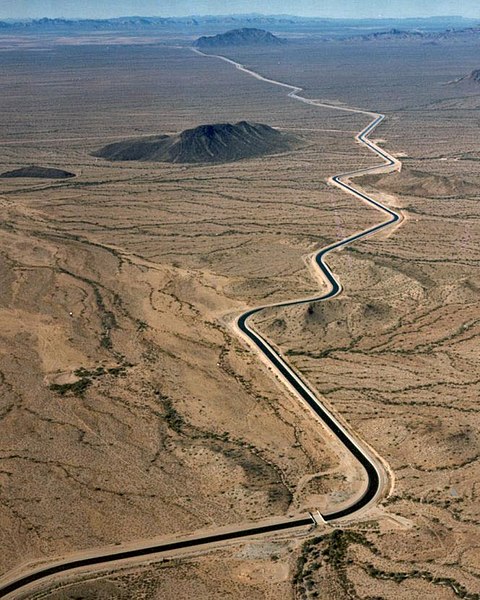 “A University of Arizona-led team of collaborators at Arizona’s three state universities today released a detailed report and associated products describing possible solutions to the state’s concerns about future water resource availability. “Given the current concerns about the reliability of Colorado River deliveries to Arizona, this is a critical time to be thoroughly exploring our water supply options,” said Katharine Jacobs, a recently retired U of A professor of environmental science and the project’s principal investigator. The Arizona Tri-University Recharge and Water Reliability Project is led by the Center for Climate Adaptation Science and Solutions within the U of A’s Arizona Institute for Resilience in collaboration with researchers from Arizona State University and Northern Arizona University. The project team modeled the water budget for each of Arizona’s 51 groundwater basins and described management strategies that can increase water capture and recharge. … ” Read more from the University of Arizona.
EXPLORE MORE COVERAGE:
- Arizona’s 3 state universities release joint report on how to capture water lost to evaporation, from KJZZ
- Arizona’s three Universities unveil a water roadmap, from Western Water
Weights that matter: Field balancing improves reliability
“Reliability is foundational to the Central Arizona Project system. From preventive maintenance and repairs to upgrades and replacements, the focus is always on reliability – and the motor rotor pole replacement project at Mark Wilmer Pumping Plant was no exception. Centralized Maintenance and Reliability Director Phil Rettinger said that the poles were manufactured in sets; however, each individual pole has a slightly different weight. The result was that some sets exhibited a higher level of mass unbalance than others. “We noticed higher levels of vibration, which is problematic for the long-term reliability and operation in these high-powered pumps,” said Rettinger. … ” Read more from the Central Arizona Project.
Scottsdale Water proactively planning for future Colorado River uncertainty
“As negotiations continue over the future of the Colorado River and the operating rules governing the Central Arizona Project beyond 2026, Scottsdale Water is continuing to take proactive, forward-looking steps to ensure the community maintains safe, reliable water service well into the future. While the Colorado River system is expected to face additional reductions in the coming years, Scottsdale’s long-term planning, diversified water portfolio and ongoing infrastructure investments position the city to adapt to evolving conditions. Last year, Scottsdale Water assembled a cross-disciplinary team of subject matter experts to evaluate potential impacts associated with future Colorado River shortage scenarios. … ” Read more from City Sun Times.
In revitalizing the Colorado River Delta, a little goes a long way
“Today’s Colorado River Delta is a far cry from the lush waterway that thrived before the river was forced behind dams that diverted much of its flow for half a century. Now, with just small amounts of water and funding, stretches of the parched riverbed have been transformed into healthy riparian habitats. A new report from a University of Arizona-led team of researchers has evaluated the effects of the 2014-2025 controlled water releases along the lower Colorado River in Mexico to restore natural habitat. The report also lays out a roadmap for continuing the current binational restoration efforts. The report was published today by the Center for Colorado River Studies at Utah State University.”It’s hard to find some good news about the Colorado River, but we believe we have some to share,” said first author Karl Flessa, professor emeritus in the U of A Department of Geosciences. “The lessons learned from more than a decade of work show that a small amount of water can do big things.” … ” Read more from the University of Arizona.
Grand Valley water users’ conservation efforts benefiting upstream users during historic drought
“Irrigators in the Grand Valley came together this spring to voluntarily reduce water usage in an effort to build up storage to help upstream users on the Colorado River and delay a senior call on the river. Because of the efforts of the Grand Valley water users, earlier this month the Colorado River District — in partnership with the Colorado Water Conservation Board — was able to begin releasing water from Wolford Reservoir to benefit hundreds of Colorado River users, according to a news release. “This year has reminded us how connected Western Slope communities truly are,” said Siri Roman, general manager of the Eagle River Water and Sanitation District. “We are grateful to the Grand Valley water users who voluntarily reduced irrigation to help support upstream communities during these challenging conditions.” … ” Read more from the Daily Sentinel.
New homes and businesses in Denver will see major surge in water connection fees
“Denver Water is raising the fees it charges to add new apartments, homes and businesses to its system by as much as 32% this year, a measure the giant agency says is necessary to cover the cost of expanded reservoirs, water supplies and pipelines. The utility, which serves 1.5 million people in metro Denver, hasn’t raised those rates since 2013, according to its rate manager, Fletcher Davis. Though the metro area has grown during that period, customer conservation, the use of water efficient landscapes and showerheads and toilets have allowed the utility to cover new growth without additional expensive new infrastructure. Since 2013, Davis said, “even though costs had increased, the amount that new customers required had decreased.” But now, the demands of growth have caught up. … ” Read more from the Colorado Sun.
In national water news today …
National Science Foundation reverses decision to dismantle oceans-monitoring network after outcry
“The National Science Foundation on Thursday reversed a decision to dismantle a sprawling ocean monitoring network after vigorous objections from Democratic lawmakers and scientists who rely on it to track everything from ocean circulation to extreme weather. The NSF issued a statement saying that it “appreciates the concerns raised by the range of stakeholders” and would halt efforts to remove or disable equipment. It also said it will redeploy equipment that already was removed from the water and convene an expert panel to determine the future of the network. The Ocean Observatories Initiative is a network of more than 900 ocean sensors built at a cost of $386 million. Over the last decade it has tracked ocean circulation, marine ecosystems, climate change and extreme weather, producing data freely available to the public and informing more than 500 scientific publications. The project was slated to run another 15 to 20 years. … ” Read more from the Associated Press.

