
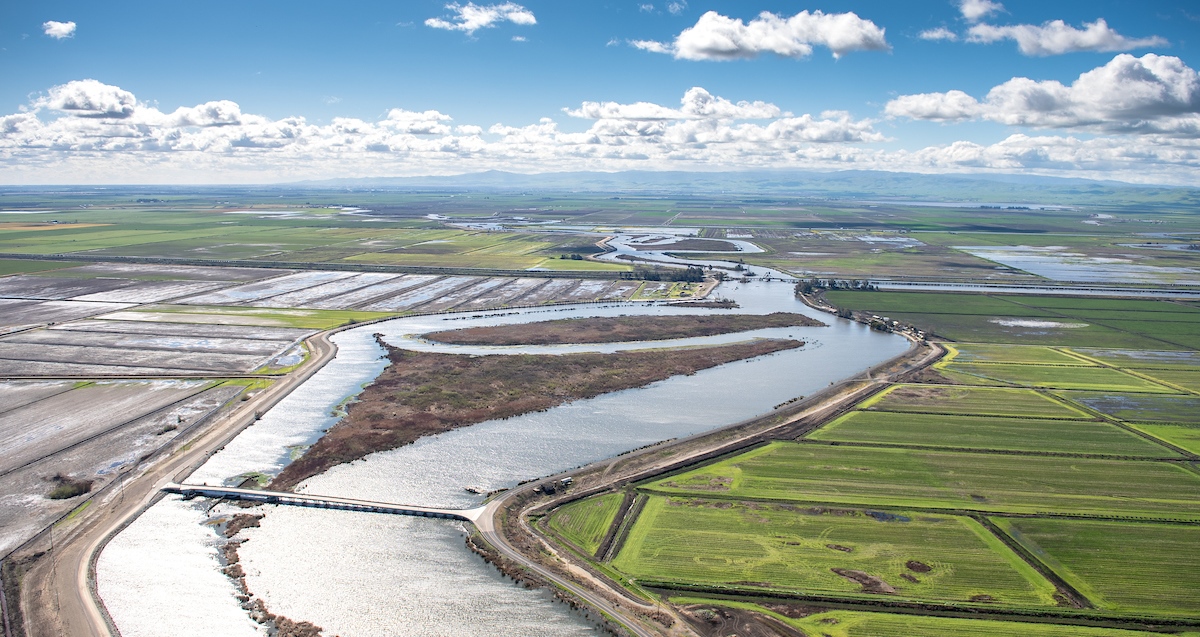
From the Delta Science Program:
The Sacramento-San Joaquin Delta is California’s most significant freshwater hub, supplying water to more than 27 million Californians and supporting the state’s robust agricultural industry. The Delta is also home to more than 750 animal and plant species and 55 fish species, many of which are threatened or endangered. Climate change is increasing ocean saltwater intrusion into the Delta. This threatens the quality of the Delta’s freshwater and its many uses by people, farms, and ecosystems that depend on it.
To explore innovative solutions to salt intrusion in California’s Delta, the Delta Stewardship Council’s Delta Science Program convened a series of workshops from 2022 to 2024 to discuss salinity management tools and strategies, identify knowledge gaps that could be filled by future research, and conduct a demonstration scenario modeling exercise. A report highlighting the key management needs and science priorities from these workshops is now available for anyone interested in salinity management in the Delta.
The long-term goal of the workshops was to catalyze a collaborative adaptive management approach to controlling salt intrusion in the Delta under severe and sustained drought and sea-level rise.
Through the workshops, three main management needs emerged:
- A holistic, systems approach to adaptively managing salinity.
- Intentional and meaningful collaboration and coordination across geographic and disciplinary boundaries.
- Flexible modeling approaches to assess trade-offs and track metrics that are meaningful to society.
|
|

