
Several news sources featured in the Daily Digest may limit the number of articles you can access without a subscription. However, gift articles and open-access links are provided when available. For more open access California water news articles, explore the main page at MavensNotebook.com.
On the calendar today …
- PUBLIC HEARING: Delta Conveyance Project water right hearing beginning at 9am. The State Water Resources Control Board Administrative Hearings Office is holding a Public Hearing on the pending Petitions for Change of Water Right Permits for the Delta Conveyance Project. Interested members of the public who would like to watch this hearing without participating may do so through the Administrative Hearings Office YouTube channel at: bit.ly/aho-youtube. Click here for the meeting notice.
- IN-PERSON: DPIIC Restoration Committee/Delta Restoration Forum from 10am to 4pm. Join the Delta Stewardship Council for two back-to-back events at Bogle Family Vineyards (37783 County Rd 144, Clarksburg, CA 95612): the Delta Plan Interagency Implementation Committee’s (DPIIC) Restoration Subcommittee meeting, followed by the fourth Delta Restoration Forum. Restoration Subcommittee meeting (10:00 AM-12:30 PM): The Subcommittee meeting will feature several presentations highlighting diverse ecosystem restoration projects and related programs. Registration is not required to attend the meeting. Restoration Forum (1:30-4:00 PM): The Forum, co-hosted by the Delta Stewardship Council and Sacramento-San Joaquin Delta Conservancy, will be held in an open-house format featuring restoration projects across California’s Delta and Suisun Marsh. Participants will network and share information on active and planned projects, funding programs, and opportunities for future work. For planning purposes, please register to attend via Eventbrite. View the flyer linked below for more information on the events, including lunch sponsored by California Sea Grant.
In California water news today …
Governor Newsom announces nearly $269 million to advance Sites Reservoir project, expanding California’s water storage commitment
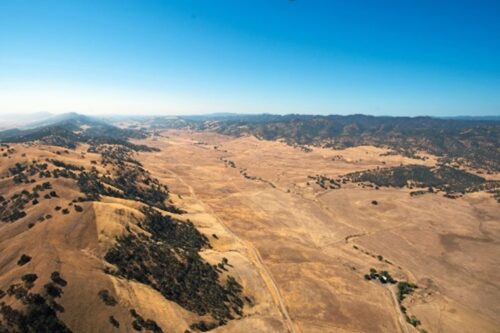
“Building on years of progress, Governor Gavin Newsom today announced that California is advancing the state’s Sites Reservoir project with an additional $268.9 million funding increase from the California Water Commission — strengthening long-term water storage and helping prepare for a hotter, drier future. “Year after year, we see climate change putting pressure on California’s water system in real time with hotter, drier weather, and more intense storms that strain our communities and the environment,” said Governor Gavin Newsom. “With this additional funding for Sites Reservoir, we are expanding our water storage capacity and turning challenges into opportunities to capture more water for millions of California residents.” Sites Reservoir is a key component of the Governor’s water strategy and will capture water from the Sacramento River during wet seasons and store it for use during drier seasons – holding up to 1.5 million acre-feet of water, enough to supply over 4.5 million homes for a year. … ” Read more from Governor Newsom.
A solution to data center backlash? Put them in oil fields.
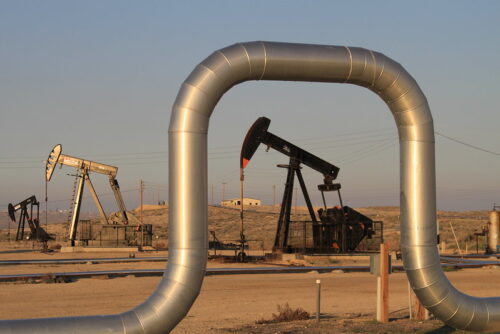 “Most Americans loathe data centers. Recent polling found that Democrats and Republicans alike would oppose having one in their neighborhood, and hundreds of communities across the country have fought against them, citing fears about noise, water contamination, and energy bills. After years spent courting tech companies, many politicians are now vowing to protect their constituents from their development. In just the past month, policymakers in New York, Texas, Pennsylvania, and Utah have proposed limits on the facilities. For the AI startups and others racing to secure more computing power, the question seems to be not which projects will face opposition, but which won’t. A project unveiled this week in California’s Central Valley suggests a potential answer. California Resources Corporation, the state’s largest oil company, wants to build a 600,000-square-foot data center campus in the Elk Hills oil field about two hours north of Los Angeles. It hopes to avoid the nationwide backlash from communities that have watched the outfits developing these sprawling operations swallow up farmland or install diesel generators near residential neighborhoods. … ” Read more from Grist.
California’s high-speed rail may be laying the way for a ‘valley of data centers’
“One day, bullet trains could zip from a palm-lined street in Anaheim to the foot of Salesforce Tower in SoMa. Along the way, they may pass through a new kind of California landscape: vast acres of warehouses, all humming with servers. That’s the dystopian future that Visalia resident Joseph Mello conjured when he addressed the High-Speed Rail Authority board on June 1. Mello said he had read the draft business plan the board was set to approve that day, and one particular element struck him. The plan proposed leasing land or providing energy for data centers that could be built in the Central Valley, fueling a massive tech boom up north. “As a potential rail user,” Mello said, “I do not want to ride through a valley of data centers.” … ” Read more from the San Francisco Chronicle.
MORE DATA CENTER NEWS:
- Data Centers Didn’t Fail Lake Tahoe. The Centralized Grid Did, from Environment & Energy Leader
- Most Californians oppose data centers in their communities, poll finds, from the Desert Sun | Read via AOL News.
- Water rights dispute erupts over proposed Imperial Valley data center, from the Imperial Valley Press
PG&E meets with federal officials regarding Potter Valley Project
“A representative from the Pacific Gas & Electric Company met with federal officials and representatives from a Southern California water district to discuss the future of the Potter Valley Project on Monday, a PG&E spokeswoman confirmed. “On June 15, PG&E Corporation CEO Patti Poppe met with Secretary of the Department of Agriculture Brooke Rollins, Secretary of the Interior Doug Burgum and representatives from Elsinore Valley Municipal Water District,” Spokeswoman Megan McFarland said in response to an email inquiring about the meeting. “They had a discussion on the Potter Valley Project, the current status and what lies ahead.” … ” Read more from the Ukiah Daily Journal.
SEE ALSO: Interested in Eel River Dam Removal? Friends of the Eel and the Sierra Club Redwood Chapter Urge People to Attend FERC Meetings in Ukiah Next Week, from the Lost Coast Outpost
Rural communities with contaminated water push for state funding and long-term solutions.
“Testing nearly a decade ago revealed a wider spectrum of contaminants in the drinking water of households located along Johnson, McGinnis and Live Oak roads in the Royal Oaks area. Those tests by concerned community members, who in 2021 formed the group Gente Organizada Trabajando por el Agua (People United Working for Water), showed elevated levels of nitrates, 1,2,3-trichloropropane, PFAS, and chromium-6 – the contaminant made widely known through the film Erin Brokovich, and the real-life case that inspired it. Today, many of those residents rely on bottled water provided by the Community Water Center (CWC), an environmental justice nonprofit that doubles as a technical assistance provider, working with the community on long-term water solutions. … ” Read more from Monterey Now.
Legal alert: Court applies Las Posas to uphold Madera County GSA’s SGMA groundwater fees
“The Madera County Superior Court has issued a decision upholding the groundwater sustainability fees adopted by the Madera County Groundwater Sustainability Agency (County GSA). The ruling in Valley Groundwater Coalition, an unincorporated association v. County of Madera, a political subdivision of the State of California (Madera Co. Superior Ct. Case No. MCV087677) (Valley Groundwater Coalition) is one of the first trial court applications of Las Posas Valley Water Rights Coalition v. Ventura County Waterworks District No. 1 (2026) 118 Cal.App.5th 1170 (Las Posas) [decided Mar. 5, 2026], and it demonstrates how courts expect Groundwater Sustainability Agencies to structure and justify their Sustainable Groundwater Management Act (SGMA) fees under the Las Posas framework. … ” Read more from Somach Simmons & Dunn.
Managing salinity in a changing Delta: Insights from collaborative workshops
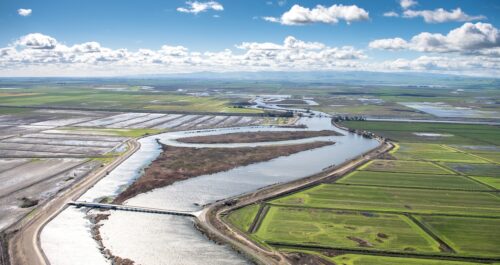 “The Sacramento-San Joaquin Delta is California’s most significant freshwater hub, supplying water to more than 27 million Californians and supporting the state’s robust agricultural industry. The Delta is also home to more than 750 animal and plant species and 55 fish species, many of which are threatened or endangered. Climate change is increasing ocean saltwater intrusion into the Delta. This threatens the quality of the Delta’s freshwater and its many uses by people, farms, and ecosystems that depend on it. To explore innovative solutions to salt intrusion in California’s Delta, the Delta Stewardship Council’s Delta Science Program convened a series of workshops from 2022 to 2024 to discuss salinity management tools and strategies, identify knowledge gaps that could be filled by future research, and conduct a demonstration scenario modeling exercise. A report highlighting the key management needs and science priorities from these workshops is now available for anyone interested in salinity management in the Delta. … ” Read more from the Delta Science Program.
Counties struggle with new abandoned orchard law
“A coalition of agriculture advocates that successfully pushed for stronger enforcement against abandoned orchards and vineyards last year is now frustrated that the law they championed—Assembly Bill 732—has yet to be enforced. The bill by Assemblymember Alexandra Macedo, R-Tulare, allows county agricultural commissioners to assess fines of up to $1,000 per acre for properties deemed a public nuisance. It passed unanimously in both chambers and was signed by Gov. Gavin Newsom in October. Agricultural commissioners say the bill gives them a tool with which to warn landowners whose neglected properties harbor pests and diseases that can affect neighboring farms. The threat of additional fines “typically puts some more fire under the situation and makes things happen a little quicker,” said Christopher Greer, Tulare County’s assistant agricultural commissioner. … ” Read more from Ag Alert.
Notice of board workshop and public comment on the draft guidance on designating tribal beneficial uses
“The State Water Resources Control Board (State Water Board) is inviting your participation in the review of the Draft Guidance on Designating Tribal Beneficial Uses (TBUs). Since time immemorial, California Native American Tribes have stewarded California’s waterbodies to support cultural, spiritual, ceremonial, subsistence and/or traditional practices, lifeways and rights. Tribal Beneficial Uses recognize and honor Tribal Nations’ unique and ongoing relationships with water and ensure that these uses are considered and safeguarded in water quality policies, planning, and permitting regulatory processes. The newly released Draft Guidance on Designating Tribal Beneficial Uses explains the history of Tribal Beneficial Uses, what TBUs are, how TBUs are designated into water quality control plans, and how to engage in the process. This draft guidance does not create any legal requirements or make them more specific, rather it is intended only to describe existing requirements and practices. … ” Read more from the State Water Board.
Heat waves increase wildfire risk – a new study explains how much, and it’s not a small number
“When heat waves hit the Western United States, the risk of wildfires quickly rises. The prolonged heat dries out vegetation, but that’s only part of the cause – heat waves also play other roles in spreading wildfires. In a new study, our team of fire and climate scientists looked at two decades of wildfire activity in the West, from 2001 to 2024, and for the first time quantified the effect of heat waves on those fires. We expected a big impact, but the numbers still surprised us: While heat waves, which we defined as three or more consecutive days with temperatures in the top tenth of hottest days, accounted for only 12% to 15% of warm-season days, we found that 42% of all the area burned by fires had occurred during or right after a heat wave. … ” Read more from The Conversation.
University of California pushes for $12B scientific research bond to counter federal cuts
“David Boyer is stuck in a waiting game. For more than 18 months, silence from the National Institutes of Health on a crucial grant decision has thrown his research developing treatments for Alzheimer’s disease into uncertain territory. His application received a favorable impact score, the main metric used for NIH funding decisions, so the postdoctoral scholar at UCLA figured he would hear good news by spring of 2025. Instead, he has heard nothing. Without the funding, he has less to spend on his experiments, which require thousands of dollars worth of materials, including advanced microscopes. In a worst-case scenario, it’s possible he could lose his job if the grant doesn’t come through. “It’s really up in the air whether I would be able to continue getting funded,” said Boyer, who is part of UCLA’s Eisenberg Lab. … ” Read more from Stocktonia.
Padilla, Curtis, and bipartisan group introduce bill to strengthen rural water infrastructure and wildfire readiness
“Today, U.S. Senators Alex Padilla (D-Calif.) and John Curtis (R-Utah), members of the Senate Committee on Environment and Public Works, introduced the FIRE SMART Act, bipartisan legislation to expand funding eligibility for projects with fire suppression benefits in high-risk rural areas. Senators Tim Sheehy (R-Mont.), Mark Kelly (D-Ariz.), John Boozman (R-Ark.), Adam Schiff (D-Calif.), Mike Crapo (R-Idaho), and Jeff Merkley (D-Ore.) also cosponsored the bill. Specifically, this bill would help build rural communities’ resiliency by optimizing water infrastructure to provide the flow necessary for emergency responders to save lives and property during an active wildfire. The legislation would amend the Environmental Protection Agency’s (EPA) Drinking Water State Revolving Funds to expand eligibility for water infrastructure projects that have both drinking water and wildfire suppression benefits, and are in communities at high risk for wildfires with fewer than 50,000 residents. … ” Read more from Senator Padilla.
In commentary today …
How much flow preserves the Sacramento-San Joaquin Delta?
Edward Ring, Director of Water and Energy Policy at the California Policy Center, writes, “When choosing what policies and projects might best ensure abundant water for California’s ecosystems, farms, and cities, the role of the delta is central. Even if large scale desalination were to someday deliver over a million acre feet of water per year to California’s coastal cities, how we manage the delta affects many times that amount. … Regardless of how one may assess the many restrictions that govern how much water can be pumped into the aqueducts, and when, it is reasonable to accept that total exports are going to be lower in dry years than during wet years. This is reflected in the data. But during wet years, shouldn’t a statewide water strategy recognize some maximum amount of flow from the delta into the SF Bay necessary to preserve ecosystem health? And if so, couldn’t we consider any outflow beyond that amount simply overkill, and therefore wasted if it isn’t diverted? … ” Read more from Edward Ring.
In regional water news and commentary today …
NORTH COAST
Ninth Circuit sides with Yurok Tribe over Klamath Irrigation Project
“The Ninth Circuit delivered a victory to the Yurok Tribe and fishing advocates on Wednesday, affirming a lower court’s finding that the U.S. Bureau of Reclamation must comply with the Endangered Species Act when operating the Klamath Irrigation Project. In a 2-1 decision, the appeals panel held the Endangered Species Act applies to the government’s operation of the Klamath Irrigation Project and that the rights of Klamath Project water users are subject to the requirements of the ESA. “The dissent misconstrues the direct issue on appeal here, which is whether the district court erred by granting declaratory relief on the question whether ‘[the Bureau of] Reclamation’s operation of the Klamath Project, including the exercise of its rights to store water in [Upper Klamath Lake] for irrigation use, is subject to compliance with the ESA.’ Our case law supports that the answer to this question must be ‘yes,’” U.S. Circuit Judge Ronald Gould, a Bill Clinton appointee, wrote for the majority. … ” Read more from the Courthouse News Service.
El Niño ‘doesn’t really mean a whole lot here’
“The North Coast is finally seeing relief after a prolonged heat wave; there is an increased risk of fire danger, and the chance of dry thunderstorms remains a concern heading into the weekend, according to the National Weather Service in Eureka. “We’re just today seeing the first break in what was a pretty prolonged heat wave across the area that started late last week and continued until yesterday,” said James White, a meteorologist with the National Weather Service. … As for El Niño, White emphasized that despite a strong pattern developing this summer, its local impact is limited. “There’s high confidence that we’ll be entering El Niño, a very strong El Niño this summer,” said White. “For us, it doesn’t really mean a whole lot here. El Niño is a very distant connection to us… and here specifically doesn’t really have much correlation to precipitation amounts.” … ” Read more from the Eureka Times-Standard.
State issues abatement orders over Redwood Creek bentonite discharge, threatens fines up to $5,000 a day
“The white plume that spread through Redwood Creek earlier this month now has a price tag. After documenting bentonite drilling waste buried up to two feet deep in a salmon-bearing tributary, California’s North Coast Regional Water Quality Control Board has ordered the cleanup of the contamination and named four parties it says are responsible. The June 17 enforcement orders identify Briceland Road property owner Mykal Coelho and three companies involved in California’s Broadband for All fiber project. Together they now face cleanup requirements, biological monitoring, reporting deadlines, and potentially significant penalties if they fail to comply. The Water Board says the waste originated from horizontal directional drilling operations associated with a Highway 101 fiber installation project and was transported to private properties in the Redway area before reaching Redwood Creek and ultimately the South Fork of the Eel River. … ” Read more from the Redheaded Blackbelt.
California Trout wins $4 million grant for Cannibal Island restoration work
“A major restoration project in the lower Eel River estuary is moving closer to construction after California Trout received a $4 million grant to advance work on the Cannibal Island Unit. The funding will support restoration of the 850-acre Cannibal Island Unit in the lower Eel River estuary, an area that once contained some of the most productive wetland habitat on California’s North Coast. The award advances the California Salmon Strategy for a Hotter, Drier Future and Gov. Gavin Newsom’s goal of conserving 30 percent of California’s lands and coastal waters by 2030 to protect biodiversity and help California adapt to the impacts of a changing climate. … ” Read more from KRCR.
SIERRA NEVADA
This invasive species could turn Lake Tahoe’s clear water green
“Most people in California recognize Lake Tahoe, the “Jewel of the Sierra,” for its crystalline waters, stunning landscape and seemingly endless opportunities to enjoy nature. Despite the lake’s enduring appeal, invasive species have long posed a threat to its pristine water quality. Nonnative plants and animals outcompete native species, degrade water quality and can cripple infrastructure in lakes, rivers and streams where they spread. But one invader in particular has become a pressing concern: the golden mussel. There is no greater threat today to Tahoe’s iconic water quality than the golden mussel, which is already on the lake’s doorstep. … ” Read more from the San Francisco Chronicle.
SEE ALSO: 4 golden mussels found on a boat bound for Tahoe. It could have been a disaster, from SF Gate
‘We’re nervous for sure’: Tahoe fire restrictions land before summer holiday
“Charcoal and wood fires are banned across the Tahoe-Truckee region until further notice under fire restrictions implemented earlier this week, just as Juneteenth, the first holiday weekend of Tahoe’s busy summer tourist season, is set to begin. After a mild and warm winter, the forest is drying out earlier than normal, South Lake Tahoe Fire Rescue Chief Jim Drennan told SFGATE earlier this month during a gathering of fire officials and journalists. As fuels dry up, fire risk increases, and restrictions follow. “We’re nervous for sure,” Drennan said, adding: “We had such a light winter. Thankfully, our reservoirs are mostly full.” … ” Read more from SF Gate.
Lake Tahoe residents ‘horrified’ by plans to spray cancer-linked glyphosate in public lands
“Katherine Levy remembers a childhood deeply rooted in the natural offerings of Lake Tahoe – water-skiing in the summer and working as ski instructor on the surrounding snow-covered mountains during winter months. She recently moved back to live out her retirement along the lake’s north shore. But she doesn’t like what she has found upon her return: a US government plan to spray multiple types of herbicides, including the cancer-linked glyphosate weed killer – within national forest property that abuts the community’s cherished lake. “I was horrified to find out what has been going on,” Levy said. Levy is among a number of Lake Tahoe-area residents and officials who are fighting to block or alter the US Forest Service project, which is aimed at restoration of areas damaged by the 2021 Caldor fire. … ” Read more from The Guardian.
Idaho-Maryland Mine: Exploratory Drilling Program 2026
“On March 26, 2026, the Rise Gold Corporation provided documents to the County of Nevada regarding plans for commencement of an exploratory drilling program similar to the program that occurred in 2018. Rise Grass Valley, Inc. (“Rise”) plans to conduct a small-scale drilling program, meeting the definition of exploratory mining, to delineate known gold and tungsten mineralization in the Brunswick and Union Hill areas of the Idaho-Maryland Mine. Two drill sites are included in the exploratory drilling program: one is located at 12603 E. Bennett Road (the “East Bennett Site”), and the other is located at 12301 Millsite Road (the “New Brunswick Site”). Drilling will consist of eight drill holes with an average depth between 1,200 – 1,500 feet per hole. The East Bennett Site is located on an existing drill pad used in a 2018 drill program by Rise. The New Brunswick Site is located on an existing road area about 190 feet north of the existing concrete silos. There will be no additional surface disturbance from past activities that occurred at the Idaho Maryland Mine. … ” Read more from Nevada County.
SACRAMENTO VALLEY
Iranian-linked hacker group claims breach of Cal Water systems, including Chico
“An Iranian-linked hacker group claimed it breach the California Water Service’s systems across the state, including some in Chico. Cal Water said it is continuing to investigate the claims, which were made June 11, and activated its cybersecurity response plan immediately after becoming aware of the claims. “We have been working in close collaboration with our state and federal government partners, as well as independent leading external experts,” Cal Water said in a statement. “Our investigation remains ongoing, but our preliminary findings indicate that there are no known operational disruptions to our water and wastewater systems, including the billing platform.” … ” Read more from the Chico Enterprise-Record.
Sacramento area climate programs face uncertain future amid Cap-and-Invest changes
“Sacramento County climate programs could face funding uncertainty as state officials sort out how Cap-and-Invest changes will affect revenue that supports local air quality, housing and transportation projects. Like regions across the state, the Sacramento area uses revenue from California’s Cap-and-Invest program, formerly known as Cap-and-Trade, to fund local climate programs. The state’s marquee climate program auctions emission permits to major polluters and uses the revenue to support climate programs and provide credits to utility customers. The money has been used to finance programs ranging from community air-quality work to affordable housing near transit, infrastructure upgrades and green transportation projects, helping move the county toward its goal of reaching carbon neutrality by 2045. But with state analysts warning that the updated Cap-and-Invest program could bring in significantly less auction revenue, local officials are waiting to see what happens to that funding stream. … ” Read more from the Sacramento Bee.
Sacramento County declares emergency over invasive golden mussels
“Sacramento County leaders have declared a local emergency over the growing threat of golden mussels, an invasive species from Asia that experts warn could harm waterways, ecosystems, and infrastructure if it continues spreading. California water managers have been working to contain the invasive species, which reproduces rapidly and has already spread from the Delta to Stockton. Patrick O’Neal, manager of the Boathouse Marina in the California Delta, shared his concerns after a recent business deal fell through due to the mussels. … ” Read more from KCRA.
BAY AREA
Oakland San Francisco Bay Airport nears completion on major dike project
“The Port of Oakland and Oakland San Francisco Bay Airport (OAK) announced that work is nearly complete on a major infrastructure project that will protect the airport’s airfield from sea level rise and flooding from catastrophic earthquakes. At an estimated cost of $80 million, the Airport Perimeter Dike Improvement Project has undergone two major phased improvements since 2020 and is expected to complete on schedule this September. “As we build for future generations, the Airport Perimeter Dike Project reflects our commitment to resilient infrastructure, environmental stewardship, and economic vitality,” said Kristi McKenney, Executive Director at the Port of Oakland. “OAK operates at the edge of the San Francisco Bay, and this work ensures the airport can safely serve the region for generations to come.” … ” Read more from the American Journal of Transportation.
SAN JOAQUIN VALLEY
Snowpack virtually at zero: Success releases for irrigation begin
“The snowpack in the Sierra Nevada is at or near zero percent of average across the state. And at Success Lake, large releases have already started for irrigation. In all of the Northern Sierra in the Lake Tahoe area as of Tuesday there was officially no measurable snow. While patches of snow are still visible at the highest levels in the Lake Tahoe area the State Department of Water Resources reported on Tuesday the snowpack level in the Northern Sierra for April 1 and June 16 were both at zero percent of average. In past years it wasn’t uncommon to see patches of snow in the northern Sierra Nevada until mid-August. Locally the situation is a little better in the Southern Sierra but not much. In the Southern Sierra Nevada as of Tuesday the snowpack was at 3 percent of average for April 1 and 15 percent of average for June 16. … ” Read more from the Porterville Recorder.
Bakersfield to keep Kern River flowing through end of July
“A small “charm offensive” organized by a group suing the City of Bakersfield over the Kern River was rewarded Wednesday with news that current flows through town will continue through the end of July. The city had estimated it would only have water for flows through the July 4th holiday, but Bakersfield Water Department Hydrographer Miguel Chavez reported that he anticipates being able to squeeze a few more weeks out of this year’s snow pack. “Overall, it was a pretty successful water year,” Chavez said at Bakersfield’s Water Board meeting. Chavez’ report came after two recent Stockdale High School graduates asked the board, run by City Council members Bob Smith and Andrea Gonzalez, to continue working toward a solution to get water in the river more often. … ” Read more from SJV Water.
SOUTHERN CALIFORNIA
King tides along Southern California coast cause flooding at Malibu campsite
“A campsite in Malibu was flooded on Wednesday morning after king tides along the coast sent waves crashing into the area. Caltrans and the Ventura County Fire Department were called here to Thornhill Broome Beach just before midnight due to flooding. Fortunately, no one was trapped or needed rescuing, but there was quite a bit of water that flooded the campgrounds. Several vehicles were parked in the area as the high tide came rolling in. With the recent high tides and dangerous swimming conditions, state park officials have posted a warning for visitors, reminding them of the higher sea level. The warning says, “Due to high tides, sea level rise and tidal surges, the campground is subject to frequent flooding.” … ” Read more from CBS News.
Glendale approves L.A. River bridge to Griffith Park
“Plans for another L.A. River crossing are moving forward, following a recent vote by the Glendale City Council. Earlier this month, the Glendale City Council voted to adopt the findings of an environmental study for the Glendale-Los Angeles Garden River Bridge Project. The new bridge will span across the river at the intersection of Flower Street and Fairmont Avenue to reach Griffith Park. The project is officially the second phase of Glendale’s Riverwalk, which spans one mile along the north side of the river between the intersection of Garden Street and Paula Avenue and the Verdugo Wash. The garden river moniker references landscaping planned on both approaches to the bridge, as well as on the span itself. Raised beds, shade structure, seating areas, and viewing areas are all planned as part of the project, which would be supported by two piers within the river channel. … ” Read more from Urbanize LA.
Santa Monica Council adopts water outlook projecting a surplus through 2027
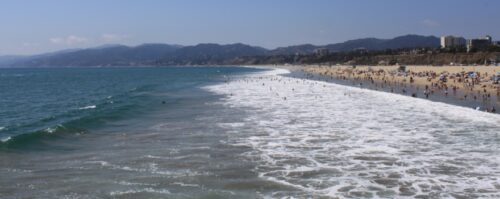 “The City Council voted unanimously to adopt the city’s 2026 Annual Water Supply and Demand Assessment at its last meetingt, a state-required report projecting that Santa Monica will have more than enough water to meet demand over the coming year, even under worst-case drought conditions. The 6-0 vote came at the council’s June 9 meeting. Council member Snell made the motion to adopt the assessment, and Council member Ellis Raskin seconded it. Mayor Pro Tem Jesse Zwick was absent. The assessment, required annually under the California Water Code, analyzes whether the city can meet water demand during a projected hot, dry year. For this report, that period runs from July 1, 2026, through June 30, 2027. The analysis is meant to identify potential shortages and, if necessary, trigger response actions to head them off. … ” Read more from the Santa Monica Daily Press.
Water Replenishment District and Torrance break ground on $166.5M brackish water desalination expansion in California
“The Water Replenishment District of Southern California (WRD) and the City of Torrance have held a ceremonial groundbreaking for the Torrance Groundwater Desalter Expansion Project (TGDEP), marking a significant step forward in the region’s long-term effort to reduce its dependence on imported water and unlock a brackish aquifer that has been unusable for decades. The project addresses a hydrogeological legacy stretching back to the early twentieth century. Over-pumping of groundwater along the Southern California coast caused water tables to drop below sea level, allowing seawater to intrude into freshwater aquifers. Los Angeles County responded in the 1960s by installing a network of seawater barrier injection wells that successfully halted further intrusion, but in doing so trapped a plume of salty groundwater inland from the barrier. That 14-square-mile brackish plume in the West Coast Groundwater Basin has made groundwater extraction economically unviable in parts of the region ever since. … ” Read more from Smart Water Magazine.
Beach loss worries heightened as big waves, king tides batter Southern California coast
“The visuals from battered Southern California coastlines have been dramatic: massive waves fueled by a big swell and king tides overtopping sand berms, seawater spilling onto boardwalks and streets, sand chomped away causing severe erosion and shrinking beaches just ahead of summer. Is it just nature, doing what nature does? Will sand naturally make its way back to eroded beaches, or is human intervention needed to safeguard the cherished coastline? These are questions coastal communities have been facing for the past several years, and the recent wave action has only turned up the volume. And with an El Niño on the horizon, you have to ask: Is the coast in for even more of a battering? “This event shows just how threatening a big storm event can be when there’s a coincidence of thretening factors: the combination of high tides, big swell and this part of the season being when these beaches tend to be the most narrow,” said Brett Sanders, professor of civil engineering at UC Irvine and an expert on the region’s erosion challenges. “Those factors led to severe impacts observed this week.” … ” Read more from the OC Register.
IMPERIAL/COACHELLA VALLEYS
Water rights dispute erupts over proposed Imperial Valley data center
“A brewing conflict over water resources has boiled over in the Imperial Valley, highlighting the escalating tension between the artificial intelligence data center boom and the preservation of the American West’s most vital natural resource: the Colorado River. Reports surfaced this week that a private developer attempting to construct a massive data center campus near the City of Imperial has filed a lawsuit seeking to secure 260 million gallons of Colorado River water annually. The legal action represents a stark reversal for the project, as the developer had previously stated that the facility would not require Colorado River water to operate. … The developer’s abrupt pivot to claim river water has drawn intense scrutiny toward local water management and fueled an aggressive pushback from elected leaders and environmental advocates alike. … ” Read more from the Imperial Valley Press.
Along the Colorado River …
Trump’s pick for Reclamation takes the reins
“President Donald Trump’s pick to lead the Bureau of Reclamation has landed at the agency. Aubrey Bettencourt, a Western water and agriculture expert, is listed as principal deputy commissioner for the bureau on Interior Secretary Doug Burgum’s most recent order delegating leadership authorities. The order also taps her to perform the duties of the commissioner. The Interior Department did not immediately respond to a request for comment. Last week, a White House official confirmed to POLITICO that Bettencourt will be nominated to lead Reclamation, although it has not yet been sent to the Senate for consideration. The White House did not immediately respond to a request for comment on the nomination’s status. … ” Read more from E&E News (sorry, subscription required).
Will El Niño bring much-needed water to the Colorado River?
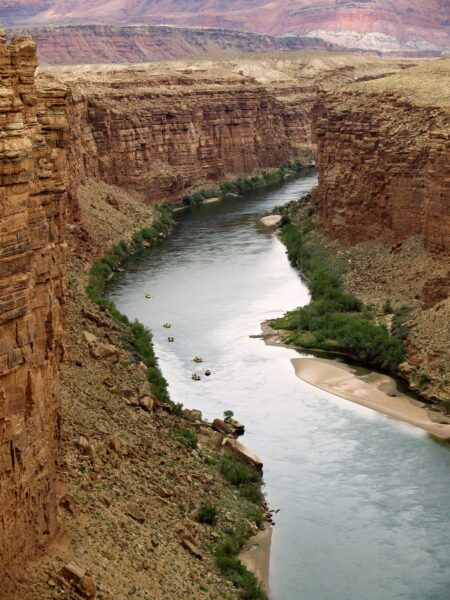 “From oceanographer Joellen Russell’s perspective, the El Niño is already here. “I’m just waiting for them to call it,” she told the Deseret News over the phone about the change in weather pattern affecting the western U.S. “It has more than a 61% chance of developing. But when I look at the sea surface temperatures in the Pacific, right on the equator, it looks like it’s here to me.” This global change in weather patterns is characterized by warming of ocean surface temperatures in the central and eastern Pacific Ocean, which brings heavier rainfall and warmer temperatures to the U.S. West Coast and beyond. According to Russell, El Niño will have a wide-ranging impact on the Mountain West, with the Southwest attracting an active monsoon season while Utah and Colorado are on track to receive heavy snowstorms later in the year. But the climate scientist warned that summer temperatures will remain hot whether or not it rains. … ” Read more from Deseret News.
SEE ALSO: El Niño could bring wetter fall and winter, but Colorado drought relief unlikely, scientist says, from Denver Channel 7
The Colorado River is running dry. Is desalination the solution?
“As a megadrought and demands for irrigation and drinking water have reduced parts of the Colorado River to a trickle, water from a desalination plant in California is being proposed as part of a solution. Northeastern University hydrology experts said that desalination, the process of removing salts and other minerals from water so it can be used by humans, will solve the river’s -and the western United States’ – water woes alone, however…at least not yet. “Desalination works and has to work in some cases where we’re talking about societal collapse if you don’t get that water,” said Auroop Ganguly, distinguished professor of civil and environmental engineering at Northeastern. “We are probably not there yet for the Western U.S. to take that leap.” … ” Read more from Northeastern Global News.
Baja California officials urges farmers to crop-switch ahead of drastic 2027 Colorado River water cuts
“Facing a looming water crisis that could slash deliveries from the Colorado River by hundreds of millions of cubic meters, agricultural officials in Baja California are urging local farmers to pivot toward climate-resilient crops. The warning comes as the region braces for sharp reductions in its water supply. According to Alfonso Cortez Lara, director of the El Colegio de la Frontera Norte (Colef) in Mexicali, Baja California expects its annual quota from the Colorado River to be cut by 350 million cubic meters by 2027, La Voz newspaper reported. … ” Read more from the Imperial Valley Press.
Arizona’s water future looks grim, but a new report sees room for hope
“With Arizona’s access to Colorado River water as precarious as a fictional crack in the Glen Canyon Dam that retains less of it each year, tensions over water supplies in the state are rising while actual storage levels drop. That many Westerners saw this coming for decades — watching the forces of climate change, population growth and development outstrip the capacity of a shrinking river to provide for the 40 million people who now rely on it — has not helped avert stalemated negotiations over modified use among seven Colorado River Basin states. But it inspired a large, collaborative research effort to better understand the reliability of in-state water supplies. That work, requested by the Arizona Department of Water Resources and funded by the Arizona Board of Regents, spanned three and a half years and drew upon the expertise and legwork of more than 40 faculty members, students and postdoctoral scholars across Arizona’s three major universities. The team made their conclusions public this week. … ” Read more from Arizona Central. | Read via AOL News.
Oro Valley ‘told to prep’ for 20% CAP cut
“Oro Valley water utility officials have been “told to prepare for a 20% cut” in its allocation of Central Arizona Project supply beginning Jan. 1, Director Peter Abraham told the Town Council on June 3. “Nothing official has come down” from the federal Bureau of Reclamation, which oversees the CAP, he emphasized. But, during long-term drought, and when the Colorado River is overallocated, reductions are anticipated. “Even though we’re expecting a 20% reduction in our CAP water, we’re still in a great position from a water resource perspective,” Abraham assured the governing board. … ” Read more from the Tucson Explorer.
Scientists detect forever chemicals in remote Grand Canyon springs
“It takes about nine hours of hard hiking to reach Monument Springs within Grand Canyon National Park. But when scientists with the U.S. Geological Survey tested the water trickling from the canyon wall, they found chemicals known as PFAS that originate from sources like cookware and rain jackets. They also found pharmaceuticals like ibuprofen. “To be in such a remote location and to find those results was quite eye-opening,” says hydrologist Nick Paretti, who co-authored a study on the findings. … ” Read more from KNAU.
Vapes among 2,500 pounds of trash pulled from Salt River, raising safety concerns
“Cleanup crews pulled thousands of pounds of trash from the Salt River following a busy weekend, including an item that has environmental officials concerned. Volunteers and state workers recovered 2,500 pounds of trash during the recent cleanup. Among the debris: 39 phones, three umbrellas, one hamster cage and 22 pounds of vapes. The vapes are drawing health concerns from state officials. “I was seeing all of this trash after a fun three-day weekend, my heart was so sad because it is, it’s really upsetting that people treat the environment that way,” said Meghan Smart from the Arizona Department of Environmental Quality. … ” Read more from KOLD.
Satellite photos show beleaguered Arizona reservoir turn green
“The San Carlos Reservoir, one of Arizona’s largest and most beleaguered bodies of water, has reached extremely low levels yet again, recent photos taken by NASA satellites show. The two before-and-after photos of the reservoir, which were included in a June 17 article from the agency, show starkly different images captured in 2023 and 2026. In the image on the left, which was taken in June 2023, the reservoir was a deep blue and filled to about 60% capacity. But in the image on the right, which was taken in May of this year, the reservoir was a sickly green-brown color and “near-empty” at less than 1% capacity. … ” Read more from SF Gate.
Arizona rate cases show true cost of deferred water infrastructure
“The Arizona Corporation Commission recently approved significant rate increases for two small rural water systems in Gila County, near Payson. The proceedings for Jake’s Corner Water System and Tonto Creek Water Company are local regulatory actions, but what they describe is playing out at water utilities across the country: decades of kept-low rates that deferred maintenance until the infrastructure failure became unavoidable. Jake’s Corner serves 18 homes. The Commission approved a rate increase raising the average residential bill from $67.34 to $138.95 per month, roughly doubling it. The system had previously been out of compliance with both the Arizona Department of Environmental Quality (ADEQ) and the Arizona Department of Water Resources (ADWR), though both violations have since been resolved. Commissioner Lea Marquez Peterson said the vote was “hard” and suggested the Commission explore consolidating the system or transferring it to a larger utility. “Let’s do what we can to consolidate or get the system acquired by a larger system to support more efficiencies,” she said. … ” Read more from Environment & Energy Leader.
Las Vegas data center expansion approved as officials ponder need for future regulations
“The Clark County Commission, in its capacity as the zoning board, unanimously approved a proposal to expand the largest data center campus in Southern Nevada on Wednesday, but not without adjustments and acknowledging the need for future data center regulations. Switch, a Las Vegas-based tech company, is seeking to build a nearly 57,000 square-foot data center on nine acres of private land along the north side of Warm Springs Road just west of Decatur Boulevard. The new development requires a zoning change and would be built alongside existing data centers on the company’s massive southwest valley campus. Switch’s original proposal sought a landscaping waiver that would allow the company to forgo planting trees along the perimeter of the property and in the building’s parking lot, as required by county ordinance to combat extreme heat. … ” Read more from the Nevada Current.
In national water news today …
The growing problem with toxic algae
“The internet is awash with jokes about the reflecting pool in front of the Lincoln Memorial in Washington, which is now riddled with algae. The Trump administration spent more than $14 million (£10.5 million) draining the pool and painting the bottom “American flag blue” in time for the 250th anniversary of US independence. The president had described the reflecting pool – the scene of Martin Luther King’s 1963 “I have a dream” speech – as “filthy” and “dirty”, and promised to transform it into something “beautiful”. Instead, residual algae has “proliferated” in warm weather, said The Guardian, turning the pond “Wicked” green. But beyond the schadenfreude, toxic algae blooms are a worldwide phenomenon that can harm humans and devastate marine life. And as the climate crisis warms the water, the problem is growing. … ” Read more from The Week.

]
