
Several news sources featured in the Daily Digest may limit the number of articles you can access without a subscription. However, gift articles and open-access links are provided when available. For more open access California water news articles, explore the main page at MavensNotebook.com.
On the calendar today …
- MEETING: State Water Resources Control Board beginning at 9am. Agenda items include the Office of the Delta Watermaster quarterly update; Quarterly Delta Stewardship Council Lead Scientist’s Report: Review of current Delta science research, activities, and initiatives; and consideration of proposed order for Bucks Creek Hydroelectric Project water quality certification and McCloud-Pit Hydroelectric Project water quality certification. Click here for the full agenda.
- MEETING: California Water Commission beginning at 9am. Agenda items focus on Sites Reservoir, including a project update, virtual tour, public benefit contracts, and consideration of supplemental funding determination. Click here for the full agenda and remote access instructions.
- DATA FOR LUNCH: Filling in the Gaps with Ungauged Streamflow Forecasting from 12pm to 1pm. California’s stream gauge network leaves significant blind spots across headwaters, smaller tributaries, and remote catchments that physical infrastructure alone cannot fill at any practical scale or cost. On June 17, Upstream Techs’ Alex Truby joins us to share how machine learning is changing what’s operationally possible, generating reliable streamflow forecasts at ungauged locations without local calibration data. This Data for Lunch we’ll dive into how this technology is being applied across California water management, from Forecast-Informed Reservoir Operations (FIRO) and managed aquifer recharge to water rights accounting and telemetry QA/QC, and what becomes possible when data gaps no longer have to be decision gaps. Click here to register.
- IN-PERSON:Fish Water People Film Festival: Flow State | San Diego Screening from 6pm to 9:30pm. Join us in San Diego for the second annual Fish Water People Film Festival, hosted by California Trout – an evening of storytelling, connection, and celebration of the lands and waters that shape us and our state! Click here for tickets.
In California water news today …
Trump administration ups ante in quest to thwart removal of PG&E’s Eel River dams
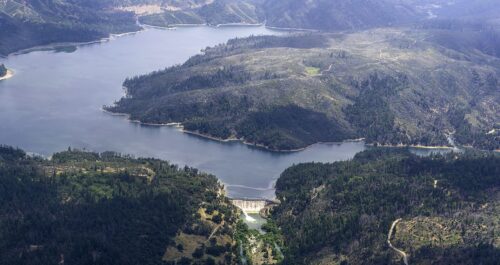
“A member of President Donald Trump’s cabinet on Monday intensified her ongoing campaign to thwart PG&E’s plans to eventually tear down a pair of century-old Eel River dams. Agriculture Secretary Brooke Rollins announced in a social media post that she and Interior Secretary Doug Burgum had met earlier in the day with Pacific Gas and Electric Co. CEO Patti Poppe, along with representatives from the Elsinore Valley Municipal Water District “to begin constructive negotiations on the future of the Potter Valley Project.” The administration’s “hope is clear,” she stated: to “keep the Scott and Cape Horn Dams in place and working for the communities they serve.” That goal stands in direct opposition to PG&E’s long-held plan to decommission the century-old dams, part of Potter Valley hydroelectric project that no longer made financial sense, the utility concluded in 2019. … ” Read more from the Santa Rosa Press Democrat.
Internal documents from a Southern California water agency outline a vision to turn eel river water rights into a cash bonanza — at the expense of local users
“The Southern California water agency that is trying to acquire rights to Eel River water has been working behind the scenes to do so since at least December, despite never having had an open meeting on the subject. What does it want with those rights? The plan right now, such as it is, appears to be to sell water to Russian River water users in Sonoma and Mendocino counties at a high premium, and to use the proceeds to fund its own operations. All this is according to documents that local nonprofit Friends of the Eel received from the Elsinore Valley Municipal Water District in response to a Public Records Act last week, all of which pertain to the district’s early interest in the Potter Valley Project. “It’s important for Russian River water users to understand the threat to their water security that the Elsinore Valley Municipal Water District is making,” said Alicia Hamann, executive director of Friends of the Eel, in a statement to the Outpost today. … ” Read more from the Lost Coast Outpost.
California’s shifting snowpack and the growing water gap
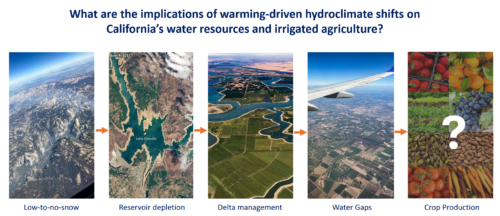 “Even by California’s standards of extreme variability, water year 2025–26 has been a strikingly poor snow year, especially in the mountains that feed the Delta watershed. A dry fall and January limited snow buildup even after a few early storms, and by late February snowpack had peaked at just 55% of the historical average. A subsequent heat wave then triggered an extraordinary melt event, and the snowpack never recovered. This year’s losses raise a larger question: Is 2025–26 an outlier, or does it reflect the increasingly unstable snowpack conditions California must now plan for as warming reshapes when and how water is stored and released? “Recent work such as the extreme events edition of the State of Bay-Delta Science, the Independent Science Board’s Emerging Climate Science Symposium, and the forthcoming 2026 update to the Delta Science Plan highlights why forward-looking science is vital to long-term planning and resilience in a water future that no longer resembles the past,” said Delta Lead Scientist Lisamarie Windham-Myers. … ” Continue reading from Maven’s Notebook.
Snow pack down as low as 0%. What drought could mean to Californians
“Much of California could be headed for drought this summer as its mountain snow pack dwindles as low as zero, climate scientists said. Parts of northern and southeastern California already face moderate drought conditions as of mid-June, according to weather scientists at the U.S. Drought Monitor, and conditions throughout the north and the eastern half of the state are unusually dry. With much of the state already facing hotter-than-average temperatures, drought conditions could spread to other parts of California. That’s because drought risk increases when dry conditions combine with those warmer than average temperatures, the California Department of Water Resources said. … ” Read more from the Desert Sun. | Read via AOL News.
Millions of salmon were just stocked in Northern California reservoirs. Here’s the full list.
“If you fish any of Northern California’s major reservoirs, CDFW just told you where more than a million salmon went this spring. The California Department of Fish and Wildlife released the 2026 stocking numbers for inland Chinook salmon and kokanee salmon. The data shows which reservoirs across northern and central California received fingerlings this spring as part of CDFW’s put-and-grow hatchery program. The program stocks 2 to 3 inch salmon fingerlings into reservoirs where they feed on natural prey and grow to catchable size over two to three years. The fish occupy a unique ecological niche in the deep, cold-water environments that California’s reservoirs provide. Unlike ocean-going salmon, these landlocked fish spend their entire lives in freshwater. … ” Read more from Active NorCal.
El Niño could trigger marine heat waves that threaten Pacific Ocean wildlife
“Marine experts are sounding the alarm that El Niño’s impacts are expected to disrupt marine ecosystems and threaten species throughout the Pacific Ocean. Experts from the Aquarium of the Pacific and the National Oceanic and Atmospheric Administration (NOAA) told reporters on June 11 that warming oceans and a developing El Niño could have significant consequences for marine life off the coast of Southern California. El Niño has developed in the Pacific Ocean faster and earlier than expected, according to AccuWeather meteorologists. This climate pattern happens every few years when sea-surface temperatures rise in the tropical Pacific near the equator and is expected to influence weather around the globe into 2027. … ” Read more from AccuWeather.
“Whose line?” — California’s first direct clash between a court-adjudicated safe yield and a GSA’s SGMA-adopted plan begins this week
“WaterWrights.net is now sharing Updates in partnership with our friends at WaterOne.ai. “Indian Wells Valley Safe-Yield Trial Begins — Counsel Says It Could Set SGMA Precedent: Upper Ventura River GSA Agency Counsel Keith Lemieux reported that the Indian Wells Valley (Kern/San Bernardino counties) groundwater adjudication trial entered Phase 2 — the safe-yield phase — on June 8 in Orange County Superior Court, in what Lemieux characterized as the first direct clash between a court-adjudicated safe yield and a GSA-adopted GSP sustainable yield. The court has signaled it may refer the technical questions to an expert or to the State Water Resources Control Board, a procedural choice that could shape how every adjudicated basin in California reconciles court rulings with SGMA. … ” Continue reading from Water Wrights.
State Water Board releases dairies order to protect water
 “The State Water Resources Control Board on Monday released a revised Draft Dairy order that increases the requirements to prevent groundwater from being contaminated by milk cow dairy manure. The board stated the plan “advances California’s nation-leading approach to protecting water sources from agricultural practices.” One of the requirements calls for dairies to provide drinking water supplies for households that use nitrate-affected wells. The revised draft order also requires dairies to conduct stricter nitrogen monitoring and ensure dairy manure retention ponds are not leaking at rates that affect groundwater. Another major requirement in the order is restricting how much manure dairies can apply to their crops to prevent unsafe levels of nitrate in groundwater. As an alternative the order calls for dairies to essentially transport manure to other farms where it can be applied at safe levels to protect groundwater. … ” Read more from the Porterville Recorder.
Policymakers, ag leaders gather to discuss key issues
“Labor shortages, rising costs and water access emerged as key concerns for California farmers during discussions at the 2026 Agri-Pulse Food & Ag Issues Summit. The annual conference, held earlier this month in Sacramento, brought together policymakers and agricultural leaders. Impacts vary across agricultural sectors, with the wine industry, in particular, struggling more than others, according to some farmers. Matthew Woolf, a specialty crop analyst for Terrain, a Farm Credit service, said alcohol consumption in the U.S. has been declining, with wine sales taking the hardest hit. Tara Beaver Coronado, owner of Beaver Vineyards in Sacramento County, started growing winegrapes on land leased from her parents. She credits this access point with making the entire operation possible. After a profitable first harvest in 2020, her farming business struggled. She noted that young farmers today commonly face similar financial uncertainty in agriculture. “You’re really just hemorrhaging money for years—and (having) a lot of sleepless nights, as all farmers experience,” she said. … ” Read more from Ag Alert.
Water uniformity tool helps farmers identify savings
“A recently launched online computer program not only helps producers determine whether irrigation systems are applying water uniformly but can also estimate the cost of wasted energy, water and fertilizer. Dubbed the Distribution Uniformity and Return-on-Investment Estimator, the free program is the work of irrigation experts Jim Anshutz and Inge Bisconer. Distribution uniformity refers to how evenly an irrigation system applies water throughout a field or orchard. The online estimator identifies areas of an irrigation system needing maintenance, repairs or upgrades to improve distribution uniformity. It also translates the distribution uniformity score into an estimated financial return on investment based on estimated water, energy and fertilizer savings as well as estimated potential yield improvements. Statewide, the impacts could be huge, Anshutz and Bisconer said. California has more than 4 million acres irrigated with low-flow microsprinkler and drip irrigation. Of those, about 3.4 million acres have not been tested. … ” Read more from Ag Alert.
California Forever: Is Sacramento budget bill a step to bypass Solano County regulations? Opposition group thinks so
 “Nate Huntington of Solano Together expressed concerns Monday that California Forever will seek to circumvent Solano County local control by obtaining needed regulation changes through a budget trailer bill passed by the California State Legislature. Huntington said his organization raised the alarm over the weekend because Monday is the deadline for the state’s budget to be passed for the upcoming fiscal year. He said a bill text could be available as soon as Monday evening, but noted that the governor’s office could add trailer legislation to the budget anytime in the coming weeks, usually before the end of June. “Sometimes items can be put in there that weren’t previously a bill before,” he said. In a statement to The Reporter on Monday, California Forever neither confirmed nor denied efforts to secure legislative action for itself. … ” Read more from the Santa Rosa Press Democrat.
How would California Forever’s proposed Solano shipyard affect the environment? Details are scant.
“A few miles down the Sacramento River from the small town of Rio Vista lies a 6.5-mile stretch of undeveloped riverbank that California Forever calls “the perfect location” for the nation’s largest shipyard. If the billionaire-backed development company, best known for planning a controversial 400,000-person city in Solano County, succeeds, this area will be transformed from a riverside grassland into an industrial zone. Here, laborers—or robotic systems—will work and weld metal, cut steel, install engines and wiring systems, apply anti-fouling paint, and so forth to produce (in the current vision) high-tech, crewless autonomous vessels that have been deemed a U.S. naval priority. California Forever says the shipyard will bring a windfall of jobs and potentially $93 million in local tax revenue to a struggling region, and alongside local and state officials, is pushing to build the shipyard as soon as possible. ..Yet even while California Forever has pushed to skip new environmental reviews, it has offered few or shifting details on what the infrastructure will be and how it might impact the Delta’s delicate biodiversity, Bay Nature has found. … ” Read more from Bay Nature.
California Court of Appeal confirms validation judgments bar later Proposition 218 and mandamus challenges to water rates
“On May 13, 2026, the California Court of Appeal, First Appellate District, issued its opinion in Hiller v. Marin Municipal Water District (A171271), affirming dismissal of a ratepayer’s challenge to a water district’s increased rates. The Court ordered the opinion published on June 2, 2026. The case arose from Marin Municipal Water District’s (District) adoption of increased water rates in 2023. Before adopting the rates, the District conducted extensive public outreach and held a public hearing. Following adoption, the District filed a validation action pursuant to Government Code section 53759 (Section 53759) and the validation statutes. The Superior Court authorized service by publication. No interested party appeared within the statutory response period, and the court entered default on August 28, 2023, followed by entry of a validation judgment on October 9, 2023. After the deadline to respond to the validation action had expired, a ratepayer filed a petition for writ of mandate challenging the rates. … ” Read more from the Kronick Law Firm.
Iranian attack on US water supply triggers investigation
“An Iran-linked hacking group claimed that it breached water systems in California, prompting an investigation by one of the state’s largest utilities—even as officials say there is no evidence the U.S. water supply was compromised. The group, known as Handala, said it hacked systems tied to California Water Service (Cal Water) and accessed internal data, framing the cyber intrusion as retaliation for alleged recent U.S. strikes on Iranian water infrastructure amid the joint U.S.-Israel war with Iran that began on February 28. Handala provided to Iranian news outlet Press TV what it said were screenshots of customer billing records and internal dashboards, and claimed it obtained about 5 gigabytes of data, specifically in Bakersfield, Visalia and Chico. … ” Read more from Newsweek.
Gavin Newsom’s data center gamble
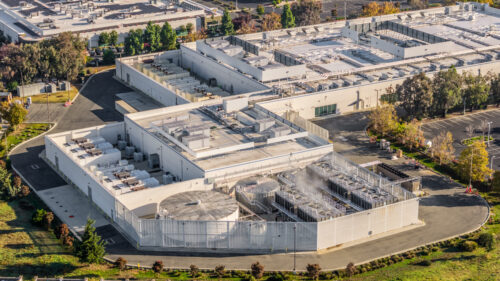
“Likely Democratic presidential contenders are bashing the buildout of data centers in the run-up to 2028. With one big exception: Gavin Newsom. The governor of California — home to the third-most operating data centers of any state — has shot down legislation to require the facilities to disclose water use, and rather than join calls from progressives to block their construction, he has touted the state’s potential to support “critically important digital infrastructure.” It’s a posture that reflects Newsom’s deep ties with Silicon Valley and carefully cultivated pro-innovation brand. Many in the tech industry, which has often found an ally in Newsom, say his position is helping the state stay ahead in the artificial intelligence race sweeping the globe. “The response to concerns can’t be indefinite delay or outright obstruction” of data centers, Ahmad Thomas, CEO of the Silicon Valley Leadership Group, told POLITICO. “We’ve been fortunate to have a governor who I believe truly understands our competitive position as the global leader in technology.” … ” Read more from Politico.
Concerns over AI grow as California provides sparse oversight
“The explosion of Artificial Intelligent (AI) across the country isn’t happening in a vacuum but instead goes hand-in-hand with impacts to water resources and utility bills. Despite the enormous strain on both our electrical grid and finite water resources, California has established little to no regulatory oversight. In fact, last year, Governor Newsom rejected legislation that would have provided some oversight, stating that the legislation would potentially curtail “the very innovation that fuels advancement in favor of the public good”. As Asm. Papan’s AI Bill package on AI water use – AB 2619 and AB 2469 – moves through the legislature, the question remains whether Governor Newsom will again reject efforts to establish oversight and transparency. These protective measures are more necessary than ever. According to a recent Fortune article, 49,000 Lake Tahoe residents are scrambling to find a new power source because their utility company is redirecting electricity capacity to data centers powering the AI boom. Technology over people is happening in real time, with little to slow the onslaught of impacts. … ” Read more from Restore the Delta.
SEE ALSO:
- Federal data center rules expire in September and the US has no alternative, from Straight Arrow News
- The city that said no to data centers, from Cal Matters
In regional water news and commentary today …
NORTH COAST
As parasites threaten juvenile salmon in the Upper Klamath River, the Karuk Tribe emphasizes that the ‘river is still in the early stages of healing’
“The Karuk Tribe today emphasized that Klamath River dam removal remains a historic and necessary step toward salmon recovery, while cautioning that recent detections of fish disease among juvenile salmon show that the river is still in the early stages of healing. Following dam removal, the Klamath has shown encouraging signs, including strong adult salmon returns and significant juvenile salmon outmigration from river reaches that had been devoid of salmon for a century. At the same time, monitoring has detected elevated levels of Ceratonova shasta (C. shasta), a fish parasite that can cause serious disease in juvenile salmon. Tribal fisheries staff note that the disease detections are occurring during a difficult water year marked by low snowpack, early snowmelt, low flows, and high water temperatures. These conditions can increase stress on juvenile salmon and create more favorable conditions for disease transmission. … ” Read more from the Lost Coast Outpost.
Encouraging signs of recovery being shown at the Klamath River
“The Karuk Tribe said Klamath River dam removal remains a historic and necessary step toward salmon recovery, while cautioning that recent detections of fish disease among juvenile salmon show the river is still in the early stages of healing. Following dam removal, the Klamath has shown encouraging signs, including strong adult salmon returns and significant juvenile salmon outmigration from river reaches that had been devoid of salmon for a century. At the same time, monitoring has detected elevated levels of Ceratonova shasta, a fish parasite that can cause serious disease in juvenile salmon. … “Dam removal gave the Klamath River and our fish a fighting chance,” Karuk Vice Chairman Kenneth Brink said. “But no one should confuse dam removal with an instant cure. The river was damaged for more than a century. It will take time, strong winter flows, habitat restoration and continued care to bring it back to health.” … ” Read more from KDRV.
SIERRA NEVADA
The people on the front lines of Tahoe’s fight against golden mussels
“Four golden mussels were tucked tightly beneath the bolt of a screw, hiding behind metal plates and a small flap on the back of the boat. The stowaways latched themselves in the Sacramento-San Joaquin Delta, securing themselves with byssal threads as thin as hair but strong enough for a journey more than 150 miles long, all the way to the Lake Tahoe Basin. Each was as small as a sunflower seed, but don’t be fooled: Golden mussels are like an aquatic invasive species on steroids, officials say, with power to destroy ecosystems, decimate local fish populations, overwhelm water infrastructure, litter beaches with shells and fuel algae growth. They could turn Tahoe’s blues into greens. Tahoe’s boat inspectors saved the day, once again. They crawled under the boat on their hands and knees, using flashlights to see in the dark shadows and mirrors to look farther back and behind the boat’s components. Finding the four mussels, the inspectors intercepted the infested boat before it hit Tahoe’s waters — a close call, but further proof that Tahoe’s defenses against aquatic invasive species are working. … ” Read more from SF Gate.
Ecological forest thinning underway in the American River watershed
“American River Conservancy is excited to share progress being made on the South Fork of the American River Restoration (SOFAR) project, a 1,943-acre ecological forest thinning project that spans four ARC-owned properties in El Dorado County: Salmon Falls Ranch, Lewis Ranch, Elliot Pond, and Wakamatsu Farm. The SOFAR project is being funded and implemented in partnership with CAL FIRE under the California Climate Investments Department of Forestry and Fire Protection Forest Health Program Grant. … ” Continue reading at YubaNet.
Ione residents report cloudy water and odd smells, water agency says it’s safe
“Residents in Ione are reporting cloudy tap water, unpleasant odors, and staining in their homes, while the Amador Water Agency says the problem is linked to naturally occurring algae in the Ione Reservoir and that the water remains safe to drink. “It’s really nasty,” Ione resident Brandon said. “The water quality is not good at all. I mean, it has an odd flavor to it,” resident Bobbi White said. White also said the water gets “really cloudy” when she runs it to wash dishes. Some residents said they do not trust the tap water. “I would never drink the tap water here,” Brandon said. … ” Read more from KCRA.
SACRAMENTO VALLEY
Invasive golden mussels prompt Sacramento County emergency declaration
“The Sacramento County Board of Supervisors declared a local emergency Tuesday because of the growing threat posed by invasive golden mussels. The golden mussel, a freshwater mollusk native to Asia, was first detected in the Sacramento-San Joaquin Delta by the California Department of Water Resources on Oct. 17, 2024. The discovery marked the first known sighting of the species in North America and raised concerns among wildlife and water agencies because of its ability to reproduce rapidly and form dense colonies that can clog pipes, pumps and water conveyance systems. … ” Read more from the Sacramento Bee.
Sac Supervisors approve controversial Upper Westside Project. Will lawsuit follow?
“Carmen Lugo announced to the Sacramento County Board of Supervisors on Tuesday that she knew they’d already made their mind up about the Upper Westside Project. So Lugo made a symbolic gesture, displaying a $75 check that she gave to former Sacramento Mayor Heather Fargo to go toward a lawsuit to fight the project. If completed, the project could add 25,000 residents to unincorporated land west of Natomas that is currently largely vacant. Following more than three hours of meeting time devoted to presentations by county staff and project representatives and approximately 75 public commenters, the board voted 5-0 to approve the long-running and controversial Upper Westside Project. … ” Read more from the Sacramento Bee.
NAPA/SONOMA
Napa County subbasin residents to pay new groundwater fee in December
“Some property owners above Napa Valley’s 72-square-mile groundwater subbasin will see a new fee on their property tax bills in December. As part of the Napa Valley Subbasin Groundwater Sustainability Plan, Napa County mailed informational postcards this week to subbasin property owners and groundwater users, encouraging them to review information about the groundwater fee that will range anywhere from $38 to $129 per acre per year. County officials expect to raise $2.17 million per year from a total of 2,600 subbasin residents, according to the county’s natural resources manager Jamison Crosby. … ” Read more from NorCal Public Media.
BAY AREA
San Francisco and Marin face flooding amid highest summer tide on record
“The Bay Area saw its highest summer tides on record over the weekend, and more flooding and king tides are expected in low-lying coastal and bayshore areas through Thursday, according to the National Weather Service. Water levels peaked at 1.97 feet above normal Sunday — breaking the Bay Area’s summer record, set the previous day. Tides are predicted to peak again overnight Monday at 2 feet above normal in Monterey County and 1.8 feet in San Francisco, according to the weather service. The region should see slightly lower peaks just after midnight Wednesday and Thursday, as the astronomical tide recedes late this week. The weather service also warned of hazardous beach conditions, including sneaker waves and strong rip currents. … ” Read more from KQED.
Commentary: Rewilding Point Reyes National Seashore: Why and how
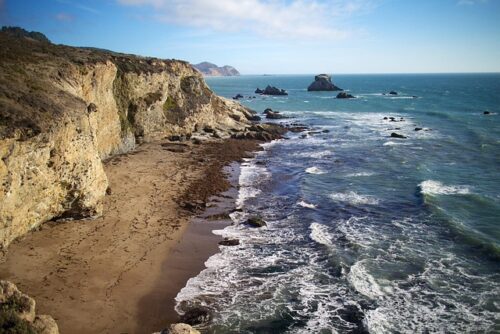 Ken Bouley, executive director of the Turtle Island Restoration Network, writes, “I’m lucky to live immediately adjacent to Point Reyes National Seashore in California and make frequent visits to indulge my photography hobby. In the summer I can work a full day and still search for bobcats through the evening golden hour. And I’m truly privileged to be able to advocate for its restoration and protection in my capacity as executive director of Turtle Island Restoration Network. Point Reyes is a coastal treasure protecting about 110 square miles of some of the most scenic and biodiverse landscapes on the planet. Surrounded by marine protected areas on its western coastline and buffered by open spaces of various jurisdiction on eastern inland boundaries, the West Coast’s only national seashore supports extraordinary species richness for both plants and wildlife. Meanwhile its proximity to San Francisco and Oakland provides an unusually accessible oasis for humans seeking recreation and outdoor experiences. Point Reyes receives more than 2 million visitors per year. … ” Read more from The Revelator.
Pittsburg residents voice frustration over approved data center
“Hundreds packed city hall Monday night to oppose a previously approved data center, voicing concerns over environmental impacts, resource constraints, and what, if any, economic benefits such a project would provide to residents and the city. Approved in 2024, some residents said they had only recently learned about a potential data center that could be built in Pittsburg Technology Park, located along West Leland Road on the former Delta View Golf Course that closed in 2018. Amhari Perkins, a resident who created an online petition opposing the project that has garnered more than 14,200 signatures, said she found out about the data center from a social media post. “Up until that moment, I had no knowledge that this project was planned and already approved. When I learned about it, I was honestly shocked,” said Perkins. “My request tonight is simple: that the concerns of the residents be truly heard, acknowledged, and addressed in a transparent way. Many of us are not asking for conflict. We are asking for communication, clarity, and meaningful engagement.” … ” Read more from the San Jose Mercury News.
Delta residents absorb the flood challenge, and choose different ways to act
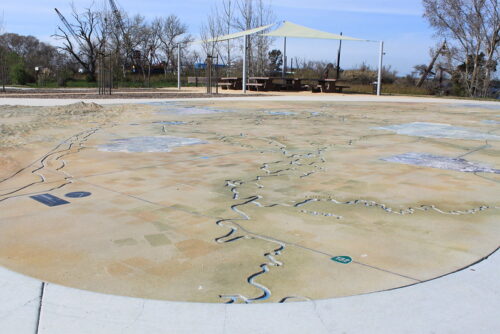 “As the valley heat along a Delta slough broke a sweat on the morning of June 13, about 50 people gathered in the Big Break Visitor Center in Oakley to discuss a cooler climate challenge: flooding. At the event, 21 graduates of a six-month shoreline leadership academy proposed different ideas for addressing rising water levels along the Contra Costa County shoreline. Proposals ranged from new sidewalk exhibits in unexpected places to finishing a cleanup of a local Superfund site, a “Love the Earth” coloring book for kids, and a plan to make oyster reef balls out of ceramics rather than concrete. “I was blown away by all the different presentations,” said Louis Flores, a community organizer with 350.org, who came to see what his neighbors had come up with to save their shore from the effects of fossil fuel burning and the resulting expanding ocean. “If these people continue down this road, it will be pretty inspirational.” And continuing down this road is what the organizers are hoping for. … ” Read more from Knee Deep Times.
‘Rogue employee’ blamed for hiding radiological material at Hunters Point
“A former employee of a U.S. Navy subcontractor is suspected of bringing hundreds of radiological items and chemical waste into Hunters Point without the knowledge of government officials, according to new details released by the Navy. The Navy first reported in May that “unauthorized” material was found in a cabinet at the Hunters Point shipyard on April 8. The individual suspected of bringing in the material was an employee of RSI Entech, a subcontractor for the Navy hired to help remediate the area. “It was a rogue situation by a rogue employee that we’re trying to get to the bottom of,” Jeff Bale, director of operations at RSI Entech, said at the citizens advisory committee meeting on Monday. … ” Read more from SF Gate.
Water and garbage rates increase for San Jose residents
“While utility hikes are a regular occurrence for San Jose residents, an especially sharp jump in garbage disposal fees and water rates have led to pushback amid growing concern over rising living costs. Under new fee schedules set to take effect July 1, the start of fiscal year 2026-27, San Jose’s garbage disposal service fee will increase 7% for single-family households and 4% for multifamily households. In addition, water rates charged by San Jose Municipal Water System, the city’s water supplier that serves 140,000 residents, will jump roughly 4%. Meanwhile, the charge rate for sewer usage will increase a more modest 3%. Officials said the rising rates reflect higher prices charged by the city’s garbage disposal contractors and water wholesalers. However, with residents already facing financial pressure from multiple directions, including steep prices at the pump, this year’s rate increases have raised questions about the city’s plans to rein in long-term costs. … ” Read more from the San Jose Spotlight.
Commentary: Cleaner creeks, safer waterways — protecting our resources is working
Richard Santos, vice chair of the Valley Water board of directors, writes, “In November 2024, the Valley Water board of directors approved the Water Resources Protection Zones Ordinance to address the environmental and safety issues from encampments along Valley Water waterways and facilities. We understood that there wouldn’t be an easy fix, but our progress over the past year shows that a coordinated approach can bring real results. Valley Water’s mission is to provide safe, clean water for a healthy life, environment and economy. Protecting our creeks, waterways, wildlife and public infrastructure is key to that mission. Since adopting the ordinance, Valley Water has seen significant improvements across the county. … ” Read more from the San Jose Spotlight.
SAN JOAQUIN VALLEY
Manteca: Floating solar panels may help stabilize power costs at sewer treatment plant
“Floating solar photovoltaic panels and battery storage system may be in the Manteca wastewater treatment plant’s future. Staff is recommending the City Council authorize a no-cost technical feasibility study be conducted by Willdan Energy Solutions. Once completed, staff will report back to the Council with a recommendation to either advance, delay, or not pursue the project. Wildan is proposing a 1.7 mega-watt floating solar photovoltaic and battery system with an estimated $3.2 million in rebates. … ” Read more from the Manteca Bulletin.
State park on San Joaquin River adds floodplain. Public can offer recreation ideas
“Another 250 acres of floodplain have been restored along the lower San Joaquin River, this time on the Merced County stretch. The $3.5 million project is in the 2,800-acre Great Valley Grasslands State Park. Leaders in the effort gathered June 11 near Stevinson to celebrate the completion. The project aimed to enhance habitat for wildlife such as the kit fox and chinook salmon while easing the flood threat to downstream homes. It involved breaching a levee that was built in 1954 to protect grazing livestock. The restoration was led by American Rivers, an environmental group based in Washington, D.C. It had help from River Partners, a Chico-based nonprofit with a Modesto branch office, and other entities. … ” Read more from the Modesto Bee.
Fresno Irrigation District celebrates completion of $6 million recharge basin
“A ribbon-cutting ceremony for a newly built recharge basin in Fresno is scheduled for Thursday, June 18, at 9 a.m. The Fresno Irrigation District completed construction of the Carter Bybee Groundwater Recharge Basin, a 35-acre basin that will sink an average of 840 acre-feet of water annually. The basin is in the North Kings Groundwater Sustainability Agency (GSA). The ceremony will take place at the corner of Jameson and Barstow Ave in Fresno. The $6 million project was funded through the Department of Water Resources’ (DWR) Sustainable Groundwater Management Act (SGMA) funds, the U.S. Bureau of Reclamation’s drought program and the district’s land assessments. … ” Read more from SJV Water.
Push to register wells in northern Tulare County heats up
“Landowners in Mid-Kaweah Groundwater Sustainability Agency (GSA) who need help registering their wells can take advantage of four “office hours” events in the coming week. … Owners of agricultural, domestic, industrial and retired/abandoned wells face a registration deadline of Oct. 31. After that date, landowners will lose access to Tier 1 and Tier 2 water allocations, overdraft water that is charged at a penalty rate. Mid-Kaweah’s board of directors passed the mandatory policy in May so the GSA’s managers and technical consultants can get a better understanding of aquifer use, which will help determine future allocations and minimize subsidence impacts. So far, Mid-Kaweah has registered 285 wells out of an estimated 1,700, said Diana Zegarra, project manager. … ” Read more from SJV Water.
EASTERN SIERRA
Places worth protecting: Hot Creek, California
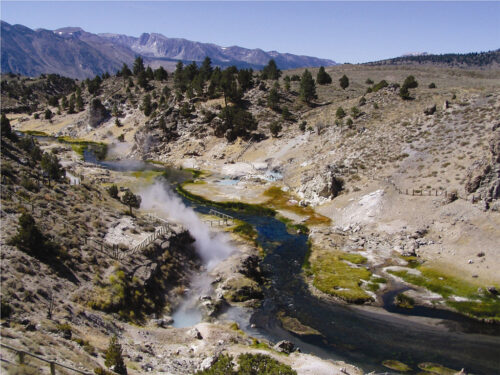 “Cresting the dirt rise from the parking on the south side of the canyon, the view comes into focus. The east side of the Sierra Nevada reveals its massive snow-covered flanks. A thin ribbon of clear water S-turns its way through the small canyon. Thick matts of bright green vegetation waving in the gentle current cover the streambed. Small rainbow and big brown trout leave gentle ripples at the surface. Wisps of steam rise from the edges and occasional sulfur-smelling bubbles plop from muddy spots on the bank. The area’s geology has, unfortunately, attracted interest from mining companies that are ready to bore into the mineral-rich soil. This drilling could affect the maze of hot and cold water subterranean aquifers and springs that give this small stream its ecologic balance. … ” Read more from Trout Unlimited.
SOUTHERN CALIFORNIA
These California faults are at highest stress levels in 1,000 years. What comes next?
“The San Andreas-San Jacinto fault junction in Southern California — an “earthquake gate” that could determine how far the next major San Andreas rupture travels — has reached historically high stress levels, according to new research. The study from the University of Hawai’i at Mānoa focused on the Cajon Pass, a critical fault junction near Los Angeles where the San Andreas and San Jacinto fault systems connect. Stress that is normally released in large earthquakes has grown to 1,000 year highs, the study suggests. A potentially more important finding from the study, researchers said, is that the pass acts like a gate, either blocking a rupture from spreading between faults or allowing a joint rupture of the San Andreas and San Jacinto fault simultaneously, “a scenario that could be significantly more damaging” and impact millions of Southern Californians. … ” Read more from the San Francisco Chronicle.
Judge upholds protections for Southern California steelhead trout
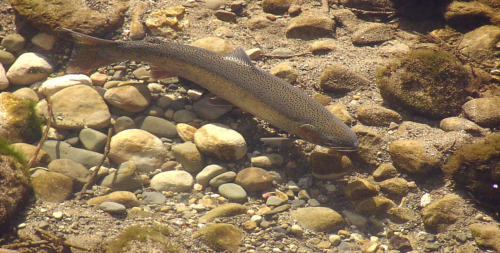
“A Los Angeles County Superior Court judge has rejected a water agency’s challenge to endangered species protections for the Southern California steelhead trout. “The court recognized the science showing the plight of this struggling fish and upheld the protections needed to stave off extinction,” said Evan Levy, an attorney at the Center for Biological Diversity, in a written statement. “Development, dams and water diversions have threatened this species so deeply that only a handful of spawning southern steelhead have been seen in recent years. Now that these state protections have survived legal challenge, I’m looking forward to a new chapter for these remarkably complex fish.” The Ventura County-based United Water Conservation District operates multiple dams in California, which conservation groups say prevent steelhead migration upstream. For years, the agency has challenged the state’s steelhead protections: first in 2023 over temporary protections, then again in 2025. Both petitions have now been rejected. The district has argued that the California’s Fish and Game Commission “relied upon incomplete and flawed data while ignoring better scientific evidence” in granting the steelhead endangered status. … ” Read more from the Courthouse News Service.
SEE ALSO: Court Upholds Southern California Steelhead Protections, from the Center for Biological Diversity
Pasadena Unified’s plan to cut down nearly 200 trees angers residents
“A plan to remove nearly 200 trees from Pasadena Unified School District campuses has angered some local residents. School district officials say 193 trees across 11 campuses need to be removed to clean up soil contaminated by the Eaton Fire. Residents say they were not properly notified about the project, and some are pushing for ways to remediate the soil without taking down so many trees. Pasadena resident Paloma Muñiz Ochoa spent eight hours in an oak tree slated for removal at the district’s headquarters. … ” Read more from LAist.
LA County to Feds: Once Whittier Narrows Dam upgrade is done, restore parks, bikeways and green space
“The Los Angeles County Board of Supervisors are concerned with the plans of the U.S. Army Corps of Engineers to strengthen the Whittier Narrows Dam, saying the project that cuts off access to a major regional bikeway and also a local park where kids play baseball for the next seven years has huge ramifications. To ensure the Army Corps restores the area’s recreational resources and roadways once the project is completed in 2033, the Board of Supervisors voted to put the L.A. County Public Works in charge of communicating with the feds on restoring open space, parks and roadways disrupted by the dam rebuild. A motion written by First District Supervisor Hilda Solis and passed by a 4-0 vote, with Supervisor Lindsey Horvath absent, demands the federal agency avoid what could be permanent impacts to bikeways and parks, affecting Pico Rivera, Montebello and Rosemead. … ” Read more from the LA Daily News.
Water Replenishment District and the City of Torrance break ground on the Torrance Groundwater Desalter Expansion Project
“The Water Replenishment District (WRD) and the City of Torrance celebrated a major milestone this week with a ceremonial groundbreaking for the Torrance Groundwater Desalter Expansion Project (TGDEP). The event brought together elected officials, community leaders, and funding partners to mark the next phase of a transformative effort to convert brackish groundwater into a reliable local drinking water supply for the South Bay. As a key part of WRD’s Brackish Groundwater Reclamation Program (BGRP), the project expands the Robert W. Goldsworthy Desalter and increases options for sustainable groundwater replenishment within the West Coast Basin. Upon project completion, the TGDEP will purify up to 7,100 acre-feet, or 2.3 billion gallons, of high-quality drinking water each year, contributing a significant portion of the municipal supply for the South Bay residents. “Since 2001, the Torrance Groundwater Desalter has proven that brackish groundwater can be transformed into potable water for Torrance residents,” said WRD Director Rob Katherman. “Today, we celebrate the next phase of our Brackish Groundwater Reclamation Program and reclaim additional portions of the 14-square-mile plume that remains in the basin.” … ” Read more from the Water Replenishment District.
King tides, powerful surf threaten Long Beach homes as residents call for permanent solution
“Dangerous king tides and powerful waves continued to batter the Southern California coastline Monday, prompting coastal flood warnings from Malibu to Orange County and leaving some Long Beach residents worried about damage to their homes. Along a stretch of beachfront in Long Beach, crews spent another day moving large amounts of sand to reinforce a protective berm designed to shield homes from incoming surf. The barrier, roughly 8 feet tall and nearly a mile long, has been rebuilt repeatedly as waves continue to pound the shoreline. “The ocean is violent. My house is shaking,” said Michael Vescovi, who lives along the beach. … ” Read more from KTTV.
Mojave Water Agency breaks ground on West Victorville Groundwater Banking Pilot Project
“Mojave Water Agency (MWA) today officially broke ground on the West Victorville Groundwater Banking Pilot Test Project, launching construction on one of the region’s most significant water infrastructure investments in recent memory. The ceremony, held near 11987 Duncan Road in Victorville, drew Agency leadership, elected officials, community stakeholders, and project partners to mark the beginning of a project designed to dramatically expand groundwater recharge capacity across the Alto Subarea of the Mojave Groundwater Basin. The 40 – acre facility will be capable of adding an estimated 12,000 to 18,000 acre-feet per year of off – river recharge capacity . This is a transformational increase that will allow MWA to capture imported State Water Project supplies and store that water underground during periods of abundance, creating a strategic reserve for use during future droughts and dry cycles. … ” Read more from Mojave Water Agency.
IMPERIAL/COACHELLA VALLEYS
Plans for California’s largest data center just ran into a moratorium in Imperial County
“Imperial County’s Board of Supervisors has unanimously paused pending and future data center projects for at least 45 days following months of community opposition amid concerns about energy and water consumption as well as environmental and public health impacts. The supervisors will also form an advisory committee to bring them recommendations on zoning and building policies related to data centers by January 2027. The moratorium — imposed under an urgency ordinance — could be renewed after 45 days for 10 months and 15 days, until the committee delivers its report — although one developer has already said he will challenge the county’s decision in court. Tuesday’s vote came as a surprise. … ” Read more from iNewsSource.
Data center developer sues IID over water service denial
“The developer of a proposed 330-megawatt data center near the City of Imperial has filed a sweeping lawsuit against the Imperial Irrigation District (IID), alleging the district unlawfully denied its request for water service and discriminates against industrial water users. Imperial Valley Computer Manufacturing, LLC filed a 173-page petition in Imperial County Superior Court seeking a writ of mandate and declaratory relief against IID. The company is developing a data center project on a 75-acre site at Aten and Clark roads in unincorporated Imperial County. The lawsuit challenges IID’s May 1 denial of the company’s request for approximately 880 acre-feet of water annually for industrial cooling purposes. The developer contends the water demand is comparable to that of a typical 160-acre farm and represents a small fraction of IID’s annual Colorado River allocation. … ” Read more from the Desert Review.
SAN DIEGO
San Dieguito Dam repairs could cut water costs for customers
“The year was 1918, and the San Dieguito Dam and the Lake Hodges Dam were built as joint projects. The downstream beneficiaries included: Rancho Sante Fe, Fairbanks Ranch, Solana Beach and Encinitas. However, the Lake Hodges Dam is failing, so major upgrades to a smaller dam in Rancho Santa Fe were more important than ever. Since Lake Hodges is at a lower level and has so many infrastructure issues, it makes it difficult to capture water from the largest watershed in San Diego County, which means more imported water has to be purchased, said Teresa Penunuri with the Santa Fe Irrigation District. … ” Read more from Fox 5.
Along the Colorado River …
Lake Mead’s slow demise just sped up in latest federal study
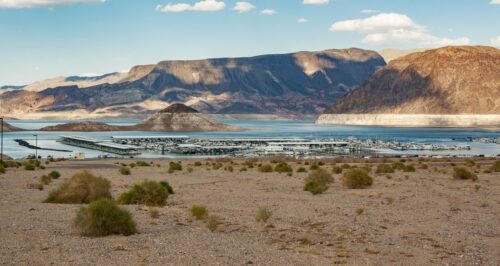 “The reservoir that serves as Southern Nevada’s main water supply is headed for an even more painful decline than thought due to historic drought and recent water management decisions, according to federal forecasters. Lake Mead could plummet to 1,015.77 feet above sea level in July 2027, far below any level seen since the reservoir was filled in the late 1930s. After that, though projections are less reliable the further into the future they go, water managers expect only a small uptick until another record low is set at 1,011.74 feet in May 2028. That low level is nearly 29 feet below the reservoir’s all-time low set in 2022. On Monday, the reservoir was almost 29 percent full at about 1,047 feet above sea level. “It is very grim,” said Sarah Porter, director of the Kyl Center for Water Policy at Arizona State University. “We didn’t expect good news. But the study underscores, again, that we’re in a really bad place.” … ” Read more from the Las Vegas Review-Journal.
SEE ALSO:
- Study: Lake Mead water levels projected to drop 30 feet by 2028, from Channel 5
- Projections sink for Lake Mead in latest 2-year study of Colorado River reservoirs, from KLAS
Lake Powell faces power loss by spring 2027
“The Colorado River is sending a warning, and federal water managers are not ignoring it. On June 15, 2026, the Bureau of Reclamation released its June 24-Month Study, a detailed forecast that projects where the river’s two largest reservoirs, Lake Powell in Utah and Lake Mead in Nevada and Arizona, are headed over the next two years. The news was not encouraging. The report projects that Lake Powell, which sits behind Glen Canyon Dam and is a critical source of hydropower for millions of households across the Southwest, could fall to what is known as “minimum power pool” by spring 2027. Minimum power pool is the level at which the water drops so low that it can no longer spin the turbines inside the dam to generate electricity. That elevation sits at 3,500 feet above sea level. … ” Read more from Western Water.
Tensions are rising between states that rely on the Colorado River
“Water in the Colorado River is dwindling to levels that haven’t been seen in decades, and the seven states whose residents and farmers depend on the river can’t agree on a fair way to divide up what’s left. Negotiations are going nowhere despite more than six months of ongoing talks, plus cajoling by the Trump administration, which twice gathered governors in hopes of a breakthrough that never came. States are already sniping at aspects of a water-use plan the federal Bureau of Reclamation is set to unveil this summer and impose later this year, and they’re threatening to sue each other over water deliveries, raising the prospects of prolonged legal battles just as Western states face demands to sharply reduce water use. … ” Read more from the Salt Lake Tribune.
Emergency drawdown at Flaming Gorge hits its recreation economy
“As campers with boats flocked to Buckboard Marina at the start of Memorial Day weekend, Tony Valdez was busy issuing refunds and repairing broken boat ramps. One older Green River man, who walked with two canes, left with his money refunded for the season after discovering he could not safely make it down to the boat slip. Due to dropping water levels at Flaming Gorge Reservoir, the ramp is now buckled, angling up and down like a pitched roof. “It’s devastating, not just to me, it’s all the marina owners,” said Valdez, who owns Buckboard Marina, south of Green River. “It’s a big loss, and this is a big loss to the community.” Along the cliffs and shoreline, darker and lighter lines of rock and sand trace the water’s elevations, showing where the water hits when the marina is full, where it hovered this spring and where it dropped after an initial “flush.” Valdez estimates the reservoir has dropped by 7 feet since April. But that’s not the worst of it. Valdez anticipates that by the end of this summer, the reservoir will be as low as it’s ever been. … ” Read more from Inside Climate News.
Arizona agencies take step to buying desalinated ocean water from California
“Arizona agencies have taken a key step that could eventually allow the state to buy desalinated ocean water. Central Arizona Project (CAP), Salt River Project and the Arizona Department of Water Resources – along with the Southern Nevada Water Authority — recently signed a memorandum of understanding with a desalination plant in Southern California. CAP is a wholesaler of Colorado River water that provides water to roughly 80% of the state’s population. “We’re facing a crisis on the Colorado River. The flow is way, way below any kind of average,” CAP President Terry Goddard told KTAR News 92.3 FM last week. … ” Read more from KTAR.
Arizona: A tale of two rivers: Drought and forever chemicals trigger statewide fishing crisis
“A compounding environmental crisis is reshaping regional waters across the Southwest, forcing rural communities to navigate the dual realities of climate-driven ecological collapse and strict new public health protections. This week highlighted the stark contrast between Arizona’s river corridors: the Gila River system nearly collapsed at San Carlos Lake, while the Salt River used experimental tech to address seasonal issues. Compounding these structural challenges, state environmental regulators have instituted a policy expansion to track toxic chemical accumulation in sport fish, introducing a permanent new layer of oversight to desert recreation. … ” Read more from the Arizona Silver Belt.
Utah put millions into cloud seeding this year. Here’s what it expects in return.
“Lawmakers opened the financial floodgates this year, pouring an unprecedented amount of money into Utah’s decades-old cloud seeding program. The Division of Water Resources has used the windfall to install dozens more seeding sites in mountain ranges across the state, some of which can get deployed remotely via a cellular network. It’s also adding two aerial could seeding missions, funding plane deployments in both southern and northern Utah. Efforts were previously conducted with on-the-ground stations that had to be switched on by hand. “It’s pretty exciting,” said Candice Hasenyager, the division director. “This offers a lot of opportunity to seed in areas where we could have never seeded before.” … ” Read more from the Salt Lake Tribune.
New Colorado state law requires cities, water users to revegetate farmland before using water elsewhere
“A new Colorado law requires water users that buy water tied to farms in the Arkansas Valley to revegetate land before using water elsewhere. For decades, cities along the Front Range have expanded municipal water supplies by acquiring water rights historically used for agriculture. In the Arkansas Valley, more than 100,000 acres of irrigated farmland have been permanently dried up, often to supply water to cities such as Pueblo, Colorado Springs and Aurora. “When that water leaves, the impacts of the dry-up don’t leave with it. They stay with the land and the people who live here,” said Jack Goble, general manager of the Lower Arkansas Water Conservation District, which advocated for the legislation. Revegetation involves restoring native plant cover to the land to reduce erosion, maintain soil moisture and manage noxious weeds. … ” Read more from Rocky Mountain PBS.
Colorado’s weather modification project taking shape
“Colorado has been using cloud seeding as far back as the 1950s, but an all-new weather modification project in Colorado is taking shape on the Eastern Plains. Located in Gill, in Weld County, it’s not the kind of cloud seeding most people picture. There’s no plane and no silver iodide flare. Rain Enhancement Technologies is using a ground-based system called WETA, which is short for weather enhancement technology array. “What problem for Coloradans are you trying to solve?” CBS Colorado asked Rain Enhancement Technologies CEO Randy Seidl. “One that’s probably top of mind for everybody, which is just the tremendous water shortage,” Seidl said. “Traditionally, cloud seeding that happens during the winter time. This was obviously a lousy snow year, so there’s not enough water for spring, summer, fall. And that’s where we come in.” … ” Read more from CBS News Colorado.
In national water news today …
Has residential water use declined over time? A new study investigates

“A new Water Research Foundation (WRF) study reveals steady improvements have been made over time in residential water use efficiency. The Water Research Foundation, in partnership with water monitoring solutions company Flume and consultant WaterDM, announced the publication of the 2026 Residential End Uses of Water, Version 3: A Single-Family and Multi-Family Study (project 5242). The study is a comprehensive update to similar 1999 and 2016 studies. Together, the three studies provide a 30-year view of residential water use across North America. According to the project team, the new study expands on prior research, incorporating a broader and more diverse set of study sites, introducing the first ever analysis of multi-family water use, and offering new insights into regional similarities and differences. … ” Read more from Water Finance & Management.

